



Abstract
Trail running is an endurance sport that entails running outdoors on natural terrain. Scientific literature provides minimal information on serious adverse events that occur during trail running. The objectives of this review were to identify and summarize the available information published in online worldwide news articles and to categorize the results in fatal, missing, and catastrophic events in trail running. Over a 14-wk period, online news articles were searched using Google Advanced Search and DuckDuckGo for reports on serious adverse events during trail running. Data were extracted and summarized from online news articles that met the inclusion criteria. Ninety-four online news articles reported on 127 runners involved in serious adverse events during trail running. Among the serious adverse events reported in this review, 82% (n = 104) were fatal trail running events; 29% (n = 37) were related to missing events, of which 54% (n = 20) of the missing events resulted in death; and 6% (n = 6) were catastrophic injuries. Most runners were males (73%) aged 16 to 75 y (41.5 ± 12.6 y). The most common intrinsic causes of death were cardiac arrest (58%) and collapse (38%), whereas the most common extrinsic causes of death were cold weather resulting in potential hypothermia (40%) and blunt trauma following falling/slipping (25%). Almost half the runners who went missing (41%) were found. The 6 runners involved in catastrophic events (6%) suffered severe burn wounds, brain damage, and frostbite. Serious adverse events in trail running seem to be rare. This review reports multiple serious adverse events during trail running. Although these events are rare, they highlight the need for further research and improved reporting. These findings can assist in developing future prevention strategies for trail running events and guide medical staff during race-day medical planning.
Introduction
Trail running involves running in natural environments with minimal exposure to paved roads. 1 Since 2010, trail running participation has seen an annual growth of ∼12%. The overall age of 90% of trail runners ranges between 22 and 25 y, with the majority being males (64%). Between 2013 and 2019, >25,000 trail running races were hosted worldwide, with an estimated 1.7 million participants. 2 Trail runners are fully or partially self-sufficient in carrying their gear, nutrition, navigation devices, and medical supplies in a running bag.3,4 Although trail running participation has numerous health benefits, 5 it is still associated with high injury and illness rates, with the current literature focusing mostly on races. 6
The incidence of illness has been reported to be as high as 65.0 to 95.4 illnesses per 1000 h of running, 6 with illness being more prevalent than injury among ultradistance runners participating in mountainous regions. 7 Most of the available literature reports on illness related to race participation. 6 Commonly reported illnesses among trail runners involve the gastrointestinal system, with reported symptoms of abdominal cramping/pain, nausea, vomiting, and diarrhea.8–13 A wide injury incidence range is currently reported in the literature (0.7–61.2 injuries per 1000 h of running), mainly affecting the lower limb, specifically the ankle, hip/groin, and lower leg body regions. 14 Of concern is that in ultra trail run events, 40% of the reported medical encounters resulted in runners being unable to finish the race. 7 Furthermore, runners training for shorter-distance ultra races are usually more inexperienced in trail running environments and have a higher reported injury rate, a more diverse injury profile, and more severe injuries. 15
In remote trail running regions, medical care is challenging in locating runners with health problems, providing initial medical treatment, and evacuating runners to facilities for further advanced care. 16 A previous review of articles published online reported fatal events specifically related to running mountainous regions in Western Europe. 17 Most fatal events were related to cardiac events (43%), blunt trauma from falling (32%), and hypothermia (16%). Some fatal events related to hypothermia occurred while waiting for medical assistance following musculoskeletal injury, 17 highlighting the challenges of care in these remote regions.
Even though fatal events are rare in trail running, medical teams, race organizers, and trail runners need access to summarized information detailing the nature of these more serious health events. Such information could mitigate the risk of serious health events through improved race day medical team planning, guide future prerace medical screening of race entrants, and help trail runners prepare for specific events. Roi 17 reported only on fatal events in mountain running specific to Western Europe. Mountain running covers a particular subcategory of trail running. Various contextual factors (eg, terrain, weather conditions, medical support, etc) can play a role in serious health events in other regions of the world. Therefore, in this review, the topic was expanded to include all forms of trail running, covering not only fatal events but also missing and catastrophic events.
Most serious adverse events in trail running are not reported in peer-reviewed scientific publications but rather in news articles.6,14 Therefore, we applied a systematic approach to search for relevant online news articles. There is limited evidence in the literature regarding serious adverse events in trail running, and as a result, it becomes a challenge to understand how these events unfold. We aimed to identify and summarize the information published in online news articles on serious adverse events associated with trail running.
Methods
This review identified and summarized news articles that reported serious adverse events in trail running as part of a larger umbrella study, approved by the Faculty of Health Science's Research Ethics Committee at the University of Pretoria, South Africa—“Reducing injuries and illness at adventure sports events: a 10-year longitudinal study (2018–2028)” (REC: 460/2018).
Search Strategy
The search was conducted over a 14-wk period and included news articles available online up to April 12, 2024. The main search engines used were Google Advanced Search and DuckDuckGo. We used the advanced search option within Google Advanced Search to search specific terms and apply different search operators and filters to obtain the most relevant results. Two sets of keywords were searched with truncations (see online Appendix 1). Set 1 consisted of keywords related to trail running (eg, “trail run/mountain run/ultra trail” etc), whereas Set 2 included keywords associated with serious adverse events (eg, “deaths/injuries/missing” etc). The Boolean operator AND combined all keywords in Set 1 with those in Set 2. For example, the keyword “mountain run*” in Set 1 was search with all keywords in Set 2 individually: “mountain run*” AND “death,” “mountain run*” AND “injur*,” “mountain run*” AND “catastroph*,” etc.
We used a virtual private network (VPN) known as StrongVPN combined with region-specific searches in the Google Advanced Search engine to ensure that we obtained local results related to the relevant world regions. For each search, online links were considered until 50 consecutive links did not meet the inclusion criteria of our review. In world regions where Google Advanced Search's advanced search did not provide an option to search, we used DuckDuckGo as the search engine. DuckDuckGo offers a transparent search process but doesn’t attempt to profile search history because it cannot track or log your specific searches. This strategy allowed us to search our desired world regions and still obtain local results.
One researcher (CV) with clinical experience working at trail running events also did unstructured searches in DuckDuckGo and searched for trail running events related to serious adverse events without using specific Boolean operators. With this approach, we also searched for known events to see if they were reported in online news articles.
Eligibility Criteria
All online news articles were included that reported on serious adverse events in trail running and were published in English. In this review, we applied the definition of trail running as stated by the position statement from the Ultra Sports Science Foundation
3
and the International Trail Running Association
1
: “A trail race is a pedestrian competition open to everyone, which takes place in a natural environment, with the minimum possible of paved roads (20% maximum). The course can range from a few kilometers for short distances to 80 kilometers and beyond for ultra-trail races.” If it was unclear whether the mentioned running exposure was trail running, we further searched the trail running event website or the region where the event occurred to confirm whether it was a trail running event. All running distances were considered for trail running events in this review. Only articles that were available in English were included. All online news articles that reported on serious adverse events during organized trail running or recreational trail running were included if they aligned with the following definitions:
Fatal event. An event resulting in death, which includes cardiac death, falls (blunt trauma), hypothermia, heatstroke, lightning-strike injuries, animal attacks, exercise-associated hyponatremia, etc. These events occurred before, during, or after trial running races or training.
17
Missing event. The absence of a runner from a place with their whereabouts being unknown.
18
Such runners have not yet been identified or confirmed to be alive. However, they are not known to be dead. A runner who has been missing for a considerable amount of time can be determined to be dead by a court of law. Catastrophic event. Any injury resulting in permanent severe disability, for example, severe injury to the brain, spinal cord, or spine; limb loss; severe burn injuries, etc. Such injuries may necessitate numerous surgical procedures or a lifetime of medical care.
19
The term severe disability means a severe, chronic disability attributable to mental or physical impairment or a combination of mental and physical impairments that 1) is likely to continue indefinitely and 2) results in substantial functional limitation in major life activities.
20
During this review, we were conscious of possible reporting bias in news publications regarding misleading visuals and loaded language. If any concerns regarding bias were noted, we discussed them to reach consensus on whether to include the article. All other modes of off-road running not involving trail running were excluded (eg, off-road triathlon events and cross-country running).
News Article Selection
Three researchers (KdT, LF, and KM) independently performed structured searches for relevant online news articles aligned with the search strategy using Google Advanced Search and the StrongVPN. These 3 researchers used 3 different keywords from Set 1 (synonyms for “trail run”) and searched those keywords with all the different keywords in Set 2 (synonyms for “death”) in each region. One researcher (CV) performed unstructured searches using Google Advanced Search and DuckDuckGo.
The 3 researchers (KdT, LF, and KM) independently considered all the content in the identified articles to decide whether the articles met the inclusion criteria. All relevant online article links were saved and subsequently screened by 5 researchers (KdT, LF, KM, MdC, and MG) to remove duplicates. When removing duplicates, we included the article that reported on most of the data that we were extracting for this review. Duplicates were identified in matching the description of the serious adverse event, participant demographics, world region, and environment described. Finally, consensus was reached on the selected articles for final inclusion. Where discrepancies existed, a sixth researcher (CV) facilitated discussions among the researchers until consensus was reached on the final online news articles for inclusion in this review.
Data Extraction
Two researchers (MdC and MG) extracted relevant data from the selection of included online news articles using a data-extraction sheet. The data considered were the author's name, year of publication, and news platform on which the article was published. The trail running event or setting, such as the region, distance, elevation gain, and weather conditions, and the demographics of the trail runners, such as their age and sex, were all considered when choosing online news articles reporting on serious adverse events during trail running to ensure that all contributing factors were deliberated. Injury or illness was categorized as either a fatal, missing, or catastrophic event; the cause; and clinical characteristics thereof. For quality control, all five researchers (KdT, LF, KM, MdC, and MG) cross-checked all extracted data to ensure the correctness of the 90 included online news articles.
Outcome Measure
The number of serious adverse events was reported as well as the search engine used (ie, Google Advanced or DuckDuckGo), number of runners, biological sex (male/female), and age (y) (see online Appendix 2).
The frequency (n, %) of specific outcomes was reported in the 3 primary domains. The first domain was fatal events, including the cause of death (ie, intrinsic and extrinsic factors), the timing of death (ie, before, during, or after the event), and whether the medical team reached the runner before they died (ie, yes/no). Missing runners who were later found deceased also were included, describing the time to find them (ie, days) and how they were found (ie, public/police/search and rescue). The second domain encompassed missing events, including variables such as found (ie, yes/no), how long after reported missing (ie, days), how they were found (ie, public/police/search and rescue), and the state in which they were found (ie, dead/injured/uninjured). The third domain involved catastrophic events reporting on the reason and type of permanent severe functional disability/disfigurement.
All 3 domains included variables such as race setting (ie, region), type of trail run (ie, environment), distance (ie, kilometers), vertical gain (ie, meters), and weather conditions (ie, high/average/low temperatures/snowfall/thunderstorms).
Data Analysis
Data are presented as descriptive statistics using frequencies (n, %). For the continuous variable age (y), normality was tested with the Kolmogorov-Smirnov test. Central tendency for age was then presented as a mean and standard deviation because the data had a normal distribution. Meta-analysis of outcomes was not performed due to inherent heterogeneity in reporting serious adverse events in trail running online news articles.
Results
Three researchers (KdT, LF, and KM) performed structured independent searches and identified 1500 online news articles. After removing 1358 duplicates, screening commenced on 142 records, excluding another 52 for reasons such as not clearly reporting on trail running events or not clearly linked to a catastrophic event outcome. The final sample comprised 94 eligible online news articles.
Characteristics of Included Articles
The 94 online news articles included were published from 2004 to 2024 (see online Appendix 2), and 127 runners were reported to be involved in serious adverse events during trail running. Among serious adverse events reported in this review, 82% (n = 104) were fatal trail running events; 29% (n = 37) were related to missing events, of which 54% (n = 20) of missing events resulted in death; and 6% (n = 6) were catastrophic injuries (Figure 1). The data for the 20 runners who died after being reported missing were incorporated into both the fatal and missing categories of this review. Of the 127 runners, most were males (73%, n = 93) aged 16 to 75 y (41.5 ± 12.6 y). The overall mean age for trail runners who sustained serious adverse events was 31 ( ± 6.4) y. Most runners for whom age was reported (n = 102) were 31 to 40 y of age (28%, n = 29), followed by 41 to 50 y (23%, n = 23), 21 to 30 y (19%, n = 19), 51 to 60 y (19%, n = 19), >60 y (7%, n = 7), and ≤20 y (5%, n = 5).
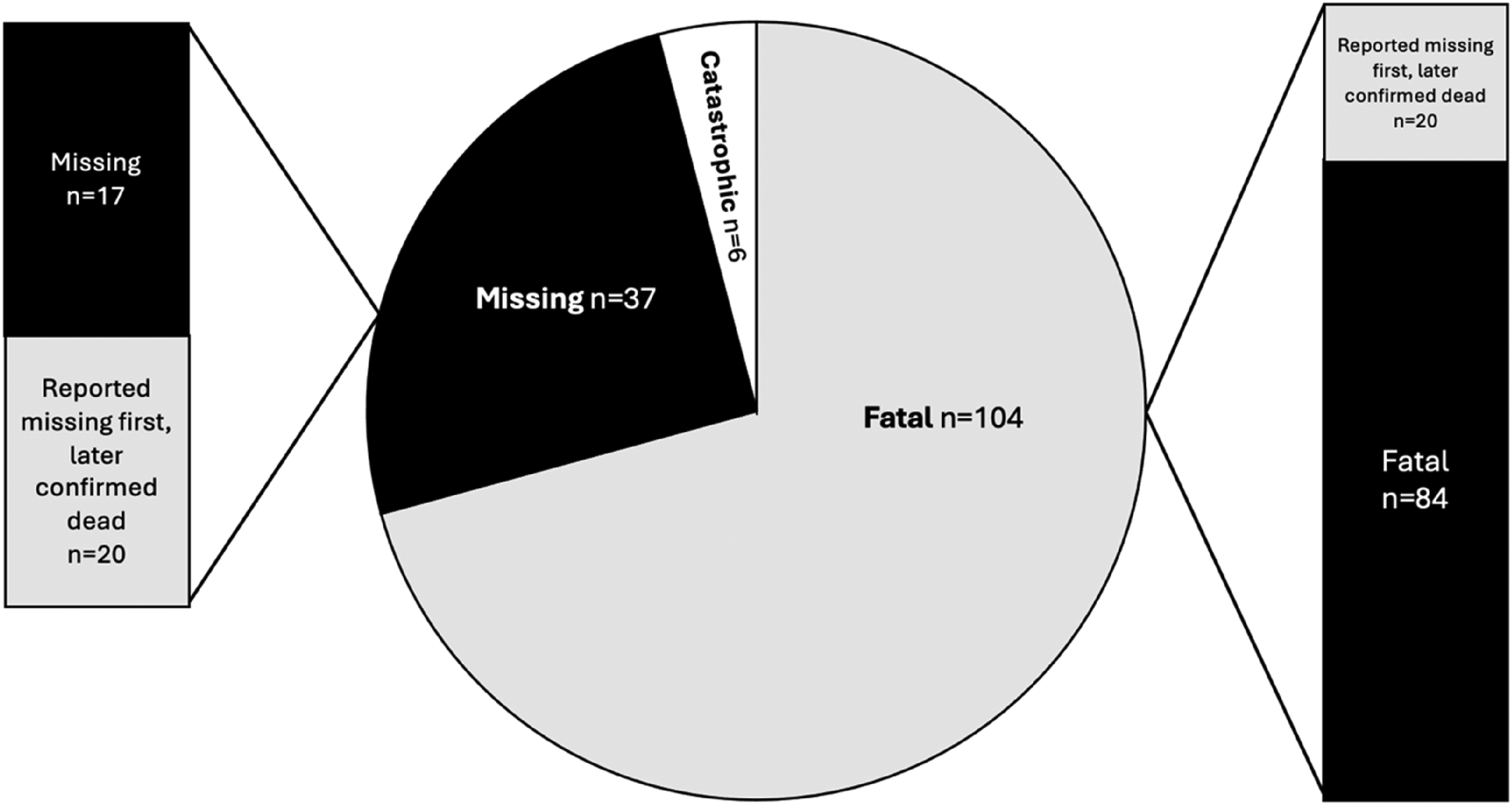
Classification and number of serious adverse events in trail running.
Most of the serious adverse events occurred during races (53%, n = 67), whereas 37% (n = 47) occurred during recreational runs and 9% (n = 11) were unspecified. Most trail runners died during races (64%, n = 54), whereas recreational runs resulted in the most missing cases being reported (81%, n = 30). Specifically, 90% (n = 18) of trail runners who died after being reported missing were involved in recreational runs. All catastrophic events occurred during races.
Trail Runners Who Died
Among the 104 fatal events reported in 77 online news articles, 1% (n = 1) of trail runners died before, 70% during (n = 73), and 29% after (n = 30) the trail run (Table 1). In total, 19% (n = 20) of runners were found dead only after being reported missing.
Events related to the trail runners who died.
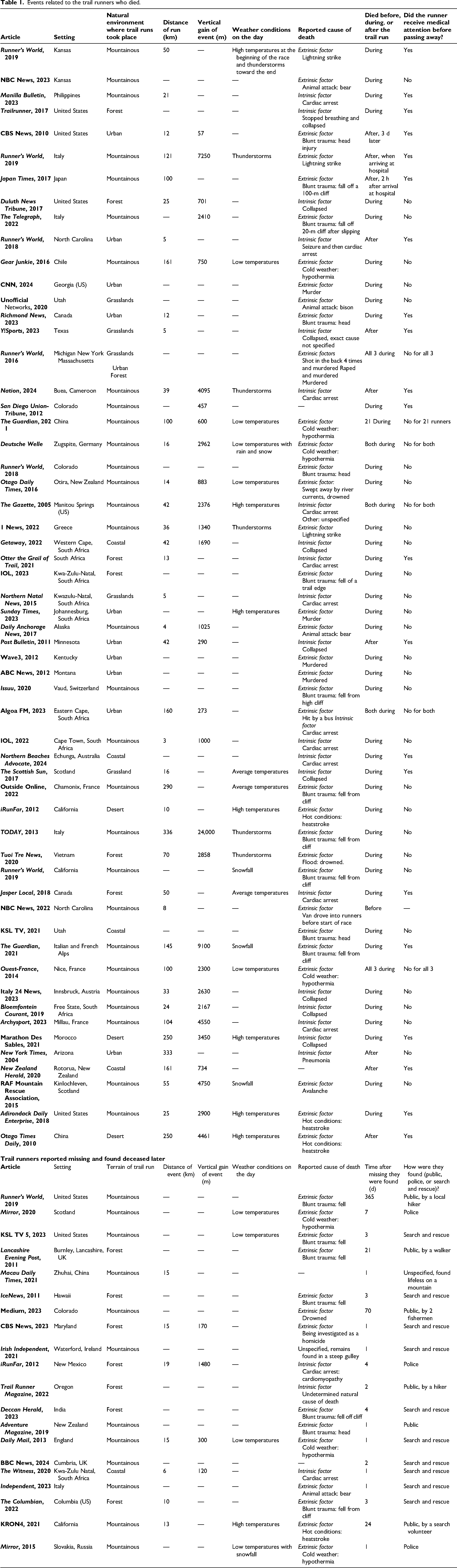
The reported environments included mountainous 52% (n = 41), forest 18% (n = 14), urban 14% (n = 11), grasslands 6% (n = 5), coastal 6% (n = 5), and desert 4% (n = 3). Distances ranged from 3 to 336 km (median, 29 km; interquartile range [IQR], 87 km), whereas vertical gains ranged from 57 to 24,000 m (median, 1690 m; IQR, 2261 m; Table 1). Weather conditions varied: 30% (n = 31) of trail runners died during low temperatures (3% [n = 3] during snowfall), 9% (n = 9) died during high temperatures, 5% (n = 5) during thunderstorms, and 5% (n = 5) died during unknown environmental conditions (Table 1).
Of the 84 runners who did not go missing before dying, 25% (n = 21) received medical attention before they died, 74% (n = 62) had already died before the medical team arrived, and 1% (n = 1) was unspecified. The 20 missing runners were found within 1 to 365 d (median, 2.5 d; IQR, 3.8 d): 50% (n = 10) by search and rescue teams, 30% (n = 6) by the public, 15% (n = 3) by police, and 5% (n = 1) unspecified.
Of the 104 runners, 73% (n = 76) died from extrinsic factors (eg, animal attacks and cold weather), 23% (n = 24) from intrinsic factors (eg, cardiac arrest and collapse), and 4% (n = 4) from unspecified causes. The most common intrinsic causes of death were cardiac arrest (58%, n = 14) and collapse (38%, n = 9). The most common extrinsic causes of death were cold weather resulting in potential hypothermia (40%, n = 30) and blunt trauma following falling or slipping (25%, n = 19). Even though they were a less frequently reported cause of death, extrinsic factors such as animal attacks (4%, n = 4) and murder (7%, n = 7) also were reported (Figure 2).
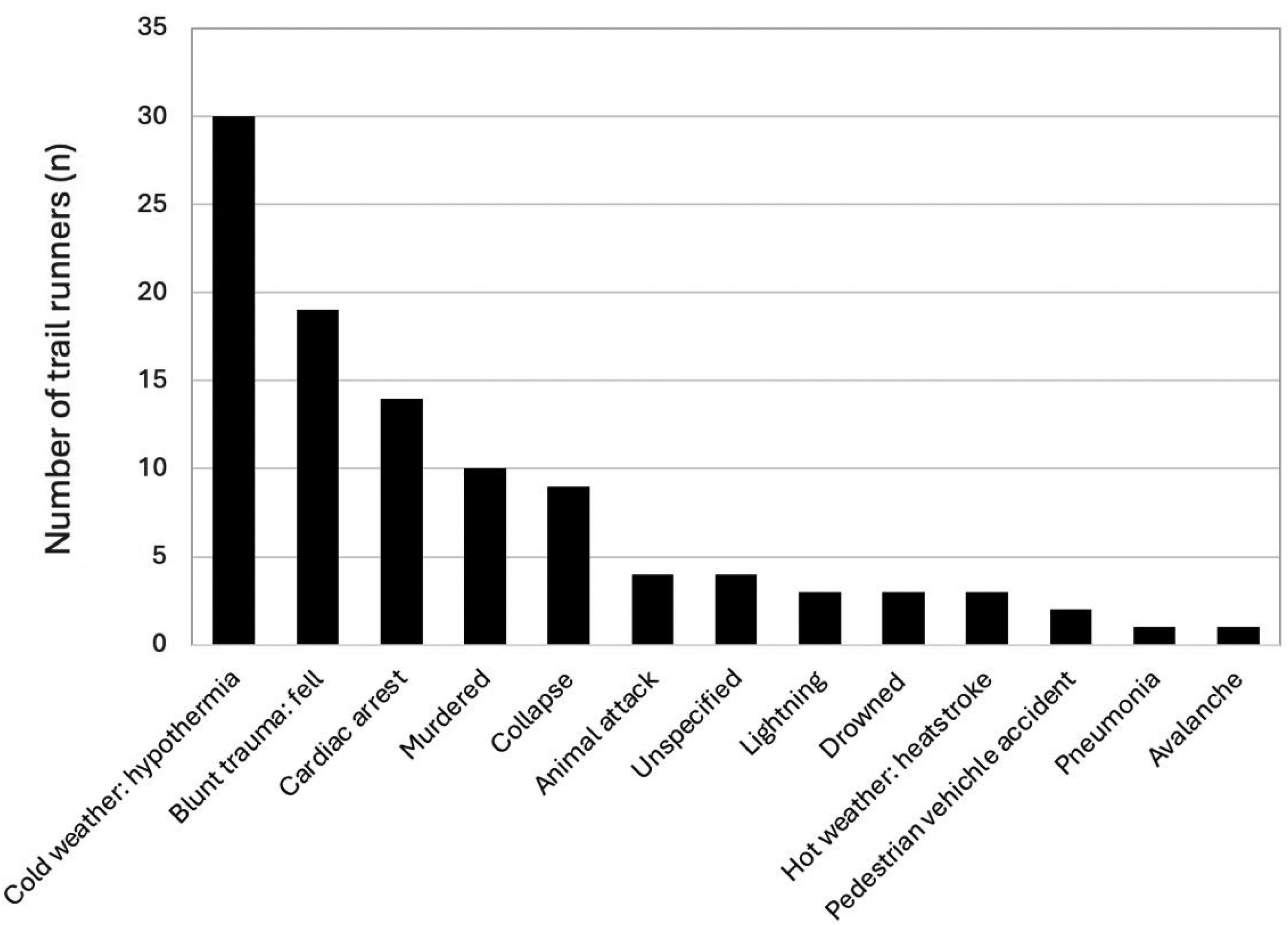
The frequency and classification of fatal events during trail running.
Most fatal events were reported in North America (36%, n = 37), followed by Asia (25%, n = 26), Europe (22%, n = 23), Africa (12%, n = 12), Oceania (5%, n = 5), and South America (1%, n = 1; Figure 3).
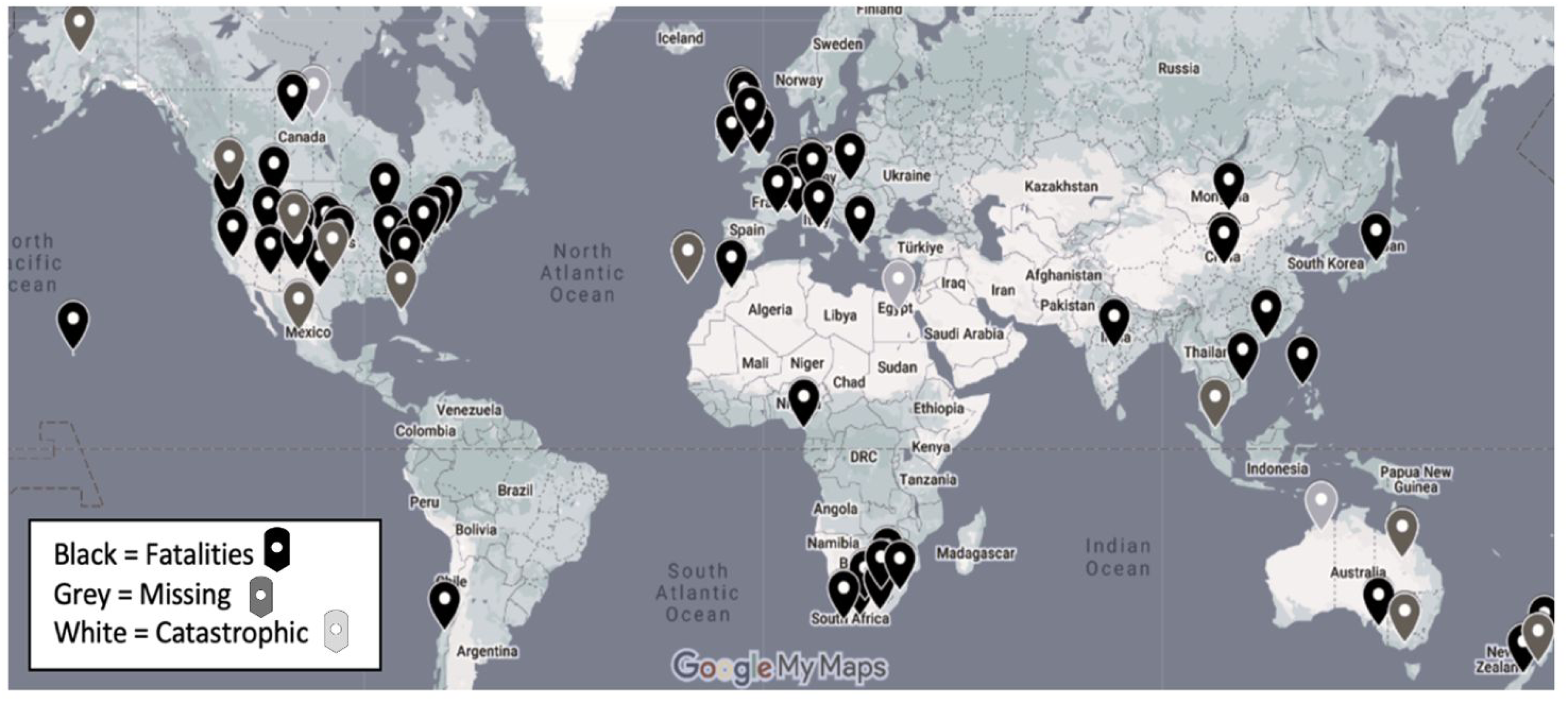
World regions where serious adverse events were reported among trail runners.
Trail Runners Who Went Missing
In total, 34 online news articles reported on 37 trail runners who went missing during a trail run (see online Appendix 2 and Tables 1 and 2). Of these, 57% (n = 21) went missing in mountainous areas, 27% (n = 10) in forests, 11% (n = 4) at the coast, 3% (n = 1) in snow, and 3% (n = 1) in unspecified environments. Of these 37 runners, 54% (n = 20) were found deceased after being reported missing (see online Appendix 2). Of the remaining 17 runners who went missing, 59% (n = 10) remained missing, 18% (n = 3) were found by police, 18% (n = 3) were found by search and rescue, and 6% (n = 1) were found by the public. The 41% (n = 7) of trail runners who were found were found within 1 to 365 d. Of these runners, 29% (n = 2) had non-life-threatening injuries and 71% (n = 5) were uninjured. The runs covered distances of 5 to 161 km, with vertical gains of 95 to 8230 m (Table 2).
Trail runners who went missing during a trail run.
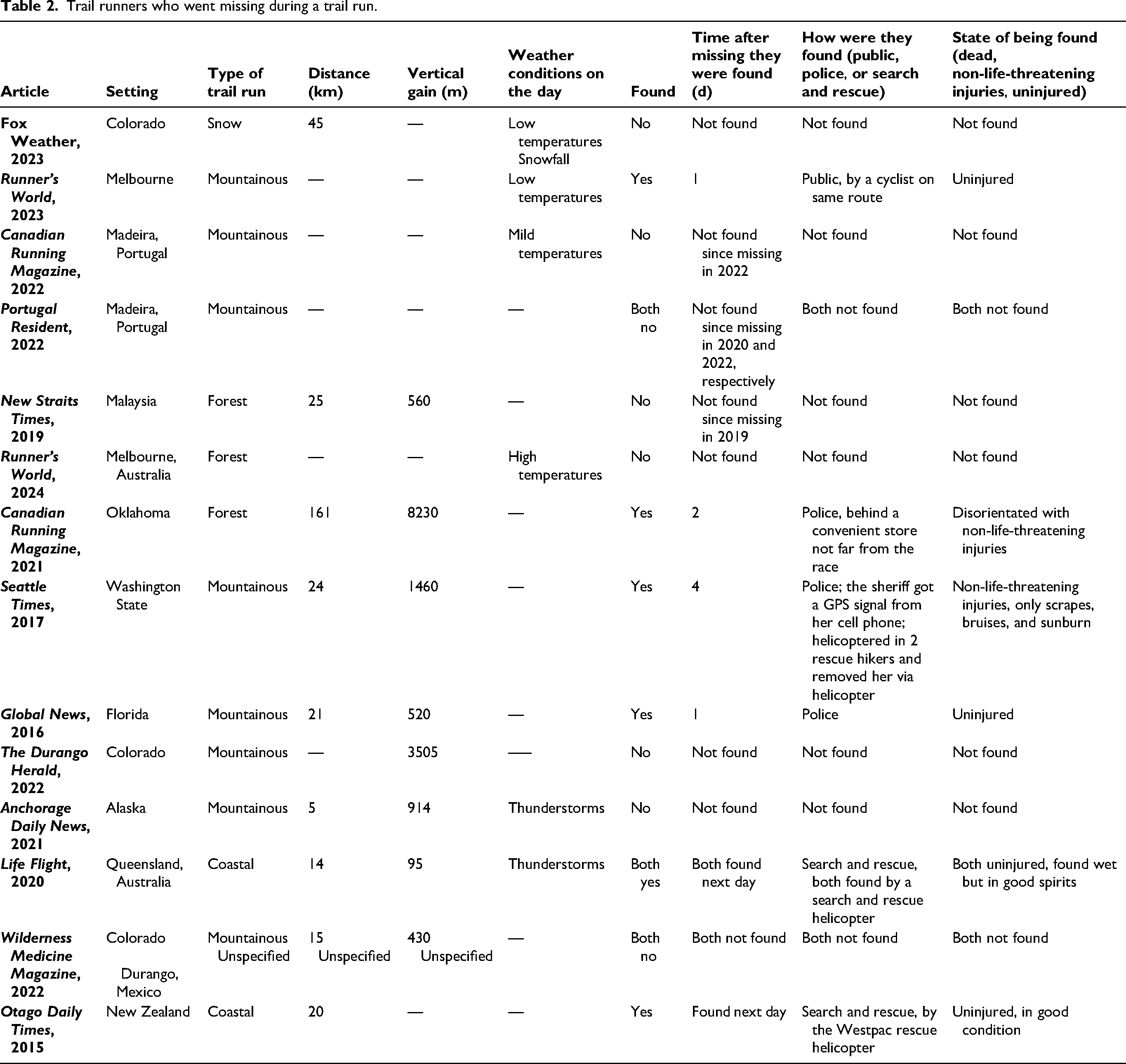
Of the 37 runners who went missing, weather conditions were reported for missing events related to 12 runners. Of these 12 runners, most went missing at low temperatures (50%, n = 2), including snowfall (17%, n = 2), thunderstorms (25%, n = 3), and high temperatures (17%, n = 2). Most of the missing events were reported in North America (46%, n = 17), Europe (27%, n = 10), Oceania (16%, n = 6), Asia (8%, n = 3), and Africa (3%, n = 1; Figure 3).
Catastrophic Events Experienced by Trail Runners
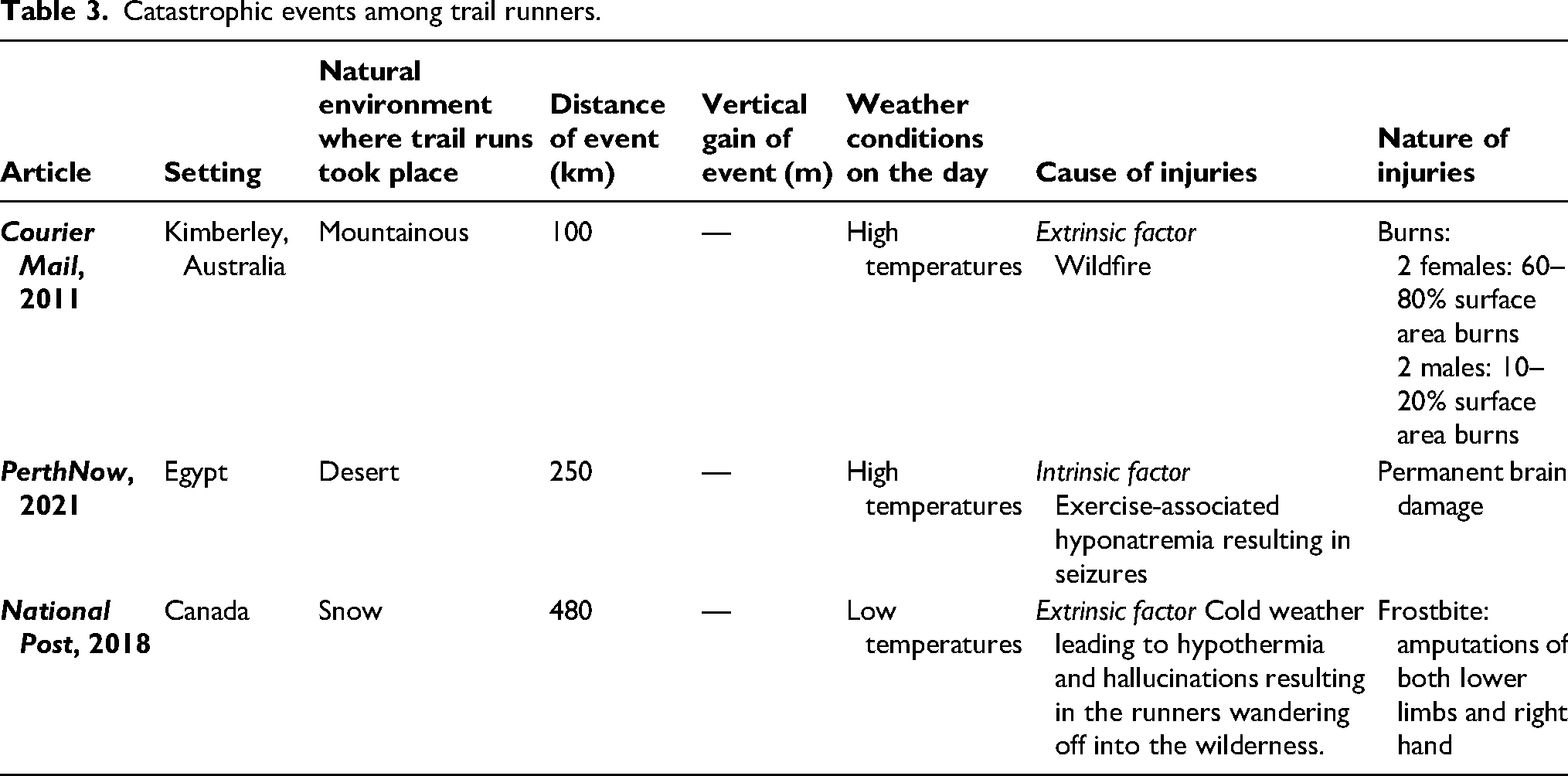
Three online news articles reported on catastrophic events among 6 ultra trail runners. The events involved wildfires that resulted in severe burn wounds, exercise-associated hyponatremia that resulted in seizures and ultimately brain damage, and a runner that lost both legs and one arm following acute frostbite injuries (Table 3).
Catastrophic events among trail runners.
Discussion
To our knowledge, this is the first review to report on serious adverse events that occur during trail running worldwide. Our review included 104 deaths, with the most common causes involving hypothermia and cardiac arrest. Further, 37 runners went missing (20 died), mainly in mountainous areas, during trail running events. Six catastrophic events involved severe burns, brain damage, and frostbite injuries. Most trail runners died during races, whereas missing cases were mostly related to recreational runs.
This review's reported events are rare and need contextualized interpretation. However, across all news articles, only 127 trail runners involved in serious adverse events were identified.
Fatal Events During Trail Running
Trail running typically occurs in wilderness areas where runners are exposed to environmental hazards. 3 In this review, the top 3 reported leading causes of death (ie, cold weather resulting in hypothermia, cardiac arrest, and blunt trauma from falling) were similar to those reported in a previous review by Roi. 17 Our review reported that most fatal events occurred during races (64%), which concurs with Roi's findings of 69%. This could be explained by the high exercise intensity and physiologic load that runners are exposed to, specifically during trail running. 21 Furthermore, Roi reported that mostly males (88%) are involved in fatal events, which agrees with our results (74% males).
In trail running, runners are mostly self-sufficient in carrying their own gear, nutrition, and clothing in a small running pack. 4 When weather conditions suddenly change or runners suffer an injury forcing them to stop moving while wet from sweating, the risk of hypothermia increases because the runners often do not have sufficient clothing to protect them from the cold. Because most fatal events occurred during races, race organizers could amend compulsory kit requirements to ensure that runners pack the needed clothing to protect them from cold weather conditions. Furthermore, creating awareness among race organizers regarding the potential need to treat trail runners for extreme heat- or cold-related consequences is needed.
Cardiac arrest events have been reported across multiple endurance sports.22–24 Even though rare, ultra endurance running could result in acute alterations of biomarkers for cardiac damage and result in potential long-term cardiac damage. 24 Prompt defibrillation improves an athlete's survival chances. 25 However, considering the remote regions where trail runners compete, it is mostly impossible to reach them in time to provide emergency care. Race medical teams should consider comprehensive cardiac screening for high-risk individuals as part of prerace medical screening protocols.
Another leading cause of death in trail runners was blunt trauma after falling. Trail running has an inherent risk of falling, considering the varying uneven natural surfaces 26 runners need to navigate while fatigued and environmental factors such as lightning strikes. Race organizers should consider additional safety measures on sections of a trail where runners could fall from significant heights. For example, temporary safety barriers at higher cliffs toward the end of a race when runners are exhausted and at higher risk for falling can be lifesaving.
Missing Runners During Trail Running
This review identified 37 runners who went missing (20 died) mostly during recreational trail runs (81%). Most of the 37 runners went missing on mountainous runs with an elevation gain of between 430 and 3505 m. The New York Post reported that at least 1180 people have gone missing in US National Parks, which consist of mountainous areas, between 2018 and 2023. 27 In total, 48% of the missing individuals were either trail runners or hikers. 28 Another study showed the difficulty of conducting search and rescue operations in rough terrain, especially with significant mountain coverage, due to fatigue and reduced stamina of the search and rescue teams. 29 These mountainous regions have inherent challenges for medical teams in finding, treating, and evacuating runners from the area. In addition, weather conditions such as thunderstorms and lower temperatures further prevent the teams from conducting their searches effectively. 30 Other challenges experienced by search and rescue teams when trying to find a missing person include inadequate team training, communication issues, time constraints, fatigue, lack of resources, 31 and finding hidden bodies following homicide. These are all possible reasons our review has reported multiple runners still missing. We could not find other studies reporting the number of runners who went missing during trail running events or the most common trail running environments where trail runners go missing.
Catastrophic Events Occurring During Trail Running
In our review, all runners involved in catastrophic events participated in races, and most experienced severe burns from wildfires. 32 During the past 2 decades, wildfires have injured or killed ∼18,000 people. 33 Due to climate change, future extreme wildfire events are expected to increase significantly in specific regions. 33 This could further expose trail runners to serious adverse events not only related to fire but also as result of heat-related illnesses including hyperthermia. Predicting these events may be challenging before a trail run in a specific region. Because all catastrophic events occurred during races, race organizers should consider trends in past wildfire events and schedule races outside higher-risk seasons. However, runners and race organizers should consider canceling events in areas where local weather stations have provided alerts of wildfire risk.
Recommendations
In reporting these findings, we do not want to discourage participation in trail running or suggest that race organizers are ultimately liable for serious adverse events. These reported serious adverse events are rare. We do support the continuous efforts toward improving safety for trail runners in the context of participation in environments where risk cannot be eliminated. We acknowledge that some races already have excellent measures to support trail runners’ safety and that trail runners are ultimately responsible for their own safety when participating in recreational trail runs. However, due to the severity of these rare events, we suggest implementing the following recommendations specific to the findings of this review. Cardiac arrest was a major cause of death in trail running events. If the resources are available, general prerace medical screenings to assess runners’ health risks and training history could aid in prevention. Compulsory gear should be carefully considered, especially in mountainous regions where the weather could change drastically in a short period of time. In environments where weather could change rapidly, race organizers could include warm clothing on the required list, even when cold conditions are not predicted for race day. Runners with infrequent exposure to running on uneven technical terrains should consider building more experience in running on uneven surfaces during shorter training runs before entering races in remote mountainous regions where falling could be fatal. Most online news articles reported that runners did not receive medical attention before dying. Therefore, runners could carry communication devices and trackers with sufficient battery life to facilitate improved communication with medical teams when in distress and facilitate faster location of distressed runners. Given that murder and animal attacks also were causes of fatal events, increased security on trails is recommended. Weather checks should be conducted before and during trail events to prevent runners from going missing or being exposed to fatal and catastrophic events. Where a risk of extreme conditions exists, events could be canceled. Trails could be clearly marked to prevent runners from getting lost, and GPS devices with long battery life should be mandatory. Having support crews available for runners not only at aid stations but also during the run could further mitigate the risk of serious adverse events in trail running events. We further encourage race organizers and medical teams to consider the published expert recommendation regarding appropriate levels of medical care at ultra races. 34 Future research should focus on reporting and analyzing these events to enhance understanding and risk awareness in trail running.
Limitations
This review used only online news articles to report serious adverse events during trail running. Therefore, our review risks underreporting these events because we could have missed relevant publications from other online news sources (eg, blogs, social media, etc.) and publications from earlier years not available online. Further, only English-language articles were considered for inclusion, which could have affected the frequency of events identified in specific world regions.
In Google, one's location, search history, and settings are used to help find relevant search results for your search. Consequently, we used StrongVPN to allow us to change our location to the different regions included in our search strategy to prevent Google from limiting our search results to the region from which we were searching. However, Google still could inherently pick up a location through the local Wi-Fi network, which could affect systematic searches on online news platforms.
Due to the lack of follow-up articles published on the runners who went missing and are still missing, we could have overreported not considering those who might have been found recently. In contrast, catastrophic injuries are likely underreported because we had limited ability to identify the consequences of the injuries due to unclear news reports.
Because we reviewed online news articles, some of the reports cannot be verified, and medical information may not be entirely reliable as reported by non-medically trained journalists.
Conclusion
The most serious adverse events reported in trail running involve fatal events, with hypothermia being the leading cause in the different incidents. Some trail runners reported missing are still unaccounted for, highlighting challenges in recovery efforts. Additionally, catastrophic events involving severe burns, brain damage, and frostbite underscore the diverse risks of trail running. Even though these events are rare, they highlight the need for further research, improved reporting on serious adverse events, and further deliberations to improve safety during trail running races and recreational running. These findings can assist in the development of future prevention strategies for trail running events and guide medical staff during race day medical planning
Supplemental Material
sj-docx-1-wem-10.1177_10806032251338703 - Supplemental material for Trail Running Safety: A Review of Serious Adverse Events Reported in Online News Articles
Supplemental material, sj-docx-1-wem-10.1177_10806032251338703 for Trail Running Safety: A Review of Serious Adverse Events Reported in Online News Articles by Carel Viljoen, Monique da Cruz, Kgame Matlala, Megan Groves, Kaylin du Toit, Loria Fourie, Bruno Silva, Volker Scheer, Candice MacMillan and Dina C. Janse van Rensburg in Wilderness & Environmental Medicine
Supplemental Material
sj-docx-2-wem-10.1177_10806032251338703 - Supplemental material for Trail Running Safety: A Review of Serious Adverse Events Reported in Online News Articles
Supplemental material, sj-docx-2-wem-10.1177_10806032251338703 for Trail Running Safety: A Review of Serious Adverse Events Reported in Online News Articles by Carel Viljoen, Monique da Cruz, Kgame Matlala, Megan Groves, Kaylin du Toit, Loria Fourie, Bruno Silva, Volker Scheer, Candice MacMillan and Dina C. Janse van Rensburg in Wilderness & Environmental Medicine
Footnotes
Author Contribution(s)
Declaration of Conflicting Interests
The author(s) declared no potential conflicts of interest with respect to the research, authorship, and/or publication of this article.
Funding
The author(s) received no financial support for the research, authorship, and/or publication of this article.

References
Supplementary Material
Please find the following supplemental material available below.
For Open Access articles published under a Creative Commons License, all supplemental material carries the same license as the article it is associated with.
For non-Open Access articles published, all supplemental material carries a non-exclusive license, and permission requests for re-use of supplemental material or any part of supplemental material shall be sent directly to the copyright owner as specified in the copyright notice associated with the article.
