



Abstract
Griffith Pugh, MD (1909–1994), was a pioneer in altitude physiology. During World War II, he developed training protocols in Lebanon to improve soldier performance at altitude and in the cold. In 1951 he was chosen to join the British Everest team as a scientist. In preparation, he developed strategies for success on a training expedition on Cho Oyu in 1952. Results from Cho Oyu led to the use of supplemental oxygen at higher flow rates during ascent than used previously (4 L/min vs 2 L/min) and continued use (at a reduced rate of 2 L/min) during descent, enabling increased performance and improved mental acuity. Oxygen was also used during sleep, leading to improved sleep and warmth. Adequate hydration (∼3 L/day) was also stressed, and a more appealing diet led to improved nutrition and condition of the climbers. Improved hygiene practices and acclimatization protocols were also developed. These strategies contributed to the first successful summiting of Mount Everest in 1953. Pugh was then appointed as the lead scientist for a ground-breaking eight-and-a-half-month research expedition where the team was the first to overwinter at high altitude (5800 m) in the Himalayas. This current work summarizes Pugh's scientific contributions as they relate to success on Mount Everest and in inspiring future altitude research by generations of successful researchers.
Introduction
The year 2023 marked the 70th anniversary of one of the greatest and best-known accomplishments in mountaineering history, the first ascent of Mt. Everest by Edmund Hillary and Tenzing Norgay on May 29, 1953. It is less well known that this physical achievement was substantially enabled by the understanding of altitude and cold physiology provided by a then relatively unknown researcher, Griffith Pugh.
Lewis Griffith Cresswell Evans Pugh, MD (1909–1994), skied for Britain at the World Championships in 1935 and 1937. He qualified as a medical doctor in 1939 and became a captain in the Royal Army Medical Corps. He was posted to the Mountain Warfare Training School in Lebanon during WWII because of his interest in extreme climate conditions. 1 He later joined the division of human physiology at the Medical Research Council of Britain in 1950.
In a fortunate twist of fate, Pugh was invited to participate in the 1952 British expedition to Cho Oyu as a scientist because the Swiss had the permit to attempt Everest that year. Fortunately for Pugh and the rest of the British team, the Swiss failed twice in 1952, opening the door for the 1953 success that made Hillary and Tensing household names (See Figure 1).
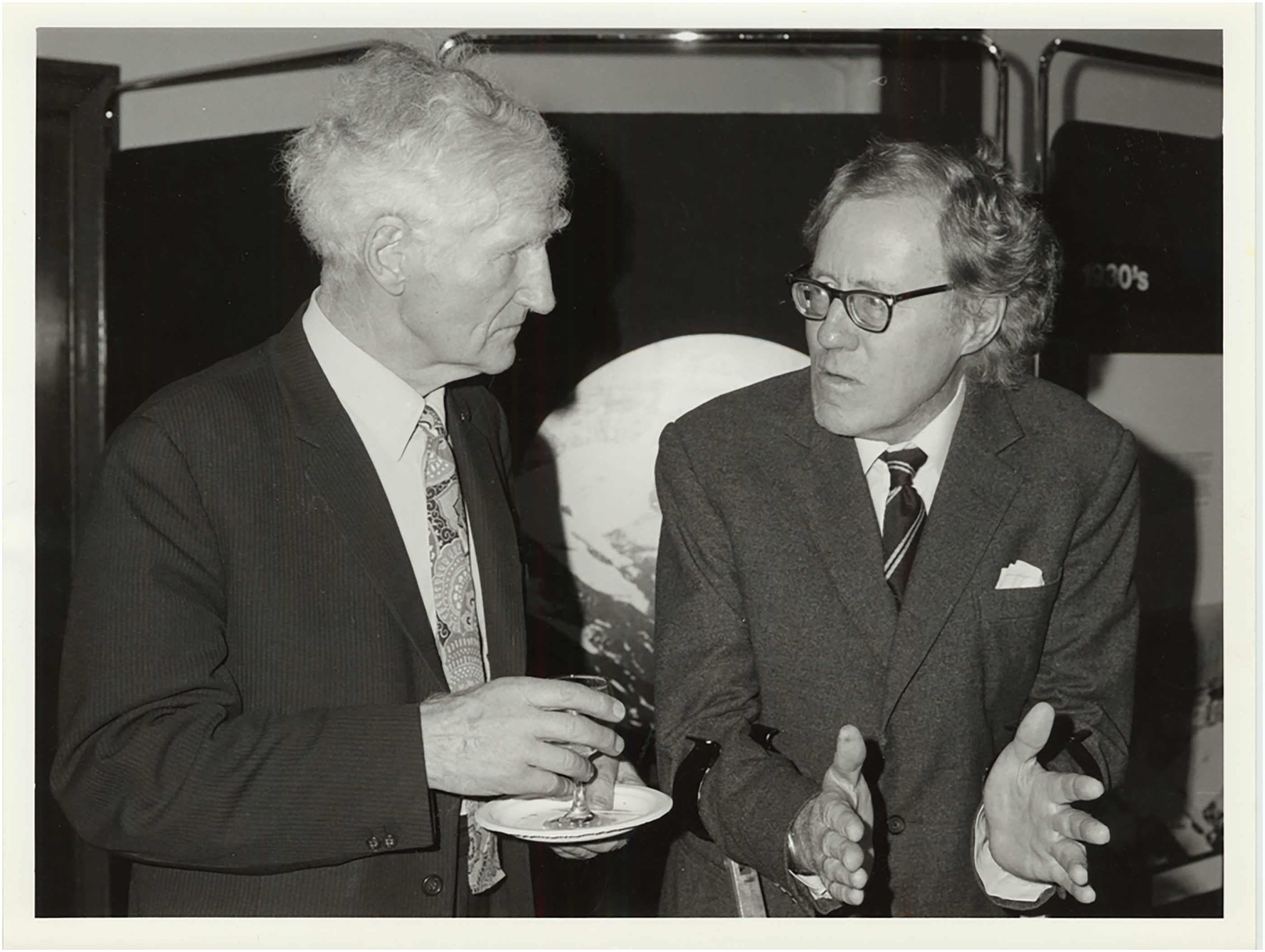
John Hunt and Griffith Pugh.
The general public knew little about Pugh's contribution until team physician Dr Michael Ward gave a speech at the 40th-anniversary celebration of the first ascent. In his speech, Ward said, “What I want to talk about tonight is the most important reason why the 1953 expedition to Mount Everest succeeded where all its predecessors failed, and that is the work of the unsung hero of Everest . . . Dr Griffith Pugh.” 2 The obscurity of this fact was not surprising since Pugh's contributions received virtually no acknowledgment about the climb in books and films. John Hunt minimized Pugh's contributions 3 because he didn’t want to shift the focus from the heroic physical accomplishments of Hillary and Tensing. Even Pugh's daughter, Harriet Tuckey, didn’t know about Pugh's contributions until she heard Ward's speech. This revelation inspired her to write a book about her father's efforts. 2
Despite the lack of public distinction, the Everest success helped launch Pugh's prolific academic career in environmental physiology and ergonomics. For example, he was appointed as the lead scientist for the eight-and-a-half-month Himalayan Scientific and Mountaineering Expedition in 1960–61 (also known as the Silver Hut Expedition).
His research inspired many research trainees and colleagues to establish their own distinguished careers. After working under Otto Edhom, director of the Medical Research Council in Hampstead, Pugh inspired notable researchers such as Jim Milledge, Michael Ward, John West, Sukhamay Lahiri, John Sutton, and Nicola Jones, who each inspired subsequent generations of researchers.
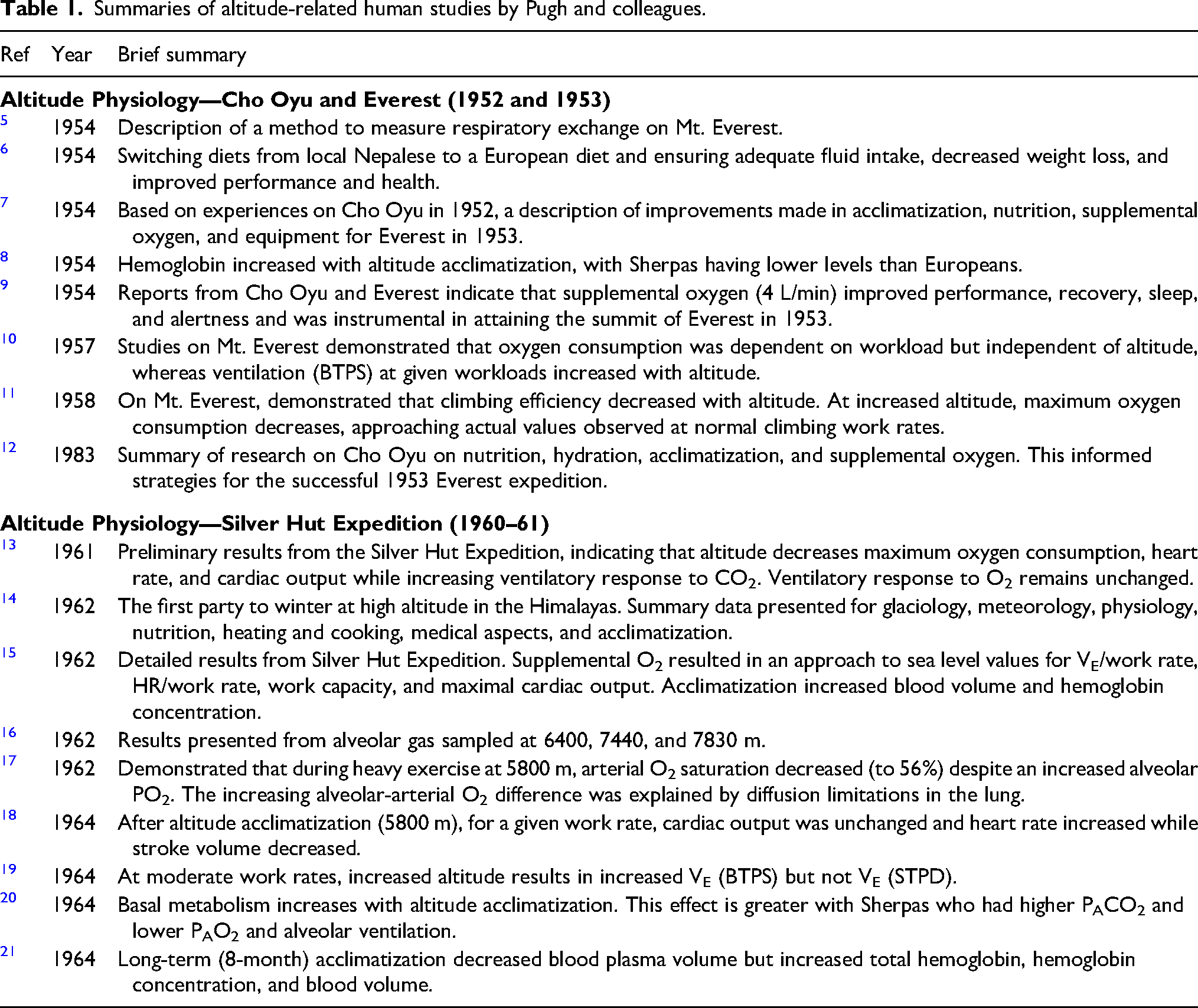
Although one of Pugh's individual papers was previously featured in this Lesson From History section, 4 this paper attempts to summarize key lessons learned from Pugh's altitude research in toto as it assisted in the first ascent of Everest and then provided a basis for future mountaineering and altitude research. Table 1 provides brief summaries of his research from Cho Oyu and Everest (1952 and 1953) and the Silver Hut Expedition (1960–61).
Summaries of altitude-related human studies by Pugh and colleagues.
Success on Everest
Although considerable research on altitude physiology had been conducted earlier, the effect on climbing strategies was limited. For example, Paul Bert, who built one of the first pressure chambers, described the deleterious effects of altitude and demonstrated that these effects were due to decreased partial pressure of oxygen and not decreased barometric pressure itself. 22 Mosso 23 and Ravenhill 24 provided early reports of high-altitude pulmonary edema, and Bert 25 demonstrated that breathing supplemental oxygen could reduce symptoms of acute mountain sickness. Charles Houston conducted a 35-day simulated climb in Operation Everest 26 in which two of four subjects tolerated 20 min at a simulated altitude at the summit of Everest. However, this did not guarantee that it was possible to perform extensive work during long-term exposure to extreme altitudes. Even though Haldane et al. 27 demonstrated that supplemental oxygen could increase work capacity in hypoxic environments, most British climbers rejected its use. 28 As Ward pointed out, as a result of the failures in the 1930s, “the antioxygen lobby was in the ascendant.” 29 Pugh had to demonstrate the reliable value of supplemental oxygen and that other factors such as proper hydration, hygiene equipment, and acclimatization were also important for success. Based on his research experience in Lebanon during WWII and on Cho Oyu in 1952, Pugh provided copious recommendations for the 1953 attempt on Everest. Pugh had three guiding principles: climbers should feel well at all times, they must not lose their appetites, and they must not suffer from altitude sickness. 2
Figure 2 summarizes several strategies and equipment designs (black text) that supported these guiding principles. Pugh advised increased fluid intake (2–3 L/day) and assisted in the design of pressure cooker stoves to improve the ability to efficiently melt snow for drinking and cook meals. 7 He changed the diet from local Nepalese foods to European diets, which increased palatability, appetite, and thus, caloric intake. 6 He also assisted in the choice of better tents, sleeping bags, clothing, and boots for improved weight, durability, warmth, and water resistance. 7 He decreased the incidence of gastrointestinal and respiratory illness by having climbers camp away from the locals during the approach march and decreased altitude sickness by establishing a lengthy altitude acclimatization schedule. 7
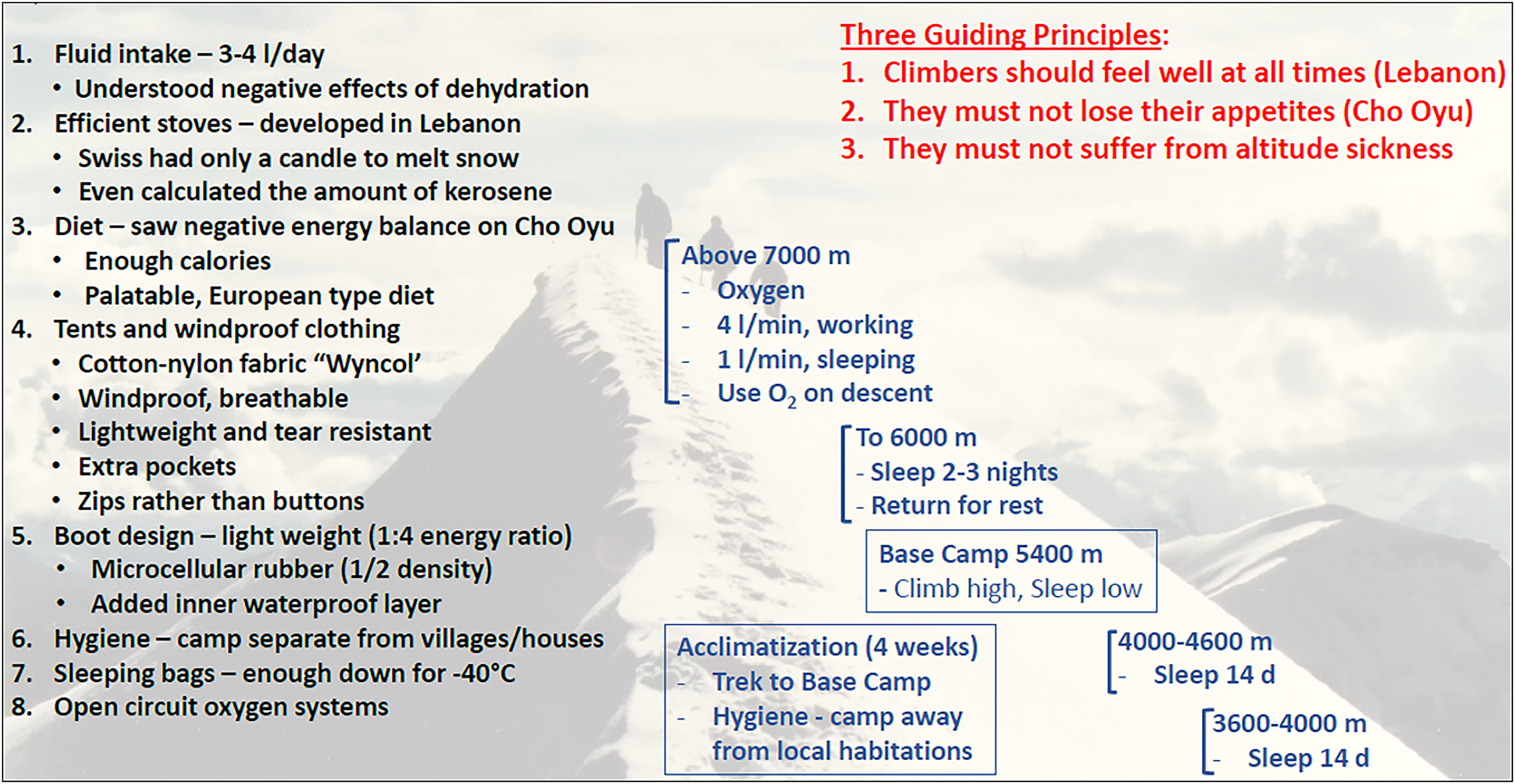
Summary of Pugh's contributions to philosophy, strategy, and equipment at altitude.
Pugh provided evidence of the value of supplemental oxygen, 9 and he then championed the open circuit system, designed by John Coates, that was eventually successful on Everest. At the time, there was significant resistance to the use of supplemental oxygen as it was either deemed unnecessary or would degrade the value of any successes.1,7,28 Through analysis of climbing rates from his own studies on Cho Oyu and other expeditions, Pugh demonstrated the value of carrying the added weight of a properly designed, efficient oxygen system; he illustrated the value of supplemental oxygen in Figure 3. 3
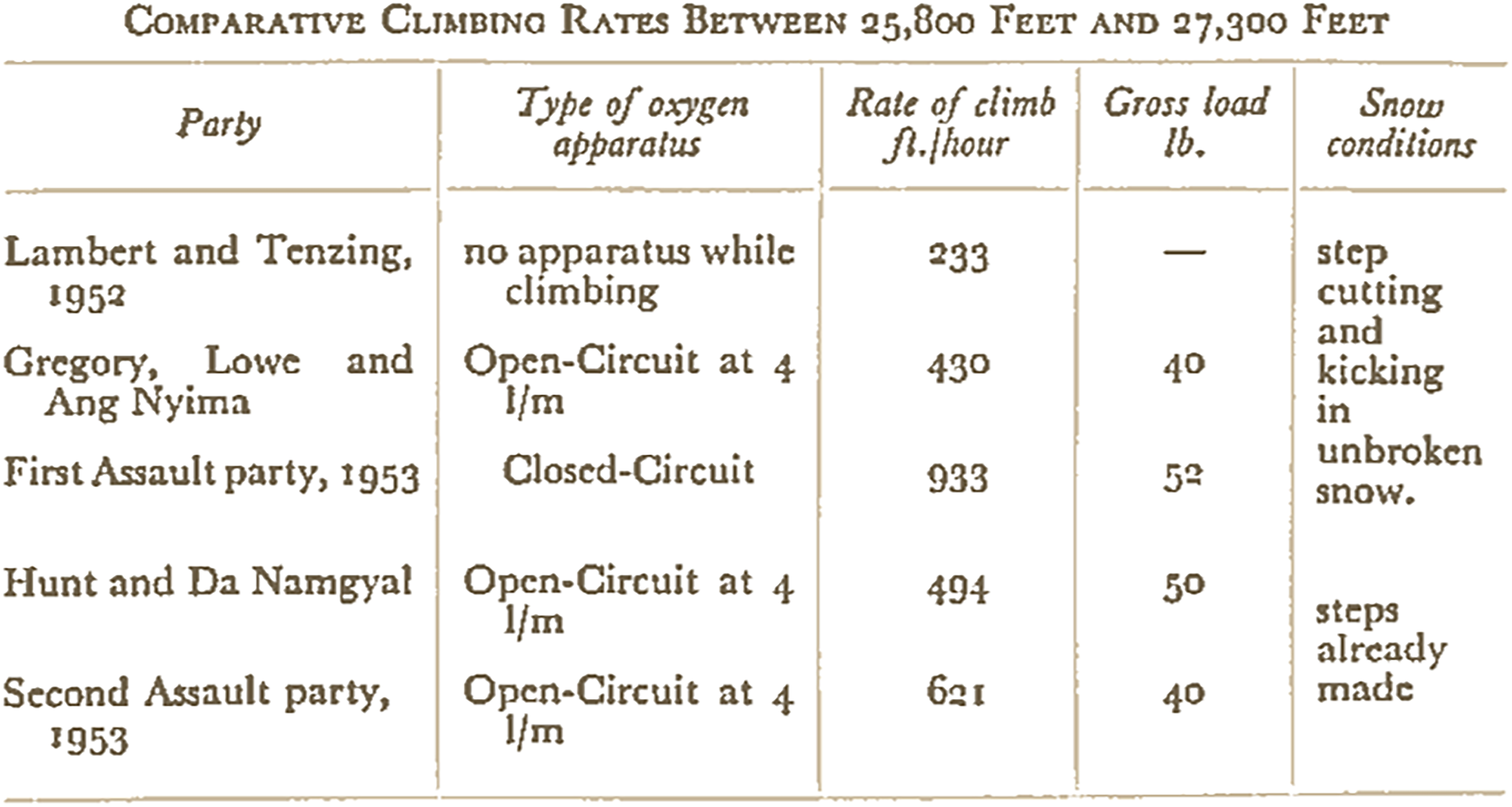
Comparative climbing rates at altitude with different oxygen systems. 3
Although he recognized the increased efficiency of a closed-circuit system, he favored the open-circuit system because of its increased reliability (Figure 4). Indeed, the first assault team of Tom Bourdillon and Charles Evans failed in large part because their closed-circuit systems were inadequate. 29 Two days later, Hillary and Tenzing used the open-circuit system and became the first to stand on top of the world.
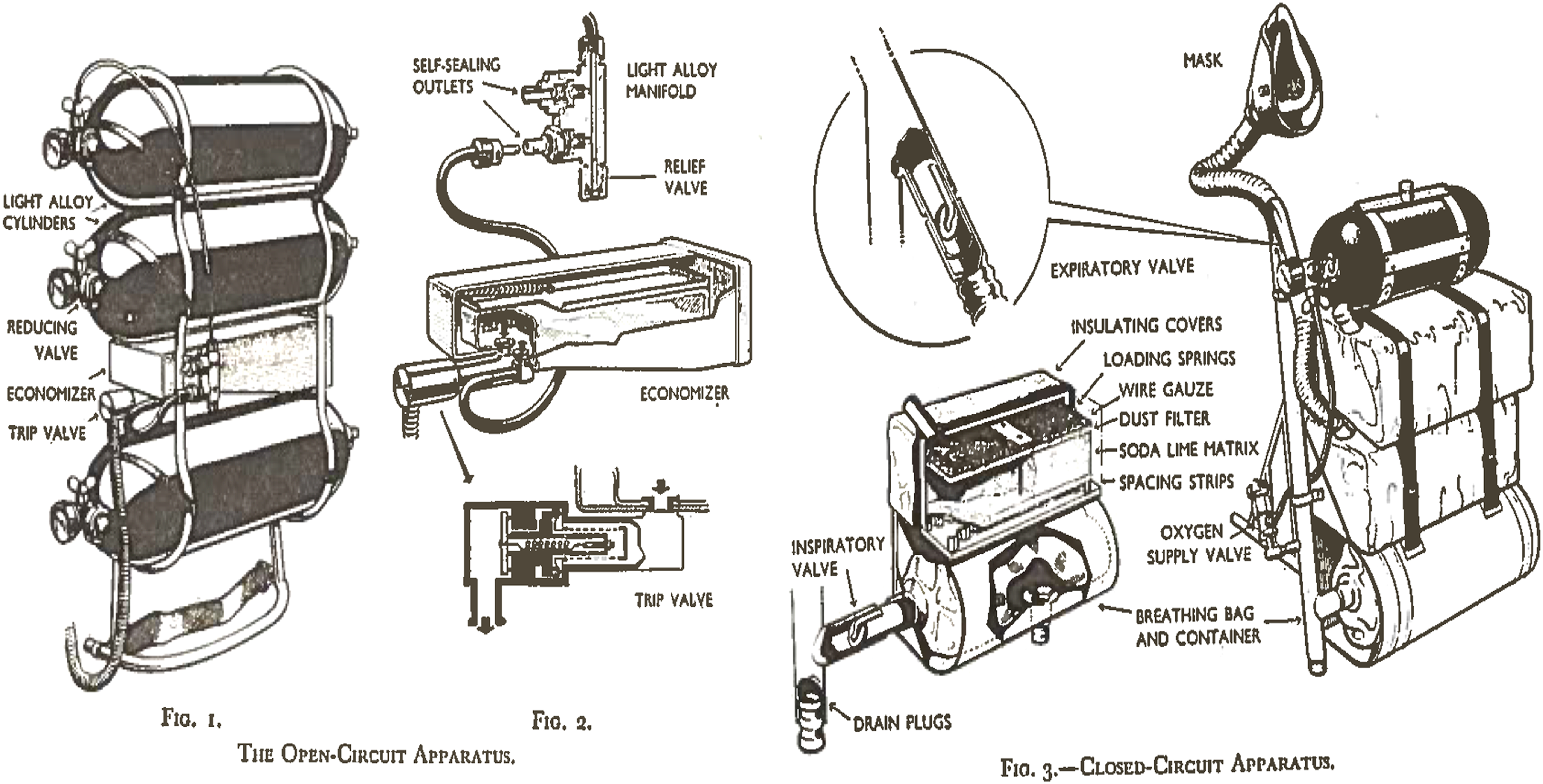
Open- and closed-circuit systems for delivery of supplemental oxygen. 3
The final piece that Pugh added to health and success at extreme altitude was his emphasis on gradual acclimatization (summarized in Figure 3, blue text). 3 He advised the expedition to take 4 weeks on the approach to base camp. He adopted the strategy of climbing high to deliver supplies but sleeping low to decrease altitude-related deterioration. Finally, above 7000 m, he advised using oxygen at 4 L/min while working, 1 L/min while sleeping, and at 2 L/min during descent. To facilitate this, Pugh had 173,000 L of oxygen sent to Everest in 1953 compared to the 25,000 L used by the Swiss in 1952.
Silver Hut Expedition
This expedition (1960–61), led by Hillary, erected a prefabricated laboratory on the Ming Bo glacier about 20 km southwest of Everest (Figure 5). 30 Pugh was the scientific leader of the team of 10 scientists who became the first group to overwinter at high altitude (5800 m) in the Himalayas. The eight-and-a-half-month expedition provided a cornucopia of data on cardiopulmonary and renal function, respiratory regulation and exchange, arterial blood gases, and electrocardiogram activity.
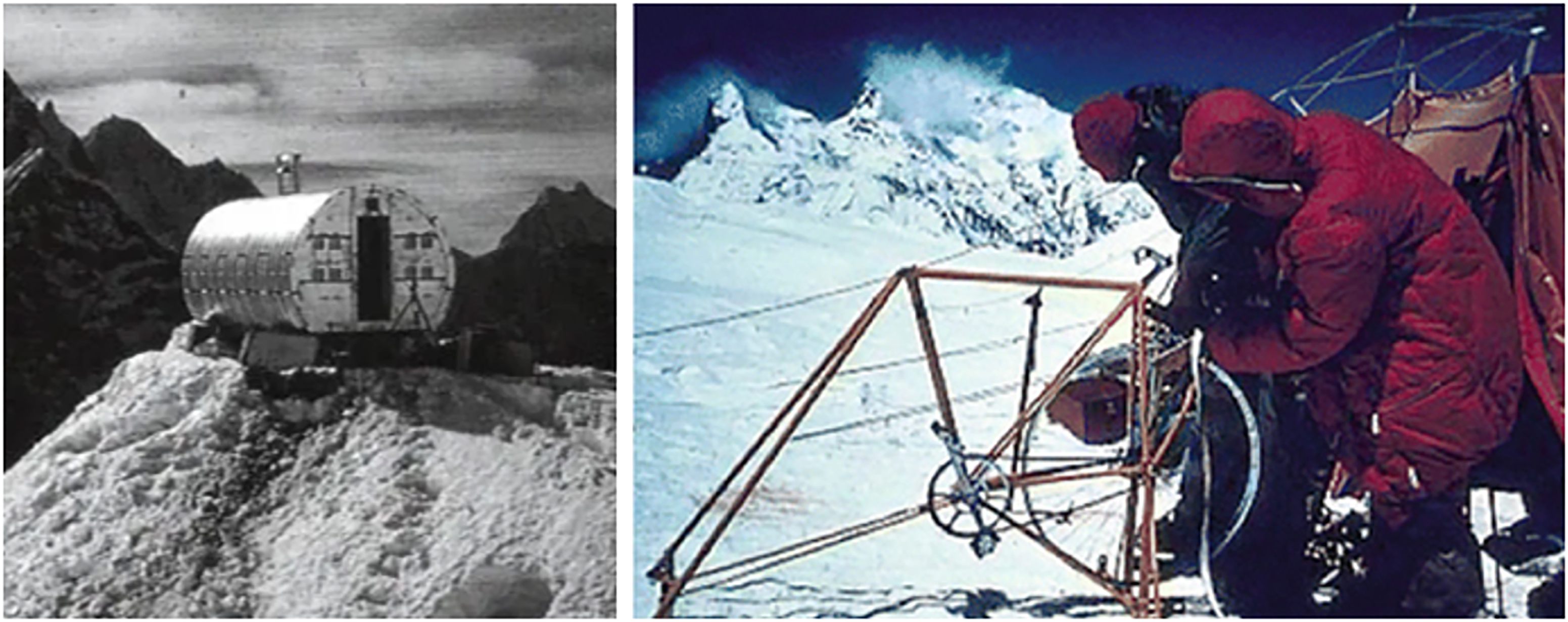
Silver Hut on Ming Bo Glacier, Nepal (5800 m) (left). Research on Makalu Col (7444 m) (right).
This group established that the linear relationship between heart rate and workload was unaffected by altitude (Figure 6). They also demonstrated that at moderate work rates, the increased altitude did not affect minute ventilation (STPD, an indicator of gas volume corrected to standard conditions) but necessitated increased ventilation (BTPS, an indication of actual pulmonary ventilation). 19
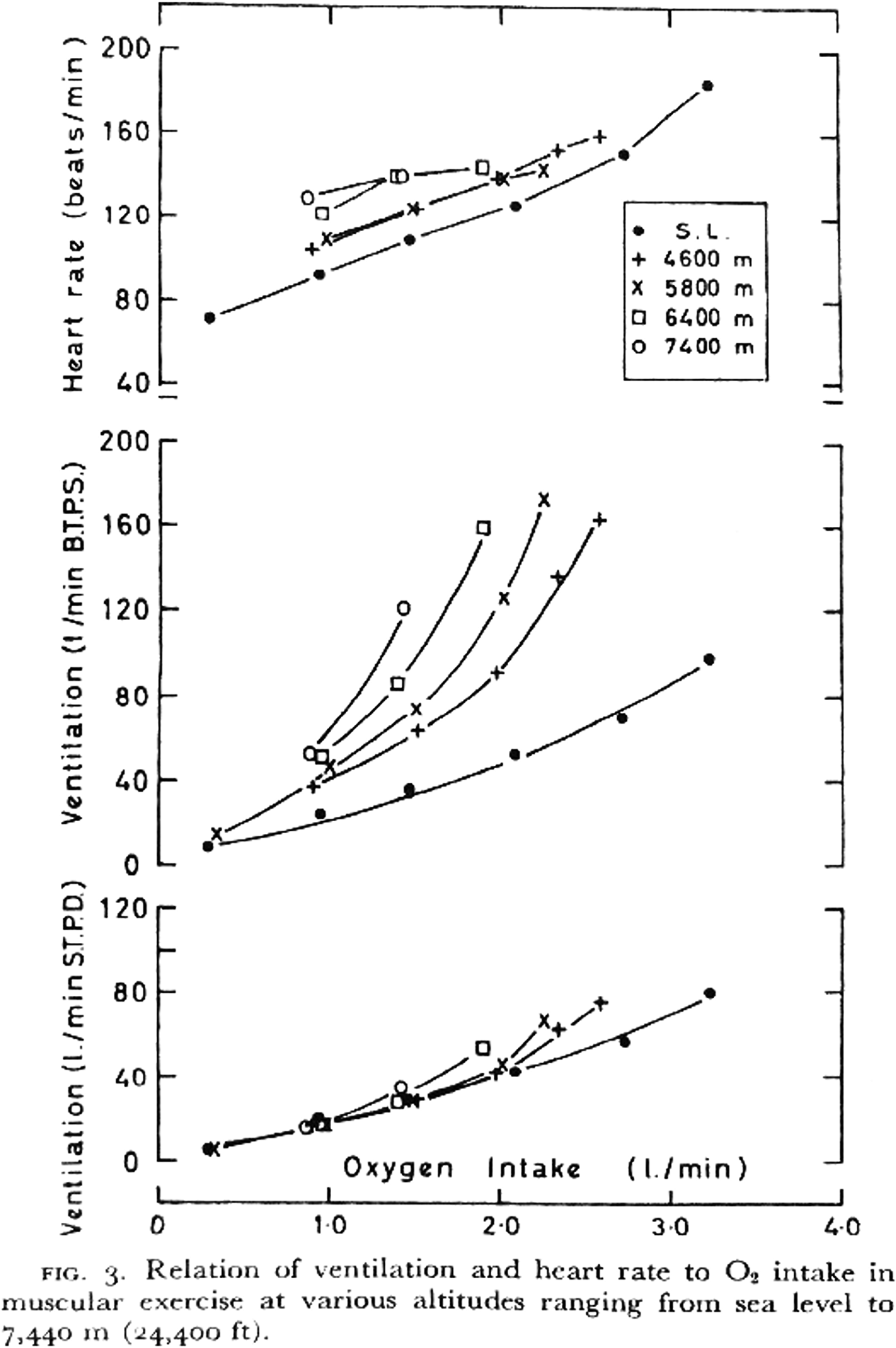
Heart rate and ventilation related to work rate at various altitudes. 19
They also described the decrease in maximal O2 uptake with altitude; this decrease steepens above 6000 m (Figure 7). Open circles in Figure 7 indicate that climbers worked at similar O2 intakes at all altitudes and that this level approaches maximal O2 intake near the summit of Everest. 19 These observations informed much of the discussion as to whether it was possible to climb Everest without supplemental O2.31,32
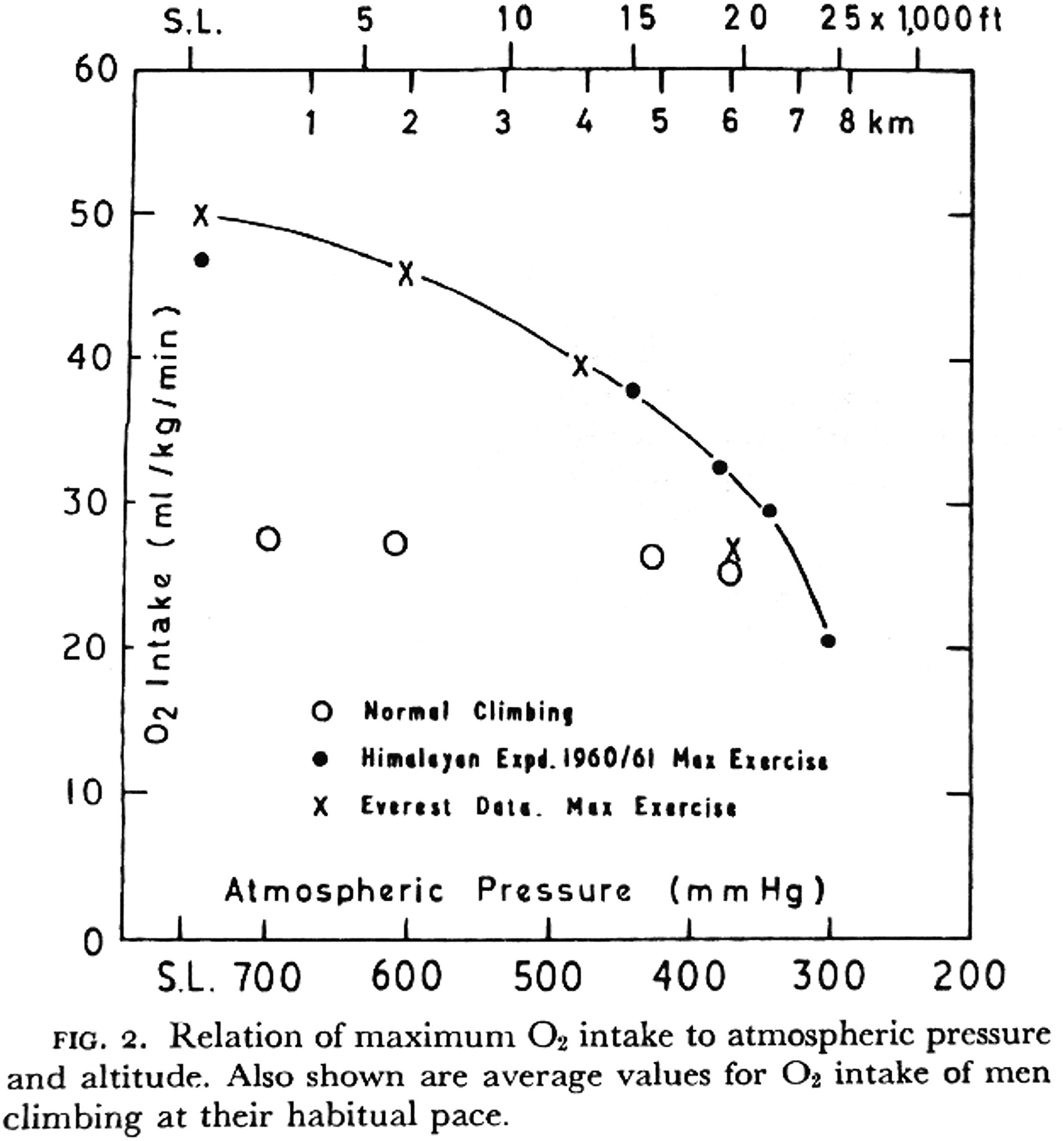
Effect of increased altitude on maximum O2 uptake as well as O2 intake while climbing at a habitual pace. 19
One important study on respiratory physiology at 5800 m (barometric pressure of 380 mm Hg) demonstrated that, as the work rate increased, arterial O2 saturation decreased despite an increase in minute ventilation and PA02 (Figure 8). 17 This increasing alveolar-arterial O2 difference demonstrated diffusion limitations of the lung at altitude.
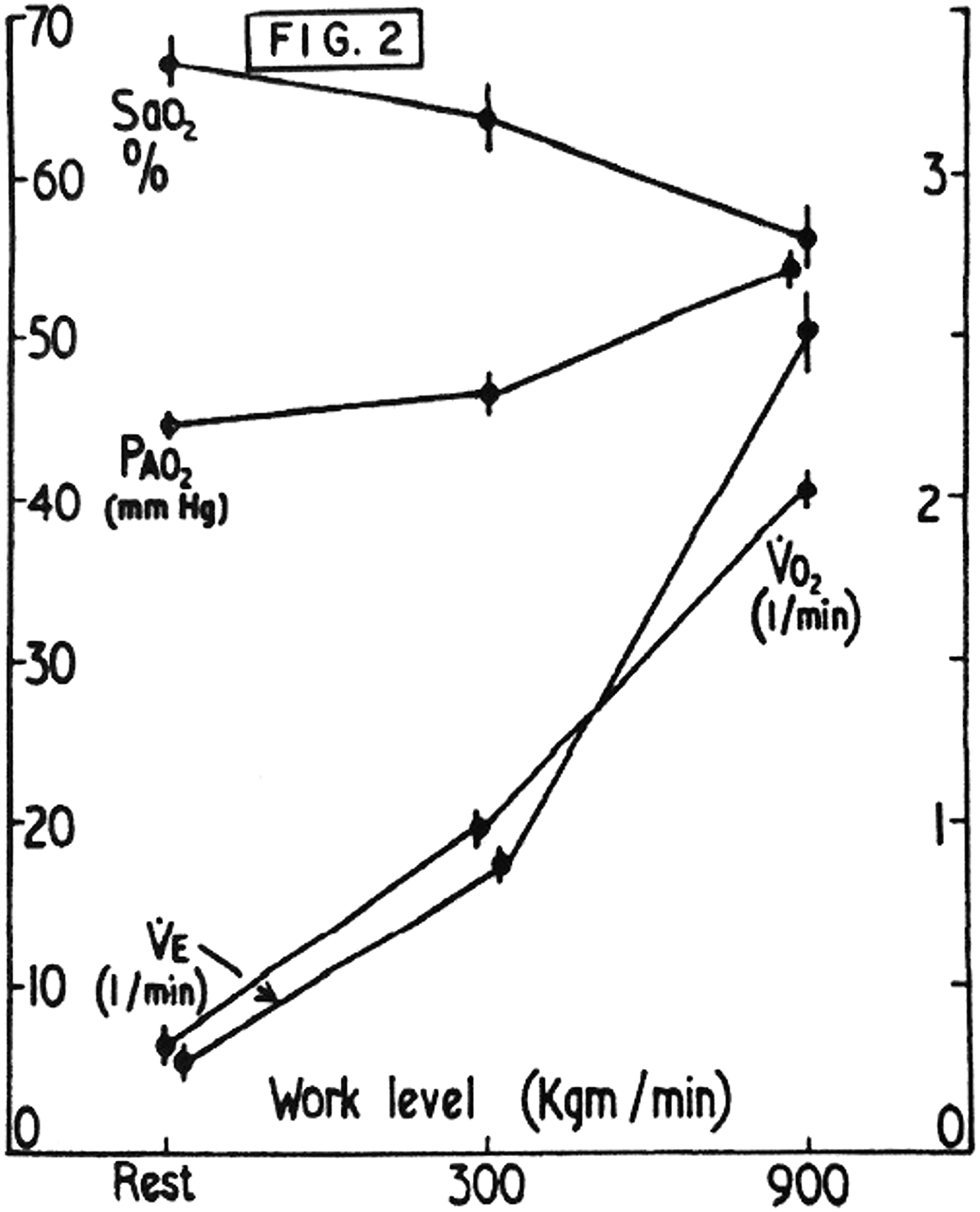
Responses at rest and two exercise levels at altitude. 17
Finally, this group described the atmosphere-to-tissue O2 cascade at sea level and altitude. They demonstrated that, although there was a large decrease in atmospheric O2 pressure at altitude, the slope of the gradient is decreased at altitude such that mixed venous O2 pressure is similar at sea level and altitude (Figure 9). 33 Several other papers are summarized in Table 1, and in toto they provided the most detailed description of physiological acclimatization to altitude at the time.
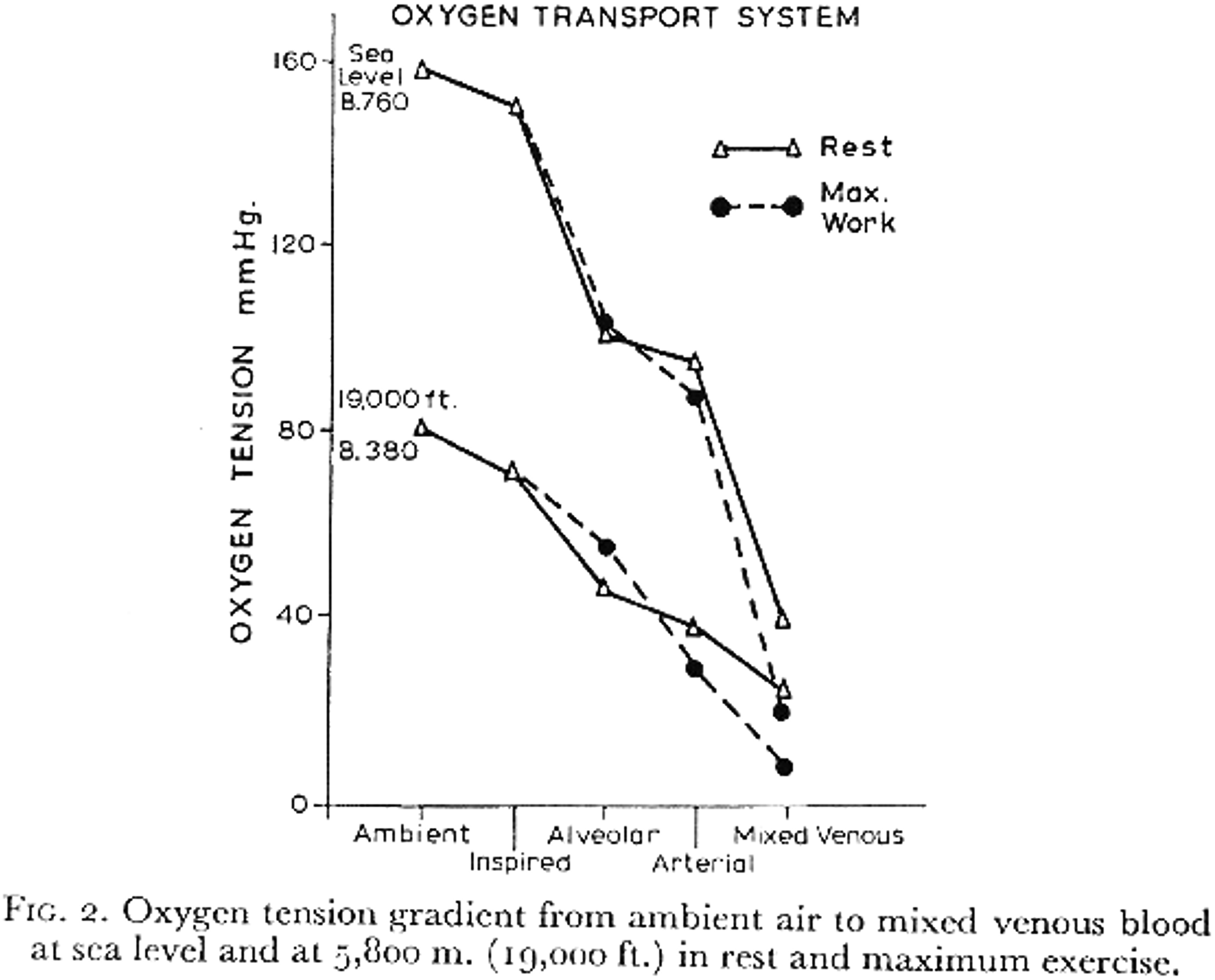
O2 cascade at sea level and altitude. 33
Pugh also studied the effects of decreased barometric pressure in relation to the 1968 Mexico Olympics. These studies included the effects of changing air and wind resistance34–36 and decreased atmospheric O2 pressure. 37 He also documented the effects of cold on channel swimmers 38 and hill walkers.39,40 Pugh extended his geographical footprint by studying the effects of solar radiation 37 and carbon monoxide 41 during expeditions to Antarctica. These studies are beyond the scope of this report.
Summary
Griffith Pugh contributed immensely to the field of high-altitude and environmental physiology at high altitudes and latitudes by conducting several physiological studies that have earned him significant academic recognition. Pugh had a long-storied career and inspired several generations of notable researchers. Once again, to quote Michael Ward, “It would not be overstating the case to say that, but for the work of Griffith Pugh between 1951 and 1952, the first ascent of Everest by Hillary and Tensing on May 29, 1953, would not have been successful.” 29
Footnotes
Acknowledgments
This project was supported in part by the Natural Sciences and Engineering Research Council (NSERC) of Canada. None of the authors have any conflicts of interest.
Author contribution(s)
Declaration of Conflicting Interests
The authors declared no potential conflicts of interest with respect to the research, authorship, and/or publication of this article.
Funding
The authors received no financial support for the research, authorship, and/or publication of this article.