



Abstract
Introduction
Current literature on stingray envenomations focuses on the incidence, presentation, and complications of these injuries, with some studies providing such data for specific geographic locations. This is the first study to evaluate the influence of environmental factors and human characteristics on stingray envenomation patterns in San Diego, California.
Methods
Incident reports of injuries documented by the San Diego Fire-Rescue Department/Lifeguard Division (SDFR-LG) during 2017 were analyzed. Water temperature and tide height were populated based on date and time. Data was analyzed for associations between stingray injuries incidence and tide height, water temperature, time, month, age and sex of the injured person, and whether they were local.
Results
1722 stingray injuries were reported to the SDFR-LG in 2017. Stingray injuries were associated with water temperature (p < 0.001), more frequently occurring between 18.8 °C and 19.5 °C. Most envenomations occurred at tide heights between 1.7 ft and 3.1 ft. Most victims were aged 20–29, and there were more males than females injured. Beaches separated from the greater ocean or with a reef bottom had a lower incidence. Stingray injuries were more frequent during summer months. More stingray envenomations were documented for out-of-town beachgoers.
Conclusions
Beachgoers with certain characteristics had more reported stingray envenomations than others. Males, nonlocal beachgoers, and individuals in their twenties had more injuries than their counterparts. Stingray injuries were more common at water temperatures between 18.8 and 19.5 °C. These findings may lead to future research on the prevention of stingray injuries.
Keywords
Introduction
Current literature estimates 2000 stingray injuries per year in the United States. 1 In Seal Beach, California, a city approximately 100 miles north of San Diego, California, approximately 500 stingray envenomations are reported annually. 2 The shore waters of San Diego, California, as well as many other parts of the world, are common locations for stingray envenomation. The round stingray (Urobatis halleri) (Figure 1) is a common stingray in Southern California. 3 The purpose of this study was to estimate the annual incidence of stingray envenomations in San Diego, California, and to identify patterns of and risk factors for envenomations. This is the first study to evaluate the environmental factors and human characteristics of stingray envenomation patterns in San Diego, California.
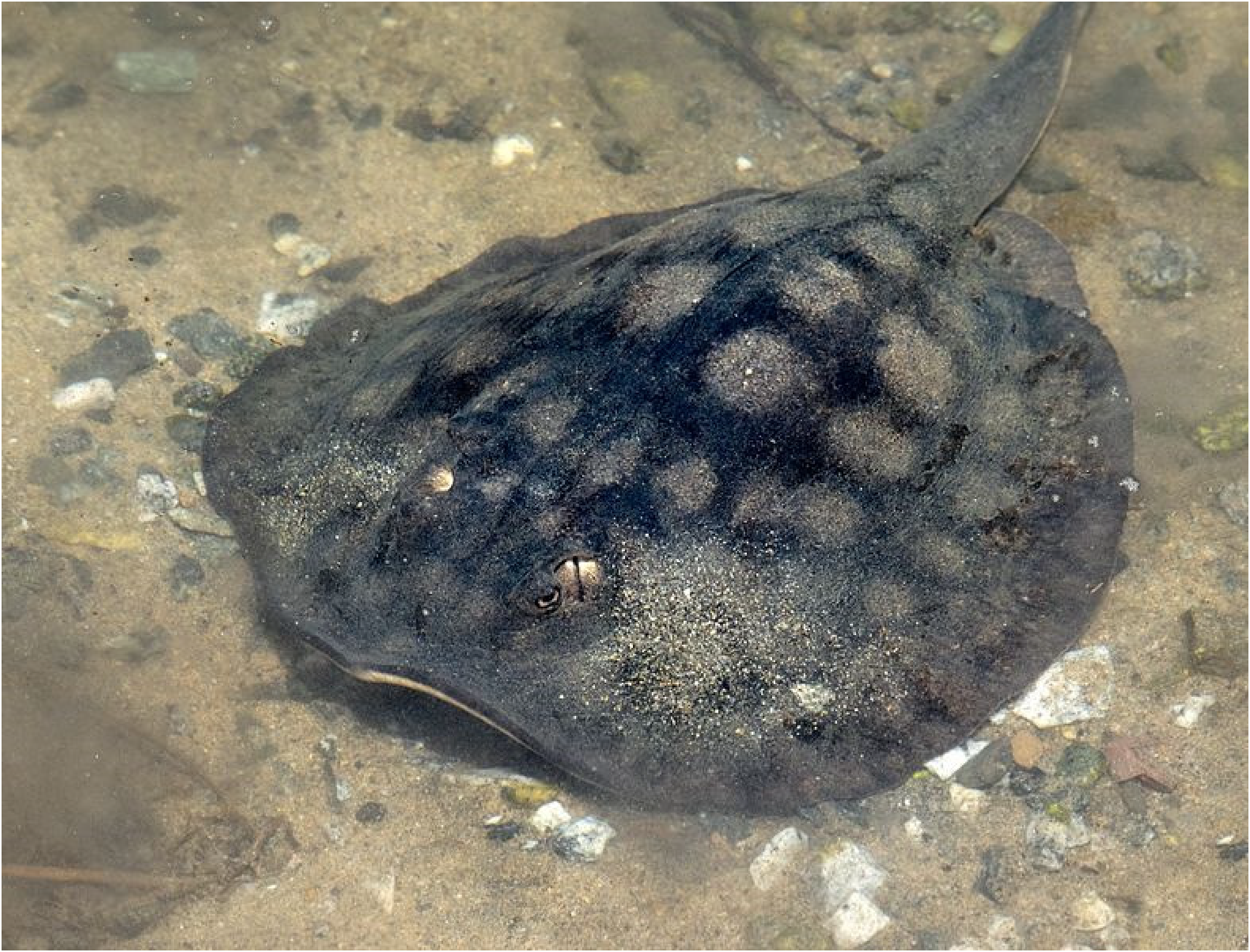
Taylar, IV. Round stingray (Urobatis helleri). Wikimedia Commons. https://en.m.wikipedia.org/wiki/File:Urobatis_halleri_bolsa_chica_2.jpg. Published August 9, 2014. Accessed September 27, 2023.

Stingrays are batoids, a group of fishes that also include guitarfish and skates. Stingrays inhabit the ocean bottom and can be found partially or fully buried in the sand of the ocean floor. 4 Stingrays are not an aggressive species and envenomations generally occur when the stingray is defending itself—for example, if stepped on. 5 The stingray barb causes a puncture wound, often in response to a person stepping on or otherwise startling the stingray. An envenomation occurs in addition to the physical trauma, resulting in severe pain that may appear disproportionate to the injury. The primary treatment for stingray envenomations is hot water immersion.4,6 Pain medications, radiographic imaging, foreign body evaluation and removal, and antibiotics may also be used.
Previous studies have suggested that stingray behavior is influenced by water temperature. Male reproductive patterns have been influenced by water temperature, 7 and stingrays may congregate in areas of warmer water. 8 Waves near the shore may affect the movement and positioning of stingrays in the water. 9 Previous studies also describe the victims of stingray envenomations, most of whom are adults and male. A study of stingray envenomations reported to Texas poison centers from 1998 to 2004 reported that most stingray envenomation victims were adults, with 2%, 25%, and 73% of stingray injuries involving patients under 6 years old, 6 to 19 years old, and older than 19 years, respectively. 10 A study focusing on South African marine envenomations, including those from stingrays, showed that most envenomations were in adults (81%) and males (55%). 11 Another study of marine envenomations in Victoria, Australia, found that most of the people injured were male. 12
Methods
Data gathered from incident reports for injuries responded to and documented by the San Diego Fire-Rescue Department/Lifeguard Division (SDFR-LG) for the 2017 calendar year were compiled for all 12 beach locations served by SDFR-LG; each location having a separate collection of paper incident reports that were then compiled to an electronic database by the authors: North Pacific Beach, South Pacific Beach, Windansea, Scripps, Ocean Beach, South Mission Beach, Mission Beach, Mission Bay, La Jolla Shores, La Jolla Cove, Children's Pool, Black's Beach. These beaches comprise approximately half of the coastline in San Diego County. The remainder of the coastline is patrolled by other lifeguard organizations. Only those injuries documented in incident reports by SDFR-LG were included in the analysis. Potential additional injuries responded to by friends, family, or other parties were not available for analysis.
We recorded incident time, day of the week, month, and beach location from lifeguard incident reports. For those instances in which the beach location information was missing on the incident report, it was recorded based on the beach location box in which the incident report was filed. We recorded the person's age, sex, and whether they were local (living within the greater San Diego area) based on the determination by the beachgoer and/or lifeguard and documented in the incident report. No personal health information was collected. Incidents involving multiple patients were counted once for each patient.
Water temperatures were obtained using the National Data Buoy Center's published data for Station LJAC1 - 9410230 - La Jolla, CA. The National Data Buoy Center is a division of the National Oceanic Atmospheric Administration. 13 Tide levels were obtained from Mobile Geographic's online database. 14
The research was approved by the University of California San Diego institutional review board. Waiver of informed consent from human subjects for project number 190433 was granted by the review committee.
Statistics
Descriptive statistics were performed to understand the characteristics of those envenomated by stingrays. Statistical analysis was performed using ANOVA in IBM SPSS Statistics, version 28.0 (SPSS, Inc., Chicago, IL). The threshold value for results to be considered significant was p < 0.05.
Results
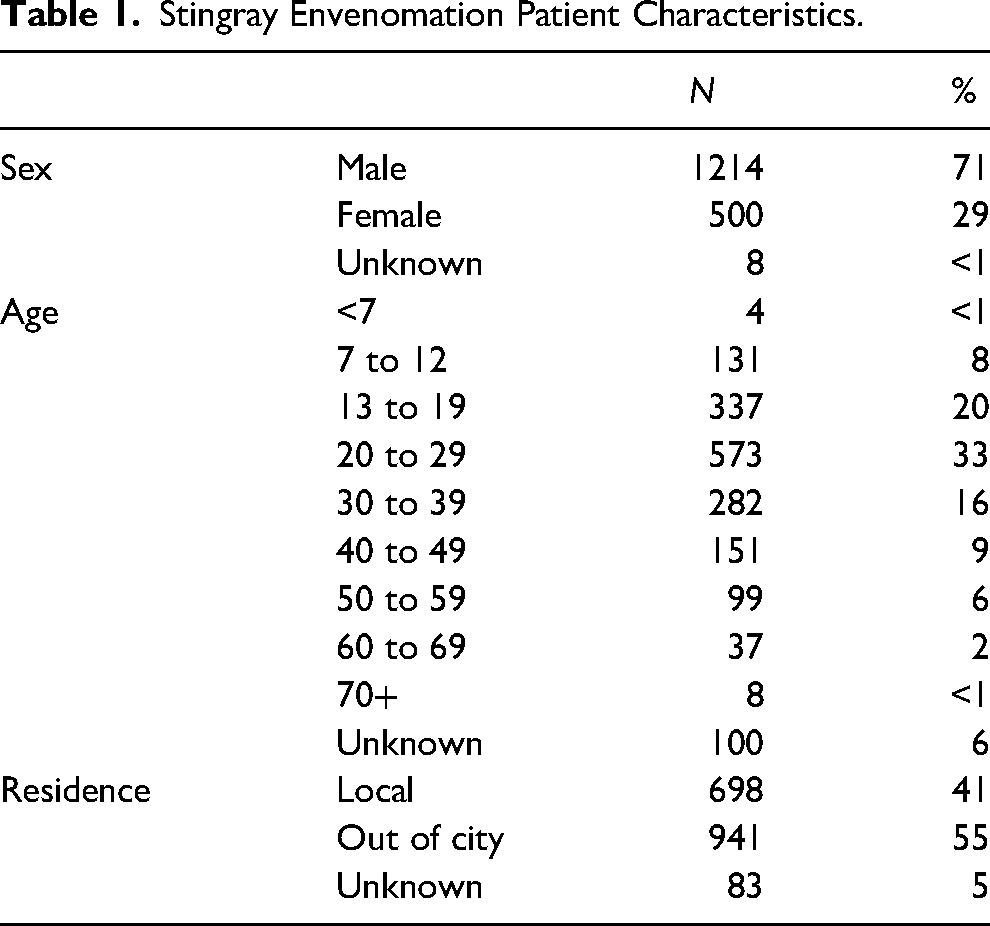
A total of 1722 stingray envenomations were reported to the SDFR-LG in 2017; 71% of those injured were male, 29% female, and 1% unknown. More than half (55%) were reported to be from outside of San Diego, 40% local, and 5% from unknown residences. The age group with the highest number of reported envenomations (33%) was aged 20–29, followed by ages 13–19, which represented 20% of the total reported envenomations. The age groups with the fewest reported envenomations were those ages 60 to 69 (2%), under 7 (<1%), and those over 70 (<1%) (Table 1).
Stingray Envenomation Patient Characteristics.
Of the 12 different areas patrolled by SDFR-LG, beaches with narrow geographic entrances such as coves and bays, specifically Children's Pool, La Jolla Cove, and Mission Bay, had a lower incidence of stingray envenomations compared to beaches without these characteristics (Figure 2). Windansea, primarily a reef bottom rather than a sandy bottom beach, also had a low incidence.
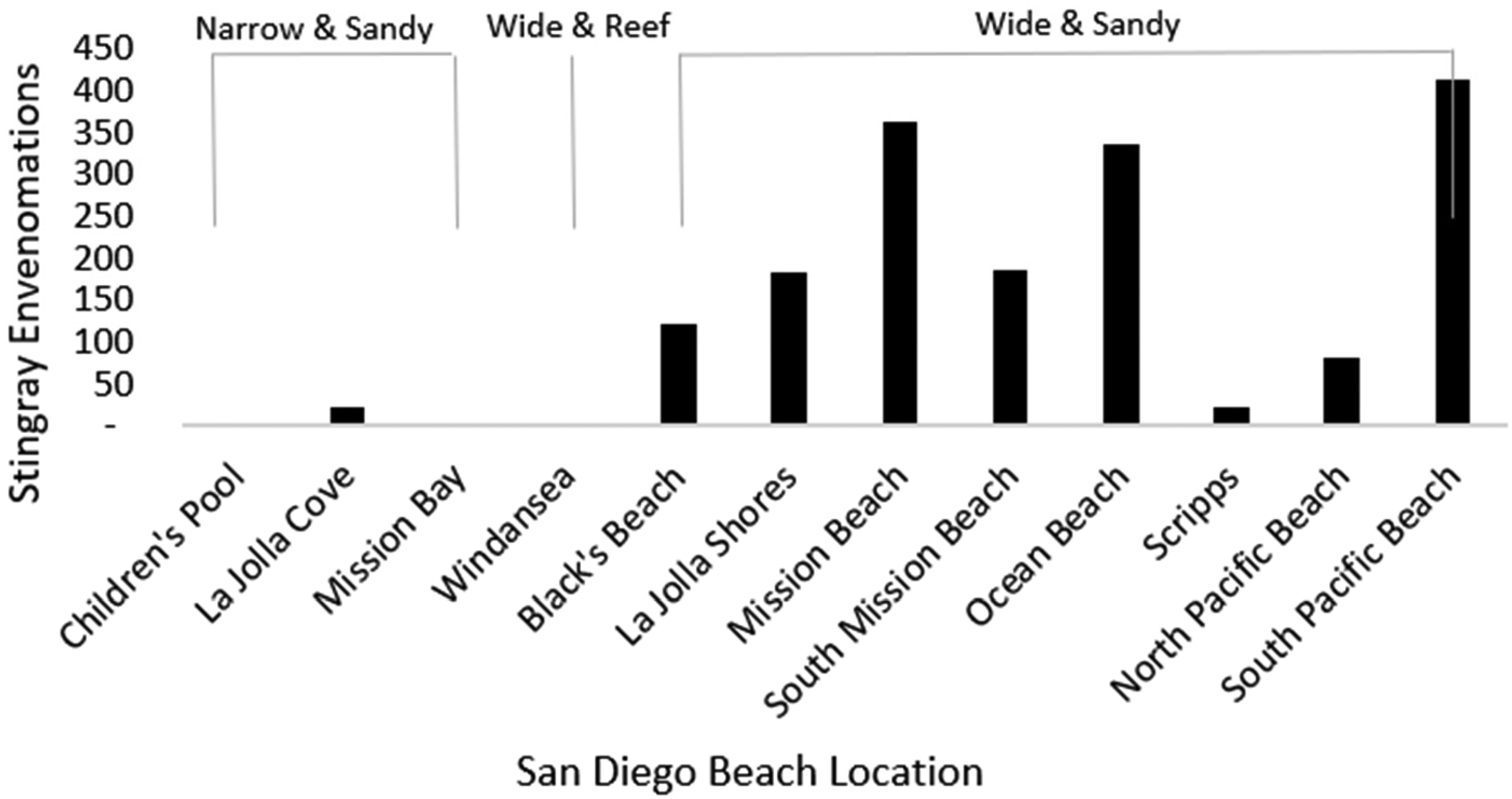
Stingray envenomations by beach location documented by San Diego Fire-Rescue Department/Lifeguard Division in 2017. Children's Pool, La Jolla Cove, and Mission Bay have narrow entrances to the beach from the greater ocean. The remaining beaches have a wide entrance from the greater ocean. Windansea has a reef bottom, and the other beach locations have sandy bottoms.
The total number of stingray injuries was highest during 1300 h; 1200 and 1500 h also had a high number of envenomations. Early morning and evening had lower total numbers of envenomations (Figure 3). Most stingray injuries occurred during the summer months of June through August. The months with the fewest stingray envenomations were January through April (Figure 4).
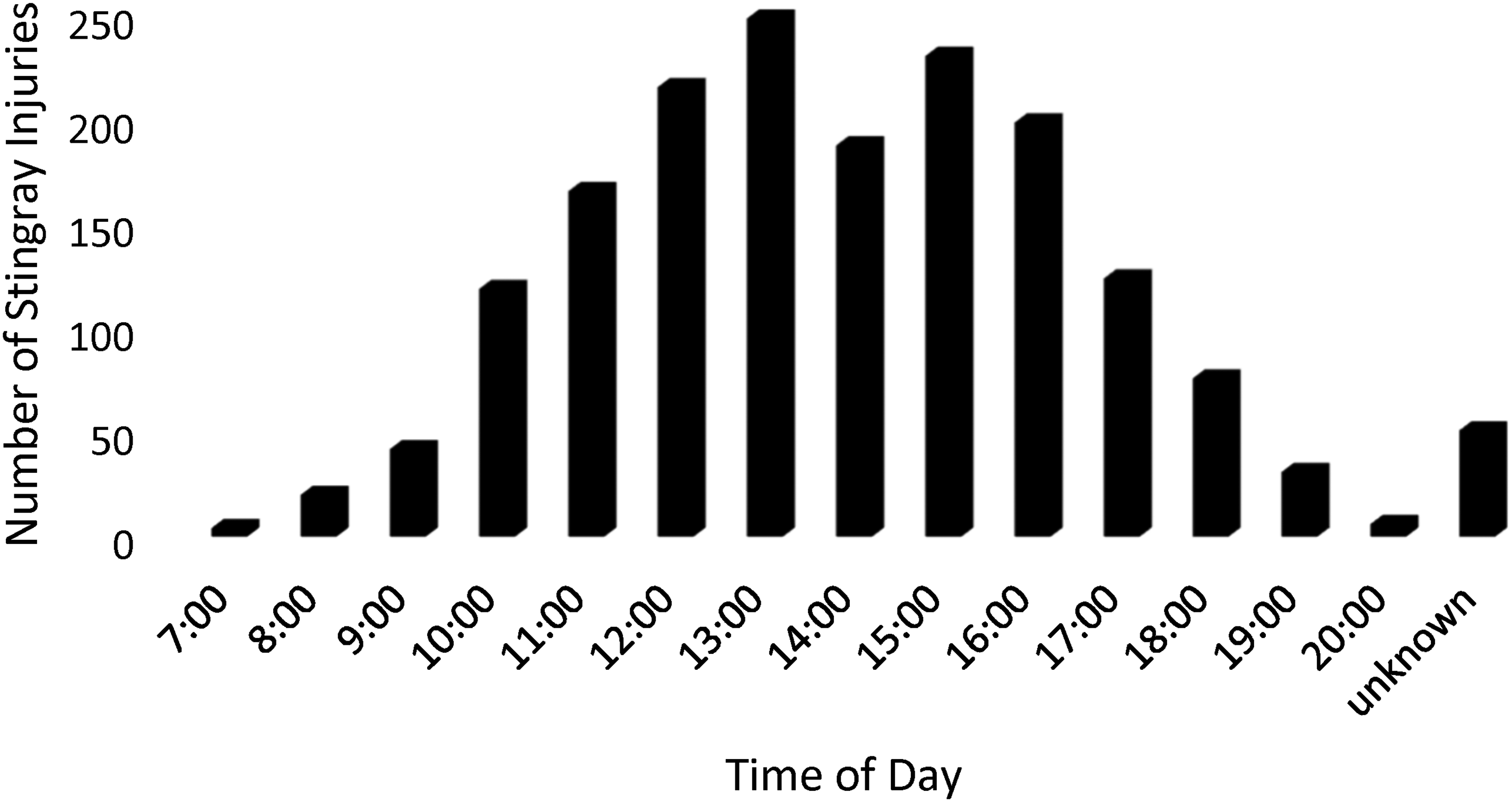
Number of stingray envenomations by time of day. Each number represents the 60 min time interval starting that hour (example: 13 represents from 1300–1359 h).
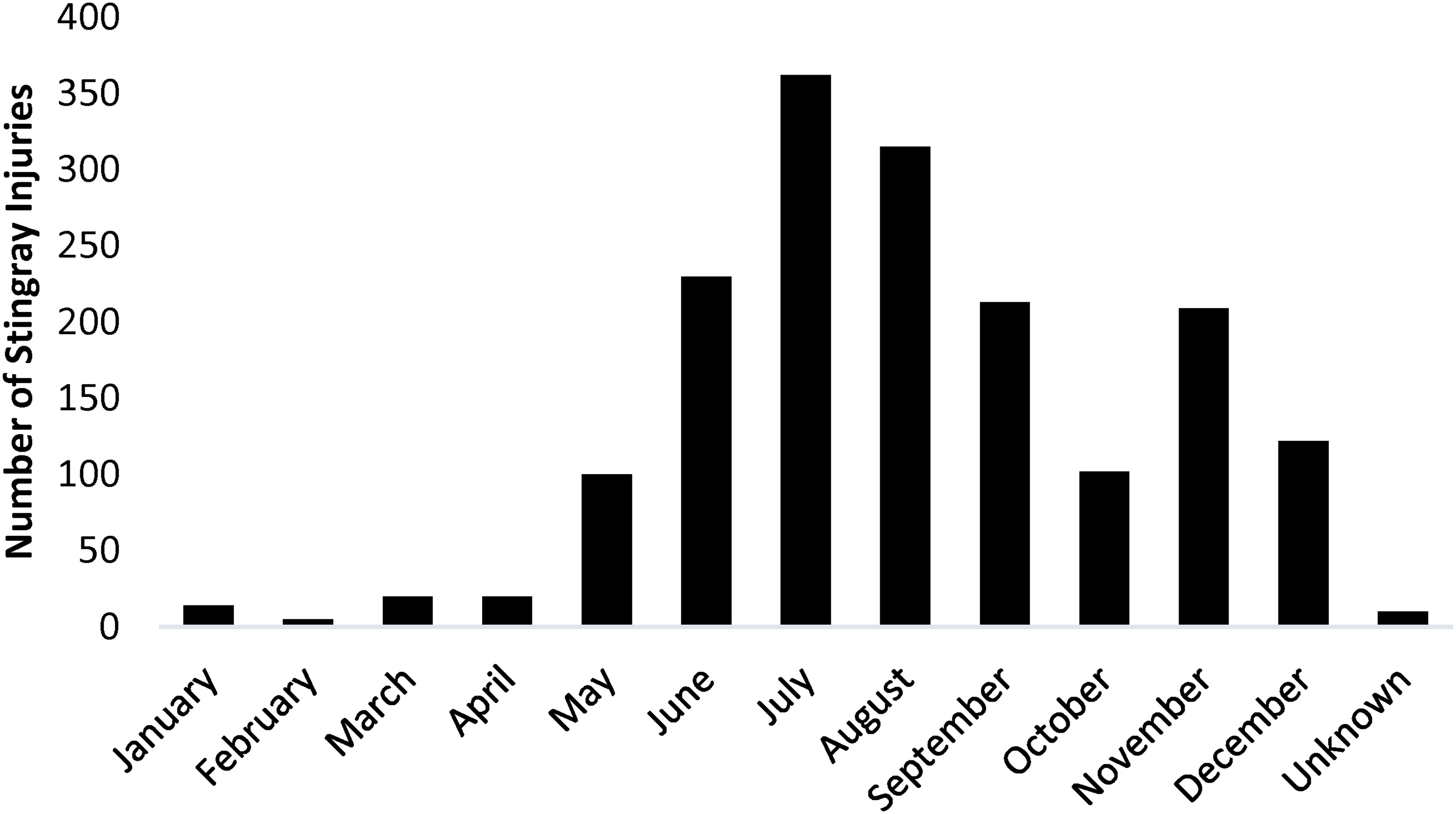
Stingray envenomations by month of the year.
Ocean water temperatures ranged between 12.2 and 24.4 °C. The greatest number of stingray injuries occurred between 18.8 and 19.5 °C. The incidence of stingray envenomations was associated with water temperature (p < 0.001). (Figure 5). A total of 534 (31%) stingray envenomation incident reports did not have water temperatures, either due to missing water temperature data from the National Data Buoy Center database 13 or from missing times on the incident reports.
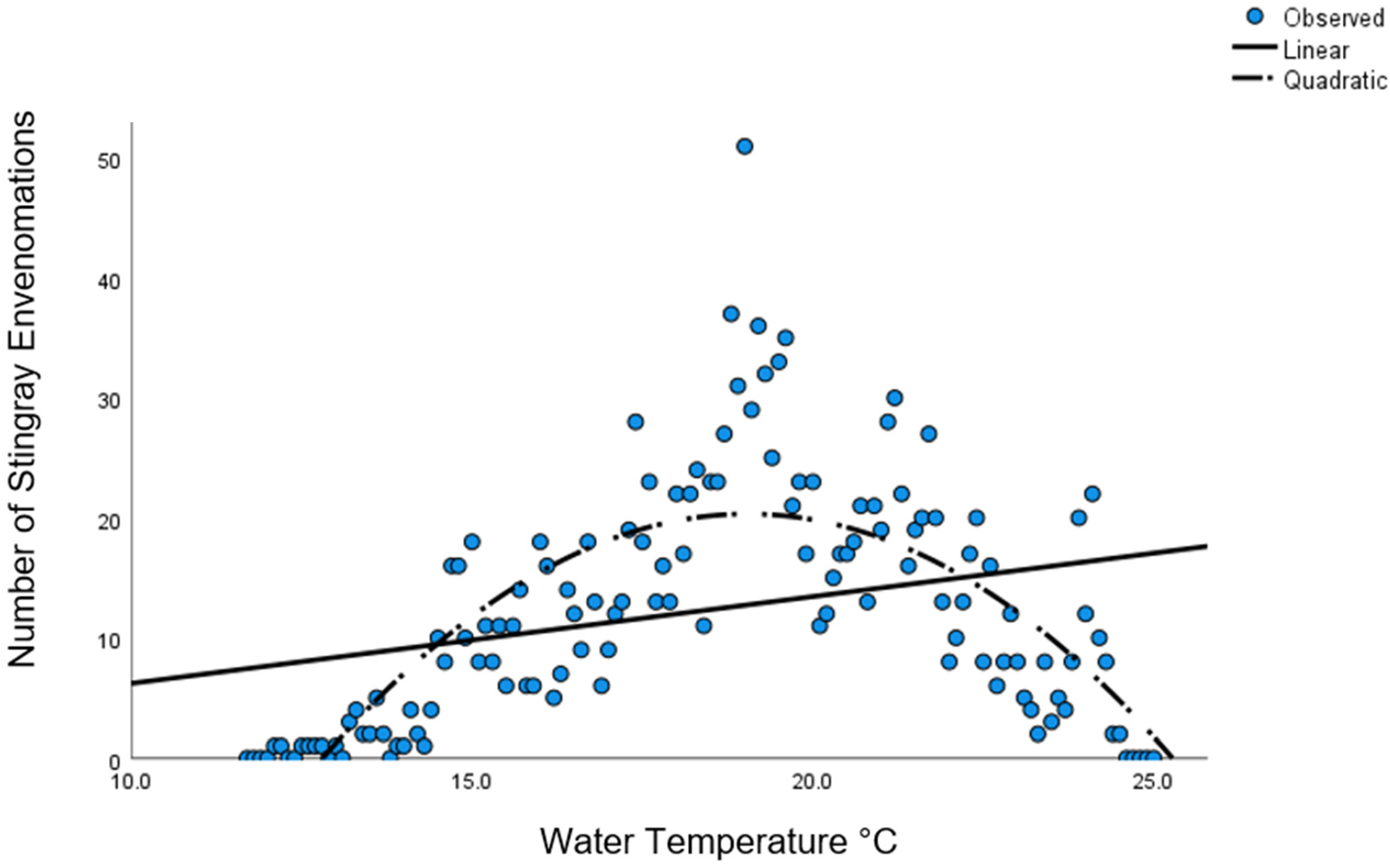
Stingray envenomations by water temperature. Water temperature data was not available for 534 incident reports (31% of total reports), whether due to missing data on the incident report or missing data in the water temperature database.
Tide heights ranged from −1 ft to 6.9 ft. The greatest number of stingray injuries occurred at tide heights between 1.7 ft and 3.1 ft (Figure 6). In all, 41 (24%) data points did not have associated tide data, either due to missing times on incident reports or missing tide data for the corresponding time in the Mobile Geographics database. 14
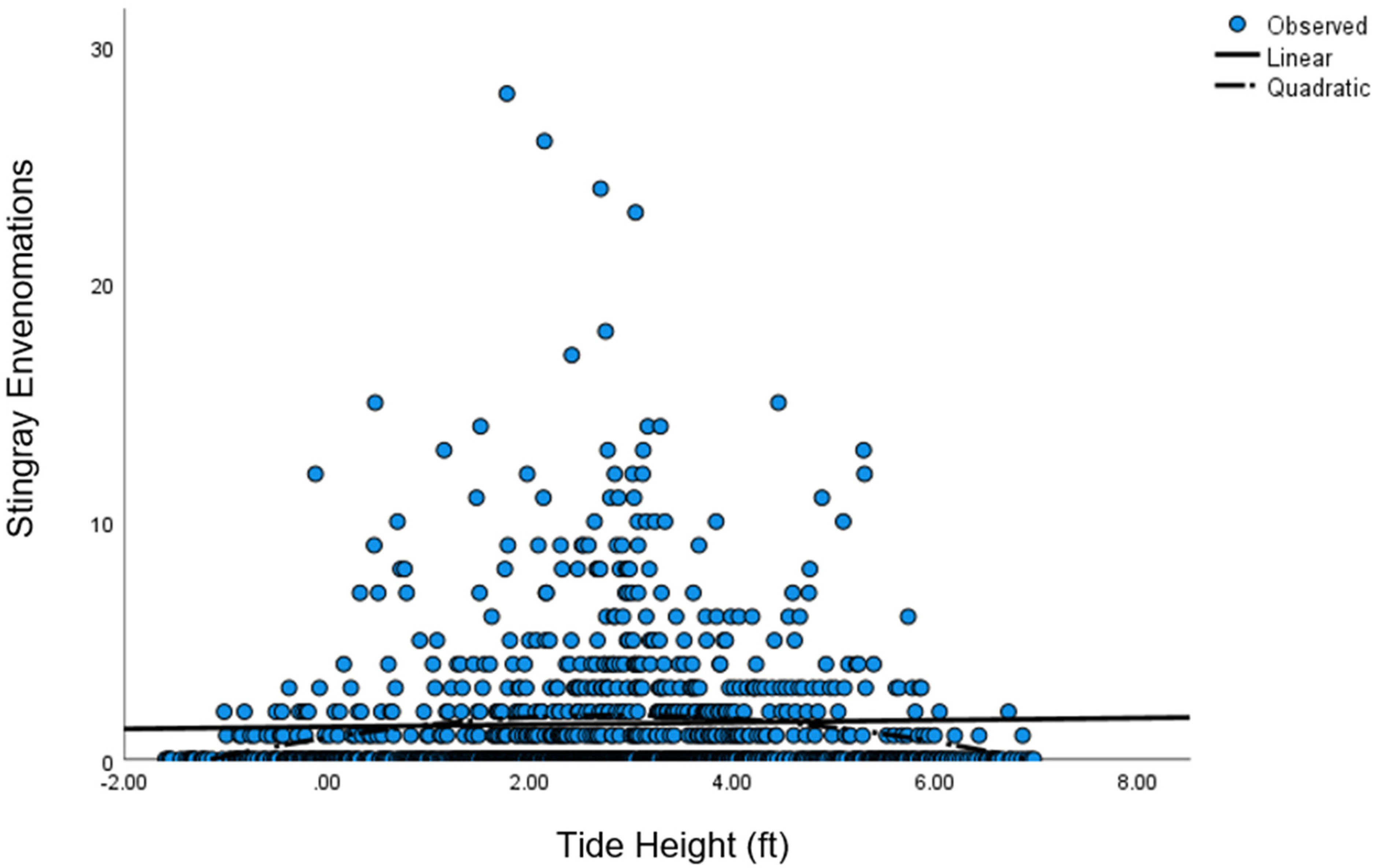
Stingray envenomations by tide height.
Discussion
In a single year, over 1700 stingray envenomations were documented by SDFR-LG, who patrols only half of the coastline in San Diego County, California. As such, the total number of stingray envenomations in the United States is likely to be far greater than the estimated 2000 previously reported. Further studies involving coastal areas are necessary to form a better estimate of the number of stingray envenomations in the United States.
Males had a higher rate of documented stingray envenomation than females. This may be due to the proportion of the beachgoer population or the proportion of the beachgoers who enter the water.
Individuals in their twenties had the most envenomations, which may also be due to the overall beachgoer population and the population of those who enter the water. The age group with the fewest envenomations was under 7 y old. This may be due to the proportion of young children in the water, parental supervision, depth submerged, or other unknown reasons.
More stingray envenomations occurred in people living outside of San Diego rather than locally. This may be because out-of-town visitors are unaware of the risk of stingray envenomations and how to prevent them via the “stingray shuffle” (shuffling feet along the ocean bottom rather than stepping), or it may reflect the respective proportions of the beachgoer population. Out-of-town visitors may also be unfamiliar with the identification and treatment of stingray envenomations. Locals may choose self-treatment and never present to lifeguards, or conversely, they may be more likely to present to lifeguards for treatment. Further research could help determine whether out-of-town visitors are more or less likely to present to lifeguards.
Beaches with an open coast and sandy bottom had the greatest number of stingray envenomations. This may be because stingrays are known to inhabit sandy or muddy bottoms, 15 and they might embed themselves into the bottom of the ocean or bay. It may also be due to more beachgoers at these locations and, therefore, more human bodies in the ocean, or it may be due to more stingrays near the sandy shore, given the geographic characteristics of easy accessibility.
The greatest number of stingray envenomations occurred during the middle of the day, potentially due to a higher number of beachgoers during this time or increased stingray activity. The higher rate of stingray envenomations observed during the summer months overlaps with the local breeding season of the round stingray from May to July. 16 Higher beachgoer activity during the summer months likely also influenced this finding.
The association found between stingray envenomations and water temperature could be due to stingrays being more active at these temperatures, changing their location along the shoreline in response to the water temperature, or other unknown factors. Additionally, more people are likely to enter the water during warmer temperatures.
This study found that tide height and stingray envenomations were not associated. This was unexpected as it could be anticipated that the location of depth within the shore combined with the tide height could make one more or less likely to be injured if the stingray preferred a certain part of the shoreline or if swimmers preferred a certain depth of the water.
Limitations
The purpose of SDFR-LG recording incident reports was to document medical and nonmedical incidents to which they respond. The completeness of documentation varied. Information may have been missing for a variety of reasons, including limited time to document incidents in between rescues, providing medical aid, and addressing other issues that arose. The incident reports were handwritten, so some information could have been misinterpreted. As the specific locations along the shoreline were not always listed, only the general station name (12 beaches) was used. The completeness of the data set could not be verified, as the incident reports do not have unique identification numbers. Not every stingray injury is reported to the lifeguard service.
Another important limitation that affects the underlying methodology of this research is that injuries reported as stingray envenomations may not have actually been due to a stingray envenomation. Reports of stingray injuries have not been confirmed by the authors nor have they been confirmed by lifeguards; rather, the injury was either described by the victim or stingray envenomation was concluded as the cause of injury by the responding lifeguard. Those reporting the stingray envenomation may not know what a stingray looks like, and assumptions may have been made by those documenting the injury based on the details provided by the person injured or witnesses. It is possible that not all reported stingray injuries were in fact due to stingrays as other organisms or even sharp objects causing injury could have been assumed to be a stingray.
Determining who is “local” is open to interpretation either by the beachgoer or the lifeguard documenting the injury. For example, Chula Vista is in the greater San Diego area; however, the beachgoers or the lifeguards may choose to refer to such visitors as being either local or from outside San Diego.
Certain data was not available for sex, age, and residence that could have changed the results. Overall demographics, such as age and sex, of the beachgoer population were not available, so it is not possible to determine if a group of individuals was disproportionately affected by stingray envenomations. Some data points for tide height and water temperature were missing, which could have affected the precision of the data analysis. Accurate and reliable data regarding the daily and monthly crowd counts were not available to assess the relationship between stingray envenomation incidence and beachgoer population.
Conclusions
Certain population groups have more reported stingray injuries than others. Males, nonlocal beachgoers, and individuals in their twenties had more reported stingray envenomations than their counterparts. Stingray envenomations were more common at water temperatures between 18.8 and 19.5 °C. These findings may lead to further research to better understand stingray injuries and factors increasing the risk of stingray encounters. These findings may also lead to public education on how to prevent these injuries, as becoming a stingray envenomation victim is no “day at the beach.”
This original research was presented at the 2019 Wilderness Medical Society Summer Conference in Crested Butte, Colorado.
Footnotes
Acknowledgments
We thank Jennifer Stone, MD, and Michael Lindsey, MD, for assisting in collecting data. We thank Chief James Gartland and Sergeant Kerry Brown of SDFR-LG for making possible the collection of data that is the foundation of this research. We acknowledge the lifeguards of San Diego, who train intensively and work hard to keep the beaches of San Diego safe for citizens and visitors alike.
Author Contribution(s)
Declaration of Conflicting Interests
The author declared no potential conflicts of interest with respect to the research, authorship, and/or publication of this article.
Funding
The authors received no financial support for the research, authorship, and/or publication of this article.