




Abstract
Neonatal sepsis remains a major cause of morbidity and mortality, with diagnosis complicated by nonspecific clinical signs and limited reliability of conventional laboratory tests. This study aimed to evaluate and compare the diagnostic efficacy of biomarkers tumor necrosis factor-α (TNF-α), interleukin-6 (IL-6), and procalcitonin (PCT) with traditional sepsis screening parameters in neonates. This hospital-based case–control study was conducted in the neonatal intensive care unit of a North Indian tertiary care medical university between September 2023 and March 2025. A total of 300 neonates were screened, of which 100 were diagnosed with sepsis (cases) and the remaining 200 served as controls. Sepsis screening, TNF-α, IL-6, PCT, and blood culture were performed to diagnose neonatal sepsis. Results of this study showed significantly higher levels of all tested biomarkers and sepsis parameters in cases compared with controls. Among biomarkers, TNF-α demonstrated the highest accuracy [area under the curve of the receiver operating characteristic (AUROC) 0.99, sensitivity 94%, specificity 100%], followed by PCT (AUROC 0.82, sensitivity 80%, specificity 82.5%) and IL-6 (AUROC 0.79, sensitivity 86%, specificity 74.5%). The study concludes that TNF-α is the most reliable biomarker for diagnosing neonatal sepsis, although a multimodal approach integrating conventional parameters with cytokines and PCT offers the best diagnostic yield. Combining early biomarkers with standard screening may improve early recognition, reduce unnecessary antibiotic exposure, and strengthen antimicrobial stewardship.
This is a visual representation of the abstract.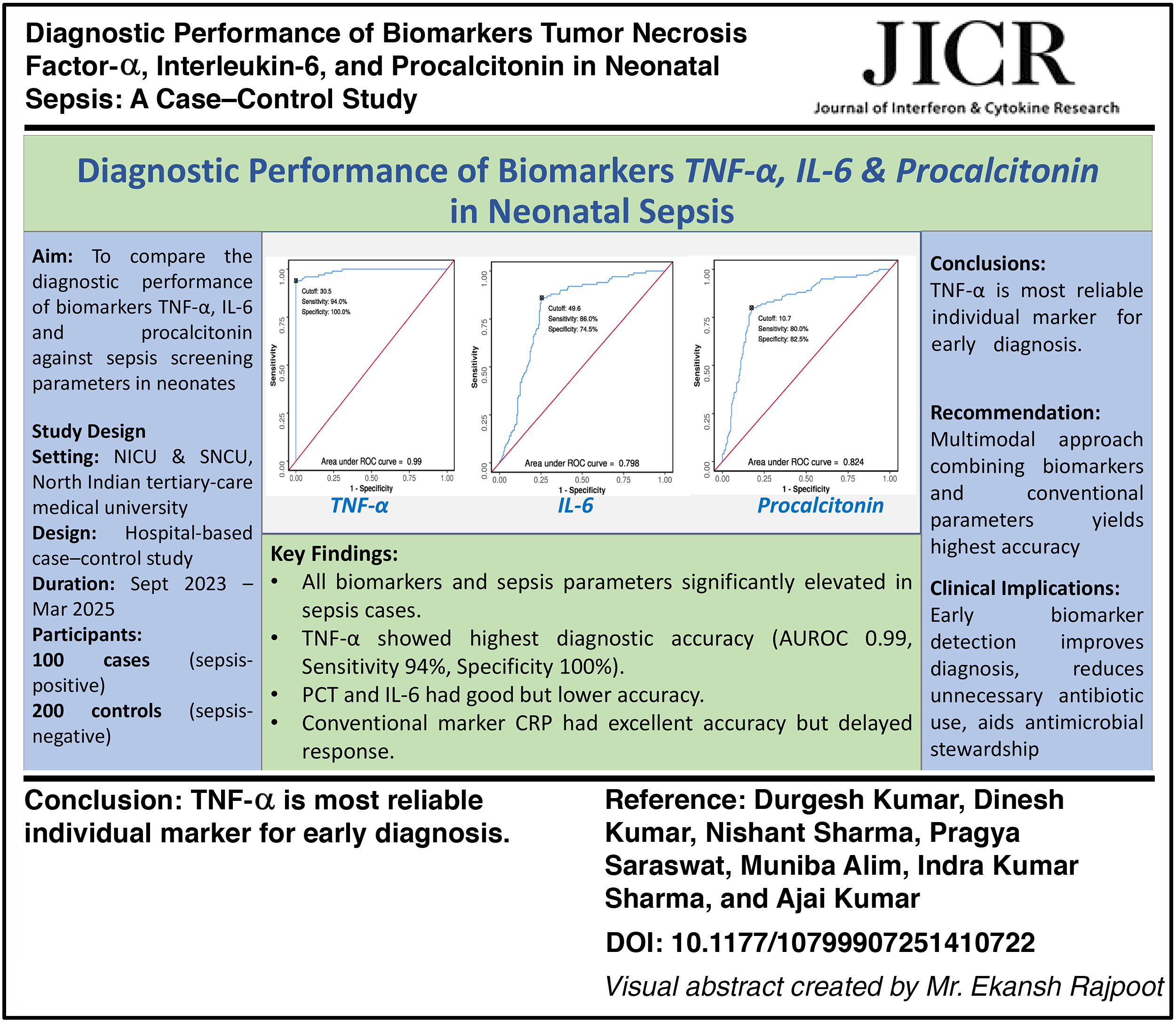
Get full access to this article
View all access options for this article.