




Abstract
To ascertain if living near green spaces is linked with the health and well-being of the inhabitants of Denton County, this study examines the variables that characterize community well-being regarding park accessibility and proximity. This research identifies a few factors likely to impact residents’ wellness. These factors determine whether living close to or having access to green spaces positively correlates with residents’ health and wellness. This paper found out that distance to the park is not the only factor that enhances physical activity; other factors such as types of nature (Blue space and Countryside) and size of green spaces, accessibility of parks, quality of parks, Social and recreational services availability; park maintenance, and management is influential. Overall, proximity to green spaces, such as parks and natural areas, has been associated with reduced stress, anxiety, and depression. Green spaces contribute to cleaner air by absorbing pollutants and producing oxygen.
Points for Practitioners
Public parks and green spaces are critical in promoting community health and wellness.
The importance of proximity and accessibility to parks in influencing community health outcomes cannot be over-emphasized.
Exposure to greenery helps people physically active and reduces high blood pressure, obesity, and other cardiovascular health problems.
Advancing partnerships between city planners and healthcare professionals in the public sector should be explored.
It is significant to have a public policy that would give everyone equal access to public goods and services, as parks and green spaces are part of public goods because they involve public funding.
Introduction
Access to parks and green spaces has been identified as a significant contributing factor to community health (Wolch et al., 2014). Thus, the significance of green spaces on the wellness of any community or residents cannot be overemphasized. Several researchers have investigated the connection between being far from green places and engaging in physical activities (Coombes et al., 2010). As seen by the growing number of articles on this subject annually, there has been a significant growth in scientific interest in the correlation between nature and well-being in the preceding years. Several health issues have been researched, including cardiovascular and mental health, self-reported overall health, and mortality. The difference in how access to nature or green areas is defined is mirrored by various health-related factors. Living in locations with adequate green space, accessing neighboring green spaces, and looking out a window at the natural environment have all been linked favorably to health benefits (Ekkel & de Vries, 2017).
Urban authorities worldwide are looking more into the connections between the planning of cities and the health of residents as worries about the effects of cities’ surroundings on health and healthy lifestyles increase (Douglas et al., 2017). There is rising evidence that environmental and socioeconomic factors are significant determinants of health and well-being, which has rekindled interest in the connections between health and urban planning (Barton, 2009 in Douglas et al., 2017). Crawford (2010) in Douglas et al. (2017) highlight that, despite this interest, there are surprisingly few close working partnerships between city planners and healthcare professionals in the public sector.
However, from the planning and design perspective, this scientific proof base is frequently fragmented, for instance, focused on a particular group. Translating public wellness understanding into city planning, design initiatives, and overall proposals still needs improvement. This is true even though studies of the perceptual criteria of well-being, environmental investigations, location health determinants, and studies of environmental and location-based health determinants have increased significantly over the past ten years (Wolch et al., 2014).
Increased biodiversity is known to positively impact the wellness of individuals mentally and physically. Moreover, exposure to nature, physical activities, and social interaction in open areas boost well-being (Sandifer et al., 2015). How individuals, particularly women, participate in outdoor physical activity is affected by their sense of security and perception of their surroundings. Women are often more inclined to engage in outdoor activities if a community has a positive reputation for safety (Zavattaro, 2019). Therefore, elevated policy structures and guideline papers have progressively encouraged the construction of health-supportive city settings through the increased supply of city green spaces following the documented health advantages (World Health Organization [WHO], 2010, 2013a, 2013b; U.N. General Assembly, 2015). The greatest pleasures are found in green spaces with recreational amenities, which promote the wellness and healthy living of the local population (Lin et al., 2021). Regarding this observation, this study explores the significance of green spaces on the wellness of a community by identifying if there is a correlation between proximity to parks and the overall wellness of a community.
Literature Review
Several studies have investigated whether residents having access to parks and their levels of exercise are related. Some scholars especially looked at how the public realm’s plan influences individuals to be active physically, whether it leads to better health results or whether it draws individuals to be more active physically (Dzhambov et al., 2018; Kondo, 2018; Wolch et al., 2014). Most of these studies have discovered that being close to parks is typically linked to more physical activity, healthy habits, and better health results (Gascon et al., 2016; Sugiyama et al., 2010).
Parks help citizens’ health, economic development, and ecological well-being (Pfeiffer et al., 2020). One of the numerous ways citizens may improve their well-being in large cities and metropolitan areas is through access to green space. Nonetheless, each person experiences fulfilment differently (Letki & Steen, 2021). Therefore, it is worth noting that how frequently people visit parks or other green places affects their degree of wellness.
As a result, this study has selected Denton County Texas to ascertain if living near green spaces is linked to the inhabitants of Denton County’s health and well-being. It is necessary to examine the variables that characterize community well-being with park accessibility and closeness. This research identifies a few factors likely to impact residents’ wellness. These factors can be used to determine whether proximity or access to green spaces positively relates to residents’ health and wellness. Therefore, some topics would be to understand what scholars have suggested regarding the research question. These factors include types of nature (blue space and countryside) and size of green spaces, accessibility of parks; quality of parks; social and recreational services availability, park maintenance, and management.
The Type of Nature and the Size of Green Spaces
An essential subject is which forms of nature are vital for one’s health and wellness. Unfortunately, nature is frequently restricted to publicly accessible urban green spaces like parks. This form of nature is specifically intended to be utilized for enjoyment when in contact with it. However, other forms of nature, including the countryside or landscape, which frequently consists mainly of agricultural regions and surface water, are equally important (Gascon et al., 2016).
The countryside has the potential to relieve stress and improve attentional function, according to theory. It is also a setting that may be more suited to cycling than leisurely walking, depending on its connectivity, which may vary by nation (Curry & Ravenscroft, 2001). Blue areas, such as waterfront areas, may also be desirable locations for neighbors to interact and connect, as suggested by Gascon et al. (2015). The limited studies that have been published uncover evidence of a connection between public health and access to this specific nature. Wheeler et al. (2012) argue that being close to the seaside is not only correlated with better self-reported health, but the most affluent are more mobile and maybe more equipped physically and financially to relocate to desired areas, such as the seashore.
More specifically, the size of green spaces is crucial for figuring out whether there is an appropriate size required for a green space to benefit health and wellness. Depending on the activity, this may stimulate physical activities (parks can provide respite from noise, active fitness and spaces for socializing). If physical activities must be done in the actual green space, it would only need a small quantity of area, for example, a football field. The neighborhood may become more appealing for leisurely walks with sparse green spaces and isolated natural features. This is important for encouraging local social cohesiveness since such walks may bring neighbors together. Also, there are no evident activities that would necessitate green spaces of the smallest size in terms of social cohesiveness (Gascon et al., 2016).
Accessibility of Parks
Poor access to wellness, substance misuse, obesity, environmental risks, and other issues are too complex for one individual, one organization, or one industry to handle alone. These issues are impacted by several social, economic, environmental, and biological factors, many of which are interconnected, impact a range of people, and arise in various local situations (Lasker & Weiss, 2003). Possibilities for connection, communication, and physical exercise improve when people have access to parks. In addition, the likelihood of urban residents’ social well-being improves when parks are close to public transit (Xiao et al., 2019). How inhabitants use parks and their level of health are influenced by their access to personal transportation or rail (Duncan, 2019; Lin et al., 2021; Xiao et al., 2019).
Thus, access to green spaces influences the community’s health and wellness. However, accessibility to parks and other green areas varies depending on the city’s design. Online opinions addressing the effect of park accessibility on locals’ welfare were examined by Lin et al. (2021); and Xiao et al. (2019) in China. The study noted that parks with busy transportation networks attracted unfavorable assessments and thoughts. On the other hand, parks with transportation systems with fewer or no traffic delays obtained favorable assessments and thoughts. In addition, people had unfavorable feelings towards parks with insufficient parking facilities or without parking spaces. The reverse was true for parks with excellent and adequate parking facilities. As a result, the accessibility of the transportation system affects the accessibility of parks and other green spaces by residents (the subway and bus stations).
Quality of Parks
In contrast, the average distance to the nearest open spaces was not associated with health, according to Jonker and colleagues’ observations of the relationship between urban green space and healthy life expectancy (Jonker et al., 2014). They operationalized green space on health outcomes by the percentage of green space per neighborhood, the standard distance measuring in kilometers between every house in the area and the closest community green spaces, as determined by the area’s transportation system; and, finally, a personal evaluation of the standard of the urban open space in each community. Other built-environment factors that have yet to receive enough attention, such as the perceived quality of green areas and the degree of urbanization, may also be necessary when determining the quality of parks (Nieuwenhuijsen et al., 2015).
There is evidence that community-based initiatives to address cost, quality, and access challenges will continue to be required due to political and commercial factors and the complexity of delivering health and human services. Interventions that consider factors other than medical treatment, such as the social and physical environment (parks and greenspace), cultural norms, and behavioral factors, are necessary for enhancing community health (Shortell et al., 2002).
The environment’s social and physical characteristics can have an impact on behavior. Studies in several populations, including workers, inner-city females, and students, found links between green space and a range of advantages for psychological, emotional, and mental health. According to Lee and Maheswaran (2010), the availability and access to parks positively impact the effectiveness of life and perceived stress. More specifically, de Vries et al. (2013) examined the link between landscape vegetation number, quality, and self-reported wellness. They discovered that both variables were associated with adults’ perceptions of their general wellness and severe health concerns. In general, correlations were more significant for quality than quantity.
The park’s physical characteristics significantly influence residents’ appeal and degree of satisfaction (Tao et al., 2021). For example, Lin et al. (2021) found that the park’s landscape was the main motivating element among Chinese citizens who visited urban parks. The aesthetic value of park landscapes is difficult to quantify, yet it is nonetheless a crucial aspect in determining whether or not locals choose to frequent the parks. When accessing the landscape aesthetic quality of the parks, the visual aesthetic quality is considered.
The citizens’ assessment of how it blends into the environment of the parks, however, determines the visually attractive quality. It includes everything from the aesthetic value of the landscape’s actual physical components, like plants and trees, to the accessibility of numerous utilities. Their location significantly influences the impact of parks on inhabitants’ levels of satisfaction. Baldassare (1982) investigated the link between ecological control, social characteristics, and citizen satisfaction and concluded that high population density and subpar societal management result in the least content inhabitants. The same finding was reached in Potter and Cantarero’s (2006) study, which found that resident happiness was negatively correlated with the park’s population variety and density.
Social and Recreational Services Availability
Access to social and recreational amenities is another important aspect affecting how frequently people use parks and other urban green areas. Residents are psychologically predisposed to link parks with recreational facilities since parks are designed for recreation. For example, Lin et al. (2021) discovered that urban parks with amenities enabling culturally diversified activities, such as hiking paths and sports grounds, attracted more visitors than parks with natural physical features.
Recreational facilities are well recognized for encouraging an active urban lifestyle that promotes community health. The desire for communal engagement has a reasonable justification. From a philosophical standpoint, citizens of democracies have a right to an immediate and significant voice about matters and services that concern them, services which include development and expansion of green spaces, park maintenance/upkeep, access and inclusivity (Lasker & Weiss, 2003; Denhardt & Denhardt, 2000; Box, 1998). In reality, many neighborhood issues have not been resolved by top-down, one-solution programs, and more and more people realize that enhancing community health and providing health and human services go beyond the capacity, resources, and authority of any one company or industry (Lasker & Weiss, 2003).
Thus, when choosing where and which park to explore, residents prioritize having access to recreation areas, sports courts, and entertainment facilities (Donahue et al., 2018). Hence, parks with attractive landscape features and athletic amenities were more appealing to the people and were correlated with a high degree of wellness. According to research, people who visit recently constructed parks with appealing recreational amenities are likely to be healthier and happier than people who visit older parks with landscape attributes (Tao et al., 2021). In addition to the leisure activities, parks with hygiene practices, relaxation, and commercial services were attractive to citizens and were a crucial influence on high levels of wellness.
Park’s Management and Maintenance
People are more inclined to visit parks that are kept up correctly and have modern amenities. According to research by Licari et al. (2005), people in affluent cities, cities where people feel confident in their ability to impact politics, and municipalities where people think the government services are good tend to grade streets and parks more highly. The implication is that parks with less-than-wealthy people and citizens who need confidence in their ability to influence politics would draw fewer visitors. As used in this context, the word “wealth” refers to the accessibility of resources, infrastructure, and effective management. Because of this, locals who go to these parks will likely enjoy the finest experiences, increasing their well-being. Kelly and Swindell (2002) have observed similar findings. In addition, they noticed that the degree of contentment among residents was significantly influenced by park maintenance, which was informed by the behaviors and accomplishments of government officials.
Residents’ degree of wellness was high in parks with a centralized service delivery system, according to Cheng et al. (2020) study. Urban parks in the United States with concentrated service delivery sources saw a rise in visitors, accessibility, and engagement. According to Letki and Steen (2021), wealth inequality and urbanization significantly restrict the provision of high-quality services in urban parks. The conclusion is consistent with Licari and colleagues’ observations that parks in communities thought to be poor had no impact on inhabitants’ levels of well-being (Licari et al., 2005). Yuan also looked at how a nonprofit organization may support urban parks to provide governmental functions. Cheng (2019) noted that urban park communities suggested including leisure services. Moreover, there was greater collaboration between government and nonprofit groups, even though there was no correlation between operational spending by urban parks and charitable assistance.
A clear correlation exists between improved public places and the advantages residents gain from parks. More significantly, charitable support for parks increased in areas with higher economic disparity (Gazley et al., 2020). The inverse was also true, though. Therefore, disparities in community affluence affected the amount of charity assistance parks get, impacting service delivery, upkeep, and the degree of resident wellness.
Subjective Wellness of Residents
According to health and well-being theories, environmental, genetics, lifestyle, and medical treatment contribute to good health; improved community health is now expected in American culture, not simply improved medical treatment. The health care system and its hospitals cannot do enough to improve health because people’s health results from their environment, lifestyles (keeping an active life by visiting parks and exercising), heredity, and medical care. Management literature for years has urged the community health domain to collaborate with stakeholders to really improve resident wellness (Olden, 2003).
Economic criteria, including an individual’s income level and occupation, have historically been used to evaluate how comfortable a person is. (Rahman & Zhang, 2018). However, according to recent research, while wealth was a significant predictor of people’s wellness, it had minimal influence on their mental health. Residents’ well-being was more strongly influenced by social characteristics than economic level, such as the neighborhood’s social facilities and surrounding scenery. Rahman and Zhang (2018) found that people in less densely populated regions and towns report higher levels of well-being than people in more densely inhabited locations.
However, measuring an individual’s wellness in a city with environmental wellness indicators like clean air and water and sustainability-oriented laws supported by good management practices is difficult; it is believed that people in these cities enjoy high levels of wellness (Lin et al., 2021; Pfeiffer et al., 2020). Furthermore, Rahman and Zhang (2018) add that having a solid relationship with outside settings like parks is related to having high levels of well-being. Finally, it is essential to remember that residents’ psychological enrichment is a crucial advantage that fosters a sense of connection.
Another component of well-being that is looked at when determining how satisfied city dwellers are with their green spaces is their physical health. The association between park usage and physical well-being has been extensively studied (Dzhambov et al., 2018; Kondo, 2018; Labib et al., 2020; Li, 2020). The study of Li from the viewpoint of three Asian cities on urban park activities found that going to green spaces considerably increased people’s emotions, contentment, and general physical health. Additionally, enjoyment grew the longer they stayed in the park. Residents who spend more time in the parks will thus experience higher levels of wellness than those who spend less time there (Li, 2020)
Additionally, people are more inclined to utilize parks if they improve their physical health. Kondo (2018) examined the literature about the connection between exposure to green space and cardiovascular illnesses. Jahidur and colleagues found that being exposed to green spaces is associated with a decreased risk of cardiovascular illnesses. The results aligned with research by Dzhambov et al. (2018) that discovered exposure to greeneries also reduced the risk of hypertension and systolic blood pressure (SBP) by about 30%. Whether or not overweight people are exposed to greenery, high blood pressure and other cardiovascular problems are prevalent; hence, everyone should be active by using the parks (Dzhambov et al., 2018; Shuvo et al., 2020).
The relationship between visiting open spaces and non-communicable illnesses like asthma has also been shown in studies. According to Labib et al. (2020), areas without green spaces have a higher frequency of communicable ailments than those having greenery. The study also demonstrated the importance of urban green areas in cleaning up filthy air. The transportation network and industrial facilities that emit greenhouse gases into the atmosphere are to blame for urban air pollution. Since greenhouse gases have been linked to cancer, cleaning up air pollution lowers the chance of developing the disease. Better birth outcomes are also linked to urban green areas. Physical exercise, stress, and air pollution all impact birth outcomes. There is inconclusive data about the association between birth characteristics like weight and preterm birth with green urban parks (Labib et al., 2020)
Nevertheless, researchers discovered some protective benefits linked to city green space for women who reside in low-income areas and have low levels of education (Nishigaki et al., 2020). Moreover, city green areas can relieve stress, particularly for locals who desire a quiet area to escape the bustle of the metropolis. Because of this, city’s’ parks promote socializing, which is associated with reduced sadness (Nishigaki et al., 2020). These elements that relate people’s welfare to green spaces like parks and other green areas impact how frequently they visit parks and how satisfied they are with those visits.
Methodology
This paper answered the research question of how proximity to green spaces impacts the health and wellness of Denton County Texas based on the environmental and physical data of the community, and it used vector data, shapefiles, and datasets to analyze the relationship between proximity to green spaces and health outcomes. The focus area of the project is Denton County. The paper assessed the census tract extent; the census tract is the “community.” The shapefile for the location of all public parks in Denton County was found on Denton County’s GIS data hub website. The Denton County 2020 census tracts were pulled from the official U.S. Census government website. The physical health tabular data, “Places: Local Data for Better Health, County Data 2022,” was taken from the Centers for Disease Control and Prevention (CDC). This data includes statistics on physical activities, obesity, high cholesterol, high blood pressure, pulmonary disease, asthma, and mental health. In addition, this paper used the CDC data on obesity rates. The body mass index (BMI) scale calculates the obesity rate.
The environmental health data was pulled from the Environmental Protection Agency’s (EPA) ArcGIS online website. The geodatabase included various environmental indicators, such as ozone, air toxins, hazardous waste, and traffic proximity. This study specifically used data on cancer risk based on air toxicity levels. Cancer risk is measured by percentile.
Obesity rate data was missing in some of Denton’s census tracts. Because of this, there is a limitation of some missing data. To solve this issue, all the tracts with obesity data were selected and exported to create a new layer. This eliminated any of the tracts that had missing data. However, by doing this, Denton County is missing some tracts. That is the reason why there are white spaces in the maps created and reported in the results section. The types of analysis ran were creating choropleth maps, hot spot analysis maps, and scatterplots to determine relationships between the parks and indicators. Some geoprocessing techniques used when conducting the analysis were overlay, spatial join, and select by attribute.
For the overlay, this paper overlaid the point shapefile of public parks onto the map of Denton County census tracts. The study then joined the CDC tabular data on community health to the Denton County census tracts to enable users to click on each census tract and see community health data associated with each tract. This study then spatially joined the public parks points to the Environmental Protection Agency’s geodatabase. Selection by attribute to create a new shapefile for obesity rates by exporting the selected attributes in the CDC tabular data carried out. The research only exported the census tracts that contained obesity data to eliminate the possibility of census tracts with missing obesity data interfering with the results.
Limitations
It is essential to acknowledge the limitations of this study. Missing obesity data in some of the census tracts is one limitation. Some census tracts are significantly larger than others in physical size and/or population. There may be many small parks in one cluster, but a single large park in one census tract.
Moreso, considering the modifiable areal unit problem, the results may vary depending on the study’s geographic unit and scale, and other unmeasured variables may confound the observed associations.
Future research could employ longitudinal designs to explore causality more robustly and investigate the long-term effects of proximity to green spaces on community health. Also, building on this paper, additional secondary (control) data and spatial regression models may be helpful for isolating relationships and identifying correlations. Additionally, qualitative research methods could be employed through interviews to better understand residents’ perceptions and experiences related to green spaces.
Results
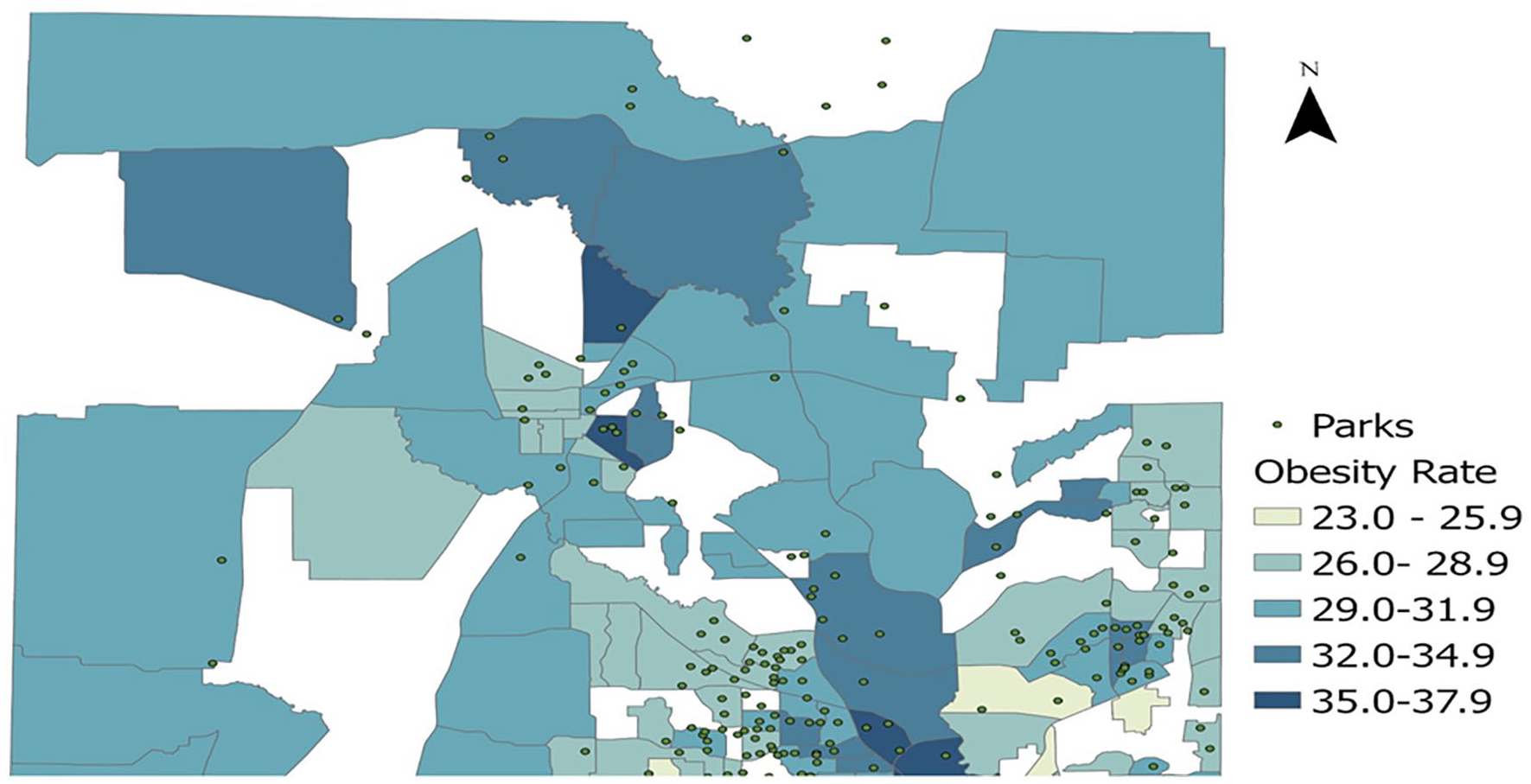
The map created below in Figure 1 is a choropleth map of the percentage of adults that are obese for each census tract in Denton County. Since a few census tracts had missing data, they were excluded from this analysis to minimize the possibility of skewing the data and interfering with the results. Green points represent public parks. The darker blue represents a higher obesity rate, while a lighter blue represents a lower obesity rate. Observing the map before running any formal analysis, it appears that the smaller-sized census tracts have a lower obesity rate since many have a lighter blue shade with either a 23.0% to 25.9% obesity rate or a 26.0% to 28.9% obesity rate.
Obesity rate in Denton County.
The areas with a cluster of parks tend to have a lower obesity rate. In comparison, the census tracts that contain just zero, one, two, or three parks tend to have a higher obesity rate.
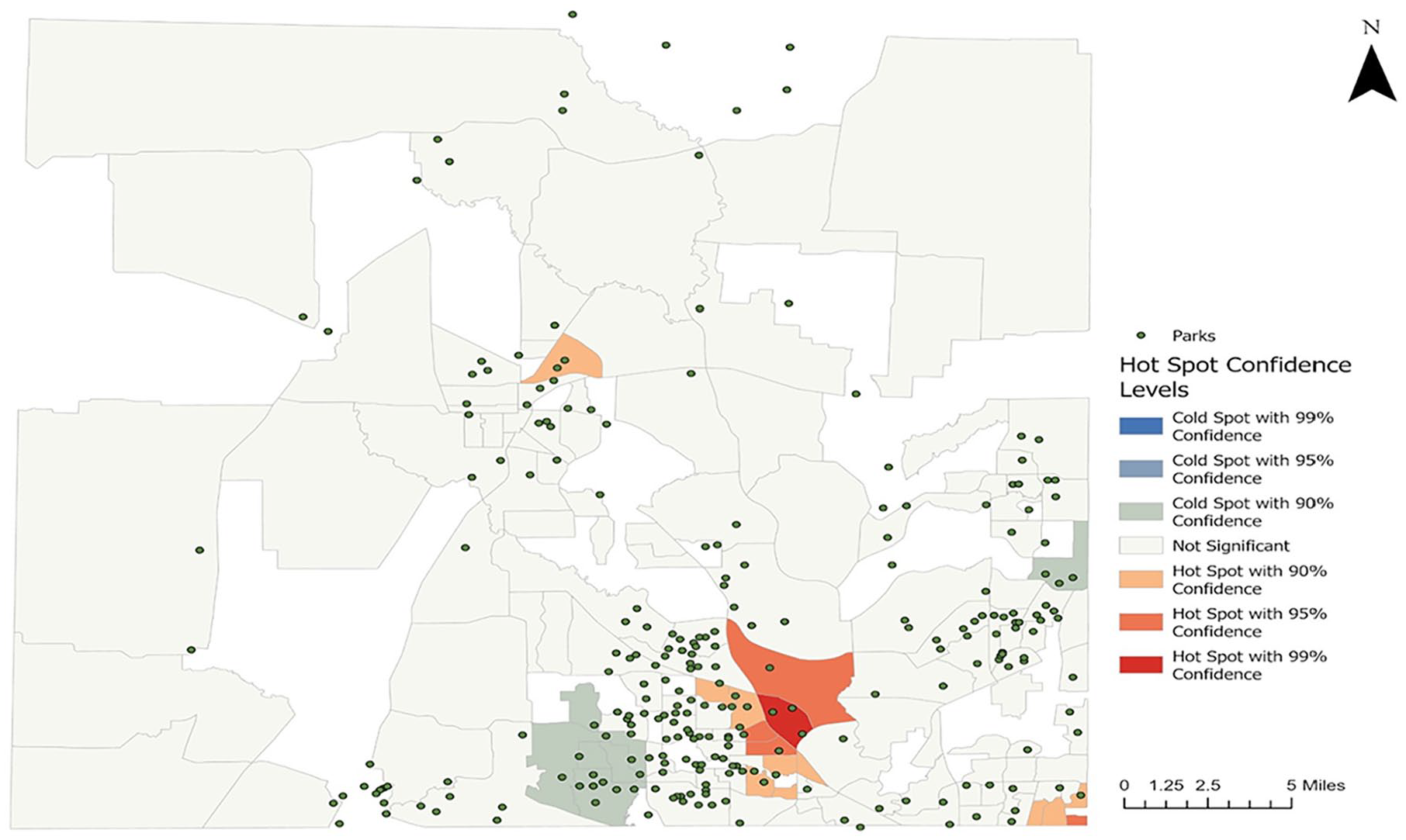
A hot spot analysis was run, as shown below in Figure 2. A hot spot analysis aims to show whether clusters of high or low values cluster spatially. For example, in Figure 2, the research created a hot spot analysis to explore the relationship between the rate of obesity and the number of parks by identifying hot spot areas with a cluster of many parks and a high amount of obesity. This analysis also identifies the cold spot areas that show the clusters of a low number of parks and a low obesity rate.
Obesity hot spots in Denton County.
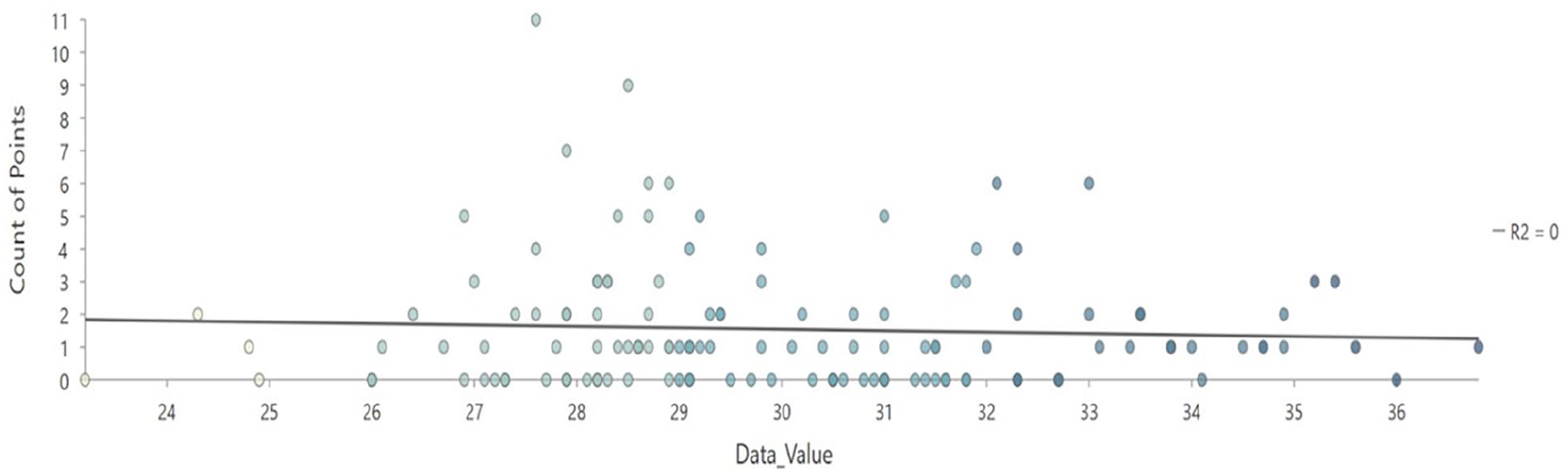
Overall, 13 census tracts were identified as a hotspot. This means they have a high number of public parks and a high rate of obesity. Six cold spots were identified. The cold spots show areas with a low number of parks with a low obesity rate, which might contradict the literature review and go against scientific thinking that living near public parks could mean lower obesity rates. All the other census tracts on the map are “not significant.” This research then created a scatterplot, as shown in Figure 3 below, to better identify if there is an existing relationship between the number of public parks in each census tract and the obesity rate in each given census tract. With the R2 value being 0, there was shown to be no correlation. This would indicate the number of public parks does not appear to influence the obesity rates in Denton County.
Relationship between Data_Value and count of points.
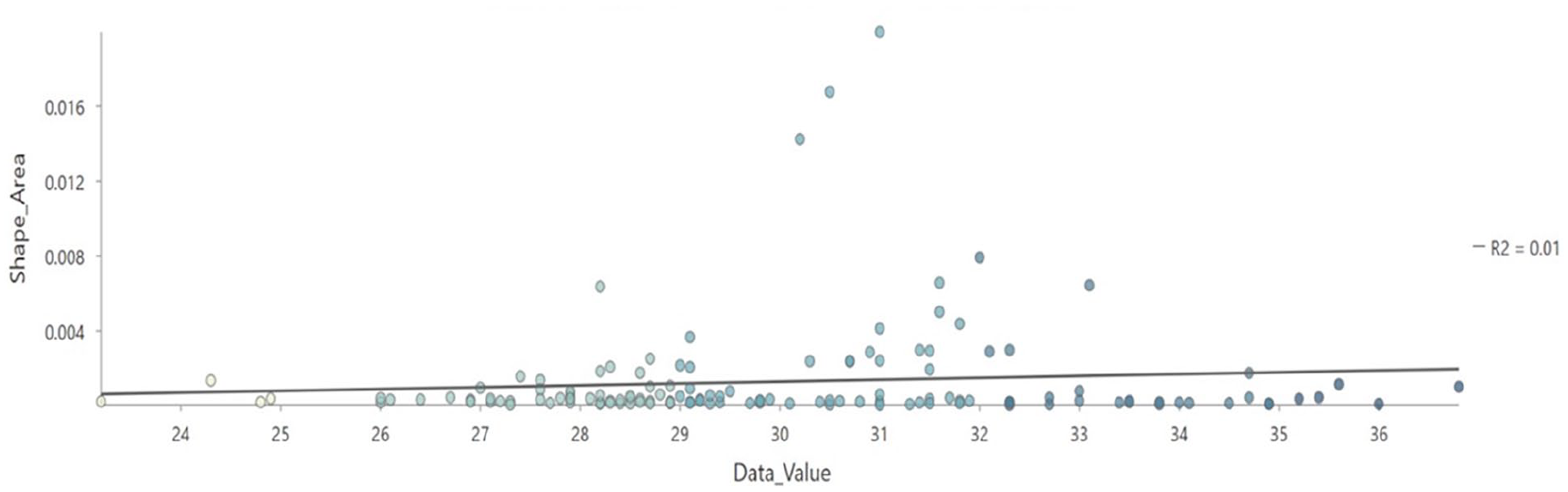
As shown in Figure 4 below, the paper generated a scatterplot to explore the relationship between the size of public parks in acreage for each census tract and the obesity rate. These variables are represented as ‘Shape_Area’ and ‘Data_Value.’ This would allow us to see the total amount of park coverage in acreage for each census tract. This was an important distinction when deciding to measure park acreage in place of the number of parks because there is tremendous variation in the size of census tracts, as shown in Figure 5, with some census tracts being well over ten times the size of others. Also, some census tracts contain several public parks, while others have just one. This does not consider that a single park could be hundreds of acres wide, while the census tracts with multiple public parks could be on a smaller scale with just one or two acres. That is why this study chose to use the size of public parks as a measurement rather than the number of public parks.
Relationship between Data_Value and Shape_Area.
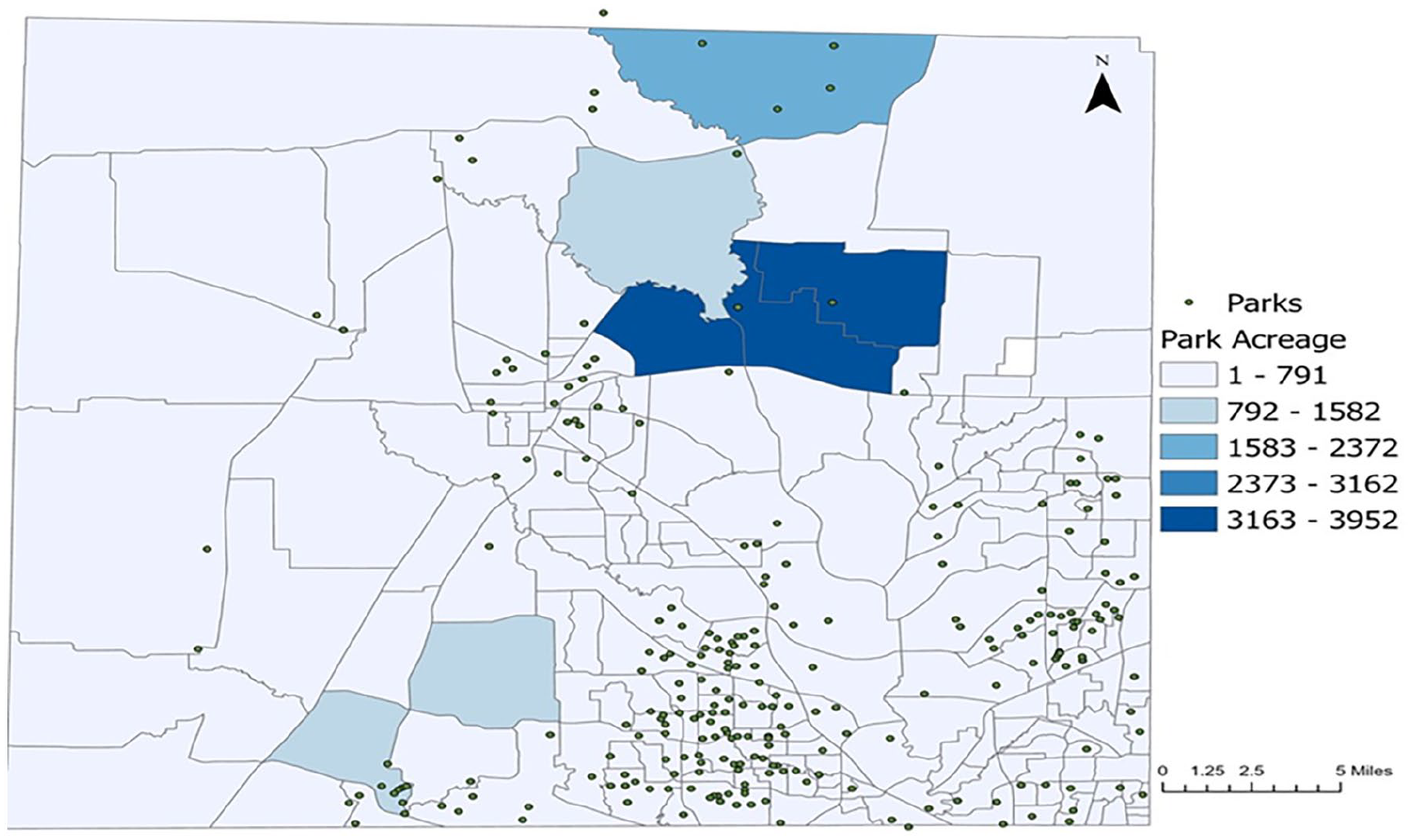
Park land acreage in Denton County.
With an R2 value of .01, it demonstrates that the relationship between the obesity rate and the size of public parks does not correlate and, hence, does not appear to effectively predict the health and wellness of the community.
Figure 6 shows a choropleth map of the lifetime cancer risk from inhalation of air toxins for each census tract in Denton County. This is measured in percentile as risk per lifetime, per million people. For easier visualization and to identify patterns, this paper overlaid a shapefile of public parks- represented as green dots. Just by eyeing this map, it looks as if there’s a cluster of a darker shade of blue in the lower right-hand corner of Denton County. This area appears to have a higher air-toxic cancer rate of 63% to 79% and 80% to 97% air-toxic cancer risk. A high air-toxic cancer rate in the center of Denton County, where the town of Denton is located, was selected. There is also an area with light blue in the bottom center of the map with an air toxic cancer rate of 28% to 44%. This area has a high density of public parks. Overall, it is difficult to distinguish whether or not public parks are affecting the air toxic cancer rate just by glancing over it. Therefore, this research conducted further analysis by creating a hot spot analysis and scatterplot.
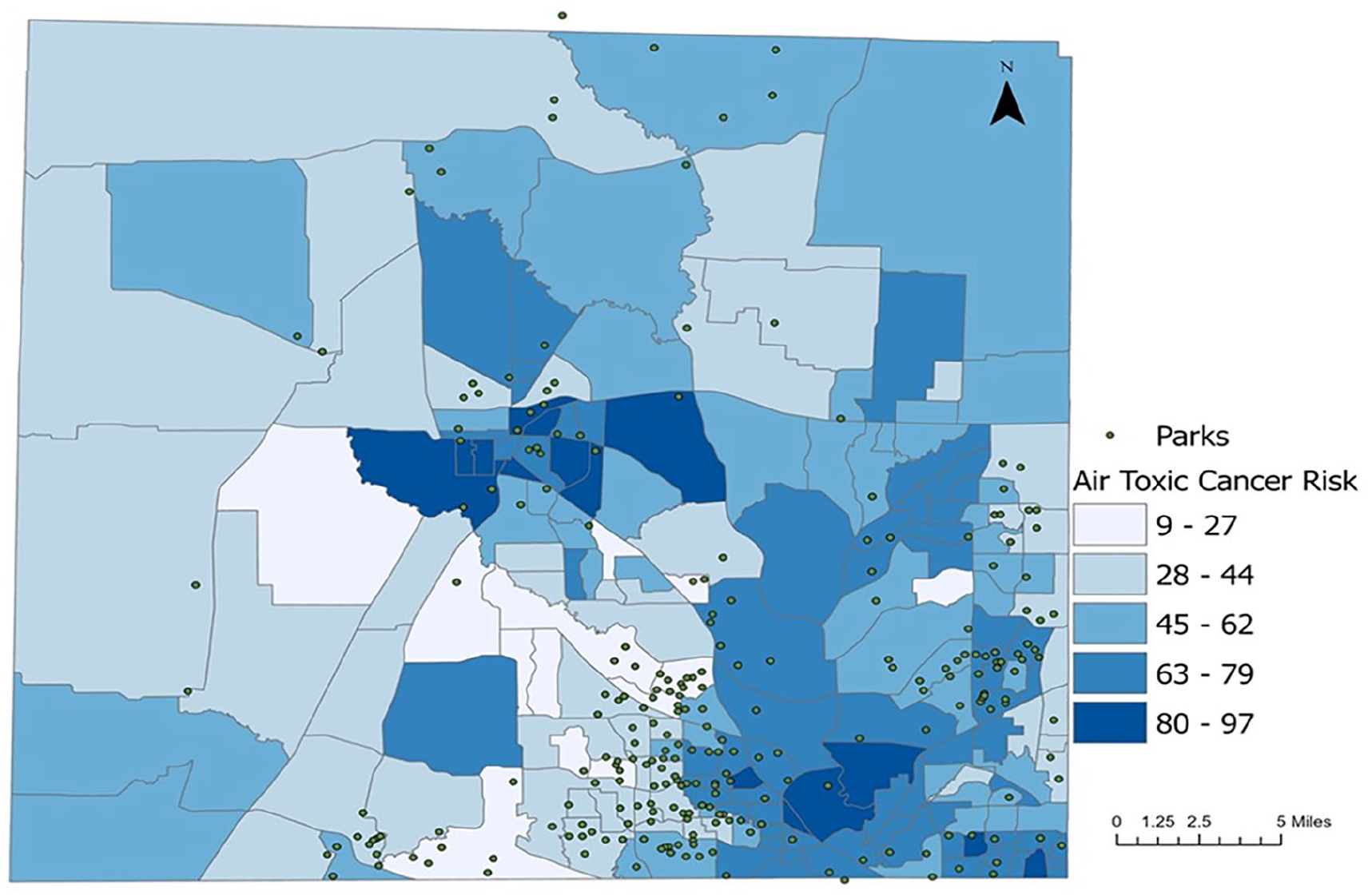
Lifetime cancer risk from air toxics in Denton County.
Figure 7 below is a hot spot analysis that measures the number of public parks in acreage against the air toxic cancer risk- for each census tract. The cold spots indicate a low park acreage and a low lifetime cancer risk. The hot spots indicate a cluster with a high park acreage and a high lifetime cancer risk. This paper was unable to identify any apparent patterns.
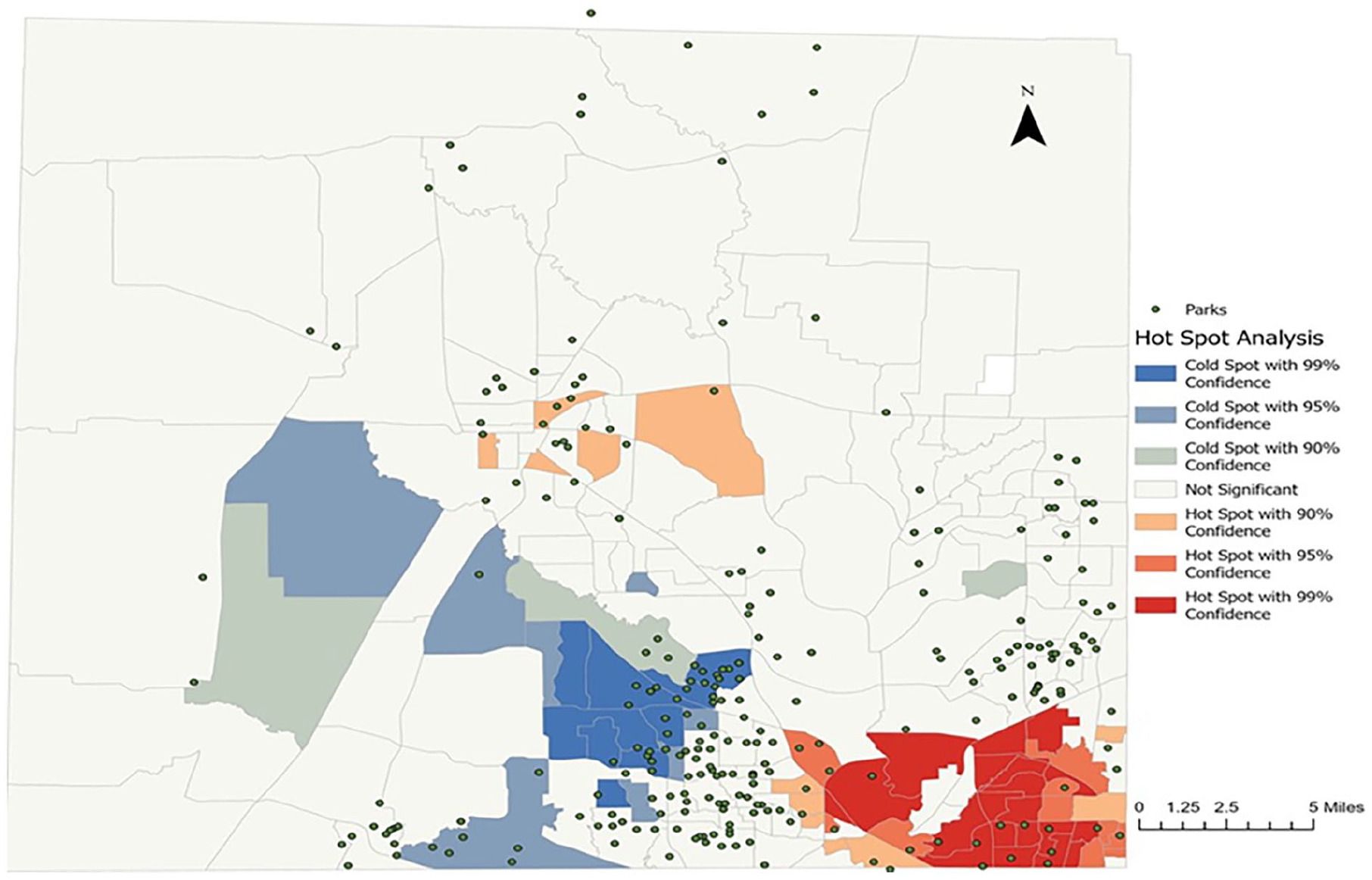
Hot spot analysis between cancer rate and public park acreage.
Discussion
This study aimed to investigate the impact of proximity to public parks on the health and wellness of Denton County residents, drawing upon environmental and physical data from the community. The results of this paper’s analysis have shed light on the complex relationship between access to green spaces and various dimensions of community health. One of the key findings of this study is the positive impact of proximity to public parks on physical health. This finding supports (Cohen et al., 2007) because data reveal a significant association between living in close proximity to green spaces and higher levels of physical activity. Residents living within a short distance of public parks are more likely to engage in outdoor activities, such as walking, jogging, and playing sports.
This increased physical activity is linked to improved cardiovascular health, reduced obesity rates, and a lower risk of chronic diseases. These findings align with previous research highlighting the importance of green spaces in promoting physical well-being (Cohen et al., 2007).
There are also positive effects of green spaces on mental health. Residents living near public parks reported lower stress levels and higher overall well-being, especially people living in the Countryside or landscape, which frequently consists of agricultural regions and surface water. These natural environments’ tranquility and aesthetic appeal are conducive to relaxation and stress reduction. Furthermore, the opportunity for social interaction in these spaces contributes to a sense of community and belonging, which can enhance mental well-being. These findings underscore the vital role of green spaces in addressing mental health challenges urban populations face.
From an environmental perspective, this study highlights the importance of preserving and expanding green spaces in Denton County. Parks and open green areas contribute to improved air quality, reduced heat island effects, and increased biodiversity within the community. These findings support (Nishigaki et al., 2020) because parks provide a superior effect in reducing the heat island and improving air quality, and environmental benefits not only enhance the quality of life for residents but also contribute to the overall sustainability of the region.
Another finding is that despite the clear advantages of proximity to green spaces, this study also reveals disparities in access. Residents in certain neighborhoods, particularly those in low-income areas, have limited access to public parks. This finding supports (Rahman and Zhang 2018) on the analysis of the level of access to public parks for different groups because this inequity in access raises concerns about social justice and underscores the need for equitable distribution of green spaces to ensure that all residents can enjoy the associated health benefits. Accessibility to parks and other green areas vary depending on the city’s design; parks with busy transportation networks will attract unfavorable assessments and thoughts. While parks with transportation systems with fewer or no traffic delays obtained favorable assessments and thoughts.
The findings of this study have several implications for urban planning and policy development in Denton County. Firstly, the government’s continued investment is needed to create and maintain public parks and green spaces. This investment should prioritize underserved neighborhoods to address disparities in access. Secondly, urban planners should consider incorporating green infrastructure into community development projects to maximize green spaces’ health and environmental benefits. Lastly, government initiatives to promote the use of parks and engage communities in outdoor activities should be encouraged to capitalize on the potential health gains. These findings support the studies and results of (McMichael, 2000; Muhammed & Abubakar, 2019) because a sustainable green space is the simplest yet most effective way of reducing the environmental impact of urban cities.
Conclusion
Living close to parks does not reduce the risk of obesity and cancer. It takes awareness and personal effort to use the parks. People need education on the benefits of parks and open spaces to utilize them and obtain results. Hence, governments should have programs that promote the use of parks and engage residents in outdoor activities for healthy living. Parks can improve physical health by giving people opportunities for physical activity, but they do not guarantee improvements in health and wellness, people must use the parks to improve their well-being. Many other extenuating or underlying variables affect a community’s health because, despite the clear advantages of proximity to green spaces, this study also reveals disparities in access. Thus, county governments (city managers and park planners) have obligations to consider the health benefits of living near parks. Hence, they should plan equitable and accessible parks for all residents considering equity.
For instance, the data do not account for an individual’s diet. Parks can enhance the air quality, provide gathering and relaxation areas, and present exercise opportunities. Green spaces play a significant role in purifying polluted air, which can help mitigate cancer risk. Parks also provide much-needed greeneries in densely populated places; green spaces allow individuals to be physically active, which can help improve cardiovascular health, mental health, and overall physical fitness. There are many aspects to wellness and indicators that the paper has not tested that may benefit or negatively impact the wellness of the Denton County residents. It is also significant to preserve and expand green spaces in Denton County because parks and open green spaces contribute to improved air quality, reduced heat island effects, and increased biodiversity within the community.
The method did not consider every possible factor that could impact the health of citizens; this study only used obesity and cancer. For example, this paper did not consider factors like race, ethnicity, socioeconomic status, and age. Thus, the findings suggest that the health effects of living near green spaces and or accessing the parks need further investigation. Future research into this issue could make valuable use of more advanced, long-term secondary data in conjunction with more detailed environmental data that would permit differentiation of types and qualities of parks and green spaces. It would also be advantageous to do primary research that uses defined, verified metrics and accurate spatial reference to extract crucial features of a healthy lifestyle. While it is not practical for everybody to live close to parks and other open spaces, many individuals do, and some of the health-promoting benefits of doing so may apply in different contexts. The potential advantages of park/green space access and lifestyles must be weighed against the risks posed by severe events and the effects of urban heat islands in new policy efforts. Nevertheless, if prudent safeguards are implemented, significant health benefits can be possible.
Overall, proximity to green spaces, such as parks and natural areas, has been associated with reduced stress, anxiety, and depression. Green spaces encourage physical activity by providing opportunities for walking, jogging, cycling, and other outdoor exercises. Green spaces contribute to cleaner air by absorbing pollutants and producing oxygen.
Footnotes
Declaration of Conflicting Interests
The author declared no potential conflicts of interest with respect to the research, authorship, and/or publication of this article.
Funding
The author received no financial support for the research, authorship, and/or publication of this article.