




Abstract
Public campaigns offer an opportunity to prevent child sexual abuse by raising awareness and promoting help available to bystanders, victims, and those at risk of perpetrating the abuse. This paper explores the impact of The Lucy Faithfull Foundation’s ‘Stop It Now!’ campaign in the UK (2015–2018) on help-seeking. Helpline calls (11,190 unique callers), website analytics (109,432 new website visitors) and three website-hosted surveys (N = 252) provided data on help-seeking, awareness, and self-reported behavior. Results indicated that there were more visitors to the help website during active campaigning periods, and helpline callers and website visitors were more likely to seek help after viewing campaign materials during active than non-active campaign periods. Help-seekers were predominantly men concerned about their own behavior. Survey 2 respondents concerned about their own behavior (n = 53) indicated that their awareness of the law (75.5%), and legal and personal consequences (67.9%) had changed after hearing about the campaign, and 66% reported a change in behavior. Public health campaigns may be an effective way to promote help-seeking and prevent abuse.
Introduction
Public Health Approaches to Child Sexual Abuse
Child sexual abuse is defined as, ‘the involvement of a child or an adolescent in sexual activity that he or she does not fully comprehend and is unable to give informed consent to, or for which the child or adolescent is not developmentally prepared and cannot give consent, or that violates the laws or social taboos of society’ (World Health Organization, 2017; pvii). This definition includes contact abuse and non-contact sexual abuse, such as the production, distribution and viewing of child sexual abuse images (material showing sexualized content involving children; cf. Prichard et al., 2022) for sexual gratification. While it is impossible to accurately quantify the number of people viewing online child sexual abuse images, statistics indicate that the problem is extensive and increasing (EUROPOL, 2020; We Protect, 2019).
Child sexual abuse, including the viewing online of child sexual abuse images, can be considered a public health as well as a criminal justice issue, due to its worldwide prevalence and significant harm caused (Cant et al., 2022; Clarke et al., 2013). In a public health model, prevention can be at primary, secondary or tertiary levels (see Quayle & Koukopoulos, 2019 for a review). When applied to crime prevention (Brantingham & Faust, 1976), strategies at the tertiary level target people who have already engaged in child abuse to prevent it from happening again. These approaches include psychological treatment programs for those convicted of child sexual abuse image offenses to prevent future viewing, such as the internet Sex Offender Treatment Program (Middleton et al., 2009), Inform (Gillespie et al., 2015), and Prevent It, an internet-mediated cognitive behavioral therapy for those seeking sexual abuse material online (Lätth et al., 2022). At the secondary level, individuals who are particularly at risk are targeted, and at the primary level the whole population is subject to measures to prevent abuse before it has occurred, such as through blocking online searches for content by internet search engines, online warning messages, or media campaigns (Prichard et al., 2022; Quayle & Koukopoulos, 2019; Steel, 2015).
Primary and secondary, alongside tertiary, approaches to prevent online child abuse are recommended for several reasons. Foremost, they have the potential to indiscriminately reach a wide audience and deter behavior before it occurs. This audience includes children, caregivers, and bystanders (primary) as well as those at risk of abusing a child, those viewing child sexual abuse images who have not been detected by law enforcement officers, and people who have considered viewing images but have not done so (secondary approaches). Reaching individuals at a point before the behavior has happened or been detected has significant social, psychological, and economic implications for victims, family members, those at risk of offending, and wider society (Cant et al., 2022; Kewley et al., 2023; Letourneau et al., 2018).
While it may be valuable to specifically target individuals who are at high risk of perpetrating abuse, there are challenges in identifying those individuals: research has explored demographic and psychological characteristics of online child sexual abuse image viewers (e.g., Babchishin et al., 2015), but studies are mostly conducted with individuals who have been convicted, representing a potentially biased sample. People with a sexual interest in children are considered at significant risk of accessing online child sexual abuse images (Beier et al., 2016); this argument underpins Prevention Project Dunkelfeld, an initiative in Germany to encourage individuals who have not been legally reprimanded, but who identify as having a sexual interest in children or adolescents, to access professional help (Beier et al., 2021). Some individuals convicted of online child sexual abuse image offences, however, cite curiosity or accidental viewing as their starting point for looking at these images (Morgan & Lambie, 2019; Seto et al., 2010; Winder et al., 2015), though these accounts may represent a level of post-event rationalization of the behavior. A survey of internet pornography viewers indicated that use of child sexual abuse images may follow from viewing legal images (Seigfried-Spellar & Rogers, 2013) and it has been suggested that viewing behavior escalates to more extreme types of imagery through satiation and a drive towards novel stimuli (Quayle & Taylor, 2002). Recent qualitative analyses of men’s motivations for viewing child sexual abuse images revealed that some participants were interested in ‘taboo’ material rather than this type of image specifically, viewed images as a method of coping with emotions or interpersonal problems, or sought novel stimuli through a process of habituation to legal material (Knack et al., 2020; Morgan & Lambie, 2019). A population-based strategy might effectively reach individuals at risk of, and those already viewing, child sexual abuse images through sexual interest, curiosity, or seeking new material.
Public Health Campaigns for Preventing Child Sexual Abuse
Media campaigns have been employed since the 1970 s (Ling et al., 1992) to promote a voluntary change in people’s behavior through theory-based marketing techniques (Grier & Bryant, 2005), such as emphasizing personal benefits and acknowledging costs (cf. Social Exchange Theory; Homans, 1958), or changing public attitudes, knowledge, and social norms (cf. Theory of Planned Behavior; Ajzen, 1985). Alternatively, Protection-Motivation Theory (Rogers, 1983) proposes that people are more motivated to change their behavior when they perceive the threat and personal vulnerability to be high but are presented with an alternative action that is effective, easy for them to implement, and low in cost. Public health media campaigns are usually associated with physical health behaviors and outcomes, such as smoking cessation, but have also been employed across a range of crime prevention strategies (McGuire et al., 2021). In the context of child sexual abuse, media campaigns may attempt to change a person’s own behavior, mobilize bystanders into actions that reduce others’ harmful behaviors, or highlight an issue to the public and create a climate for policy change (Cant et al., 2022; Kemshall & Moulden, 2017).
There is some evidence for the effectiveness of media campaigns for preventing child sexual abuse, though this is sparse. For example, The Stop It Now! campaign in Vermont was designed to encourage adult or adolescent abusers to self-report their behavior, and for others (family and friends) to confront abusive behaviors. Two years into the campaign, researchers reported a rise in helpline calls and increased public knowledge and awareness of child sexual abuse, although people reported that they did not always know how to respond to suspected abuse (Chasan-Taber & Tabachnick, 1999). A further example is a mass media campaign run by the organisation ‘Darkness to Light’, which was designed to reduce abuse by educating the US national public about child sexual abuse, including its consequences and prevention methods. Campaign evaluations (Rheingold et al., 2007; Self-Brown et al., 2008) found a short-term positive impact on knowledge and hypothetical responses to vignettes, though not on attitudes, and that participants felt invested in the topic, and were more knowledgeable about abuse and how to help protect children. The ‘Know your Power’ image-based campaign to promote behaviors in bystanders of sexual violence has also been associated with positive changes in behavior, attitudes, and knowledge (Potter, 2012; Potter et al., 2008; Potter & Stapleton, 2012). A recent review highlighted the importance of not just raising awareness of abuse in such campaigns, but equipping recipients with knowledge of ways they can act (Kemshall & Moulden, 2017).
The focus of many campaigns is on changing the behavior of adults, rather than children, which sends an important message about whose responsibility it is to prevent child sexual abuse. Interventions offered in educational settings appear to increase children’s knowledge of abuse, and putting this knowledge into action in simulated scenarios; however, it is less clear whether interventions promote disclosure and an understanding of whether they prevent abuse would require longitudinal research and accurate incidence data (Walsh et al., 2018). There is also evidence that school-based interventions in developing countries improve knowledge and self-efficacy, though those children who are most vulnerable may be less likely to attend school (Russell et al., 2020). In terms of online abuse prevention, the ‘ThinkUKnow’ campaign was launched by the Child Exploitation and Online Protection Centre in 2006 to promote safe and enjoyable online activity for children and adolescents. An evaluation of the program revealed that children were no less likely to share personal information online after the intervention, but they were more likely to report threatening online experiences (Davidson et al., 2009). A recent review of online child sexual abuse interventions aimed at children concluded that there was an improvement in knowledge of online safety, but that risky behavior online did not decrease (Patterson et al., 2022). Concerns have been raised that messages within programs do not always match the reality of online exploitation or how young people use the internet (Finkelhor et al., 2021).
Evaluations of campaigns often focus on a change in attitudes, knowledge, or hypothetical behavior rather than actual behavior change (e.g., Dickson & Willis, 2017), though there are challenges in determining how behavior could be measured in relation to child abuse deterrence. The number of people viewing online child sexual abuse images is unknown, so there is no baseline against which any changes in viewing behavior can be compared. Furthermore, data on conviction rates might reflect detection of offending rather than behavior, and therefore are not a reliable indicator of incidence. While randomized controlled trials are considered the gold standard for testing the effectiveness of interventions, evaluations tend to lack a control group, though it would be hard to identify an appropriately matched control group with little risk of contamination by inadvertent exposure to the campaign or other influential events during the campaign period (e.g., ongoing convictions/court cases, media coverage or competing campaigns). Such contamination might be even harder to avoid with an internet or social media campaign, where almost anyone could access and share materials. Campaigns are predominantly aimed at bystanders and victims of sexual abuse to encourage them to recognize and respond to abuse, rather than perpetrators, an approach which contrasts with campaign efforts in other areas. Prevention Project Dunkelfeld is an exception, as is the original Vermont Stop It Now! campaign, which targeted bystanders, victims, and perpetrators, and more recent Stop It Now! campaigns.
Stop It Now! UK and Ireland was established by The Lucy Faithfull Foundation in 2002 and is a direct descendent of the original US initiative. The program aims to prevent child abuse through awareness raising and education within the general public and offers information and advice for anyone concerned about their own or others’ behavior, including individuals who have sexually offended, or who are at risk of doing so (De Boeck et al., 2022; van Horn et al., 2015). There is a helpline service available through telephone, online chat, and email (De Boeck et al., 2022). In 2015, the service launched its Get Help website, which contains self-help materials, including information and videos promoting help-seeking. A previous evaluation of the Stop It Now! service has shown an increase in calls since its inception in 2002 (Bailey et al., 2018). Analysis of Stop It Now! US helpline callers indicates that bystanders and those concerned about their own behavior contact the service, and that about 37% of calls were from people who were not already in contact with authorities or professionals (Grant et al., 2019). A media campaign to promote the service was launched in 2015, across the whole of the UK, with a particular focus on deterring individuals from viewing child sexual abuse images. Thus, the campaign offered a primary and secondary deterrence strategy for reducing child sexual abuse by targeting the general public and individuals at risk. The aim of the present study was to assess the impact of this campaign on help-seeking behavior and self-reported behavioral change. We present the campaign as a case study, with a description of the campaign and the analysis of three data sources to evaluate its impact: telephone helpline calls, website traffic, and surveys of individuals accessing online self-help materials who were concerned about their own behavior.
Method
Study Overview and Aims
The present study evaluates the impact of the Stop It Now! campaign by addressing the following questions. First, was there an increase in help-seeking behavior during active campaign periods? Second, what are the demographic characteristics of those seeking help during active and non-active periods campaign periods? Third, do those individuals accessing the Get Help website to help manage their own behavior report a change in their knowledge and behavior? The first two questions were addressed using telephone helpline data (number of new callers and caller characteristics) and website analytics (number of new visitors and visitor demographics). The third question was addressed using data from three online surveys of individuals accessing website materials for help with their online behavior.
Ethical Approval
Ethical approval was granted by the department of Clinical Psychology, University of Edinburgh (18th May 2018). The approved protocol was developed in accordance with the British Psychological Society’s Ethics Guidelines for Internet-mediated Research (BPS, 2017). Ethical issues considered were usage of web metrics for research issues relating to public benefit, presenting aggregated data to protect people’s identities, and secure storage of data.
Background and Description of the Campaign
The campaign consisted of short films designed to highlight the problem and advertise the Stop It Now! telephone help service and website, alongside extensive media coverage (television, radio, newspaper, social media posts) to promote these materials and messages. Prior research indicated that the belief that viewing child sexual abuse images caused no harm to the victim, and a lack of understanding of the legal and personal consequences of persistently viewing images promoted or enabled viewing behavior (Bailey et al., 2022). This informed the main messages of four original campaign films in 2015, designed for online distribution: viewing sexual images of anyone under 18 is a crime and is harmful to the children shown in images; the consequences for those who persist in offending are severe; there is confidential help available to stop, through a range of self-help resources. Two principal sources of support were signposted for individuals wishing to seek help to stop viewing child sexual abuse images: The Stop It Now! telephone helpline, and the Get Help website, which hosts a range of online self-help resources, information, and support. A fifth film was developed in 2017, and subsequent films have since been developed, emphasizing the messages of the campaign. The target audience for the campaign was child sexual abuse image viewers both known and unknown to authorities, and bystanders.
Campaign Promotion and Timeline
Exposure for the campaign was secured through national televisual (e.g., campaign launch was a major story on BBC breakfast television) and newspaper media coverage (e.g., Metro, The Times, The Guardian, The Independent), and UK regional media, including almost all BBC regional radio stations and an extensive range of regional print and online titles. As an indication of reach: circulation figures for national newspapers in print were in the hundreds of thousands (e.g., The Times had a print circulation of 430,119 households), while online counterparts have monthly website visitors within the millions (e.g., The Guardian had over 87 million monthly unique visitors). Television news shows featuring related stories had millions of viewers (ITV News had an estimated four million viewers). Regional newspapers had print circulation figures between just over 1000 and 886,615 and online monthly users ranging from about 2000 to 1,944,330, while regional radio stations had between 12,833 and 560,580 users.
Stop It Now!’s Twitter, Facebook and Instagram accounts promoted campaign-related messages to followers. At the start of the campaign there were 443 Twitter followers for Stop It Now! UK and Ireland’s account, which had increased to 1697 by May 2018. To increase visibility to non-followers, the organization paid for promoted posts on Facebook and Instagram, specifically targeting young men. During the first campaign, films were viewed 2.3 million times. There were 3089 Twitter mentions, and 575 tweets. Facebook posts had over 2 million views and 679 comments. During the second campaign, films were viewed 2.2 million times. There were 464,036 social media impressions on Twitter and 22 million impressions on Facebook. Specific regions of the UK received targeted communications (Wales, Eastern England, North-West England, and South-West England), rolled out through regional police and other partner agencies. During evaluation periods, campaign activity stopped.
Figure 1 shows the active and non-active (evaluation campaign periods). The first active (pilot) campaign period was from 13th October 2015 to 31st March 2016. The campaign’s Twitter account and Stop It Now! Get Help website were launched in October 2015. During this phase there were 92 pieces of media coverage, alongside campaign videos, to promote the service. Between 1st April 2016 and 31st August 2016 was the first non-active, or evaluation, campaign period. The second active campaign period was between 1st September 2016 and 31st March 2017. During this campaign period there was an increased collaboration with regional media and social media (launch of Instagram account), as well as continued buy-in from national media. As noted above, new campaign videos were developed. A paid search advertisement was also placed on search engines, so that when help-seeking or image seeking keywords were entered, the advertisement would appear. In this phase, there were 205 pieces of coverage. The second evaluation period was between 1st April 2017 and 31st August 2017. The third active campaigning period was between 1st September 2017 and 10th May 2018. During this phase, the campaign was publicized through a range of national and regional print and broadcast media. Timeline of campaign activity.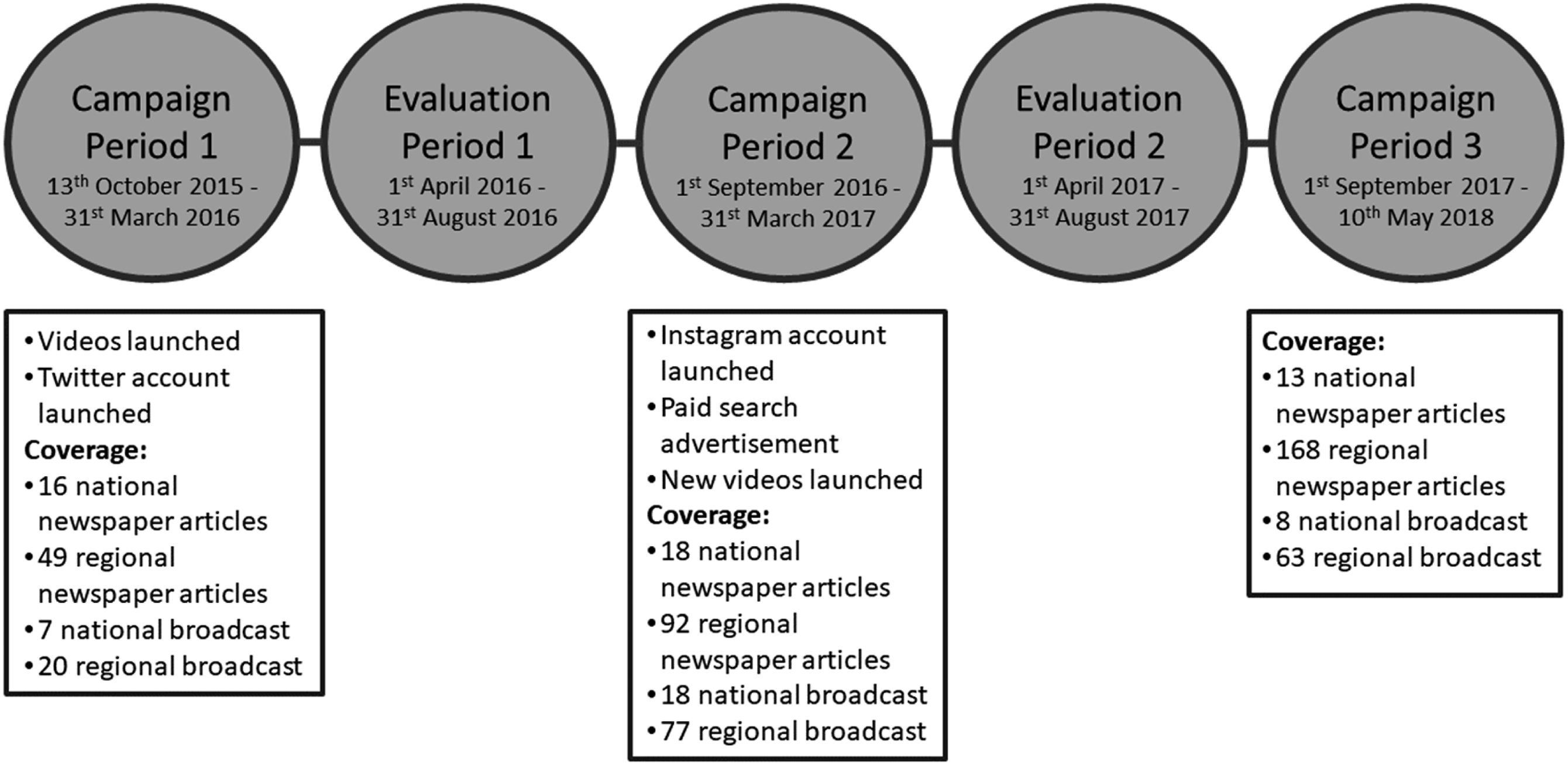
Data Sources
Three separate data sources were used to explore the impact of the campaign.
Helpline Data
Information provided by individuals who call the Stop It Now! UK and Ireland helpline is recorded by trained call handlers. Data from the helpline were collated and compared across active and non-active campaigning periods, in order to assess the impact of campaign activity on number of calls to the helpline. A distinction was made as to whether calls were influenced by the media campaign or prompted by information from other sources (e.g., police on an arrest being made) during active and non-active campaign periods. Information on the type of caller (concerned about own behavior or concerned about another’s behavior; whether over or under 18; adult concerned about child showing signs of having been victimized; survivor; professional; individuals with a general concern for internet and interested in relevant materials) allowed evaluation of help-seeking by different groups during active and non-active campaign periods.
Get Help Website Data
A Google Analytics account allowed monitoring of visitor traffic on the Stop It Now! UK and Ireland Get Help website and was used to generate non-identifiable aggregate group web metrics. Google Analytics is able to track visitors across different search engines, and when users are in ‘private’ browser tabs. The number of visitors to the site during non-active (non-campaign) and active (campaign ongoing) periods was recorded, and characteristics of new website visitors were explored. Demographic characteristics (aggregated) of visitors, including country, city, age, and gender, were recorded, as an indication of who had accessed the site. These can be ascertained when an individual has signed into a browser, through cookies, or advertising information stored in mobile phone apps. Data are not provided for individuals aged under 18 years. Finally, the channels through which visitors reached the site were recorded. These were categorized as: direct search (the individual entered the site directly, such as through typing it into the browser), organic search (the site was entered through an item on a search engine result), paid search (accessed through a paid advertisement after online search), referral (user accessed the page from a link on another website), social media (accessed through a link on social media), and other (route was not recognized by Google Analytics). This provided an indication of which platforms hosting the campaign had had more success in attracting people to the site.
Get Help Website Survey Data
First-time visitors to the website were asked to complete a survey that aimed to assess the impact and reach of the campaign materials. Surveys were conducted at three timepoints: December 2015 to April 2016 (Survey 1), October 2016 to April 2017 (Survey 2), and November 2017 to April 2018 (Survey 3). In all three surveys, respondents were asked to indicate their reason for visiting the website (‘Please tell us a little bit about your reasons for visiting the Stop It Now! website’, with options: reasons are related to my own behavior; reasons are related to the behavior of a friend or family member; I have other reasons). Respondents were prompted to provide their age (18-24; 25–34; 35–44,…65+) gender, and to indicate, ‘Where did you first hear about Stop It Now!?, with options of: radio; television; conversation with a friend/family member; internet search; internet advert; newspaper; magazine; police or other law enforcement group; other adverts in a public place; other in all three surveys, plus social media, healthcare provider, and solicitor in Surveys 2 and 3. Although age and gender were reported by participants in all surveys, responses were only disaggregated according to the reason for visiting the website in Surveys 1 and 2, and therefore demographics for those visiting for their own behavior could not be presented separately for Survey 3.
The survey was enhanced after Survey 1, so that in Surveys 2 and 3 respondents were asked to indicate whether they were pre-or post-arrest, and whether their behavior and awareness had changed as a result of becoming aware of the campaign. Data on awareness and behavior were not disaggregated by reason for visiting the website in Survey 3, so we only present data on change in awareness and behavior in those concerned about their own behavior from Survey 2. Respondents were asked three questions about change in awareness, all preceded by the phrase, ‘Since hearing about the Stop It Now! campaign’: ‘has your awareness of the law relating to what people do and look at online changed in any way?’, ‘has your awareness of the consequences of viewing sexual images of children and young people aged under 18 online for you and the people close to you changed in any way?’, and, ‘has your awareness about the consequences of viewing sexual images of children and young people aged under 18 online for those depicted in the picture changed in any way?’ (yes/no response options for all). For changes in behavior they were asked, ‘Have you done anything differently since you first heard about the Stop It Now! campaign?’ (yes/no/not sure). Those who answered yes were then asked, ‘You said you had done some things differently since you first heard about Stop It Now! On our website we recommend a range of possible strategies which some people have found helpful, listed below. Please select all that apply to you or describe what you have done differently’, with responses options: called the Stop It Now! helpline; used the Stop It Now! confidential email service; attended an Inform + session; spoken to a professional; took up safer alternative activities and hobbies; changed behavior to avoid potentially risky situations; curbed the use of the internet; added controls and filters to digital devices; stopped viewing all forms of pornography completely; referred to other organizations/helplines; Used the Get Help online self-help tool on the Stop It Now! website; enlisted the support of a partner, family member or friend; stopped viewing sexual images of children online; other. Though this behavior was self-reported, answers provided an initial indication of the impact of the campaign in terms of behavior.
Data analysis
The number of new telephone helpline callers (mean per day), their referral source, and their demographic characteristics, were compared across the periods using descriptive statistics and chi square tests. Website visitor numbers, demographics and referral sources were based on information available in Google Analytics. The total number (and mean per day) of unique website visitors, age and gender demographics, and referral sources were compared across active and non-active periods using descriptive statistics and chi square tests. These data addressed the first and second research questions of whether the campaign had prompted people to seek help, and the characteristics of those individuals. Survey data were analyzed using descriptive statistics and were used to address the third research question of whether there was a positive change in knowledge and behavior among those accessing the website for their own behavior for the first time. These data were analyzed using descriptive statistics.
Results
Helpline
Characteristics of Unique Helpline Callers.
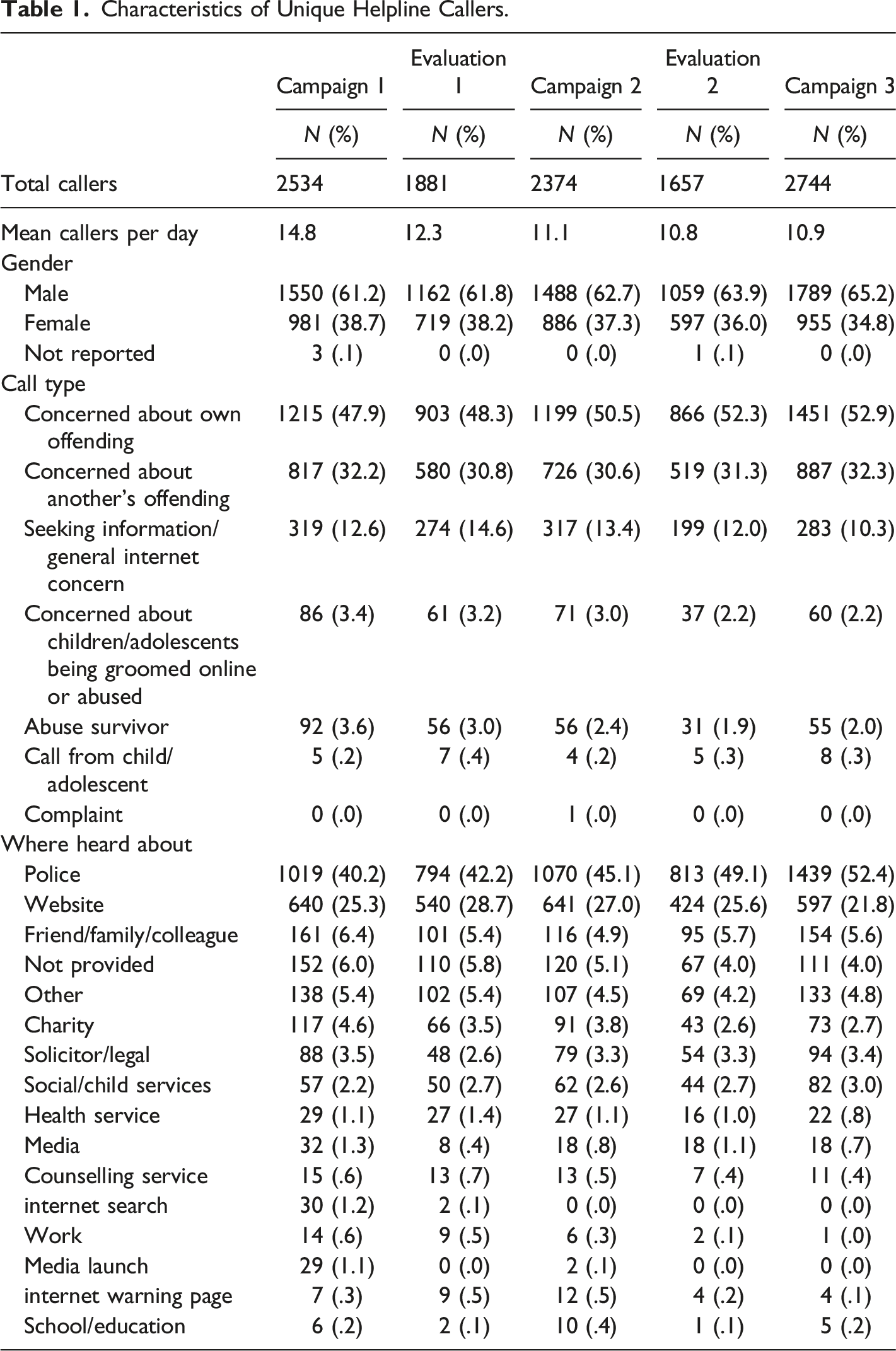
The majority of the unique callers identified as male, at a rate of 63.0% (1.70: 1 male to female ratio), with no difference in the proportion of male and female callers during active versus non-active campaign periods, X2 (1) = .10, p = .750. About half the callers were concerned about their own behavior (50.3%), and just under a third were callers concerned about others’ behavior (34.4%). A chi square test of association found no relationship between campaign period (non-active vs. active) and call concern, X2 (5) = 5.45, p = .363 (note that complaint and child were grouped together as ‘other’ due to small cell counts).
The police were the most frequently cited information source, with 45.9% of callers indicating that this was how they had heard about the helpline. The second most frequently selected source of information was the Stop It Now! website, during campaign and evaluation periods. A significant association was found between campaign period (active vs. non-active) and where callers had first heard about the helpline, grouped as: police; Stop It Now! website; close contact (friend/family/colleague); external professional services (legal, education, work, health, counselling, charity, or social services); media/media launch; internet search/warning message; other, X2 (6) = 19.02, p = .004. Bonferroni-corrected z tests comparing the two campaign periods for each category indicated no difference in proportions of people hearing about the helpline through the police, external professional groups, a close contact, internet warning/search, or other. Callers were significantly more likely to hear about the helpline from the media during active than non-active periods, and significantly more likely to have heard via the Stop It Now! website during non-active than active periods.
Get Help Website
Since the website’s launch, 109,432 users visited the website at least once. The mean number of new (first-time) users increased across campaign periods, with an increase of 123.6% from Campaign 1 (mean = 67.0; n = 11,465) to Campaign 2 (mean = 149.8; n = 31,910), and a 10.1% increase from Campaign 2 to Campaign 3 (mean = 165.0; n = 41,569). There was a decrease in traffic during non-active periods; more specifically, there was a small decrease in the number of new users by 2.1% during the first evaluation period (mean = 65.6; n = 10,035), and a more noticeable decrease of 36.9% during the second evaluation period (mean = 94.5; n = 14,453).
Demographic information was not available for all website users and was reported at times for new (unique) users or for overall users (new and returning), depending on availability of relevant information in Google Analytics. Age and gender data were not available for the first campaign period and are therefore not shown in Figures 2 and 3. According to available information, new website users were predominantly male across all periods, though there was a greater proportion of male visitors to the site during active campaign periods relative to the non-active periods (see Figure 2). The most frequent age category among new users was 25–34 years, at just over one third (33.6%), while just over a quarter (25.5%) were aged 18 to 24. The proportion of the 25–34 years age group was slightly higher during active campaign periods than non-active (see Figure 3). Percentages of male and female website visitors in active and non-active campaign periods. Website visitors by age group percentages in active and non-active campaign periods.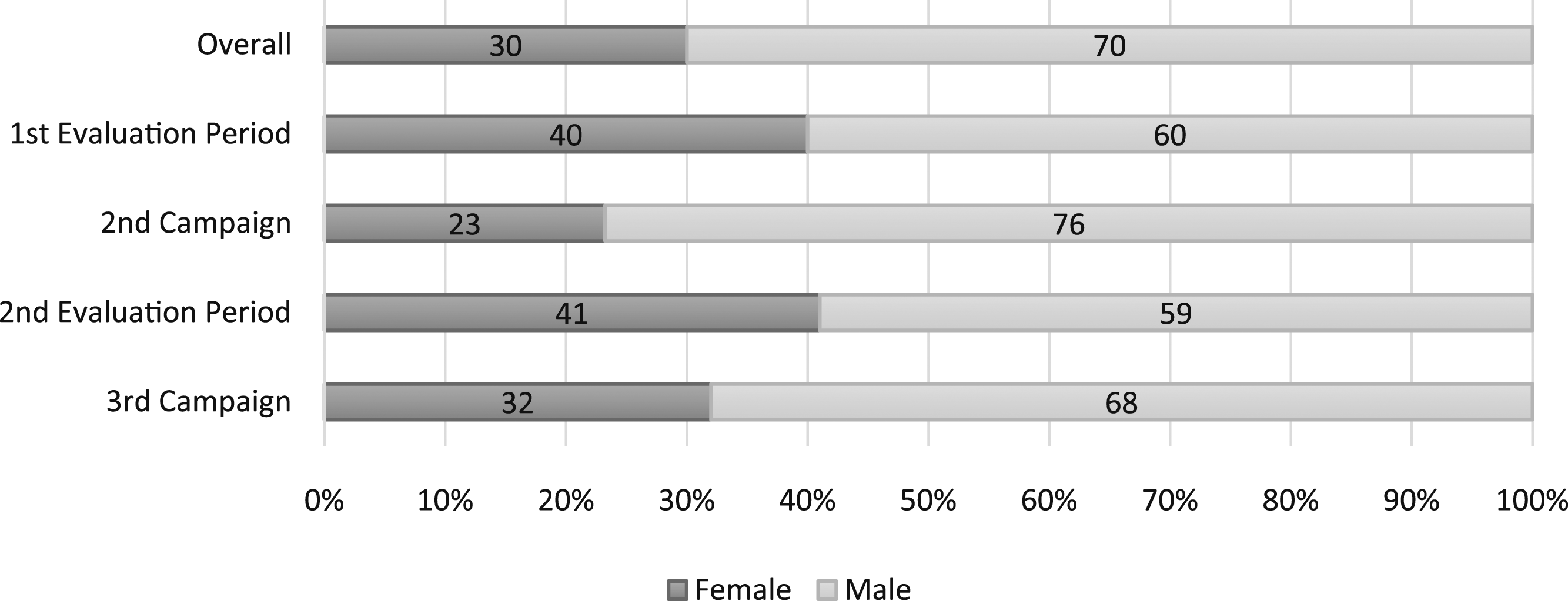
Approximately 72.5% of new users lived in the United Kingdom, 12.3% of the visitors were located in the United States, and the other 15% were based in various countries (180 in total). The proportion of visitors from the UK was slightly higher during active campaign periods compared with the non-active periods (71–79% compared with 63–70%).
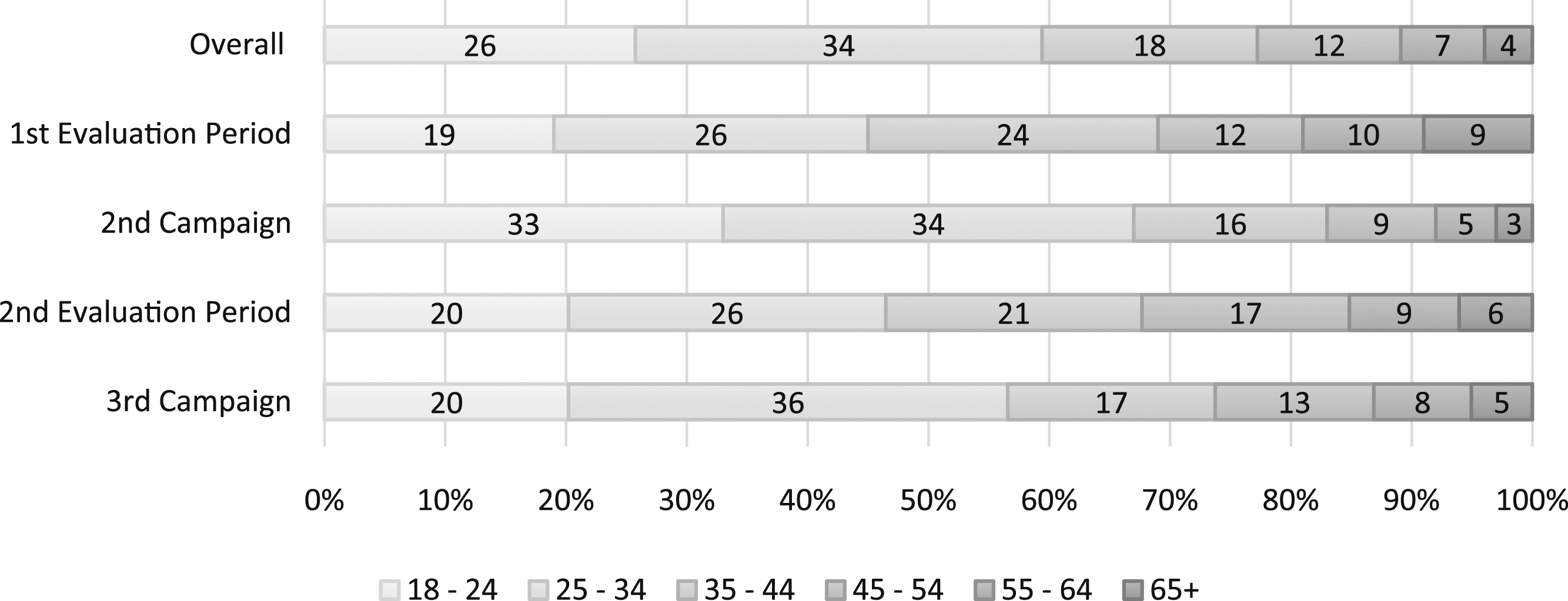
Figure 4 presents the most frequent referral routes during campaign and evaluation periods. Direct search and referral websites consistently directed the higher number of new users to the website, and direct search showed a peak during active periods. During Campaign 2 the paid search advertisement performed equally well with these referral sources. Social media and ‘other’ referral sources demonstrated a spike in referrals during Campaign 3. It is difficult to interpret this change in ‘other’ referrals without knowing what these sources were, but the rise in numbers is likely due to visitors accessing the site through links made available in campaign materials. A chi square test of association between campaign period (active vs. non-active) and referral source was significant, X2 (5) = 5860.99, p < .005. Follow up z tests for column comparisons indicated that all referral sources differed in proportions between active and non-active periods: people were more likely to enter the site directly, through organic search, or a link on another website during a non-active than active period, and more likely to access it through the paid search link, social media, or other method during an active than non-active period. Number of new website users by referral sources across active and non-active campaign periods.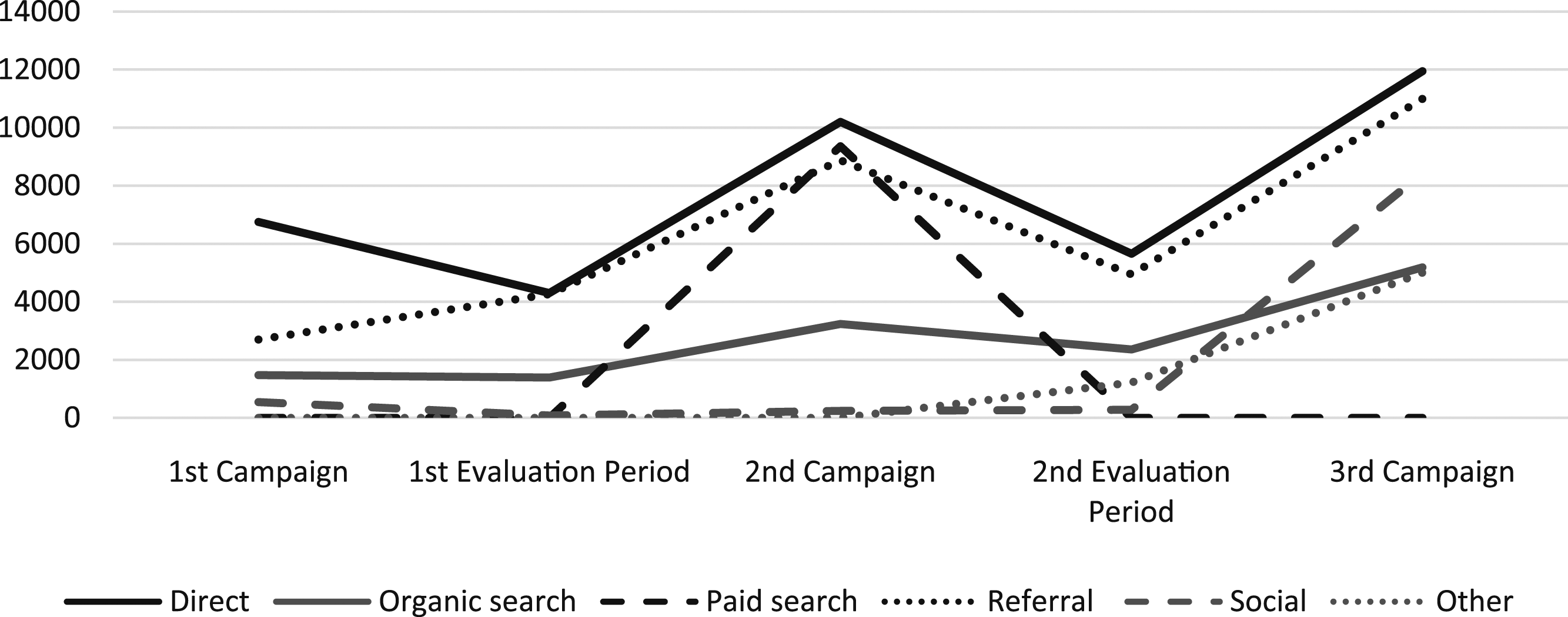
Get Help Website Surveys
There were 252 respondents across the three surveys (93 in Survey 1, 59 in Survey 2 and 100 in Survey 3). Of the 244 respondents who indicated why they had visited the website, only a small proportion reported visiting the website for reasons related to the behavior of a friend/family member (n = 15; 6.2%) or for other reasons (n = 20; 8.2%). Therefore, we present data here for those visiting for reasons related to their own behavior (n = 215; 88.1%). Where data on gender were available (Surveys 1 and 2), the vast majority (125; 96.9%) were male (1.6% were female, .8% was transgender and one .8% did not answer).
In Survey 1, no information was available on arrest status (pre-arrest vs. post-arrest), but in Survey 2, just over half of the 53 respondents concerned about their own behavior were post-arrest (n = 27; 50.9%). For Survey 3, data for most survey items were only available for those who reported to be pre-arrest but not post-arrest; as there were 36 who reported to be pre-arrest and 86 were concerned about their own behavior, it is estimated that 41.9% of individuals were pre-arrest.
Where Survey Respondents Concerned About Own Behavior First Heard About the Stop It Now! Website Across Surveys.
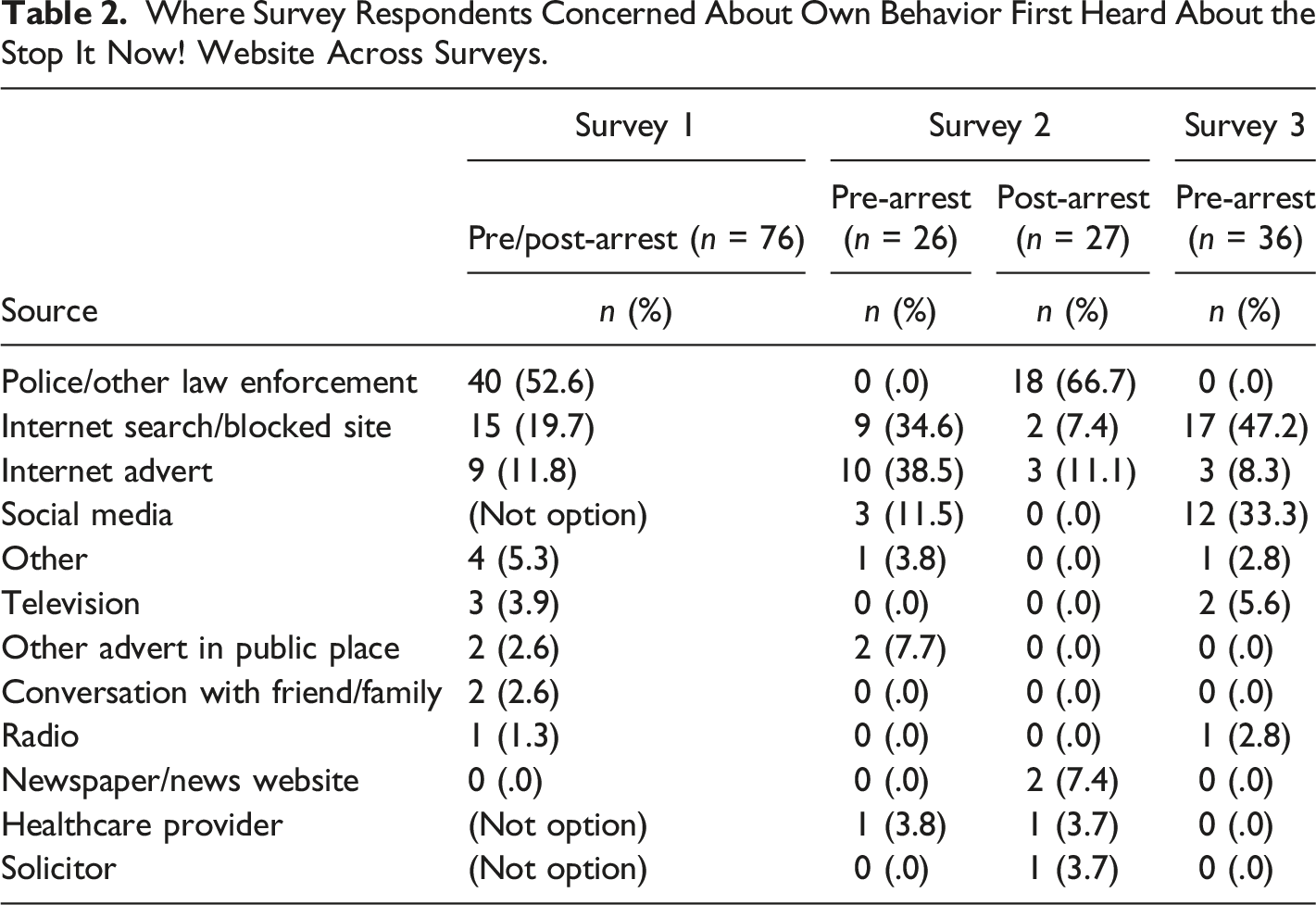
Law enforcement was not identified as the source of hearing about the website for pre-arrest respondents, whose online activity had presumably not been detected in all or most cases. For pre-arrest respondents in Survey 2, an internet advert was the most endorsed response option, followed by a link from an internet search. For pre-arrest respondents in Survey 3, an internet search was the most frequently observed route to the website followed by an advert on social media (endorsed by about a third). Social media was not available as a response option in Survey 1, but in Survey 2, 11.5% of pre-arrest respondents said they had found out about the Get Help website through social media, while about a third of the pre-arrest respondents chose this option in Survey 3.
In Survey 2, over three quarters (n = 40; 75.5%) of respondents concerned about their own behavior reported changes in their awareness of the law relating to what people do and look at online after hearing about the Stop It Now! campaign. Just over two-thirds (n = 36; 67.9%) reported that their awareness of the consequences of viewing sexual images of children and young people aged under 18 online for themselves and for the people close to them had changed. Furthermore, nearly three quarters (n = 39; 73.6%) of individuals indicated that their awareness of the consequences of viewing sexual images of children and young people aged under 18 online for those depicted had changed.
Those concerned about their own behavior in Survey 2 reported ‘doing things differently’ since first hearing about the Stop It Now! Campaign at a rate of 66.0% (n = 35) overall and at a rate of 69.2% (n = 18) for pre-arrest respondents. Among those who reported behavioral changes, the most frequently reported changes (endorsed by above half of respondents) were: stopping viewing child sexual abuse images (n = 28; 80.0%), engaging with The Lucy Faithfull Foundation (n = 24; 68.6%), changing behavior to avoid potentially risky situations (n = 21; 60.0%), and stopping viewing all forms of pornography (n = 18; 51.4%). When pre-arrest respondents were considered separately, 77.8% (n = 14) reported stopping viewing online sexual abuse images of children and 55.6% (n = 10) had engaged with The Lucy Faithfull Foundation.
Discussion
The Stop It Now! media campaign aimed to prevent child sexual abuse by making the public aware of the problem, highlighting illegality and consequences of viewing child sexual abuse images, and promoting the help available. This evaluation examined the effectiveness of the campaign in promoting the Get Help website and helpline for help-seeking, changing awareness of the law and consequences of viewing online child sexual abuse images, and self-reported change in behavior after becoming aware of the campaign. Three sets of data were used to explore help-seeking and changes in awareness and behavior, following exposure to the campaign: numbers and characteristics of helpline callers, website traffic, and three website visitor surveys during campaign periods.
Help-Seeking Behavior
The first main finding is that the campaign appeared to be successful in directing people towards sources of help and increasing awareness of the organization. When average numbers of new helpline callers were compared, the highest volume was during the first campaign, suggesting the success of the campaign launch; after this point though, there were not observable rises during active relative to non-active campaign phases. Data did show that callers were more likely to have heard about the helpline through the media or from the Get Help website in active compared with non-active campaign periods however, suggesting that the campaign was still successful in directing people to the service. There was an increase in the number of new (first-time) website users from one active campaign period to the next, and a decrease in website traffic during non-active periods, indicating that the campaign was perhaps more successful in directing people to the website than the helpline. It could be the case that accessing a website rather than calling a helpline generates fewer fears about anonymity in help-seekers, which has previously been identified as a concern in helpline callers (van Horn et al., 2015). However, looking at the change in average daily visitors from active to inactive periods, the difference from Campaign 1 to the first inactive period was very small and within the usual monthly fluctuations (up to 23% based on average daily unique UK visitors during the two evaluation periods), and therefore not of particular note. In contrast, the decrease observed in the inactive period following Campaign 2 was much higher than these monthly fluctuations, and therefore represents a more meaningful difference. The increase in new visitors in the second campaign period and the more noticeable drop in numbers in the inactive period following Campaign 2 could be due to the greater promotion of the website through social media and the paid search advertisement during the second campaign, which made it easier for individuals to access the site by following an online link. Data indicated that there was a greater likelihood of entering the website via a social media link or through the paid search link during active than non-active campaign periods. These findings suggest that the social media and paid links were particularly successful campaign components.
Second, the findings provide us with some information about the people seeking help and any changes in help-seeker characteristics during campaign periods. About a third of helpline callers were concerned about another person’s behavior or about children being abused, and a minority of the website survey respondents had visited for reasons related to the behavior of a friend or family member. Bystander groups have not been heavily involved in child sexual abuse prevention efforts (Mendelson & Letourneau, 2015), but this suggests that they are willing to seek help, at least anonymously. Around half of helpline callers and the vast majority of survey respondents were men concerned about their own behavior and presumably seeking support for themselves. Most of the website’s new visitors were men across both active and inactive campaign periods, most frequently in the 25–34 years age group. Together these findings show that people are prepared to get in touch about their own behavior, and, as Grant et al. (2019) observed in their exploration of Stop It Now! US helpline callers, indicate that there is value in investing in prevention efforts that are aimed at promoting self-help in abuse perpetrators. Comparing helpline caller characteristics across active and non-active campaign periods did not indicate differences in caller gender or concern. Website analytics indicated a consistently higher proportion of male visitors, and those from the 25–34 age group, in active versus non-active campaign periods. Therefore, it is a reasonable interpretation that the campaign was particularly effective in directing young adult men to the website, who are an appropriate target group for secondary prevention strategies (Kewley et al., 2023). However, because the data are based on proportions from demographic groups, rather than absolute numbers, we cannot rule out the alternative explanation that there was a decrease in female or older visitors during active periods.
The majority of survey respondents reported being post-arrest and were most likely to have heard about the Get Help website from the police or other law enforcement agencies; similarly, nearly half the helpline callers had heard about the service from the police. However, some survey respondents identified themselves as pre-arrest and about half of these individuals reported that they had accessed the site through an internet search. Therefore, efforts to increase awareness of the website through online searches appear to have been successful for those individuals who are at risk of offending and are unknown to law enforcement. This tells us that the campaign had successfully reached people before they had been apprehended by law enforcement, that some individuals are motivated to change their behavior before they are detected, and that they had accepted that the website offers anonymous support. Similarly, recruitment of participants to the online Prevent It programme through the Dark Web (Lätth et al., 2022) indicates that there are individuals who recognize that their viewing of child sexual abuse images is problematic and are willing to accept support. Prevention Project Dunkelfeld in Germany has also demonstrated that people may willingly seek help for their behavior or thoughts of abuse. An important difference between these contexts is that therapists in Germany do not need to disclose past offences to legal authorities, whereas in the UK, many professionals (including those working for the Lucy Faithfull Foundation) do have a duty to report past offenses (Goodier & Lievesley, 2018). This is likely to be a barrier to help-seeking in those who have already offended and raises an interesting point about the value of adopting a similar confidentiality model in the UK (cf. De Boeck et al., 2022).
Changes in Awareness and Self-Reported Behavior
The majority of survey respondents concerned about their own behavior reported positive changes in awareness of the law, the consequences of viewing child sexual abuse images, and availability of help after becoming aware of the campaign, based on the findings from Survey 2. Where participants were asked to indicate how their behavior had changed after becoming aware of the campaign, the most frequently reported behavioral changes were stopping viewing these images, engaging with help services, changing behavior to avoid potentially risky situations, and stopping viewing all pornography. Therefore, the campaign messages may have been successfully transmitted and prompted a change in behavior; however, several notes of caution must be applied here regarding the study methods. Behavior was self-reported and there is no way of verifying the information provided. Furthermore, we cannot say for certain that a change in behavior was attributable to the campaign directly or indirectly, due to a lack of comparison or control group. The number of people who completed the survey was also very small relative to the number of people accessing the website during the given time period. Therefore, the responses received may represent the biased views of those individuals who were especially motivated to change or who experienced a positive effect (as opposed to no/negative change). For these reasons, the results should be viewed tentatively at this stage, and a further thorough evaluation of awareness and behavior change is needed.
Implications and Future Directions
The public health campaign strategy described here places responsibility with individual members of the public, and findings suggest this is a fruitful strategy in terms of help-seeking and prevention of abuse. The analysis indicated that Stop It Now! attracts help-seeking from those who are concerned about their own or others’ behavior, and from those who are unknown to law enforcement as well as those referred to the service by the police. Within the public health model, the service therefore operates at primary, secondary and tertiary levels, providing support for bystanders, those at risk and those who have already been identified by law enforcement. Secondary strategies, with a focus on people at risk of offending in particular, have been identified as a priority for research and policy (Assini-Meytin et al., 2020; Kewley et al., 2023). However, these are only one part of the solution to deterring abuse and sit alongside other primary and tertiary deterrence strategies, such as web crawlers that detect online child sexual abuse images (e.g., Westlake et al., 2017).
Campaign messages seem to have led to changes in awareness of the law and the consequences of abuse based on the responses of those seeking help on the Get Help website. Messages were based on evidence about effective deterrence strategies from interviews with individuals who had been investigated for viewing child abuse images online (Bailey et al., 2022). Whether this knowledge has a direct effect on viewing behavior or indirect via other strategies endorsed is unknown but could differ according to the recipient. Those convicted of viewing child sexual abuse images sometimes cite curiosity as a reason for accessing images (Clarke et al., 2013; Seto et al., 2010) and so awareness and knowledge may have served as a direct deterrent for some individuals. For others, greater knowledge might provide the motivation to employ other deterrence strategies and engage more with the support available. For example, many respondents indicated that they were avoiding risky situations such as not viewing adult pornography, which could be a pathway into viewing abuse images. In Bailey and colleagues’ (2022) study, participants reported that accessing adult pornography online provided an initial introduction to child abuse images, and that it was a trigger to viewing illegal content in the moment, where they would progressively click from adult to child content. Avoiding risky situations may be important, as behavior is not always rational, especially when individuals are in a ‘hot’, or emotionally aroused, state. Flexon and Guerette (2009) found that perception of the risk of being caught drink-driving was related to predictions of how one would behave, but not actual behavior, which may be due to a difficulty in empathizing with a future state.
Protection-Motivation Theory (Rogers, 1983) emphasizes suggested action alongside personal threat for promoting behavior change, in this case the availability of support. The idea that help is available may be particularly pertinent to bystanders as well as those at risk of offending, as previous research revealed that the public tend to perceive child sex offender treatment as futile (Richards, 2018). To that end, the message that help is not just available but can also have a positive impact (e.g., De Boeck et al., 2022; Van Horn et al., 2015) may increase the likelihood of people seeking support and implementing the behavioral changes recommended by helpline operators and the website. Further research could examine which messages have most impact on the behaviors of those seeking help for their own behavior or others’ behavior, and the mechanisms by which these messages translate into behavioral changes.
A third of pre-arrest respondents in the third survey indicated that social media had directed them to the Get Help website, and this was consistent with a spike in referrals from social media to the website during the third campaign period, and greater likelihood of hearing about the helpline from media during active campaign periods. The development of social media within the last 15 years provides an additional tool alongside traditional media that can be harnessed by campaigners to ensure that a wide audience is reached (Freeman et al., 2015). It may be particularly effective for reaching young adults, the main users of this technology (Pew Research Center, 2021). It might also be especially useful for the distribution of particular types of material; for example, video campaigns are more likely to be shared on social media (Buccoliero et al., 2016) and this snowball effect might reduce the dissemination efforts and costs required of campaign organizers. The ability for health communication to snowball dramatically over social media is demonstrated by the 2014 ice bucket challenge phenomenon (Shi et al., 2018), a global, online viral video trend involving pouring a bucket of cold water over an individual to raise money and awareness for charities. As social media allows for interaction with materials, future research could analyze the content of the comments left alongside videos, for a deeper understanding of people’s engagement with campaigns, and the most effective strategies for materials to be shared. One of the limitations of campaign and intervention evaluations is a lack of investigation of the target market’s current thinking on a topic (Self-Brown et al., 2008). There is little research in relation to the public’s views on sexual offending against children, yet this may inform policy and deterrence campaigns (Richards, 2018; Steel et al., 2022).
Limitations
Outcomes reported here are not a direct measure of whether people are deterred from offending; however, this is a common criticism in the area, as other evaluation studies do not routinely report or assess through objective data whether child abuse is reduced by intervention (Davis & Gidycz, 2000). There may have been other external influences on help-seeking that we were unable to take into account; for example, the #MeToo campaign on social media appears to have led to an increase in calls to a US abuse helpline (BBC News, 2018), and so high profile or local sex offense cases and child sexual abuse allegations may lead people to seek information about viewing child sexual abuse images and where to get help. Other limitations include the potentially biased sample of respondents on the Stop It Now! website surveys, as previously mentioned. These individuals were more likely to be known to law enforcement and are consequently more motivated to seek help to change their behavior. Nevertheless, the surveys did include respondents who are not known to law enforcement, who also identified benefits of the material.
The data on website visitors were not part of a formal evaluation process, and therefore provide more objective data, though this is not without complication in measuring new visitor numbers. Google Analytics tracks returning visitors and sessions to monitor engagement patterns; if too much time passes, cookies that help identify return visitors are deleted, and so return visitors will be identified as a new visitor. This can also occur if the same individual accesses the website using a different IP address. Another limitation was that not all referral sources could be recognized, which made changes in ‘other’ sources difficult to interpret. Additionally, the tool may not be accurately able to determine demographics in all cases, though uses all the information that is available. Despite these limitations, future work could harness web data as a tool for monitoring seasonal or geographical trends in search behavior, which can inform the optimal timing for interventions (Carr & Dunsiger, 2012). Seasonality is a potential confounder in evaluating drink-driving campaigns (Mazerolle, 2003), and there may be similar interesting trends in relation to people seeking images online, or searching for help, that have implications for the timing of both campaign activity and intervention. For example, the recent COVID-19 pandemic and lockdown across affected countries appears to have been associated with increased viewing of child sexual abuse images (Harris et al., 2021). Both evaluation periods in the current study spanned April to August, so this is a consideration when interpreting the findings. We could not see any seasonal trends in help-seeking based on caller and website visitor data outside of campaign periods (unpublished data from 2014 and 2019, provided by Stop It Now!), but a systematic exploration could give greater insight. Finally, we were provided with data about individuals using the telephone helpline for personal advice, but individuals may also contact the service via online chat or email, and these methods might be perceived as more anonymous or comfortable than speaking on a phone. Future research could therefore investigate differences in numbers and characteristics of those using these other services as well, during active and non-active campaign periods.
Conclusion
There is little research examining the impact of public health campaigns as a primary and secondary strategy to preventing child sexual abuse, including viewing child sexual abuse images; therefore, this case study makes a novel contribution to the research literature. Moreover, the results of this evaluation suggest a positive impact of the campaign on help-seeking for viewing online images, and a further positive effect on awareness and behavior, though limitations with study design urge caution in interpretation. Future research could more rigorously test the campaign with the aid of a comparison group, address which media are most effective for reaching different subsets of the population, including those most at risk of viewing child sexual abuse images, the optimal timing for promotion of help resources, and the impact of the campaign on people’s attitudes towards help-seeking for the behavior. In an age when campaign materials can be transmitted digitally to a large audience at relatively little cost, the results of this study are promising, and support the efforts of services which rely on regular funding (De Boeck et al., 2022). Such interventions should therefore be invested in by policymakers looking to prevent sexual offending against children.
Footnotes
Acknowledgments
The authors take responsibility for the integrity of the data, the accuracy of the data analyses, and have made every effort to avoid inflating statistically significant results.
Declaration of Conflicting Interests
The author(s) declared no potential conflicts of interest with respect to the research, authorship, and/or publication of this article.
Funding
The author(s) disclosed receipt of the following financial support for the research, authorship, and/or publication of this article: The research reported in this paper was supported by funding from the National Society for the Prevention of Cruelty to Children, UK.
