




Abstract
Higher education institutions are under pressure to improve the quality of education. Student engagement (SE) is among the critical indicators of quality education. Numerous studies demonstrated the engagement of nursing students in their learning environment. However, there is limited evidence on nursing students' engagement levels across academic years and post-pandemic restrictions. This study aimed to determine undergraduate nursing students' classroom engagement levels and associated factors across academic years. An analytical cross-sectional survey was conducted in Islamabad, Pakistan. Students enrolled in a Bachelor of Nursing Sciences program (n = 276) participated in this survey. Data were collected using a 40-item Student Engagement Questionnaire. Descriptive and inferential statistics were used for data analysis. Most undergraduate nursing students reported high (47.8%) or moderate (36.6%) levels of engagement. Higher engagement levels were reported in the self-directed learning and adaptability domains and moderate levels in student–teacher and student–student relationships. There was a difference across academic years regarding critical thinking and student health related. Grade point averages and cumulative grade point averages were unrelated to SE. Although most participants reported a high level of SE, the number of moderate-level achievers was significant. Therefore, the findings can be valuable for nursing educators and educational institutions to design effective strategies to improve the conduciveness of the teaching and learning environment and student engagement.
Implications for Knowledge Translation
To provide valuable knowledge to educators and organizations to improve teaching and learning strategies. To enhance the engagement levels of nursing students and equip organizations and educators with the knowledge to comprehend and address the factors influencing student engagement. To improve the conduciveness of the teaching and learning environment and student engagement. To assess nursing students' engagement in classroom settings post-pandemic restrictions and across academic years.
Higher education institutions (HEIs) are facing pressure to improve their quality of education. There is strong competition among HEIs to support their quality requirements and ensure the quality of the education they deliver (Almarghani & Mijatovic, 2017). Nursing education is also evolving with emerging changes in health care (Abeasi & Kwakwa, 2020). The nursing profession is continually evolving, and educational approaches are changing; student engagement (SE) in the classroom is one of the critical components of nursing education (Saad et al., 2021). SE, regarded as a measure of the quality of higher education (Ghasemi et al., 2018), is a multidimensional construct (De Borba et al., 2020) that includes behavioral, cognitive, and emotional domains (Kuchinski-Donnelly & Krouse, 2020) and vigor, dedication, and absorption as key dimensions. Vigor includes high degrees of resilience; dedication includes students' satisfaction and desire, and absorption entails students' total attention on completing their assignments (Fernández da Lama, 2019).
Increased SE has been linked to students' improved understanding and knowledge of nursing content (Hudson et al., 2019); educational outcomes (e.g., grades); ability to handle stress, burnout, and workload (Fernández-Martínez et al., 2019; Mohamed et al., 2021); and satisfaction with the learning process (Wong & Chapman, 2023). This, in turn, has been linked to increased student confidence to become competent nursing professionals (Fernández-Martínez et al., 2019). Engagement has also been found to be associated with improved student skills and abilities and psychological adjustment in the organization (Saad et al., 2021). Several studies reported links between nursing SE and burnout (Liebana-Presa et al., 2018), SE and emotional intelligence, sense of coherence, and coping (Fernández-Martínez et al., 2019), SE and collaborative learning (Noohi et al., 2013), and SE and peer assessment (Casey et al., 2011).
Casuso-Holgado et al. (2013) found that nurses' SE was directly linked to their retention and academic performance. Engaged students showed better academic performance and skills in considering complex working situations as future nurses (Casuso-Holgado et al., 2013; D'Souza et al., 2013). As SE fosters learning, it is crucial to identify the factors that can augment or lessen nursing students' level of engagement (D’Souza et al., 2013). Globally, studies focused on nursing SE in the classroom and clinical learning environments (Casuso-Holgado et al., 2013; D'Souza et al., 2013; Ghasemi et al., 2018; Hudson & Carrasco, 2017; Hudson & Carrasco, 2015; Hudson et al., 2019; Mohi-ud-Din et al., 2019; Moustafa-Saleh et al., 2021; Noohi et al., 2013; Prokess & McDaniel, 2011; Sattar et al., 2018) as well as online and blended teaching and learning environments (Abdel-Azeem et al., 2021; Chan et al., 2021; Hampton et al., 2020; Phillips & O'Flaherty, 2019; Saad et al., 2021). These studies have several limitations, such as small sample sizes, secondary data analysis, no comparison of SE across academic years, use of data collection instruments with limited validity and reliability, and no pilot testing of data collection instruments. Additionally, all of these studies were conducted pre-pandemic or during the pandemic, and currently, no studies have focused on SE upon return to classroom settings. Therefore, a need exists to assess nursing SE in classroom settings post-pandemic restrictions. Also, a research gap exists in South Asian contexts about SE engagement and its associated factors.
Purpose
The purpose of the study was twofold: first, to assess undergraduate nursing students' engagement levels and factors associated with SE in classroom learning; second, to compare undergraduate nursing SE across academic years.
Methods
Study Design
An analytical cross-sectional analytical design was used. Cross-sectional studies allow researchers to examine the prevalence of a given occurrence (Kesmodel, 2018; Zangirolami-Raimundo et al., 2018). Analytical cross-sectional investigations offer the status of phenomena and their associations at a particular point in time and establish associations between several parameters (Gray et al., 2017; Ihudiebube-Splendor & Chikeme, 2020).
Study Setting and Sampling
This study was conducted at a private nursing college in Islamabad, Pakistan. The study population consisted of 341 undergraduate nursing students in the Bachelor of Nursing Sciences program. A consecutive sampling technique was used for this study. This non-probability sampling method involves recruiting all people from an accessible population (Polit & Beck, 2018). The final sample included 291 students (response rate 95%) from all six semesters (II [n = 51], III [n = 48], IV [n = 48], V [n = 52], VI [n = 44], and VII [n = 48]). Out of 291 participants, 276 filled the questionnaire and were included in data analysis.
The inclusion criteria were (1) students enrolled in the Bachelor of Science in Nursing program, (2) completed at least one semester, and (3) between the ages of 18 and 26. First-semester students were excluded because they had not completed their first semester. It would have been useful to include first-semester students in the study to assess their engagement levels. However, we wanted to assess engagement levels in the semester and compare within the program and grade point average (GPA). As they had not passed their first semester, therefore, they were not included in the study. At the time of the study, there was no eighth semester in the college.
Data Collection
The study was conducted from February 2022 to September 2022. Data were collected using the self-administered, self-reported Student Engagement Questionnaire (SEQ) (Kember & Leung, 2009, used with permission). SEQ had different subdomains of engagement and general skills related to student learning. For data collection, permission was obtained from the institution's head, and class and program coordinators were approached to fill out the questionnaire. As the class was finished, nursing students from different semesters were gathered in class. The purpose of the study was explained, and informed written consent was obtained from the students. Students were explained the procedure for filling out the form, and as they completed the form, the data collector checked for any missing values and stored them in an envelope. The form did not contain any identifier other than the semester.
The tool contains five domains: intellectual capabilities, working together, teaching, teacher–student relationships, and student–student relationships. It includes 17 variables/factors with 35 items (Kember & Leung, 2009). In our study, the SE subdomains/variables were used as factors that affect nursing SE. After an integrative literature review, five new items were added to the questionnaire necessary to identify the factors and their effect on students' engagement in their learning environment—the adapted questionnaire comprised 40 items marked on a 5-point Likert scale. The responses were 1 = strongly disagree, 2 = disagree, 3 = neutral, 4 = agree, and 5 = strongly agree. In previous studies, no cut-off scores for engagement levels were reported. Therefore, bloom's cut-off score method was used (Alibrahim & El. Mahalli, 2022; Seid & Hussen, 2018). The scores were transformed into percentages through binary vision in Statistical Package of Social Sciences (SPSS) to generate cut-off scores: poor = ≤50%, low = 51%–65%, moderate = 66%–80%, and high = >80%. The content validity of the adapted SEQ was determined by seeking expert consultation from six individuals (five nurse educators and one nursing student). The content validity index was 0.97, considered excellent (Polit & Beck, 2006). The pilot testing was completed on 43 undergraduate nursing students. The internal consistency of the instrument was determined using Cronbach's alpha (.92).
Data Analysis
Data were analyzed by using IBM, SPSS (version 25). The normality of the data was tested by using the Shapiro–Wilk test. The data were non-normal; therefore, non-parametric tests were applied for data analysis. Students' engagement levels were presented in percentages (i.e., the percentage of students who scored 50%, 51%–65%, 66%–80%, and more than 80%). The descriptive analysis was done and presented in the frequencies and percentages of genders, previous educational levels, and current semesters of the students. The participants' GPA, cumulative GPA (CGPA), and age were presented in means and standard deviation. The Kruskal–Wallis, Mann–Whitney U test, and Spearman correlation tests were used to analyze the levels of students' engagement across academic years (semester-wise) and correlations between the factors affecting SE.
Ethical Considerations
This study was approved by the Institutional Review Board (IRB#0115-22) of the nursing institution and the affiliated teaching hospital. Participants were assured of the confidentiality and privacy of their data. Participants provided written consent. Permission to use the data collection instrument was obtained from the instrument developers for use and adaptation.
Students were told that there were no adverse consequences for non-participation.
Results
Sample Characteristics
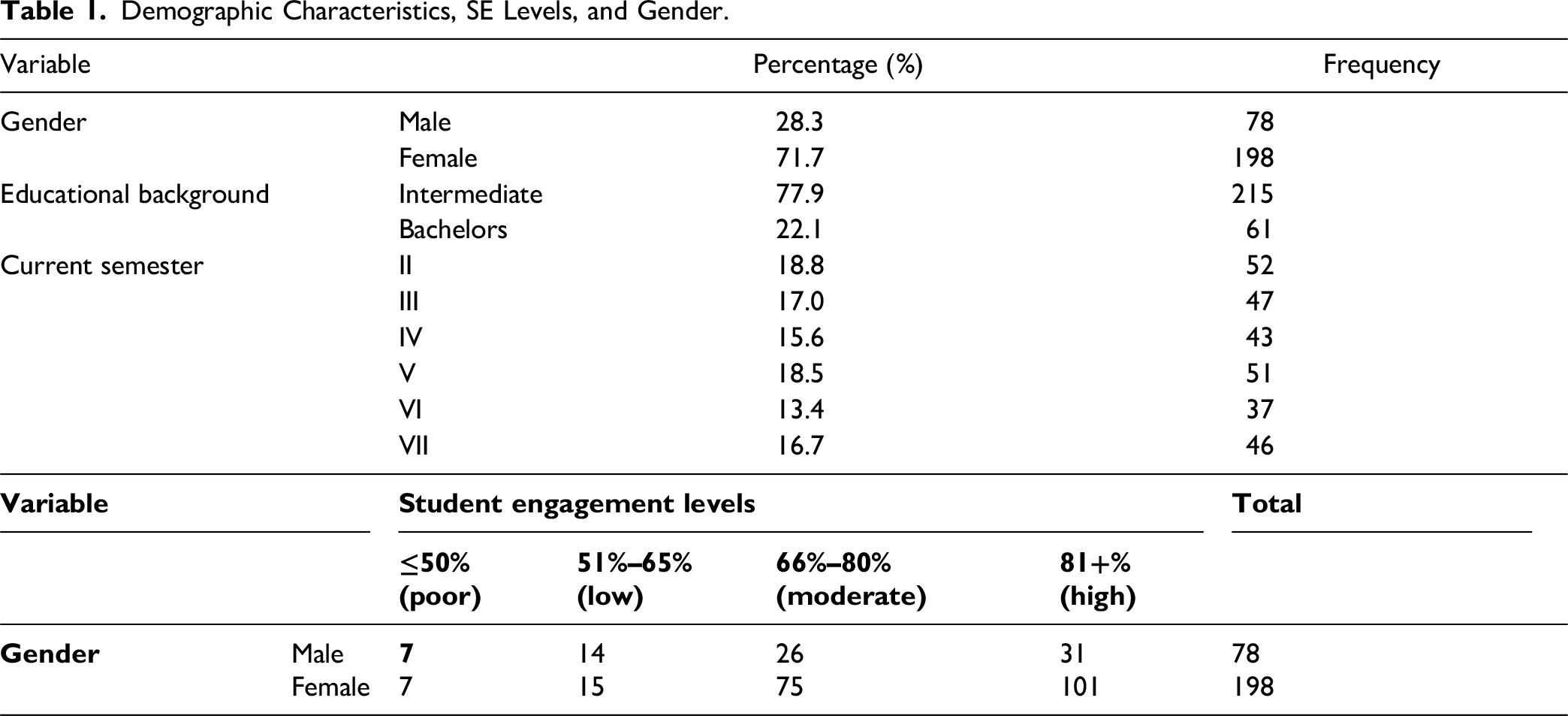
The sample (n = 276) comprised 78 male and 198 female nursing students. The mean age of the participants was 21.31 ± 1.429, and the mean semester GPA of students in their current semester was 3.286 ± 0.311. The mean CGPA of the students was 3.307 ± 0.315 (Table 1).
Demographic Characteristics, SE Levels, and Gender.
Levels of SE
Overall, 47.8% (n = 132) of students showed high levels of SE, 36.6% (n = 101) of the students showed moderate, 10.50% (n = 29) showed low, and 5.10% (n = 14) had poor levels of SE. Comparison across academic semesters revealed that students in the second (8%) and sixth (7%) semesters of the program showed the lowest levels of SE. Students in the seventh (27%) and fourth (24%) semesters showed the highest levels of SE (Figure 1).
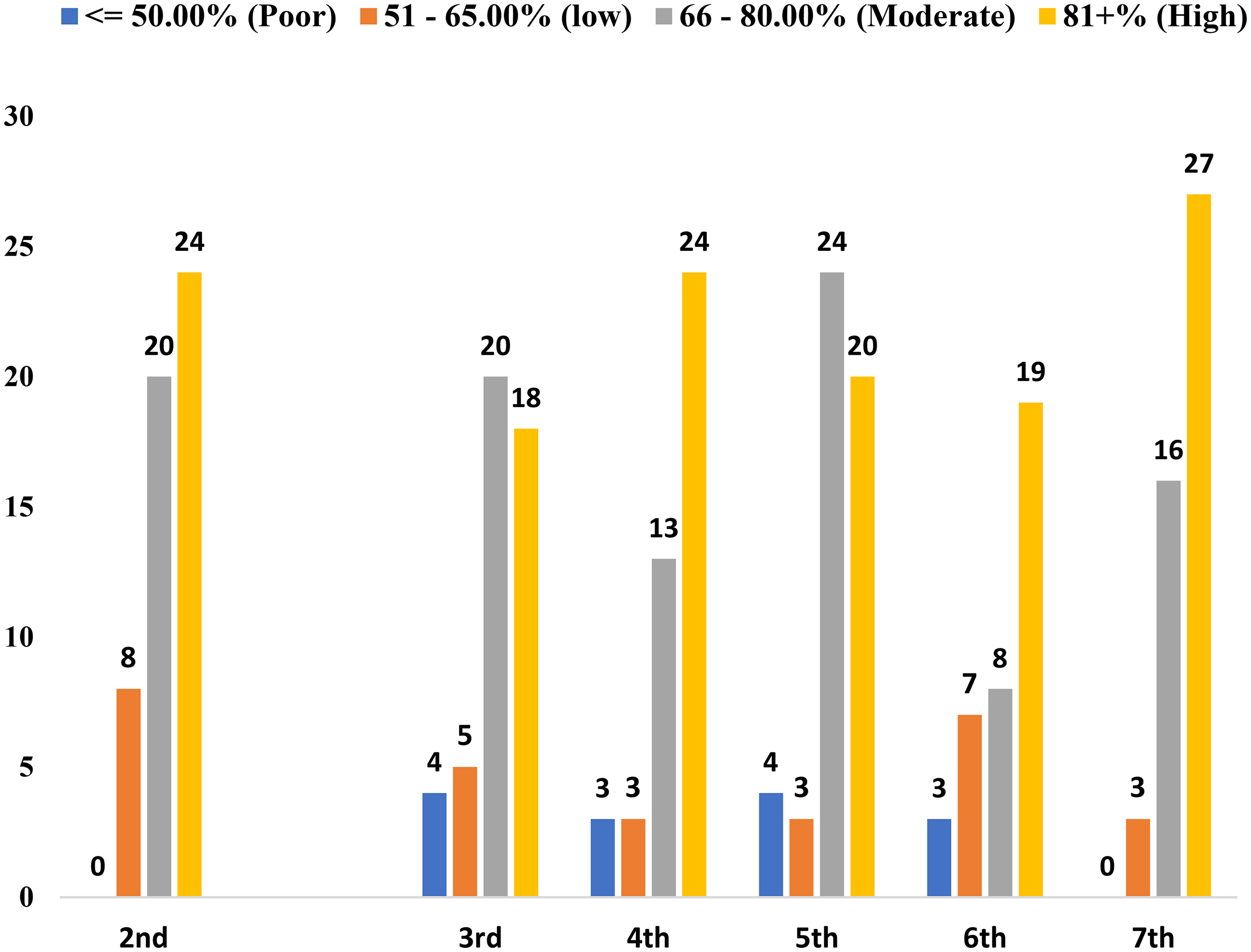
Student engagement levels across academic semesters.
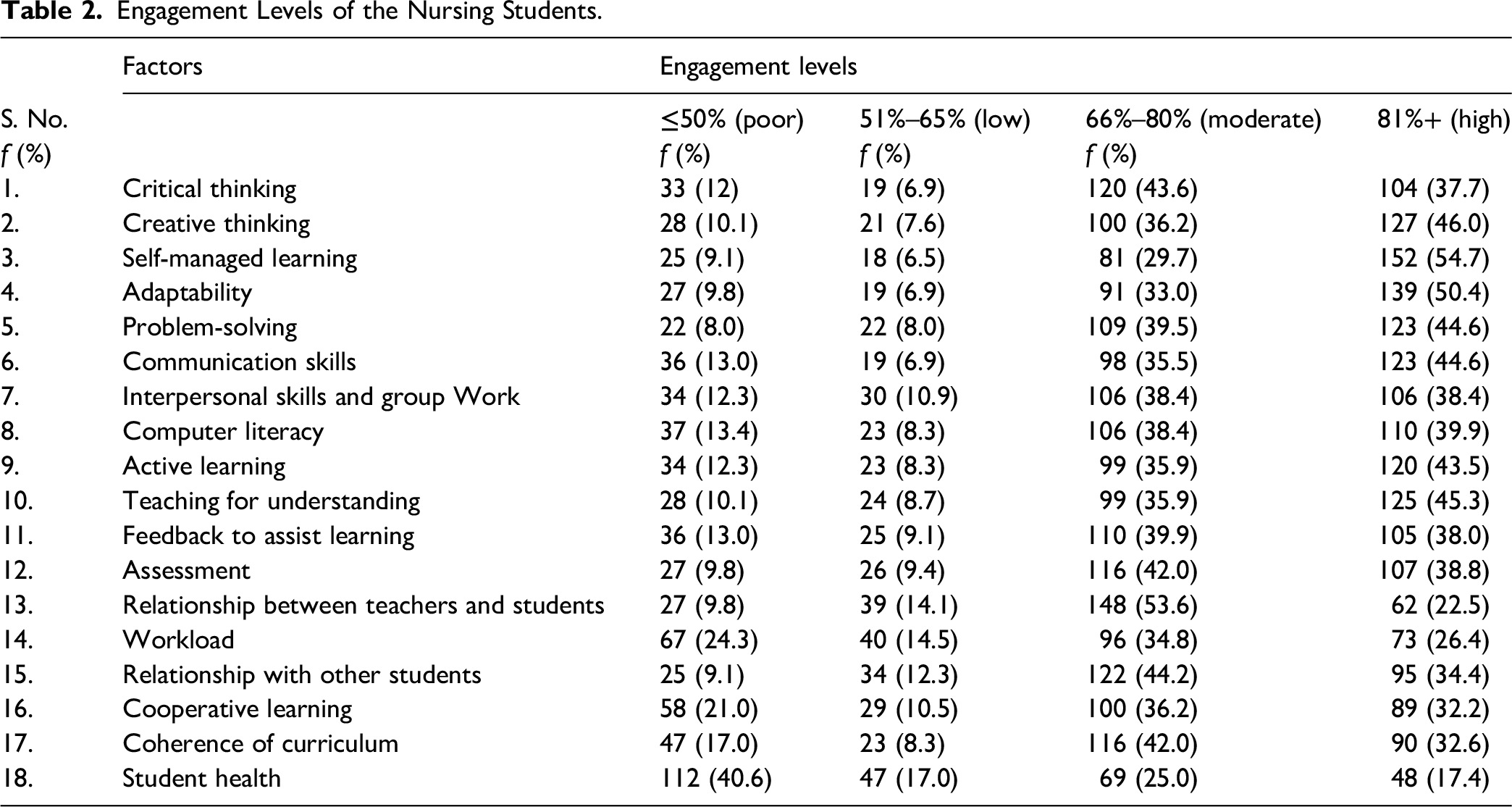
Out of the 18 factors that affected SE levels, students' highest level of engagement was in four factors: creative thinking (46.0%), self-managed learning (54.7%), adaptability (50.40%), and teaching for understanding (45.3%). Moderate levels of SE were found in factors critical thinking (43.6%), assessment (42.0%), coherence of curriculum (42.0%), relationship with other students (44.2%), and the relationship between teachers and students (53.6%). Poor levels of engagement were found in three factors: cooperative learning (21.0%), workload (24.3%), and student health concerns (40.6%) (Table 2).
Engagement Levels of the Nursing Students.
The Kruskal–Wallis H test showed a difference in the critical thinking of students in various semesters, χ2(2) = 19.86, p = .001, which was statistically significant (p > .05). The mean ranks were between 109.47 and 166.09. The mean rank score for critical thinking was the highest (166.09) for the sixth semester. There was a statistically significant difference in health issues and SE among students of various semesters, χ2(2) = 21.895, with a mean rank between 109.31 and 169.93. The lowest mean rank for student health was 109.31 among second-semester students, whereas it was highest in the seventh semester (169.93). Even though a few students suffered from physical issues in the seventh semester, still they could turn in their assignments on time and finish them. Health concerns did not affect their abilities to engage in tasks and academic activities. So, they scored higher in SE compared to students in other semesters (Table 3).
SE Levels Across Semesters (Years).
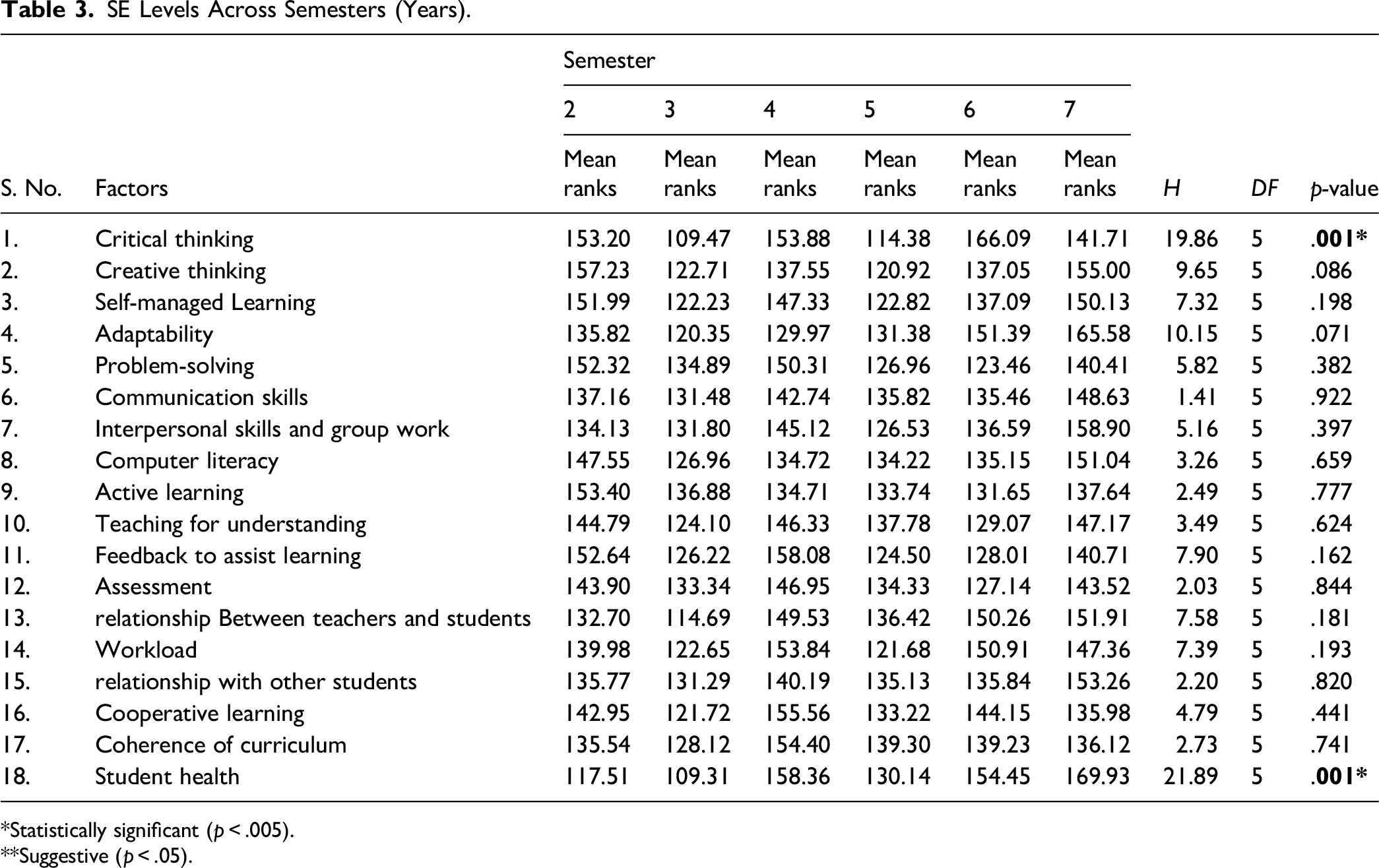
*Statistically significant (p < .005).
**Suggestive (p < .05).
A Mann–Whitney U test showed a statistically suggestive (p < .05) difference in five factors out of 18 SE factors, including creative thinking, problem-solving, adaptability, active learning, and relationships with teachers. Females showed higher levels of creative thinking than male students (U = 6480, p = .033), with mean rank scores of 144.77; higher levels of adaptability (U = 6139, p = .007), with mean rank scores of 146.49; and higher levels of problem-solving (U = 6081, p = .005), with mean scores of 146.79. The levels of active learning were higher among female students (U = 6501, p = .037) compared with the male group. Female students tended to have more professional relationships with their teachers (U = 6489, p = .037), with a mean rank of 144.73. Male students, on the other hand, showed differences in critical thinking (141.36), computer literacy (141.90), and health issues (146.21) (Table 4).
Comparison of Student Engagement by Gender.
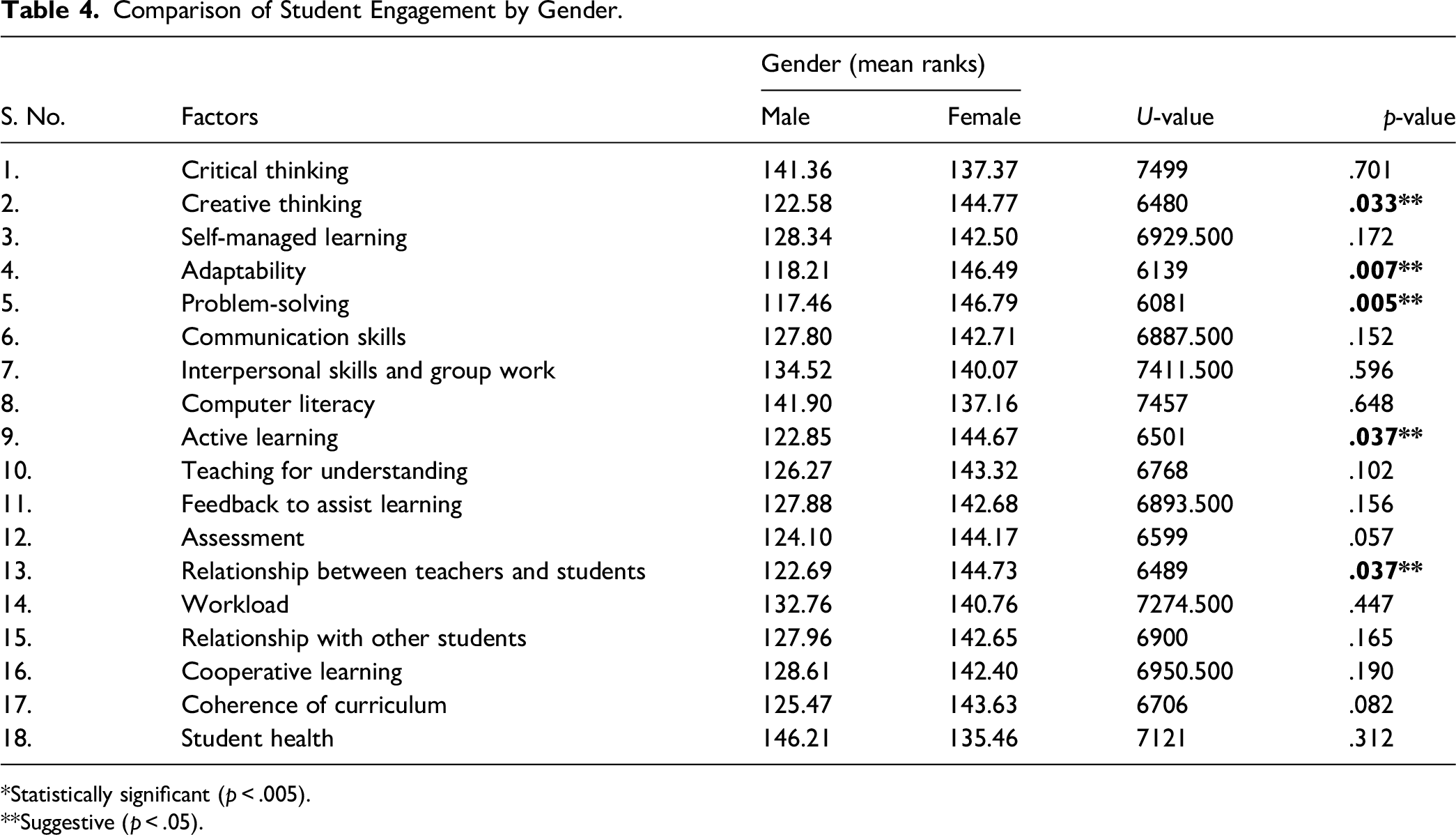
*Statistically significant (p < .005).
**Suggestive (p < .05).
Correlational Analysis
All 18 of the factors of SE showed no statistically significant correlation between sub-domains and participants' CGPA. However, two factors showed a weak positive correlation (Table 5).
Bivariate Analysis of CGPA With Engagement Scores.
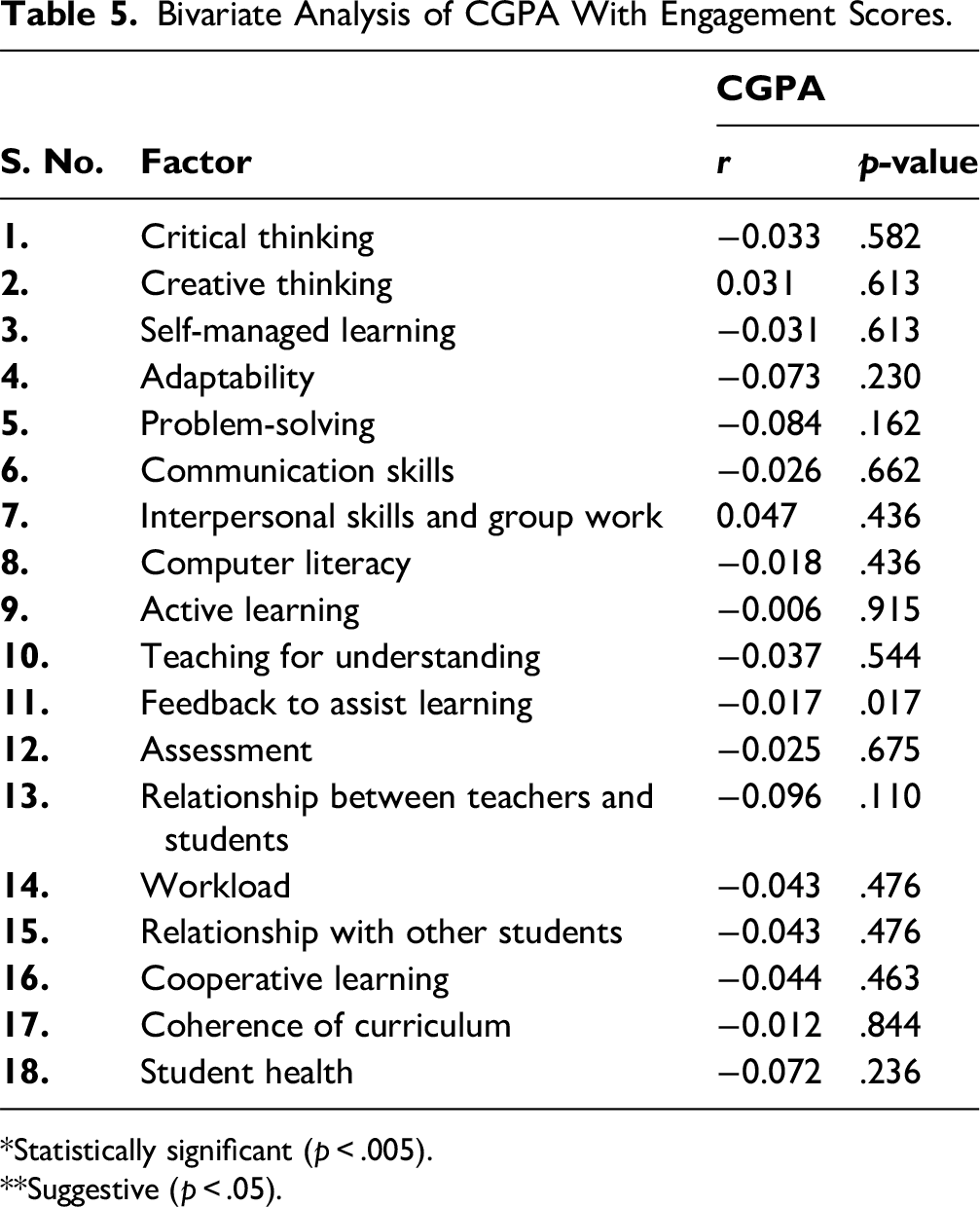
*Statistically significant (p < .005).
**Suggestive (p < .05).
Discussion
The present study showed that most students (47.8%) were highly engaged. These findings were like those of Kassem and Mohammed (2019), who found that 49.6% of Egyptian nursing students had high engagement levels, 43.8% had moderate engagement levels, and 6.4% had low levels of engagement in their classroom learning. Moderate levels of engagement were also observed across the domains of relationships with teachers, critical thinking, and relationships with other students. The findings of the study are consistent with the results of the other studies conducted in Muscat (D’Souza et al., 2013), Spain (Liebana-Presa et al., 2018), and Pakistan (Sattar et al., 2018), where moderate levels of SE were reported in the classrooms. In addition, most students obtained high engagement scores in self-managed learning, creativity, and adaptability.
Among the students in this study, 10.5% demonstrated low overall engagement throughout the academic years, and 5.1% demonstrated poor engagement. Various factors influencing student performance, such as core motivation, lack of interest, challenges with self-directedness, and participation in extracurricular activities (Ghasemi et al., 2018), that are not taken into account during academic sessions, could lead to poor SE. Therefore, the faculty can play a vibrant role in overcoming these challenges through active involvement in student activities, regular interaction, and routinely evaluating the students, which could impact the students' overall scores (Mostafa Rad et al., 2015). This study's findings revealed no significant relationship between CGPA and SE. Previous studies also reported no relationship between CGPA and SE (Sattar et al., 2018; Popkess, 2010). However, D’Souza et al. (2013) and Saad et al. (2021) reported that academic achievement as measured by CGPA was related to the engagement levels of the students.
Other than the engagement scores in the study, several factors might have influenced students' engagement levels. The literature identified commonly existing factors including teachers' behaviors, time spent in the library, family support, part-time or full-time jobs, economic status, internal motivation for studies, and interest in the nursing profession, that had an impact on SE in the classroom (Ali & Hassan, 2018; Boulton et al., 2019). Further research is warranted to assess the influence on SE of the factors mentioned above and additional sociocultural and context-dependent factors. In addition, qualitative and mixed methods studies could be conducted to explore the perspectives of nursing students regarding their high and low engagement across various domains and to develop a more comprehensive understanding of the relationship among sub-domains.
The male students' aggregate scores showed higher engagement in computer literacy, critical thinking, and student health sub-domains of SE than female students. Male students reported more computer and critical thinking skills than female students. Male students' reported health issues are not linked to their SE levels in classroom learning and task completion. In comparison, female students scored well on self-reported adaptability, creativity, problem-solving, active learning, and having good professional relationships with teachers. Previous studies did not find gender differences in these learning domains (Hoch, 2020; Shubina & Kulakli, 2019).
Female students reported more problem-solving skills than male students. Hidayati et al. (2019) presented similar findings that the mean reported problem-solving ability of female students was 72.19, compared to 69.73 for male students. Liu et al. (2022) also identified that female students self-reported being more adaptive in their learning by using positive coping and resilience, whereas male students reported using negative coping, which reduced their adaptability. Piaw (2014) revealed a significant difference in the creative thinking capabilities of males and females through self-reported questionnaire. Females were more creative in articulating their ideas and embellishing concepts indicative of their higher scores on self-report Torrance test of creative thinking. The current study findings were contrary to those of Jiang and Thagard (2014) and Jiang et al. (2015), who presented the self-reported findings that males were more insightful and creative thinkers while solving problems. He and Wong (2021) and Lin et al. (2012) concurred with the current study findings, reporting a high level of divergent and creative thinking among females. Future research is warranted to understand other potential factors and reasons for these gender-based differences.
The current study's findings suggested a significant difference in critical thinking and student health across the semesters, and that sixth-semester students showed high mean scores for critical thinking. These results are consistent with previous studies (Barry et al., 2020; Jimenez et al., 2021; Shirazi & Heidari, 2019). The differences in students' critical thinking could be related to the nature of teaching and learning strategies and professional development with progression in education (Ozcan & Elkoca, 2019). Takase and Yoshida (2021) suggested that a deep approach to learning motivates and engages students by making them persistent in their learning and by making them think critically about the content and apply it to their past experiences. Further research may focus on examining the impact of distinct teaching and learning strategies on promoting students' engagement with critical thinking.
Differences were noted in the levels of problem-solving and SE in different semesters. These levels were higher in the second and fourth semesters. Shahbazi et al. (2018) contradicted our findings, reporting a lower level of problem-solving skills among nursing students. Perhaps the higher engagement levels were associated with teaching strategies, family and peer support, choice of profession, and the effect of the learning environment (Shahbazi et al., 2018). The contradictions in the findings of other studies might result from the non-use of these teaching and learning strategies. Moving from one semester to a higher level may have exposed students to more complex clinical and academic situations and different teaching and learning approaches, thereby enhancing their problem-solving skills. Different strategies, including problem-solving training, group discussion, and small group activities, help improve problem-solving skills (Ahmady & Shahbazi, 2020). The students in the second semester might be exposed to different subjects requiring problem-solving skills. Furthermore, the higher levels of problem-solving skills among nursing students as they move to the higher semesters might be related to involvement in clinical subjects that demand a higher level of critical thinking and problem-solving. The subjects that include the case studies of patients' problems may enhance SE and problem-solving skills as they find the issues and solve the patients' problems (e.g., advanced concepts in adult health nursing, mental health nursing, and community health nursing courses).
The students in the third semester showed higher mean scores for self-managed learning; the second-highest mean scores for this factor were in the seventh semester. The study findings are contrary to the findings of Nazarianpirdosti et al. (2021), who found that self-managed learning decreased with an increase in the semesters. Our study findings showed a fluctuation of increase in the first semester and then a decrease in the third and fourth semesters. These increases and decreases in self-managed learning might be related to students' enthusiasm and motivation. Nursing students' motivation and teaching approaches can improve their levels of engagement. Both internal and external motivations of nursing students affect their SE levels, possibly by making it easier for them to learn independently. First-year nursing students are more motivated than third-year students, so motivation from family, peers, and teachers raises their levels of SE (Grande et al., 2022). In our view, the higher levels of self-managed learning in the second and seventh semesters could be because of self-motivation and teaching and learning strategies utilized by the teachers, including debates and problem-based learning in this institution, which can enhance SE levels. Additional factors contributing to SE are the social environment, the education system environment, teachers' knowledge, and students' overall efforts (Shubina & Kulakli, 2019). Improvement in these factors can enhance students' engagement in the learning process, influencing their overall engagement and course assessment grades throughout the academic year (Hampton et al., 2020).
Most students had moderate levels of SE (43.6%) in the critical thinking sub-domain. Students with SE levels categorized as poor and low levels scored at 18.6% in this sub-domain, compared with students with higher levels. Kabeel and Eisa (2016) said that students need to think critically to learn concepts and solve problems in the real world. Yusof (2012) also argued that students are less involved in higher-order thinking; they are involved in memorizing rather than analyzing and evaluating. Therefore, it can be inferred that as their higher-order thinking decreased, their engagement also decreased; this is consistent with the findings of Kabeel and Eisa (2016), who found that baccalaureate nursing students showed lower levels of critical thinking skills. Ahmady and Shahbazi (2020) supported our findings, reporting a moderate level of critical thinking skills among students. Students need to have critical thinking skills because there is an association between decision-making, problem-solving, and critical thinking.
Other than teaching styles, other factors including institutional culture, the classroom environment, teachers' abilities, and time spent in group discussions were associated with increased scores on measures of critical thinking among students (Dekker, 2020). In our opinion, extracurricular involvement is an important factor in critical thinking skills. Shcheglova et al. (2019) reported that students' involvement in learning environment was related to cognitive and behavioral engagement. In the current study, students had different SE levels across semesters. Factors such as the nature of the semester's subjects, the different ways of teaching and learning, and students' level of motivation, can enhance or reduce the SE levels in a semester.
Magobolo and Dube (2019) reported that students were less engaged when they were absent from classes due to illness. Similar findings were presented by Chukwu et al. (2017) that absence from classes was caused by ill health. Nursing students face different stressors; Olvera Alvarez et al. (2019) confirmed that nursing students faced physical and mental health challenges that hindered classroom engagement and that increased absenteeism.
Some students in this study submitted late assignments due to illness and a stressful environment, suggesting less engagement. The findings of Santelli et al. (2020) were also in agreement in that the students submitted late assignments and asked for extensions due to physical illnesses. On the other hand, Tatiana et al. (2022) revealed that psychological security and fewer stressors (as indicated by lower reported anxiety and depression) were related to higher levels of engagement and class participation.
The current study's findings showed a significant difference among students' health and engagement levels across semesters. Mental and physical health was different in sixth-semester students. Evans et al. (2021) reported that the physical and mental health of the students decreased across semesters, and engagement levels were reduced. This is supported by the findings of Oliveira Silva et al. (2021) that lack of adaptability, increased workload, and improper time management are associated with physical illnesses and depression and anxiety, thus decreasing their work capabilities, likely leading to poor engagement and increased absenteeism. Gripshi et al. (2022) presented similar findings that workload and lack of facilities had adverse effects on physical and mental health. Increased academic workloads, financial problems, lack of adaptation to university environment, and general dissatisfaction with life activities were associated with increased incidence of physical illnesses and depression and anxiety among nursing students (Gripshi et al., 2022; Sonmez et al., 2023).
Although the current study showed differences in engagement levels based on health concerns, little is known about the effect of health on nursing students' engagement levels. Future research is necessary to assess the effect of students' mental and physical health concerns on their classroom engagement and academic performance. SE increases and decreases over time; therefore, a cross-sectional study is not enough to assess students' engagement levels. A longitudinal study is needed to determine engagement levels over time among undergraduate nursing students. Exploring students' perceptions of their engagement and learning environment is also essential; qualitative and mixed-method studies can allow a deeper understanding of factors affecting SE and disengagement.
Limitations of the Study
The study only assessed the level of engagement using self-reported measures using a cross-sectional survey. Future studies could assess SE across domains using simulated learning approaches and compare objective and subjective assessments using longitudinal surveys. There were many more female students than male students in the study, limiting generalizability. The data were collected from the students a few weeks before the examinations; therefore, this might have affected the findings.
Implications for Nursing Education
The study findings can be valuable for nursing educators and educational institutions in designing effective teaching and learning strategies and making the learning environment more conducive to enhancing SE through promotion of students' critical, creative, and problem-solving skills. Nurse educators can foster students' self-management skills, motivating them using student-centered teaching strategies. As SE shifts during educational transitions, it is imperative that instructors keep a close eye on the behaviors of their students in the classroom, making sure that everyone has the opportunity to participate and ask questions. The findings will be helpful to institutions in developing policies about the physical and mental health concerns of the students.
Conclusion
Nursing students reported high or moderate levels of engagement in the classroom. Students can be more engaged in their learning when they have adaptability and coping skills, as well as professional relationship with peers and educators. The effect of the learning environment on SE cannot be overestimated, because contextual factors can impact teaching and learning strategies and student learning. Teachers and organizations must provide equal opportunities for students to engage in their studies by providing constructive feedback and a conducive learning environment.
Footnotes
Acknowledgment
The authors would like to acknowledge Dr. Zahra Ladhani for guiding during writing the Background section and considering the study design.
Declaration of Conflicting Interests
The authors declared no potential conflicts of interest with respect to the research, authorship, and/or publication of this article.
Funding
The authors received no financial support for the research, authorship, and/or publication of this article.
