




Abstract
This article is a collective act of writing preoccupied with the future of education. Our perspectives are different but what we have in common is a wish to explore and contribute to educational innovation. Through knowledge brokering, we try to create openings toward expanded meaning fields nourishing valuable diversities of onto-epistemic cultures ultimately preparing students for fugitive futures. Our project is complex and pluriverse like any brokering process for Other and innovation might be. Both method and means however are simple: Through using the concept of oxymoroning as a rhetorical and epigrammatic device for revealing paradox and through this taking part in polysemantic ambiguity, new concepts, knowledges, and habits are possibilized. Through a montage of thoughts, theories, and stories, hopefully thinking for innovation is given a constant continuation.
Keywords
A Collective Writing Act of Knowledge Brokering
In this collective writing act, we use our different knowledges and stories to look at the wider implications of knowledge brokering in early childhood education and educational research. Knowledge brokering is considered able to act as a cognitive bridge between different types of knowledges. It is defined by its functions of adapting, translating, connecting, acting as an intermediary, match-making, convening of networks and professional learning, connecting supply and demand for knowledge, catalyzing, and facilitating. So far, much of the research on knowledge brokering has focused on knowledge brokering between research, policy, and practice. With this collective writing act of knowledge brokering however, we hope to expand toward expanded meaning fields, including affective embodied and embedded knowledge processes for fugitive futures with and within the fields of research, policies, and practice collapsing them together in indivisible quantum space. Affective aspects of knowledge brokering increase levels of intimacy, possible feelings of unease simultaneously hope within and between stories and writings. It is a choice we have made to avoid positivism. Our message is clear: Keep the stories in knowledge brokering, lose the language through oxymoroning.
Through our six different perspectives, strings, threads, stories, and lost languages, we paradoxically discuss how to add value hence importance to weak or sublime signals in knowledge brokering. We ask how to challenge traditional habits of collaboration and how to build intra–interdependence and trust in knowledge brokering in early childhood education and educational research? Our aim is to show how engagement in multiplicity can become attractive as a condition for siding with the child and become a strong force for knowledge co-creation, trans-scientific collaboration, foresight in research hence innovation.
We aim for expansions of our educational rationales for social and natural sustainability. We seek to situate a rich and complex view of education and educational research moving from centered views of learning focussed on identity and individuality, to a decentered view with focus on collective ontologies and subjective becomings. Education justifiable in its own right and constantly in the making forwarding pedagogical practices ultimately research that cannot be placed in any discourse. Through this, evaluative categories like fear, care, awe, surprise, strength, joy, extraordinary, interesting, and meaningful become important. Thereby they dissolve the binary division of trustworthy research/non-trustworthy research to recognize the self-organizing properties of data itself and open up all kinds of possibilities of/for becomings. The intimate and the political are rethought together and actionalized. I am data we are, and I contain multitudes (Reinertsen, in press).
In the following texts, we each draw on our unique engagements with research, policies, and practices that produce new ways of knowing that do not lend themselves to reproduction, but rather to further exploration, wonder, trust in new possibilities, and embracing uncertainties of childhood. Through using the concept of oxymoroning as a rhetorical and epigrammatic device for revealing paradox, new concepts, knowledges, and habits are possibilized. And to underline, the navigational capacity of collective writing for innovation is minor in nature as it doesn’t create clear signposts of where to go as collaborating partners and researchers in knowledge brokering. Instead, it engenders moments of—and propels participants into—a sensory sensitivity for knowledge brokering in the here-and-now for fugitivity. That being our performative contribution to and take on building in foresight in research. Denoting resistance (position) but simultaneously affirming that it breaks with possibly negotiates itself in a co-composition without losing its solidity. Thus, we continue oxymoroning collectively through our multiple subjectivities.
Starting Up With the Knowing Child, Oxymorons, and the Breaking Up With Language
Influenced by Simone Weil (1909–1943), novelist and philosopher Iris Murdoch (1919–1999) wrote—among other issues and themes, about curiously “knowing” children. In The Sandcastle (Murdoch, 1957), for example, Felicity and Donald Mor complicate, intervene, or comment on the plot which bluntly speaking is about restrictions of traditional gender roles, social class, their parents’ having grown out of love, and subsequent grief and love affairs—or not. Felicity by believing to be psychic and a witch and Donald by being in rebellion against the career his family has chosen for him. I convert the image of “knowing” children into what I conceive of as a/the knowledgeable rightfulness of the child established through presence hence always politicized. It implies a return to body and bodily affects as a didactical method for subjectivity, agency in some form and beyond. My becomings . . . Felicity and Donald, you and me. I am method, I method me. I act, I am actionalized. I wizard, I work other. Ultimately, this is a Guattarian escaping from language (2011, p. 23), a losing of—or breaking up with—language hence habits, a return to material discursive affective languaging, a de facto end of critique (Reinertsen, 2021). Simone Weil (1978) writes, What marks off the “self” is method; it has no other source than ourselves: it is when we really employ method that we really begin to exist. As long as one employs method only on symbols one remains within the limits of a sort of game. In action that has method about it, we ourselves act, since it is we ourselves who found the method; we really act because what is unforeseen presents itself to us. (pp. 73–74)
Breaking up with language, avoiding symbols and play, I try with oxymorons. I am method, I method me. I oxymoron for the unforeseen. I oxymoron for me, for you, for us, for trusting me/you/us in knowledge brokering. An oxymoron is a self-contradicting or incongruous word or group of words as in eternal immediation. It is, as already stated, a rhetorical and epigrammatic device for effect often revealing paradox. However, while a paradox might seem to be contradictory to common sense, but still be true, oxymoron is considered only as a “condensed” paradox including just a couple of contradictory words that are paired together rather than a full statement of ideas. Oxymoron phrases can thus be figuratively true, but not literally true like in true fiction, unbiased opinion, guest host, historical present, impossible solution, joyful sadness, minor miracle, and virtual reality. My shoulders are lowered, I am at ease not, but I can listen to you more deeply. Oxymoroning is making it less dangerous to learn something new in brokering processes.
The effect I through oxymorons aim for is the actualization of affect; affect made relevant and useful for education as a public good. Affect seen as a prepersonal intensity corresponding to the passage from one experiential state of the body to another and implying an augmentation or diminution in that body’s capacity to act. With effects of affect of spoken and unspoken words, written and possible unwritten stories that converge and diverge, I assert that there are insights to be drawn from children’s capacity to cooperate through affect, an insight that has the potentiality to profoundly influence contents, organization, educational policies, and research. It is an insight that has the potentiality to profoundly influence me/you/us and knowledge brokering. Affect theory thus having the potential to re-ontologize the real. I think of the child who knows again; the/a Word Child (Murdoch, 1975). I listen deeply to open, to trust to include. I try. I am method. You are. You wizard, you work. I method us.
To theorize: there is no commonly used verb form of the word oxymoron; therefore, as you have noticed already, I invent one: oxymoroning. It is in the gerund to be dynamic, and non-finite. It is in the gerund to describe an immediacy of sensation locating the event of immediated experience in everyday life and knowledge brokering. Oxymoroning expressing an immediate edging of knowledge into experience, hence a way to access this proto-subjective (Guattari, 1995) level of the affective power of X, where knowing meets unknowing and emerge as agitations and as affective force. It delineates the immediacy of real-time sign as signal processes, fostering the immediacy of “liveness” of interactive educative engagements. Oxymoroning hence describing and highlighting the immediacy with which educative processes enhance or delimit perception and affect through directly shaping experience.
Underlying all this, I indirectly ask how we can become materially identifiable subjects for one another in knowledge brokering processes, and what it would take to move from a mechanistic approach to education and educational research to a more machinic one. Furthermore, are the abstractions one attempts to move from imitation to imagination abstract enough? I do not think so. There is a much larger imaginary and creative source to draw from as you will also see below. Speaking for myself, I aim for eternal immediation of education and educational research through actualizing affect. Oxymoroning simultaneously method and means bringing us to the paradoxical truth that unambiguous truths do not exist ultimately leading us into landscapes where truth instead shows a face of multiplicity, plasticity, and transformation. It implies an educational philosophy and research of multiplicity through affective knowledge brokering ready to support and join a creative pluralism of organization, pedagogies, and research on pedagogies and simultaneously counteract predetermined and controlling pluralism of organization, pedagogies, and research. Envisioning a modest but decisive view to the child as a knowledgeable and connectable collective in knowledge brokering processes.
To elaborate a little bit more on deep and inclusive listening, ontologizing, and opening up for the unforeseen, from Weil, Murdoch (1970, 1992) borrowed the term “attention” hence the idea of being attentive which means holding “a just and loving gaze directed upon an individual reality.” This “just vision” further requires what Murdoch called “unselfing,” a sort of dismantling of oneself in a quantum space realizing that something other than oneself is real. Furthermore, truth being the discovery of such realities, quantum probability, and habits. Here this being about creating shifting subject positions as researchers within quantum flows of processing information, oxymoroning collectively through our multiple subjectivities within knowledge brokering processes. Inclusive designs therefore, and through writing, as the right to reauthor knowledges and rights, a move and extension of a set of knowledges and rights as political struggles integral to knowledge creation, knowing, and learning.
Turning my attention outward and away from myself and on to the world, the Good (Murdoch, 1970) is what allows me to think about moral virtues as something whose reality is manifest in everyday educative and research encounters, in concrete cases of moral virtue—for instance, in acts of vulnerability, honesty, and kindness. Such thinking therefore leads to highflying speculation but always a return to our sensual worlds and everyday worries. Such is the murdochian “two ways” philosophical movement. It is a hugely challenging task but arguably exactly what is needed today to extend complex figurations of the posthuman educator and child in contemporary research. It implies an unlearning of me in me, a reconfiguration of identity policies. Paradoxically everybody needs an I, a self and a me but through the idea of Good. I try. I method, I listen, I trust. I break knowledge.
Continuing Oxymoroning With Skin, Sleep, Scar as Fields of Body-Worlding and Potentialities of Knowledge Brokering
Through skin, sleep, and scars, I return to body and bodily affects. I plug into these passages as I search to experiment with sensations, even though I am well aware that I am not left in peace. To quote Deleuze and Guattari (2013): “Corpus and Socius, politics and experimentation. They will not let you experiment in peace” (p. 174). A major problem immediately occurs: Where do I place my curiosity? On My skin? On My hand?
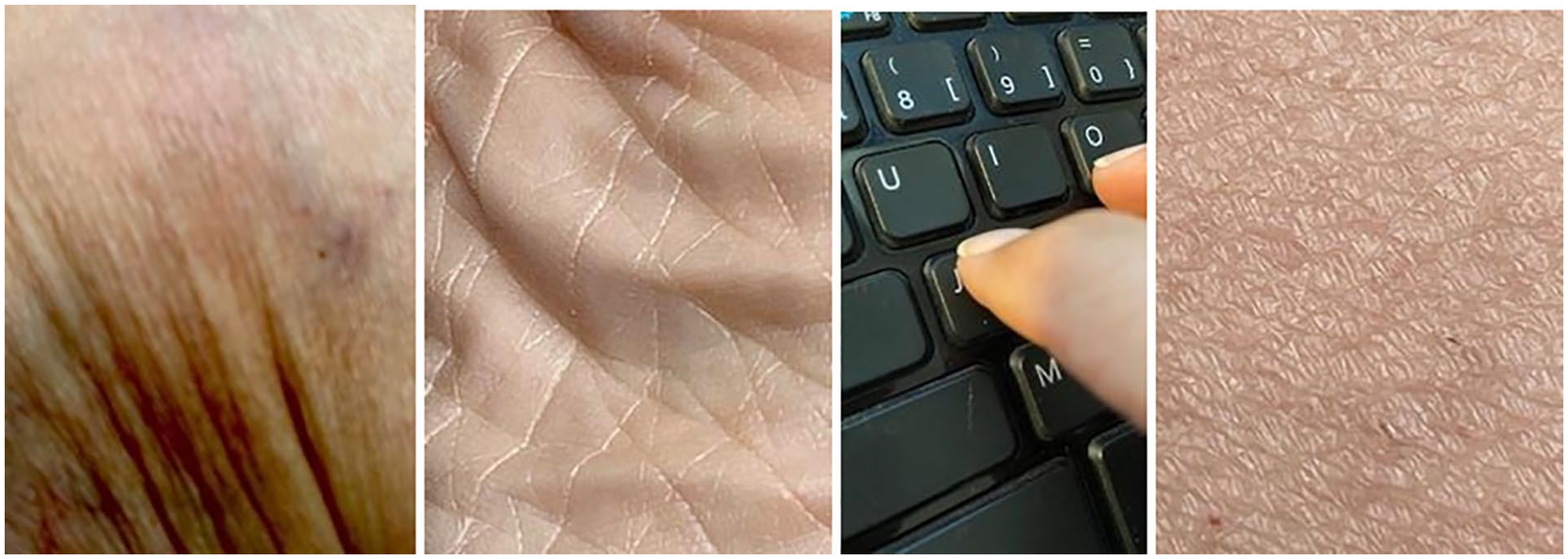
Corpus and socius, politics and experimentation become intervened with the sensation-speculations as I search to create passages to extend attention toward affective embodied and embedded knowledge processes. As previously stated, it implies an unlearning of me in me, a reconfiguration of identity policies.
I follow my fingertips tapping the letters on the keyboard while writing. The curiosity is placed on the skin on the tip of the finger given the name pekefinger in Norwegian (pointing finger). The dictionary informs me of the English translation: index finger. Suddenly, my Norwegian pekefinger becomes displaced. As I struggle with the English translation, I discover that to index also might be translated into forbidding. Under corona restrictions, I am well aware: The touch of my fingers is forbidden. They are regulated, and I worked from home to reduce the danger of becoming a transporter of virus into campus.
The fingertip transforms from an index into a virus transporter. But there must be more. I turn back to Deleuze and Guattari (2013) again, to hold on to the variations of skin and search for alternative passages beyond my skin: To write is perhaps to bring assemblages of the unconscious to the light of the day, to select the whispering voices, to gather the tribes and secret idioms from which I extract something I call my Self (Moi). (p. 98)
The skin becomes more than my organ, and more than an organ. Skin becomes relations, variations, transformations, and I keep on quoting Deleuze and Guattari (2013): “[ . . . ] For it is not ‘my’ body without organs, instead the ‘me’ (moi) is on it, or what remains of me, unalterable and changing form, crossing thresholds)” (p. 188). I continue to follow skin into sleep, and plug into how this involves epistemological and ontological dimensions: When we sleep, a thin layer of skin extends over our eyes and blocks out visual impressions. [ . . . ]. The body does not switch off during sleep, but this urge to focus specifically on the eye, and on the gaze, seems symptomatic of modern science (Ulla, 2014a), as the age of empiricism foregrounds the watchful eye (Spindler, 2013). It is perhaps precisely this power attributed to the eye that renders humans less effective or useful when their eyes are closed; the examining eye is put to rest when the body falls asleep. (Ulla, 2017, p. 402)
The sleeping child and skin commits to another variation: historical present. The relations between sleep and skins create a passage into another curiosity: How might skin become difference and repetition? Every present pass, and the outer layer of my skin has been ongoingly replaced my whole life. Over a thousand times, the cells have been regenerated from the moment in 1975 in the picture below. The picture is taken when my Grandmother pushed me in the pram, in the early spring, as the snow on the street melted into slush.

The sleeping child and the skin folds into variations.

Those cheeks.
Have expanded into new connections, and increased its dimensions.
Deleuze (1994) writes, A scar is the sign not of a past wound but of “the present fact of having been wounded”: we can say that it is the contemplation of the wound, that it contracts all the instants which separate us from it into a living present. (p. 77)
The scar becomes more than a deserted wound, and I take another look at my left knee engraved with a deep permanent mark. It suddenly becomes present. Scar/skin becomes multiplicity of time and space, multiple variations of vague and weak signal with potentiality to become highly relevant when orienting toward transindividual body-worlding in processes of knowledge brokering.
But why do I keep on looking at the skin. What do I miss when gazing at the surface? The watchful eye keeps me struggling with forces and form. Manning (2020) supports me to continue to push further, as she states, “When bodying momentarily bodies, when a presentness makes itself felt, what occurs is a subtraction. This backgroundingforegrounding allows a form to emerge” (p. 154). In the processes of orienting toward affective embodied and embedded knowledge processes, it becomes a constant work of backgroundingforegrounding. Through skin, sleep, and scars, it becomes possible to speculate how a dim apprehension might shape experience before any form-taking occurs (Manning, 2020, p. 250). This takes me to moments before I might recall an event as perhaps joyful or sad—in the flash when gooseflesh appears, and before it is forced into an individual form.
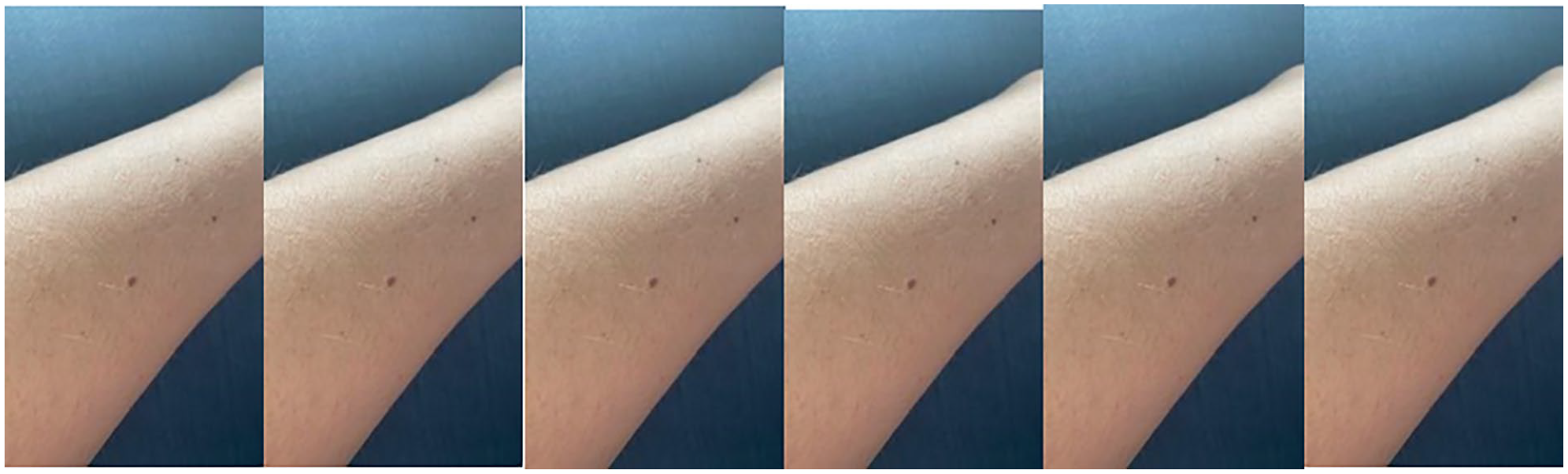
At Østfold University College, two kindergarten teachers/master students Nina Solberg and Mette Jørgensen (2021), have followed their curiosity of a moment of gooseflesh occurring in a theater together with the very youngest children. The gooseflesh became a hint of affect, and they follow-up the trace—not by sealing of the skin as a portal between an outside–inside, but orientated toward ontological processes. Skin became more than a signal of being cold, joyful, or fearing.
Skin, scars, and sleep. Gooseflesh, and tapping fingertips. Each element becomes relational, and folds into fields of body-worlding, actualizing bodily affects. These variations might create potentiality to profoundly influence contents, organization, and educational policies, and furthermore, become bridges of different types of knowledges in the processes of knowledge brokering.
I don’t know. But as I am tapping on to the keyboard, and look at the picture of my Grandmother and the melting snow, and the cheeks. Maybe they are elements of what Deleuze and Guattari (2013, p. 98) referred to as the tribes and secret idioms from which I extract something I call my Self. I don’t know. I touch the scar on my knee with my pekefinger. The touch becomes a contemplation of an assemblage of the unconscious.
Knowledge Brokering in a Synesthetic Field of Sensation
In the earlier mentioned master program Early Childhood Studies (0–3 years), at Østfold University College, we are engaged in cooperative explorations involving both master students and lecturers, searching for more organic educational methodologies that align themselves with, and are closer to toddlers’ life orientations (Larsen et al., 2020; Sandvik et al., 2019; Ulla et al., 2019). We are inspired by the knowledgeable child and how the youngest children seem to live multimodality and multidimensionality (Moxnes & Osgood, 2019). By trusting the generative forces of childhood, we explore changemaking potentialities in what we label “organic methodologies” in higher education (Larsen et al., 2020). We argue for processual orientations, rather than aiming for results, ending points and closures. Hoping to expand toward affective embodied and embedded knowledge processes, we speculate in how to value sublime, changeable, and complex signals and sense modalities in a synesthetic field of sensation in educational settings. This is what Massumi (2002) calls “a fringe around formed perceptions and reflections”:
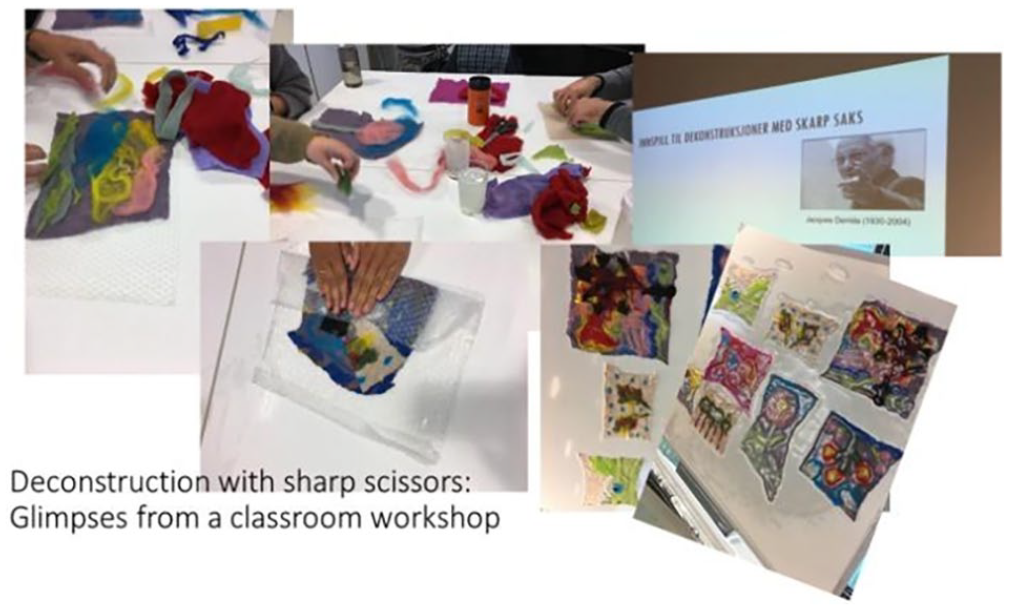
Every attentive activity occurs in a synesthetic field of sensation that implicated all the sense modalities in incipient perception, and is itself implicated in selfreferential action [ . . . ]. Each read meaning or conscious reflection that arises is environed by this synesthetic field. Since everything in the field is in incipiency and folding, it is only vaguely felt, or side-perceived, like a fringe around formed perceptions and reflections. A determinate meaning or clear reflection may emerge from that vagueness, but it cannot entirely separate itself from it. (p. 140)
Faced with events as it plays out, we keep on trying to trust and add value to weak or sublime signals of the senses, and how they facilitate and enrich each other’s analysis of the world.
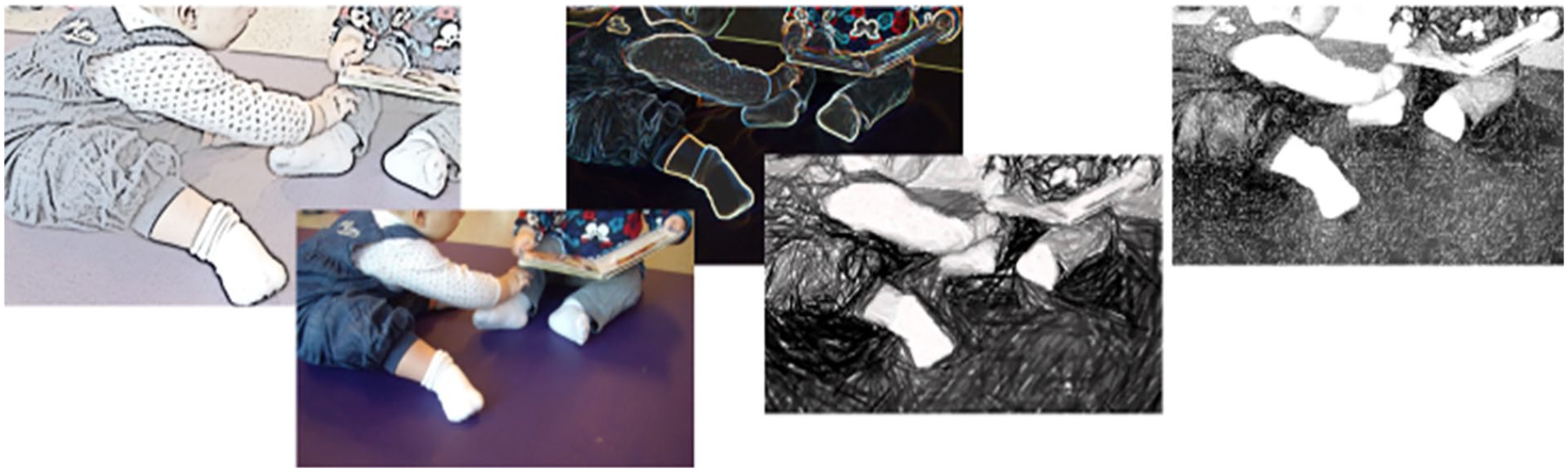
Martine, a one-year-old girl, crawling on the floor in the kindergarten, perceive the temperature, structure, density, smell and colours of the floor when her fingers, hands, her belly and feet comes in contact with it. She “bodylizing” and “affectualizing” the room through movements, tempi, sounds and facial expressions. Expanding towards affective embodied and embedded knowledge processes for fugitive and unpredictable futures. (Larsen, 2016, p. 70)
This synesthetic incipiency and folding are considered the norm for infantile perception (Massumi, 2002; Merleau-Ponty, 1962), although paradoxically, it is something that is given little attention in the pedagogical field of early childhood in Norway. Rather we are given instructions that assist us in differentiating, separating, isolating, and categorizing our senses. The separations we are making, when categorizing and isolating, must therefore be understood as an analytical process we have learned to do. Thus, there is reason to question our need to regulate and separate, and ask if this takes us further and further away from valuing the vast space of our senses. Away from the complex and seamless richness of our senses (Larsen, 2021). Again, and again, we ask how it is possible to take children’s bodily and affective approaches into account and regard the child as a knowledgeable and connectable collective in knowledge brokering processes.
I continue plugging into new passages and further speculations toward affective embodied and embedded knowledge processes trusting sublime signals of the sense modalities and children’s capacity to act. My memories wander to the time when I worked as a kindergarten teacher, almost thirty years ago. One of the thousand details out of my past experience, still present but each time anew, is about me and the children in the kindergartens wardrobe. The children are on their way out and about to be dressed. With strong force, one of the children insisting that the sweater is itchy and should not be worn. The sweater does not fit properly and the elastic in the arms is too tight. It is as if only the sight of the sweater could be felt through the child’s body. The feeling of touch, which occurs in the seeing is what Manning (2020) calls eventness in the making. The child does not need to sense the sweater tactile, just seeing it is enough to feel contact with it and to sense the texture, the temperature, and the color. Sight absorbs a tactile, function.
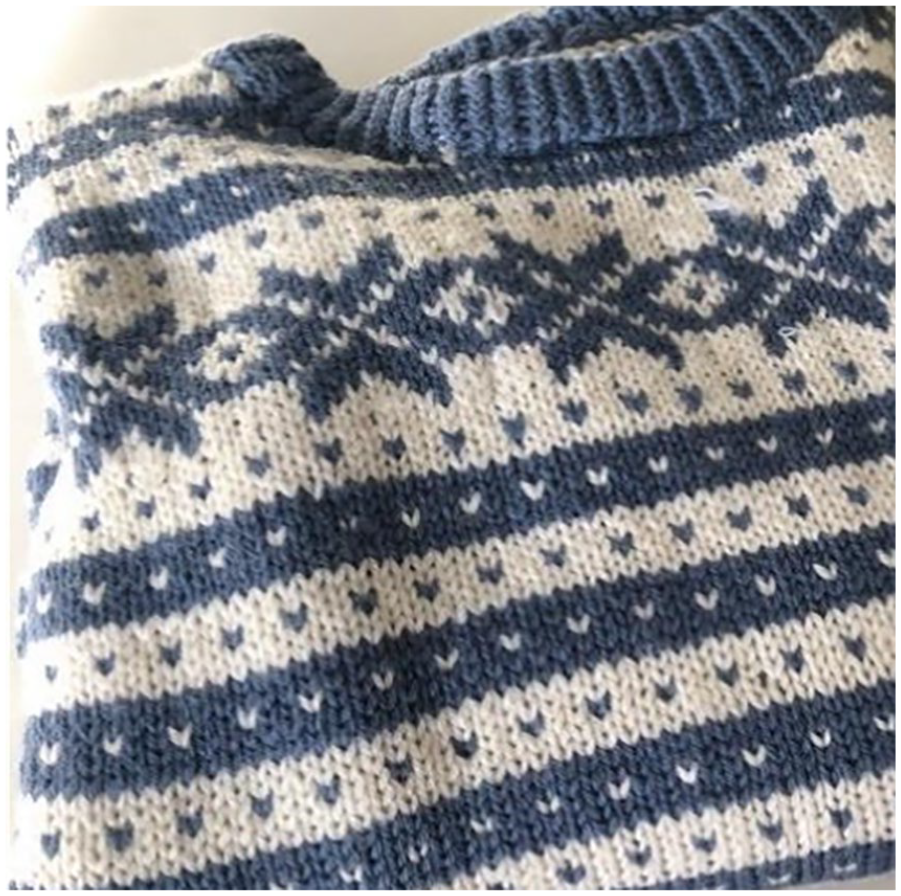
Brian Massumi (2002) describes it as a touch that only the eyes can touch: “Vision has taken up a tactile, function. It has arrogated to itself the function of touch. This purely visual touch is a synesthesia proper to vision: a touch as only the eyes can touch” (s. 158). Synesthesia is a neurological, but also social and cultural phenomenon that occurs when stimulation of one sensory modality simultaneously evokes experiences in other modalities. Even in what we can apparently perceive as monosensual activity, where, for example, the sense of seeing dominates, it still never occurs alone. It implicates all the sense modalities—in incipiency and folding (Massumi, 2002). In these perspectives, sight, touch, hearing, taste, and smell cannot be seen as separate, conscious, and regulated senses, but rather as multidimensional synesthetic connections.
The mingling of sensory impressions allows “[ . . . ] light to be heard and speech to be felt in the skin at the same time” (Van Campen, 2007, s. 97). Nevertheless, we often relate to the sensory world as orderly and limited, where control, regulation, rationality, and awareness are valued rather than unconscious and not intending processes. Seeing the senses as cumulative, dynamic, and expanding, rather than something fixed and given, may perhaps help us to erase and blur our traditional categorizing for a while. The separation we are led to make or learn to do, for example, between the sweater and the child, does not exist in a synesthetic perspective. In the field of experience, the sweater and the child are mixing together. This is, in line with what Manning (2020) calls, “a disorder of ownership” (p. 248). It does not belong to anyone in particular; it emerges from within the event in the kindergarten’s wardrobe, as important weak or sublime signals. The sweater and the child are mixing together, our knowledge brokering is mixing together from within. Ownership is disrupted and destabilized and maybe this will bring a type of ease that might reduce levels of fear toward newness. I need not protect myself. I try.
Breathing Poetry
There are so many good stories yet to tell, so many netbags yet to string, and not just by human beings. (Haraway, 2016, p. 49)
It was affective flows and material intra-actions that might unfold in micro-moments that made me stop up with a memory from a meeting with a herd of cattle. That particular meeting inspired to use this opportunity to dwell with breath and to continue breathing with the cattle into this non-finite text or attempt to breathe. And also the affective flows and material intra-actions that worked in and on me when I was working with the paper, and reading a novel by Douglas Stuart (2020), Shuggie Bain, during my breaks. I have called this part “Breathing poetry.” My intention is to try to investigate some affective knots that occurred, when working with affects in an article at the same time as reading about things that affect me.
I work inspired by Haraway’s (2016) String Figure mode of enquiry. According to Haraway, the string figure has no beginning or end; it is always in the middle of something—It is a generative way of thinking. Generative because it allows us to work within the on-going-ness of string figuring, continuously picking up strings or threads.
I will here allow myself to play with Haraway’s ideas, and see the two stories (the cow-meeting story and a cut from Shuggie Bain) together with affects, as both strings—or threads—and knots in the String Figure. Oxymoroning as a device for revealing paradox, new concepts, knowledges, and habits is possibilized as a participant pulling threads, together with the two stories. Breathing is something common, something that divides life from death. Breathing is something that involves all creatures, human, animals as well as non-human; cows, children. Breath is possibly also a capacity to cooperate through affects, something that gives insight, something that influences contents, re-ontologize the real? Breathing is somehow oxymoroning, in its multiplicity, plasticity, and transformation.
The first thread I pick up is the concept “Go visiting.” Haraway (2015) got the concept “go visiting” inspired from Despret, and describe Despret’s “virtue of politeness” as a curious practice, a practice of go visiting. For this string figure, go visiting is an ethical practice, but as Haraway (2015, s. 5) highlights, it is not an easy practice. She writes, “Visiting is a subject-and-object making dance, and the choreographer is a trickster” (Haraway, 2015, s. 6). What follows is another dance, where a herd of cows took the role as choreographers:
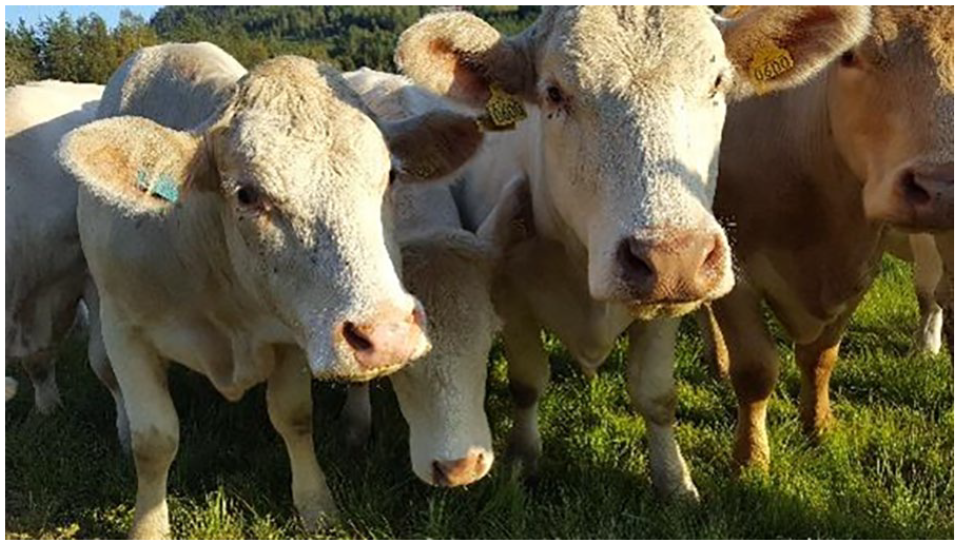
Slowly a herd of cows walks towards me. They are passing a 400 meters vide field. One in the front, so three others, and then the rest of the herd follow. The calves seems to worry a bit, but when their mother’s walks they follows. I count 14 cows and a bull, in addition to 12 calves. All of them heading in my direction. I have no food to offer them. What do they expect? They stop proximately 50 meters away. Gathered in a long line, side by side. Some of the claves tries to squish themselves in between the cows.
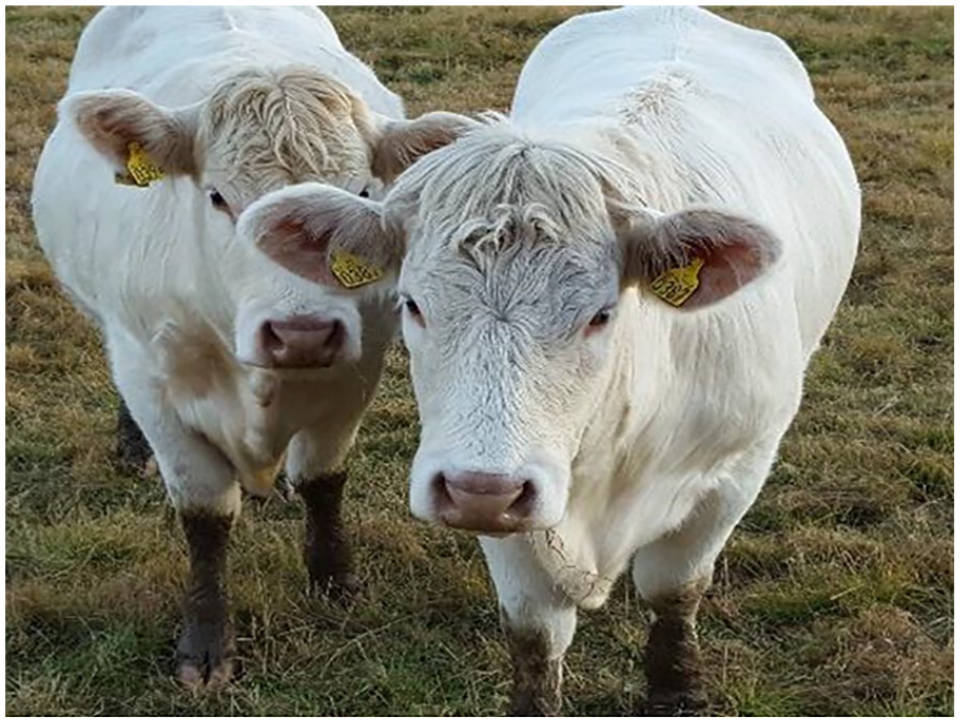
Slowly they walk the last meters—step by step, watching me. Finally, we stand on each our side of the electrical security-fence, only a step closer, for me and them, and all of us could have touched. We are watching each other. Twenty-seven kettles and me. Their beautiful eyes watching me. All of us breathing and watching. Breaths as the only audible sound. Some calves start to play. The rest is standing side by side, breathing and watching. Maybe 8, 10, 12 minutes—only breathing and watching. I am the one breaking up the encounter, since the sun is down, the late evening is soon turning to night and there is still some kilometres to walk home.
Why did the cows bother? Why did they give me a feeling of being welcomed, being someone worth paying attention to? Probably my grown body and mind was too concerned with worries for not offer anything, instead of being open for the “subject-and-object making dance” (Haraway, 2015, s. 6) going on. I do not know who visited whom. I don’t know whether the cows enjoyed the encounter, but the meeting encouraged ideas of go visiting, living together as companion’s species (Haraway, 2008). Being entangled through affects, as what moves us (Hickey-Moody, 2013, s. 79). Entangled through affects as sound (breaths), smell, places, and so on (Hill, 2015), where the cattle and myself were breathing together for some minutes.
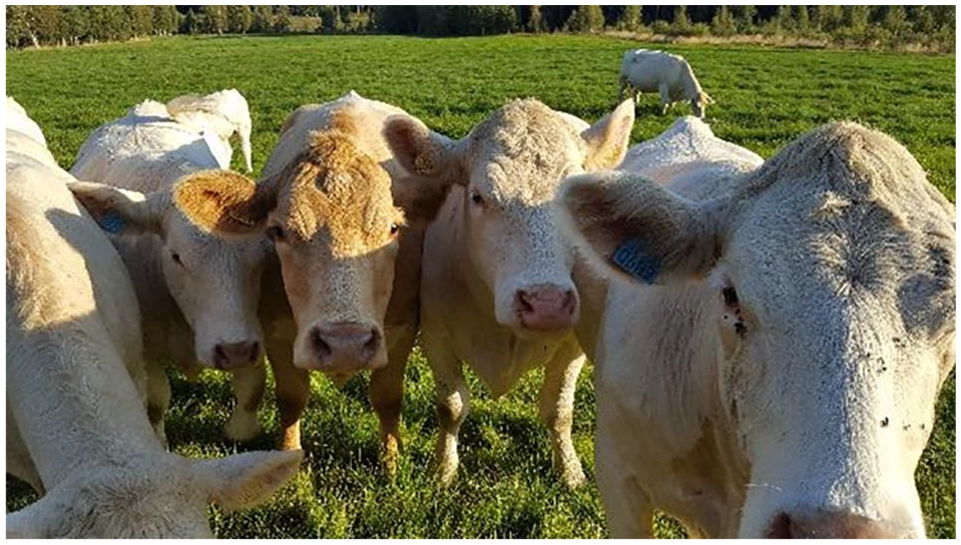
Maybe the sound of the breath is what somehow affects and further inspires me. Affect is, according to Hickey-Moody (2013), a confused idea, but also what moves us. Affective flows and forces activate what Manning (2008) describes as “work [that]becomes a thinking-feeling,” and what Barad (2007) describes as entanglements. Entanglements of thinking—feeling—doings, where affective flows make these components inseparable as thinkingfeelingdoings. Standing, watching, breathing, being together, from each our side of a fence. A fugitive breath, transferable to working with children? Children in their worlds, or each of us in our personal world—covered in the fences we construct between each other?
Affects occur when I, now, many months later, still hear the sound of their breath. Affects can activate the smell of them, sounds they make, the feeling of fur, or a cow’s rugged tongue toward the skin on my hand and fingers. Looking at photos of cows, re-reading memories knotted down to use for writings, and thinking back to the breathing awakes something that works as a passage. A passage from inside myself, from different parts of my body to other; but also from photos, notes, awakened memories, from that particular day in 2020, when I watched a herd of cows. The micro-moments carry somethings that are difficult to describe—It carries thinkingfeelingdoing, and past, present, future—all together. It carries go visiting; even I am not sure who visited whom. I wish I knew more of what it was like for the different members of the cattle herd—but the vocabulary and methods for knowing, somehow elude us. This is maybe also comparable with memories from working with children? Memories work as passages, connecting children’s sounds, smells, and memories of breath with ways of understanding philosophical aspects.
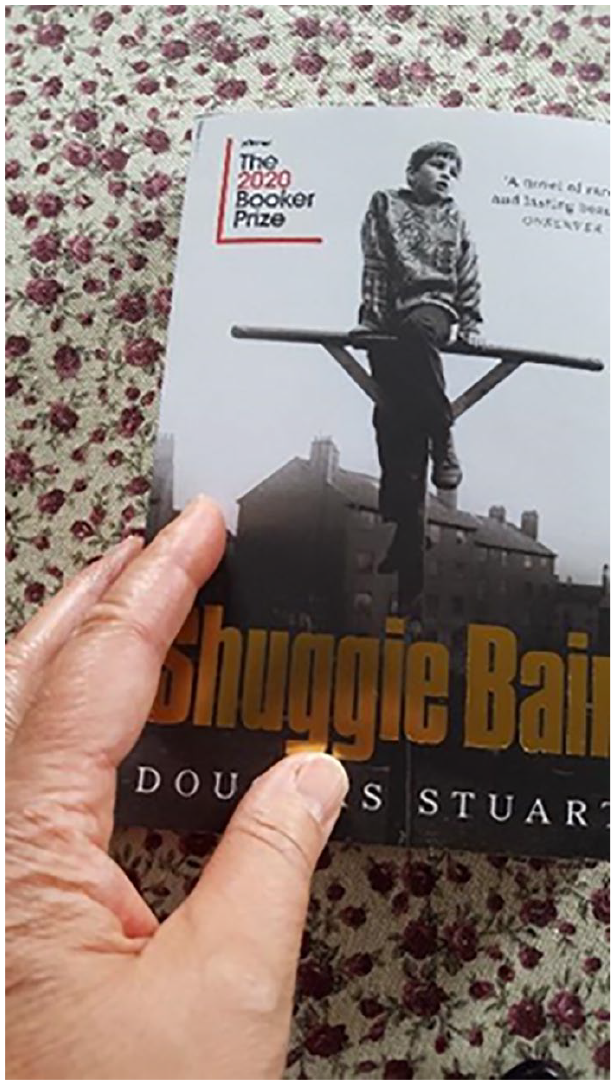
The next thread I want to pull in this string figure is from one of the last chapters of Shuggie Bain. Stuart (2020) writes, She gurgled again, and her head fell backwards till it rested on the soft back of the chair. Agnes retched, and he watched the bile bubble over her naked gums and painted lips. Shuggie stood there and listened to her breathing. It grew heavier at first, thick and clogged. Her eyebrows knotted slightly, as if she had heard some news that was unpleasant to her. Then her body shook, not hard, but like she was in the back of a taxi and they were bumping down the uneven Pit road again. He almost did something then, almost used his fingers to help, but then her breath hissed away slowly; it just faded, like it was walking away and leaving her. Her face changed then, the worry fell away, and at last she looked at peace, softly carried away, deep in the drink. It was too late to do something now. Still he shook her hard, but she wouldn’t wake up. He shook her again, and then he cried over his mother for a long while, long after Agnes had stopped breathing. It did no good. It was late now.
This story from Shuggie Bain is touching and awakes affects within me, in ways that are difficult to find a vocabulary for. It is both sad and relieving, at the same time. Gooseflesh appears on my skin when reading. It describes a moment where words somehow act as if they have disappeared or are impossible to find. If I find them, they are impossible to pronounce and express, as they carry unpleasant affects and might create something that become wrong for somebody—and here I quote Reinertsen: “Oxymoroning hence describing and highlighting the immediacy with which educative processes enhance or delimit perception and affect through directly shaping experience.”
The two stories, the extraction from the novel and the cattle-breathing, are both working as affective flows that unfold in different ways. Touch, breath, joy, lack of breath, death! They work within and around me, breathing with me and touching me—oxymoroning—a kind of breathing poetry: We are watching each other. Twenty-seven kettles and me. Their beautiful eyes watching me. All of us breathing and watching Then her body shook, not hard, but like she was in the back of a taxi and they were bumping down the uneven Pit road again. He almost did something then, almost used his fingers to help, but then her breath hissed away slowly; it just faded, like it was walking away and leaving her. The breathing of the cows is the only audible sound. Shuggie stood there and listened to her breathing. Listening to someone breathing Touching skin Listening to cattle breathing, to my own breath, to Shuggie’s breath, to Agnes, Shuggie’s mother’s lack of breath. He almost did something then, almost used his fingers to help, but then her breath hissed away slowly; it just faded, like it was walking away and leaving her.
The breath, or lack of breath—touching—no-touching—covid-no-touching-restrictions.
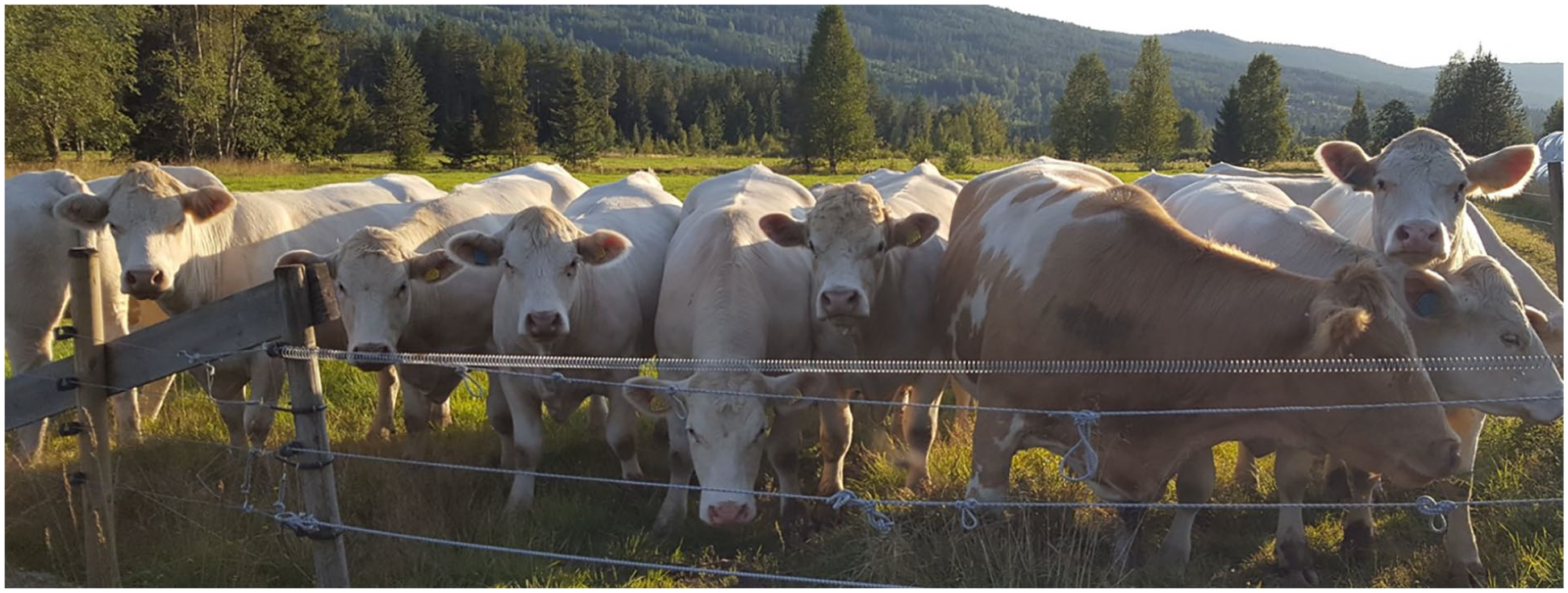
Reading these many stories within each other works as both comfortable and uncomfortable affects that insist on drawing the outside world inside, or outside unpleasant world into the memories and till here and now. Shuggie Bain’s breath—the breathing cattle, or memories of breathing children.
The figures in my string figure–knot are no longer easy to remove from each other. They are tightly entangled, nearly glued together. Breathing together, breathing with skin/sensations, breathing out and not breathing in, or breathing in again. To say it with Haraway (2016), there are still “so many netbags yet to string, and not just by human beings” (p. 49). Breathing poetry.
Breathing—touching.
Letting Children’s Questions Guide Us Into Fugitive Futures
Our call for affective embodied and embedded knowledge processes for fugitive futures aims to engage in multiplicity, and resisting fixity, to side with the child in knowledge creation. I want to build further on our published article (Aslanian & Moxnes, 2021) about kindergarten children’s engagements with a cow that has been shot and killed on a traditional family farm and, together with the children, slaughtered. In the article, Moxnes and I explored this experience as a pedagogical meeting with change in early childhood education and care. We built on Catherine Malabou’s (2009) concept of plasticity and Helena Pedersen’s (2010) work within critical animal studies. Data included photographs and sound recordings from my visit with a group of children from a kindergarten that has a particular focus on animal life and hunting in my region in Norway. I was invited to their annual field trip to a local farmer and his family to slaughter a cow. I want to focus on the affective embodied and embedded knowledge processes that children and I were involved in, but not engaged with. The educators’ lack of engagement was also the educators’ engagement with facilitating intended change, and desired learning, to reproduce dominant knowledge goals through planned change. I suggest that pedagogic ideas about what is important for children to learn and what children are, occludes opportunities for unintended or planned change—change as a possibility. The kind of change I want to discuss is related to the production of knowledge in the form of unintended changes and the unexpected desire and opportunity to change.
The questions children posed during the slaughter were possible opening for new ways of imagining the future—new ways for children to participate, come to shape their own understanding, and through that understanding, to shape their world in response to this event that we have called a “pedagogical meeting with change and time” (Barad, 2017). Malabou’s (2005, 2008, 2010, 2011) plasticity draws on art, philosophy, and neuroscience to address the quality of mutability of forms by other forms, temporality allowing movement, a resistance to change due to the already existing form and the ontological principle of change—being as change. Malabou highlights that mutability means the possibility to affect and grow, but also to destroy. Increased sensitivity to the ubiquity of change in meetings between children and educators demands what Malabou (2008, p. 14), calls “the feeling of a new responsibility” or an acknowledgment of how our actions or inactions produce change in others and the world.
How much do we educators let children’s thinking challenge our fundamental understandings and dominant discourses? Change in this sense can mean that an adult’s actions and responses to children contribute to the upholding of an illusion of a fixed state of being, or supports a child’s thinking and questioning of what we understand as reality. Why? How can educators resist conforming their perception and relationships to children and animals to the dominant ideologies and discourses they are immersed in?
Malabou builds further on this idea with a concept of a “plastic reading,” in which one moves beyond deconstruction (while still tending to it) to see what else lies unnoticed in a text (or an event, or a concept) waiting to be activated through recognition. A plastic reading means to read a text, an event, or even a concept, through the perspective of ontological plasticity, so that one is on the lookout for what lies lurking beneath words, happenings, as potential, possibility (Malabou, 2010). A useful analogy is to approach a text or event as a particular expression of a genome, of which there are countless alternative expressions possible, were they to be exposed to varying conditions. Potential combinations of genes can be said to lie waiting to be expressed if touched upon “. . . like a sleeping animal” (Malabou, 2011). I will try to engage with our published article as an assemblage of potential realities temporally expressed, and essentially incomplete.
At the farm, we were met by an 89-year-old farmer and a decapitated moose head, lying on the grass beside the small slaughterhouse and a small dumpster filled with moose bones and unwanted body parts. The children immediately gathered around the moose head and began touching it, looking into the opening behind the head, into the brain.
Shall I touch the eye? Asked a child. Is it soft or is it hard? The teacher asked. It’s soft. (giggle) I touched the eye. Elma, touch the eye. There’s meat in there. I’m not going to touch the eye. It doesn’t notice anything now. But was it soft or was it hard? . . . it was soft, it was hard.
Someone heard the sound of the tractor coming, meaning a cow had been shot and was on its way to us. The children called out: The ox is here! The ox, the ox! The ox came hanging head down from the tractor. One child mumbled, “Is it still alive?.” The farmer approached the group of children with his knife. He asked them if they were looking forward to slaughtering the cow. The children answered yes, hesitantly.
When the children were allowed to approach the cow, they gathered around it, quite silent, except for an occasional comment related to understanding and establishing as a group that the cow was dead, such as “It doesn’t feel anything now.” Children stared at the cow, noticing the blood on the cow and dripping on to the grass (Figure 1).
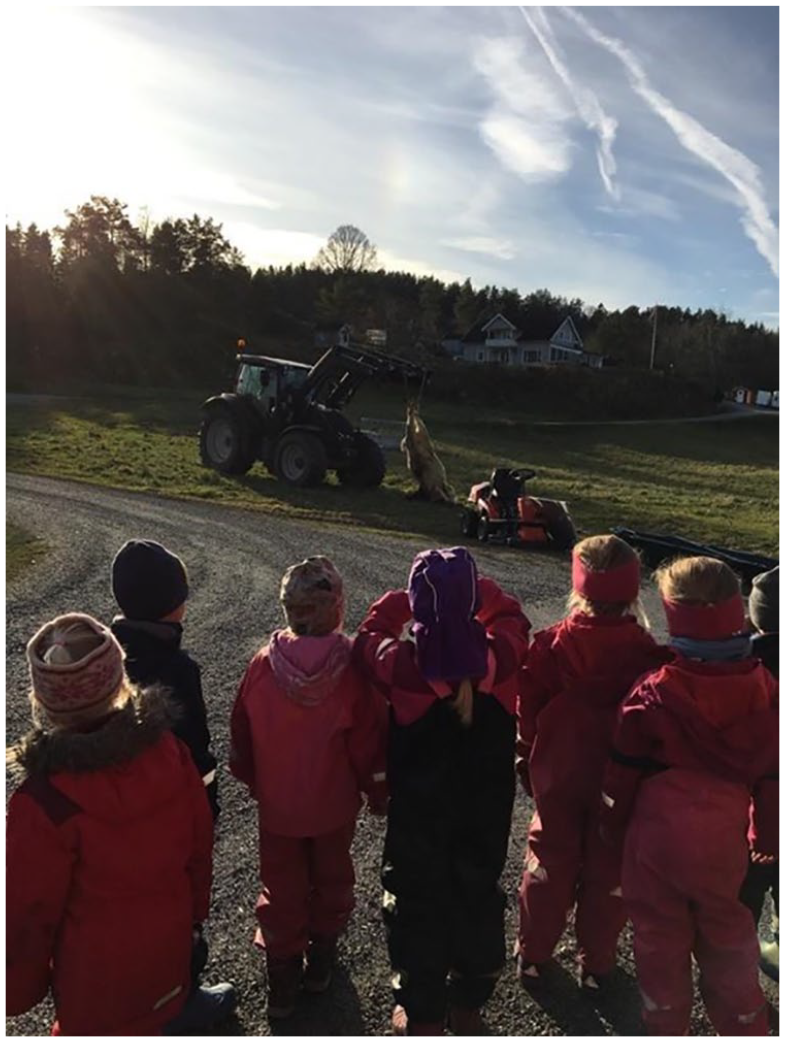
The children gather to meet the ox.
When the farmer began to cut into the cow, to remove the skin, children began cautiously asking questions: “Why are we slaughtering it?” “We need to eat!” The farmer answered, “everyone has to eat.” A teacher supports the farmer: “remember we talked about where we get our meat from?” Where children expressed doubt or wonder, adults seemed to express certainty and stability. When children expressed anxiety, the educator was concerned with learning the difference between soft and hard. Where could their doubt and wonder have led, we wondered . . . if adults hadn’t sought to normalize the event? Traditions re-infect and re-invent the future. Newness knocks at the door, at the vehicle of tradition. Innovativeness seeps through tradition and repetitiveness stamps down innovation, entangled together.
Turning to Foucault (1988), I want to embrace his idea of ethics as a mode of acting that is conducive to resisting fixing realities, describing power as “anything that tends to render immobile and untouchable those things that are offered to us as real, as true, as good.” For Foucault, behaving ethically has to do with how we respond to that which is purported to be and generally agreed upon as true, arguing “one must consider all the points of fixity, of immobilization, as elements in a tactics, in a strategy—as part of an effort to bring things back into their original mobility, their openness to change.”
Foucault (1988) speaks here not of erasing all possibility of fixed reality—but of using that which is fixed as a point of departure, to offer opportunities to return back into a state of mobility where new things can happen. I see it as a kind of process—from fixed to disturbed to a new shape and again to be disturbed and brought into a new shape . . . a process of continual transformation rather than unconscious reproduction and mutation. Foucault suggests three modes of behaving that can contribute to a resistance to power, the desire to fix an idea about what or how reality is. Resisting the idea of defining what is “good,” he suggests focusing on how “the good” is achievable: The modes of being Foucault describes are refusal, curiosity, and innovation.
Refusal to accept as self-evident the things that are proposed to us, to accept reality as fixed, or having any kind of “initial condition.” Reality as it experienced at present should not be a symbol for an objective and independently standing fixed reality, but a spring board to further ways of understanding and shaping the present. To other ways of being. Second, Foucault describes the need to analyze and to know, as we can accomplish nothing without reflection and understanding—thus, the principle of curiosity; activating curiosity brings us into new places, extended experiences. Finally, Foucault suggests the principle of innovation: to seek out in our reflection those things that have never been thought or imagined. The desire and ability to think of something new, that has not already been established; being open to a new plan—a new way out—a new future. Thinking with Foucault, I wonder if there is a new way we can approach this desire to share and reproduce knowledge, beliefs, understandings. How can we let the almost invisible questions—the persistent “why?” of the child pierce through our idea of fixed reality and explore what the child is showing us? What are children asking? Why are we slaughtering the cow? And, is it still alive? What is it? Is it the same it that it was before it was killed? What is it now? What if we let their weak and sublime signals guide us into unknown, fugitive futures?
Educational Innovation and Research for Fugitivity
Throughout our article, our focus has been on affective embodied and embedded knowledge processes for fugitive futures. Speculations have been shared on a/the knowledgeable rightfulness of the child and a breaking up with language, on the possibility of keeping on trying to trust sublime signals performed as experimentation with skin as multiplicity, on a two-year-old’s “bodylizing” and “affectualizing” of a room through movements, tempi, sounds, and facial expressions, and how this can affect didactics and knowledge producing approaches to and with and for the knowing child, on breathing skin and fur poetry, and the generativity of string figuring with affective flows and on children’s persistent why questions and what they might teach us.
We suggest that affective approaches to knowledge brokering challenges traditional habits of collaboration by including questions on how to add value hence importance to weak or sublime signals (agencement) in educational research in an early childhood landscape. Questions on how affect might be of relevance for knowledge production in this field. And questions on how engagement in multiplicity can become attractive as a condition for siding with the child and become a strong force for knowledge cocreation, trans-scientific collaboration, foresight in research.
In this last part of our collective writing act, I will pick up some of the threads—or strings—not to lead towards a thinking on where they might end, but as a continuation of what is already presented that is also a critique of “scientism” and the influence of the “predictive sciences” in early childhood educational research (Grosz, 2004, p. 193).
A first thread concerns knowledge brokering as producing knowledges that are more in tune with the real articulations of the world and qualitative research as processes accommodating justice-oriented fugitive futures. Here with Grosz (2004), We need to return knowledge to the stream of life from which it is drawn, which means producing knowledges that are somehow more in tune with the real articulations of the world, its real differences, its qualitative intensities, knowledges that are capable of making themselves particular to suit their objects, (knowledges in which “no quality, no aspect of the real would be substituted for the rest ostensibly to explain it” (CM 158), knowledges that are able to accommodate duration, change, and transformation. (p. 194)
This concerns perhaps striving not to lose “duration itself” and “whatever it is that flows in change” and that creates states and processes (Grosz, 2004, p. 195); that is, the world. The world is already “fugitive emanations” (p. 195) and hence to arrest these movements, as scientism has a habit of doing, would be to submit change to a logic of the or rather than a logic of the “nonteleological orientation” (p. 200) of life.
A second thread concerns how affective embodied and embedded knowledge processes, as messy modes of inquiry, might become relevant for what Reinertsen in the first part spoke of as “a/the knowledgeable rightfulness of the child established through presence.” To even think this, a shift from subjectivity as individual to subjectivity as collective is necessary. This concerns engagement in multiplicity, a multiplicity beyond the individual, before the person, something that is “indicating a logic of affect” (Manning, 2020, p. 101). That is an adding of value. A valuing of what is not valued in the more predictive sciences; the autonomy of affect, that is, its openness (Massumi, 2002, p. 35). Something that also asks of us different modes of writing. To value the autonomy of affect ask of us to write in more modes than our habits teach us, that is to challenge the mediating models that are used to mobilize and strengthen existing forms of valuation, forms of valuation that tend to privilege those modes already in existence, modes too often seeped in the epistemologies of colonialism and the identity practices that colonialism breeds, including all the way academia values the stance of objectivity and distance. (Manning, 2020, p. 49)
Hence, the second thread also concerns value. And here we turn to On a pragmatics for the useless by Manning (2020, p. 23) where she writes that value must be activated each time anew. We ask, Can attuning to affect help prevent us from falling into the habit of seeking through research what is decided as of value up front?
Our stories have turned to oxymoroning, knowings or not, skin, touch, children’s questions, to pasts, to childhood events. We have worked from the question: how to challenge traditional habits of collaboration and how to build intra-interdependence and trust in knowledge brokering in early childhood education and educational research? We have deliberately left you with no clear answers. From our speculations, however, we have, inspired by Manning (2020), formulated a proposition, and with this we end this collective writing act: Knowledge brokering concerns attuning to “the force of a collectivity” (p. 49) that is an adding of value to sublime or weak signals, to lean toward producing knowledges that are more in tune with the real articulations of the world (Grosz, 2004). Such is the minor nature of writing, resisting and affirming, breaking and possibilizing, negotiating itself in collective co-articulated compositions, everyday two ways realizations of other. We trust we try.
Footnotes
Declaration of Conflicting Interests
The author(s) declared no potential conflicts of interest with respect to the research, authorship, and/or publication of this article.
Funding
The author(s) received no financial support for the research, authorship, and/or publication of this article.
