




Abstract
What does it take to become an elite professional performer in the culture of Western Classical music? Successful performers often begin lessons at an extremely early age, and many hours of childhood are given over to practice. The research reveals how an autoethnographic exploration through music, improvisation, composition, and somatic movement enabled the documentation and creation of a new work of artistic expression. This article presents how the research model provided the artist with a range of insights and discoveries that would have otherwise remained uncovered, highlighting the impact and value of autoethnography in producing new knowledge in the field of classical music education.
Keywords
Introduction
This article tells the story of a journey I started a few years ago, and one that might never end. The first stages of the journey took me back to my childhood in rural Ireland, gathering data and fuel before propelling forward, back to my professional life. The question was whether enough energy had been gathered to break down the professional and personal walls that had once been security, but now seemed a prison.
I am a classically trained professional violinist with a successful career to date as a chamber musician, soloist, and violin pedagogue. By the age of 12 years, I had performed as soloist with the National Symphony Orchestra of Ireland, and won numerous competitions. The 12-year-old musician was a success, but what price had the child paid?
Barbour (2011) argued that language written down cannot adequately represent our lived experiences, while Eisner (1995) expressed the importance of considering methodological alternatives in research that requires “deepening meaning, expanding awareness and enlarging understanding” (p. 5). There is an increasingly rich body of exciting and cutting edge autoethnographic works exploring such alternatives through the medium of music (Bakan, 2016; Carless, 2018).
The autoethnography “Playing With the Past” focused on exploring ways for a classically trained violinist such as myself, to devise, create, investigate, compose and to embody music and performance, culminating in a live performance, to enable me, the researcher to fully represent my lived experience. This article has therefore attempted to convey this story through, photographs, poetry, and artistic reflections, exploring what happens when autoethnography is brewed in a pot of theatrical music performance, somatic movement, composition, improvisation, text, and image.
Eisner (1995) articulates how artistically crafted research can reveal truths in human nature and understanding. This act of writing personally was holistically crucial for me to interweave my various other ways of living—professional, academic, administrative, artistic, social, cultural and familial. In the end, this autoethnography awarded me the realization that it was not just my musical self that was being limited, but my many selves, particularly that of being a daughter who was holding bitterness and resentment in her heart.
The article comprises four sections.
Part 1 The Motivation
I am teaching a third level violin student in the University of Limerick, and in an effort to help her find her own sound, I ask her to describe why she plays the violin. I get a shock when I notice tears welling up in her eyes. Moments later, she is sobbing, holding up her violin in front of her face to hide from me.
This incident later led me to reflect on how I would answer the same question myself. I too, felt a deep sadness. I felt unable to answer why I played the violin. It seemed unbelievable that I had never asked myself such a question before, despite having played the violin for more than 44 years. I realized that this lack of reflection was limiting the musician I could potentially be, and felt inspired by others who dared (Bartleet & Ellis, 2009). In the world of busy professional classical musicians, there is often very little time for critical reflection and even less time for the collection of data that can contribute to the field of research (Schön, 2017). Musicians often end up “losing the very joy and essence that initially brought them to a career in music” (Daly, 2019).
Exploration
I realized I needed to find inside my being, a critical viewpoint which would be rather different to that of a solely performance-focused classically trained violinist who had always followed a clearly laid out path. I needed to ask myself some difficult hitherto unasked questions, and be prepared for honest replies. The route would be uncharted and fully improvised, unlike the sheet music on my stand. The performance itself also necessitated an immersion into the fields of somatic movement and improvisation, unfamiliar territory to my previous training in music institutions and intensely narrow focused conservatoires. The research demanded a breaking away from the spotlight on technique and instrumental virtuosity, toward a desire to listen more intently to the primary instrument, my violin playing body. Freeman (2010) asserts By putting one’s own body and experience forward within a live (arts) space the artist becomes both object and subject within the frame of the work and, as a consequence, this situation allows the artist to interrogate and articulate that relationship. (p. 177)
This exploration therefore focused on the devising, preparing, and learning of an autoethnographically based performance, incorporating somatic movement and improvisation. In adopting an autoethnographic stance, I was able to access a new way of knowing. The autoethnographic tools of journaling, audio and visual recording, mind-maps, and creative writing helped me in the preparation for this performance research. These tools facilitated a deep exploration of key formative moments from my “violinistic” life and helped me to weave them into this multidisciplinary narrative (Gray, 2003; Wall, 2006).
The preparation phase was initiated by exploring key moments that had affected my professional life, opening a can of emotional worms. I was very conscious that I was unearthing a pit of personal issues, writing poems that laid bare, mountains of blame, bitterness, and regret in relation to my childhood experiences of music practice. As Sparkes in Bochner & Ellis 2002 maintained, “this kind of writing can inform, awaken and disturb” (p. 221). Poetry is utilized widely and variously in qualitative research (Furman et al., 2007; Neilsen, 2008), and has proved particularly potent as a tool to explore aspects of loss (Furman, 2005). I wrote poems expressing the pain at having spent so much of my childhood in a lonely practice room and questioned the cost of being so highly trained as a violinist. I was resentful and angry, and I felt a deep sense of loss for what my childhood perhaps could have been. The use of poetry enabled me to express feelings that otherwise would have never surfaced (Robinson, 2004) and allowed me to explore the different relationships intrinsic to this research, namely that of my relationship with my instrument, my parents, my music making, and my body. Poetic outpourings allowed me to present myself in the words of Pelias (2004), as someone who is “emotionally vulnerable, linguistically evocative, and sensuously poetic” (p. 1).
Part 2 Origin
I stare intently at the music on the stand
Playing my violin with blinding intensity
With all my 8 year old powers of concentration
Trying to ignore the trickle of wee dribbling down the inside of my leg
Hoping she won’t notice
Desperately willing the flow to stop.
The puddle on the floor is spotted
She asks irritatedly
Why didn’t you just ask to go?
I don’t reply. I don’t really know.
My mother was strict but not cruel.
I could have asked to stop practicing.
Why didn’t I?
I can’t reply. I don’t really know.
As a mother myself, I frequently have to make decisions on behalf of my children. Likewise, there were decisions made on my behalf as a child. Paths were laid out for me, and I followed them.
I was born and bred in a rural farming community, oblivious to the existence of classical music. My father’s aunt was the local church organist and my mother asked her to teach my older brother to play a few tunes on the piano for Granny. The plan went smoothly until Maureen, spotting a talent, snuck in some classical pieces and entered him for an exam. The examiner called my parents in after the exam, offering him a scholarship then and there, to attend the Royal Irish Academy of Music. My parents accepted the offer, although my mother recently said to me that “I had no idea what saying yes entailed. If I had realised the impact that decision would have on all our lives I would have turned down the opportunity” (Interview with C. Daly, 2018).
My brother, who was 2 years older, ended up forging a path for me. I followed him a few months later, aged 4 years, and remained on annual scholarship there until the age of 18 years. My mother committed to that 2-hr journey, each way, every Saturday for 20 years. I wrote the following poem on commencing this autoethnography, when I first began to question the role of the violin and music in my life.
That nasty travel tablet every Saturday of my childhood
Woken at 5.30am to take it before the drive
Lying in bed the night before
Sick at the thought of that pink pill.
The others didn’t complain re the early start
Neither did I.
I knew every bend on the N2 to Dublin
Every house and garden imprinted in my gaze
The decades of the rosary didn’t help
Over and over, and extras for luck.
My siblings didn’t seem to resent the endless drive
Neither did I.
The pink tablet never worked anyway.
Parking the car outside the Academy of Music
With vomit blazed along the passenger side
Never had time to stop
Piano lesson at 8.30 sharp
My mum never seemed to mind the sickness
Neither did I.
The thermos flask with the Irish stew
No week an exception
Always smelt sour
Regularly poured down the academy toilets
Same again next week
The toilets didn’t seem to query the sour soup
Neither did I
Lessons in piano, violin and theory
Practice every available second in between
Dull, dry and disciplined
Fear of playing it wrong
Fear of answering a question incorrectly
My teachers didn’t seem to notice any lack of joy
Neither did I
My mother taking notes at the back of the room
Those horrid red notebooks
Every page meant extra practice
Every correction 3 times over
No one seemed to notice the regimented control
Neither did I.
Until now.
My childhood revolved around dreaded music practice which I hated. As a child, I was woken very early to fit in a few hours of violin practice before the day started. On returning from school, there was a short dinner break of 20 min, before squeezing in more hours of practice before homework and bedtime. The regimented daily schedule was devised by my mother to accommodate a minimum of 4 hours of daily practice. Spare time was unheard of and not a minute was wasted. “You were awarded a talent, so you must put the work in.Otherwise why should we pay for you to have lessons?” (Interview with C. Daly, 2018).
As a mother myself now
I cannot comprehend
How my mum did it
The discipline it involved
3 young children
piano and violin
3-4 hours every single day
every single day of our lives
except for 2 days a year
Birthdays and Christmas day
Winter, Spring, Summer and Autumn
every single day in the year
except for 2.
2 single days.
2 hours done before school every day
waking her wee ones up.
Helping us and encouraging us
just wanting to get the practice homework done
just wanting us to be prepared for the following Saturday
each correction 3 times over
letting us off chores so to have more practice time
all done with the best of intentions
total devotion and care
they say children spell love “T I M E”
well, she gave us all her time.
I am so confused now.
I am so grateful to my mother
She devoted herself to us
Never a minute for herself
Helping us develop our talents
I wouldn’t have been so good
I wouldn’t have the wonderful job I have now
Yet I am also so resentful
I wouldn’t dream of waking my children up to practice
How could she have done that to me?
What we missed out on.
My dad’s angry words once.
“let them have a childhood’
(but then he didn’t give us any of HIS time)
Looking back now
A strong sense of curiosity
What is the answer?
The classical musician’s conundrum.
Was that childhood necessary for the happiness now?
I am grateful
I am resentful
My mother was a very disciplined school teacher who claims she said to us frequently that she didn’t mind if we played music or not, but that if she was going to drive us to Dublin for lessons every Saturday, then we had to practice in return. I practiced a lot as a young child, at least 4 hours every day, which my mum supervised. This time was spent going methodically and boringly through the notes she had taken at the lessons. At the age of 12 years, she decided I was old enough to practice by myself. Unfortunately, I didn’t know how to practice on my own. I didn’t possess the self-discipline required, nor had I been taught any techniques that might have encouraged a child to practice. I was lost without being told what to do. I was possibly, unconsciously rebelling against the strict practising routine being enforced in our home. As a young teenager, I was sent to my room to practice for even more hours every day. However, most of these hours were spent reading or playing secretly with my brother. We spent lots of that time devising ways of convincing my parents we were practising, and looking back on these 5 years of my life, I am filled with regret.
How different might I be if I had passed those hours in a different way?
If I had spent them with friends, having fun.
If I had used the time granted to me to improve my playing
If I had taken up a sport, or dance, or anything at all.
Learnt a few social skills, equip me for life
Reading trashy books did nothing for me at all
Always pretending I was practicing diligently,
Resulting in endless lies and deceit.
The hours of fresh air I could have breathed
The hours of childhood I could have better lived.
Pointless regretting that time now
Only more wasted time.
But I do wonder.
And I do regret.
Part 3 Performance
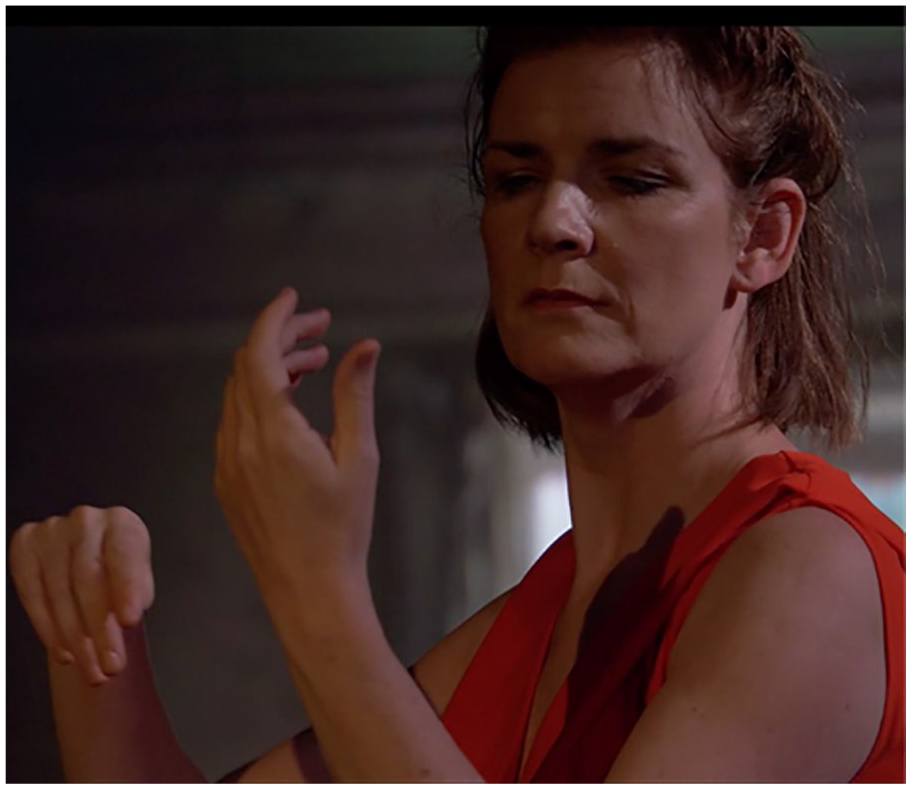
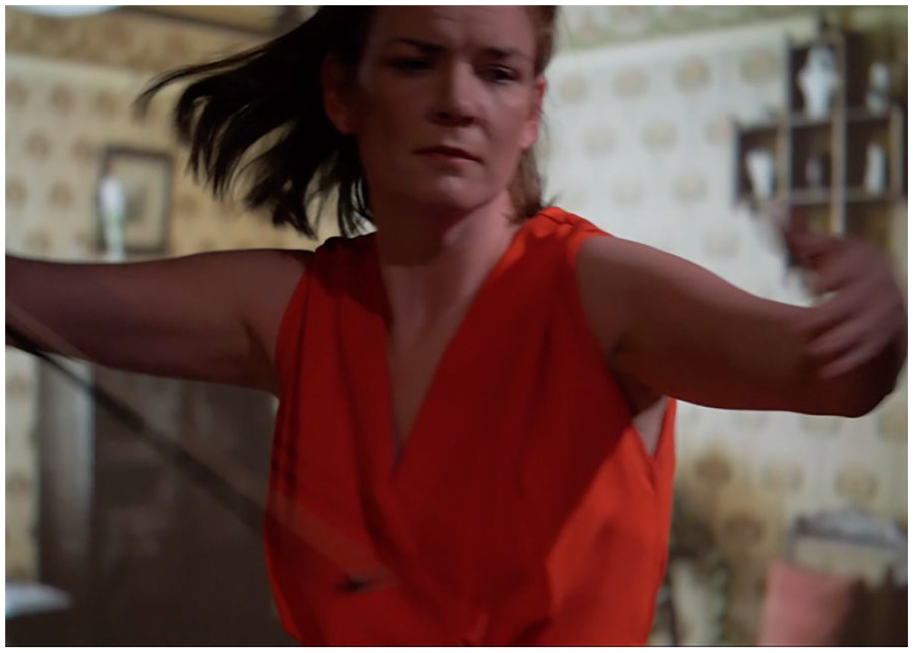
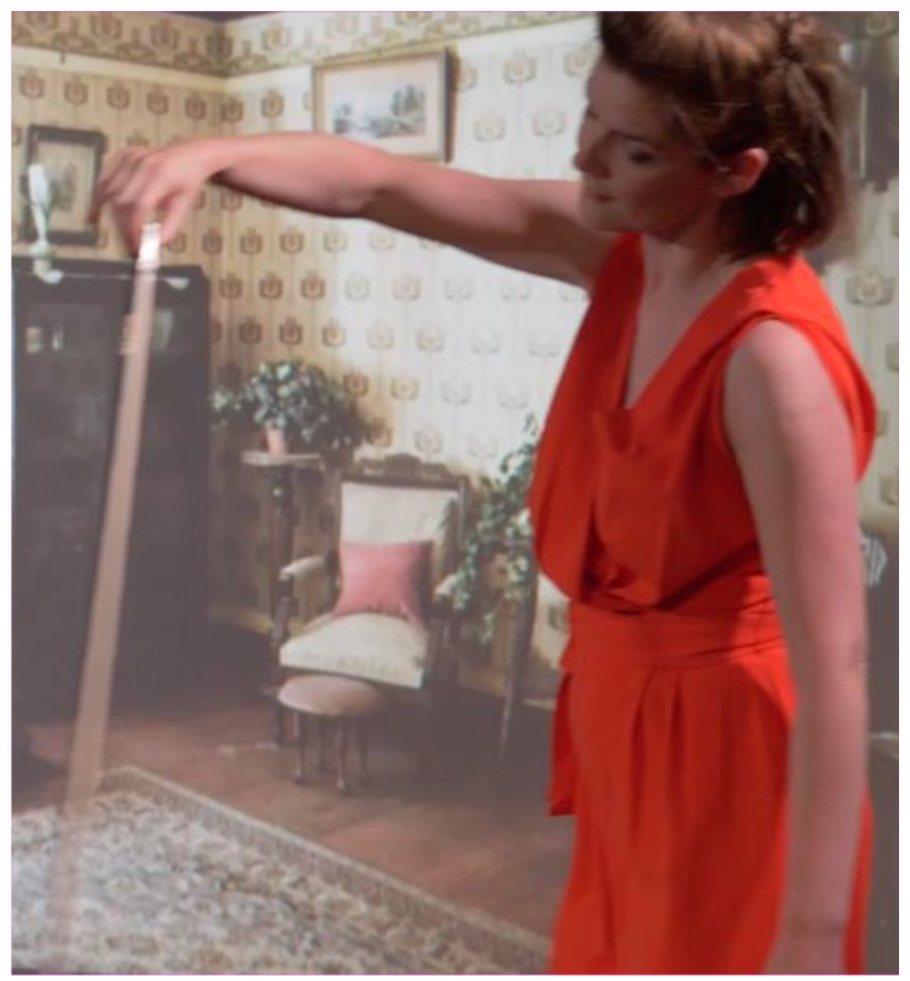
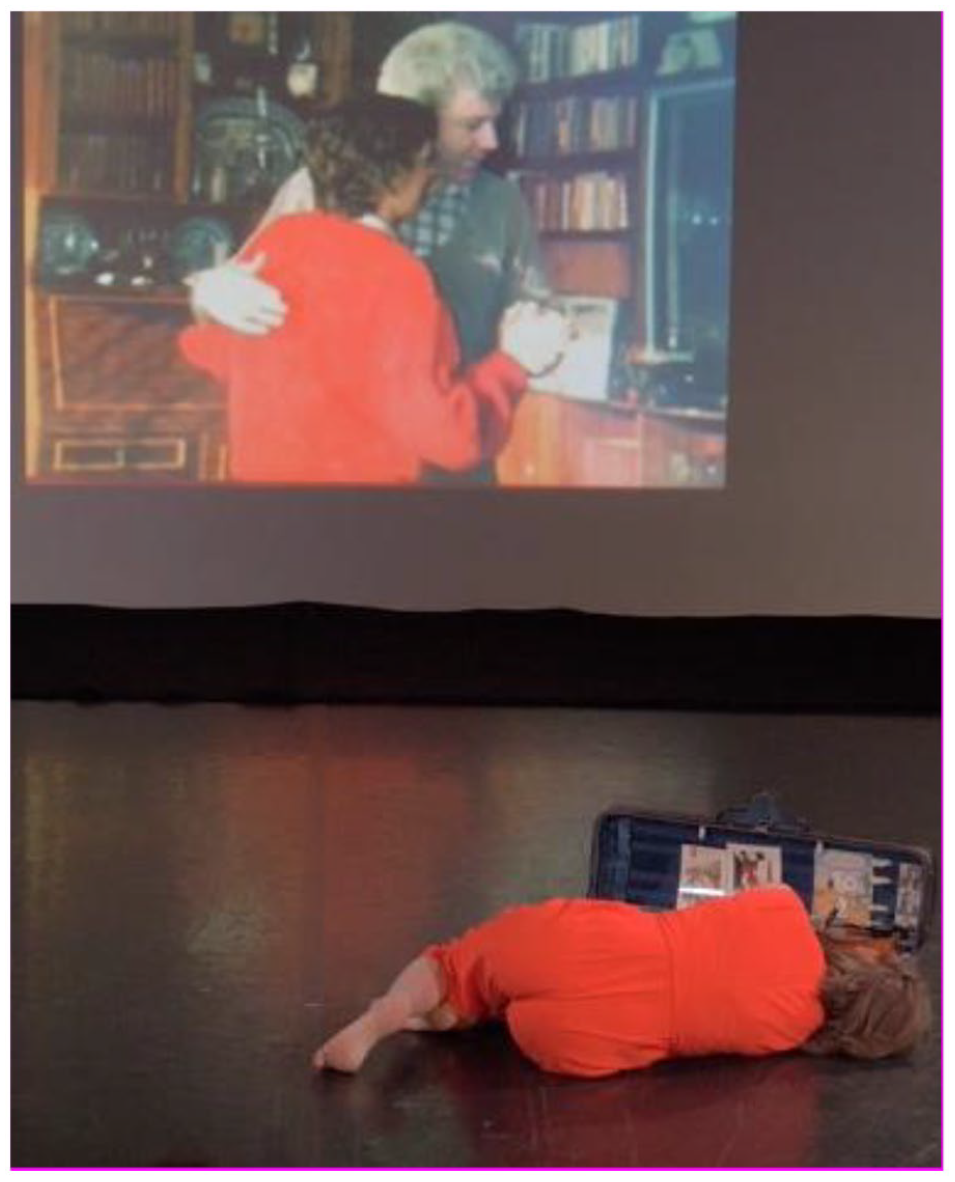
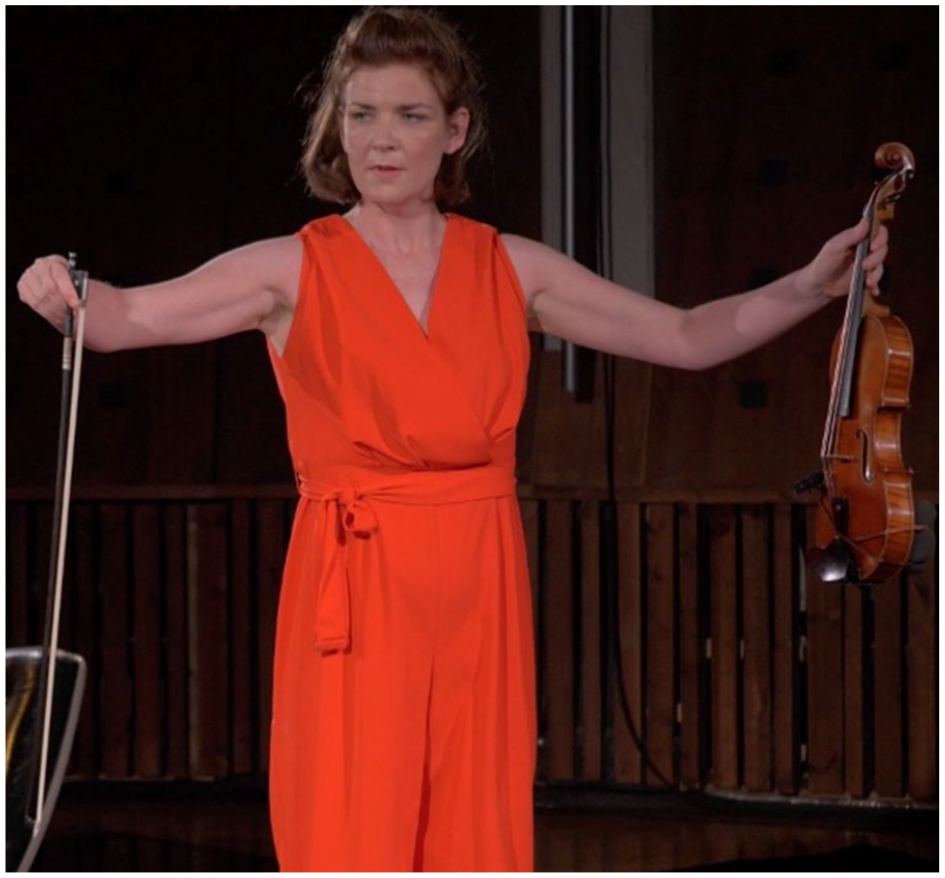
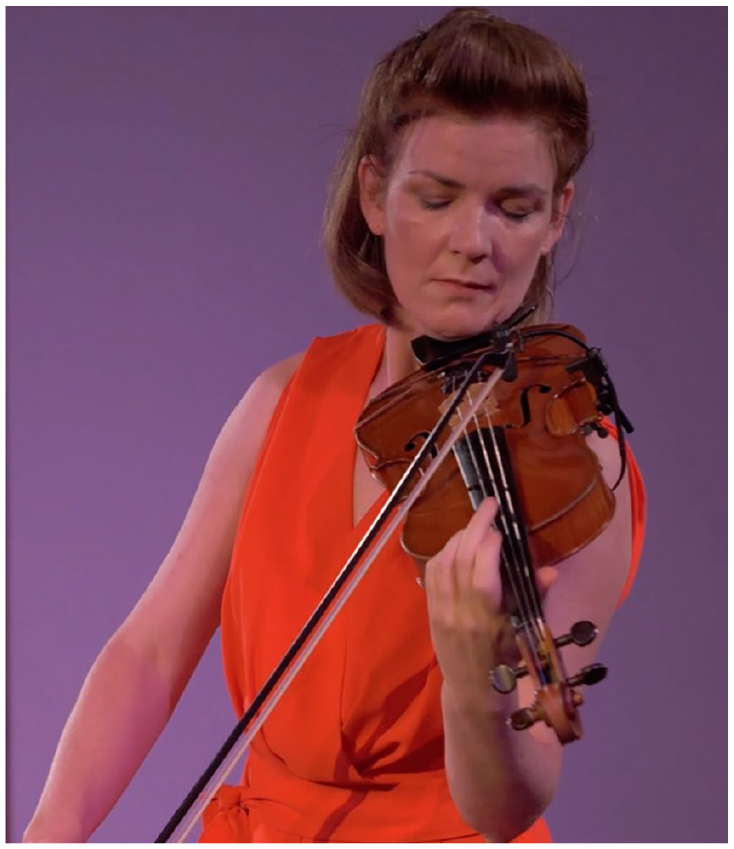
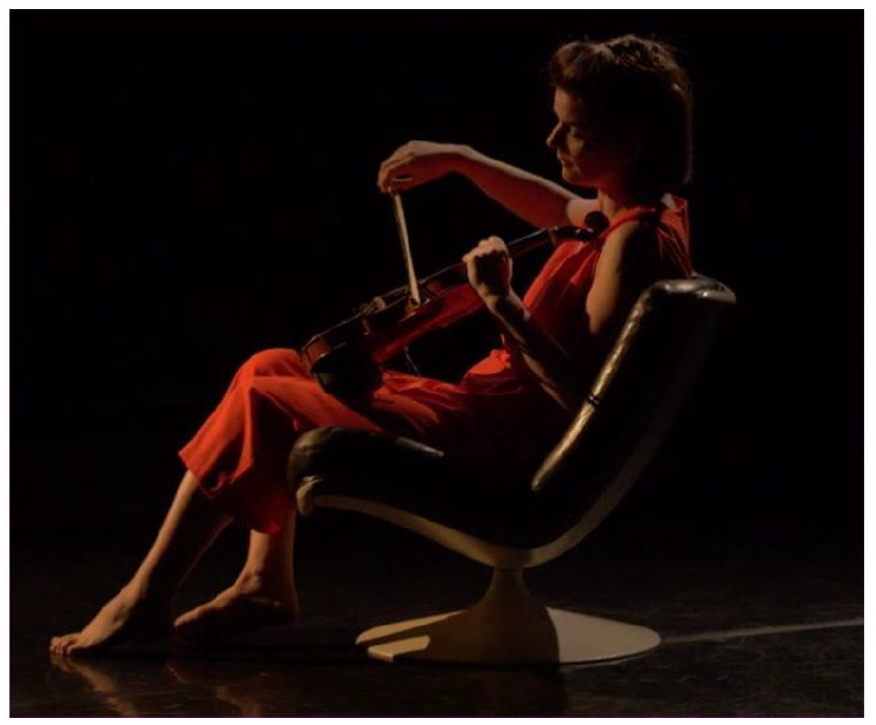
The performance of “Songs My Mother Taught Me” took place on September 10, 2018. Its creation was built upon the consideration of key moments of significance that affected my experience as a violinist and led me to this research article. It resulted in a 25-min, one-woman multidisciplinary theater performance, using movement and music.
The title of the work came from a piece by Antonín Dvořák arranged for violin and piano, of which I have vivid memories of my mother helping me to practice as a young child. The first section of my performance required a composed soundtrack. I recorded sounds that were associated with the ritualistic process of opening my case and unwrapping my violin, combined with sounds of breathing, and improvised piano and violin music. In designing my soundtrack, I incorporated a song that my recently deceased father loved, “Welcome to my world,” sung by Jim Reeves. I also used an old recording by the violinist Fritz Kreisler performing “Songs My Mother Taught Me” to evoke the feeling of past and nostalgia.
Going back to a moment in time
To pick a memory that is strong.
So many memories flood my mind.
I choose the one pushing its way to the front
Demanding that I choose it.
I groan inside
Not that old chestnut.
Then again,
What an opportunity
To take it on
To deal with it
To crack that nut once and for all.
I am reading in my room
Sitting on the floor
Propped up by the bed
The violin and bow laid out in optimum grabbing position
Ready to be picked up at the speed of light
One ear cocked
Always the right one
On alert at all times
No matter how intense the words on the page
At the slightest noise, I spring up
Before you know it
The violin is under my chin
The bow in place
Yes, I did it again.
Aren’t I the clever one?
The movements come from my memory
They simply create themselves
Extraordinary
I didn’t realise I could do this
It feels right
They are my movements
From my memory
How can they not be right?
They are mine
Taking away the instrument now
I am left with the movement
I am left with the feelings
I am left with the naked truth
I am left with the fear
The fear of being caught not practising
The fear of being exposed for being a liar
A lazy good for nothing liar
Taking away the instrument
I am left with just the movement
I am left with just the feelings
I am left with only raw naked truth
I am left with the guilt
Guilty of so much
Dishonesty, cowardice, betrayal
And now, the guilt of regret
Taking away the instrument now
I can see in my movement so many things
The years and years of pretence,
The hours and hours of wasted life
The hundreds and thousands of lies
“yes of course I did all my practice today”
I move faster, slower, more intense, more focused, more deeply, more present, I feel the shift deep inside, being utterly involved in expressing the fear, the guilt and regret.
I reach the climax of the fourth movement
Where the violin and bow connect in my imagination
I breathe into this moment
Over and over and over and over
I am exhausted
I cannot speak
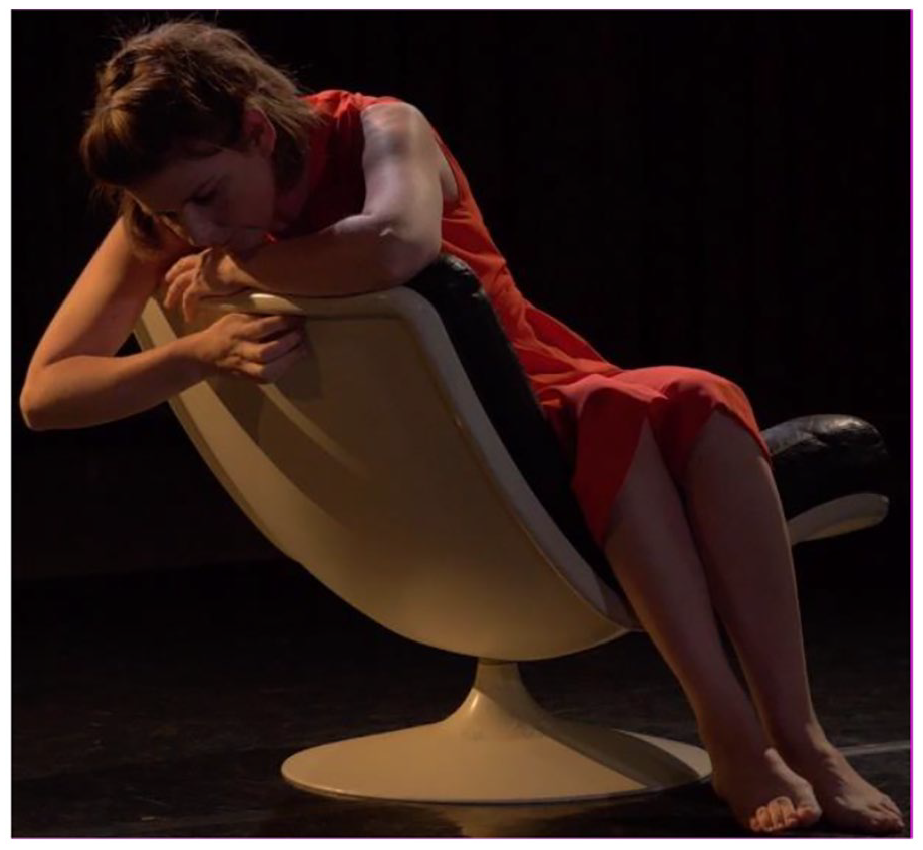
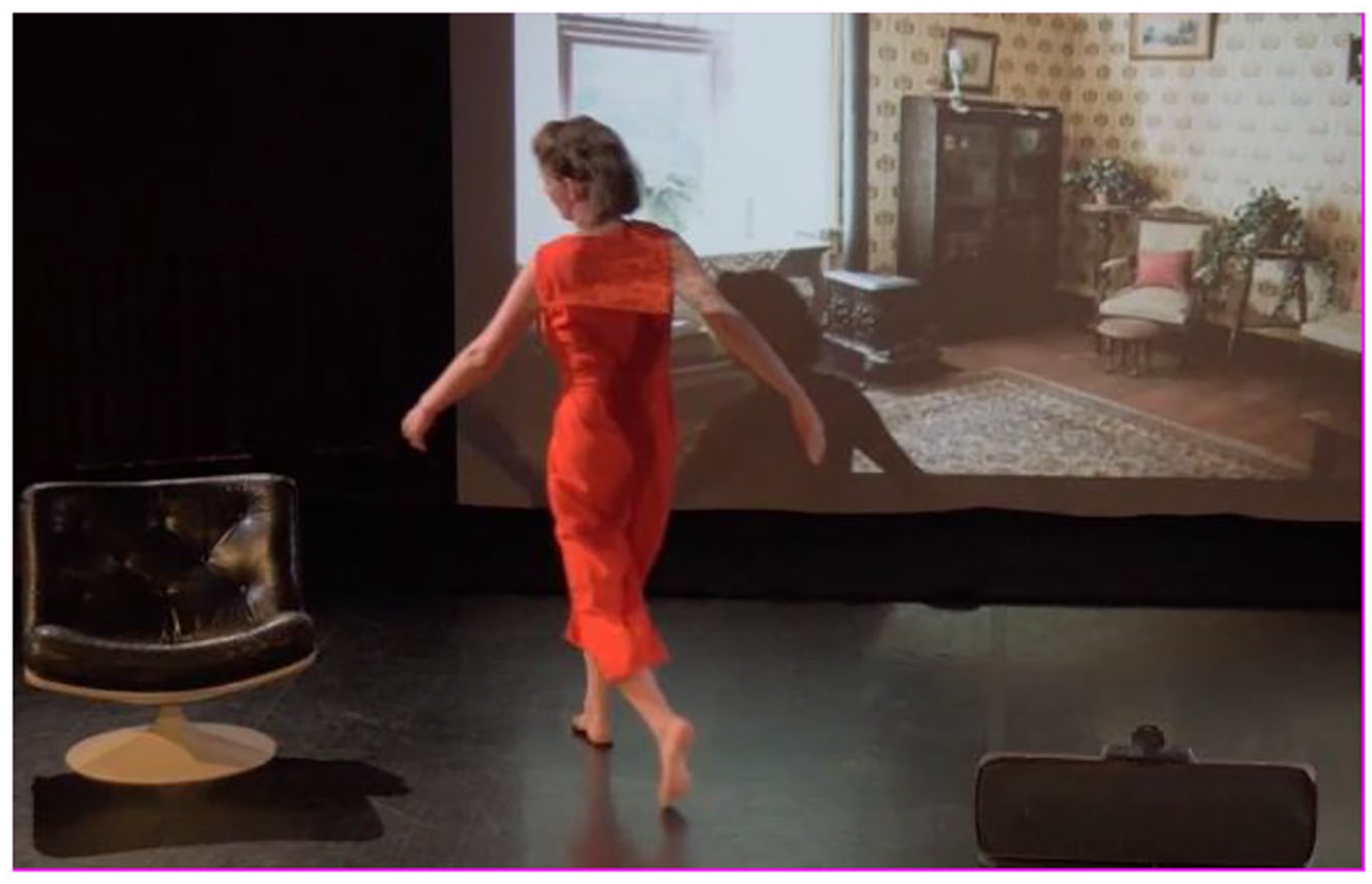
I loved this chair
I hated this chair
All those years of living with that chair
The sibling fights
Falling off
Being pushed off
It was a highly sought-after chair
Now, it’s in my piece
It’s mine now
No one to push me off
My hand strokes the black leather
The touch is cold
But familiar
It has been many years.
I play with the chair
I toy with the chair
I fall off the chair
Tumble over the chair
We become friends
I re-find its balancing points
I fall off again
I had forgotten its unpredictability
Such a giggle
Reconnecting with this random object
Now my vessel of communication
I feel his presence in every stitch
In every button
Then she starts
Off she goes
Her lazy lazy girl
Who didn’t do a bar more than she had to
And yet I did even less than she knows
She could never imagine how little practice I did
She wouldn’t be able to comprehend
It would rock her world
And still and for always
I was the lazy lazy child
Who could have been great
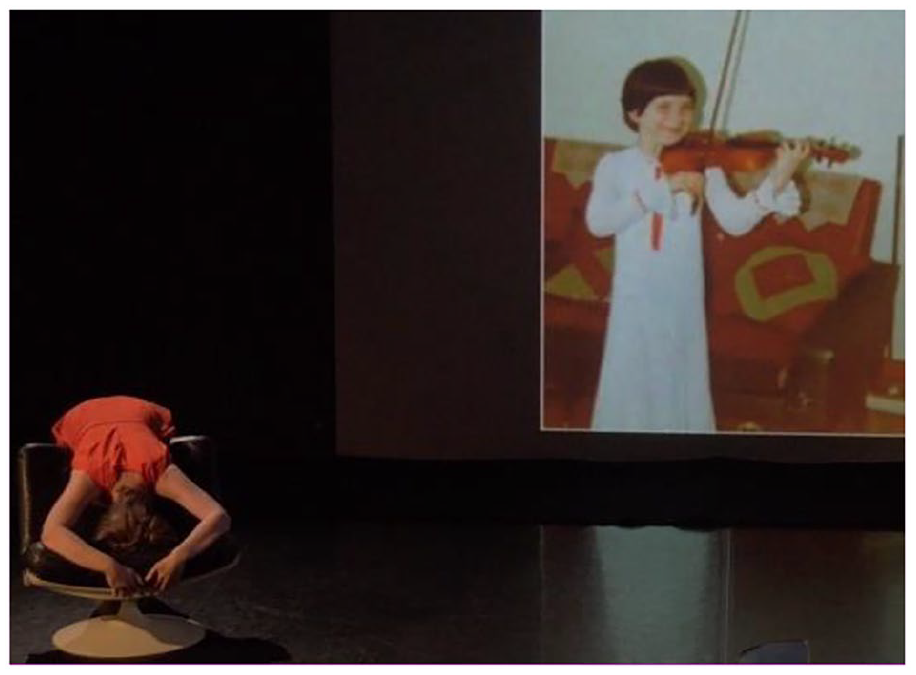
I look at her picture
The sweet little girl
Wanting to please
But
Who didn’t want to practice
What is this strange thing?
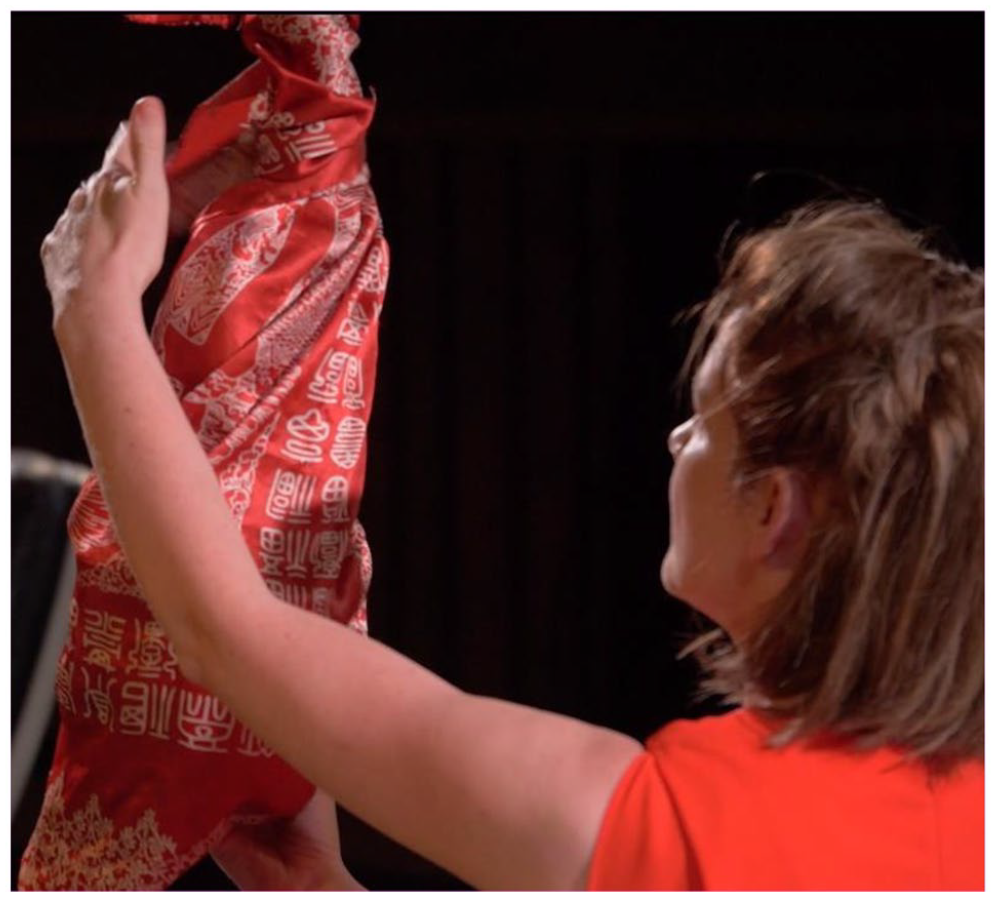
What is this object wrapped up in its silk scarf?
In its sleep suit, all tucked up
I rock it tenderly
My little swaddled baby
I undress it slowly
Its robe falls off gently
Its face looks straight at me
A look of puzzlement on both our faces
She nods
I respond
She moves
I respond
We breathe together
She moves me to standing
She is looking for something
I am not sure what
We question each other
She wants to reach me
She wants to tuck herself in
That sacred spot
The place that never sees the audience
Always hidden
It rejects her
Tired of being forced
Too many years of no choice
She tries again
She asks
She touches lovingly
She wants to be my friend
I say ok
You may come in
It has never felt like that before
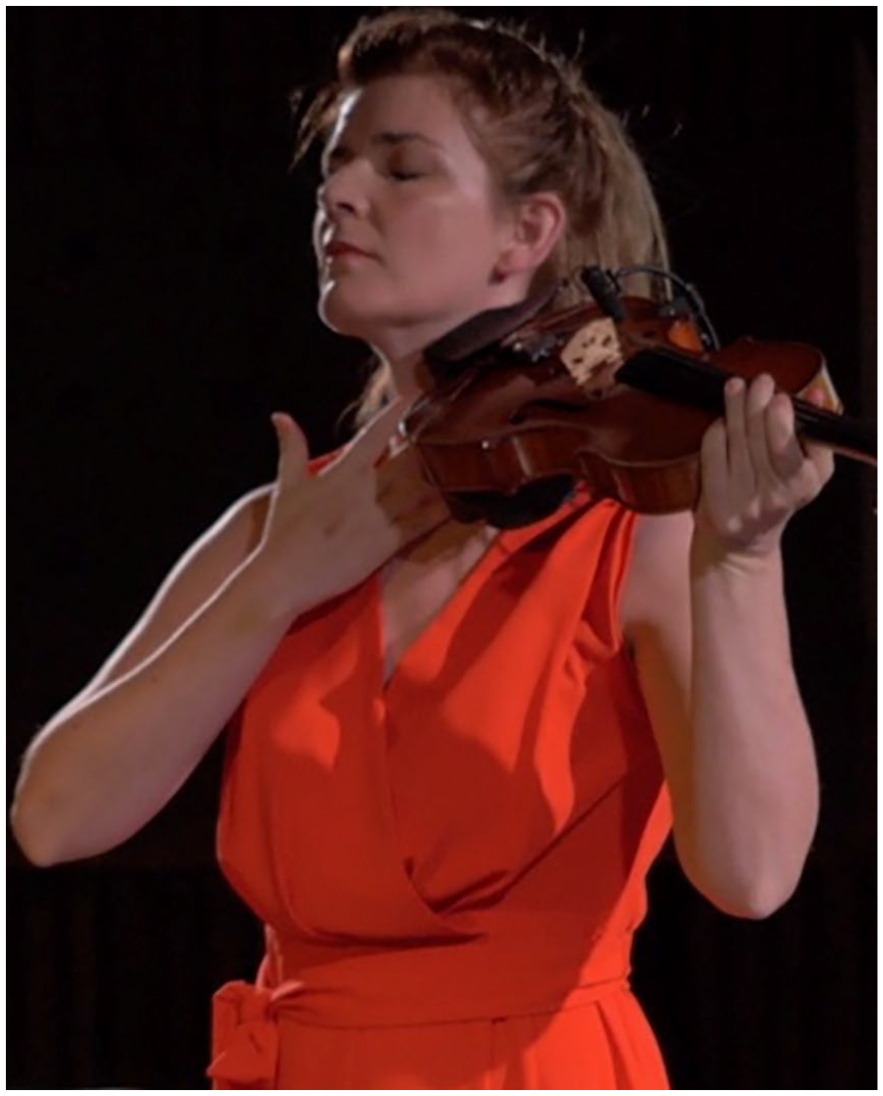
The violin at the neck
The neck touching the wood
The neck touching the chin rest
Feeling the cold metal
The shoulder touching the shoulder rest
Feeling safe
She feels safe
She feels welcome
It has taken 40 years
It’s wonderful
I become curious
This alien object I have welcomed
It seems happy to be here
I want to touch it
I want to explore it
I want it to speak
I feel it
The wood
The strings
The fingerboard
The fingertips connect
The strings respond to my movement
A plucking sound emerges
And a different one
And another
Something changes
There is an anxiety in the room
I can hear it
I can feel it
The mood has changed
The moment is gone.
The fear is back
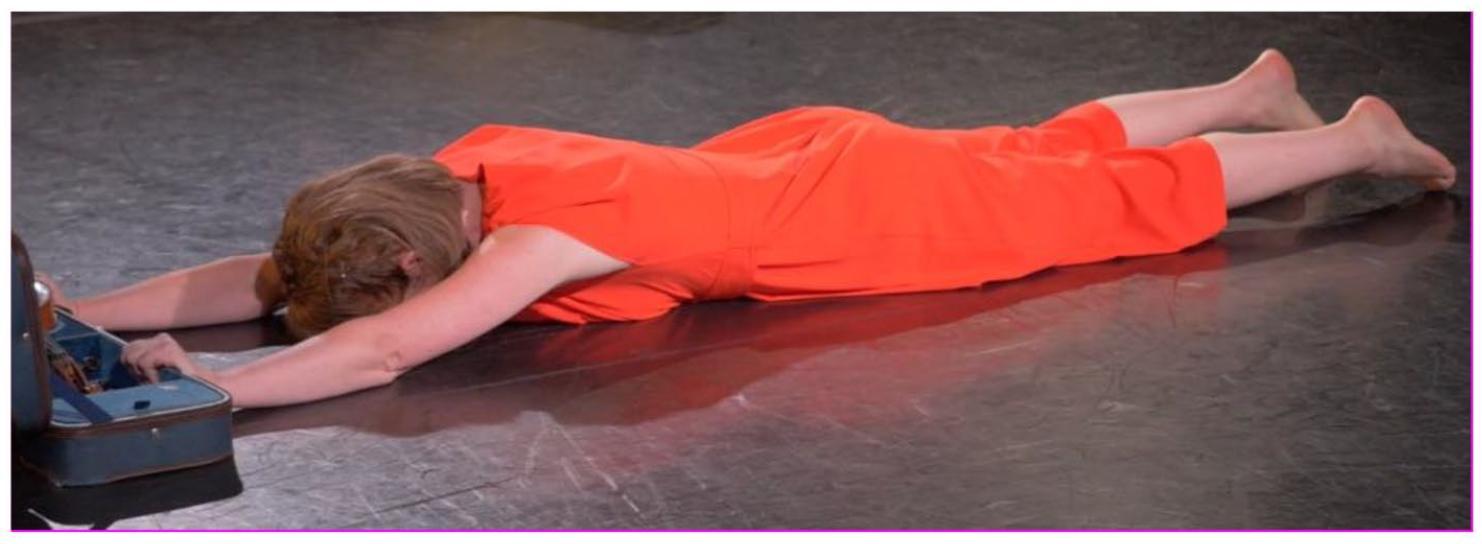
I push the case away
It responds to my fear
I stop
I lie down
Face on floor
Arms outstretched
What is it feeling?
I feel the urge to bring it close to me
For us to meet in the middle.
I see my bow
That rigid stick
I remember the fear
Fear of being caught
I pick up this hated bow
It leads me to my bedroom reading scene
It becomes part of those precious movements
I see my bow It becomes part of those precious movements
Which are now mine
Not my mothers
Not my fathers
Not my teachers
They are mine
The bow becomes accepted
The bow becomes embodied
The speed increases
The intensity increases
I cry out loud with connection
I feel spent and exhilarated
The bow arm connects with the left side
Connects with the shoulders, chest, neck and head
The whole body recognizes this arm
This hand
These fingers
The bow arm is part of me
Seeing my arm in a different way
Feeling my bow arm
Not hating my bow arm
My bow is in my soft hand
It feels connected
It is an extension of my arm
It is fluid
It is loveable
It is mine
I hear Daddy’s song
Welcome to my world
He taught me to dance
Let’s dance together
The bow
And I
And you dad
And you mam
The photo of you both dancing in the living room
The memories flood my heart and mind
The one thing that brought you together
The one thing you both loved to do
The song continues
The bow and violin meet
Connecting through the dance
Through the breath
It feels they have never met before
They connect for the first time
It’s not easy
The tension, the past, the silent screaming, the tears on the varnish, the resentment, the fear and the guilt
I bring in the body
My body
My feelings
My breath
I focus on a body part
Imagine playing from just there
I choose my right shoulder blade
How the sound changes
And then back
And then my shoulder
My shoulder playing the violin
And then back
It’s different
I could do this all day
I like playing the violin
Curiosity
Imagination
Discovery
Putting the word play back in
I stop the sound
Keeping the connection
Keeping the feeling
I hear the sound
I hear my breath
Is this what it is?
Is this what I have been missing?
I feel at one
I am at one
Part 4 Reflection
At the end of the process, I am left with a variety of insights, a sense of feelings left both resolved and unresolved, and a litany of questions.
That my violin career was built on a foundation of childhood pressure which, from this distance and perspective, seems overly harsh and brutalist is without question. And yet to renounce this childhood experience would be to renounce a large part of what I now am—a professional violinist who draws profound satisfaction from my violin playing and career. There is an inescapable tension here. I would have chosen a less authoritarian approach to my childhood self, but if this retrospective wish were granted, would I forgo the career that brings me so much joy? At the heart of this is a question—was there a possible route to my current destination that did not pass through the yoke of pressure and coercion that I, along with so many of my peers, experienced?
Addressing this question lies at the heart of this research, but it is not alone. Equally fundamental is the search for freedom, autonomy, and self-expression which, as a classical musician, I had to proactively seek and re-find, under all the layers that my music education had laid on top of them, an “artistic unearthing” (Daly, 2021, p. 2473). This offers a more clear-cut route toward an improved situation for following generations.
As Course Director of the MA in Classical String Performance at the University of Limerick, I am in a privileged position in that I have the capacity to make change. My students are required to engage with critical reflection throughout the program. They are encouraged to develop reflexivity around their practice and to delve into such questions as “why do I play the violin” as referred to earlier in this article. They have classes in Creative Embodied String Performance which enables them to bring their whole selves into their artistic practice, connecting body, mind, spirit, instrument, music, and movement. This holistic approach sidesteps traditional conservatoire training which overly focuses on the development of instrumental technique and virtuosic brilliance (Daly, 2021a). It is born from an understanding that we need to name the smothering that classical music education has seemed to almost consciously apply to nascent musicians. We then need to attack it in the most positive way we can—by demonstrating and reveling in experiences such as the one detailed here in which a repressed classically trained musician was set free and found a voice as reflector, deviser, and creative artist.
The full performance of ‘Songs my mother me’ is available to watch here https://vimeo.com/571548173.
Footnotes
Declaration of Conflicting Interests
The author(s) declared no potential conflicts of interest with respect to the research, authorship, and/or publication of this article.
Funding
The author(s) disclosed receipt of the following financial support for the research, authorship, and/or publication of this article: Government of Ireland Postgraduate Scholarship, awarded by the Irish Research Council.
