




Abstract
This study presents a new type of advertisement—web-series ads. This undiscussed form of advertising is unique, as it presents an independent digital cultural field. By examining the main structural and narrative features of web-series ads and consumers’ responses, this research presents an integration model which explains how advertisements, as a commercial system, integrate into an independent new media system. Using thematic, narrative–structural, and textual analysis methods, this research shows how marketers convey messaging by introducing a free-from-constraints new online advertising media type. The use of polysystem theory offers a new theoretical perspective to media research and explains the findings.
Keywords
Despite changes in advertising platforms and content over time and cultures, the aim of strategic communications (e.g., marketing, advertising, public relations) remains to reach consumers with a brand-benefiting message. This task becomes harder today as multiple new advertising media increase advertiser opportunities to communicate with their audiences, choosing which media will be more efficient (e.g., high click-through rates, attitude toward the ad/brand, media exposure; Danaher, 2017; Zheng & Huang, 2022). The massive amount of content communicated in the emerging landscape of online advertising is competing for consumer attention to receive and respond to branded messages, making the media choice of a campaign more challenging than ever (Hayes et al., 2021). In the context of social health, the increased usage of over-the-top (OTT) video streaming platforms during COVID-19 has led brands to promote themselves through content integration and sponsorship on digital platforms as people seek social interaction online due to social isolation (Kavitha & Anupam, 2021).
In addition, the transition of media audiences, mainly young people, to consuming independent content on YouTube (Christian, 2018) increases the viewer’s need for much more web content. YouTube has grown to be the largest online video platform worldwide. In 2022, YouTube had more than 2.56 billion users watching its videos, and approximately 500 hours of video were being uploaded to YouTube every minute, showing the growing demand for digital video content among online users (Statista, 2023). YouTube’s global advertising revenues generated more than $29 billion (approximately 11.35% of Google’s total annual revenue; Statista, 2023), demonstrating why marketers expect an increase in usage of YouTube for advertising purposes in the coming years.
Indeed, one of the rapidly emerging online advertising forms on YouTube is web-series (Martiawan, 2021). Web-series have the basic features of a TV series genre that was adapted to digital networks but with independent and alternative characteristics, such as amateur production, the use of avant-garde aesthetics and editing conventions, and the ability to address controversial and taboo issues that are not acceptable in mainstream content without censorship restrictions (Aharoni, 2022a; Monaghan, 2017). The fact that ratings and ad revenue do not constrain streaming platforms paved the way to produce shows that target specific demographics, interests, and subcultures. Web-series are part of an independent system that is not subject to commercial companies and media cooperatives. Therefore, it is not perceived as part of a commercial (mainstream) system. This characteristic allows the web-series to present minorities absent from the mainstream and differently than is accepted in the mainstream media (Christian, 2018).
With less popular features and narrative forms, such as nonsense and magical realism, web-series tend to invest in original content. In addition, web-series continue to expand their reach, as they are expected to further disrupt traditional television and film formats (Aharoni, 2022a). Web-series videos boast millions of views, indicating tremendous viewer popularity worldwide, with web-series festivals (e.g., NYC Web-Fest), and competitions (e.g., Annual Web-series Festival Global in Hollywood) that accept online content from websites such as YouTube and Facebook, and streaming episodes from digital platforms (such as Netflix, Peacock) as well as nondistributed content in all genres. With practical guidebooks (Drennan et al., 2018) and theoretical literature (Christian, 2018) that discuss and analyze web-series on YouTube, they are a worldwide significant phenomenon.
Web-Series Advertising
Considering the popularity of web-series, marketing products that adapt web-series represent a new and intriguing internet promotional practice, although one understudied in advertising scholarship. We suggest the term web-series advertising to describe the form of episodic story development with message coherence between the brand and presented content embedded in the web-series storyline. Using persuasive storytelling, novel narratives, and based on multiple genres that develop between chapters, web-series advertising incorporates brand value appeals within the series content and can change how people think, feel, and behave toward a brand.
Web-series advertising features anarchic, amateurish, and authentic unique characters and narratives that use classic web-series features (e.g., taboo topics, extreme and nonconsensus leading presenters) to convey advertising messaging to relevant audiences (Santy & Anwar, 2021). Our definition of web-series ads posits them as a broadcast on social media (mainly on YouTube) outside the designated commercial break. As such, we consider them disclosed content. The marketing message in these series is not hidden; rather, the series are specifically presented as the “new” advertisements, but with the structure and characteristics of a narratively continuous web-series.
Research on advertising in web-series is limited, with a small number of studies concentrating on the factors that influence attitudes and purchase intentions toward branded content (Sinthamrong & Rompho, 2015). Martiawan (2021) discussed the influence of branded web-series on consumer purchase intention, while Sulestarini et al. (2020) added the need for fantasy as a construct influencing brand engagement. The current literature tends to position advertising in web-series as undisclosed advertising, although whether such a perspective is valid is an open question.
As noted, there is limited scholarship on the integration of a commercial system in an online independent alternative content system and on the role of web-series in online advertising or its characteristics, along with their growing popularity worldwide, as can be deduced from the multitude of content produced online. As such, along with the significance of new advertising media, the importance of the current study becomes clear.
The current research makes several contributions. First, this is the first study to conceptualize the term web-series advertising and discuss consumer responses to these ads. Second, we use, for the first time in the advertising field, polysystem theory (Even-Zohar, 1990, 2010), which focuses on examining and explaining relationships between media systems to understand the convergence of two very different systems—an independent online content system and a strategic communications field. We thus suggest a model of integration between media systems to conceptualize the integration of online persuasive processes. The current study, therefore, sets out to provide a broader meaning to the online advertising concept that is different from familiar branded content and product placement. Our recommendations will help advertisers to examine variations in content preferences, advertising appeals, and brand expectations across digital media. Marketers from different categories looking to reach consumers and to increase engagement in the current cluttered media landscape can use this study’s findings for better targeting and for achieving more effective messaging.
The previously mentioned study only examined the variables that impact opinions and buying inclinations regarding branded content in the few research projects referred to earlier (Martiawan, 2021; Sinthamrong & Rompho, 2015), leaving out the significance of web-series in internet advertising, its attributes, or the evaluation of undisclosed appeals. Therefore, the current study addresses these gaps in the existing media literature, focusing on advertising integration into the context of independent web culture using polysystem theory, which focuses on this phenomenon of integrations, translations, and adaptations of content and ideas from one culture or media system into another (Chang, 2011), as we will discuss in the following sections.
Literature Review
Changing Definition of Online Advertising
With the advertising industry constantly evolving and as advertisers embrace new media, scholars continue to discuss the need to revisit existing definitions of advertising (e.g., Kerr & Richards, 2021; Taylor & Carlson, 2021) to represent the progress of the field. Recent research has suggested that societal changes (e.g., COVID-19), technological development (e.g., digital landscape), and changes in advertising practice (e.g., personalization, user-generated content) frequently motivate changes in definitions (Bergkvist & Eisend, 2022). Using a transformed and updated definition of advertising can help us reflect on the ongoing change in advertising, according to which online advertising is the leading advertising platform. It can also advance advertising research by helping conceptualize the messaging effort of the web-series as advertising.
Given the information above, our efforts are in line with Dahlen and Rosengren’s (2016) operational definition of advertising: “brand-initiated communication intent on impacting people” (p. 337). According to Eisend (2016), this suggested definition covers all possible forms of appearance that advertising can take, such as different digital and hybrid advertising formats. For example, Dahlen and Rosengren (2016) argue that the definition of advertising commonly utilized by Richards and Curran (2002, p. 74), “paid, mediated communication from an identifiable source designed to persuade the receiver to take some action, now or in the future,” should be revised to permit advertising that may not be explicitly sponsored or initiated by a specific source, and to accommodate advertising in various media and formats. Huh (2016) agrees with Dahlen and Rosengren’s (2016) argument and adds that given that there are new forms of advertising, the terms paid and identifiable sources are too limiting.
Digital media allows advertisers to use new tools and strategies to approach consumers. These tools include “native advertising” (NA), which is “the practice by which a marketer borrows from the credibility of a content publisher by presenting paid content with a format and location that matches the publisher’s original content” (Wojdynski & Golan, 2016, p. 1403). In the practice of NA, the identity of the marketer is not completely revealed (Verčič & Tkalac Verčič, 2016). Presenting advertisements as editorial content obscures the source of the information, thereby concealing the fact that the message is biased, sponsored, and intended to be influential (Zimand-Sheiner et al., 2020). Content that is branded can be recognized by different disclosure markers and is customized for each user using algorithms, depending on their previous interactions. Thus, social media content can be paid (i.e., media campaign generated by the marketer or its agents), earned (i.e., content created by consumers or influencers without direct involvement of the marketer), shared (i.e., stimulating viral content that is spread by consumers through their social media accounts), or owned (i.e., content created by the marketer and published on social media channels that the business controls; Mayrhofer et al., 2020; Pittman & Haley, 2023; Segev & Fernandes, 2023). To illustrate, earlier research has considered branded content in web-series as NA (e.g., Kavitha & Anupam, 2021). This is due to its basic features (i.e., a short film format packaged into several episodes with a duration of approximately 1–15 minutes) and the fact that it is broadcast outside the designated commercial break. In addition, Martiawan (2021) has pointed out that advertisers who use masked advertising in web-series count on consumers to categorize the message as belonging to a familiar content category (i.e., social media posts, news articles, TV shows) rather than advertising (Sun & Evans, 2022; Wojdynski & Evans, 2020).
This article suggests that advertising using web-series is paid content and not NA, as documented in earlier research.
Web-Series as Independent Media
A web-series can be defined as a media platform produced and distributed on the internet, with the basic features of various genres of a TV series, adapted to the characteristics of the web. Thus, it can include short video programs classifiable as drama, comedy, animation, thriller, science fiction, and documentary. A web-series usually presents an ongoing story in three or more episodes, each ranging in duration from 1 to 15 minutes. Typically, these video programs are not produced by professionals and are created for online sharing with the aim of gaining widespread viewership (Aharoni, 2022b; Christian, 2018; Monaghan, 2017). They are also defined as Web-Media (Leaver, 2013), Web-TV (Majek, 2012), and alternative Open-TV (Christian, 2018).
Web-series have a broad appeal, catering to the general public and also providing a platform for expressing the perspectives of minority communities. This makes them a public sphere for viewers, allowing for the exploration of community values and norms (Aharoni, 2022a; Shinhea-Lee, 2019). As a result, web-series are seen as part of independent and alternative online media, created by amateurs from particular social groups (De Lara et al., 2017). Web-series can be accessed when needed and are based on direct connections between participants on the web. This setup eliminates the necessity of traditional network executives, allowing producers, fans, and sponsors to connect with each other at any time (Christian, 2018).
Web-series usually present a story involving several characters, a developing narrative featuring the same characters in different situations, and a unique niche content. The production values are similar to that of conventional commercially supported media formats (Leaver, 2013), while web-series have greater creative freedom (Williams, 2012) without the need for a large budget or vast studio backing or commitment to broadcasters.
The increase of social media and online communities has provided advantages for web-series. Streaming platforms encourage viewers to engage in discussions, share their thoughts, and connect with fellow fans through dedicated hashtags and online forums. The unfiltered appeal of web-series and the interactive element create a sense of belonging to a digital community and strengthen viewer loyalty, leading to increased word-of-mouth promotion and interest in the series (Meshram & Pasha, 2023).
The shorter episode format of web-series allows for greater flexibility in production schedules, making it easier for creators to experiment, pivot, and adapt to changing audience preferences. This flexibility has resulted in a wider range of content being produced, leading to increased variety and creativity within the web-series landscape (Meshram & Pasha, 2023). With lower production costs and a lack of network constraints, web-series ads can more easily find their fan base, allowing for a more personalized and engaging viewing experience. Advertisers can use this format to offer creative content to engage consumers outside the mainstream TV commercial break and attract them with new and independent content in a different media system. Polysystem theory provides a valuable structure for elucidating the dynamics and interplay among these systems.
Using Polysystem Theory to Examine Media Systems Relationships
Polysystem theory is a functional dynamic approach used to examine relationships and functions between and within organizations and cultural or media systems. It explains the practices of systems that constantly seek to maintain their relevance, existence, and vitality (Even-Zohar, 1990, 2010). In the current study, polysystem theory helps explain the integration between two different media systems: marketing and web-series.
The main goal of polysystem theory is to identify the principles governing the diversity and complexity of phenomena, such as interactions between different media systems. Different systems intersect and partly overlap, employing various options while functioning as one structured whole—the main system, whose members are interdependent (Even-Zohar, 2010). Therefore, any isolatable cultural system must be studied in correlation with other systems to gain a better understanding of its nature, function, and repertoires. Consequently, this study will explore the key features of web-series ads and their reception among regular viewers to comprehend the relationship between the two systems in their new integrated product, according to the requirements and characteristics of both systems.
Drawing from polysystem theory, Aharoni (2022b) developed a framework for analyzing interactions between media systems. The aim was to investigate how content from nonmainstream media, such as religious community cinema and comedy web-series, is incorporated into mainstream media (e.g., national cinema and commercial television). The model proposes to explore and define the source system’s ability to integrate into the target system using the theoretical concepts of epistemological and temporal flexibility or rigidity, which express the possibility to import, contain, and integrate content from a foreign system into a new system. It also proposes to examine common or other interests, and investigate the consequences of integration on the audience, creators, and content. The model also suggests that the interaction results should be examined in terms of symbiosis, expanding the boundaries of the target system’s repertoire, or diffusion and marginalization (Aharoni, 2022b).
We consider the phenomenon investigated in this study to be similar to the examination of the encounter between alternative and mainstream media, which allows us to use this model, only in a reverse process—that of the entrance of the mainstream into the alternative. In so doing, we will examine the encounter according to the theoretical concepts the model proposes. In both cases, it is a meeting and integration between one alternative independent system with its own binding constraints, which the web-series represents. It encounters an external and foreign system, which has resources, influence, and capital (i.e., the marketers), who are part of the mainstream that seeks to integrate into it.
As far as we know, no earlier studies have addressed advertising as a media system that integrates with other media systems, while also proposing theoretical models for this practice. Nevertheless, a small number of research projects have examined ways to enhance interaction in digital advertising, created a system that integrates interactive models into the structure of an advertising system, proposed models for customizing and tailoring content to individual users, and examined user profiles and methods for facilitating immediate tracking and updates (e.g., Hjelsvold et al., 2001; Kim & Du, 2006; Pramataris et al., 2001; Wu, 2000). As no model analyzes the connection between mainstream and alternative in online advertising, the present study adds to this body of knowledge by offering a theoretical model encompassing the new concept of web-series advertising by investigating the meeting point between the commercial system of advertising and the independent system of web-series ads, thus answering our underlying research questions.
Research Questions
The current study presents the following research questions based on the potential of web-series advertisements as part of an independent web-series corpus:
Starting from this basic question, the subsequent subsidiary research questions emerge:
To address the research questions, this study investigates the use of Israeli web-series for advertising and examines how Israeli viewers react to web-series advertisements. The research was conducted in Israel due to its favorable environment for examining this phenomenon, stemming from the country’s rapid rate of technology diffusion. Israelis are recognized as early adopters, with Israel becoming the world’s first country where the number of smartphones sold surpassed the country’s population (Yoon, 2020). In addition, as of January 2021, the number of Israeli social media users was 78.1% of the total population (Kemp, 2021). Thus, Israel can serve as an interesting case that can provide insightful implications for advertisers on adopting new advertising media in the digital age.
Method
Sample and Procedure
Our research consists of all Israeli web-series from recent years (2016—the year in which the first commercial web-series was launched—to 2022) that include branded content on YouTube. Based on the search engines of YouTube and Google, 13 web-series in total were identified that meet the basic definition of a web-series: a series intended for online distribution (mainly on YouTube), centering on recurring characters in different situations or on a developing plot line. They are 1 to 15 minutes in length, making them unsuitable for distribution during TV commercial breaks.
The web-series ads are:
“ChatList”—a web-series-style matchmaking interview program that advertises an apartment search app for rent and purchase (nine episodes).
“Almog is looking for a job with meaning”—a mockumentary series (three episodes) that advertises the Israeli high-tech company, Ness.
“Stories from the shelf”—a seven-episode animated series that advertises the supermarket company Shufersal.
“Gili the delivery women”—a 19-episode mockumentary series that advertises the supermarket company Shufersal.
“My Brother Ghost”—a 24-episode comedy series that advertises a chocolate drink from the dairy company Tara.
“Nir and Gali for the Israel Post”—a 13-episode animated series that advertises the products and services of the Israel Postal Company.
“Running to the Association”—a mockumentary series that advertises the Israeli Student Association (five episodes).
“Milky”—a mockumentary series that advertises the Milky chocolate delicacy of the Strauss company (12 episodes).
“Moshik and Duvdevani”—a series of culinary trips around the world that advertises the yogurt products of the Danone-Strauss company (five episodes).
“Porcelain printing”—a mockumentary series that advertises the First International Bank of Israel (four episodes).
“Messiah”—a 22-episode mockumentary series that advertises the television company Cellcom-TV.
“Hishgad: It is you with some more money”—a nonsense-mockumentary series that publishes lottery tickets of the national gambling company Pais (four episodes).
“Another one on the way”—a sitcom-style series that advertises products of the cosmetics company SuperPharm (four episodes).
To examine viewer responses to web-series ads (
Research Methods
Three analysis methods are used to answer the research questions: (a) thematic analysis, (b) narrative analysis, and (c) content analysis. The thematic analysis is the main method, which inductively examines the characteristics of the web-series ads and the topics that arise in the responses of viewers. Narrative analysis aims to aid detecting themes related to the form of the series (
Thematic analysis (Braun & Clarke, 2006) was conducted for all the episodes of the 13 web-series ads, which were distributed on YouTube (a total of 131 episodes), for all the viewer comments, and for the transcripts of the 20 interviews. The basis of the thematic analysis is the detection of patterns and repetitions in the content. Repetitions of subjects, words, narrative structures, and messages indicate their importance and allow us to focus on them.
The thematic analysis was completed in several stages:
(a) Once the web-series ads were identified, the researchers watched them several times and read the viewer comments to familiarize themselves with the content. (b) To answer
We completed the final steps by attributing episodes from the web-series ads, quotations, and comments to each theme. We created two lists: one for the relevant episodes and the other for the quotes. From these lists, we selected representative examples to illustrate each theme.
As mentioned, narrative–structural analysis (Manning & Cullum-Swan, 1994) helped to identify the repeated types, forms, and basic features of the 13 Israeli web-series ads and their basic narratives to answer
Content analysis, which identifies and documents individual and group attitudes, views, and interests by quantitative means (Drisko & Maschi, 2016), was conducted for all written viewer comments about the episodes for all the web-series ads on YouTube. We used this analysis to examine a positive, negative, or neutral sentiment in the viewer comments on the series’ content and the characters playing in them, thereby assisting in answering
Two trained coders assigned each of the 1,915 comments to one of the three categories: (a) positive (comments that used words such as “funny,” “genius,” “perfect”), (b) negative (comments such as “disgusting,” “disturbing,” “boring”), and (c) neutral relations (comments such as “ok,” “so so”). The coders are also familiar with the culture and the language spoken, as expressed above. The number of comments is still not too large to conduct a manual analysis. We preferred to do it manually due to the difficulty in using digital software for analysis in the Hebrew language and the frequent need to update the lexicon to understand the correct slang and tone. To guarantee the reliability of the coding, both trained coders independently coded all comments. The researchers provided instructions to the coders, who had previous experience in coding online discourse. Each coder coded all the comments independently. We tested reliability after discussion, examination of test results, and reaching an agreement in three training sessions. We employed Scott’s pi, which assesses agreement beyond chance, to evaluate intercoder consistency (Potter & Levine-Donnerstein, 1999). The scores from the three tests were combined to create a comprehensive reliability score, which demonstrated high quality (.86–1.00).
Results
Answering RQ1a: The Main Structural and Narrative Features of Web-Series Ads
Antiheroes in a Comic Hyperrealistic World
Examining the main common feature of most of the characters in web-series ads (using thematic and narrative–structural analysis) reveals that they are antiheroes who try to survive in a hyperrealistic world. These antiheroes are primarily helpless, unsuccessful, unemployed, lacking charisma or special abilities, and often go to extremes or behave nonnormatively. There are 10 antiheroes, which make up 76.92% of the total series. Their indifference to what is happening around them and their lack of self-awareness allow them to deal with everyday in creative ways and create the comic element that characterizes most web-series ads.
For example, one of these characters is Gili, the (singing) delivery woman who is the face of the largest supermarket chain in Israel, Shufersal. She is presented as a supermarket courier who wishes to celebrate every shipment with customers by singing about the products she has provided. In this way, the product and its services become the main elements in the series around which the plot is built. Viewers are invited to her imaginary nonsense world: She usually imagines herself as a famous singer who performs in different places or stages associated with the famous customers to whom she delivers the advertised products. Her lack of heroism stems from the dissonance between Gili’s exaggerated performative authenticity and the indifferent and disappointed response of the famous character to whom she delivers and sings and who makes it clear that Gili’s singing is unprofessional, a lousy imitation, and not appropriate to the situation.
Other antiheroes are single and lonesome characters, unemployed, and directionless persons such as Guy from “My Brother Ghost,” who rents an apartment from Satan’s delegate and discovers he has to deal with a ghost that seeks to make Guy’s life even harder. In the same vein, there is Dori, the main character in the cartoon series “Nir and Gali for Israel Post,” who is also portrayed in a surreal and exaggerated world. Dori is a single adult male who has to deal with all the demanding anthropomorphized objects surrounding him at home. There are also unsuccessful characters owning failed businesses, such as Messiah (“Messiah”), who runs a wayside stop, and Ethan (“Porcelain printing”), who is trying, mostly without success, to operate an old-fashioned printing house.
Therefore, we can assume that the web-series ad seeks to differentiate itself from the basic common characteristics of advertising content, which echoes stereotypical messages (Aley & Hahn, 2020; Grau & Zotos, 2016). This is done to resemble other Israeli independent web-series, which are characterized by using unrealistic and nonsense humor, presenting unusual and exaggerated antiheroes (Aharoni, 2022a, 2022b).
Para-Minor Texts
By examining the formal characteristics of the web-series ads using narrative analysis, we found that they strive to present their characteristics as minor texts as defined by Deleuze et al. (1983) as minor literature—texts written in a minor language, created by minority groups using a major language not originally their own. No root place is ascribed to it. Instead, it presents a bridge between different places (de-territoriality), and everything personally said in it refers to something of greater value or pertaining to a greater subject.
The minor text is not an essential matter that arises from the fact that people from minority groups wrote it, but it is an active, purposeful, and even political action. By creating a minor text, one seeks to redefine majority–minority relations by becoming a stranger in one’s own world. It is an act that challenges existing identities and breaks from the major normative order. It forms accepted definitions and re-embroiders a fluid social existence of nondistinction between right and wrong and between ruler and ruled. It is a spillover into an uncontrolled, borderline area that challenges hierarchy and contrasts, which seeks to blur distinctions in a performative way. This is not an imitation of something existing but a new “molecular creation” made in speech acts (Zehavi, 2010).
To equate the minor literature originally referred to by Deleuze and Guattari with web-series ads, we argue that web-series ads use the accepted visual-cinematic language (of the majority group) to present content that should be characterized as independent (of the minorities), such as nonsense, vlogs, amateur, and low-budget content (fewer sets or locations, filming in nonstudio sets, unprofessional editing) that characterizes the web-series. In the sample tested in this research, six web-series ads (46.15%) centered around the use of nonsense, five series (38.46%) were filmed in the style of amateur vlogs (mockumentary), and five series (38.46%) with professional aesthetics and production and postproduction methods.
They also express their de-territoriality within the field of independent and amateur web-series by not hiding their nature as commercials. By doing so, they seemingly present a bridge between two different fields by creating a new text that breaks away from the major normative order of commercials. Thus, their messages are not personal but rather express fluidity within the central basic idea of selling a product.
The efforts of the web-series ads to appear to be a minor language and a minor text still suggest that they are not as authentic as the independent web-series and are nevertheless foreign to this cultural field. Thus, we identify these web-series ads as para-minor text. That is, the use of aesthetics, structure, and narrative is that of a subsidiary genre similar to the minor texts of independent web-series but still part of the mainstream industry. This para-minor aspect is also expressed in the comments of the viewers, who are not convinced that these web-series ads are part of the independent minor texts/field but are mainstream advertisements. Thus, only a semblance of minor texts is created, but they are not so in practice.
The para-minor text can be demonstrated in “Hishgad: It is you with some more money.” The series is a nonsense web-series ad presenting the surrealistic thoughts and experiences of its protagonist, Ido, a male bachelor approximately 30 years old. In contrast to the Israeli independent nonsense web-series, Ido reiterates that the episodes are actually an advertisement, and he is not ashamed of it. Thus, he seeks to bridge the platforms and even emphasizes that his thoughts are related to the product he is advertising—lottery tickets.
For example, the episode “Ido has principles and excuses” is an interplay between the fictional and filmed versus the real and authentic and between the independent private text and the popular commercial text. The episode ostensibly presents the protagonist’s contrasting values, expressed in a low-budget video blog style with an accompanying voice-over of his thoughts.
The ratio of the para-minority is changeable and flexible due to the different degrees of the two components—the minority and the para. The web-series ad “Hishgad” seems more amateurish and independent (the part of the “minority” characteristics) than a professional ad (the “para” component). Therefore, the balance needed is expressed by overemphasizing the fact that it is an advertisement. In contrast, in the web-series ad “Milky,” the professionalism and richness of the production are well expressed (the “para” component). Therefore, the web-series ad emphasizes the nonsense even more, the excessive and nonnormative (the “minority” component) elements that feature the content. To counterbalance, the product being marketed is not mentioned in a clear and focused manner until the end of each episode.
For example, in the episode “Milky Chili—A Scary Taste,” the main character, Milky’s C.E.O., this time visits a psychologist. He wants to solve his problem in one short session—he fears chili. In a short and surreal conversation between him and his therapist, it becomes clear, and seen visually, that an enormous chili fell from the sky during a family picnic and crushed his entire family during Milky’s C.E.O.’s childhood, including his dog, before his very eyes. The episode ends with Milky’s C.E.O. dealing with his trauma with four tears that he is ready to shed (when the fifth tear fell, he immediately rolled it back), and then the product is showcased—a new chili-flavored Milky delicacy. This combination of varying degrees of professionalism and amateurism attracts viewers by adapting the language of the independent system with a sense of innovation, illustrating the success of blending into the mainstream.
Integrating the Mainstream
Web-series ads seek to attract audiences that consume mainstream television content. They attempt to do so by combining the mainstream in the web-series ads in two ways: with the participation of mainstream celebrities, popular singers, and leading actors that took a main part in the web-series plot (58%, n = 7) and by creating content that mimics popular mainstream content (30.77%, n = 4). This finding joins the earlier finding of another five series (38.46%) with professional aesthetics and production and postproduction methods (e.g., multiple locations, filming in established studio sets, professional editing) that also demonstrate the mainstream dimension.
An example of a combination of the two aspects is the “ChatList” series, which publishes an app for seeking apartments for rent and sale using the Tinder matchmaking app style. The web-series ad is built as a matchmaking program, a popular reality show genre in Israel. Web-series ads also refer to the format of personal interview programs with celebrities, which are also gaining some popularity on Israeli television. At its center is the matchmaker/interviewer “Dudu Farouk,” a controversial made-up figure found only on the web. He is known as an alternative chauvinistic and violent rap singer who represents the Mizrahi ethnic group in Israel. In each episode, Farouk hosts a mainstream celebrity in a prestigious smoky and campy mansion. The main idea of the narrative is an apparent lack of understanding between the characters: Farouk asks to find a rental apartment for the celebrity using the product he is advertising, and the celebrity mistakenly thinks Farouk’s questions are intended to find him or her a date or match.
We can carefully infer that the advertisers’ strategy is to achieve a certain balance between combining mainstream properties with participants from the independent web-series. Their entry into a new field is gradual, incorporating only a few of the motifs of advertising that have proven effective, such as the use of celebrities (Fleck et al., 2012).
Answering RQ1b: Viewers Respond to Web-Series Ads
“Yes, I Do”—as Long as Independent Characteristics Are Kept
Viewers’ reactions to web-series ads show that they are well aware that the web-series are in fact advertisements and accept persuasive messaging positively. In the content analysis conducted in relation to the comments, 57 positive words were found, such as “funny,” “genius,” “perfect,” “I loved it,” “great,” “pleasure,” “amazing,” and more, which were written in 984 comments (51.38% of all comments). The popularity of these series is expressed in relation to 25 negative words the viewers used (such as “not funny,” “disgusting,” “disturbing,” “boring,” and “shameful”), which were mentioned in a total of only 46 comments (2.40% of all comments).
From the positive comments we can learn that viewers accept the web-series ads. There are also a relatively large number of positive and gratifying direct responses to the main characters that are recognized by the viewers of independent web-series (352 comments, 35.77% of the positive comments). This implies that the existence of elements of independent web-series is part of the viewers’ positive reactions to web-series ads. For example, a typical response is, “I do not like advertisements, but the Shufersal advertisements are the most fun to see . . . lol . . . Ilan Peled [the main endorser], you are a genius!” Another viewer refers to the unrealistic narrative: “Each commercial is better than the last. Ilan is the most special, beloved, and funny person in the world. You make it perfect . . . it is hilarious.” Viewers seem to be well aware of the web-series as an advertisement and accept it as long as it meets their expectations of this kind of entertainment, as Raphael comments about one of the episodes of “Messiah”: “This is an advertisement that can be seen over and over again. Messiah, you tear me to pieces.”
The interviewees add insightful analysis to these positive reactions. They emphasize the legitimacy of creating web-series by marketers, which is accompanied by an important caveat—as long as these series maintain the basic web-series characteristics: sophistication, humoristic, creativity, quality, and originality in an avant-garde structure. That is, they should not look like a regular advertisement, as Yuval (age 31, personal interview) puts it when he mentions a series made for the health insurance company: The series was not good because it used clichéd images and stereotypes about Israeli women. Instead of presenting an interesting point of view, they presented clichés and did not tell an interesting or innovative story. There was no value added, and the marketing was too direct.
Shai (age 28, personal interview) explains Yuval’s argument when she claims that advertisements should “understand the language and the audience. If you do it well, then it will simply be good, and it doesn’t matter if and what you advertise.” Adi (age 20, personal interview) adds that more characteristics are needed: “Aggressive advertising creates antagonism, but if it is done in style and funny, I have no problem.” Tamar (age 28, personal interview) also links this to the characteristics of the web-series, claiming: “It should be made sophisticated.” Shiral (age 23, personal interview) links the characteristics of the series to the possibility of incorporating an advertisement: “As long as it is creative and well made, I don’t mind if there is marketing in the series.” Avishag (age 28, personal interview) adds another characteristic that she attributes to web-series and should also be in series that are commercials: “When it repeats itself without any investment in the script, it doesn’t work. But I feel that the advertisers are trying to be original and integrate.”
Along with the need for core web-series traits, the interviewees also emphasized the demand for uniqueness and variation compared with “regular” advertisements. For example, in the words of Yuval (age 31, personal interview), “If it feels fake or the marketing content is conveyed to the viewer too directly, it directly creates alienation.” Dror (age 35, personal interview) emphasizes the issue of bluntness: “I don’t like web-series where the advertising and marketing really call out. If the marketing is aggressive, people will not hook up to it. You need a quality way with added value to convey a message.” Tamar (28 years old) and Haim (26 years old) sum it up in personal interviews that it should not resemble a typical advertisement. Tamar claims: “You have to bring something else that doesn’t feel like a regular advertisement because otherwise there’s no point,” and Chaim adds: “You have to do it wisely. In a way that doesn’t look like a normal advertisement. Let the viewer feel like they’re watching a normal web-series.” To all this, Roi (age 34, personal interview) adds the matter of directness: “If they bring me enjoyable content in an open way and don’t try to hide marketing messages behind product placement, it feels like they are investing money on Israeli content, which is positive.”
These insights into the limits set by viewers for accepting web-series as advertisements are aligned with negative viewer comments. This was observed, for example, in the series: “Almog is looking for a job with a meaning,” which did not comply with viewer demands, provoking harsh criticism. The series was accused of lack of sophistication, not being careful about performing excessive exaggeration and remaining too realistic and too direct in its marketing. Although the actor is known from a previous popular independent web-series (“The female Israelis”), viewers do not accept these new web-series ads. A viewer named “Me” writes: It became a series of commercials, and it’s a shame. In the past, “The Female Israelis” also combined advertisements, but there were many funny videos, so it was fine. If you would go back to the old content, I would agree to watch these commercials.
That is, the viewer sets a very clear condition to integrating advertisements—that is maintaining the familiar humor and accepting the tradition of independent series from which the actress originated.
“This Is So Good”—Web-Series Quality Is Getting Better
The increase in the financial investment of marketers in web-series production leads to the advancement of the perceived quality of web-series among viewers.
The connection that interviewees create between financial investment and the content of the series is noted by Tamar (age 28, personal interview) as an upgrade: “What I’ve seen so far that a brand is behind a series was really well done, and I even liked it. The entry of advertising companies not only doesn’t harm the quality of the series but even upgrades it.”
Other interviewees portray it as a reflection of reality since money is essential when producing web-series. It is only understandable that marketing organizations become involved, as Liron (age 30, personal interview) puts it: “Today, it is difficult to produce a web-series without funding. So, if they promote products and services, it doesn’t disturb me in any way.” Yuval (age 31, personal interview), like Tamar, adds that financial investments also promote and improve the genre: “Web-series of brands are great. The integration of commercial entities is excellent because they invest money and, in the end, this leads to the promotion of the formation and development of the field.”
The acceptance of the marketer involvement is also expressed in the viewer comments. Viewer responses to the web-series ads in relation to quality are expressed by referring mainly to the creativity and innovativeness of the series content and their actors. It is expressed in the viewer comments mainly in words such as “genius,” which is repeated frequently (116 comments), “rare” (10 comments), “masterpiece” (11 comments), and “brilliant” (9 comments). That is, these comments express viewers’ impression of unique content, such as Mor’s comment on Milky’s web-series ad: “Amazing! Roi, any of your series is genius. I will give you the credit that even the mainstream [commercial industry] didn’t spoil the [web-series] quality.”
The integration between the professional and the amateur, which we defined as para-minor, is also highly appreciated, as expressed in the viewer comments; for example, in Tom’s comment on “Hishgad: It is you with some more money”: “It is hilarious. The idea, the music. What a great way to present a product. It also doesn’t necessarily make sense in the end. Is it an advertisement for Hishgad? For Ido as a copywriter? For the armchair company?” In his confusion, Tom demonstrates his perception of the novelty of web-series ads, illustrating the unique redefinition of what an advertisement is.
Discussion
The future of online messaging lies in the hands of web-series digital storytellers who have harnessed the power of the internet to captivate audiences with their alternative narratives, pushing the boundaries of creativity and changing the way we consume persuasive ideas. Through their diverse storytelling, accessibility, niche content, and lower production costs, web-series have gained a strong foothold in the hearts and minds of viewers worldwide and are now used in advertising as a new messaging format.
Web-series ads mark the entry of mainstream commercial entities and corporations into a field of independent online culture that is characterized as a field of minorities, which features amateurish and authentic, unique characters and narratives. This study sought to examine and explain the integration of this phenomenon using a new theoretical perspective by considering a dual process of the production–adaptation characteristics of web-series ads and their reception to offer a marketing integration model—a commercial-independent digital integration model: Advertising in independent web culture (see Figure 1).
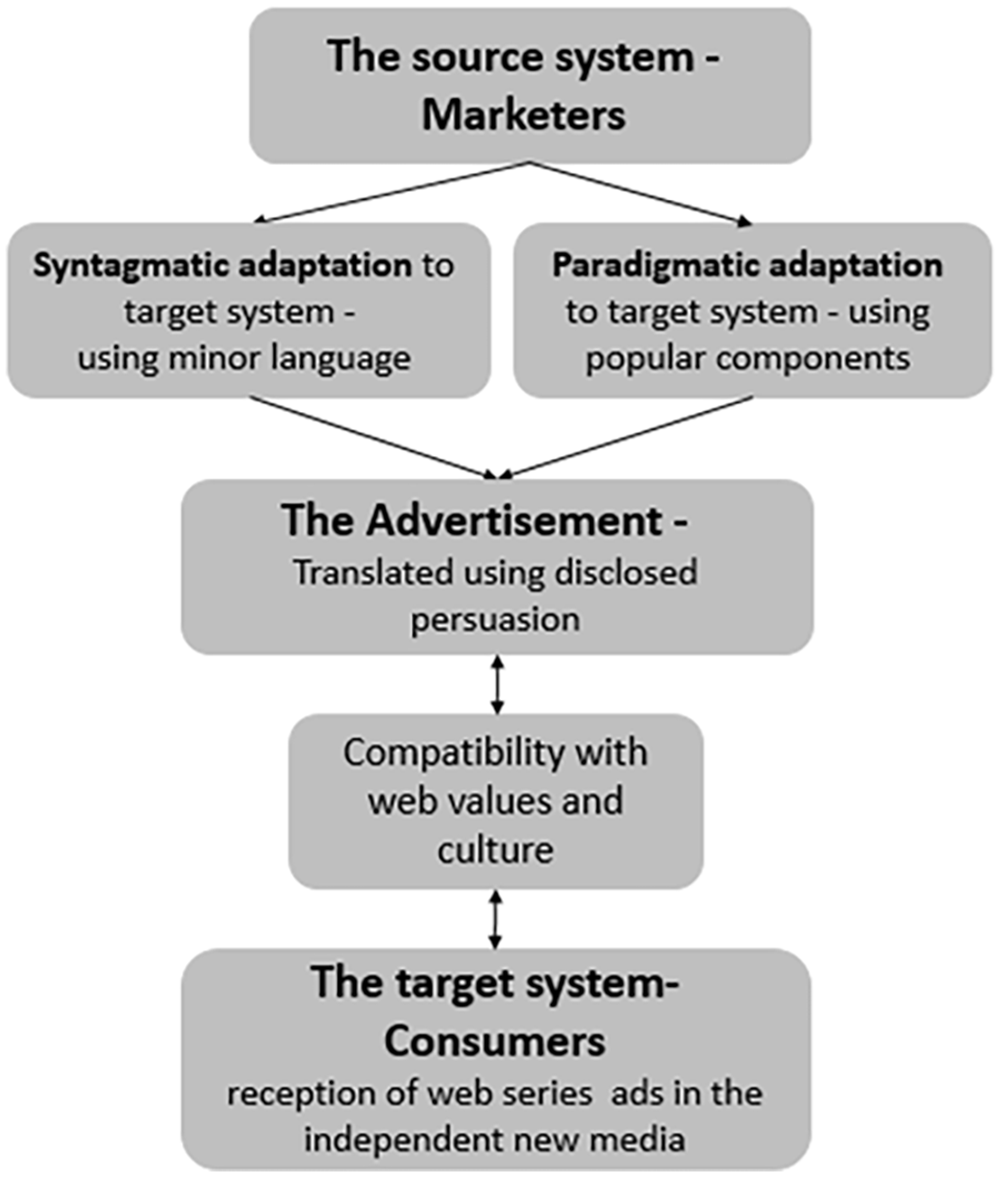
The Commercial-Independent Digital Integration Model: Advertising in Independent Web Culture.
Our findings indicate that the main structural and narrative features of web-series advertising are based on three themes: (a) antiheroes in a comic hyperrealistic world, (b) para-minor texts, and (c) integrating the mainstream.
When investigating viewer reactions to web-series ads we found that they understand that web-series are in fact paid advertising and accept the persuasive messaging positively, with the single condition that the series maintain its avant-garde structure. Moreover, marketer and commercial brand blending in the web-series content is more easily accepted by the viewers as it helps to upgrade their quality by contributing to its creativity, innovation, and production.
By examining the thematic characteristics of web-series ads and media consumer responses, we found that web-series ads try to maintain the characteristics of independent web-series by mimicking known narratives and character types, imitating the formal basic characteristics of web-series as low-budget minor texts while simultaneously appealing to mainstream audiences using conventional features. Following our results, web-series ads were positively inclined toward including a promoted brand and introducing a commercial selling proposition as the main part of its content. This finding is important because it confirms the essence of web-series as a disclosed advertising tool, illustrating that even though web-series viewers consume content that is usually considered avant-garde and alternative, they are not resistant to persuasive messages and prefer recognizable and fully disclosed branded messaging with no intention to hide behind broadcasted content.
The desire to adapt advertisements by the strategic communication system (the “source system”) to the content of the “target system,” the independent web media, can be explained by polysystem theory and the media system interactions model as a desire to produce content that will fit into the canonical repertoire of the independent web-series system. That is, by using the organic (minority) language of the web-series, such as nonsense and excesses, by combining creators known from this independent system, and by having a narrative structure and form identical to web-series, marketers seek to integrate without emphasizing their ads as innovation. In terms of narrative studies (Tomascikova, 2009), this strategy constitutes syntagmatic adaptation. That is, it is a linguistic sequence that includes plot structure and character roles that teach about what happens in the text. As such, on the part of marketers, they express flexibility.
The viewers, who are part of the “target system,” as seen in the interviews, also expressed their flexibility when they accepted the content if the conventional syntax was preserved. In other words, web-series viewers are willing to accept persuasive disclosed messaging if it relies on the web’s values and culture, and encourages pluralism and diversity. However, these media consumers also accepted the additional elements incorporated into the web-series: the characters and structures known from the mainstream. They are referred to in narrative studies (Tomascikova, 2009) as the paradigmatic dimension in the story’s structure. It is another structure of characters and stories that reveals the meaning of the text to consumers. In the current case, it is the paradigmatic adaptation that concerns the undisclosed persuasion pattern of the web-series ads. The results of this process, which is well presented in the integration model (see Figure 1), show that the reception of web-series ads among independent digital media consumers can be defined as symbiosis (Aharoni, 2022b), which expands the boundaries of the “target system” as long as it meets the basic conditions of web-series characteristics.
To this end, it is essential, according to the polysystem theory, to add the context that led to this integration. The years in which the web-series ads began to appear, from 2016, are years in which independent web-series in Israel received recognition and mainly material support from official organizations and institutions, such as the Israeli Lottery, which began in 2015 to offer grants for the production of web-series. Since 2013, Google Israel has held an official annual competition called “Made for the Web” in collaboration with the Ministry of Communications and the Television and Film Producers Association, which encouraged creators to produce a web-series pilot. Many of the pilots were produced as complete series on the network, and thus many series appeared on the net each year. In other words, the independent system was no longer amateurish or marginal but received external official attention and was open to various organizations.
We saw that the desire to create a new type of marketing tool included the use of a minor language, which expresses a political approach of challenging distinctions between hierarchy, concepts, and contrasts in favor of new molecular creation in the border space. The creation of something new (web-series ads) from the familiar and existing (the independent web-series) using its (minor) language expresses the political idea of the act of translation.
In the postcolonialism approach, translation is a metaphorical displacement of a text from one language to another so that a new text with a new material identity is created. This action constitutes intercultural communication involving questions of power relations and forms of control (Young, 2003). In the present case, the advertising (major) language is translated into a minor language (of the web-series), with the text being the advertised product. This process involves interaction between two systems with different cultures and values. On the one hand, an independent, pluralistic, amateurish, noncommercial civil culture and, on the other, a professional and hierarchical commercial-capitalist culture, which seeks to enter a cultural field that is not its own and foreign to it.
The act of translation may lead to damage to the original (independent) culture due to the hierarchy that is created when the colonial copy (web-series ad) obtains a stronger power than the native source (Young, 2003). Another harm is possible when the translation, which is also presented as an ideology that incorporates in the translated text the values of the translating culture (Moor, 2010), aims to obscure the traces of its action, presents its products as “natural,” and avoids drawing attention to itself.
However, in the present case, as seen in the interviews, the audience of the web-series ads is very aware of this act of translation—of translating advertisements into web-series and entering the world of commercial advertising into the independent field. That is why they name it advertisements in their comments but also, in some cases, point out that they do not understand what is being advertised and what type of advertisement it is.
There is also acceptance of this integration/translation—the positive reactions of the consumers, as shown in the themes when in many cases, the creators are called geniuses and called upon to continue creating such content. This shows that it is possible as long as the original text’s fundamental principles—the minor language of the web-series—are preserved. This is possible, beyond the minor appearance, also because the advertisers have often hired the services of creators from the independent field, who are already known from this culturally alternative world. This is also accompanied by the basic principles of internet culture and its architecture (Langlois, 2012) and, more specifically, the creator culture principles and its industry of social media entertainment (Cunningham & Craig, 2021), which encourages pluralism, new combinations, and innovative attempts to create different content.
Web-series advertising was previously categorized as NA in earlier research (Sinthamrong & Rompho, 2015). This is because concealed advertising practices are deliberately designed to circumvent consumers’ ability to identify, categorize, and reject persuasive messages by presenting them as something they are not. Advertisers depend on consumers associating the message with a familiar content type (e.g., social media posts, news articles, TV shows) rather than advertising (Sun & Evans, 2022; Wojdynski & Evans, 2020). Based on our results, advertisers who use web-series as social media advertising choose to deliver a planned media campaign that is fully generated by the brand firm. By purchasing the advertising space and time in the web-series they can determine their target audience and deliver messages that match their interests, needs, and behavioral characteristics, thus increasing their purchase intention. Moreover, advertising efforts using web-series are paid content with no intention of blending in with editorial content and its effect is more positive when viewers identify and value the promotional effort.
The current findings hold significant theoretical and management consequences, which further expand and enrich the understanding of the marketing and media management sectors (Chan-Olmsted & Jung, 2023). For media scholars, this research is the first to conceptualize the concept of “web-series advertising,” outlining and analyzing its characteristics and uniqueness as a new advertising media type. This study adds to the body of advertising literature by showcasing the “commercial-independent digital integration model” that analyzes the constructs of advertising messaging in the independent web culture of web-series. In addition, our findings show that advertising efforts using web-series are paid content and not NA, as suggested in earlier research.
For marketers and advertising practitioners, the findings provide a deeper understanding of the new format of web-series advertising and can help to build more effective and targeted campaigns. With the growing popularity of web-series, advertisers are recommended to create their own branded web-series content. For example, the “Milky” web-series gained an average of over 1.5 million viewers per episode (https://www.youtube.com/watch?v=08X6osFJ81M; a high number especially due to the small Israeli market size of 9 million citizens). Web-series popularity is also illustrated by the large number of episodes that are produced and broadcasted, with some series having up to 29 episodes. By developing a steady flow of web-series content, advertisers can reach their audiences continuously, refine brand messaging, and adapt quickly to social and cultural changes, thus driving brand engagement. When targeting web-series fans, advertisers can enhance brand–consumer interactions by integrating the brand as an integral part of the content. Moreover, to better affect web-series audiences that respond with great sympathy to antiheroes as main characters, advertisers can focus on an unsuccessful, unemployed character if it has comic appeal. Using a familiar endorser will further contribute to a comfortable feeling of continuity with the cultural field among web-series viewers and would encourage viewers to engage in brand discussion.
Based on the current findings, advertisers should adapt para-minor texts in web-series ads, which combine nonsense to use this digital platform better and successfully target their audiences. The current study demonstrates that viewers express acceptance of the integration of popular mainstream content; therefore, to increase brand value, advertisers should balance their messaging efforts and combine alternative creative strategies with a more classic normative approach.
Limitations and Future Study
This research has two primary constraints that could be explored in upcoming studies. First, this study presents consumer reactions to web-series ads, as derived from interviewers from one interpretive community and from comments posted on videos on YouTube. As the comments are published in digital channels run by advertisers, some comments may have been deleted. From those analyzed, it is possible to learn about one approach to these web-series ads. Therefore, future research focusing on web-series effects on brand attitudes and purchase intentions will provide a more comprehensive picture for marketers.
Second, in this study, new genres and new advertising forms were examined in Israel. As mentioned, Israel is a modern society that owns a high percentage of social media users and that encourages technological entrepreneurship. Early adoption of innovations is an advantage in locating and understanding new phenomena in the field of advertising. However, web-series ads should also be examined in relation to countries that are less advanced or have different social and cultural characteristics (e.g., less modern or traditional). Therefore, follow-up comparative studies in different countries and cultures will allow for more understanding of this phenomenon.
Supplemental Material
sj-docx-1-jmq-10.1177_10776990241287124 – Supplemental material for Web-Series Ads as a New Marketing Media: Toward a Commercial-Independent Digital Integration Model
Supplemental material, sj-docx-1-jmq-10.1177_10776990241287124 for Web-Series Ads as a New Marketing Media: Toward a Commercial-Independent Digital Integration Model by Matan Aharoni and Osnat Roth-Cohen in Journalism & Mass Communication Quarterly
Footnotes
Declaration of Conflicting Interests
The author(s) declared no potential conflicts of interest with respect to the research, authorship, and/or publication of this article.
Funding
The author(s) received no financial support for the research, authorship, and/or publication of this article.

Supplemental Material
Supplemental material for this article is available online.
Author Biographies
References
Supplementary Material
Please find the following supplemental material available below.
For Open Access articles published under a Creative Commons License, all supplemental material carries the same license as the article it is associated with.
For non-Open Access articles published, all supplemental material carries a non-exclusive license, and permission requests for re-use of supplemental material or any part of supplemental material shall be sent directly to the copyright owner as specified in the copyright notice associated with the article.
