



Abstract
In today’s hybrid media system, communication professions are connected to media convergence, and this leads to a blurring of boundaries between journalism, public relations (PR), and marketing. Our study demonstrates the blurring boundaries of the communication professions through a longitudinal automated semantic analysis of 336,629 job postings in the fields of journalism, PR, and marketing published between 2015 and 2020 in Austria and Germany. Similarities in skills demanded in job postings in journalism, PR, and marketing in Austria and Germany are greater than differences, but the three job fields are still distinguishable from each other.
The “crises in journalism” (Macnamara, 2016, p. 119) in Austria and Germany with its peak between 2000 and 2003 and the following collapse of traditional media business models forced media companies to transform and actively solicit additional forms of paid content such as advertorials and content marketing (Cleary & Cochie, 2011; Macnamara, 2016), thus blurring the boundaries between journalism, public relations (PR), and marketing (Gonser & Rußmann, 2017). Moreover, journalists were forced to seek jobs in PR and marketing to make a living (Koch & Obermaier, 2014). At the same time, the internet and social media manifestly changed working practices in the field of journalism, as well as in PR and marketing (Wenger et al., 2018). In 2008, Deuze (2017) emphasized that with the internet “[j]ournalism as it is, is coming to an end. The boundaries between journalism and other forms of public communication—ranging from public relations or advertorials to weblogs and podcasts—are vanishing” (p. 4; see also Wenger et al., 2018). These developments have uprooted the working life of communication professionals in Austria and Germany over the past 20 years.
Today, journalism, PR, and marketing are embedded within a hybrid media system (Chadwick, 2017) or hybrid communication system, blending older and newer media as well as communication logics. With the ongoing process of digitalization that constantly brings new digital tools and platforms to the market, working practices and processes are undergoing continuous change, with new ones such as those relating to the use of social media continually emerging and spawning demand for new skills. For instance, since TikTok was launched in 2016, it has grown into an important platform for communication with tools such as native video advertising at the intersection of journalism and marketing (Battisby, 2021; Newman et al., 2022). This impacts those professions as they are losing a key indicator of their professional status, which is that the field offers “a unique and essential service” (Broom, 2009, p. 120).
Thus, the purpose of this article is to enrich our understanding of the blurring boundaries between journalism, PR, and marketing by both focusing on the competencies and capabilities—the skills that are needed for working in the different communication professions (Gonser & Rußmann, 2017; Ikonen et al., 2017)—and analyzing how the required skills have changed over time. The first focus is on journalism, PR, and marketing because these three communication professions share connected education and training settings (e.g., university programs) (e.g., Commission on Public Relations Education, 2018; Ettl-Huber et al., 2017). Second, research that focuses on a single geographical area should help to better-differentiate these communication professions.
Required skills imply detailed information about the demands and hence work practices and processes of a profession. So far, the few studies analyzing the extent to which blurring boundaries are changing the skills needed in the communication professions focus on a single profession, mostly in the United States. Studies outside a U.S.-focus remain scarce, and their findings are based on rather small databases (Bakker, 2014; Bennett, 2002; McArthur et al., 2017). Thus, in this study, we investigate the blurring boundaries of the communication professions through a longitudinal, automated semantic analysis of 336,629 job postings in the fields of journalism, PR, and marketing published between 2015 and 2020 in Austria and Germany. Job advertisements, or ads, describe the skills employers expect and desire from applicants (Brunner et al., 2018), hence they provide current and comprehensive information about what the job market seeks at any given time.
Blurring Boundaries Between Communication Professions
In today’s hybrid media system (Chadwick, 2017), communication professions are connected to media convergence, and this leads to an intermingling of professions. In the 1970s, with his theory of professions Larson (1977) described how changes in (media) society help drive the development of a profession. Today, media convergence is changing established professions and their working practices, leading to altered as well as completely new forms of content that demand different and new skills. For instance, journalists as well as PR and marketing practitioners are expected to have multimedia and technical skills to work with text, audio, and video across various platforms (Bakker, 2014). Particularly, as shown by Ettl-Huber et al. (2017) in Austria, IT skills such as the technical design of media products, the configuration of content management systems, the development of apps, and the visual design of websites are becoming increasingly important. As technology advances and media consumption preferences evolve, required skill sets are continually expanding (Wenger et al., 2018).
Boundaries between work in journalism, PR, and marketing “are porous” (Baines & Kennedy, 2010, p. 97), and this often leads to shifts in the working environments of each profession. Therefore, one sees that professional identities and job statuses must often get (re)negotiated along the way (Larson, 1977; Rosén, 2014). This process influences claims of exclusive competence and specific skills as well as the quality of expertise in and required by people (Abbott, 1988; Rosén, 2014). It can also lead to role conflicts when practitioners who work in-between professions are challenged to play multiple roles simultaneously (Pandey & Kumar, 1997).
Several developments have contributed to the blurring of boundaries between the communication professions. In German-speaking countries, journalists increasingly work as PR practitioners, and media work is increasingly the focus of PR practitioners (Bentele et al., 2005; Ettl-Huber et al., 2017); the working practices in these professions are seen to influence each other more than ever. Skills required of journalists, such as writing and reading comprehension, knowledge of selection criteria, and critical thinking are just as important for PR practitioners (Koch & Obermaier, 2014). An analysis of newspaper articles and press releases by Theis-Berglmair and Kellermann (2017) showed that content written by PR practitioners appears more and more similar to journalistic content. Another example is the fast-growing professional field of custom publishing, or brand journalism, which is the production of content for organizations or companies by editing submissions in a journalistic manner (Haeusermann, 2013; Koch, 2016); examples are corporate magazines and corporate television. Custom publishers use “writing standards of conventional journalistic products including headlines, narrative orders and sequences, news leads, relations of time and space, established forms of address, and an implied reader” (Haeusermann, 2013, p. 104). Custom publishing, however, is both a PR instrument used to advocate the particular interest of a client and a journalistic publication that often aims at reporting in critical, unbiased, and objective ways (Haeusermann, 2013). Furthermore, cash-strapped media companies “produce bespoke digital publications under the editorial direction or even full control of the client organization” (Macnamara, 2016, p. 134), indicating both a convergence of journalism with PR and marketing as well as a convergence of PR and marketing (Ikonen et al., 2017). (Online) native advertising, for instance, is “paid advertising that takes the specific form and appearance of editorial content from the publisher itself” (Wojdynski & Evans, 2016, p. 157), and most readers do not understand that it is paid advertising. Hence, today, media consumers are often not able to clearly assign products to a single profession. Not being able to distinguish paid content from journalistic content means a lack of information transparency for media consumers.
These changing conditions and structures, triggered by digitalization and media convergence, influence the development of vocations and can lead to a struggle for identification when the professional standards of work shift (Larson, 1977). Traditional work and career paths appear to be dissolving. By adapting “to changing social and technological realities” (Deuze, 2017, p. 4), the general view is that journalism, PR, and marketing have come to gradually require the same as well as new skills (Gonser & Rußmann, 2017; Ikonen et al., 2017). Adjusting the demand for skills, as displayed in job ads, can be part of a process to restore balance and resolve disturbances (Abbott, 1988).
Skills in the Communication Professions
Employers play an important role in determining the nature of journalism, PR, and marketing (cf. Wenger et al., 2018). They hire practitioners to conduct daily business that will influence professions through their work practices. Job postings contain detailed, immediate, and up-to-date information about the needs and demands on the job market. As previous studies generally focus on a single profession, we will focus in the following literature review on each profession separately.
Journalism
Studies analyzing job ads in the field of journalism show that hiring practices over the past two decades have not completely changed, but some skills journalists need have changed dramatically. By analyzing 418 job ads published in the United States in 1982, 1987, 2004, and 2009, Cleary and Cochie (2011) discovered that writing, editing, and (print) design remained the top three desirable skills for journalists throughout the 27-year period. The high demand for traditional journalism skills was confirmed by studies in subsequent years (Guo & Volz, 2021; Massey, 2010; Wenger et al., 2018; Wenger & Owens, 2012, 2013), with writing as the top requirement, and editing, shooting, and reporting as the most-wanted areas of expertise. Bakker (2014), who analyzed 28 postings in the Netherlands, confirmed this finding outside the U.S. market. Traditional journalistic qualities are core requirements—among them text writing, interviewing, creativity, research, as well as an eye for news and storytelling.
However, all these studies show that mass media are increasingly looking for multimedia-proficient journalists. This change becomes most prevalent in the 27-year period analysis by Cleary and Cochie (2011). Multimedia production, video shooting, and social media skills were in high demand in 2004 and to an even greater extent in 2009. Similarly, Massey (2010) discovered that in 2007 nearly 40% of newspaper and 30% of television job ads for reporters required multiplatform skills, including producing web content and shooting news videos. Based on an analysis of jobs posted in either 2008, 2009, 2010, or 2015, Wenger et al. (2018; Wenger & Owens, 2012, 2013) found that, apart from multimedia skills, with significant demand for writing and posting on the web, the demand for social media skills and audience engagement has increased over time. For instance, while mobile skills were included only in 1.5% of the analyzed job ads in 2010, they were required in 35% of job postings 5 years later. According to Guo and Volz (2021), who examined journalistic competencies required in broadcast journalism in the United States, in 2017 multimedia skills even ranked first, before writing, news judgment, editing, and organizational skills. Their analysis of 359 job postings revealed a demand-increase in technical skills such as operating broadcast newsroom equipment and being familiar with relevant software, like Adobe Create suite, as well as digital skills including knowledge about big data, website development, social media production, and audience analytics. Bakker (2014) concluded that journalism is “becoming a technical job” (p. 603). In the Netherlands, technical skills such as editing videos, programming, and search engine optimization (SEO) are mandatory for journalists.
Also increasingly wanted from journalists are soft skills, such as working effectively on a team under pressure with tight deadlines (Cleary & Cochie, 2011; Wenger et al., 2018). Moreover, today, building a network of relationships (Bakker, 2014; Guo & Volz, 2021), which is highly important for PR practitioners, “is a skill that could be beneficial for journalists all the times” (Bakker, 2014, p. 604).
Public Relations
Studies in the field of PR echo the findings of job analyses in journalism. Auger and Cho (2016) analyzed 128 job postings for the U.S. market on the Public Relations Society of America (PRSA) website. The most requested skills were “writing (82.3 percent), advance public relations such as strategy and planning (64.1 percent), new media (55.6 percent) and social media (37.2 percent), public speaking/verbal communication (46 percent), and media relations (38.1 percent)” (Auger & Cho, 2016, p. 60). Another study analyzing 199 entry-level employment ads in PR posted in 2015 for a U.S. market also identified writing skills, project management, including strategy and planning, as well as communication/oral skills as the top qualifications desired in job seekers (Brunner et al., 2018, p. 2). In 2015, social media abilities were “only” a requirement in about half of the entry-level employment ads. Hence, similar to Auger and Cho (2016), Brunner et al. (2018) discovered that social media abilities were not among the top-required skills until 2015. A more recent study analyzing 1,000 entry-level PR job postings published in 2017 and 2018 in the United States by Meganck et al. (2020) confirmed the importance of writing skills for PR practitioners revealed by the two previous studies. The top skill demanded from young professionals was written communication, which was mentioned in about 90% of the analyzed ads. However, in this more recent study, social/digital media skills were already among the top requirements.
The results of these studies show that traditional skills like writing, communication, and strategic thinking and planning remain very important for PR practitioners, although they emphasize an increasing relevance of skills in digital and social media. In addition, soft skills like organizational skills, leadership abilities, collaboration, and the ability to work in teams were found to be highly important (Brunner et al., 2018; Meganck et al., 2020).
Marketing
Content analyses of job advertisements in marketing are rather scarce. Bennett (2002) analyzed 1,000 job postings in four different occupations: marketing, general management, finance, and human resources. “Advertisements for marketing and general management jobs were significantly more likely to demand initiative, motivation, and communication skills” (Bennett, 2002, p. 470). In addition, marketing job ads were more prone to require IT and presentation skills. Pefanis Schlee and Harich (2010) analyzed 500 marketing job ads posted in 2009 in five major U.S. cities, finding that following oral and written communication skills as well as the ability to work on teams, marketing employees are expected to have technical skills. Similar to journalism, technical skills required of marketing practitioners include the ability to analyze information in databases and on the internet, as well as knowledge about industry-specific types of software and analytics. However, technical skills were a requirement for marketing jobs before they were demanded from job seekers in the fields of journalism and PR.
In a more recent study, McArthur et al. (2017) focused on 350 marketing job postings downloaded in 2016 from the dominant job-finding website in Australia. They confirmed the high demand for communication skills, particularly writing and verbal proficiency, as well as motivation for marketing jobs. Personal traits were among the most desired attributes, including motivation, time management, and attention to detail. Occupational-related skills ranked after personal attributes demanded by employers; among them were also communication skills, IT skills, and a high level of computer literacy. Compared with previous studies (Bennett, 2002; Pefanis Schlee & Harich, 2010), McArthur et al. (2017) emphasized the growing importance of digital marketing skills, particularly in social media, including content creation, curation, platform design and maintenance, research, and management.
Following both our theoretical discussion on the blurring boundaries between journalism, PR, and marketing, as well as our review of empirical studies focusing on the skill sets required in these communication professions, next we will go beyond previous research in the field by empirically analyzing the blurring boundaries in communication professions. We take a longitudinal perspective and identify the most common skills sought in the three professions with a focus on two European countries, Austria and Germany. As described above, previous studies already found first signs of blurring boundaries between these three fields. We thus first hypothesize:
As discussed above, today, journalists as well as PR and marketing practitioners are expected to have similar and partly the same multimedia and technical skills to work with text, audio, and video across platforms (Bakker, 2014; Ettl-Huber et al., 2017; Gonser & Rußmann, 2017; Ikonen et al., 2017; Koch & Obermaier, 2014; Theis-Berglmair & Kellermann, 2017) because of new practices and products such as custom publishing (Haeusermann, 2013; Koch, 2016), sponsored content, and native advertising (Wojdynski & Evans, 2016), which force intersections between journalism, PR and marketing.
Even though the process of digitalization has influenced the communication professions for the past 20 years, we expect that digital skills will have become even more important for all communication professionals over the analyzed 5-year timespan—fostering the blurring of boundaries over time. With constantly new digital tools and platforms such as Instagram and TikTok and their practices, such as native video advertising, which are at the intersection of journalism, PR, and marketing (Battisby, 2021; Newman et al., 2022), we predict an ongoing process of digitalization within the communication professions with our second hypothesis:
Data and Method
Data
The research is built on a data set that includes 336,629 job postings from Austria and Germany published between 2015 and 2020. About 10% (32,813) of the job postings in our sample were posted in Austria, whereas about 90% (303,816) of the job postings came from the much-larger job market in Germany. With 83,121,363 inhabitants (Statistisches Bundesamt, 2022), Germany’s population is about 10 times bigger than Austria’s population of 8,916,845 inhabitants (Statistik Austria, 2021), thus reflecting realistic proportions in our sample.
Again, job ads describe the skills employers expect and desire from applicants (Brunner et al., 2018). Labor market researchers in Austria and Germany use job ads to obtain an up-to-date and detailed picture of prevailing labor markets (Plaimauer, 2016). Since job advertisements target potential applicants, it is unnecessary to provide extensive details about skills in assumed expertise. Instead, the focus is on highlighting activities that (as of the time of posting the job advertisement) lack a well-defined occupational profile. By understanding the changes in market demands, we can determine the degree to which digitalization has eroded the distinctions between communication professions in recent years. It can provide insight into how the communication professions are changing—both their identities and professional statuses (e.g., Larson, 1977)—and it might suggest necessary changes in educational requirements.
Austria and Germany are very similar both in terms of required education and industry characteristics in the three fields under study (Fröhlich et al., 2015; Hanitzsch et al., 2019); they also share similar digital technological developments and internet use patterns (Statistisches Bundesamt, 2022). For instance, in the field of digital marketing, the main associations in Germany (BVDW) and Austria (IAB Austria; also, in Switzerland [IAB Switzerland]) have a joint training program to create common standards and more market transparency in German-speaking countries (BVDW, 2022).
The job postings, as well as the extraction of skills for this study, were provided by Textkernel, a company collecting all job postings via the big data platform Jobfeed (Textkernel, 2022). Jobfeed collects job ads from corporate career sites, job boards, social media platforms, and other websites and presents them in a consistent format. Multiple companies in Austria and Germany, as well as the Austrian public employment service (Plaimauer, 2016) use this service. Our data set covers job postings from three separate years: 2015 (the first year for which Textkernel collected job postings for Austria), 2017, and September 2019 to September 2020. The full text is available for each job posting as well as metadata on where and when the job posting was published and which sector the job posting is a part of. Moreover, the following data were partly abstracted from the full text: required professional and social skills, education, profession, organization, location, and proposed salary. To distinguish the three broader fields of PR, journalism, and marketing, we took the sector description provided by Textkernel and aggregated them to the fields under study. We discussed this aggregation with two experts who have been working in these fields and higher education for multiple years, to make sure that the sectors reflect the situation in both countries adequately.
Method and Measurements
Textkernel conducted an automated text analysis for our 336,629 job postings, to extract hard and soft skills from full-text job postings. Automated text analysis presents challenges and limitations, particularly in terms of transparency and replicability. These limitations arise among others due to the need for coding skills and the proprietary nature of many off-the-shelf solutions. Nonetheless, this methodology offers the ability to handle vast amounts of data, constrained only by the availability of adequate computing power. Another advantage is the scalability of analyses, enabling the incorporation of new data at almost any stage of the research process. In our specific analysis, Textkernel has developed an algorithm to extract skills from the complete text of job postings, in four steps, as displayed in Figure 1.
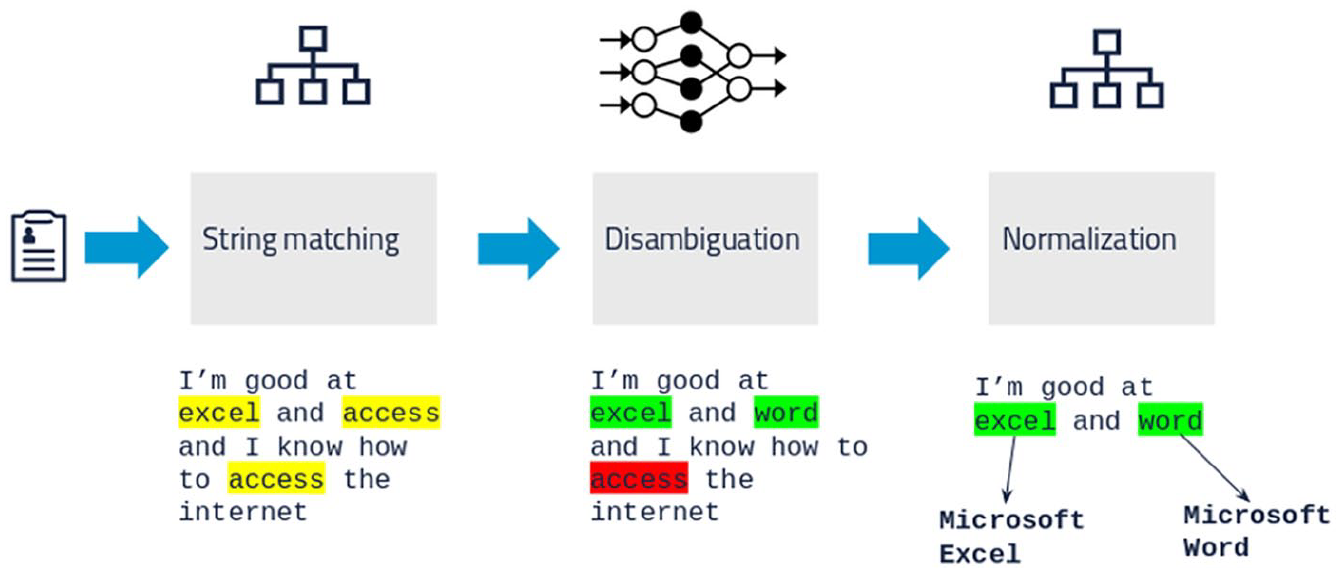
Textkernel skill extraction (figure provided by Textkernel).
The process consists of several steps. Initially, each job posting is divided into sections, such as job details, company information, and candidate description. In the next step, known as string matching, the skills taxonomy (in the same language as the job ad) is compared with relevant sections (job and candidate description) to identify potential skills using synonyms. To handle words with multiple meanings, such as “access” or “react,” a machine-learning model is employed in the subsequent step, called disambiguation, to determine the contextual factors. In the final step, known as normalization, the extracted terms are mapped to skill concepts based on the skill taxonomy.
The skills taxonomy functions like a comprehensive dictionary encompassing all identifiable skills across the languages used by Textkernel. It is developed through a combination of automated and manual processes. Initially, a taxonomy is constructed using various sources like parsed CVs, job listings, search logs, and public taxonomies. Subsequently, Textkernel employs natural language processing techniques to identify synonyms and enhance the taxonomy automatically. However, before releasing it, the data is manually curated to ensure high quality. While the specific algorithm is not publicly available, Textkernel offers explanations and manual validation of their work (see Textkernel, 2022).
The data provided by Textkernel included 89 unique soft skills and 4,006 unique hard skills referenced in communication profession ads. Hence, like Bakker (2014), who aggregated 64 skills into 30 categories; Brunner et al. (2018) classified 75 skills into five categories; Guo and Volz (2021) classified 32 skills in nine metaclasses; Meganck et al. (2020) classified 75 skills into 21 metaclasses; and Pefanis Schlee and Harich (2010) aggregated 35 skills in three categories, we had to reduce our initial extensive list and instead define a more concise set of soft and hard skills.
Devedzic et al. (2018) defined hard skills as those skills that describe a person’s ability to perform domain-specific tasks or activities, such as computer programming; technical skills fall into this category (Laker & Powell, 2011; Wikle & Fagin, 2015). Soft skills include both intrapersonal skills, such as one’s ability to manage oneself, and interpersonal skills, which include how one handles one’s interactions with others (Devedzic et al., 2018; Laker & Powell, 2011; Wikle & Fagin, 2015). Typical soft skills include the ability to collaborate and work on teams, as well as think critically and solve problems. Hard skills are cognitive, whereas soft skills are more related to emotional and social intelligence. According to Devedzic et al. (2018), hard skills are easier to teach and easier to assess than generic soft skills, because hard skills can be acquired through education, training, and/or experience (Laker & Powell, 2011; Wikle & Fagin, 2015). Wikle and Fagin (2015) emphasized, however, that soft skills are important as these help employees adjust to changing workplace environments and new demands (see also Broscow & Kleiner, 1991). Based on the definitions and previous studies mentioned above, we categorized our findings into 25 hard skills and 11 soft skills. Previous studies did not provide detailed instructions or explanations on their skill classification categories, therefore, we also relied on practical knowledge. Our objective was to develop a classification system that aligns with existing literature while being practical to use. To ensure a professional perspective, we engaged in discussions with communication practitioners regarding our soft and hard skill categories. For a comprehensive overview see Table A1 in the Appendix. A complete list of the 4,006 unique hard skills/values and 89 soft skills/values, along with information on the aggregation process, can be obtained upon request. This procedure is analogous to the classification development for an in-depth analysis of PR skills by Bernhard and Russmann (2023). For hard skills, we included categories for each profession that are conceived as field-specific skills, and we named them accordingly. Other hard skills are more general skills that are important (to different degrees) in various professions and sectors. Hence, each category has sub-skills that have different names in different sectors, but these were aggregated based on discussions with experts. Skills are distinguished based on their terminology; thus, it might be the case that skills with the same name express different concepts in different fields. As this study compares three fields that are similar based on their products and/or their education, we assessed this to be a small risk.
The 25 hard skill categories were termed: traditional marketing; digital marketing; sales; traditional PR; traditional journalism; digital journalism; digital media; content generation; visual skills; audio-visual skills; professional communication skills; internal communication; B2C; B2B; project-based working; financial skills; law; managerial skills; research skills; language; IT; programming skills; numeracy; products; and strategy and tactics. The 11 soft skill categories were termed: social skills; methodological skills; general communication soft skills; presentation skills; work ethics; creativity; teamwork; work methods; analytical skills; innovative thinking; and working with clients.
Statistical Analysis
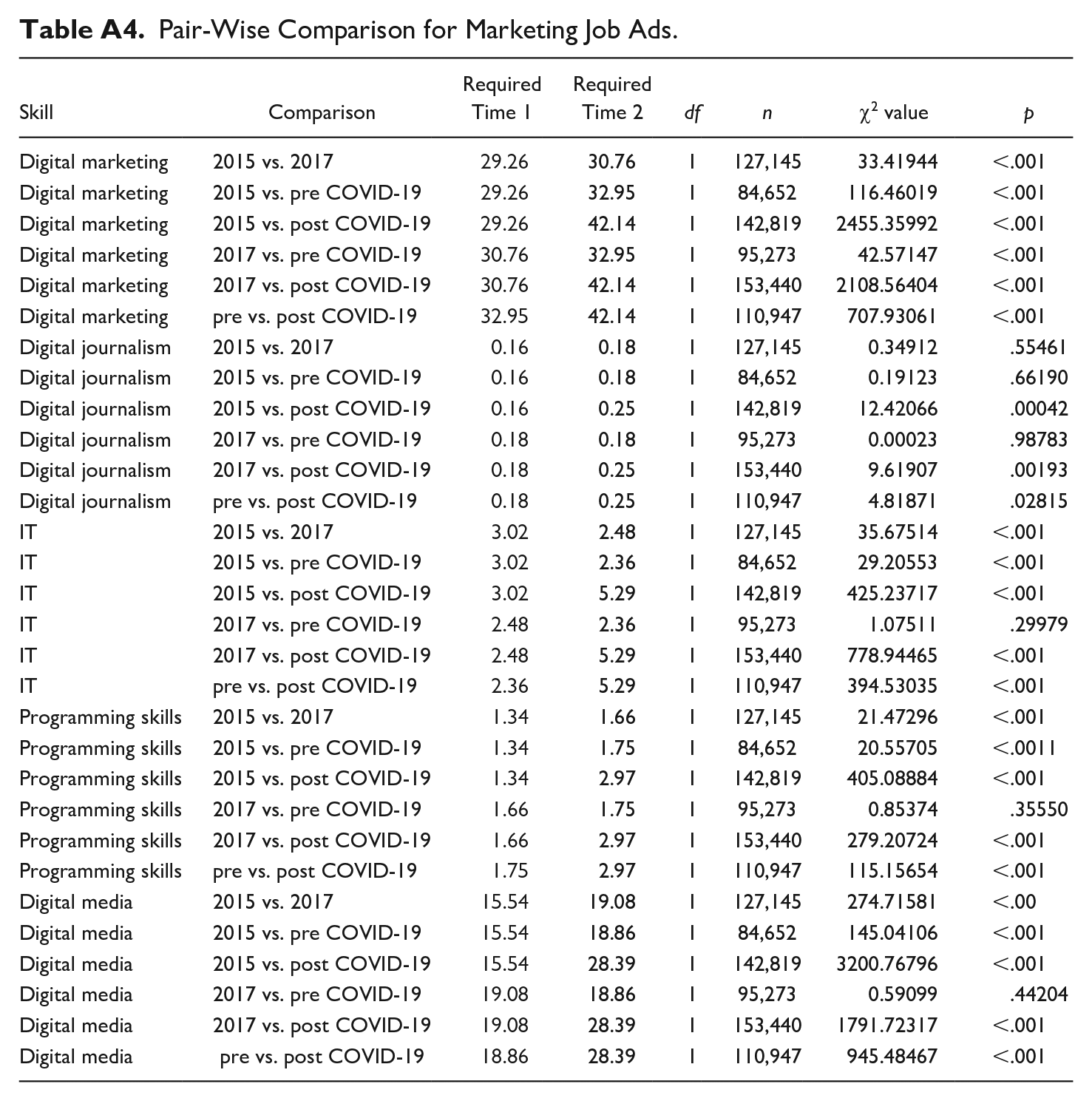
Descriptive analyses were conducted for all variables. Then, for the overall data set and for each profession, we conducted multiple pair-wise comparisons using chi-square tests between years—2015 versus 2017; 2015 versus September 2019 to March 2020 (pre-COVID-19 phase); 2015 versus March/April 2020 to September 2020 (post-COVID-19 phase); 2017 versus pre-COVID-19 phase; 2017 versus post-COVID-19 phase; pre- versus post-COVID-19 phase, while controlling for between-country differences (see Tables A1–A3.)
Results: Blurred Boundaries in the Communication Professions in Austria and Germany
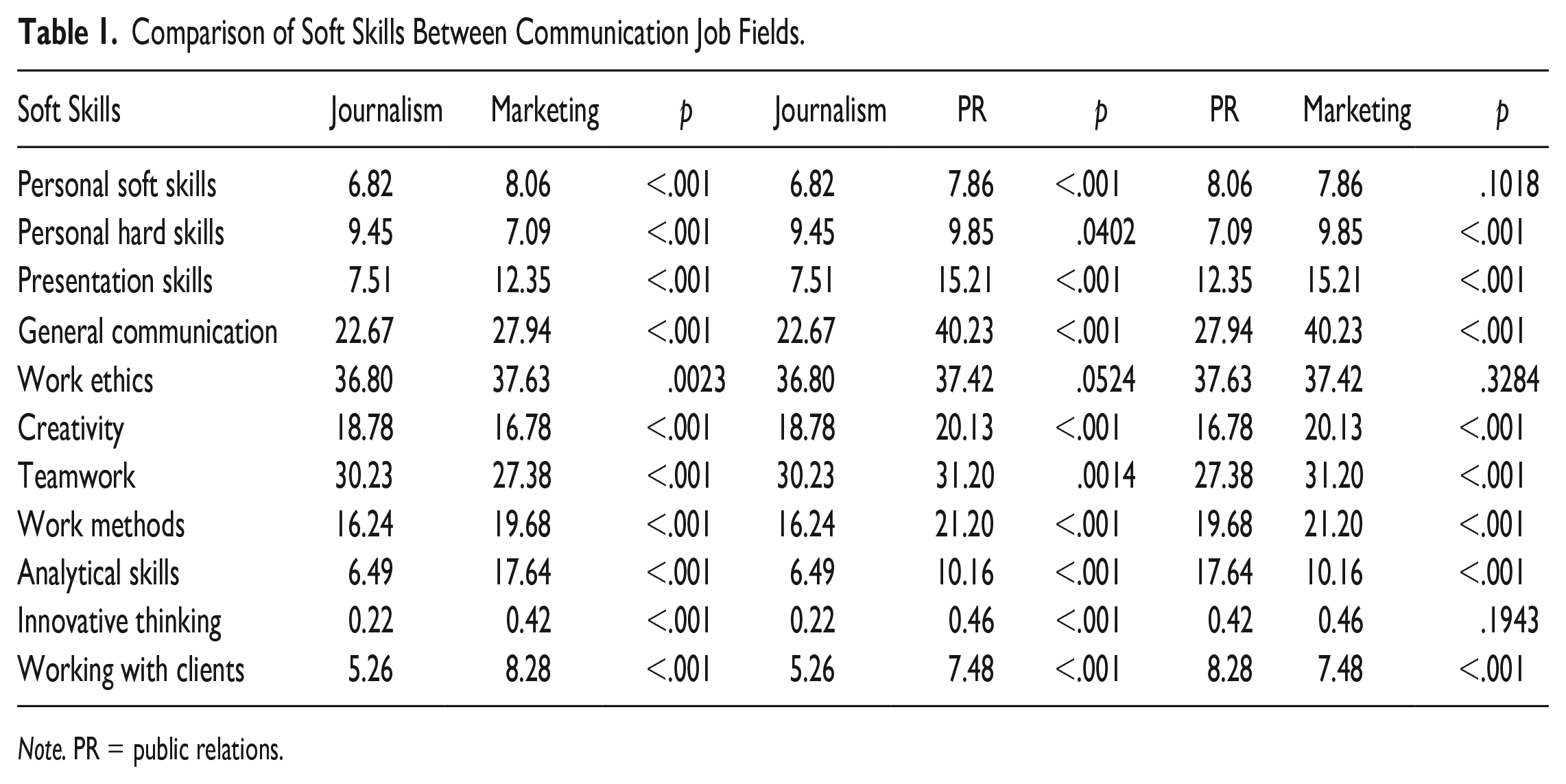
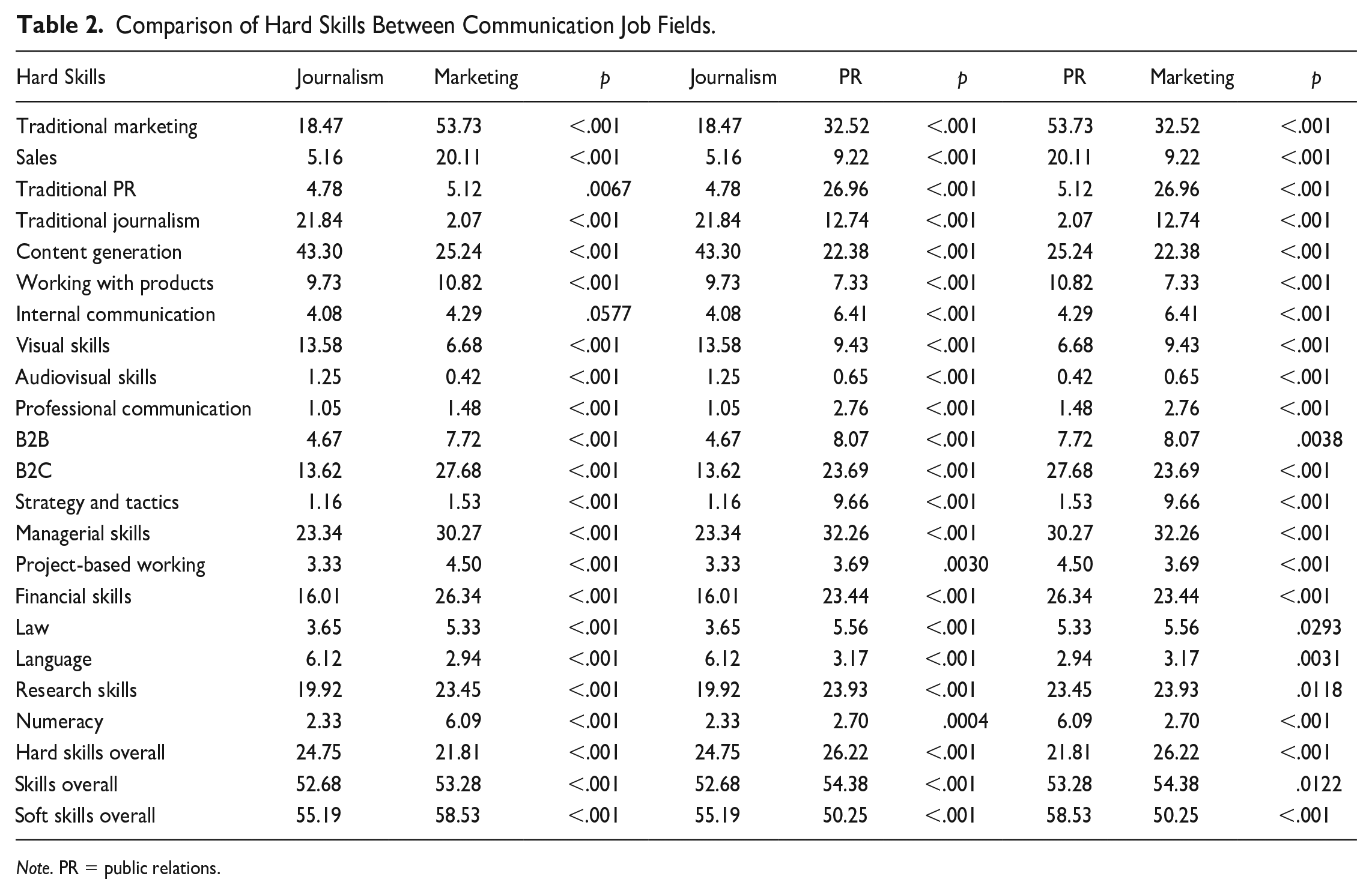
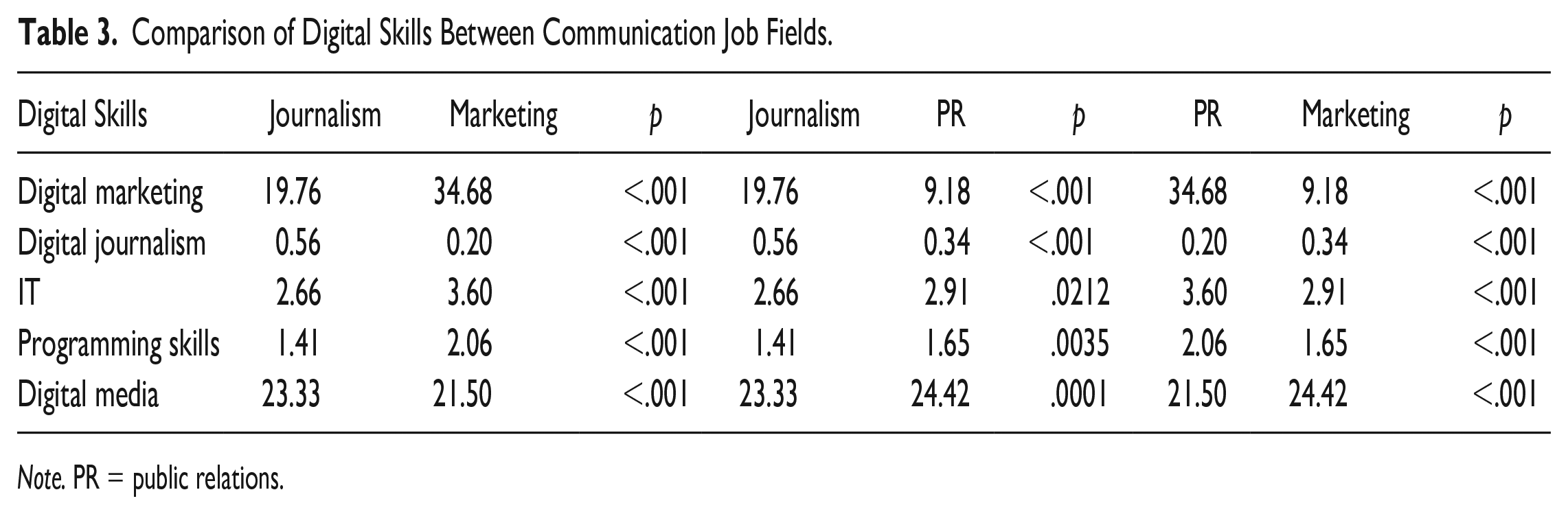
Our findings for the first hypothesis are summarized in Table 1 that presents the data on soft skills, Table 2 presents the data on hard skills, and Table 3 presents the data on digital skills.
Comparison of Soft Skills Between Communication Job Fields.
Note. PR = public relations.
Comparison of Hard Skills Between Communication Job Fields.
Note. PR = public relations.
Comparison of Digital Skills Between Communication Job Fields.
Note. PR = public relations.
Similarities and Differences in Soft Skills Demanded in Job Postings
Since we analyzed 336,629 job postings, we needed to be careful not to over-interpret significances. Statistically speaking, there are significant differences in our data, but they are very small. Considering a 5% threshold, the three job fields are still distinguishable from each other, but the similarities are bigger than the differences. Concerning a data set of such a magnitude, we argue that 5 percentage points are a reasonable assumption when compensating for coding errors and statistical magnitudes.
Table 1 shows the average amount of job postings requiring different soft skills (in percentage) for the three communication job fields. Almost all soft skills demanded in job postings in journalism, PR, and marketing posted in Austria and Germany between 2015 and 2020 differ significantly, with the exceptions of work ethics showing only a significant difference between journalism and marketing, as well as personal soft skills and innovative thinking, which do not differ between PR and marketing. The analysis demonstrates the greatest difference between job fields for general communication skills and analytical skills. While general communication skills are demanded in 40.23% of PR job ads, they were mentioned less frequently in marketing job ads (27.94%) and journalism job ads (22.67%) than in PR ads. However, the demand for analytical skills is much greater in marketing job ads (17.64%) than in PR (10.16%) and journalistic job ads (6.49%) in our sample.
Differences for the 11 soft skills are rather marginal. Comparing journalism and marketing, 55% of the soft skills in job ads are within 3 percentage points and 82% within 5 percentage points. Besides analytical skills, presentation skills are much more in demand in marketing than in journalism. Differences between journalism and PR and between PR and marketing are even smaller, as 64% of soft skills are within the 3% threshold and 82% are within 5 percentage points, again.
Similarities and Differences in Hard Skills Demanded in Job Postings
Our findings for hard skills are similar to those found for soft skills, as shown in Table 2. There are significant differences between the three job fields, with only one pair-wise comparison being nonsignificant at the 5% level (i.e., internal communication skills in journalism and marketing). However, the averages of job postings requiring a specific skill are very close. When comparing journalism to marketing or PR job ads, 65% of all skills are on average not further apart from each other than 5 percentage points. PR and marketing are even closer, with 74% of hard skills being in the same 5%, and 57% of hard skills are even within the same 3% threshold. Also, while the requirement for many skills is shared between the job fields, some show bigger differences. These are primarily traditional skill sets needed for the specific job field, such as traditional PR (e.g., presswork, PR campaigning, event planning), traditional journalism, traditional marketing (e.g., building brands and telemarketing), and sales skills (e.g., sales management or consultative selling). Moreover, content generation is a hard skill demanded in 43.3% of all analyzed journalistic job ads between 2015 and 2020, while the more strategic communication fields of marketing and PR require this skill in only 25.24% and 22.38% of their job ads. The data also display great differences in skills relating to business-to-consumer relations, which are only required in 13.62% of journalistic job ads, but in 23.69% of PR job ads and in 27.68% of marketing job ads.
Furthermore, as shown in Table 3, we compared the demand for digital skills in communication job ads. The results are similar to those found for soft and hard skills, showing significant differences between the job fields but with very close averages. Indeed, four of the five analyzed digital skills, namely, digital journalism, IT, programming skills, and digital media, are within 1 percentage point of each other, with the exception of digital marketing skills.
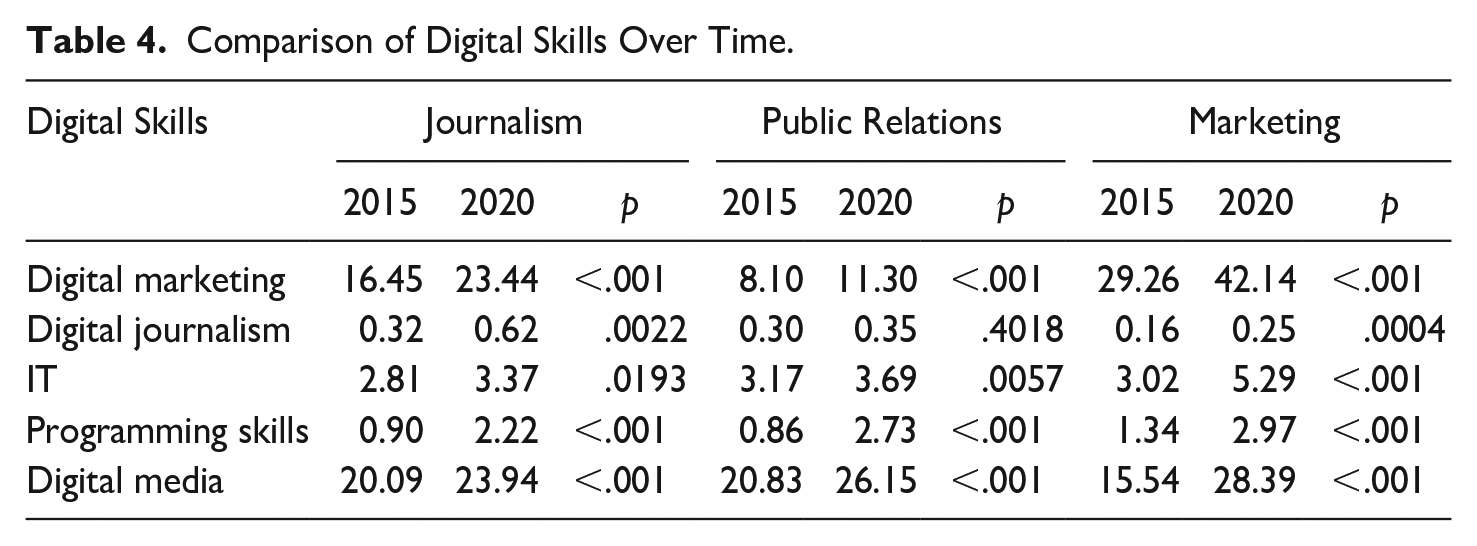
Changes Over Time: Digital Skills
To test
Comparison of Digital Skills Over Time.
Discussion and Conclusion
Over the past two decades, the blurring of boundaries between journalism, PR, and marketing has been discussed within and between the professions (e.g., Gonser & Rußmann, 2017; Wenger et al., 2018) because this development—constantly reinforced by digitalization processes—impacts the professions and their professional statuses. Even though differences are small (within 5%), our study demonstrates that similarities in skills demanded in job postings in journalism, PR, and marketing in Austria and Germany are greater than differences, and over time the blurring of boundaries is particularly fostered by digitalization.
Just as shown by studies on the United States, in Austria, and Germany, writing skills are the most demanded from employees in the fields of journalism, PR, and marketing (Auger & Cho, 2016; Brunner et al., 2018; Cleary & Cochie, 2011; Guo & Volz, 2021; Massey, 2010; McArthur et al., 2017; Meganck et al., 2020; Wenger et al., 2018). However, our study showed that organizations and institutions are increasingly looking for digital-proficient employees. Previous findings for the United States (granted, which are based on rather limited data sets), have already shown that digital media skills such as multimedia skills, video shooting, and social media skills (e.g., Auger & Cho, 2016; Bennett, 2002; Cleary & Cochie, 2011; Guo & Volz, 2021; Massey, 2010; McArthur et al., 2017; Wenger et al., 2018) are increasingly in demand; our longitudinal analysis found that this demand has grown especially quickly in recent years. One effect of this is, as supported by our data, that the boundaries are becoming increasingly blurred—implying an increasingly difficult search for employees as employers demand the same skills in all three professions. The skills with the greatest demand-increase are digital media and digital marketing skills, which were required in 11% (in PR) to 42% (in marketing) of the job postings. There was also an increasing demand—even though still on a low level—for very specific skills, such as programming skills, which almost doubled in demand between 2015 and 2020 in each profession. The field of marketing had the highest demand for employees with digital skills, followed by journalism and PR.
The blurring of boundaries between the professions means greater (inter)relations between journalism, PR, and marketing. On one hand, this may assist when reacting to new developments through, ideally, the sharing of knowledge (about skills) for new digital tools and technologies used in the professions, thereby the professions might better-react to “disturbances” (Abbott, 1988, p. 115) and more quickly readjust to changing structures and conditions. On the other hand, particularly when considering the increasing specialization in industries, it may foster struggle for the best employees.
The findings of this study also show that the blurring of boundaries has to be considered in the types of training and education in the communication professions. Knowing about industry demands provides educators with the information to teach students the skills they need in practice. Moreover, from a practical perspective, our findings are of great use for the development and alignment of university curricula and advanced training to better prepare students for professional life. This is about adjusting and matching demand and supply processes. Some universities and advanced training programs have already taken on this challenge, including the above-mentioned joint training program for digital marketing by major associations in Germany, Austria, and Switzerland, as well as the bachelor’s program Journalism & corporate communication at the University of Applied Sciences Wiener Neustadt in Austria, which was introduced in September 2021. It aims to both teach students to communicate clearly and professionally for companies and help students acquire skills to portray credibility in times where so-called “fake news” is prevalent. This last example, however, shows just how far the boundaries have blurred. The cited new bachelor’s program covers new practices and products, such as custom publishing, sponsored content, and native advertising.
Also, it is becoming increasingly difficult for the professions to “stand out” by offering unique and essential services, which is (or used to be) a core characteristic of individual professions (Broom, 2009). Particularly, the intersection of journalism with PR and marketing influences editorial independence—the main characteristic of journalistic professionalism (Meier, 2018)—a key prerequisite for effective journalism. If journalism loses its independence from other industries, it compromises its journalistic distance and, arguably, its social responsibilities. Meanwhile, the status and identity of PR and marketing as professions are probably less affected by the blurring of boundaries. With the growing importance of custom publishing, sponsored content, native advertising, etcetera, both professions rather influence journalism and benefit from journalistic credibility by having their messages broadcast via and through the media. Journalistic practices rather positively influence the quality of PR and marketing content.
Another implication of the decrease in exclusive skills (Abbott, 1988; Rosén, 2014) is that practitioners are increasingly working in-between professions, and this may trigger role conflicts (Pandey & Kumar, 1997). Today, many practitioners work in journalism and PR or journalism and advertising or PR and advertisement at the same time. In such situations, they may be required to play two or more roles simultaneously, which can foster role-perception conflicts (e.g., self vs. boss classifications) and/or a further blurring of role conceptions (cf. Pandey & Kumar, 1997). Once distinct vocations can thereby lose their traditional, professional identity and status (Larson, 1977; Rosén, 2014). Future researchers could investigate the implications of our findings, such as by interviewing practitioners on their daily work and role perceptions.
Nevertheless, our study shows that the three analyzed job fields are still distinguishable from one another, although we have primarily addressed the traditional skill sets of each profession that are generally important, such as presswork and event-planning in PR, or building brands, telemarketing, and sales management in marketing. Such skill sets have been confirmed by previous studies for the U.S. market, and they reflect a unique characteristic of each of the different communication professions.
This study has limitations. We only included two countries in our research. Future research could assess other or more countries concurrently: Ideally, research on countries with different cultures and contexts (e.g., different markets) would enable investigators to say more about the impacts of digitalization on the blurring of boundaries between professions. Therefore, we highlight the need for a general skills classification for research purposes. Only with a standardized methodological approach can comparative research provide general implications for the communication professions and their development. In addition, integrating findings from qualitative interviews with employers would shed light on the extent that other skills are relevant in more-personal recruitment processes such as internal recruitment, personal mediation, and recruitment (i.e., headhunting). Interviews with employers could help to answer the why question—why employers desire particular skills. Our approach of analyzing job postings was fruitful to describe and show how skills are changing over time and how the assimilation of key skills between the professions has suggested a blurring of boundaries. However, this methodological approach could not address the why question—why these changes are occurring. Additional research might uncover the causes. Furthermore, it seems important to continue to observe the blurring of boundaries between journalism, PR, and marketing in the long term because with the advancing digitalization of communication, the question arises as to whether—or even when—the boundaries between these key communication professions will disappear forever.
Footnotes
Appendix
Pair-Wise Comparison for Marketing Job Ads.
| Skill | Comparison | Required Time 1 | Required Time 2 | df | n | χ2 value | p-value |
|---|---|---|---|---|---|---|---|
| Digital marketing | 2015 vs. 2017 | 29.26 | 30.76 | 1 | 127,145 | 33.41944 | <.001 |
| Digital marketing | 2015 vs. pre COVID-19 | 29.26 | 32.95 | 1 | 84,652 | 116.46019 | <.001 |
| Digital marketing | 2015 vs. post COVID-19 | 29.26 | 42.14 | 1 | 142,819 | 2455.35992 | <.001 |
| Digital marketing | 2017 vs. pre COVID-19 | 30.76 | 32.95 | 1 | 95,273 | 42.57147 | <.001 |
| Digital marketing | 2017 vs. post COVID-19 | 30.76 | 42.14 | 1 | 153,440 | 2108.56404 | <.001 |
| Digital marketing | pre vs. post COVID-19 | 32.95 | 42.14 | 1 | 110,947 | 707.93061 | <.001 |
| Digital journalism | 2015 vs. 2017 | 0.16 | 0.18 | 1 | 127,145 | 0.34912 | .55461 |
| Digital journalism | 2015 vs. pre COVID-19 | 0.16 | 0.18 | 1 | 84,652 | 0.19123 | .66190 |
| Digital journalism | 2015 vs. post COVID-19 | 0.16 | 0.25 | 1 | 142,819 | 12.42066 | .00042 |
| Digital journalism | 2017 vs. pre COVID-19 | 0.18 | 0.18 | 1 | 95,273 | 0.00023 | .98783 |
| Digital journalism | 2017 vs. post COVID-19 | 0.18 | 0.25 | 1 | 153,440 | 9.61907 | .00193 |
| Digital journalism | pre vs. post COVID-19 | 0.18 | 0.25 | 1 | 110,947 | 4.81871 | .02815 |
| IT | 2015 vs. 2017 | 3.02 | 2.48 | 1 | 127,145 | 35.67514 | <.001 |
| IT | 2015 vs. pre COVID-19 | 3.02 | 2.36 | 1 | 84,652 | 29.20553 | <.001 |
| IT | 2015 vs. post COVID-19 | 3.02 | 5.29 | 1 | 142,819 | 425.23717 | <.001 |
| IT | 2017 vs. pre COVID-19 | 2.48 | 2.36 | 1 | 95,273 | 1.07511 | .29979 |
| IT | 2017 vs. post COVID-19 | 2.48 | 5.29 | 1 | 153,440 | 778.94465 | <.001 |
| IT | pre vs. post COVID-19 | 2.36 | 5.29 | 1 | 110,947 | 394.53035 | <.001 |
| Programming skills | 2015 vs. 2017 | 1.34 | 1.66 | 1 | 127,145 | 21.47296 | <.001 |
| Programming skills | 2015 vs. pre COVID-19 | 1.34 | 1.75 | 1 | 84,652 | 20.55705 | <.0011 |
| Programming skills | 2015 vs. post COVID-19 | 1.34 | 2.97 | 1 | 142,819 | 405.08884 | <.001 |
| Programming skills | 2017 vs. pre COVID-19 | 1.66 | 1.75 | 1 | 95,273 | 0.85374 | .35550 |
| Programming skills | 2017 vs. post COVID-19 | 1.66 | 2.97 | 1 | 153,440 | 279.20724 | <.001 |
| Programming skills | pre vs. post COVID-19 | 1.75 | 2.97 | 1 | 110,947 | 115.15654 | <.001 |
| Digital media | 2015 vs. 2017 | 15.54 | 19.08 | 1 | 127,145 | 274.71581 | <.00 |
| Digital media | 2015 vs. pre COVID-19 | 15.54 | 18.86 | 1 | 84,652 | 145.04106 | <.001 |
| Digital media | 2015 vs. post COVID-19 | 15.54 | 28.39 | 1 | 142,819 | 3200.76796 | <.001 |
| Digital media | 2017 vs. pre COVID-19 | 19.08 | 18.86 | 1 | 95,273 | 0.59099 | .44204 |
| Digital media | 2017 vs. post COVID-19 | 19.08 | 28.39 | 1 | 153,440 | 1791.72317 | <.001 |
| Digital media | pre vs. post COVID-19 | 18.86 | 28.39 | 1 | 110,947 | 945.48467 | <.001 |
Declaration of Conflicting Interests
The author(s) declared no potential conflicts of interest with respect to the research, authorship, and/or publication of this article.
Funding
The author(s) disclosed receipt of the following financial support for the research, authorship, and/or publication of this article: This research was partly carried out under the auspices of the City of Vienna Competence Team for the Digitalization of Communication at the FHWien der WKW University of Applied Sciences for Management and Communication, which was funded by MA23-City of Vienna (24/09). The data were provided by and with the support of Textkernel B.V.
