




Abstract
This study examines whether mass communication students share common media experiences, given the increasing fragmentation of media consumption. A survey of 234 students across five universities assessed preferences in television, film, books, music, and video games. Findings reveal limited shared media experiences, with video games offering the most commonality. The results underscore the need for mass communication instructors to adapt pedagogy to evolving media habits.
Students enrolling in introductory mass communication classes bring diverse media consumption habits to the course. Instructors can no longer rely on shared cultural experiences—top-rated television shows like Game of Thrones, The Walking Dead, Friends, or Seinfeld, or musicians sufficiently popular to sell millions of CDs or downloads—to illustrate course concepts. Recognizing the challenge of identifying consistent examples of media consumption among students, the researchers sought to explore how media usage has evolved in recent years.
The history of media consumption is replete with iconic examples of texts reaching millions of viewers: Super Bowl commercials, the final episodes of MASH, Cheers, and Seinfeld (Lynch, 2017), the Harry Potter and Hunger Games book series, and the Star Wars films. In the past, musicians (e.g., Phish, Michael Jackson, Prince, U2, Dave Matthews Band, Madonna) filled the music libraries of college students, and television shows (e.g., Beverly Hills 90210, Gilmore Girls, Boy Meets World, Buffy the Vampire Slayer) enjoyed widespread popularity, especially among a younger demographic.
In contemporary practice, the “long tail” of media consumption provides consumers with a wider range of options, allowing even niche interests to be satisfied (Anderson, 2006). The algorithmically controlled presentation of streaming services—across film, television, and audio content—requires users to navigate myriad options to locate individually tailored media texts. As a result, these individualized choices diminish shared experiences, compelling instructors to adjust pedagogical strategies, particularly when prior methods relied on citing widely recognized films, television shows, musicians, and so on.
Consider the numerous examples that faculty give when teaching different topics in the introductory class: explanations of media conglomeration or transmedia can benefit from a focus on specific shared media. Similarly, issues of representation can be best addressed by referring to television shows that are widely viewed, or an explanation of fandom can be best introduced by citing a television show that specifically has many fans in the class.
A lack of common cultural experiences may lead to such examples being less effective for students. Of course, class time can be used to explain the relevance of various media texts, but the connections may be less emotionally resonant. The purpose of this article is to try to determine whether this lack of common experiences is significant and if so, to suggest possible pedagogical paths.
Literature Review
Trends in Media Consumption
A fundamental question is whether media consumption creates community or disrupts it. Robert Putnam’s (2000) Bowling Alone argues that the advent of television and the suburbanization of large portions of our society cause individuals to disengage from community experiences. However, the cyberutopian view that online sharing and conversation creates valuable communities was a common viewpoint even prior to the establishment of the web (Jenkins, 2006; Rheingold, 1993; Wellman, 2001). In particular, boyd (2014) argues for the role of social media-based communities in support of teens’ community building, especially for marginalized groups.
Raymond Williams’s (1974) concept of “flow” in television viewing underscores its potential to have a pervasive influence over viewers because of its inherent structure as a time-based medium, along with the immersiveness of television viewing. Specifically, this creation of cultural artifacts has significant implications for how the television medium can create shared experiences and subsequently influence behaviors.
However, the number of televisions programs and other media options have become more numerous. Audiences have become increasingly fragmented over the past 20 years due to the vast array of media choices, a concept introduced by an explanation of “the long tail” in media economics and the increased availability of consumer products available through online sources. This includes increased accessibility to a wide range of media texts (Anderson, 2006), and can be seen in a wider variety of books and videos available for purchase on the web, as well as the proliferation of streaming services over the last decade.
However, this diffusion of choices may be less significant than it appears: Webster and Ksiazek (2012) argue that despite an increasing number of options, most users still gravitate toward widely popular content, arguably maintaining some shared experiences. Media consumers navigate a complex digital landscape where overlapping preference still may foster interconnectedness.
Application of Uses and Gratifications Theory
Uses and Gratifications Theory seeks to explain the reason individuals consume media. In their seminal article, Katz et al. (1973) list three sources of gratification in the media: content, “exposure to the media per se,” and the “social context.” Sharing one’s media experiences with others adds a social dimension to the experience, regardless of how that sociability manifests. Rubin (1983) demonstrates that having the ability to speak to others about viewing experiences plays a part in motivating media consumption. Lin et al. (2018) apply Uses and Gratifications Theory to “social television,” through which users can view programs and at the same time interact with other fans to discuss storylines, actors, and so on. The sociability of television viewing is often facilitated by social media (Hebben & Piepiorka, 2025), and so in contemporary practice, the social aspect supports our study’s link to Uses and Gratifications as a motivator for media consumption. This connects with our research to determine which texts are most often used by current college students. We also suggest that one’s self-described identity leads to satisfaction in sharing media texts, as suggested by social identity gratifications theory. Abrams and Giles’ (2007) study suggests that African Americans with a strong cultural identity are more likely to avoid television, but they concede that this finding may be too general and suggest that “[f]uture research should investigate the gratifications sought from specific shows.” Kosenko et al. (2018) studied transgender individuals and determined that Uses and Gratifications is relevant to their use of media to learn more about their own gender identity, although notably, television tended to be less useful for this purpose, due to limited meaningful representation. Jiang (2018) studied both gender and race identity in the video game World of Warcraft from a Uses and Gratifications perspective, conducting an ethnographic study to consider the popularity of males adopting female virtual avatars. Our study continues the investigation into whether identity may play some role in why undergraduates may prefer some media texts.
The relatively low threshold for common experiences that we set suggests that the nature of these connections has shifted. While websites and social media allow media consumers to find others with similar media tastes, it consequently may be easier to find others with similar interests globally, but perhaps more difficult to find them locally. This pursuit of niche tastes likely leaves individuals in proximity to each other lacking in common media experiences with physically close neighbors.
Adolescent Media Consumption
Adolescent media consumption has undergone a dramatic transformation over the past several decades, with a significant decline in time spent on legacy media, including print and television (Twenge et al., 2018). This shift is driven by technological advancements and the rapid expansion of digital platforms. A study analyzing generational trends in the United States from 1976 to 2016, based on representative samples of 8th, 10th, and 12th graders, revealed a sharp transition from traditional media (books, magazine, newspapers, TV, and movies) to digital media (internet, texting, social media, and gaming). Although this longitudinal study does not specifically examine college students, it is reasonable to assume that many of the media habits established during high school persist into the college years.
Notably, time spent reading books, magazines, and newspapers has declined sharply. Specifically, only 16% of 12th graders engaged with books and magazines in 2016, compared with 60% in the late 1970s. Similarly, television viewing among 8th graders dropped by nearly an hour per day in 2016 compared with the early 1990s (Twenge et al., 2018). In contrast, adolescents and teens now spend considerable time on social media. Rothwell (2023) reports that U.S. teenagers average 4.8 hours daily on platforms such as YouTube, TikTok, Instagram, Facebook, and X. These digital platforms provide a more personalized, interactive, and on-demand experience than traditional media (Twenge et al., 2018). These trends remain consistent across gender, race, ethnicity, and socioeconomic status.
Media Options
The increasing availability of media options has resulted in audiences being bombarded with choices, often leading to media selection fatigue. Scholars argue that today’s high-choice media ecosystem forces users to navigate an overwhelming array of content (Dimmick et al., 2011; Schneiders et al., 2023). Nelson-Field and Riebe (2011) suggest that, for marketing purposes, the link between media fragmentation and demographic differences is weaker than commonly assumed. They argue that demographic variation is more evident across media types than across genres within a given medium, although age remains a notable point of differentiation within media types. This may help explain generational differences between instructors and their students.
At the same time, the decrease in audiences attending movie theaters is well documented, with studies suggesting that between 66% and 75% of respondents prefer streaming over attending movie theaters (Dixon, 2024; Savannah College of Art and Design [SCAD], 2023).
This high-choice environment presents two key challenges. First, when faced with an abundance of options, users may experience cognitive overload and selective fatigue, making it difficult to stay engaged. The constant need to choose between platforms and content can become mentally exhausting. Second, the wide array of media options has diminished shared cultural experiences. In the past, audiences were largely limited to syndicated television shows available on a few major networks, leading to common viewing habits. Today, with numerous streaming platforms offering an extensive selection of content, users are no longer restricted to the same media choices. While classic television shows may reappear on contemporary digital platforms, users now have the autonomy to engage with them or explore entirely different content—marking a stark contrast from previous generations, who had far fewer options.
Furthermore, scholars note that media platforms increasingly rely on algorithms to recommend content based on users’ behavior and consumption patterns (Schneiders et al., 2023). While algorithmic curation can help mitigate media selection fatigue, it also presents challenges, such as reinforcing filter bubbles and narrowing perspectives. Similarly, binge-watching correlates with escapism in young adults (Chandel & Parthi, 2023), and this may lead to the watching of fewer distinct shows, with a greater focus on entire runs of a few series.
Personalized media recommendations can affect the role of media in shaping popular culture by limiting the common experiences shared among audiences. Streaming services rely on algorithms to guide consumers toward desirable media texts (primarily films, television shows, and music). Fisher and Mehozay (2019) describe this as an “algorithmic episteme,” emphasizing that engagement with these algorithms is performative. Recommendations reflect the choices an individual makes and can be easily influenced, rather than revealing a definitive truth about their identity. Assumed predictability, therefore, may not fully capture the nature of media consumption. Our study addresses this limitation by asking participants to recall their media habits, rather than relying on quantitative measures of media-related behavior.
Students see the value in understanding digital technologies and the media. Smith and Storrs (2023) discuss this importance for students, including how the use of digital technologies varies across different disciplines. This places even more responsibility on communication classes, where students will likely do this valuable work; media literacy education tackles issues related to critical thinking and the evaluation of media effects (Radeloff & Bergman, 2009), including addressing issues of race and ethnicity (Venegas et al., 2021). Understanding students’ media habits is foundational to that process.
This study focuses on this issue by exploring whether students in introductory media courses still have common media consumption experiences despite the highly personalized nature of modern media.
Research Questions
The purpose of our study is to consider the pedagogical significance of a potential decrease in common media experiences. Media professors often use examples: with more diverse habits of media consumption, pedagogical strategies would need to be reconsidered.
We propose two research questions:
Method
Five researchers distributed a St. John Fisher University IRB approved survey (see Supplemental Appendix A) to students enrolled in an introductory mass communication course at five colleges or universities across the United States: LeMoyne-Owen College, Simpson College, St. John Fisher University, University of California at Santa Barbara, and William Peace University. The survey was made available to students across multiple sections of the course over three semesters.
The main section of the survey asked students:
“What are 5 of your favorite television shows that you have seen in approximately the last year?”
“Name 5 books that you have read for personal enjoyment in approximately the last year? Do not include books required in any classes. You may include graphic novels and/or comics.”
“What are your 5 favorite films that you have seen in the last year, either in a movie theater or on a streaming service?”
“What are your 5 favorite games that you’ve played in the last year? This may include video games on a console, phone games, or board games.”
“What are your five favorite music artists or bands that you listen to regularly from the past year?”
The purpose was to set a limited period (e.g., 1 year) from which participants could choose up to five media texts in each category that were not only a “favorite,” but also remained in their memory: a necessary expectation if a professor is to use an example in class (although the differences between recall and recognition are not addressed by this survey). Open-ended questions were utilized to capture the widest range of possible responses among the students participating in the survey and accurately reflect the media texts with which they engaged.
Finally, students were asked to submit demographic information to address
The survey was presented during a class period and students were assured that completion was not connected to grades. Completion of the survey was optional, and students were encouraged to participate. At St. John Fisher University and Simpson College, administration of the survey was preceded by a discussion on research methods and the value of research practices.
The collected data was cleaned using Open Refine, which was particularly useful given the variation in spelling resulting from the open-ended questions. Analysis was conducted in Excel. The website https://www.socscistatistics.com/ was used to compute chi-square results.
Results
A total of 234 surveys were completed. Surveys that were only partially completed were not used, although if a student skipped a media type (e.g., books) or chose not to answer a particular demographic question, that did not constitute an incomplete survey.
To identify common experiences, responses were considered across five categories—books, games, music, film, and television (Table 1). Individual responses were analyzed, and it was determined that a small percentage of the total number of responses were cited by more than three participants (fourth column of Table 1), suggesting the rarity of common experiences across all the media types. As this table shows, more than 83% of the unique responses in each category were listed by fewer than four students.
Responses by Genre
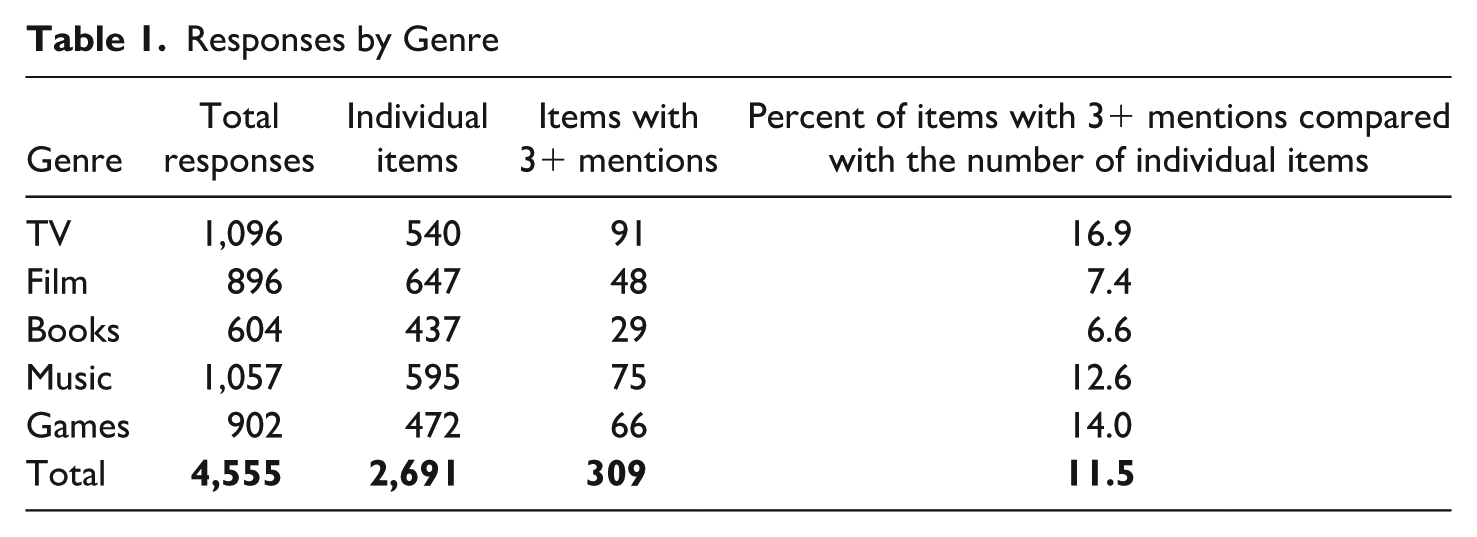
A threshold of at least 23 citations (or 9.8% of all respondents) was needed to consider a particular text as a “common experience.” As seen in Table 1, most texts were cited by only a small fraction of respondents. A threshold of approximately 10% therefore represents a conservative limit to identify texts that substantially exceeded average levels of recognition, given that overall, students provided thousands of different texts in their collective responses.
It would seem intuitive to assume that a text consumed by at least 50% of respondents would be needed to qualify as a common experience. However, given the varied responses seen in Table 1, the 9.8% cutoff provides a small number (18 of 2,691 total texts), or 0.7%, of texts that offer even some commonality among the students. This low threshold allows for an examination of the characteristics of those texts. Table 2 lists the media texts that met this threshold.
Media Texts with Commonality from Atleast ~10% of Respondents (Equal to 23 or More)
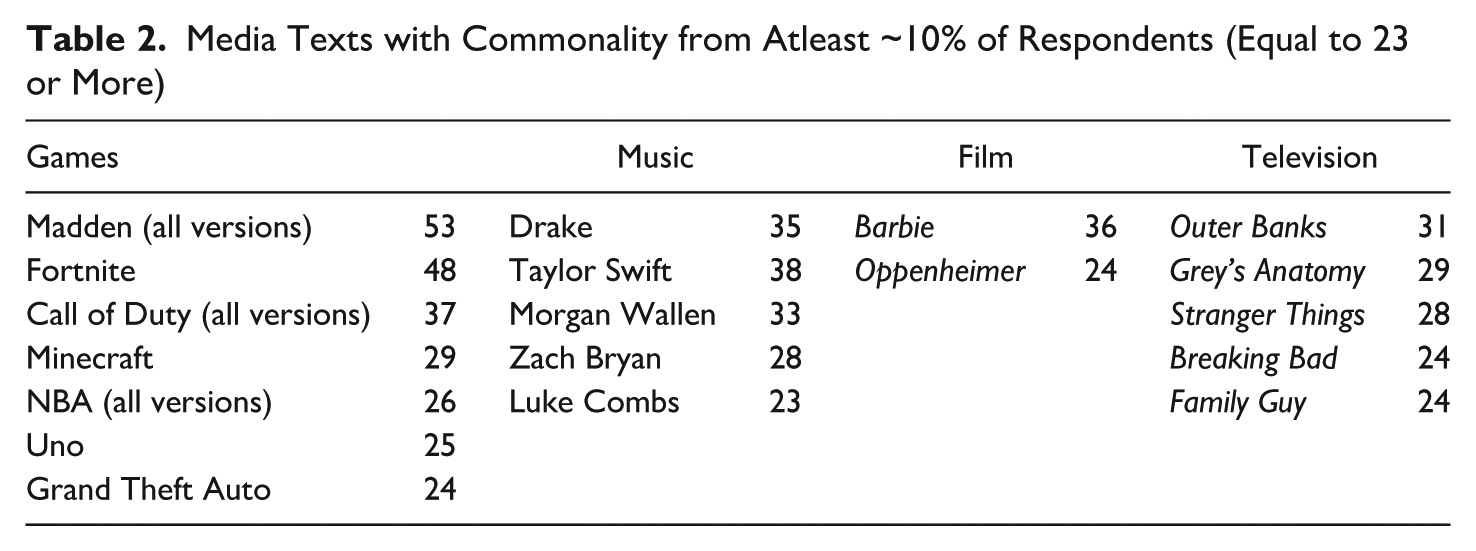
These results are particularly significant for instructors teaching introductory media courses. Notably, only 22.6% (53/234) of the respondents cited the most popular media text: the video game Madden in all its permutations. This suggests that traditional examples commonly used in the past may not resonate with many students. Consider also that only video games, rather than television and films, reached a 20% threshold. Both cited movies were recent, having been released during the survey period. In contrast, the television shows cited included both current series (e.g., Outer Banks, Stranger Things) and past series (e.g., Breaking Bad), with availability on streaming platforms explaining its continued accessibility.
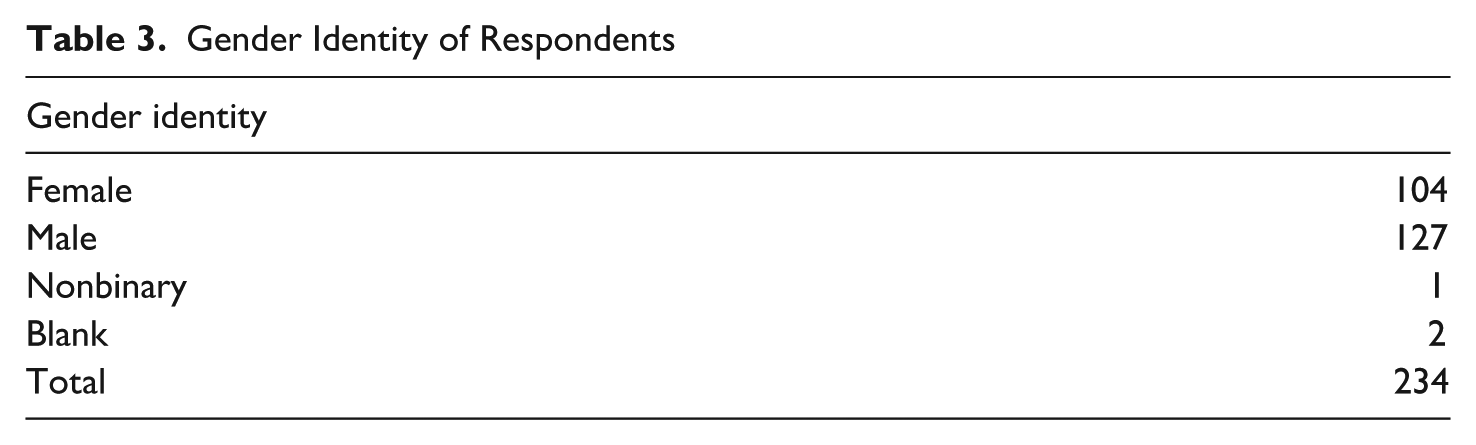
As far as demographic information, the following information was collected from the 234 participants (Tables 3–6).
Gender Identity of Respondents
Sexual Preference of Respondents
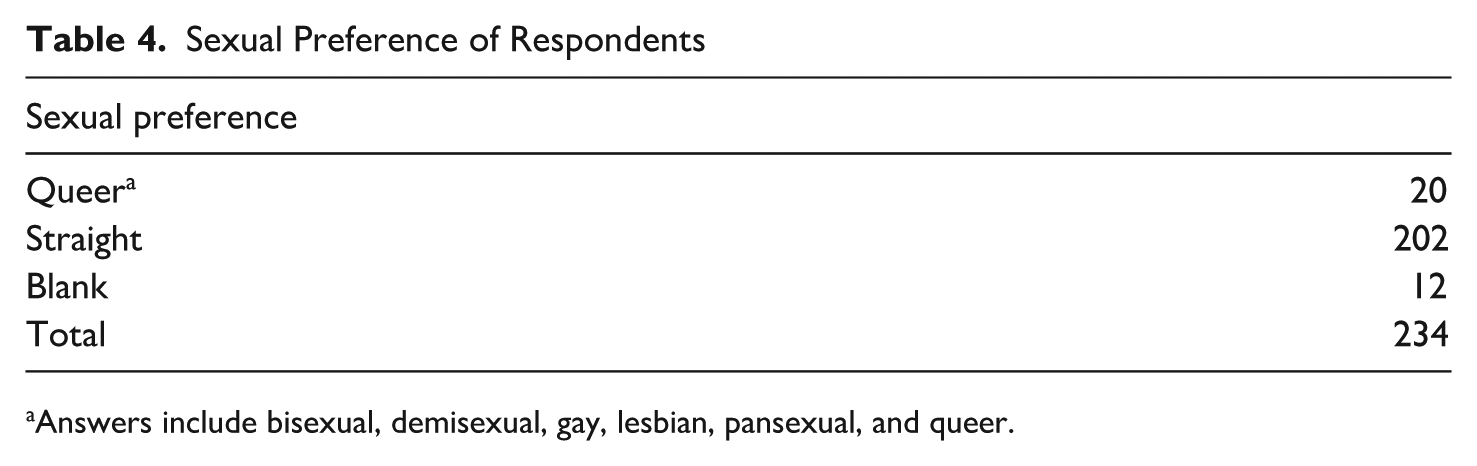
Answers include bisexual, demisexual, gay, lesbian, pansexual, and queer.
Race of Respondents
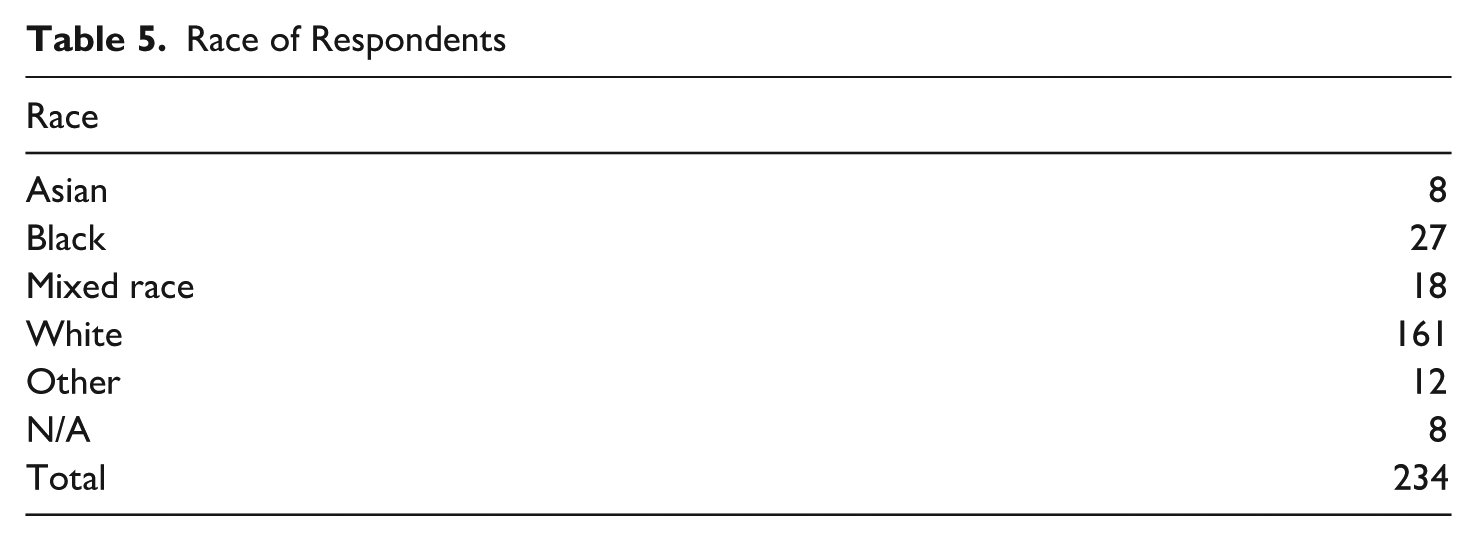
Region of Respondents
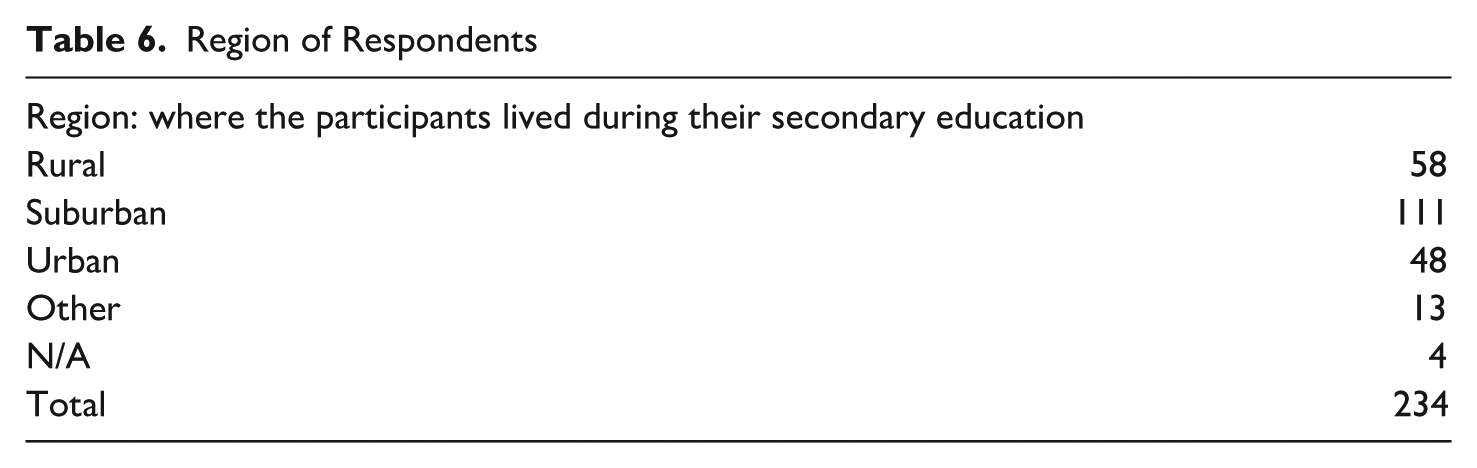
In addition, data were collected related to participants’ religion, but the large variety of answers and complexity of religious views resulted in the decision to not further investigate this category (i.e., “Christian” can mean many things to people.)
For 19 media texts cited by 10% or more of the participants, we considered the demographic data provided by students (Table 7):
Media Texts and Demographic Variables
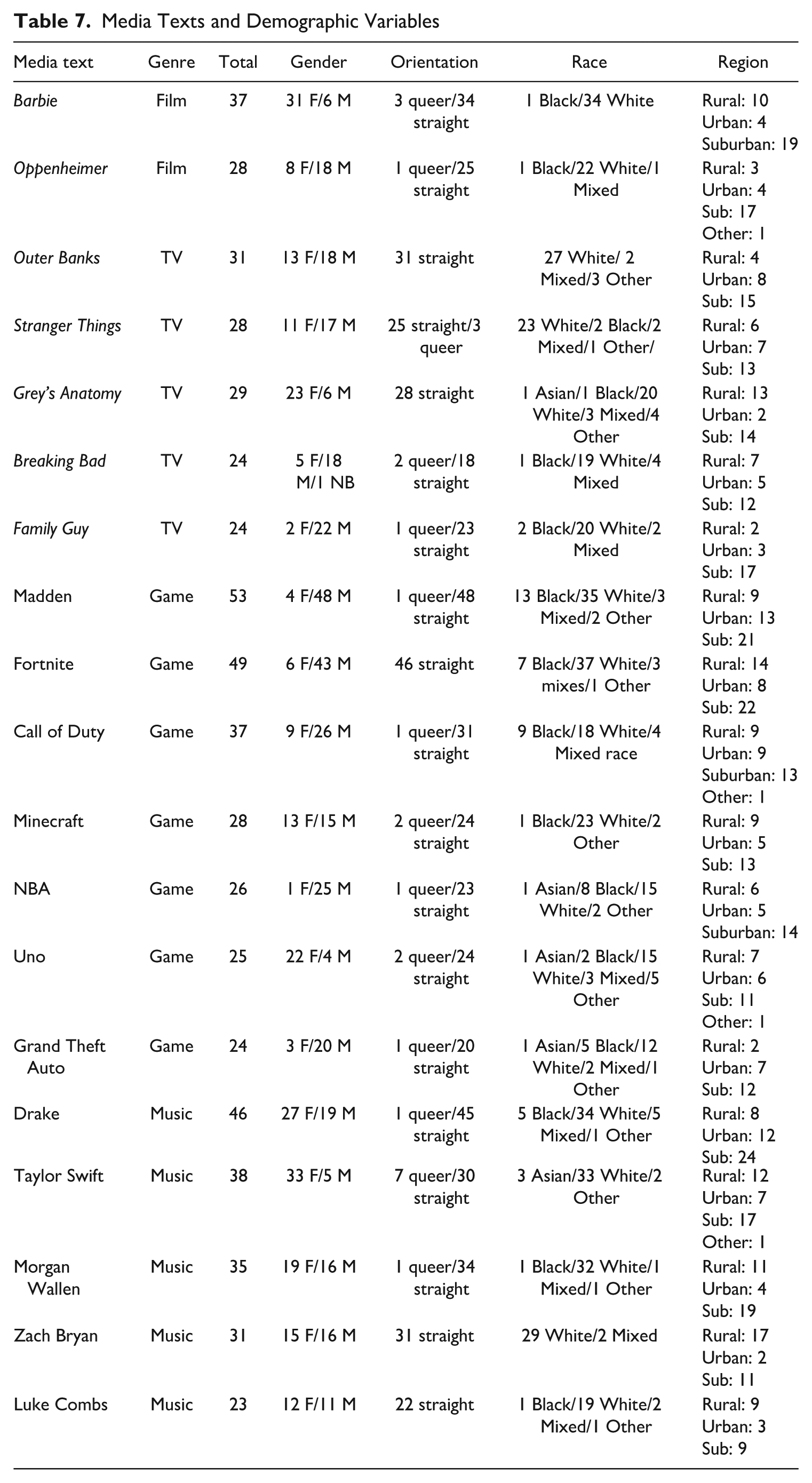
Ultimately, we found statistical significance in relation to the demographic questions for 14 of 19 of the most popular texts with positive significance marked in bold (Table 8).
Demographic Significance for Common Media Texts
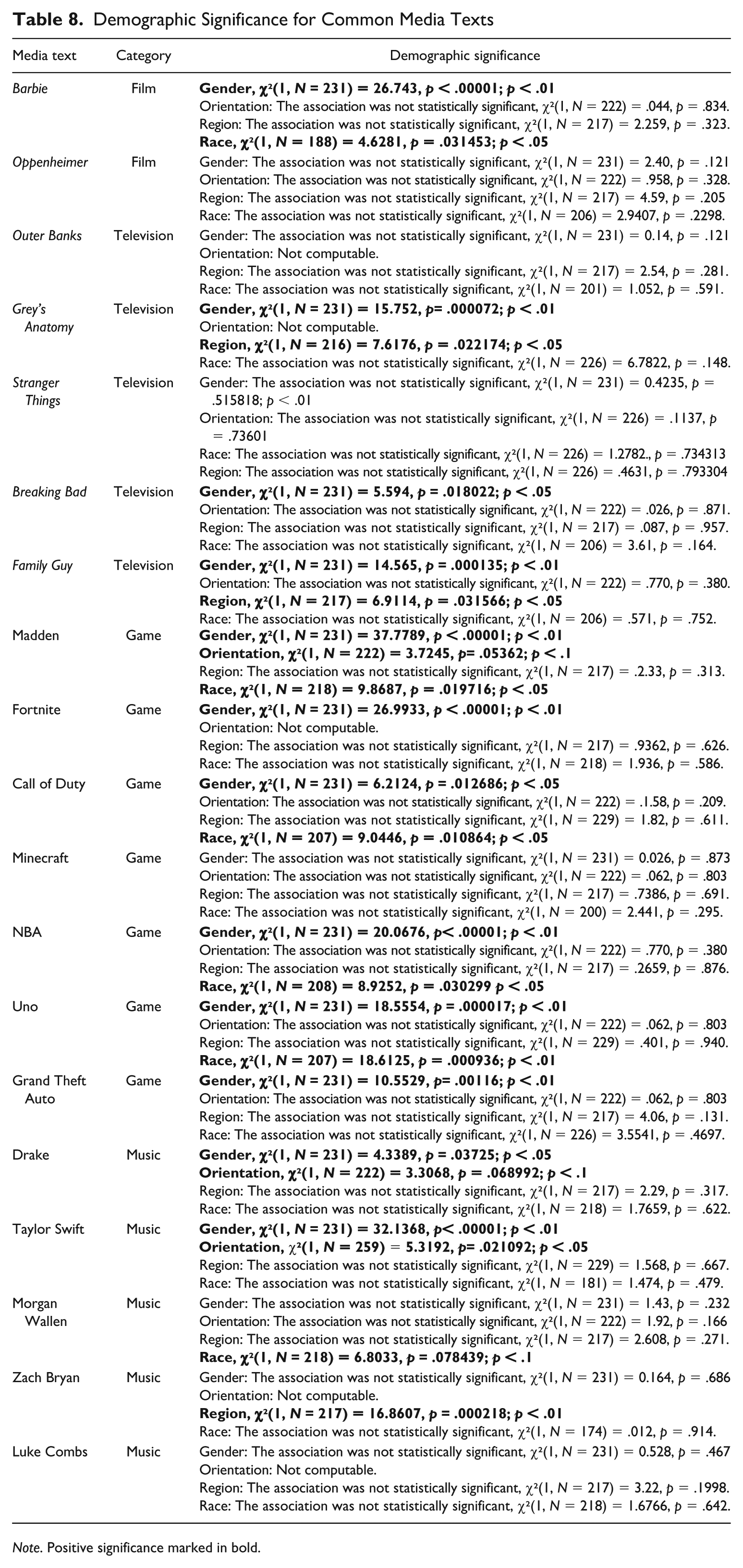
Note. Positive significance marked in bold.
We found that demographic variables across multiple identity categories were statistically significant and correlated with consumption patterns for certain media texts. While these findings may provide a useful foundation for future research—particularly studies examining the content of specific texts or genres—the primary significance within this study lies in the presence of such relationships. These patterns could prompt classroom discussions about how identity intersects with representation, narrative, and Uses and Gratifications theory (or other communication theories).
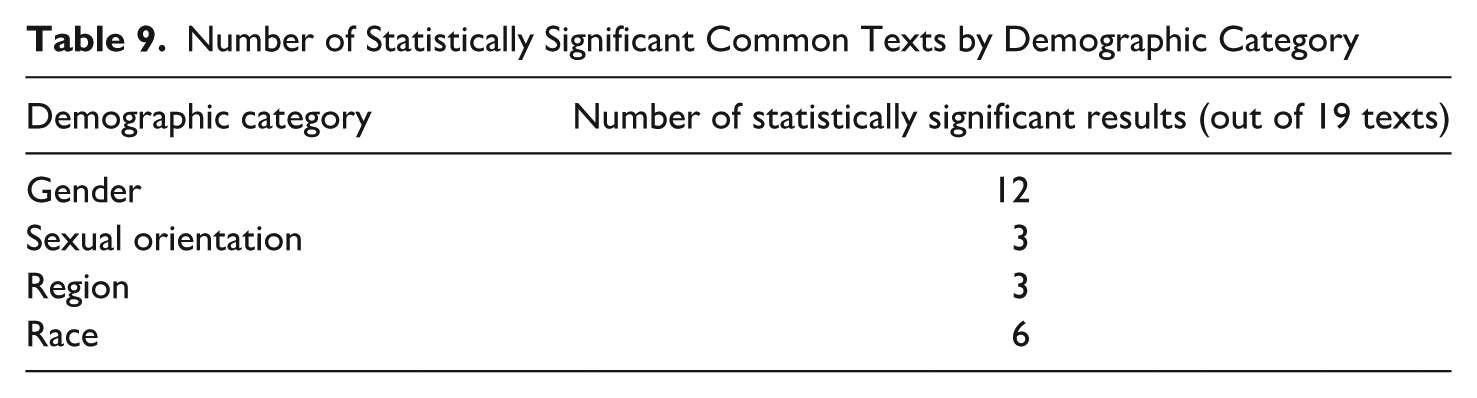
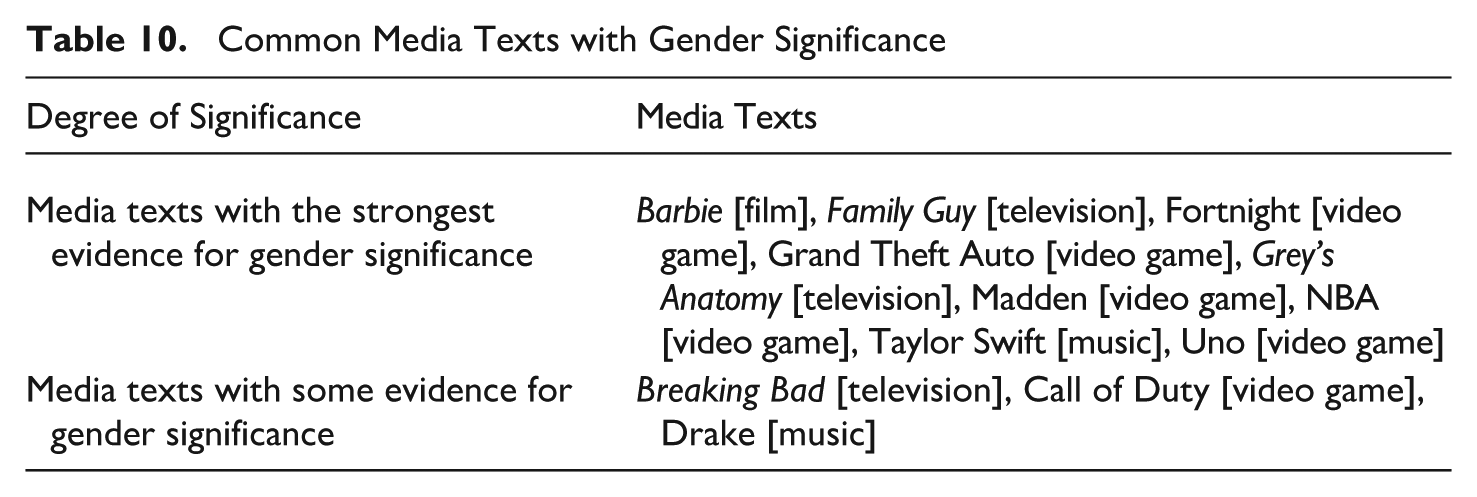
Notably, about two thirds of the texts demonstrated statistical significance for one gender. For the other results, a deeper consideration of the data suggests that significance may occur for various reasons: Barbie viewers are mostly White; Grey’s Anatomy has more rural viewers than would be statistically expected, Family Guy viewers are primarily suburban; Madden players are more often straight and more often Black than would be expected; Call of Duty and NBA players are also more often Black. Drake listeners are more often straight and Taylor Swift listeners more often queer. Zach Bryan listeners are more rural and Morgan Wallen listeners more often White than would be expected statistically. See Table 9 for an overview of demographic categories and Table 10 for a listing of specific texts with statistically significant results related to gender.
Number of Statistically Significant Common Texts by Demographic Category
Common Media Texts with Gender Significance
Research Questions Considered
To consider our research questions:
Do students enrolled in introductory mass communication courses have shared media experiences, and if so, in which media formats do they occur?
Shared media experiences are limited both in the number of texts and the percentage of students who share the experience. Games offer the most commonality.
2. Does identity (e.g., gender, race, religion) influence the choice of media consumed?
When there are common media experiences, gender often plays a significant role in those choices. Other demographics are sometimes significant for particular texts.
Discussion
This study examines the fragmentation of media viewing among students in introductory mass communication courses. The results support the hypothesis that students do not have significant shared common media experiences. This finding may also be significant for instructors in media courses across the humanities and social science.
The degree of fragmentation varies across media genres. With television, the proliferation of streaming services has dramatically expanded the viewing options offered by cable television, which in turn broadened the reach offered by network broadcasting. In film, although major studio releases traditionally premiered in theaters, streaming platforms frequently offer simultaneous distribution or, in some cases, substitute for the theatrical experience. Similarly, digital music distribution and subscription services have increased the range of choices available to consumers. Likewise, for the video game industry, the partial shift from physical retail packaging to downloads has reduced costs and lowered barriers to entry for independent developers, expanding the diversity of available titles.
Instructors could directly address this lack of common experiences to discuss the changing habits of television viewers and the increasing importance of video games among college students. In addition, the persistence and popularity of some musical performers, despite the fragmented nature of today’s listening habits, provides an opportunity for discussion about the reasons behind specific artists’ sustained success in the media classroom, especially as they navigate the economic and management policies of music streaming services.
Since social media now serves the interconnectedness purpose that common media served decades ago, students in these classes still have some degree of shared media experiences. Those experiences have often shifted to newer media technologies, and discussions about more traditional media also are likely to occur online through discussion groups on various sites like Discord (Wagenaar, 2024) or even through social media offering more concise messages, sometimes even translated, highlighting the international scope of some fandom (Aisyah et al., 2019). The motivations for media consumption may have shifted somewhat with these findings. While shared experiences may be less prevalent, as stated previously, the ability to discuss various texts on social media discussion sites could potentially still facilitate the benefits of shared experiences. Further research is recommended to consider how conversations on social media sites may redefine (virtual) geography for those individuals experiencing common media experiences. Instructors may find that students more readily engage with and discuss widely circulated TikTok videos, Instagram Reels, YouTube clips, or even memes shared across platforms. Participatory culture reframes media consumption by positioning students not only as audiences but also as potential producers. Although amateur media production has not expanded to the degree predicted by scholars such as Clay Shirky (2009) and Henry Jenkins (2006)—in part due to unequal access to production tools and algorithmic gatekeeping—user-generated content remains central to students’ media consumption. Even when some students only participate as viewers, the consumption of videos produced by peers can still constitute a shared experience, providing a useful source of texts for classroom discussion.
Instructors can also employ strategies such as media mapping to help students analyze how the media texts they consume are distributed, which audiences they reach, and how those patterns relate to issues of media ownership, representation, and bias. Also, given that the most commonality occurred with video games, instructors might wish to increase class focus on games, especially around topics of representation, as well as the media economics of the gaming industry.
Our results suggest that gender plays a role in media consumption. Although broader claims about gender (or other identities) cannot be drawn from this study alone, the findings related to these specific texts can serve as a useful starting point for educators to engage students in discussions about the role of identity in media selection. How and why this division exists and how industry choices lead to gendered media could be valuable additions to media classes. It is interesting to note that some texts (e.g., Minecraft) avoid gender distinctions. Other texts sometimes show a demographic preference, and how and why that occurs could also be useful for course discussion—and those instances may connect to a consideration of choices made by media executives about what films, television programs, and music are produced.
Instructors might also consider pursuing their own small-scale investigation into their students’ media habits early in the semester, to better determine where common media experiences may persist among students in a particular class at a particular university.
A note about this study’s limitations: it is uncertain if a lack of popular media texts preferred by members of a particular race or sexual orientation is simply due to lower participation from those groups. This consideration could play out as a larger conversation about who takes introduction to media/media literacy courses, although this result could also simply be an artifact resulting from the demographics of the universities included in the study. Furthermore, asking students to rely on self-reported recall when listing favorite media texts may introduce bias. However, we contend that a positive emotional connection to these texts likely enhances memory retrieval, a relationship supported by psychological research (Li & Lapate, 2024; Madan et al., 2019). Although these studies address more nuanced research questions, both reinforce the broader theoretical claim that emotion is positively associated with memory.
Conclusion
The purpose of our study was to explore whether current mass communication students share common media experiences. Unlike previous generations, media consumption today is significantly more fragmented. A lack of common media experiences may potentially offer some explanation for fractures in society that promote difference and isolation, rather than community and commonality. Our findings will hopefully help media professors tailor their lectures and design activities to account for these evolving changes, while also emphasizing the importance of acknowledging the trends in media consumption to more strategically teach media studies to current undergraduates.
Supplemental Material
sj-docx-1-jmc-10.1177_10776958261433107 – Supplemental material for You’ve Never Seen Friends? The Lack of Common Media Experiences Among First Semester Mass Communication Students
Supplemental material, sj-docx-1-jmc-10.1177_10776958261433107 for You’ve Never Seen Friends? The Lack of Common Media Experiences Among First Semester Mass Communication Students by Jeremy Sarachan, Olushola Aromona, Lisa Carponelli, Marti Maguire and Nomi Morris in Journalism & Mass Communication Educator
Footnotes
Acknowledgements
Thank you to Dr. Jack Rosenberry, Emeritus Professor at St. John Fisher University for his assistance with the statistical analysis. Additional thanks to Dr. Michelle Flood of St. John Fisher for the use of her Introduction to Media class for dissemination of the survey.
Declaration of Conflicting Interests
The authors declared no potential conflicts of interest with respect to the research, authorship, and/or publication of this article.
Funding
The authors received no financial support for the research, authorship, and/or publication of this article.

Supplemental Material
Supplemental material for this article is available online.
Author Biographies
References
Supplementary Material
Please find the following supplemental material available below.
For Open Access articles published under a Creative Commons License, all supplemental material carries the same license as the article it is associated with.
For non-Open Access articles published, all supplemental material carries a non-exclusive license, and permission requests for re-use of supplemental material or any part of supplemental material shall be sent directly to the copyright owner as specified in the copyright notice associated with the article.
