




Abstract
Ankaferd blood stopper (ABS) is a novel topical hemostatic agent of plant origin registered for the management of external hemorrhages, in Turkey. The ABS-induced formation of the protein network with vital erythroid aggregation covers the whole physiological hemostatic process. The aim of this study is to assess prohemostatic and antithrombin effects of ABS on the basis of functional proteomic analyses performed in ABS-treated plasma and serum samples based on the previous hypotheses about ABS action. For this purpose, serum and plasma proteins were separated by 2-dimensional (2D) gel electrophoresis, and proteins were identified using reference plasma gel on Swiss-2DPAGE database. Our results indicated that fibrinogen gamma chain and prothrombin levels just initially decreased first and thereafter enhanced following the ABS exposure. Dual effects of ABS on those critical hemostatic molecules seem to be associated with prohemostatic and antithrombin activities of the hemostatic agent.
Introduction
Ankaferd blood stopper (ABS) is a novel topical hemostatic agent of plant origin registered for the management of external hemorrhages, in Turkey. 1 The ABS-induced formation of the protein network with vital erythroid aggregation covers the whole physiological hemostatic process.1 –3 There are several essential components of the ABS-induced protein network. Vital erythroid aggregation takes place in conjunction with spectrin and ankyrin receptors on the membranes of red blood cells. Essential erythroid proteins (ankyrin recurrent and FYVE bundle containing protein 1, spectrin alpha, actin depolymerization factor, actin-depolymerizing factor, nicotinamide adenine dinucleotide (NADH) dehydrogenase [ubiquinone] 1 alpha subcomplex, mitochondrial nicotinamide adenine dinucleotide phosphate (NADP) (+) dependent malic enzyme 3) and the required adenosine triphosphate bioenergy are included in the protein library of ABS. 4 The spectrin–actin network of erythrocytes is coupled with the membrane bilayer primarily through the association of spectrin with ankyrin, which in turn is bound to the cytoplasmic domain of the anion exchanger. A major function of the spectrin skeleton in erythrocytes is to provide mechanical support for the membrane bilayer and allow survival of the cells in circulation. 4 The ABS also upregulates the GATA/FOG transcription system affecting erythroid functions and urotensin II.1,5 Moreover, ABS is clinically effective for bleeding control as a hemostatic agent based on controlled clinical phase trials.6 –8
The basic mechanism underlying the hemostatic actions of ABS has been investigated.1 –3 Goker et al 2 showed that Ankaferd blood stopper induced very rapid (<1 seconds) formation of a protein network in the plasma and serum samples. 2 They disclosed that coagulation factors II, V, VII, VIII, IX, X, XI, and XIII were not affected in vitro by the addition of ABS to plasma. However, they also demonstrated that thrombin time (TT) was prolonged in the plasma upon the exposure of ABS. Thrombin generation time also prolonged upon the exposure of ABS. 2
The ABS also has pleiotropic cellular actions 9 acting on anti-infective,10 –12 wound-healing,13 –15 vascular dynamics, 16 and apoptotic 17 processes. Thrombin, and its receptor protease-activated receptor 1 (PAR-1), is located in the crossroads of hemostasis, inflammation, infection apoptosis, and tumorigenesis.18 –21 Karabiyik et al demonstrated dose-dependent reversible downregulation of PAR-1 mediated by ABS inside the human umbilical vein endothelial cells. 22 Therefore, the molecular mechanisms underlying not only prohemostatic but also antithrombin activities of ABS remained to be discovered.
We have described previously the proteomic content of ABS via matrix-assisted laser desorption ionization time of flight (MALDI-TOF) mass spectrometry analyses. 4 The aim of this study is to assess prohemostatic and antithrombin effects of ABS on the basis of functional proteomic analyses performed in ABS-treated plasma and serum samples based on the previous hypotheses1 –3 about ABS action. Functional proteomics is the essential step to identify protein library of a given product and to determine the change in protein levels, such as ABS hemostatic agent and its active functions. Elucidation of the molecular basis of the hemostatic effects of ABS via proteomic analyses will open new avenues for the pleiotropic actions of this newly developed unique hemostatic agent.
Materials and Methods
Reagents
All the reagents were of proteomics or molecular biology grade. Millipore (Mill-Q and Elix; Millipore Corp, Billerica, Massachusetts) water was used for all the experiments. Glycerol and agarose were from Sigma-Aldrich (St Louis, Missouri), ampholytes and dithiothreitol (DTT) were from Fluka (St Gallen, Switzerland), bovine serum albumin (BSA) was from thermo scientific (Rockford, Illinois), 3-[(3-cholamidopropyl)dimethylammonio]-1-propanesulfonate (CHAPS) was from Amresco (Solon, Ohio), and protein ladder was from Fermentas (Vilnius, Lithuania). Other reagents and chemicals were purchased from Bio-Rad (California).
Blood Collection and Preparation of ABS-Treated Plasma and Serum Samples for Proteomic Analyses
Study samples for the proteomic analyses were obtained from a male adult volunteer aged 57. Studied individual did not have any severe chronic disorders, including coronary artery disease, diabetes mellitus, chronic renal disease, anemia, diabetes mellitus, chronic liver disease, hypothyroidism, connective tissue disorders, chronic treatment with anti-inflammatory, or any other drugs.
Venous blood samples were collected in 1 mL 0.109 mol/L trisodium citrate containing tube for plasma separation and anticoagulant-free tube for serum separation. The samples were immediately centrifuged for 15 minutes at 2500 g to obtain serum/plasma. Plasma and serum samples were treated with ABS by the same way based on the following protocol: plasma/serum without ABS treatment was used as control. Ankaferd blood stopper, 150 µL, was added to 1.5 mL of plasma/serum and the clot was removed (P2/S2); there was still a small amount of clot in the tube, which could not be removed. After that, P2/S2 samples were centrifuged and upper phases were collected (P1/S1; Figure 1 ).
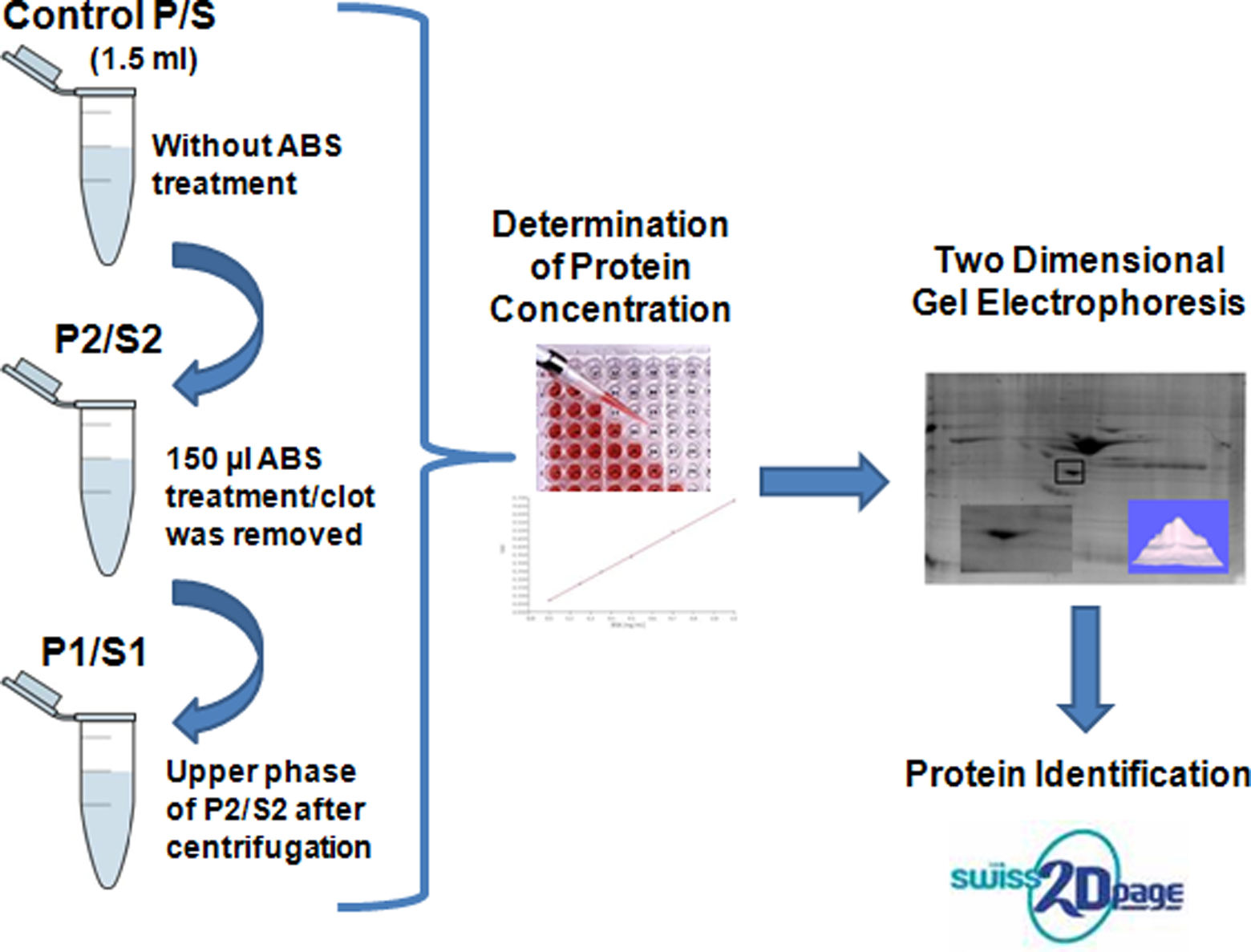
Schematic presentation of the ABS treatment procedure and the proteomic work flow. See the text for abbreviations (S1/P1, S2/P2, control). ABS indicates ankaferd blood stopper.
Two-Dimensional Gel Electrophoresis of Proteins
Protein concentrations were determined in triplicates using the Bradford method, with BSA as a standard. Linear immobilized pH gradient (7 cm) strips (Bio-Rad) with a pH 3 to 10 gradient were used in the first dimension. During the process, 75 µg of total protein were rehydrated actively overnight at 50 V in 125 µL of rehydration buffer which contains 7 mol/L urea, 2 mol/L thiourea, 4% CHAPS (w/v), 1% ampholytes (pH 3-10), 10 mmol/L DTT, and trace amount of bromophenol blue. After the rehydration step, isoelectric focusing (IEF) was performed using a Protean IEF Cell (Bio-Rad) at room temperature with the following program: 250 V for 15 minutes, 4 kV for 3 hours, and 4 kV until reaching 20 kV/h. The strips were then stored at −80°C until being used in the second dimension. After IEF, the strips were equilibrated for 15 minutes in equilibration buffer I (6 mol/L urea, 0.375 mol/L Tris pH 8.8, 2% sodium dodecyl sulfate [SDS], 20% glycerol, and 2% DTT) followed by 15 minutes in equilibration buffer II (6 mol/L urea, 0.375 mol/L Tris pH 8.8, 2% SDS, 20% glycerol, 2.5% iodoacetamide, and trace amount of bromophenol blue) with gentle agitation at room temperature. Samples were then separated by second dimension on 1 mm 4% to 12.5% SDS-polyacrylamide gel electrophoresis (PAGE) at 80 V for 15 minutes and then at 130 V on ice until the bromophenol blue dye reached the bottom of the gel using the Mini Protean 3 Cell (Bio-Rad). Three technical replicates were done for plasma samples. Gels were stained with Sypro Ruby (Bio-Rad) protein stain according to the manufacturer’s instructions. Images were taken by VersaDoc Imaging System (Bio-Rad) and analyzed using PDQuest software 8.0.1 (Bio-Rad). Spots were manually edited following automatic spot detection and matching with total density in gel image normalization. Quantity values were obtained from the matched spots.
Protein Identification
Protein identification was achieved using the reference 2-dimensional (2D) protein map of human plasma available on Swiss-2DPAGE repository (http://expasy.org/ch2d/).
Results
To identify the hemostatic protein contents of ABS, the proteomic analysis is performed to shed light over the effective mechanisms of ABS on hemostasis via functional proteomic analysis. We have previously described the proteomic content of ABS via 2D-PAGE and MALDI-TOF MS analyses, 4 and we saw that the 2D protein profile of ABS overlapped some of serum and plasma proteins (especially albumin and nearby protein clusters). So that ABS treatment may increase the total protein amount of our samples and some ABS proteins overlap those of serum/plasma as we mentioned. But we focused specially on the fibrinogen gamma chain and prothrombin which seemed to have expression level differences independently and not to affected from ABS proteins. For this purpose, proteins were separated into 2 dimensions according to their isoelectric point and molecular weight (2D-PAGE). Protein identification was achieved using human plasma reference 2D map available on Swiss-2DPAGE. We matched and identified fibrinogen gamma chain on plasma gels (UniProt access no. P02679) and prothrombin (UniProt access no. P00734) on serum gels.
According to the quantitative analyses based on mean values of normalized spot quantities for fibrinogen gamma spot on plasma gels (3 technical replicates), our results showed that there was a small decrease in P1 (1.05-fold) and it increased in P2 (1.2-fold) compared to control (Figures 2 and 3 ). Similarly, prothrombin level (based on 1 replicate) decreased in S1 (8.5-fold) compared to control and increased again in S2 (4.1-fold) compared to S1 on serum gels (Figures 3 and 4 ).
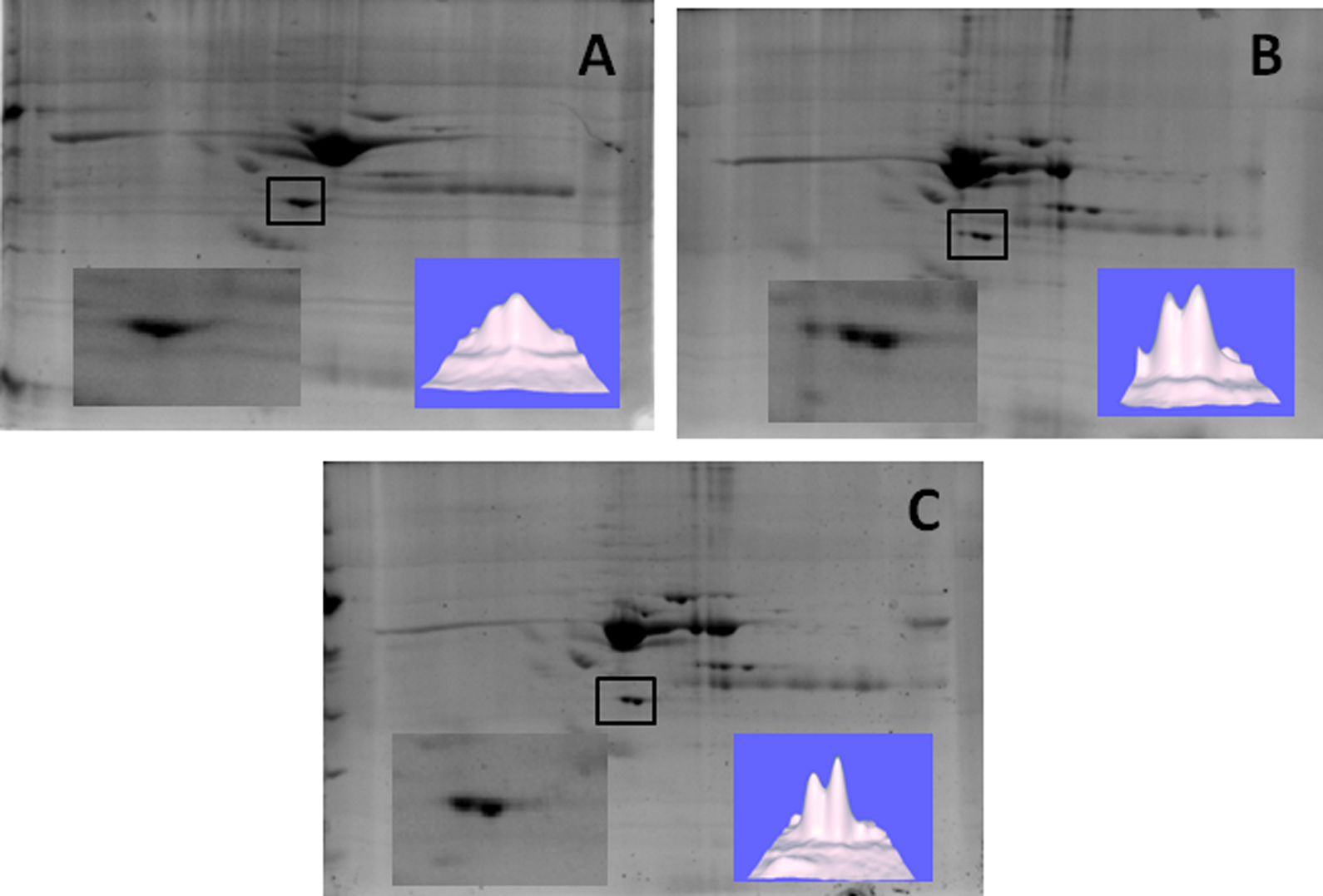
Zoomed and 3D presentation of fibrinogen gamma chain on 2D protein profiles of plasma samples. A, Control (without ABS treatment); B, P1 sample (after P2 samples were centrifuged, upper phases were collected as P1); C, P2 sample (after 150 µL of ABS treatment to 1.5 mL of plasma and the clot was removed). ABS indicates ankaferd blood stopper; D, dimensional.
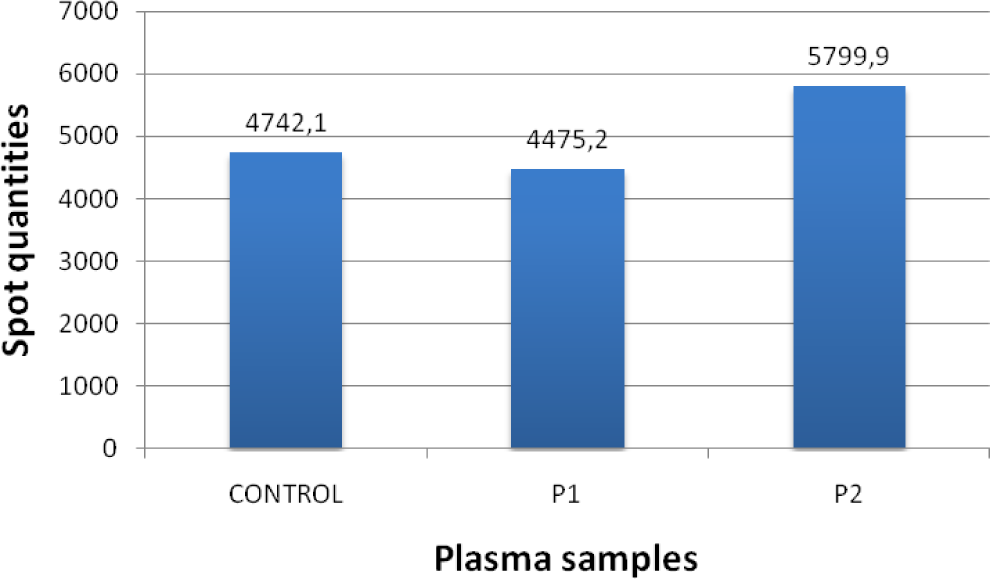
Graphic showing the mean quantities for fibrinogen gamma protein spot on plasma 2-dimensional gels (3 replicates).
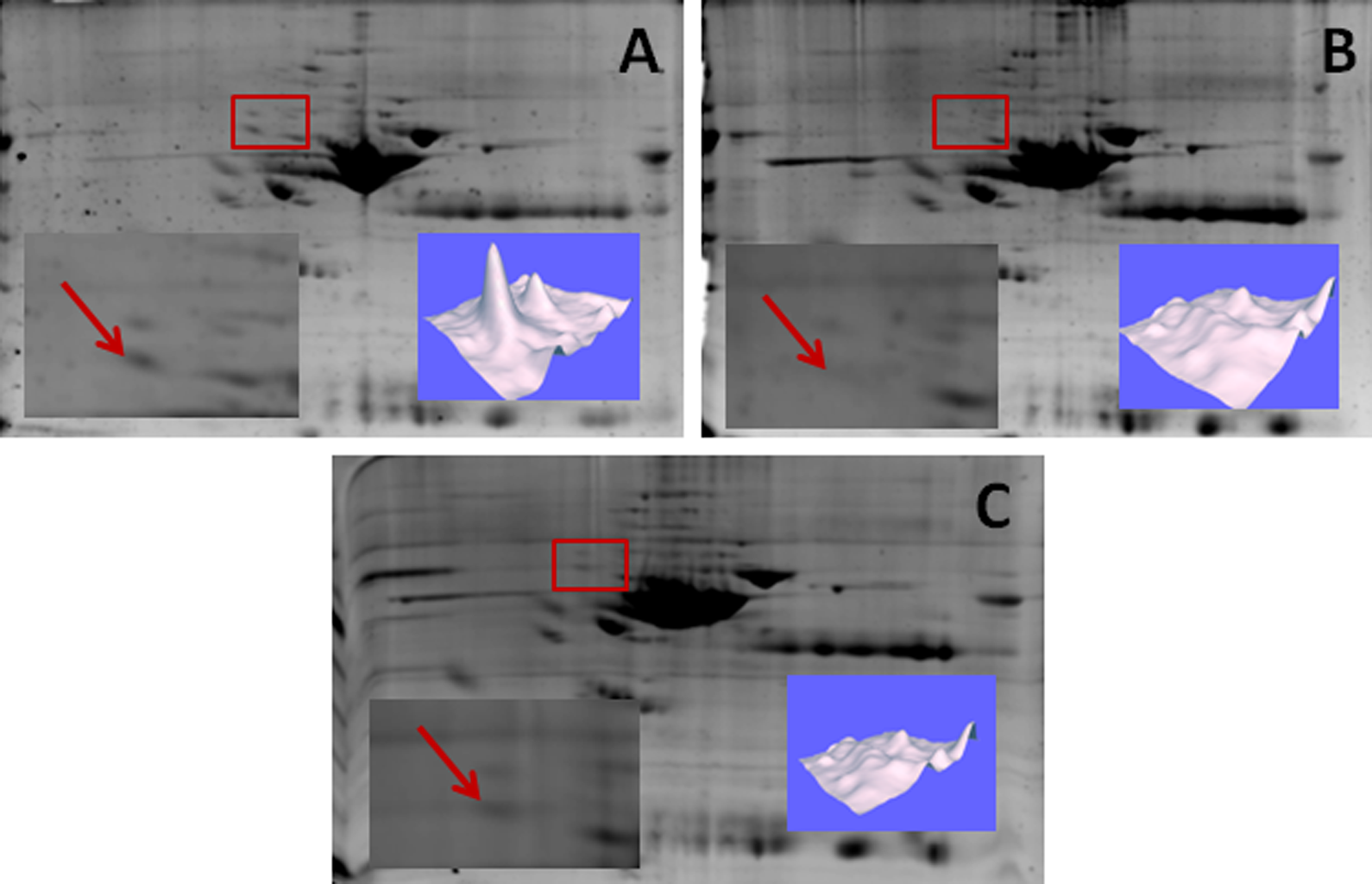
Zoomed and 3D presentation of prothrombin on 2D protein profiles of serum samples. A, Control (without ABS treatment); B, S1 sample (after S2 samples were centrifuged, upper phases were collected as S1); C, S2 sample (After 150 µL of ABS treatment to 1.5 mL of serum and the clot was removed). ABS indicates ankaferd blood stopper; D, dimensional.
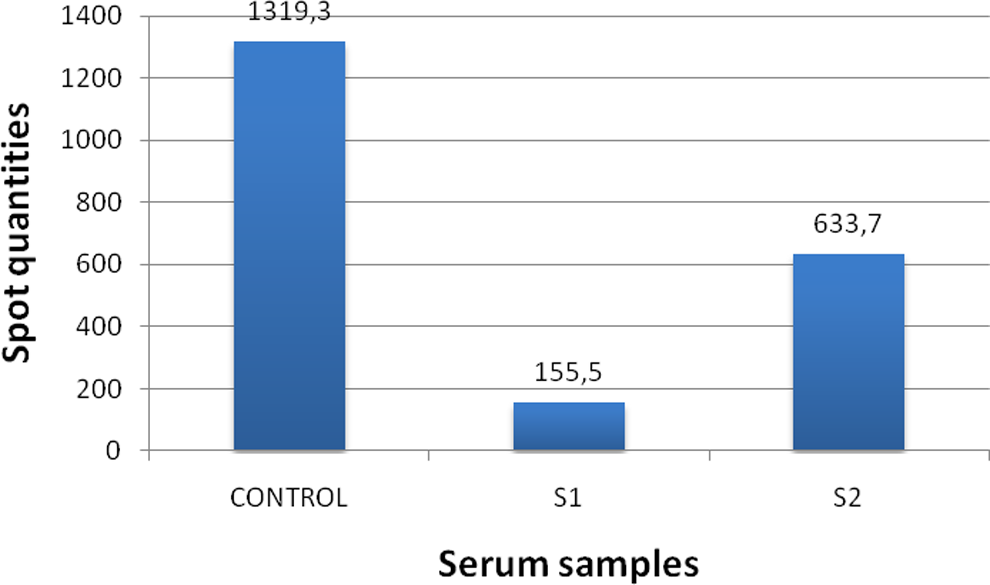
Graphic showing the quantities for prothrombin spot on serum 2-diemnsional gels (1 replicate)
Discussion
In this study, prohemostatic and antithrombin activities of ABS are linked particularly to fibrinogen gamma chain and prothrombin by functional proteomic analyses. Fibrinogen gamma chain has been shown to be decreased initially and increased thereafter during the hemostatic actions of ABS in plasma and serum samples based on the study experiment. Proteomic results also indicated that prothrombin levels in serum just initially decreased first and thereafter enhanced following the generation of ABS-induced protein network. Dual effects of ABS on those critical molecules seem to be associated with prohemostatic and antithrombin activities of the hemostatic agent.
Previous investigations disclosed that ABS has “antithrombin” activities.1,2,22 –24 The ABS prolongs thrombin time (TT) 2 and inhibits the activity of critical thrombin receptor PAR-1. 22 The ABS also downregulates endogenous thrombin potential and prolongs thrombin generation time. Based on our results, ABS has antithrombin effect via affecting fibrinogen gamma as demonstrated in our proteomic analyses. Fibrin formation (antithrombin I) inhibits thrombin generation in clotting blood by sequestering thrombin, and “high-affinity” thrombin binding (ie, via fibrinogen gamma chains) plays a dominant role in this process. 25 This finding suggested that ABS-induced antihemorrhagic actions seem to be occurring due to the “balanced hemostasis” 26 by initially decreasing fibrinogen gamma chains, thereby inhibiting the thrombin, via preventing thrombin-induced thrombotic events in the vascular endothelial site.
The basic mechanism of action for ABS appears to be the formation of an encapsulated protein network that provides focal points for erythrocyte aggregation. Rather than affecting an individual clotting factor, this protein mesh affects the entire physiological hemostatic process that controls bleeding. The pathobiological role of fibrinogen gamma includes erythrocyte-aggregating effects.27 –29 Blood cells, particularly erythrocytes and activated leukocytes, were found to aggregate rapidly in the presence of ABS, thereby participating in the network formation. Vital erythroid aggregation due to ABS could, in part, be linked to its effects on fibrinogen gamma chain and parallel alterations of prothrombin molecule as detected in our functional proteomic analyses.
Fibrinogen gamma mediates thrombin binding to fibrin, a thrombin inhibitory function termed “antithrombin I.” Thrombin is significantly effective in the angiogenesis and endothelial vascular functions.20,21 The ABS decreases tumor vascularization measured as tumor microvessel density in bleeding gastrointestinal carcinomas. 30 Based on our present findings obtained by functional proteomic analyses, further investigations should search the link between antithrombin activities of ABS and its vascular effects in relation to the initial decrements in the fibrinogen gamma level in plasma and parallel alterations of prothrombin molecule in serum, as well.
Fibrinogen gamma is directly related to cancer development and apoptosis.31 –33 On the other hand, ABS has been shown to affect renal tubular apoptosis based on the level of hemorrhage in a previous study. 17 When the bleeding associated with the surgery of partial nephrectomy is mild or moderate, ABS can initially increase renal tubular apoptosis. On the contrary, during the increased amount of massive bleeding from the kidney tissue, ABS decreases apoptosis in renal tubular cells. Therefore, ABS modulates the cellular apoptotic responses to hemorrhagic stress as well as its hemostatic hemodynamic activity. 17 The finding of ABS-induced PAR-1 downregulation gives an additional clue on the possible mechanism of ABS-associated apoptosis modulation at the tissue level. 22 Preliminary findings focusing on in vitro antineoplastic effects of ABS34,35 also prompt to begin the search for the ABS effects and its actions on thrombin, prothrombin, and fibrinogen gamma.
Fibrinogen gamma is also related with infection and inflammation.29,30,36,37 Ankaferd blood stopper, besides its hemostatic activity, may also inhibit the growth of bacteria.10 –12 Anti-infectious activity of ABS may represent an advantage over its current clinical use, since it inhibits the growth of bacteria in the area used mainly for its hemostatic activity such as traumatic-infected wounds. The antimicrobial activity of ABS was tested against many bacterial pathogens. The isolates included Acinetobacter baumannii, Escherichia coli, Klebsiella pneumonia, Pseudomonas aeruginosa, Enterobacter spp, Stenotrophomonas maltophilia, methicillin-resistant coagulase-negative Staphylococcus, vancomycin-susceptible Enterococcus, and vancomycin-resistant Enterococcus.10 –12 Anti-infective actions of ABS may be related to its hemostatic functions acting on thrombin, 22 PAR-1, 22 EPCR, 26 PAI-1, 26 and prothrombin, and fibrinogen gamma affecting distinct steps of coagulation and vascular endothelium.
In our present study, ABS initially caused the decrements in the fibrinogen gamma chain and zymogen precursor protein prothrombin in plasma and serum samples, respectively, whereas those molecules were enhanced eventually following ABS exposure. Our findings and previous investigations indicated that ABS may act as a topical biological response modifier with dual actions. Since ABS is currently being developed on the basis of the basic and clinical investigations, molecular interactions, particularly its interrelationship with fibrinogen gamma and prothrombin should be considered in future basic and clinical research designs.
Footnotes
Acknowledgment
Ankaferd Blood Stopper was supplied from Ankaferd Drug Inc, Istanbul, Turkey.
Declaration of Conflicting Interests
The authors declared no potential conflicts of interest with respect to the research, authorship, and/or publication of this article.
Funding
The authors received no financial support for the research, authorship, and/or publication of this article.