




Abstract
The aim of this study is to assess the in vivo hemostatic effect of Ankaferd Blood Stopper (ABS) on rats using a tail bleeding model. Wistar rats were randomized into 4 groups of 9 each: group 1, control, no pretreatment, irrigated with saline; group 2, no pretreatment, irrigated with ABS; group 3, control, heparin pretreatment, irrigated with saline; and group 4, heparin pretreatment, irrigated with ABS. To control bleeding, compressive dressings were placed after instilling 1 mL of either ABS or saline to the bleeding area. Without heparin pretreatment, ABS shortened hemostasis time by 1.57 minutes and reduced the amount of bleeding by 0.85 g. With heparin pretreatment, ABS shortened hemostasis time by 3.29 minutes and reduced the amount of bleeding by 1.32 g. The ABS was more effective than saline irrigation for treating tail tip bleeding in rats, with or without heparin pretreatment, while also using a compressive dressing.
Introduction
The management of patients with trauma has improved significantly over the years. However, uncontrolled posttraumatic bleeding remains a major problem, accounting for approximately 40% of trauma-related deaths, and uncontrollable bleeding is the leading cause of potentially preventable death in patients with major trauma. 1 –6 In trauma, most hemorrhagic deaths occur within the first 6 hours. Hence, effective and rapid control of bleeding may decrease mortality. 7
Life-threatening bleeding in patients with trauma is usually caused by a combination of vascular injury and coagulopathy. 5,8 About one-third of all patients with trauma having bleeding present with coagulopathy upon hospital admission. 8,9 This subset of patients has a significantly increased incidence of multiple organ failure and death compared to patients with similar injury patterns in the absence of coagulopathy. 8 The management of traumatic coagulopathy includes the transfusion of fresh-frozen plasma, platelets, fibrinogen, and cryoprecipitate, if available. 5 However, in certain patients with trauma, such as when coagulopathy is concurrent with hypothermia or acidosis, or in patients receiving anticoagulant or antiaggregant treatment (ie, patients with clotting disorders), there is a limit to the level of hemostasis that adequate replacement can provide in the control of life-threatening bleeding. 5,6,9
Alternative and potentially life-saving treatments include the use of local hemostatic agents that reduce red blood cell transfusion requirements and may also decrease postinjury complications, such as multiple organ failure and infection. An ideal topical hemostatic agent should be effective across a wide range of hemostatic dysfunctions, simple to store and use, and show rapid action. 5 A variety of topical agents are currently available for use as adjuncts to traditional surgical techniques in patients with coagulapathy. 8,10 Many previous trials have evaluated different agents as adjunctive measures, including collagen-, gelatin-, or cellulose-based products, fibrin sealants, and synthetic glues. 10,11
Ankaferd Blood Stopper (ABS) is a traditional folk medicine that has been used for centuries as a hemostatic agent in Anatolia. 12 It contains hemostatically active plant extracts with no inorganic or synthetic additives, and it is recommended as a topical hemostatic agent in postoperative and posttraumatic bleeding. 13,14 Several animal studies have demonstrated the efficacy of ABS for the management of clinical hemorrhages when conventional methods to control bleeding have proven ineffective. 13 –16 Mechanistically, ABS facilitates the very rapid formation of an encapsulated protein network by interacting with blood proteins, mainly fibrinogen. 12 This ABS-induced protein network provides focal points for erythrocyte aggregation, both in vivo and in vitro. This unique mechanism of action involves the entire physiological hemostatic process rather than acting on individual components of the coagulation cascade. 12,14 As such, ABS can be used to control bleeding in individuals with normal hemostatic parameters as well as in those with deficient primary or secondary hemostasis. 14
This study used a rat tail bleeding assay to compare the efficacy of saline versus ABS irrigation in conjunction with a compressive dressing for achieving hemostasis. In addition, the hemostatic effect of ABS was evaluated in rats that were pretreated with standard heparin (heparin sodium).
Materials and Methods
Animals
Male Wistar rats (200-250 g) were used in this study (n = 36). The animals were purchased locally from the Research Institute of Physiology (Gaziantep, Turkey). They were kept in the Department of Physiology animal housing facility under specific pathogen-free conditions at room temperature with free access to water; they were fed standard rat pellets throughout the study. All experimental procedures were approved by a local animal ethics committee and were in accordance with the guidelines established by the European Community Council Directive of November 24, 1986 (86/609/EEC).
Ankaferd Blood Stopper
Ankaferd Blood Stopper (Trend Teknoloji Ilac AS, Istanbul, Turkey) is a licensed pharmaceutical plant extract that is directly applied to injured skin and mucosa as a liquid (solution or spray) or in a treated dressing. This usage has been approved by the Turkish Ministry of Health and produces active hemostasis for the management of dental, postsurgical, and posttraumatic hemorrhage. Each 100 mL of ABS liquid product contains a standardized mixture of 5 mg Thymus vulgaris (thyme) herbal extract, 9 mg Glycyrrhiza glabra (licorice) leaf extract, 8 mg Vitis vinifera (grape) leaf extract, 7 mg Alpinia officinarum (lesser galangal) leaf extract, and 6 mg Urtica dioica (stinging nettle) extract. 14 The plant proteins identified in ABS via 2-dimensional gel electrophoresis and mass spectrometer analysis with matrix-assisted laser desorption ionization-time of flight are nicotinamide adenine dinucleotide phosphate-dependent malic enzyme, ribulose bisphosphate-carboxylase large chain, maturase K, ATP synthase β subunit, ATP synthase α subunit, chalcone flavanone isomerase 1, chalcone flavanone isomerase 2, and actin-depolymerization factor. In addition, various human protein-like proteins (eg, spectrin ankyrin, actin; essential erythroid proteins) that are considerably important for vital erythroid aggregation (hemostasis) are included in the functional proteomics of ABS. 17
This study used a liquid form of ABS supplied in 2-mL ampoules to achieve hemostasis in a rat tail bleeding model.
Groups and Experimental Design
Wistar rats were randomized into 4 groups of 9 animals each, as follows: group 1, control, no pretreatment, irrigated with saline; group 2, no pretreatment, irrigated with ABS; group 3, control, heparin pretreatment, irrigated with saline; and group 4, heparin pretreatment, irrigated with ABS. As shown in Table 1, all groups were given an equal volume (0.25 mL) of either standard heparin sodium solution (640 IU/kg) or saline (0.9% NaCl) intraperitoneally (ip) 3 times a day for 3 consecutive days.
Outline of the Study Design.
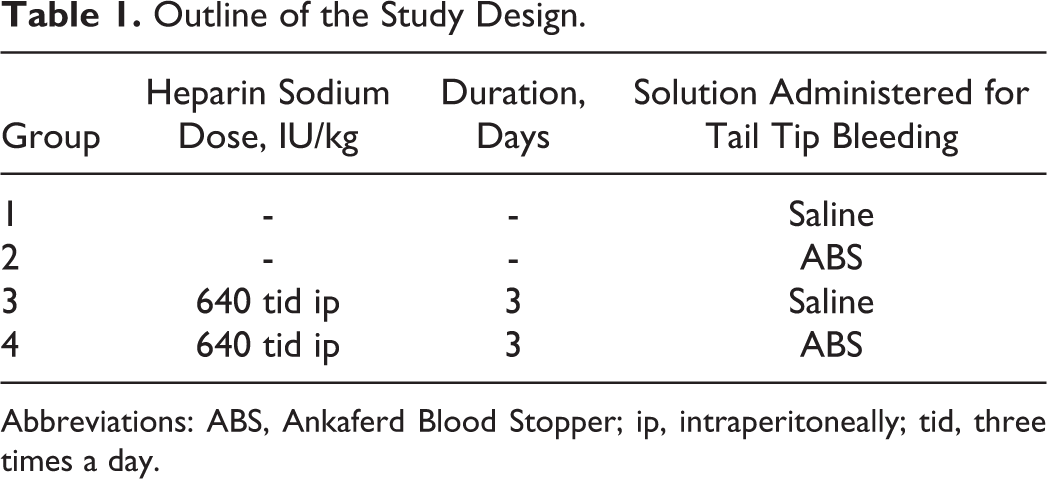
Abbreviations: ABS, Ankaferd Blood Stopper; ip, intraperitoneally; tid, three times a day.
Bleeding Assay
On day 3, the rats were anesthetized ip with a mixture of ketamine hydrochloride (Ketalar; Eczacibasi, Istanbul, Turkey), xylazine (Rompun, 2% solution; Bayer, Germany), and atropine at doses of 30, 5, and 1.2 mg/kg, respectively. The bleeding assay was performed via tail tip amputation. The rats were placed in the prone position, and a distal 10-mm segment of the tail was amputated transversely using a scalpel. After vascular bleeding was established, the wounds were irrigated with an equal volume (1 mL) of either saline (groups 1 and 3) or ABS (groups 2 and 4), followed by gentle compression with a sterile gauze pad for 1 minute.
The parameters examined were hemostasis time and amount of bleeding. Hemostasis time was defined as the interval (minute) between the start of bleeding (ie, cutting off the tail tip) and the achievement of hemostasis and was measured using a stopwatch. To determine the amount of bleeding, each sterile gauze pad was weighed before and after the procedure using a precision laboratory balance, and the difference in weight (g) was used as a measure of the amount of bleeding. The measurements were carried out by an investigator blinded to the treatment. Each animal was monitored for 20 minutes even if bleeding ceased, to detect any rebleeding; no instances of rebleeding were observed. At the end of the experiment, the rats were euthanized using an overdose of anesthesia.
Statistics
Statistical analyses were carried out using the SPSS statistical package, ver 15.0 (SPSS, Chicago, Illinois) for Windows. Hemostasis time (minute) and the amount (g) of blood lost from the tail wound were recorded and compared among nonpretreatment and pretreatment groups (eg, no pretreatment, irrigated with saline; group 1 vs no pretreatment, irrigated with ABS; group 2, and heparin pretreatment, irrigated with saline; group 3 vs heparin pretreatment, irrigated with ABS; group 4, respectively) with and without ABS using the Mann-Whitney Utest. Results are presented as the mean and 95% confidence intervals (CIs). The mean and standard deviation (SD) were also given for each group. A 2-tailed P value of less than .05 was considered statistically significant.
Results
A statistically significant difference was observed between groups 1 (control, no pretreatment) and 3 (control, heparin pretreatment; P = .006) with respect to mean hemostasis times. The mean hemostasis times were higher in group 3, compared with group 1, animals (7.14 ± 2.61 and 5.00 ± 0.81 minutes, respectively).
The amount of bleeding was also significantly different between groups 1 and 3 (P = .035). The mean amount of bleedings was higher in group 3, compared with group 1, animals (1.81 ± 0.39 and 1.45 ± 0.42 g, respectively).
Without heparin pretreatment (groups 1 and 2), the duration of hemostasis time following tail amputation was shortened by 68.6% with ABS administration (group 2) from 5.00 ± 0.81 minutes (95% CI] 4.24-5.76) in the saline-administered control (group 1) to 1.57 ± 0.78 minutes (95% CI 0.84-2.30 minutes; P = .001). With heparin pretreatment (groups 3 and 4), the duration of hemostasis time following tail amputation was shortened by 53.9% with ABS administration (group 4) from 7.14 ± 2.61 minutes (95% CI 4.73-9.56) in the saline-administered control (group 3) to 3.29 ± 0.95 minutes (95% CI 2.41-4.17 minutes; P = .004; Table 2; Figure 1).
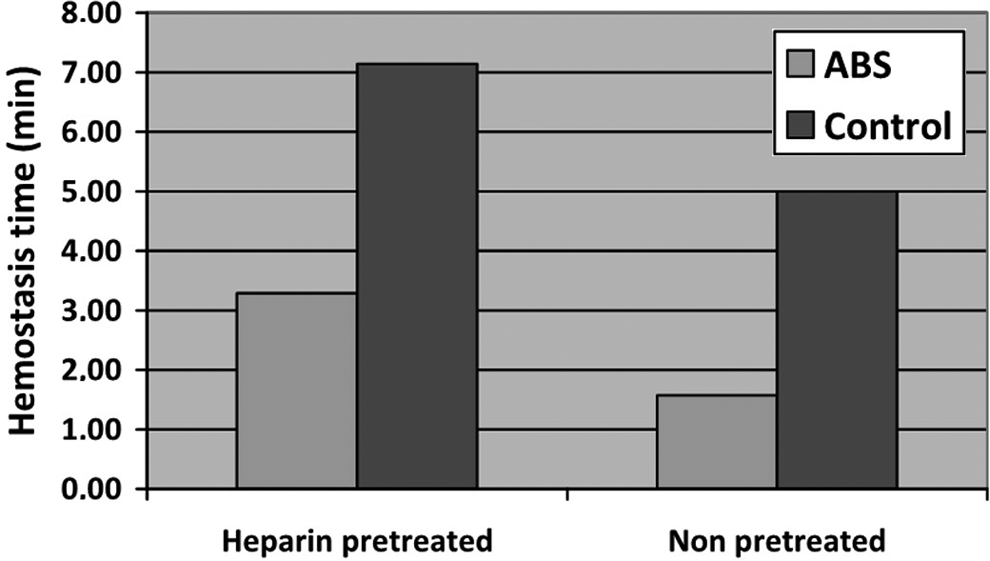
Hemostatic effect of Ankaferd Blood Stopper (ABS, 1 mL) on the duration of tail bleeding (hemostasis time) in rats pretreated with standard heparin sodium (640 IU/kg intraperitoneally [ip] for 3 days) and untreated rats.
The Effect of Topical ABS (1 mL) on Hemostasis Time and Amount of Tail Bleeding in Rats Pretreated With Heparin Sodium Standard (640 IU/kg ip for 3 Days) and Untreated Rats.a
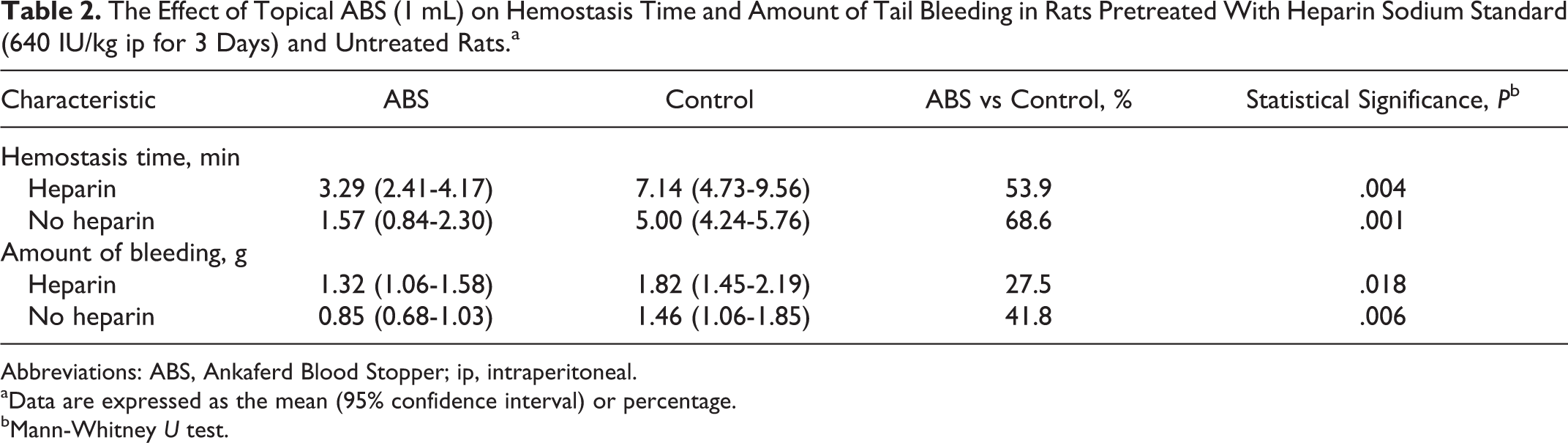
Abbreviations: ABS, Ankaferd Blood Stopper; ip, intraperitoneal.
aData are expressed as the mean (95% confidence interval) or percentage.
bMann-Whitney Utest.
Without heparin pretreatment (groups 1 and 2), ABS administration decreased the amount of bleeding by 0.85 ± 0.18 g or 41.8% (95% CI 0.68-1.03 g) compared to the saline-treated group (mean ± SD 1.46 ± 0.42 g; 95% CI 1.06-1.85; P = .006). With heparin pretreatment (groups 3 and 4), ABS decreased the amount of bleeding by 1.32 ± 0.28 g or 27.5% (95% CI 1.06-1.58) compared to the saline-treated group (mean ± SD 1.82 ± 0.39 g; 95% CI 1.45-2.19; P = .018; Table 2; Figure 2).
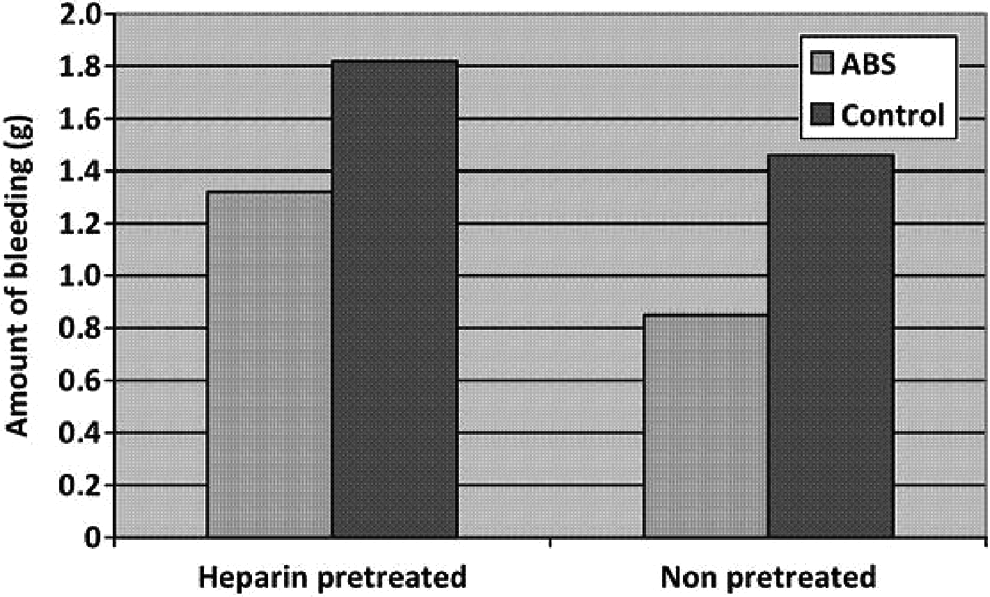
Hemostatic effect of Ankaferd Blood Stopper (ABS, 1 mL) on the amount of tail bleeding in rats pretreated with standard heparin sodium (640 IU/kg intraperitoneally [ip] for 3 days) and untreated rats.
Discussion
This study evaluated the hemostatic effects of ABS as a novel topical hemostatic agent in vivo in a rat tail bleeding model alone or in the presence of standard heparin sodium. Several hemostatic measures including tourniquets, nonadherent pads soaked with saline–adrenaline solution, or subcutaneous insufflation with epinephrine solution are preferred to control external and internal bleeding. 18 –20 In addition, local hemostatic agents such as collagen-, gelatin-, or cellulose-based products, fibrin, and synthetic glues or adhesives can be used for venous or moderate arterial bleeding associated with parenchymal injuries. 8,18 The effect of cellulose-based hemostatic agents on bleeding has been less well studied, and only case reports that support their use are available. These topical agents can be particularly useful when there is easy access to the bleeding area. 8
Sustaining hemostasis in acute life-threatening hemorrhage among patients with trauma is a challenging task and requires extensive effort; commercially available hemostatic products are generally insufficient or too slow to achieve hemostasis in extreme cases. 18 The ABS, which has long been used as a traditional medicine in Anatolia, represents an alternative treatment modality for several kinds of bleeding, such as external and dental surgical bleeding. 12,13 Its significant effect on hemostasis has been shown in several animal and human studies involving vascular, skin, and visceral surgery. 15,16,21
One previous in vitro study clearly showed that the addition of ABS to human umbilical vein endothelial cells (HUVECs) established a rapid formation of a complex protein web between the HUVECs and increased the level of activity of the transcription factors. 22 These transcription factors regulate numerous intracellular biological pathways, including hemostasis, infection, cellular proliferation, and inflammation. 22,23 The cellular effects of ABS as depicted in HUVECs depend on the dose and concentration. 23
The external application of ABS as a spray, solution, and or on a treated dressing has been shown to be effective in halting bleeding in superficial and deep abdominal skin in a swine bleeding model. In 1 study, it was reported that a 40-second application of an ABS-treated dressing was sufficient to obtain hemorrhage control in skin lacerations, whereas 1.5 and 3.5 minutes applications were effective for controlling hemorrhage from the saphenous vein and artery, respectively. 16 Gungor et al 21 demonstrated that the topical use of ABS, applied endoscopically, was effective for controlling active nonvariceal upper gastrointestinal bleeding, particularly in young patients with no coagulopathy. Ulus et al 24 showed that topical application of ABS in an experimental major arterial vessel injury model reduced bleeding time and blood loss under normal and elevated intra-arterial blood pressure. They suggested that ABS-induced erythroid aggregation had an important impact on the vascular tissue level.
The present in vivo study using a rat tail bleeding model showed that ABS has a hemostatic effect in rats with or without heparin pretreatment, when applied with a compressive dressing. In normal rats, it was possible to achieve hemostasis in a mean time of 1.57 minutes with topical administration of ABS; even after exacerbation of bleeding with heparin pretreatment, topical ABS treatment facilitated hemostasis within a mean time of 3.29 minutes.
Although previous animal studies have shown that ABS effectively induces hemostasis in patients with coagulopathy due to defective platelets or coagulation factors, clinical reports regarding its efficacy under such conditions are contradictory. 6,25 Some studies have indicated that ABS treatment is effective in patients with normal hemostatic parameters as well as those with primary or secondary coagulation defects 18,26,27 ; however, another study found insufficient hemostasis. 21 Aktop et al 28 used Celox and ABS as a new hemostatic agents to evaluate the efficacy of these new generation hemostatic agents on early-stage soft tissue healing of warfarin-treated rats by measuring the tissue factor (TF) activities. They showed that both the hemostatic agents positively affected the hemostasis. In the Celox-treated group, dermal tissues had higher TF activity when compared to ABS-treated group. Moreover, the ABS affected the early-stage healing positively in clinical aspect, whereas Celox was more effective on hemostasis by means of increasing TF activities.
In a rat tail bleeding model, Kosar et al 13 reported that topical ABS administration reduced both the duration and the amount of bleeding in animals treated with acetylsalicylic acid or enoxaparin. Similarly, Cipil et al 25 found that topical ABS administration markedly shortened the duration of bleeding after leg amputation, with or without previous warfarin treatment. In the present study, the effectiveness of ABS was found to be statistically significant when compared to either untreated or heparin-treated controls, both in terms of decreasing hemostasis time as well as bleeding volume. After vascular bleeding was induced through tail tip amputation in the heparin-treated group, the application of ABS solution resulted in instant hemostasis (Figures 3 and 4, respectively). These results are unique in that they are the only data in which the hemostatic effect of ABS is compared between normal (untreated) and heparin-treated rats using a tail bleeding model.
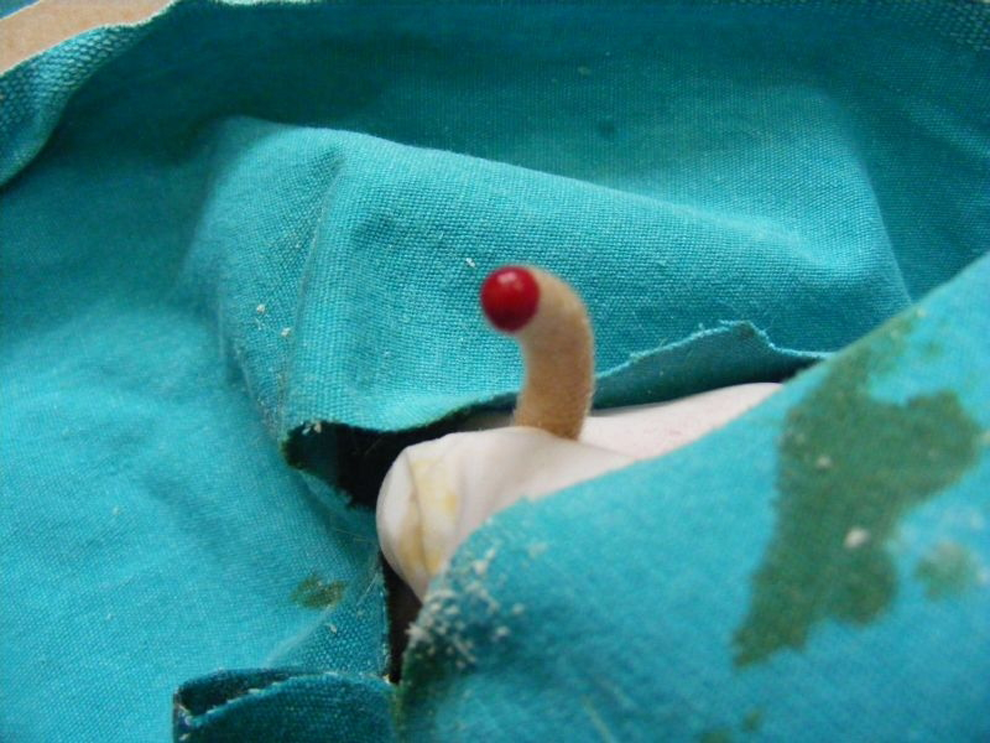
View of bleeding secondary to transverse amputation of the tail tip in a rat pretreated with standard heparin sodium (640 IU/kg for 3 days intraperitoneally [ip]).
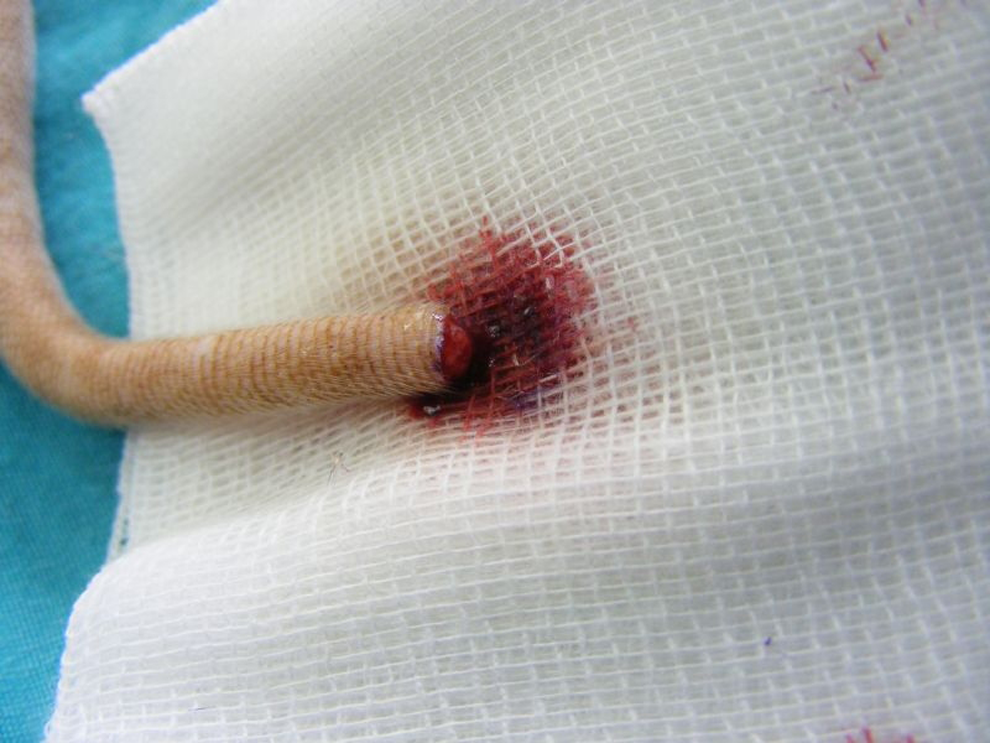
Effective hemostasis is achieved rapidly after topical administration of Ankaferd Blood Stopper (ABS, 1 mL).
Conclusion
Our preliminary study demonstrated that ABS applied with a compressive dressing markedly improves hemostasis after tail tip amputation in a rat tail bleeding model, in both heparinized and nonheparinized animals. As such, this safe, effective, and rapid-acting topical should be considered a potential adjunct therapy for the management of uncontrolled bleeding following major trauma. Randomized controlled clinical trials are needed to compare ABS application alone and in combination with other local hemostatic procedures (eg, pressure point control, tourniquets, or pharmacological agents).
Footnotes
Declaration of Conflicting Interests
The author(s) declared no potential conflicts of interest with respect to the research, authorship, and/or publication of this article.
Funding
The author(s) received no financial support for the research, authorship, and/or publication of this article.