




Abstract
In the effort to adapt the urban environment to climate change, motivating residents is key. Various communication guidelines have been proposed in the literature, but few have been tested in practice. This study reports on the development and use of an interactive communication tool based on these guidelines; this tool aimed to motivate climate-adaptation actions in private gardens through increasing self-efficacy. After using the tool, participants showed a significant increase in their willingness to act for climate adaptation. On this basis, some recommendations can be formulated to promote effective communication able to motivate action.
Keywords
Introduction
Motivating Residents for Climate Adaptation
Climate-related problems such as heat stress, extreme precipitation, and drought issues increasingly impact the urban living environment (European Commission, n.d.; Intergovernmental Panel on Climate Change [IPCC], 2023). While mitigating the effects of climate change on our environment (e.g., by reducing emissions) is crucial to keep repercussions to a manageable level (Dutch Ministry of Infrastructure and Environment, 2016), adaptation to the inevitable changes that are already happening is equally important (IPCC, 2023). As half of the global population now lives in cities (Zhang, 2016), there is an urgent call for climate adaptation in urban areas (Global Commission on Adaptation, 2019). Climate-adaptation interventions can increase resilience to urban flooding, drought, and heat stress through, for example, providing more room for rainwater to be stored and infiltrated into the ground, or by keeping the environment cooler through shading and evapotranspiration (IPCC, 2023).
Within the urban fabric, a considerable proportion of space is dedicated to private gardens (Cameron, 2023). This can range from 16% in Sweden (Colding et al., 2006) up to 47% in UK cities (Loram et al., 2007). Therefore, by applying climate-adaptive measures (e.g., replacing paving by planting, or collecting rainwater) in their private gardens, residents could play a vital role in the creation of an effective climate-adaptive urban environment (Hegger et al., 2017; Sheppard et al., 2011; Uittenbroek et al., 2019). However, motivating residents to actively participate in climate-adaptation actions requires effective communication mediums (Lorenzoni et al., 2007; Sheppard et al., 2011; Wirth et al., 2014).
Communicating Climate Adaptation
In its early phases, research related to the communication of climate change and adapting to its repercussions focused on communicating causes and effects of climate change and related misconceptions (Wirth et al., 2014). Soon, the focus migrated to communicating climate science in a more comprehensible way and to motivating climate mitigation actions (Wirth et al., 2014). As climate adaptation initially did not get the same attention as mitigation (Moser, 2014), research and effective communication on climate adaptation (especially in urban areas) still requires further development (Moser, 2014; Uittenbroek et al., 2019).
Alongside the shift toward motivating climate mitigation actions, theories for effective communication also shifted. Early research often focused on emotional fear-inducing messages, aimed primarily at raising awareness for climate change (O’Neill & Nicholson-Cole, 2009; Wirth et al., 2014). However, effectiveness of this approach has been debated (O’Neill & Nicholson-Cole, 2009; van der Linden, 2014; Wirth et al., 2014). As van der Linden (2014) noted, little increase was observed in the action-taking behavior despite various information campaigns and findings of increased awareness and concern with climate change. This illustrated two important lessons: (a) knowledge or awareness does not necessarily lead to behavioral change (van der Linden, 2014; van Valkengoed & Steg, 2019b), and (b) more than awareness-raising is necessary to motivate action-taking behavior. Following this, various studies provide theories and recommendations on how to motivate people for climate-adaptation actions. Often, authors have recommended to counter information on risks and problems caused by climate change with information on solutions and actions that people can take against it (Grothmann & Patt, 2005; van der Linden, 2014; Wirth et al., 2014). This should provide the receiver of the information with a sense of self-efficacy: a feeling that they can actually make a difference by taking action (van Valkengoed & Steg, 2019b). Many authors propose self-efficacy as an important predictor for pro-environmental intentions (Azjen, 1991; Grothmann & Patt, 2005; Moser, 2014; O’Neill & Nicholson-Cole, 2009; Rogers, 1983) and behavior (Ajzen, 1991; van Valkengoed et al., 2023). Among others, it is a critical component in protection motivation theory (PMT; Rogers, 1983). Other authors using similar components as mentioned in PMT include Ajzen (1991), O’Neill and Nicholson-Cole (2009), Moser (2014), van Valkengoed and Steg (2019a), and Wirth et al. (2014). As it has shown to be able to predict pro-environmental behavior (van Valkengoed & Steg, 2019b), PMT is used here as a main theoretical framework, with which other theories and recommendations for communication can be linked.
Protection Motivation Theory
PMT was first formulated by Rogers (1975) in the context of health care, to explain how to motivate individuals to protect their own health against a perceived threat. Since then, it has been applied to other fields of interest, recently including the study of pro-environmental and adaptive behaviors (Grothmann & Patt, 2005; Kothe et al., 2019; Rainear & Christensen, 2017). In particular, a meta-analysis showed that two of its components, perceived self-efficacy and outcome efficacy, were strongly associated with adaptive behavior (van Valkengoed & Steg, 2019b). Grothmann and Patt (2005) used PMT as a basis for their model of private proactive adaptation to climate change (MPPACC).
There are two main processes within PMT, which combine into an individual’s intention (“willingness to act”) and eventually behavioral change (Kothe et al., 2019). The first process, threat appraisal, consists of an assessment of the threat’s severity and susceptibility, contrasted by received benefits in the case of neglecting protective behavior. The second process, coping appraisal, encompasses the individual’s perceived efficacy of the response against the threat (outcome efficacy); the cost of this response; and self-efficacy: the individual’s confidence in its ability to carry out the response (Kothe et al., 2019; van Valkengoed & Steg, 2019a). Accordingly, an individual is more likely to perform climate-adaptative behaviors if the severity of and susceptibility for climate risks, as well as the efficacy of the adaptation action and one’s self-efficacy, are perceived as high, while the cost and maladaptive response rewards are perceived as low (Kothe et al., 2019; Moser, 2014). For example, promoting actions such as depaving a garden to prevent flooding may affect behavior more if the audience is made aware of the ease, low cost, and effectiveness of depaving, as well as the low benefit of retaining a paved garden.
To operationalize an adaptive action-taking behavior, previous studies have proposed measuring pro-environmental intention, or willingness to engage in pro-environmental actions (“willingness to act”; Arlt et al., 2011; Bamberg & Möser, 2007; Evans et al., 2014). Willingness to act can be regarded as an indicator of factors determining people’s action-taking behavior (Biesbroek et al., 2011). Although the predictive capacity of willingness to act for action-taking behavior varies over different behavioral types and age groups (McEachan et al., 2011), it often remains used as an indicator (Kothe et al., 2019). Figure 1 shows how willingness to act was integrated into the traditional PMT model for this study.
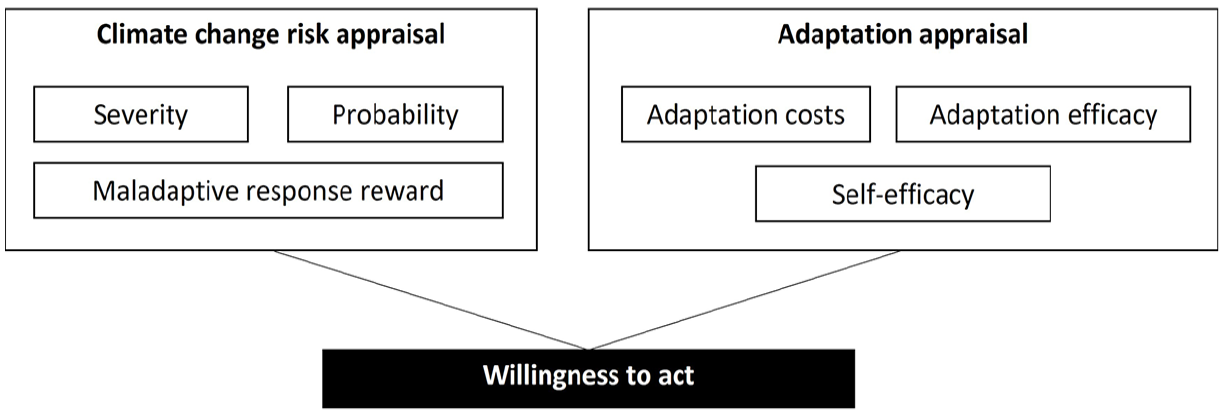
A Schematic Depiction of the PMT Model as Discussed in This Article.
Translating Communication Theories to Practice
While studies can be found with recommendations on effective communication (e.g., Sheppard et al., 2011; Wirth et al., 2014), theory and practice seem disconnected. Many recommendations from literature remain vague in terms of how to apply them and/or are not tailored toward motivating adaptative actions, while at the same time, effects of existing communication means remain unclear.
The translation from theory to practice is an important topic in various fields of research. Many studies concerning this can be found in the medical field (see, e.g., the studies by Scholz et al., 2021; Strifler et al., 2018) and educational context (see, e.g., the studies by Brinegar et al., 2022; Gerlak et al., 2020; Gray & Holyoak, 2021) but also in various other contexts (see, e.g., the work of Pătru-Stupariu et al., 2020; Sharma et al., 2022).
A large number of studies connecting theory and practice roughly follow a process described in the Knowledge To Action (KTA) Framework (Graham et al., 2006). This process progresses as follows:
Identification of the problem
Selecting relevant knowledge/research
Adapting the identified knowledge/research to the local context
Assessing barriers to using the knowledge
Tailoring interventions to promote the use of the knowledge to the target group and address possible barriers and implement the interventions
Monitoring the knowledge use
Evaluating the outcomes of using the knowledge
Sustaining ongoing knowledge use
(adapted from Graham et al., 2006).
While the KTA framework was originally developed for use within the context of health care (Graham et al., 2006), it proved well-suited to our efforts of connecting theory to practice on climate-adaptation communication.
The problem we identified was non–climate-adaptive gardens in urban settings, with a target group of urban residents maintaining and designing their own garden. The relevant knowledge to be communicated was therefore the type of climate-adaptation actions residents can undertake in their own gardens and the means by which they could achieve this. How to communicate this was based on knowledge from previous literature (e.g., Moser, 2010, 2014; Sheppard, 2005), which we categorized and linked with PMT. In addition, we considered knowledge from communication practice, such as existing tools and methods (Graham et al., 2006).
The adaptation of identified knowledge to the local context is an important phase as recognized by multiple authors in climate change–related communication (Moser, 2010; Shaw et al., 2009). Some recommendations relating to this phase are depictions of recognizable settings to the target group (Sheppard et al., 2011), tailoring the information to the target group, and translating climate change impacts and adaptation to everyday life (Wirth et al., 2014). In relation to PMT, these factors may help in communicating climate-related risks and efficacy of measures relevant to the target group, thereby contributing to fitting threat appraisal and perceived response efficacy (Kothe et al., 2019).
The assessment of barriers can entail both barriers to the uptake of the offered knowledge (Graham et al., 2006) and barriers that hamper the use or application of the knowledge (Torres & Dixon, 2023). In the latter case, identified barriers include a lack of awareness or understanding of climate change–related problems and their solutions (Biesbroek et al., 2011; Lorenzoni et al., 2007), which may lead to confusion and skepticism (Lorenzoni et al., 2007), negatively influencing adequate threat appraisal (Kothe et al., 2019). In addition, a lack of resources (Biesbroek et al., 2011; Lorenzoni et al., 2007) may, for example, result in less adaptation actions due to the costs of the actions being too high (Kothe et al., 2019), and confusion or denial regarding responsibility can result in a lack of action-taking, even if one is aware of the threats (Hegger et al., 2017; Trell & van Geet, 2019). Finally, skepticism, fatalism, or helplessness may also pose barriers to act, or acting against climate change might seem too inconvenient for someone’s current lifestyle (Lorenzoni et al., 2007). These barriers may cause an individual to lose confidence that implementation of climate-adaptation measures would improve the situation, leading to maladaptation (Kothe et al., 2019). Communication could help overcome these barriers, for instance, by providing people with comprehensible and salient information on climate change and adaptation options (e.g., Sheppard et al., 2011; Wirth et al., 2014), thereby increasing confidence in self-efficacy and outcome efficacy (Kothe et al., 2019).
To ensure successful knowledge uptake, the medium of communication also matters. An important aspect in effective communication of climate risks and adaptation options is a collaborative analysis of potential problems and solutions (Moser, 2014; Shaw et al., 2009). While dialogical settings (e.g., workshops) may be preferable (Moser, 2014; Wirth et al., 2014), few people attend physical workshops, even when located close by (Citisens, 2018). In addition, it is challenging to explain complex matters in the short time span of regular participatory meetings (Evans-Cowley & Hollander, 2010). Evans-Cowley and Hollander (2010) and Shen and Kawakami (2010) illustrate that online workshops could provide a suitable alternative to physical ones. However, online workshop attendees may still feel uncomfortable or hesitant with making decisions about private spaces (Shen & Kawakami, 2010). An accessible stand-alone digital tool could alleviate time management and privacy-related barriers and provide an alternative for physical attendance.
In order to create a tailored knowledge intervention, several methodologies can be deployed. For example, Dulic et al. (2016) applied an iterative design process integrating co-design sessions with their target group. Grothmann et al. (2017) based the development of their communication format on a target group analysis and focus group workshop. Sheppard et al. (2011) used participatory scenario building.
Monitoring knowledge use considers how knowledge is spread and used within the target group, and evaluating the outcome of knowledge use determines the impact of using the knowledge. Monitoring use and effects of knowledge is possible through (pre and post) questionnaires (Grothmann et al., 2017; Torres & Dixon, 2023). As this was an exploratory study, the last two phases as described by Graham et al. (2006), evaluating the outcome of using knowledge and sustaining knowledge use, are beyond our scope due to requiring considerable time investments.
Knowledge Gaps
While an abundance of studies focus on literature reviews and evaluations of existing communication tools and methods (e.g., Mitchell et al., 2016; Swart et al., 2017), few studies employ an experimental setup to test the effectiveness of their recommendations (e.g., Monani et al., 2018; Schroth et al., 2014) in terms of their ability to increase willingness to act. This suggests the knowledge use is rarely empirically monitored. Among the studies that do employ an experimental setup, a focus on motivating climate adaptation seems to be lacking.
Simultaneously, despite the lack of specific communication guidelines, there are numerous webpages aimed at motivating residents for climate-adaptation actions, such as replacing paving by planting or installing a rain barrel. Examples found within the Netherlands include infographics of Tuinhappy (2022) and Amsterdam Rainproof (2021). Their effectiveness on willingness to act or actual behaviors remains unclear, however.
Furthermore, a systematic review by Kothe et al. (2019) found only limited empirical evidence of causal relationships between PMT’s main factors and pro-environmental behaviors. In addition, in a meta-analysis, van Valkengoed and Steg (2019b) found few empirical studies establishing causality between the variables such as those described within PMT or testing interventions’ effectiveness on encouraging adaptation behaviors (van Valkengoed & Steg, 2019b). The link between building self-efficacy and increasing willingness to act deserves more attention.
Finally, despite a plethora of communication tools, methods, and recommendations being available from both research and practice, specificity in how to apply recommendations is lacking.
Research Questions and Objectives
To address these knowledge gaps, we created a web-based interactive tool aimed at motivating urban residents’ willingness to act toward climate adaptation in their own private garden. In this study, we focused on an online interactive tool as it is broadly accessible and allowed successful knowledge uptake, even during the COVID-19 pandemic during which this study was carried out.
Our aim was to evaluate the applicability and effectiveness of existing recommendations for motivating willingness to act for climate adaptation through communication. Through applying recommendations from previous studies as guidelines in the creation process of an online interactive tool and testing the tool in a participant sample, we aim to offer (a) an example of an online tool aimed at motivating residents for climate-adaptation actions, based on previous recommendations; (b) insights into the creation process of such a tool; and (c) evaluating the efficacy of such a tool in increasing the willingness to act, thereby also evaluating the recommendations from previous studies.
The main research question tackled by this study is as follows:
How can an interactive online communication tool effectively increase urban residents’ willingness to act toward climate-adaptation actions in their private gardens?
This is addressed through answering the following questions:
Which design guidelines for the creation of an interactive online tool can be formulated, based on recommendations from previous studies?
How can these guidelines be practically implemented in an interactive online tool?
What is the efficacy of the resulting tool on urban residents’ willingness to act toward climate adaptation?
General Methodology and Study Setup
In answering these research questions, we employed a “Research through Design” (RtD) approach. This approach allows the creation of embodied knowledge, bridging the gap between theory and practice (Lenzholzer et al., 2013). Through this approach, communication knowledge can be translated into practical guidelines that underlie the design of the communication tool. The tool can then be tested according to specific and systematic criteria, which allow the design guidelines to be refined as recommendations for future communication endeavors (Cortesão & Lenzholzer, 2022). RtD follows an iterative process (Nijhuis & Bobbink, 2012) in which each iteration consists of creating design alternatives, followed by an evaluation to determine which alternative is most suitable. In this study, RtD is applied in three separate phases, each tackling a sub-research question (Figure 2):
The first phase consists of preparatory research to select relevant knowledge and adapting it to the local context, to support the creation of garden settings and climate-adaptation measures. In this phase, design guidelines based on literature are also formulated and linked to the mechanisms of PMT.
The second phase consists of designing the tool using the formulated guidelines from Phase 1 and testing the tool in three iterations to refine its design. This phase allows the application of theoretical knowledge to create a tailored communication intervention, in order to promote the use of this knowledge by the target group and to assess barriers to using it.
In the third phase, two alternatives of the tool are disseminated and tested using real participants in order to monitor the knowledge use. The output indicates the most suitable tool version to achieve the design goal of motivating residents’ willingness to act toward climate adaptation.
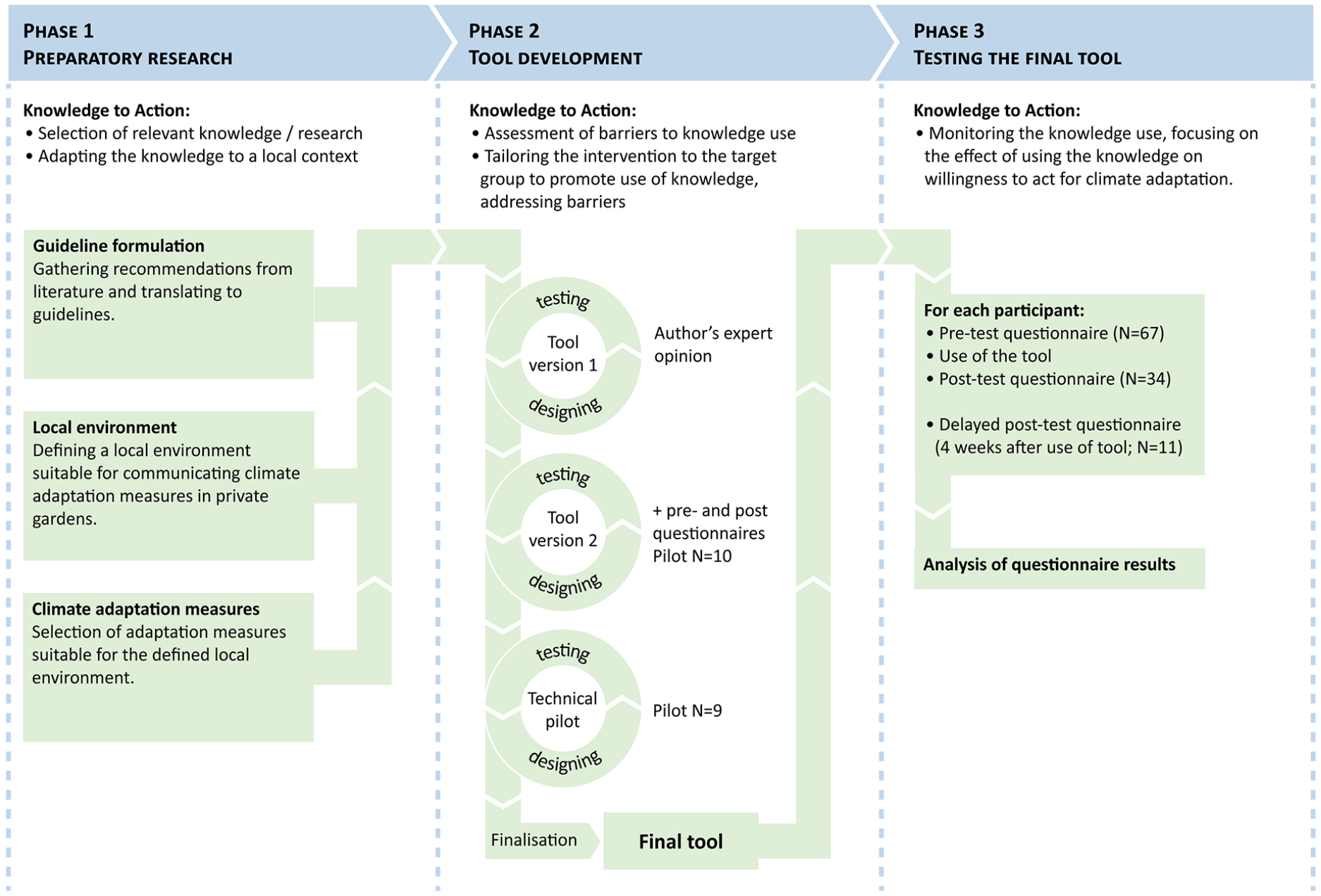
An Overview of the Methodology Adopted in This Study.
Because of the iterative nature of RtD, each phase is presented in succession with its own methodology and results.
The study was conducted in the Netherlands during the COVID-19 pandemic and was aimed at common Dutch garden settings. In the urban context of the Netherlands, the share of residents with access to a private garden ranges from 27% (highly urbanized) to 76% (moderately urbanized). Garden sizes also vary with urban density: from 86 m2 (highly urbanized) to 140 m2 (moderately urbanized; gardens under 5 m2 and apartment gardens were not taken into account; de Vries et al., 2023). The Netherlands lags behind in the European context in creating a sustainable living environment and transitioning toward renewable energy sources. However, concern is growing among Dutch residents regarding climate change and its impacts (Wennekers, 2019).
Phase 1—Preparatory Research
A literature review was carried out to collect recommendations for communication of climate-adaptation actions. In addition, we conducted a landscape analysis of suitable private-garden environments and associated climate-adaptation measures to be represented in the tool.
Methods
Formulation of Communication Guidelines
Through a literature search, we collected recommendations for communicating climate-adaptation actions, and how they could be applied. We then translated these recommendations into concise guidelines that we applied in the creation process of the online interactive tool. The selected communication guidelines are presented below in the “Communication guidelines” section.
Inventory of Garden Settings and Adaptation Measures
Recommendations from previous studies indicated the importance of adapting knowledge to a local context through a visual approach and recognizable and relatable local settings (Sheppard, 2005; Sheppard et al., 2011; Wirth et al., 2014). Therefore, we selected a specific neighborhood within the Netherlands to allow more specific localized garden environments to be represented in the tool. To test the impact of this specification, we created two variations of the online interactive tool: one in which respondents could choose between different garden environments to represent their own (customisable version), and another only displaying a standardized common garden environment (standardized version).
Therefore, we selected several garden environments within one neighborhood in the city of Arnhem. Within the Netherlands, the municipality of Arnhem was one of the first to set up a strategy for climate adaptation (Straver, 2020). Within this municipality, the neighborhood of Rijkerswoerd displayed a variety of garden environments and offered several community networks for dissemination of the online interactive tool among its residents, increasing the likelihood of the environments being recognizable and relatable. Rijkerswoerd is home to approximately 12,000 residents of all age groups, the majority of which (56%) are of Dutch origin. Households consist of couples without children (27%) or with children (30%) and single person households (34%; Gemeente Arnhem, 2020). Most residents in Rijkerswoerd reside in a house with a garden (Gemeente Arnhem, 2020; Google Maps, n.d.), which is in most cases (59%) owned rather than rented. Residents of Rijkerswoerd have an average-to-high income (Gemeente Arnhem, 2023), which may allow for investment in climate-adaptive actions.
In order to select the common garden types, we used Google Maps and Google Street View (Google Maps, n.d.), supplemented by site visits and photographs, to categorize street and building types throughout the neighborhood. For the most prevalent street and building types, we mapped garden characteristics, including sizes and the presence of sheds. From this analysis, we identified four common row-house-type buildings, four semi-detached house–type buildings, and two sets of front and back gardens, fitting the two building types. Comparing with other neighborhoods through satellite maps, and with other existing communication tools on climate adaptation (Amsterdam Rainproof, 2021; Tuinhappy, 2022), we identified one garden environment as common to the majority of Dutch neighborhoods. This garden environment was selected as standardized garden environment.
We then selected a number of climate-adaptation measures relevant to the chosen environments and suitable for representation in the tool. Measures were first gathered through a literature search and selected on suitability for (a) implementation on existing housing (e.g., greening walls) or (b) implementation in private gardens. In addition, adaptation options had to be accessible and effective to increase the likelihood of affecting adaptation appraisal and self-efficacy (Kothe et al., 2019; van Valkengoed & Steg, 2019b). Finally, we chose adaptation measures that were easy to implement, so that most residents would be able to perform them without the need for professional services.
Results
Communication Guidelines
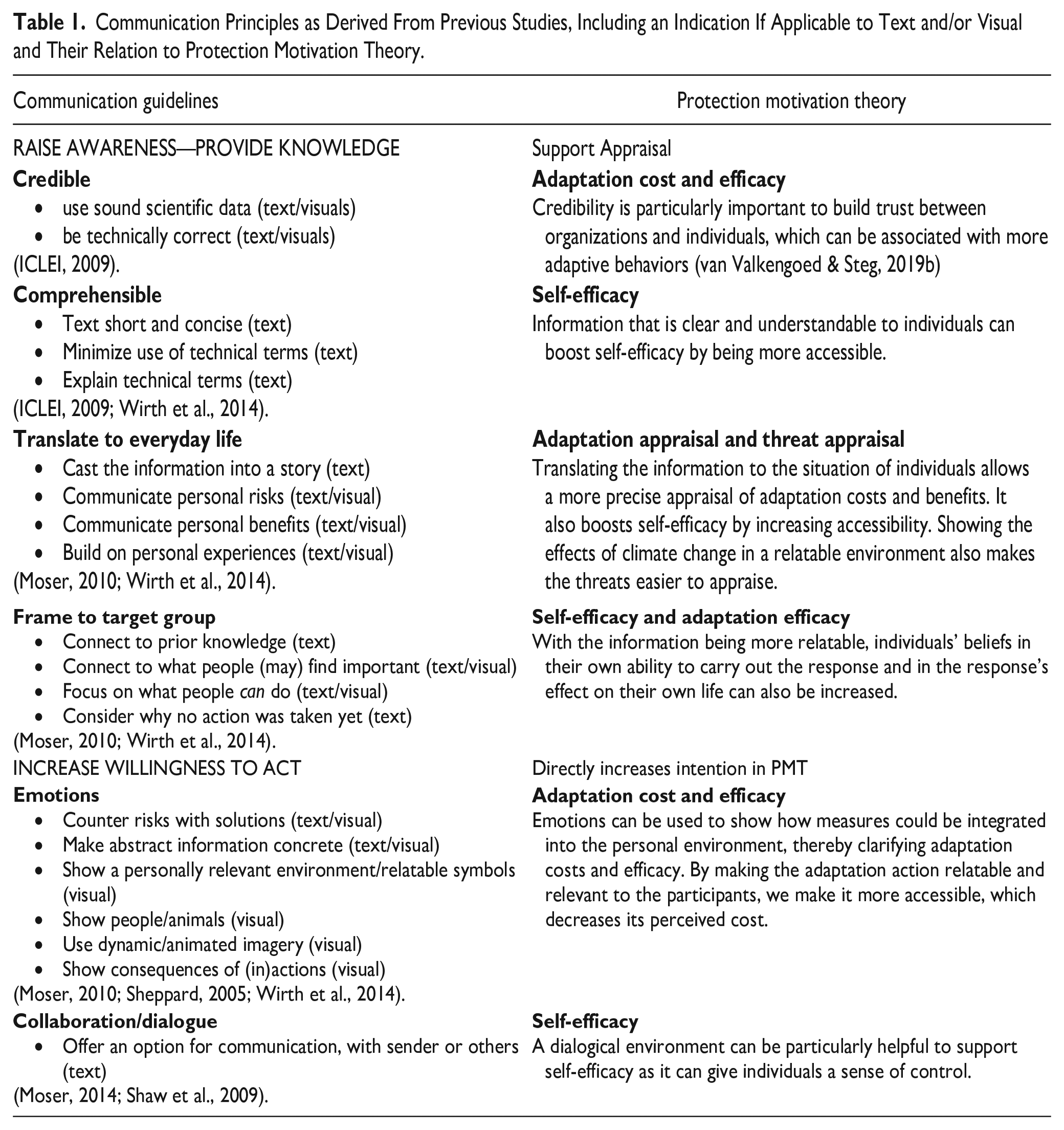
Recommendations as found in previous literature can be roughly divided into six main guideline categories: credible, comprehensible, translate to everyday life, frame to target group, emotions, and collaboration/dialogue. The first four categories support risk appraisal, while emotions and dialogue are meant to motivate willingness to act (Wirth et al., 2014).
By framing information to a target group and translating it to everyday life, relevance to the audience may increase, likely motivating risk appraisal and perceived efficacy of adaptation measures tailored to their own environment (International Council for Local Environmental Initiatives [ICLEI], 2009). While fear-inducing messaging is debated (van der Linden, 2014), several authors recommend increasing salience of risk severity and susceptibility (risk appraisal) by showing risks in a localized personally relevant environment and including people and/or animals, potentially evoking negative emotions (Sheppard, 2005; Wirth et al., 2014). This information should be accompanied by information increasing positive feelings of self-efficacy (van Valkengoed & Steg, 2019a; Wirth et al., 2014), for example, by presenting actions that people can easily do themselves (O’Neill & Nicholson-Cole, 2009). In addition, outcome efficacy can be encouraged by showing the benefits of adaptation actions (Moser, 2014). Examples of previous studies in which some of these recommendations are applied in a communication medium include those of Sheppard (2005), Sheppard et al. (2011), and Dulic et al. (2016).
Table 1 shows a summary of recommendations and their links to PMT factors. The guidelines in the left column were used for the creation of the online interactive communication tool, in Phase 2 of the study.
Communication Principles as Derived From Previous Studies, Including an Indication If Applicable to Text and/or Visual and Their Relation to Protection Motivation Theory.
Garden Settings and Adaptation Measures
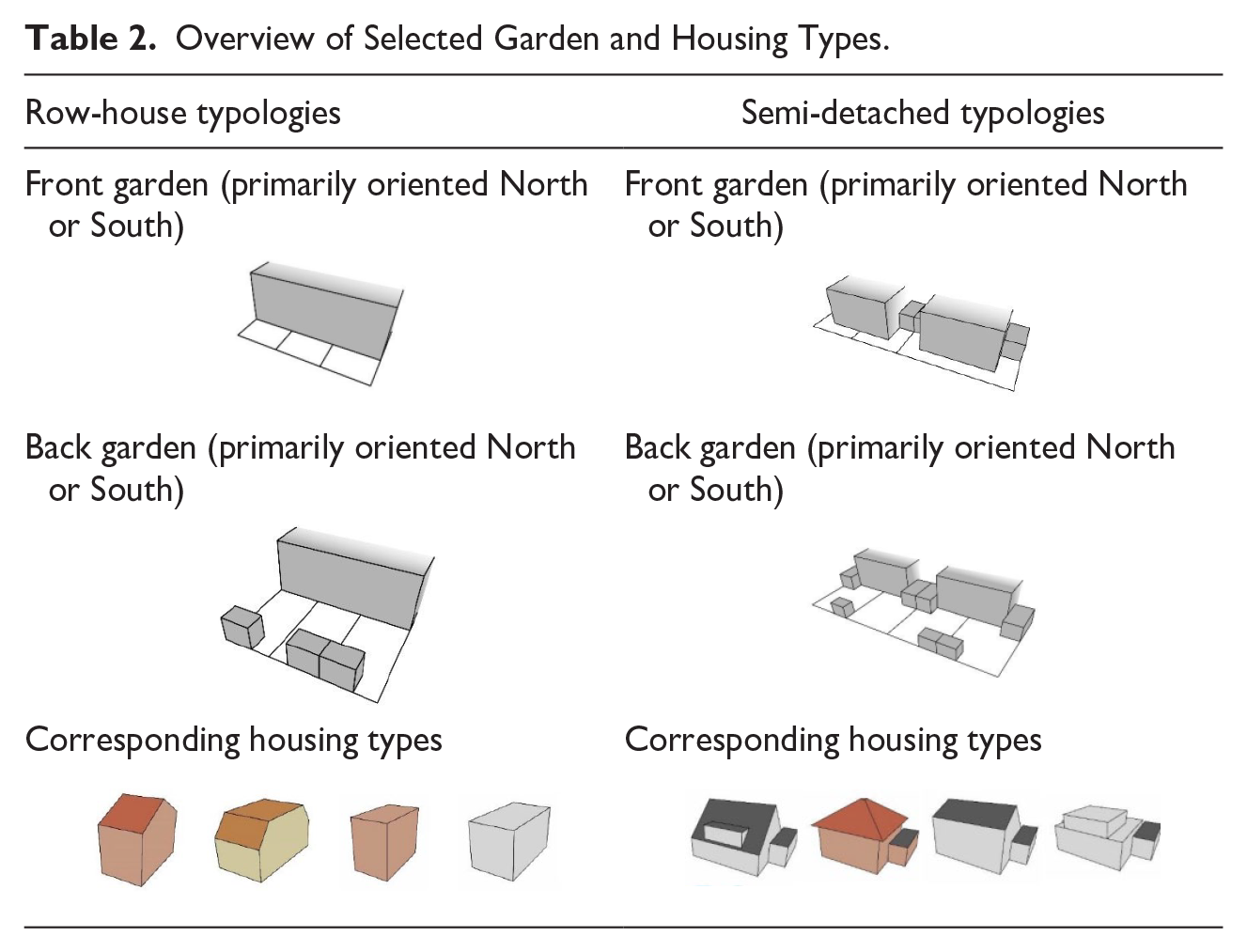
Selected garden settings consisted of a row-house type and a semi-detached house type, both with front and back gardens (Table 2). For both types, four different houses were selected with identical ground-floor dimensions so that participants could switch them smoothly. The standardized garden setting consisted of a garden by a row-house with gable roof (see the bottom row on the far left, Table 2). For the row-house and semi-detached-type back gardens, two orientations (North and South) were selected to include in the online interactive tool. This led to four different sets of front and back garden settings included in the customizable tool version.
Overview of Selected Garden and Housing Types.
The final selection of climate-adaptation measures relevant to the selected garden settings consisted of building modifications (e.g., green roof, green facade), material use (e.g., porous/permeable paving, high albedo materials), objects and constructions (e.g., demarcation element, rain barrel, height differentiation), and planting (e.g., trees, planted screens, helophyte filters, low/middle/high vegetation). A complete overview of the garden types and selected adaptation measures can be found in Supplemental Appendix I.
Phase 2: Tool Development
As relevant knowledge was selected and adapted for use in the tool, it could now be designed and tested before dissemination (Phase 3). In this phase, we also assessed potential barriers to uptake of knowledge communicated by the tool by ensuring its clarity and comprehensibility. This allowed a further tailoring of the tool to the target group.
Methods
Development Process
We created designs for three different aspects of the tool:
Introductory information
Interactive garden environments
General interface
The introductory information explained climate change impacts (risk appraisal) and the concept of climate adaptation and introduced the interactive garden environments. It was presented on the first pages of the website and consisted of text with explanatory animations of climate change repercussions and climate-adaptation actions.
We created climate-adaptive garden designs for the garden environments defined in Phase 1, including as many of the selected adaptation measures as the respective environments allowed. In the garden designs, visibility and realistic placement of measures were considered, resulting in different designs for each garden setting and orientation. The designs were aimed to provide a visual representation of climate-adaptation measures, showing examples of implementation in the garden environments. Each climate-adaptation measure was accompanied by a textual explanation.
The animations of climate change repercussions, climate-adaptation actions, and the climate-adaptive garden environments, including their interactive interface, were all built in Blender (2019) using the Blender plug-in Blend4Web (Blend4Web CE, 2019). Blend4Web made it possible to deploy the tool in a web browser without installing an application, thereby eliminating a first potential barrier. To achieve this, the interactive elements and animations were embedded on a website. The website texts and interface were created in Adobe Dreamweaver (2020) and deployed on a Wageningen University server.
We applied the selected guidelines (see Table 1) in all three designs, using guidelines appropriately depending on their applicability to either text or visuals.
Evaluation of the Tool (First Three Iterations)
Each design was evaluated and improved iteratively. A first concept of the tool was evaluated solely through expert judgment by the designer with regard to the formulated communication guidelines. Design 2 was tested using a convenience sample (N = 10) of people within direct and secondary personal network, to test the representation of the communication guidelines in the tool and its technical usability. In this pilot, the entire testing procedure of Phase 3 was evaluated. A final test involved nine participants from the same sample, to see if the final tool and website were functioning properly for Phase 3. In the evaluation process, we relied on expert judgment (every iteration), conversations with participants after use of the tool (Design 2), and questionnaire outputs (Design 2 and final tool).
Formulation of Testing Criteria
Each iteration was tested for the following criteria:
Application of theory, the extent to which the communication guidelines (see Table 1) were implemented
Usability, the extent to which the tool could be understood by users and used without facing barriers
Questionnaires were built to evaluate both these criteria. Questions considering the representation of communication guidelines were inspired by the questionnaire from Klemm (2018): Formulation was similar, but the content was tailored to match the guidelines and subject of this study. Each guideline category was measured through at least three statements, including the following: “I believe that the actions as presented in the tool are based on credible information” (Credibility; three statements, Cronbach’s α = .71); “I understand the effects of the actions as presented in the tool” (Comprehensibility; six statements, Cronbach’s α = .83); “The information shown in the tool connects to what I find important” (Framing to the target group; three statements, Cronbach’s α = .36); “The setting presented in the tool fits my own personal environment” (Translating to everyday life; four statements, Cronbach’s α = .73); “The tool makes me feel like I can really contribute to a more climate adaptive environment” (Emotions; three statements, Cronbach’s α = .80); and “The option in the tool to contact the developer feels accessible” (Dialogue; three statements, Cronbach’s α = .76). Included reliability scores are from this study’s final sample.
All statements included a five-point Likert-type scale (“completely disagree” to “completely agree”). Open feedback was gathered through two open questions addressing participants’ opinion on (a) positive aspects and (b) points of improvement for the tools.
Results
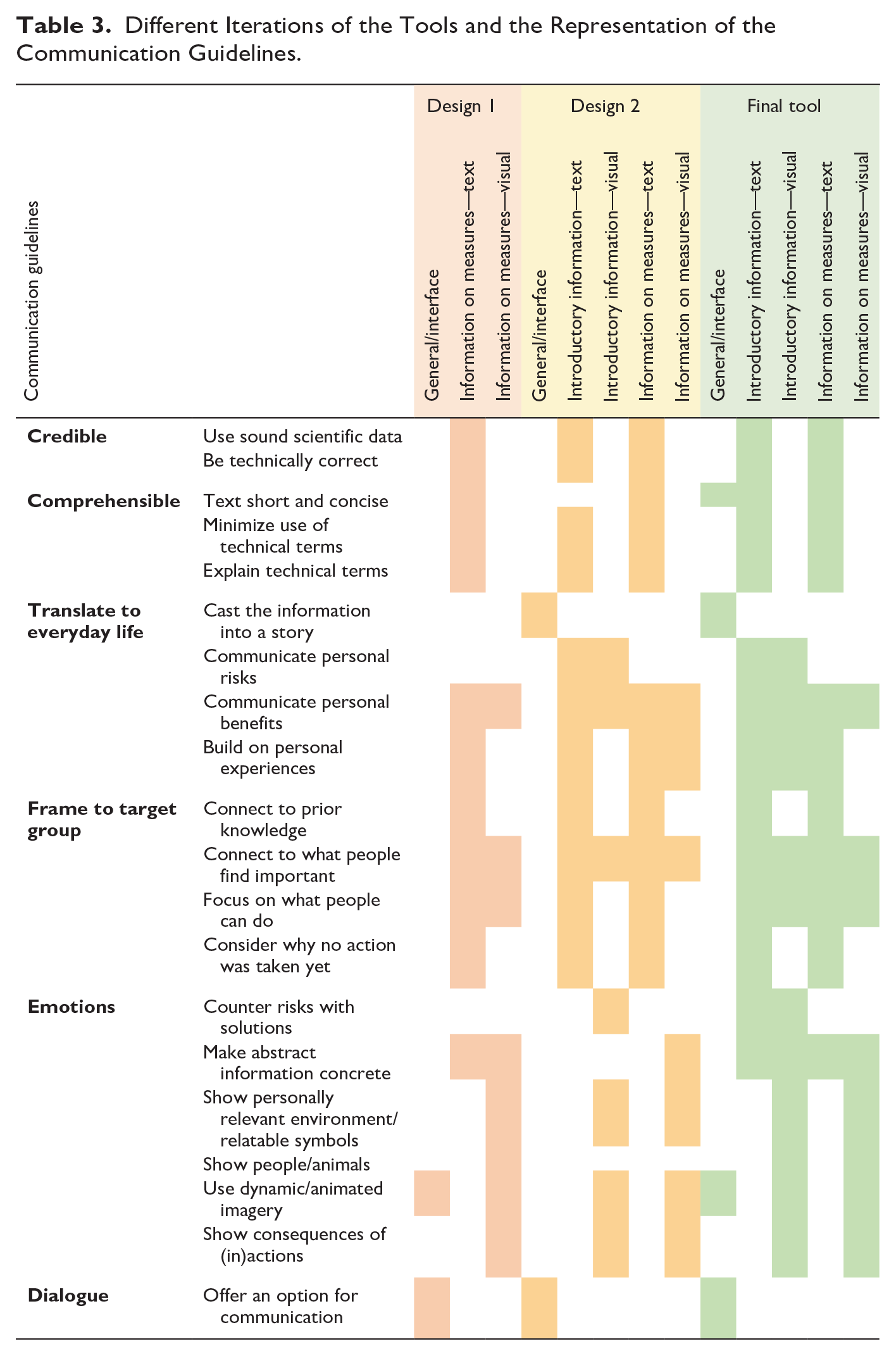
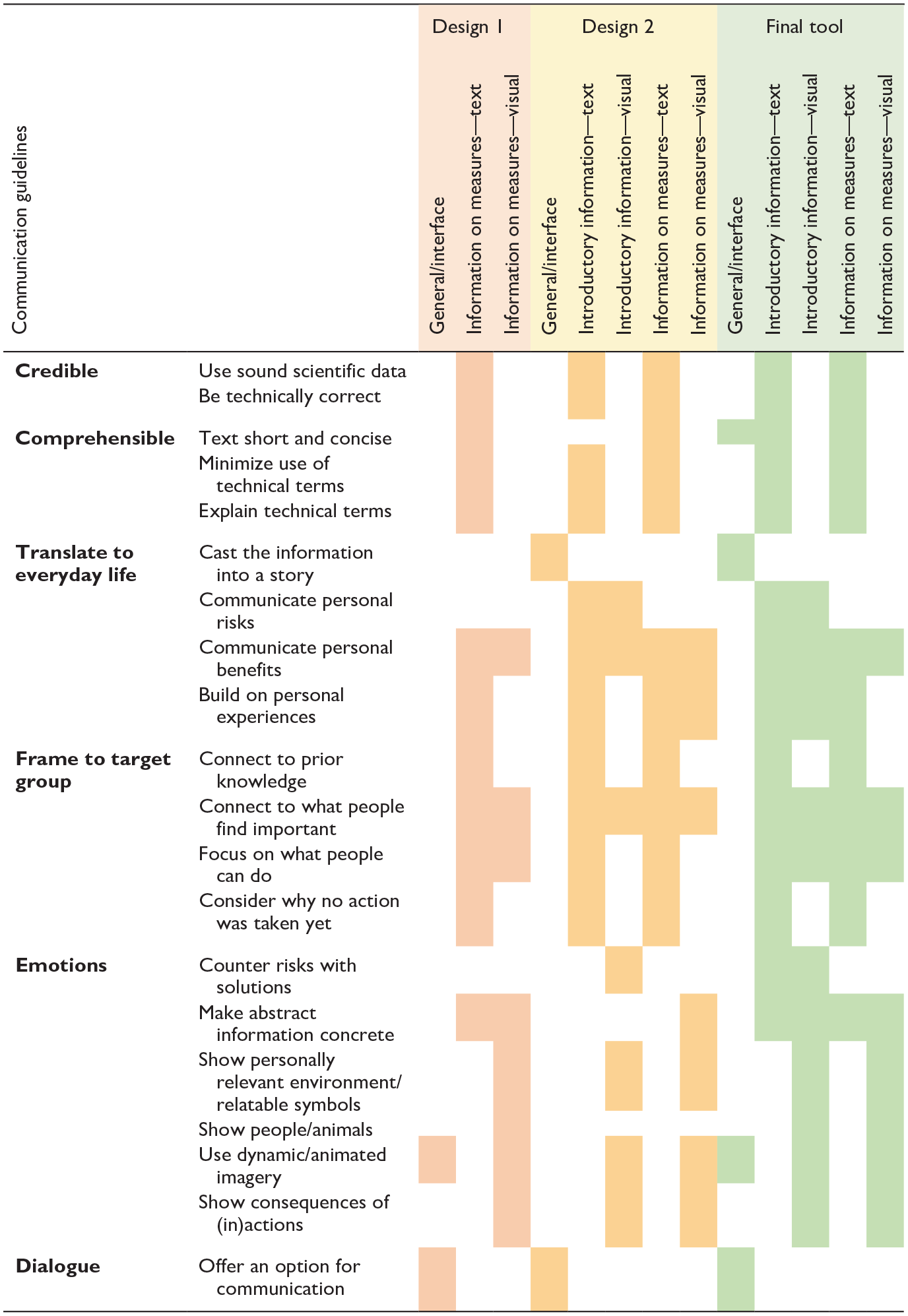
Table 3 shows an overview of the different designs and their improvements. It also indicates which communication guidelines were implemented and where. For each design, we only scored guidelines as “present” (marked as colored cells in Table 3) if their overarching category was scored above a mean value of 3 (on a five-point Likert-type scale).
Different Iterations of the Tools and the Representation of the Communication Guidelines.
In the final design, communication guidelines were applied as follows:
Credible
Credibility was addressed by basing information on scientific papers and well-known institutes, like the Royal Netherlands Meteorological Institute (KNMI), to make sure the information would be technically correct (ICLEI, 2009). References were listed at the bottom of each webpage (in the introductory information) or climate-adaptation measure (in the interactive tool). The adaptation measures were depicted in the garden designs in realistic ways and locations, and effects such as shading were rendered to also be realistically visualized.
Comprehensible
Text was kept concise, avoiding technical terms where possible and easily conveyable when necessary, to improve comprehensibility (Wirth et al., 2014). Furthermore, a standard website framework and layout was used, generally preferred by users (e.g., drop-down menus on top left, similar layout for all pages, short texts supported by visual content and clear headings; Galitz, 2007).
Translate to Everyday Life
From the introductory information to the interactive tool with climate-adaptation measures, a logical storyline was built up (Wirth et al., 2014): from explaining climate change and its repercussions to general information on climate adaptation and finally specific action-taking for climate adaptation. By relating repercussions of climate change as well as benefits of climate adaptation to possible experiences in people’s personal environments (e.g., heat stress and sitting in a pleasant cool spot; Moser, 2014; Wirth et al., 2014), we attempted to translate the information to everyday life and allow a more precise appraisal of adaptation costs and benefits.
Framing to the Target Group
Framing to a specific target group was complex, due to COVID-19 and time restrictions. The final version of the tools was aimed at homeowners or tenants with a garden and considered possible barriers which may obstruct climate-adaptive action-taking (e.g., lack of time and/or finances, see also the studies by Biesbroek et al., 2011; Lorenzoni et al., 2007). Climate-adaptation measures were selected on ease of implementation (ICLEI, 2009), and benefits focused mainly on personal comfort (no muddy garden, cool spot to sit in summer). Simple and short directions for implementation were included, as well as difficulty and cost indications, thereby addressing adaptation costs, adaptation efficacy, and self-efficacy (Kothe et al., 2019) and possibly removing some of the expected barriers (ICLEI, 2009).
Emotions
Climate change repercussions were addressed and followed up by low-threshold solutions with clear benefits (Wirth et al., 2014) to increase self-efficacy (Kothe et al., 2019; van Valkengoed & Steg, 2019b). In the interactive tools, recognizable garden environments were depicted with people sitting in the garden (Sheppard, 2005). The customisable tool facilitated further tailoring of the garden environment to fit best to respondents’ own garden type. All information was accompanied by animations and/or interactive and visual interfaces (Dykes, 2000).
Dialogue
It was possible for website visitors to email the researcher via a website button, to allow for interaction between both the sender and receiver of the information (Wirth et al., 2014).
Figure 3 illustrates examples of how communication guidelines were applied to the introductory information and part of the interactive tool.
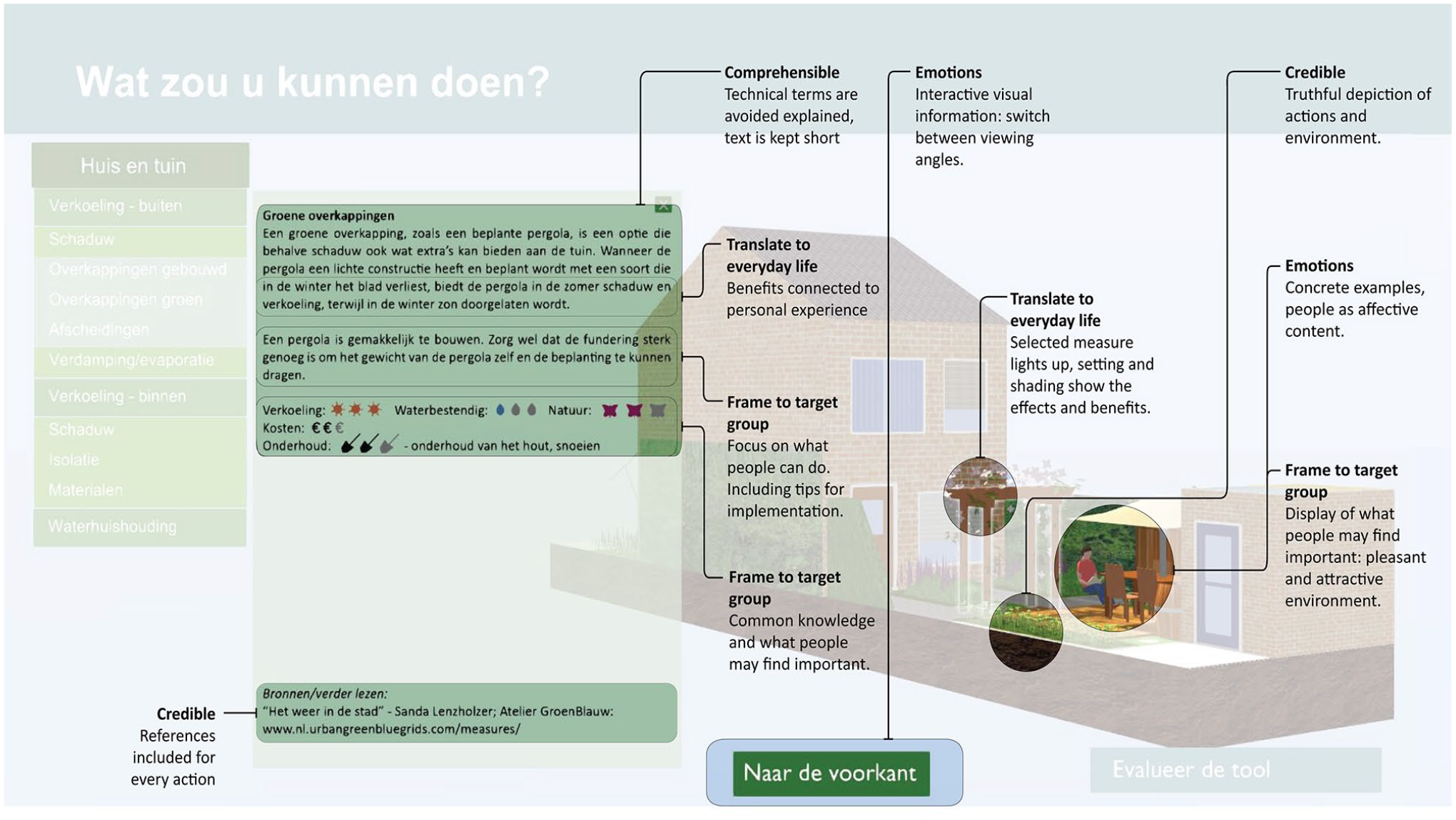
Illustration of the Main Part of the Interactive Tool and How Communication Guidelines Were Applied.
Phase 3: Testing the Final Tool
Once the tool was finalized, it was distributed to participants. Pre- and post-questionnaires allowed us to monitor knowledge use and its effects on participants’ willingness to act for climate adaptation.
Methods
Dissemination of the Tool
As the tool was available online, the link was disseminated to potential participants through Rijkerswoerd’s neighborhood newspaper, the community’s Facebook group and NextDoor platform, and by putting up flyers at the neighborhood shopping center. Contact persons from the residents’ platform and urban farming groups present in Rijkerswoerd (Rijkerswoerd Arnhem, n.d.-a, n.d.-b; Stadslandbouw Mooieweg, n.d.) were approached for participation and further distribution. After 2 weeks, the sampling was broadened to include participants from all over the Netherlands, through a public Facebook post and sending the invitation through personal networks with encouragement to further share and participate in the study. The website of the online tool can be visited on https://mijnklimaatregelen.wur.nl/.
Customizable Versus Standardized Garden Environment
To monitor the difference between a standardized and a customisable garden environment, participants were randomly assigned to either version of the tool after the introduction. This allowed us to compare the effectiveness of the two versions.
Pre- and Post-Questionnaires
The two alternatives of the tool were assessed by participants using pre-test (directly before use of the tool), post-test (directly after use of the tool), and delayed post-test questionnaires (4 weeks after use of the tool). Three primary factors were assessed:
participants’ climate change awareness
participants’ willingness to act for climate adaptation
inclusion of communication guidelines (credibility, comprehensibility, etc.) in the tool
Participants’ climate change awareness and willingness to act for climate adaptation were measured using a questionnaire adapted from the study by Evans et al. (2014). Climate change awareness was measured through statements targeted at participants’ climate change risk appraisal. Participants could indicate their opinion on a five-point Likert-type scale (“completely disagree” to “completely agree”) on statements such as:
“I do not believe climate change is a real problem”
“Climate change is caused by both natural causes and human activity”
(after Evans et al., 2014). Cronbach’s α for this measure was .74 for the total sample.
As this questionnaire did not yet include statements on willingness to act for climate adaptation, we formulated and added statements on this topic. These included:
“Greening the garden”
“Implementing a green façade or green roof”
Statements were measured on a five-point Likert-type scale (“would certainly not be willing to do” to “already do”). Cronbach’s α for this measure was .69 for the total sample.
The pre-test questionnaire included additional questions considering demographics, personal situation, and perception of climate change impacts on participants’ environments. Participants could indicate their garden type(s), whether they were renting or had bought their house (multiple choice), and whether they thought that climate change had impacted their own environment. In addition, participants were asked to indicate which barriers, if any, had prevented them from implementing climate-adaptation actions previously.
Questions on the evaluation of the tool, which were used already in the development of the tool (see Phase 2), were also added in the post-test.
All questionnaires were presented in Dutch through Microsoft Forms, embedded in the website user interface through hyperlinks integrated in the website buttons. The complete questionnaires can be found in Supplemental Appendix II.
Results were analyzed in SPSS 26 (IBM, 2019). We compared climate change awareness and willingness to adapt within subjects and between groups, comparing the standardized and customizable versions of the tool. The factors evaluating the representation of guidelines (credibility, comprehensibility, translating to everyday life, framing to the target group, emotions, and dialogue) were only compared between groups.
For all normally distributed within-participants data, we conducted repeated-measures analyses of variance (ANOVAs), and for all non-normally distributed within-participants data, we used repeated-measures ANOVAs supplemented with Wilcoxon signed rank tests (A. Field, 2013). For all normally distributed between-groups data, we checked the interaction effect of the repeated-measures ANOVAs. For all non-normally distributed between-groups data, this was supplemented with Mann–Whitney U tests (A. Field, 2013). For these nonparametric tests, we used composite scales where the score for each statement from one category (credibility, comprehensibility, etc.) was added into one composite score. The pre-test scores of each composite scale were in this analysis subtracted from the post-test scores.
Results
In total, 34 people from various locations in the Netherlands participated in the full test of the final tools, equally divided between the customizable and standardized versions of the garden environments. Despite all efforts, only two participants from the neighborhood of Rijkerswoerd were included in the final sample. However, throughout the total sample, participants indicated that the garden environments were relatable to them. This followed from the composite scale measuring the “translate to everyday life” guideline and a specific statement referring to similarity to personal environment, both showing a mean value of 3.5 or higher, measured on a five-point Likert-type scale.
The total participant sample showed a mean score of above 3 on a five-point scale for climate change awareness and willingness to adapt in the pre-test. The sample of the delayed post-test lacked sufficient participants to draw firm conclusions; therefore, its results will not be further discussed.
Effects Within Participants
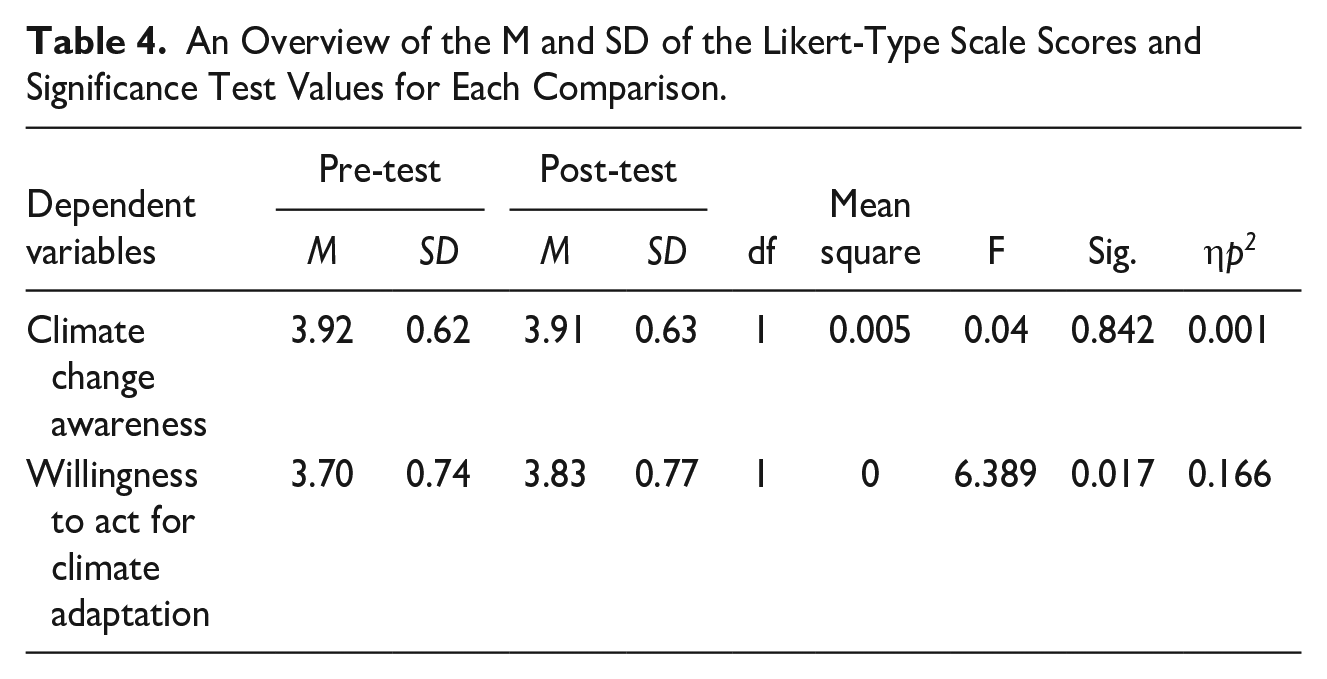
Table 4 shows the result of the pre-post-test comparison. A significant increase was found for willingness to adapt from pre-test to post-test (F(1, 32) = 6.39, p = .017, ηp2 = 0.166). This indicated that willingness to act for climate adaptation increased after using the tool, which is in line with expectations based on previous literature (e.g., Wirth et al., 2014). However, for climate change awareness, an increase remained reliably absent (see Table 4). Wilcoxon signed-rank tests with subsets of the participant sample did not reveal a ceiling effect in climate change awareness.
An Overview of the M and SD of the Likert-Type Scale Scores and Significance Test Values for Each Comparison.
Differences Between the Tools
None of the repeated-measures ANOVAs showed a significant interaction effect (p > .05). The additional Mann–Whitney U tests, conducted on the composite scales of climate change awareness, showed no significant differences either (p > .05). No significant differences in efficacy were found between the two tool versions (p > .05). However, in the open questions, seven participants indicated appreciation for being able to customize the house and garden environment.
Identified Barriers to Action-Taking
As a response to the open question, many barriers were mentioned by participants. Barriers related to a reluctance to change lifestyles, helplessness, and other priorities were mentioned most (by 29%, 26%, and 21% of participants, respectively). Reasons relating to reluctance to change lifestyles included, for example, not wanting to invest because of moving plans or living in a rental house. Perceived helplessness was illustrated by participants not being able to implement adaptation measures themselves or having to ask for permission from the housing association they are renting from. Regarding priorities, participants mentioned they would rather devote their time, money, and space to other aspects in their life. These barriers were followed by a lack of knowledge concerning the different possibilities and effects of the actions (mentioned by 15%). A lack of support (help with implementation, subsidies) and pressure of social factors were mentioned by only 9% and 6%, respectively. The pressure of social factors included participants indicating that they were “afraid to be the only one in the street to make changes.”
Discussion
This study covers two main experimentations: the creation of an online tool to communicate climate-adaptation measures based on guidelines derived from literature, and the testing of these tools and their effects on residents’ willingness to act. These aspects are discussed here separately.
Application of Communication Guidelines
In this study, we aimed to formulate concise guidelines for the design of online communication tools motivating climate adaptation, based on recommendations from literature. The methodology followed a post-positivist RtD approach where the tools were created and then tested iteratively. This approach connected theory and practice by translating abstract concepts from communication literature, first into applicable guidelines, then into an actual communication tool.
After the design iterations, evaluated through expert judgment and participant feedback, the environments and interface were assessed as clear enough. This included sufficient usability and implementation of the design guidelines. Following this, the knowledge embodied in these guidelines and tools can be considered valid and reliable, although implementation in other contexts may require some adaptation (Lenzholzer et al., 2013). As the tool was found to be effective in raising willingness to act for climate adaptation, this supports validation of the findings from previous studies on which the guidelines were based for this medium of communication (e.g., Moser, 2010; Wirth et al., 2014).
Increasing Willingness to Adapt Through Communication
In line with recommendations from authors including Moser (2014) and van Valkengoed and Steg (2019), the communication tool focused on the role of individuals in climate adaptation, thereby not only providing information on climate change risks but also focusing mainly on what people may be able to do themselves and linking actions to a personal context. This was accomplished by including a possibility to customize the garden environments, usage of recognizable settings, and providing advice tailored to the private-garden settings. Although participants reported appreciating the customization aspect of the tools, this did not seem to impact the tool’s effectiveness. This indicates that, in situations where resources are limited, representing a standardized environment likely yields sufficient results.
Generally, the results indicate that communicating suggestions for implementation, effectiveness, and cost of the selected adaptation measures had a positive effect on residents’ willingness to act toward climate adaptation. This is in line with previous studies, which suggest that promoting self-efficacy (Grothmann & Patt, 2005; Kothe et al., 2019; Moser, 2014), perceived adaptation efficacy, and low adaptation costs are important factors in motivating behavior (Kothe et al., 2019). Overall, the increase of willingness to adapt after use of the tool is in line with earlier findings (Wirth et al., 2014). Furthermore, as a significant increase was found for willingness to act, but not for awareness, the results of this study suggest that an increase in willingness to act for climate adaptation does not necessarily require an increase in climate change awareness. This is also in line with the study by van der Linden (2014) and van Valkengoed and Steg (2019b), who indicated that knowledge and awareness do not necessarily lead to behavioral change. The absence of an increase in awareness can be explained in several ways. Participants may have already had an awareness of some of the knowledge presented in the tool. In open questions where participants could express ideas for improvements, three participants mentioned that the tool offered little information that they did not already know, and most participants already scored high on climate change awareness in the pre-test questionnaire. In addition, the information on climate change was mostly included in the introductory information, which was presented before the interactive tool, and less so in the interactive tool itself. As the focus of the presented information was mostly aimed at motivating climate-adaptation actions, it may be a logical consequence that an increase in climate change awareness remained absent.
Addressing Barriers
Some barriers potentially withholding participants from acting persist, possibly mitigating the effect of the tool. Adhering to PMT, the main barrier cited by participants, which could be categorized as a reluctance to change lifestyle (see the study by Lorenzoni et al., 2007), suggests that the perceived effort required to undertake adaptation interventions was considered too high by participants, in comparison to their perceived efficacy of the interventions and/or their self-efficacy (Kothe et al., 2019). Barriers within the category of perceived helplessness mostly considered physical constraints or having to ask permission when renting, which could be explained in PMT as low perceived self-efficacy (Kothe et al., 2019). A perceived lack of external support was also cited as a barrier, implying that intervention costs or efforts were perceived as too high. Finally, the pressure of social factors, but also the reluctance to change lifestyles, could be seen as part of a maladaptive response reward where not acting is perceived as easier and/or more socially acceptable (Lorenzoni et al., 2007; Kothe et al., 2019). Indeed, some participants indicated that they were “afraid to be the only one in the street to make changes,” highlighting that carrying out the adaptation interventions might somehow alienate them from their neighbors.
One of the barriers mentioned by participants was a lack of knowledge concerning different possibilities and effects of adaptation actions, which suggests a lack in perceived response efficacy in the sense that participants were not convinced that adaptation actions would make a sufficient difference (Kothe et al., 2019). Increasing self-efficacy and efficacy of adaptation actions may help mitigate this barrier, but additional actions such as support from (local) governments or local initiatives which demonstrate a collective effort may be necessary to address feelings of helplessness and small personal impact (Lorenzoni et al., 2007).
The fact that these barriers to action-taking were found even with high awareness of climate change indicates that raising awareness does not necessarily remove all barriers. Additional measures directly targeting these barriers may sometimes be necessary to achieve action-taking.
Furthermore, beyond the barriers stopping participants from enacting the knowledge they gained from using the tool, it is important to acknowledge barriers to accessing that knowledge in the first place. Despite our efforts in making climate-adaptation actions relatable through clear and comprehensible communication, other barriers remain. An online tool is subjected to self-selection bias where only people already possessing some of the relevant knowledge will use it, possibly mitigating its effectiveness (Wright, 2005). Although online material is getting more accessible, it is also possible that some populations such as the elderly or more vulnerable socio-demographics would struggle to use the tool even when interested. To further address these barriers, the dissemination of online tools should be carefully thought through (Graham et al., 2006).
RtD as a Method Bridging Theory to Practice
In our study, we combined the application of the KTA framework (often cited in the medical context; B. Field et al., 2014) and RtD methodology (primarily applied in design disciplines, such as architecture or engineering; Stappers & Giaccardi, 2014). The KTA framework was used to guide the general process of translating theory to practice, and RtD provided the means to construct a vehicle to embody that knowledge.
Going forward in translating theory to practice, we recommend focussing on the empirical testing of findings within theory to practice studies, in order to bring validated knowledge into practice. As illustrated in our study, a scholarly RtD approach proved suitable for this purpose in the context of designing a communication medium. Indeed, the robust and systematic testing of design alternatives is what sets apart the practice of design from the scientific endeavor of research (Cortesão & Lenzholzer, 2022). Criteria for testing should be explicit and evidence-based and their application should be transparent. Here, our tool was tested a total of four times: three times for its application of the identified communication guidelines and for its general usability, and one time on a larger sample for its effect on willingness to act. The final tool can therefore be confidently considered a reliable and effective application of theory into practice.
Limitations
As the study was conducted through an online procedure, the generalizability of the sample might have been compromised (Menon & Muraleedharan, 2020). Despite the effort to recruit a diverse sample, including broadening the search for participants to a national scale, most participants already scored high on climate change awareness and willingness to act in the pre-test, showing a potential self-selection bias (Wright, 2005). While this might have resulted in a ceiling effect, this could not be identified in our study. Still, we would recommend using a larger (seven-point) Likert-type scale in further studies.
In addition, there is a possibility that results were skewed by a social desirability bias whereby participants indicated a higher willingness to act after using the tool to comply with what they felt the researchers wanted to hear. However, the responses were recorded anonymously to avoid this bias, and results only showed an increase for one of the measured aspects.
Generally, results should be interpreted with caution. Even though effects appeared convincingly significant, the overall sample size was small. A larger sample size and Likert-type scale might detect smaller changes in attitudes, including climate change awareness.
As the tool was developed within a limited timeframe, it could only be optimized up to a certain level, leaving room for performance and graphic-related improvements. Although this was tested in Phase 2, a high dropout rate between the pre- and post-test questionnaire may have been caused primarily by technical issues, with participants reporting they could not run the tool properly or use the button leading to the post-test questionnaire.
Similarly, due to restrictions during the COVID-19 pandemic and limited time for the study, it was not possible to inquire into elements such as personal experiences of people within the target group. This limited our ability to tailor one of the tool versions to accurately represent participants’ environments. A tool that is better tailored to its target group might, according to previous recommendations, improve its effectiveness (e.g., Moser, 2010; Wirth et al., 2014).
In addition, the focus on the design of the tools and on communication did not allow us to firmly establish causality between the PMT constructs and willingness to act. Indeed, other aspects might have influenced the outcome of the research, such as behaviors of others in participants’ personal context (van Valkengoed & Steg, 2019a, 2019b). In addition, not all measures included in the tool were specifically related to climate adaptation, which could explain why climate change awareness did not influence willingness to implement these options (see also the study by van Valkengoed et al., 2023). In other words, climate change risk perceptions are not always necessary for taking adaptive actions.
Finally, the study did not address the “intention-behaviour gap.” Therefore, although the tool might have increased participants’ reported willingness to act, its effect on actual action-taking cannot be estimated (McEachan et al., 2011).
Recommendations for Practice
This study offers guidelines that can already be deployed in practice. Using guidelines and communication methods as developed in this study (as described in the “Results” section under “Phase 2: Tool Development”) and offering practical information on solutions can help in motivating residents to adapt their gardens to climate change, allowing populations to move forward to the creation of climate-adaptive cities. Guidelines could be applied to new or existing tools in similar formats already used in practice (e.g., Amsterdam Rainproof, 2021; Tuinhappy, 2022). Below is a summary of recommendations for organizations and programs attempting to engage individuals in climate-adaptative actions:
Use evidence-based guidelines from literature as proposed in this article (Table 1 and “Results” section under “Phase 2: Tool Development”).
Focus on positive communication to increase self-efficacy and outcome efficacy, for example, through highlighting what actions people can take themselves, and the advantages, low cost, and ease of implementation of adaptation actions (van Valkengoed & Steg, 2019a, 2019b).
Address barriers to action-taking, such as those mentioned in this study (“Results” section under “Phase 3: Testing the Final Tool” and the “Addressing Barriers” section).
Use visual and interactive environments to increase attractiveness and relatability of the tools.
Conclusion
This study shows an example of an effective communication medium to help increase willingness to act for climate adaptation for urban residents. Guidelines for communicating climate-adaptation actions were derived from previous studies and applied to the creation of an online interactive tool disseminated to Dutch participants.
Even within a participant sample that was well aware of climate change, the tool was found to significantly increase participants’ willingness to act for climate adaptation. This validates both the use of interactive communication tools such as the one developed in this study and the communication guidelines distilled from previous literature, showing that these guidelines can be operationalized into the creation of an effective communication medium.
Results furthermore show that even with high climate change awareness, barriers to action-taking persist, illustrating that awareness alone is insufficient to activate residents’ engagement. However, this study highlights the importance of offering practical solutions for raising willingness to act for climate adaptation.
Supplemental Material
sj-docx-1-scx-10.1177_10755470241277199 – Supplemental material for Motivating Climate-Adaptation Actions in Dutch Private Gardens: Developing an Effective Communication Tool
Supplemental material, sj-docx-1-scx-10.1177_10755470241277199 for Motivating Climate-Adaptation Actions in Dutch Private Gardens: Developing an Effective Communication Tool by Ineke Weppelman and Agnès Patuano in Science Communication
Footnotes
Declaration of Conflicting Interests
The author(s) declared no potential conflicts of interest with respect to the research, authorship, and/or publication of this article.
Funding
The author(s) received no financial support for the research, authorship, and/or publication of this article.

Author Biographies
References
Supplementary Material
Please find the following supplemental material available below.
For Open Access articles published under a Creative Commons License, all supplemental material carries the same license as the article it is associated with.
For non-Open Access articles published, all supplemental material carries a non-exclusive license, and permission requests for re-use of supplemental material or any part of supplemental material shall be sent directly to the copyright owner as specified in the copyright notice associated with the article.
