



Abstract
Introduction:
Dietary herbal products taken together with prescription medicines may have harmful effects. In this study, we evaluated the use of dietary herbal supplements and identified factors that predict the concomitant use of these supplements in patients taking drugs prescribed for chronic cardiovascular diseases.
Methods:
We performed a cross-sectional study with 343 patients with cardiovascular diseases. Data regarding the sociodemographic status, medical condition, number of prescription drugs, and use of herbal supplements were collected using a self-administered questionnaire.
Results:
Regular use of dietary herbal supplements was reported by 82.5% of patients. The most commonly consumed herbal supplement was garlic (71.2%), followed by onion (67.1%), and walnut (63.6%). Consumption of herbal supplements was commonly observed in patients with hypertension (53.6%). Among the patients in the study, 21.3% patients reported consumption of herbal supplements to the physician. Results of multivariable analysis showed that body mass index (odds ratio [OR] = 0.890, 95% confidence interval [CI] = 0.826-0.960), heart failure (OR = 0.325, 95% CI = 0.142-0.742), coronary artery disease (OR = 0.162, 95% CI = 0.069-0.379), smoking (OR = 3.852, 95% CI = 1.194-12.433), hypertension (OR = 10.584, 95% CI = 4.648-24.103), and dysrhythmia (OR = 9.339, 95% CI = 2.035-42.853) were associated with the use of dietary herbal supplements.
Conclusions:
Our results showed that dietary herbal supplements were commonly used by patients with chronic cardiovascular diseases. Therefore, understanding the interactions between the herbal supplements and drugs is necessary for minimizing adverse reactions.
Introduction
Herbal supplements have been used for many years in the Eastern countries, and the use of these agents is gaining popularity in the West, especially among patients with chronic diseases. 1 Multiple factors contribute to the increased use of herbal products, including obesity, chronic disorders and pain syndromes, anxiety, depression, desire for good health and wellness, disease prevention, increasing cost of conventional medicines, and the traditional belief that herbal medicines are safer and more effective than prescription drugs. 2
Previous studies indicate that many patients taking herbal products do not tend to disclose this information to their physicians, and physicians typically do not ask about the use of herbal products. 3,4 Because of underreporting of the consumption of herbal products, many patients are unaware of the potential harm or interactions of these products. 5 Thus, dangerous herb–drug interactions may go unnoticed, since the efficacy and safety of many herbal therapies are unknown. The potential interactions between herbal medicines and prescription drugs, which may result in clinically significant unfavorable cardiovascular effects, have been systematically assessed in previous studies. 6,7
In particular, the concomitant use of prescription drugs and herbal products by patients with chronic cardiovascular diseases requires special attention, because herb–drug interactions are exceptionally important, especially in the case of drugs with a narrow therapeutic range, such as warfarin, theophylline, and digoxin; in case of patients where the pharmacological effects may be potentiated or diminished; in the elderly patient populations where side effects are frequently seen; and in patients receiving polypharmacy. 8,9 Therefore, the patients should be questioned by their physicians about the concomitant use of any herbal products with the prescribed therapy. The physicians should be aware of the possible interactions between herbal products and prescription medications. 10 Some herbal products have direct effects on the cardiovascular or hemostatic system, while others have indirect effects through interactions with drugs, which cause pharmacokinetic and pharmacodynamic alterations that could lead to serious consequences. 9,11 -15 The use of dietary herbal supplements may differ across various countries and regions, because it depends on access to medical care, health system, and cultural differences. 16
In this study, we investigated the frequency of consumption of dietary herbal supplements; further, we examined the clinical characteristics of patients that may predict the use of supplements and identified the potential risks of herb–drug interactions in patients with hypertension, diabetes mellitus, hyperlipidemia, heart failure, valvular heart disease, dysrhythmia, coronary artery disease, or peripheral arterial disease.
Methods
Study Design and Setting
We conducted this cross-sectional study from July to December 2017 in an outpatient clinic at the cardiology department of a tertiary university hospital. The study was conducted according to the principles of the Declaration of Helsinki, and the local ethics committee approved the study (Ethics Committee file no: 2017/11, approval date: 05.07.2017). We included 343 patients who met the following criteria: presence of chronic cardiovascular diseases, including hypertension, hyperlipidemia, heart failure, valvular heart diseases, dysrhythmia, coronary artery disease, or peripheral artery disease, and the use of at least one prescription medication (excluding topical drugs). Each of the participants provided written informed consent in accordance with established guidelines for the protection of human participants, and those who did not consent to the study were excluded. In addition, patients with difficulty in communication, pregnant women, and children were excluded from this study.
Data Collection
Data from the responses to the questionnaire, which consisted of 21 questions, were used to obtain information about the characteristics of patients, including age, sex, height, weight, place of birth, occupation, marital status, educational qualifications, smoking, alcohol consumption, and types of herbal products used by patients. The questionnaire included questions about the frequency of consumption herbal supplements, reasons for consumption and sources of supply of herbal supplements, time of starting the consumption of herbal supplements, health benefits, adverse reactions encountered by patients, awareness of the contents and expiry dates of these supplements, and disclosure of their use to a physician.
In this study, herbal supplements were defined as dietary products that contain active ingredients from various parts such as the leaves and roots of plants, seeds, teas, spices, or dried powders. We obtained clinical data, including the clinical diagnosis of the participants, New York Heart Association functional class, concomitant medical conditions, and medications, from the medical records of the patients. We recorded the commercial and generic names of the drugs currently prescribed to the patients and their doses and intervals of administration.
The first part of the questionnaire consisted of questions about the epidemiological characteristics of the patients. The second part consisted of close-ended questions about the usage habit of herbal products. The third part of the questionnaire included information about the clinical diagnosis of the patients and the therapeutic medications prescribed to the patients.
Statistical Analysis
Data were analyzed using the SPSS 17.0 program. Descriptive data were presented as the mean and standard deviation. Categorical data were presented as number and percentage. The percentage of categorical variables was compared using χ2 tests. An analysis of normality of the continuous variables was performed using the Kolmogorov-Smirnov test. Comparisons of continuous variables were performed by using the unpaired Student t test. Logistic regression analysis was performed to find the independent associates of consumption of herbal supplements. The data were analyzed within the 95% confidence interval (95% CI), and p < 0.05 was considered as statistically significant.
Results
Data of Patients
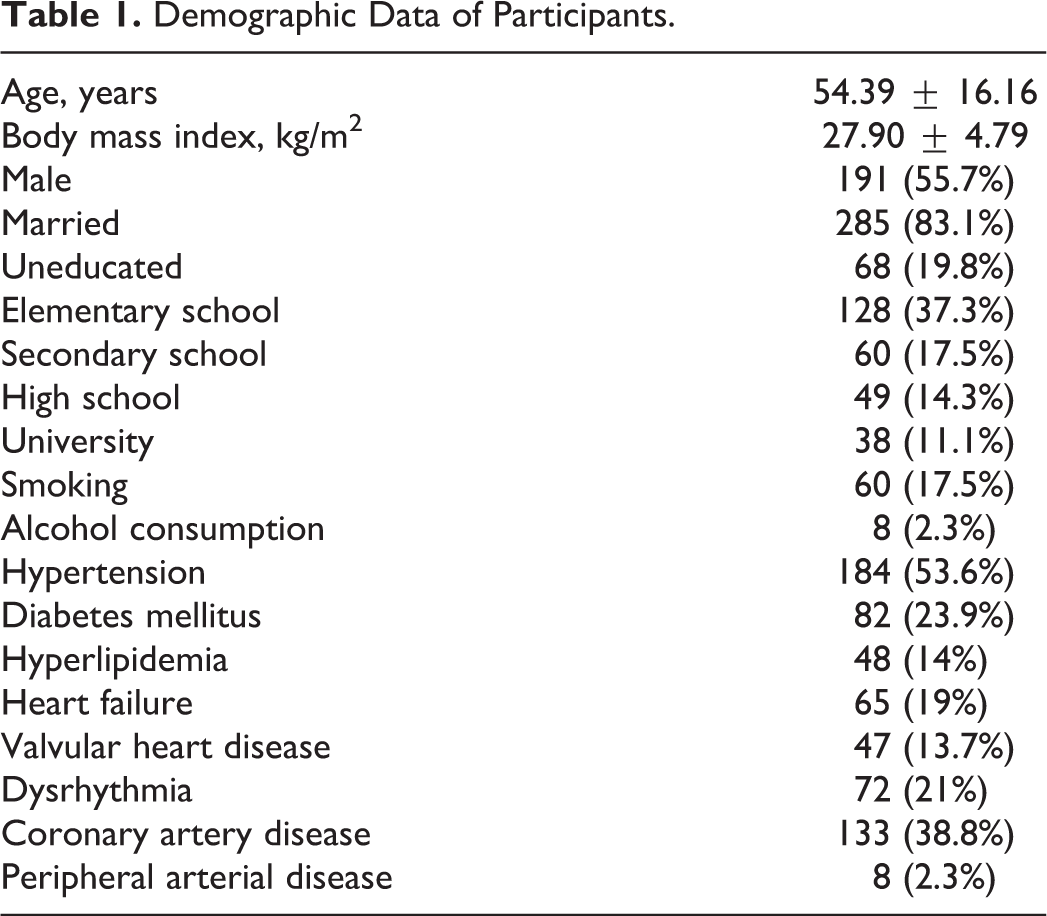
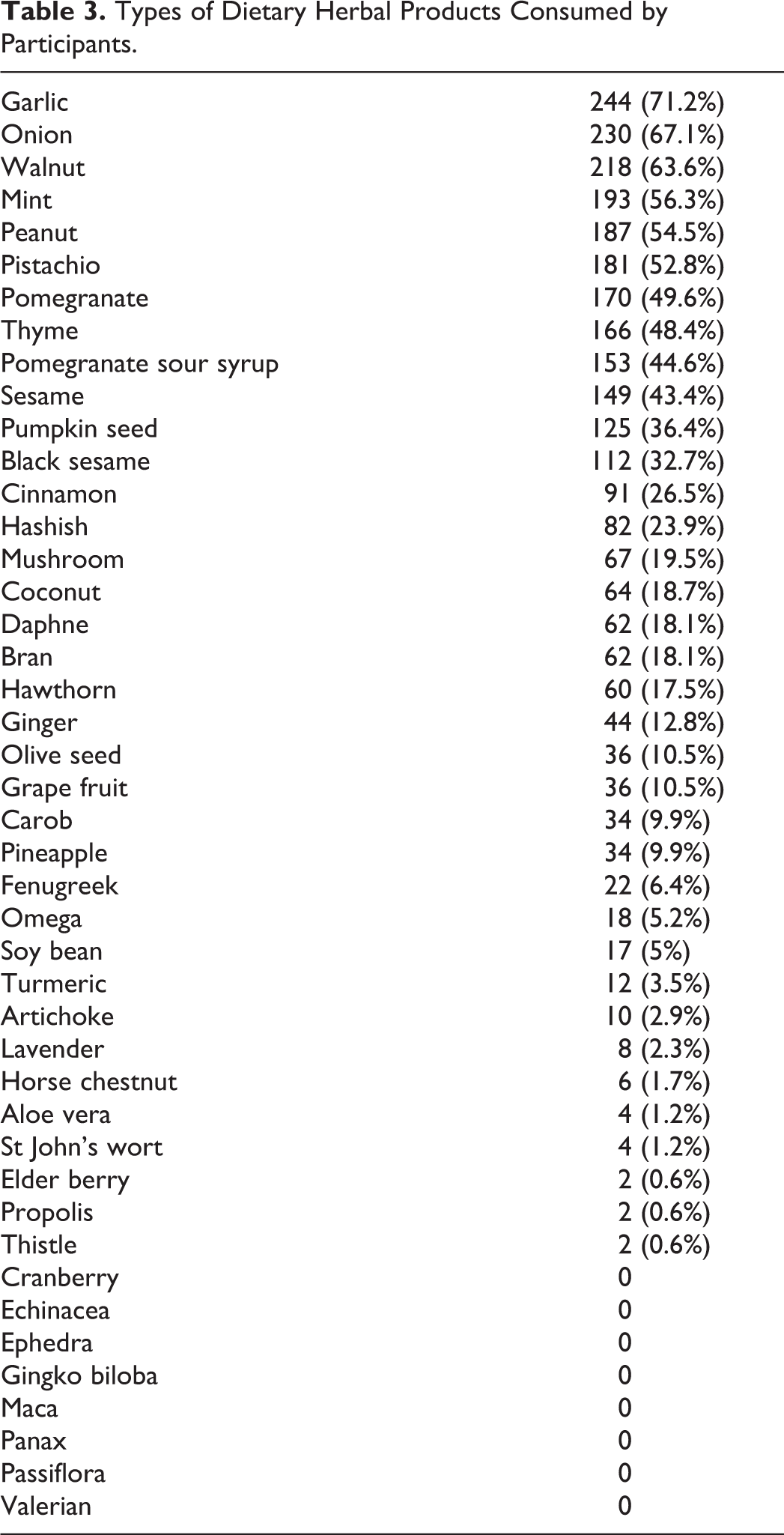
We included 343 patients in this study. The basic characteristics of the participants are shown in Table 1. The mean age of the participants was 54.39 ± 16.16 years years, and 55.7% of the population consisted of male patients. The body mass index (BMI) was 27.90 ± 4.79 kg/m2. Our results showed that 83.1% of the patients were married. A total of 68 (19.8%) participants were uneducated, and 128 (37.3%) participants graduated only elementary school. The rates of smoking and alcohol consumption among the participants were 17.5% and 2.3%, respectively. The most common clinical diagnosis was hypertension (184 patients, 53.6%), coronary artery disease (133 patients, 38.8%), and diabetes mellitus (82 patients, 23.9%). The most frequently prescribed drugs were β-blockers in 178 (51.9%) patients, followed by acetylsalicylic acid in 143 (41.7%) patients, and statins in 105 (30.6%) patients. The data about prescription medications of participants are shown in Table 2. Overall, 82.5% of patients used herbal products. Garlic (Allium sativum) was the most commonly consumed product (244 patients, 71.2%) followed by onion (A. cepa; 230 patients, 67.1%) and walnut (Juglans regia; 218 patients, 63.6%; Table 3).
Demographic Data of Participants.
Prescription Medications of Participants.

Types of Dietary Herbal Products Consumed by Participants.
Predictors for the Use of Herbal Products
The predictors and habits determining the usage of herbal products are summarized in Table 4. The frequency of consumption of herbal products was 1 to 3 times a month in 135 (39.4%) patients. The main factor responsible for the usage of herbal products in 160 (46.6%) participants was the relaxant effects of these products. Two (0.6%) patients reported that they started using herbal products because of the lack of efficacy of their medical treatments. Most (87.9%) participants in the study reported that they began using herbal products before consulting a doctor. Recommendation by neighbors was the second reason for starting consumption of herbal products in 82 (23.9%) patients. Only 4.1% doctors recommended herbal products. Our results showed that 50.4% patients obtained their herbal products from the herbalist. Thirty-six (10.5%) patients were aware of the interactions between the herbal product and current medicines. Seventy-three (21.3%) patients disclosed information about consumption of herbal products to medical doctors. Further, 59 (17.2%) medical doctors queried the patients about their consumption of herbal supplements. Sixty-three (18.4%) patients reported that they preferred herbal products over prescription drugs.
Data About the Habits of Participants Consuming Herbal Products.

The results of the questionnaire showed that 194 (56.6%) participants shared the herbal supplements with their family members, and 165 (48.1%) participants reported that family members of the previous generations used the same products. Adverse reactions were observed in 23 (6.7%) patients. Our results showed that 133 (38.8%) patients were concerned about the expiry date, and 121 (35.3%) patients were concerned about the contents present in the herbal products. Of all participants, 231 (67.3%) patients reported beneficial effects of herbal products on health and wellness, and 233 (67.9%) patients recommended their use.
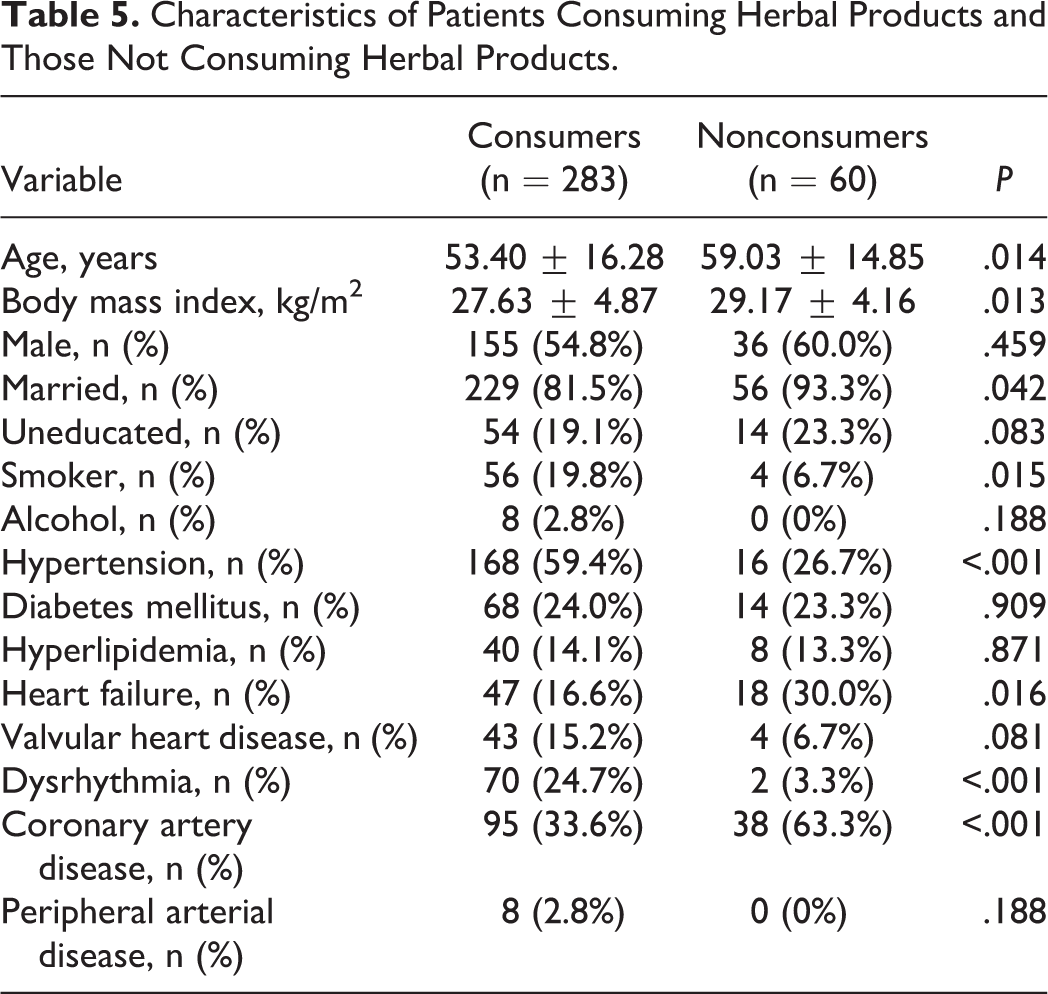
Patients consuming herbal products were younger (53.40 ± 16.28 vs 59.03 ± 14.85years; P = .014) and slimmer (27.63 ± 4.87 vs 29.17 ± 4.16 kg/m2; P = .013) than those not consuming herbal products. Among patients consuming herbal products, hypertension (59.4% vs 26.7%; p < 0.001) and dysrhythmia (24.7% vs 3.3%; p < 0.001) were the most frequent clinical diagnosis (Table 5).
Characteristics of Patients Consuming Herbal Products and Those Not Consuming Herbal Products.
Multivariate binary logistic regression analysis was performed to determine the independent predictors for usage of herbal products. Age, BMI, marital status, smoking, hypertension, heart failure, dysrhythmia, and presence of coronary artery disease were included in the regression model. The results of multivariable analysis showed that BMI (odds ratio [OR] = 0.890, 95% CI = 0.826-0.960), heart failure (OR = 0.325, 95% CI = 0.142-0.742), coronary artery disease (OR = 0.162, 95% CI = 0.069-0.379), smoking (OR = 3.852, 95% CI = 1.194-12.433), hypertension (OR = 10.584, 95% CI = 4.648-24.103), and dysrhythmia (OR = 9.339, 95% CI = 2.035-42.853) were associated with the use of dietary herbal products (Table 6).
The Independent Predictors Governing the Use of Herbal Products.

Abbreviations: CI, confidence interval; OR, odds ratio.
Discussion
The concomitant use of dietary herbal supplements with prescription drugs is commonly observed in patients with chronic cardiovascular diseases. The results of our study showed that concomitant use of herbal supplements and prescription drugs was observed in 82.5% of patients with chronic cardiovascular diseases.
Our results showed that 50.4% of participants obtained herbal products from the herbalist, and 10.5% participants obtained them from their neighbors. Herbalist shops are stores that sell various types of spices, teas, leaves, creams, soaps, and oils obtained from plant extracts. Eastern countries are committed to using cultural and traditional products; and thus, the popularity of the herbalist has been preserved to date. Further, our results showed that recommendation by neighbors was the another reason governing the consumption of herbal products. Thus, the role of social environment in determining the health behavior of the population should be carefully considered. Our results showed that 57.1% of the participants who used herbal products had low education level. Low education level, inability to reach the hospital or lack of access to medicines, and cost of drugs are factors that contribute to the use of herbal remedies, which are cheap and easily accessible. Herbal remedies are considered to be more beneficial and less harmful compared to prescription drugs because of the traditional beliefs and cultural perceptions.
Previous studies show that the rate of use of dietary herbal supplements is 20.2% to 71.4%. 17 -19 The rate of consumption of herbal products observed in our study was higher than that reported in previous studies. Apart from regional and traditional factors, the finding observed in our study may be associated with the presence of cardiovascular disease in the participants. In addition, our study showed that garlic, onion, and walnuts were the most frequently used products. Echinacea, ginseng, Ginkgo biloba, and St John’s wort were commonly used in the United States, but these products were rarely used in our study. 19 Vitamins and minerals are commonly used across the world, but the consumption of herbal supplements varies in each country and region because of the differences in the health system, culture, and geography.
Herbal products can be consumed in special pharmaceutical forms or as dietary supplements. Most herbal products used by participants in this study are natural foods recommended as a part of a healthy diet. However, herbal supplements may be harmful when consumed in high quantities and may interact with cardiovascular drugs at a metabolic level. Herb–drug interactions may result in coagulation problems, dysrhythmia, impairment of glucose metabolism, alterations in sympathomimetic activity, or changes in blood pressure. Herbal products may alter the levels of cytochrome P450 (CYP), P-glycoprotein, or uridine 5′-diphospho-glucuronyl transferase. 20,21
Our results showed that 59.4% of patients consuming herbal products had hypertension. In addition, the presence of hypertension was an independent predictor of herbal consumption. Interactions between herbal products and antihypertensive drugs are expected at the metabolic level. Concomitant use of antihypertensive drugs with certain herbal agents increases the risk of diuresis, hypotension, and hypokalemia in patients with hypertension. 7
Our results showed that garlic was the most commonly consumed herbal product. Garlic is a frequently consumed herbal product worldwide by patients with hypercholesterolemia. Consumption of garlic increases the efficacy of anticoagulants, antiplatelet agents, antihypertensive drugs, and antilipidemic drugs. 22 Garlic has inhibitory effects on enzymes belonging to the CYP family, particularly on CYP2E1, CYP2C9, and CYP2C19 enzymes. 23,24 In addition, garlic contains flavonoids, which are responsible for the modulation of P-glycoprotein, multidrug resistance-associated protein 2, breast cancer resistance protein, and organic anion-transporting polypeptide. Our results showed concomitant use of β-blockers, apixaban, and acetylsalicylic acid in patients consuming garlic. Garlic affects platelet function and blood coagulation; therefore, garlic should be used cautiously in patients receiving drugs with a potential risk for bleeding such as acetylsalicylic acid and oral anticoagulants. 25 Our results showed that among patients consuming herbal products, 24.7% had dysrhythmia and were frequently prescribed anticoagulant agents. Thus, these patients should be careful when consuming garlic because of its additive anticoagulant activity. In addition, garlic has antidiabetic activity, and thus, it increases the serum insulin concentrations and glycogen storage in the liver. 26 Therefore, individuals receiving antidiabetic agents should monitor their glucose levels when consuming dietary supplements containing garlic.
Our results showed that followed by garlic, onion was the second most frequently consumed dietary herbal product. Onions inhibit cyclooxygenase and lipoxygenase in eicosanoid metabolism and decreases glucose levels. 27 Consumption of onion was observed in 15.6% of patients receiving antidiabetic therapy. Thus, the glucose-lowering effect of onion should be carefully considered. Walnuts, the third most commonly consumed product, improve endothelial cell function, increase endothelium-dependent vasodilation, and decrease the level of vascular cell adhesion molecule-1. 28
Smoking was a strong predictor of consumption of herbal products. Polycyclic aromatic carbohydrates found in cigarette smoke have enzyme-inducing properties. Nicotine mainly interacts with the hepatic isoenzyme CYP1A2. In addition, pharmacokinetic alterations can occur during the process of absorption, distribution, and elimination. 29 Thus, the smoking habits of the patient should be identified during medical treatment.
The average age of the participants in our study was 54.39 ± 16.16 years; the age of participants consuming herbal products was 53.40 ± 16.28 years and that of participants not consuming herbal products was 59.03 ± 14.85 years. Drug metabolism varies with age. Ginseng showed slight inhibition of CYP2D6 in elderly participants unlike that in young participants. 30, 31 Our results showed that 54.8% of patients consuming herbal products were men. Pharmacokinetics of many drugs vary between men and women; in particular, the male participants were more effective in inducing CYP3A4 than female participants. 31, 32
A low percentage of patients disclosed information about the usage of herbal products to their physicians. Polat et al reported that only 51.8% of women using complementary medicines, including herbals, disclosed this information to their physicians. 33 Hensrud et al reported that the prevalence of the use of any alternative treatment method, including herbal products, for headaches was 52%. 34 The popularity of the herbal products shows that the clinically apparent herb–drug interactions may be rare. This finding may be associated with the underreporting of the usage of herbal products and normal dosing of herbal supplements. Physicians should collect all information about the usage of dietary herbal supplements to understand the potential risk of herb–drug interactions. The medical practitioners and patients should be educated about increasing the rate of reporting of the usage of herbal products.
Our study had some limitations. This study was conducted at a single tertiary facility. Further, the use of dietary herbal products may be underreported, because the data for this study were obtained using a self-administered questionnaire. In addition, similar to our study, previous studies obtained data using questionnaires; and thus, our data are comparable with those obtained previously. Our results showed the frequency of use and factors predicting the consumption of herbal products in patients with chronic cardiovascular diseases.
In conclusion, we found that dietary herbal products were commonly used in patients with chronic cardiovascular diseases, particularly in patients with hypertension and dysrhythmia. The presence of hypertension, dysrhythmia, and smoking were the predictors of consumption of herbal products. The most commonly used herbal products were mainly dietary supplements, including garlic, onion, and walnut. Less number of patients reported the use of herbal products to the physicians. Therefore, physicians must enquire about the usage of herbal products before planning an appropriate treatment for the patients, and thus, they may be able to identify the potential risks of herb–drug interactions. Health-care professionals should be able to explain about the benefits and harmful effects of these products. In patients with an atypical response to prescription drugs, the physicians should identify herb–drug interactions. Further studies are required to determine the consumption of herbal products at an early stage and manage their toxicities and explore their safety and efficacy. In addition, the mechanisms underlying the herb–drug interactions should be investigated in prospective large-scale clinical trials.
Footnotes
Author Contributions
D.A.A. contributed to conception and design, contributed to acquisition, analysis, and interpretation. A.C.A. contributed to conception and design, contributed to analysis. Both authors drafted manuscript, critically revised manuscript, gave final approval, agrees to be accountable for all aspects of work ensuring integrity and accuracy.
Declaration of Conflicting Interests
The author(s) declared no potential conflicts of interest with respect to the research, authorship, and/or publication of this article.
Funding
The author(s) received no financial support for the research, authorship, and/or publication of this article.