




Abstract
This study examined the effects of probiotic dahi prepared by Lactobacillus plantarum Lp9 and dahi culture in buffalo milk on lowering cholesterol in rats fed a hypercholesterolemic basal diet. Male Wistar rats were divided into 3 groups and fed with probiotic dahi, dahi, or buffalo milk for 120 days. Following the consumption of supplements (probiotic dahi, dahi or buffalo milk), the animals were fed a basal hypercholesterolemic diet. Plasma total cholesterol and triglycerides (TAGs) were decreased by 35% and 72% in rats fed with probiotic dahi group, while cholesterol levels increased by 70% and TAGs increased by 97% in buffalo milk and 59% in dahi fed groups. Supplementation of probiotic dahi further lowered plasma low-density lipoprotein (LDL) + very-low-density lipoprotein (VLDL)- cholesterol by 59%, while it elevated plasma high-density lipoprotein (HDL)-cholesterol by 116%. As a result, atherogenic index, the ratio of HDL to LDL + VLDL was markedly improved. Deposition of cholesterol and TAGs in liver and aorta were significantly reduced in rats fed with probiotic dahi. These observations suggest that probiotic dahi may have therapeutic potential to decrease plasma, hepatic and aortic lipid profile, and attenuate diet-induced hypercholesterolemia.
Keywords
Introduction
Hypercholesterolemia is a leading risk factor for atherosclerosis development and associated heart disease. 1 –3 In recent years, there has been substantial growing interest toward the use of probiotics throughout the world, leading to vigorous research on the relationship between diet, dietary constituents, and their health benefits. 4 –8 Probiotics are live organisms, such as bacteria, which when consumed in sufficient numbers confer health benefits by colonizing in the gut and inhibiting the growth of pathogenic organisms. 9,10 Convincing studies showed that probiotics have innumerable therapeutic benefits, such as treating lactose intolerance, hypercholesterolemia, cardiac diseases, and cardiovascular problems such as atherosclerosis and arteriosclerosis. 11 –13 Probiotics have been used as dietary adjuncts in the dairy industry for their potential protective role against cardiovascular disease. 14 In recent years viable probiotics, for example, selected strains of Lactobacillus spp and Bifidobacterium spp have been used in various food products to manage nutrition and related health problems. 15 Lactobacillus plantarum is an adaptable organism that is commonly found in milk products as well as in the gastrointestinal (GI) tract of humans and animals. A variety of commercial probiotic preparations are available on the market based on L plantarum. 16,17 Dahi is a fermented buffalo milk product widely consumed in the Indian subcontinent and is prepared using mixed mesophilic cultures of lactococci that are not probiotic in nature. Being a fermented milk product, dahi can be an excellent medium for delivery of probiotic strains that can provide protection against cardiovascular disease. In this context, the present study was undertaken to evaluate the potential beneficial effects of probiotic dahi on lipid profiles in diet-induced hypercholesterolemic rats.
Materials and Methods
Bacterial Strains
Lactococcus lactis ssp cremoris NCDC-86 and Lactococcus lactis ssp lactis biovar diacetylactis NCDC-60 were obtained from the National Collection of Dairy Cultures, National Dairy Research Institute (NDRI). Lactobacillus plantarum Lp9 was a generous gift from Dr VK. Batish, Emeritus Scientist, Dairy Microbiology Division, NDRI, Karnal, India. Lactobacilli and lactococci were propagated and maintained in MRS broth and M17 broth (Himedia Laboratories Pvt Ltd, Mumbai, India) at 37° and 30°C, respectively, and were stored at 4°C to 8°C between transfers.
Preparation of Dahi and Probiotic Dahi (Lp9 Dahi)
Bacterial cultures were revitalized 3 times in reconstituted and autoclaved skim milk prior to use for preparation of fermented milk. Buffalo milk obtained from the cattle yard of the institute and standardized to 3.0% fat was heated to 90°C for 15 minutes and then cooled to 37°C. Dahi was prepared by culturing standardized buffalo milk with dahi starter (Lactococcus Lactis ssp cremoris and Lactococcus lactis ssp lactis biovar diacetylactis, 1% each) at 30°C for 8 hours. Probiotic Lp9 dahi was prepared by inoculating buffalo milk with L plantarum Lp9 (1%) and mesophillic dahi culture (1%). The final product contained 1 to 2 × 10⁹ cfu/g of lactococci, and 2 to 20 × 108 cfu/g of L plantarum..
Animals, Diet, and Experimental Design
Male Wistar rats 14 to 16 weeks of age were obtained from Animal House of NDRI, India, and maintained in a small animal house. The animals were housed in stainless steel cages (2 animals per cage) throughout the study, and the room temperature was maintained at 25°C ± 2°C with 55% ± 5% humidity and at a 12-hour light/12-hour dark cycle. The animals were used and cared for in accordance with the principles and guidelines for humane use, and the protocol was approved by the institutional ethics committee. Animals were randomly divided into 3 groups of 7 animals each and were fed with probiotic dahi, dahi, or buffalo milk (20 g daily) for 120 days. After the supplements (probiotic dahi, dahi and buffalo milk) were consumed, the animals were fed a hypercholesterolemic basal diet ad libitum (Table 1).
Composition of Hypercholesterolemic Basal Diet.a

Abbreviations: AOAC, association of official analytical chemists; IU, international units.
a Salt mixture (AOAC, 2005) 38 required for 10-kg diet (500 g) contained CaCO3, 190.7 g; CoCl2.6H2O, 0.0115 g; CuSO4.5H2O, 0.238 g; FeSO4.7H2O, 13.5 g; KH2PO4, 194.5 g; KI, 0.4 g; MgSO4.7H2O, 58.62 g; MnSO4.H2O, 2.005 g; NaCl, 69.65 g; and ZnSO4.7H2O, 0.274 g. Vitamin mixture (100 g) comprises biotin, 4 mg; folic acid, 20 mg; vitamin B12, 0.3 mg; menadione, 50 mg; para-aminobezoic acid, 1 g; meso-inositol, 1 g; thiamine, 50 mg; riboflavin, 80 mg; pyridoxine, 50 mg; calcium pentothenate, 0.4 g and starch, 76.946 g. Vitamin A (2 x 10⁵ IU), vitamin E (103 IU), and vitamin D (2 × 10⁴ IU) were administered to the diet through oil/fat (for 10-Kg diet).
Blood samples were collected from the orbital venous plexus of 12-hour fasted and anesthetized rats into heparinized tubes containing 10 µL of heparin solution (20 IU) and spun at ×1000g for 10 minutes at 4°C for plasma separation. Plasma was analyzed for total cholesterol, high-density lipoprotein (HDL)-cholesterol, and triglycerides (TAGs) using Liquid Gold kits (Span Diagnostics Ltd, Surat, India) based on enzymatic oxidation of these molecules. Low-density lipoprotein (LDL) level was calculated using the equations of Friedewald. 18 At the end of the experimental period, the animals were sacrificed. Fat was extracted from the aorta and liver with chloroform–methanol (2:1) mixture 19 evaporated to dryness under the stream of nitrogen, reconstituted in ethanol, and analyzed for plasma total cholesterol and TAGs.
Statistical Analysis
The results were expressed as mean ± standard deviation for each group (n = 7) and analyzed by 1-way analysis of variance followed by the Tukey post hoc test (SYSTAT version 6.0.1, SPSS Inc, Chicago, Illinois). Differences were considered significant at P < .05.
Results
Food Intake and Body Weight
Average food intake and body weight gained were not significantly different among the probiotic dahi, dahi, and buffalo milk groups (data not shown). This observation suggests that buffalo milk, dahi, or probiotic dahi consumption did not affect the overall food intake and body weight gain in the entire experiment.
Effect of Probiotic Dahi on Plasma Total Cholesterol Level
To evaluate the therapeutic potential of probiotic dahi in lowering cholesterol in rats fed with hypercholesterolemic diet, plasma cholesterol was measured on 0, 30, 60, 90, and 120 days and compared with dahi and buffalo milk groups. Because of the hypercholesterolemic nature of basal diet, plasma cholesterol level was found to be increased in all the 3 groups on day 30 of dietary treatment (Table 2; Figure 1). In rats fed with buffalo milk, the plasma total cholesterol level was elevated during the entire experimental period and increased above 73% when compared to the day 0 level. In rats fed with dahi, there was a transient decrease in plasma total cholesterol on day 60 and then an increase above 76% at 120 days when compared to day 0. In rats fed with probiotic dahi, plasma total cholesterol level was decreased by 35% when compared to rats fed with buffalo milk. The overall mean plasma total cholesterol was significantly lower in rats fed with dahi and probiotic dahi when compared to rats fed with buffalo milk.
Effect of Feeding Buffalo Milk, Dahi, or Probiotic Dahi on Plasma Total Cholesterol Levels in Rats.a

Abbreviations: ANOVA, analysis of variance; SD, standard deviation.
aValues (mg/dL) are mean ± SD for n = 7.
b,cValues within row with different superscript letters are significantly different (P < .05), 1-way ANOVA followed by Tukey post hoc test.
dValues within column differ significantly from the corresponding value at day 0 (P < .05), 1-way ANOVA followed by Tukey post hoc test.
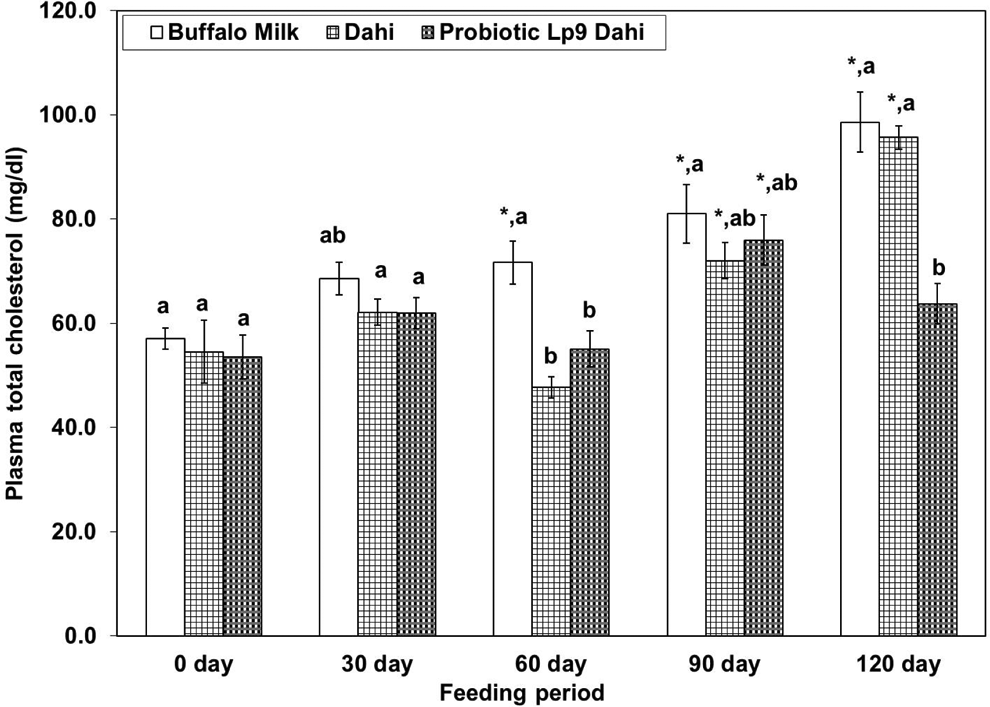
Effect of feeding buffalo milk, dahi, or probiotic Lp9 dahi on plasma total cholesterol levels in rats. Values are mean ± SD for n = 7. a,b Values at given day with different superscript letters are significantly different (P < 0.05), 1-way ANOVA followed by Tukey post hoc test. *Values at different time intervals are significantly greater than the corresponding value on day 0 (P < .05), 1-way ANOVA followed by Tukey post hoc test. ANOVA indicates analysis of variance; SD, standard deviation.
Effect of Probiotic Dahi on Plasma HDL-Cholesterol Level
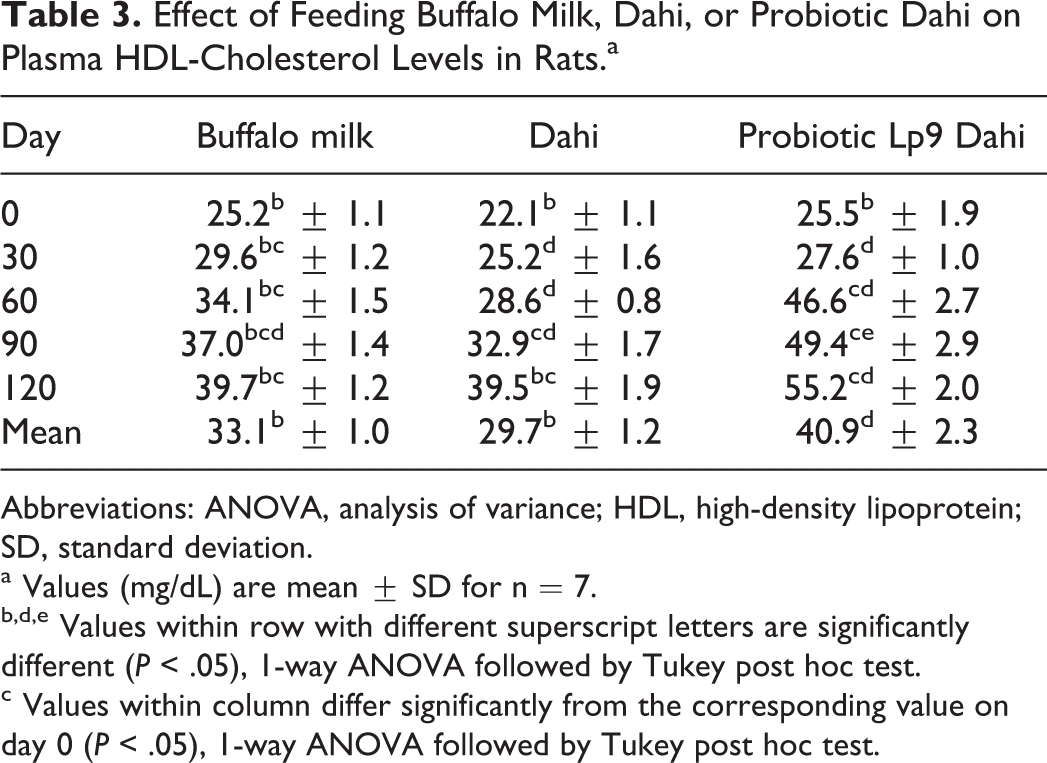
To comprehend the role of probiotic dahi in the elevation of good cholesterol, HDL-cholesterol level was measured in rats fed with probiotic dahi and compared to HDL-cholesterol level in rats fed with dahi and buffalo milk at given experimental time points. As shown in Table 3 and Figure 2, plasma HDL-cholesterol levels were increased in the 3 dietary groups: buffalo milk, dahi, and probiotic dahi. However, increase in plasma HDL-cholesterol was elevated remarkably in the probiotic dahi group when compared to dahi and buffalo milk groups.
Effect of Feeding Buffalo Milk, Dahi, or Probiotic Dahi on Plasma HDL-Cholesterol Levels in Rats.a
Abbreviations: ANOVA, analysis of variance; HDL, high-density lipoprotein; SD, standard deviation.
aValues (mg/dL) are mean ± SD for n = 7.
b, d, eValues within row with different superscript letters are significantly different (P < .05), 1-way ANOVA followed by Tukey post hoc test.
cValues within column differ significantly from the corresponding value on day 0 (P < .05), 1-way ANOVA followed by Tukey post hoc test.

Effect of feeding buffalo milk, dahi, or probiotic Lp9 dahi on plasma HDL-cholesterol level in rats. Values are mean ± SD for n = 7. a,b,cValues at given day with different superscript letters are significantly different (P < .05), 1-way ANOVA followed by Tukey post hoc test. *Values at different time intervals are significantly greater than the corresponding value on day 0 (P < .05), 1-way ANOVA followed by Tukey post hoc test. ANOVA indicates analysis of variance; SD, standard deviation.
Effect of Probiotic Dahi on Plasma LDL and Very-Low-Density Lipoprotein-Cholesterol Level
Plasma level of LDL and very-low-density lipoprotein (VLDL)-cholesterol in buffalo milk- and dahi-fed groups were increased throughout the experimental period and were elevated by 84.6% and 73%, respectively, on day 120 when compared to day 0 in the respective groups (Table 4; Figure 3). The level of LDL- and VLDL-cholesterol in probiotic dahi group was decreased by 59% on day 120 when compared to day 0. Furthermore, overall mean of LDL- and VLDL-cholesterol was significantly lower in probiotic dahi group when compared to dahi- and buffalo milk-fed group.
Effect of Feeding Buffalo Milk, Dahi, or Probiotic Dahi on Plasma LDL + VLDL-Cholesterol Levels in Rats.a

Abbreviations: ANOVA, analysis of variance; LDL, low-density lipoprotein; SD, standard deviation; VLDL, very-low-density lipoprotein.
aValues (mg/dL) are mean ± SD for n = 7.
b,c,eValues within row with different superscript letters are significantly different (P < .05), 1-way ANOVA followed by Tukey post hoc test.
d Values within column differ significantly from the corresponding value on day d (P < .05), 1-way ANOVA followed by Tukey post hoc test.

Effect of feeding buffalo milk, dahi, or probiotic Lp9 dahi in plasma LDL + VLDL-cholesterol level on rats. Values are mean ± SD for n = 7. a,b,cValues at given day with different superscript letters are significantly different (P < .05), 1-way ANOVA followed by Tukey post hoc test. *Values at different time intervals are significantly greater than the corresponding value on day 0 (P < .05), 1-way ANOVA followed by Tukey post hoc test. ANOVA indicates analysis of variance; LDL, low-density lipoprotein; SD, standard deviation; VLDL, very-low-density lipoprotein.
Effect of Probiotic Dahi on Plasma TAGs Level
In order to evaluate the role of probiotic dahi in lowering TAGs, which is considered as a pertinent marker for cardiovascular risk, the levels of plasma TAGs were measured in rats fed with probiotic dahi, dahi, or buffalo milk. As shown in Table 5 and Figure 4, plasma levels of TAGs remained increased in dahi- and buffalo milk-fed groups and remained elevated throughout the experimental period. In the probiotic dahi group, the levels of TAGs transiently increased on day 30 and then subsequently decreased and reached the lowest on days 120 when compared to day 0. The levels of plasma TAGs were found to be remarkably lower in the probiotic dahi-fed group when compared to dahi- and buffalo milk-fed groups.
Effect of Feeding Buffalo Milk, Dahi, or Probiotic Dahi on Plasma Triglycerides Levels in Rats.a

Abbreviations: ANOVA, analysis of variance; SD, standard deviation.
aValues (mg/dL) are mean ± SD for n = 7.
b,d,eValues within row with different superscript letters are significantly different (P < .05), 1-way ANOVA followed by Tukey post hoc test.
c Values within column differ significantly from the corresponding value on day 0 (P < .05), 1-way ANOVA followed by Tukey post hoc test.
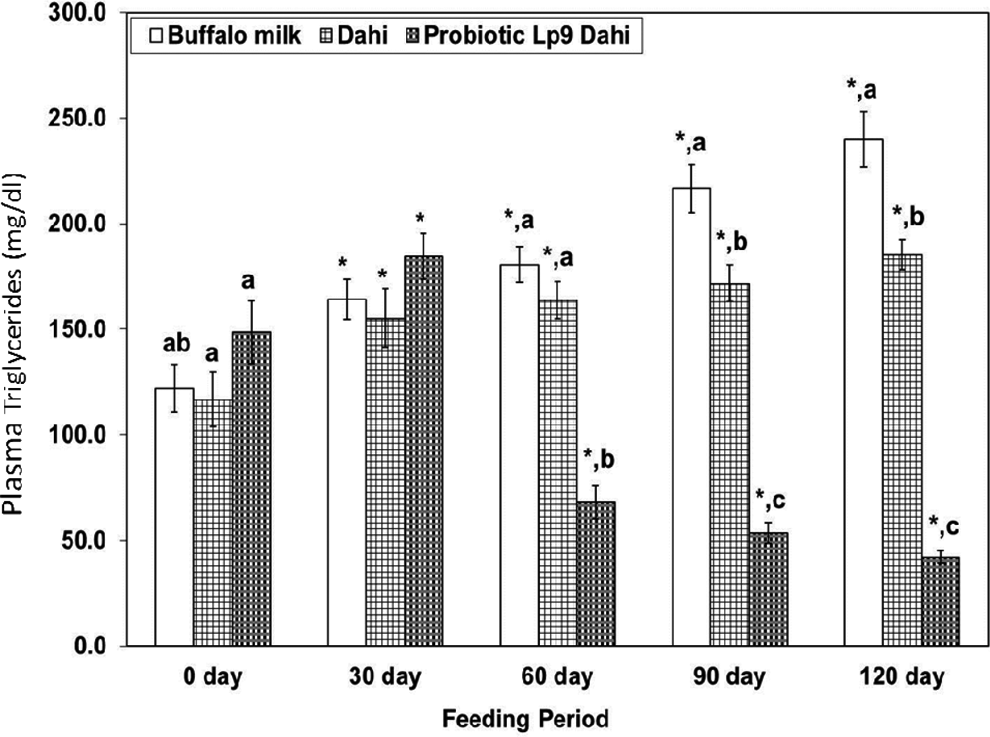
Effect of feeding buffalo milk, dahi or probiotic Lp9 dahi in plasma TAGs level on rats. Values (mg/dL) are mean ± SD for n = 7. a,b,cValues at given day with different superscript letters are significantly different (P < .05), 1-way ANOVA followed by Tukey post hoc test. *Values at different time intervals are significantly greater than the corresponding value in day 0 (P < .05), 1-way ANOVA followed by Tukey post hoc test. ANOVA indicates analysis of variance; SD, standard deviation.
Effect of Probiotic Dahi on Atherogenic Index
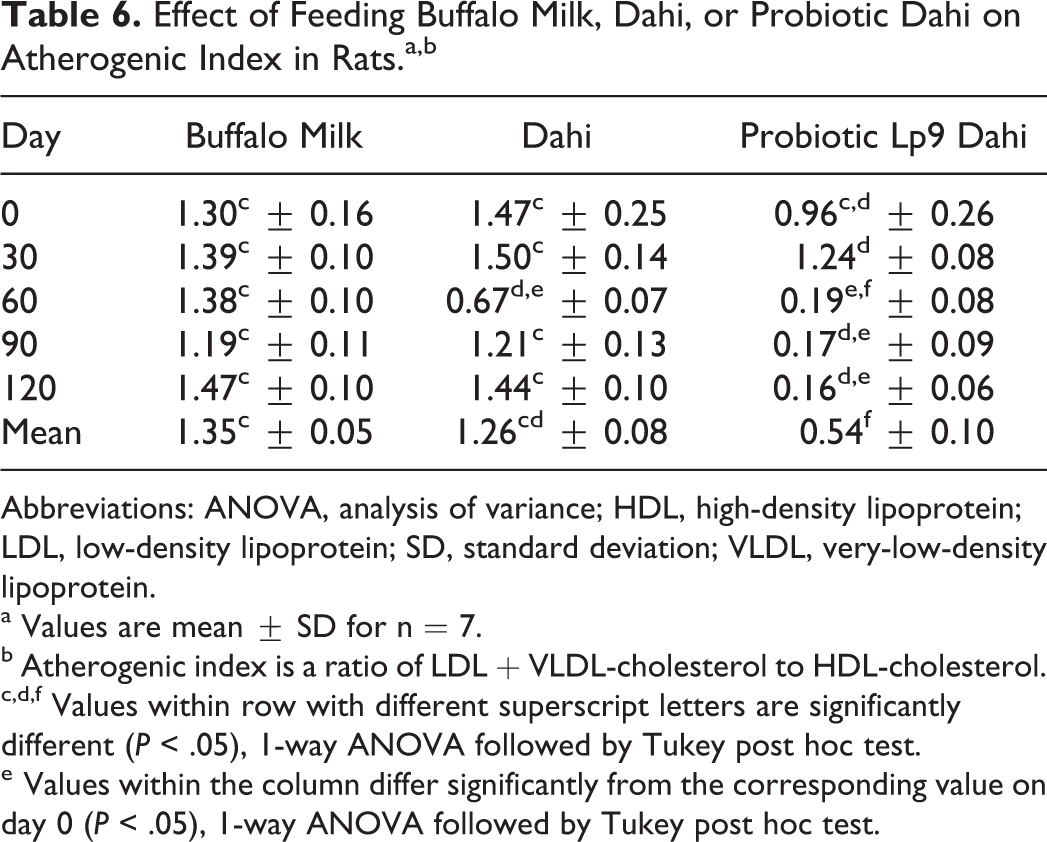
The TAGs and LDL-cholesterol levels in the plasma are directly related to the development of atherosclerosis. The atherogenic index (AI), a ratio of LDL + VLDL-cholesterol to HDL-cholesterol, remained unaffected throughout the experimental period in the group fed with buffalo milk. In contrast, the AI remarkably decreased in rats fed with probiotic dahi (Table 6 and Figure 5). On day 120, the AI was significantly lower in probiotic dahi-fed rats when compared to buffalo milk- and dahi-fed groups.
Effect of Feeding Buffalo Milk, Dahi, or Probiotic Dahi on Atherogenic Index in Rats.a,b
Abbreviations: ANOVA, analysis of variance; HDL, high-density lipoprotein; LDL, low-density lipoprotein; SD, standard deviation; VLDL, very-low-density lipoprotein.
aValues are mean ± SD for n = 7.
b Atherogenic index is a ratio of LDL + VLDL-cholesterol to HDL-cholesterol.
c,d,fValues within row with different superscript letters are significantly different (P < .05), 1-way ANOVA followed by Tukey post hoc test.
eValues within the column differ significantly from the corresponding value on day 0 (P < .05), 1-way ANOVA followed by Tukey post hoc test.

Effect of feeding buffalo milk, dahi, or probiotic Lp9 dahi on atherogenic index (AI)† in rats. Values are mean ± SD for n = 7. †Atherogenic index is a ratio of LDL + VLDL-cholesterol to HDL-cholesterol. a,b,cValues at given day with different superscript letters are significantly different (P < .05), 1-way ANOVA followed by Tukey post hoc test. *Values at different time intervals are significantly greater than the corresponding value in day 0 (P < .05), 1-way ANOVA followed by Tukey post hoc test. ANOVA indicates analysis of variance; HDL, high-density lipoprotein; LDL, low-density lipoprotein; SD, standard deviation; VLDL, very-low-density lipoprotein.
Effect of Probiotic Dahi on Cholesterol and TAGs Accumulation in Liver and Aortic Tissue
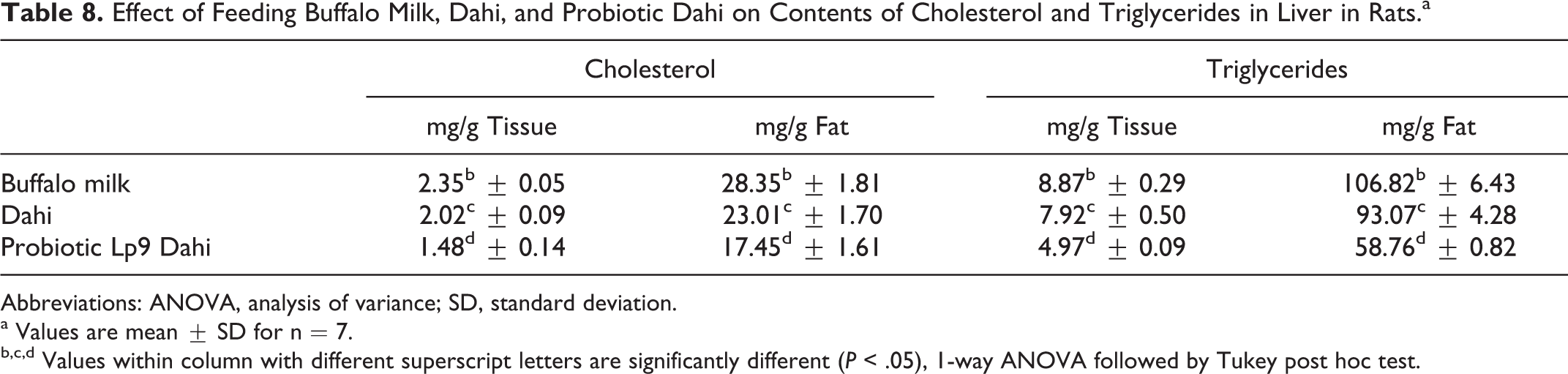
At the end of the experiment, the cholesterol and TAGs contents in liver and aorta were compared among the 3 dietary groups. The contents of cholesterol and TAGs in aortic tissue were significantly lower in rats fed with dahi and probiotic dahi (Table 7 and Figure 6). As anticipated, the probiotic dahi was more efficacious than dahi in reducing the contents of cholesterol and TAGs in the aortic tissues. The contents of cholesterol in aortic tissue were decreased by 7.2% and 40.4% in dahi and probiotic dahi groups, respectively, relative to buffalo milk group, and the corresponding decline in TAG contents in the aortic tissue was 14.4% and 34.4%, respectively. In addition, probiotic dahi was also more efficacious than dahi in reducing the deposition of cholesterol and TAGs in liver. Deposition of cholesterol in liver was reduced by 14.0% and 37.0% in Dahi- and probiotic dahi-fed animals, respectively, compared to buffalo milk-fed group (Table 8 and Figure 7), and the corresponding decline in TAG in the liver was 9.5% and 44.0%, respectively.
Effect of Feeding Buffalo Milk, Dahi, and Probiotic Dahi on Cholesterol and Triglycerides Contents in Aortic Tissue in Rats.a

Abbreviations: ANOVA, analysis of variance; SD, standard deviation.
aValues are mean ± SD for n = 7.
b, c, dValues within column with different superscript letters are significantly different (P < .05), 1-way ANOVA followed by Tukey post hoc test.
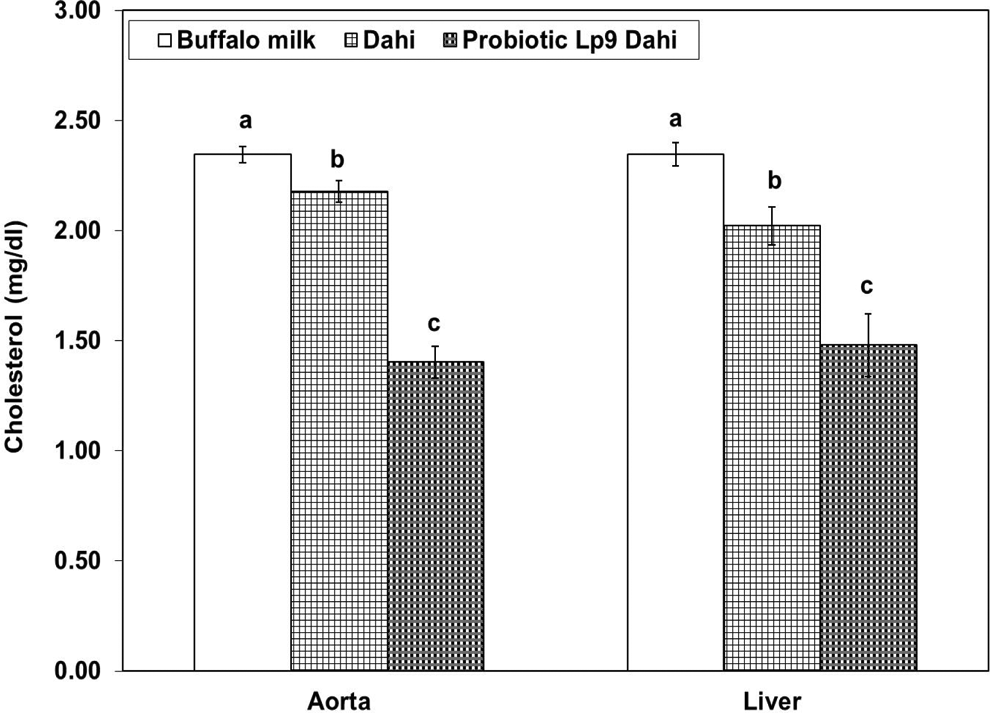
Effect of feeding buffalo milk, dahi and probiotic Lp9 dahi on cholesterol and triglycerides (TAGs) contents in aortic tissue of rats. Values are mean ± SD for n = 7. a,b,c Values with different superscript letters are significantly different (P < .05), 1-way ANOVA followed by Tukey post hoc test. ANOVA indicates analysis of variance; SD, standard deviation.
Effect of Feeding Buffalo Milk, Dahi, and Probiotic Dahi on Contents of Cholesterol and Triglycerides in Liver in Rats.a
Abbreviations: ANOVA, analysis of variance; SD, standard deviation.
aValues are mean ± SD for n = 7.
b, c, dValues within column with different superscript letters are significantly different (P < .05), 1-way ANOVA followed by Tukey post hoc test.

Effect of feeding buffalo milk, dahi, and probiotic Lp9 dahi on contents of cholesterol and triglycerides (TAGs) in liver of rats. Values are mean ± SD for n = 7. a,b,c Values with different superscript letters are significantly different (P < .05), 1-way ANOVA followed by Tukey post hoc test. ANOVA indicates analysis of variance; SD, standard deviation.
Discussion
Hypercholesterolemia is a leading risk factor for the development of cardiovascular disease. Although therapeutic drugs are available for managing cardiovascular disease, they are expensive and can have severe side effects. Convincing studies showed that regular administration of selected probiotics may cut plasma cholesterol levels.
3,20
–23
In the present study, we investigated lipid dynamics of the plasma, aorta, and liver in male Wistar rats fed with probiotic dahi, dahi, or buffalo milk. We demonstrated that rats fed with probiotic Lp9 dahi exhibit significantly lower levels of plasma total cholesterol, TAGs, LDL-cholesterol, LDL + VLDL-cholesterol, atherogenic index, and accumulations of tissue lipids in aorta and liver than dahi- and buffalo milk-fed animals. The overall beneficial effects showed by the probiotic dahi group were better than those rendered by dahi and buffalo milk groups. Recently, the author’s laboratory also reported hypocholesterolemic effect of probiotic dahi containing L acidophilus and Bifidobacterium bifidum on rats.
13
Moreover, deconjugations of major bile salts by L plantarum Lp9 strain are assumed to play a significant role in lowering the cholesterol level under in vivo conditions.
24
L plantarum Lp9 strain possesses a functional bile salt hydrolase (BSH) enzyme that could help in the depletion of cholesterol in the host. Genomic analysis has indicated that L.plantarum possesses the largest number of BSH genes
25
and hence is likely to ameliorate hypercholesterolemia and protect against cardiovascular diseases. Cholesterol-lowering activity of probiotic lactobacilli has been well documented in experimental animals3,13,26
as well as in human studies.
27
L plantarum strains isolated from gastrointestinal samples and fermented milk product showed high tolerance to the consecutive exposure to hydrochloric acid (pH 2.0) and bile salts.
28
Milk fermented by L plantarum NTU 102 has been shown to be effective in reducing total cholesterol and LDL-cholesterol levels in hamsters, where high blood cholesterol levels were induced by a cholesterol-rich diet.
29
The HDL-cholesterol is a defensive molecule and its plasma level is inversely related to cardiovascular disease.
30
This is an important factor, since HDL-cholesterol can prevent arteriosclerosis. In the present study, the level of HDL-cholesterol in plasma was significantly higher in animals fed with probiotic dahi than buffalo- and dahi-fed animals. This finding supports an earlier report wherein probiotic dahi containing
L casei
and
L acidophilus
In the present study, the plasma TAG level was also found to be significantly reduced in the probiotic dahi group when compared to buffalo milk and dahi groups. Our results are consistent with a previous study which showed that Lactobacillus gasseri SBT 0270 strain decreased the serum total cholesterol, LDL-cholesterol, and TAGs levels as well as AI score, while increasing HDL-cholesterol in rats fed cholesterol-enriched diet. 32,33 It has been proposed that various milk components such as orotic acid, retentate, pyrimidine-like nucleotide, calcium, or hydroxyl methyl glutaric acid reduce the de novo synthesis of cholesterol through inhibition of nicotinamide adenine dinucleotide phosphate formation (a reducing power required for biosynthesis of cholesterol) by 3-hydroxy-3-methyl coenzyme A (HMG CoA) synthase (a rate-limiting step in cholesterol biosynthesis) in the liver and increases the cholesterol clearance from the blood stream by enhancing the excretion of bile acids. 34 In addition, fermentation of milk with lactic acid bacteria increases the bioavailability of these components and their absorption as well as function of such components in the gastrointestinal tract. 35 Probably, this may be the reason why probiotic dahi is more effective than buffalo milk. Recently, the author’s laboratory has shown that probiotics downregulate carcinogen-activating cytochrome P450 (CYP) enzymes CYP1A1, CYP1A2, and CYP1B1 in the liver and upregulate carcinogen-detoxifying γ-glutamyltranspeptidase, UDP-glucuronosyl transferase, and quinone reductase activities in the liver as well as in the colon. 36 Findings of this study indicate that consumption of probiotic dahi may be more efficacious in reducing diet-induced hypercholesterolemia and decreasing the plasma, hepatic, and aortic lipids than dahi. Probiotic dahi may also inhibit the activity of HMG CoA reductase possibly by feedback inhibition or repression of the transcription gene encoding the enzyme via activation of the sterol regulatory element-binding protein (SREBP) transcription factor. It may also be possible that consumption of probiotic dahi enhances conversion of cholesterol to bile acids by activating cholesterol-7α-hydroxylase. 37 However, future research may be needed to explore the molecular mechanism underlying the cholesterol-lowering effect of probiotic dahi and production of bacterial metabolites that may modulate hepatic cholesterol biosynthesis or degradation.
Conclusion
In summary, the present study reveals that probiotic Lp9 dahi may attenuate plasma cholesterol and TAGs in diet-induced hypercholesterolemic rats. These findings suggest that probiotic dahi could have a therapeutic potential to decrease cholesterol levels and the risk of cardiovascular diseases. This study also demonstrated that traditionally used dairy-based fermented foods may be successfully used as a potential medium for the delivery of probiotics to achieve cardioprotective health benefits to the consumers.
Footnotes
Acknowledgments
The authors wish to acknowledge the research fellowships and necessary facilities provided by UGC and ICAR, New Delhi, and NDRI, Karnal, India. The generous gift of L. plantarum Lp9 strain by Dr V. K. Batish, Dairy Microbiology Division, NDRI, Karnal, is also duly acknowledged. We thank Dr Veronique Dinand, Department of Research, Sir Ganga Ram Hospital, Rajinder Nagar, New Delhi, India, for critically reviewing the manuscript and giving suggestions.
Declaration of Conflicting Interests
The author(s) declared no potential conflicts of interest with respect to the research, authorship, and/or publication of this article.
Funding
The author(s) received no financial support for the research, authorship, and/or publication of this article.