



Abstract
The increasing reliance on e-commerce among sensory-disabled customers highlights the inadequacy of traditional brick-and-mortar stores in meeting their needs. To encourage greater footfall of sensory-disabled individuals in physical retail spaces, creating an inclusive and accessible environment is essential. This study identifies the barriers faced by these individuals through extensive literature review, surveys, and expert interviews, revealing the critical need for sensory-inclusive design solutions. By addressing challenges such as sensory overload, navigation difficulties, and communication barriers, this research proposes actionable strategies tailored to enhance accessibility and inclusivity in retail environments. The findings aim to support retailers in creating seamless and equitable shopping experiences that prioritize the needs of sensory-disabled customers, fostering inclusivity for both shoppers and employees.
Introduction
In the past few decades, there has been a noticeable improvement in the inclusivity of public spaces with regard to spatial design (Coleman & Lebbon, 1999). However, the journey toward achieving complete inclusivity within physical retail stores in terms of sensory accessibility is still in progress.
Individuals grappling with sensory impairments such as blindness, visual impairments, deafness, and hearing impairments, as well as cognitive disorders, may encounter numerous challenges when navigating even the simplest retail store layouts due to a lack of inclusivity within retail environments. This emphasizes the imperative to consider various inclusive design strategies that cater to a diverse range of consumers, ensuring that retail environments remain welcoming and accessible to all. For instance, blind or visually impaired (BVI) customers may encounter difficulties in locating products within a store (Szpiro et al., 2016). Similarly, a hearing-impaired, speech-impaired, or autistic customer exhibiting the aforementioned impairments may find it challenging to communicate with store employees (Clason, 2023). Furthermore, customers with learning disabilities might face obstacles during the bill payment process, including challenges in reading the bill or identifying coins or notes for financial transactions (Frazier, 2022).
Individuals with disabilities often refrain from engaging in shopping activities within physical retail stores due to the inadequacy of environmental conditions that fail to accommodate their specific needs (Edwards et al., 2018). The architecture and design of retail stores typically and predominantly cater to the able-bodied community, while neglecting the needs of the disabled community; a group that comprises only 15% of the global population (Imrie & Hall, 2003). The ambience of a retail store, encompassing elements such as color, lighting, and more, significantly contributes to the sensory experience of customers and correlates directly with their decision-making processes (Clarke et al., 2012). A recent study also indicates that sensory-disabled customers frequently encounter environmental irritants in retail settings, including inconvenient ambient conditions, overwhelming design elements, and an annoying socialscape which evokes feelings of irritation, significantly diminishing their shopping experiences (Vilnai-Yavetz et al., 2024). Moreover, sensory-disabled individuals often struggle to fully engage with sensory elements integrated into physical retail stores, further hindering their ability to enjoy and benefit from the retail environment.
Human senses play a vital role in attracting customers to the retail store and influencing their purchase decisions (Song, 2010). Customers experiencing sensory impairments and other sensory-related disabilities encounter various challenges during their shopping tours, especially in the navigation of the store and making buying decisions (Edwards et al., 2018). Currently, built environments designed for retail use lack inclusive or universal design-related theoretical frameworks that cater to the needs of disabled customers.
Spatial design can have a large impact on a user’s experience within a servicescape like a retail store and architects and interior designers should ensure that the built environment design implemented is equitable (Mulligan et al., 2018). Retail stores are often designed by designers and architects whose awareness and application of accessible and inclusive principles rooted in universal design can vary widely (Cerdan-Chiscano & Darcy, 2024).
Research into retail facility design underlines the critical role of spatial cognition and navigability in shaping customer experiences. Effective layouts not only enhance accessibility but also foster inclusivity by addressing the diverse needs of customers, but particularly those with sensory disabilities. A recent study published in 2023 by Assiut University employs space syntax analysis to optimize retail designs, demonstrating that well-aligned aisles and clear spatial configurations significantly improve customer navigation and visual cognition (Mohammed, 2023). Integrating such systematic methods into the retail design for sensory-disabled individuals can bridge existing accessibility gaps and enhance overall customer satisfaction.
The study emphasizes the critical gaps in current research on sensory inclusivity in retail environments, particularly for customers with sensory disabilities. While existing literature has predominantly focused on mobility-related accessibility (Imrie & Hall, 2003; Kaufman–Scarborough, 1999), the nuances of sensory accessibility—such as accommodating neurodiverse individuals or customers with visual and auditory impairments—remain underexplored. Recent advancements in inclusive retail design, including sensory-friendly hours and assistive technologies, highlight a growing awareness but often lack comprehensive integration within store layouts (Habbak & Khodeir, 2022). This research uniquely contributes to the field by addressing this oversight, offering a multidimensional approach to sensory-inclusive design grounded in both theoretical insights and practical applications. By aligning its findings with emerging trends and best practices, this study not only identifies challenges but also proposes actionable strategies to create retail environments that prioritize equity and enhance the shopping experiences of sensory-disabled individuals.
The study aims to address two main research questions:
RQ.1. What challenges do individuals with disabilities encounter while shopping in traditional brick-and-mortar retail stores?
RQ.2. What inclusive design strategies can be employed to create a retail store that is friendly and accessible for individuals with sensory disabilities?
The study focuses on enhancing the shopping comfort of customers experiencing common sensory disabilities and identifies design solutions to assist these individuals. This research delineates existing solutions that customers experiencing these sensory disabilities can utilize to shop comfortably without compromising their shopping experience. The findings from this study will provide an understanding of the various inclusive design strategies that retail stores can employ to create an inclusive environment for their sensory-impaired patrons—both customers and employees alike. The purpose of this research is to explore and propose inclusive retail design strategies that address the needs of neurodiverse and sensory-sensitive customers, creating environments that enhance accessibility and comfort. By improving the retail experience, the research adds value to both customers and their families by fostering independence, reducing stress, and promoting equitable participation in shopping activities.
Theoretical Background
Inclusive Practices of Retail Stores
Numerous policies and regulations have been implemented to address and eliminate the social exclusion frequently encountered by individuals with disabilities in the built environment in a global context (Imrie & Hall, 2003). Retail stores are also mandated to integrate accessible design measures in compliance with their country’s legislation.
Early studies conducted show that the inclusivity of a retail store can be evaluated through four primary aspects, namely the store environment, staff, target clientele, and products/services offered (Dodds & Palakshappa, 2021). Retailers primarily concentrate on making their retail stores accessible by implementing measures such as dedicated sensory-friendly hours for disabled individuals and training employees to cater to their needs. In 2018, the United Kingdom marked its inaugural accessible shopping day, now commemorated as “Purple Tuesday” (Hobbs, 2019). The observance of ‘Purple Tuesday’ is predominantly service-oriented, however.
Recent research highlights how barriers such as poor accessibility and social disruptions can significantly impact shoppers with disabilities, often resulting in reduced visits to malls (Vilnai-Yavetz et al., 2024). Expanding on the findings of Cerdan-Chiscano and Darcy (2024), this research also examines the critical role of universal design, staff attitudes, and social inclusion in shaping retail experiences of disabled customers and their families and friends (Cerdan-Chiscano & Darcy, 2024). Our study identifies actionable strategies to mitigate service failures and foster inclusive interactions, building on their insights into co-creation and accessible service environments. These challenges are compounded by architectural obstacles such as tight parking spaces, heavy swinging doors, uneven pathways, and narrow entrances or aisles that further restrict the shopping experience for individuals with disabilities (Edwards et al., 2018).
When designing a retail store with inclusivity in mind, it is important to consider whether accessible entrances with ramps and automatic doors, wide aisles for smooth navigation, lowered shelving and counters for those with mobility aids, proper lighting for visual impairments, clear signage with braille, and tactile assistance through textured flooring or guiding strips are included (Miller, 2024). Automated doors, ramps, and elevators are some of the most common inclusive design features incorporated in retail stores, and these features predominantly cater to customers experiencing mobility impairments (Baker et al., 2007).
According to Kaufman-Scarborough, even the limited accessible design measures available for use in retail stores revolve around the architecture of the store rather than the store layout or product placement (Kaufman-Scarborough, 1999). It is therefore imperative that retailers create welcoming retail interiors for disabled customers where they can shop comfortably. Store interior layout, lighting, furniture, and acoustics are some examples of the cues that may affect the sensory perception of a potential customer (Song, 2010).
Inclusivity to Empower the Disabled
Customers with disabilities are often tagged as “vulnerable consumers” due to the various biophysical and psychosocial challenges they experience (Baker et al., 2005). How can retailers address the needs of individuals with disabilities? What strategies can be employed to make retail spaces more inclusive and accommodating for people with disabilities? (Figure 1).

Common accessible retail design features.
To foster an inclusive retail environment, retailers ought to embrace the principle of “Design for All,” as articulated by The European Institute for Design and Disability. It highlights the concept of designing for human diversity, social inclusion, and equality (Persson et al., 2015). The Design for All concept strives to develop environments that are specifically designed for universal use, eliminating discrimination against individuals with disabilities or the elderly. This approach avoids creating spaces that segregate them from the rest of society (Chamberlain, 2007). In summary, “Design for All” can be viewed as an overarching concept that employs design theories like accessible design and universal design to craft an inclusive space usable by individuals of all ages, regardless of their abilities.
The inclusive and non-discriminatory nature of this design concept helps enhance the accessibility of the retail store to disabled customers by minimizing the usual difficulties they experience while making their purchasing decisions (Barnes, 2011). Incorporating inclusive spatial design elements can significantly contribute to improving the experience of customers with disabilities, especially sensory disabilities within the built environment (Kafka, 2018).
Inclusivity for Blind/Vision Impaired Customers
There are different types of visual impairments ranging from partial loss of vision to full blindness (Pattison & Stedmon, 2006). Customers experiencing blindness or visual impairments face difficulties in terms of navigation, choosing or buying goods from a store, and reading details about a specific product (Edwards et al., 2018). Other challenges that should be considered while creating an inclusive environment for the BVI users are difficulties related to glare, reduced visual acuity, and lowered visual acuity. These issues can be overcome by employing carefully curated colors and avoiding harsh lighting (Pattison & Stedmon, 2006).
Yvette Hatwell, a renowned cognitive psychologist, stated that the sense of touch plays an important role in assisting BVI users with their daily life activities as the sense of touch essentially provides these users with spatial awareness in terms of space, form, orientation and measurements and material awareness in terms of density, texture, and temperature (Herssens & Heylighen, 2008). Braille as well as tactile graphics and markings were developed to take advantage of the sense of touch that allows BVI users to gain spatial cognition (Yang et al., 2021). For BVI users, the layout of the retail store plays an important role as it can influence the movement of each customer, and store layout may pose a special challenge to BVI users (Behera & Mishra, 2017). If the BVI users do not have the cognitive map of the retail store memorized, they may face difficulties in moving around the store and may further experience delays during their shopping trip (Khattab, 2015). A common solution to assist BVI users in navigating a retail store is tactile pathways, which usually comprise a series of projected textures or accents located on the floor or walls, to help them by guiding them to the nearest entrance or exit (Siddhpura, 2022).
Wayfinding signage also has a vital role in-store navigation, and the wayfinding signage used in the interiors must cater to the needs of the BVI users (Wang et al., 2013). Signages should feature UEBC Grade 1 Braille to communicate with blind or visually impaired users and the signage feature raised tactile lettering, maps, or pictorial images (Apelt et al., 2007). When Braille language is employed on signage, most BVI users prefer the tactile language to be placed underneath the actual text rather than beside it, as it is more accessible as well as aesthetic (Yuen, 2013). Color also plays a key factor in communicating with users, especially in wayfinding signage and design experts should ensure appropriate color combinations are legible and visible to BVI users (Lee et al., 2020). Along with signage, lighting and color also are factors that require careful consideration while designing a retail store for BVI customers (Funkquist et al., 2024).
Inclusivity for Deaf/Hearing Impaired Customers
Hearing impairments may be caused by determinants like aging, birth or genetic disorders, and other external factors like force traumas (Pattison & Stedmon, 2006). Hearing-impaired users usually face problems in communicating with the employees of the retail store, as they often avoid interacting with hearing-impaired or deaf users (Edwards et al., 2018).
A deaf/hearing-impaired individual usually perceives the world through their field of vision (Youde, 2017). Spatial awareness and orientation for hearing-impaired and deaf users are mainly identified through vision and touch (Abdel-Maksoud, 2016). Hearing-impaired users depend upon visual cues; for example, hearing-impaired users can be alerted to a doorbell ringing using lights that flash (Brausch & Katunský, 2015). Experts state that the spatial layout of the store should project visibility to allow hearing-impaired users to face the employees or other people when communicating to enable the lip-reading process (Pineiro, 2023). Retail stores should therefore eliminate obstructive objects or opaque barriers that may hinder deaf or hearing-impaired users from reading the lips of people with whom they are conversing. In order to improve visibility, retailers can employ mobile furniture and avoid and avoid any type of translucent or opaque windows, doors or partitions (Youde, 2017). In order to maintain the inclusivity of a retail store, retail designers should widen retail aisles and include more curved partitions or surfaces within the space to circumvent sightline challenges that hearing-impaired users might experience (Davis, 2019). When designing staircases, designers should avoid using half-turn staircases which commonly feature a quarter stair landing before a 90° angle turn, as this turn may obstruct the view of deaf or hearing-impaired users approaching potential hazards (Youde, 2017). Light also plays an important role in enhancing the visual acuity of hearing-impaired users. Natural light entering the space through ill-placed windows might prove to be disabling in terms of communication for hearing-impaired users (Davis, 2019). Architect David Morley states that the light quality of a space can impact the lip reading and sign language communication of hearing-impaired users (Youde, 2017). Research has proven that diffusive light with low glare, as well as tones that contrast with human skin, can help hearing-impaired users see the expressions, signing gestures and lip movements of other people better (Pineiro, 2023). Also, the colors and materials used for finishes, furnishings and equipment should contrast with the light (Youde, 2017). Architect Hansel Bauman, the campus architect of Gallaudet University, states that it is necessary to minimize the structural vibrations, background noises created by machinery and sound reverberations within a space to cater to the needs of the deaf users, as it can prove to be distracting as well as obstructive to users employing assistive technology like hearing aids (Bauman, 2005; Youde, 2017). Reverberations and background noises can be controlled using basic acoustic optimization principles such as furnishing and finishing the store with materials that have high sound absorption levels or have the ability to disperse the sound waves uniformly all around the space (Pineiro, 2023).
Designers should eliminate overtly bright and reflective colors as well as materials such as hardwood for flooring and furniture because they may reverberate or emit noises upon human contact (Pineiro, 2023). Windows should feature automated or retractable shades that can control the light entering the space, which in turn can also regulate shadows being cast in the space (Davis, 2019).
Compliance with these design considerations ensure a reduction in eye fatigue among hearing-impaired users, as they tend to focus on their surroundings primarily through vision, and this may lead to visual exhaustion (Davis, 2019). Furthermore, American architect Hansel Bauman formulated a framework known as The DeafSpace Project in 2005 to solve similar difficulties that hearing impaired/ deaf users face due to poorly designed buildings that do not cater to their needs and requirements. It concentrates on five key aspects that can enhance the experience of hearing-impaired users: (a) Acoustics (b) Color and light (c) Space and proximity (d) Mobility and proximity (e) Sensory reach (Bauman, 2005). The first-ever space designed to comply with the DeafSpace framework is the Sorenson Language and Communications Center (SLCC), which is an open-plan building with a curtain wall, glass partitions, and multiple audiology booths (Davis, 2019). The building ensures accessibility and inclusivity for individuals who rely on visual communication. The building’s visual-centric approach enhances spatial awareness, allowing for unobstructed sightlines, ample natural lighting, and open circulation paths to facilitate seamless sign language communication (Davison, 2018).
One of the key aspects of hearing-impaired-friendly design is acoustic management, particularly for individuals who use hearing aids or cochlear implants. The SLCC incorporates zoned HVAC systems with variable air volume (VAV) terminal units, minimizing sudden changes in background noise that could disrupt concentration or communication (Davison, 2018). Additionally, soft materials, acoustic panels, and controlled reverberation levels reduce auditory distractions, ensuring a more comfortable environment for all users (Pergolini, 2016).
Beyond acoustics, the lighting design at SLCC plays a vital role in enhancing visibility for sign language users. The incorporation of diffused, evenly distributed lighting prevents glare and harsh contrasts, which can interfere with the perception of facial expressions and hand gestures (Hutchins, 2016). The use of contrasting colors between walls and floors also improves spatial orientation, an essential consideration for Deaf and hard-of-hearing individuals (Gallaudet, 2022).
Although the SLCC successfully meets many accessibility goals, further enhancements could address remaining acoustical challenges (Watt, 2024). Future iterations of Deaf-friendly buildings may integrate smart lighting controls, automated acoustic adjustments, and enhanced thermal zoning to further optimize comfort for users. By continuously refining DeafSpace design strategies, architects and engineers can create environments that are not only functionally efficient but also fully inclusive of the Deaf and hard-of-hearing community.
Inclusivity for Neurodiverse Customers
Consumers with neurodiversity present a range of challenges to retail store staff during interactions. These include dealing with anxiety, hyperactivity, speech impairments, difficulties during the checkout process and payment, as well as challenges in deciphering information and reading simple signage (Edwards et al., 2018). Sensory design is considered to be vital for addressing the unique needs of individuals with autism (particularly non-verbal autism) by mitigating sensory triggers and fostering environments that enhance comfort and accessibility (Fradette, 2024).
Sensory confusion is a challenge that most users with cognitive disorders might face, and a sensory cohesive environment should be created for them (Mostafa, 2008). Individuals with cognitive disorders like autism tend to get overstimulated in new environments, as they are susceptible toward repetitive behaviors and patterns and straying away from their routine can make them overwhelmed (Landry, 2019). Neurodiverse users prefer quiet spaces with reduced sensory triggers like sounds and acoustics play an important role in creating an inclusive environment for these customers (Habbak & Khodeir, 2022). Visual stimuli like harsh lighting and colors may disturb them, especially lighting that emits high glare, high illuminance, and flickering (Habbak & Khodeir, 2022). Tactile stimuli like highly textured surfaces may induce headaches and thermo-regulation must therefore be integrated into the spaces being designed (Habbak & Khodeir, 2022). The effects of modern materials and environmental changes on thermal comfort can be mitigated through thermoregulation, which involves controlling ambient temperature and humidity. Additionally, radiative heat flux plays a role in regulating the body’s thermal physiological response, which is essential for overall well-being (Hussan & Hunter, 2020). Bad odors due to poor ventilation are olfactory stimuli that can highly bother and impact the normal functioning of individuals with sensory processing impairments (Habbak & Khodeir, 2022).
Structured and well-defined spaces are more easily processed by individuals experiencing neurodiversity (Landry, 2019). Implementing organized circulation, subdividing rooms, and making spaces adaptable can enhance focus for individuals, especially for users with autism (Truong, 2018). Individuals with autism may exhibit both hypersensitivity and hyposensitivity, necessitating a balanced provision of sensory stimuli (Matusiak, 2023). Therefore, it is necessary to create a neurodiverse-friendly environment that does not cause overstimulation or under stimulation among the users of the space.
Inclusivity for Customers with Learning Disabilities
The most common types of learning disabilities are attention deficit hyperactivity disorder (ADHD), dyslexia, dyscalculia and dyspraxia and these disabilities are dubbed specific learning disabilities (SpLDs) (Hammill, 1990). Customers affected by dyslexia and dyscalculia may experience difficulty in reading signs and other textual elements found in the interiors. It is therefore imperative to use sans serif fonts such as such as arial, open sans, century gothic, verdana, trebuchet, tahoma, and calibri, while maintaining a font size of at least 12 points and avoiding underlining or italicizing (British Dyslexia Association, 2023). Customers with learning disabilities should be provided with pictographic maps and pictorial and color-coded signs to help them navigate through the store (Cotterill et al., 2015). Designated desks/stations where trained staff can help customers with learning disabilities should be incorporated into the store design (Cotterill et al., 2015). It is also important to feature ample space for unrestricted movement and actively assess and revise personal space boundaries, particularly for individuals with conditions that impact coordination or balance such as dyspraxia or Meniere’s disease (Cousins, 2022).
Research Methodology
This study employs a mixed-methods approach to comprehensively address the research objectives. By combining quantitative and qualitative data collection techniques, this methodology provides a nuanced understanding of the sensory processing needs and challenges faced by individuals with sensory disabilities in retail environments. Additionally, it explores inclusive design strategies tailored to address these challenges effectively. The integration of measurable data from surveys and rich qualitative insights from expert interviews ensures the findings are both robust and actionable.
The mixed-methodology approach was employed to capitalize on the strengths of both quantitative and qualitative research. Quantitative data offered measurable insights into the frequency and types of challenges faced by sensory-disabled individuals, while qualitative data provided deeper context through lived experiences and expert input. This combination aligned statistical trends with personal narratives, leading to evidence-based and empathetic design recommendations. By integrating these methods, the study ensured a comprehensive and validated understanding of sensory inclusivity in retail environments, offering actionable strategies for creating more accessible and inclusive spaces.
Table 1 provides an outline of the research methodology employed, detailing the approaches used, key areas of focus, and the outcomes achieved. It summarizes the methods applied to analyze accessibility challenges and propose actionable design innovations for sensory inclusivity in retail environments.
Research Methodology.

Literature Review
The literature review served as the foundation for this study, highlighting the inadequacies of existing retail design solutions to accommodate sensory-disabled customers. Through an analysis of prior research, gaps were identified in addressing sensory overload, navigational difficulties, and communication barriers in retail environments.
The literature review was founded upon the foundational work of Judy Singer, who introduces the concept of neurodiversity in the 1990s, emphasizing the societal value of neurodivergent individuals, particularly those with autism and ADHD. Rob Imrie, along with Peter Hall, explores inclusive design principles in Inclusive Design: Designing and Developing Accessible Environments (Imrie & Hall, 2003), advocating for accessibility beyond visible disabilities. Ann Heylighen’s research highlights user-centric approaches that address diverse needs in built environments, while Stacey Menzel Baker examines how retail design impacts individuals with disabilities, focusing on enhancing accessibility and sensory-friendly environments. Additionally, various other literature was also analyzed in depth to elicit evidence to substantiate the study being conducted.
Key insights from the literature informed the development of the study’s research questions and shaped the choice of a mixed-methods approach. Specifically:
Existing accessible design solutions: Literature on accessible retail design revealed significant limitations in addressing sensory disabilities comprehensively.
Challenges identified: In-depth review pointed to recurring issues such as sensory overload, ineffective wayfinding, and inadequate staff training, emphasizing the need for empirical data to confirm and expand these findings.
Innovative solutions: Emerging practices, such as sensory-friendly layouts and quiet zones, were explored to frame the qualitative component of the study.
By integrating these insights, the literature review provided a robust theoretical underpinning for the methodology, ensuring its relevance and applicability.
Quantitative Data Collection
Quantitative data collection was undertaken through a structured survey designed to capture the experiences and preferences of individuals with diverse sensory disabilities. Structured surveys were conducted to gather measurable data on the experiences of individuals with diverse sensory disabilities in retail environments.
Design: The survey included closed-ended questions for statistical analysis and a few open-ended questions to capture additional context.
Sample: Fifty participants with sensory disabilities such as blindness, hearing impairments, autism spectrum disorder, and ADHD, were purposively selected to ensure diversity and representation.
Focus: Topics included sensory challenges (e.g., lighting, noise, and layout issues), barriers to accessibility, and preferences for design solutions.
The survey aimed to identify common challenges faced by these individuals in retail settings and to evaluate the effectiveness of existing inclusive features. A total of 50 participants, representing a range of sensory disabilities, such as blindness, hearing impairments, autism spectrum disorder, and ADHD, were included in the study. Participants were selected using purposive sampling to ensure diversity and representation. The inclusion criteria required participants to be at least 18 years of age, have at least one sensory disability, and possess prior shopping experience in retail environments. This ensured the relevance and applicability of the data collected. The survey primarily not only consisted of closed-ended questions to facilitate statistical analysis but also included a few open-ended questions to capture additional context and unique perspectives. Key topics covered in the survey included sensory challenges such as issues with lighting, noise, and layout; barriers to accessibility; and preferences for design solutions. The survey’s design was closely aligned with the study’s research objectives, ensuring that the data collected would directly inform actionable recommendations.
The outcomes of the survey provided a foundational understanding of the prevalence and types of challenges faced by sensory-disabled customers in retail environments. These quantitative insights formed the basis for identifying common patterns and trends, which were later complemented by qualitative data from expert interviews.
Qualitative Data Collection
To supplement the quantitative findings, qualitative data were gathered through in-depth interviews with accredited interior designers specializing in inclusive design. The primary objective of this component was to gain professional insights into the current state of sensory-inclusive design in retail spaces and explore innovative strategies to address the challenges identified through the survey.
The expert interviews were conducted in a semi-structured format to allow flexibility while ensuring that key topics were addressed. These topics included the effectiveness of existing inclusive design practices, strategies for accommodating conflicting sensory needs, and opportunities for technological innovations in retail design. The semi-structured nature of the interviews provided the experts with the freedom to elaborate on their experiences and offer detailed recommendations, enriching the study with practical and forward-thinking perspectives.
Semi-structured interviews were conducted with accredited architects and interior designers specializing in inclusive design.
Objective: These interviews aimed to gain professional insights into current sensory inclusive design practices and explore innovative strategies.
Focus areas: The discussions covered existing design solutions, strategies for addressing conflicting sensory needs, and the integration of technological innovations.
Participant selection: Experts were chosen based on their credentials and experience in designing for individuals with sensory disabilities.
The selection of experts was based on their credentials and professional experience designing spaces for individuals with sensory disabilities. Both experts were highly regarded in the field of inclusive design and had extensive experience in consulting on accessibility projects. Their insights offered valuable guidance on translating survey findings into practical design strategies for retail environments.
The interviews yielded detailed narratives and actionable suggestions that complemented the quantitative data. The experts’ emphasis on personalization, flexibility, and technology integration provided a roadmap for addressing the diverse needs of sensory-disabled customers in retail spaces.
Data Analysis
The data collected through surveys and interviews underwent a rigorous two-stage analysis process, as shown in Table 2.
Data Analysis Process.

The integration of quantitative and qualitative findings ensured a comprehensive understanding, bridging statistical trends with contextual narratives. Survey responses were subjected to statistical analysis, focusing on identifying patterns and trends in the challenges and preferences of sensory-disabled customers. Frequency distributions and cross-tabulations were employed to highlight the most common issues and their correlations.
The qualitative data from the interviews were analyzed thematically. This involved coding the transcripts to identify recurring themes and categorizing the data into meaningful clusters. Themes such as sensory overload, the importance of clear wayfinding, and the role of staff training emerged prominently. The findings from both data sources were then integrated, allowing the study to cross-validate insights and provide a comprehensive understanding of the topic.
The combined analysis enabled the study to identify both widespread challenges and targeted solutions. By integrating quantitative and qualitative data, the research ensured that its findings were grounded in both statistical evidence and lived experiences.
Ethical Considerations
Ethical integrity was a cornerstone of this study, ensuring that all participants were treated with respect and their data was handled responsibly. Informed consent was obtained from all participants, who were provided with a clear explanation of the study’s purpose and objectives. Confidentiality was maintained by anonymizing personal information, and participants were assured of their right to withdraw from the study at any stage without consequences. These measures ensured that the research adhered to the highest ethical standards, fostering trust and transparency throughout the process.
Findings and Discussion
This study serves as an extension and further exploration of the insights presented in the study titled “Designing Retail Spaces for Inclusion” conducted by Karen Edwards, Mark S. Rosenbaum, Deborah Brosdahl, and Patrick Hughes Jr. It aims to contribute a design-oriented perspective and depth to the understanding of inclusive retail environments.
Multiple studies suggest that elements like signage, layout, environmental conditions, accessibility features, and available amenities play a crucial role in shaping the experiences of customers with disabilities within the servicescape—a framework that considers environmental influences on customer behavior (Cerdan-Chiscano & Darcy, 2024). Although accessible design has advanced, there remain considerable shortcomings in meeting the unique requirements of all individuals.
Limitations of Current Accessible Retail Design Solutions
The survey conducted revealed that only 15% of the disabled users from the sample were completely satisfied with accessible design features in retail stores. Figure 2 demonstrates that approximately 78% of the respondents encountered challenges while shopping in a retail store, whereas 8% may have experienced some difficulties, and 14% reported minimal issues during their shopping experiences in retail stores. These figures indicate that despite efforts in accessibility improvements, most retail environments remain inadequately inclusive for sensory-disabled individuals.
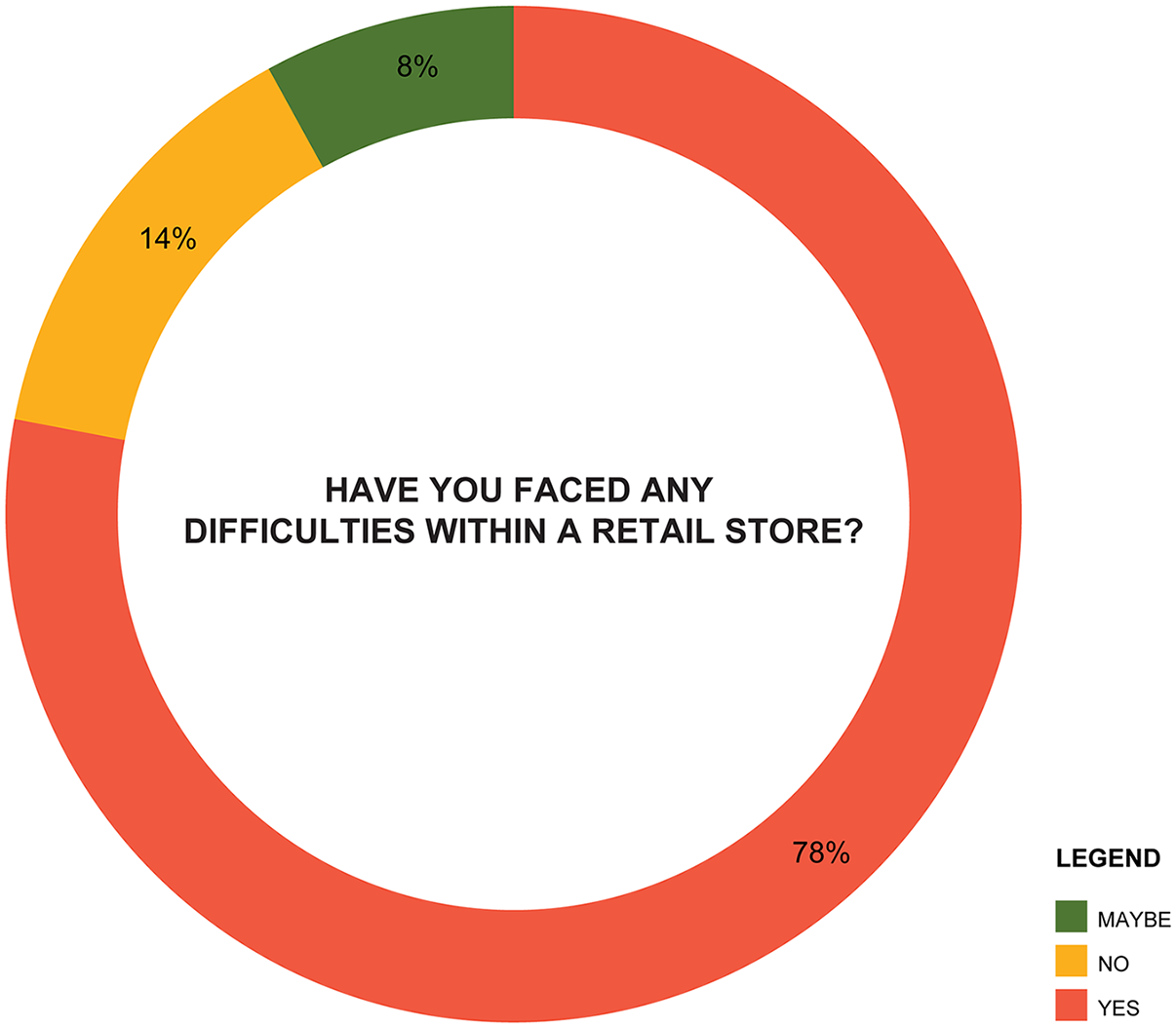
Disabled customers facing challenges in retail stores.
Retail design has traditionally prioritized creating accessible environments for customers with physical disabilities, focusing on mobility aids such as ramps, elevators, wide aisles, and accessible restrooms. These measures are crucial in ensuring that individuals with mobility challenges can navigate and participate in retail spaces. However, survey data demonstrates that this narrow approach excludes neurodiverse individuals who struggle with sensory overload, inconsistent lighting, noise pollution, and cluttered layouts. Nearly 48% of survey respondents were dissatisfied with the current accessibility standards in retail stores, while only 20% expressed satisfaction. Meanwhile, 32% were uncertain (“maybe”), highlighting inconsistencies across different retail spaces. This oversight creates significant barriers for a diverse customer base and reflects a broader issue in retail design: the failure to address the sensory and emotional dimensions of accessibility.
The emphasis on mobility-based accessibility has shaped store layouts and operational strategies in ways that inadvertently marginalize those with sensory needs. Retail environments often prioritize high-traffic flow, impulse purchase zones, and visual appeal, which result in cluttered layouts and overstimulating settings. Bright, glaring lighting, dynamic color contrasts, and crowded spaces, while optimized for visibility and efficiency, can overwhelm individuals with sensory sensitivities. For example, checkout areas are often designed as high-stimulus zones with promotional displays and visual clutter, which can be distressing for customers who are easily overstimulated or anxious.
Lighting strategies in retail spaces also highlight this disparity. Bright lighting and dramatic contrasts are commonly used to enhance product visibility and create an appealing ambience. However, these lighting conditions can cause discomfort, migraines, or sensory overload for those sensitive to light. The variability in lighting across different sections, intended to enhance visual interest, often lacks consistency or adaptability, further alienating individuals who rely on predictable environments for comfort. Similarly, color schemes, designed to evoke emotions like urgency or calmness, are based on generalized assumptions that fail to account for the nuanced preferences of neurodiverse individuals. The absence of sensory-friendly zones with neutral or calming tones demonstrates the limited scope of current accessibility measures.
Auditory environments present another challenge. Many retail stores employ loud background music or ambient noise as part of their branding, but such elements can overwhelm individuals with heightened auditory sensitivities. The lack of quiet zones or noise-canceling measures underscores the exclusionary nature of these design choices. For individuals with autism or anxiety, such environments can be so overstimulating that they discourage participation, effectively excluding them from the retail experience altogether.
Wayfinding systems, while essential for navigation, are often designed with a limited focus on visual cues like signage and maps. These systems rarely incorporate tactile or auditory guidance options, leaving individuals with sensory or cognitive disabilities unsupported. Additionally, the convoluted layouts that retailers often use to maximize impulse purchases can make navigation unnecessarily stressful for goal-oriented shoppers or those with limited spatial cognition.
Even customer service strategies reflect a bias toward visible disabilities. Staff are typically trained to assist individuals with mobility challenges but are seldom equipped to recognize or accommodate sensory disabilities. For instance, employees may lack the awareness or tools to assist a customer experiencing sensory overload, such as offering expedited checkout options or dimmed lighting.
The broader issue lies in the prioritization of visible disabilities in accessibility solutions, resulting in an incomplete framework that fails to accommodate the full spectrum of customer needs. Retail design, as it stands, remains rooted in a one-dimensional approach to inclusivity, focusing on the physical aspects of accessibility while neglecting the sensory and emotional dimensions.
To address these gaps, retail spaces must adopt a more holistic approach to accessibility. This includes integrating sensory-friendly features such as customizable lighting, quiet zones, predictable layouts, and tactile or auditory wayfinding aids. Staff training programs should also emphasize empathy and adaptability, equipping employees to assist customers with diverse needs. By expanding the definition of accessibility to include sensory and neurodiverse considerations, retail environments can transform into truly inclusive spaces that welcome and support all individuals, ensuring that no one is left behind.
Sensory Inclusivity Challenges and Solutions
This section explores the challenges faced by sensory-disabled customers in retail environments, categorized by sensory disability types. It highlights specific difficulties and proposes inclusive design solutions tailored to each group’s needs.
Table 3 highlights the challenges faced by customers with various sensory and cognitive disabilities in retail environments. It categorizes issues such as anxiety, physical exhaustion, unhelpful staff, crowd and clutter, bright lights, noisy environments, product/goods distinction, and billing and payment difficulties. Each challenge is assessed across different disabilities, including blind or visually impaired, deaf or hearing impaired, autism spectrum disorder, ADHD, dyspraxia, dyslexia, and dyscalculia.
Challenges Faced by Customers with Sensory Disabilities in a Retail Environment.

Note. BVI = blind or visually impaired; DHI = deaf or hearing impaired; ASD = autism spectrum disorder; ADHD = attention deficit hyperactivity disorder.
A previous study highlights the challenging elements of retail environments, such as overcrowding and sensory overload, can provoke negative emotions like anxiety and anger, further intensifying the avoidance behaviors commonly exhibited by customers with sensory disabilities (Vilnai-Yavetz et al., 2024). The above insights align with our findings on sensory challenges and highlight the need for structured environments that reduce emotional distress.
One prominent issue that emerged was sensory overload, primarily caused by factors such as intense lighting, loud music, and crowded spaces. Seventy percent of respondents reported avoiding physical retail stores due to factors such as bright lighting, loud noises, and crowded environments. Additionally, participants reported difficulties in communicating with store staff.
A recurring theme was dissatisfaction with the accessibility design of retail stores, with suggested improvements centered around the creation of quiet spaces and enhancing visual clarity. 56% of respondents indicate that inclusive features such as quiet hours, sensory-friendly spaces, and assistive technologies were largely absent in most retail stores. Furthermore, the survey respondents expressed a desire for several inclusive design features to enhance their shopping experiences. These features include measures to reduce noise, intuitively designed store layouts, and a focus on prioritizing customer comfort over profit margins. The findings highlight the pressing need for retail establishments to consider the diverse needs of individuals with disabilities.
Challenges Faced by Blind or Visually Impaired Customers
Blind or visually impaired (BVI) customers encounter significant challenges when navigating retail environments, locating products, and accessing essential information. Survey findings indicate that 72% of visually impaired respondents reported difficulty navigating retail stores due to the absence of tactile pathways and clear wayfinding signage. Many respondents noted that store layouts often change without clear notification, leading to disorientation and dependency on store employees. Navigational difficulties arise due to poorly organized store layouts, cluttered aisles, and the absence of tactile guidance systems. Additionally, product labeling and signage often lack accessibility features such as Braille or tactile graphics, leaving visually impaired customers dependent on staff assistance.
Survey data reveals that 65% of blind and visually impaired shoppers struggled with reading product labels, pricing information, and ingredient lists due to small fonts and lack of Braille or high-contrast labeling. Further, 58% of respondents reported difficulty distinguishing between similar-looking products, emphasizing the need for texture-coded packaging, embossed labels, and barcode scanning technologies. BVI customers depend on other senses like their tactile, auditory, and olfactory senses and even visual cues like lighting and color to navigate retail stores (Funkquist et al., 2024). To address these issues, tactile pathways with projected textures can guide customers from entrances to key areas such as aisles, checkouts, and exits. Braille signage, positioned at accessible heights, can provide information about store layouts and product categories. Furthermore, the use of high-contrast colors and adequate lighting enhances visibility for individuals with low vision, enabling independent navigation and decision-making.
Sixty percent of BVI customers stated that retail staff were unaware of best practices for assisting visually impaired shoppers, often failing to provide verbal descriptions of products or store layouts. Many respondents reported that staff assistance was inconsistent, with employees either avoiding engagement or providing insufficient product descriptions.
Challenges Faced by Deaf and Hearing-Impaired Customers
Survey data reveals that 40% of hearing-impaired customers experienced difficulties in retail stores due to poor acoustic design, obstructed sightlines, and a lack of visual alerts. Additionally, 60% of respondents reported that store layouts often fail to provide unobstructed views, making it harder to engage in lip-reading and sign language communication. Deaf and hearing-impaired customers primarily rely on visual and tactile stimuli to navigate and interact in retail spaces. Poor spatial layouts, obstructive partitions, and excessive background noise hinder their ability to communicate effectively with staff and other customers. Bright lighting and improper acoustic design exacerbate the difficulties they face, as these factors interfere with lip-reading and sign language communication.
Inclusive design solutions for this group include open-plan layouts with low-height partitions to enhance visibility. Acoustic optimization, through the use of panels and sound-absorbing materials, minimizes reverberations and background noise. Visual alerts, such as flashing lights for announcements, can further improve accessibility. Incorporating DeafSpace principles, which focus on aspects such as acoustics, lighting, and sensory reach, provides a comprehensive framework for designing hearing-friendly environments.
Survey data highlights that 66% of hearing-impaired respondents found retail staff untrained in communicating with deaf customers. Many reported frustrations in requesting assistance, as employees were often unaware of basic gestures, written communication strategies, or assistive technologies like speech-to-text apps. This lack of training aligns with findings from Edwards et al. (2018), which emphasize that most retail employees receive minimal training on sensory disabilities.
Challenges Faced by Neurodiverse Customers
Neurodiverse customers, including individuals with autism spectrum disorder, ADHD, or anxiety disorders, are highly susceptible to sensory overload caused by harsh lighting, loud sounds, and crowded spaces. Survey results indicate that Respondents identified bright or flickering lights, loud repetitive music, crowded spaces, and overwhelming scents as primary triggers for distress. Open-plan layouts often amplify distractions, making it difficult for them to focus or feel comfortable in retail settings. Additionally, poorly defined spaces and unpredictable store layouts contribute to anxiety and stress.
Additionally, 42% of respondents express a preference for retail stores that provide quiet hours or sensory-friendly shopping zones. To create neurodiverse-friendly environments, retail spaces should include quiet zones with soft lighting and minimal noise. Structured layouts with clearly defined pathways and sections reduce confusion and enhance focus. Adjustable lighting systems and acoustic treatments can help manage sensory overload, creating a calmer and more inclusive shopping experience.
Challenges Faced by Customers with Learning Disabilities
Survey results show that 58% of respondents with dyslexia or dyspraxia struggle with reading directional signage, price tags, and product descriptions due to small font sizes, complex wording, and low contrast backgrounds. Additionally, 46% of respondents indicated that they require pictographic signage and color-coded maps to navigate retail spaces effectively. Customers with learning disabilities such as dyslexia, dyspraxia, or dyscalculia, face unique challenges in understanding complex signage, navigating unfamiliar environments, and managing payment processes. For instance, text-heavy signage and unorganized store layouts can make navigation overwhelming, while traditional checkout systems may prove daunting for those with cognitive impairments. Survey results also show that 48% of dyspraxic respondents find narrow aisles, cluttered product arrangements, and poor store layouts make navigation difficult, often leading to accidental collisions or difficulty maneuvering carts. Thirty-six percent of respondents also reported difficulty with handling and organizing products in shopping baskets due to poor motor coordination.
Design solutions for this group include clear, pictorial signage using sans-serif fonts and color-coding to enhance readability. Incorporating staffed assistance counters with trained personnel can provide additional support during shopping and checkout processes. Consistent store layouts with simplified navigation cues further contribute to a stress-free shopping experience. Survey findings reveal that 62% of respondents with learning disabilities feel retail staff are not adequately trained to assist them, particularly in understanding signage, navigating store layouts, or explaining product details in simpler terms. Additionally, 39% of respondents with dyslexia reported embarrassment when asking for help due to past negative interactions with store employees.
Comparison of Common Challenges Across Sensory Disabilities
Many challenges, such as sensory overload, inadequate staff training, and poor signage, overlap across different sensory disabilities. These common issues highlight the need for universal design strategies that cater to a broad spectrum of needs. For example, improving staff training in inclusive practices and ensuring the availability of quiet zones can benefit multiple customer groups simultaneously. Universal design principles prioritize flexibility and adaptability, ensuring that retail environments accommodate diverse requirements.
Table 4 summarizes the challenges and corresponding design solutions for each type of sensory disability.
Challenges and Design Solutions for Sensory Disabilities in Retail Environments.

Inclusive Retail Design Approaches for Sensory Disabled Customers
Sensory disabilities are mainly of three types—blindness/visual impairment, deafness/hearing impairment, and cognitive impairments, which comprise disabilities like ADHD, anxiety, and SpLDs. The survey conducted with 50 participants provided insight into various challenges disabled customers experience when shopping in retail stores. The most common issues faced by sensory-disabled customers are sensory overload and anxiety due to bright lights, loud noises, overcrowding and unhelpful retail employees.
As sensory overstimulation is a primary challenge for customers with sensory disabilities, it is advisable to avoid bright lights and loud noises in retail spaces. In retail environments, low-glare lighting systems or fixtures with shields should be used whenever possible. Furthermore, loud music should be avoided, and acoustic panels or furnishings should be incorporated to mitigate the noises generated by machinery, customer-staff interaction, and footsteps.
The conventional retail atmosphere focuses on increasing sales and fails to prioritize the needs of vulnerable consumers like the disabled and aged (Dias de Faria & Moreira Casotti, 2019). Shopping experiences may be influenced by ambient cues in the form of auditory and physical stimulants, the store atmosphere, and for disabled customers, these cues may create a positive or negative impact on their experiences within the retail setting (Yu et al., 2015). Research conducted by Spence (2022) highlights how combining multiple sensory elements thoughtfully can enhance customer experiences in retail environments while cautioning against the risk of overwhelming individuals with excessive or poorly integrated sensory inputs.
Likewise, a study published in Vilnai-Yavetz et al. (2024) suggests that co-creating design solutions in collaboration with disabled customers is an effective way to enhance the inclusivity of retail spaces. This approach aligns with the “Design for All” principle, highlighting the importance of engaging directly with sensory-disabled individuals to incorporate their lived experiences into meaningful and practical design decisions.
Stores featuring universal and inclusive design approaches can help reach a wider consumer base, inclusive of disabled and aging population and can help in improving satisfaction of customers which in turn will ensure business growth (Waller et al., 2015). Increased accessibility in a retail store can increase customer loyalty (Ashley et al., 2010). Inaccessible retail stores can cause problems in accessing products for sale, which can lead to injuries to disabled customers in a retail environment (Nicasio, 2022). Figure 3 illustrates the most commonly found accessible features in retail stores based on the responses by the survey participants.
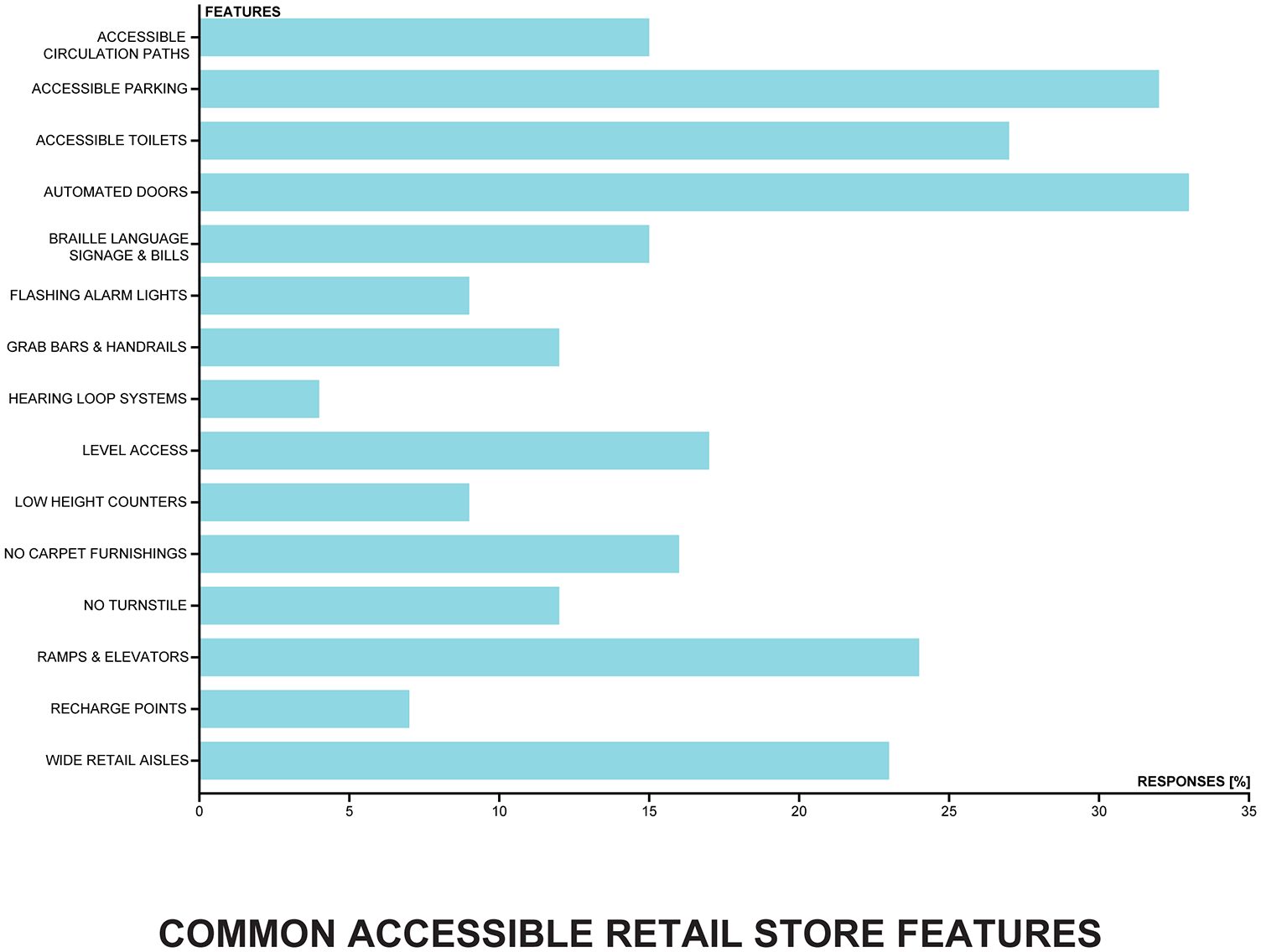
Accessibility features in retail stores: survey results.
During the interview with the sensory-disabled users, these experts stressed the need to consider their needs in retail design. They proposed strategies such as accessible assistive technology, staff training, user input, and accommodations for various types of disabilities to ensure inclusivity. The experts also discussed the impact of sensory stimuli on brand perception in retail stores and suggested strategies like visual psychology, clear signage, reduced noise, and multi-sensory experiences to cater to sensory-disabled customers. In response to a question about conflicting sensory needs, the experts recommended personalization, flexibility, spatial planning, and technology integration to create an inclusive shopping environment. Regarding the effectiveness of inclusive retail design, the experts agreed that it could increase footfall for disabled customers. They suggested creating accessible entryways, proper lighting, clear signage, and staff training to enhance the shopping experience. The survey’s responses also reflected a range of preferences and suggestions aimed at enhancing the shopping experience. These include the desire for quiet spaces, clear visual displays, accessibility features, accurate product information, pleasant lighting, and convenience-enhancing elements like automatic cash registers and calming music. These insights provide valuable input for creating more comfortable and inclusive retail environments. To create an inclusive retail store based on the findings presented in the text, it’s crucial to integrate thoughtful design considerations that cater to users with sensory impairments, visual impairments, hearing impairments, cognitive disorders, color blindness, learning disabilities, and anxiety.
Considerations for Vision Impaired Users
For customers with blindness or vision impairment, inclusive retail design considerations play a pivotal role in ensuring accessibility and a positive shopping experience. Survey findings show that 68% of visually impaired respondents believe that retail stores lack fundamental accessibility features such as tactile floor markers, high-contrast color schemes, and Braille-enhanced wayfinding signage. Additionally, 52% of participants reported that checkout counters are often inaccessible due to high placement and lack of tactile indicators.
Implementing visual considerations tailored for users with low vision is essential. The use of contrasting colours throughout the store aids individuals with limited vision, enhancing visibility and navigation. Tactile pathways, strategically incorporated, guide visually impaired users seamlessly, providing a tactile reference for orientation. Braille signage at key locations, following established guidelines, offers crucial information for independent navigation within the store. Spaces such as accessible parking, entrances, toilets, emergency assistance areas, volume control telephones, elevators, stairways, escalators, ramps, and overhead obstructions are identified as locations where braille signage can be particularly beneficial. Additionally, the inclusion of Braille or tactile markings on product tags and labels further assists customers with blindness or vision impairment, ensuring they can access information and engage with products independently and confidently in the retail environment (Apelt et al., 2007).
Figure 4 discusses essential design considerations for making retail spaces accessible to visually impaired customers. It emphasizes the importance of wide circulation paths (900–1,000 mm) that are free of obstructions to ensure ease of movement. Tactile markers and tiles are recommended for floor navigation, especially to indicate transitions between different zones, enhancing spatial awareness.
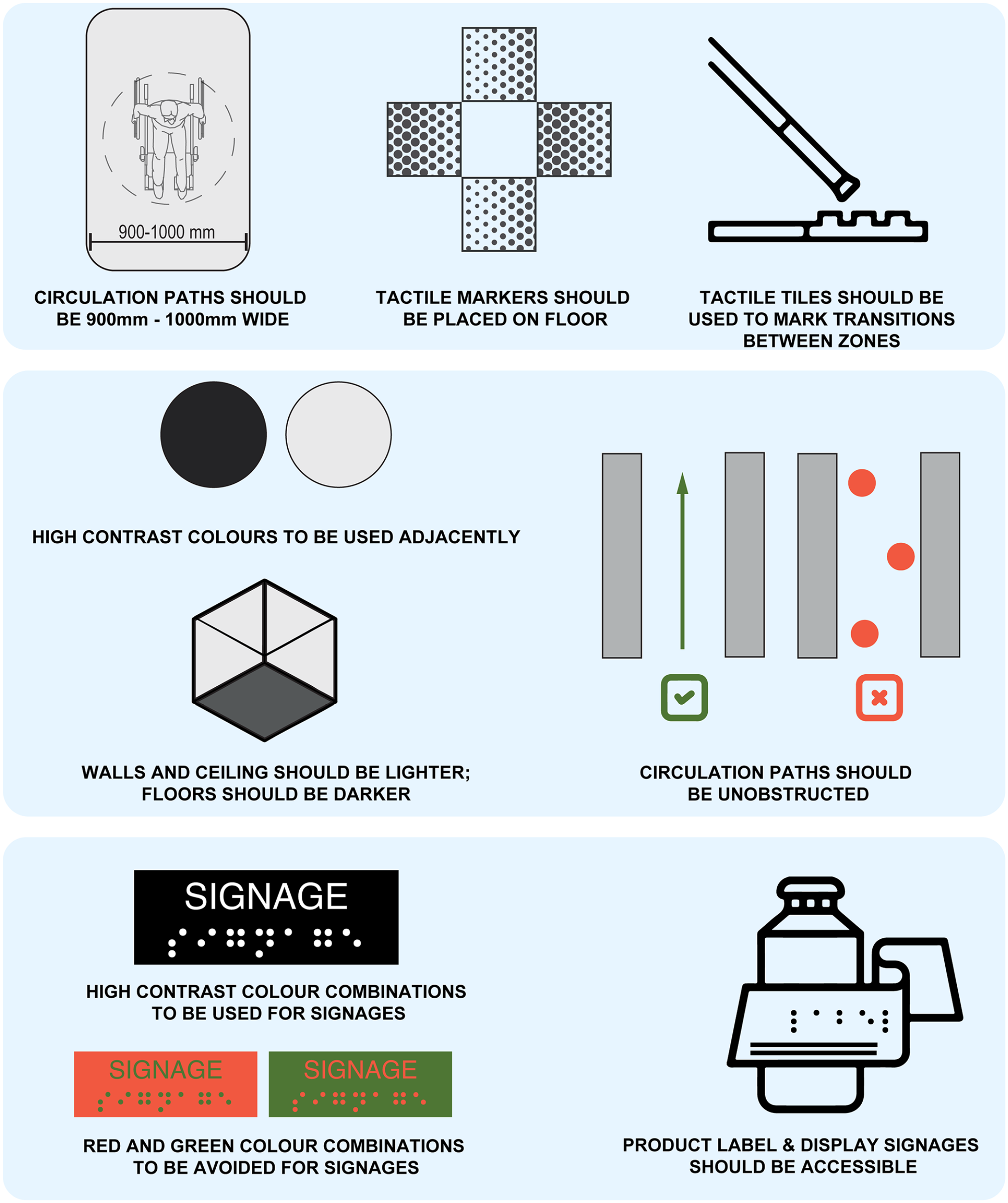
Design considerations for visually impaired customers.
Additionally, For signage, high-contrast color combinations are advised, while red and green combinations should be avoided due to potential visibility challenges. Accessibility features like Braille and clear fonts on product labels and signage are also highlighted as necessary to improve usability. These measures collectively create a more inclusive and navigable retail environment.
Considerations for Hearing-Impaired Customers
Creating an inclusive retail environment for customers with deafness or hearing impairment involves thoughtful design considerations to ensure a positive shopping experience. One key aspect is optimizing the spatial layout to support visibility for lip reading by integrating low-height partitions and designing curvilinear spaces, allowing clear communication between customers and staff. Acoustical measures, such as the installation of panels to control background noise and reverberations, contribute to creating an acoustically friendly environment. Additionally, diffusive light and contrasting colors can aid in visual communication, enhancing the overall shopping experience for individuals with hearing impairment. The incorporation of DeafSpace principles, which take into account acoustics, color, light, space, and sensory reach, goes a step further in creating an environment that is inclusive and supportive. Recommendations such as open-plan layouts, glass partitions, and audiology booths are also suggested to elevate the shopping experience for individuals with hearing impairment, ensuring they can navigate and engage comfortably within the retail setting.
Figure 5 provides detailed design considerations for enhancing accessibility for hearing-impaired customers in retail spaces. It highlights the use of acoustic materials to absorb sound, minimizing background noise and creating a quieter environment conducive to communication. Wall and divider systems should be curved and designed for maximum visibility, enabling customers to easily see people and signage. The inclusion of sign language interpretation technology and hearing loops is recommended to facilitate communication and accommodate customers using hearing aids.
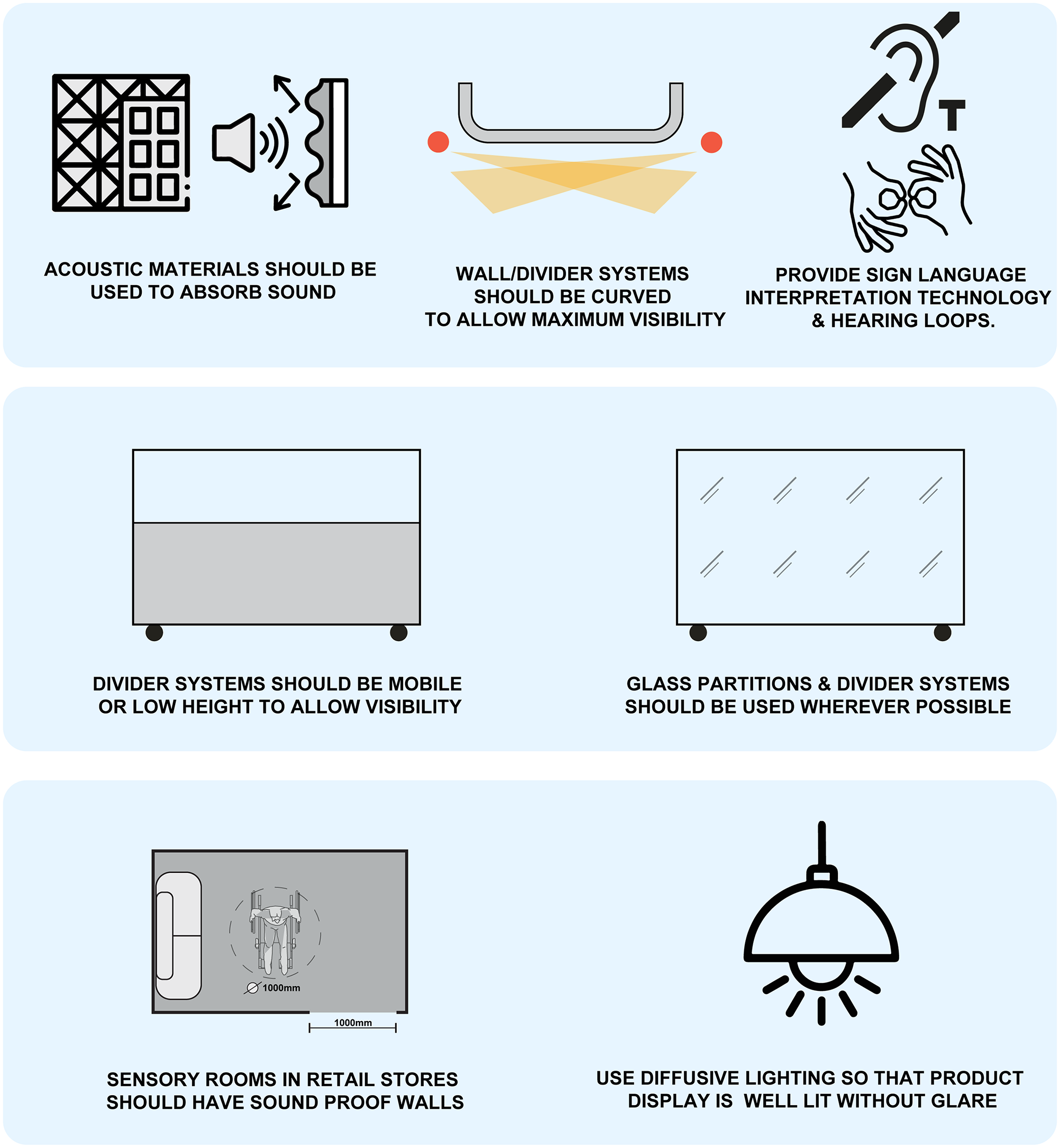
Design considerations for hearing impaired customers.
Additionally, importance should be given to maintaining visibility within the space by using low or mobile divider systems and glass partitions, which allow unobstructed sightlines.
Sensory rooms with soundproof walls are proposed to provide a quiet area for those who may feel overwhelmed by noise. Finally, diffused lighting is suggested to ensure product displays are well-lit without glare, improving the overall shopping experience. These design features aim to foster a more inclusive and supportive environment for hearing-impaired customers.
Retailers should implement mandatory staff training covering basic sign language, visual alert systems, and alternative communication methods (Davison, 2018). Additionally, visual instructions at customer service desks could improve accessibility for deaf shoppers.
Considerations for Neurodiverse Customers
Inclusive retail design for customers with neurodiversity, particularly those with autism or cognitive disorders, involves creating a sensory cohesive environment. This entails establishing structured and well-defined spaces within the retail setting to minimize sensory distractions. By carefully organizing the layout, retail spaces can provide a more comfortable shopping experience for individuals who may be sensitive to sensory stimuli. Avoiding noisy areas and incorporating appropriate lighting and color schemes are essential considerations to contribute to a supportive environment for those with cognitive disorders. Integrating elements like sound-absorbing materials, diffused lighting, and natural textures creates inclusive spaces that support sensory regulation and well-being. To create a calming and inclusive space, store interiors should be minimalistic with neutral color palettes and soft lighting systems. Soft furnishings, rounded corners, and privacy-enhancing elements are recommended for users with anxiety-related disorders, providing a comfortable and less overwhelming shopping experience (Fradette, 2024).
Figure 6 presents a framework for designing sensory-friendly retail spaces for neurodiverse customers by incorporating key elements such as sensory rooms, clear store maps, acoustic materials, soft textures, adjustable lighting, neutral color palettes, and privacy features. These considerations enhance comfort, safety, and accessibility, fostering a more inclusive shopping environment. A crucial aspect of this framework is the incorporation of sensory rooms, which provide a quiet, calming space to support individuals with neurodiverse needs, ensuring a stressfree shopping experience. Clearly labelled store maps with distinct zones help simplify navigation and reduce confusion, while acoustic materials are advised to absorb sound and minimize noise levels, creating a more peaceful shopping experience.
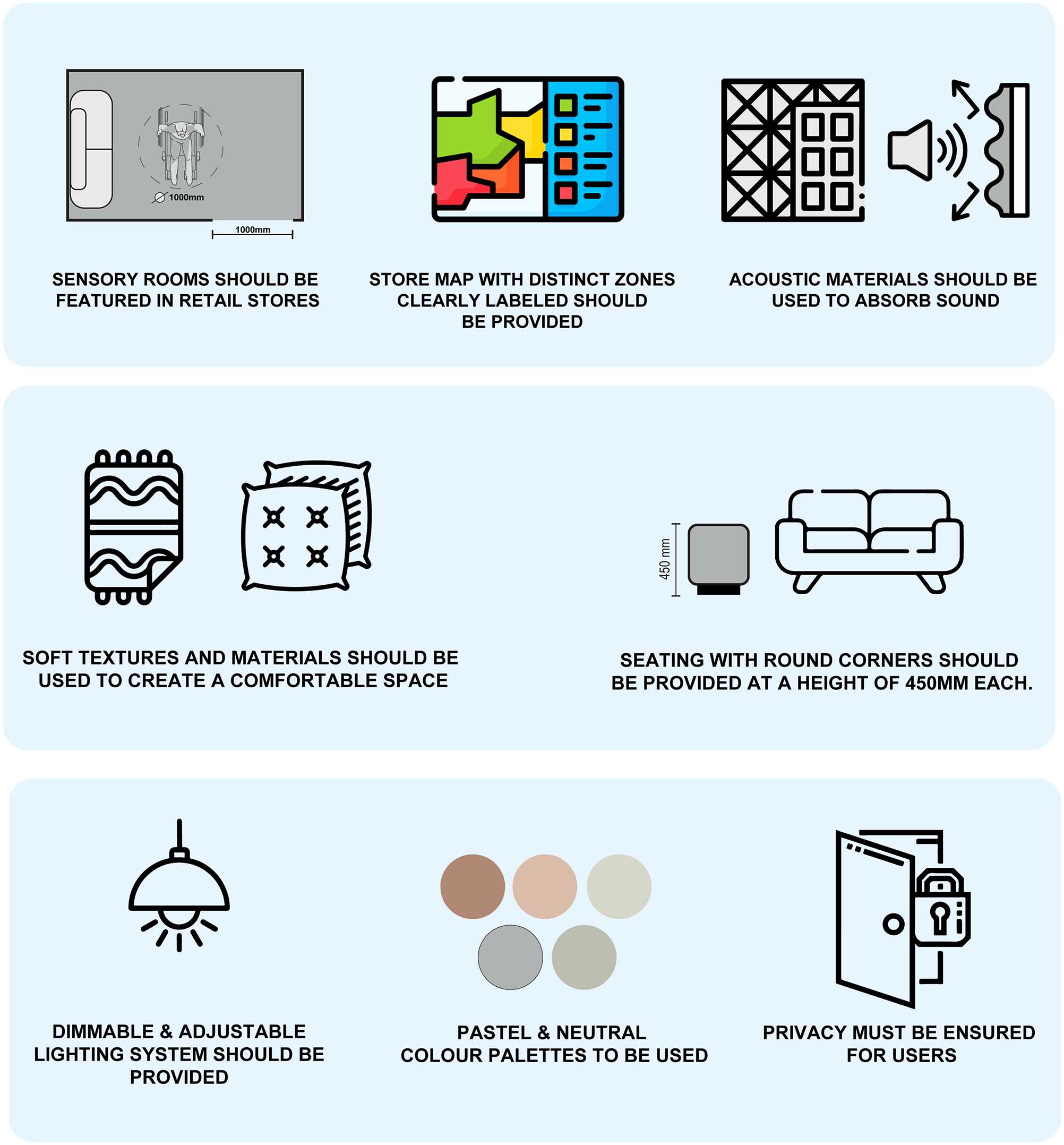
Design considerations for neurodiverse customers.
To enhance comfort, soft textures and materials should be used throughout the space and seating with rounded corners at a height of 450 mm to ensure safety and ease of use. Adjustable features like dimmable and customizable lighting systems are recommended to accommodate different sensory preferences, while pastel and neutral color palettes reduce visual overstimulation. Privacy features, such as secluded areas or screens, are also required to meet the unique needs of neurodiverse customers, fostering an inclusive and welcoming retail environment.
Considerations for Customers with Learning Disabilities
Inclusive retail design for customers with SpLD involves thoughtful considerations to enhance their shopping experience. Opting for sans-serif fonts in signage design accommodates individuals with dyslexia and dyscalculia, promoting better readability. Providing ample space for unrestricted movement not only caters to physical needs but also contributes to a supportive environment for those with learning disabilities, minimizing sensory overload. Assistance kiosks strategically placed throughout the store serve as information hubs, offering guidance and support. Clear and simple signage, consistent store layouts, and the incorporation of visual cues ensure a predictable and easily navigable space, easing the shopping journey for individuals with SpLD. Employee training on awareness and effective communication further enhances inclusivity, creating a welcoming retail environment for everyone.
Figure 7 outlines guidelines for designing accessible retail spaces for customers with learning disabilities. Key considerations include high-contrast signage, clutter-free layouts, voice-activated systems, adjustable text options, and trained staff to enhance navigation and inclusivity. Retail stores should use high-contrast signage with sans-serif fonts to improve readability, particularly for individuals with dyslexia, while avoiding red-green colour combinations that can be difficult to distinguish. Survey results show that 58% of respondents with dyslexia or dyspraxia struggle with reading directional signage, price tags, and product descriptions due to small font sizes, complex wording, and low-contrast backgrounds. Additionally, 46% of respondents indicated that they require pictographic signage and color-coded maps to navigate retail spaces effectively.
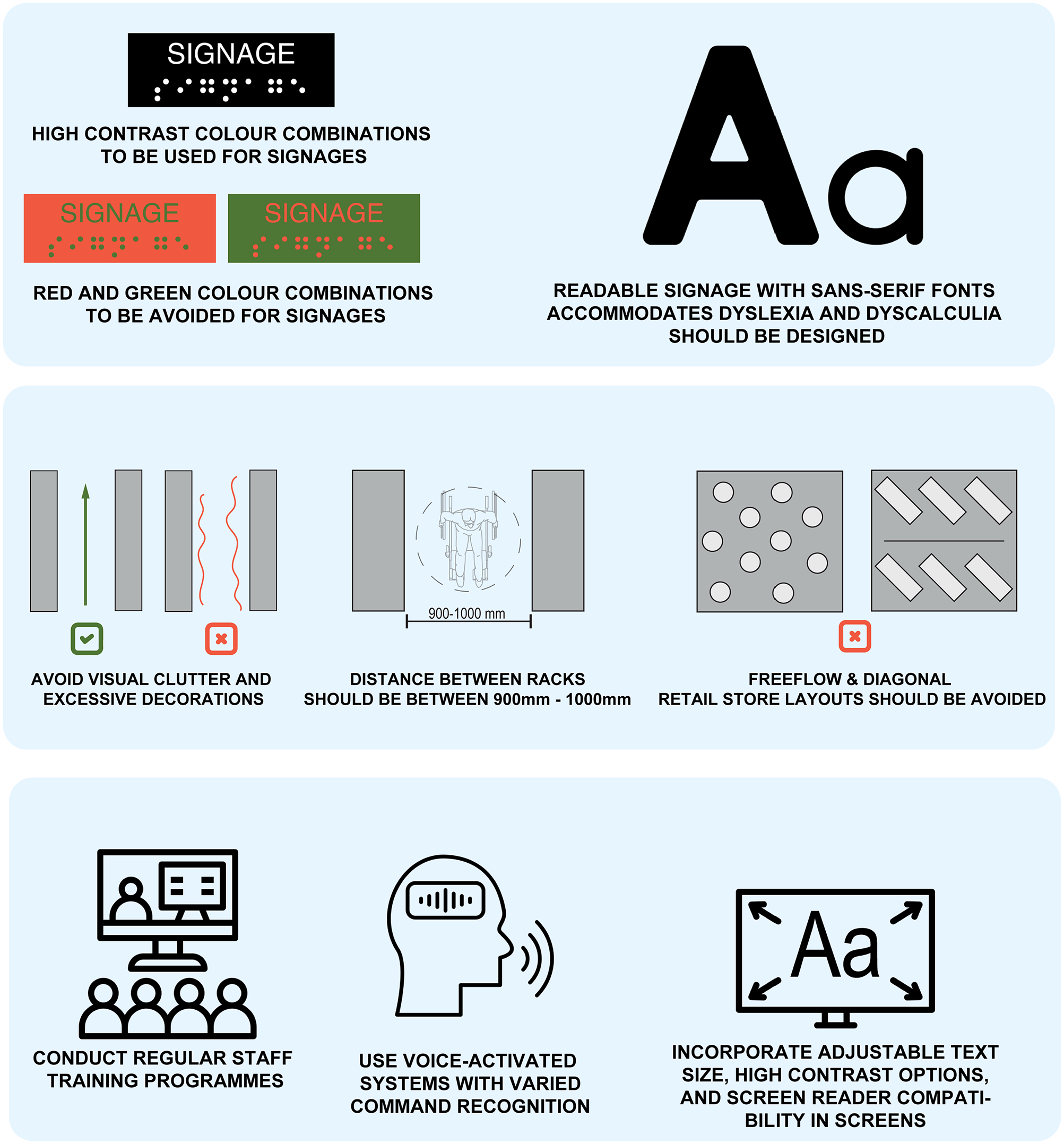
Design considerations for customers with learning disabilities.
It is also suggested to incorporate voice-activated systems with varied command recognition to assist with navigation and communication. Features like adjustable text sizes, high-contrast display options, and screen reader compatibility are suggested to enhance accessibility for individuals with varying needs.
The findings of this research present various inclusive retail design strategies that can be incorporated into a retail store to foster a sensory-disability-friendly environment. Integrating these design elements can contribute to creating a cost-effective and accessible physical shopping space for customers, regardless of their abilities. Implementing these suggested solutions can greatly improve the inclusivity of retail environments, making them more accessible and comfortable for individuals with sensory disabilities. By focusing on challenges like sensory overload and anxiety through careful design considerations, rather than solely on mobility issues, retail spaces can become more accommodating for individuals with disabilities.
Limitations
This research is one of the preliminary studies that explores inclusive retail design considerations for a multitude of sensory impairments (visually impaired, hearing impaired, and cognitively impaired users) and therefore pre-existing literature and projects that feature inclusive design considerations for retail stores that contribute to the wellbeing of all sensory disabled user groups are not available. The literature review conducted to provide a foundation for this study is from standalone journal articles that focus mostly on one type of impairment, and hence, there is no evidential support to prove that a cohesive inclusive design can be created that can house design solutions that cater to the requirements of all sensory disabled user groups. Also, existing projects that describe fully inclusive retail design are limited, and therefore, data regarding sensory disability-friendly retail stores are also primitive.
Conclusion
Many retail stores around the globe lack inclusive features to accommodate the needs and requirements of customers experiencing sensory disabilities, especially in terms of the built environment. Owing to the imperceptible nature of sensory disabilities, retail designers often neglect these disabilities when designing an accessible retail environment, placing a greater emphasis on the needs of people experiencing physical and mobility impairments. The findings of the research article highlight the various difficulties faced by sensory-disabled customers within a physical retail store and provide a myriad of possible solutions to mitigate these difficulties through architectural and technological enhancements in the retail store. The enumerated inclusive solutions were developed to establish a safe and relaxing shopping milieu for customers with sensory disabilities, ensuring that their experience is free from sensory overload and these measures are proposed with the objective of preserving and enhancing the shopping autonomy of sensory-disabled customers. Future studies will focus on how these inclusive design strategies can be adapted into existing retail settings in an economically feasible manner.
Footnotes
Declaration of Conflicting Interests
The author declared no potential conflicts of interest with respect to the research, authorship, and/or publication of this article.
Funding
The author received no financial support for the research, authorship, and/or publication of this article.
