



Abstract
Have you ever wondered how the spaces we inhabit could either bridge or widen the gaps between diverse cultures and identities? This study investigates how interior design influences cultural identity and social inclusion, emphasizing its role in either bridging or deepening societal divides. It analyzes the historical and ongoing effects of colonial and Eurocentric design practices that marginalize Indigenous and non-Western cultures. These practices often impose homogenized aesthetics, stripping spaces of their authentic cultural essence and reinforcing social inequalities.The paper reveals that interior design, as a reflection of societal values, can either enhance or undermine cultural representation. Historical trends have frequently sidelined local traditions, leading to spaces that lack true cultural diversity. This exclusionary approach perpetuates inequities and ignores the rich variety of global cultural expressions.A significant focus is on decolonizing design practices. The study advocates for a shift toward integrating traditional materials and cultural values, especially in Latin American contexts, where decolonization involves reviving Indigenous architectural methods and sustainable practices. By highlighting local materials and construction techniques, this approach seeks to honor and reflect the cultural heritage of communities. Adopting inclusive design practices is therefore crucial for promoting social cohesion and preserving cultural identity. Embracing diverse cultural narratives not only enriches the design field but also fosters more equitable and sustainable environments. This transformative approach challenges prevailing trends and encourages a design philosophy that celebrates global diversity rather than imposing a singular, homogenized vision.
Introduction
In recent years, the importance of diversity and inclusion has grown significantly, not only as a social and ethical imperative but also as a competitive advantage in the business sector (Dixon-Fyle et al., 2019). This evolution reflects a broader shift across various domains, including employment, education, politics, and culture, emphasizing the need to represent a wide range of perspectives and experiences. Factors such as gender, race, ethnicity, religion, economic background, geographic origin, sexual orientation, age, and abilities are increasingly recognized as vital components of a diverse and inclusive society. This broader focus seeks to celebrate the richness of diversity while fostering environments that are equitable and reflective of society’s true fabric.
In this context, cultural identity, heritage preservation, and the challenges of modern design are intertwined in a complex tapestry that connects history, society, and the built environment. As cultures evolve and globalize, preserving cultural heritage becomes essential to maintaining the authenticity and diversity of societies worldwide. Interior design plays a crucial role in this process, serving as a bridge between cultural identity and the physical spaces we inhabit. However, this intersection is fraught with challenges, particularly as globalization and exclusionary practices threaten to erode the unique cultural expressions that define communities.
Indeed, interior design is more than the art of organizing spaces; it is a powerful medium through which cultural identity, social inclusion, and historical narratives are expressed and shaped. As a reflection of social values and cultural dynamics, interior design has the power to perpetuate exclusionary practices or promote inclusion. Therefore, the evolution of interior design is not merely about aesthetics or functionality but involves a deeper commitment to the cultural and historical contexts within which spaces are created and inhabited.
Historically, interior design has been complicit in imposing social divisions. From the impositions of the colonial era to contemporary practices that subtly reinforce existing hierarchies, design has often acted as a tool for exclusion. The legacy of colonialism has deeply impacted interior design practices, with Eurocentric perspectives historically dominating and marginalizing Indigenous cultures, overshadowing their contributions to design. Consequently, this imposition has led to a narrow view of design that overlooks the rich diversity of global design philosophies.
In light of this reality, the call for diversity and inclusion within the language of interior design has never been more urgent. Incorporating cultural elements into physical spaces presents a significant challenge, especially in a world where our built environment is shaped by human hands that may inadvertently perpetuate exclusionary practices. Concepts such as “passing” and “covering,” as described by Goffman (1963, p. 10), highlight how social identities can be manipulated or suppressed to conform to dominant norms, leading to a virtual social identity that ignores true cultural diversity. Thus, in an increasingly globalized market, it is crucial to recognize and address these distinctions to create designs that prioritize inclusion, eradicate unintentional exclusion, and align with the principles of socially responsive design (Coleman et al., 2016, p. 1).
Furthermore, decolonizing practices in design go beyond theoretical discussions; they require critical analysis, reflection, and concrete actions to identify and address gaps in current practices. As Smith (2021, p. xx) emphasizes, acknowledging and valuing history is fundamental to decolonization methodologies. In this regard, this process involves challenging entrenched perspectives and generating new visions that celebrate cultural roots, traditions, and diversity. In this way, interior design becomes a powerful tool for sustaining, healing, and empowering communities while striving to free people from exploitative and oppressive systems. Nevertheless, decolonizing interior design is a formidable challenge, aiming to “include, and not unknowingly exclude” (Coleman et al., 2016, p. 1). Recognizing that each individual is an expert in their lived experience makes community inclusion (Costanza-Chock, 2020, p. 7), a crucial aspect of the design process, ensuring that diverse voices are heard and respected.
Despite these challenges, there is a significant opportunity for transformative change. By adopting inclusive design practices and decolonizing perspectives, architects and designers can celebrate the richness and diversity of cultural expressions. For instance, through a deeper understanding of local contexts and engagement with Indigenous communities, design can become a tool for empowerment and cultural revitalization. This approach not only promotes cultural authenticity and heritage preservation but also fosters sustainability and the appreciation of diverse perspectives, contributing to the creation of more enriching and equitable environments for all.
Finally, as the importance of diversity and inclusion continues to grow, interior designers must reflect on whether their adherence to global trends truly enhances inclusion within spaces. In this sense, the mere intention to improve built environments is not enough; it requires responsibility and concrete actions. According to the Commission for Architecture and the Built Environment (CABE, 2008, p. 3), decisions related to design, planning, and space management have the power to influence belonging, feelings of safety, mobility, boundaries, health, and interactions among communities. These decisions can remove physical and mental barriers between groups and promote understanding and kindness. Therefore, this article serves as an urgent call to action for architects and designers who have, consciously or unconsciously, contributed to exclusion through practices like “passing” and “covering.” In conclusion, the interior design community must recognize the profound responsibility and impact our field has on cultural inclusion and actively work to create spaces that reflect the diverse realities of the world we live in.
Social Exclusion and Cultural Identity in Latin America
To fully understand the significance of decolonization, it is essential to examine how power dynamics, social expectations, and identity categories influence the perception and evaluation of individuals and environments. Just as society establishes means to categorize individuals, it also does so for environments, recognizing their attributes and integrating them into the construction of social identity (Goffman, 1963, p. 9). People rely on these categories to interpret and assess their surroundings and the individuals who inhabit them, transforming these interpretations into social expectations. This process is so deeply ingrained in our mindset that we are often unaware of these expectations until confronted with questions about their fulfillment. At that moment, we may realize that we have been making certain assumptions about how individuals or environments should be (Goffman, 1963, p. 10). The previous conceptions refer to virtual social identity, while tangible and observable attributes are known as actual social identity. This process of categorization and expectation formation contributes to the complexity of our social interactions and how we perceive and relate to our environment.
This process is reflected through phenomena such as “passing” and “covering,” which are also related to social expectations. These processes subtly yet profoundly influence culture, a key social language that expresses and shapes social identities within our living spaces. As Fanon (1952, p. 50) mentions in his book, Black Skin, White Masks, “a man who possesses a language consequently possesses the world expressed and implied by that language.” To understand the implications of “passing” and “covering,” it is necessary to delve into their nuanced definitions: “passing” involves denying or overlooking attributes that might carry a stigma or be socially disapproved of, while “covering” involves recognizing these attributes but consciously hiding or eliminating them to gain acceptance in specific contexts (Goffman, 1963, pp. 39, 43, 61, 83)
This denial of identity has created a cultural and social void, where diverse expressions and individual experiences are silenced. Consequently, colonized communities, such as those in Latin America, struggle to reclaim their cultural heritage and assert their distinct identity in the face of biased cultural narratives. Addressing historical power imbalances is crucial to understanding and preserving the richness and complexity of human experience. However, according to Ofosu-Asare (2024), it is essential to maintain a delicate balance to ensure that this process of restitution does not become a new form of cultural control.
The history of exclusion faced by minority groups, such as Indigenous peoples in Latin America, illustrates the devastating consequences of colonization. These groups and their cultures have been subjected to dehumanization (Thambinathan & Kinsella, 2021, p. 1), a situation that persists to this day as they continue to endure the lasting impacts of this discrimination over time. Despite daily evidence of their exclusion, the world has unfortunately turned a blind eye to their struggles. It is imperative that society acknowledges the historical injustices and contemporary challenges faced by Indigenous peoples, fostering a more inclusive and empathetic understanding that paves the way for meaningful dialogue and collaborative efforts toward justice and equality.
Fanon (1952, p. 50) reveals how colonized peoples have internalized a sense of inferiority as a result of the imposition of colonial culture, which has suppressed and relegated to oblivion the richness and originality of their local cultural traditions. This process of devaluing one’s own identity has led individuals to dismiss and underestimate their attributes, roots, and history, resulting in a disconnection from their cultural heritage. Furthermore, Fanon examines how this dynamic affects the relationship of the colonized with the language of the dominant culture. The imposition of the metropolitan language and culture leads to a growing alienation of the individual from their local identity, as the civilizing discourse promotes the adoption of values and norms that are foreign to the native culture. This linguistic and cultural alienation reinforces the sense of inferiority, perpetuating a cycle of cultural marginalization and assimilation that undermines the self-esteem and identity of colonized peoples.
These processes, whether voluntary or involuntary, linked to stigma, have been a constant throughout Latin American history, significantly contributing to social exclusion. Over the centuries, power dynamics and colonial structures have reinforced these exclusions, often leading to violent outcomes in various communities as a response to frustration and marginalization (Berkman, 2007, p. 3). Social exclusion in the region not only perpetuates cycles of poverty and inequality but also further marginalizes vulnerable populations, relegating them to the position of “outsiders” within their societies (Ahmed, 2012, p. 3). This phenomenon, driven by inequity and lack of opportunities, reinforces social divisions and limits development prospects, maintaining a gap that remains one of the most profound challenges in Latin America (Fried, 2018, p. 12).
Culture, through the semiotic lens proposed by Geertz (1973, p. 3), becomes a vast interpretative field in a constant search for meaning, where societies continuously construct, articulate, and reinterpret to make sense of the reality around them. This perspective views culture not merely as a set of traditions or customs but as a complex system of symbols that reflects and shapes human life in all its dimensions, deeply rooted in Latin American contexts and their particular historical and social dynamics.
Culture emerges as a strategic element in development policies, as its activities and services possess not only economic value but also convey identity, value, and meaning (UNESCO, 2005, pp. 1–2). Understood as the sum of all human phenomena not determined by biology or genetics, culture encompasses a wide spectrum of aspects, ranging from language and literature to technology, religion, and customs. This characteristic makes it a universal phenomenon, fundamental in transmitting identities, values, and meanings, capable of resonating significantly in different societies, even in those with diverse contexts (Königk, 2015, p. 26). The symbolic value of cultural expressions (Königk, 2015, p. 7) not only preserves a community’s identity but also contributes to territorial balance by promoting diversity and sustainability in different regions (UNESCO, 2005, pp. 1–2), particularly in Latin America.
Cultural expressions, such as art, music, or literature, not only reflect human creativity but also possess a socially constructed character that contributes to the formation and consolidation of a collective identity, especially in Latin America. It is important to recognize that culture plays a significant role in the social and economic fabric of Latin American societies, generating a way of life rooted in shared traditions and values. In addition to strengthening social cohesion by promoting a sense of belonging and solidarity, culture also proves to be an important source of wealth and employment creation (Molano, 2008, p. 72). In this sense, social identity in Latin America is intrinsically linked to history and cultural heritage, elements that demand the preservation of collective memory, recognition of the past, and valuation of Indigenous symbolic references (Figure 1). This connection with cultural heritage plays a crucial role in shaping strong local identities (Melo Sea, 2020, p. 953).
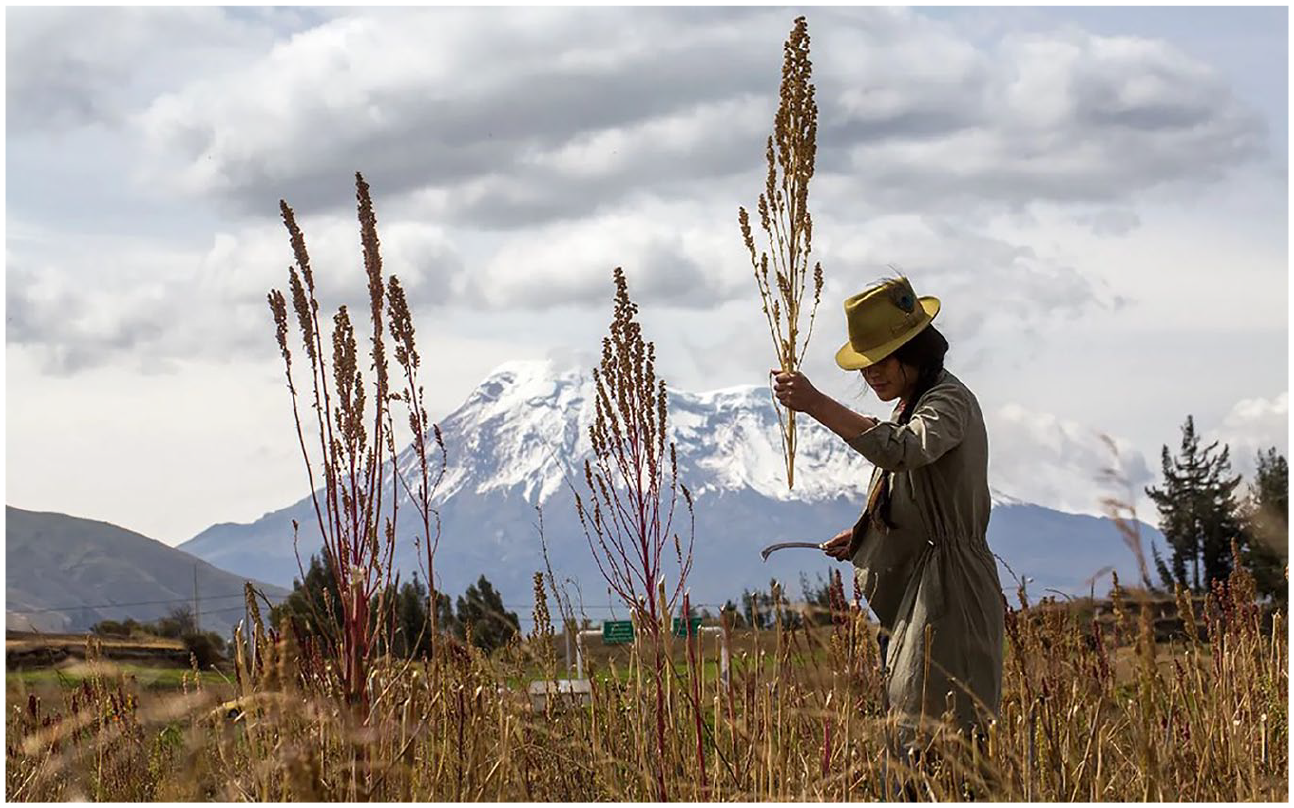
Connection to ancestral land.
Unfortunately, the cultures of the world have been deeply affected by globalization, particularly in Latin America (Anheier & Isar, 2007, p. 3). Globalization has become a widespread phenomenon affecting millions of people worldwide, impacting both the organizations they work for and the communities in which they reside. In Latin America, globalization is transforming individuals’ values and expectations, subtly but fundamentally shaping their identities and orientations. According to Anheier and Isar (2007, p. 3), this globalized landscape presents a range of impacts, both unifying and divisive, liberating and corrosive, homogenizing and diversifying, which have become a cause for concern. While globalization may emancipate cultures by facilitating their dissemination, it can also erode them by imposing external influences and homogenizing certain cultural expressions (Table 1). This context highlights the urgent need to reflect on decolonization processes and their implications for Latin American cultures.
Dual Impacts of Globalization on Latin American Cultures.
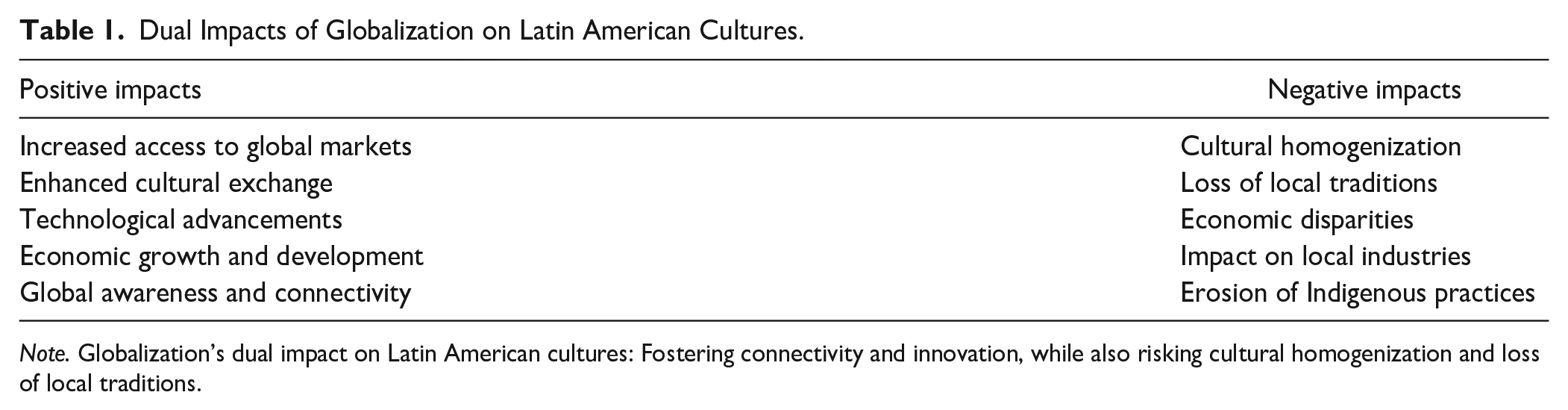
Note. Globalization’s dual impact on Latin American cultures: Fostering connectivity and innovation, while also risking cultural homogenization and loss of local traditions.
In the article “¡Descolonizar! ¿Qué significa?,” Duvisac (2022, p. 2) establishes that the process of decolonization seeks to achieve an equitable and fair future by eliminating colonial influences entrenched in contemporary economic, political, cultural, and knowledge systems. In addition, Duvisac highlights that colonialism not only encompassed territorial, economic, and political violence but also epistemic and cultural violence, solidifying systems of racism, patriarchy, and economic extraction globally. These systems are precisely the ones that perpetuate patterns of inequality in Latin America. Hence, decolonization processes are crucial for understanding histories, cultures, and thoughts from different perspectives and addressing global inequalities (Bhambra, 2014, p. 119).
“Pues poner en duda nuestra cultura es poner en duda nuestra propia existencia, nuestra realidad humana misma, y por tanto estar dispuestos a tomar partido en favor de nuestra irremediable condición colonial, ya que se sospecha que no seríamos sino eco desfigurado de lo que sucede en otra parte.” (Fernández Retamar, 1979, p. 19) “To question our culture is to question our very existence, our human reality itself, and therefore to be willing to take sides in favor of our irremediable colonial condition, as it is suspected that we would be nothing but a distorted echo of what happens elsewhere.” (Fernández Retamar, 1979, p. 19)
In this context, decolonization in Latin America is a transformative process that extends beyond political and territorial liberation to include a deep reconnection with the region’s diverse identities, cultures, and histories. This process not only refers to the emancipation from power structures imposed by colonizers but also involves the reconfiguration of social and cultural dynamics within communities, particularly in the way communal spaces are planned and managed. It involves reformulating, rethinking, and weaving new narratives that respect and incorporate Indigenous knowledge, values, and practices (Qwuy’um’aat, 2024), which are essential for the Latin American context.
According to Laenui (2007, p. 360) and Muller (2007, p. 6), the decolonization process consists of five phases: (1) rediscovery and recovery, (2) mourning, (3) dreaming, (4) commitment, and (5) action (Figure 2):
1. The phase of
2. The second phase, known as
3. The
In this phase, people not only dream of what could be but also actively explore their own cultures, governance structures, and social systems that best embody their aspirations. It is a process of collective construction, where individual dreams intertwine to form a shared vision of the future. This type of collective imagination is essential because it allows communities to envision a world beyond the reality imposed by colonialism, a world that truly belongs to them (Laenui, 2007, p. 365).
4. It is in the
5.
This strategic action represents a crucial shift from merely imagining a decolonized future to actively shaping it, with each step guided by the collective will and deeply rooted in Indigenous values and aspirations in Latin America. As Latin American communities embark on these decisive actions, they not only confront and dismantle the remnants of colonial power structures but also begin to culturally, socially, and physically redefine their own spaces. This process involves integrating traditional practices and local wisdom into contemporary design and development, reclaiming and revitalizing Indigenous heritage to create environments that reflect their unique identities and resist homogenizing external influences.
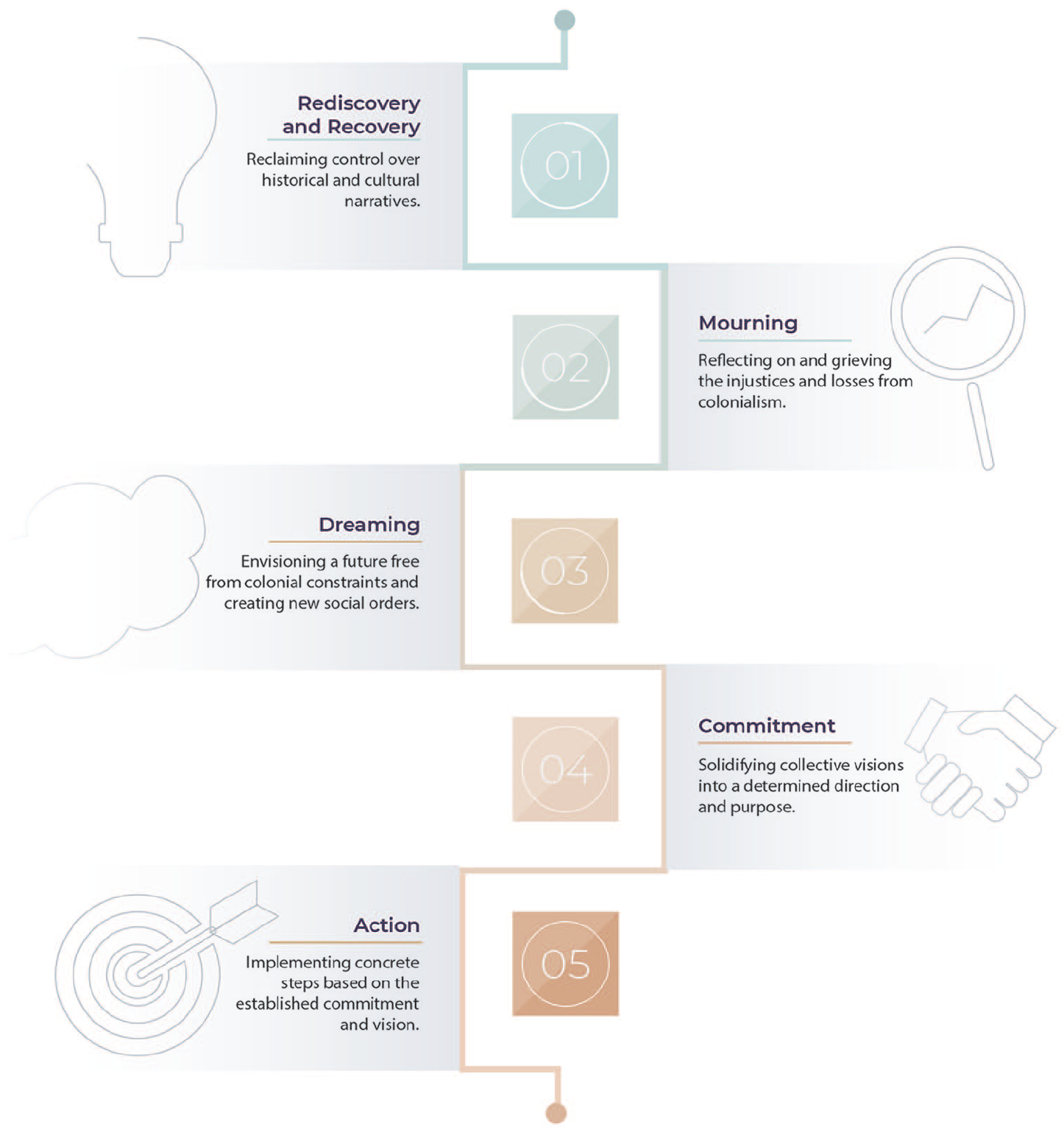
Decolonization process stages.
As an Ecuadorian, I have witnessed and, unfortunately, been complicit in the marked devaluation of local elements, with a predominant inclination toward foreign influences in various fields, from art and design to goods production. Since my childhood, I have viewed European culture as the epitome of “absolute development,” leading to the internalization of the belief that our heritage holds little value. This perspective has even permeated the field of interior design, where aesthetic homogenization with European models has resulted in a loss of local sense of belonging and identity. In goods production, the preference for international brands has led to the neglect of local products. This deeply ingrained tendency in our society has caused many designs to imitate foreign models rather than adapt to our own traditions and cultural needs. The lack of appreciation for our rich cultural heritage and the constant preference for foreign influences not only limit the potential for authentic and sustainable development but also perpetuate social, cultural, and economic inequalities (Commission for Architecture and the Built Environment, 2008). For us, as planners and designers, it is crucial to carefully examine the implications of our decisions, recognizing that they may inadvertently reinforce disparities in our society.
Interior Design as a Tool for Inclusion or Exclusion
Fanon (1952, p. 49) explains how language, in all its forms, has the power to structure and influence human behavior. In this context, the language of interior design serves as a means of expression that can reflect the beliefs, values, and aspirations of a society or community. This spatial language has the power to structure and guide human behavior, defining how we interact and relate to our built environment. Therefore, the role of interior design in shaping cultural identity is immensely significant (Figure 4). This role goes beyond mere aesthetics; it influences how we perceive ourselves and others, shaping our social and cultural interactions. Recognizing this power and actively working to use it for the benefit of diversity and social cohesion is essential to promoting an inclusive and equitable society.
To delve into the intricate relationship between interior design, exclusion, and society, it is essential to explore the historical and contemporary manifestations of exclusionary practices within the built environment. Schindler (2015, p. 1950) discusses how various methods have historically been used to exclude unwanted people from spaces where they were not welcome. From the imposition of physical barriers to the implementation of discriminatory policies, these tactics have been employed to perpetuate social divisions and reinforce inequalities within communities.
Contemporary interior design continues to grapple with issues of exclusion, as highlighted by Escobedo (2019) in her book, “Domestic Orbits.” Escobedo points out the prevailing tendency within modern design practices to conceal domestic workspaces, effectively perpetuating class, gender, and racial divisions through spatial invisibility. This exclusion in design not only reinforces existing social inequalities but also excludes certain groups from full participation in community life, ultimately contributing to the fragmentation of society and the exacerbation of social conflicts.
It is important to understand that interior design plays a crucial role as a tool of cultural production (Königk, 2015) (Figure 3). By shaping and being shaped by cultural and social contexts, interior design reflects and influences cultural identities. However, interior designers have often been complicit in the exclusion and discrimination of Indigenous cultures. This exclusion ranges from privileged access to education (Smith, 2021, p. 201) to the lack of recognition and appreciation of Indigenous practices within the industry. This systemic bias results in the undervaluation of Indigenous contributions, extending from professional settings to client interactions. Many designers, focused solely on trends, functionalities, and technologies dictated by a Eurocentric perspective, overlook the diverse philosophies, cultural nuances, and levels of diversity that should ideally guide their creative decisions, thereby overshadowing the rich diversity of the world’s design heritage. This approach has led to the imposition of predetermined designs that neither adapt to nor address the specific needs of these communities.
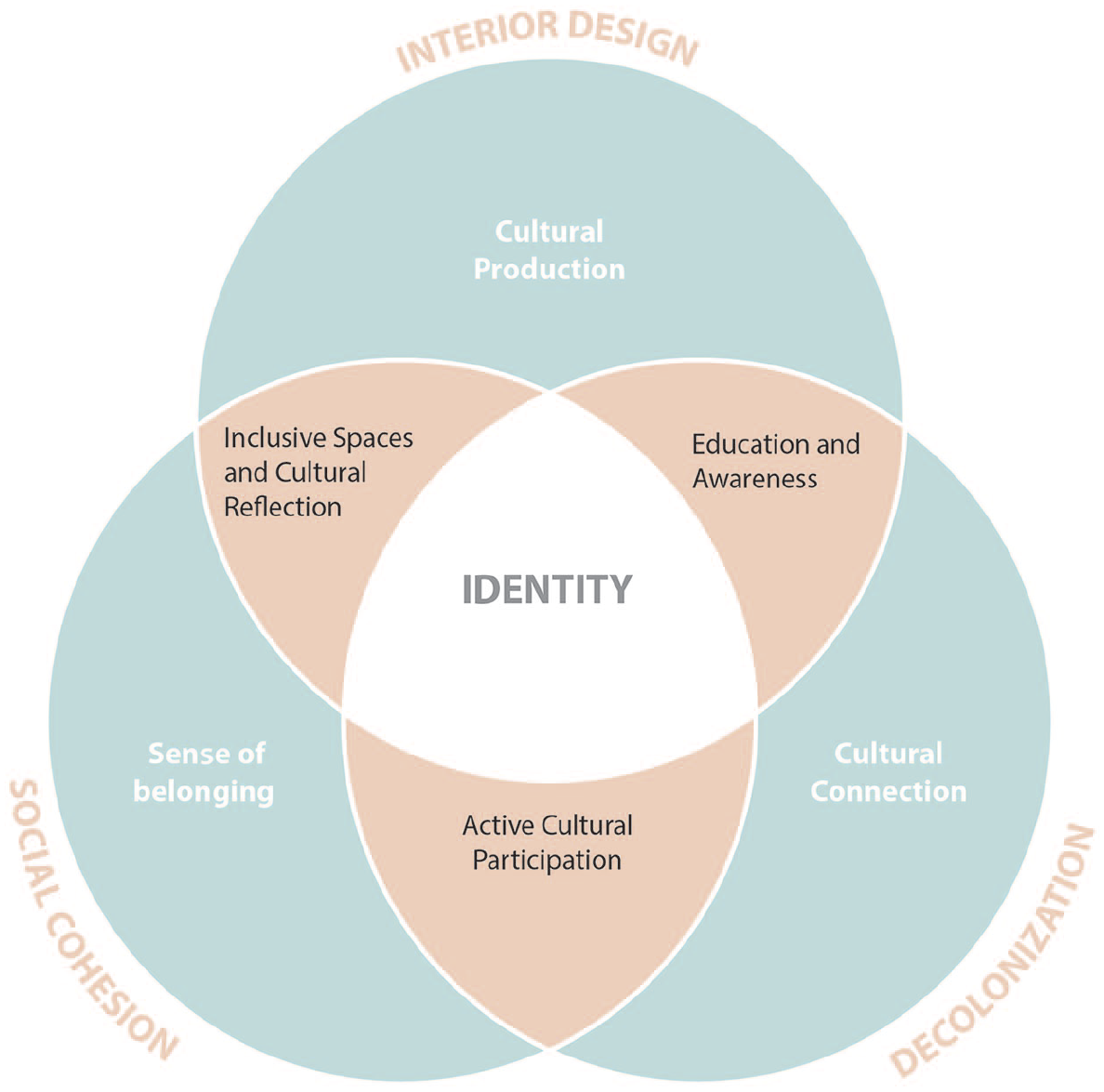
Building identity.
This can result in the removal of the cultural essence of interior design, which reflects the unique cultural identity of the region, in favor of adhering to more globally accepted standards (Kosten & Huybrechts, 2023, p. 76). This trend of adopting predominant design styles based on a virtual social identity not only erodes local design identities but also ignores essential cultural expressions necessary for a true representation of the community. It aligns with dominant trends while neglecting the individuals and cultural expressions that shape their identity. Consequently, there is an urgent call for a paradigm shift in design practices, advocating for inclusive and culturally sensitive approaches that respect diversity and contribute to equity. The pursuit of equity in design should focus on achieving a harmonious integration of different design philosophies rather than promoting a rivalry for supremacy (Ofosu-Asare, 2024, p. viii), as “the built environment is one of the most enduring and influential legacies of culture” (Anthony, 2007, p. 14).
Recent decades have seen interior design recognized for its influential role in creating meaningful relationships with space (Elvin et al., 2022, p. 1). Ahmed (2012, p. 3) suggests that bodies can extend and shape spaces, creating uninhabitable environments, just as spaces can be extensions of bodies, reflecting and complementing them as they inhabit them. However, this is often not fully achieved, highlighting a lack of inclusivity that, despite being a recognized issue, has not been addressed at its core. Instead, the problem has been perpetuated as Indigenous ways of life have been colonized by the very structures that should seek to improve them. Over time, many Indigenous communities have adopted designs, materials, and trends imposed by modernity, abandoning their cultural interior design identity in the process. Indigenous materials and construction systems, once intrinsic to their identity, were stigmatized as symbols of inferiority and deficiency and quickly replaced by what was dictated by “European influence.” In response to exclusion and a desire for integration, certain communities have gradually abandoned their traditions and daily ways of life, opting to adopt the lifestyle imposed by the practices, customs, and ways of life of colonization, which are completely alien to their original cultural heritage.
Decolonizing design involves combating the practice of “passing” and “covering,” which requires us to unlearn, relearn, restructure, and reform. This entails developing a design ethic that values diversity and promotes global exchange, enriching our understanding and appreciation of design in all its forms. The current challenge is to advocate for a paradigm shift that not only recognizes the importance of preserving Indigenous interior design identity but also actively works to restore and celebrate these varied cultural expressions. By integrating local native narratives into design, architecture, and landscape, as well as into other professional practices through decolonizing methodologies, we can challenge and inspire new ideas and transformative creative approaches (Smith, 2021, p. XX).
The consequences arising from the perpetuation of exclusion are evident in the cultural context. This manifests in the formation of fragmented societies that progressively relinquish their identity (Branscombe & Doosje, 2004, p. 17). A frequently debated subject revolves around examining cultural identity in relation to globalization and emerging technological advancements. Global technologies pose a threat to the development of authentic identity and have distorted cultural exchange by crafting lifestyle schemes that promote product consumption, thereby substituting and erasing cultural identity (Huertas López & Santa Pelaez, 2021, p. 22).
“La reproducción de modelos europeos, a través de la introducción de un neo estilo internacional alejado de los modelos tradicionales locales, puede convertirse en un peligroso objeto de contaminación cultural en unas sociedades empobrecidas que no tienen capacidad para ejercer una defensa intelectual de sus valores culturales que, rápidamente, son sustituidos por los valores de los países emisores.” (Sandoval, 2011, p. 115) “The reproduction of European models, through the introduction of a neo-international style distant from local traditional models, can become a dangerous source of cultural contamination in impoverished societies that lack the capacity to intellectually defend their cultural values, which are quickly replaced by the values of the emitting countries.” (Sandoval, 2011, p. 115)
Toward an Inclusive and Culturally Aware Interior Design
The prevailing tendency to disregard cultural roots in favor of swift construction, standardized interiors, and primarily an aesthetic perceived as “modern” or supposedly innovative for commercial purposes has resulted in environments lacking the inherent richness of cultural and heritage diversity. This inclination not only impacts the identity of societies but also restricts reflection on crucial aspects such as the proper use of energy resources, passive design choices, and the rational use of materials (Yepez Tambaco, 2012). In this regard, interior design projects must be extremely respectful of the cultural identity markers of the region in which they are situated, emphasizing the importance of safeguarding, revitalizing, and highlighting the inherent architectural and cultural values of the local community (Sandoval, 2011, p. 115). (Figure 4)
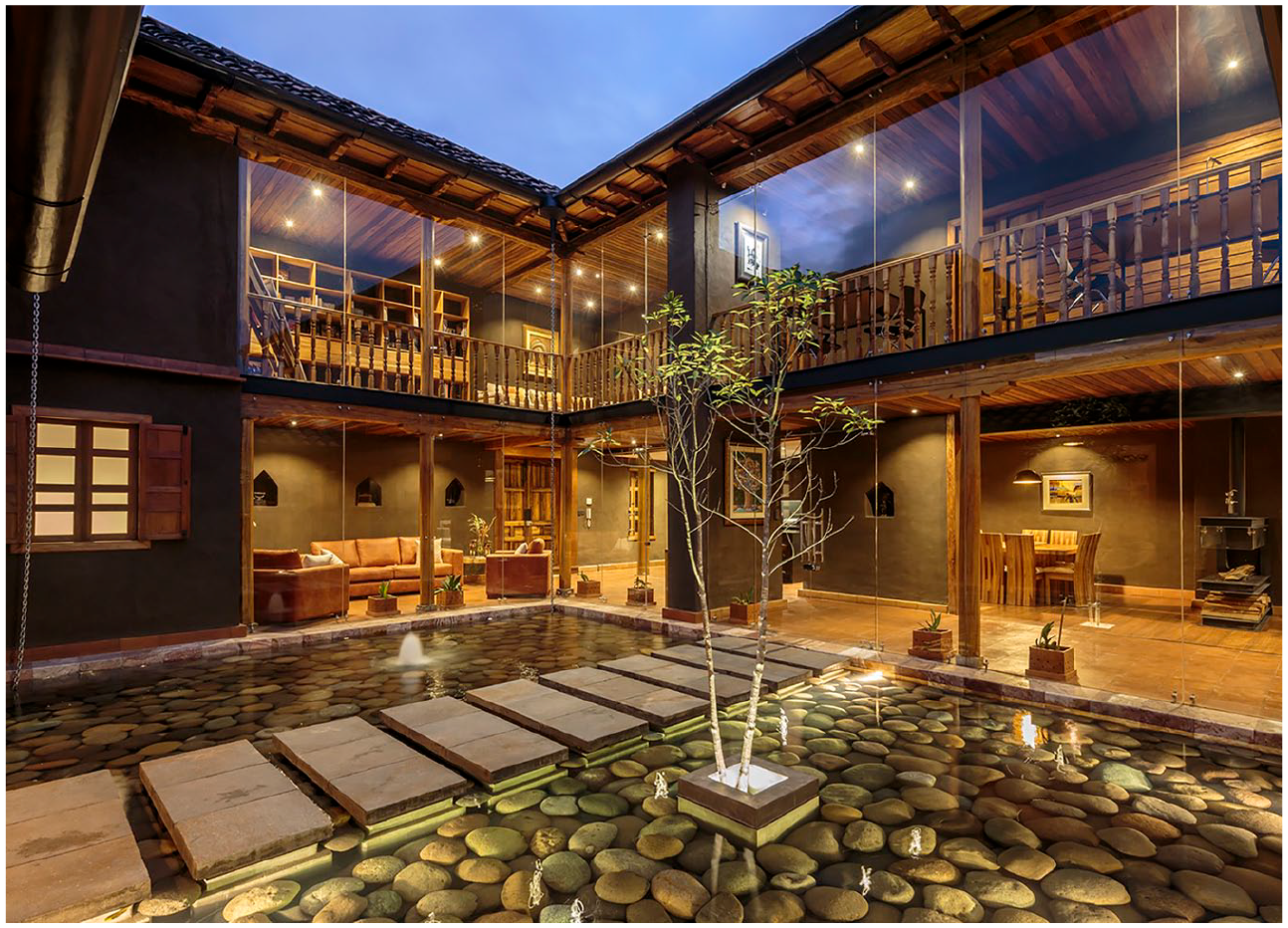
Casa de la Loma.
Particularly in Latin American contexts, the process of decolonizing interior design manifests as a reimagining and reconfiguration of spaces that have historically been shaped by colonial aesthetics and values. The process of decolonizing interiors is crucial to initiate the recovery and reaffirmation of individual and/or community identity, as the social space is the stage where the cultural activities of society unfold. It arises from a pattern of social interaction, but, in turn, imposes itself on its users and, consequently, shapes society (Perolini, 2011, pp. 167-168). In this sense, the process of decolonizing interiors begins by acknowledging and integrating the deep and diverse cultural legacies present in Latin America that have contributed to the fabric of human development. This process involves moving away from the origins of design rooted in white and Eurocentric perspectives (Ofosu-Asare, 2024, p. xiii), which have played a destructive role in creating hybrid cultures and identities (Kosten & Huybrechts, 2023, p. 76). Emphasizing the inclusion of varied Latin American voices and cultural values is essential for understanding how these cultures have historically influenced spatial design, material selection, and the relationship between people and their environments. By celebrating the rich tapestry of Latin American cultural legacies, interior design can become more authentic and diverse, reflecting the region’s unique histories and traditions in a manner that is both responsible and respectful.
Cultural narratives play a pivotal role in shaping the identity and ambiance of a space. Every culture has its history, traditions, and distinctive aesthetics that breathe life into the design process. The art of cultural fusion in interior design empowers designers to weave together these compelling narratives, resulting in spaces that not only serve a functional purpose but also become powerful storytellers, evoking a profound sense of cultural heritage. By skillfully understanding and incorporating traditional patterns, motifs, or materials, designers infuse depth and meaning into interior spaces. This fusion not only bridges the past with the present but also paves the way for a future where the spirit of cultural diversity enriches our built environments. This approach delves into diverse aspects, including spirituality in design, cultural symbolism, sustainable practices, and ethical dimensions, thus integrating a broad spectrum of considerations into the process of decolonizing interior design.
According to Ofosu-Asare (2024), the traditional Western conception of interior design often focuses on the combination of form and function, following a linear process that reflects the enlightenment ideals of progress and rationality. Although well-intentioned, this approach can be limiting and even imperialistic for some cultures. By concentrating on converting scientific principles into usable products and creating experiences that transcend the ordinary, this model may overlook alternative worldviews present in many non-Western cultures. For instance, in Inca cosmology, nature, or “Pachamama,” is regarded as a living entity with its rights, and any intervention in space must seek to harmonize with it. This worldview embodies the paradigm of “Buen Vivir,” where design not only addresses human needs but also strives to maintain balance and harmony with the natural environment (Zaffaroni, 2011, p. 1).
Incorporating diverse perspectives and philosophies into design is especially crucial in the Latin American context, where traditional materials such as adobe, stone, wood, and natural fibers have deep cultural significance (Figure 5). These materials not only reflect the rich heritage of indigenous and local communities but also align with sustainable practices suited to the region’s unique environmental conditions. In Latin America, the process of decolonization involves reclaiming these materials and traditional methods, which have often been overshadowed by Westernized approaches. Promoting the use of these resources is essential for maintaining cultural diversity and supporting local craftsmanship, thereby creating spaces that honor and reflect the distinct identities of Latin American communities.
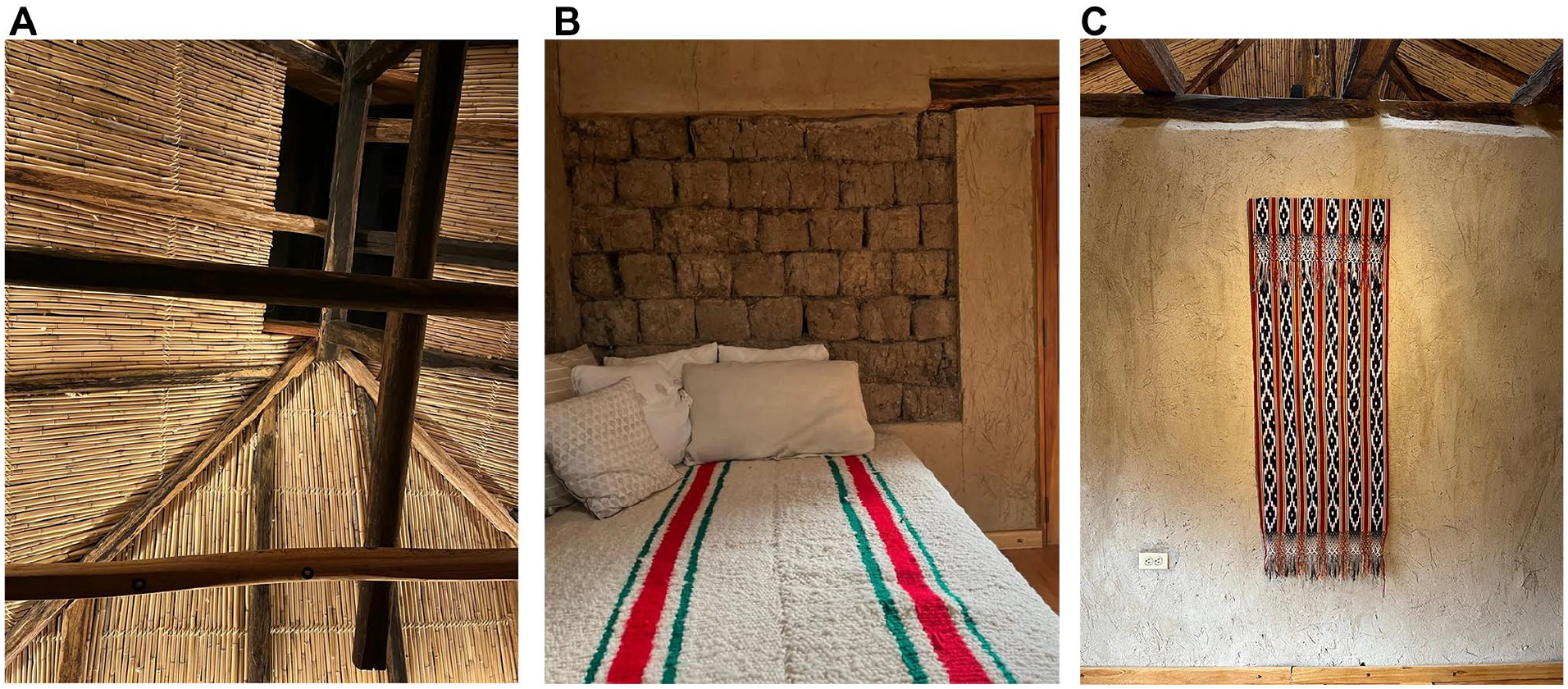
Casa Kachipukara.
Recognizing and valuing these diverse cultural perspectives allows interior design to transcend the limitations imposed by Eurocentric approaches. By integrating traditional and symbolic philosophies, concepts, and elements into spaces, design can authentically reflect the cultural richness passed down through generations (Ofosu-Asare, 2024). This approach not only preserves cultural heritage but also enriches built environments, creating spaces that deeply resonate with the identities and values of various Latin American communities. In doing so, interior design becomes a means of celebrating and honoring cultural diversity while challenging the homogenizing effects of globalization.
Therefore, it is crucial to understand that this disregard for the cultural roots of interior design not only impacts the authenticity and cultural richness of a space but also limits the implementation of sustainable and environmentally respectful practices in the planning and construction of spaces. Moreover, it perpetuates social segregation by favoring a homogeneous and standardized vision, excluding the cultural diversity that enriches our communities. This narrow perspective in interior design not only reflects a deficiency in understanding and appreciating local history and culture but also overlooks the opportunity to promote inclusive environments that celebrate the plurality of identities and experiences.
Today, interior design professionals have the responsibility to break this cycle of exclusion and stigmatization. It is up to us to undertake work that prioritizes genuine harmony between interior design and cultural identity, recognizing differences not with stigma, but with the richness of diversity. To achieve this, it is crucial to decolonize our design perspective and begin to understand and study local design practices to provide creative solutions that foster a sense of belonging. Committing to approaches that respect and value diversity will enable us to promote social cohesion and respect for the natural and cultural environment we inhabit through our discipline.
Inclusive Design and Cultural Transformation
Interior design has historically served as a powerful tool for reflecting and perpetuating social divisions, cultural aspirations, and power dynamics. Over the centuries, it has not only shaped the physical environments in which we live but also entrenched barriers of exclusion and marginalization. From colonial practices imposing European aesthetics at the expense of Indigenous traditions to contemporary trends that render certain groups invisible, design has played a critical role in shaping our social reality. The evolution of this field should be seen not merely as a matter of aesthetics or functionality but as an opportunity to address and transform historical and current inequalities.
Adopting an inclusive design approach recognizes the richness of each unique individual and community, enhancing cultural authenticity and heritage preservation while expanding market potential for both designers and consumers (Centre for Inclusive Design, 2019). Far from limiting commercial scope, embracing diverse perspectives enriches design, fostering sustainability and appreciation of various cultural viewpoints. This approach contributes to creating more equitable and enriching environments, reflecting and celebrating global diversity rather than imposing a homogeneous vision.
The decolonization of interior spaces begins with a decolonization of our perspectives, by eliminating social expectations and instead understanding and appreciating differences. That is, transforming the processes of “passing” and “covering,” which represent the most obvious forms of exclusion, denial, and marginalization, into “recognizing, understanding and acting.” In this way, as Goffman (1963, p.10) suggests, we shift from a virtual social identity to a real social identity, where differences are understood not from a perspective of power or inferiority, but from the perspective of the richness diversity brings.
This process involves challenging Eurocentric aesthetic norms that have dominated interior design. These norms have tended to impose a homogenizing vision of space, ignoring diverse cultural expressions and lifestyles. Decolonizing interiors involves celebrating the richness and variety of cultural expressions in design, incorporating local elements and materials, as well as traditional construction techniques that reflect the identity and heritage of local communities.
In this sense, by recognizing our true social identity, we give ourselves as individuals the opportunity to create a sense of belonging, moving away from the appropriation of language from other cultures, particularly in the field of interior design. As professionals, it is essential that we adopt an approach of “recognize, comprehend, and act” to contribute to the preservation of Indigenous cultures and their rich diversity. It is our duty as architects and designers to safeguard cultural treasures, leveraging them for the benefit of society while igniting a sense of pride in belonging. Furthermore, delving into the understanding of the social and cultural context of these peoples, as well as their unique ways of life, is fundamental. Likewise, we must advocate for the use of local materials in interior design, building meanings rooted in local culture. By doing so, we can create spaces that are not only aesthetically appealing but also serve as a cultural extension of the identity of native communities.
True cultural transformation occurs when our ever-evolving environment is supported by design, rather than constrained by it. This support involves embracing approaches that respect cultural diversity and fostering inclusive and sustainable spaces that reflect the richness and complexity of the communities we inhabit. We must be mindful that we are not just constructing physical structures but creating experiences capable of forging a deep connection with the history and environment that surrounds us. In doing so, we lay solid foundations for a community rooted in its identity, motivating people to explore and understand their history, thereby promoting a cultural enrichment that lasts over time.
To advance toward inclusive and culturally conscious design, it is crucial to adopt a range of key practices and strategies. These include researching and understanding the local context, incorporating diverse life philosophies and concepts, using local materials and techniques, and actively engaging with the community. Such approaches infuse the design with spirituality and cultural symbolism. These strategies not only enrich the design process but also promote cultural authenticity and sustainability, ensuring that the created spaces are respectful and representative of the communities they serve.
In summary, the process of decolonization demands a deep commitment to dismantling deeply rooted structures of inequality and injustice. It requires more than mere recognition of exclusionary systems; it demands a rigorous examination of how these systems are intricately woven into the fabric of social power dynamics. Decolonization compels us to confront not only the overt manifestations of colonial oppression but also the subtle nuances that permeate our everyday interactions and ideologies. Moreover, it urges us to recognize our complicity within these systems and to work actively for their deconstruction. By fostering a culture of critical self-reflection, historical awareness, and inclusive practices, we can amplify the voices of marginalized communities and pave the way for a more equitable and just society.
Footnotes
Declaration of Conflicting Interests
The author declared no potential conflicts of interest with respect to the research, authorship, and/or publication of this article.
Funding
The author received no financial support for the research, authorship, and/or publication of this article.
