



Abstract
Visual literacy remains a vital component of today’s image-driven design landscape, yet it continues to be an evolving area of focus within interior design education. This paper presents a first-year studio model emphasizing the importance of teaching students to analyze and creatively apply inspiration imagery critically. Students designed a nightclub in South Australia, using curated images examined through formal aesthetics, color theory, Gestalt psychology, sociology, symbolism, and phenomenology. This approach helped students move beyond imitation, fostering deep engagement and innovative, context-sensitive designs. By integrating theory analysis and creation, the studio offers a robust framework for cultivating visual literacy in interior design.
Keywords
Background: Visual Literacy in an Ocularcentric Context
Visual literacy in design has received renewed attention in academia and practice (Dudzik, 2019; Troiani & Ewing, 2021), especially as students and professionals in creative fields navigate an increasingly image-saturated environment (Scolere, 2021). Like other creative disciplines, interior designers have traditionally taken inspiration from peer-reviewed architectural books, scholarly articles, and curated magazines. These sources provide a more comprehensive understanding of design concepts, often accompanied by sketches, photographs, and detailed commentary that explain the spatial and experiential considerations underpinning a project. For example, carefully commissioned images in these publications are typically paired with analytical descriptions that outline design intentions, material choices, and how specific features contribute to the overall experience of a space. The availability of accompanying floor plans, sections, and diagrams further situates this work in context, enabling students and professionals to develop a nuanced appreciation for how design impacts occupants.
By contrast, the rapid proliferation of digital platforms such as Instagram, Pinterest, and Tumblr has introduced a new paradigm for sourcing design inspiration. While these platforms democratize access to visual content and make imagery available with unprecedented ease, they often prioritize aesthetics over substance. The term “inspo” has emerged from this context, denoting visual material that is often admired and replicated without critical engagement or a deep understanding of the spatial or experiential principles it embodies (Scolere, 2023; Urban Dictionary, 2019). This trend has led to significant pedagogical concerns within design education (Webb & Aulgur, 2022). Scholars argue that the superficial nature of social media content can foster what some call design fixation, where designers become stuck on reproducing existing trends rather than engaging in innovative and contextually aware design practices (Filgo & Martinsen, 2017; Jansson & Smith, 1991; Mackie, 2018; Williams et al., 2015; Youmans & Arciszewski, 2014). Such fixation can be particularly problematic in educational settings, where the goal is to teach students to develop original, experiential, site-specific design solutions that consider ergonomic, choreographic, and multisensory elements.
It is important to recognize that the challenge posed by singular visual inspiration is not limited to social media imagery, however. The visual language of design and its communication has become increasingly ocularcentric, focusing primarily on visual appeal at the expense of other critical experiential dimensions (Brown, 2018; Kavanagh, 2014; Martin, 2018). This focus risks producing homogeneous and trend-driven designs which can lack the depth and contextual sensitivity needed for long-lasting and meaningful spaces (Brown, 2018; Martin, 2018). Scholars such as Dudzik (2019) have emphasized the need for a more structured approach to visual literacy in design education, arguing that developing this literacy is essential for comprehending the complex social and cultural data embedded in the built environment. Visual literacy, as defined by Stokes (2001), encompasses both the ability to interpret and analyze images (decode) and the capacity to generate new, meaningful creations from this (encode). This dual focus highlights the importance of teaching students not only to consume visual stimuli critically but also to use them as a springboard for creative and contextually appropriate design solutions.
The research underscores that visual literacy is increasingly crucial as media technology continues to permeate the design landscape. Lopez-Leon (2015) observes that design students often struggle to engage with traditional written assignments and theoretical material, which they perceive as disconnected from their practice-oriented discipline. Instead, students are more responsive to educational strategies that integrate visual analysis and production with theoretical frameworks (Lopez-Leon, 2015). For example, assignments that involve analyzing image collections using tools from visual and cultural theory can help bridge the gap between theoretical knowledge and design practice. This approach aligns with the growing recognition that students entering higher education are often visual learners and thinkers, accustomed to engaging with information through images rather than text (Lopez-Leon, 2015). The challenge, then, lies in developing curricula that nurture these visual skills while also fostering analytical and creative rigor.
The use of structured theoretical frameworks to analyze visual content has been shown to enhance the design process. Troiani and Ewing (2021), in their work on visual research methods, describe how architecture students use cognitive imagination to merge fragmented visual content into cohesive and innovative design concepts. The process of visual literacy inquiry fosters a greater sensitivity to user experience and promotes the development of considered design solutions. It emphasizes the importance of critical visuality—giving attention to spatial, temporal, and social interrelations within design—to create spaces that resonate on multiple levels.
Building on these insights, the interior design studio discussed in this visual essay offers a pedagogical model that leverages visual literacy to counteract the pitfalls of superficial inspiration. The studio provides students with curated sets of pre-selected images compiled into client folders from social media platforms. These images are analyzed through various theoretical lenses. This structured approach encourages students to unpack visual content in depth, exploring layered meanings and experiential possibilities rather than replicating popular design trends. By employing multiple theoretical perspectives, first-year students develop a richer and more diverse understanding of how visual elements contribute to the design process, ultimately producing more innovative and context-sensitive outcomes.
The method also addresses the issue of design fixation by providing a disciplined yet flexible framework for visual analysis. By focusing on experiential words derived from their image analysis, students move from visual inspiration to concept generation, using their insights to inform spatial planning, material selection, and user experience design. The emphasis on theoretical analysis allows students to transcend the limitations of purely aesthetic inspiration and fosters a holistic approach to interior design. This pedagogic strategy demonstrates that visual literacy, when explicitly taught and nurtured, can be a powerful tool for developing thoughtful, creative, and contextually grounded design solutions, offering a significant contribution to the discourse on visual literacy in interior design education.
The Studio
The studio project tasked first-year students with designing a nightclub; an immersive and dynamic space where a carefully curated and intentional experience is paramount. The choice of a real location within Adelaide’s nightlife district added a layer of practical context, ensuring that students’ design propositions were grounded in real-world considerations. This foundational project was strategically introduced early in the design curriculum to instill crucial visual literacy skills from the outset, helping students avoid replication and develop a nuanced approach to design inspiration that considers both aesthetics and experiential depth.
Each student selected a client folder containing 20 curated pieces of inspirational imagery. These images were diverse, abstract, and often unrelated to precedent nightclub interiors, specifically chosen to challenge students to move beyond superficial imitation. The imagery provided a rich resource for analysis, aligning with the increasing need for students to learn how to interpret and critically engage with visual content (in isolation from other material), be it sourced from social media or more traditional mediums.
The studio was structured into two intensive 6-week blocks, each culminating in a significant design submission. In the first block, students were introduced to different theoretical lenses each week, providing a robust analytical toolkit for interpreting the imagery in their client folders. These lenses included the following:
The theoretical lenses were central to the studio’s approach, transforming visual analysis into a rigorous, multidimensional practice. Weekly in-class activities helped students unpack the imagery, developing skills to identify and articulate experiential qualities rather than focusing on visual appeal. This engagement generated excitement and sustained interest, as students found relevance in linking visual analysis to potentially practical design outcomes.
The culmination of the first block involved a narrative inquiry exercise; students synthesized their findings into coherent patterns, producing a set of experiential words that captured the desired nightclub atmosphere. They provided comprehensive written and diagrammatic justifications, demonstrating how each theoretical framework informed their understanding of the client’s vision. This step emphasized the importance of decoding (analyzing) visual content, an essential component of visual literacy that laid the groundwork for informed design decisions.
The second block shifted from analysis to encoding (designing), where students translated their experiential words into tangible design elements. They disengaged from the original imagery to avoid fixation, instead using the insights derived from their theoretical analysis to guide spatial planning, material selection, and user experience design. This phase involved detailed spatial modeling, sketching, and the production of manually drafted and rendered plans, sections, one-point perspectives, and a comprehensive color and materials board. The hands-on nature of this block kept students engaged and allowed them to experiment with applying theoretical principles to real design challenges.
As evidenced by strong student evaluations and commentary, the outcomes of this pedagogical model were significant. Students demonstrated a high level of engagement and enthusiasm, driven by the relevance and practicality of the visual analysis tools provided. The studio supported the idea that structured visual literacy training, encompassing both analysis and creation, equips students with a flexible and powerful methodology for interpreting and leveraging inspiration imagery. This approach not only addresses the increasing prevalence of image-based learning but also offers a framework that applies to a wide range of visual sources, from social media content to traditional architectural images that may lack accompanying descriptive information.
While visual literacy is often emphasized in UX, photography, and graphic design courses, this studio introduces an approach tailored for interior design educators. This first-year initiative sets the stage for students to develop a thoughtful and contextually sensitive design ethos, positioning them to innovate rather than replicate in their future practice. The visuals presented in this essay are drawn from student Rebecca Calabro’s journey through the visual literacy studio, illustrating the process of decoding (analyzing) and encoding (creating) as students transform inspiration imagery into meaningful design outcomes. The visual essay invites further exploration and reflection on how this pedagogical model can be adapted and expanded to advance visual literacy in interior design.
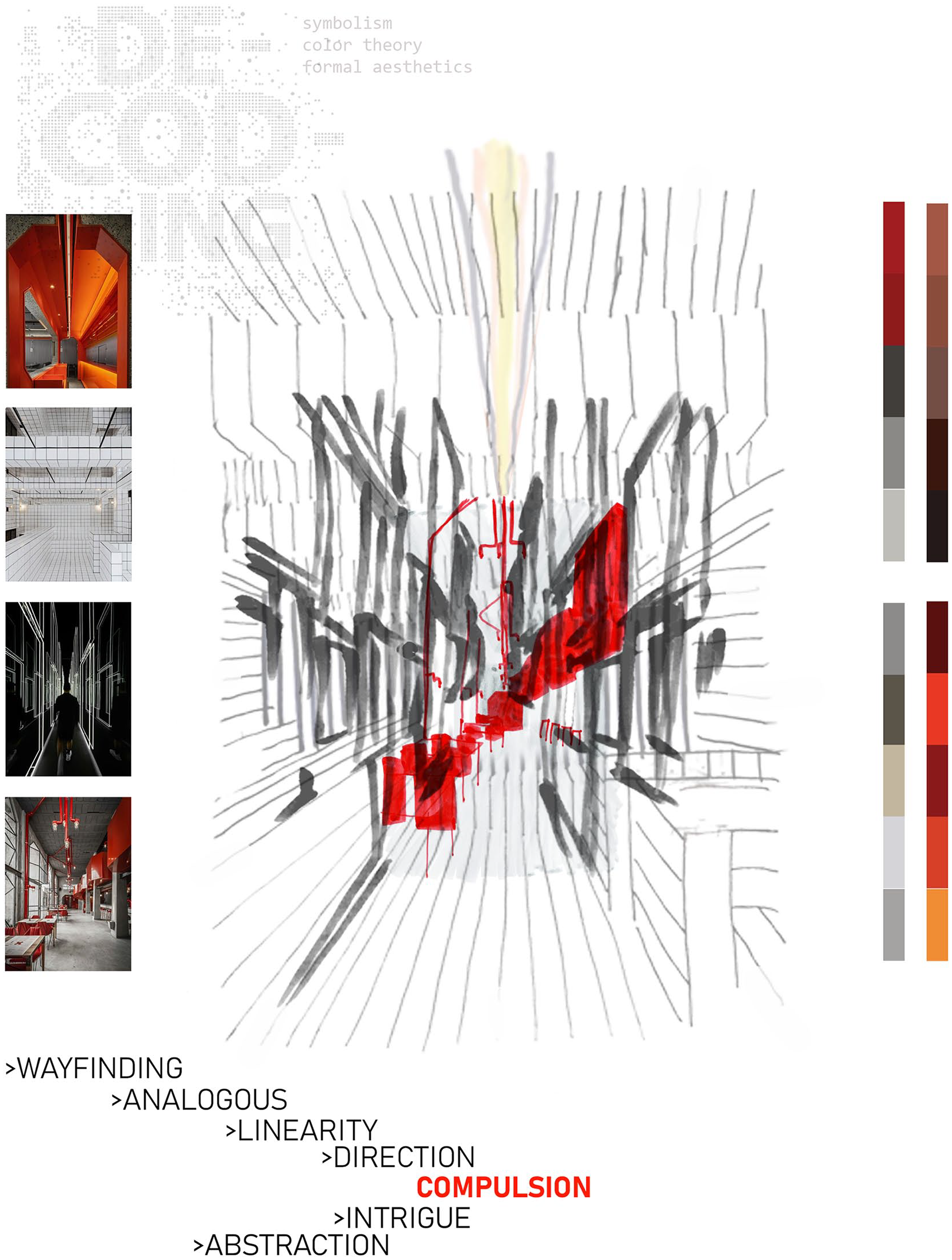
Calabro, R., & Tooley, J. (2024). Image using symbolism, color theory, and formal aesthetics to convey a sense of compulsion present in the inspiration material.
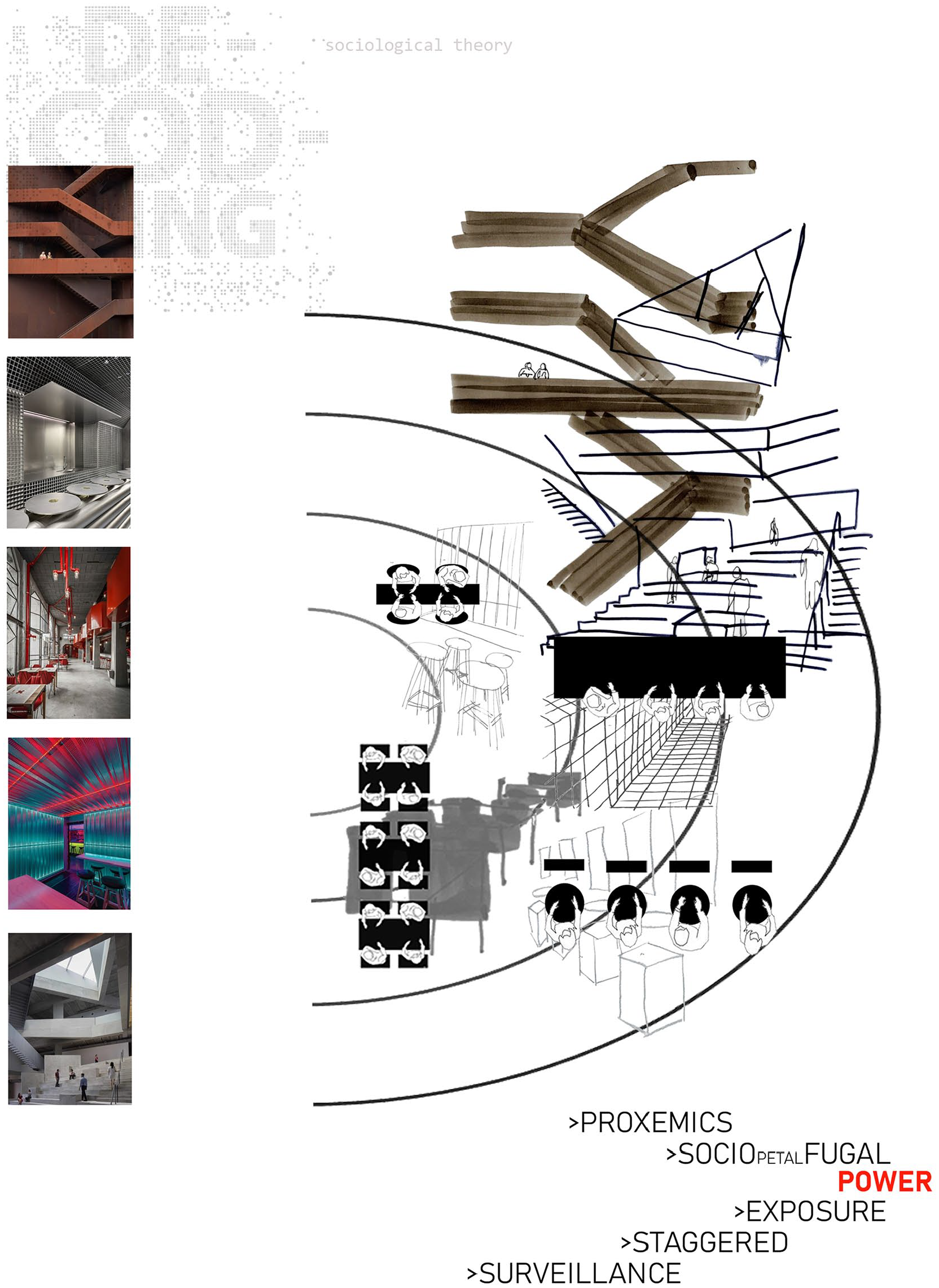
Calabro, R., & Tooley, J. (2024). Image using sociological theory to convey a sense of power present in the inspiration material.
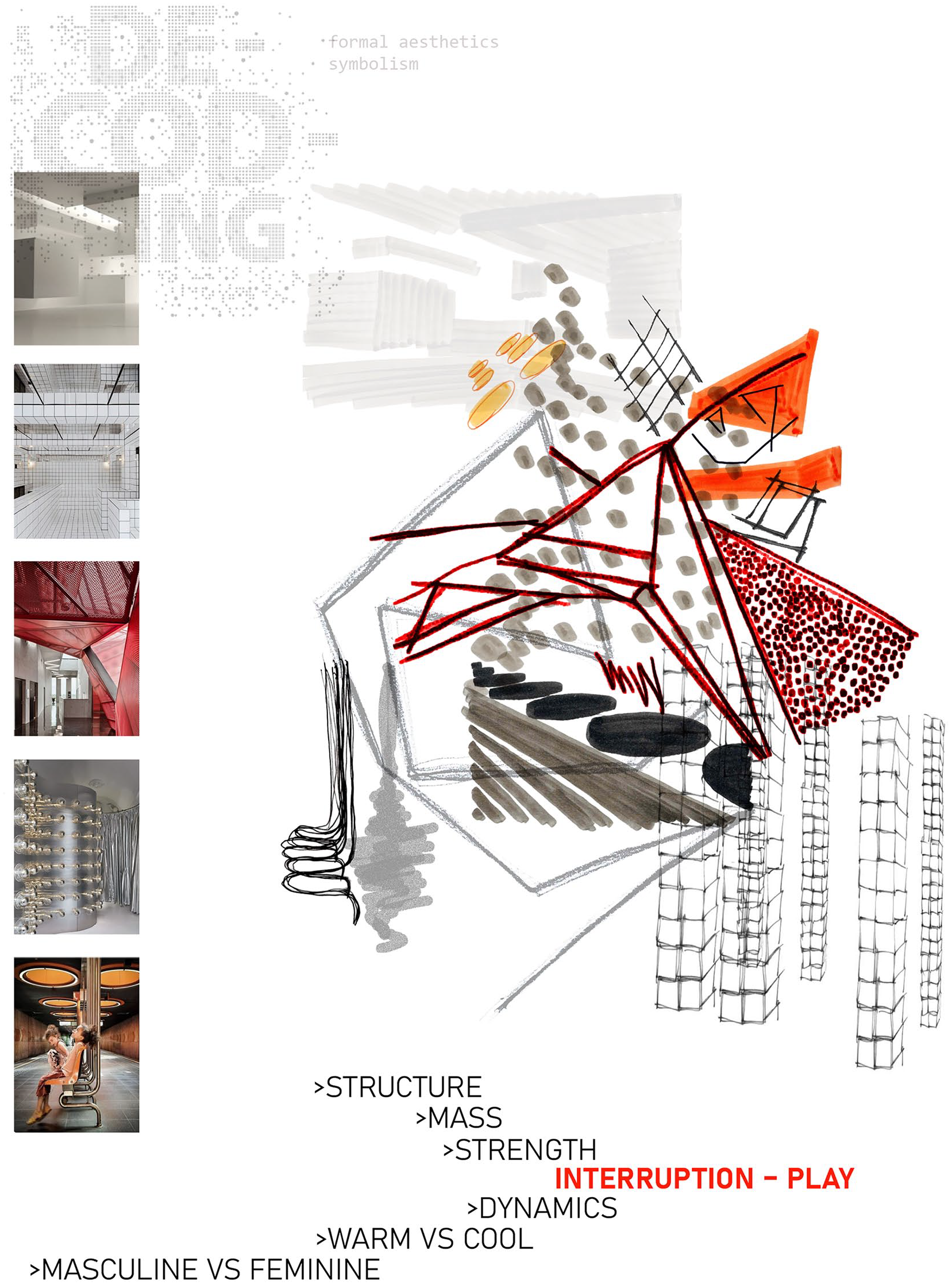
Calabro, R., & Tooley, J. (2024). Image using formal aesthetics and symbolism to convey a sense of play and interruption present in the inspiration material.
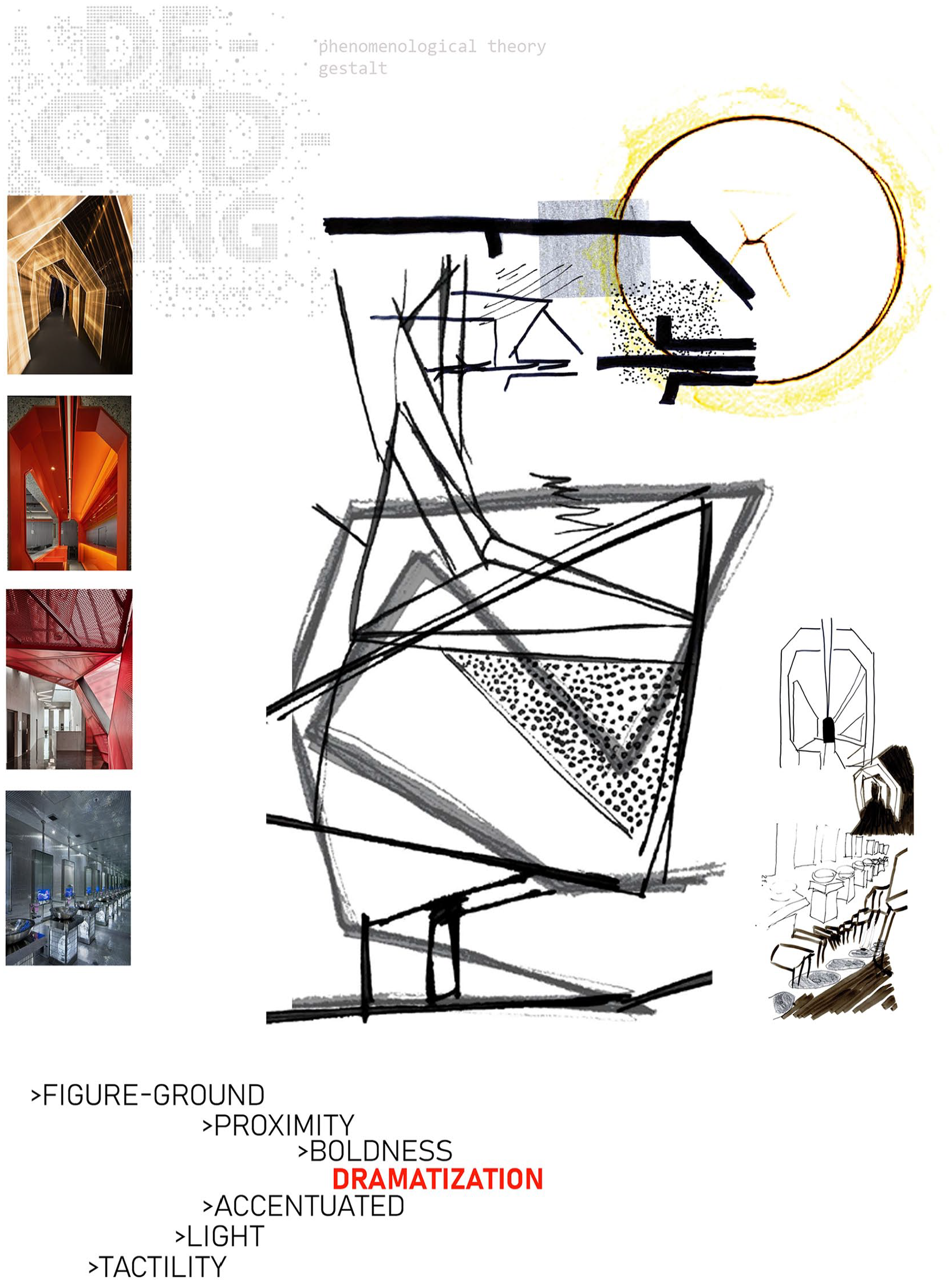
Calabro, R., & Tooley, J. (2024). Image using phenomenological theory and gestalt to convey a sense of drama present in the inspiration material.
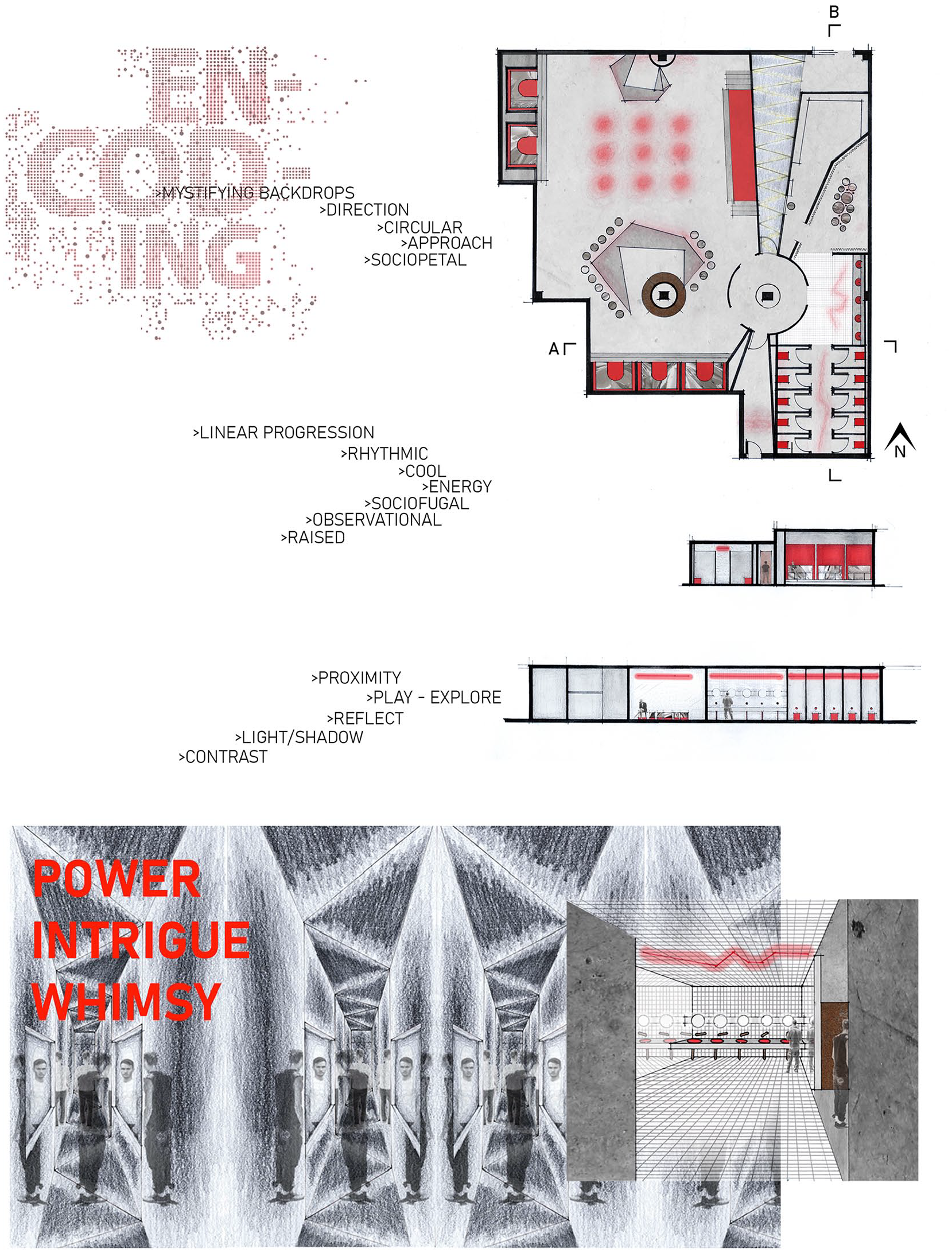
Calabro, R., & Tooley, J. (2024). Image showing manual one-point perspectives, plans, and sections, with light computer renderings. Designed to encourage powerful, intriguing, and whimsical experiences for occupants, these works are based on Calabro’s analysis of inspiration material through various theories.
Footnotes
Acknowledgements
I would like to acknowledge the exceptional contributions of Rebecca Calabro, whose deep understanding of the theoretical frameworks and adherence to the curriculum were instrumental in this work. Her ability to effectively translate inspirational imagery through rigorous analysis and creative application has not only demonstrated the curriculum’s impact but has also allowed me to showcase its full potential in advancing visual literacy in design studios.
Declaration of Conflicting Interests
The author declared no potential conflicts of interest with respect to the research, authorship, and/or publication of this article.
Funding
The author received no financial support for the research, authorship, and/or publication of this article.
