




Abstract
Access to job and study resources is important to enhance workers’ and students’ career optimism, respectively. Yet, it is unknown how these resources foster career optimism in young adults who work and study. Drawing on conservation of resources and self-determination theories, we examined the relationships between job and study resources and subsequent career optimism directly and indirectly via psychological needs satisfaction. Data were collected at two time points (4-week lag) from 256 working students (84% women; Mage = 20.08 years) recruited from one large, multi-campus Australian university. Using structural equation modeling, we found that study resources had a direct, positive relationship with career optimism, but job resources did not. We also found that both role resources had direct, positive relationships with autonomy, competence, and relatedness satisfaction. Only the satisfaction of autonomy needs was related to career optimism. Further, both job and study resources were indirectly related to career optimism via autonomy satisfaction. Overall, the structural model explained 21% of the variance in career optimism. These findings provide guidance on how university staff (e.g., career counselors and teachers) and those in the workplace (e.g., supervisors and managers) can enhance career optimism in this population of young workers.
Keywords
Introduction
Due to the rising cost of living and tertiary education, many students engage in paid employment alongside their studies (Neves & Stephenson, 2023; Precel, 2023). For instance, the percentage of Australian students who juggle paid jobs with tertiary education has increased from 42% in 2000 to 73% in 2023 (Australian Bureau of Statistics, 2001, 2023). These students encounter various challenges associated with balancing responsibilities from the work and study domains (Creed et al., 2015; Wyland et al., 2016). To overcome these challenges and remain motivated to pursue their career goals, they need to draw on their contextual and personal resources.
One motivator that keeps young adults focused on their career goals is career optimism (McIlveen et al., 2013a), which is an individual’s tendency to expect the best possible outcome in their future career development (Rottinghaus et al., 2005) and reflects confidence to advance career goals despite challenges (Hennessey et al., 2008). Career optimism is paramount in career self-management, particularly during crises and adversity (Ahmad & Bilal, 2022). In the study domain, students who are optimistic about their future careers are more career-decisive and satisfied with their academic majors and career choice (McIlveen et al., 2013a, 2013b). These findings align with research on adult workers, where higher optimism about future careers is related to more adaptability (Newman et al., 2022) and job satisfaction (Spurk et al., 2015).
Previous studies have examined the work- (Manoharan et al., 2021; Bui Thi & Mai, 2024) and study-related antecedents of career optimism (Aymans et al., 2020; Garcia et al., 2015). However, no research to date has examined the roles of both job and study resources simultaneously in fostering career-related motivational resources for students who combine paid jobs with study (henceforth, “working students”). To contribute to this research area, we test these relationships in working students, a currently under-investigated population whose experiences in their jobs and studies contribute to their career development (Cinamon, 2016).
While optimism was initially conceptualized as more trait-like (Scheier & Carver, 1987), empirical evidence and a recent integrative review have suggested that career optimism can be considered as state-like and, therefore, a psychological resource that can be developed or enhanced (Eva et al., 2020; Spurk et al., 2015) through exposure to resourceful and supportive environments (Aymans et al., 2020; Garcia et al., 2015; Manoharan et al., 2021; Bui Thi & Mai, 2024). Working students operate in two environmental contexts, work and study, from which they have the potential to draw highly valued, career-related resources to assist in developing their career optimism. From the work environment, for instance, working students might receive resources, such as supervisor and coworker support and control over their job that can assist them to balance work and study obligations (Creed et al., 2015; Wyland et al., 2016). Resources from the work environment are likely to be associated with higher career optimism (Manoharan et al., 2021; Bui Thi & Mai, 2024). Students also receive resources (e.g., teacher support) from their study environment, which have been found to enhance their career optimism (Aymans et al., 2020; Garcia et al., 2015).
To date, no research has examined the dual contributions of job and study resources to developing career optimism in working students. We contribute by applying the conservation of resources (COR) theory (Hobfoll et al., 2018) to examine how job and study resources are related to career optimism. Further, we integrated self-determination theory (SDT; Ryan & Deci, 2017) with the COR theory to examine the role that satisfaction of basic psychological needs plays in explaining these relationships. COR theory provides an explanation for how individuals acquire valued resources to achieve their goals, while SDT offers insights into why individuals gain these resources. Grounded in these theoretical frameworks, we proposed that there is a resource gain spiral from job and study resources to satisfaction of basic psychological needs, and, in turn, to career optimism (see Figure 1). In so doing, we responded to calls for more empirical research that examines the contextual antecedents of career optimism (e.g., Eva et al., 2020) and how working students’ experiences influence their career attitudes (Trolian et al., 2018). The Tested Hypothesized Model. Note. The values presented are standardized regression coefficients. Straight and broken lines represented significant and non-significant paths, respectively. *p < .05. **p < .01. ***p < .001.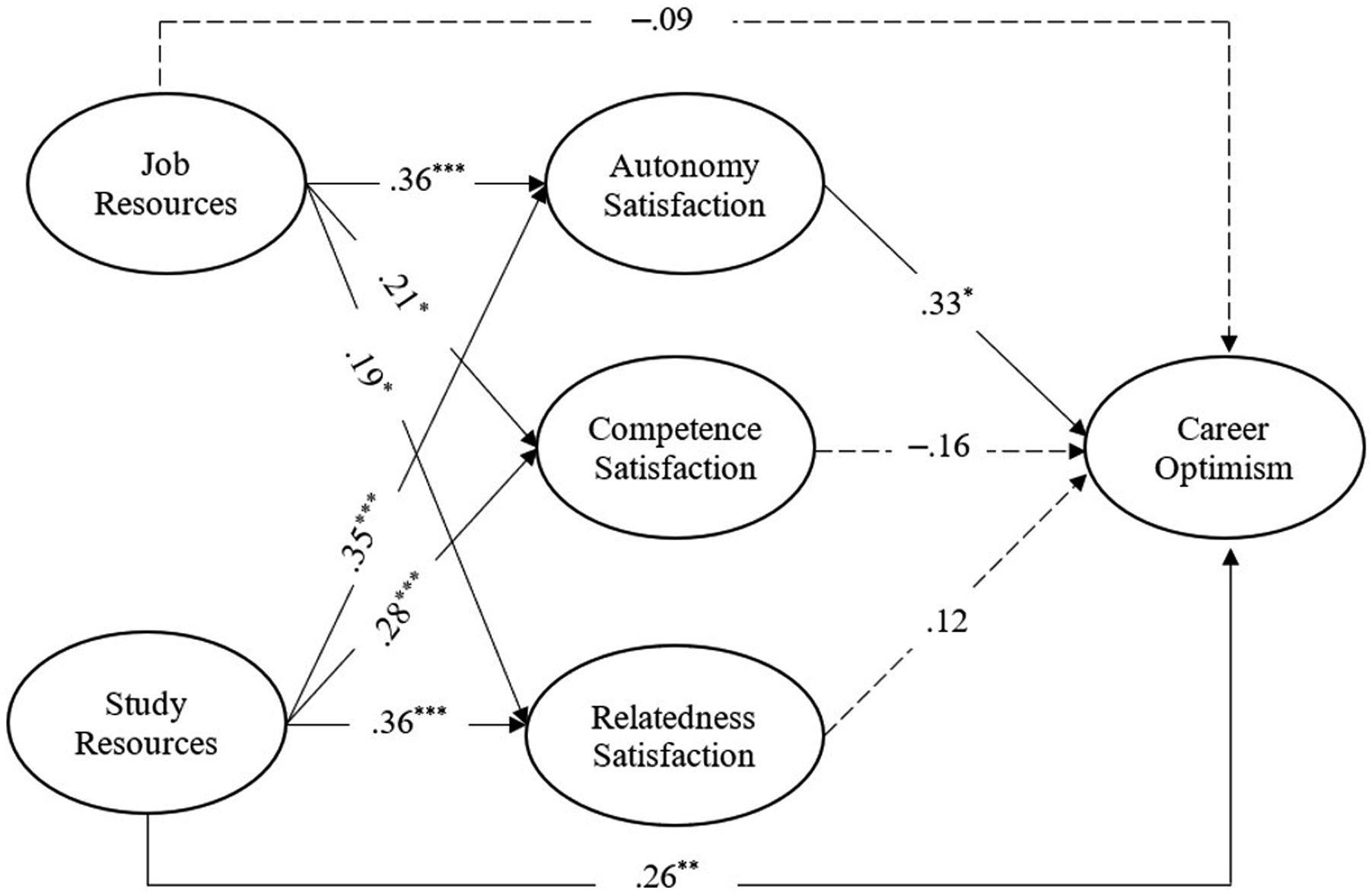
Theory and Hypotheses Development
We drew on COR theory to examine the antecedents of working students’ career optimism from the perspective of a resource gain spiral. COR theory provides an explanation for individuals’ motivation to obtain, protect, and conserve their valued resources (Hobfoll et al., 2018). Resources are defined as anything that individuals perceive to be helpful in attaining their goals (Halbesleben et al., 2014) and which they invest in to protect against resource loss, recover from losses, and gain further valued resources (Hobfoll et al., 2018).
From a top-down perspective, organizations design and offer useful resources to individuals (Bakker & Demerouti, 2017). However, given current conditions and priorities, not everyone has equal access to valued resources. For instance, many working students are typically employed in part-time, temporary jobs (Blackman & Benckendorff, 2017) and might prioritize their student rather than their current work role (Wyland et al., 2016), thus, access to resources offered might be different from what is offered to their counterparts (e.g., full-time workers). In the current study, consistent with COR theory and prior research on the work-study interface (e.g., Owen et al., 2018; Wyland et al., 2016), we considered job (e.g., job control, climate) and study resources (e.g., teaching staff and peer supports) to be relevant to balancing work and study. Previous studies on the work-study interface area have demonstrated that students use resources to acquire further career-relevant psychological resources that are important to achieving their career goals (e.g., Creed et al., 2022a).
Although COR theory proposes explanations for how individuals acquire resources to attain their goals, the processes that explain these acquisitions warrant further understanding (Halbesleben et al., 2014). Therefore, we also drew on SDT (Ryan & Deci, 2017) to frame a plausible model of why job and study resources lead to the development of personal motivational resources. SDT posits that individuals strive to satisfy three basic psychological needs: autonomy, competence, and relatedness (Ryan & Deci, 2017). Autonomy refers to the experience of volition and willingness, competence refers to the experience of mastery and effectiveness, and relatedness reflects the experience of warmth and care (Vansteenkiste et al., 2020). SDT maintains that these psychological needs must be satisfied to achieve optimal development, integrity, and well-being (Ryan & Deci, 2017).
In summary, these theories suggest that resourceful, needs-supportive contexts (e.g., high in job and study resources) should enable the satisfaction of basic psychological needs, and that, to the extent that these needs are satisfied, individuals should be more intrinsically motivated to achieve optimal functioning, development, and personal success (Ryan & Deci, 2017; Vansteenkiste et al., 2020).
The Role of Job and Study Resources in Career Optimism
Resources from the work and study domains can facilitate goal attainment, learning, personal growth, and development (Bakker & Demerouti, 2017; Bakker & Mostert, 2024). Examples of job resources are supervisor and coworker support, a positive social climate, and job autonomy (Schaufeli & Taris, 2014), while examples of study resources are teacher and peer support and learning opportunities (Lesener et al., 2020).
According to COR theory, job and study resources represent a collective pool of conditional resources provided within the occupational and educational ecologies that create, enrich, and sustain a resource caravan, which refers to a cluster of critical resources that tends to develop and influence as a group (Hobfoll, 2011). These resource-filled environments create passageways that facilitate the acquisition of other highly valued resources. In the work-study interface, employers and universities create environments in which working students have access to job and study resources, respectively.
Job (Manoharan et al., 2021; Bui Thi & Mai, 2024) and study resources (Aymans et al., 2020; Garcia et al., 2015) have been found to foster career optimism, which is a highly valued motivational resource for career development. Studies exploring the contextual antecedents of career optimism are limited. In the work domain, Manoharan et al. (2021) interviewed culturally and linguistically diverse hotel workers and found that job resources (e.g., support from supervisors and managers) facilitated career optimism. Similarly, Bui Thi and Mai (2024) found that social support from work was related positively to hospitality employees’ career optimism. In the study domain, Aymans et al. (2020) and Garcia et al. (2015) found that study resources (i.e., teacher support) was related positively to tertiary students’ career optimism. To extend this line of research, the current study examined how resources from two role domains foster career optimism simultaneously. Accordingly, we expected that having access to valued resources from each role would enhance career optimism in working students, and, importantly, by examining both resources together, we would clarify whether resources from the work or study role were more important in developing optimism about future careers.
The Mediating Role of Psychological Needs Satisfaction
SDT proposes that supportive environments (e.g., at work and study) afford individuals intrinsically motivating resources that enable them to achieve their set goals and experience higher levels of well-being by satisfying their psychological needs (Ryan & Deci, 2017). From a COR perspective, the satisfaction of psychological needs is considered critical to understand why individuals are motivated to invest existing resources (e.g., job and study resources) to acquire further resources (Halbesleben et al., 2014). Thus, the degree to which having access to job and study resources facilitates the satisfaction of psychological needs should explain how these resources foster career optimism in working students.
In the work domain, several studies have demonstrated that job resources promote the satisfaction of basic psychological needs. For instance, in school teachers, positive relationships were found between job resources (i.e., positive job climate, transformational leadership, task autonomy) and autonomy, competence, and relatedness satisfaction (Desrumaux et al., 2015; Jansen in de Wal et al., 2020). These findings have been extended to other groups of workers. For example, a recent longitudinal, person-centered study of early career nurses found that work-related emotional and cognitive resources were associated with underlying profiles characterized by autonomy, competence, and relatedness satisfaction (TóthKirály et al., 2023).
Similarly, research in the study domain has demonstrated that access to study resources facilitates the satisfaction of students’ basic psychological needs. For instance, in the secondary education context, Buzzai et al. (2022) found that teachers’ and classmates’ need-supportive interpersonal behaviors positively predicted the satisfaction of students’ psychological needs. In the tertiary education context, Schenkenfelder et al. (2020) found that teacher and peer support positively predicted students’ perceived autonomy, competence, and relatedness related to their academic major.
While research has examined the role of job and study resources in satisfying full-time working adults’ and students’ psychological needs, respectively, no research has assessed how both resources together might facilitate working students’ psychological needs satisfaction. As working students operate in environments (i.e., work and study) in which their psychological needs must be met to achieve optimal development and psychological well-being (Ryan & Deci, 2017), it is important to examine the contributions of resources gathered in each role domain. Working students can access both job (e.g., autonomous decision-making, supervisor support) and study resources (e.g., teacher and peer support, positive learning climate) to satisfy their psychological needs. When working students have autonomy-supportive and empowering work and study environments (e.g., providing opportunities to manage their work patterns), they are more likely to experience a sense of control over their learning and work experiences (Blake & Worsdale, 2009; Collins et al., 2010), satisfying their need for autonomy. Similarly, these environments can develop resources that enable them to gain and apply knowledge and skills in dual role domains (Baert et al., 2016), satisfying their need for competence. Experiencing teaching staff as supportive and facilitative (Collins et al., 2010) and having a work climate that fosters respectful relationships and treats student workers as part of the organization (Winkler, 2009) can satisfy their need for relatedness.
The satisfaction of psychological needs, in turn, is a core motivational resource that enables the establishment and maintenance of optimal career motivation and the attainment of vocational well-being (Chen, 2017). When psychological needs are met, individuals are likely to internalize and integrate values, attitudes, and desired outcomes (Ryan & Deci, 2017; Vansteenkiste et al., 2020). Thus, when working students experience a sense of control and mastery in their work and study (i.e., autonomy and competence satisfaction), they are more likely to see themselves as able to determine and achieve their academic and career goals and shape their future career trajectories. Moreover, feeling socially connected to and supported by others in both roles (i.e., relatedness satisfaction) is likely to foster optimistic views about being connected and supported in the future, including in their career future.
To date, no research has examined the role of psychological needs satisfaction in career optimism, nor has any research examined the direct and indirect effects of dual role resources on needs satisfaction and, in turn, on career optimism. In support of our proposed model, Manoharan et al. (2021) found that support from work and non-work sources that facilitated the experience of care contributed to maintaining hotel workers’ positive expectations about their occupational future during the COVID-19 pandemic.
Therefore, based on COR theory, SDT, and empirical evidence, we proposed that job and study resources are indirectly related to career optimism through autonomy, competence, and relatedness satisfaction. Specifically, when work and study environments provide working students with a range of highly valued resources, they are likely to feel a sense of volition and control over their experiences, competence at managing role demands, and connection with individuals who support them and their goals. In turn, psychological needs satisfaction should foster an optimistic outlook about their future careers. We proposed the following hypotheses:
Job (H1a) and study (H1b) resources are related positively to career optimism.
Job resources are related positively to autonomy (H2a), competence (H2b), and relatedness satisfaction (H2c); study resources are related positively to autonomy (H2d), competence (H2e), and relatedness satisfaction (H2f).
Autonomy (H3a), competence (H3b), and relatedness (H3c) satisfaction are related positively to career optimism.
Job resources are related positively to career optimism via autonomy (H4a), competence (H4b), and relatedness satisfaction (H4c); study resources are related positively to career optimism via autonomy (H4d), competence (H4e), and relatedness satisfaction (H4f).
Aims of Study
There were two main aims. The first was to examine the resource gain spiral perspective in working students. Specifically, we examined the role of resources gained from two role domains in fostering career optimism in working students. In so doing, we contribute to the limited literature on the application of COR theory in young adults who are working while studying and on the contextual antecedents of career optimism in this population. The second aim was to understand the motivational role of psychological needs satisfaction in the relationships between job and study resources and career optimism. This contributes to the integration of COR theory with SDT. Understanding underlying mechanisms provides avenues through which to intervene and facilitate positive outcomes for students who are balancing work and study.
As potential control variables, we considered several demographic factors that have been shown to be related to role resources and to influence career optimism. Older students have lower career optimism than their younger counterparts (Puklek Levpušček et al., 2018), and while role resources have not been examined as a correlate, older students tend to experience more job demands (Creed et al., 2022b). Male students tend to have more access to career-related job resources due to the congruence between their jobs and studies (Boll et al., 2022) and have higher career optimism than their female counterparts (Lin et al., 2022). A longitudinal study showed that financial stress negatively predicted career optimism in emerging adults (Wake & O’Donnell, 2024). In addition, working students who have access to their family’s economic and social capital were more likely to engage in career-development activities (e.g., volunteer work) that could develop job resources relevant to their occupational future; those from less privileged backgrounds were more uncertain about their future (France et al., 2019). Jobs that are perceived to be more relevant to students’ future careers (henceforth “perceived career relevance”) are likely to offer more career development resources, resulting in more positive expectations about their career future (Creed et al., 2022a). Australian students tend to be more homogeneous in racial identity/ethnicity than in, for example, the American context. We requested participants to indicate whether they were domestic or international students, and consistent with previous studies in similar populations (e.g., Creed et al., 2022a, 2022b), found that most were domestic (> 90%), with a small proportion of international students, indicating insufficient variability for this variable. Thus, we included age, gender, present economic situation, family socioeconomic status (SES), and perceived career relevance as potential control measures.
Method
Participants and Procedure
After receiving approval from the university ethics committee, we recruited students from one large, multi-campus Australian university through university-wide emails, campus posters, and by advertising on course websites. A QR code linked volunteers to study information and the online questionnaire (hosted on LimeSurvey). To address the concern of common method bias (Cooper et al., 2020), we collected data at two time points, separated by a 4-week lag.
At T1, 530 participants completed the questionnaire. Of these, 36 cases were excluded for failing attention check items and 9 for not meeting the inclusion criteria (working at least part-time during the trimester), leaving 485 cases. Of these, 426 (87.8%) provided their contact details and consented to be contacted at T2. Each student provided a unique anonymous code (i.e., last two digits of their student number, day of month they were born, and mother’s first name) to allow T1 and T2 responses to be matched. We received 256 responses (response rate = 60%) to the T2 questionnaire. T1 volunteers could enter a draw to win one of five A$50 gift cards; each T2 volunteer was offered a A$5 gift card.
The mean age of the final sample (N = 256) was 20.08 years (SD = 2.58). Most were female (n = 215; 84%) and domestic students (n = 238; 93%). They were enrolled in a range of degrees (e.g., business, engineering, psychology, criminology, biomedical science), and were in their first year of university, completing an average of three courses (where > 2 courses constitute a full-time load). Family SES was assessed using a 10-point subjective, social status ladder representing where respondents’ family stood in society based on education, income, and job status (1 = At the bottom to 10 = At the top; M = 6.42, SD = 1.51; Adler et al., 2000). Present economic situation was determined by response to the question, “Which of these descriptions comes closest to how you feel about your own economic situation now?” (1 = Finding it very difficult on present income to 4 = Living comfortably on present income (M = 2.93, SD = .84; European Social Survey, 2020). Participants worked an average of 19.56 (SD = 8.43) hours per week and were employed in a range of jobs (e.g., clerical, healthcare, hospitality, manufacturing). Perceived career relevance was assessed by “How relevant is your job to the career you wish to pursue in the future?” (1 = Highly irrelevant to 10 = Highly relevant; M = 3.70, SD = 2.72).
Measures
Unless otherwise specified, all scale items used a 6-point Likert-type response format (1 = Strongly disagree to 6 = Strongly agree). Higher average scale scores represent a stronger endorsement of a construct. Job and study resources, needs satisfaction, and all demographic and potential control variables were measured at T1, while career optimism was assessed at T2.
Job and Study Resources (T1)
Based on Halbesleben et al.’s (2014) recommendation, we measured perceived job and study resources based on a broad sample of resources provided in each role domain. Specifically, we selected and adapted 10 items from the General Nordic Questionnaire for Psychological and Social Factors at Work (QPSNordic; Wännström et al., 2009) that were chosen based on ten Brummelhuis and Bakker’s (2012) conceptualization of contextual resource subtypes. Based on our conceptualization of job and study resources, we selected items that represented resources discussed and/or examined in previous studies on working students’ experiences in both of those domains, such as workplace climate, provision of interpersonal support, and control-granting (e.g., Owen et al., 2018; Wyland et al., 2016). Sample items worded as job resources were, “My job is appreciated by my supervisor” and “I can influence the amount of work assigned to me in my job”. Sample study resource items were, “If needed, I can get support and help with my study from teaching staff” and “I can make decisions about how much study to do”. Past QPSNordic scales from which the resource items were drawn yielded Cronbach’s αs ranging from .67 to .86 and demonstrated concurrent validity as evidenced by a positive correlation with general health and negative associations with anxiety, depression, and burnout. In the current study, Cronbach’s αs for each 10-item resource measure was .87.
Satisfaction of Psychological Needs (T1)
We used Albrecht’s (2015) nine needs satisfaction items to assess the extent to which working students’ psychological needs were satisfied. Sample items were, “How satisfied or dissatisfied are you that you are meeting your need … for a sense of control over how you do things? (autonomy) … to feel confident about how you do things? (competence) … for a sense of connection with the people around you? (belonginess/relatedness; 6-point scale 1 = Very dissatisfied to 6 = Very satisfied). In support of construct validity, Albrecht found that needs satisfaction was related positively to engagement and negatively to emotional exhaustion. He reported αs over two samples of .83 to .88; our αs were: autonomy = .79, competence = .86, and relatedness = .89.
Career Optimism (T2)
We used the 3-item Career Optimism subscale of the Career Futures Inventory-Short Form (McIlveen et al., 2013b). A sample item is, “I get excited when I think about my career”. McIlveen et al. (2013b) reported an α of .84 in a sample of university students and demonstrated validity with positive associations with generalized self-efficacy, career choice satisfaction, and academic major satisfaction. In the current study, α was .90.
Data Analysis
We tested the hypothesized model via structural equation modeling using IBM ® SPSS ® AMOSTM 29.0 with maximum likelihood estimation. To assess model fit, we applied χ2, Comparative Fit Index (CFI), Tucker–Lewis Index (TLI), Standardized Root Mean Square Residual (SRMR), and the Root Mean Square Error of Approximation (RMSEA; Hu & Bentler, 1999; Weston & Gore, 2006). As χ2 is likely to approach significance as sample size increases (i.e., > 200; Schumacker & Lomax, 2010), we also used the following cut-off values recommended for sample sizes < 500: CFI and TLI ≥ .90, RMSEA ≤ .10, and SRMR ≤ .10 (Weston & Gore, 2006). We also employed latent mediation analyses using the bootstrap method and bias-corrected 95% confidence interval (CI) estimates (5,000 bootstrap samples; CIs that do not contain zero suggest the existence of indirect effects) to test the indirect paths from job and study resources to career optimism via psychological needs satisfaction.
Management of Common Method Variance
We followed recommendations for detecting, reducing, and controlling common method bias (Cooper et al., 2020). First, we used a 4-week time lag to separate the measurement of the predictor and criterion variables (i.e., assessed resources and needs at T1 and career optimism at T2). The 4-week time lag was based on two reasons. First, existing research on optimal time lags suggests that shorter lags offer more information about the potential distribution of causal relationships over time while also yielding maximum effects; brief lags or lags that are too long can result in non-significant effect sizes that under-estimate effects (Dormann & Griffin, 2015). Second, we assessed students during one trimester and needed to capture resources consistently across individuals (e.g., avoid exam periods and time taken off work for study). Thus, a 4-week time lag was optimal. We measured resources and needs satisfaction contemporaneously at T1 as Coxen et al.’s (2021) recent systematic review suggested that psychological needs satisfaction is highly variable given its state-like nature. Last, as data were self-report, we ran Harmann’s single factor test, which showed that the scale items did not load onto a single factor, which would be the case if the common variance was > 50%.
Results
Preliminary Analyses
Descriptive statistics, bivariate correlations (below diagonal), and correlations among latent variables (above diagonal).
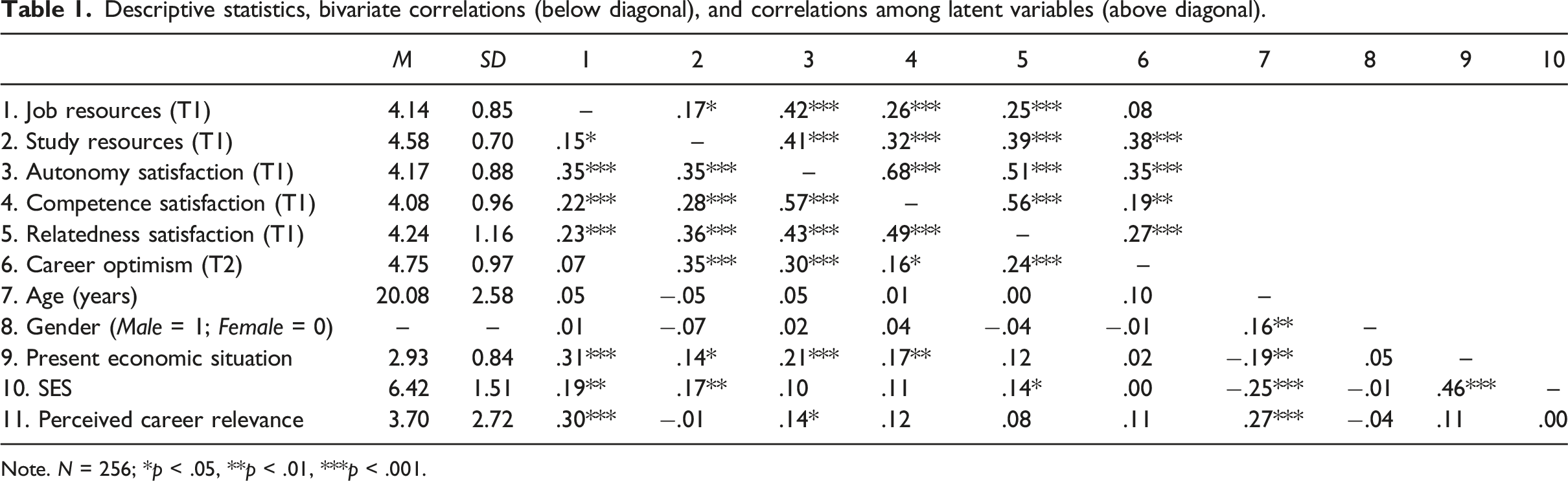
Note. N = 256; *p < .05, **p < .01, ***p < .001.
Primary Analyses
Testing the Measurement Model
Due to our modest sample size, we created item parcels for the longer measures using the item-to-construct balance technique to improve the ratio of N to the number of model parameters (Little et al., 2002). We created three parcels each for job and study resources and used the psychological needs and career optimism items as the observed indicators for those variables. Overall, there were 18 observed indicators in the measurement model. We conducted a confirmatory factor analysis to test the distinctiveness of variables and found that the hypothesized 6-factor model yielded an excellent fit, χ2 (df = 120; N = 256) = 184.16, p < .001; CFI = .98; TLI = .97; SRMR = .04; RMSEA = .05 CI (.03, .06). The mean factor loading was .83 (range .71‒.93; all ps
Testing the Structural Model
First, we tested the hypothesized structural model presented in Figure 1. As none of the potential control variables were correlated with career optimism, we did not control for them in the model. We also allowed the error terms of autonomy, competence, and relatedness satisfaction to covary. The structural model had an excellent fit, χ2(120, N = 256) = 184.16, p < .001; CFI = .98, TLI = .97, SRMR = .04, RMSEA = .05 CI (.03, .06). Consistent with the bivariate correlations, the direct path from T1 job resources to T2 career optimism was not significant (β = −.09, 95% CI [–.24, .05], p > .05; total: β = .02, 95% CI [–.10, .14], p > .05; indirect: β = .11, 95% CI [.03, .22], p < .01); thus, H1a was not supported. In contrast, the direct path from T1 study resources to T2 career optimism was significant (β = .26, 95% CI [.11, .40], p < .01; total: β = .38, 95% CI [.26, .50], p < .001; indirect: β = .11, 95% CI [.03, .22], p < .01), supporting H1b.
We also examined the paths from T1 job and study resources to T1 autonomy, competence, and relatedness satisfaction and from T1 autonomy, competence, and relatedness satisfaction to T2 career optimism. Supporting H2a–H2c, we found that T1 job resources was related positively to T1 autonomy (β = .36, 95% CI [.21, .51], p < .001), competence (β = .21, 95% CI [.04 .37], p < .05), and relatedness satisfaction (β = .19, 95% CI [.03 .34], p < .05). Consistent with H2d-H2f, T1 study resources was related positively to T1 autonomy (β = .35, 95% CI [.20, .50], p < .001), competence (β = .28, 95% CI [.13 .42], p < .001), and relatedness satisfaction (β = .36, 95% CI [.23, .49], p < .001). T1 autonomy satisfaction was related positively to T2 career optimism (β = .33, 95% CI [.07, .67]; p < .05), supporting H3a. Contrary to what we predicted, T1 competence (β = −.16, 95% CI [–.48 .11], p > .05) and T1 relatedness satisfaction (β = .12, 95% CI [–.07, .30], p > .05) were not related to T2 career optimism. Hence, H3b and H3c were not supported.
We also examined the specific indirect relationships in the model. Results showed significant indirect paths from both T1 job (B = .13, 95% CI [.03, .28], p < .05) and study resources (B = .16, 95% CI [.03, .37], p < .05) to T2 career optimism via T1 autonomy satisfaction, supporting H4a and H4d. In contrast, T1 job (B = −.04, 95% CI [–.13, .02]) and study resources (B = −.06, 95% CI [–.21, .04]) had no indirect relationships with T2 career optimism (ps > .05) via T1 competence satisfaction; H4b and H4e were not supported. Similarly, there were no indirect relationships between T1 job (B = .02, 95% CI [–.01, .07]) and study resources (B = .06, 95% CI [–.04, .16]) and T2 career optimism via relatedness satisfaction (ps > .05); H4c and H4f were not supported. Thus, job resources were related to career optimism via autonomy satisfaction only, and there was a partial mediation between study resources and career optimism via autonomy satisfaction.
In summary, study resources, but not job resources, were related to career optimism. Both job and study resources were related to the satisfaction of the three psychological needs, but only autonomy satisfaction, not competence nor relatedness satisfaction, was related to career optimism. Moreover, only autonomy satisfaction explained the relationships between job and study resources and career optimism. Altogether, this structural model explained 21% of the variance in career optimism.
Discussion
Working while studying provides students with the potential to gain valuable resources from two role domains that can enhance their future career prospects. The purpose of the current study was to examine the contextual (job and study) resources that promote working students’ subsequent career optimism and to test an underlying mechanism (psychological needs satisfaction) that might explain this relationship. Overall, there was partial support for the hypothesized model. Study resources had a direct, positive relationship with career optimism, while job resources were not significantly related. Both resources had positive relationships with autonomy, competence, and relatedness needs satisfaction. Of the needs, only the satisfaction of autonomy was related to career optimism. In addition, job and study resources were indirectly related to career optimism via autonomy satisfaction.
Study, not job, resources predicted career optimism. This suggests that resources derived from the study domain hold more weight than those from the work domain in developing positive career attitudes in working students. This supports the assumption that many working students place a higher level of importance on their role as “student” rather than as “employee” (Wyland et al., 2016). Thus, students’ study resources and their study programs are likely to be more directly related to their future careers than their current work roles and job resources. This finding is consistent with previous studies that demonstrated that study resources, such as teacher support, foster career optimism in university students (Aymans et al., 2020; Garcia et al., 2015).
While working students might leverage their current work experiences when seeking a job after graduation (Passaretta & Triventi, 2015), not all student employment opportunities are valuable (Jacobson & Shuyler, 2013). Some jobs might offer relevant development support for the area of study and/or future careers, thus enabling students to integrate their work and university experiences (Jacobson & Shuyler, 2013). However, most student jobs are unlikely to offer opportunities to connect work experiences to studies and future careers (Trolian et al., 2018). Thus, it is possible that job resources only foster career optimism if the jobs are considered relevant to students’ future career. In support of this, we found that perceived career relevance was associated with higher job resources. Future research could examine whether perceived career relevance moderates the relationship between job resources and career optimism, with higher job resources promoting more career optimism when perceived career relevance is high.
As predicted, we found that psychological needs satisfaction explained, at least in part, the relationship between study resources and career optimism and provided an indirect path connecting job resources with career optimism. However, this was only true for autonomy satisfaction. This indicates that when working students are in work and study environments that afford them resources, such as support and opportunities to learn and make decisions, they feel in control of their experiences, and this, in turn, contributes to them holding optimistic views about their future careers. This is consistent with prior theoretical and empirical work indicating that resourceful environments promote autonomous motivation and psychological well-being through autonomy satisfaction (Jansen in de Wal et al., 2020; Ryan & Deci, 2017; Vansteenkiste et al., 2020).
Contrary to our predictions, we found that neither competence nor relatedness satisfaction contributed to career optimism. It is possible that competence satisfaction only leads to higher career optimism for students who have a high need for achievement, seek to engage in challenging tasks, and feel good about attaining personal mastery (McClelland, 1987). For example, prior research found that competence satisfaction was related to more positive job attitudes in employees who were high (vs. low) in implicit achievement motives (Hofer & Busch, 2011). One possible explanation for our non-significant results for relatedness satisfaction is that it is more relevant to outcomes that involve interpersonal reciprocity (Ryan & Deci, 2017; Vansteenkiste et al., 2020), such as career networking or career mentoring rather than self-focused outcomes, such as career optimism.
From an SDT perspective, competence and relatedness satisfaction are contingent on the freedom to engage in self-endorsed behaviors (Ryan & Deci, 2017) and are incorporated within the need for autonomy, which is considered a meta-need (Assor, 2018). Hence, it is likely that this overarching nature of the need for autonomy satisfaction makes it more relevant than competence and relatedness satisfaction in carrying the benefit of resources from the two role domains to positive thinking about future careers. Given that our explanations concerning the non-significant relationships between competence and relatedness satisfaction and career optimism are tentative, future research is needed to confirm these results.
Finally, it is worth noting that the hypothesized model only explained about one-fifth of the variance in career optimism, and there was only minimal added variance explained by the addition of the needs satisfaction mechanisms. This suggests that there are other important mechanisms that might further explain the relationship between job and study resources and career optimism. For instance, prior research has shown that career-related self-efficacy fully mediated the relationship between teacher support (i.e., study resource) and university students’ career optimism (Garcia et al., 2015). Thus, future research should examine other personal resources as mediators in the resource gain spiral from contextual role resources to career optimism in working students. This might indicate whether contextual or personal resources are more important in fostering working students’ career optimism.
Theoretical Contributions
The main theoretical contribution of the current study is the integration of psychological needs satisfaction from SDT as an explanatory mechanism underlying resource gain spirals in COR theory. The study also contributed to COR theory by examining work (job resources) and nonwork (study resources) antecedents of career development simultaneously in young adults who are preparing for their careers via tertiary education. Previously, these two sets of role resources had only been explored separately in the work (Manoharan et al., 2021; Bui Thi & Mai, 2024) and study context (Aymans et al., 2020; Garcia et al., 2015). Our results supported the theoretical propositions that resources tend to develop in bundles within environmental conditions that sustain their co-existence and create passageways that enable individuals to acquire a caravan of highly valued personal resources (i.e., the satisfaction of psychological needs; Hobfoll, 2011). In turn, autonomy satisfaction fosters a positive career outlook. This contributes evidence in support of the resource gain spiral hypothesis of COR theory (Hobfoll et al., 2018) in the population of working students who have the opportunity to acquire resources from two environments, work and study, both of which are relevant to their career development (Cinamon, 2016).
Practical Implications
The current study demonstrated that the provision of resources from two role domains fosters career optimism in working students and that autonomy satisfaction is a crucial process that facilitates a positive view of future careers. Thus, employers and universities have important roles to play in optimizing working students’ perceptions of their future careers.
In the university context, career counselors and teachers should work on creating an autonomy-supportive learning environment that offers opportunities for working students to reflect critically on the potential connection between academic content and their work experiences (Blake & Worsdale, 2009). In line with this, Creed et al. (2022a) found that working students were more likely to have a positive perception of their future occupational self when they perceived that skills, attitudes, and behaviors obtained from paid work facilitated their academic performance and experience.
Employers might also create an autonomy-supportive work environment. For instance, immediate supervisors could provide working students with the autonomy to manage their work patterns and apply the knowledge they are gaining at university to the workplace, thereby bridging the gap between theory and practice (Blake & Worsdale, 2009) while also meeting their work commitments. This, in turn, could facilitate the internalization of attitudes (Ryan & Deci, 2017; Vansteenkiste et al., 2020) that motivate future career preparation. When employers ensure resources are available to working students, they not only facilitate their current university studies but also engender more optimistic perceptions about their future employability (Creed et al., 2022a).
Limitations and Suggestions for Future Research
The current study is not without its limitations. First, we assessed one outcome variable, career optimism, which reflects young people’s thoughts about a future state. We, therefore, suggest extending the current findings by examining more proximal career development behaviors. Given that working students are exposed to two environments influential in their career development (Cinamon, 2016), future research could examine whether work and study resources stimulate proactive engagement in career behaviors that might include networking and further skills development.
Second, recent work suggested that resources from one life domain can buffer demands in another domain (Demerouti & Bakker, 2023). Thus, future research could extend our findings by examining how job and study demands affect needs satisfaction and career optimism, and whether job and study resources mitigate any negative impact of role demands. This will strengthen evidence for the theoretical proposition that resources are not only functional in achieving one’s goals but also buffer the negative effects of demands (Bakker & Demerouti, 2017), including cross-domain buffering (Demerouti & Bakker, 2023).
Third, according to the psychology of working theory (Duffy et al., 2016), meeting survival needs is a mechanism explaining the association between decent work and indicators of human functioning (e.g., work fulfillment). Given that financial reasons are an important driver for why students engage in paid jobs (Blake & Worsdale, 2009), future research should examine the relative importance of needs satisfaction and survival needs in the relationship between resources and optimism and other career-related outcomes in working students.
Fourth, it is also worth considering whether the measure of job resources played a role in the non-significant relationship between job resources and career optimism. Specifically, the contents and the wording of the job resource items in our study could be attributed to this result, which future research should take into consideration when examining the abovementioned relationship. In addition, as we measured job resources based on the broad sample of resources received from the workplace, future research could explore the specific job resources that might be most relevant to career development outcomes in working students. Examples of these are organizational career growth (Creed et al., 2022a) and the extent to which people at work express their interest in working students’ study-related experiences (Wyland et al., 2016). Considering these factors in future research would clarify whether certain job resources are related directly to working students’ career outcomes, including optimism, or whether job resources, in general, do not contribute to the career outcomes of working students.
Last, we surveyed working students enrolled at a single university, with an over-representation of female and first-year students. Although we did not find gender was significantly associated with the key variables, recruiting a more representative sample in future research is needed to clarify whether there are gender differences in the way in which resources acquired from dual role domains relate to needs satisfaction and career development. In addition, as most of the working students who participated in this study were in their first year at the university, the results might not be generalizable to those in later years who will have had more opportunities to acquire resources (e.g., more learning opportunities both in work and from their study), which has been found in previous research (McKechnie et al., 2014). Thus, future research could recruit a more diverse sample with respect to the year of their degree to increase generalizability and track how the relationship between needs satisfaction and career development might change over a longer timeframe during their tertiary education. This would further clarify how working students differ with respect to the contextual resources they receive.
Conclusion
Working while studying can pose challenges for students to manage multiple roles. However, it also affords them access to a wider range of resources to facilitate the satisfaction of their psychological needs, and, through that, contribute to developing their career optimism. As a career-relevant, motivational resource, career optimism is important in subsequently driving students’ career goal-achievement behaviors.
Footnotes
Declaration of Conflicting Interests
The author(s) declared no potential conflicts of interest with respect to the research, authorship, and/or publication of this article.
Funding
The author(s) received no financial support for the research, authorship, and/or publication of this article.
