




Abstract
Youth’s aspirations are a key influence on their decision-making process but may perpetuate poverty traps among marginalised and socioeconomically disadvantaged groups. We aim to examine the complex formation of female youth aspirations and geographical demographic differences. We recruited 56 16-year-old Malaysian female students from one urban (n = 24) and two rural schools in Malaysia (n = 32). A mixed-design approach was utilised by (1) quantitatively assessing their aspirations from drawings of future selves and (2) qualitatively complementing the drawings with semi-structured interviews (n = 28, 14/14). Results showed that youth aspirations are socially produced, primarily by family members but also by internal factors (e.g., domain passion and self-efficacy). While there were similar rural-urban aspiration levels, rural youth demonstrated more self-blaming tendencies (resulting in them choosing careers of lower occupational prestige) and frequently mentioned resorting to part-time entrepreneurship to supplement employment their income. Our study has implications for interventions targeted at driving social mobility for rural and/or low-income young women and emphasises the importance of a multifaceted capacity-building approach while also addressing structural constraints.
Keywords
Introduction
The current generation of youth constitutes the largest proportion to date, with approximately 90% residing in developing countries (United Nations, 2019). Their aspirations begin to play a more significant role in decision-making processes as they prepare to transition into adulthood, predictive of outcomes such as educational and occupational attainment (Ali & McWhirter, 2006; Beal & Crockett, 2010) and timing of entry into adult roles (Beal et al., 2016). Beyond economic incentives to understand youth aspirations, such as their eventual returns on investments in labour productivity and GDP growth, there is a need to focus on present conditions to protect youth welfare, needs and rights.
Some studies highlight the role of (or lack of) capacity to aspire in perpetuating poverty traps among the poor and marginalised. Aspirations can be defined as orientations towards a desired future, the results of personal preferences, habitus and economic and cultural capital (Archer et al., 2014; Brown, 2011), closely interlinked with social inequality. Populations with high aspirations subsequently tend to visualise and engage in forward-looking behaviour and ultimately attain better life outcomes (Dalton et al., 2016). In contrast, those living in poverty often fail to see a better future, which leads to reluctance to improve their lives and, consequently, poverty traps (Dalton et al., 2016).
In the past decade, notable quantitative studies examining youth aspiration based on national longitudinal data sets (e.g., the British Household Panel Survey (Croll, 2008)) and smaller, in-depth qualitative studies among urban youth (Ball et al., 2000), minority ethnic pupils (Hill et al., 2003) and young women (Fuller, 2009) have been made. However, mixed-method explanations remain lacking (Archer et al., 2014), leaving less clarity regarding the relationship between variables and the underlying mechanisms (Stolz et al., 2019). While quantitative methods may allow higher objectivity in assessing aspiration levels, they may not capture nuances and incur researcher bias due to the predefined responses. While qualitative methods can help overcome these limitations, interviewing youths comes with constraints, e.g., linguistic proficiency and intimidation (Daum, 2019; Literat, 2013). Hence, drawings may transcend verbal communication and allow exploration of emotions and the “unconscious” (Angell et al., 2015), which may allow youth to express more accurate representations of what is perceived to be important, their goals, and values (McLaughlin & Gauvain, 2016). This is especially true for young women and ethnic minorities, as research conducted as far back as the 1960s indicates that the expectations and stereotypes surrounding their education have an impact on their learning, necessitating the use of drawings to access their unique conceptions of learning experiences (Haney et al., 2004).
In this paper, we adopt the method of participatory drawings similar to Daum (2019). Our mixed-design starts with quantitatively assessing young women’s aspirations from their drawings, followed by in-depth interviews regarding the interpretations and further elaborations of their drawings to explain the quantitative results. Furthermore, having urban/rural groups of youths enables us to derive conclusions about the contextual influences and constraints on their aspirations. Specifically, we ask: • What are the influential factors underlying young women’s aspirations? • How do rural-urban youth aspirations differ?
This study seeks to engage policy interests through the practical consequences of the following results: (1) internal influences (e.g. self-efficacy, interests) and external influences (primarily family) influence youth aspirations beyond profession and education. Thus, considering other career role models (e.g. instructors and mentors) may deliberately expose adolescents to consider many career prospects. (2) Consistent with Dalton et al. (2016), rural youth exhibited self-blaming tendencies, which external constraints of poverty may perpetuate. Interventions must build youth self-esteem and self-efficacy to develop interests and skills. (3) Necessity entrepreneurship to make up for low salaries and inequalities in rural regions, raising the necessity for policy interventions. Policymakers should consider targeted initiatives for rural youth to move them from necessity to opportunity entrepreneurship and employment. Improvements to youth’s environments may be achieved through human capital development (Webb et al., 2010).
Literature Review
Youth Aspirations, Career and Entrepreneurship
Aspiration can be defined as an orientation towards a desired future, which may be individual or collective projects, immediate or long-term futures, work of imagination, affect or material practices (Huijsmans et al., 2021). From a development perspective, this longing constitutes the main driving force for people’s continued engagement with development interventions despite its challenges (Frye, 2012; Jakimow, 2016). Development studies often focus on how education and career relate to youth’s ideas about their future (Frye, 2012; Naafs & Skelton, 2018). While these aspirations are central to society’s expectations, Appadurai suggests that young people usually develop a set of aspirations beyond the spheres of education and the labour market, reflecting a partial vision of their ‘good life’ (Baillergeau & Duyvendak, 2022). Consequently, this paper aims to examine youth aspiration holistically instead of focusing solely on educational and occupational aspirations, which a combination of drawings and interviews can give us access to (Haney et al., 2004).
In this paper, we adopt the Social Cognitive Career Theory (SCCT) (Lent et al., 2002), which emphasises investigating the impact of personal, contextual, and socio-cognitive variables on the development of career interests, job objectives, and performance. SCCT highlights the development of career interests which are primarily formed through several core social cognitive beliefs: (1) self-efficacy – a person’s belief about their ability to organise and execute a course of action required to attain their aspirations; (2) outcome expectations – beliefs about the consequences of one’s behaviours; with the prior two factors influencing (3) goals-cognitive representations linking means to desired outcomes. Indeed, a fundamental assumption in SCCT is that greater levels of career interest are linked to areas where a person has better self-efficacy and outcome expectations, and these interests subsequently result in the creation of goals and intention to seek additional activity exposure (Ali & McWhirter, 2006; Lent et al., 1994). Additionally, the three core socio-cognitive constructs work in tandem with a variety of other individual factors (e.g., personality traits, skills, gender, race, ethnicity), contextual factors (e.g., support received, constraints, socioeconomic resources), and behavioural factors (e.g., choice action), all of which may support or inhibit the goals individuals place for themselves, consequently affecting the actions they take in striving towards said goals (Lent & Brown, 2019).
Aspirations relate to SCCT in that they represent a broad, overarching concept that projects one’s desired future, and those aspirations are a product of their self-efficacy beliefs and outcome expectations which are influenced by personal and contextual inputs. The congruent use of aspirations and SCCT constructs in this paper is a conscious decision in holistically exploring aspirations in and beyond career interest (Baillergeau & Duyvendak, 2022).
Studies in the past have set out to explore the effects of contextual factors on youth aspirations. Of particular interest, studies have linked workplace discrimination to the difficulties related to the career development of women (Richie et al., 1997) and racial-ethnic minority group members (Swanson et al., 1996). Hence, it is argued that related constraints will shape aspirations and chart their career development and life trajectory (Archer et al., 2014; Zipin et al., 2015). Indeed, drawing on SCCT’s emphasis on analysing contextual and environmental influences allows for the opportunity to examine the factors that influence career choice behaviour (Lent et al., 2002), particularly in investigating how contextual differences in urban and rural settings may affect self-efficacy and outcome expectations, consequently supporting the formation of vocational interests and goals. If one’s self-efficacy or outcome expectations are constrained due to individual factors (e.g. gender, incompetency) (Fouad & Santana, 2017) or contextual barriers (e.g. low socioeconomic status, lack of opportunities in rural regions) (Flores et al., 2017), then they may set a career goal that requires less training or education than their initial aspired career choice. Acknowledging this, the following two sub-sections review the role of the geographical region (urban and rural) as a contextual barrier and gender as an individual factor in shaping youth’s aspirations.
Gender and Youth Aspirations
Gender segregation in the labour market persists, evident from the disparities in labour force participation rates despite the trends of increasing educational outcomes globally (The World Bank, 2020). Some scholars suggest the capacity to aspire is not evenly distributed in society, where women are more likely to choose less prestigious positions in the labour market (Mendez & Crawford, 2002; Shapka et al., 2006), and place greater value on jobs that help them fit in family role plans (Eccles, 2007; Frome et al., 2006). In contrast, men have been shown to place more value than women on pursuing jobs that give lucrative pay or are STEM-related, which is also what society expects of them (Eccles, 2007; Ruble et al., 2006). Concurrently, previous studies suggest that young women tend to exhibit higher career aspiration levels than males, but women could have specific vocational interests instead of just assuming that they strive for higher status and prestige (Howard et al., 2011; Wicht et al., 2021).
Correll (2001) suggests that gender differences in aspirations stem from cultural beliefs about gender. Indeed, this notion is particularly congruent with SCCT, which views gender from a social constructivist perspective, where characteristics of gender are intertwined elements of the individual’s socially created world rather than merely inherited biological traits (Lent et al., 2002). In other words, these cultural beliefs regarding women’s capabilities would affect their learning experience, and the internalisation of such stereotypical beliefs would be an impediment when women conduct evaluations of career options, as their self-efficacy beliefs and outcome expectations were compromised. A study on Mexican-American adolescent women found that SCCT constructs support predictions for career aspiration, career choice prestige, and traditionality (Flores & O’brien, 2002). Hence, our study aims to further investigate the mechanisms of how young women form their aspirations, as well as identify related influences and constraints.
Rural and Urban Youth’s Aspirations
Rural regions constitute a significantly larger proportion of youth in emerging economies compared to developed countries, have long been neglected by development agendas, and are often under-researched, despite being faced with higher poverty and unemployment rates than their urban and suburban counterparts (Thiede et al., 2017). Rural youth are often linked to poorer post-secondary outcomes, such as being significantly less likely to enrol in and complete higher education (Crockett et al., 2000; Farmer et al., 2006), possibly linked to the “lack of aspirations” among rural youth as compared to their urban and suburban counterparts (Ali & McWhirter, 2006). However, recent studies also question the assumption that rural youth in socially marginal locations are “lacking aspirations” (Hawkins, 2014; Zipin et al., 2015). The reality is that they may not have the resources or capabilities to attain these aspirations or are forced to downsize their aspirations (Hart, 2016). Indeed, Dalton et al. (2016) postulated that aspiration and effort are determined in equilibrium via a two-way feedback system. Low aspirations result from failure to internalise effort-to-aspiration feedback. Furthermore, the actualisation of aspirations between rural-urban youths bears significant correlations with the socioeconomic status of their families (SES). High-aspiring low-SES individuals are far less likely to achieve their ambition with their available capital (Archer et al., 2014), while low-SES youth are the least equipped to develop effective future-oriented plans or adapt to setbacks in their trajectories, possibly resort to less palatable alternatives (Yates et al., 2011).
Moreover, a particularly fascinating discussion in the context of rural-urban aspirations is the significance of entrepreneurship in the process of conceptualising goals and career interests. Entrepreneurship has been widely discussed as a key strategy for reducing economic hardships, especially when other available jobs may not provide adequate income (Farmer et al., 2006). Entrepreneurship offers individuals the chance to “take advantage of a business opportunity” for personal interests, resulting in “opportunity entrepreneurship” (Van der Zwan et al., 2016). However, it should be noted that entrepreneurship does not always result in economic development (Farmer et al., 2006) and may be the last resort for individuals who may not have better employment prospects, thus resulting in “necessity entrepreneurship” (Shepherd et al., 2021), which is commonly related to rural entrepreneurship activities due to the lack of resources in rural areas (Audretsch et al., 2022).
This is aligned with SCCT assumptions as the structural constraints experienced by the rural youth impede the advancement of their capabilities and outreach, causing diminished self-efficacy beliefs and outcome expectations, which is similar to what women experience as a result of gendered cultural norms and expectations. The decision for adolescents to pursue career interests and aspirations will be based largely on the availability of jobs, self-efficacy views, and outcome expectations when they feel the need to compromise their interests due to limited opportunities, insurmountable barriers, or an unsupportive environment (Lent et al., 2002). Studies utilising SCCT have found the significance of perceived obstacles in predicting students' post-secondary paths, as well as the relevance of outcome expectations and self-efficacy expectations in predicting rural Appalachian teenage students' post-secondary expectations (Ali & McWhirter, 2006).
Malaysia is a middle-income country with a median household gross monthly income of RM5,873 (≈1405 USD), in which the median household gross monthly income of urban areas (RM6,561 ≈ 1570 USD) is almost twice of that in rural areas (RM3,828 ≈ 916 USD) (Department of Statistics Malaysia [DOSM], 2020). Furthermore, absolute poverty in rural areas (12.4%) is almost three-fold in urban areas (3.8%). To address the prominent income and wealth disparities, the Malaysian government enacted the “Shared Prosperity Vision 2030” policy which aspires to uplift the bottom 40% household income group (B40) (Ministry of Economic Affairs, 2019). By 2030, the nation seeks to abolish poverty by providing employment opportunities and career progression programmes.
Hence, our study aims to contribute to this nationwide effort by investigating further not just the differences in levels of rural-urban aspirations, but also the differences in how they form and perceive these aspirations.
Methods
The present study employs an explanatory sequential mixed-methods design to explore the formation of life, entrepreneurial career aspiration (ECA) and non-ECAs in a diverse sample of 56 16-year-olds. We chose to categorise career aspirations as non-ECA and ECA since these two aspiration categories are not always mutually exclusive, which shall be further explored in the Results section. Although we collect qualitative data such as drawings and follow-up semi-structured interviews to collect data (Clarke & Holt, 2017), we first performed quantitative analysis of the drawings and then a qualitative analysis of the interviews to explain and expand the results (Creswell, 2012). Materials and analysis code for this study are available from the corresponding author upon reasonable request.
Participants
Annual Household Income of Participants.
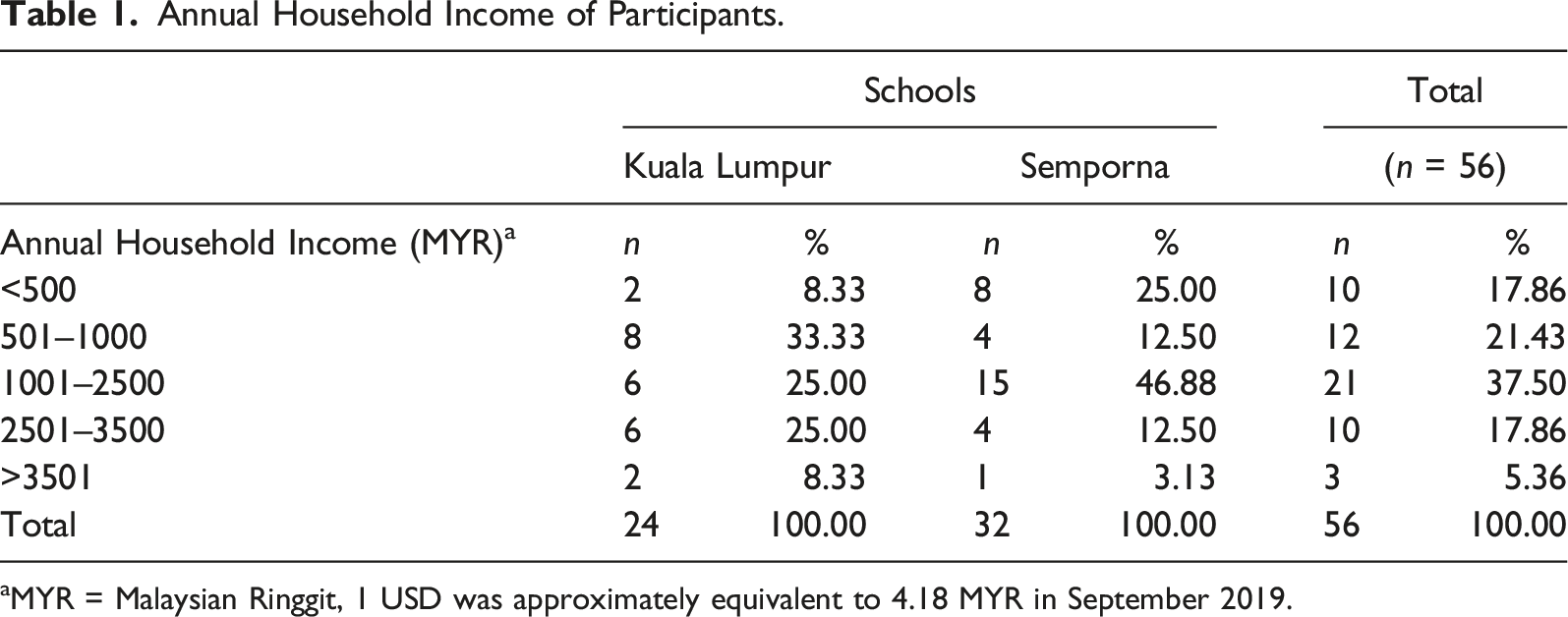
aMYR = Malaysian Ringgit, 1 USD was approximately equivalent to 4.18 MYR in September 2019.
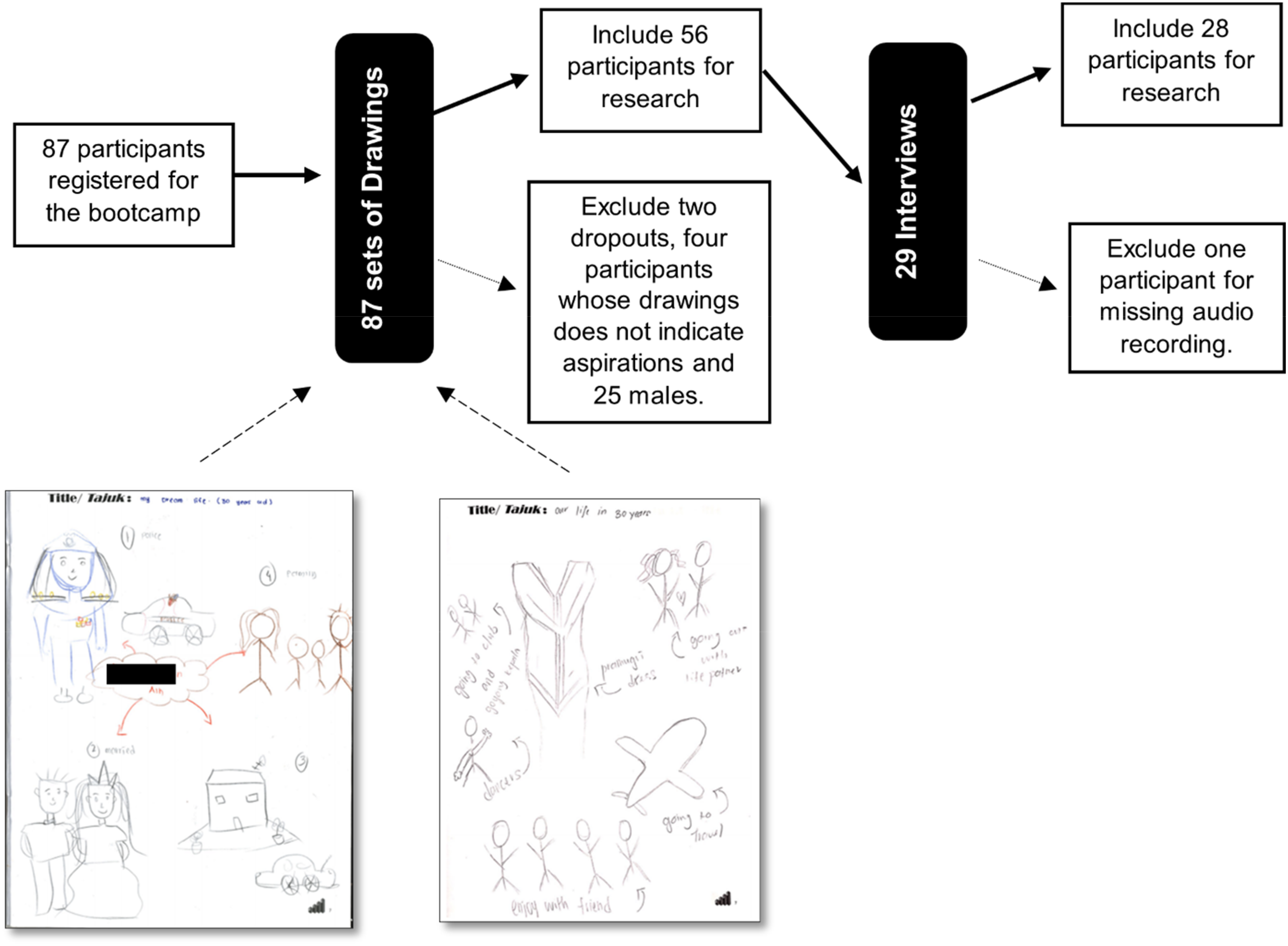
An Overview of the data collected and analysed for this study.
These students participated in a six-day entrepreneurship boot camp held at their school in 2019 to learn the skills necessary to plan and design their own business from scratch. Institutional ethics permissions were obtained before sending invitations to the teachers. Prior parental informed consent was collected. The first and fifth authors were involved in preparing this boot camp, research design and ethical clearance.
Data Collection
Each participant received a booklet containing blank pages for drawing under the instructor’s instructions at the boot camps. Then, volunteering participants were interviewed five to seven days after the programme for us to understand the drawings in-depth. The instructors and interviewers were trained by the first author prior to the boot camp to ensure the integrity of the data collected.
Drawings
For the first five days of the programme, participants were given 30 minutes to express themselves through drawing. Each day featured a different topic intended to reflect the participants’ perception of their current life and future aspirations, highlighting different SCCT components and their influencers. Specifically, “My Current Self” was linked to personal variables and self-efficacy beliefs to describe how one perceives oneself. Under the topic “My Dream Life at 30 Years of Age,” participants portrayed their aspirations for the future. “My Daily Meals” provided an insight into their socioeconomic situation; for instance, what they ate revealed what they could afford. Peer and role model influences can be suggested from the topics “My Friends” and “People I Admire”. Participants were reminded that the goal of this activity was not to produce aesthetically skilled drawings but to enable further understanding, and they were encouraged to draw outside and beyond the topic of entrepreneurship.
Drawings allow researchers to interpret adolescent’s sentiments, thoughts and perceptions on a particular subject in a non-confrontational environment without maintaining eye contact with them; thereby lowering the power hierarchy (Einarsdottir et al., 2009). The drawings aimed to give participants agency and paint a more nuanced depiction of their lived realities, which were previously overlooked, rejected or silenced (Literat, 2013). Participants were not required to immediately explain their drawings as we would prefer to provide them time to think and enable them to build ideas in stages (Angell et al., 2015); hence, the interviews were conducted after the programme.
Semi-structured Interviews
Twenty-nine participants volunteered to be interviewed individually by interviewers who received training from the first author (M.N), an Associate Professor with vast experience working with and conducting mixed methods and qualitative studies with marginalised populations. All participants spoke either Malay or English and could choose which language would be used for the interview. The semi-structured interviews lasted between 18 and 72 minutes, beginning with a self-introduction, then explaining their imagined future in relation to their drawings, which typically included their career aspirations (ECA and non-ECA) with further probing from interviewers, who inquired about their family background and parental occupation. The interview’s goal was to reflect on their drawings, working through possible meanings and the relationship between them and their future aspirations (Clarke & Holt, 2017) by exploring how the elements in the drawings build a holistic narrative of the participant’s career exploration journey towards their future aspirations. Although an interview guide was developed to extract the aforementioned information, interviewers were encouraged to loosely adhere to the guide and adapt each interview to the participant’s five drawings. Throughout the interview period, the interviewers had to be mindful and explore the underlying narrative leading to each participant’s aspirations to ensure that their responses were not influenced by the programme. Due to a missing audio recording of the interview, one set was rejected.
Data Analysis
Quantitative Analysis
The second (J.W.) and third (K.N.) authors coded and identified a list of aspired careers from the drawing on the theme “My Dream Life At 30 years old” independently and would add more to the list based on subsequent interviews. This stage of coding the interviews likens the emergent analytic coding (Haney et al., 2004) used for analysing drawings. Then, the two lists will be cross-checked (1) between the two co-authors and (2) also with the interviews, subsequently into a list. Both co-authors are researchers at a university: J.W. is an experienced quantitative researcher, and K.N. has prior experience in qualitative research. In each analysis stage, we consulted the programme team for information about what transpired during data collection and throughout the boot camps. Prior to the boot camps, M.N. instructed them on the data collection methods and informed them of the research objectives. The differences were discussed for any discrepancies between the coders until a final decision was reached. The coded careers were transformed into an objective measure using the International Socioeconomic Index of Occupational Status (ISEI) (Ganzeboom et al., 1992). For participants who listed multiple aspired careers, the mean score was computed.
Using Rstudio software version 4.0.5, J.W. compared ISEI scores for gender and urban/rural differences. An example of how the analysis was conducted can be seen in Figure 2. Participant D32 drew two career aspirations – teaching, which carries an ISEI score of 69 and restaurant owner, which carries an ISEI score of 49. In their interview, they explicitly mentioned two additional career aspirations – lawyer (ISEI = 85) and bakery owner (ISEI = 48). The mean ISEI for participant D32 was the average between these four scores, 62.75. Process of career coding from the drawing and interview, and calculation of mean ISEI score for participant D32 (rural).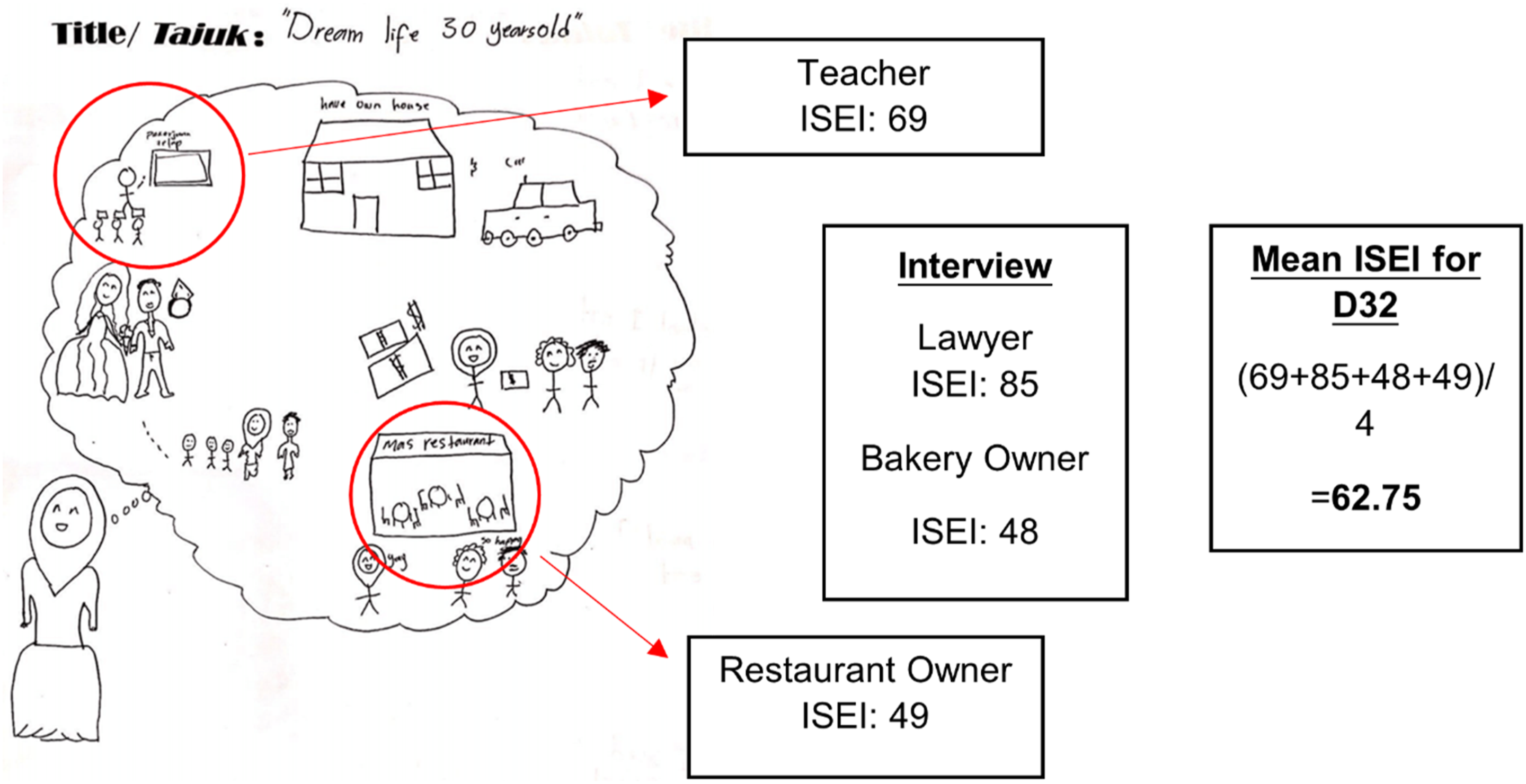
Qualitative Analysis
To compare qualitative data between groups, we used a qualitative comparison approach to inductive thematic analysis (Braun & Clarke, 2006; Lindsay, 2019), analysed in six stages using the framework outlined by Braun and Clarke (2006): (1) the interviews were transcribed verbatim in Malay or English and reviewed for accuracy. M.N., J.W. and K.N. were involved in the analysis, with M.N. guiding the process. J.W. and K.N. became familiarised with the data by reading it repeatedly and gaining a sense of the overall picture. As urban Malaysians, they recognised that their social identity and experiences shaped their approach and kept self-reflective journals to remain mindful of their biases and assumptions. During meetings with M.N., they discussed their presuppositions, experiences, and rationales, which fostered critical evaluation of their interpretations and ensured personal assumptions were absent (Morrow, 2005); (2) thematically coding the data using an inductive approach. To minimise biases, the order of the data sets was shuffled before coding (Lindsay, 2019); (3) they searched for potential themes and sub-themes, which; (4) they reviewed with the corresponding coded extracts and the entire data set together with M.N.; (5) refined the specifics of each theme and the overall emergent story to define and name the final themes. For each, relevant key group differences were defined; and (6) the main themes and the key group differences are presented in the Results section.
Results
Quantitative Analysis
To determine meaningful differences in ISEI scores between rural (RYW) and urban (UYW) young women, an independent t-test was conducted. There is no ISEI score differences between UYW (58.553 ± 12.370) and RYW (58.424 ± 9.217), t (54) = .045, mean difference [MD] = .128, 95% confidence interval [CI][-5.651, 5.907], p = .965).
Our participants mentioned a range of one to five careers with a median of two (113 mentions). See Appendix A (Table A1) for full details – briefly, RYW and UYW pursued different careers. RYW were more willing to take on manual and government-related jobs as well as small-scale entrepreneurship. UYW displayed preferences for creative, non-traditional jobs and jobs that required more investment.
Qualitative Analysis
Interviewee’s Characteristic
Profile of the Interviewees.
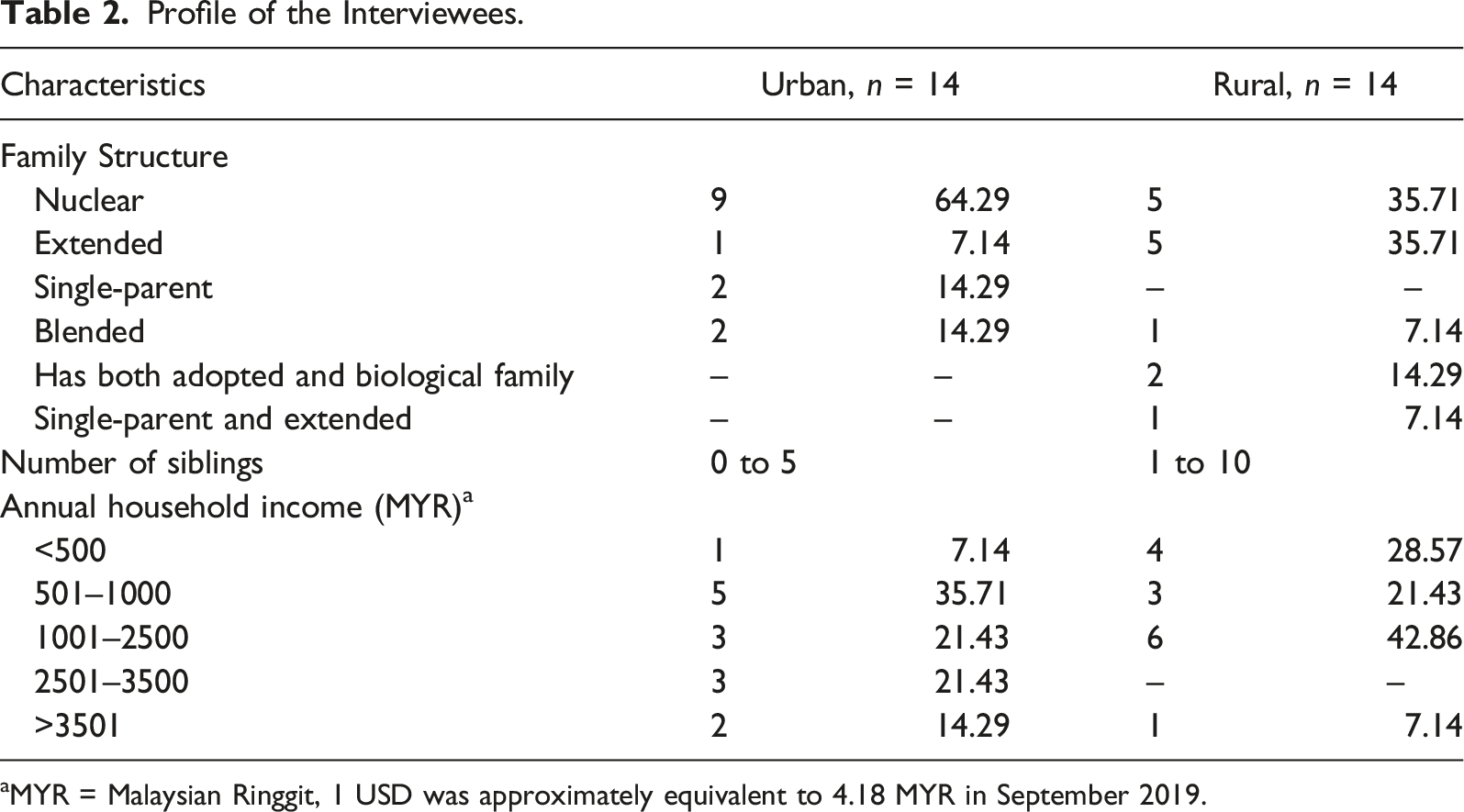
aMYR = Malaysian Ringgit, 1 USD was approximately equivalent to 4.18 MYR in September 2019.
Inductive Thematic Analysis with Qualitative Comparison Approach
Overarching Theme, Themes, Sub-themes and Representative Quotes.
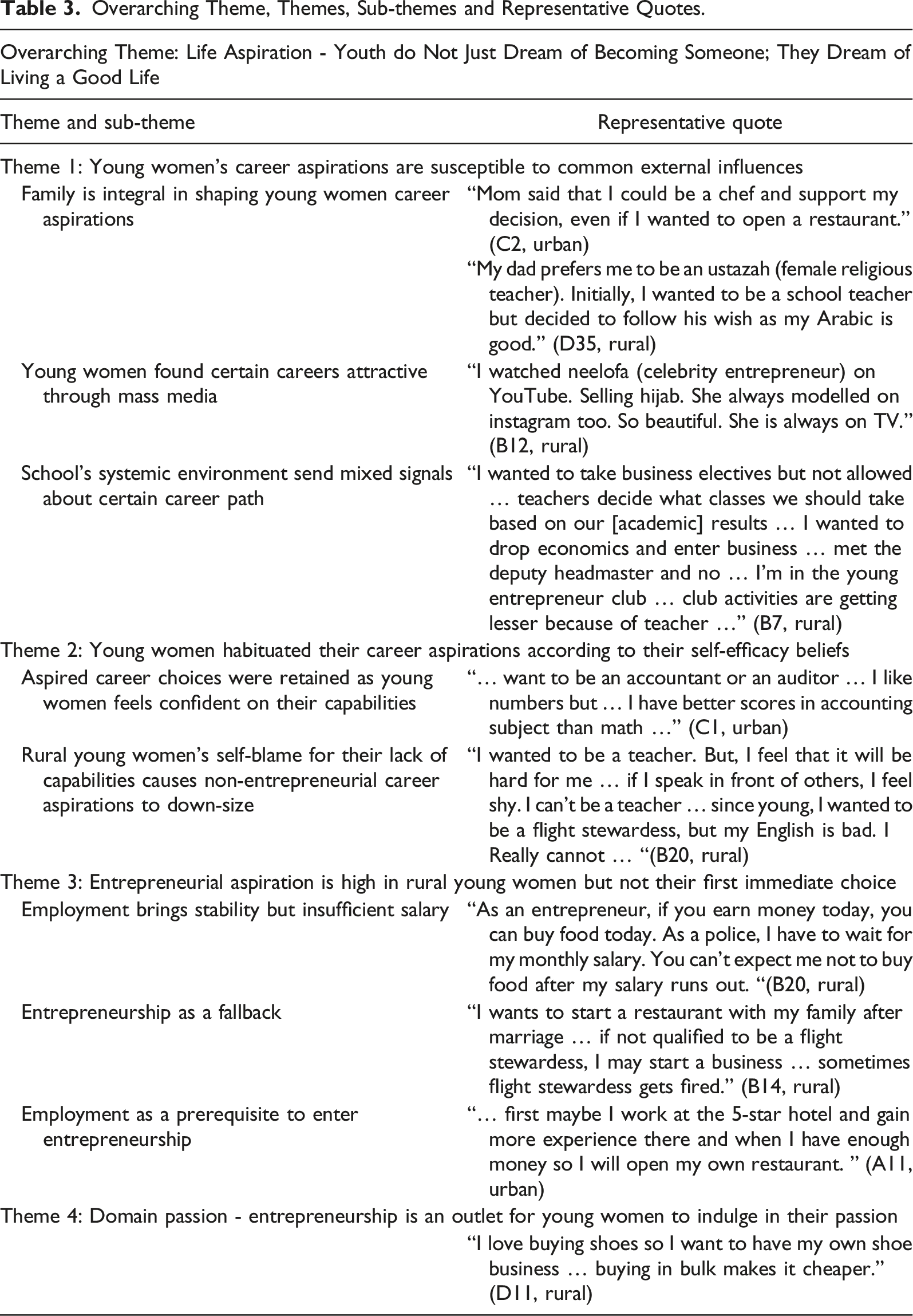
Throughout the four themes, there is one overarching theme: “Youth do not just dream of becoming someone – they dream of living a good life”. Participants often discussed what constitutes a “good life” when discussing their “My Dream Life At 30 Years Old” drawing. Career aspirations are part of this larger picture and a means to actualise it when they are expected to be married and capable of providing for their family while fulfilling their religious needs. They also expressed their materialistic desire for wealth, property and vehicles. This revealed a common desire for a comfortable existence: B16 (Rural): I want to be successful with my own car and house. My life will be comfortable with it. Then, I want to be rich enough to give my parents money. I want to get married and be a teacher at that time!
While there are rural-urban commonalities, there are slight differences in scale: UYW tend to envision a more luxurious future. “C17” (Urban) mentioned that she wants “a huge house with a swimming pool and many cars … wants to travel around the world …”. However, it is unknown whether participants believed their career choice would lead to the life they desired.
Our first theme describes that there were common external factors that impacted young women’s career aspirations, regardless of it being ECA or non-ECA, which are: (1) family, (2) school and (3) mass media. First, family played a significant role in their aspirations. They viewed family members as career role models who introduced them and nurtured their interest in different occupations, such as entrepreneur, baker, lawyer and teacher. As a result, participants gained easy access to realistic career information, more so for RYW. Over half of our participants mentioned family members or relatives who are or have been entrepreneurs, especially for RYW, which directly and indirectly affected youth’s entrepreneurial will and self-efficacy beliefs. “B16” (Rural) gained entrepreneurial and relevant experience through participation in the family business, which is more common among our rural youth. However, the realistic view of entrepreneurship had caused several UYW to be disinterested after witnessing the hardship of family members “encountered difficult customers” and “lacked work-life balance”. Besides being a career role model, family members’ opinions matter to young women. Their family affirmed their career choices, reinforcing their resolve to achieve them. However, they expressed that they would respect and feel obligated to follow their family’s expectations if their family members discouraged their aspired career choices in favour of better or more prestigious options – for example, through sentiments like “My dad wants a doctor, a police and a teacher among his children”. They generally received mostly supportive feedback regarding their decision to pursue entrepreneurship, with a small number of UYW reporting parental opposition, with fixed employment having “a constant and stable salary” among the reasons.
The school environment represents both a constraint and an enabler in young women’s career aspirations. They received various career exposures from school activities, such as career day, entrepreneur club, and police cadet club. Students were not restricted from participating outside academic classes, but they had limited freedom to pursue their desired subject electives. In Malaysia, until 2020 1 , fourth-year high school students (16-year-olds) were sorted into art and science streams, where each is further differentiated, offering different subject combinations (Shahali et al., 2017). These arrangements were based on the student’s academic performance instead of their interest. Teachers discouraged our participants from enrolling in their desired subject electives because they believed that academically gifted students should be enrolled in STEM or equivalently “prestigious” subjects. Furthermore, participants found certain careers attractive through social media influencers and celebrity professionals from mass media. For example, Jack Ma, Neelofa (a successful “hijabi” entrepreneur in Southeast Asia), and James Charles.
Since childhood, our participants' career aspirations changed as they developed a sense of identity and began considering careers with a smaller gap between themselves and that identity. Self-efficacy beliefs are part of that identity; hence, young women evaluate career choices based on their confidence in particular skills. Although RYW and UYW changed career aspirations for reasons such as incompetence (e.g., “not having good enough results”) or a shift of career interest, RYW were more pessimistic about it. They (compared to their urban counterparts) blamed themselves for their perceived incompetence, leading them to choose another career that is both attainable and believed to match their current identity. Rarely are efforts to overcome their supposed shortcomings acknowledged in the transcripts.
Our third major theme, “Entrepreneurial aspiration is high in rural young women but not their first immediate choice”, highlighted how ECAs and non-ECAs are not always mutually exclusive, thus motivating our decision to categorise career aspirations as such. When comparing non-ECA and ECAs, many prefer the former, particularly among RYW who perceived entrepreneurship as a side business or fallback if they could not attain employment. The rationale of being a part-time entrepreneur is the belief that one’s monthly employment income may be depleted before the next arrives. Hence, they need a side business to bridge the spending-income gap and alleviate the constraints imposed by a limited salary. Even if they demonstrated a strong entrepreneurial interest, they preferred to pursue their aspired career first. “B14” (Rural) worked with her mother in her fish-selling business and expressed an interest in expanding it into a seafood restaurant but only as an after-marriage or backup plan. Besides, most participants stated that they would not immediately begin their business. They prefer to be employed (full- or part-time) prior to starting the business to “earn the business start-up capital” and “accumulate relevant experience”. In contrast, the desire to have a side business for UYW was nearly non-existent. Entrepreneurship was perceived as a full-time commitment by those who expressed entrepreneurial interest, regardless of whether it was their first or backup choice.
The last theme depicted that entrepreneurial interest does not necessarily stem from entrepreneurial passion, as most participants indicated that their interest originated from their passion towards certain products or hobbies, which can be termed domain passion. Entrepreneurship seems to be a medium for them to indulge in other life interests, such as “C10” (Urban) wanting a boutique as “[she] likes to draw designs and do stitching”.
Discussion
In this section, we explore how the paper’s findings contribute to knowledge, policy, and practice. This study aimed to examine the complex formation of aspirations among young Malaysian women and how rural-urban contexts influence their perception of these aspirations. Quantitatively, the drawings indicated no urban-rural disparities in career aspiration levels, but both groups had clear preferences for certain careers. The interviews were then used to explain the conflicting drawing findings. Although both groups showed some overlaps in their list of aspired careers (Appendix A), it was evident that the career exploration journey underlying that list differed for UYW and RYW. Furthermore, the themes and sub-themes uncovered from the interviews showcased how entrepreneurial and non-entrepreneurial careers relate as well as the urban-rural differences in their perspectives on entrepreneurship. Most strikingly, rural youth displayed more self-blaming tendencies, which eventually can lead to choosing careers of lower occupational prestige than their urban counterparts.
We first examine the study’s contributions to the body of knowledge surrounding youth career aspirations. Though drawings in data collection have been used in the past, we propose that they be used even more in contexts with adolescents and young people – particularly in situations where participants are asked to “imagine” or conceptualise possible futures that are abstract. Our youth projected a vision of a ‘good life’ based on their local, situated understandings of well-being (Appadurai, 2004). Aspirations were rarely solitary, constituting an aspirational repertoire beyond educational and career aspirations (Baillergeau & Duyvendak, 2022). Their life aspirations can relate to the future well-being of their present and prospective families, consistent with the Asian norm of fulfilling familial obligations, among others (Croll, 2006). Career aspirations were also a trajectory towards achieving other life aspirations, e.g., being rich and comfortable. This, we seek to investigate its development process and the influence of rural-urban contexts.
Career aspirations are closely linked to vocational interests, as youth self-select situations and environments (i.e., careers) that enable them to fulfil their interests. Though lacking significant urban-rural differences in career aspiration levels, our results continue that discussion by showing that differing vocational interests exist between the groups, echoing gender differences in career interests as per Howard et al. (2011) and Wicht et al. (2021). RYW favoured traditional government careers. Conversely, creative-based careers and careers requiring higher investment were favoured by UYW. We have a few postulations from the interviews that may explain these results.
The SCCT (Lent et al., 2002) assumptions align with the qualitative findings that young womens’ career exploration journeys were subjected to the influence of their self-efficacy beliefs and outcome expectations. While growing up, these two cognitive components interact dynamically with individual (e.g., domain passion, skills), contextual (e.g., family, school, urban-rural context, mass media) and behavioural (e.g., decision to retire or retain career choices) factors, thereby shaping their aspirations. First, family influences were prominent in our young women’s career choices, regardless of it being non-ECA or ECA. They sought their family’s support and internalised their family’s expectations into their career decision-making. Learning events, particularly vicarious learning, were made possible when family career or entrepreneurial role models gave them career-related insights and experience, enhancing their self-efficacy beliefs and outcome expectations (Austin & Nauta, 2016; Lent et al., 2002).
Interestingly, parental opposition to an entrepreneurial endeavour and the negative effect of role models were only seen in UYW’s narratives. We hypothesise that the positive response from rural families was due to the prevalence of micro-entrepreneurship in rural areas, given that most of the RYW had entrepreneurial family members. Possible explanations include the fact that rural areas have a higher rate of poverty and issues associated with unemployment and underemployment (Farmer et al., 2006; Thiede et al., 2017), requiring necessity entrepreneurship (Shepherd et al., 2021). Our result strengthens the discussion regarding the crucial role of family in overcoming gender underrepresentation in non-traditional careers (Sáinz & Müller, 2018), though family could also instil gender-compliant occupational preferences in young women.
Mass media and school gave our participants broader career exposure (Archer et al., 2014; Zipin et al., 2015). Media influenced career aspirations by making specific careers appealing through TV shows and featuring prominent professionals, while schools accomplished that by hosting career- and entrepreneur-related events and club activities. Combining these two results, schools could consider tracking their past student’s academic and career outcomes to create role models for their students as Allen and Collisson (2020) showed that the role model effects are stronger if the role model has similar backgrounds. However, schools must avoid ignoring students' genuine career preferences in favour of promoting “acceptable” career paths, despite Malaysia’s emphasis on STEM as a means of national advancement (Shahali et al., 2017). Schools should focus on nurturing students' interests in specific career paths at an earlier stage; otherwise, students might underperform at later stages if their interests are not aligned with their academic course, which would be detrimental to Malaysia’s aspiration to be a developed nation in the long run (Köller et al., 2001).
While RYW had comparable career aspirations, the interviews revealed a concerning theme centred on self-blaming tendencies. Since childhood, rural and urban youth were continuously in the career exploration stage, where they aspired to (or rejected) specific careers and converted their aspirations into action plans (Hart, 2016). This is common as youth gradually form habituated aspirations that fit their current estimation of possible futures (Zipin et al., 2015). When asked about their “retired” aspired career choices, UYW mostly expressed a change of career interest and saw certain career paths as ‘not for me’ but rarely presented negative sentiment attributed to a lack of competency. Zipin et al. (2015) postulated that political “meritocratic” propaganda indirectly breeds self-blaming and self-excursing thinking in less powerfully positioned individuals.
Compared to UYW, RYW fell into the ‘less powerfully positioned’ category, as they came from various family dynamics and had a relatively higher number of siblings with lower family SES backgrounds. Nonetheless, the lack of economic capital is less likely to cause aspiration failure directly, but the values and predisposition within the family affect its effective conversion into other relevant capital (Fuller, 2009; Hart, 2016). From there, we may determine how the urban-rural environments may influence our participants' self-efficacy beliefs, outcome expectancies, and, in turn, their ambitions via their families and other social factors (Archer et al., 2014; Yates et al., 2011). With impaired self-efficacy beliefs and outcome expectations, RYW may have internalised each failure and acquired self-blaming tendencies, leading to aspiration downsizing instead of exerting effort to achieve their original aspiration (Dalton et al., 2016).
Furthermore, our youth who showed entrepreneurial interest based their business idea on their passion for activities in a particular domain. Domain passion is a target-specific passion, that a specific domain is the origin of one’s affective experiences and the target toward which one is motivated to fulfil a persistent effort (Milanesi, 2018). The domain is represented by leisure-time activities that are undertaken as hobbies. Domain and entrepreneurial passion activate a dual feedback process in which domain passion fuels and is fuelled by entrepreneurial passion (Milanesi, 2018). Through the narratives of our youths, entrepreneurship seems to be a medium by which they can pursue their domain passion professionally. In a way, it can be implied that youth should be encouraged to develop skills outside their academic prowess. The skills and hobbies they practised during leisure time could be monetised in the future, be it primary or side income.
Nonetheless, given a choice between entrepreneurship and employment, most youth prefer the non-entrepreneur career path, especially in RYW, with entrepreneurship as a side business or as a fallback option, implying that viable careers within their means might not generate enough necessary income, especially “poorer” rural areas as per Farmer et al. (2006). They did not make an effort to become full-time entrepreneurs or pursue higher-paying careers, as they valued the certainty of a consistent monthly income. Since most youths listed multiple career aspirations, it makes sense that rural-urban participants exhibited similar career aspirations. However, RYW may doubt their ability to execute it. Drawing from Dalton et al. (2016), disadvantaged youth with comparable aspiration levels are more susceptible to stringent external constraints because they would optimally exert less effort to achieve their aspirations because their lower wealth reduces the marginal benefits, creating a behavioural poverty trap. Despite their strong entrepreneurial interest and capabilities, rural youth who saw entrepreneurship as a secondary option continue to aspire for their dream careers – Zipin et al. (2015) note that doxic aspirations can coexist with the more ‘realistic’ habituated aspirations. Even so, youth realistically set employment as a prerequisite to start a business, to amass economic resources and pertinent competencies, demonstrating the critical nature of employment stability for RYW. UYW either expressed a lack of entrepreneurial interest or perceived entrepreneurship as a full-time commitment, demonstrating their belief in their ability to survive on a single source of income. As discussed earlier, they likely have greater access to family capital (Hart, 2016) and are thus better positioned to rebound from setbacks (Yates et al., 2011).
There are several limitations to this study. Our participants were self-selected into an entrepreneurship training program, which probably biased their responses to include elements of entrepreneurial interest. In our effort to mitigate this influence, interviewers were reminded of this possibility and were encouraged to probe for more insights into the young women’s aspirations. During the stages of familiarisation and coding of the interviews, the second and third co-authors noted possible influences in the reflexive journals and discussed them with the other authors until a decision was made. As a disclaimer, we do not imply our results are exclusive to young women, as we lack young male participants to investigate gender differences or exclusivity due to this. Nonetheless, the data offers a unique opportunity for an in-depth investigation of female youth aspirations while assessing contextual differences.
Implications for Policy and Practice
Given the significance of social influences, our study highlights the importance of investing in role-model interventions, especially for oft-deprived rural youths. Such interventions positively influence youth and parent aspirations as well as students’ educational attainment (Chiapa et al., 2012), highlighting the effectiveness of role model interventions in strengthening individual (and peer) capacity for aspirations. Next, our findings on the self-blaming psychological loop among rural youth highlight the need to invest in psychosocial development to increase self-efficacy, especially in schools (Wiederkehr et al., 2015). Youth evaluate their ability to undertake various tasks using emotional and physiological cues based on evaluative judgements from their teachers, school counsellors and other significant adults, and equipping teachers with effective social persuasion techniques can enhance young people’s self-efficacy in school (Butz & Usher, 2015; Joët et al., 2011). Moreover, while women do not lack the capacity to aspire, they tend to struggle to enter the labour force: structural issues that perpetuate gender inequality in the labour market persist. Hence, policy interventions should shift from placing the responsibility on women to increase their aspirations to identifying and removing structural and cultural barriers.
Rural youths tend to perceive entrepreneurship as compensating for the lack of employment income, which may not necessarily boost economic growth or personal wealth. To reduce reliance on informal work and necessity entrepreneurship, we recommend context-specific interventions and policies that create decent-paying jobs. This study highlighted evidence that rural adolescents should have access to educational interventions that boost innovation and expose them to different career paths to avoid necessity entrepreneurship. Studies have shown that policy interventions that invest in entrepreneurial prerequisites, such as human capital, increase innovation (Webb et al., 2010). While some countries have implemented intervention programmes (e.g., India’s National Rural Employment Guarantee Act), we demonstrate that stable (low-skilled) employment is not enough if poor households need to find supplementary income sources. Thus, governments must evaluate employability and fair wage policies. Schools and universities, which have traditionally “prepared” youths for labour markets, must be more active in ensuring that their curricula meet students' social and economic needs.
To advance these conversations in the academic community, researchers can attempt to replicate and expand our research question to include young men in their study to explore generalisability. We also hope future researchers can tackle the issue of self-blaming mentality in rural youth by developing and testing the efficiency of such targeted intervention programmes. Studies that enable bridging these research gaps will benefit developing countries in the long run by steering interested parties to put in targeted efforts to achieve poverty eradication efficiently.
Conclusion
Youth life and career aspirations are formed by spheres of social experiences, primarily from family members, influenced by sociodemographic and individual-related factors. These contributing factors are intricately connected, resulting in an aspirational outcome unique to the geographical background of the individual. Rural environments provide a different set of exposure than urban environments, which may explain why urban and rural female youth make different career preferences. Although both have similar levels of career aspiration, interviews with rural youth revealed elements of self-blame that resulted in them choosing subsequent careers of lower occupational prestige, supposedly within their capabilities. Significantly, our study divulges the differential rural-urban perceptions towards the linkage between entrepreneurial and non-entrepreneurial career aspirations and provides policy implications for rural/low-income youth development through participatory policymaking. Holistic development interventions that reflect the theoretical complexities of aspirations and address structural barriers and constraints are needed.
Footnotes
Acknowledgments
Melati and Sam are Assistant Professors of Economics and Research Affiliates at MIT Sloan School of Management. Kirjane has previously worked for the Rapid Youth Success Entrepreneurship (RYSE) Program at Asia School of Business. Please address all questions to Jia Wei, Email:
Declaration of Conflicting Interests
The author(s) declared no potential conflicts of interest with respect to the research, authorship, and/or publication of this article.
Funding
The author disclosed receipt of the following financial support for the research, authorship, and/or publication of this article: This work was supported by the Citi Foundation [Grant ID: G-IDS-20218546].
Ethical Clearance
This study had received ethical clearance from the Asia School of Business Institutional Review Board (ASB-IRB-2019-2).
Data Availability Statement
The data that support the findings of this study are available from the corresponding author upon reasonable request.

Notes
Appendix
Occupations Chosen by Participants. Note. Asterisks (*) reflect the top five career aspirations. “Entrepreneur” is not given an ISEI score since participants did not indicate the nature of their business idea. This table shows the percentages within each group with the same aspired career choice: 12.50% out of 24 urban girls wish to be a teacher versus 53.13% out of 32 rural girls.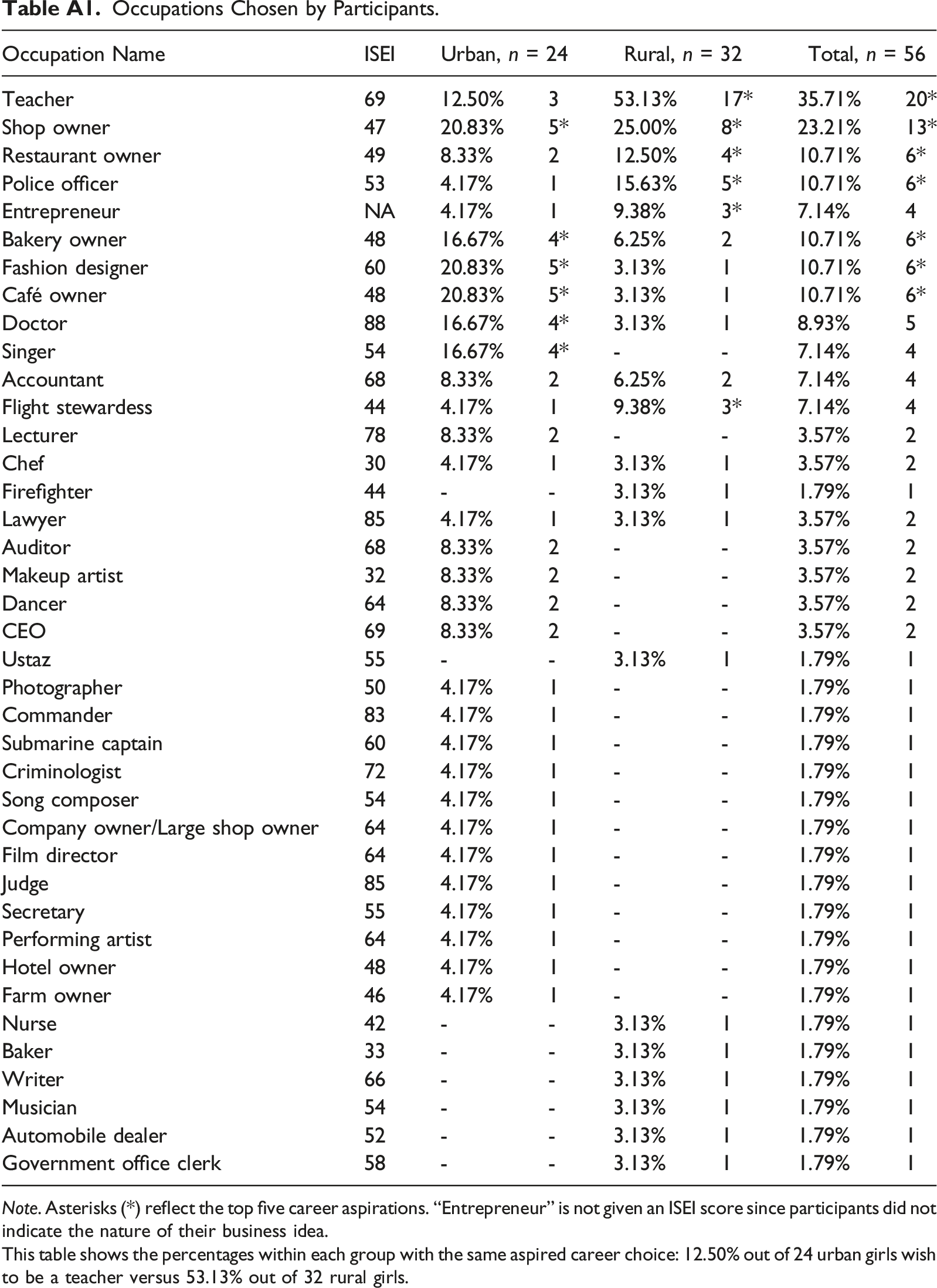
Occupation Name
ISEI
Urban, n = 24
Rural, n = 32
Total, n = 56
Teacher
69
12.50%
3
53.13%
17*
35.71%
20*
Shop owner
47
20.83%
5*
25.00%
8*
23.21%
13*
Restaurant owner
49
8.33%
2
12.50%
4*
10.71%
6*
Police officer
53
4.17%
1
15.63%
5*
10.71%
6*
Entrepreneur
NA
4.17%
1
9.38%
3*
7.14%
4
Bakery owner
48
16.67%
4*
6.25%
2
10.71%
6*
Fashion designer
60
20.83%
5*
3.13%
1
10.71%
6*
Café owner
48
20.83%
5*
3.13%
1
10.71%
6*
Doctor
88
16.67%
4*
3.13%
1
8.93%
5
Singer
54
16.67%
4*
-
-
7.14%
4
Accountant
68
8.33%
2
6.25%
2
7.14%
4
Flight stewardess
44
4.17%
1
9.38%
3*
7.14%
4
Lecturer
78
8.33%
2
-
-
3.57%
2
Chef
30
4.17%
1
3.13%
1
3.57%
2
Firefighter
44
-
-
3.13%
1
1.79%
1
Lawyer
85
4.17%
1
3.13%
1
3.57%
2
Auditor
68
8.33%
2
-
-
3.57%
2
Makeup artist
32
8.33%
2
-
-
3.57%
2
Dancer
64
8.33%
2
-
-
3.57%
2
CEO
69
8.33%
2
-
-
3.57%
2
Ustaz
55
-
-
3.13%
1
1.79%
1
Photographer
50
4.17%
1
-
-
1.79%
1
Commander
83
4.17%
1
-
-
1.79%
1
Submarine captain
60
4.17%
1
-
-
1.79%
1
Criminologist
72
4.17%
1
-
-
1.79%
1
Song composer
54
4.17%
1
-
-
1.79%
1
Company owner/Large shop owner
64
4.17%
1
-
-
1.79%
1
Film director
64
4.17%
1
-
-
1.79%
1
Judge
85
4.17%
1
-
-
1.79%
1
Secretary
55
4.17%
1
-
-
1.79%
1
Performing artist
64
4.17%
1
-
-
1.79%
1
Hotel owner
48
4.17%
1
-
-
1.79%
1
Farm owner
46
4.17%
1
-
-
1.79%
1
Nurse
42
-
-
3.13%
1
1.79%
1
Baker
33
-
-
3.13%
1
1.79%
1
Writer
66
-
-
3.13%
1
1.79%
1
Musician
54
-
-
3.13%
1
1.79%
1
Automobile dealer
52
-
-
3.13%
1
1.79%
1
Government office clerk
58
-
-
3.13%
1
1.79%
1