




Abstract
The current study focused on the effect of assessment methods on estimates of gender differences in interests across Holland’s themes. College students (121 women, 76 men) rated their interests in Holland-based activities and occupations using Likert-type scales, and they also completed a card sorting assessment of Holland interests using occupation-based items. Gender differences were consistently observed for realistic and social interests with the magnitude of the observed gender differences varying by measure type. A Gender × Measure interaction accounted for 33% of the variance observed in interest scores: Occupation-based scales produced larger differences than activity-based scales, and the card sorting assessment produced larger gender differences than the Likert-type rating scales. Therefore, the choice of interest measure used in career counseling may influence the extent to which gender affects the career decision-making process, which may be particularly important when exploring nontraditional career choices for women and men.
Making career-related decisions, such as choosing a major, is an important developmental task associated with being a college student. At most colleges, career assessments are used to assist students who are engaged in this process (Gasser, Larson, & Borgen, 2007). These assessments often take the form of self-report interest measures based on Holland’s (1959, 1997) theory of vocational personality themes. Gender differences in interest measurements are among the largest observed in psychological research (Lippa, 1998, 2005; Su, Rounds, & Armstrong, 2009; Zell, Krizan, & Teeter, 2015). In fact, the issue of gender differences in interests is relevant because interests predict important life outcomes (Stoll et al., 2017) and because women continue to be underrepresented in certain fields, including science, technology, engineering, and mathematics (STEM; Hyde, 2005). In the present study, we examined how various Holland-based interest assessment methods influence the magnitude of observed gender differences in interests.
Holland’s (1959, 1997) themes are often used in career counseling to represent clients’ interests: realistic (R), investigative (I), artistic (A), social (S), enterprising (E), and conventional (C). A hexagon or circumplex represents the interrelations between the themes ordered clockwise RIASEC (Holland, Whitney, Cole, & Richards, 1969), and the degree of similarity between any two of the themes is inversely proportional to the distances between them. These six themes have influenced the development of interest measures (Campbell & Borgen, 1999) and can be used to classify occupations (Gottfredson & Richards, 1999; Muchinsky, 1999). By matching an individual’s interests to environmental occupational characteristics by Holland theme, it is possible to identify potential career choices (McDaniel & Snell, 1999).
There is a long history of research suggesting that men and women have different interests. Men tend to have higher levels of interest in the realistic (d = .84) and investigative (d = .26) themes, while women tend to have higher levels of interest in the artistic (d = −.35), social (d = −.68), and conventional (d = −.33) themes (Su et al., 2009). The largest gender differences emerge along Prediger’s (1982) people-things dimension, which corresponds with Holland's social and realistic themes, respectively, while the opposite is true for interest in things-oriented occupations and activities. In fact, the gender difference between interests in people versus interest in things has been cited as one of the 10 largest gender differences based on a metasynthesis by Zell, Krizan, and Teeter (2015).
These gender differences in interests affect career decisions. The distribution of gender in the labor market is unequal across the six RIASEC themes (Reardon, Vernick, & Reed, 2004). Higher percentages of men are found in realistic and investigative occupations, while women are observed more frequently in social and conventional occupations. However, research on gender differences in RIASEC scores has focused on either structural hypotheses related to Holland’s model or mean-level score differences without fully examining method effects on these gender differences.
Vocational interests can be measured in a multitude of ways, and these different methodologies may affect gender differences in interests. For instance, some interest inventories, such as the Unisex Edition of the American College Testing (ACT) Interest Inventory (UNIACT, ACT, 2009) and Interest Profiler (Lewis & Rivkin, 1999), assess interests by asking individuals to report their likes and dislikes in activities, while others, like the Vocational Preference Inventory (Holland, 1985), require individuals to assess their interests in occupations. Still others, such as the Self-Directed Search (SDS; Holland, Fritzsche, & Powell, 1997) and the Strong Interest Inventory (SII; Donnay, Morris, Schaubhut, & Thompson, 2005), involve both methods. Notably, occupational titles activate gender-based stereotypes, which could contribute to the large gender differences that exist in interests and career decisions (DiDonato & Strough, 2013; Harmon & Conroe, 1976; Messick, 1995). Referencing how individuals consider the extent to which their occupations align with their self-concepts in regard to gender, Gottfredson (2002, p. 91) proposed that “public presentations of masculinity-femininity will be most carefully guarded,” while the “fulfillment of activity preferences ... will be of least concern.” Taken together, activity ratings alone may be less connected to self-concept and gender-based stereotypes than occupational titles.
Nevertheless, while activities may be less associated with gender, activity-based assessments still have implications for men and women’s career decisions. Einarsdóttir and Rounds (2009, p. 305) suggested that “gender differences cannot be dealt with by using activity items…instead of occupational titles.” Indeed, large gender differences still emerge when using activity-based scales (Su et al., 2009), suggesting gender stereotypes are still activated with activity items.
Beyond comparing activity- and occupation-based items, vocational interests can be measured with Likert-type scales, card sorting procedures, and other methods. Comparisons between Likert-type scales (or inventoried/measured interests) and card sorting procedures (or expressed interests; Slaney, 1978; Slaney & Slaney, 1981) are limited. Inventoried/measured interests’ approaches provide different Holland codes when compared to card sorting procedures (Bikos, Krieshok, & O’Brien, 1998), which is especially interesting considering that women considered more nontraditional careers when using a card sorting procedure rather than Likert-type scales (Cooper, 1976). Furthermore, inventoried/measured interests are considered to reflect vocational interests, while expressed interests measured via card sorting procedures are akin to decisions and likelihood of action, representing vocational intentions (Silva, 2001). Expressed interests reflect proximal and specific occupational decisions, which would likely reflect similar gender biases observed in occupational decision-making compared to Likert procedures (Silva, 2001), with men gravitating toward realistic careers and women gravitating toward social careers (Su et al., 2009).
The Present Study
Given the gender-based disparities that exist in regard to occupational decision-making (e.g., Hyde, 2005) that have lifetime implications for monetary acquisition and other life outcomes (Stoll et al., 2017), it is essential to consider a nuanced approach to examining how interest assessments may propagate the gender differences in vocational interests. As such, the primary objective of this research was to evaluate the presence and magnitude of gender differences in interests as a function of assessment method. Consistent with past research (e.g., Lippa, 1998; Su et al., 2009), we predicted that the largest gender differences in interests will emerge in the realistic and social themes, although we also expect gender differences in investigative, artistic, and conventional themes as well, albeit at a lower magnitude. Also, in light of previous research on item type and response format (e.g., Harmon & Conroe, 1976; Kuder, 1977; Prediger & Cole, 1975), we predicted that the methods used to assess the RIASEC themes will impact the magnitude of observed gender differences in interests, especially for the realistic and social themes. We also predicted that the magnitude of gender differences would be larger for occupational titles than for activity-based items due to the potential impact of gender-role stereotypes and other factors that may influence the expressed preferences of occupations of men and women (DiDonato & Strough, 2013; Harmon & Conroe, 1976; Messick, 1995). We also predicted that the magnitude of these gender differences will be larger when individuals must choose between occupations in the card sorting procedure compared to when being able to rate their preferences for each title independently with a Likert-type rating format because the process of choosing between occupations more closely mimics the actual career decision-making process (Silva, 2001): Ranking occupations will enhance gender stereotyped behavior in order to maintain self-concept, whereas being allowed to rate occupations individually will allow for more flexibility in gender expression.
Method
Participants
A sample of 213 college students from the participant pool of the Psychology Department at a large Midwestern university participated in this study; however, 16 participants were removed due to excessive (more than 20%) missing data (Schlomer, Bauman, & Card, 2010) or being univariate or multivariate outliers (cf. Tabachnick & Fidell, 2013), leaving a total of 197 participants (121 women and 76 men) with complete data. The mean age of the participants was 19.5 years. Of these students, 49.3% reported being enrolled as freshmen, 25.9% as sophomores, 16.7% as juniors, and 7.4% as seniors (1% did not report their academic standing); 2.3% self-identified as Black/African American, 2.8% as Asian/Asian American, 1.8% as Latinx American, 1.4% as Native American/American Indian, and 91.7% as White/European American.
Measures
Activity ratings
The Interest Profiler (Lewis & Rivkin, 1999) contains 180 activity-based items with 30 items representing activities in each of the six Holland themes. The assessment tool has been adapted for the current research study by changing the self-scored 3-point scale to a 5-point Likert-type response format, where participants indicate their interest in each activity from 1 (strongly dislike) to 5 (strongly like). Scores were obtained by averaging responses for each of the six Holland themes. A sample item is “Repair household appliances.” The Interest Profiler demonstrated adequate convergent and discriminant validity (Rounds, Mazzeo, et al., 1999; Rounds, Walker, et al., 1999). Coefficient α reliability estimates have ranged from .95 to .97 (Lewis & Rivkin, 1999) in past studies and ranged from .92 to .96 with a mean of .94 in the current study.
Occupational ratings
The original 180 job titles selected by Armstrong, Allison, and Rounds (2008) to create the Alternate Form Public Domain Scales from the O*NET database (Peterson, Mumford, Borman, Jeanneret, & Fleishman, 1999) were used to create measures of occupational interests for each of the six Holland themes. Participants responded to each item using a 5-point Likert-type scale, where participants indicate their interest in each occupation from 1 (strongly dislike) to 5 (strongly like). A sample occupation is “Athletic Trainer.” Coefficient α reliability estimates have ranged from .92 to .95 (Armstrong et al., 2008) in past studies and ranged from .88 to .94 with a mean of .91 in the current study.
Occupational rankings
Participants were asked to complete a card sorting procedure with the set of 180 occupations that were utilized in the occupation rating interest measure. In order to make the task more manageable, these cards were grouped in three different sets of 60 cards with one occupation on each card: Participants only ranked 60 occupations at one time. The 180 occupations were divided into the three sets based on the order in which the occupations appeared in the Likert-type rating activity. The first 60 occupations presented in the rating booklet comprised Set A, the second 60 occupations comprised Set B, and the last 60 occupations comprised Set C. All six Holland themes were equally represented in each of the three sets (i.e., 10 items per Holland theme per card set). For each set of 60 cards, students were instructed to sort the cards according to an interest-based continuum resembling a bell-shaped curve with a response range from −5 (strongly dislike) to +5 (strongly like), which resulted in 11 different categories of interests: Participants were given sheets of paper to write their responses, which allowed them to rank three occupations at the ± 5 values, four occupations at the each of the ±4 and ±3 values, seven occupations at each of the ±1 and ±2 values, and 10 occupations at the 0 value, which was at the center of the normal distribution. Fewer occupations could be placed in the extremes, and more occupations could be placed near the middle of the distribution. Reliability estimates for the occupation scales using the sorting procedure ranged from .77 to .89 with a mean of .85.
Procedure
After signing up for the study, participants came to the lab where they reviewed and signed informed consent documents. In order to minimize participant burden in the laboratory, they were first asked to complete the card sorting exercise and a demographic questionnaire. Then, participants were given a packet containing the activity and occupational Likert-type interest rating scales that they were to complete outside of the laboratory. Participants returned the packets within one week, after which they were awarded two research credits for their psychology courses.
Analyses
Scores obtained on the three sets of RIASEC interest scales (i.e., activity ratings, occupation ratings, and occupation sorts/rankings) were standardized to facilitate the comparison of results across measures. A repeated measures multivariate analysis of variance (MANOVA) was used to examine the overall effect of gender and the Gender × Measure interaction across the three sets of RIASEC interest scales: Each of the sets of six RIASEC measures was entered as one level of the measure effect, and gender was entered as the independent variable. Gender differences in interests were also examined using three MANOVAs performed separately, one for each of the three sets of interest measures. The overall multivariate effect of gender differences in interests across the sets of RIASEC measures was assessed using Wilks’s L. Univariate F tests for each RIASEC scale were also examined to determine their contributions to the multivariate effect of gender, using a Bonferroni correction (p = .05/6 = .008) to correct the statistical cutoff for the multiple univariate comparisons within each set of interest scales. The η2 statistic, which measures the proportion of the total variance that can be attributed to the independent variable, was used to measure effect sizes. Cohen (1988, pp. 284–288) provides interpretive guidelines for the η 2 statistic of .01 for small effects, .059 for medium effects, and .138 for large effects. Testing the assumptions of the analysis, we determined that there were no issues with extreme skewness (Kline, 2005; >|3.0|), kurtosis (>|8.0|), or multicollinearity (Tabachnick & Fidell, 2013; r < .90).
Results
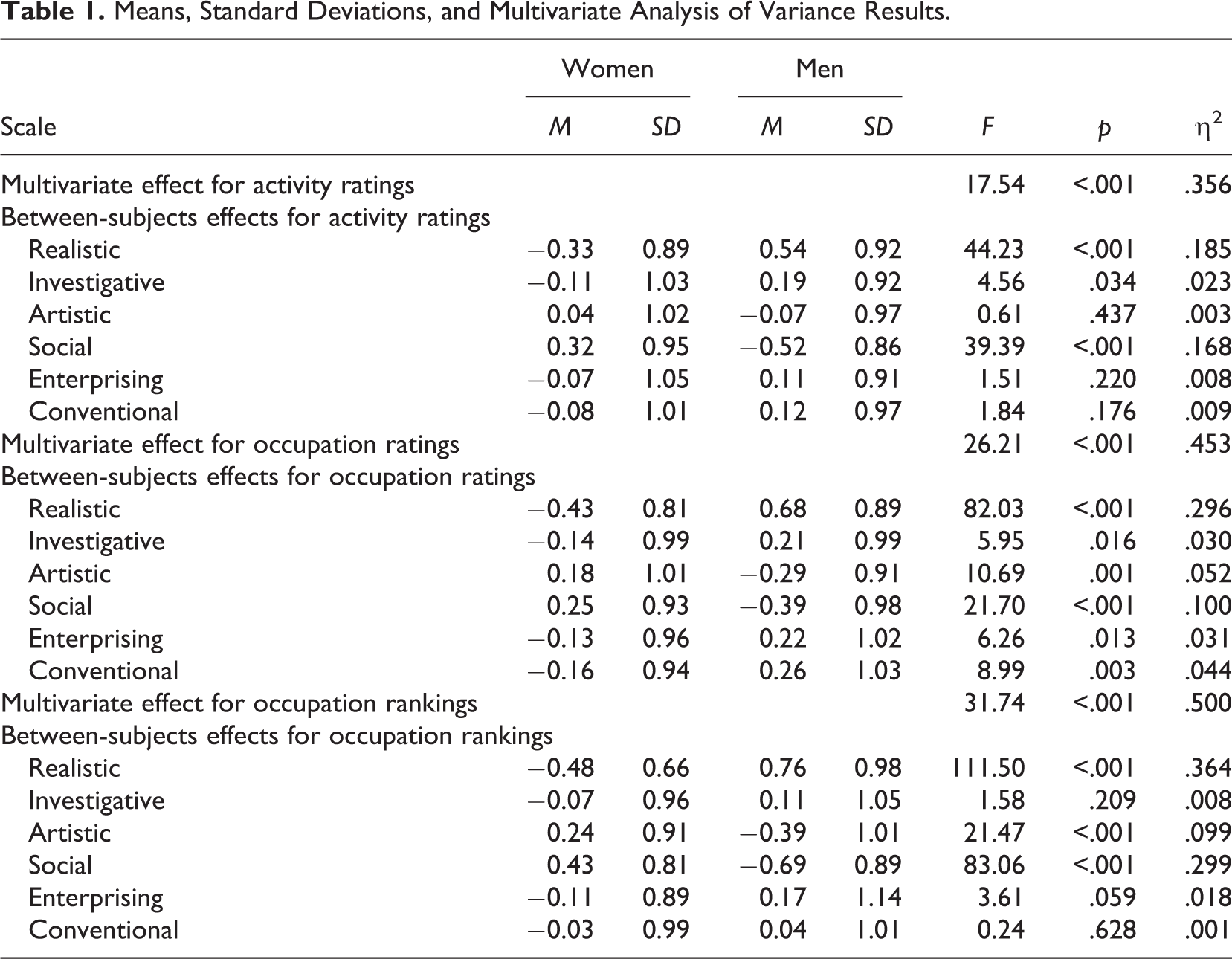
The means and standard deviations for the scales are in Table 1, and correlations between scales are in Table 2. The multivariate between-subjects effect of gender was statistically significant, F(6, 190) = 31.45, p < .001, η2 = .499, indicating that approximately 50% of the overall variability in interest scores across the three sets of interest measures can be attributed to gender. However, there was a significant Gender × Measure interaction, F(12, 184) = 7.63, p < .001, η2 = .332, indicating that approximately 33% of the overall variability in interest scores across the three sets of interest measures can be attributed to an interaction between gender and type of interest measure. The effect of assessment type was not statistically significant, F(12, 184) = 0.40, p = .96. These results show that gender interacts with measurement type to influence interests rather than measurement type alone affecting results. To clarify this effect, we examined the gender differences in interests obtained on each of the three sets of measures individually.
Means, Standard Deviations, and Multivariate Analysis of Variance Results.
Correlations Between Scales.
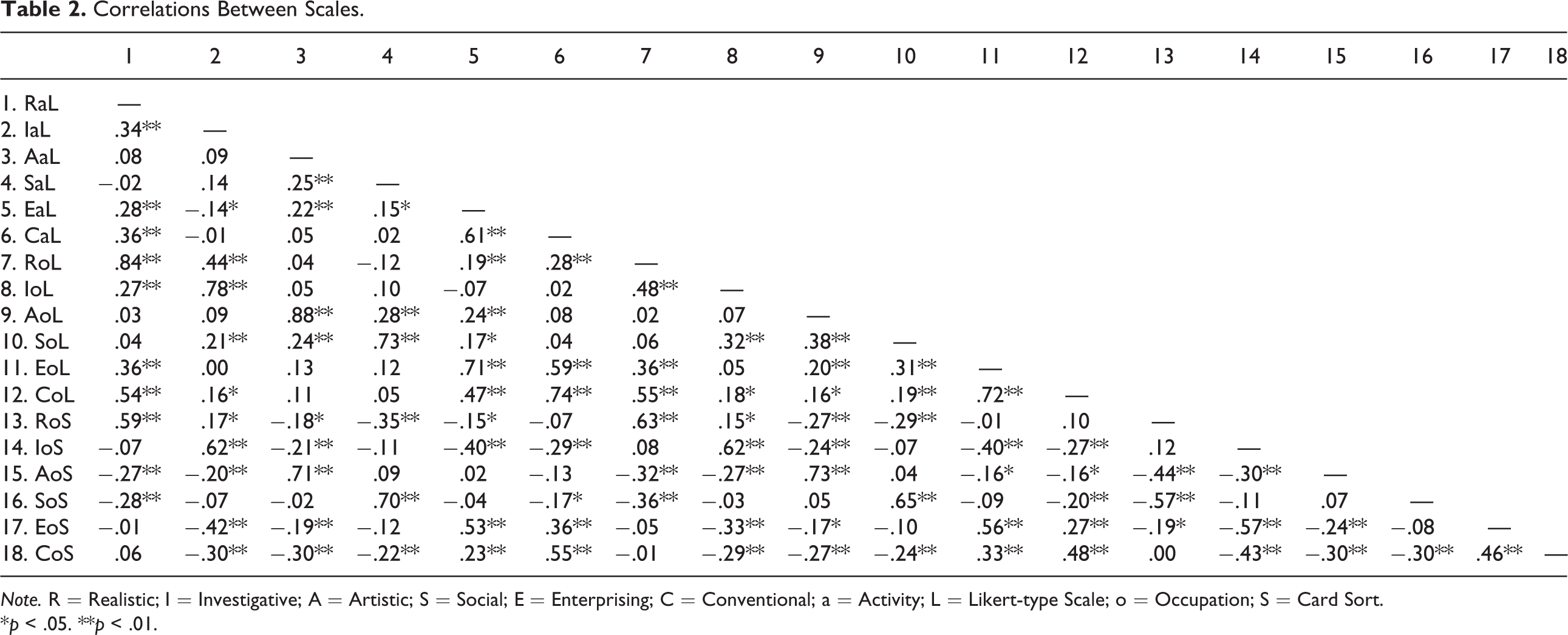
Note. R = Realistic; I = Investigative; A = Artistic; S = Social; E = Enterprising; C = Conventional; a = Activity; L = Likert-type Scale; o = Occupation; S = Card Sort.
*p < .05. **p < .01.
The effect of gender for the activity Likert-type ratings was significant, F(2, 190) = 17.54, p < .001, η2 = .356, indicating that approximately 36% of the overall variability in interest scores using activity ratings can be attributed to gender. As predicted, men reported higher interest in realistic activities than women, F(1, 195) = 44.23, p < .001, η2 = .185. Also, as predicted, women reported higher interest in social activities than men, F(1, 195) = 39.39, p < .001, η2 = .168. After the Bonferroni correction for multiple comparisons, the gender differences on the investigative, artistic, enterprising, and conventional activity interest scales were not statistically significant.
The effect of gender for the occupational Likert-type ratings was significant, F(2, 190) = 26.21, p < .001, η2 = .453, indicating that approximately 45% of the overall variability in interest scores using occupational ratings can be attributed to gender. Men had higher interest in realistic occupations than women, F(1, 195) = 82.03, p < .001, η2 = .296. Women reported higher interest in social occupations than men, F(1, 195) = 21.70, p < .001, η2 = .10. Although not specifically predicted, women reported higher interest in artistic occupations than men, F(1, 195) = 10.69, p = .001, η2 = .052, and men reported higher interest in conventional occupations than women, F(1, 195) = 8.99, p = .003, η2 = .044. The gender differences on the investigative and enterprising occupational interest scales were not significant.
The effect of gender for the occupational card sort rankings was significant, F(2, 190) = 31.74, p < .001, η2 = .50, indicating that approximately 50% of the overall variability in interest scores using the card sorting procedure can be attributed to gender. Men reported higher interest in realistic occupations with the card sorting procedure than women, F(1, 195) = 111.50, p < .001, η2 = .364. Women reported higher interest in social occupations in the card sorting procedure than men, F(1, 195) = 83.06, p < .001, η2 = .299. Additionally, women reported higher interest in artistic occupations using the card sorting procedure than men, F(1, 195) = 21.47, p < .001, η2 = .099. The gender differences on the investigative, enterprising, and conventional activity interest scales were not significant.
Figure 1 presents a summary of the multivariate and univariate effect size estimates for gender obtained across the three sets of RIASEC interest measures. The pattern of results across the three sets of measures clarifies the overall Gender × Measure interaction identified in the repeated measures MANOVA. As predicted, the overall effect of gender was larger for occupation-based rating scales, accounting for approximately 45% of the variability in interest, more than what was observed for activity-based rating scales (36% of variability). Also as predicted, the largest gender difference was observed with the card sorting procedure with gender accounting for approximately 50% of the overall variability in interests. Overall, this pattern was mirrored for the realistic scales. Although not predicted, this patterns was also observed for the artistic scales, but the magnitude of the effect was smaller than for the realistic theme. For the social theme, the largest gender difference was with the card sorting measure; however, the occupational ratings produced a smaller gender difference than did the activity rating scale. This result for the occupational ratings does not match the predicted ordering of gender differences in assessment methods that was demonstrated for the realistic and artistic scales.
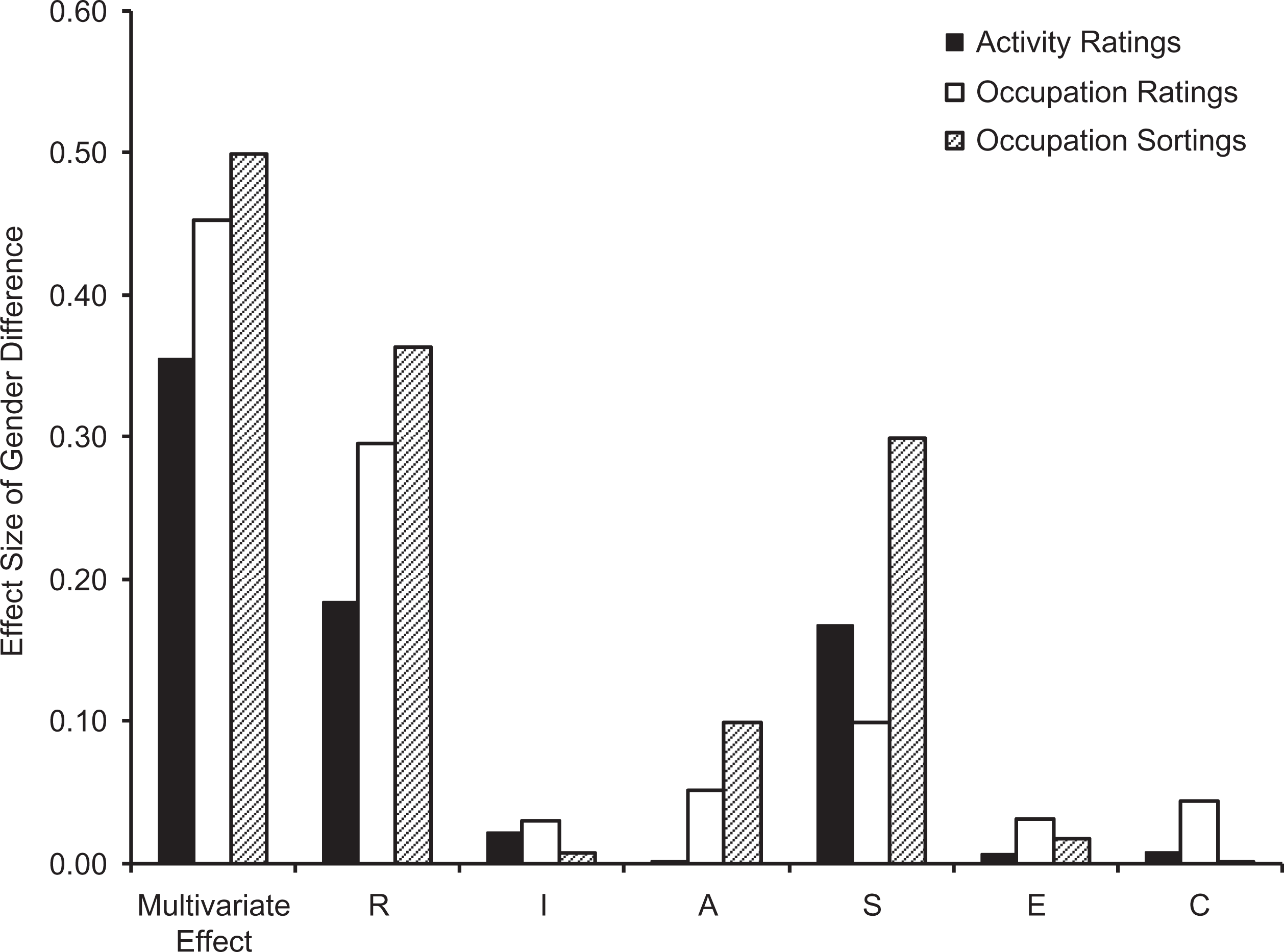
Summary of multivariate and univariate measures of the effect size of gender differences in interests across assessment methods. R = Realistic; I = Investigative; A = Artistic; S = Social; E = Enterprising; C = Conventional.
Although the magnitude of gender differences was found to vary as a function of assessment method, it is also important to note that all three assessment methods produced significant gender differences, and the overall interest profile was fairly consistent across methods. While Figure 1 illustrates the magnitude of the gender differences, Figure 2 demonstrates the direction of the gender difference for each of the six RIASEC themes, which was calculated for each scale by subtracting the average interest score for men from the average for women. Negative values indicate that men had higher interest than women for that theme, and positive scores indicate that women had higher interest than men. The overall pattern of results illustrate that gender differences are largest on the realistic and social themes. Furthermore, although the magnitude of observed gender differences in interests can be affected by the choice of assessment method, the underlying effect of gender on interests was persistent across methods.
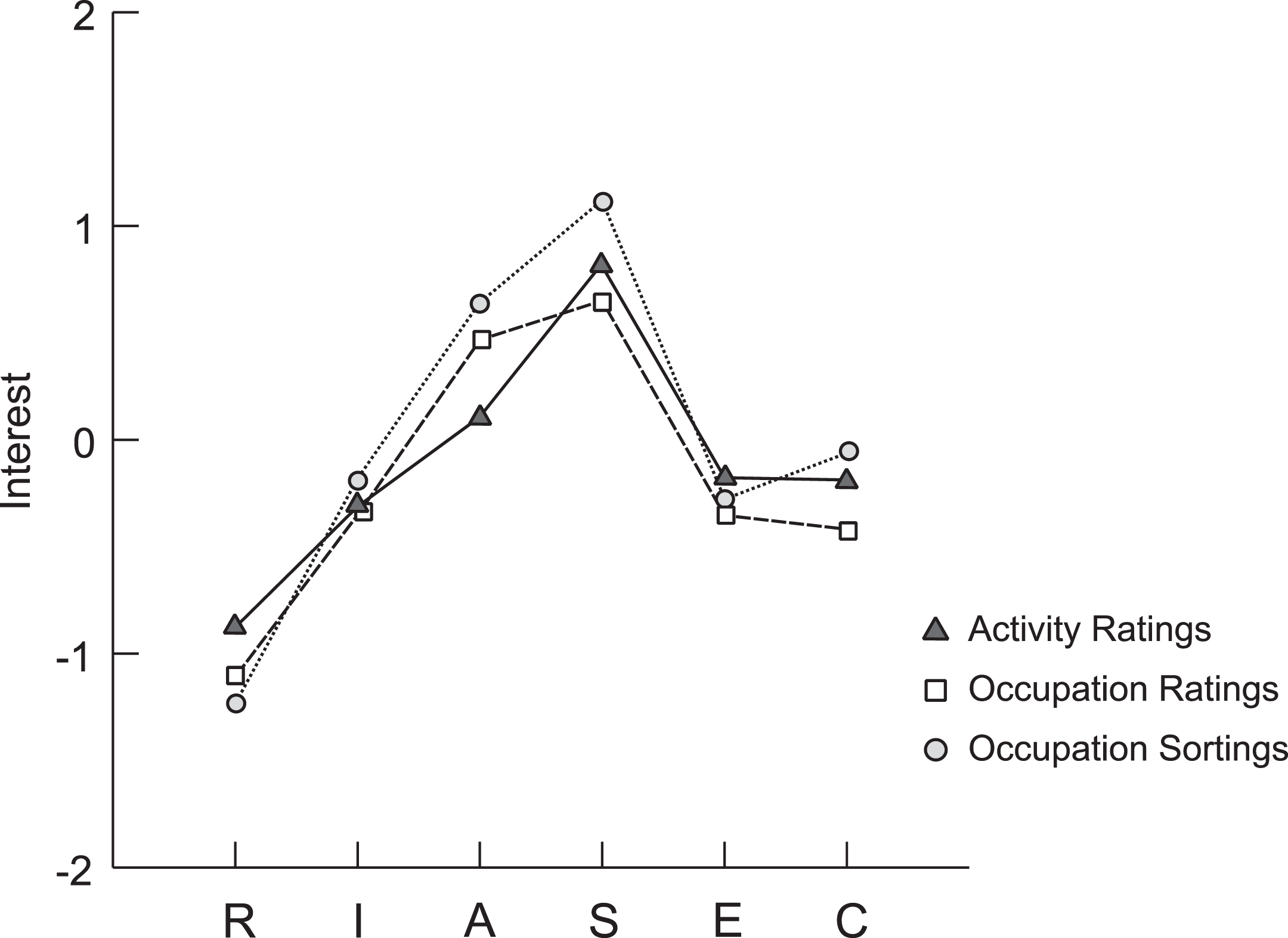
Interest profiles representing gender differences across the six RIASEC themes based on activity ratings, occupational ratings, and occupational sorts based on transformed means. R = Realistic; I = Investigative; A = Artistic; S = Social; E = Enterprising; C = Conventional.
Discussion
The primary purpose of the current study was to investigate the extent to which assessment method affected the observed gender differences in interests (Lippa, 1998; Su et al., 2009; Zell et al., 2015). The results of the study indicated that the magnitude of the gender differences in interests was affected by measurement type. Based on past research (DiDonato & Strough, 2013; Harmon & Conroe, 1976; Kuder, 1977; Messick, 1995; Prediger & Cole, 1975; Silva, 2001), our hypotheses were supported: The largest gender differences emerged when using the occupational card sort rankings, followed by the occupational Likert-type scale ratings. The smallest gender differences were found when the activity Likert-type scale ratings were used. Furthermore, we found support for our hypothesis that the largest gender differences emerged along the realistic and social themes. As expected, men had higher realistic interests, and women had higher social interests across all three measurement types. We proposed that smaller gender differences would emerge for the other four RIASEC themes; however, we only found that women demonstrated more artistic interests when using occupational rankings or ratings, and men possessed higher conventional interests than women when the Likert-type scale occupational rating method was used.
In the present study, two key findings have implications for how to interpret observed gender differences in interests. First, the magnitude of observed gender differences in interests, with men showing a stronger interest for working with things and women showing a stronger interest for working with people, was influenced by the choice of assessment method. This Gender × Measure interaction accounted for approximately 33% of the variability in interest scores in the present study. Using rating scales with occupational items produced larger gender differences than ratings scales with activity items, but the largest gender differences were found when a forced-choice format was used with occupational titles. However, it should be noted that this overall effect of assessment method did not eliminate gender differences altogether. Instead, our results suggest there is an underlying effect of gender in the interest assessment process, albeit there is the potential to select interest measures that either reduce or emphasize the effects of gender in the assessment process. These findings have implications both for the choice of interest measure in the career counseling process and for the development of new interest inventories, but these effects must be considered within a broader theoretical framework of the role of gender in the development of interests.
One possible explanation for the observed gender differences in interests is that the socialization factors that influence the development of interests are most salient when students choose between potential career options. Gottfredson (1981, 2002) suggested that gender differences in the perceptions of which occupations are appropriate for men and women are encoded very early in the process of developing a cognitive map of the world of work. Children are constantly flooded with images of what types of careers are acceptable for men and women. These pictures become internalized over time until there becomes an underlying perception of what are appropriately masculine or feminine careers. In the later stages of development in Gottfredson’s model, the cognitive map of occupations becomes more sophisticated as individuals encode information about prestige and their interest in different types of work; however, these perceptions are laid over a gender-based foundation. According to Gottfredson’s model of compromise, gender would become more salient when having to make choices between more and less ideal career opportunities, which is consistent with our finding that gender differences in interests are largest when using a forced-choice assessment format.
One of the primary objections to using occupation-based items for measuring interests is that individuals use their stereotypes of occupations when rating the items (e.g., Kuder, 1977). Individuals may have a limited or distorted understanding of what the occupations involve, making the occupation-based items potentially more bias-prone than activity-based items. The current findings are consistent with this interpretation, although additional research is needed to determine the extent to which gender is in fact a salient factor to individuals when rating the activities and occupations. However, this issue may not be a reason to refrain from using occupation items because there is useful information about the choice process and the stereotypes themselves that may be extracted from occupation-based measures, especially when using a forced-choice format. It is important to note that the magnitude of the observed gender differences increased when individuals had to choose between occupations in the card sorting procedure instead of providing separate ratings of their preferences for each title. Due to the forced-choice format of the card sorting procedure, the assessment process using this technique may be closer to modeling a client’s experience of actually choosing between careers.
Implications for Vocational Research and Career Counseling
Although Su et al. (2009) examined a number of moderators in their meta-analysis of the gender differences in RIASEC interests, they did not examine whether the use of occupational titles or activities affected gender differences. Given that the presence and magnitude of gender differences differed by assessment method in the current study, it could be useful to extend the meta-analysis to differentiate between these two assessment methods. Furthermore, although labor intensive, it is essential that researchers occasionally use interest-based card sorting procedures in their methodologies, especially considering that career counselors could employ sorting procedures to provide a more hands-on and realistic exploration of interests.
Available published interest measures reflect the full range of item types, including measures that use only job titles, such as the Vocational Preference Inventory (Holland, 1985), measures that use only activity items, such as the UNIACT (ACT, 2009), and measures that use a combination of different types of items, including both activities and job titles, such as the SII (Donnay et al., 2005; Harmon, Hansen, Borgen, & Hammer, 1994) and SDS (Holland et al., 1997). Therefore, although researchers and test developers have taken a range of positions regarding gender as a factor in career assessment, there remains both a conceptual and practical impasse regarding how to interpret and work with gender differences in interests when providing counseling services. Our results demonstrate that it is important to recognize that the choice of assessment method has potential implications for the range and types of career choices that will be recommended to men and women but that there are also underlying gender differences, especially along the people–things dimension, that may be relatively stable across assessment method.
In the previous debates over gender bias and interest assessment, Prediger and Johnson (1979) raised the distinction between being able to accurately predict career choices versus being able to expand the range of career options. This difference between predicting career choices, which is often used as validity evidence for interest measures (Armstrong & Rounds, 2008), and the goal of expanding the range of career options has implications for the development and use of less gender-restrictive interest measures (Hackett & Lonborg, 1993). By using an interest measure designed to minimize gender differences in interests, such as the UNIACT (ACT, 2009), it may be possible to help students consider a wider range of nontraditional career choices. Further, while interest-based measures using job titles may accurately predict career choices, they may also reinforce gender stereotypes. While the current results suggest that activity-based assessments may expand the range of career options, it is unclear if this translates into a willingness to actually pursue these career choices, where they may be fall back on more gender-stereotyped preference patterns.
Bartholomew and Schnorr (1994) recommended the careful evaluation of career inventories for gender bias and eliminating sexist language and job titles from measures. They also advocated for career counselors taking an active role in increasing student awareness of societal attitudes, especially those regarding mathematics and science stereotypes. Additionally, they promoted the use of gender-matched role models, positive learning experiences to improve self-efficacy, and the engagement of peer and family support in the career counseling process. Nevertheless, the results obtained in the present study suggest that the choice of measure can influence the magnitude of gender differences in interest for different types of occupations; therefore, it is conceivable that career counselors are utilizing assessments that further propagate occupational stereotypes that reinforce gender inequalities in gender disproportionate occupations, like the STEM fields.
Limitations and Future Directions
Although this study has many strengths, the use of binary terms to describe or reference gender is problematic. Furthermore, the sample used in the current study was drawn from a predominately White/European American population of college students, which may limit our ability to infer that the gender differences in interests observed in the current study are equivalent across ethnic–racial groups. Although gender may represent a core identity across groups, the impact of other career-related barriers may serve to either magnify or obscure the role of gender differences in the career development process. Additionally, there were unequal numbers of men and women in the study. The study should also be replicated with a larger, more diverse sample with attention given to the full range of gender identification to best understand these effects.
Another limitation is that we did not employ counterbalancing in the presentation of assessment types. Because the card sorting activity was somewhat cumbersome and needed to be completed in the lab, we did not counterbalance the order of the presentation of measures. All participants completed the card sorting procedure first, after which they completed the Likert-type activity and occupational rating scales. Furthermore, participants only performed the card sorting procedure with the occupations, whereas they answered Likert-style questions about their interests for occupational and activity items. The presentation of the occupations first for all participants could have affected their response to the Likert questionnaires by having to think critically about how they would rank these occupations compared to other occupations prior to rating their interests. This counterbalancing issue may have increased gender differences found on the Likert-type occupation scales. Future researchers should replicate this study with a true counterbalanced design and where participants are allowed an opportunity to sort activity-based items.
Conclusion
Interest assessment method affected the magnitude of gender differences in interests. The largest gender differences were detected for the realistic and social themes when an occupation-based, forced-choice format was used. This method most closely approximates actual career decision-making, which may partially explain gender disparities in occupations. It is unclear that whether students’ perceptions, such as the relative number of men and women employed in different occupations, are accurate or whether these perceptions, irrespective of their accuracy, are salient predictors of interest ratings. Therefore, future research examining the extent to which gender differences in interests can be tied to gender-role identity and accuracy of ratings may be helpful in clarifying the role of gender in the development of interests and the career choice process.
Footnotes
Authors’ Note
We thank the research assistants of the Identity Development Laboratory at Iowa State University for their assistance in data collection.
Declaration of Conflicting Interests
The author(s) declared no potential conflicts of interest with respect to the research, authorship, and/or publication of this article.
Funding
The author(s) received no financial support for the research, authorship, and/or publication of this article.