




Abstract
School-based day treatment is an intensive mental health service for children with social, emotional, and behavioral difficulties. Research on day treatment is scarce and descriptions of program models are lacking. We used stimulated recall interviews to explore the moment-to-moment processes and strategies of classroom staff in a day treatment program for children in kindergarten and Grade 1 in Canada. Several processes and strategies used by staff emerged from the thematic analysis of the interviews. These included a process of individualized intervention, characterized by a continual and cyclical process of attunement, responsiveness, assessment, and evaluation, using a team-based approach, noticing positives about children, a climate of positive relationships, staff regulating their own emotions, being flexible while also being firm and consistent, and seeing children from a developmental perspective. More specific strategies used by staff (e.g., token economy) also emerged from the interviews. Implications for future research and teacher training are discussed.
Keywords
School-based day treatment programs provide intensive mental health services for children and youth with social, emotional, and behavioral difficulties (SEBD) who are unable to manage in mainstream classrooms. Their difficulties can include (but are not limited to) problems with hyperactivity, lack of concentration, immature social skills, anxiety, difficulty following routines or dealing with changes in routine, and disruptive or aggressive behavior. Children exhibiting these symptoms are at high risk of negative outcomes. They have the poorest school and post-school outcomes (Wagner et al., 2006), with higher rates of arrest, unemployment, substance use, dependence on social assistance, and mental health service use (Mayer et al., 2005). Given the importance of early intervention (McNeil et al., 1999), day treatment provides a window of opportunity to alter developmental trajectories. We describe the moment-to-moment processes and strategies of classroom staff in day treatment programming for children in kindergarten and Grade 1 and present a program model.
How Are School-Based Day Treatment Programs Structured?
Many school-based day treatment programs operate as milieu therapies (“Section 23 Working Group Summary,” 2017). Milieu therapies comprise a wide array of therapeutic activities, sharing in common a focus on delivering interventions within a naturalistic setting (Kaiser, 1993). The entire treatment environment (or “milieu”) is used as a therapeutic agent, including its physical, organizational, structural, and relational components. Also referred to as life space interventions, milieu therapies work with children in the spaces in which their lives unfold (e.g., school), meeting them where they are, and developing fluid interventions that are responsive to the needs of children (Gharabaghi & Stuart, 2013). In the case of school-based day treatment, interventions are delivered in the school environment, with children typically attending specialized therapeutic classrooms for the majority and in many cases, entirety of the school day.
Development Occurs Within the Context of Relationships
Developmental systems theories have illustrated how children’s development is shaped in the context of relationships. Bronfenbrenner’s (1986) ecological model of development highlighted how children exist within a complex array of relational systems at the level of the individual child, family, peer group, school, and community, which interact with each other to influence the course of development. Building on this, Sameroff (1975, 2009) emphasized how these relationships are reciprocal, with the developing child exerting influence on their relationships, just as these relationships exert influence on the child. Developmental cascade models (Dodge et al., 2009) further articulate this process, demonstrating how early experiences of risk factors (e.g., insecure attachment, neglect, abuse, difficult temperament) give rise to subsequent vulnerabilities, which then transact with the child’s environment, either placing the child at greater risk of further experiences of adversity or altering their developmental trajectory toward a pathway of lower risk. Developmental pathways are shaped in the moment-to-moment transactions in the relationships between children and the individuals who make up their social world. From a theoretical standpoint, milieu therapies intentionally create and immerse children in specialized environmental conditions to address unmet developmental needs and alter developmental trajectories.
Child Development Institute Day Treatment Program
The Child Development Institute (CDI) day treatment program provides two therapeutically based classrooms for children in kindergarten and Grade 1 (3.5–7 years of age). The program would be considered a Tier 3 intervention within the multitiered system of support framework. In the jurisdiction in which the study took place, special classrooms have been designated for children who exhibit SEBD and are unable to manage in mainstream classrooms. Although the two classrooms are embedded within a school, it is important to note that they are operated by a children’s mental health agency, and thus focused on treatment and education. Children are referred to day treatment by parents, childcare centers, mainstream school staff, or community health care providers because there is a formal intake process in which program staff meet with and interview children and their parents to assess whether the program is a good fit for the child’s needs. The program has a school-based component and a family counseling component. The school-based component is delivered 5 days a week by two special education teachers, two child and youth workers, an educational assistant (hereafter collectively referred to as “staff“), and a psychologist available for consultation and assessments. The special education teachers are responsible for leading the academic portion of the program, and the child and youth workers are responsible for leading programming focused on social-emotional development. The family counseling component is delivered by a social worker who meets regularly with caregivers to help generalize skills beyond the CDI classroom environment. Staff meet as a team for 2 hr biweekly to review children’s treatment progress under the supervision of the two program managers, both of whom are child and youth workers with more than 20 years of experience providing intensive milieu-based treatment for children and youth. There are typically 12 children per year, divided between two classrooms located on the same site. The typical stay in the program is 1 to 2 years. Generally, children receive approximately the same intensity of intervention; however, the nature of supports provided may vary on a case-by-case basis depending on the developmental needs of each child. The program is not manualized. Rather, staff aim to develop individualized treatment plans for children grounded in behavioral and attachment-based principles of intervention, with a focus on improving school readiness including behavioral regulation, independence, social competence, emotional awareness, and basic academic abilities. The desired outcome is for children to be integrated into mainstream schools.
The school day is divided into two sections (morning and afternoon) separated by a 1-hr period for lunch and outdoor recess. The day begins with a snack and “feelings check-in,” during which staff lead children in a discussion aimed at developing emotional awareness. The remainder of the morning is dedicated to academic instruction, which is based on the Ontario provincial kindergarten and Grade 1 curriculum. In the afternoon, the two classes come together for social skills instruction followed by playtime. This school-based component of the program operates as a milieu therapy, with children attending a naturalistic school environment where staff deliver interventions as children’s lives unfold in the classrooms. Staff work with children toward their treatment goals through moment-to-moment, day-to-day interactions and activities with peers in the classroom.
Current Study and Objectives
Although the CDI day treatment program operates within this general structure, documentation of the specific approach to intervention is lacking, as is the case with day treatment programs generally (Clark & Jerrott, 2012). Little is known about the moment-to-moment processes and strategies used by staff to support and accelerate children’s social, emotional, and behavioral development. This knowledge gap poses a significant barrier to understanding what comprises the school-based day treatment milieu. With a focus on the school-based component of the CDI day treatment program, this study aimed to address this gap by describing the moment-to-moment processes and strategies of classroom staff in day treatment programming for children in kindergarten and Grade 1. In particular, our goal was to understand more about how staff approach their work with children, including their internal thoughts and feelings toward children, reasoning about interventions, and implicit theories of change, rather than focusing on what staff do in their work.
Method
Participants
Both children and staff participated in this study. The children were 11 out of 12 children ages 3.5 to 6 years enrolled in the kindergarten and Grade 1 day treatment program at CDI in Toronto, Canada, during the 2019–2020 school year. All children included in the study were boys, and five out of 11 children were a visible minority. Their time in the program ranged from 4 weeks to 2 years. The staff were two female special education teachers, two female child and youth workers, and one male educational assistant. Four out of five staff were a visible minority. Staff members’ experience working in special education ranged from 2 to 22 years.
Procedure
In the early fall of 2019, staff were interviewed using the technique of stimulated recall (Marland, 1984). During stimulated recall interviews, participants are shown video recordings of themselves engaged in activities pertinent to the research question and asked to recall and describe their thoughts and internal experiences as they occurred on a moment-to-moment basis during the interaction or event. This method was selected as a way to probe the covert, internal processes used by staff in delivering the day treatment program.
Video recordings of staff and children were collected as they completed their day-to-day activities using two iPads set up on tripods in the corners of the classrooms to allow for more than one vantage point. Prior to collecting the video footage to be used for the interviews, a 2-day period of acclimation to the presence of iPads was undertaken in each of the classrooms. Filming took place on either the same day as the interview or the day immediately prior to ensure optimal recall conditions (Elliott, 1986). Filming took place on separate days for each interview, meaning 5 days in the classroom were filmed. The morning period, the time when children enter the classroom at the beginning of the day until lunch (approximately 2.5 hr), was chosen as the segment of the day to be filmed. Filming occurred in the morning period because children spend this time in their “homeroom” class, whereas in the afternoon the two classes typically join and participate in activities together. Given that consent was not obtained to film all children, filming in the afternoon was not feasible as it was not possible to keep the child for whom consent was not obtained out of the frame. As such, the morning period was chosen for filming with this child being moved to the other classroom on days that filming was occurring in his “homeroom.”
Several 5- to 10-minute excerpts were selected to be used for the stimulated recall interviews. Excerpts were selected from each major activity period in the classrooms to create a sampling of video footage representative of a typical morning. Selecting footage across multiple activity periods allowed for interviews with staff to be analyzed for common themes in how they approach their work with children regardless of the specific activity they are engaged in. The activity periods varied slightly between classrooms and days; however, they typically consisted of a morning check-in and snack during which staff and children share how they are feeling with each other, a lesson taught by the teacher with children sitting on the carpet, seatwork, structured playtime (play is constrained to set activities), and free playtime. To accommodate staff’s schedules and also conduct interviews in a timely manner to allow optimal recall conditions, there was a quick turnaround time between filming and interviewing. In four out of five cases, the turnaround time was less than 3 hr (the fifth interview was conducted the morning after filming). As such, excerpts were not able to be reviewed in depth by the researcher prior to the interviews and were chosen quickly based on visual impressions of the quality of the footage while scrubbing through the files in a video editing software. In particular, care was taken to select excerpts during which the focal staff member (i.e., the staff member being interviewed) remained within the frame of the video or was not obstructed by objects or people. There were no focal children and no limitations on what staff were doing during the excerpt (e.g., speaking to the class as a whole, speaking with an individual child, walking around the class, sitting behind children on the carpet observing), so long as they were not on break. On average, 35 to 40 minutes of video was selected for each stimulated recall interview. It is important to note that the specific content of the excerpt (i.e., what children and staff were doing) was not considered to be important for answering the research question, as the focus on the study was more on understanding how staff approach their work across all classroom contexts and content. The video footage was considered to be a way of scaffolding self-reflection for staff on their work with children and was a means to facilitate accessing staff members’ theories of change and reasoning behind their approach on a moment-to-moment basis.
The interviewer (first author) watched the excerpts together with each staff member for the stimulated recall interviews. Five interviews were conducted. Interviews ranged from 82 to 94 minutes and lasted 90 minutes on average. The interviewer was a female master’s-level student in clinical developmental psychology with 5 years of professional experience working at an overnight summer camp and year-round respite program for school-age children with SEBD. In the year prior to conducting the interviews, she spent approximately 3 hr per week observing the day treatment program, and she attended biweekly team meetings. Embedding herself in the program in this way helped to facilitate the development of safe and trusting relationships with staff, a crucial component in conducting research in community settings (Pepler, 2016). Focusing on her relationship with staff prior to beginning the study allowed staff to feel more at ease being filmed and interviewed, which would likely otherwise heighten feelings of vulnerability and be experienced as intrusive and uncomfortable.
At the beginning of each interview, the interviewer explained that the goal was for the staff member to be an investigative partner with the interviewer, both curious about what was happening in the moments captured on video. As they watched the video, staff were instructed to think back to what was going on in their mind at the time of the recorded events. They were asked to stop the video whenever they remembered something they were thinking or experiencing and share those thoughts or experiences. To facilitate conversation and encourage curiosity, the first author also stopped the video at times when a distinct sequence of events or interactions had passed without comment from the staff member (e.g., transition between activities, conversation with individual child, staff observing interaction between children, children off-task, teaching an academic concept). Staff were asked to focus on what they recalled thinking or experiencing as opposed to what they thought about the observed events in the present. Prompting questions were then given, such as “What were you experiencing during that moment?” “What were you thinking when that was happening?” or “How were you feeling as you were observing that?” The video was stopped on average 50 times per interview (range = 30–68), with the staff pausing the video approximately two thirds of the time.
Approach to Analysis
Interview transcripts were analyzed using data-driven thematic analysis (Braun & Clarke, 2006). The two coders were female master’s-level graduate students in clinical developmental psychology. The coders independently examined the interview transcripts. They followed an open coding approach, assigning codes based on what they believed to be relevant to the moment-to-moment processes and strategies used by staff. Codes were determined based on staff’s words and descriptions. The coders compared the codes identified, resolved discrepancies through discussion, and decided upon the codes and themes to be included in the coding scheme. Next, the interviews were recoded to identify additional examples of existing categories and identify any codes or themes that may have been missed in the initial round of coding. Each theme was examined to ensure internal consistency and that categories were conceptually distinct from each other. Reliability was established by means of consensus, whereby the coders reached agreement on the themes and the structure of domains, categories, and subcategories. The research director at CDI at the time (second author) was consulted throughout the analysis.
Results
Stimulated recall interviews prompted discussion of 247 distinct interactions or events. In other words, across five interviews, the video was stopped 247 times. Each staff member discussed on average 49.4 video-recorded interactions or events (range = 30–68). Staff initiated discussion by stopping the video 66.8% of the time. The interviewer initiated discussion of the events or interactions the remaining 33.2% of the time. Staff’s responses were grouped under two overarching domains: (a) individualized intervention and (b) foundational approaches.
Individualized Intervention
Staff described taking an individualized approach to intervention with children based on their learning needs and their unique social, emotional, and behavioral profiles. This process was described as cyclical, constantly evolving as staff develop a deeper understanding of children, respond based on their understanding of the children, test out strategies to help children meet treatment goals, adapt these strategies based on their success, and update their understanding of children. This process is described by the three main categories within this domain: attunement, responsiveness, and assessment and evaluation.
Attunement
Staff spoke about having an understanding and awareness of the needs of children in the classroom. They described being in tune with how children were doing in the moment and across time, both inside and outside the classroom. Five subcategories related to attunement were identified and are described below.
Observation
All five staff described continually observing children as a way to learn about their skills and individual characteristics and become aware of their behavioral patterns. They also discussed observation as a way to gather information to inform their interventions to help children meet treatment goals: For right here, I was thinking, making sure [child] was looking, which I think my eyes are directly on [child] at that moment, so I’m kind of just observing like how he’s doing with the chew necklace, and how his body language is.
Understanding and Awareness of Children in the Moment
All five staff made statements about their process in working with the children that demonstrated perspective-taking or having an awareness or knowledge of a given child’s state of mind in the moment. They also described the experience of empathy, when in addition to taking a given child’s perspective, staff members connected emotionally with or related to the child’s experience in the moment: It’s realizing that in this moment what’s happening right now and in 5 seconds is no longer [child’s] reality and that things are fleeting. It’s that moment of “oh okay, cool. You were happy, now you’re sad, moving right along.
Four out of five staff discussed having an understanding or awareness of the experiences of several children at once in a given moment: It was like tuning in there, tuning in with [staff 1], tuning in with [staff 2], tuning in with [child 1], tuning in with [child 2], the other two are pretty much fine, like [child 3] is genuinely trying to listen to [child 4] and I think [child 5] was also trying to listen too.
Knowing the Child
All five staff discussed having knowledge about individual children. This included knowledge pertaining to children’s individual patterns of behavior; emotional landscape; social skills; developmental, cognitive, or language abilities; likes or dislikes; home-life; and past experiences: I was thinking about his bussing stuff, like his situations on the bus and I was also thinking about how he constantly wants to be first on everything and sometimes that could put [child 1] in like, this “gotta go” mood, or this really aggressive mood; where he’ll forget that his body has to be kind and calm to other people.
Curiosity About What Is Driving Children’s Behavior
All five staff discussed being curious about children’s behaviors and what may underlie them. They described wondering about what is motivating or driving a child’s behavior, looking for deeper meaning in behaviors, or trying to figure out why a child is behaving a certain way: I just reminded myself to pause. I think I just remind myself, “before you just bark at them, just try to figure out what they’re trying to figure out.”
Responsiveness
This category was closely related to attunement. Staff described being responsive to a given child based on their observations, understanding and awareness, knowledge about the child, and hypotheses about what underlies the child’s behaviors. Staff talked about (a) tailoring their approach to meet the needs of individual children, (b) thinking ahead about what might be challenging for children, (c) balancing multiple needs at once, and (d) having to choose when to let issues go and move on. These four components comprise the subcategories of this category and are discussed below.
Tailoring Approach to Meet Children’s Needs
All five staff described adjusting their approach to intervention or their responses to children to meet individual needs or goals. They discussed tailoring their response based on what they know about the child, the child’s abilities or developmental level, or their understanding of the child’s experience in the moment. Staff expressed they try to match their teaching and interventions to children’s developmental level. They described adjusting their expectations of a given child based on their knowledge about the child, their understanding of the child in the moment, and what they determine is realistic with regard to the child’s behavior: “Leave the group” looks a lot different depending on the child, and what the situation happens to be in the moment. It can be a tap on the shoulder, moving the clothes pin up (reinforcement system) or that when it comes to redirection, with [child 1] we use verbal prompts, with “[child 2]. eyes looking (at the teacher)” as quiet as we can.
Balancing Multiple Needs
In addition to tailoring their approach to meet the needs of individual children, four out of five staff described balancing the needs of several children at once and making decisions about how to manage or meet the needs of multiple children: I’m genuinely trying to listen to [child 1], and at the same time I’m trying to keep my eye on [child 2] because he needs so much and because he was still so stuck, so part of me was like, “Okay, we really need to make sure [child 2] is not taking over [child 1]’s space,” while trying to give [child 2] what he’s asking for.
Thinking Ahead
This theme emerged in interviews with four out of five staff. They described thinking ahead about what might be socially, emotionally, or behaviorally challenging for children and being proactive by doing things to give children the best chance at navigating these challenges successfully. Staff also discussed predicting problem behaviors and putting supports in place to divert those behaviors: We would rather guide ahead of time than correct after when it’s going wrong. Things tend to go over more smoothly when we give that piece to them.
Choosing to Move On
Two staff talked of making judgment calls about when to move on. They described considering whether an issue or need should be addressed and choosing to let it go and move on instead: But yeah, I remember thinking “Let this one go so we can just move on and continue the flow,” because the flow is good so far and none of the kids seem to really be upset over it, although I saw [child]; I know he wanted the calendar friend, he was waiting for it.
Specific Strategies
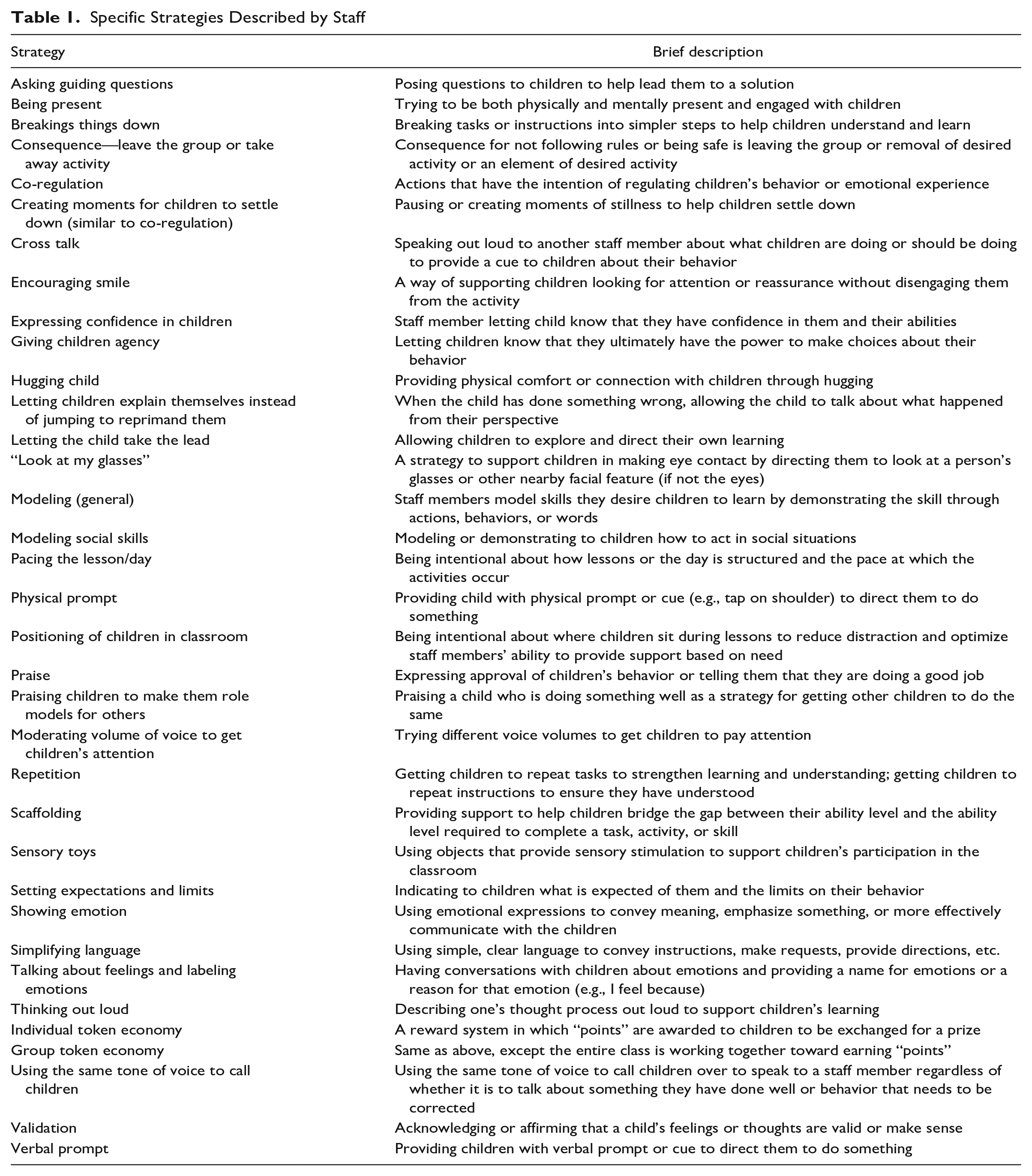
All five staff referred to numerous specific skills and strategies they draw upon in being responsive and tailoring interventions to children. One staff member talked about having these strategies as having a repertoire of tools to choose from in adapting their approach to working with children. The strategies staff referred to are listed in Table 1: You look at your group and you’re never going to have all the answers, we super don’t. Day to day, what we do can completely change at the drop of a hat but knowing that we’ve got 12 tools still in our back pockets cause we’ve done this for a couple years helps.
Specific Strategies Described by Staff
Assessment and Evaluation
All five staff described a reflective process of assessing and evaluating whether their approach is effective in meeting children’s needs and helping children reach treatment goals, both in-the-moment and across time. Staff spoke about testing strategies to determine whether they are effective. They also described taking note of when things are and are not going well, adjusting their approach accordingly. This theme seemed to build upon attunement and responsiveness, such that staff described needing these elements to engage in this process of strategy testing and evaluation: We are playing around with what calms [child] down enough to get him to focus on the lesson that’s being taught in the moment . . . One day he was chewing a piece of paper, and we were like, “This works,” because he’s listening, so like let’s try the chew necklace.
Foundational Approaches
Staff described several processes and strategies that were grouped under the domain of foundational approaches as they play a critical role in supporting the delivery of individualized intervention. There are eight categories included within this domain: team-based approach, noticing positives, a focus on relationships, learning through experience, flexibility, staff regulating their own emotions, being firm and consistent, and developmental perspective.
Team-Based Approach
All five staff described a team-based approach to program delivery. They discussed working with other staff to effectively serve the children. They spoke about being in tune with other staff and having coordinated responses to children. They expressed feeling supported by other staff and providing support to other staff. Staff discussed trusting other staff or being able to rely on them. They described communicating with other staff regularly throughout the day regarding classroom activities and the children: This happens a lot, where I’m thinking about something and [staff] is thinking the same thing and she will address it. That was nice, it was one of those moments where you’re like “Yes, this is why we’re a team.”
Noticing Positives
All five staff described noticing positive things about children throughout the day. They remarked upon noticing when children have done something well, learned new skills, or improved their behavior or ability to function in the classroom over time. Staff conveyed feelings of happiness, excitement, or pride about children doing well in the moment. They described taking delight in changes they have noticed across time. They also discussed noticing children’s strengths or positive qualities: All I was thinking was that “They’re doing such an amazing job, I’m so proud of them.” This is exactly how I would want to start the morning every morning because they’re all smiling, they’re engaged, their bodies are moving, like I had no doubts that they were just going to settle down and we’re going to move on.
A Focus on Relationships
Staff described child–staff relationships, peer relationships, and a sense of community in the classroom as being important components of the program. These three subcategories are discussed below.
Child–Staff Relationships
Three staff described being focused on building relationships with children. They expressed that their relationships with children are important to them and discussed putting effort toward strengthening those relationships. They also talked about engaging in actions to repair their relationship with children after they had not been attuned or sensitive to what the child needed. Finally, they described being mindful of how their actions may affect children’s perceptions of the child–staff relationship: I’m also trying to connect a little more with [child]. I’m trying to talk more with him, have that longer interaction time. He’s been having a hard time settling in, so I’m trying to make meaningful interactions every time we interact so it’s a little bit personal.
Peer Relationships
Four staff discussed peer relationships. They identified friendship as a goal for children and discussed how peers are important role models who are powerful motivators for children’s behavior: At the end of the day these little guys want to have friends, and they all want to make a connection and they just really don’t know how.
Sense of Community
One staff member described wanting to build a sense of community in the classroom. Though only one staff member mentioned this theme, it was included because it fit with the overall theme of a focus on relationships: Yeah and then I wanted them to hear me think out loud of how I miss him, and how we’ll all miss him, to kind of build that sense of community.
Learning Through Experience
Four staff discussed children learning through experience. They talked about providing children with opportunities to practice skills and learn through doing. Staff described repetition and practice as part of the learning process. They spoke about the importance of giving children the chance to learn through experience even when it may go badly. They believe taking risks is critical for development. Staff expressed that it is important for children to make mistakes, accept mistakes, and learn from them. They discussed letting children arrive at their own solutions instead of having adults figure things out for them: [It’s important to give children the] dignity of risk. That you are allowed to have the dignity to do as you want and find out that it didn’t work, and that it’s okay it didn’t work and it was your choice to have that. But it’s also your choice to move on and do something different. I think that’s so important for kids.
Flexibility
Three staff discussed being flexible and adapting to unexpected changes or interruptions to the day or lesson, unanticipated challenges, or things that come up that require them to revise expectations of how things will unfold: I remember thinking “You know sometimes you just have to let the kids be and do,” even though you might have visions of how you want this to play out because we have to move on.
Staff Regulating Their Own Emotions
Three staff described regulating their own emotions while working with the children. Specifically, staff discussed finding ways to be calm despite feeling frustrated or tense at times: That was me trying to be really nice because I was getting frustrated that it was taking too long. . .” Okay, this is all taking so long,” and that’s my frustrated like— I could sound really angry but I know that’s not the right emotion to convey here.
Being Firm and Consistent
Three staff discussed trying to be firm and consistent in their approach to working with the children. They talked about wanting to set clear expectations and stick to them to maintain limits on behavior in the classroom: We have to make sure everything is firm and consistent. We don’t want a deviation from the classroom rules otherwise it spoils everything. And other children will look on it and, in the future, they will do the same thing, so we don’t want to let go of stuff like that.
Developmental Perspective
Two staff spoke about how the children in the program are not “bad kids,” they are just missing skills and developmentally behind (at the level of a younger child behaviorally and needing to catch up). Staff discussed believing that children are doing the best they can with the skills they have: A lot of these kids could be passed off . . .They were the “bad kids.” They were always at the office. You put them here and the stuff that they were reported to have done last year, we’ve never seen them ever do. They want to do well. They just don’t have the tools yet.
Discussion
Milieu therapies provide intensive environmental experiences to support and accelerate children’s social, emotional, and behavioral development. For the CDI day treatment program, the goal is to promote the development of school readiness and transition children to mainstream classrooms. Staff’s descriptions of tailoring their interventions to children’s developmental needs by attuning to children in the moment, responding based on their understanding of the children, and then adapting their approach as needed are consistent with developmental systems theories (Bronfenbrenner, 1986; Sameroff, 1975, 2009; Dodge et al., 2009). Children’s development during their time in treatment arises from the interplay of continuous interaction between children and the treatment environment. Interviews with staff in this study have provided insight into how they approach their work with children on a moment-to-moment basis. These insights are important as they help to deepen understanding of adult-driven factors that shape the relational context for the development of children with SEBD within an educational setting.
Individualized Approach
An individualized approach is consistent with research indicating that interventions need to fit children’s specific needs (Milligan et al., 2016; Noam & Hermann, 2002). Studies have indicated that child characteristics (e.g., reactive vs. proactive aggression, presence of comorbidity, trauma history) can moderate therapeutic response (Bennett et al., 2004; Dorsey et al., 2017; Riosa et al., 2011), suggesting personalized approaches to treatment are likely to be more successful than one-size-fits-all approaches. This study shows how tailoring interventions requires consideration not only of what treatment children receive (e.g., a manualized social skills training program vs. emotion regulation curriculum) but also how that treatment is delivered. In particular, this study highlights how interventions within an educational context can be individualized and adapted at the level of the relationship between staff and children. Further research is needed to understand how tailoring the relational context of intensive classroom-based interventions relates to treatment outcomes for children with SEBD.
Attunement and Responsiveness
When children experience attuned and responsive caregiving, they are more likely to develop secure attachments with caregivers (Ahnert et al., 2006). Attachment security in early childhood is associated with better emotion regulation and greater social competence (Cassidy, 1994; Thompson, 2008). Children who participated in an intervention designed to foster sensitive and responsive student–teacher relationships through play showed improved emotion regulation and reductions in behavior problems (Driscoll & Pianta, 2010).
The process of attunement and responsiveness described by staff may reflect mind-mindedness, the propensity for caregivers to view children as independent agents with minds of their own, with their own thoughts, feelings, desires, and intentions (Meins et al., 2003). Mind-mindedness is thought to be a precursor to the sensitive responding of caregivers of children who form secure attachments (Meins, 1999). It has been associated with lower levels of caregiver stress (McMahon & Meins, 2012) and more positive behavior in children (Meins et al., 2013). Lower stress is thought to arise from a greater awareness of the thoughts and feelings that underlie children’s difficult behaviors, which reduces the likelihood that caregivers perceive behaviors as irrational or irritating (McMahon & Meins, 2012). This awareness may increase caregivers’ capacity to notice positive things about children. If stressed, however, caregivers’ capacity to be mind-minded may be compromised. Thus, staff’s effort to be attuned and responsive may facilitate their own emotion regulation. Regulating emotions such as frustration and anxiety may also facilitate staff’s ability to be mind-minded, attuned, and responsive.
A Therapeutic Milieu of Positive Relationships
Staff described being focused on the relationships between children and adults, peers, and the overall sense of community. This suggests that there is a focus on the overall climate of relationships, and that it is the sum of all relationships within the classroom that contributes to the therapeutic milieu. Findings from a study on nurture groups highlight the potential benefits of a climate of positive relationships. Students with SEBD in schools with nurture groups, but who are not enrolled in a nurture group themselves, tend to have fewer problems than similar children in schools without nurture groups (Cooper & Whitebread, 2007). There is a reliable association between a positive school climate characterized by warm relationships and consistently applied high standards for behavior and low levels of bullying (Orpinas & Horne, 2006). A key factor in improving school climate involves increasing adults’ role in modeling appropriate prosocial behavior (Wang et al., 2013). Thus, there may be a contagious effect of positive relationship behavior within the day treatment classroom, such that staff’s efforts to cultivate strong relationships with children (in which they are attuned and responsive to children’s needs) model the formation of appropriate prosocial relationships with peers. Staff recognized that peers are important role models for children and are powerful motivators for behavior. This perspective further illustrates the importance of cultivating positive relationships within the classroom as peers can have a powerful impact on development (Harris, 1995).
Team-Based Approach
In a meta-analysis, Pfeiffer and Strzelecki (1990) found that a coherent therapeutic culture among staff—“like a well-conducted orchestra”—is related to therapeutic outcomes in child and adolescent residential milieu therapies. A coherent therapeutic culture (i.e., having all staff on the same page) supports coordinated and consistent intervention efforts, and ensures staff are working toward common therapeutic goals for children. As one staff member remarked in the interviews, working together as a team provides the opportunity for staff to share their thoughts, hypotheses, and possible solutions for the difficulties experienced by children. In this way, the team-based approach supports the process of attunement, responsiveness, and assessment and evaluation because staff can share ideas, gain new perspectives on children, and fine-tune their approach.
Cohen and Wills (1985) proposed that social support modulates stress reactivity by altering the appraisal or perception of negative or threatening events so that they are no longer perceived as stressful. Staff discussed noticing many positive things about children. A supportive, team-based approach to intervention may support both the lowering of staff’s stress (which is likely related to increased mind-mindedness and attunement) and staff’s ability to notice positive things about children. In addition, positive working relationships between staff likely facilitate and contribute to the overall relational climate discussed above. This link has been noted to be the case in other programs where the relational milieu of the agency is a focal point for intervention to support development (Pepler et al., 2014). The most successful interventions for improving school climate have focused on implementing social-emotional learning and schoolwide positive behavioral interventions and supports for students (Charlton et al., 2021). Our findings suggest it may also be helpful to explore interventions focused on strengthening relationships between school staff to further improve school climate.
Developmental Perspective
The perspective that children in day treatment are not “bad” but developmentally behind, missing age-appropriate skills, is consistent with a developmental perspective in which children are seen as continually growing and maturing, undergoing both quantitative and qualitative changes as they adapt to the new challenges and tasks they face (Garber, 1984). Deviations are seen as disruptions to normal development or the unsuccessful completion of expected developmental tasks (Sroufe & Rutter, 1984). A developmental perspective may help staff in tailoring interventions appropriately, as they can match them to children’s current developmental level and adjust as children progress through various developmental stages. This process was reflected in one staff member’s comment that breaking down instructions into simple steps is required for some children’s understanding, while for others such an approach would be inappropriate as it would not be consistent with their more advanced developmental stage.
The importance that staff place on children being able to make mistakes and learn through experience may also relate to a developmental perspective, reflecting staff’s view that children are still learning and need to be given the opportunity to test new skills to facilitate their development. This view is similar to that espoused in nurture groups: that children who are exhibiting developmentally inappropriate behavior have unmet early learning needs and require opportunities for critical early learning experiences (Boxall, 2002).
Noticing Positives
Noticing positives about children may allow staff to experience less stress and act more positively toward children (Beck, 1964). Lowered stress is in turn associated with greater capacity to notice positives (Cohen & Wills, 1985). A developmental perspective may also promote identification of children’s positive qualities because, as one staff noted, it means that children are not seen as “bad.” Teachers’ attributions of the cause of students’ behavior have been linked to the development of closeness in the student–teacher relationship (Thijs & Koomen, 2009). Teachers who believe students are in control of difficult behaviors may be less likely to believe that interventions will be successful (Reyna & Weiner, 2001). Parents who attribute hostile intent to their children’s behavior tend to engage in overreactive and coercive parenting behaviors (Bugental, 2000). They report more anger and their children tend to exhibit more behavior problems (Slep & O’Leary, 1998).
Flexible Yet Firm and Consistent
Caregivers’ ability to adapt emotional and behavioral responding in response to contextual demands has been found to be related to improvements in children’s behavior problems following treatment (Granic et al., 2007). Caregiver rigidity, or the inability to adapt to contextual demands in interacting with children, has been associated with increases in behavior problems across time (Hollenstein et al., 2004). Rigidity may interfere with an individual’s ability to perceive situations and adjust behavior to changing behaviors of interactional partners. Thus, staff’s ability to be flexible may support the provision of sensitive, attuned, and responsive caregiving and promote improvements in behavior problems.
An intervention designed to increase early childhood educators’ psychological flexibility was found to improve factors related to stress and burnout (Biglan et al., 2013). Psychological flexibility is thought to allow educators to better defuse from negative thoughts and feelings in response to difficult child behaviors and focus on their values and the present moment, thus increasing their likelihood of acting in ways that will help them support positive outcomes for children. Thus, staff’s flexibility may foster children’s development in two ways: by supporting staff’s ability to be attuned and responsive and by reducing staff’s stress.
Firmness and consistency are also related to children’s development. For example, in toddlers, maternal limit-setting behavior has important implications for how a child develops and internalizes self-regulatory capacities (LeCuyer-Maus & Houck, 2002). Staff’s description of being flexible yet also firm and consistent may reflect the high levels of warmth and control that characterize Baumrind’s (1971) authoritative parenting style, albeit in a school context. This style has been found to promote positive child outcomes, including perseverance, better school outcomes, and the development of resilience into adulthood (Conger & Conger, 2002).
Limitations and Future Directions
First, this study was exploratory and descriptive in nature. As such, conclusions about the efficacy of the approach described by staff cannot be drawn from these data. Second, it was not possible to verify whether staff actually use the processes and strategies they described. Some processes and strategies discussed by staff were internal (e.g., being curious about what is driving children’s behavior) and cannot be assessed by objective means; however, other processes and strategies (e.g., staff communicating with each other, attunement, and responsiveness) could be verified using behavioral observations. Third, staff in this study were working with boys only. It is possible that reflections on their interactions with girls would differ, as some studies have noted differences in teacher’s perceptions of social-emotional difficulties for boys and girls (e.g., Soles et al., 2008), as well as differences in how teachers perceive their relationships with boys and girls (e.g., Howes et al., 2000). Fourth, the two coders were graduate students in clinical developmental psychology, and they did not have formal experience working in classroom settings or providing classroom-level interventions. As such, they may have misinterpreted some aspects of staff’s perspectives. Finally, we were only able to investigate the morning portion of the program and were not able to include the parent component, delivered through biweekly sessions with a social worker. Parental involvement has been identified as a critical factor in the outcome of interventions for children with SEBD (e.g., Pereira et al., 2016); thus, it is especially important to understand how the parental component of day treatment at CDI contributes to the overall treatment.
Future work may explore the social, emotional, behavioral, and educational outcomes of children in day treatment. The next step might be to examine the program models and outcomes of children in various day treatment programs. It would be beneficial to know (controlling for children’s baseline difficulties) how many children make a successful transition to mainstream schools from day treatment programs with different treatment models. Finally, it may be beneficial for future work to consider additional factors that have been noted to play a role in shaping children’s experience in the classroom, such as the match or mismatch between the social location (i.e., ethnicity, gender, disability) of teachers and children (e.g., Rasheed et al., 2020; Saft & Pianta, 2001).
Implications for Practice
Most children with SEBD attend mainstream classrooms without the support offered in day treatment. For mainstream educators, it can be difficult to support children with SEBD, with 20 to 30 other children in a class. Although not all approaches and strategies identified by staff in this study are feasible to implement in larger classrooms, some are. First, educators need to balance flexibility with firmness and consistency in classroom management. Second, it is important for educators to manage their stress and regulate their emotions. School administrators are advised to foster a collegial environment among staff and may encourage team-teaching when possible, given the benefits of the team-based approach described by staff in this study. It may be helpful for educators to adopt the spirit of curiosity exhibited by day treatment staff and ask themselves what may be driving children’s disruptive and troublesome behaviors. Educators should be encouraged to notice positive things about all children, but especially those with SEBD, for whom it may be more challenging at times. Finally, continual emphasis should be placed on a developmental perspective, in which educators are focused primarily on supporting skill development as opposed to disciplining children.
Conclusion
This study highlights classroom staff’s perspectives on their moment-to-moment processes and strategies in providing school-based day treatment for children in kindergarten and Grade 1. It provides insight into creation of a therapeutic milieu in the classroom environment. The proposed program model illustrates the relationship among the numerous processes that adults engage in to support children’s development. The care, attention, and commitment of the staff in day treatment appear to be critical to accelerating the development of dysregulated children so that they can enter regular stream classes and benefit from learning with many peers.
Footnotes
Authors’ Contributions
K. Pierce, S. Yamada, and D. J. Pepler contributed to the study conception and design. Data collection was performed by K. Pierce. Data analysis was performed by K. Pierce, M. Major, and S. Yamada. The manuscript was written by K. Pierce. All authors read, commented on, and approved the final manuscript.
Declaration of Conflicting Interests
The author(s) declared no potential conflicts of interest with respect to the research, authorship, and/or publication of this article.
Funding
This work was supported by the Social Sciences and Humanities Council of Joseph-Armand Bombardier Canada Graduate Scholarship.
Ethics Approval
All procedures performed in studies involving human participants were in accordance with the ethical standards of the institutional and/or national research committee and with the 1964 Helsinki declaration and its later amendments or comparable ethical standards.
Informed Consent
Informed consent was obtained from all individual participants included in the study.
