




Abstract
Despite extensive research streams on leadership and team processes, there is a surprising paucity of studies at their intersection. Both research streams share an increasing attention to the social interactions at the core of these phenomena. Leveraging this behavioral lens, this study draws on respectful inquiry theory to explore how specific leader communication behaviors affect team interaction dynamics during decision-making, as one important team process. We conducted a laboratory study with 22 four-person teams and a confederate leader who engaged in a hidden profile task in a personnel selection scenario. We manipulated the leader’s question asking behavior (open questions vs. statements only) and listening behavior (listening attentively vs. not listening) and randomly assigned teams to one of the four conditions. Team interactions were video-recorded and analyzed at the micro-level of communication. Specifically, we explored how leader communicative behaviors affected (1) the quality of team decision-making, (2) the conversational structure (via speaker turns), and (3) constructive communication patterns. We found that team’s yielded the lowest performance in the “disrespectful inquiry”-condition (i.e., asking questions but not listening). This condition was also characterized by increased levels of interaction amongst team members that could be interpreted as an attempt to compensate for the lack of functional leadership. By adopting a consistent, micro-level behavioral perspective, our findings bridge the literature of leadership and team interactions and suggest an update to extant theorizing on leadership substitutions.
Keywords
Team processes are dynamic phenomena that require team members to interact in order to achieve the collaborative and interdependent pooling of resources, as team members align their knowledge, skills, and efforts to meet task requirements (Kozlowski & Ilgen, 2006). In particular, team decision-making as a key process in organizations “involves gathering, processing, integrating, and communicating information in support of arriving at a task-relevant decision” (Cannon-Bowers et al., 1993, p. 222). Because information is typically distributed nonuniformly across team members (Nonaka & Takeuchi, 1995), achieving high-quality team decisions depends on successfully sharing and integrating the available information (Halvorson, 2010). Accordingly, managing team decision-making interactions effectively represents a key challenge for team leadership (Reader, 2017). Although the importance of leadership for effectively managing team processes, including decision-making, is well recognized (Kozlowski et al., 2016; Morgeson et al., 2010; Zaccaro et al., 2001), theoretical models proposing explanatory mechanisms for how the precise behavioral interactions between leaders and followers shape team effectiveness remain elusive (Banks et al., 2021).
Leadership is a process of social influence that unfolds as individuals interact with each other over time (Cook et al., 2019; DeRue, 2011; Sims & Weinberg, 2022). According to this perspective, just like team processes, leadership manifests in social interaction contexts, including teams, emphasizing the conceptual importance of understanding social interaction dynamics and communication behavior 1 (Hemshorn de Sanchez et al., 2022). Yet, although communication is generally deemed central to leadership (e.g., De Vries et al., 2010; Van Quaquebeke & Felps, 2018; Van Quaquebeke & Gerpott, 2023), the field still lacks an empirically undergirded understanding of actual leader communication behaviors, and importantly, how it interacts with communication behavior in the team at the core of team processes. Addressing this gap, studying actual social interactions at the act-by-act (i.e., micro) level of analysis can offer precise insights into how leadership communication shapes team processes such as decision-making and the outcomes thereof (i.e. decision quality; Bonito & Sanders, 2011; Halvorsen, 2010; Lehmann-Willenbrock, 2025). Importantly, this is not a methodological issue alone: Strong theories of leadership and team processes would offer precise rules that govern the social interactions at their center (i.e.; process mechanisms; Kozlowski, 2022). Enabling scholars to develop such theories is intimately linked with methodologies that allow capturing the social interaction dynamics, especially at the micro-level (Van Maanen et al., 2007). This stands in contrast to most team and leadership theories which rely on “static constructs as “process proxies”” (Kozlowski, 2022, p. 218). These proxies are typically captured via participants’ self-reports, whereby complex processes are boiled down to static aggregates (Kozlowski et al., 2013). While questionnaire research ostensibly provides valuable, inward-directed insights into team members' perceptions or evaluations of leadership and other team processes, it cannot capture their moment-to-moment dynamics (Hemshorn de Sanchez et al., 2022; Lehmann-Willenbrock & Allen, 2018). Consequently, current theoretical models (e.g., leader-member-exchange theory, Graen & Uhl-Bien, 1995; transformational theory, Bass, 1985; taxonomy of leadership behavior, Yukl et al., 2002; input-process-output model, McGrath, 1964; input-mediator-output-input model, Ilgen et al., 2005; or the ABCDE model of team effectiveness, Mathieu et al., 2019) are limited in their ability to provide precise explanations for the dynamic behavioral interactions underlying team and leadership processes (for an in-depth discussion of this persistent conceptual shortcoming, see Kuljanin et al., 2024).
Against this background, we draw on respectful inquiry theory (Van Quaquebeke & Felps, 2018), an episodic model that specifically conceptually outlines the interplay of two concrete leader communicative behaviors – asking open questions and listening – and their effects on follower motivation in dyadic settings. By integrating this model with the literature on team interaction dynamics (e.g., Kolbe et al., 2014; Lei et al., 2016), we develop theoretical insights at the intersection of how discrete leader communicative behaviors shape the micro-level team interactions in the context of team decision-making. As such, we seek to move the field forward in three important ways. First, by studying two concrete leader communicative behaviors (i.e., leaders’ question asking and listening), we uncover not only their individual impact, but also their combined influence on team interactions – a combination that has so far not received any scholarly attention. With our exploration we highlight that communicative behaviors do not occur in isolation but need to be decoded in their interplay. Second, we document how specific leader communicative behaviors shape the fine-grained team interaction dynamics in decision-making processes. As such, we bridge the leadership communication literature with the team interaction literature. Specifically, we extend respectful inquiry theory (Van Quaquebeke & Felps, 2018) to the team interaction context and respond to so far largely neglected calls for research that captures leadership as a dynamic social phenomenon and its impact on team processes (Fairhurst, 2009; Uhl-Bien, 2006; Waller et al., 2016). Third, with innovative methodological approaches we align the underlying theoretical assumptions concerning the micro-level behavioral building blocks of leadership communication with the intra-team interaction patterns and communication dynamics that unfold in response. Doing so, we seek to provide impulses for a new type of leadership theory building, that is, theorizing at the level of concrete behaviors and its intersection to concrete team communication behaviors, where conceptualization and operationalization align (Banks et al., 2021; Fischer et al., 2023; Hemshorn de Sanchez et al., 2022; Kozlowski, 2022; Van Maanen et al., 2007).
Theoretical Background
We argue that theories involving constructs rooted in interaction behavior – such as leadership and team processes (e.g., team decision making) - require higher specificity regarding their behavioral markers as is currently the case. While most leader communication models in the management literature focus on broader communicative constructs (e.g., vision communication; Bligh et al., 2004; Carton et al., 2014; Stam et al., 2014; leader communication style, De Vries et al., 2010; change communication, Allen et al., 2007), there is much less work on the more commonly occurring interactions unfolding between leaders and followers that are at the center of leadership processes. The theoretical model of respectful inquiry (Van Quaquebeke & Felps, 2018) is an exception in this regard. Respectful inquiry specifically introduces an interaction conceptualization of asking open questions and listening attentively. Respectful inquiry thus focuses on the level of discrete communication behaviors that occur in everyday leader-follower communication. Originally, this theory was developed for dyadic contexts between leaders and followers to explain how leaders’ communicative behavior may affect followers’ motivations in everyday interactions. However, as the model more generally specifies the interplay of discrete behaviors in their signaling function, its underlying rationale also enables explorations beyond the dyad – that is, how these communicative acts shape team interactions.
Respectful Inquiry: the Interplay of Asking Questions and Listening
Questions, defined as “any statement or nonverbal act that invites an answer” (Stewart & Cash, 2000, p. 79), serve the illocutionary point of eliciting verbal responses from their recipients (Hawkins & Power, 1999). However, utterances may vary in illocutionary strength, the degree to which a speaker’s communication underscores their commitment to what is expressed (Searle & Vanderveken, 1985). Specifically, questions may vary in their illocutionary strength as a function of their openness (Kearsly, 1976). More open questions evoke more elaborate answers signal greater commitment to undetermined responses (e.g., “How are you getting along completing the task?”), while closed questions (e.g., “Have you completed the task?”; Jablin, 1979) limit the range of acceptable answers. As such, the openness of a question itself attenuates the illocutionary strength of the questions illocutionary point. In contrast to statements (e.g., “Please, give me an update of your task progress.”), open questions also afford the addressee more autonomy, competence, and relatedness as they provide greater freedom in how to answer the question, open up an opportunity to showcase one’s knowledge and skills, and signal that one is cared about and, as such, one’s opinion is valued (Van Quaquebeke & Felps, 2018).
But communication acts also follow each other and can as such further strengthen, weaken, or even subvert the illocutionary point of a preceding question. As outlined by Van Quaquebeke and Felps (2018), in the context of questions, it is the subsequent behavior of listening that further qualifies the illocutionary point. Here, the shown behaviors may either signal attentive listening (e.g., eye contact, paraphrasing) or poor listening (e.g., interruptions, side conversations, double tasking, or signaling impatience in the tone of voice). Van Quaquebeke and Felps (2018) outline that only open questions that are followed by attentive listening fulfill their illocutionary point and are, thus, perceived as respectful. In contrast, open questions (especially compared to statements) that are followed by inattentive listening violate the implicit communicative contract behind a question (i.e. their presumed illocutionary point) and are therefore experienced as disrespectful, with downstream consequences for individual outcomes such as well-being and engagement at work.
To investigate how different configurations of asking open questions (vs. uttering statements) and listening (vs. not listening) affect team interaction dynamics, we focus on team decision-making as a focal team process that is considered key to organizational functioning (Cannon-Bowers et al., 1993). Ideally, teams identify the most appropriate alternative for a given decision-making task. Thus, their performance is reflected in the quality of their collective decision (Brodbeck et al., 2007). The team interactions that are necessary to arrive at any team decision can involve either functional (e.g., helping each other out, structuring the work, providing solutions, or sharing information; Kolbe et al., 2014; Lehmann-Willenbrock et al., 2015) or dysfunctional communicative behaviors (e.g., complaining, not sharing relevant information; Kauffeld & Meyers, 2009; Keyton, 1999). Leaders have the potential to manage team interactions such that they are most effective to the task at hand (e.g., Zaccaro et al., 2001) and evoke functional rather than dysfunctional communication behavior in the team. For team decision-making in particular, leaders play a key role to ensure that all relevant information to identify the most appropriate alternative is shared with the team, since it is often unevenly distributed among team members (Brodbeck et al., 2007; Reader, 2017). This should then logically also be reflected in the team’s performance (i.e. decision quality). To explore this possibility, we invoke the rationale of Respectful Inquiry theory (Van Quaquebeke & Felps, 2018) and consider how different configurations of asking open questions (vs. uttering statements) and listening (vs. not listening) during dynamic team interactions are related to the team outcome of decision-making quality. RQ1: How do different configurations of a leader’s communication of asking questions (vs. uttering statements) and listening (vs. not listening) affect team decision-making quality?
Configurations of Leader Communication Behavior and Team Interaction Dynamics
To better understand how leaders shape the social interactions underlying team decision outcomes, we additionally explore the microdynamics of team interactions (Humphrey & Aime, 2014), specifically speaker turns and constructive interaction sequences. The first represents a structural aspect of the conversation (Cannon et al., 2019). Patterns of speaker turns are particularly interesting for the current study because they reflect conversational rules of participation shifts (Gibson, 2005). Balanced conversation shares and equal turn taking have been previously linked to effective information sharing, which is key to decision-making (Cannon-Bowers et al., 1993; Hu & Chen, 2022; Reyes et al., 2018). Sanders (2007) documented how team members’ speaker turn patterns reflected their ability to coordinate speaker rights within the constraints of previously shared information and how this affected decision outcomes.
Analyzing speaker tuns via social network analysis, previous work has also investigated how leadership can manifest via specific positions in the communicative network (Sauer & Kauffeld, 2015; Zhu et al., 2018). The metric outdegree centrality, for example, specifies how central a speaker is in the network (i.e., how often they attain speaker turns relative to other speakers; Zhu et al., 2018). Sauer and Kauffeld (2015) documented that specific positions of meeting leaders in the communication network were related to 1) the number of planned actions during a meeting (i.e., meeting effectiveness) and 2) integrating “quiet” (i.e., decentralized) team members which, in turn, increased meeting satisfaction. Thus, in our second research question, we aim at understanding how different configurations of asking open questions (vs. uttering statements) and listening (vs. not listening) in leader communication are related to speaker turn patterns. RQ 2: How do different configurations of a leader’s communication of asking questions (vs. uttering statements) and listening (vs. not listening) affect patterns of speaker turns in team interaction?
Regarding our second focus on microdynamics in team interactions – that is, constructive interaction sequences – we here refer to them as a specific form of communication pattern. Interaction patterns relate to “sets of observable behaviors that evolve sequentially and occur at certain time intervals” (Hoogeboom & Wilderom, 2020, p. 6). We focus on the semantic content of two sequentially occurring communicative acts. Previous empirical studies of dynamic team interactions have identified specific sequences that predict outcomes at both the team and organizational level (e.g., Hoogeboom & Wilderom, 2020; Keyton, 1999; Lehmann-Willenbrock & Allen, 2014; Lei et al., 2016). Notably, these micro-level interaction patterns may be stronger predictors for team performance than the aggregated individual communicative acts (Kolbe et al., 2014; Zijlstra et al., 2012). Although still in its early stages, this research direction shows promise in elucidating the mechanisms through which inputs, such as leader communicative behaviors, contribute to behavioral acts and interaction patterns giving rise to team processes, such as decision-making (Kolbe & Boos, 2019). Research in this area has demonstrated that specific, constructive interaction patterns are related to higher team performance, and leaders can contribute to shaping these patterns (Kolbe et al., 2014; Lehmann-Willenbrock et al., 2015).
For decision-making contexts, we argue that interaction patterns that comprise sequences of problem-focused behavior and constructive responses are particularly effective. Problem-focused behaviors entail utterances that identify and describe problems and solutions and mention associations between different problems and solutions (Kauffeld et al., 2018). Statements that represent a constructive response to such utterances may include supportive reactions (e.g., active listening, offering praise, explicitly providing support) but also reactions that may lead to further engaging with the previously stated information (e.g., reasoned disagreement, separating opinions from facts). Such interaction patterns may reflect an open and honest discussion among team members. If respectful inquiry (increases team members’ feelings of autonomy, competence, and relatedness this may motivate team members to speak up and make contributions as well as encourage more cooperative behavior (i.e., constructive responses; Van Quaquebeke & Felps, 2018).
Thus, to develop a better understanding of how leader communicative behaviors may shape desirable interaction sequences, in our third research question, we aim at investigating how different configurations of asking open questions (vs. uttering statements) and listening (vs. not listening) in leader communication affect the unfolding of constructive communication sequences between team members. RQ 3: How do different configurations of a leader’s communication of asking questions (vs. uttering statements) and listening (vs. not listening) affect the unfolding of sequences of uttering problem-focused statements and responding constructively between team members?
Method
We obtained ethical approval for the study by the local ethics committee and complied with GDPR. Participation was voluntary and subject to informed consent.
Design
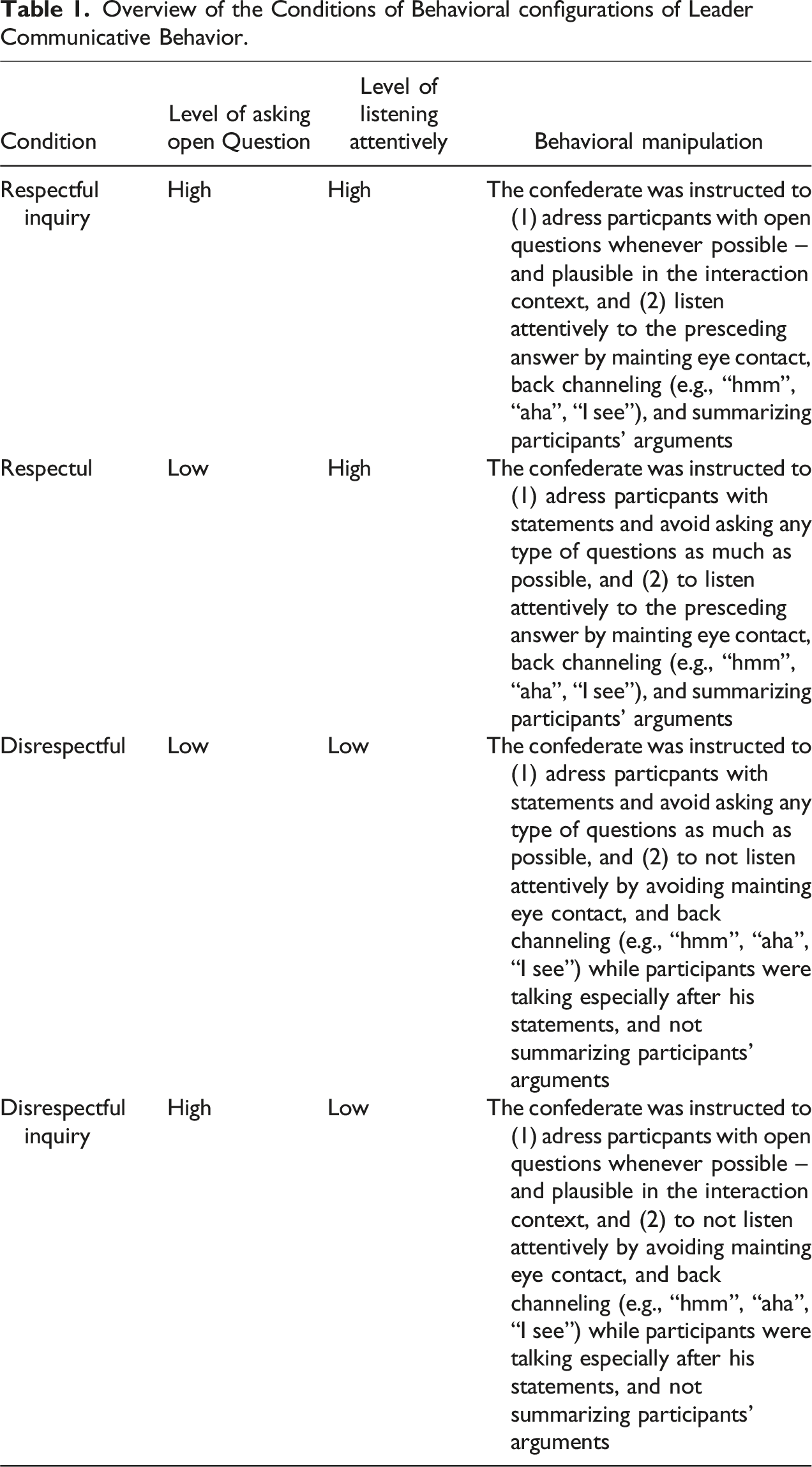
Overview of the Conditions of Behavioral configurations of Leader Communicative Behavior.
Confederate Training
The actor received a story to help him adopt his role as team leader (an English translation of the cover story is available in Appendix A). For his training, he received a script with general instructions across conditions (e.g., always greet team members in the same way, never interrupt any team member, ensure equal amounts of conversation share across conditions) and specific instructions per conditions (e.g., for the opening sequence; high question asking: “Who would like to make a start?” vs. low question asking: “Please, make a start.”). An English translation of the script is available in Appendix B. After the actor memorized the script, we ran a few test-trials with naïve participants (not included in the sample) in the laboratory. In several feedback loops, we observed the actor and provided feedback. Our observations helped to refine the script and give clearer instructions, which he then rehearsed and reproduced in the laboratory under our observation.
Hidden Profile Task
Information Distribution on the Five Candidates of the Adapted Hidden Profile Paradigm.
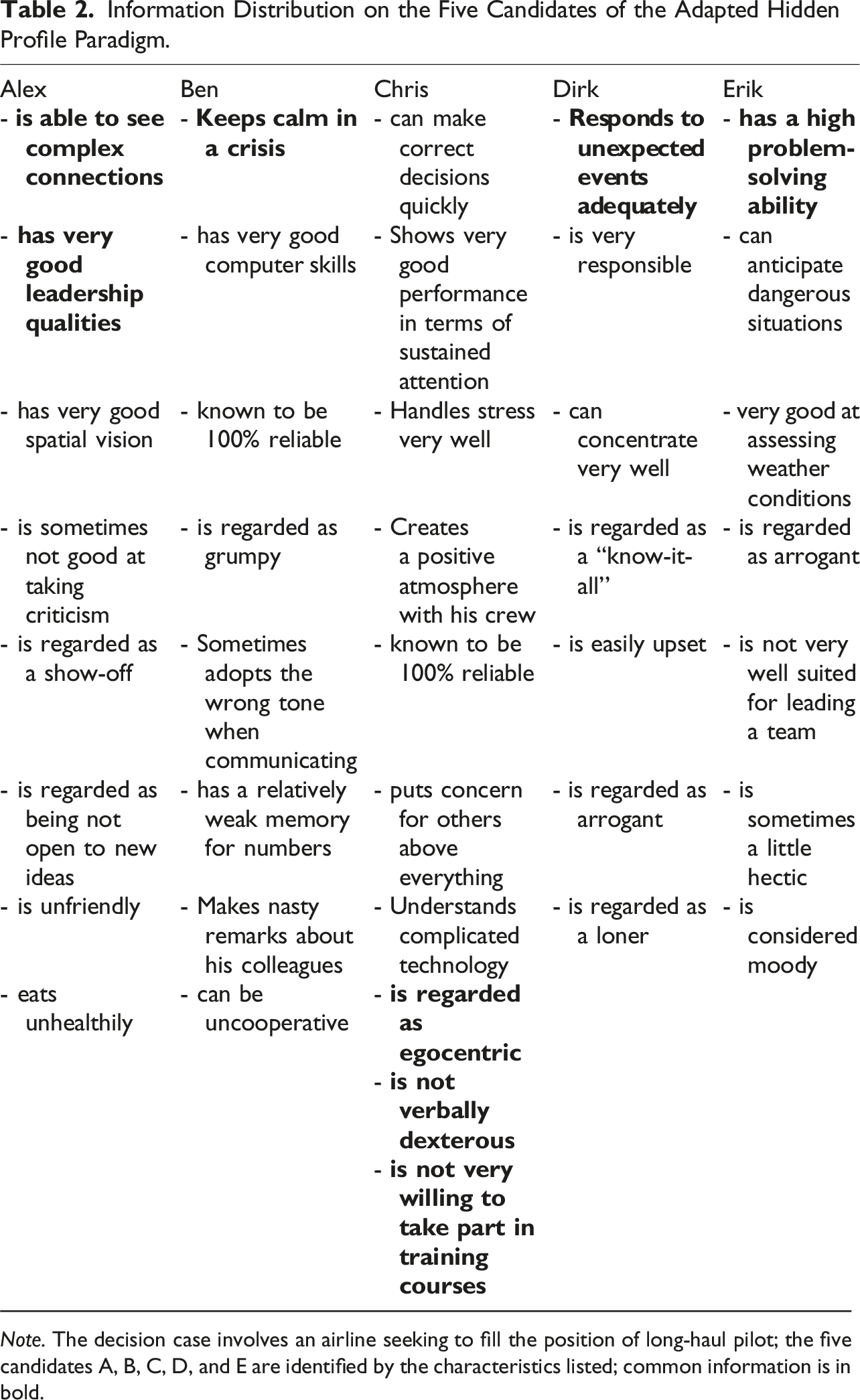
Note. The decision case involves an airline seeking to fill the position of long-haul pilot; the five candidates A, B, C, D, and E are identified by the characteristics listed; common information is in bold.
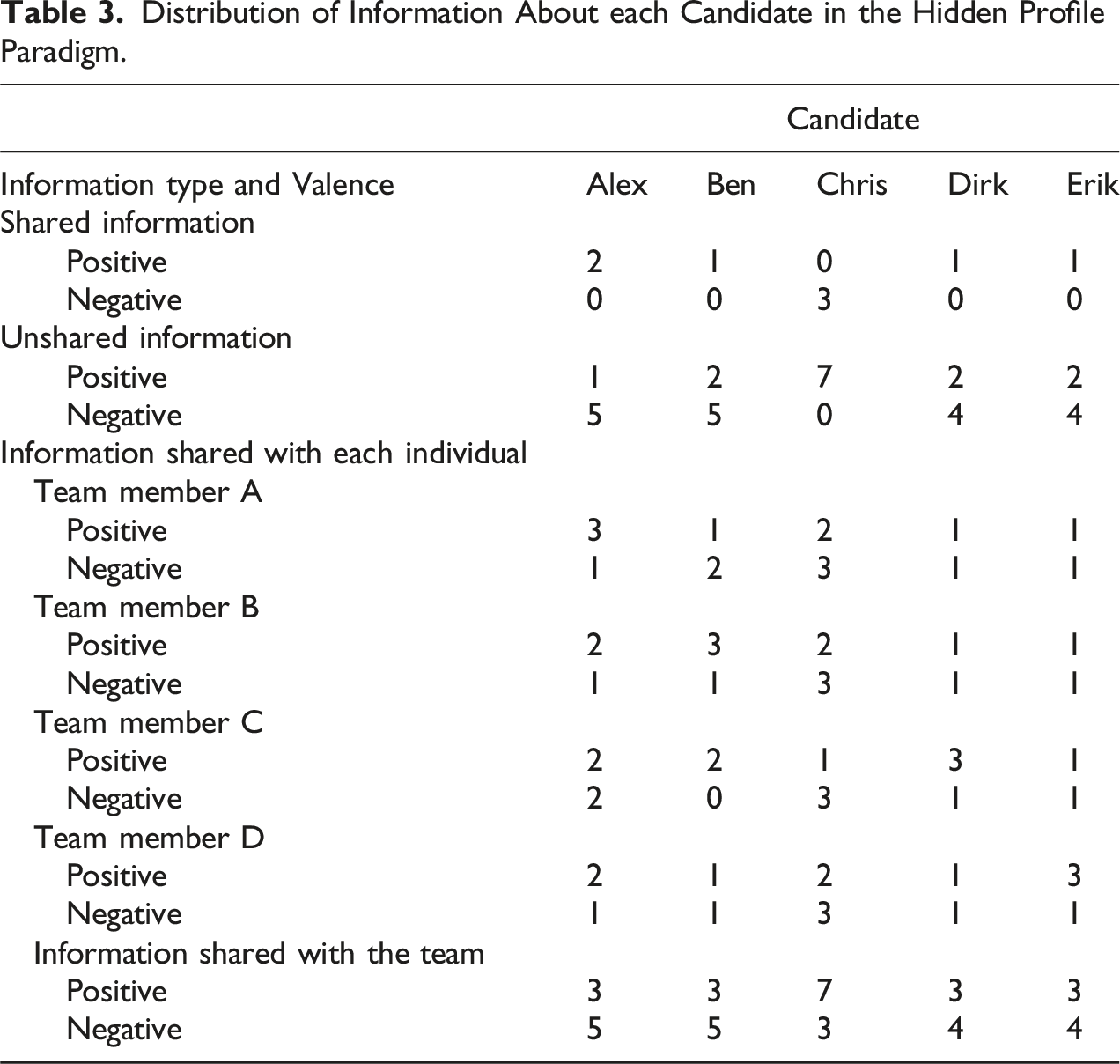
Distribution of Information About each Candidate in the Hidden Profile Paradigm.
Participants
The sample consisted of 88 participants who were recruited between January and July 2019 through postings on the German job portal “stellenwerk.de”, on social media, via flyer distribution, and via billboard advertising at a public research university in Germany, where the data were subsequently collected. To qualify for participation, participants were required to have at least two years of work experience and be fluent in German. Participants were between 18 and 61 years of age (M = 27.05, SD = 8.71), had an average of 2.37 years of work experience (SD = 0.99), and 62% (N = 55) identified as female. Most indicated having a secondary education degree (53%), followed by a tertiary education degree (university bachelor, 24%, master, 9%, or other, 3%, degree), and an apprenticeship (9%), while the remaining participants did not indicate their education level. Eighty-one participants were German, 3 Russian, 2 Luxembourgian, 1 Ecuadorian, and 1 Mexican.
Procedure
After registering for the study, participants filled in a preliminary online questionnaire to collect data on demographics and some potential control variables (e.g., experience with aviation, experience with personnel selection). Participants were also asked to indicate their availability to allocate them to testing slots in the laboratory. On site in the laboratory, participants formed teams of four and were randomly assigned to one of the four leader conditions. First, in a waiting room, a research assistant provided information about the study procedure and participants provided consent. Then they received specific instructions on the team task including the subset of information concerning the five pilot candidates. Participants were given 15 minutes to go through the material and prepare for the subsequent team interaction. This involved memorizing the information which they had received. Then, participants were guided to the video-laboratory, which included a relatively unobtrusive video recording system (small, white wall-mounted cameras for each individual team member and one dome camera capturing the entire room). Each participant received a colored wristband for identification and matching purposes. Participants were equipped with individual microphones and seated according to a color code.
Manipulation Check.
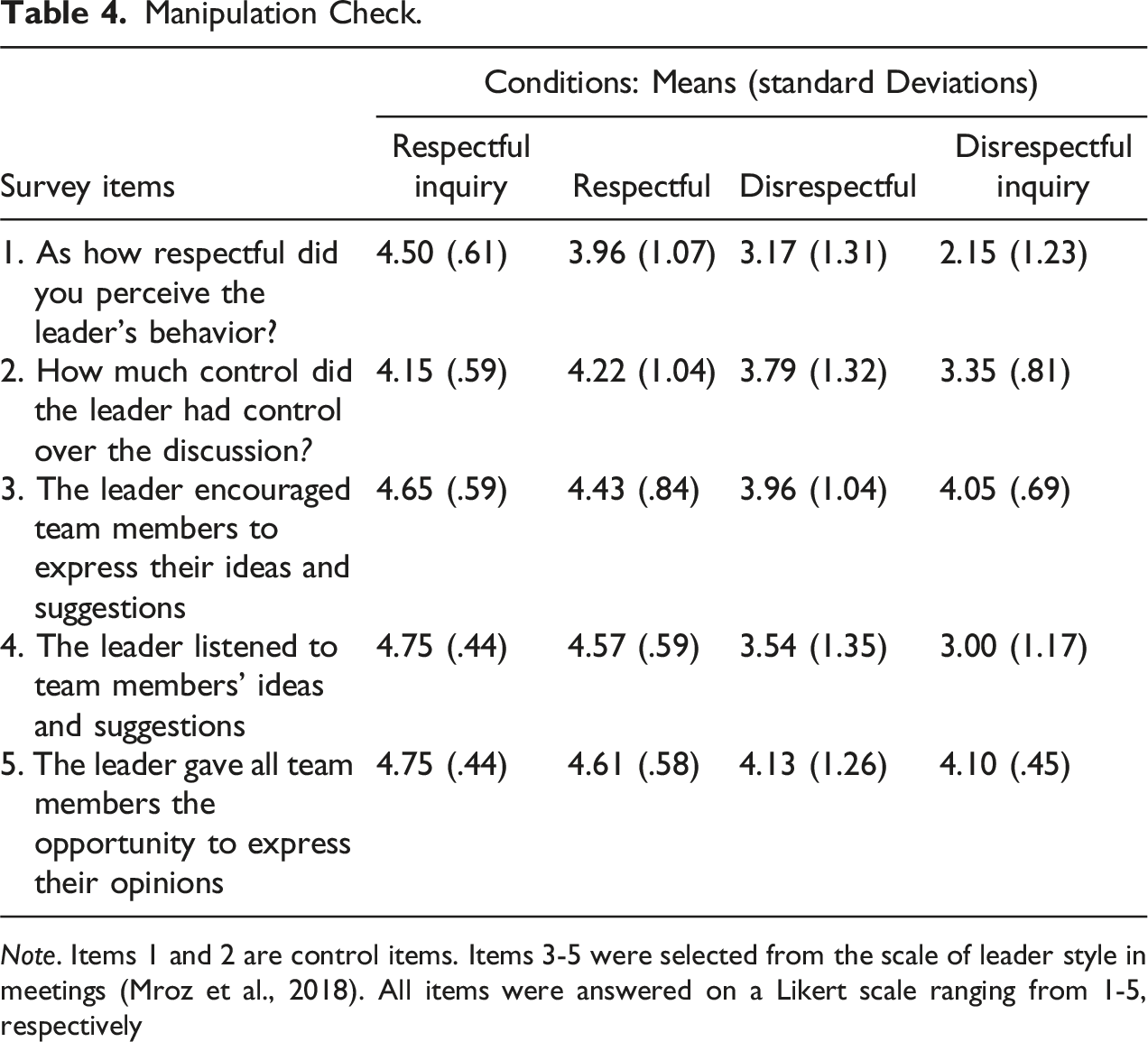
Note. Items 1 and 2 are control items. Items 3-5 were selected from the scale of leader style in meetings (Mroz et al., 2018). All items were answered on a Likert scale ranging from 1-5, respectively
Measures
Team Decision Quality
Team decision-making quality was computed as the overall score of the hiring decision by the team. During their interactions, the teams needed to decide on a rank order of all candidates. The correct rank order was as follows (from best to least suited): Chris, Dirk/Erik, and Alex/Ben (Dirk and Erik as well as Alex and Ben were equally suited). When calculating the decision-making quality score, teams only received one point per candidate if they identified the candidate in the correct position. If a candidate was ranked incorrectly—e.g., Chris in any position other than the first—the team received zero points for that candidate (see Appendix C for the calculation of the decision-making quality score based on the final rank order). 3 To obtain the full information on the rank order, we transcribed the 22 team interactions. Base transcription of all team meetings was done using the AI-powered transcription software tucan.ai (Tucan.ai, 2020). Subsequently, all transcripts were manually checked and corrected where needed.
Team Interaction Patterns (Speaker Turns and Constructive Interaction Sequences)
Since we position both leadership and team processes in a social interaction context, our research approach considers fine-grained interaction patterns unfolding in the teams which involves interaction coding (see Günter et al., 2023). Following research on fine-grained communication dynamics (e.g., Gerpott et al., 2019; Lehmann-Willenbrock et al., 2015), we coded the 22 video-taped team meetings at a sense unit level. A sense unit comprises the smallest communicative unit that contains one idea (Bales, 1950). A total of 12,327 sense units were coded by four independent and extensively trained research assistants (for more details see below). From these coded files, we extracted
The sense units were coded with the event-based exhaustive and mutually exclusive act4teams coding scheme (Kauffeld et al., 2018) using the software INTERACT (Mangold, 2010) 4 . Sample files are available upon request. The coding scheme consists of 44 functional codes (e.g., describing a problem, time management, prioritizing). 5 Applying this coding scheme requires a relatively high level of understanding each utterance within a specific communication context in order to infer its function within the interaction. To ensure high levels of objectivity, we spent a substantial amount of time to train our coders, including several feedback rounds on training material to discuss and solve disagreements between the coders. The coders were four psychology student assistants who were blind to the research questions. Following observational research guidelines to code a random selection of 15%–20% of a corpus (Bakeman et al., 2005), all coders coded the same six, randomly chosen videos (27.3%). After each video, we calculated interrater reliability to identify systematically occurring ambiguous codes. These were discussed and adjusted. The final Fleiss' Kappa (Fleiss, 1971), κ = 0.74, indicated substantial inter-rater agreement across the entire coding scheme (Landis & Koch, 1977). From this “subsample” we randomly chose six videos for the final sample such that two coders provided two videos and the other two coders provided one video. The remaining videos were equally and randomly distributed amongst the four coders.
Overview of act4team Codes and Meta Categories.
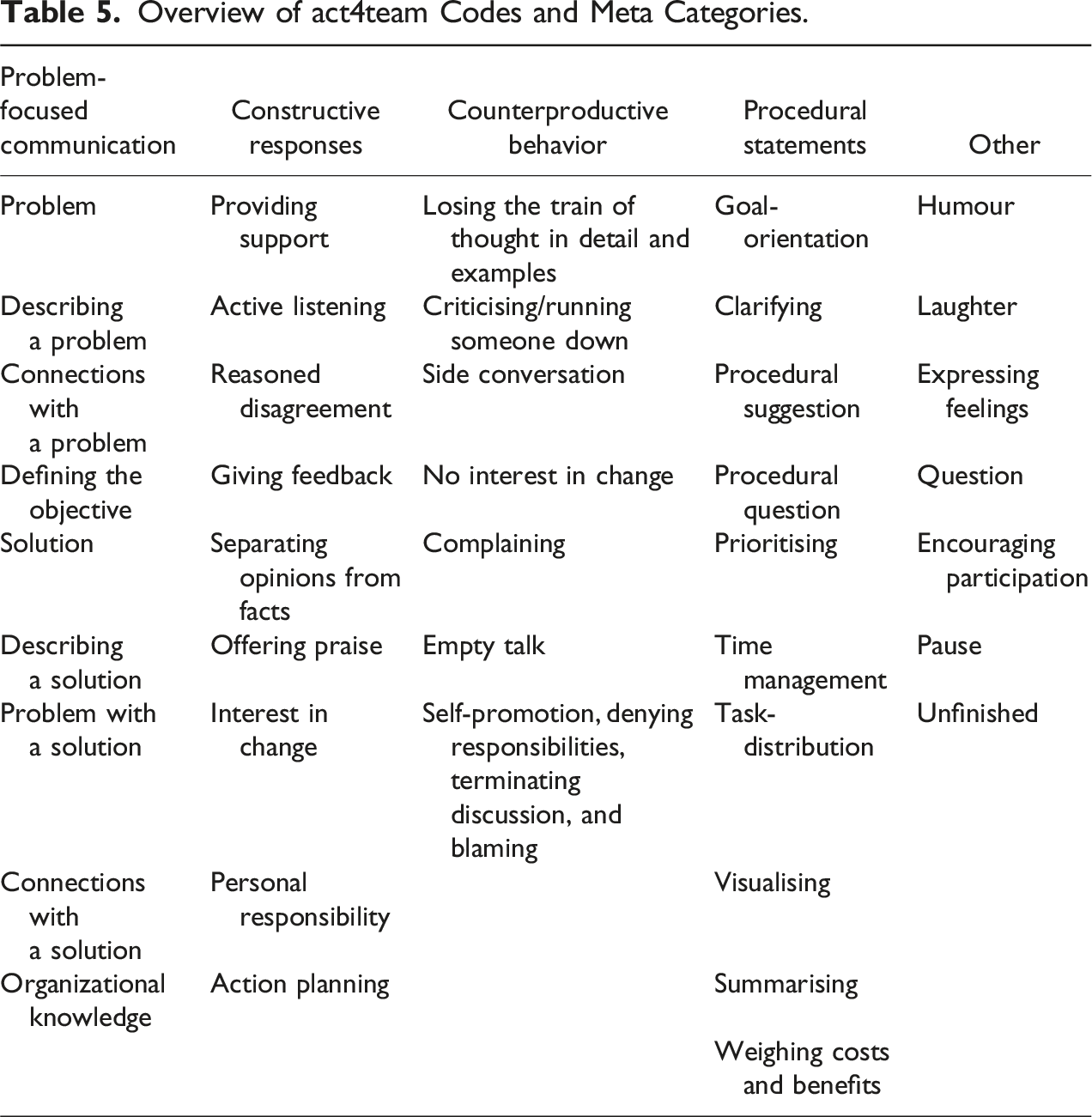
Following previous recommendations on comparing frequencies of sequences across groups (see Bakeman et al., 1996; Quera, 2018), we calculated the log odds ratio of these sequences and analyzed these values rather than the raw frequencies. The log odds ratio is a ratio of the target sequences (e.g., problem-focused statement_team member X → constructive statement_any other team member) and all other possible sequences that are not of interest (e.g., problem-focused statement_team member X → procedural statement_any other team member). Thereby, this measure accounts for all utterances in the conversation (a more in-depth description of this procedure is available in Appendix E).
Results
RQ1: How Does Leader Communicative Behavior Affect Team Decision-Making Quality?
To analyze RQ1, we ran a hierarchical linear regression analysis. In the first step, we regressed team decision-making quality on leader question asking (indicator coded: 1 = high, zero = low) and leader listening (indicator coded: 1 = high, zero = low). In the second step, we introduced the interaction term of the two predictor variables. The first-step regression showed no significant main effect of leader question asking, B = 0.10, p = .800, 95% CI: [-0.72; 0.92], nor a significant main effect of leader listening, B = −0.55, p = .176, 95% CI: [-1.36; 0.27]. However, the second-step regression showed a significant interaction effect, B = 2.47, p < .001, 95% CI: [1.31; 3.63]. A simple slopes analysis revealed that at high levels of leader listening, the relationship between leader question asking and team decision-making quality was positive and significant, B = 1.33, t(18) = 3.42, p = .003. Vice versa, at low levels of leader listening behavior, the relationship between leader question asking and team decision-making quality was negative and significant, B = −1.13, t(18) = −2.91, p = .009 (see Figure 1). As such, the impact of the leader’s question asking on the quality of teams' decision-making was contingent on the extent to which the leader listened. When the leader demonstrated high levels of listening, leader question asking had a positive effect on team decision-making quality. However, when the leader exhibited low levels of listening, an increase in the level of question asking reduced team decision-making quality. Interactive effects of leader question asking × leader listening on team decision-making quality.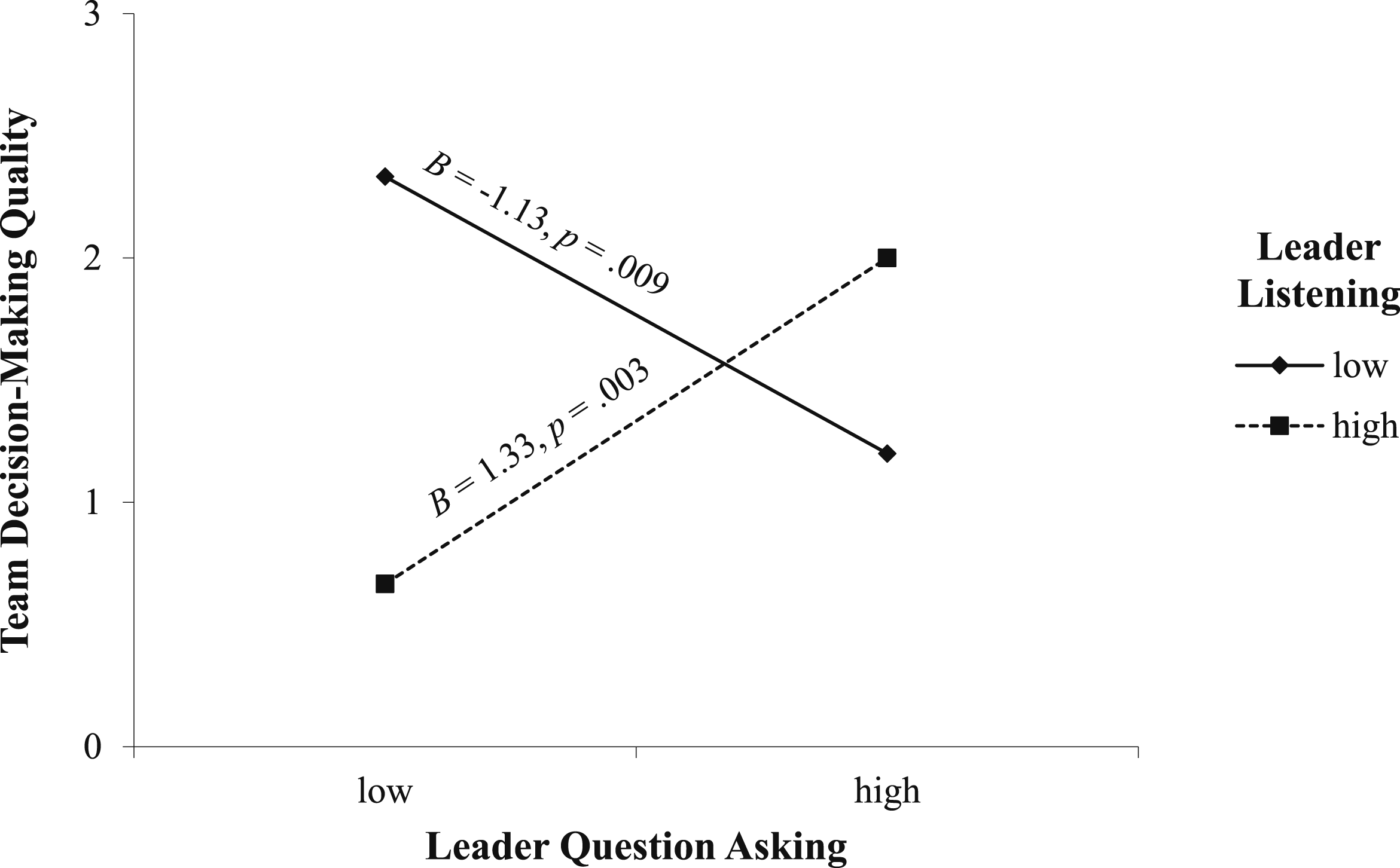
RQ2: How Does Leader Communicative Behavior Affect Patterns of Speaker Turns?
To adress the RQ2, we first visualized the speaker turns between team members (A-D) and the team leader (E) employing social graphs. Social graphs represent a visualization tool for social networks. Visualizing the complex, oftentimes chaotic, dynamics of team interaction is an important step to understand which patterns unfold, gain insights into their interaction dynamics, and thereby helps in “tackling the “bigness” of interaction analyitcal data” (Lehmann-Willenbrock & Allen, 2018, p. 338). For this purpose, we extracted the transitions of speaker turns for each team interaction from the coded INTERACT files (Mangold, 2010). We subsequently visualized the data in RStudio (RStudio Team, 2020) with the igraph package (Csárdi & Nepusz, 2006). The social graphs per team are provided in Appendix D. Here, to enhance interpretability, we consolidated the speaker turn data at the level of the conditions (see Figure 2). Social graphs per condition. The nodes refer to the team members and edges refer to the number of speaker turns between the team members (divided by ten for ease of visualisation).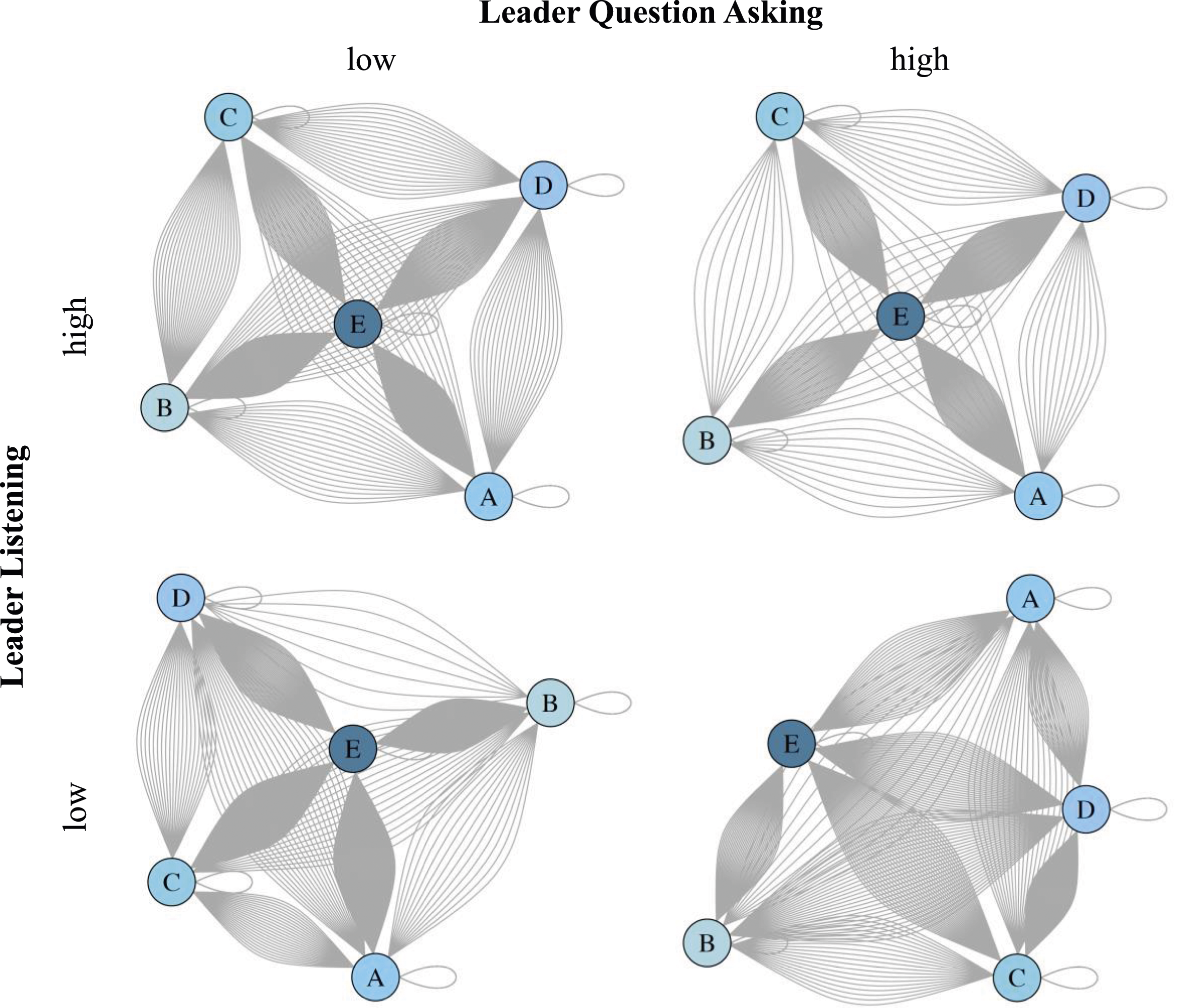
Considering Figure 2, in the “respectful inquiry” condition, the leader played the most central role, that is, team communication was centralized on the leader. This suggests a dominant position of the leader in managing the teams' interactions. In both the “respectful” and “disrespectful” conditions, a somewhat similar pattern emerged with the leader occupying a relatively central position. However, these patterns are not as distinct as in the “respectful inquiry” condition. Interestingly, in the “disrespectful inquiry” condition, a rather different pattern emerged: The leader’s centrality was significantly diminished and more direct interactions between the team members occurred. In this scenario, it appears that the leader’s rather dysfunctional behavior of asking questions but then not listening created a void, that the team members filled by interacting more amongst each other. To explore these patterns more systematically, we decided to distinguish between speaker turns that only occurred between team members – team-to-team or intra-team interactions – and speaker turns that occurred between a team member and the leader. Via this dinstinction we aimed to better understand the changing team interaction dynamics in relation to the leader. Accordingly, we conducted two statistical analyses for both speaker turn pattenrs (intra-team vs. team-to-leader). Both analyses offered insights into the connectivity among team members and the centrality of the leader, respectively. We did not delve deeper into leader-to-team interactions, as the leader was instructed to maintain equal communication shares with team members across conditions. Thus, we extracted the team-to-leader and team-to-team (i.e., intra-team) speaker transistions and calculated percentages relative to the overall meeting interactions (i.e., team-to-team, team-to-leader, and leader-to-team interactions).
Intra-Team Interactions
In a hierarchical regression, we first regressed interactions between team members, that is, the percentage of speaker turns between team members relative to the total number of interactions in the meeting, on leader question asking (indicator coded: 1 = high, zero = low), and leader listening (indicator coded: 1 = high, zero = low). Second, we entered the interaction of these two predictor variables. The first-step regression showed no significant main effect of leader question asking, B = 5.95, p = .411, 95% CI: [-8.87; 20.77], nor a significant main effect of leader listening, B = −8.48, p = .244, 95% CI: [-23.23; 6.28]. However, the interaction was significant in the second-step regression, B = −29.89, p = .030, 95% CI: [-56.63; −3.15]. An analysis of the simple slopes showed that at high levels of leader listening behavior, the relationship between leader question asking and team-to-team interactions was negative, but non-significant, B = −9.00, t(18) = −1.27, p = .220. Vice versa, at low levels of leader listening behavior, the relationship between leader question asking and intra-team interactions was positive and significant, B = 20.89, t(18) = 2.95, p = .009 (see Figure 3). This finding revealed that the impact of leader question asking on intra-team interactions was contingent on the level of leader listening behavior. Only at low levels of leader listening, did the leaders question asking behavior make a difference. High levels of asking questions (i.e., disrespectful inquiry) significantly increased speaker turns between team members, that is, team members communicated more (directly) with each other relative to low levels of asking open questions. At high levels of leader listening, leader questioning behavior did not make a statistically signficant difference for intra-team speaker turns. Interactive effects of leader question asking × leader listening on team-to-team speaker turns.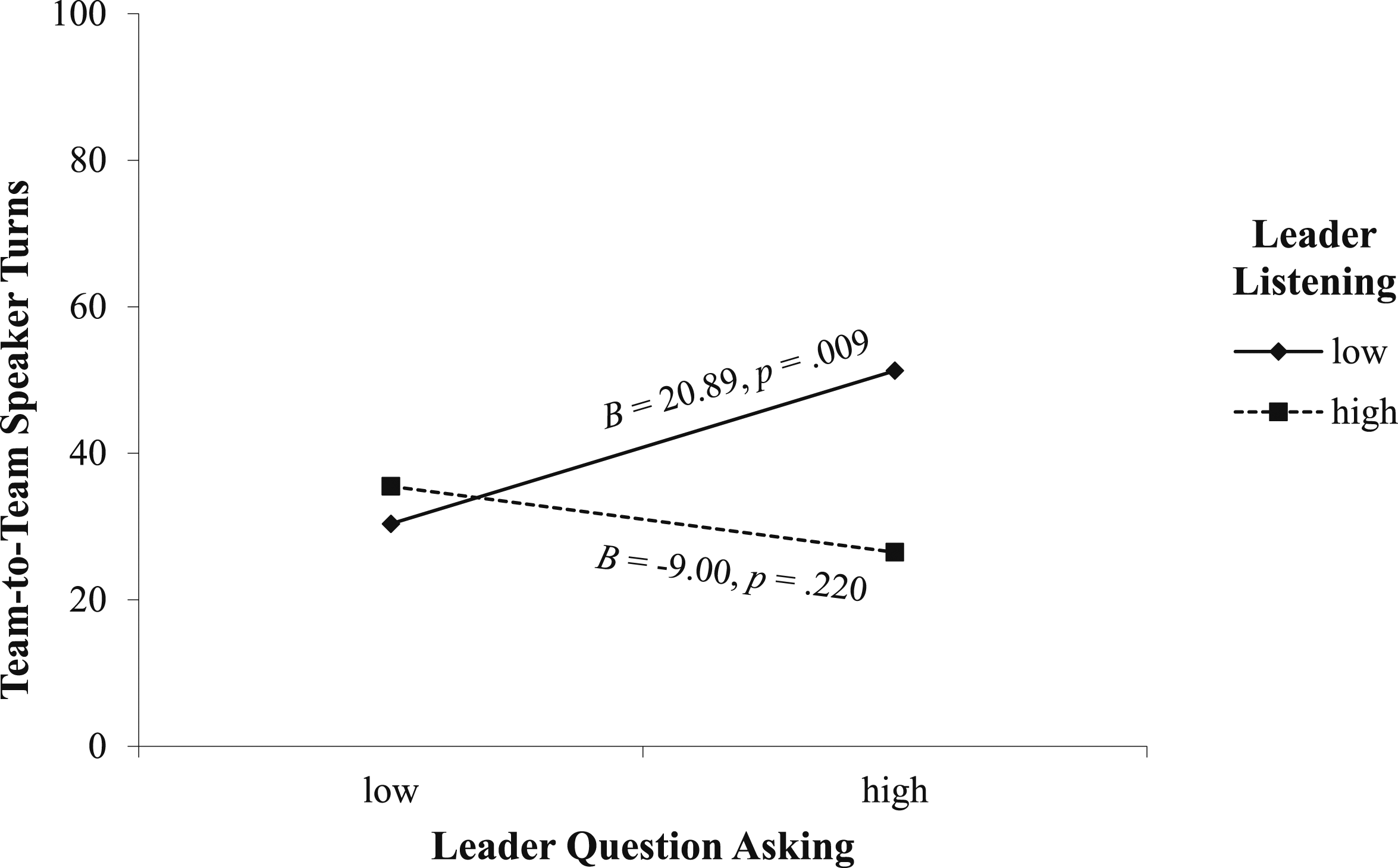
Team-to-Leader Interactions
In a hierarchical regression, we first regressed team-to-leader interactions, that is, the percentage of speaker turns from team members to the leader relative to the total number of interactions in the meeting, on leader question asking (indicator coded: 1 = high, zero = low), and leader listening (indicator coded: 1 = high, zero = low). In a second step, we entered the interaction term of the two predictor variables. The first-step showed no significant main effect of leader question asking, B = −2.89, p = .421, 95% CI: [-10.23; 4.46], nor a significant main effect of leader listening, B = 3.88, p = .281, 95% CI: [-3.44; 11.20]. However, the second-step regression returned a significant interaction effect, B = 14.74, p = .031, 95% CI: [1.74; 28.02]. An analysis of the simple slopes demonstrated a similar pattern as for the intra-team communication: at high levels of leader listening behavior, the relationship between leader question asking and team-to-leader interactions was positive but not significant, B = 4.49, t(18) = 1.28, p = .217. At low levels of leader listening behavior, the relationship between leader question asking and team-to-leader interactions was negative and significant, B = −10.26, t(18) = −2.92, p = .009 (see Figure 4). Thus, here as well, only at low levels of leader listening, did the leader’s question asking behavior make a difference. High levels of asking questions (i.e., disrespectful inquiry) significantly decreased speaker turns between team members and the leader, that is, team members communicated less directly with their leader. At high levles of leader listening, leader questioning behavior did not make a statistically signficant difference for team-to-leader interactions. Interactive effects of leader question asking × leader listening on team-to-leader speaker turns.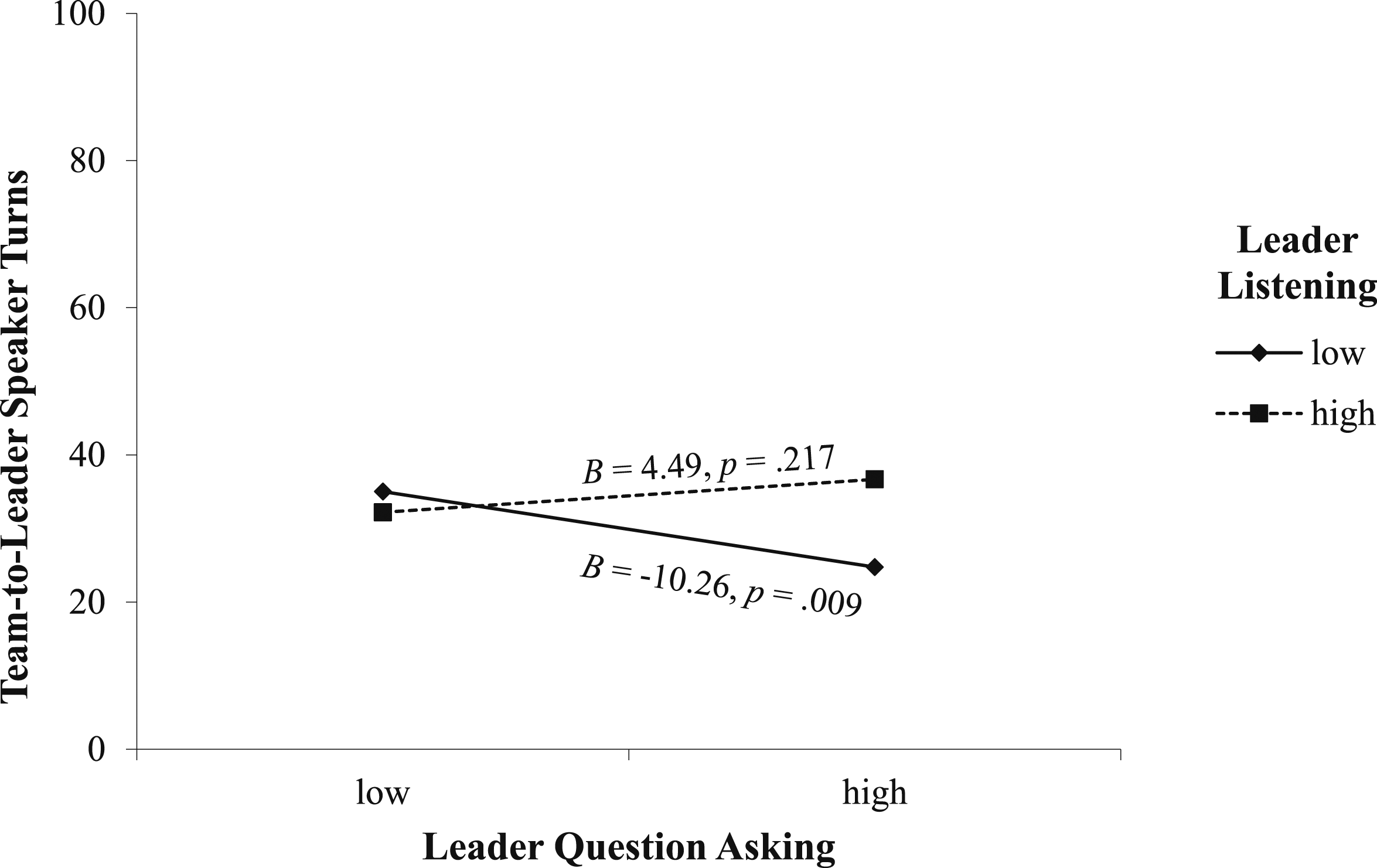
In sum, the analyses for RQ2 show that different configurations of leader communicative behaviors (question asking and listening) shaped speaker between team members as well as between team members and their leader during decsion making. The configuration of asking questions but then not listening (i.e., disrespectful inquiry) mainly drove these patterns by increasing the speaker turns between team members and decrasing the speaker turns between team members and their leader.
RQ3: How Does Leader Communicative Behavior Affect Communication Patterns between Team Members?
To explore the RQ3, we entered the log odds ratios of the constructive interaction sequences (problem-oriented statements → constructive response) into a hierarchical regression. We first regressed these constructive interaction sequences on leader question asking (indicator coded: 1 = high, zero = low) and leader listening (indicator coded: 1 = high, zero = low), before we entered the interaction of the two predictor variables in the second stage. The first-stage regression showed no significant main effect of leader question asking, B = 0.14, p = .758, 95% CI: [-0.78; 1.07], but a significant main effect of leader listening, B = −1.18, p = .013, 95% CI: [-2.11; −0.26]. In addition, the second-stage regression showed a significant interaction effect, B = −2.02, p = .030, 95% CI: [-3.83; −0.20]. Analysing the simple slopes demonstrated that at high levels of leader listening, the relationship between leader question asking and the frequency of constructive interaction sequences was negative but not significant, B = −0.86, t(86) = −1.34, p = .184. In contrast, at low levels of leader listening, the relationship between leader question asking and the frequency of constructive interaction sequences was positive and significant, B = 1.15, t(86) = 1.79, p = .078, albeit only at the 10% significance level (see Figure 5). Hence, a similar pattern as for the speaker turns emerged: Team members engaged more in constructive interaction patterns at low levels of leader listening and, in particular, in the “disrepectful inquiry” condition. This result further suggests that team members compensated for disrespectful leadership by communicating more constructively with each other. Interactive effects of leader question asking × leader listening on constructive interaction sequences. Constructive interaction sequences are assessed using the log odds ratio of target sequences of specific verbal statements (problem-oriented statements → constructive response) between team members.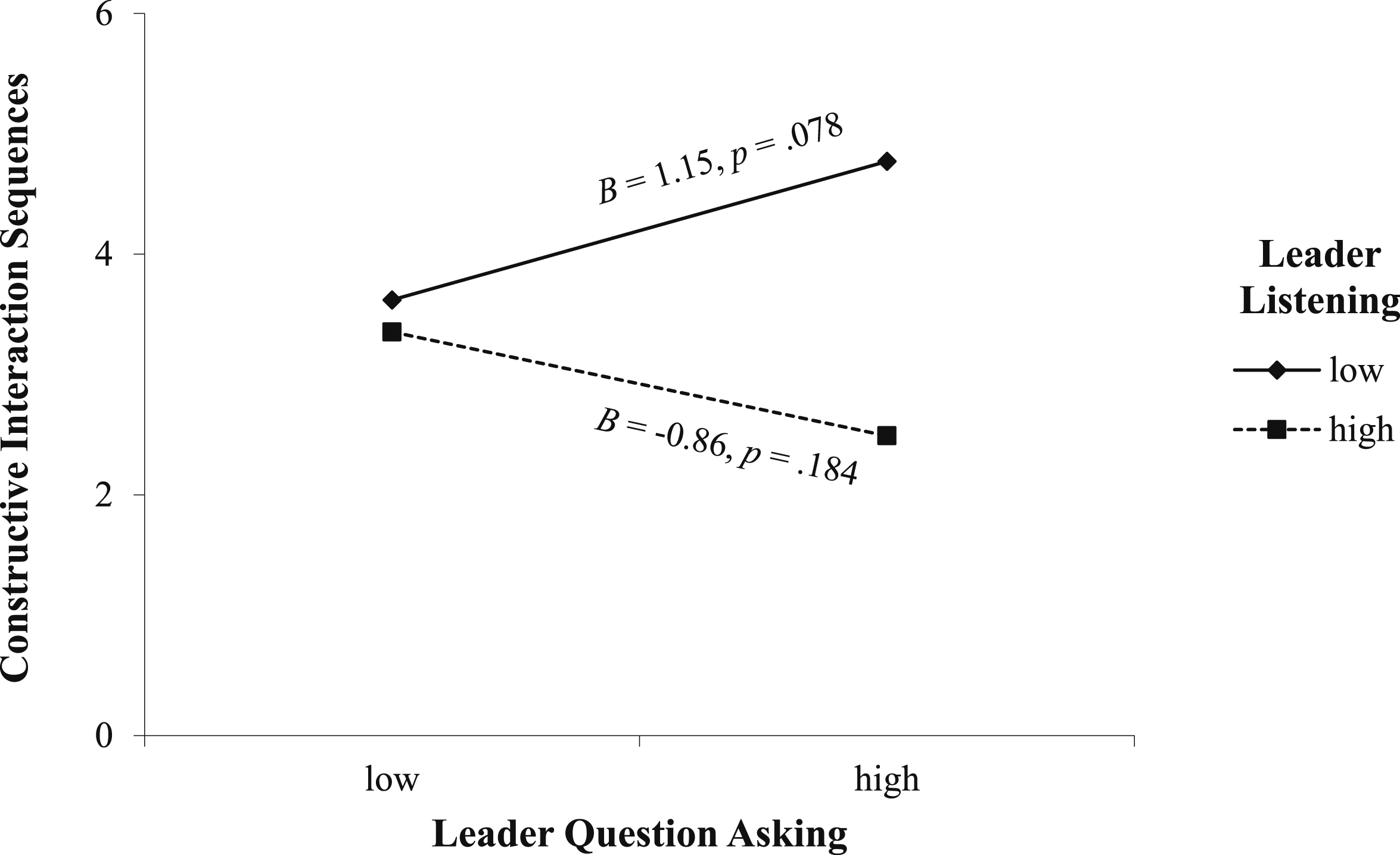
Ancillary Analysis: Team Communication Resources
Given that the “disrespectful inquiry” condition yielded the lowest performance but the highest level of intra-team communication (in terms of speaker turns and constructive interaction patterns), we wanted to understand more of the underlying dynamics. In particular, we were interested in understanding whether this increased intra-team interaction was associated with an additional process cost which may partly explain why performance suffered despite higher team involvement. Specifically, we looked into the communicative resources that teams invested in their interaction. We therefore extracted the number of words exchanged during the team meeting from the team transcripts already employed to address RQ1. To control for differences in meeting duration, we followed established standards in the behavioral interaction literature (VanLear, 2017) and standardized the word count by dividing it by the duration of the team meeting in minutes and multiplying by 60 (for a similar procedure, see Gerpott et al., 2019; Lehmann-Willenbrock & Allen, 2020). Since we were interested in the impact of our manipulation on the teams’ communication resources, that is, how extensively team members had to discuss to reach a decision, we excluded the team leader from these calculations.
In a hierarchical regression, we first regressed words spoken per time unit on leader question asking (indicator coded: 1 = high, zero = low) and leader listening (indicator coded: 1 = high, zero = low), before we introduced the interaction of these two predictor variables in the second-stage regression. The first-stage regression showed neither a significant main effect of leader question asking, B = 410.77, p = .200, 95% CI: [-237.39; 1058.93], nor a significant main effect of leader listening, B = −120.80, p = .700, 95% CI: [-766.27; 524.68]. The second-stage regression, however, yielded a significant interaction effect, B = −1319.06, p = .029, 95% CI: [-2485.49; −152.63]. A simple slopes analysis revaled that at high levels of leader listening, the relationship between leader question asking and words spoken per time unit was negative but not significant, B = −248.76, t(18) = −0.63, p = .534. Vice versa, when leader listening behavior was low, the relationship between leader question asking and words spoken per time unit was positive and significant, B = 1070.30, t(18) = 2.73, p = .014 (see Figure 6). Thus, at high levels of leader listening, the level of question asking had no statistically relevant effect on words spoken per time unit. However, at low levels of listening, leader question asking significantly increased words spoken per time unit. Interactive effects of leader question asking × leader listening on words spoken per time unit as an indicator of the level team communication resources. Words spoken per time unit refers to the number of words exchanged between team members per meeting divided by the length in minutes of the team meeting and subsequently multiplied by 60 for standardisation.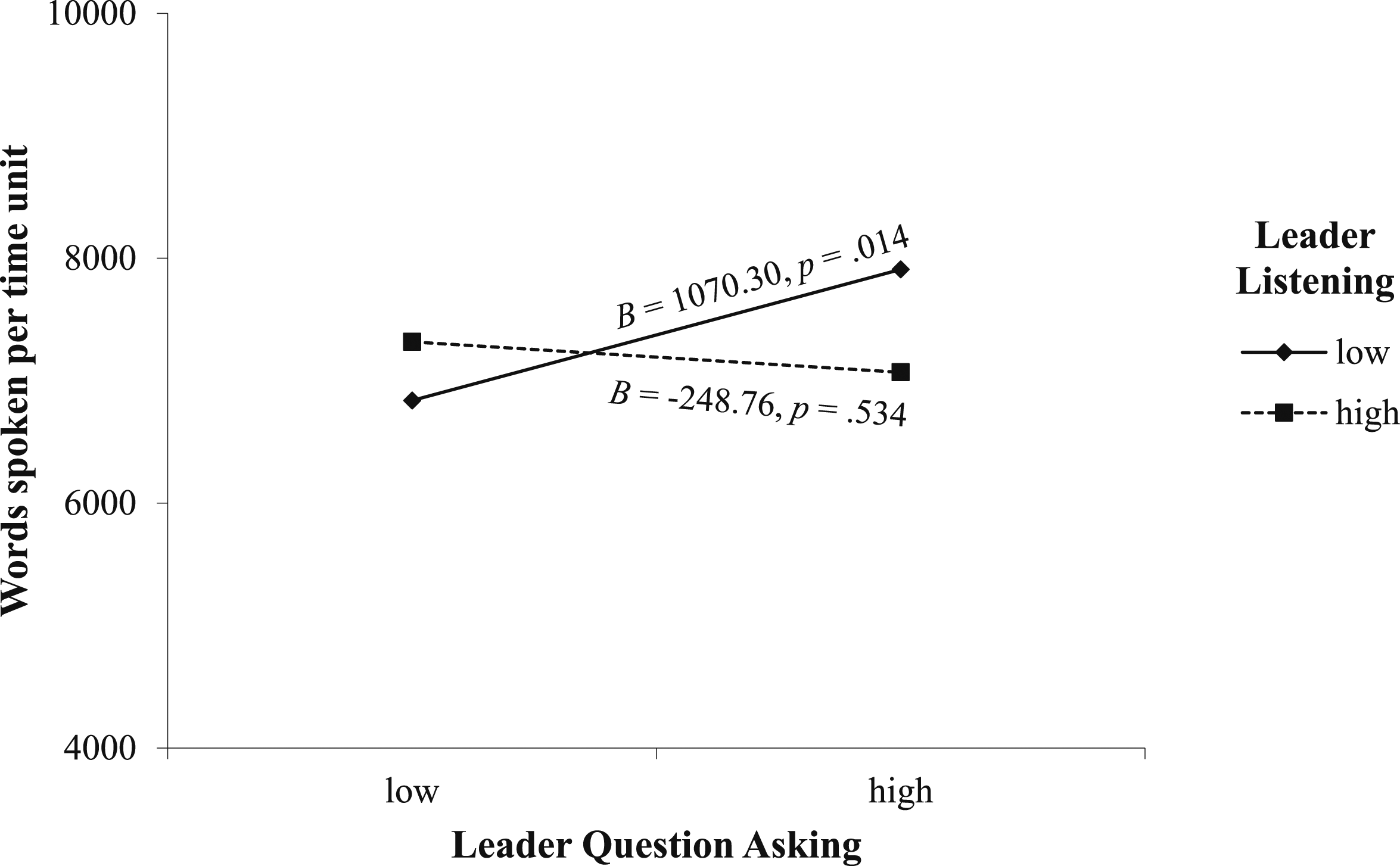
Discussion
In this study, we aimed to explore how different configurations of leader communicative behaviors (asking open questions and listening) affected team interactions in decision-making processes. Our analyses provide insightful findings that help move the field forward. In summary, our research reveals that the impact of increased leader question asking on decision-making quality is contingent on the level of leader listening. When coupled with attentive listening, it enhanced decision quality; however, when paired with low listening, it undermined decision quality. Furthermore, disrespectful inquiry, marked by high question asking and low listening, led to decreased team-to-leader speaker turns but increased intra-team speaker turns as well as increased constructive interaction sequences among team members. The ancillary analyses demonstrated that the increased interactions between team members in the disrespectful inquiry condition came at the cost of increased team communication resources.
Theoretical Implications
Our exploratory study offers three important theoretical implications that can serve as an impetus for future research on the relationship between leaders' communication behavior and the fine-grained team interactions underlying team processes. First, our study sheds light on the importance of formulating theories with a high degree of behavioral specificity. Especially regarding team decision-quality (i.e., team performance), we documented that the effect of leaders’ questioning behavior depended on the degree of their listening behavior, yielding significant differences across all conditions of the four behavioral configurations. Our findings demonstrate that question asking and listening represent two key communicative leader behaviors that interplay in meaningful ways. Accordingly, our study may be taken as a first empirical confirmation of what Van Quaquebeke and Felps (2018) describe in their theory of respectful inquiry. Thereby, we address calls to acknowledge that leadership ultimately begins with behaviors which is vital for precise theory testing and advancement but also has managerial relevance (Banks et al., 2021; Fischer et al., 2023; Hemshorn de Sanchez et al., 2022).
Second, our findings provide a first empirical exploration of the way in which the combination of the two core leadership communication behaviors shapes the team interactions underlying decision-making processes. We show that patterns in speaker turns and constructive interaction sequences during decision-making changed as a function of specific leader communication behavior. While the respectful inquiry condition resulted in conversation patterns in which the leader was much more central, other behavioral configurations resulted in more decentralized positions of the leader. Teams seemed to adapt particularly strongly to the “disrespectful inquiry” condition by focusing more on each other and leaving the leader outside the interaction network. Thereby, we extend respectful inquiry theory, which was originally developed for leader-follower dyads (Van Quaquebeke & Felps, 2018), to the team context showing that teams respond dynamically to different leader communication behaviors. Thus, the present study answers calls for more (quantitative) empirical research that captures leadership as a dynamic social phenomenon and its impact on team processes (Fairhurst, 2009; Fairhurst & Uhl-Bien, 2012; Uhl-Bien, 2006; Waller et al., 2016).
Third, the tendency for team members to intensify their intra-team communication and exclude the leader from the interaction network in the “disrespectful inquiry”-condition (high question asking, low listening) is thought-provoking. This behavioral configuration may have been interpreted as particularly rude: Not paying attention to team members’ answers was a heavy violation of the promise to be interested in their contributions as encoded in the preceding open question. This may be interpreted as breaching a psychological contract (Van Quaquebeke & Felps, 2018). Work on other forms of psychological contracts demonstrated the critical consequences of this behavior (e.g., Zhao et al., 2007). This dysfunctional leader communication may have led to a leadership void that team members then filled via increasing their intra-team interaction in order to compensate for the lack of effective leadership. Of note, this compensation by team members should not be confused with Kerr and Jermier’s (1978) substitutes for leadership theory. Their theory identifies moderating mechanisms that are unrelated to the leader and minimize the scope for the effective exercise of leadership on the performance of followers, rendering “leadership not only impossible but also unnecessary” (Kerr & Jermier, 1978, p. 395, original emphasis; also see Dionne et al., 2005; Hussain et al., 2016; Manz & Sims, 1980; Muchiri & Cooksey, 2011). In contrast, we refer to a literal substitution of leadership, such that followers assume leadership when positive leader characteristics related to the leader are lacking. In this sense, we argue that followers tried to compensate for their leader’s dysfunctional, for example, disrespectful, behavioral patterns, which in turn had negative implications on overall team effectiveness. This points to an important distinction from and update on existing theories of leadership substitution.
Finally, we deliberate on two intriguing findings in our data. The first surprising finding was that the condition with the lowest performance, “disrespectful inquiry” (high questioning, low listening), was the condition with the highest levels of intra-team speaker turns and constructive interaction sequences (Figures 1, 3 and 5). Given that hidden profile paradigms require team members to share and integrate information to be successful (Schulz-Hardt & Mojzisch, 2012), one may expect that such interaction patterns are associated with higher performance (e.g., Kolbe et al., 2014; Lehmann-Willenbrock et al., 2013). However, our findings do not reflect these relationships but also represent a different team context, one that includes a formal leader. Research on self-managed teams has shown that team members tend to develop an informal type of leadership (i.e., emergent leadership) to coordinate their efforts and collaborate more efficiently (e.g., Cook et al., 2019). The presence of a formal leader, however, may lead to markedly different dynamics: Team members may expect the leader to take a specific role during the interaction (e.g., structure the discussion, provide orientation, etc.) which may inhibit them to show these leadership behaviors themselves. If the formal leader does not fulfill this function, the result could be an increased but much less coordinated interaction among team members. This pattern may reflect an attempt to compensate for the lack of functional leadership while at the same time not feeling entitled to fully assume leadership in the presence of the formal leader. Here, our study illustrates the importance of examining the intersection of leader communicative behavior and team interactions more closely.
The second non-intuitive finding was that the “disrespectful”-condition (low questioning, low listening) yielded the highest decision-quality score, whereas the “respectful inquiry”-condition only led to the second-best result. One explanation for the lower performance in the “respectful inquiry”-condition could be a suboptimal match between one of the central benefits of this leader behavior (signaling interest in and acknowledging followers’ competences) and the hidden profile paradigm which requires participants to recall and reproduce memorized information (Schulz-Hardt & Mojzisch, 2012) – rather than contributing their own analytical results. Thus, when the leader expressed further interest and asked participants to elaborate on their arguments, rather than feeling motivated to share their own thoughts and fully engage in the discussion, in parts, they may have been confused for not being able to provide further details (since they only received a finite amount of information they could use). Further supporting this conclusion, we only found significant interactions between question asking and listening at low levels of listening. At high levels of listening, it did not make a statistically significant difference whether the leader asked open questions or communicated via statements. Thus, the potentially positive effects of asking open questions (and listening) may have been limited by our specific task. This could also explain why team interactions were primarily shaped by the negative effects of not listening. Nevertheless, this finding is intriguing and we are curious to see whether it may be substantiated in different settings including leader-team interactions in the field.
Limitations and Avenues for Future Research
There are some relevant limitations to this study that present good starting points for future research. First, our sample size—though not uncommon for team research—is at the lower end of recommendations in the literature on leadership and teams (for noteworthy exceptions, see D'Ausilio et al., 2012; Ito et al., 2018). While our study is exploratory and intended to provide an impetus for further research on how various types of leadership communication affect team interaction patterns, it is imperative that future studies examine this phenomenon with greater statistical power.
Second, the scope of this study was limited to one-shot teams assigned to a relatively complex task, that is, the hidden profile paradigm, with a relatively low success rate (see Lu et al., 2012; Schulz-Hardt & Mojzisch, 2012), as well as to one specific question type, that is, open questions. There are three important team characteristics here worth noting. One is the team composition. Our adhoc-teams were composed of previously unacquainted team members with varying ages, gender, nationalities and education background. We did not analyze these aspects in more depth as moderating factors because the sample size was already small and certainly too small to make meaningful conclusions on these additional aspects, let alone run any moderation analyses. However, team composition represents an important influence on team processes (van Dijk et al., 2017), and future work should consider the interaction between team composition and leader-team communication more systematically.
The other two team characteristics are related to the team task: There was a fixed end to the task. Indeed, teams may vary in terms of their interactions being timed to a fixed deadline (e.g., Gerpott et al., 2019), compared to teams that go through recurring episodes of team performance (e.g., Marks et al., 2001). This study only examines interactions that lasted for ca. 30–52 minutes. This does not capture how team communication may evolve within larger temporal scopes (e.g., days, weeks, or months; Klonek et al., 2019). Regarding the leader behavior, our findings do not allow us to draw conclusions on other types of questions such as closed or rhetorical questions, nor differentiate between specific subtypes of open questions (e.g., solution-focused, problem-focused; Grant & Gerrard, 2020). Future research should test the impact of more nuanced concrete leader communication behaviors, including but not limited to respectful inquiry (Van Quaquebeke & Felps, 2018), on both short-lived project teams and established teams to examine how interaction and communication dynamics evolve over time in response to leaders’ behaviors.
The second important teamwork characteristic worth noting a substantial level of task interdependence requiring the involvement of all team members. Other tasks may exhibit much less interdependence which prompts the question of whether team members would still demonstrate leadership compensation behaviors when they are less reliant on each other for success. Generally speaking, the task type, including task complexity, is a critical input factor for team processes, including decision-making, and may shape the team interaction (Kozlowski & Ilgen, 2005). Thus, it would most likely also affect leader communicative behavior (e.g., some tasks may motivate leaders more to ask open questions, while others may call more for uttering statements). Future research could provide valuable insights by extending our findings and investigating how a leader’s communication influences team effectiveness dynamics in contexts marked by a lower degree of independence and autonomy among team members and how different task contexts may affect leader communication.
Third, leadership and team processes can mutually influence each other and be influenced by past collective interaction sequences (Zaccaro & Klimoski, 2002). In this study, we focused on unidirectional influences of a specific form of leader communicative behavior on team members' communicative behavior. However, in the field, leader behavior may also be affected by follower behavior as previous research has documented: leader communicative behavior does not occur in a social vacuum but may also depend on previously shown follower behavior (Güntner et al., 2020). To capture the interdependent interaction patterns between leaders and their team members, both directions should be considered. Future research would benefit from longitudinal and real-world interaction data to explore how leader communication behavior creates a history that shapes how team members react, interact, and hence, how future leader-team dynamics evolve.
Fourth, although laboratory conditions offer the distinct advantage of a clear behavioral manipulation and alleviate concerns about causality, it is important to recognize that the results may have been influenced by specific characteristics of our task. For example, the study paradigm required participants to recall and reproduce memorized information from a worksheet, rather than relying on their actual expertise, skills, and experience as most employees would on their job. To better understand the relationship between the behavioral configurations of leader communication, team interaction patterns, and team performance future research could consider different team tasks that may require participants to rely on their “own” knowledge and insights. Likewise, the teams in this study were characterized by a high level of dispersed partial information, which required extensive information and knowledge sharing for the teams to be successful. In organizations, the ratio of shared to unshared information may be larger. As such, future research would benefit from replicating our leadership substitution effect in real-world business environments.
Fifth, our choice to study behavioral sequences is just one way to capture temporal patterns of social interaction among leaders and followers in dynamic team settings. Nevertheless, team interaction dynamics may also be studied considering “longer” time-windows that extend across the scope of entire interaction episodes (cf. also Klonek et al., 2019; Leenders et al., 2016). To investigate this, future research could compare “thin-slices” of team interaction patterns (e.g., Waller et al., 2013) in the context of various leader communicative behaviors. For example, future research could compare constructive interaction sequences minute-by-minute across different leader communicative configurations in order to identify potential tipping points. In our study, the confederate was instructed to adhere to a specific leader communicative behavior, such that insights into developments over “longer” periods of time (i.e., the entire meeting) are limited because of this manipulation. Natural social interactions in field settings would be more suitable to investigate how leader-follower interactions unfold reciprocally over time.
Finally, leader communicative behaviors are not limited to asking questions or uttering statements. For example, Lehmann-Willenbrock et al. (2015) showed that solution-oriented statements uttered by leaders triggered solution-oriented statements in their team members, suggesting a pattern of communicative role modeling between leaders and their team members (see also Lehmann-Willenbrock, 2025, for a detailed discussion of communication dynamics in team leadership). Communication is rich and nuanced. Thus, to develop a comprehensive understanding of it unfolds between leaders and team members and how this interaction shapes team and organizational outcomes, we invite future work in the field to embark upon more fine-grained behavioral research.
Practical Implications
Leaders serve as symbols for team success and scapegoats for team failure (DeRue, 2011; Pfeffer, 1977). Accordingly, it is crucial for leaders to understand what specific communication behaviors they should enact to promote high-quality team decision-making (Van Quaquebeke & Gerpott, 2023). Our findings underscore that leaders should avoid the pitfalls of not listening while asking questions or extensively listening while otherwise making directive statements, as both behaviors are associated with poorer team decision-making. Specifically, asking questions without listening can lead to a loss in team decision-making quality and motivate team members to try to compensate for a lack of leadership by moderating discussions among themselves. Leaders are advised to cultivate both inquiry and listening skills, as their combined influence is essential for positive team coordination dynamics and higher quality decision-making. Leaders need not fear asking more questions or listening more attentively, as long as they balance both actions simultaneously, fostering a more rewarding coordination approach for themselves and their teams.
Supplemental Material
Supplemental Material - Exploring Respectful Inquiry in Leader-Team Interactions: The Differential Effect of Leader Question Asking and Listening on Team Interaction Dynamics in Decision Making
Supplemental Material for Exploring Respectful Inquiry in Leader-Team Interactions: The Differential Effect of Leader Question Asking and Listening on Team Interaction Dynamics in Decision Making by Clara S. Hemshorn de Sanchez, Julia Rieg, Nale Lehmann-Willenbrock and Niels Van Quaquebeke in Group & Organization Management
Footnotes
Declaration of Conflicting Interests
The author(s) declared no potential conflicts of interest with respect to the research, authorship, and/or publication of this article.
Funding
The author(s) received no financial support for the research, authorship, and/or publication of this article.

Supplemental Material
Supplemental material for this article is available online.
Notes
Author Biographies
References
Supplementary Material
Please find the following supplemental material available below.
For Open Access articles published under a Creative Commons License, all supplemental material carries the same license as the article it is associated with.
For non-Open Access articles published, all supplemental material carries a non-exclusive license, and permission requests for re-use of supplemental material or any part of supplemental material shall be sent directly to the copyright owner as specified in the copyright notice associated with the article.
