




Abstract
Using sociotechnical systems (STS) theory, this article offers a critical perspective on how the interplay between social and technical systems in supply chains can be leveraged to gain valuable insights into addressing risks related to modern slavery. It elaborates on the complex recursive interactions among various elements of STS, shedding light on the emergence, perpetuation, and diffusion of modern slavery, as well as the sociotechnical interventions available within supply chains. We develop a framework that conceptualizes the risk of modern slavery as the outcome of interactions among multiple systems, providing guidance for future research, policy development, and managerial strategies to address this pressing societal challenge. Importantly, multistakeholder initiatives, combining innovative approaches to both social and technical governance, are expected to play a crucial role in mitigating modern slavery risks.
Background
Issues related to social sustainability, particularly those concerning human rights, fair labor practices and decent work, have gained increasing prominence in both research and practice in production and operations management (e.g., Corbett, 2024; Kougkoulos et al., 2021; Simpson et al., 2021; Sunar and Swaminathan, 2022). Modern slavery is a multifaceted umbrella term that encompasses severe forms of labor exploitation, including forced and child labor (Davidson, 2015; Vanpoucke and Klassen, 2023). Moreover, issues such as paying a living wage (LW) are relevant to modern slavery in supply chains, as they can contribute to the fight against forced and child labor (Flake et al., 2019). These modern slavery practices not only violate labor rights but also bring to light working and living conditions that contradict human dignity (International Labor Organization [ILO], 2023). Modern slavery affects around 50 million individuals globally, and many are part of multitier, complex supply chains. According to the latest global estimates, out of the 27.6 million individuals subjected to forced labor, 17.3 million are within the private sector (ILO, 2023). Slavery conditions are fueled by vulnerabilities and inequalities, in addition to regulatory and governance gaps. Despite increased policy and business attention, the latest Global Slavery Index in 2023 highlights that cases of modern slavery have been increasing. The COVID-19 pandemic further amplified these challenges as priorities shifted toward preventing supply disruptions (Trautrims et al., 2020).
These problems are reflected in various United Nations Sustainable Development Goals such as Goal 8 promoting Decent Work and Economic Growth, and in the principle of the 2030 Agenda for Sustainable Development to leave no one behind (United Nations, 2015). The literature (see Szablewska and Kubacki, 2023) identifies various solutions to modern slavery, such as fostering collaboration and cooperation among stakeholders, instituting transformative changes in business culture, implementing effective legislation, imposing punitive measures or sanctions for noncompliance, adopting self-regulatory and normative tools, encouraging employee-driven initiatives, promoting awareness campaigns against modern slavery, and leveraging technology in the fight against this grave issue. The enduring presence of modern slavery underscores a deeply entrenched societal issue, revealing the complex challenges society faces in addressing this problem. Contemporary supply chains are frequently highly fragmented, and in the context of cost pressures and supply disruptions, social issues often take a back seat.
Legislation implemented to tackle the problem of forced and slave labor (Bodrožić and Gold, 2024), including the U.S.–California Transparency Act (2010), the U.K. Modern Slavery Act (2015), the Australian Modern Slavery Act (2018), and the German Act on Corporate Due Diligence Obligations in Supply Chains (2023). The European Union has recently buttressed corporate sustainability due diligence obligations, strengthening human rights and justice for victims. Yet to be effective, this collective body of legislation faces the challenge of detecting modern slavery and other severely exploitative practices buried in opaque parts of supply chains, combined with remediation and prevention (Gold et al., 2015). In addition, LeBaron (2021) emphasizes that “forced labour is a porous category in the context of business and supply chains, meaning that it is challenging to isolate because workers can move in and out of forced labour and more minor forms of exploitation in relatively short periods of time” (p. 31).
Firms and their supply chains must be proactive with sustainable work practices and social equity. In recognition of the urgent need to advance research in this critical area, our call for papers (Fayezi et al., 2021) invited researchers to explore the dilemma of modern slavery through a specific innovative lens, namely sociotechnical systems (STS) theory. The foundational premise of this theory is the need to move away from a technocratic view of an organization, where a “technical determinist” orientation is embedded in researching technologies (Kling, 1980, p. 62). STS theory argues that individuals should not be considered as “resources to be developed” or extensions to machines (Abbas and Michael, 2023; Kling, 1980; Trist, 1981, p. 42), but as fundamentally defining social aspects in the (re)design and interventions affecting a system (Abbas and Michael, 2023). Therefore, the intersection and reciprocity of both human and technological aspects of any work system comprises its STS. From this theoretical foundation, detecting and remediating modern slavery in supply chains conceptually refers to distinct, but interrelated social and technical subsystems. For example, a work system is a primary unit or department within an organization that can be (re)designed involving interacting social and technical subsystems (Bostrom and Heinen, 1977a, 1977b; Taylor, 1975; Trist, 1981). Therefore, social and technical systems and their external context contribute to the emergence, perpetuation, and diffusion of modern slavery within supply chains.
We received strong submissions and accepted four papers that both make important contributions to our understanding of modern slavery and are consistent with POM's high-quality standards. In the following, we illustrate how these papers individually and collectively contribute to the theory and practice of tackling labor exploitation and slavery in supply chains. Before doing so, however, we elaborate on how an STS conceptualization of modern slavery captures work systems as complex recursive interactions between social and technical system processes, nested within the global industry context. These interactions influence practices linked to and opportunities to reduce the risks of modern slavery. In sum, this special issue advances research on modern slavery in supply chains by, first, elaborating the intricate interplay between multiple subsystems that shape or constrain modern slavery deeply rooted in social dynamics, power structures, and human behavior. Second, by examining how technology and social systems coevolve and interact, managerial practice can consider the degree to which, for example, automation and data analytics can reduce the risk of modern slavery. Third, the inclusion of both individual and organizational agency is critical to the development of effective interventions and strategies to combat exploitation. Finally, building upon the valuable contributions of the research featured in this special issue, we identify key areas for future research.
STS and Labor Practices
The core premise of STS theory—for background, see Clegg (2000) and Pasmore (1988)—which speaks to the challenges and potential approaches for mitigating modern slavery, arises from diagnostic (as-is) and prognostic (to-be) exploration of the interactions between people, technology, and various elements of the surrounding systems, as well as with the wider global industry context (Carayon, 2006). Social, technical, and work-related factors and processes are key constructs that allow mapping of intricate systems and subsystems that underlie modern slavery risks in supply chains that provide goods and services (including labor; Gattorna and Pasmore, 2022). The interplay and interactions among these subsystems, embedded within the global context for specific industries, offers valuable insights about key contributing factors (see Figure 1).
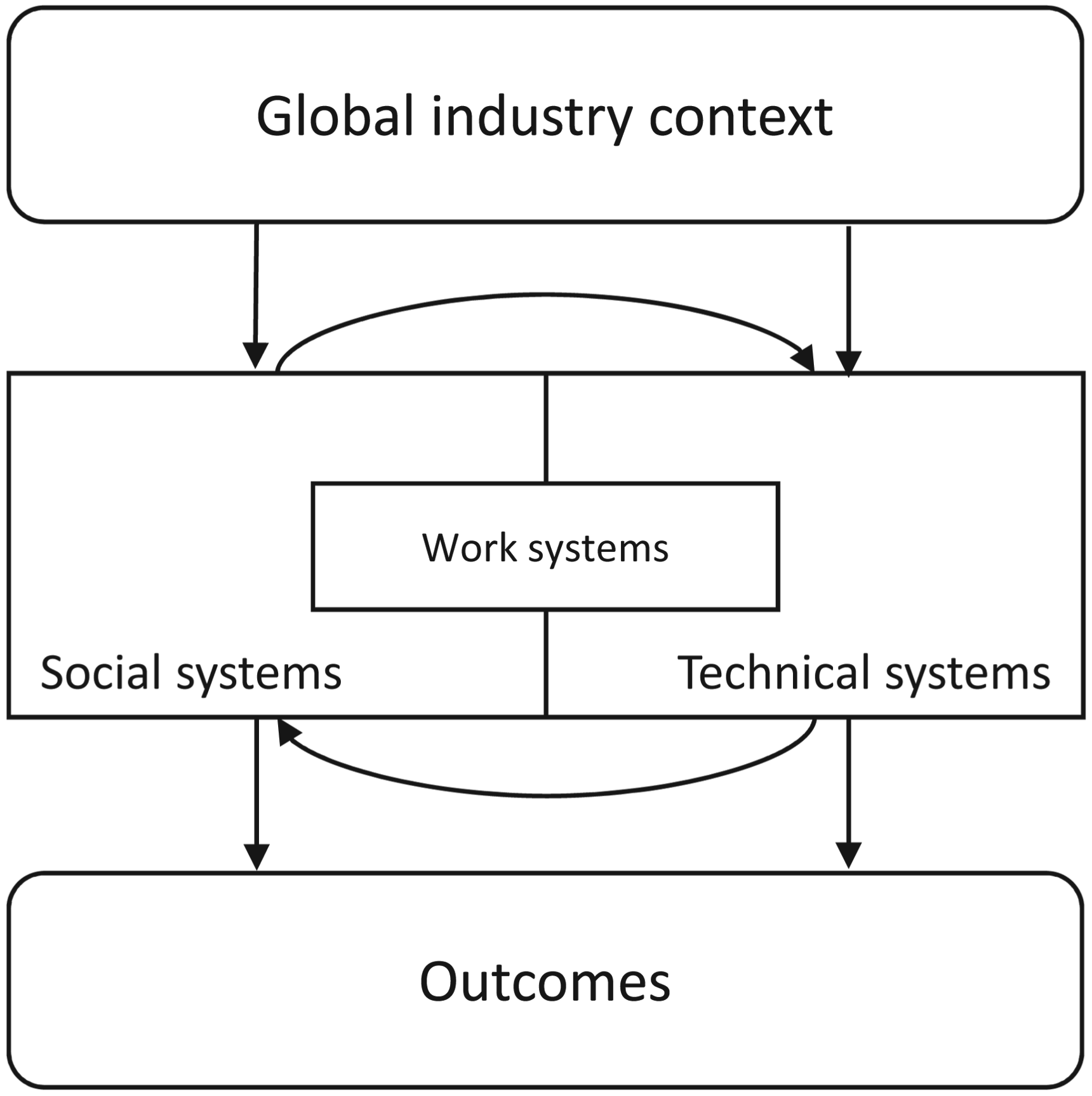
Overview of STS theory.
A
A
Viewing modern slavery risks through an STS lens encourages an explicit characterization of the reciprocal interactions among work systems, social and technical systems, and the global industry context that influence modern slavery risks across the supply chain (Kull et al., 2013). Most importantly, critical points of leverage for action, redesign, or regulation become evident for supply chains of goods and services as well as labor supply chains (Figure 2). For example, starting points can be the (re)design of modern slavery detection (e.g., recruitment, diversity/inclusion culture, whistleblowing, auditing, disclosure) and remediation practices (e.g., training, grievance, collaborative and community-based approaches; Stevenson and Cole, 2018). Traditionally, operations management has emphasized internal operations, and the structural and relational aspects of focal firm's multiple tiers of suppliers (Carter et al., 2015) that enable the flow of materials and information between organizations. Yet, recent attention has expanded to the operational roles and influence that other actors play, including NGOs and social enterprises, public and private agencies, financial institutions, and carriers (Carter et al., 2015). Aligned with this attention, the risk of modern slavery often extends beyond the “visibility boundary” of focal firms to include actors who may be hiding labor exploitation (Caruana et al., 2021; Dreier and Luce, 2023). As an important addition, modern slavery reinforces consideration of the labor supply chain that operates in the background (New, 2015), pointing to deceptive recruitment from vulnerable labor pools and techniques for ensuring their continued exploitation through coercive control (Fletcher and Trautrims, 2024).
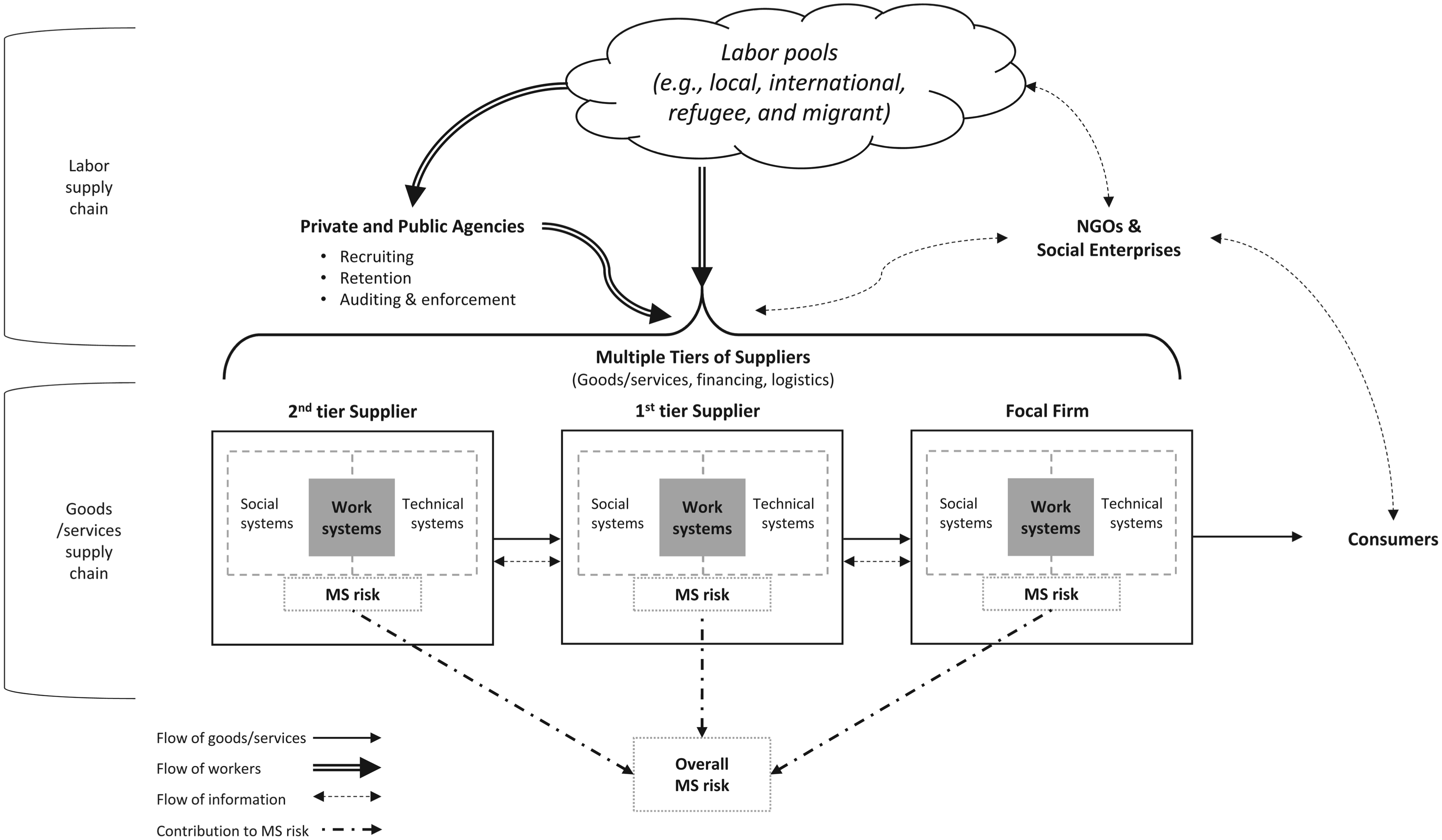
Modern slavery risk as an outcome of interactions among multiple systems.
We now explicitly unpack how each of the previously defined sociotechnical dimensions link specifically with risks of modern slavery. Our intent is not to be exhaustive, but rather illustrative, drawing from recent research, including papers in this special issue.
If a firm's social system supports workers to develop a sense of purpose and work collaboratively, there is a greater likelihood of preventing exploitation. Sentiments and social endowments can impact decision-making and create a workplace culture where, if positive social experiences are prioritized, less tolerance of exploitation results (Soundararajan et al., 2021). Social systems can be an integral part of broader supply chain labor governance frameworks, such as shared responsibility (Soundararajan, 2023), to mitigate modern slavery risks. This is because the supply chains within which an organization operates shape its social system, driven by the dynamics of interorganizational sociotechnical integration (Kull et al., 2013).
Opaque and fragmented technical activities with limited coordination affect work system designs, creating an environment where exploitative practices can thrive unnoticed. For example, lack of proximity between different stages of production, subcontractors, or multiple tiers of suppliers can make it difficult to carry out effective social auditing of working conditions in supply chains (Reinecke and Donaghey, 2021). The intensity and variation of workload resulting from changing demands or disruptions that ripple across supply chain tiers place greater pressure on labor pools, potentially perpetuating precarious work conditions, limiting worker agency, and reducing transparency, thereby increasing the vulnerability to modern slavery risks. At the risk of oversimplification, one could argue that minimizing labor involvement—particularly where the supply chain is opaque and offers limited visibility—can be a useful approach to abate modern slavery risk exposure. Yet, this does not have to be the only approach. Technical governance, such as systems for monitoring and tracking (McGrath et al., 2021) or self-reporting through mobile apps (Marques et al., 2024), can contribute to reducing isolation and vulnerability (Crane, 2013; Kougkoulos et al., 2021), and to ensuring fair distribution of workload and opportunities for skill development.
The complexity of work systems is reflected by the extent to which different elements and constructs of STS interact and affect each other; complexity tends to increase as the reach, decentralization, automation, and disturbances increase, as outlined by Vicente (1999). Some of the dimensions of work system complexity include task interdependence, diversity, and uncertainty, among others (Carayon, 2006). As work system complexity continues to rise, managers engaged in the design, implementation, and maintenance of systems within and among firms are confronted with difficult challenges related to upholding worker welfare such as paying an LW (Shen et al., 2024), ensuring protection of human rights, and enforcing stringent antislavery measures (Soundararajan et al., 2021). The need to work across organizational, geographical, cultural, and temporal boundaries due to multiple tiers of suppliers constrain development of governance systems that can mitigate modern slavery risks (Gold et al., 2015; Reinecke and Donaghey, 2021). Supply chains tainted with modern slavery often show complex interactions between legal and illicit organizations, which requires disruptive interventions to address the entire network composed of a multitude of systems (Bhimani et al., 2024).
The
Returning to Figure 2, connections between external entities (NGOs, social enterprises, public and private agencies, and consumers) and the social, technical, and work systems embedded in supply chains influence the awareness and response to such challenges. Wilhelm et al. (2024) point to the role of NGOs as “social intermediaries” between supply chains and workers, facilitating transparency and collaborative response mechanisms. Public policies, regulations and political differences also influence how modern slavery is perceived, assessed, and tackled (Bodrožić and Gold, 2024). Finally, consumer engagement can play a critical role in supporting the legitimacy and influence of external entities, such as NGOs, as well as cultures that may allow moral (ir)responsibility to frame the discussion of labor exploitation and consumption of slave work (Carrington et al., 2021). These elements influence our understanding of modern slavery risks and the formulation of effective strategies to deal with it across work systems. For example, different actors in an industry context may describe the risks of modern slavery in very different ways, leading to much debate about the extent of modern slavery, its priority within the sociopolitical agenda, and what strategies and actions would be most effective. These actors engage in “framing battles,” which reflect the competing narratives and discourses surrounding the issue (Gutierrez-Huerter et al., 2023).
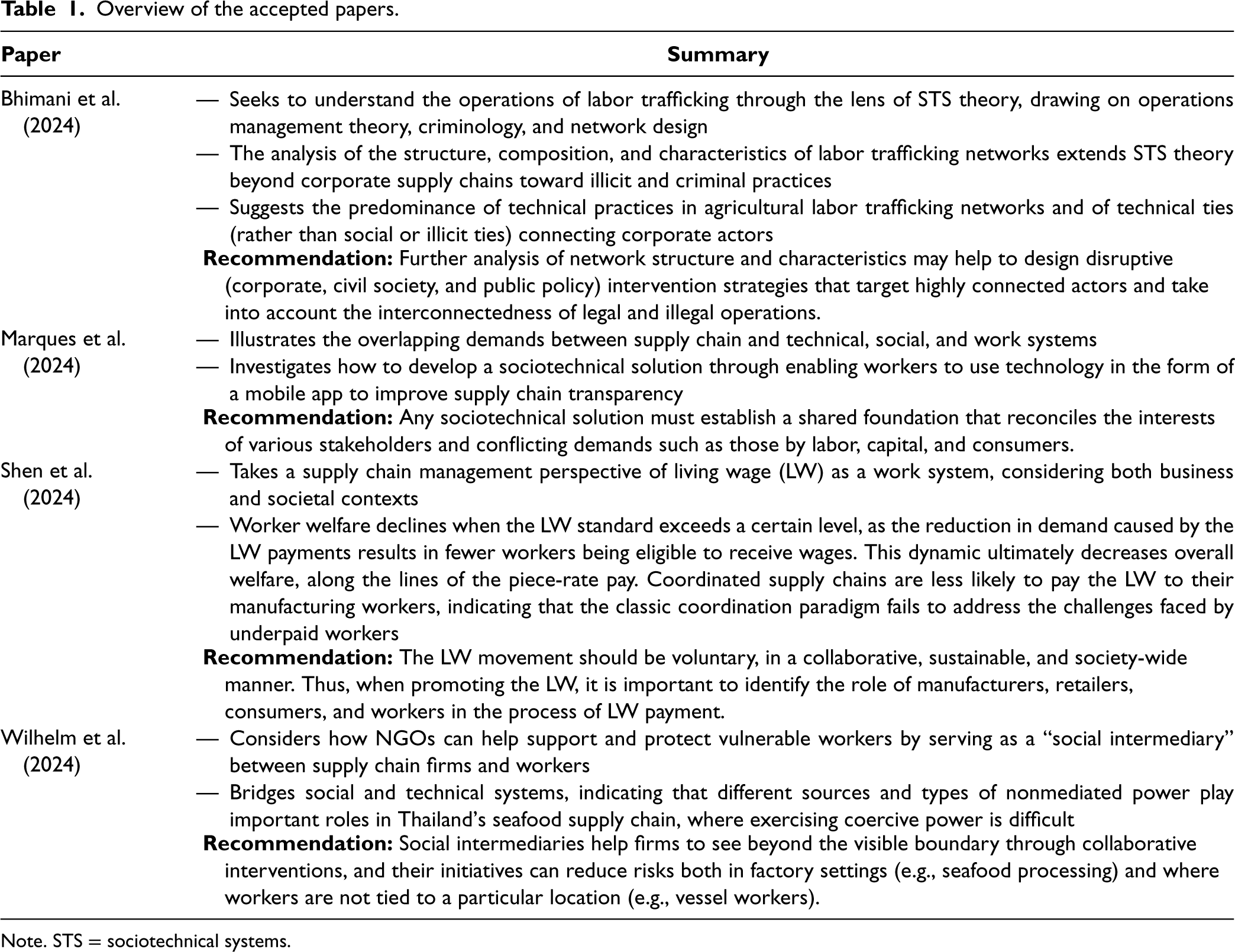
In “The ties that link us: Uncovering the socio-technic connections of a labor trafficking network,” Bhimani et al. (2024) adopt a multidisciplinary approach, drawing from STS theory (see Figure 2), operations management, criminology, and network design (Table 1). Their study investigates labor trafficking through a cross-case analysis of 12 networks in the U.S. agricultural sector. By focusing on network structure, composition, and characteristics, the authors shed light on labor trafficking as an often underestimated aspect of human trafficking. The paper highlights the interplay between legal and illicit organizations, emphasizing the need to understand human trafficking within the context of both legal and criminal practices. Bhimani et al. (2024) formulate seven research propositions, offering valuable directions for future studies. These propositions explore parameters of network structure, emphasizing aspects such as network density, transitivity, coaffiliation, and core–periphery structure. By analyzing network characteristics, the study provides a foundation for designing disruptive intervention strategies that target highly connected actors, bridging corporate, civil society, and public policy efforts to combat labor trafficking.
Overview of the accepted papers.
Overview of the accepted papers.
Note. STS = sociotechnical systems.
In their paper, titled “More than meets the eye: Misconduct and decoupling against blockchain for supply chain transparency,” Marques et al. (2024) employ intervention-based research within the fashion industry. They focus on developing a blockchain-based solution aimed at creating a comprehensive record of working conditions in Brazil. In collaboration with two nongovernment organizations, two fashion brands and their suppliers, a fashion retail association, and a blockchain startup, the authors illustrate the intricate interconnections between supply chain and technical, social, and work systems (see Figure 2). Through their study, Marques et al. (2024) demonstrate the development of a sociotechnical solution that involves enhancing supply chain transparency and empowering workers through a mobile app. While blockchain technology offers some promise, the authors also explore limitations. They emphasize the necessity of establishing a shared foundation for identifying and implementing solutions. This foundation must reconcile the conflicting interests of multiple stakeholders, including workers, investors and consumers, to foster progress toward a transparent and equitable society.
Shen et al. (2024) assess the LW campaign from a supply chain management perspective in their paper, entitled “Paying LWs in supply chains: The effects of uncertainties, coordination, and competition.” This article considers both business and societal contexts of LW as a work system, and offers an alternative to the conventional labor-capital tradeoff. By constructing game-theoretical models, the authors demonstrate that a sufficiently low LW standard can lead to Pareto improvement, incentivizing all stakeholders, including supply chain members, consumers, and workers, to engage in the LW movement. However, the authors reveal a delicate balance: exceeding a certain LW standard can adversely affect worker welfare, due to a reduced demand and eligibility for wages under piece-rate pay systems. Additionally, the paper highlights the impact of supply and demand uncertainties, and competition, on voluntary LW engagement. Notably, the research underscores the complexity of LW implementation, necessitating voluntary, collaborative, and sustainable efforts from manufacturers, retailers, consumers, and workers.
Finally, in their paper, entitled “Beyond compliance-based governance: The role of social intermediaries in mitigating forced labor in global supply chains,” Wilhelm et al. (2024) address the limitations of compliance-based auditing for modern slavery, especially in complex settings in emerging economies. NGOs can play the role of “social intermediaries,” facilitating communication among vulnerable workers and firms in multiple supply chains (see Figure 2). Drawing on data from the seafood supply chain in Thailand, the research highlights the diverse forms of nonmediated power and their roles when coercive power is less effective. Social intermediaries help firms to broaden their perspective and intervene collaboratively, for example, spanning factory settings across seafood processing and fishing locations where workers are not tied to a specific place.
Collectively, the four papers (see Table 1) provide important contributions and critical insights emerge into novel approaches that offer ways to reduce the risk of forced labor in global supply chains, paving the way for future research that prioritizes the welfare of vulnerable workers.
The insights from the papers in our special issue and our proposed conceptual framework underscore the crucial need for transboundary research that comprehensively captures the intricate interplay of STS and the interdependent relationships between work and supply chains. Our collective exploration of modern slavery risks points to the need, and ideally, encourages expanded future research in this area. In particular, as a meta-theory STS can inform and structure research questions, study designs, and both analytic and empirical field work.
Recent advancements and innovations in sociotechnical design present a promising avenue for addressing the challenges posed by modern slavery risks. In essence, supply chain managers, civil society, and consumers must “value” the reduction of risk of modern slavery thus seeing worker well-being as a source of value creation (Corbett, 2024). Moreover, well-designed regulations that set standards and transformative public policies that build infrastructure and orchestrate action (Bodrožić and Gold, 2024) must be coupled with novel technical tools to enhance transparency, strengthen workers’ rights and welfare, and enforce compliance where necessary. Innovative technologies such as mobile applications, blockchain, and remote sensing data are emerging as powerful tools to address growing consumer concerns, mounting litigation, and expanding reputational damage. Their implementation, supported collaboratively by supply chain partners, can effectively respond to rising stakeholder concerns. When deployed judiciously and with shared objectives (Thinyane and Sassetti, 2020), these technologies can significantly aid in detecting and reducing incidents of modern slavery in corporate activities (McGrath et al., 2021).
For instance, mobile applications have demonstrated potential to educate workers about their rights and facilitate whistleblowing, thereby countering deception and coaching during factory audits (Benstead et al., 2021). Similarly, the decentralized nature of blockchain technology may empower supply chains to reduce unnecessary intermediaries, counter deceptive recruitment, enhance monitoring, and enable the verification of fair payment and working conditions (Boersma and Nolan, 2020; Christ and Helliar, 2021). However, it is essential to acknowledge the nuances and complexities associated with blockchain implementation, as its effectiveness varies across industries and contexts (Marques et al., 2024). Such tools can facilitate change, but their impact is most profound when leveraged by strongly determined stakeholders who are driving transformative initiatives.
Additionally, the integration of geospatial technology and remote sensing data has proven invaluable in mitigating visibility boundary issues in supply chains (Kougkoulos et al., 2021). By collating diverse datasets from multiple sources, these technologies help prevent human-error and negligence-related discrepancies in tracking slavery activities (Boyd et al., 2018; Jackson et al., 2020; Milivojevic et al., 2020). These emerging technologies also serve as catalysts, aligning various STS elements and design innovations to establish transparent governance mechanisms that effectively combat modern slavery along the supply chain. However, as with many technologies, misuse is possible, as evidenced by the potential exploitation of artificial intelligence-based systems against vulnerable groups (Thinyane and Sassetti, 2020). Hence, ethical considerations and responsible deployment of technology are paramount (e.g., Shneiderman, 2020).
The concept of reciprocity is a central and fundamental aspect of the STS framework. For this reciprocity to occur, collaboration among stakeholders along the supply chain is a critical starting point. Moreover, some degree of shared governance can help to balance both human and technical aspects, both within and between organizations, in (re)designing effective work systems that reduce modern slavery risks in supply chains. Thus, interventions can be directed to first build collaboration, followed by fostering reciprocity and establishing shared social and technical governance. This approach allows all stakeholder groups to streamline their efforts in identifying, remediating, and mitigating modern slavery risks across multiple tiers of suppliers and focal firms. This is illustrated by the case of the Fair Food Program in the tomato industry in Immokalee, Florida (USA), a unique partnership among farmers, farmworkers, and retail food companies that ensures humane wages and working conditions. It represents a voluntary, incentive-driven best practice approach to tackling modern slavery (Kunz et al., 2023). This collective endeavor is unlikely to occur easily, but it is essential to address the global call to eliminate modern slavery and other forms of extreme worker exploitation. Although the way forward is undeniably complex and paved with conflicts and paradoxes (Matthews et al., 2024), production and operations management researchers can make important contributions that advance theory and improve practice (Van Wassenhove, 2019). With continued dedication and concerted efforts, the collaborative synergy of academia, industry, and policymakers can help society progress toward more just and equitable working conditions for all.
Footnotes
Acknowledgments
We thank the authors who have crafted theoretically and methodologically rigorous papers with substantial practical implications. We also are sincerely grateful for the dedicated senior editors and reviewers whose insightful feedback and expertise were instrumental in shaping the papers in this special issue. Their invaluable contributions significantly improved the quality and depth of insights developed in the articles. Furthermore, we express our heartfelt thanks for the unwavering support provided by the POM editorial office.
Declaration of Conflicting Interests
The authors declared no potential conflicts of interest with respect to the research, authorship, and/or publication of this article.
Funding
The authors received no financial support for the research, authorship, and/or publication of this article.

How to cite this article
Fayezi S, Klassen R, Gold S, Benstead AV and Wassenhove LV (2024) Reducing Modern Slavery Risks in Supply Chains: Contributions From a Sociotechnical Systems Perspective. Production and Operations Management 34(5): 1028–1037.