




Abstract
Ritual child homicide, the killing of children for ritual or occult purposes, is a phenomenon that occurs in many African countries. Prior to the 21st century, very little, if any, criminological analysis of ritual paedicide in African settings existed. However, research on ritual child homicide has increased in recent years, leading to greater knowledge and understanding of the phenomenon. The present study sought to consolidate and synthesize information on ritual child homicide in African communities to facilitate a better appreciation of the phenomenon. Using the Preferred Reporting Items for Systematic Reviews and Meta-Analyses guidelines, a comprehensive search for empirical studies on ritual paedicide in African settings, spanning the years 2000 to 2022, was conducted across four databases: Scopus, Web of Science, Journal Storage, and Google Scholar. A total of 14 studies met the eligibility criteria and were diligently appraised. The review shows that most ritual paedicide victims are from families of low socioeconomic backgrounds in rural communities. A ritual paedicide typically involves multiple culprits. The actual perpetrators (i.e., body hunters or murderers) are predominantly males of low socioeconomic status, motivated largely by monetary gain. To combat the phenomenon, economic improvement, the promotion of formal and public education, formal regulation of the activities of traditional healers/spiritualists, and the strengthening of the criminal justice system are recommended.
Keywords
Introduction
Since time immemorial, communities in Africa have used objects such as plants/leaves and animals to make various medicines or perform various rituals for varied purposes, including good health, fertility, longevity, protection, prosperity, rainfall or bounty harvest, victory in war, and so on (Bever, 1983; Gruca et al., 2014; Igbinovia, 1988; Insoll, 2011; La Fontaine, 2011; Owusu, 2022a). However, over the last century, human blood and body parts seem to have become some of the frequently used ingredients for such medicines and rituals in African communities (e.g., Bryceson et al., 2010; Fellows, 2013; Kabba, 2011; Labuschagne, 2004; Ngubane, 2020; Roelofse, 2014; Owusu, 2022a; Scholtz et al., 1997). In other words, there is a widespread belief in many African communities that human blood and/or body parts enhance the potency of traditional medicines and rituals that supposedly guarantee wealth, longevity, protection against enemies, and improved social life, among others. Fellows (2010), for instance, reports that one in five people in Mozambique and one in four people in South Africa believe that rituals and traditional medicines made with human body parts are more potent and effective than those effected with nonhuman objects.
The term ritual murder or ritual homicide has thus been described or defined by Igbinovia (1988, p. 37) as “a particularly violent and extreme type of criminal homicides in which the slayers excise the vital organs of the victims for use in ‘sacred’ rites.” Gocking (2000., p. 198) defines it as a killing “carried out to use the victim's blood and body parts to make a powerful medicine for an immediate objective.” Ritual murder, sometimes referred to as diretlo or muti/muthi murder in southern Africa, became widespread in various parts of Africa between the 1930s and 1950s (Evans, 1993; Gocking, 2000; Jones, 1951; Murray & Sanders, 2000; Owusu, 2022a). Ibhawoh (2013) notes that out of 38 randomly selected African criminal appeals that came before the Judicial Committee of the Privy Council between 1930 and 1945, about 19 involved ritual homicides. Due to the swift and efficient way in which the administrators and the criminal justice system dealt with the ritual murder phenomenon, by the 1960s, the rate of ritual murder cases had reduced significantly (Owusu, 2022a).
However, since the mid-1980s or early 1990s, the continent has been witnessing what seems to be another ritual murder epidemic involving many child victims, including children with albinism (Adinkrah, 2005; Agazue, 2021, 2023; Bukuluki, 2014; Burke, 2013; Burke et al., 2014; Mazuru, 2019; Minnaar, 2015; Ngubane, 2020). For example, in Ghana, Owusu (2022a) establishes that of 116 ritual murder victims reported in the media, 62 were children. In Kenya, children formed approximately 53% of ritual homicide cases or victims reported in the media (Owusu, 2022b). In South Africa, Labuschagne (2004, p. 196) reports that ritual homicide “[v]ictims tend to be healthy … and in many instances young black [people].” It is reported that of 72 ritual murder cases recorded by the Uganda Anti-Human Sacrifice & Trafficking Task Force between 2006 and 2010, as many as 43 (approximately 60%) were children (JC & KCM, 2011, p. 72). The phenomenon of killing children to harvest or extract their blood and/or body parts for ritual or occult purposes is what this study and other literature refer to as ritual child homicide, ritual paedicide, or ritually motivated paedicide (Agazue, 2021, 2023; Owusu, 2022a, 2022b).
Evidence shows that between the 1950s and early 2000s, several anthropologists, sociologists, historians, and Western observers offered diverse views or accounts of various aspects of the ritual homicide phenomenon in Africa (e.g., Evans, 1993; Gocking, 2000; Igbinovia, 1988; Jones, 1951; Murray & Sanders, 2000; Niehaus, 2000; Pratten, 2007; Rathbone, 1993; Scholtz et al., 1997; Smith, 2001). However, most of these prior works are not empirical studies and largely offer historical perspectives rather than diligent criminological analysis of the phenomenon. Besides, only a fraction of that body of literature focuses on or pays adequate attention to child victims. Hence, not much was known about the criminological aspect of ritually motivated paedicides in Africa prior to the 21st century. However, promisingly, empirical research on ritual child homicide has slightly increased in recent years, leading to greater knowledge and understanding of the phenomenon in various African communities.
Since ritual child homicide, unarguably the most violent and severe form of child maltreatment, is becoming a quite frequent occurrence in many contemporary African communities (Agazue, 2021, 2023; Amnesty International, 2017; Bukuluki, 2014; Mazuru, 2019; Ngubane, 2020), a comprehensive appraisal and understanding of the risk factors for the phenomenon is necessary to facilitate the prevention of this violent crime by guiding professional decision making. Unfortunately, however, such a systematic review is presently nonexistent, and the sparse relevant empirical works differ in terms of location or geographical setting, methodological approach, content, and date of publication, making it difficult for academics, experts, and professionals to interpret and apply in practice.
The present study thus seeks to consolidate and synthesize information on ritual child homicide in African communities to facilitate a deeper understanding of this appalling phenomenon. The study focuses on, and seeks to enhance an understanding of, the following aspects of the ritual child homicide phenomenon: (a) concept/meaning, (b) offence characteristics, (c) victim and perpetrator characteristics and relationship, (d) magnitude, (e) motivations and factors for its persistence, (f) criminal justice response, and (g) measures for combating the phenomenon. It is hoped that conducting a systematic review of the empirical literature on ritual child homicide, and identifying potential victims and perpetrators, motivations, and the environments in which such crimes are likely to occur, will facilitate the development of efficient intervention measures.
Methods
Data Sources and Search Strategy
A comprehensive search of the empirical literature on ritual child homicide in African countries, spanning the years 2000 to 2022, was conducted using the Preferred Reporting Items for Systematic Reviews and Meta-Analyses (PRISMA) guidelines (Moher et al., 2009; Page et al., 2021a). The present study, which commenced in February 2023, sought to understand the nature of the ritual paedicide phenomenon in the 21st century; hence, the chosen study period (i.e., 2000–2022). It must be mentioned that prior to carrying out this systematic review, simple scoping searches were conducted to gain an overview of the range and depth of the extant empirical literature/research on ritual child homicide in African settings. The outcome of the scoping or preliminary searches, to a significant extent, informed the inclusion and exclusion criteria devised.
To identify relevant studies for appraisal, searches were conducted across the following databases and search engine: Scopus, Web of Science (WoS), Journal Storage (JSTOR), and Google Scholar (GS). To ensure that no relevant work was missed, all fields were search in the selected databases, except GS. Evidence shows that even though results on GS (full text) can run into the hundreds of thousands, the yield after the first 200 or 300 hits is usually poor (Haddaway et al., 2015; Ohlsson & Shah, 2020). Hence, to improve the relevance of records returned and reduce the number of unsuitable references obtainable, search on GS was restricted to title rather than full-text search (Garcia-Yi et al., 2014). Following the preliminary searches, it was observed that records after the first 500 hits on JSTOR were overwhelmingly not relevant to the topic under discussion; hence, it was deemed reasonable to restrict the screening to only the first 500 results, sorted by relevance.
The following search terms were used across the Scopus and WoS databases and GS search engine: “ritual murder,” “ritual murders,” “ritual homicide,” “ritual homicides,” “muti murder,” “muti murders,” “medicine murder,” “child sacrifice,” “ritual paedicide,” “albino killings,” “juju-driven paedicide,” “ritual child homicide,” and “killings of people with albinism.” For the search in JSTOR database, only the first 10 search terms were used. Thus, during the preliminary searches, search in JSTOR database using the last three search terms return only three records none of which was relevant, hence, their exclusion. The 13 search terms were chosen because they are known to be important phrases or terms in studies and discourses on ritual homicide. The Boolean operator OR was used to combine and simultaneously search for the search terms in each database. All four databases, including GS, were first searched in February 2023; however, the search was updated in May 2024. Additionally, the reference lists of potentially relevant studies were scanned to locate other important works that might not have been listed on the databases perused or might have been missed during the search process.
Inclusion and Exclusion Criteria
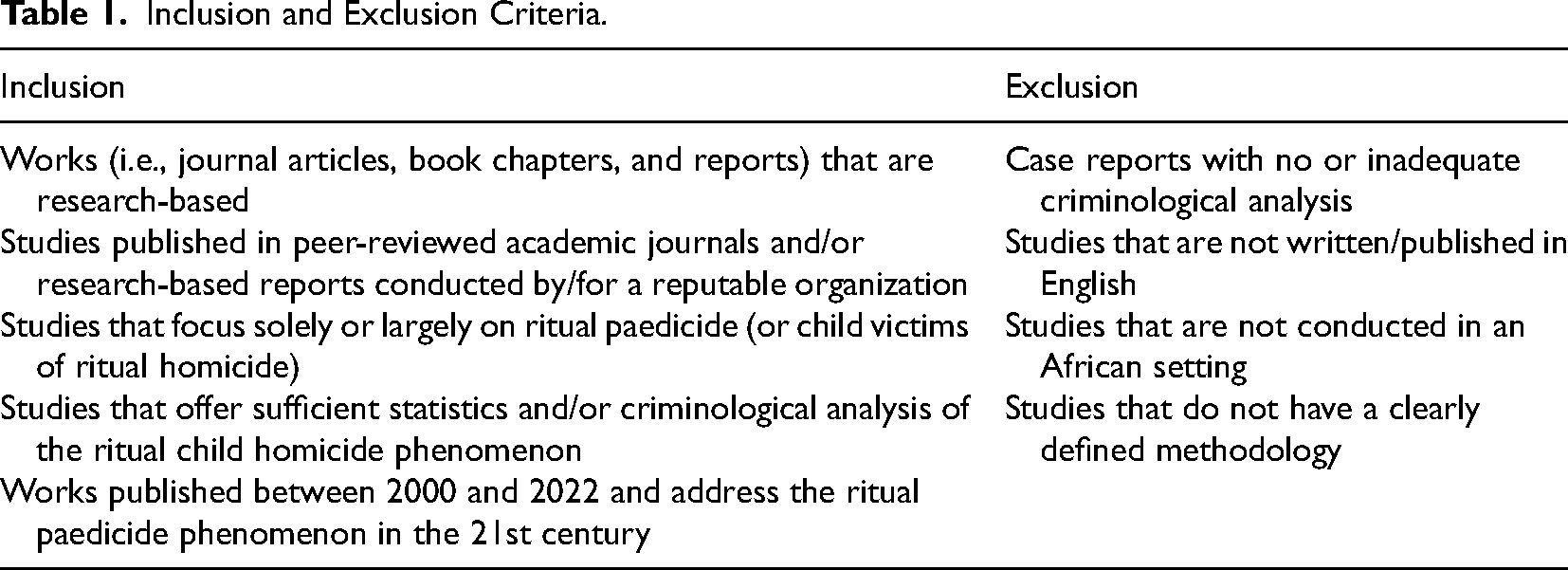
Because of the lack of empirical studies on the ritual child homicide phenomenon, the threshold for eligibility was kept relatively low so that a reasonable number of empirical works could be appraised. For instance, no limitation was applied concerning studies’ sample size, and no eligibility provisions were made regarding the empirical research methods/approaches utilized. Hong et al. (2018b) observe that systematic reviews utilizing empirical research are exceptionally useful for examining complex phenomena and interventions. Therefore, it was felt that due to the complex nature of the ritual paedicide phenomenon, empirical studies would offer a more reliable and useful information than nonempirical works. Table 1 shows the inclusion and exclusion criteria used for the present review.
Inclusion and Exclusion Criteria.
Study Selection and Data Extraction
After applying the relevant filters/limiters (i.e., date of publication, language, and document type), the databases search yielded the following results: Scopus (n = 1353), WoS (n = 111), and GS (n = 454). The search in JSTOR database returned 4531 results; but as already indicated, only the first 500 hits were screened. This brought the total number of records processed to 2418. The Zotero reference management software was utilized to process all identified records; and where necessary, a manual approach was used. A total of 349 duplicates were removed from the records retrieved. The remaining 2069 records were then screened against the inclusion and exclusion criteria defined in Table 1. After screening the records by titles and abstracts, 36 studies showed potential for inclusion. The 2033 records were removed from the sample at this stage largely because they were not related to ritual paedicide, not conducted in an African community, or were nonempirical publications. A thorough scan of the reference lists of the 36 records resulted in 15 additional potentially relevant studies, bringing the figure to 51.
After reviewing the full text of each of the 51 potentially relevant manuscripts, 14 studies (11 from the databases and three from the reference lists) met the study's eligibility criteria and were included in the review. It must be mentioned that one study (Bukuluki et al., 2017) draws, to a great extent, on data utilized in Fellows (2013). Kitchenham and Charters (2007) caution that including studies that use the same data and have similar content in a review may lead to duplications which can bias results. However, both studies were included because though they are quite similar in many ways, each maintains a reasonable degree of uniqueness. Figure 1 provides a PRISMA flowchart of the search and selection process. Most of the manuscripts that were fully reviewed were excluded because they did not focus on or pay sufficient attention to child victims of ritual homicide. Others were excluded because they were case reports with no or inadequate criminological analysis, did not have a clearly defined methodology, or were not empirical studies. Appendix 1 shows the full list of the records excluded after reviewing full text, and reasons for exclusion. It must be clarified that some records were excluded for multiple reasons; however, to keep it simple, only one reason is provided for each study's exclusion.
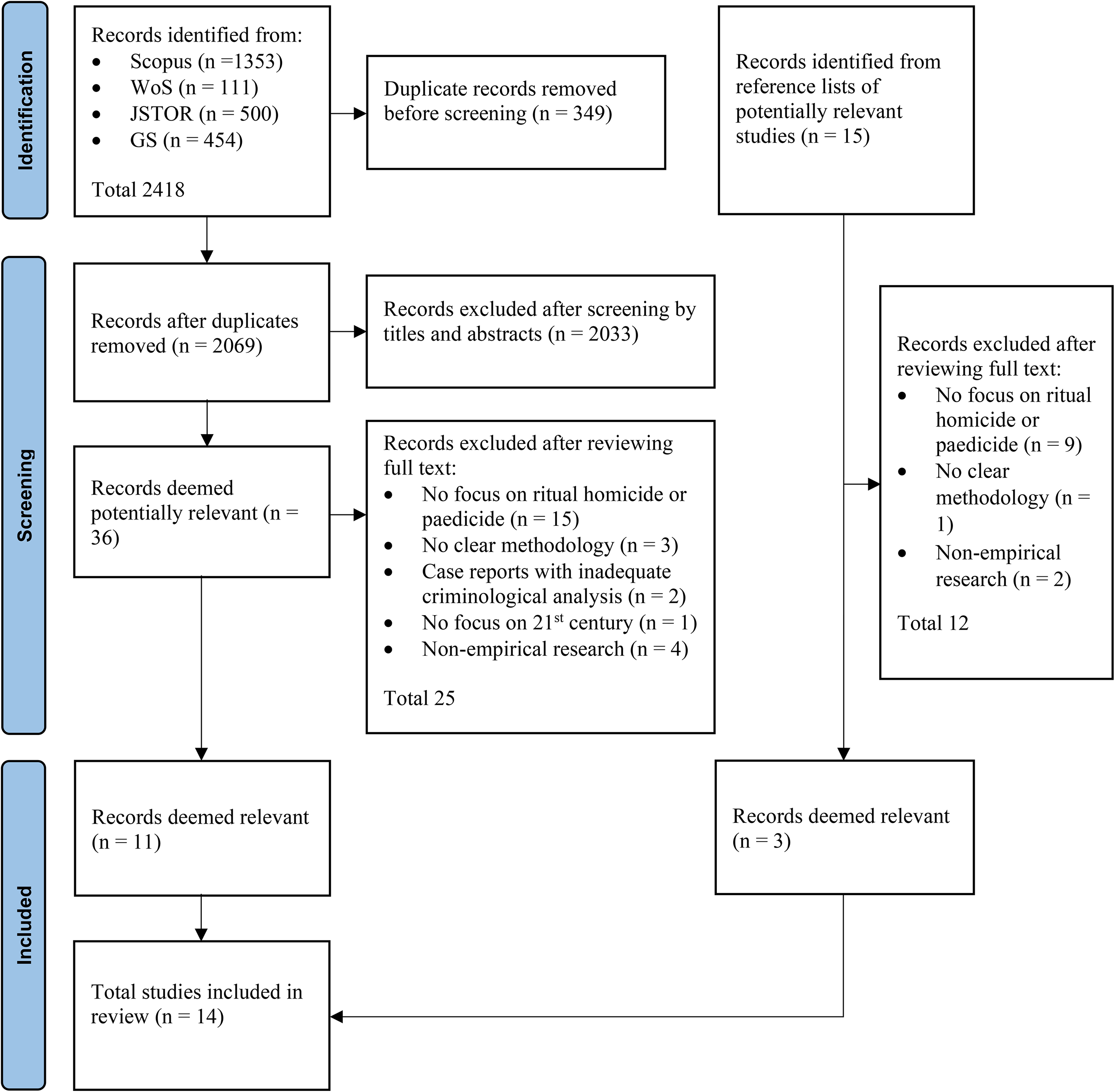
PRISMA flow diagram highlighting the different stages of the systematic review.
Each of the 14 included studies was critically analyzed and summarized under the following predefined themes: (a) the concept/meaning of ritual child homicide, (b) offence characteristics, (c) victim and perpetrator characteristics and relationship, (d) magnitude of ritual child homicide, (e) motivations for ritual paedicide and factors for its persistence, (f) criminal justice response to ritual paedicides, and (g) measures for combating the phenomenon. These are themes that dominate the literature and discourses on the ritual homicide phenomenon. Summarizing the findings of the included studies according to the seven predefined themes facilitated a better comparison and a more accurate and detailed reporting.
Quality Assessment
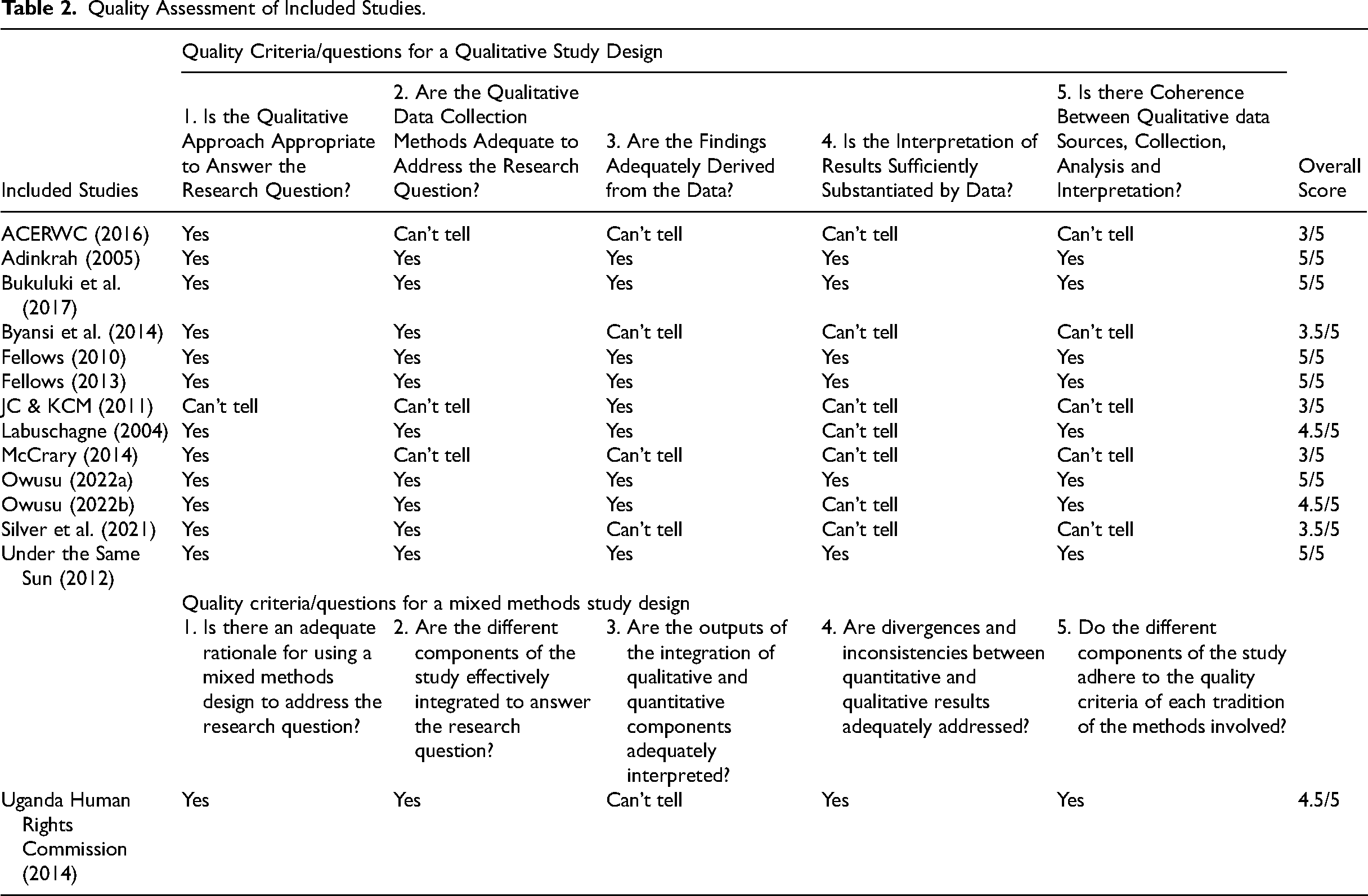
For this review, the Mixed Methods Appraisal Tool (MMAT) was utilized to evaluate the methodological quality of included studies (Hong et al., 2018a, 2018b, 2018c). The MMAT is designed for systematic reviews that include qualitative, quantitative, and mixed methods studies. This tool was chosen for the present review because it allowed the different design methods employed in the included studies to be evaluated using the same tool (Hong et al., 2018a). The MMAT includes quality criteria of five categories of study designs: qualitative, quantitative randomized controlled trials, quantitative nonrandomized, quantitative descriptive, and mixed methods. Each study design category is evaluated by using five relevant questions and three response options for each question. The three response options are: “yes” which means the criterion is met, “no” which means the criterion is not met, and “can’t tell” when there is not enough information in the study to determine if the criterion is met or not (Hong et al., 2018a, 2018c).
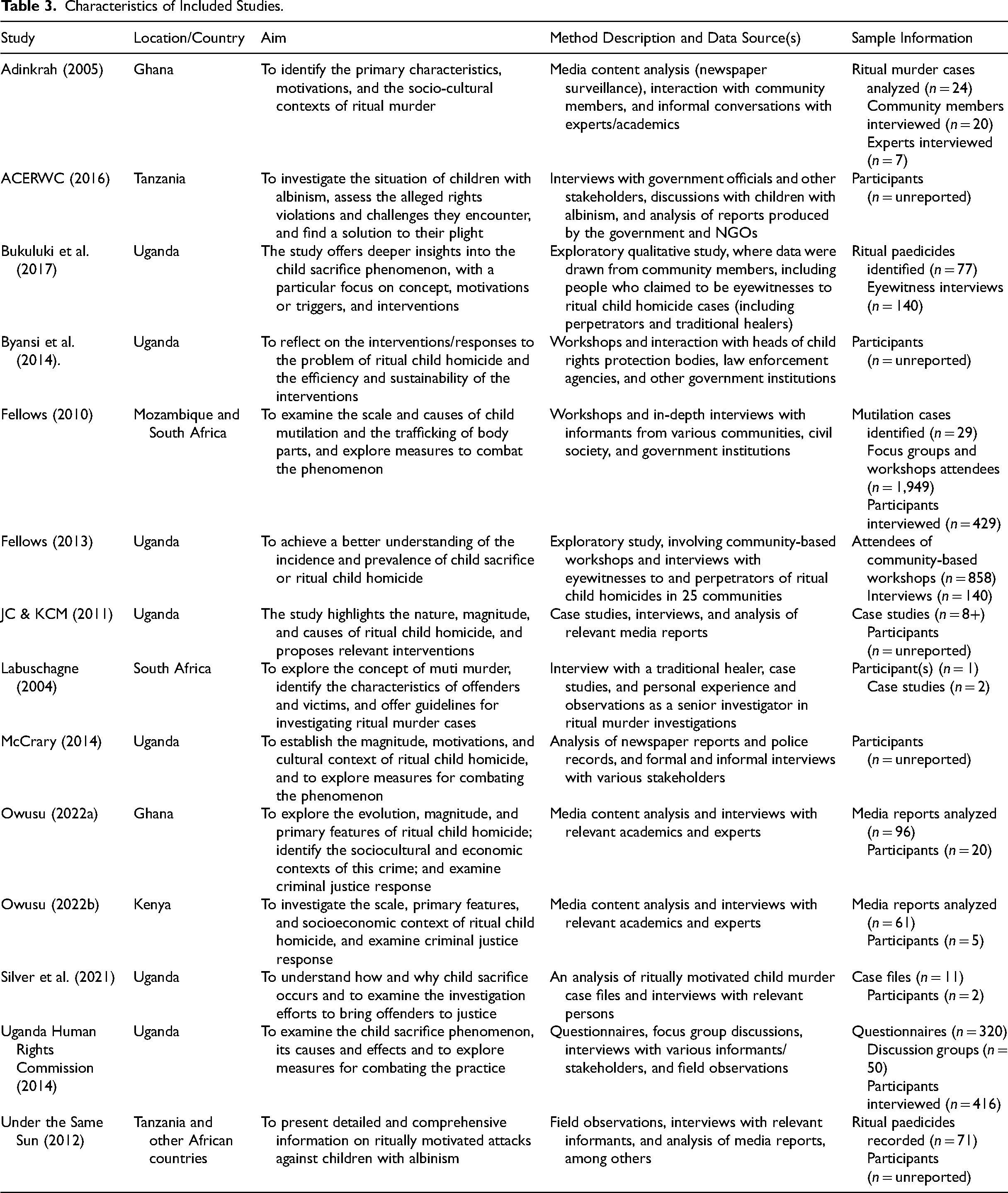
Even though all the 14 included studies employed two or more research approaches, only one study met the MMAT's criteria for categorizing a study as mixed methods research, which it defines as a form of research that involves combining qualitative and quantitative methodological approaches (Hong et al., 2018a). Hence, 13 of the included studies were evaluated according to the five questions/criteria for the qualitative design category, and one study was evaluated using the criteria for the mixed methods design category. For each study, the methodological quality was evaluated by assigning an overall quality score ranging from 0/5 to 5/5. A “yes” response was assigned a score of 1 point, a “can’t tell” response was assigned a score of 0.5 point, and a “no” response was allotted no point. Table 2 shows the methodological quality ratings for the included studies, and Table 3 provides the characteristics of the included studies.
Quality Assessment of Included Studies.
Characteristics of Included Studies.
Results
As shown in Table 3, six countries were represented: Ghana, Kenya, Mozambique, South Africa, Tanzania, and Uganda. Twelve of the studies (i.e., African Committee of Experts on the Rights and Welfare of the Child [ACERWC], 2016; Bukuluki et al., 2017; Byansi et al., 2014; Fellows, 2010, 2013; JC & KCM, 2011; McCrary, 2014; Owusu, 2022a, 2022b; Silver et al., 2021; Uganda Human Rights Commission, 2014; Under the Same Sun, 2012) focus solely on ritual paedicides or child victims of ritually motivated attacks. The remaining two studies (i.e., Adinkrah, 2005; Labuschagne, 2004) focus on ritual homicide in general but pay adequate attention to child victims. Of the 14 studies appraised, eight explore the concept/meaning of ritual child homicide; all touch on offence, victim, and/or perpetrator characteristics; 11 offer an overview of the magnitude of ritual child homicide in the relevant communities; all explore the motivations for, and/or factors contributing to the persistence of, ritual paedicide; all, to various extents, touch on the criminal justice response to ritual homicide; and at least 12 studies propose measures for combatting the phenomenon. Details of the findings of the 14 studies are presented in the succeeding sections.
The Concept/Meaning of Ritual Child Homicide
Almost all the studies reviewed offer an exposition of the concept of ritual murder/homicide. However, only eight studies touch specifically on the concept/meaning of ritual child homicide (Bukuluki et al., 2017; Byansi et al., 2014; Fellows, 2013; JC & KCM, 2011; Owusu, 2022a, 2022b; Silver et al., 2021; Uganda Human Rights Commission, 2014). Interestingly, different academics and researchers use different terminologies to denote the ritual child homicide phenomenon. Bukuluki et al. (2017), Byansi et al. (2014), Fellows (2013), JC & KCM (2011), Silver et al. (2021), and Uganda Human Rights Commission (2014) employ the phrase “child sacrifice” which is a term commonly used in Uganda and other East African countries, whereas Owusu (2022a, 2022b) uses the terms “ritual paedicide” and “juju-driven paedicide.” Others utilize the phrase “muti murder” or “muti” related child murder, a term commonly used among communities in southern Africa (Labuschagne, 2004).
Silver et al. (2021, p. 534) define child sacrifice as “the mutilation and harvesting of children's body parts, blood, or tissue while the child is still alive . . . [which] are then consumed, worn, or buried in the belief that the person using them will gain wealth, receive blessings from ancestors, recover from an illness, or be able to conceive.” This definition is consistent with that of Fellows (2013, p. 8) who defines it as: the harmful practice of removing a child's body parts, blood or tissue while the child is [still] alive. These body parts, blood or tissue are either worn, buried or consumed by an individual in the belief they will assist with a number of issues including overcoming illness, gaining wealth, obtaining blessings from ancestors, protection, initiation, assisting with conception and dictating the gender of a child.
Owusu (2022a, p. 2) defines ritual paedicide or juju-driven paedicide as the “killing of children aged 0 to 17 years for ritual or occult purposes. Ritual paedicide generally involves harvesting the victims’ body parts and/or the draining of blood.” He, however, opines that “body parts and blood may not be extracted in some instances, particularly if the prescribed ritual only requires perpetrators to have sexual intercourse with victims” (Owusu, 2022a, p. 2). He defines juju as “the African belief system and religious practice involving the use of objects and/or words to psychically manipulate events or alter people's destiny positively or negatively” (Owusu, 2022a, p. 3). Such practices or rituals are commonly performed or recommended by practitioners who claim to possess secret knowledge or have supernatural powers (Adinkrah, 2005; Fellows, 2010, 2013; Labuschagne, 2004; Owusu, 2022a, 2022b).
Evidently, even though the ritual child homicide phenomenon is expressed in different terminologies by different academics and researchers, the various definitions and descriptions offered are quite consistent with each other. In this study, the phrases “ritual child homicide,” “ritual paedicide,” and “ritually motivated paedicide” are adopted and used interchangeably.
Offence Characteristics
All the 14 studies appraised concur that the primary characteristics of a ritual murder or ritual child homicide are missing body parts of the victim and visible sign(s) of the draining of the victim's blood. However, Owusu (2022a) maintains that body parts and blood may not be extracted in certain cases. He observes that even though not every ritually motivated homicide involves the extraction of the victim's body parts and not every homicide with some body parts of the victim removed may necessarily be a ritually motivated killing, the dismemberment or missing body parts criterion for determining ritual homicide cases is a reasonable and credible method. This is because dismemberment or extraction of body parts in normal murder cases is a very rare occurrence in African communities, particularly Ghana (Owusu, 2022a).
The methods used in committing ritual paedicides are extremely violent. It involves the removal of the required body parts with a sharp instrument such as machete and kitchen knife (Adinkrah, 2005; JC & KCM, 2011; Uganda Human Rights Commission, 2014). Most of the studies, particularly those conducted in the southern and eastern parts of Africa (e.g., Bukuluki et al., 2017; Fellows, 2010, 2013; Labuschagne, 2004; Silver et al., 2021), indicate that body parts are removed while the victims are still alive. This stems from the belief that body parts from a dead victim is not as potent as those from a living person. Fellows (2013, p. 34) explains that the “screams of the victims are believed to make the medicine more powerful by waking the spirits and empowering them.” However, in studies conducted in Ghana and Kenya, Owusu (2022a, 2022b) finds that in many cases, body parts were removed after the victims had been killed.
Bukuluki et al. (2017), Fellows (2010, 2013), Labuschagne (2004), and Owusu (2022a) offer some explanations as to why human body parts, instead of nonhuman objects (such as animals and plants/leaves), are used for certain traditional medicines and juju rituals. Labuschagne (2004, p. 193) mentions that the “reason for using human body parts is that they are considered to be more powerful than the usual ingredients or methods used by the traditional healer as they contain the person's ‘life essence.’” Fellows (2010) suggests that some supplications or ambitions/goals are more difficult to realize than others; therefore, human ingredients are required for rituals meant to achieve a more difficult outcome. A similar idea is expressed by Owusu (2022a, p. 6) who states that the “belief among adherents of juju rituals is that the more valuable the object used in the manufacture of the medicine/charm or the performance of the ritual, the more potent the power of the medicine or the rite.”
Detailed instructions “are given to those who acquire the body parts. These instructions include the specific body parts needed, the age and gender of the person, and … precise instructions on whether the part should be taken while the victim is alive” (Fellows, 2010, p. 57; see also Adinkrah, 2005; Bukuluki et al., 2017; Labuschagne, 2004; Fellows, 2013). It is further established that “specific body parts are often requested for specific purposes” (Fellows, 2010, p. 57). Drawing largely on the findings of six of the studies (i.e., Adinkrah, 2005; Fellows, 2010, 2013; Owusu, 2022a, 2022b; Silver et al. 2021), Table 4 shows the 10 most sought-after human body parts in five countries.
Ranking of Human Body Parts.
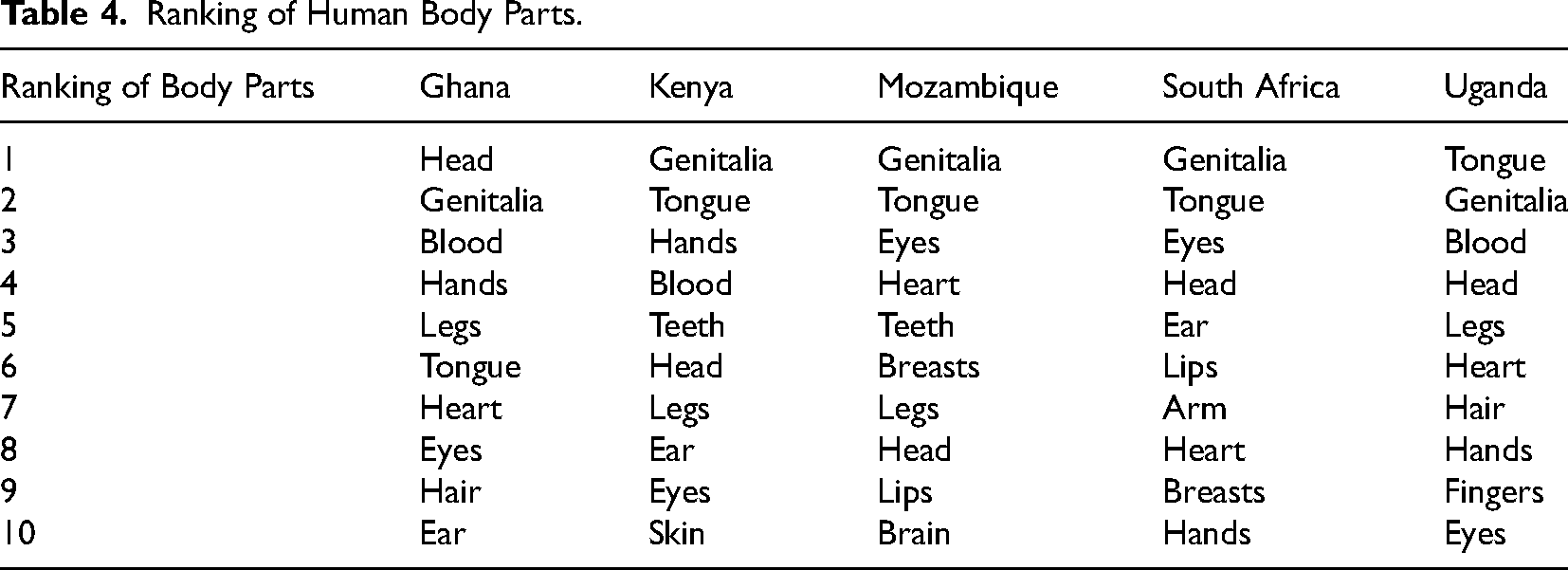
It is evident from the table above that among the body parts mostly extracted from ritual murder victims are the genitalia, tongue, blood, and head. In studies conducted in Uganda, ritual specialists and body hunters interviewed claimed that the genitalia, head, and blood are more valuable than other body parts (Bukuluki et al., 2017; Fellows, 2013). Three studies (i.e., Adinkrah, 2005; Labuschagne, 2004; Owusu, 2022a) offer plausible reasons why certain body parts, particularly the private parts, tongue, head, and blood, are preferred for medicines/rituals.
The genitalia are largely used in medicines for impotent or infertile persons; thus, medicines involving such ingredients are important to enhance sexual performance and fertility (Adinkrah, 2005; Labuschagne, 2004; Owusu, 2022a). Besides, “as a symbol of fecundity, the private parts are important in rituals and medicines to guarantee that the user obtains the benefits or aspirations sought abundantly” (Owusu, 2022a, p. 26). There is also the belief that “‘[l]uck’ resides in the genitals of a man and woman” (Labuschagne, 2004, p. 197). The frequent extraction and use of the human head for rituals stems from the notion that “the head is the only organ that can serve as a true representation of a human entity both physically and spiritually”—thus, “it constitutes a significant representation of the sacrificial victim” (Owusu, 2022a, p. 26). The head is also viewed as “a unique and magical organ, symbolizing power, longevity and invincibility” (Owusu, 2022a, p. 26). Blood is an essential ingredient for potent medicines or rituals because it forms a strong direct link with life (Owusu, 2022a). A person's life “lies in his or her blood. By offering blood in a sacrificial ritual, the practitioner is asking that the gods grant him or her long life” (Adinkrah, 2005, p. 45). The tongue “is used to smooth the path to a girl's heart” (Labuschagne, 2004, p. 197). Thus, medicines made with the tongue helps the user, usually men, to win the heart of people they love or lust after.
Most of the studies suggest that all ritual homicides are premeditated and methodically planned (Adinkrah, 2005; Bukuluki et al., 2017; Fellows, 2010, 2013; Labuschagne, 2004; Owusu, 2022a, 2022b). The planning, as Adinkrah (2005, p. 43) puts it, involves “knowing in advance the particular body parts to be procured, selecting an appropriate victim in terms of age, gender, and other characteristics, gaining access to the victim, luring the victim to the crime scene and taking steps to reduce the risk of detection.” There is broad consensus that the typical ritual homicide involves a single victim and multiple perpetrators (ACERWC, 2016; Adinkrah, 2005; Bukuluki et al., 2017; Fellows, 2013; JC & KCM, 2011; Labuschagne, 2004; Owusu, 2022a, 2022b). For instance, in Ghana, Adinkrah (2005) reports that of 24 cases examined, 22 involved multiple perpetrators (mostly body hunters), and there was an average of five perpetrators per case. Labuschagne (2004) observes that in South Africa, a typical ritual murder usually involves at least three perpetrators. All the studies suggest that most ritual murders occur in rural areas, and victims are mostly killed in isolated or remote locations.
Victim and Perpetrator Characteristics and Relationship
Findings of almost all the studies indicate that most ritual child homicide victims are from families of low socioeconomic status in rural and semirural communities (Adinkrah, 2005; Bukuluki et al., 2017; Fellows, 2010, 2013; JC & KCM, 2011; Owusu, 2022a, 2022b; Uganda Human Rights Commission, 2014; Under the Same Sun, 2012). Two studies reveal that children with albinism are among the most targeted victims. This is because people with albinism are believed to possess some form of magical or supernatural power; hence, medicines made with their body parts are deemed exceptionally potent (ACERWC, 2016; Under the Same Sun, 2012). In its 2016 report, the ACERWC notes that there was “widespread practice of ritual attacks; i.e., the killing of and attacks on children with albinism with a view to using their body parts for ritual purposes” (ACERWC, 2016, p. 14). The report stresses that such attacks (i.e., the harvesting of the body parts of children with albinism to sell or to be used for ritual purposes) “are so rampant that children with albinism are not free to live out their daily lives in their areas of origin” (2016, p. 11).
There are conflicting reports in terms of victim gender preference. For instance, the studies conducted by Adinkrah (2005) and Uganda Human Rights Commission (2014) suggest that even though victims of ritual child homicide belonged to both genders, males were more at risk of being murdered than females. The Uganda Human Rights Commission's (2014) report, for instance, notes that of the cases analyzed, 62.5% and 37.5% were boys and girls, respectively. However, Labuschagne (2004, p. 196) states that “it has been … [his] experience that females are often victims of muti murder” in South Africa. Some studies such as ACERWC (2016) and Owusu (2022a, 2022b) find no significant difference in the number of boys and girls murdered for ritual purposes. The ACERWC (2016) report notes that out of 37 ritually motivated attacks on, and killings of, children with albinism that had been officially recorded since 2006 in Tanzania, approximately 17 and 20 were against boys and girls, respectively. Owusu (2022a) also states that of 62 ritual paedicide victims reported in the Ghanaian local media between 2013 and 2020, about 30 (48%) and 29 (47%) were males and females, respectively; the gender of three of the victims was not disclosed. In Kenya, of 48 ritual paedicide victims reported in the media, 19 (40%) were males and 21 (44%) were females; the gender of the remaining eight was not disclosed (Owusu, 2022b).
The studies offer three main reasons why children are largely targeted: (a) children are generally physically fragile and unable to repel attacks, (b) medicines involving child ingredients are believed to be more potent and efficacious than those made with the body parts of adults, and (c) children are presumed to be virgins and clean (Adinkrah, 2005; Bukuluki et al., 2017; Fellows, 2010, 2013; JC & KCM, 2011; Owusu, 2022a, 2022b; Uganda Human Rights Commission, 2014). As Adinkrah (2005, p. 48) notes, “flesh and blood of young sacrificial victims [are believed to] have the greatest potency and purity and that the vitality, strength, and age of youth create a more powerful medicine.” This is backed by Fellows (2010, p. 48) who states that some people believe that the fact that they are young means that “they have used up very little of their good luck and health.” There is also the belief that virgins are pure human beings and for that reason, the chances of a medicine or ritual producing the desired effect are extremely high if a virgin or an object directly linked to a virgin is used. Children are thus targeted because they are deemed to be sexually inactive and therefore more likely to be virgins than adults (Owusu, 2022a, 2022b). For instance, in Uganda, Bukuluki et al. (2017), Fellows (2013), and JC & KCM (2011) report that children who have not pricked/pierced their ears, who do not have scars, who have not been circumcised, and those perceived to be virgins (particularly girls) are the preferred victims. Such children are deemed to be “whole” or “intact” and “pure” as they have not “shed blood.”
Almost all the studies suggest that the overwhelming majority of perpetrators of ritual child homicide are males (Adinkrah, 2005; Fellows, 2010, 2013; JC & KCM, 2011; Labuschagne, 2004; Owusu, 2022a, 2022b; Uganda Human Rights Commission, 2014; Under the Same Sun, 2012). Adinkrah (2005) and Owusu (2022a), for instance, observe that over 90% of perpetrators apprehended in Ghana and Kenya were males; and where females were involved, their role in the killings was minimal. In Kenya, all the perpetrators were males (Owusu, 2022b). Most perpetrators (particularly body hunters) seemed to be young adult males. In Adinkrah's (2005) study in Ghana, only the ages of 39 of 98 arrestees/perpetrators were known. Of those whose ages were known, 24 (62%) were aged between 20 and 45 years, and 15 (38%) were between 46 and 77 years. However, in a more recent study conducted in the same country, Owusu (2022a) notes that of 32 arrestees/perpetrators whose ages were known, 19 (59%) were aged between 20 and 39, and 10 (31%) were between 40 and 59 years. In Kenya, most of the arrestees/perpetrators were aged between 20 and 40 years old (Owusu, 2022b).
Three main categories of perpetrators of ritual paedicide have been identified: (a) the traditional healer/spiritualist who claims to have supernatural powers and who usually prescribes the required body parts and makes the medicine or performs the ritual; (b) the client who consults traditional healers and who stands to benefit/gain directly from the ritual or medicine–such persons (particularly if they are wealthy or in a position of authority) may hire other people, usually young adults of low socioeconomic status, to commit the murder; and (c) the body hunter (murderer) who kidnaps children to be sacrificed and extracts the victims’ body parts–such persons may be hired by others such as the client or the traditional healer (Bukuluki et al., 2017; Fellows, 2010, 2013; JC & KCM, 2011; Labuschagne, 2004; McCrary, 2014; Owusu, 2022a; Uganda Human Rights Commission, 2014).
Generally, traditional healers do not execute the killings themselves but send a third party (the body hunter) to do it for some of their clients (Bukuluki et al., 2017; Fellows, 2010, 2013; Labuschagne, 2004). For instance, in one study, a perpetrator serving 175 years in a maximum-security prison in South Africa confessed that he did business with (or sold human body parts to) 14 witchdoctors or traditional healers who used them to prepare purported potent medicines for their clients (Fellows, 2010, p. 50). Some studies suggest that many of the people involved in ritual child homicides are pastors, businessmen, politicians, and other figures in positions of authority (ACERWC, 2016; Adinkrah, 2005; Fellows, 2013; Owusu, 2022a, 2022b; Uganda Human Rights Commission, 2014). For instance, ACERWC (2016) reports that there was sufficient evidence of a link between general elections and the rise in the killings and maiming of children with albinism in Tanzania. However, almost all the studies indicate that the offenders apprehended and prosecuted in ritual homicide cases are largely the body hunters, not the hirers. The following statement by an informant in Uganda Human Rights Commission's (2014, p. 29) study reflects the observation of many of the studies reviewed: The wealthy people from … [the city] connive with the locals here and kidnap our children since they know we are poor and therefore cannot run after them even when it comes to applying the law. Our own people in the village, who are given money or promised big rewards, trick the innocent children with small gifts.
Three studies (i.e., Adinkrah, 2005; Labuschagne, 2004; Owusu, 2022a) identify three main groups of body hunters apprehended: (a) those who were promised money or other material things in exchange for the supply of specific human body parts, (b) those who erroneously believed that every traditional spiritualist (e.g., traditional healer, witchdoctor, fetish priest, etc.) would be interested in buying human body parts to perform rituals for their clients–such perpetrators first murdered their victims before searching for prospective buyers, and (c) those who had consulted traditional healers or juju practitioners for some assistance or favors and had been instructed to provide specific body parts to be used for potent medicines or rituals capable of producing the desired effect. Adinkrah (2005), Owusu (2022a, 2022b), and Uganda Human Rights Commission (2014) report that most body hunters tended to be of low socioeconomic status in rural communities. They were mostly peasant farmers, laborers, and fishermen. None of the studies reports a case involving a female body hunter.
The studies generally show that only a fraction of perpetrators of ritual child homicide are apprehended or prosecuted (ACERWC, 2016; Byansi et al., 2014; Fellows, 2010, 2013; Labuschagne, 2004; McCrary, 2014; Owusu, 2022a, 2022b; Uganda Human Rights Commission, 2014; Under the Same Sun, 2012). For instance, Uganda Human Rights Commission (2014, p. 49) reports that “all the key informants interviewed, in particular the parents/guardians of the victims, reported that [the] Police did not conclusively conduct the investigations to apprehend or bring the suspects to book.” For this reason, it is very difficult to establish the relationship between offenders and victims. This notwithstanding, studies carried out in Mozambique, South Africa, and Kenya seem to suggest that many perpetrators were not related to their victims (Fellows, 2010; Labuschagne, 2004; Owusu, 2022b). Labuschagne (2004), for instance, observes that in South Africa “stranger victims tend to be the majority in muti murders.” However, Silver et al. (2021) report that in Uganda “[f]amily members were suspected of being part of the child sacrifice in a majority of the cases.” The studies conducted in Ghana suggest that perpetrators were strangers nearly as often as being family members and acquaintances (Adinkrah, 2005; Owusu, 2022a). Fathers, uncles, stepfathers, and siblings seemed to be the dominant culprits in cases where victims and offenders were related (Adinkrah, 2005; Owusu, 2022a; Silver et al., 2021).
Magnitude of Ritual Child Homicide
Most of the studies acknowledge that presently, ritual child homicides and ritual murders in general are not officially recorded as a separate category of homicide in the countries where the studies were conducted. Therefore, there is no reliable and credible indicator of the prevalence or trends in ritual child homicide victimization in those places. However, 10 of the studies reviewed (i.e., Adinkrah, 2005; Bukuluki et al., 2017; Fellows, 2010, 2013; JC & KCM, 2011; McCrary, 2014; Owusu, 2022a, 2022b; Uganda Human Rights Commission, 2014; Under the Same Sun, 2012) offer an important overview of the magnitude of ritual child homicide in the respective research settings.
Adinkrah's (2005) study identifies 24 cases of ritual murder publicized in one local Ghanaian newspaper between 1990 and 2000. Six of the victims were aged between 0 and 10 years, and four were between 11 and 20 years. Owusu (2022a) reports that between 2013 and 2020, at least 62 children (i.e., nine children per year) fell victim to ritual paedicide in Ghana. This figure formed approximately 1.6% of all the murders that were perpetrated in the country each year within the study period. It is reported that in Kenya, at least 48 ritual child homicides (approximately five victims per year) occurred between 2012 and 2021 (Owusu, 2022b).
According to JC & KCM (2011), approximately 72 ritual murder cases were recorded between 2006 and 2010 in Uganda. Interviews involving informants who claimed to be eyewitnesses to ritual child homicides unearthed approximately 77 different cases where body parts, blood, or tissue were removed from victims in the country (Bukuluki et al., 2017; Fellows, 2013). One self-confessed body hunter claimed that he had killed and harvested the body parts of approximately 23 victims (Bukuluki et al., 2017). According to Fellows (2013), between June and September 2012 alone, about 20 ritual homicides (more than one case per week) occurred in just 25 communities in Uganda where his study was carried out. McCrary's (2014) study identifies approximately 50 cases of ritual paedicide in police official documents and over 80 cases from media/newspaper reports between 2006 and 2012. According to Under the Same Sun (2012), between 2006 and 2012, about 71 ritually motivated murders of people with albinism were documented in Tanzania. There were also 29 attacks and mutilations where the victims survived. The report reveals that about two-thirds of the people with albinism murdered for ritual purposes in Tanzania were children.
Based on 327 interviews involving 429 participants/informants and the outcome of workshops involving 1,949 attendees in Mozambique and South Africa, Fellows (2010) shows that most body parts are trafficked in the two countries not for organ transplants but for ritual purposes, and that ritually motivated child homicides are not uncommon in both countries. For instance, of the 327 interviews, 213 (over 65%) contained a personal, eyewitness account of mutilations. These included confessions from individuals who had been involved in killing people and extracting body parts for ritual purposes. During Fellows’ (2010) 14-month research period in Mozambique and South Africa, 29 mutilations (an average of two mutilations per month) were witnessed firsthand by his team. Most of the victims were children. The study shows that cases of ritual child homicide, were increasing in the two countries. A man convicted and handed seven life sentences in South Africa for multiple murders, confessed that he killed a total of 51 people, many of whom were children, for their body parts (Fellows, 2010).
All the studies that touch on the magnitude of ritual homicide or paedicide emphasize that the figures provided may represent a gross underestimation of the magnitude of ritual murder and ritual child homicide in the respective communities. For instance, JC & KCM (2011, p 34) suggest that ritual paedicide “is growing exponentially and that the unofficial figure vastly outstrips the official government numbers.” However, some of the studies caution that a homicide/paedicide with body parts of the victim removed may not necessarily be ritually motivated. Some of such cases may be attributed to organ trafficking (Fellows, 2010; McCrary, 2014); others may have been deliberately executed with traits of a ritual killing to deceive law enforcement authorities into believing that the murders were ritually motivated and, consequently, divert attention from themselves if they are not known to be people engaged in ritualistic activities (Labuschagne, 2004).
Motivations for Ritual Paedicide and Factors for Its Persistence
All the studies, except one (i.e., Owusu, 2022b), identify pecuniary gain or the desire for quick wealth as the primary motivation for ritual child homicides. Thus, most perpetrators killed to use the body parts for rituals or medicines that would facilitate the acquisition of wealth or make them richer (Adinkrah, 2005; Bukuluki et al., 2017; Fellows, 2010, 2013; JC & KCM, 2011; Labuschagne, 2004; McCrary, 2014; Owusu, 2022a, 2022b; Uganda Human Rights Commission, 2014; Under the Same Sun, 2012); others killed to sell the victims’ body parts to traditional spiritualists or the spiritualists’ clients (Bukuluki et al., 2017; Fellows, 2010, 2013; JC & KCM, 2011; Labuschagne, 2004; Owusu, 2022a; Under the Same Sun, 2012).
Other motivations were the unbridled quest and desire for luxurious effects, longevity, business success, and fortification or protection against perceived enemies and evil forces (Adinkrah, 2005; Bukuluki et al., 2017; Fellows, 2010, 2013; JC & KCM, 2011; Labuschagne, 2004; McCrary, 2014; Owusu, 2022a, 2022b; Under the Same Sun, 2012). However, in Kenya, many people committed such murders primarily to fulfil their obligations as members of devil worship or occult sects (Owusu, 2022b). Thus, in Kenya, the primary motivation was not monetary gain per se, “but the general perceived benefits that come with being a zealous member of an occult group or devil worshipping sect–protection …, longevity, prosperity, and so on” (Owusu, 2022b).
Several factors account for the prevalence and persistence of ritual homicides. However, virtually all the studies reviewed mention that widespread unemployment and poverty or economic hardship are at the root of the ritual child homicide or ritual murder phenomenon. Thus, the desperation of individuals to escape poverty and the deprivations associated with it, makes them susceptible to fraudulent traditional spiritualists’ offers of improved financial situation and good living that may be realized through medicines or rituals with human ingredients (Adinkrah, 2005; Byansi et al., 2014; Fellows, 2010, 2013; JC & KCM, 2011; McCrary, 2014; Owusu, 2022a, 2022b; Uganda Human Rights Commission, 2014; Under the Same Sun, 2012).
Most of the studies suggest that inadequate parental supervision (or negligence) is one of the major factors contributing to the persistence and perceived escalation of ritual child homicides (Byansi et al., 2014; Fellows, 2010, 2013; JC & KCM, 2011; McCrary, 2014; Owusu, 2022a, 2022b; Silver et al., 2021; Uganda Human Rights Commission, 2014; Under the Same Sun, 2012). They show that most of the victims who were under 10 years were abducted and murdered while running errands for their parents or other family members by themselves, on their way to or returning home from school unaccompanied, fetching water from a stream alone, playing outside their homes unsupervised, and grazing livestock, among others. None of the studies reports an instance where parents or caregivers were prosecuted or even cautioned for child neglect.
The lack of formal laws or institutions for regulating the activities and practices of traditional healers has also been identified as an important factor that contributes to the persistence of ritual paedicides. Thus, fraudulent individuals, masquerading as traditional healers, capitalize on the nonregulatory nature of traditional healing and the naivety of some of their clients to encourage the perpetration of ritual paedicide by emphasizing the supposed potency of medicines with human ingredients (Bukuluki et al., 2017; Byansi et al., 2014; Fellows, 2010, 2013; JC & KCM, 2011; Labuschagne, 2004; McCrary, 2014; Owusu, 2022a; Uganda Human Rights Commission, 2014; Under the Same Sun, 2012). The following statement by Bukuluki et al. (2017, p. 145) is important: ritual paedicide “is perpetuated by fraudulent traditional ‘witch doctors’ who thrive on manipulating their unsuspecting clients to assure them that mutilation and human or child sacrifice is the panacea to their misfortunes.”
Other factors are the preoccupation with juju or the supernatural, lack of formal education, greed, and ineffective criminal justice system (Bukuluki et al., 2017; Byansi et al. 2014; Fellows, 2010, 2013; JC & KCM, 2011; Labuschagne, 2004; McCrary, 2014; Owusu, 2022a; Silver et al. 2021; Uganda Human Rights Commission, 2014). The following statement summarizes the position of most studies on the triggers and reasons for the persistence of ritually motivated paedicide: it “is driven by structural drivers such as poverty, unemployment, food insecurity, lack of a regulatory framework for traditional healers, … inadequate mechanisms for child protection at the community and family levels, and sociocultural beliefs and practices that are difficult to change in a short time.” (Byansi et al., 2014, pp. 80–81)
Criminal Justice Response to Ritual Paedicides
Most of the studies emphasize that the criminal justice system's response to ritual child homicides has been exceedingly ineffective, and that most ritual paedicide cases are not solved (ACERWC, 2016; Bukuluki et al., 2017; Byansi et al., 2014; Fellows, 2010, 2013; JC & KCM, 2011; Owusu, 2022a, 2022b; Silver et al., 2021; Uganda Human Rights Commission, 2014; Under the Same Sun, 2012). JC & KCM (2011) report that between 2006 and 2010, about 135 people were arrested in connection with ritual homicide cases in Uganda, but only one of 83 arrestees charged had been convicted at the time the study was conducted. In Tanzania, it is reported that there had been only five convictions out of 139 ritually motivated attacks recorded between 2006 and 2012 (ACERWC, 2016; Under the Same Sun, 2012). Four main interrelated factors account for the ineffectiveness of the criminal justice response and low conviction rate: (a) incompetence and lack of commitment and professionalism on the part of law enforcement personnel, (b) bribery and corruption within the police service, (c) lack of resources, and (d) slow and corrupt judicial process (Bukuluki, 2017; Fellows, 2010, 2013; JC & KCM, 2011; McCrary, 2014; Owusu, 2022a, 2022b; Silver et al., 2021; Under the Same Sun, 2012).
Many of the studies paint a picture that suggests that crime scenes were poorly managed and preserved by police officers and detectives in many instances (Bukuluki et al., 2017; Fellows, 2010, 2013; Labuschagne, 2004; Owusu, 2022a, 2022b). In many of the cases reported, the remains of victims were removed by law enforcement authorities or by community members upon instructions of the police, and either taken to the morgue or buried outright, without any forensic examinations for fingerprints and other basic DNA samples (Fellows, 2010, 2013; Owusu, 2022a, 2022b). The statement of one informant in Fellows’ (2010) study who witnessed the mutilated body of her sister and 2-year-old niece, is quite telling: the perpetrators “removed the genital organs and the brain from my sister, and the heart and the teeth from both of them … we notified the Police and so far the health department and the Police have not come here to see the bodies or even to do any investigation” (p. 67). In another case, a community member who discovered the mutilated body of a 12-year-old girl, made the following remark: “the worst was the lack of support from the Police, they didn’t even provide transportation, they only went away with the words ‘go bury’” (Fellows, 2010, p. 67).
In South Africa, the father of a 5-year-old ritual paedicide victim had this to say: “The Police came but I never heard from them ever since, despite telling them that there was a guy who had been seen with my son on the day he went missing …. It hurts me that they never came back …. The Police never bothered to keep us up to date regarding the murder case” (Fellows, 2010, p. 69). In Uganda, the guardian of a ritual paedicide victim stated as follows: “[the] Police did not help us that much when we reported and had the suspects. [Proper] … investigations were … [not conducted]. They later let the suspects go scot-free …. [A]fter some time we were informed that the file was missing…; we gave up on the case and no one was answerable for the death of our child” (Uganda Human Rights Commission, 2014, p. 49). Such experiences were shared by many of the participants in the studies reviewed.
Some of the studies report evidence of bribery and corruption within the police service which negatively affect their response to ritual child homicide cases (Bukuluki et al. 2017; Fellows, 2010, 2013; JC & KCM, 2011; McCrary, 2014; Owusu, 2022a). Bukuluki et al. (2017, p. 170) note that in Uganda, justice is “a preserve of the haves, those able to ‘buy’ it like any market commodity.” They report an instance where a suspect who was arrested for allegedly dismembering his 7-year-old nephew was released after ostensibly offering the police a bribe of 500,000 shillings (about US$186 at the time) (Bukuluki et al., 2017; see also Fellows, 2013) In Ghana, a landlord implicated in a ritual child homicide case was apparently left off the hook because he had the money to bribe the officers investigating the case. Thus, even though the body hunter had confessed that the landlord contracted him to extract the victim's organs for rituals, law enforcement authorities never investigated the killer's allegation (Owusu, 2022a).
In Uganda and Mozambique, Fellows (2010, 2013) reports instances where the police demanded financial incentives from the victims’ families or their communities before commencing or continuing with investigations into ritual child homicide cases. For instance, in an interview with Fellows and his research team in Uganda, the grandmother of a 2-year-old ritual murder victim recounted having asked her son to send her some money in order to pay the officers to have the investigations continued. The son did not have the money at the time, hence the investigations stalled (Fellows, 2013). Another case involving the mutilation of a pregnant woman and her unborn baby in Uganda was stalled because the victims’ family could not get money to induce the investigators (Fellows, 2013).
At least two studies (i.e., Fellows 2010; Silver et al., 2021) report that there have been occasions where families, communities, and nongovernmental organizations that reported ritual child homicide cases to the police were compelled or instructed to investigate the case themselves and report back to the police. Due to law enforcement authority's lack of commitment and their unwillingness to conduct thorough investigations in ritual child homicide cases, some human rights protection groups, in their quest for justice, have become de facto police detectives, doing most of the investigations (Silver et al., 2021). Other studies report that some police officers and government officials have been involved in the sale of body parts of children with albinism (ACERWC, 2016; Under the Same Sun, 2012). For instance, in 2009, police officers were among suspects arrested in Tanzania on suspicion of killing people with albinism and trading their body parts (Under the Same Sun, 2012).
Many of the studies maintain that the weaknesses and untrustworthiness of the criminal justice system have been worsened by the slow pace of justice delivery and judicial corruption (Fellows, 2010; JC & KCM, 2011; Owusu, 2022a, 2022b; Uganda Human Rights Commission, 2014; Under the Same Sun, 2012). Thus, it is reported that many cases were never prosecuted or concluded; and where cases were concluded, there was usually a significant time lapse from the time of initial arrest of the suspects to the final disposition of the case (Adinkrah, 2005; Fellows, 2010; JC & KCM, 2011; Owusu, 2022a, 2022b; Silver et al. 2021; Uganda Human Rights Commission, 2014).
Labuschagne (2004) and Under the Same Sun (2012) note that some law enforcement officers also believe that traditional healers/spiritualists possess supernatural powers and are thus unwilling to prosecute such figures for fear of retribution from them. For instance, in South Africa, a traditional healer arrested and charged for being in possession of human body parts was released, shortly after the arrest, to continue practicing his craft in the community (Fellows, 2010). The “belief that witchdoctors truly have supernatural powers means that witnesses are generally too scared to come forward to testify in court” (Under the Same Sun, 2012, p. 40). They refuse to report suspects or “give evidence in court out of fear of reprisal from witchdoctors and consumers [or clients]” (ACERWC, 2016, p. 25).
The inefficiency and ineffectiveness of the criminal justice system have also been blamed, to a significant extent, on shortage of law enforcement officers and lack of material resources such as forensic laboratories, modern crime investigation equipment, medical facilities, computers, and vehicles, among others (Byansi et al., 2014; Fellows, 2010; JC & KCM, 2011; Owusu, 2022a, 2022b). For instance, in Fellows’ (2010) study, law enforcement authorities attributed their failure to respond to some ritual child homicide cases to lack of vehicles and the long distance between the location of the crime and the nearest police station.
Due to the lack of trust in the criminal justice system and the sense of insecurity within local communities, episodes of ritual paedicide (or the discovery of mutilated bodies) at times resulted in protests by members of the affected communities who blamed the murders on police laxity and failure to investigate previous cases and apprehend perpetrators (Bukuluki et al., 2017; Byansi et al., 2014; Fellows, 2010, 2013; Owusu, 2022a, 2022b). In some cases, enraged residents assaulted suspects and/or set their property ablaze–some were badly beaten up or lynched (e.g., Adinkrah, 2005; Byansi et al., 2014; Fellows, 2010, 2013; Owusu, 2022a, 2022b). The studies caution that perpetrators are unlikely to be deterred if they perceive an ineffective response from criminal justice authorities.
Measures for Combating the Phenomenon
Almost all the studies (i.e., ACERWC, 2016; Bukuluki et al., 2017; Byansi et al., 2014; Fellows, 2010, 2013; Labuschagne, 2004; McCrary, 2014; Owusu, 2022a, 2022b; Uganda Human Rights Commission, 2014; Under the Same Sun, 2012) propose measures that may be taken by authorities to combat the ritual paedicide phenomenon
Since ritual child homicides are encouraged largely by the activities of dubious traditional healers/spiritualists, many of the studies recommend that authorities bring traditional spiritualists/healers under closer scrutiny (Bukuluki et al., 2017; Byansi et al., 2014; Fellows, 2010, 2013; JC & KCM, 2011; Labuschagne, 2004; McCrary, 2014; Owusu, 2022a, 2022b; Uganda Human Rights Commission, 2014). Thus, the popularity of traditional herbal medicine in Africa provides a conduit for fraudulent and selfish traditional healers to perpetuate or encourage the practice of ritual child homicide (Bukuluki et al., 2017; Byansi et al., 2014; JC & KCM, 2011; Labuschagne, 2004). Therefore, it has been suggested that there should be a mechanism for proper regulation of traditional healing and other activities of traditional healers. Such a mechanism should involve the registration of all traditional healers, the formulation of ethical guidelines, and clear parameters to distinguish between genuine and fraudulent practitioners (Byansi et al., 2014; JC & KCM, 2011; Labuschagne, 2004; McCrary, 2014). Law enforcement agencies should be authorized to occasionally pay unannounced visits to the shrines of traditional spiritualists (Owusu, 2022a). People who breach the relevant laws, regulations, and guidelines should be severely punished (Byansi et al., 2014; Owusu, 2022a).
The promotion of formal education at the primary and secondary levels has also been mentioned as an important tool in the fight against ritual paedicides (JC & KCM, 2011; McCrary, 2014; Owusu, 2022a, 2022b). This may help many people to disengage themselves from harmful beliefs and practices, such as juju and superstitious perceptions about people with albinism, at an early age (McCrary, 2014; Owusu, 2022a, 2022b). Some studies recommend that the promotion of formal education should go hand in hand with intensive nationwide educational campaigns/programs on the ills and futility of juju rituals/medicines, the fact that albinos are real human beings like everyone else, and the consequences for committing ritual homicides (ACERWC, 2016; Byansi et al., 2014; JC & KCM, 2011; McCrary, 2014; Owusu, 2022a, 2022b; Uganda Human Rights Commission, 2014; Under the Same Sun, 2012).
It has been recommended that a considerable part of the nationwide ritual paedicide awareness campaigns should target parents and caregivers, letting them realize that allowing young children to move about in the community unsupervised exposes them to grave dangers, including ritual homicide (JC & KCM, 2011; Owusu, 2022a, 2022b; Uganda Human Rights Commission, 2014). Such campaigns could be executed through the mass media, particularly the radio, as well as schools, local churches, and hospitals/clinics (Byansi et al., 2014; Owusu, 2022a, 2022b; Uganda Human Rights Commission, 2014). Authorities should encourage members of the community, through such campaigns, to report any suspicious activity of any person claiming to be or known to be a traditional healer. To this end, authorities should create an environment where locals are able to report the suspicious activities of such practitioners easily, confidentially, and safely (Byansi et al., 2014; Owusu, 2022a, 2022b).
In South Africa and Ghana, Labuschagne (2004) and Adinkrah (2005), respectively, note that ritual murder cases were not recorded or not registered as a subcategory of homicide, and in Mozambique and Uganda, some ritual murder cases were not recorded properly or not recorded at all (Fellows, 2010, 2013; Silver et al., 2021). Consequently, no accurate and reliable figures of this type of crime existed in those countries at the time the studies were conducted. The lack of such data makes it difficult for authorities to monitor the situation and address the problem. It has therefore been recommended that measures be put in place to accurately record ritual paedicides and ritual murders in general as a subcategory of homicide (Fellows, 2010, 2013; Labuschagne, 2004; Silver et al., 2021). Since some murders may be staged to look like a ritual murder to mislead investigators, law enforcement officers should be trained to be able to determine or be aware of the real characteristics of a ritual murder (Labuschagne, 2004).
The swift intervention of law enforcement officers in criminal cases and their ability to thoroughly investigate ritual murders are very vital in African society's effort to prevent or reduce ritual paedicides. As the United Nations Office on Drugs and Crime (2023, p. 155) points out, “[a] well-funded criminal justice system is crucial for combating crime and violence, and its most valuable asset is its personnel.” For this reason, some of the studies (e.g., Byansi et al., 2014; JC & KCM, 2011; Owusu, 2022a, 2022b; Uganda Human Rights Commission, 2014) suggest that states should ensure the availability of professional and competent officers and investigators, and the provision of modern tools and facilities needed for successful criminal investigations and prosecutions. Law enforcement authorities must be made to regularly undertake training programs on good crime scene management practices and homicide investigations (Owusu, 2022a, 2022b). It has also been recommended that “to get the best out of the police and investigators, the minimum qualification for entry to the Police Service should be a diploma” (Owusu, 2022a, p. 34). JC and KCM (2011, p. 41) propose the enactment of laws that specifically criminalize ritual homicide and the establishment of a court that deals solely with ritual homicide cases, as this will speed up proceedings. They note that “the lack of police resources and the low level of prosecution [and conviction] means that Child Sacrifice has become less dangerous to undertake.”
Byansi et al. (2014), JC & KCM (2011) and Uganda Human Rights Commission (2014) report that in 2009, a special agency known as the Anti-Human Sacrifice and Human Trafficking Task Force was set up by the Ugandan government specifically to combat ritual murders. “The Task Force was mandated to monitor, coordinate and spearhead intelligence, investigations and public sensitization on ritual murders and human trafficking” (Uganda Human Rights Commission, 2014, p. 12). It is reported that even though the task force is facing several challenges, it has managed to enhance public awareness and education about the practice, encouraged the mobilization of traditional healers and herbalists, and improved investigative capacity of the police. This has resulted in a significant reduction in ritual child homicide cases in the country. Thus, the establishment of a well-equipped task force may “enhance timely detection, public sensitization and effective investigations” (Byansi et al., 2014, p. 85; JC & KCM, 2011).
Discussion
It is evident that the practice of harvesting the body parts of children and using them for medicines or rituals believed to facilitate the achievement of personal gain is widespread in African communities. Various factors may explain why a single ritual child homicide typically involves multiple perpetrators or body hunters (murderers). First, there is considerable amount of energy or strength and time required to successfully kidnap, restrain, and remove victims’ body parts; hence, the need for a team effort. Secondly, carrying out such risky operations as a team ensures that there is some form of division of labor–those serving as sentries, those kidnapping and restraining the victim, and those skilled in removing the desired body parts (Adinkrah, 2005; Kabba, 2011; Scholtz et al., 1997). The claim and belief that failure to follow meticulously the prescription of the traditional spiritualist would render the medicine or ritual impotent or ineffective, and the considerable amount of time needed for such crimes, explain why all ritual paedicides involve premeditation and diligent planning. Thus, this ensures that the appropriate victim, in terms of gender, age, etc., is selected and the required body parts are extracted without detection.
It is not surprising that most ritual child homicide victims tend to belong to families of low socioeconomic backgrounds in rural communities. In most African societies, children from affluent families tend to have better protection and security. They generally live in secured, often gated, environments in urban areas, and are usually driven to and from school by their parents or caregivers or made to use school buses which pick them up and drop them off in front of their houses (Owusu, 2022a). Hence, they are less exposed to ritually motivated attacks. Considering that many investigators show seriousness in investigating ritual murder cases only when they are financially induced, it is probable that most perpetrators of ritual paedicide target people from poor families due to the realization and fear that rich people have the required resources and influence to pursue them and seek justice.
The concentration of ritual child homicide cases in rural and semirural communities is also not surprising. This is because unlike other categories of homicide, ritual paedicides are always committed clandestinely and require a significant amount of time to complete the process of pursuing the target, subduing the victim, extracting required body parts, and disposing of the rest of the remains undetected. Evidently, perpetrating such a difficult crime in crowded or vibrant places significantly increases the chances of being detected and apprehended. This thus makes cities or places with large populations and constant human and vehicular movements and visible police presence, unappealing locations for assailants to carry out ritually motivated attacks. Rural communities are thus ideal locations for committing ritually motivated child homicides as they offer the amount of time needed to perpetrate the heinous deed without being noticed and apprehended. The fact that most perpetrators of ritual paedicide are of low socioeconomic status and most of Africa's poor people live in rural areas, may also partly explain why ritual paedicides occur more frequently in rural communities than urban centers.
It seems surprising that parents and caregivers whose apparent poor supervision resulted in the abduction and murder of their children or wards were not prosecuted for child neglect. However, experts argue that the question of whether or not the practice of letting young children run errands or move about in the community by themselves is tantamount to child neglect, should be considered within the context of the society or community in which it occurs (Delong-Hamilton et al., 2016; Manful & Abdullah, 2021). They opine that in a community perceived by its members to be safe and peaceful, such a practice may be acceptable. Hence, it would be unreasonable for law enforcement officers to prefer criminal charges against victims’ parents/caregivers (Owusu, 2022a). In fact, allowing children below 10 years to move about unsupervised is a culturally acceptable and a common practice in many African communities. For instance, in a study that sought to establish peoples’ perception of child neglect in an African setting, none of the participants mentioned that letting young children move about in the community by themselves was a form of child neglect (Manful & Abdullah, 2021).
The belief that children with pricked/pierced ears and scars, and those who have been circumcised are not eligible for ritual paedicide because they are no longer pure and intact (as they have shed blood), has compelled some parents and communities to devise certain unscientific and potentially harmful measures that they believe would prevent their children from being murdered for ritual purposes. The supposed preventive measures include ear pricking/piercing, scarring or bruising, and circumcision, all of which cause bleeding, making the children lose the so-called purity required for a suitable sacrifice (Bukuluki et al., 2017). Even though these practices are perceived as preventive measures against ritual child homicide, “they constitute an abuse in their own right, and hence a dilemma” (Bukuluki et al., 2017, p. 146). Thus, such practices inflict pain on the child and are nonmedical. Additionally, the environments within which such practices are carried out and the equipment used tend to be unhygienic and unsafe.
The fact that many traditional healers and their affluent clients do not commit the crime themselves but hire others to do it, makes it very difficult for law enforcement authorities to apprehend and successfully prosecute them (Labuschagne, 2004). Thus, even if they are implicated by the body hunters, it would be difficult to prove their involvement without tangible evidence directly linking them to the crime. This problem is exacerbated by the belief of some local police officers in supernatural forces and their fear of incurring the wrath of accused traditional healers (Labuschagne, 2004; Owusu, 2023). Because offenders of ritual paedicide are strangers nearly as often as being relatives and acquaintances, it may be very difficult for law enforcement authorities to determine who to suspect or where to look for possible suspects, making ritual murder investigations generally more difficult than other murder investigations.
Sadly, corruption within the criminal justice system and the involvement of some law enforcement personnel in the commission of ritual murders, make ritual paedicide cases even more difficult to deal with. For instance, Burke (2013) reports that in 2009, over 90 people, including four police officers, were arrested in Tanzania for their alleged involvement in the killing of albinos. However, as of 2012/2013, only eight of the arrestees had been convicted. It is further alleged that some police officers “tampered with evidence to assist suspects to escape trial or arrests” (Burke, 2013, p. 62).
It is evident from the findings of the studies reviewed that crime statistics in African countries only record ritual paedicide and ritual murder within the general category of homicide. This, evidently, makes it difficult to determine the magnitude of such crimes. It is therefore recommended that African societies record ritual murder cases as a subcategory of homicide. This will result in the availability of reliable national data sets on ritual child homicide and ritual murder in general, encourage more empirical research into ritual murder, enable a better understanding of the risk factors for the phenomenon, provide guidance for modern law enforcement authorities in investigating such cases, and facilitate the prevention of this vicious crime by guiding professional decision making. Besides, making ritual paedicide a subcategory of homicide will demonstrate to would-be perpetrators how serious the relevant government is in curbing the phenomenon, and reinforce the gravity of such offences. Finally, it will enhance awareness of the phenomenon, increase support for the enforcement of child rights protection laws, and inspire individuals and groups to channel resources into confronting the problem. Establishing more police stations in rural areas may help to deter people from committing ritual paedicides.
Limitations and Strengths
Given that this study focusses on the ritual child homicide phenomenon in Africa (a continent made up of about 54 countries), it is important and reasonable for the phenomenon to be discussed and understood from diverse cultural perspectives. Therefore, the fact that the present review relies on the findings of 14 studies in just six countries, may be an important limitation, particularly as the practice and the philosophy behind it may differ from country to country or culture to culture. Thus, the small sample size, in terms of the countries represented, may limit the study's generalizability. Not implementing any limitation concerning studies’ sample size and the empirical research methods employed may also be deemed a limitation. Thus, the small sample size of some of the included studies may compromise the present review's credibility. Dual or multiple screening is generally recommended in systematic reviews as it reduces systematic errors and facilitates the detection of random or careless mistakes (Edwards et al., 2002; Waffenschmidt et al., 2019). Hence, as a sole author, employing a single screening approach in the present review may be deemed a potential limitation. Thus, even though single screening saves time and resources, there is a higher risk of missing relevant works/studies compared to double screening (Page et al., 2021b; Waffenschmidt et al., 2019; Wang et al., 2020). Moreover, only studies in English were included; however, it is possible that relevant studies have been written/published in other major languages.
This notwithstanding, the review, which adopts a rigorous and unbiased approach, provides important insights into the ritual paedicide phenomenon in African communities. It shows how ritual child homicide manifests itself within various African societies and the various factors that contribute to the persistence of this disturbing occurrence. The fact that the study draws on the findings of only empirical research bolsters its reliability. Even though the 14 studies reviewed were conducted in diverse locations at different times, and varied methodological approaches were employed for different studies, their findings are largely consistent. This, again, reinforces the credibility of the studies appraised and the trustworthiness of the findings reported in the present review.
Conclusion
There is a general belief among most African communities that rituals and traditional medicines are extremely potent in achieving the desired effect if performed/made with human ingredients. This groundless conception seems to have triggered an increase in “violent crimes, including murder, committed by people seeking the instant realization of their dreams and ambitions” (Owusu, 2022a, pp. 3–4). Worryingly, children, undisputedly the most vulnerable group in society, are often targeted for such ritualistic killings. The present study has thus sought to offer deeper insights into the ritual paedicide phenomenon, one of the most understudied categories of homicide, in African settings. This aim has been realized through a meticulous review of 14 empirical studies, paying particular attention to their findings on the magnitude, characteristics, motivations, and sociocultural and economic contexts of ritually motivated paedicides.
The review shows that ritual child homicide is not a myth but a reality in many African communities. Thus, many Africans consult so-called powerful traditional healers/spiritualists in their unbridled quest for wealth, protection, longevity, good health, business success, and the realization of other aspirations or desires. Sadly, one of the ultimate results of these obsessions and excessive ambitions and desires is ritual paedicide. The study further notes that widespread unemployment, poverty, and the preoccupation with juju or superstitious beliefs are at the root of the ritual paedicide phenomenon. Because the belief in juju and the supposed exceptional potency of rituals and medicines with human ingredients is deeply entrenched in the culture and philosophy of many African people, effort to curtail ritual paedicide can only be realized through a multifaceted approach–the proper regulation of the activities of traditional spiritualists, economic improvement, the promotion of formal education, the strengthening of the criminal justice system, and extensive nationwide education campaigns, among others.
Supplemental Material
sj-docx-1-icj-10.1177_10575677241282014 - Supplemental material for Ritual Child Homicide in Contemporary Africa: A Systematic Review of the Empirical Literature
Supplemental material, sj-docx-1-icj-10.1177_10575677241282014 for Ritual Child Homicide in Contemporary Africa: A Systematic Review of the Empirical Literature by Emmanuel Sarpong Owusu in International Criminal Justice Review
Footnotes
Declaration of Conflicting Interests
The author declared no potential conflicts of interest with respect to the research, authorship, and/or publication of this article.
Funding
The author received no financial support for the research, authorship, and/or publication of this article.

Supplemental Material
Supplemental material for this article is available online.
Author Biography
References
Supplementary Material
Please find the following supplemental material available below.
For Open Access articles published under a Creative Commons License, all supplemental material carries the same license as the article it is associated with.
For non-Open Access articles published, all supplemental material carries a non-exclusive license, and permission requests for re-use of supplemental material or any part of supplemental material shall be sent directly to the copyright owner as specified in the copyright notice associated with the article.
