




Abstract
Juju-involved pedicide is becoming a frequent crime in contemporary African communities. Yet, sparse empirical studies on the subject exist. The present study explores the magnitude, motivations, and primary features of this crime in Kenya. An in-depth analysis was conducted of ritual homicide reports publicized in three Kenyan media outlets between 2012 and 2021. Semi-structured interviews were then conducted with five academics and activists to gain additional insights into key aspects of the results of the content analysis. The data support relevant existing literature that the worst victims of juju-driven murders are children of low socio-economic background in rural communities. The study calls for traditional spiritualists and dubious religious leaders to be brought under closer scrutiny.
Introduction
Research shows that child homicide is endemic in many contemporary African communities (Mathews et al., 2013; Pinheiro, 2006; United Nations International Children’s Emergency Fund [UNICEF], 2014). It has been reported that approximately 95,000 children below the age of 20 years are murdered each year globally (UNICEF, 2014). It has also been suggested by several studies and reports that the majority of child homicide victims (about 90%) live in low-income and middle-income countries such as those in sub-Saharan Africa (Krug et al., 2002; Stöckl et al., 2017; UNICEF, 2014). Worryingly, many child homicides in Africa result from certain superstitions (Adinkrah, 2005; Bukuluki et al., 2017; Fellows, 2013; Labuschagne, 2004; La Fontaine, 2011). Superstitious beliefs and practices are widespread across cultures, and people resort to them to facilitate goal achievement across a variety of domains such as politics, sports, business, and education, among others (Hamerman & Morewedge, 2015). Even though superstitious beliefs are generally harmless, some of them have, unfortunately, become an important cause of severe violence (including murder) against children in many contemporary African societies. One major harmful superstition that contributes to pedicides in Kenya and other African countries is the belief in juju.
Surprisingly, however, the juju-triggered murder phenomenon has not received the attention it deserves in the academic literature, and only a fraction of the sparse extant literature (e.g., Bukuluki et al., 2017; Fellows, 2013; Owusu, 2022) focuses specifically on child victims. Besides, most of the relevant existing literature only offer historical perspectives rather than criminological analysis of the subject (e.g., Bukuluki, 2014; Evans, 1993; Gocking, 2000; Pratten, 2007; Rathbone, 1993). It is therefore imperative that a systematic and critical analysis of juju/occult beliefs’ impact on pedicides in African settings is carried out by social and behavioral scientists and other relevant experts. It is worth clarifying that the phrase “ritual pedicide” is used in this study to denote the willful killing of children, aged 0–17 years, for ritual or occult purposes. Ritual pedicide generally involves the removal of the victims’ body parts and/or the draining of their blood. However, body parts and blood may not be extracted in some instances, particularly if the prescribed ritual does not require the harvesting of body parts, or only requires sexual intercourse with victims (Owusu, 2022).
To fill the huge gap in the literature, the present study establishes the scale, motivations, and principal features of ritual pedicide or juju-driven child homicide in Kenya. It is hoped that this study will not only help address the knowledge gap in the literature but will also contribute to an understanding of the ritual pedicide phenomenon in Africa. Moreover, establishing the magnitude, motivations, and features of ritual pedicide and identifying potential victims, will facilitate the development of appropriate and effective preventive strategies to curtail this appalling crime.
Juju and Ritual Murder
An Explanation of the Concept of Juju
Juju, which many believe is synonymous with black magic, occultism, and even voodoo (Adinkrah, 2005; Fellows, 2010; Max-Wirth, 2016; Owusu, 2022), “stems from the spiritual belief system emanating from West African countries such as Nigeria, Benin, Togo, and Ghana, although its assumptions are shared by . . . [many other] African people” (Changa, 2009, p. 355). It is the African belief system and practice involving the use of objects and/or incantations to supernaturally manipulate events in life or alter the destiny of people positively or negatively. The overriding idea is that there is a causality between the performance of certain religious rites, the observance of a taboo or the use of certain objects and an expected benefit or recompense or calamity, as the case may be (Hamerman & Morewedge, 2015; Henslin, 1967; Risen, 2016). Juju rituals are usually performed by certain “spiritually powerful” persons who may be called different names in different countries and communities—juju-man or juju-woman, traditional healer, medicine-man, witchdoctor, fetish priest, magician, occult capo, traditional spiritualist, and so on. These are persons who supposedly have received the knowledge, the training, and the spiritual enlightenment to do so (Changa, 2009). Juju practitioners are widely consulted in Africa for a variety of reasons—wealth accumulation, political or sporting success, good health, fortification against physical and spiritual adversaries, enhancement of fertility, and the manipulation of people. For these same reasons, many other people join several occult groups (Ross, 2008; Shaw, 1996; Smith, 2001).
Various objects such as eggs, cowries, leaves/plants, animals, and human organs may be used for juju practices or rituals (La Fontaine, 2011; Owusu, 2019; Sarpong, 1974). However, human blood and body parts seem to have become some of the frequently used ingredients and objects for such rites in contemporary Africa (Adinkrah, 2005; Labuschagne, 2004; La Fontaine, 2011; Owusu, 2022). Indeed, there is a systemic belief throughout the African continent regardless of tribe, ethnic group, or country that the use of human blood and/or body parts for a ritual can bring good luck, guarantee prosperity, and ensure protection against diseases and other misfortunes (Bukuluki et al, 2017; Fellows, 2013). This unfounded conception has triggered an increase in violent crimes, including murder, committed by people seeking instant realization of their dreams and ambitions (Owusu, 2019; Ross, 2008).
It is worth mentioning that in Kenya and other African countries, one popular harmful superstitious practice that is closely related to or synonymous with juju is the so-called devil worship or occultism. Adherents believe that being a member of a devil worship sect or an occult group and performing the relevant rituals guarantees various benefits such as longevity, business or academic success, prosperity, and protection against evil doers. Members are usually required to frequently or occasionally perform rituals that may involve the killing of people and/or the procurement of objects such as human blood and body parts (Gough, 1999; Nyarora et al., 2010; Samper, 2009).
The practice of using human ingredients for juju rituals or medicine stems from the age-old conception among adherents of juju rituals in Africa that the more valuable the object used in the manufacture of the medicine/charm or the performance of the ritual, the more potent the power of the medicine or the ritual (Neal, 1966; Owusu, 2022). In other words, the idea of using human blood and/or body parts for ritual/magical medicine stems from the view that humankind is the most superior entity on earth; therefore, medicines containing human flesh and/or blood should necessarily be more potent than those made with non-human ingredients (Labuschagne, 2004; La Fontaine, 2011).
The Extent of Juju Beliefs and Concomitant Pedicide in Kenya
According to a study conducted by Pew Research Centre (2010), about 11% of Kenyans, both Christians and Muslims, believe in the protective and destructive power of juju. However, a more recent study involving 500,000 respondents conducted in the country shows that about 50% of Kenyan women have visited a mganga or laibon (a traditional spiritualist or juju practitioner) for some favors or help, at least once, in the last 7 years (see Thatiah, 2017). This finding suggests that the number of Kenyans who believe in the protective and destructive power of juju may be far higher than the figure reported by Pew Research Centre (2010). Waganga (plural of mganga) are traditionally viewed as persons to whom people turn in every kind of difficulty and need (Gelfand, 1964; Schoffelers, 1989). Traditional spiritualists, in the words of Mesaki (1995, p. 174), “divine, detect witches, make charms, prepare and administer herbal medicine, heal, eradicate witchcraft, ritualize in rain-making and offer ‘magical’ treatment in agriculture, fishing, hunting and trading.”
It has been asserted that many of the murders committed in Kenya are thus prompted by juju beliefs, as some juju practitioners at times seek human blood and body parts to use as purported remedies to address their clients’ problems or facilitate the achievement of their goals and ambitions (Kajilwa, 2018; Labuschagne, 2004; La Fontaine, 2011). Disturbingly, children, unarguably the most vulnerable group in society, are often targeted for such ritualistic murders (Bukuluki, 2014; Kajilwa, 2018; Owusu, 2019). Juju-related murders involving child victims in Kenya became alarmingly rampant during the early 1990s (Bukuluki, 2014; Samper, 2009). In 1994, President Daniel arap Moi was compelled to commission an investigation, headed by a Catholic Archbishop, into occultism or what many Kenyans call devil worship and its impact on ritual murder. Even though the document containing the commission’s findings was presented to the president in 1995, it has still not been officially released publicly. However, sections of it were made available to some religious leaders and a few media outlets (particularly the Daily Nation) in 1999. The commission’s findings, according to the British Broadcasting Corporation (1999) and the Daily Nation (2010), suggested that occultism was commonplace in Kenya, and that many of the incessant strange murders were the results of the increase in juju or occult practices in the country.
Drawing on the testimonies of self-declared former members of occult groups in the country, the commission reported that rituals common with devil worshipping sects include human sacrifice, the drinking of human blood, and the ingestion of human flesh, among others. The report stressed that the visible presence of distinct scars, tattoos, and other marks on the bodies of the witnesses, and the fact that they had in their possession various forms of unique paraphernalia were a confirmation that they had indeed been members of dangerous occult groups. The committee recommended the establishment of a special police force to investigate crimes of the occult (British Broadcasting Corporation, 1999; Daily Nation, 2010; Gough, 1999). There is presently no literature that explains or explores the factors that might have triggered the rise in ritual murders in the 1990s. Unhelpfully, the committee’s report is also silent on this important question.
Even though there are no reliable estimation of the prevalence and incidence of ritual homicides, particularly those involving child victims, in contemporary Kenya, reports show that juju/occult beliefs are an important cause of child homicide in the country. It was therefore considered important to conduct a diligent media content analysis and semi-structured interviews with relevant experts and activists in efforts to understand the ritual pedicide phenomenon in the East African country.
Methods
The present study employs the mixed methods approach. Data were derived from reports retrieved from the websites of three leading daily newspapers in Kenya and semi-structured interviews involving five participants—academics/experts, a traditional leader, and a children’s rights protection activist. A diligent perusal of the literature suggests that very little empirical research on ritual pedicide in African settings exists. Two of the sparse existing studies on the subject are Fellows (2013) and Bukuluki et al. (2017). The prime aim of these two studies was to ascertain whether “child sacrifice,” as they call it, is a myth or a reality in Uganda. To achieve this aim, the researchers employed the exploratory qualitative approach where data was drawn from individuals, in 25 communities, who claimed to be eyewitnesses to incidents of ritual child homicide. However, such an approach was deemed unsuitable for the present study as it does not facilitate an understanding of the magnitude, motivations, and features of the phenomenon in an entire nation.
The media content analysis approach was deemed suitable for this study due to the unavailability of national data sets on the ritual pedicide phenomenon and the paucity of empirical research on the subject in African settings (Adinkrah, 2005; Owusu, 2022). Besides, due to the exceptionally strange and superstitious nature of ritual homicides, they are regarded as particularly newsworthy incidents in Kenya. It is therefore the rule, rather than the exception, to find leading media agencies in the country giving considerable coverage to ritual murder cases and going to great lengths to report all the details of such crimes. Indeed, the use of data obtained from newspaper or news media surveillance to study homicide is not an untried technique. Adinkrah (2005, 2014, 2017), Malphurs and Cohen (2002), Nikunen (2006), Owusu (2022), and Warren-Gordon et al. (2010) among others, have all effectively employed this method to understand various forms of homicides in various societies. Relying on reports in newspapers for data on ritual pedicide is particularly necessary, if not unavoidable, in developing countries such as Kenya, where homicide data are usually poorly documented or non-existent (Adinkrah, 2005; Owusu, 2022; Stöckl et al., 2017). Since media reports are the primary means through which ritual murder cases come to the attention of the populace in Africa (Adinkrah, 2005; Owusu, 2022), it is almost impossible to establish the magnitude, motivations, and principal features of ritual pedicide in Kenya without recourse to relevant media publications.
The study focused on ritual homicide reports/articles published in the online edition or on the websites of the three largest and most popular Kenyan local newspapers between February 2012 and January 2021. In fact, the decision to conduct this study was inspired by a March 2012 ritual pedicide case involving a 4-year-old boy, and for which a businessman was convicted and sentenced to 30 years’ imprisonment in April 2020 (see report number 10 below). The idea was thus to establish the number of ritual pedicides that occurred between the year the victim was murdered and the year the case was concluded (a span of approximately 8 years). However, in the course of the present study (which commenced in June 2020), other extremely disturbing ritual pedicide cases worth examining were reported, the last of which occurred in January 2021. It was thus deemed reasonable to analyze all the reports on ritual homicides that appeared in the selected media outlets over a 9-year period—from February 2012 to January 2021.
The selected newspapers were, the Daily Nation, The Standard, and The Star. According to Nyabuga and Booker (2013), the largest newspaper by daily circulation in Kenya is the Daily Nation, followed by The Standard, then Taifa Leo (a Swahili-language newspaper), and The Star in fourth. The three selected media outlets are known for their accuracy of reporting and depth of news coverage. Well trained journalists from these media organizations are usually at crime scenes and in attendance at criminal trials. This places them in a better position to file detailed and reliable reports on crimes, including ritual homicides, and to report the outcomes of such cases. To find the relevant reports/articles, a search was conducted on the websites of the three selected media outlets, using the following key phrases: “juju ritual,” “juju medicine,” “occult ritual,” “ritual murder,” “ritual killing,” “ritual homicide,” “devil worship,” “juju ritual and murder,” “occultism and murder,” and “human body parts.” Every pertinent report was counted only once. Thus, where a case was reported by more than one of the selected media outlets, the report that appeared to be more detailed and coherent was adopted. Where a selected report on a case was still not detailed or comprehensible enough, reports on the same incident/episode published by other media outlets other than the three selected ones were reviewed for a clearer and detailed description of the case.
The primary and generally recognized characteristics of ritual murder/pedicide in Africa are missing body parts of the victims, visible signs of the draining of the victims’ blood (Adinkrah, 2005; Bukuluki, 2014; Kabba, 1992; Gocking, 2000; Murray & Sanders, 2000), and signs of rituals performed on the body or at the crime scene (Owusu, 2022). The present study thus adopted the above listed criteria. However, a case was categorized as ritual murder only if, in addition to one or more of the three criteria listed above, law enforcement authorities and/or many community members believed that the murder was for ritual purposes. A murder was also classified as ritual murder if suspects or perpetrators confessed that they committed it for ritual purposes, irrespective of the condition of the victim’s body at the time it was discovered.
In this study, all the relevant reports/articles retrieved from the selected news/media outlets were systematically examined, and the following information was collected from each of the reports/articles: (1) the number of victims reported, (2) the number of child victims involved, (3) the body parts extracted from child victims, (4) the number of perpetrators/prime suspects arrested and charged or prosecuted, (5) age of victims and perpetrators (6) gender of victims and perpetrators, (7) victims and perpetrators’ physical environment or community, (8) the location of victims’ remains, (9) socio-economic status of victims and offenders, (10) victim–perpetrator relationship, (11) motivations for the pedicides, and (12) perpetrators educational background. This information was recorded on an excel spreadsheet, and later tabulated.
Adinkrah (2005) and Owusu (2022) have employed the newspaper surveillance approach to study ritual murder and ritual pedicide respectively in an African setting. However, the major problem with Adinkrah’s (2005) study is that the findings are based on data from an analysis of reports (involving just 24 victims) extracted from the print version of only one newspaper. The small sample size (in terms of the number of media outlets involved and the number of reports/cases found and analyzed) thus limits the findings’ credibility and generalizability. The present study thus employs Owusu’s (2022) method which improves upon Adinkrah’s approach, in that, the media sample size is bigger (i.e., three), the number of reports and cases analyzed is also larger (i.e., 34 reports involving 48 victims), the media forms are varied, and the mode of searching for relevant reports/cases is more advanced and effective (i.e., done electronically). Besides, the results of the content analysis are complemented by semi-structured interviews with suitable academics/experts and other stakeholders.
As already indicated, to gain additional insights into the results obtained from the newspaper surveillance, semi-structured interviews, involving five participants, were conducted. Since very little is known about ritual pedicide in African settings, the perspectives of the participants were deemed necessary, as they helped to flesh out the findings. Thus, the role/task of the participants was to offer their views on aspects of the results of the content analysis that related to their area of expertise. The interviewees were selected using the purposeful sampling method, as the study required participants with a reasonable level of expertise in and understanding of the ritual murder phenomenon, child and family welfare and social protection, homicides, criminal justice, African religions, and children’s rights protection in African settings. Potential participants were thus selected or recommended by others based on or due to their acclaimed expertise/knowledge in criminology, sociology, anthropology, ritual murder, pedicide, child welfare, and/or traditional religions in Africa.
The original plan was to interview 20 suitable persons. To this end, interview requests were sent via email to 25 potential interviewees. Disappointingly, only nine of the persons contacted responded, and just five agreed to participate. The participants were: three criminology, sociology, and anthropology experts; a traditional leader; and a children’s rights activist. The questions or issues discussed with the interviewees were informed by the outcome of the newspaper surveillance (or content analysis). A summary of the data gathered from the analysis of the media reports were thus shared with the participants prior to the interviews. Due to the COVID-19 pandemic, all the interviews were conducted on the phone or via web conferencing.
Results
The Scale of Ritual Murder in Kenya
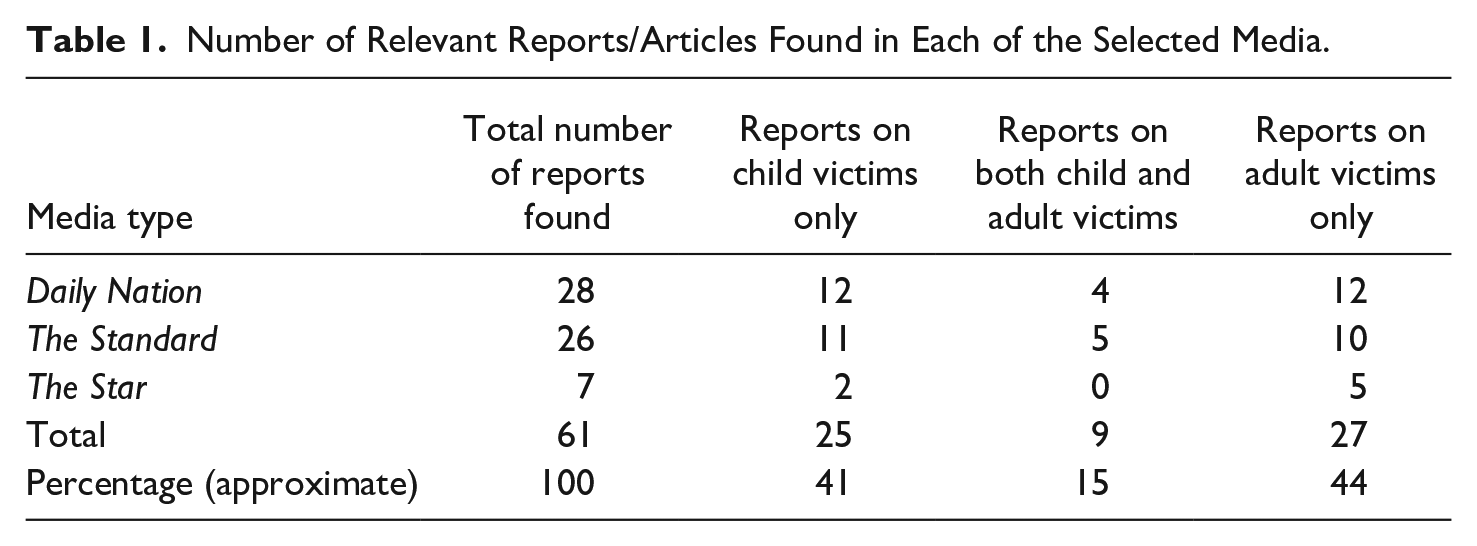
A diligent perusal of the websites of the three selected media outlets for reports on juju-driven homicides, spanning the period February 2012 to January 2021 produced the following results. Over 600 reports on homicide were found, but only 61 met the defined criteria. Of the 61 different reports on ritual murder cases identified, 34 involved child victims. On the website of the Daily Nation, 28 relevant reports were found; 12 of them concerned child victims only, and 4 involved both children and adults. A search on the website of The Standard yielded 26 different reports; 11 of them were exclusively about child victims, and 5 concerned both children and adults. Only seven relevant cases/reports were identified on the Star website, two of which focused on child victims only. This information is summarized in Table 1. It must be stressed that a single report/article may concern two or more victims. The 34 reports/articles on ritual pedicides extracted from the three media websites involved 48 victims.
Number of Relevant Reports/Articles Found in Each of the Selected Media.
General Information About Victims and Perpetrators
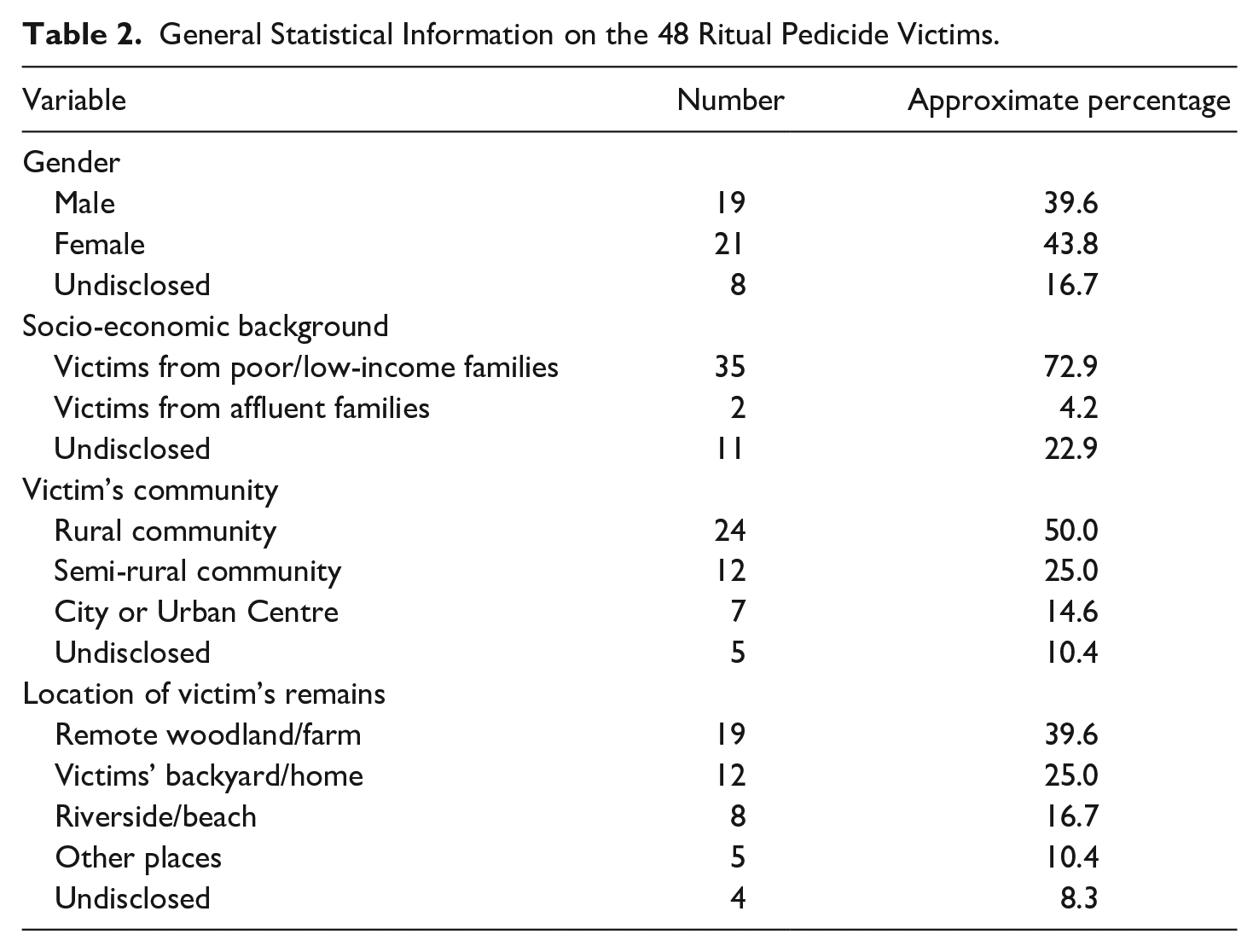
The victims were aged between 3 and 17 years. There was not any significant difference in the number of boys and girls murdered. Most of the victims (over 85%) were from rural and semi-rural communities, and the majority of those whose identities and families could be established were of low socio-economic backgrounds. Over 80% of the victims who were under 10 years old were kidnaped while playing outside their homes unsupervised, going to school or to fetch water from a stream/river unaccompanied, or running errands for their parents or members of their families. Interestingly, none of the parents or caregivers whose apparent poor supervision resulted in the abduction and murder of their children was prosecuted or even cautioned. Blood, the private parts, limbs, and heart were the body parts usually extracted from victims. Table 2 below presents key statistical information about the 48 ritual pedicide victims.
General Statistical Information on the 48 Ritual Pedicide Victims.
Most of the perpetrators apprehended were aged between 20 and 40 years old. All the arrestees were males. The only way certain key information about perpetrators of ritual pedicide could be known or gathered is when they are apprehended, prosecuted, and/or convicted, or when they confess. Unfortunately, in Kenya, most ritual murderers are never apprehended and the few who get caught hardly make a confession. Consequently, information such as victim–offender relationship as well as perpetrators’ motivations, socio-economic status/background, level of education, occupation, and so on, could not be conclusively determined. Only one of the prime suspects and perpetrators was known to be a wealthy person—the rest were unemployed, on a low income, and/or poor.
Arrest and Prosecution Rates
Over 85% of perpetrators were not apprehended. In fact, arrests by law enforcement agencies were confirmed in only 5 of the 34 reports that involved child victims. The total number of arrestees processed for prosecution was 7, the youngest being 16 years old. Only two of the arrestees confessed to committing the ritual pedicides that they were accused of perpetrating. Just one of the arrestees was reported to have been convicted. It is therefore not surprising that episodes of ritual pedicides, many a time, resulted in protests by members of the affected communities who criticized the police for laxity and failure to investigate previous cases and apprehend culprits. In some cases, enraged residents assaulted suspects and set their property ablaze out of frustration and lack of trust in law enforcement agencies. In one report, a suspect who allegedly confessed to committing double ritual pedicides was lynched by the mob before the police could intervene. Some of the reports were backed by audio-visual footages/recordings showing the crime scenes or the location of victims’ remains. One thing that became obvious was the poor management of the places where the victims’ remains were found—they were invaded by a crowd of people while police officers and investigators at the scene watched unconcerned.
Motivations for the Murder
All the two arrestees who confessed and the suspect who was lynched by the mob allegedly made statements which suggested that they killed in fulfilment of their obligations as members of devil worship or occult sects. Thus, for these three persons, the primary motivation was not pecuniary gain per se, but the general perceived benefits that come with being a zealous member of an occult group or devil worshipping sect—protection against evil machinations, longevity, prosperity, and so on. Many of the residents in the communities where the ritual pedicides occurred also believed that devil worshipping or occultism was the underlying cause of the murders.
Victim–Arrestee Relationship
Only one of the arrestees was believed to be related to the victim he had been accused of murdering. However, most of the arrestees/perpetrators lived in the same community as the victims or in neighboring villages. In the case of the suspect who was lynched, one of the two children he allegedly killed was his cousin.
List and Summary Description of 12 Reports
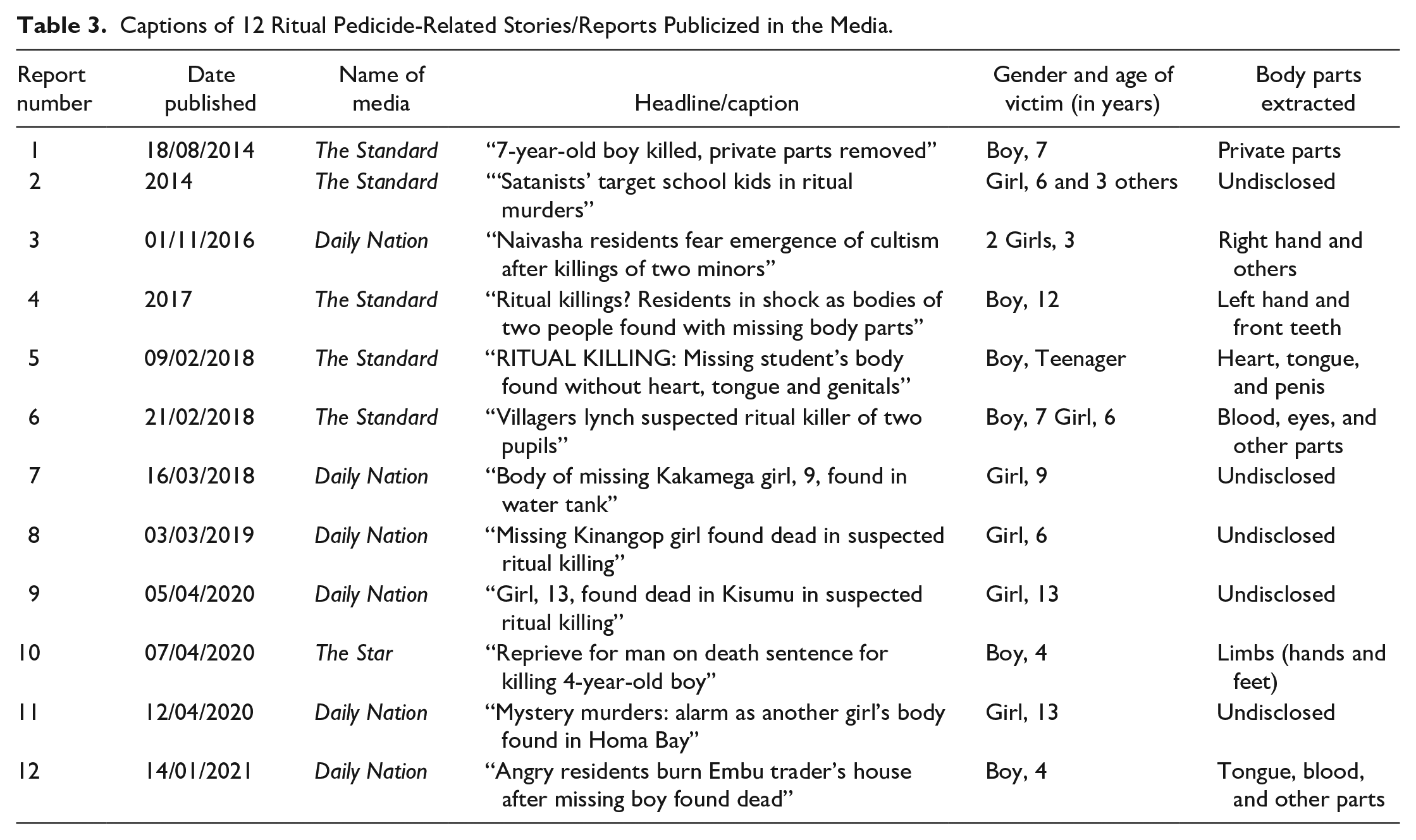
Table 3 shows the captions of 12 of the ritual pedicide reports identified and analyzed in the selected media. It has not been possible to present summaries of all the 34 reports due to limitation of space. Each of the 12 reports selected for illustration is unique in one way or another; hence, the selection. The carefully selected reports together constitute a fair representation of the various circumstances under which the ritual pedicides occurred—motives, different kinds of victims and perpetrators, varied murder scenes, varied body parts extracted, various ages of victims, reactions of community members, and so on. Thus, the selected cases provide a clearer picture and a more comprehensive understanding of the nature of ritual pedicides in Kenya. The reports have been presented chronologically by the first publication date. For ethical reasons, the names of victims and perpetrators have been omitted in this study even though this information was provided in the news reports examined.
Captions of 12 Ritual Pedicide-Related Stories/Reports Publicized in the Media.
Report/article number 1 concerned a 7-year-old boy whose body was found dumped in a nearby river. A post-mortem examination showed that some sexual organs, specifically the penis and scrotum were missing, and that the boy died as a result of trauma caused by a blunt object on the left side of the head. No arrests had been made at the time the report was filed (Weru, 2014).
Report number 2 highlighted a series of child abduction and murder cases (at least four cases between March and September 2014) that residents believed bore the hallmarks of ritualistic killings. The perpetrators did not only extract body parts, but also seemed to have performed bizarre rituals on the bodies of the victims. It is reported that some of the victims’ bodies were dusted with unknown powdered substance (Inyanji, 2018; Wekesa, 2014).
Report number 3 described two separate cases involving two 3-year-old girls who were abducted on separate dates within the same rural community, defiled and murdered in a ritualistic fashion. Their remains were found deposited at a dumpsite with some body parts missing. In the first incident, the little girl was believed to have been lured from her homestead. In the second case, the girl disappeared after accompanying her grandmother to church (Mwangi & Wanja, 2016).
Report number 4 concerned two victims—a 12-year-old boy and a 60-year-old man whose murders threw their villages into a state of extreme panic and shock. The body of the 12-year-old boy was found dumped in a maize plantation a week after he disappeared from home. His left hand and front teeth had been extracted when the remains were retrieved. His face had also been perforated several times with a blunt object (Jelimo & Inyanji, 2017; Kajilwa, 2018).
In report number 5, a teenager in boarding school was sent home for school fees, but never arrived home. A couple of days later, his body was found dumped in a tea plantation. Since he was in boarding school, his disappearance was not noticed by his parents for 2 days. The school authorities who sent him home for school fees had also presumed that he had arrived home safely and thus had not made any effort to look for him. Certain vital organs, including the heart, tongue and genitals had been extracted when the remains were discovered (Jelimo, 2018).
Report number 6 was about a 6-year-old girl and a 7-year-old boy who were killed for rituals in the same village. The 6-year-old girl was murdered in a place close to her school premises, and the 7-year-old boy was killed on his way to fetch water from a nearby stream for his mother. A suspect who allegedly confessed to killing the two children to use their blood for occult purposes, was lynched by residents of the community and his body set ablaze (Manyara, 2018).
In Report number 7, the body of a 9-year-old girl who had been missing for 5 days, was found dumped in a water tank just behind her parents’ rented house. She had been playing with her two younger brothers in their compound the day she disappeared. The key suspect in this suspected ritual murder case was still on the run at the time the report was filed (Amadala, 2018; Inyanji, 2018).
In Report number 8, the dismembered body of a 6-year-old girl who had been missing since December 2018, was found in a dam near her family home in March 2019. The young girl disappeared on her way to school. Her partially mutilated body which had been tied to a stone and then thrown into a dam was discovered approximately 3 months after her disappearance (Maina, 2019).
Report number 9 was about a 13-year-old girl ritualistically murdered in her village. The victim had delivered water to her mother who was ploughing her farmland a few hundred meters away from their house, but never made it back home. Early the following morning her badly mutilated body was found lying by the roadside, about 200 m away from her parents’ house. She had apparently been abducted, killed elsewhere, and her body dumped at the scene where it was found (Raballa, 2020).
Report number 10 was about the conviction of a man tried for the ritual murder of a 4-year-old boy whose dismembered body was found on 5 March 2012 in a bush. A man who belonged to a suspected devil worship sect, was convicted for the murder and sentenced to death in 2015. But the capital punishment was substituted with a 30-year jail sentence on appeal in 2020 (Kubwa, 2020).
Report number 11 concerned a 13-year-old girl who was abducted and brutally murdered. She had been missing for about a week when her body was found dumped in a thicket close to her home village. It is reported that the victim had been sent by her mother to collect a scarf from a neighboring home the day she went missing (Odiwuor & Raballa, 2020).
In Report number 12, a 4-year-old boy was murdered and dumped in a river. Approximately 3 weeks after his disappearance, a 16-year-old boy, believed to be the victim’s cousin, confessed to the police that the little boy had been killed by a well-known businessman and other accomplices for rituals. The teenager further mentioned that he had been used by the alleged perpetrators, with a promise of monetary reward, to lure the victim from his parents’ compound to the riverside where he was killed. He then led authorities to the location where the body had been dumped for retrieval (Githinji, 2021; Mugo, 2021; Munene, 2021).
The Perspectives of Interviewees
As already indicated, the interviews were meant to flesh out the findings or piece together the missing links. The key questions posed are as following: Why are children generally targeted? Why are young adult males the dominant perpetrators? What are the motivations for ritual pedicide? Why are most ritual pedicides committed in rural areas? Why do victims and perpetrators tend to hail from low socio-economic backgrounds? Should parents/caregivers whose children/wards get murdered due to their apparent poor supervision be prosecuted? Why are most ritual murder cases not solved? What are the possible factors contributing to the persistence of ritual pedicide? How effective and efficient is the criminal justice system in solving ritual murder cases? And what can be done to combat the ritual pedicide phenomenon? It is worth reiterating that the views of the participants are integrated into the discussion. To avoid producing an excessively lengthy paper, participants’ voices or direct quotes from interviewees have not been incorporated into the discussion. Besides, the newspaper surveillance was the main approach for collecting data. The interviews were only meant to facilitate a better appreciation of the data gathered from the content analysis or newspaper surveillance.
Discussion
Ritual Pedicide Rate in Kenya
The results support the findings of existing studies that ritually motivated child homicide is not a myth but rather an emerging disturbing reality in sub-Saharan Africa (Bukuluki et al., 2017; Fellows, 2013; Owusu, 2022). The data show that an average of 10 ritual murders, involving approximately 5.3 child victims, occurred in Kenya each year between February 2012 and January 2021. A crime report, spanning the period 2016–2018, released by the Kenya Police Service suggests that an average of 1,986 intentional homicide cases (including pedicides and infanticides) are recorded in the country each year (Kenya National Police Service, 2018). This, in a way, suggests that ritual pedicides form approximately 0.25% of all the murders that are reported in the country each year.
The ritual pedicide rate cited above may seem insignificant; however, it is possible that the number of ritual pedicide cases identified in the media is only the tip of the iceberg. This is because the clandestine nature of ritual murders means that not all episodes come to the attention of the media or the police (Adinkrah, 2005). Therefore, the selected media outlets may not have reported all the ritual pedicides that occurred in the country within the period studied. Some victims may have been secretly buried by their assailants after the desired body parts had been extracted, and the episode may have been classified as a missing child case. Besides, some ritual pedicide cases may have been reported under captions that do not contain any of the search words or terms, making it impossible to identify them during the search process. Other relevant stories may have been reported in print editions only. Indeed, studies on ritual child homicide in other parts of Africa indicate that only a fraction of the cases are reported to the police or come to the attention of the public (Bukuluki, 2014; Fellows, 2013; Owusu, 2022).
Victims’ Gender
Studies on child homicide indicate that the risk of murder is considerably high for boys, who account for about 70% of all child homicides globally (Mathews et al., 2013; Stöckl et al., 2017; UNICEF, 2014). Adinkrah’s (2005) study on ritual murder in Ghana also found that most victims were male. However, the current data suggest that for crimes that border on ritual pedicide, there is no significant difference in the number of boys and girls murdered. This finding is consistent with that of a recent study on ritual pedicide conducted in Ghana (Owusu, 2022). It may be argued that girls are less valued than boys in some African communities; hence, ritual pedicides involving male victims are likely to be given more attention in the media than those involving female victims, and for this reason the data may not be a true reflection of the actual situation. However, the evidence shows that in Kenya, the ritualistic murders of males and females or boys and girls are given equal coverage and attention by the media, law enforcement authorities, and politicians. There was no indication that boys were more valued than girls in any of the communities where the killings occurred.
Why Are Children Targeted?
The interviewees expressed various views as to why many if not most ritual murder victims in Kenya are children. One important factor, according to almost all the interviewees, is that children are easy prey/targets. Indeed, criminological research shows that targets of crime are often vulnerable victims such as children who generally are unable to repel physical assaults due to their fragility (Daigle, 2017; Hough, 1987). Another factor that some of the interviewees mentioned, is the belief that some types of medicines or rituals are more powerful if the ingredients/objects used include young human victims. This supports Adinkrah’s (2005, p. 48) assertion that “the flesh and blood of young sacrificial victims have the greatest potency and purity and that the vitality, strength, and age of youth create a more powerful medicine.” It is also held among some juju devotees that the use of objects or ingredients (e.g., blood and other bodily fluids, body parts, etc.) associated with virgins in a juju ritual or medicine enhances its potency (Owusu, 2019, 2022). This belief stems from the perception that virgins are clean, pure, and magical human beings (Leclerc-Madlala, 2002; Owusu, 2019). Children may therefore be targeted because they are perceived to be sexually inactive and therefore highly likely to be virgins (Owusu, 2019, 2022).
Motivations for Ritual Pedicide and Factors for its Persistence
Studies on ritual murders in some African countries (e.g., Ghana, Sierra Leon, and Nigeria) indicate that the dominant motivation for ritual murder is pecuniary gain, and that the key factors that sustain the practice of killing people for rituals are, widespread unemployment, poverty, and illiteracy (Adinkrah, 2005, 2017; Kabba, 1992; Owusu, 2022; Smith, 2001). However, due to the extremely low arrest and prosecution rates, or the small sample size in terms of the number of perpetrators apprehended in Kenya, the motivations for ritual pedicide could not be decisively established. Nevertheless, some of the missing links were provided by the interviewees. In the view of some of them, besides financial gain, many young men in Kenya are driven to commit ritual murder by sheer greed. They explained that the body hunters are, many a time, not the real brain behind the killing but rather greedy rich businessmen/women, politicians, and other people in positions of authority who tend to hire poor young men. The interviewees generally believed that some of the major factors that account for the persistence of ritual murder (particularly ritual pedicide) in Kenya, are preoccupation with juju/occultism, economic hardship, and lack of formal education.
The Environment of Ritual Pedicide
The massive concentration of ritual pedicide cases in rural and semi-rural areas of the country is not startling. This is because unlike other murders, ritual pedicides (or ritual homicide in general) are consistently perpetrated covertly and requires a significant amount of time to execute (Adinkrah, 2005). Therefore, committing such crimes in congested environments, in the view of some of the experts interviewed, significantly increases the chances of being detected and apprehended. This makes cities, which usually have large populations with constant human and vehicular activities, as well as visible police presence, very unappealing settings for perpetrators to carry out such assails (Owusu, 2022). In other words, since rural settings offer the amount of time required to commit such deeds and an appropriate place to easily dispose of the remains of victims, they become an ideal location for the commission of ritual pedicides.
Most of the victims, as the data show, were of low socio-economic backgrounds. This, according to almost all the interviewees, is because children from rich families tend to have better protection and security, as they generally live in secured, usually gated, environments in urban centers. Many are often driven to and from their school premises by their parents/caregivers. Others use school buses which usually pick them up and drop them off in front of their houses. They are therefore less exposed to juju/occult motivated attacks. The experts interviewed clarified that, the fact that people in Kenyan rural communities are generally less privileged economically and most ritual pedicides occur in rural communities may explain why most victims are of low socio-economic status/background.
Why Are Parents/Caregivers Not Prosecuted for Child Neglect?
The data show that most of the ritual pedicide victims were kidnapped and murdered while running errands for family members or neighbors by themselves, going to or returning home from school unaccompanied, or playing around without the supervision of an adult. These are practices which are very common in rural African communities. It is very tempting to presume that such a practice (i.e., letting children under 10 years move about in the community unsupervised) is tantamount to child neglect. Therefore, parents who allow this to happen should be chastised or prosecuted. However, some of the academics and experts interviewed maintained that the question as to whether or not the practice of letting children under 10 years roam around or move about in the community “unsupervised” amounts to child neglect, should be assessed within the context of the environment in which it occurs. They posited that in a community known or considered by its members to be peaceful and safe, such a practice (i.e., letting children below the age of 10 run errands or roam the community unsupervised) may not be unacceptable. This, as they explained, is because in most African rural communities, everyone tends to know everybody, and folks trust each other. It is therefore usually assumed by local folks and family members that they are each other’s keepers. For this reason, sending children under 10 years old on an errand within the community, or allowing them to play outside their houses “unsupervised,” is deemed to be a safe practice. It may thus be unreasonable to prosecute parents and caregivers for such practices.
Criminal Justice Response to Ritual Pedicides
The current data show that only about 2% of the ritual pedicide cases publicized in the Kenyan media within the study period appeared to have been solved. It is, of course, probable that there were other positive outcomes that did not come to the attention of the selected media and consequently could not be publicized. It would thus be unreasonable to conclude that the Kenyan criminal justice system is inefficient and ineffective based solely on the findings of the media content analysis conducted. However, the interviewees agreed with existing reports that indicate that most crimes reported to the police in Kenya are not solved or properly handled.
For instance, between 1st June 2012 and 31st May 2013, the National Police Service recorded a total of 221,478 criminal cases, 68,257 of which constituted serious crimes. However, only 71,924 of the crimes reported were investigated and 59,424 arrests made. The report further indicates that just under a quarter (precisely 54,368) of the cases reported were prosecuted. Of the 54,368 cases prosecuted, only some 14,905 ended in convictions. The rest were either still pending in the courts, abandoned, dismissed, or acquitted (The Judiciary, 2013; National Council on the Administration of Justice, 2016). This information suggests that only about 7% of all criminal cases reported to the police in Kenya each year is likely to end in conviction. According to the interviewees and the existing literature, three main factors account for the low prosecution and conviction rate in Kenya—incompetence, inexperience, and lack of ingenuity on the part of law enforcement authorities; exceedingly slow and corrupt judicial process; and lack of resources (Andvig & Barasa, 2011; National Council on the Administration of Justice, 2016; Nderitu, 2018).
According to a report released by the National Council on the Administration of Justice (2016, p. 74), the Kenyan police’s “lack of knowledge of the law, lack of prosecution skills, poor coordination and lack of supervision by the Office of the Directorate of Public Prosecutions (DPP) contribute to delays in case flow management.” The U.S. Overseas Security Advisory Council [OSAC] (OSAC, 2020) also notes that the police in Kenya often lack sufficient training in solving serious crimes. Due to lack of proper training, crime scenes are poorly managed by police officers and detectives in the country. In most murder cases in Kenya, the victims’ remains are, as the interviewees observed, removed by law enforcement authorities and taken to the morgue without any diligent forensic examination of the body or the crime scene. Thus, many a time, investigators do not comb the scene for the murder weapons or other objects that could be tied to potential suspects, neither do they conduct thorough forensic examinations for fingerprints and other basic DNA samples at serious crime scenes.
The weaknesses in the criminal justice system are, according to the interviewees, made worse by the slow pace of justice delivery in courts as well as judicial corruption. It has been reported that by the close of 2016, the number of cases that had been pending for more than 5 years in the High Courts alone had reached 48,173. These delays, according to reports, are usually caused by claims of missing dockets, unnecessary multiple adjournments, and judges taking long breaks, as well as corruption in the judicial system (Daily Nation, 2018a, 2018b; Ndirangu, 2018). In 2018, it was announced by the Chief Justice that a number of magistrates and support staff within the Kenyan Judiciary have been dismissed over corruption and integrity issues, and many more judges were being probed (Ndirangu, 2018).
The criminal justice system’s ineffectiveness and inefficiency has also been blamed, to some extent, on lack of resources such as forensic laboratories, modern crime investigation equipment, and vehicles (Nderitu, 2018). Thus, the likelihood of law enforcement agencies responding to an incident often depends on availability of officers and police vehicles (OSAC, 2020). The fact that these human and material resources are not adequate in the country means that most ritual pedicide cases are not swiftly handled or resolved. Evidently, offenders and potential offenders “are unlikely to be deterred if they perceive an inefficient and ineffective response from criminal justice agencies” (Tankebe & Boakye, 2020). In the view of the interviewees, the above-mentioned weaknesses and inadequacies give potential ritual murderers the confidence to kill and repeat killers the impetus to continue with their killing spree, knowing that the chances of them being apprehended to face justice are very miniature if any.
The Way Forward
Almost all the relevant existing studies indicate that the juju belief and concomitant ritual pedicides is encouraged chiefly by juju practitioners and leaders of occult or devil worship sects (Adinkrah, 2005; Bukuluki, 2014; Bukuluki et al., 2017; Kabba, 1992; Owusu, 2022). Therefore, the activities and practices of traditional spiritualists and occult-related sects should be brought under closer scrutiny by the police and other relevant State agencies. As Owusu (2022) recommends, any religious sect found to be engaging in dubious and/or criminal activities should be severely punished through official legal proceedings to serve as a deterrent. Some of the interviewee suggested that relevant State institutions such as the Kenya Police Service, National Council for Children Services, and the Kenya National Commission on Human Rights should be authorized to pay regular and unannounced visits to the shrines of traditional spiritualists and the meeting grounds of certain dubious religious sects. The participants further suggested that the public, especially folks in rural areas, should be encouraged, mainly through the media, churches, and schools, to report any suspicious activity of any person claiming to be or known to be a juju specialist. Authorities should create an atmosphere where folks are able to report the suspicious activities of juju practitioners and religious sects easily, confidentially, and safely.
According to some interviewees, the promotion of formal education would also be an important tool in the fight against the juju beliefs and concomitant ritual pedicides in the country. Indeed, formal education, may help many people to disengage themselves from harmful beliefs and practices such as juju at an early age (Owusu, 2022). However, the promotion of formal education, in the view of some of the experts interviewed, should go hand in hand with intensive nationwide educational campaigns on the ills and futility of juju or occultism. They stressed that a considerable part of the nationwide ritual pedicide awareness campaigns should target parents and caregivers—they should be made to understand that their environment may not always be as safe as they presume or know it to be, and that allowing young children to move about in the community unsupervised exposes them to serious dangers, including ritual murder. Such campaigns, as Owusu (2022) recommends, could be done through the radio which is one of the most accessible and reliable channels/mediums for distributing news and information in many rural communities in Africa, as well as local churches, schools, and hospitals/clinics.
The swift intervention of the police force in criminal cases and their effective investigations into criminal activities are undeniably very vital in every nation’s effort to reduce if not uproot crime. This makes the availability of professional officers and investigators, and the provision of modern tools and facilities needed for the successful execution of their duties by the State, imperative. According to the interviewees, it is essential that personnel within relevant State institutions are made to undertake regular training programs relating to good crime scene management practices and homicide investigations. This would enable them to be more effective in the performance of their duties, and in apprehending ritual murderers.
Conclusion
The contemporary Kenyan society has become a world in which substantial attention is paid to material prosperity, power, supposed forces of darkness, and the need to seek spiritual protection (Owusu, 2019). In their quest for wealth, protection, long life and the realization of other aspirations, many young Kenyans and other Africans consult so-called powerful spiritualists or join various occult or devil worship sects. Disturbingly, one of the ultimate results of such obsessions or excessive ambitions and desires, is ritual murder. To believe in juju or black magic or be a member of a religious sect/cult is, perhaps, a fundamental right in the eyes of international and domestic law. But to go to the extent of harvesting human body parts in a bid to realize an ambition is one of the vilest injustices, and the epitome of inhumanity.
Unfortunately, democratic societies cannot legislate against people’s beliefs irrespective of how potentially harmful they (the beliefs) may be—they can only legislate against people’s harmful actions resulting from their beliefs (Owusu, 2022). Thus, the domestic legal system cannot bar individuals and groups from holding juju beliefs, but it can certainly bar them from dismembering people, particularly children, as a result of their beliefs. However, since juju/occult beliefs and the perceived power of ritual medicine seem to be deeply entrenched in the Kenyan culture, attempt to curb ritual pedicide cannot be achieved through legislative actions and the criminal justice system alone, but would entail a multifaceted approach that would also involve formal education, economic improvement, and intensive nationwide campaigns. To further an understanding of the ritual pedicide phenomenon, further research on the subject in other African countries is relevant. The use of case studies, where victims and perpetrators are known, is recommended in future research.
Footnotes
Declaration of Conflicting Interests
The author declared no potential conflicts of interest with respect to the research, authorship, and/or publication of this article.
Funding
The author received no financial support for the research, authorship, and/or publication of this article.
