




Abstract
This study uses multilevel regression modeling to explore how racial diversity and other campus climate variables influence the development of community leadership identity on college campuses. Pulling from a longitudinal sample of students (n = 7,829) over a 4-year period, findings show that attending a college campus with more racially similar peers (i.e., racial homogeneity) played a positive indirect role in predicting community leadership goals. This study's findings contribute to the existing literature on the influence of race and diversity on leadership development and provide insights that shape the development of community leaders.
Developing students as leaders within and beyond the college campus has been a common goal of higher education institutions in the United States (Astin & Astin, 2000; Hurtado, 2007; Skalicky et al., 2020; Taylor & Morphew, 2010). Despite this longstanding goal, research on leadership and leadership practices has drastically evolved over time (Kezar, 2018; Kezar & Eckel, 2002; Marks, 2015). However, the multiple definitions and approaches to leadership have rendered it almost impossible to pin down conceptually and pedagogically (Skalicky et al., 2020). According to Skalicky et al. (2020), there is consensus on the fact that colleges are where students may develop strong leadership capacities, but there is less agreement on how this can be best accomplished. Contemporary perspectives on leadership emphasize it as a social identity that is shaped through students’ collegiate experiences (Dugan et al., 2008; Komives et al., 2005; Komives et al., 2007) and how this identity can extend beyond degree completion through civic engagement and socially responsible actions (Parker & Pascarella, 2013).
Considering the evolving approaches and conceptualizations of leadership, Marks (2015) argued that these approaches often fail to prioritize community action and the development of students’ abilities to critically engage with the challenges in their local communities. Instead, dominant notions of leadership and leadership development models have directed the attention toward leadership skills (e.g., time management, public speaking) or personal values and self-perceptions (e.g., socially responsible leadership, transformational leadership), which may disregard the diverse range of community contexts in which students are involved and the nuanced roles and goals they have within those contexts (Marks, 2015). As an alternative conceptualization, Marks (2015) emphasized the need for colleges to foster community leadership specifically, which underscores students’ capacity to actively become a part of local communities, regularly play meaningful roles in those communities, and collectively make meaningful change with those communities (Marks, 2015). Many colleges emphasize their civic mission to develop students as leaders, but this has resulted in civic engagement efforts that lack reciprocity, fail to view community partners as co-educators, and provide inadequate preparation for graduates to make systemic change in their communities (Marks, 2015). In this regard, community leadership promotes leadership qualities and goals that align with the needs of the communities that students may come from or intend to work with.
Despite being relatively understudied compared to other forms of leadership (Marks, 2015), community leadership serves as a social identity that develops over time through different collegiate activities and racial backgrounds (Collins & Rosch, 2018; Komives et al., 2005; Pascarella & Terenzini, 2005). Previous studies critiquing leadership research have argued that students of color experience and conceptualize leadership differently based on racial/ethnic background (Arminio et al., 2000; Dugan et al., 2012). Moreover, leadership programs may differ in effectiveness based on the racial diversity of their participants (Collins & Rosch, 2018). For instance, Kezar and Moriarty (2000) found that even though Black and White students may participate in similar leadership-related development activities in college, these activities had differential impacts and meanings on students’ leadership outcomes. Thus, further empirical research is needed to examine the intersection of leadership development and race. The purpose of this study is to explore variables that contribute to the development of community leadership identity and how the campus racial diversity might influence this development differently for students based on their racial/ethnic background.
Review of Literature on Leadership
Initially, leadership was commonly defined as individuals possessing strong management skills (Rost, 1993). These early concepts of leadership were rooted in industrial paradigms that focused on optimizing production and efficiency through strict hierarchical structures within workplaces and professional organizations (Allen & Cherrey, 2000). However, in the mid-90s, a shift toward post-industrial paradigms occurred as leadership research began to concentrate on college students (Dugan et al., 2008; Higher Education Research Institute [HERI], 1996). This shift argued that leadership involves collaboration, ethical conduct, and the transformation of followers into leaders (Wheatley, 1999). Moreover, studying students to understand leadership became crucial for preparing a socially responsible workforce (Dugan, 2006; Engberg, 2007; HERI, 1996).
While post-industrial paradigms emphasized value-centered approaches to pedagogical, transformational leadership, and social change models (Bass & Bass, 2008; Dugan, 2006; HERI, 1996; Kouzes & Posner, 2003), they primarily focused on incorporating specific skills, interventions, or meaningful activities into college settings to enhance students’ leadership capacities toward a more just and equitable society (Astin, 1993; Dugan, 2006; Northouse, 2003; Pascarella & Terenzini, 2005). Scholars became interested in exploring how students develop a leadership identity and how it evolved over time (Hall, 2015; Komives et al., 2005; Komives et al., 2009; Priest et al., 2018). While colleges undeniably play a vital role in leadership identity development (Pascarella & Terenzini, 2005), further research is needed to better understand how this development may differ for students based on race and diversity, especially when similar interventions, activities, or behaviors are employed and observed across different institutions (Collins & Rosch, 2018).
Additionally, critics argue that leadership studies need significant changes. They assert that existing leadership theories are often developed without considering different contexts and assume a universal applicability, while disregarding the biases stemming from the gendered, racial, class, sexual, and national identities of those who theorize about leadership (Ladkin & Patrick, 2022). Essentially, many theories and practices surrounding leadership have been shaped by whiteness and biased Western perspectives. For instance, Bass and Bass’ (2008) transformational leadership theory (TLT), a widely used framework, perpetuates racist ideas by comparing the leadership abilities of Black and White individuals based on IQ. As the dominant post-industrial paradigms of leadership, including TLT, continue to operate within the framework of whiteness, an increasing number of scholars are centering race and diversity to foster new and inclusive conceptions of leadership, leadership practices, and leadership outcomes (Ladkin & Patrick, 2022; Liu, 2019; Liu & Baker, 2016; Ospina & Foldy, 2009; Rosette et al., 2008). Consequently, by specifically examining community leadership, scholars can gain a deeper understanding of the complex interplay between race, diversity, and leadership.
Community Leadership
Community leaders can be broadly defined as individuals who cultivate a social environment that enables community members to recognize their interests, evaluate the community's needs, exchange ideas, and collaboratively pursue shared objectives (Schweigert, 2007). This perspective challenges the conventional notions of hierarchical leadership (i.e., the leader-as-superior or leader–follower dichotomy) and emphasizes that anyone within a group or society has the potential to exhibit qualities of community leadership, regardless of their formal role or title (Schweigert, 2007). Unlike organizational leadership, which relies on bureaucratic boundaries and hierarchies to wield authority, community leaders operate within intricate networks of influence, resistance, and negotiation (Schweigert, 2007). The scope of community leaders may extend to encompass the role of youth, parents, and community members, each of whom has a stake in collaborating with each other, local authorities, or educational institutions to bring about change (Rodela & Bertrand, 2018). Thus, community leadership prompts scholars to examine more closely the power and agency held by communities and the individuals within those communities, rather than solely focusing on the desired traits of individual “good” leaders. Consequently, further empirical research on community leadership and the extent to which individuals perceive themselves as community leaders is needed.
Despite the presence of more than 60 different conceptualizations of leadership, community leadership in the context of higher education has received limited attention (Marks, 2015). Existing studies in this domain have primarily focused on the implementation of graduate-level service-learning courses to address local community challenges (Litzky et al., 2009) and the collaborative efforts between 2-year and 4-year institutions to enhance community leadership development among students (Williams, 2001). Most research on community leadership has been conducted outside the higher education context, with a specific emphasis on the impact of community leadership programs on participants from various local and national communities (Apaliyah et al., 2012; Bono et al., 2010; Fritsch et al., 2018; Langone & Rohs, 1995). Some studies have specifically examined the organizational culture of community leadership in Hispanic communities (Safrit & Lopez, 2001) and rural Japanese communities in Himeshima (Banyai, 2009). A recurring theme in community leadership studies that sets it apart from traditional notions of leadership is its shift in focus from individual leaders to the collective trajectory of the community at hand (Rodela & Betrand, 2018).
However, the current literature lacks empirical evidence on how college students develop their community leadership identity through collegiate experiences. Consequently, a more comprehensive investigation into the development of community leadership on college campuses is needed to gain insights into how colleges can fulfill their civic mission of nurturing students into effective community leaders (Marks, 2015; Skalicky et al., 2020). Community leadership challenges the self-centered aspects of traditional leadership, shifting focus toward an individual's potential, eagerness, and collaborative endeavors aimed at enhancing the community. This approach transcends formal leadership titles and conventional ideals of positive leadership traits.
Furthermore, scholars have cautioned that prevailing perspectives on leadership development often discriminate against students with less formal involvement by utilizing constructs that encompass variables measuring a range of experiences and qualities, inadvertently conflating measures of community service, teamwork, participation in student organizations, engagement in leadership programs, self-perceptions of leadership, and holding formal leadership positions (Dugan, 2006; Salisbury et al., 2012). While leadership development based on multiple qualities may provide statistically reliable indicators of socially responsible leadership (HERI, 1996), it may inadvertently overlook the leadership development processes of “less involved” students or students of color who may exhibit and embody leadership definitions through non-traditional paradigms (Arminio et al., 2000; Kezar & Moriarty, 2000).
Therefore, community leadership offers a unique perspective for understanding how students from diverse backgrounds might develop a strong capacity for leadership in their respective communities through non-traditional means. Additional research on community leadership identity development and how this development might differ based on race and diversity will provide novel insight against the widespread critique that notions of leadership are centered in whiteness and western perspectives (see Arminio et al., 2000; Dugan et al., 2012; Flowers & Pascarella, 1999; Kezar & Moriarty, 2000; Ladkin & Patrick, 2022; Rosch et al., 2017; Wolfe & Dilworth, 2015). Based on these critiques, it is worthwhile to examine how race and the racial diversity of college campuses may influence community leadership identity development.
Theoretical Framework
Multicontextual Model for Diverse Learning Environments
Stemming out of the foundational contributions of Hurtado et al. (1998) and Milem et al. (2005), the Multicontextual Model for Diverse Learning Environments (MMDLE) serves as the primary guide for understanding how diverse learning environments may impact desired academic outcomes such as leadership development (Hurtado et al., 2012). The MMDLE highlights three aspects of a college campus that may influence academic outcomes: (1) compositional diversity, which relates to the numerical racial/ethnic makeup of the student body, (2) psychological dimensions involving students’ beliefs and attitudes, and (3) behavioral dimensions reflecting co-curricular engagement.
Hurtado et al. (2012) emphasized that students’ social identities are often at the center of how they experience a college campus; it is the institution's responsibility to ensure that their organizational structures are inclusive and conducive to a diverse learning environment within and beyond the classroom. Compositional diversity is a crucial aspect, serving as a numerical indicator of diversity that often guides campus leaders’ commitment to inclusivity (Iverson, 2007). However, it is often critiqued for focusing on quantity over educational outcomes (Milem et al., 2005). In other words, diversity is not a goal or an end in and of itself, but a process that intends to yield educational outcomes. The compositional diversity aspect of this framework is used to explore whether numerical representations of students on a campus based on race/ethnicity have any influence on community leadership identity development.
Next, the psychological dimension explores how students’ perceptions, values, and beliefs may influence educational outcomes. This dimension offers insights into intergroup relations and intellectual growth, aiding colleges in understanding their impact on students’ values and beliefs (Astin, 1993). The psychological dimension of this framework considers how students’ self-perceptions of working with diverse others may influence their personal goal of becoming a community leader, which is also a psychological outcome measure. Lastly, the behavioral dimension examines diverse interactions or co-curricular engagement among students. The behavioral dimension of this framework explores the impact of meaningful interactions, specifically cross-racial interaction, that may influence students’ goal of becoming a community leader. Previous studies show that engaging with peers from different racial backgrounds is essential in promoting educational growth (Milem et al., 2005).
By considering these contextual aspects of a college campus, the MMDLE illuminates the complex interplay between students’ diverse backgrounds, beliefs, attitudes, and their co-curricular engagements. Therefore, the MMDLE positions the diverse learning environment as a pivotal feature in shaping students’ experiences and offers insights into the variables contributing to the formation of community leadership identities.
Purpose and Research Question
The purpose of this study is to better understand how students’ goal of becoming a community leader is influenced by the racial composition of their campus, their perceptions of their ability to interact with diverse peers or their pluralistic orientation, and the frequency of their interactions with others from a different race/ethnicity. The main research question of this study is: How does the racial diversity or homogeneity of a college campus influence students’ goal of becoming a community leader by their senior year?
Materials and Methods
Study Sample
Multiple major data sources were utilized in this study. The primary student data were obtained from the Cooperative Institutional Research Program (CIRP) and the Higher Education Research Institute (HERI) at UCLA (Astin et al., 1966). The data were derived from two surveys: the 2015 Freshman Survey (TFS) and the 2019 College Senior Survey (CSS). The 2015 TFS collected self-reported information on students’ personal and academic backgrounds, attitudes, expectations, values, and other pre-college characteristics. The 2019 CSS administered as a posttest to the TFS gathered additional information, including student–faculty interaction, extracurricular involvement, and campus perceptions. These datasets provide one of the most recent and reliable longitudinal information available, considering the impact of COVID-19, which significantly reduced participation among institutions and potentially influenced students’ responses in specific and extreme ways by 2020.
The sample consisted of N = 21,627 students who responded to the CSS. To ensure a race/ethnicity analysis, n = 1,050 students with missing race/ethnicity data were excluded from the sample. Given the overrepresentation of White students, a random 30% selection of the White student cases was removed to achieve a proportion of White students that approximated the proportion of non-White students, ensuring a fairer comparison (Carter & Hurtado, 2007). This technique, similar to the approach used by Park (2009), reduced the sample size to n = 16,948.
Additionally, previous studies have historically excluded Native American students due to their low representation in large datasets (Faircloth et al., 2015), leading to their omission from regression analyses (Hughes & Hurtado, 2018; Park, 2009). Within the sample, n = 34 students identified as solely Native American, while n = 247 identified as Native American and another race or as Multiracial Native American. Therefore, both of these counts were combined, resulting in a total of n = 281 students who identified as Native American, in order to include a sufficiently large sample size of Native American students for regression analyses. While this approach is not perfect, it is a step forward in including the group in regression analysis without resorting to their exclusion.
Approximately 14% of the dependent variable data were missing and consequently excluded from the analysis. Given the longitudinal nature of the study with a pretest measure for the dependent variable, listwise deletion further reduced the final sample; nearly half of the students who completed the CSS posttest survey did not take the TFS pretest, so their responses were excluded. Additionally, eight out of the 63 participating institutions in the CSS did not participate in the TFS, leading to the automatic exclusion of their students. The remaining predictor variables had less than 2% data missing completely at random, which was also excluded using listwise deletion.
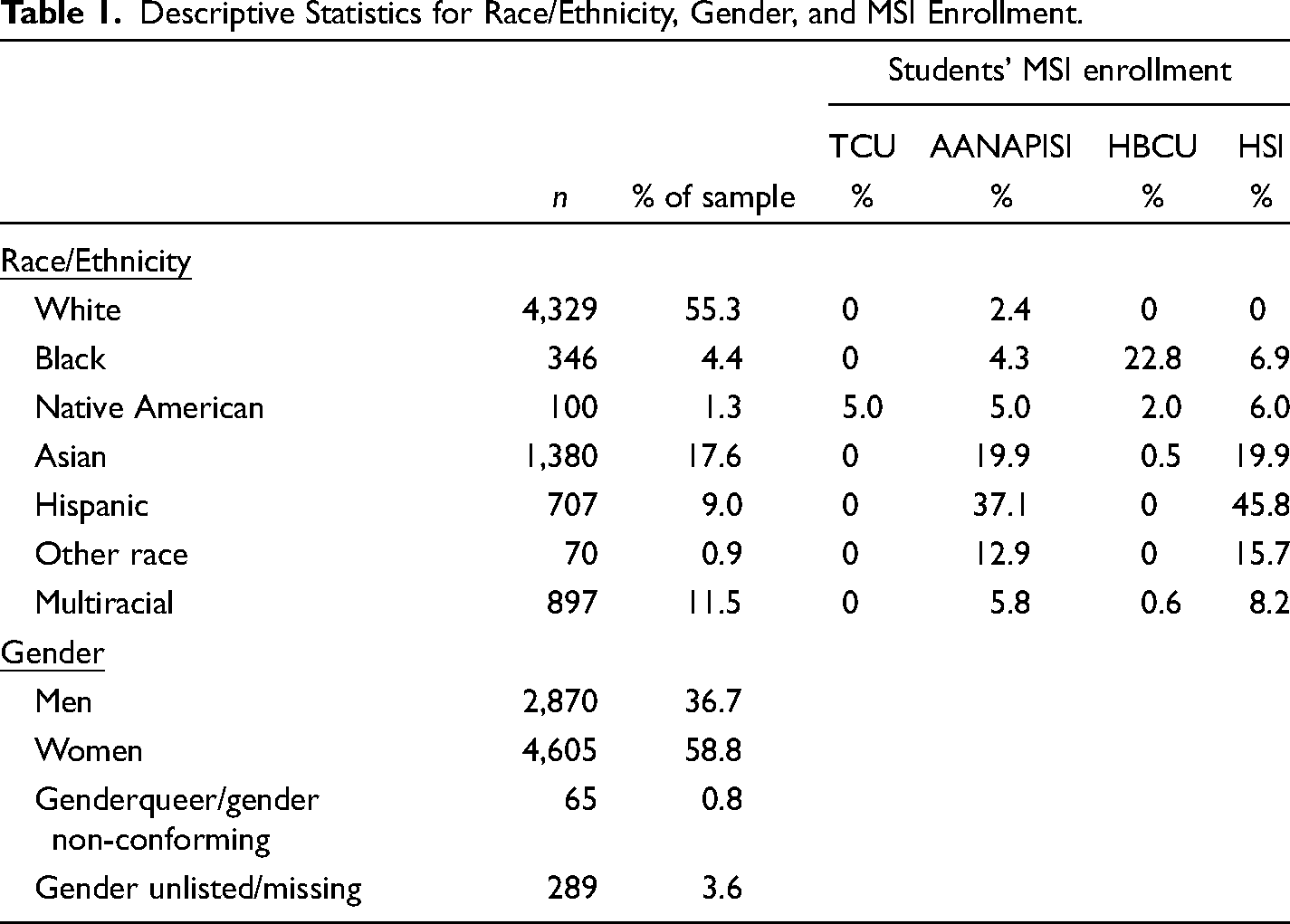
As a result, the final sample comprised n = 7,829 students from 55 different institutions, including nine different Minority Serving Institutions (MSIs): MSI designations include one tribal college and university, two Asian American and Native American Pacific Islander-serving Institutions, three Historically Black Colleges and Universities, and five Hispanic-serving Institutions. While the final sample differed from the original sample, the assumptions of multiple regression analyses (e.g., linearity, normality, homoscedasticity, independence, lack of multicollinearity) were assessed and found to be upheld. Refer to Table 1 for descriptive statistics on student demographics and the percentage of each race/ethnicity group's enrollment in an MSI.
Descriptive Statistics for Race/Ethnicity, Gender, and MSI Enrollment.
Dependent Variable
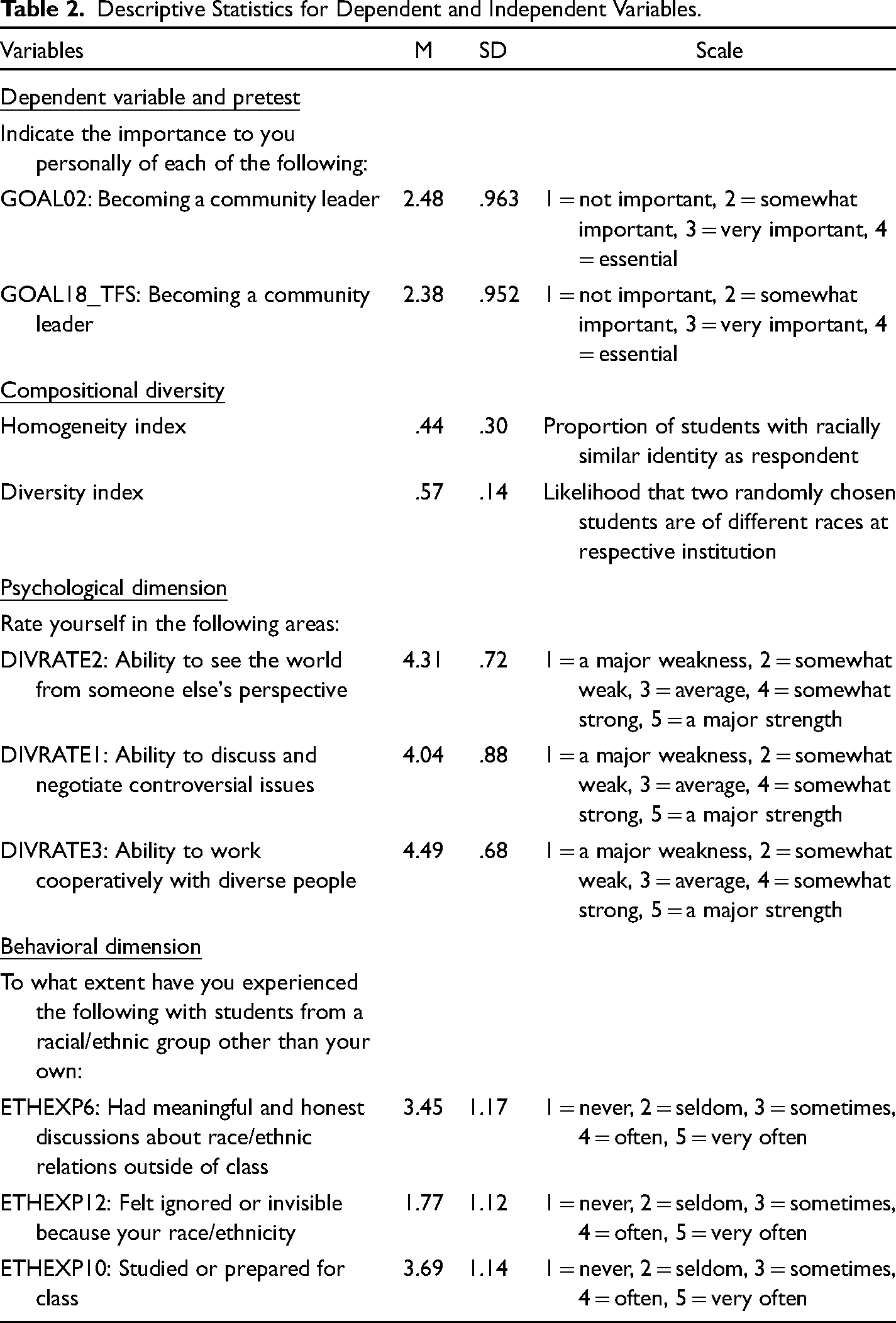
In the 2015 TFS and 2019 CSS, students were asked to indicate their personal importance of becoming a community leader, which is the dependent variable in this study. Table 2 shows the reporting options of all variables, their means, and standard deviations. Findings indicate that the dependent variable was relatively normally distributed with a skewness of .047 and a kurtosis of −.954. The pretest variable had a skewness of .163 and a kurtosis of −.895. The mean difference shows that students in the sample had a .10 average increase from freshman year to senior year regarding their personal importance of becoming a community leader. This investigation primarily explores the variables that significantly influenced this mean increase between the pretest and posttest results.
Descriptive Statistics for Dependent and Independent Variables.
Independent Variables
In addition to the pretest measure, 15 directly observed independent variables were included in blocked regression models to examine notable changes in the R2 value and the diversity index and homogeneity index betas. These variables were nested into four blocks, which were partly guided by the MMDLE: (Block 1) Inputs to control for the pretest variable and six dichotomous race/ethnicity variables with White students as the reference group (Carter & Hurtado, 2007); (Block 2) compositional diversity measures to capture the influence of racial diversity between institutions and racial homogeneity to capture the influence of proportional representation by race within institutions (Apfelbaum et al., 2014); (Block 3) the psychological measures to control for students’ perceptions of their ability to interact with diverse others (Milem et al., 2005); (Block 4) the behavioral measures to control for frequency of cross-racial interactions (Hurtado et al., 1998); and (Block 5) relevant interaction terms. Using the MMDLE to guide predictor variables in this way is a regression technique that was also used by Park (2009) and Hughes and Hurtado (2018) to explore the influence of diverse learning environments on outcomes of interest.
In Block 1, the race/ethnicity variables were dummy coded with White students as the reference group for several reasons. First, prior research emphasizes that leadership development models have often centered around western paradigms (see Ladkin & Patrick, 2022; Liu, 2019; Liu & Baker, 2016; Ospina & Foldy, 2009; Rosette et al., 2008). As a result, more recent leadership development models have become increasingly inclusive of students of color and their unique leadership experiences (see Arminio et al., 2000; Dugan et al., 2012; Flowers & Pascarella, 1999; Kezar & Moriarty, 2000; Ladkin & Patrick, 2022; Rosch et al., 2017; Wolfe & Dilworth, 2015). By designating White students as the reference category, this study may discern the deviations in community leadership aspirations among students of color relative to their White counterparts. This methodological choice facilitated an exploration of how race influences community leadership dynamics in communities of color, enabling us to gain insights into the nuanced ways in which racial identity interfaces with leadership development within the context of this study.
Block 3 (psychological dimension) included three questions assessing students’ self-perceptions of their ability to collaborate with diverse individuals. As leaders are expected to embody a pluralistic orientation, characterized by the ability to engage across diverse backgrounds, these questions offer a means to gauge this basic leadership quality (Denson & Ing, 2014; Hurtado, 2007). By utilizing these variables as predictors in the analysis of community leadership, this study taps into the relevance of pluralistic orientation in shaping individuals’ potential to assume leadership roles within their communities. Block 4 (behavioral dimension) included three questions probing students’ experiences interacting with racially/ethnically different peers. Prior research shows that a variety of both formal and informal peer interactions across race may lead to improved academic outcomes, including leadership development (Denson & Chang, 2009; Dugan & Komives, 2010; Garcia et al., 2017). While cross-racial interactions alone might not provide full context for leadership development, this study included one positive, one negative, and one academic cross-racial experience to gain a better understanding of how different qualities of cross-racial engagement might influence community leadership identity development. Block 5 included interaction terms to test if any variables had a moderating effect on the homogeneity index variable because previous research studies have suggested that leadership development and cross-racial interaction may impact students differently based on their racial/ethnic background and their environment (see Closson & Henry, 2008; Dixon et al., 2005; Dugan et al., 2012; Flowers & Pascarella, 1999; Saenz et al., 2007).
Calculating Compositional Diversity
Block 2 included measures of compositional diversity, which drew from the US Department of Education's Integrated Postsecondary Education Data System (IPEDS). IPEDS data provided specific information about the counts of every enrolled student and their racial/ethnic identity at each institution. Even though the CSS provided information on race, I chose to utilize IPEDS data to avoid survey non-response bias and to get a more comprehensive picture of the racial composition for each institution, which the HERI datasets do not provide (see Denson & Chang, 2009). Using the HERI datasets alone would not paint an accurate picture of the racial composition of each institution nor its potential influence. The IPEDS data for each institution were merged with the HERI datasets to allow the demographic information from each institution to be provided for each respondent in the CSS. The IPEDS data were used to calculate the homogeneity index and diversity index scores.
Homogeneity Index
The homogeneity index was calculated in two steps. In the first step, a percentage was computed for each respondent based on their racial/ethnic identity as reported in their CSS survey response. This percentage represented a diversity baseline or the proportion of students who shared a racial/ethnic identity with the respondent at their institution. For example, if a student identified as Asian, an Asian percent value was computed for them by dividing the counts of all Asian students at their institution by its grand total enrollment count from the IPEDS data. Respondents of other racial/ethnicity groups would not receive an Asian percent value; they would only receive a percent value based on the proportion of their own race/ethnicity group at their institution. This first step was conducted across the seven racial/ethnic groups that HERI data collected, which yielded seven separate variables.
In the second step, I computed the homogeneity index variable by aggregating each of the seven percent variables computed from the first step. This second step allowed for one single variable, the homogeneity index, to characterize the diversity baseline or the degree to which a respondent attended a campus with racially similar peers while simultaneously considering the differences between race/ethnicity groups and between institutions. For example, if Institution A had 33% Asian students and 9% Black students, then all the Asian students at Institution A would receive a homogeneity index score of .33, while all their Black students would receive a score of .09. The homogeneity index score for each respondent of the same race/ethnicity group would be equal within their institution, but different across institutions.
Diversity Index
The diversity index was calculated by referring to previous studies. While the earliest conceptions of a diversity index stemmed from Simpson (1949), Meyer and McIntosh (1992) also used a similar equation, which was cited in Chang and Yamamura (2006) to characterize the probability that two randomly chosen students from a sample are from different groups. All possible values of the diversity index score may fall between 0 and 1. In this study, the diversity index scores specifically ranged from .23 to .77. If the diversity index is of higher value, then the institution would be characterized as having more racial “diversity” or a higher likelihood that two randomly chosen students from that institution would be from different race group categories.
Analyses
First, a bivariate correlation analysis was conducted to show the relationships between each variable used, except the race variables and interaction terms. Blocked multiple regression analyses were conducted using SPSS Version 29.0 to explore variables that contributed to increasing students’ personal importance of becoming a community leader by their senior year. Interaction terms between the homogeneity index, race/ethnicity, and behavioral dimension items were explored in separate models to avoid multicollinearity issues. The final model included two interaction terms that significantly improved the explained variance. Findings around the influence of race/ethnicity, the homogeneity index, diversity index, and the interaction terms will be the focus of the following discussion section.
Limitations
There are several limitations to the following findings. The data used in this study were all self-reported data, so there are a variety of factors outside of the surveys that could have influenced how students responded to the questions. Additionally, the overrepresentation of White students and predominantly White institutions (PWIs) in this dataset similarly served as a limitation compared to previous studies exploring issues related to racial diversity, which has led some researchers to randomly select a sub-sample of White students to compare to students of color (see Park, 2009; Park, 2014; Denson & Chang, 2009). Despite this common limitation in big data research, it is important to ensure that the sample selection does not violate assumptions of normality, which this study was able to uphold.
Another limitation is that the final sample selected for analyses (n = 7,829) is approximately 36% of the original sample (N = 21,627). The sample selection decisions using listwise deletion were primarily grounded in whether students completed both the pretest and posttest of the dependent variable. The secondary reason for sample reduction was grounded in constructing a racially representative sample to make fairer comparisons between White students and students of color by randomly selecting a subset of White students and to account for students who did not report any racial/ethnic background information (see Carter & Hurtado, 2007). After considering these reasons for sample selection, less than 2% of the remaining sample had missing data along the predictor variables. Therefore, multiple imputation methods were not necessary or considered (Jakobsen et al., 2017).
Another limitation of this study is the use of an outcome measure that is characterized by a single item. Even though the CSS asked students a variety of questions that could relate to their leadership capacities and identity development, only one of them specifically asked about community leadership (Marks, 2015), which is the focus of this study. Moreover, the high correlation between the pretest and posttest results of the dependent variable suggests that it is a reliable measure. Future studies may combine several items that specifically tackle community leadership without conflating other aspects or “traditional” qualities of leadership identity development. Moreover, this study cannot be used to make causal claims about community leadership identity development as the dependent variable only asked about students’ personal importance of becoming a community leader, and not their actual participation, activities, or levels of community engagement.
Moreover, the independent variables used in this study were primarily focused on the quality of students, and not the quality of the institutions. Different institutions may provide leadership programming and have organizational/structural qualities that promote leadership development or community engagement relations that could have influenced students’ self-rated importance of becoming a community leader, but these aspects were not considered in this study.
Findings
Bivariate Correlation Analysis
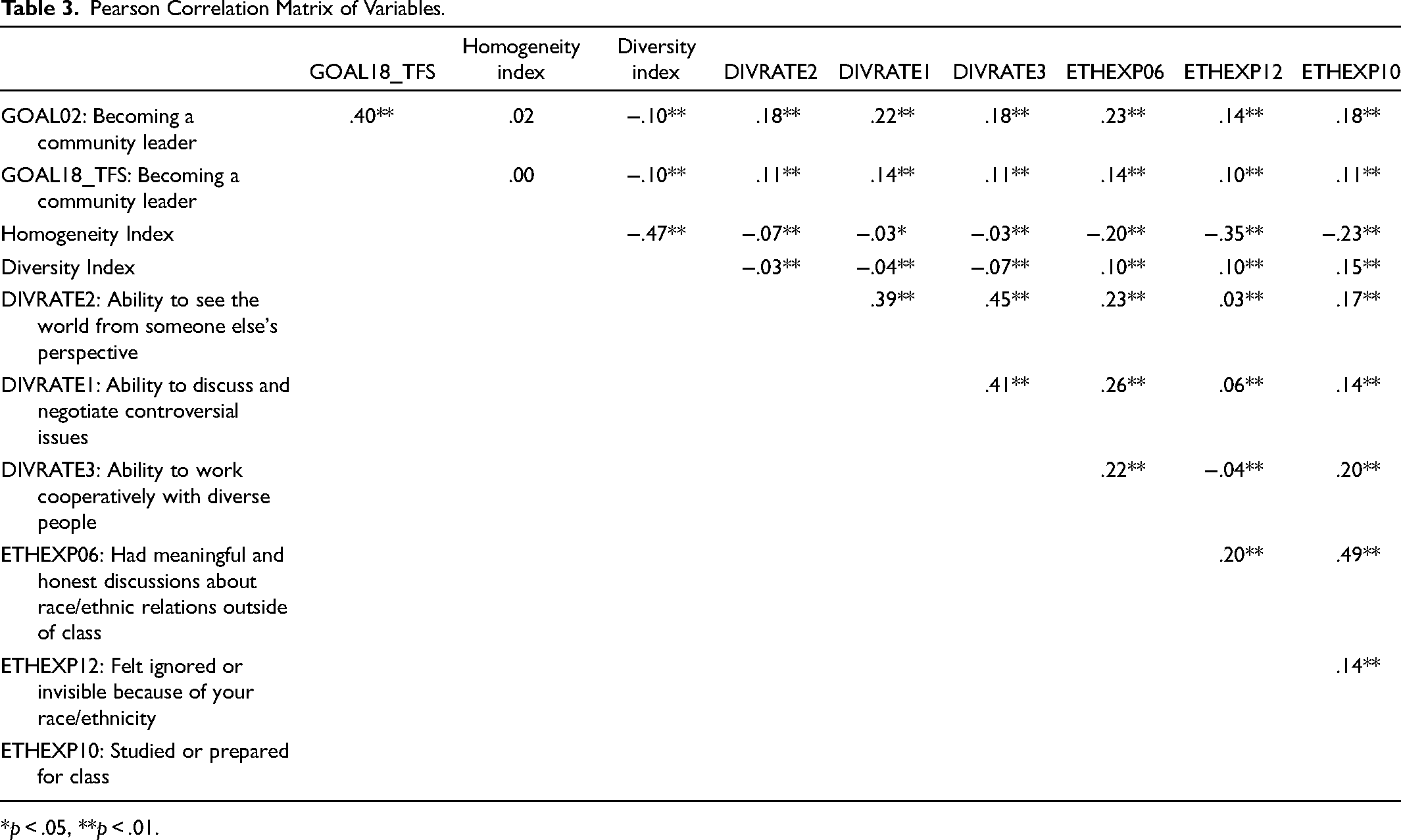
Table 3 shows the Pearson correlation coefficients between all variables, excluding the race/ethnicity variables and the interaction terms. The homogeneity index (i.e., attending a campus with higher proportions of racially similar peers) does not have a strong or significant linear relationship with the dependent variable and its pretest measure. In contrast, the homogeneity index had a negative relationship with all other variables: the diversity index, the measures of pluralistic orientation, and the measures of cross-racial interaction. In other words, as the homogeneity index scores increased, the diversity index scores decreased. That is, students who attended a campus with higher proportions of racially similar peers were likely to be at a campus with lower levels of racial diversity. Moreover, attending a campus with higher proportions of racially similar peers was associated with lower levels of pluralistic orientation and less frequencies of cross-racial interaction.
Pearson Correlation Matrix of Variables.
*p < .05, **p < .01.
Interestingly, the diversity index had a negative relationship with both the outcome variable and the pretest measure, which suggests that students who attended more racially diverse schools typically placed less importance on becoming a community leader. The diversity index also had a negative relationship with the pluralistic orientation measures, which may be counterintuitive because it is generally assumed that diversity leads to openness to others. More realistically, diversity may also lead to negative experiences or less openness with others, which reinforces the notion that diversity alone does not yield the desired academic outcomes (Denson & Chang, 2009). Diversity's positive effect largely depends on the quality of interactions held between students, which can be reiterated by the other correlations. For instance, the diversity index's positive relationship with having had meaningful discussions about race/ethnicity outside of class and having studied for class with peers of another racial/ethnic background illustrates that attending a diverse campus increases the likelihood of these positive and academic cross-racial interactions occurring. Moreover, these positive and academic cross-racial interaction experiences also had a positive relationship with each of the pluralistic orientation measures. Meanwhile, if students had negative cross-racial interactions or felt ignored or invisible due to their race/ethnicity, which were more likely to happen on diverse campuses, then their perceived ability to cooperatively work with diverse others diminished. Overall, the bivariate correlation matrix provided necessary information about the relationship between each variable before conducting regression analyses.
Regression Analyses
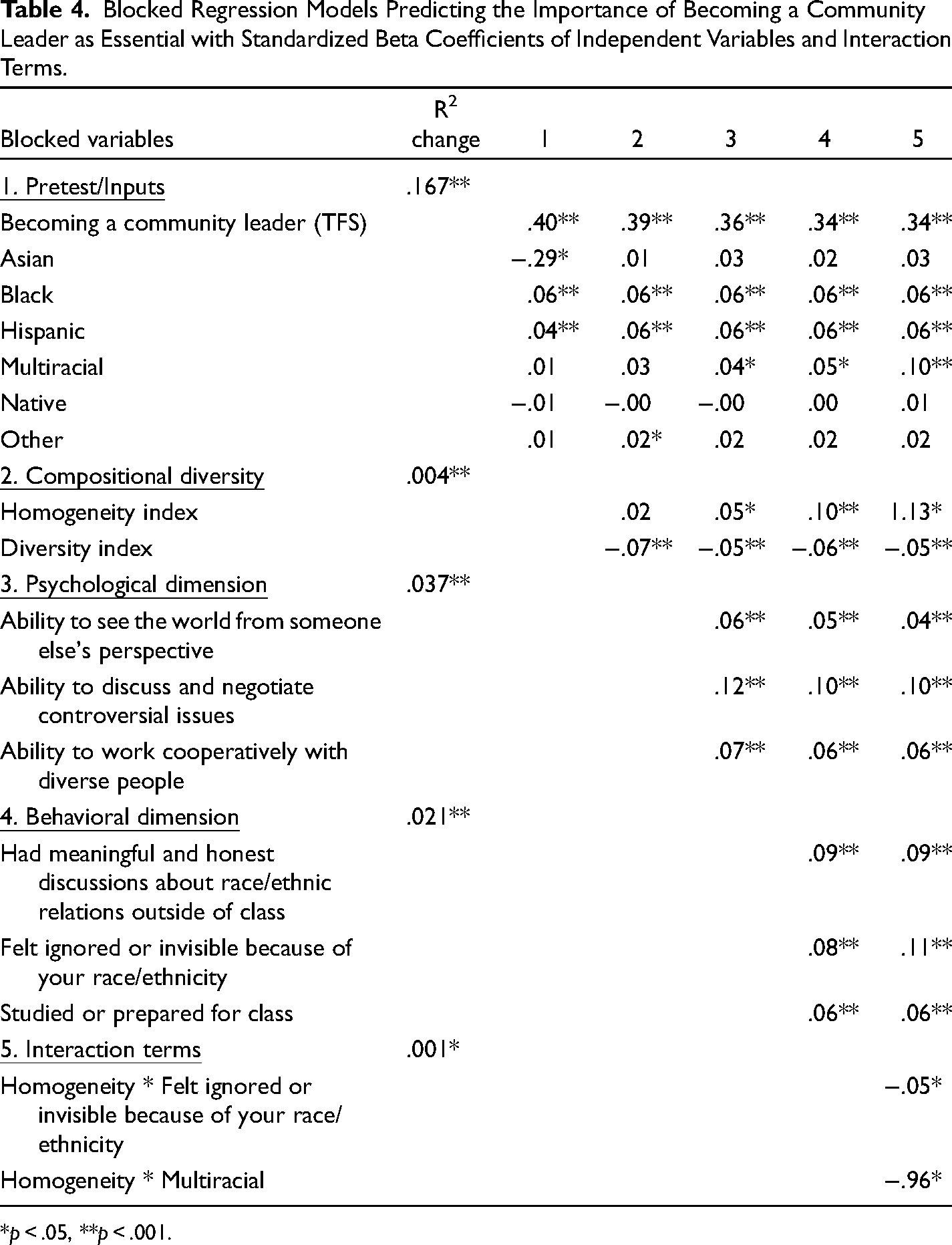
This study examined the variables influencing the perceived importance of becoming a community leader as essential for college students by their senior year. The analysis utilized a series of blocked regression models to explore the role of various independent variables and interaction terms in predicting this perceived importance. Table 4 shows the standardized beta coefficients of all independent variables, including the race variables with White students as the reference group. The table also shows the R2 change as each block enters the regression. The interaction terms were included in the final block.
Blocked Regression Models Predicting the Importance of Becoming a Community Leader as Essential with Standardized Beta Coefficients of Independent Variables and Interaction Terms.
*p < .05, **p < .001.
Block 1: Pretest/Inputs
The first block consisting of pretest/input variables explained a significant proportion of variance in predicting the importance of community leadership (R2 change = .167, p < .001). As expected, the pretest demonstrated a strong positive association with the dependent variable, with standardized beta coefficients consistently ranging from .34 to .40 (p < .001) across subsequent blocks. Among specific race/ethnicity groups, Black and Hispanic students showed positive relationships, while Asian students showed a negative relationship with perceived community leadership importance.
Block 2: Compositional Diversity
Adding compositional diversity variables resulted in a small increase in explained variance (R2 change = .004, p < .001). The homogeneity index displayed an insignificant positive association with the perceived importance, indicating that attending a campus with higher proportions of racially similar peers tended to place minimally higher importance on community leadership. Conversely, the diversity index showed a consistent negative relationship, suggesting that greater racial diversity on a college campus was associated with a slightly lower perceived importance of becoming a community leader.
Block 3: Psychological Dimension
The inclusion of psychological dimension variables led to a notable increase in explained variance (R2 change = .037, p < .001), which was expected considering that the dependent variable is also psychological in nature. Each psychological measure, namely, the ability to see the world from different perspectives, discuss controversial issues, and collaborate with diverse individuals, exhibited a positive and consistent relationship with the perceived importance of community leadership. Moreover, Block 3 variables had a significant suppressor effect on the homogeneity index, revealing a significant relationship between homogeneity and the perceived importance of becoming a community leader. Even though the homogeneity index had a negative correlation with the pluralistic orientation measures (as shown in Table 3), the suppressor effect suggests that attending a campus with higher proportions of racially similar peers heightened students’ perceived importance of becoming a community leader, particularly if they had higher perceptions of their pluralistic orientation.
Block 4: Behavioral Dimension
Adding the behavioral dimension variables contributed to a modest increase in explained variance (R2 change = .021, p < .001). Frequently engaging in meaningful discussions about race/ethnic relations outside of class (positive interaction), experiencing feelings of invisibility due to race/ethnicity (negative interaction), and studying/preparing for class (academic interaction) were all positively related to the perceived importance of community leadership. Additionally, Block 4 variables had a suppressor effect on the homogeneity index, strengthening the significant relationship between homogeneity and the outcome variable. Even though the homogeneity index had a negative correlation with the cross-racial interaction measures (as shown in Table 3), the suppressor effect suggests that attending a campus with higher proportions of racially similar peers contributed to placing higher importance on becoming a community leader if those students also had frequent interactions with peers of different racial/ethnic backgrounds, regardless of whether those cross-racial interactions were positive, negative, or academic.
Block 5: Interaction Terms
The final block involving interaction terms added a minimal increase in explained variance (R2 change = .001, p < .05). Notably, the interaction term Homogeneity * Felt ignored or invisible due to your race/ethnicity showed a negative relationship with perceived community leadership importance, suggesting that when individuals report feeling ignored or invisible due to their race/ethnicity and the campus has a higher homogeneity (more racially similar peers), their perceived importance of becoming a community leader was reduced. Additionally, the interaction term Homogeneity * Multiracial revealed a significant negative relationship, indicating that for individuals who identify as Multiracial, attending a campus with higher proportions of Multiracial students was associated with a significant decrease in their perceived importance of becoming a community leader. The final regression model explained about 22.8% of the variance (p < .001).
Discussion and Practical Implications
The main purpose of this study was to explore the influence of campus racial diversity and racial homogeneity on the perceived importance of becoming a community leader among college seniors. Results reinforced the suggestion that racial diversity and racial homogeneity each have positive and negative effects of their own (Apfelbaum et al., 2014). More specifically, racial homogeneity played an indirect positive role in predicting students’ personal importance of becoming a community leader by their senior year. Even though Table 3 showed that attending a campus with higher proportions of racially similar peers was negatively correlated with pluralistic orientation and frequencies of cross-racial interaction, the positive effects of homogeneity on the perceived importance of becoming a community leader were moderated by the quality and frequency of diversity-related college experiences. These findings suggest that the effects of campus racial diversity and racial homogeneity are independent of each other and may very well work together to develop students’ community leadership aspirations. These implications may also differ for students based on race.
Prior research on leadership suggests that students may experience and make meaning of leadership development differently based on their race and racial experiences (see Arminio et al., 2000; Collins & Rosch, 2018; Kezar & Moriarty, 2000). This present study demonstrated similar sentiments. When only controlling for the pretest in Block 1, Asian students placed significantly less importance on community leadership by their senior year compared to White students. This negative effect was lost as soon as another block entered the regression. Future studies disaggregating Asian student data may provide more insight on how leadership identity development occurs for different subgroups, given the immense socioeconomic and educational diversity within their racial/ethnic group category (Schweis, 2021).
Furthermore, Black and Hispanic students consistently placed more importance on becoming a community leader compared to White students. Even after the inclusion of variables around the diverse learning environment, the final regression model suggested that the overall positive impact of college on Black and Hispanic students’ personal goal of becoming a community leader is widespread. In this way, college may be seen as an avenue for Black and Hispanic students to become more intimately involved as community leaders, regardless of institutional intervention. One practical implication of this finding is that leadership development programs might benefit from fostering or cultivating the community contexts that Black and Hispanic students or other students of color may already be involved in such as ethnic student organizations (see Bowman et al., 2015; Cokley et al., 2003; Flowers & Pascarella, 1999; Flowers, 2002; Gordon et al., 2021; Guiffrida, 2003; Greer & Chwalisz, 2007; Harper & Griffin, 2010; Harper & Quaye, 2007; Museus, 2008; Sutton & Kimbrough, 2001; Yaj, 2019).
While racial homogeneity may play an important role in community leadership development, this role may not be as pronounced for Multiracial students. According to the interaction term results, the positive effects of racial homogeneity on the perceived importance of community leadership differed for Multiracial students specifically. This interaction might be caused by the fact that Multiracial students encompass a wide variety of racial combinations in their identities, yet they are classified as one group. Due to the plurality of their racial/ethnic identities, the Multiracial category itself further complicates the interplay between race and leadership development. Even though the regression model shows that Multiracial students placed higher importance on becoming a community leader compared to White students after controlling for the diverse learning environment, attending a campus with higher proportions of other Multiracial students did not meaningfully contribute to these results. Additional studies on the leadership development processes of Multiracial spaces or student organizations would be insightful (Malaney-Brown, 2021; Ozaki & Johnston, 2008). Additionally, there should be more efforts geared toward understanding the leadership development processes for Native American and Other race students as their data are typically underrepresented in longitudinal studies.
To some extent, each person in any environment holds a degree of similarity and dissimilarity to others, whether by race, sex, gender, age, educational background, or some other characteristics. These traits are meaningful and may influence the outcomes and processes of groups and institutions differently. Future diversity studies should consider both similar and dissimilar qualities in their participants as a way of identifying how diversity broadly affects participants, positively or negatively. While a long line of studies has reinforced the importance and benefits of racially diverse environments, future studies on racial homogeneity may provide critical insight on the interplay between race, diversity, community leadership, and other academic outcomes of interest. In conclusion, this study was able to demonstrate that attending a college campus with higher proportions of racially similar peers may indirectly and positively influence the development of community leadership identity.
Footnotes
Data availability
The data that support the findings of this study can be found by visiting the Higher Education Research Institute (HERI) website at heri.ucla.edu. The data from the Integrated Postsecondary Education Data System (IPEDS) are openly available and may be found at nces.ed.gov.
Declaration of Conflicting Interests
The author declared no potential conflicts of interest with respect to the research, authorship, and/or publication of this article.
Funding
The author received no financial support for the research, authorship, and/or publication of this article.
