



Abstract
In this study, we map and describe the coping methods used by members of the university community in Sweden to deal with the first wave of the coronavirus pandemic. This study, which used simple random sampling, was quantitative. It employed a modified version of the RCOPE instrument as well as items from earlier studies of meaning-making coping in Sweden. Among participants (n = 277, 64% women), the most frequently used coping method was nature as a resource in dealing with stress and sadness, followed by listening to the sounds of surrounding nature and thinking of life as part of a greater whole; these coping methods were the most common in all subgroups studied. We used a cultural perspective to better understand the application of certain meaning-making coping methods.
The novel coronavirus disease 2019 (COVID-19) pandemic is considered a global epidemic and worldwide public health crisis that is causing serious illness and medical conditions in most infected people. This epidemic has changed our world in various ways, and its consequences will probably persist for many years. COVID-19–related containment measures and associated economic disruption are causing loss of livelihood, tranquillity, and inner peace. The mental health consequences of staying at home, social distancing, and social isolation may be very significant, and the outbreak could cause a second pandemic of mental health crises (Choi et al., 2020). According to the World Health Organization (2020), “fear, worry, and stress are normal responses to perceived or real threats, and at times when we face uncertainty or the unknown. So it is understandable that people are experiencing fear in the context of the COVID-19 pandemic”.
Research shows an alarming rise in anxiety, depression, suicide, substance use, domestic violence, and child abuse during the worldwide crisis caused by severe acute respiratory syndrome coronavirus-2 (SARS-CoV-2) (Galea et al., 2020). Researchers and clinical practitioners have warned of the COVID-19 pandemic’s impact on psychological health (Cao et al., 2020; Pfefferbaum & North, 2020). Symptoms of obsessive–compulsive disorder (e.g., fear of germs and increased hand washing) will likely increase among people with this condition. The psychosocial impacts of the pandemic, together with government-mandated quarantines and nationwide lockdowns to contain the spread of COVID-19, may result in anxiety, obsessive behaviours, hoarding, paranoia, depression, and post-traumatic stress disorder (Dubey et al., 2020). During the pandemic, negative emotions (e.g., anxiety, depression, and indignation) and sensitivity to social risks have increased, while scores for positive emotions such as happiness and life satisfaction have decreased (Li et al., 2020).
A Chinese study with 1060 informants provided evidence that over 70% of respondents self-reported moderate and higher levels of psychological problems, specifically, elevated scores for phobias, obsessive compulsive symptoms, interpersonal sensitivity, and psychoticism (Tian et al., 2020). In addition, an American investigation found that stay-at-home regulations and personal distancing were associated with higher symptoms of depression, generalized anxiety disorder, intrusive thoughts, insomnia, and acute stress (Marroquín et al., 2020). In contrast, another study in the United States analysed over 10 million people who had Googled mental health terms during the 16–23 March 2020 period, finding that implementation of stay-at-home orders was associated with a reduction in searches concerning negative thoughts, suicidal ideation, anxiety, and sleep disorders (Jacobson et al., 2020).
Altogether, most research efforts have suggested that the ongoing coronavirus pandemic has had a significant impact on mental health, which is why health policies to meet imminent mental health challenges are crucial. Interventions and techniques that enhance mental health during a pandemic include social support availability, regular daily interaction with family, friends, and colleagues, stress management techniques, humour-based activities, positivity and positive reframing strategies, and resilience promotion training (Amici, 2020; Hagger et al., 2020; Yıldırım & Güler, 2021).
Recent research has also found that coping methods, by acting as self-help mechanisms, may help people be more prepared and empowered in facing the challenges and worries caused by the COVID-19 pandemic (Mariani et al., 2020). Previous studies have shown that people’s successful coping with stressors depends partly on social resources (Ahmadi et al., 2018). What these resources are in a particular society is partly related to the cultural settings in that society. In this study, we investigate the meaning-making coping methods used by faculty/staff and students in Sweden while working and studying from home during the current crisis, a matter that, to our knowledge, almost no previous studies have addressed. Additionally, in explaining the findings, we emphasize the sociological aspects, i.e., the role of socio–cultural settings in applying the coping methods.
Sweden and COVID-19
The COVID-19 pandemic reached Sweden in terms of general community spread in late February and early March 2020. Sweden implemented a less restrictive strategy based on recommendations from the Swedish Public Health Agency that greatly emphasized individual responsibility. The strategy aimed to protect senior and/or vulnerable citizens and to slow the spread of the virus so that the healthcare system could cope and care for patients suffering from SARS-CoV-2 (Sayers, 2020). During the pandemic, schools for children up to age 16 years remained open and medical care resources were available in all regions to avoid a healthcare collapse. Several occupational groups were advised to work from home and avoid travel, including university employees and students. Colleges and universities closed on 17 March 2020 and initiated distance learning, but reintroduced some classroom teaching in August 2020. The recommendations of the Swedish Public Health Agency became more restrictive in 2021; for example, face masks are to be worn on public transport by people born in 2002 or earlier. At the time of submission of this article, 8.8% of Swedish residents had tested positive for the virus and about 0.13% had died. These proportions were higher than in neighbouring Nordic countries but lower than in some European countries with general lockdowns (Worldometers, 2021).
Aim and Research Question
The aim of this article is to map and analyse from a cultural perspective the meaning-making coping methods used by individuals working or studying in academic settings in Sweden to cope with the psychological challenges of COVID-19 during the first wave of the pandemic. In doing this, we consider differences concerning gender, age, job situation, and place of residence in applying different coping methods. The specific research question guiding our study is: Were there any differences in meaning-making coping methods by gender, age, employment, and place of residence?
Meaning-Making Coping, Culture, and Crisis
Lazarus and Launier (1978) defined coping as the efforts, both action-oriented and intrapsychic, a person makes to manage (i.e., master, tolerate, reduce, or minimize) environmental and internal demands, and the conflicts between them, that tax or exceed his/her resources. As Ahmadi and Ahmadi (2018) noted: Coping is regarded (Pargament, 1997, p. 89) as a multilayered contextual phenomenon that has several basic qualities. In this regard, Pargament (1997, p. 89) stresses that coping “involves an encounter between an individual and a situation; it is multidimensional; it is multilayered and contextual; it involves possibilities and choices; and it is diverse.” Another dimension of coping is that it constitutes a process that evolves and changes over time.
RCOPE
RCOPE, is a “theoretically based measure that would assess the full range of religious coping methods, including potentially helpful and harmful religious expressions” (Pargament et al., 2000, p. 521). It is based on the global indicators of religiousness (e.g., frequency of prayer, congregational attendance). Besides, it includes items indicating how the individual makes use of religion to understand and deal with stressors. Five fundamental religious functions constitute the basis of RCOPE: Meaning, Control, Comfort/Spirituality, Intimacy/Spirituality, Life Transformation. Certain religious and spiritually oriented methods, both potentially helpful and potentially harmful methods are considered with respect to each of these five fundamental religious functions defined by Pargament et al. (2000, pp. 522–524).
Meaning-Making Coping
Coping methods based on existential awareness can be considered religious or spiritual. However, an international project examining nine cultural settings (Ahmadi, 2006; Ahmadi et al., 2016, 2018) as well as other studies (Hvidt et al., 2021; la Cour et al., 2012; McDougle et al., 2016) found that people may rely on coping methods that are not considered religious or spiritual, such as methods drawing on nature or some sort of internal power, but are nevertheless existential and entail a search for meaning. Religion or religious symbology is unrelated to such meaning, nor is a sacred religious/spiritual source involved. Because these methods of coping with a crisis concern individuals’ efforts to find an inward (whether in nature, themselves, or others) as opposed to transcendent (i.e., in God) source of strength, the term secular existential coping is used to categorize them. Typically, an existential vacuum arises in response to crisis, calling for the old order to be transformed into a new order (Ahmadi & Ahmadi, 2018). Note that, from this perspective, these three coping methods are interconnected. Ahmadi and Ahmadi (2021) pointed out that secular meaning-making coping has hardly any point of connection with a traditional sacred context, but can overlap with a search for connectedness with a sacred source without relating to God or any traditional religious context. Here sacred is not defined in a religious context, but in terms of inward sanctification. Such being the case, there is a distinction between theistic and non-theistic sacred objects. Indeed, in contrast to the set of “sacred rings” presented by Pargament et al. (2017), which has the outwardly transcendent as its sacred core (i.e., theistic sanctification), Ahmadi and Ahmadi (2021) presented a different set of sacred rings. In their model, inward transcendence shapes the sacred core (i.e., non-theistic sanctification). In our study, proceeding from this view, we have applied the term meaning-making coping to refer to the entire range of religious, spiritual, and existential coping methods.
Method
A quantitative research design was employed to conduct an international project on meaning-making coping with COVID-19.
Sampling
Academics, here defined as university faculty/staff members and students, from different representative universities in Sweden were targeted in the study. A list-based sampling frame with simple random sampling was chosen for the study. This approach is regarded as among the most appropriate methods when the sample is drawn from academic groups, an almost homogenous population whose e-mail addresses are publicly available (Fricker, 2016). From 30 May 2020 until 1 December 2020, a total of 277 female and male individuals studying and working in different universities in Sweden responded.
Data Collection
Data were collected using an online questionnaire published on the web survey tool Sunet Survey connected to the University of Gävle. The link to the online survey was emailed to the sample group. An information letter was attached to e-mails regarding the ethical considerations, i.e., concerning voluntary and anonymous participation and secure data usage. To respond to the questionnaire items on the webpage, the informants first had to give their consent.
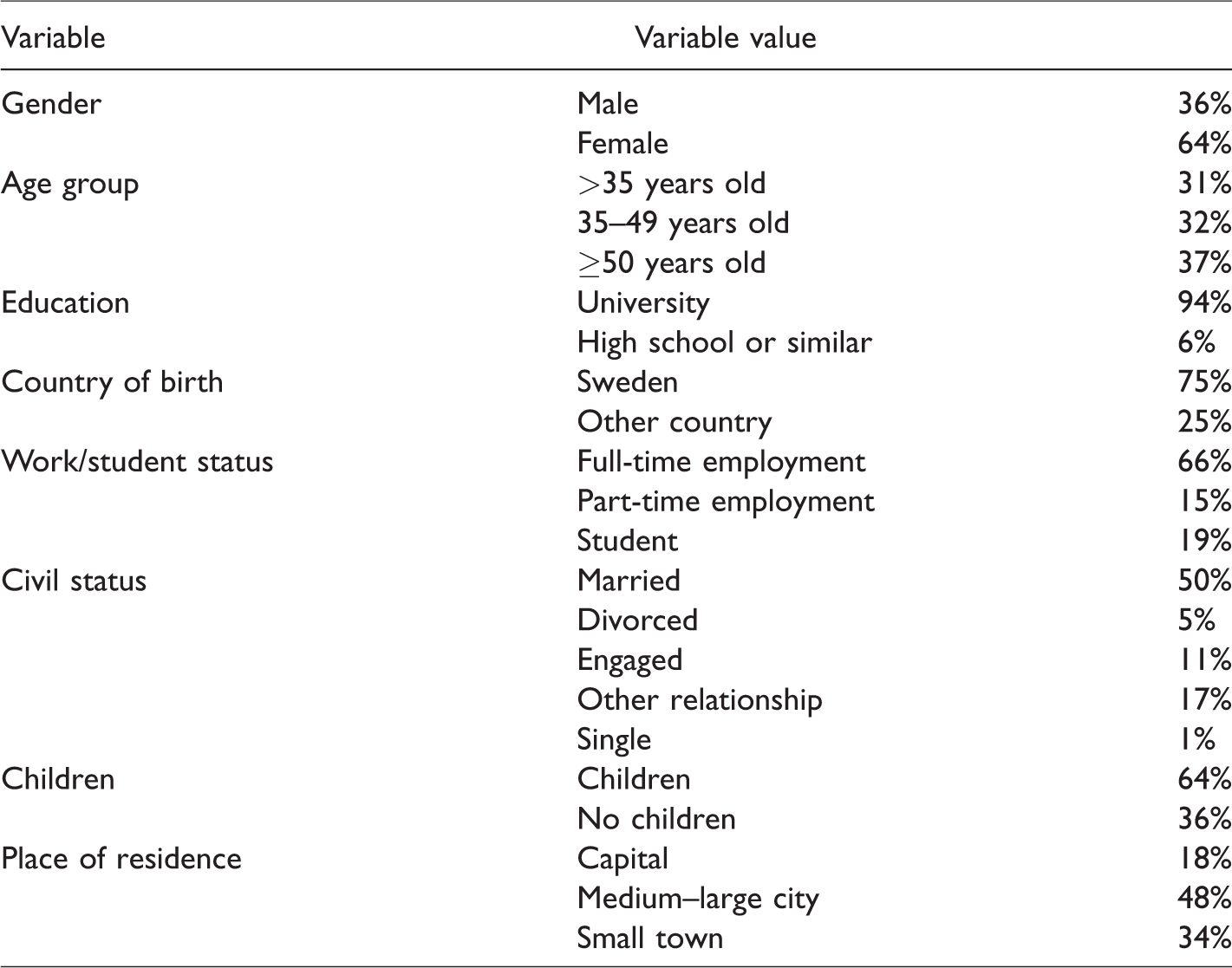
Reviewing the responders indicates that most were women, ethnically Swedish, full-time employed, married, with children, and living in a medium–large city (see Table 1).
Instrument
The questionnaire was based on partly a modified version of the RCOPE items (covering meaning, control, comfort/spirituality, intimacy/spirituality, and life transformation) (Pargament et al., 2000) and partly the results obtained from our other studies (quantitative and qualitative) conducted in Sweden for inquiring into the applied meaning-making coping. The modified RCOPE used here had a Cronbach’s alpha value of 0.742 (high) and included 16 items rated on four-point Likert scales ranging from 0 (“Never”) to 3 (“Always”); an additional nine background items were also included in the questionnaire. The instrument was validated for language and content in earlier studies (Ahmadi et al., under review).
Data Analysis Methods
We performed various calculations, including chi-square analysis, independent t-testing, Pearson’s correlation testing, one-way ANOVA, linear regression testing, and various cross tabulations: by gender (i.e., female and male), age group (i.e., young, middle aged, and older), work/education situation (i.e., full-time employed, part-time employed, on-campus student, and distance student), and place of residence (i.e., capital, medium-sized city, small town near a large city, and small town far from a large city). The sample was not weighted to reflect the actual academic staff or student populations of which it is representative. The data were analysed using SPSS Statistics 27.
Ethical Considerations
An application for ethical approval was submitted to and successfully reviewed by the Swedish Ethical Review Authority (Reg. no. 2020/023689). Written informed consent was obtained from all participants.
Results
Coping Methods Used in Sweden
According to most students and employees at universities in Sweden, using nature as a resource was absolutely the most common coping method to deal with stress and sadness (1.73 index value). The second most common coping method was also a nature experience, namely, listening to the sounds of surrounding nature (1.56 index value). These two coping methods, together with the third most common method, i.e., thinking that life is part of a greater whole (1.49 index value), were far ahead of the other methods in terms of how often they were used. The next three methods were also secular existential ones: walking or being active outdoors, being alone, and thinking of an internal spiritual force that exists to help one.
In Figure 1, coping methods are divided into religious and secular existential coping methods (religious coping methods are marked with an asterisk). Religious coping methods are clearly at the bottom in popularity, and of the bottom nine methods, only one is a secular existential method.
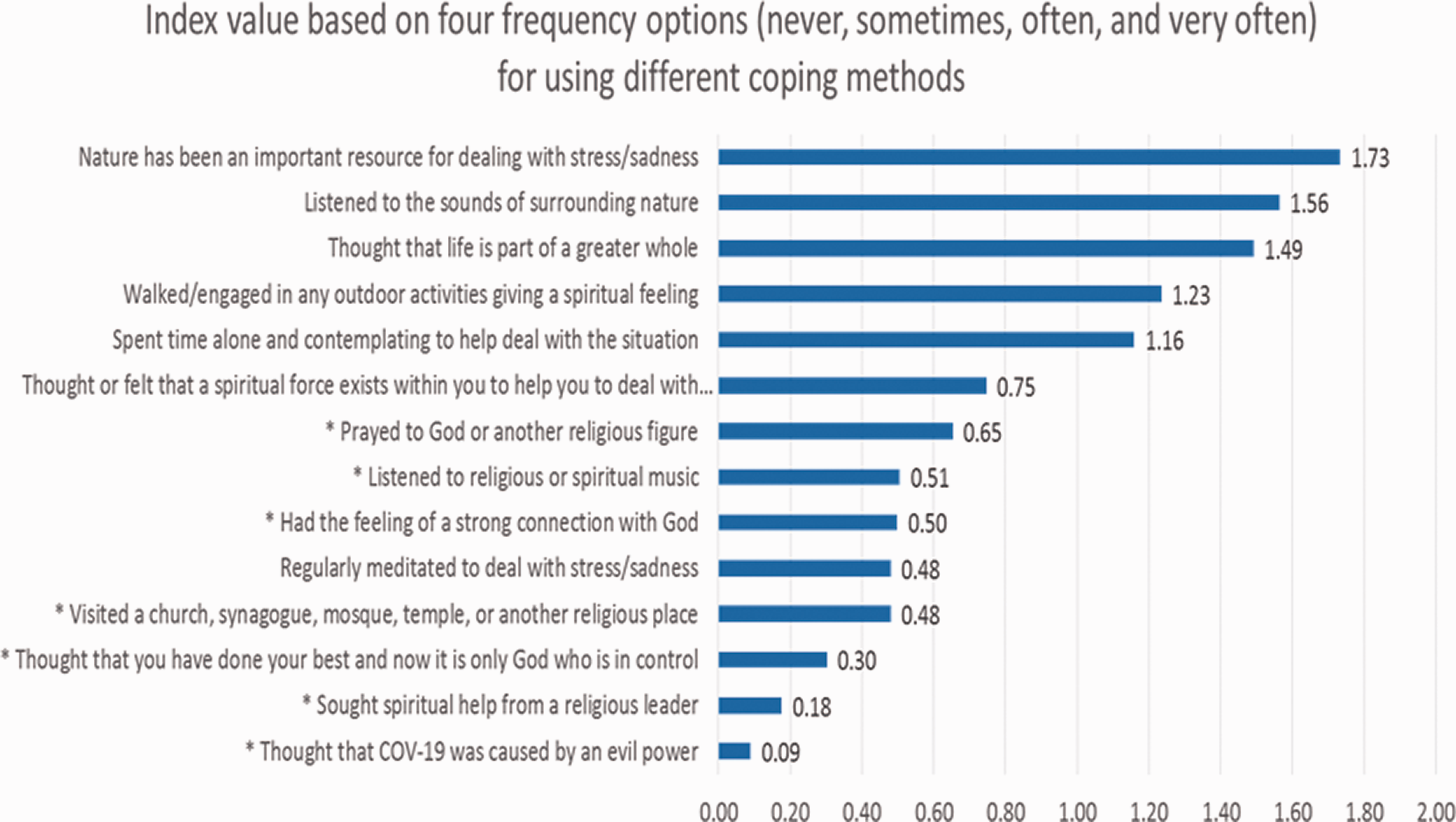
Ranking of Coping Methods Based on Frequency of Use in Sweden.
Although an average is a good indicator and good way to rank different methods, it is important to understand exactly how often the different methods were used. Figure 2 again shows the ranking of these coping methods, but this time we can see the exact shares of the coping methods used by respondents. Almost six in ten of the respondents claimed that they very or quite often thought that nature was important for them during this period; only one in ten never thought this. About half of the respondents also listened to nature and thought about life being part of a greater whole. A majority, six or more in ten, of the participants never used any religious coping methods.
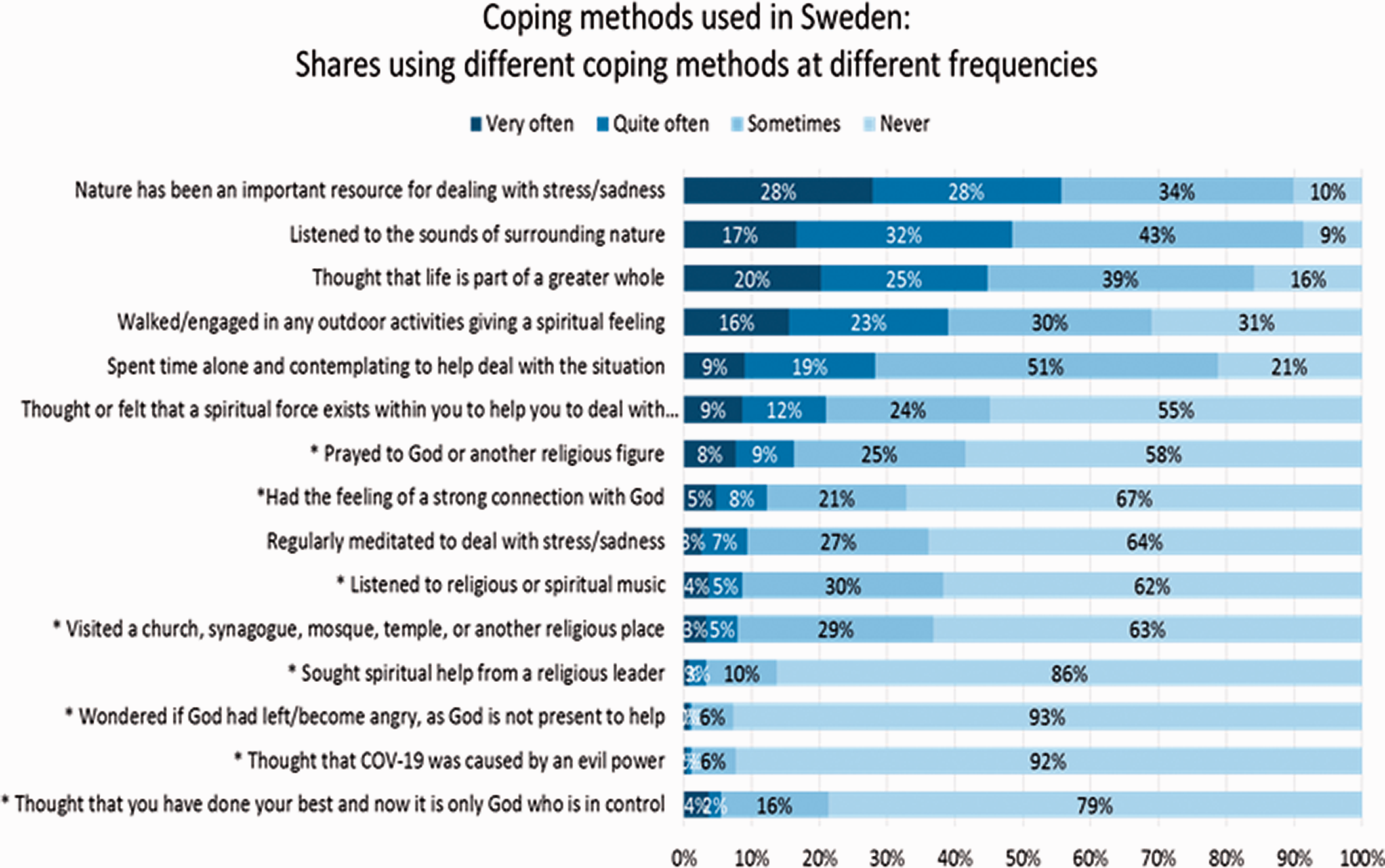
Ranking of Coping Methods by Percentage Use in Sweden.
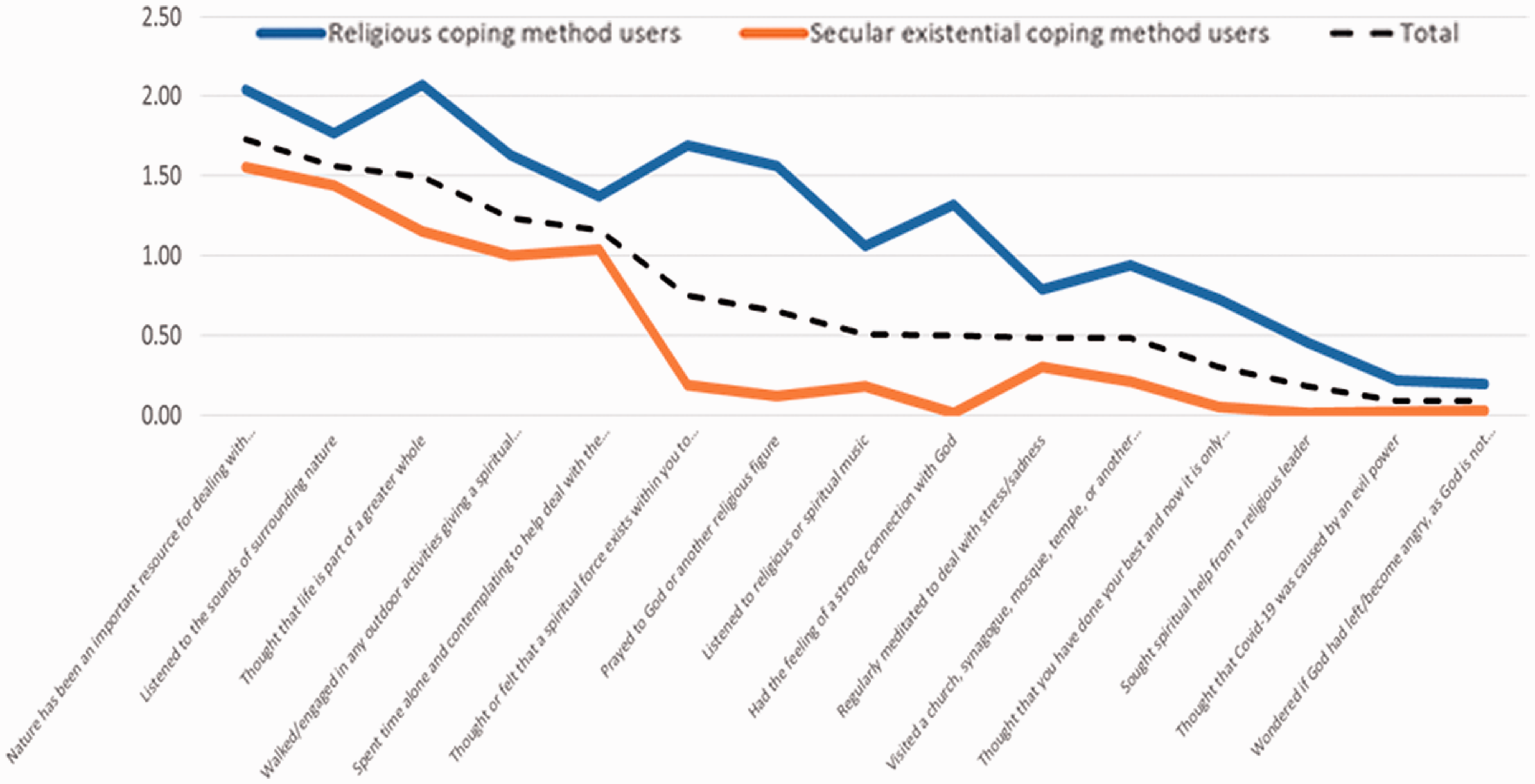
Two Auto-Generated Segments Based on Frequency of Use of Different Coping Methods.
Factor Analysis of Coping Methods
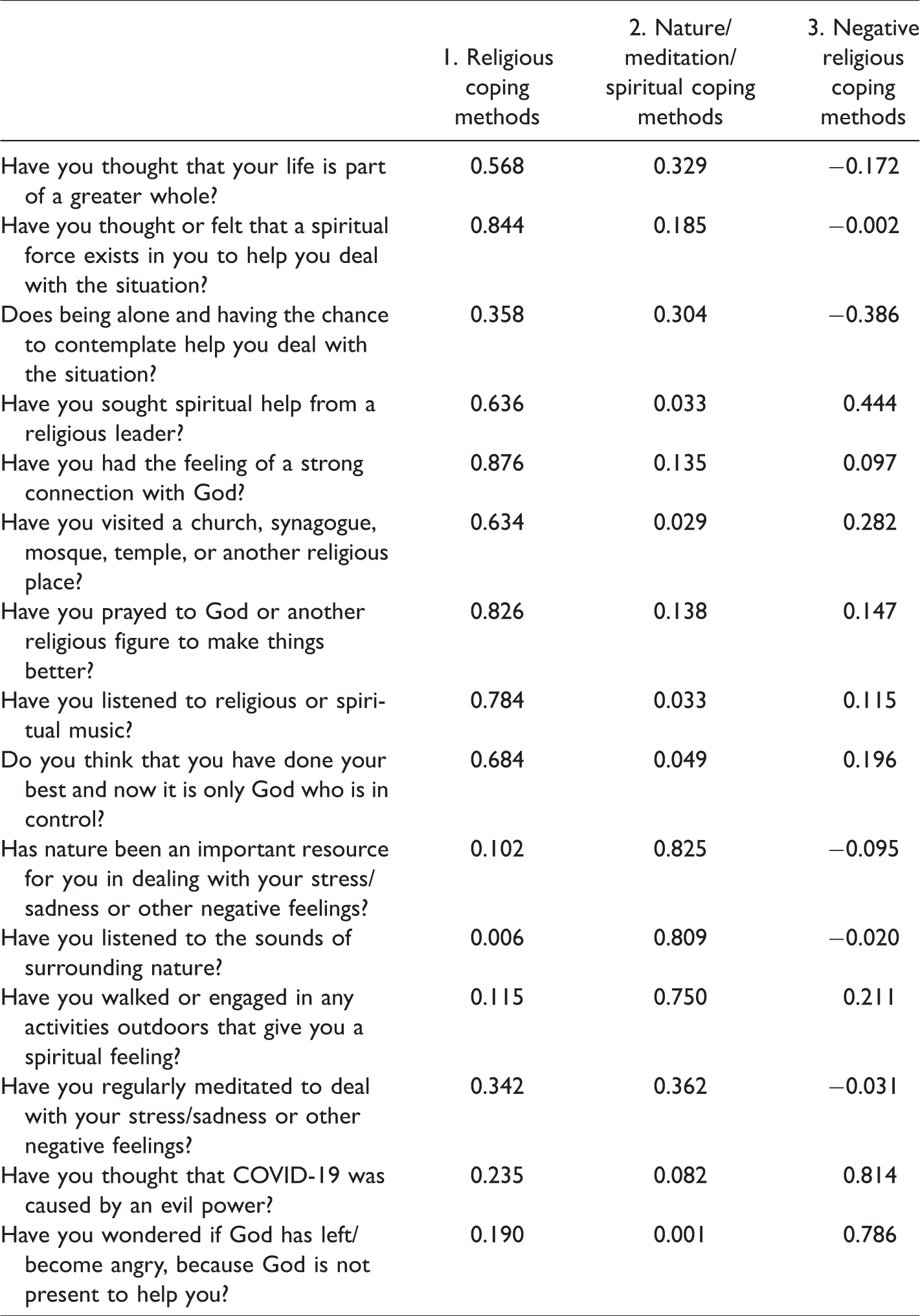
Factor analysis is a technique used to reduce many variables to smaller numbers of factors by investigating variables that are closely related to one another. This also makes it easier to group all the coping methods into fewer, more comprehensive factors. In this case, only three factors were generated when this automated factor analysis was conducted: religious coping, nature/meditation/spiritual coping, and negative religious coping. The religious factor has nine variables that are closely related to one another. The nature factor has only four variables, which are often mentioned in combination, while the negative religious coping methods have only two negative variables, i.e., that COVID-19 was caused by an evil power or that God has abandoned the respondent (see Table 2).
Coping Methods by Subgroups
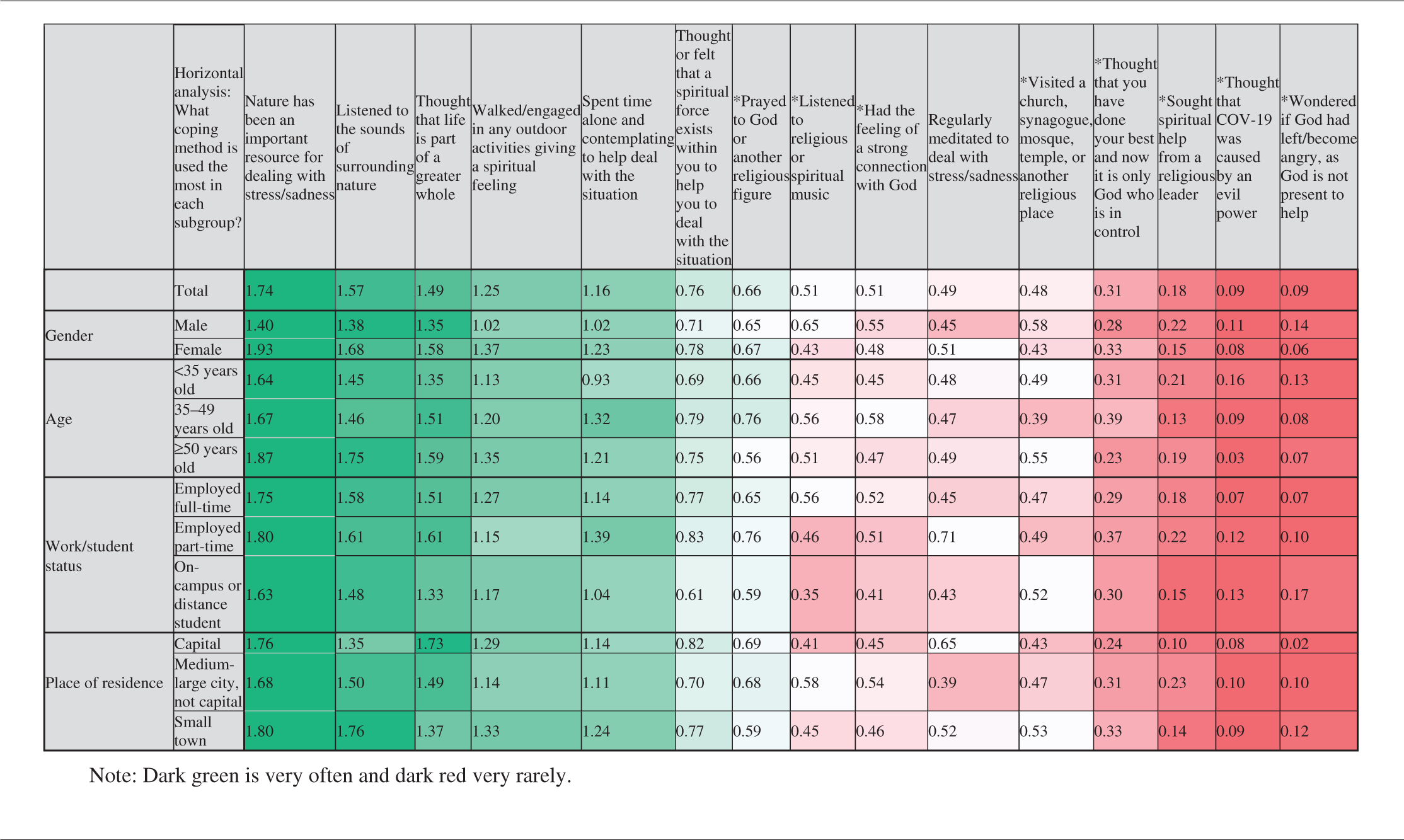
Tables 3 and 4 show the average frequencies with which the respondents used the different coping methods during the crisis. Here the results are broken down by several variables: gender, age group, work/education situation, and size of the place of residence. Table 3 presents a horizontal analysis comparing the coping methods within each subgroup. The results indicate that the coping method of using nature as an important resource was also the most commonly used coping method in all the subgroups, i.e., among men, women, different age groups, different work/education situation groups, and among those living in differently sized communities. Overall, the colour analysis indicates that the subgroups have very similar rankings of the methods they use the most, with a few exceptions. Listening to nature sounds and thinking that life is part of a greater whole are the second and third most common methods in all subgroups. The coping methods of walking/being active outdoors and simply being alone with spiritual forces are the fourth and fifth most common methods in all subgroups. The religious coping methods are the least used in all the subgroups presented here.
Sample Characteristics (n = 277), by Percentage.
Factor Analysis of Coping Methods.
Horizontal Analysis Comparing Coping Methods, by Subgroups.
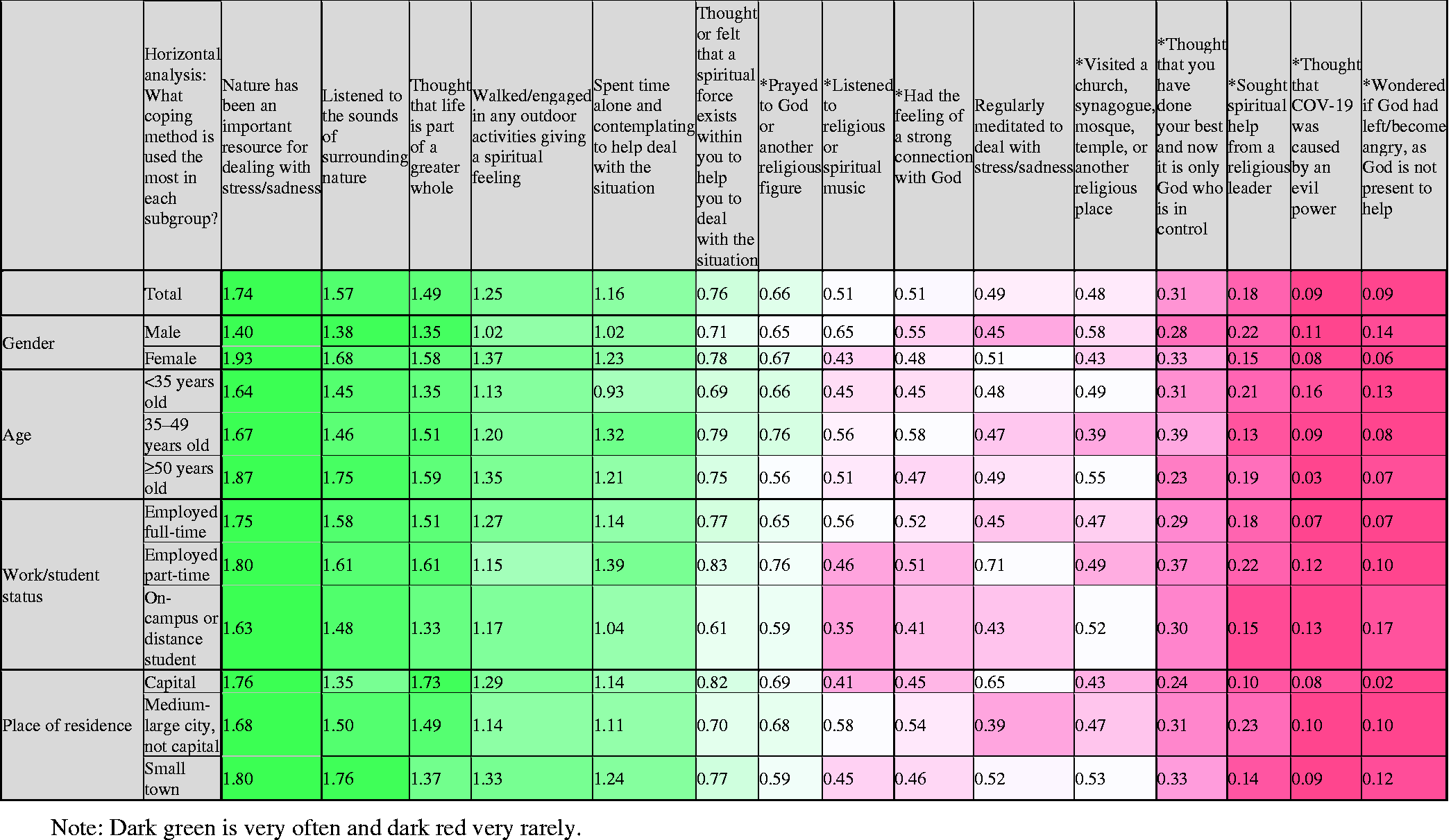
Vertical Analysis Comparing Coping Methods, by Subgroups.
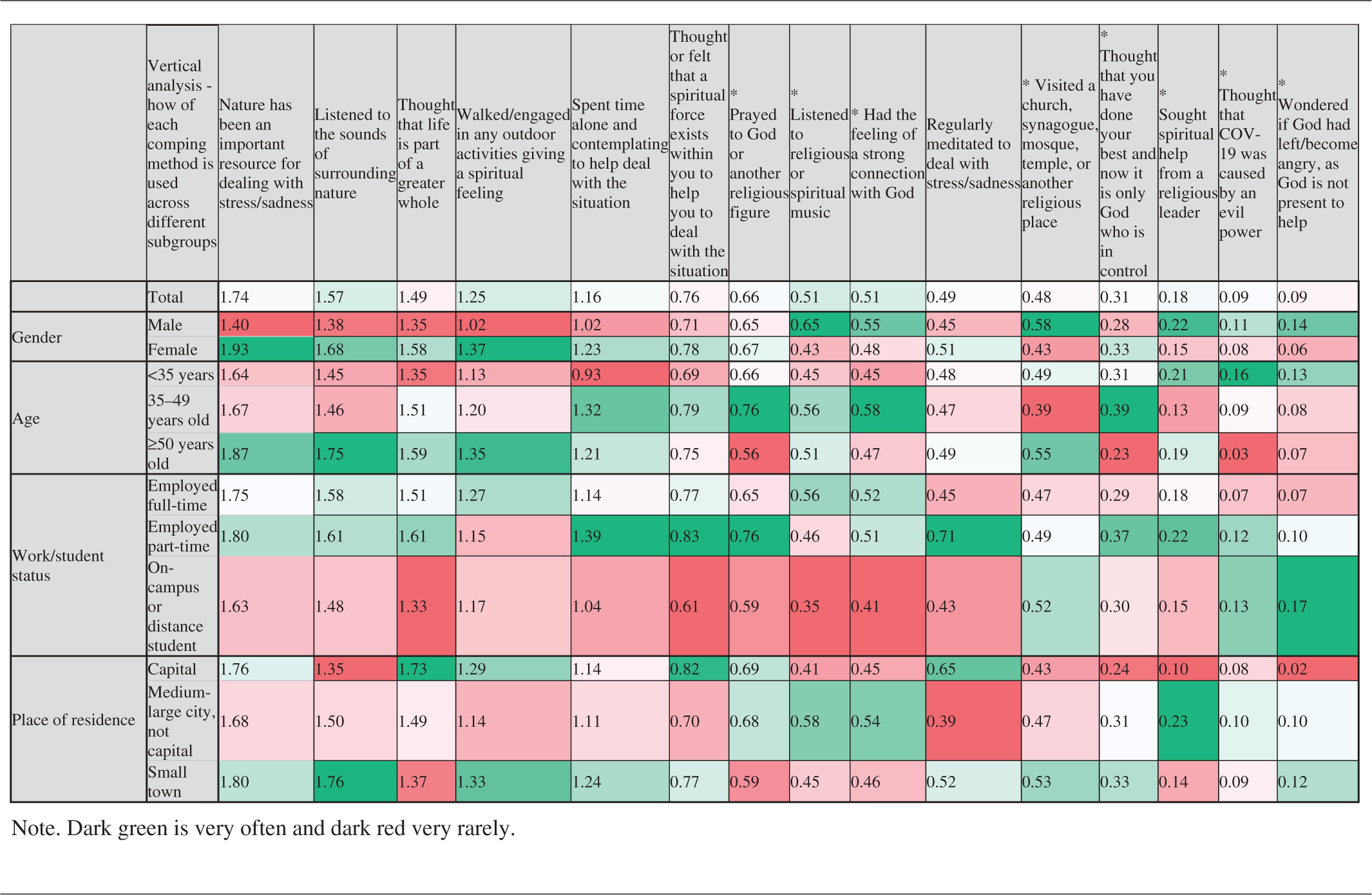
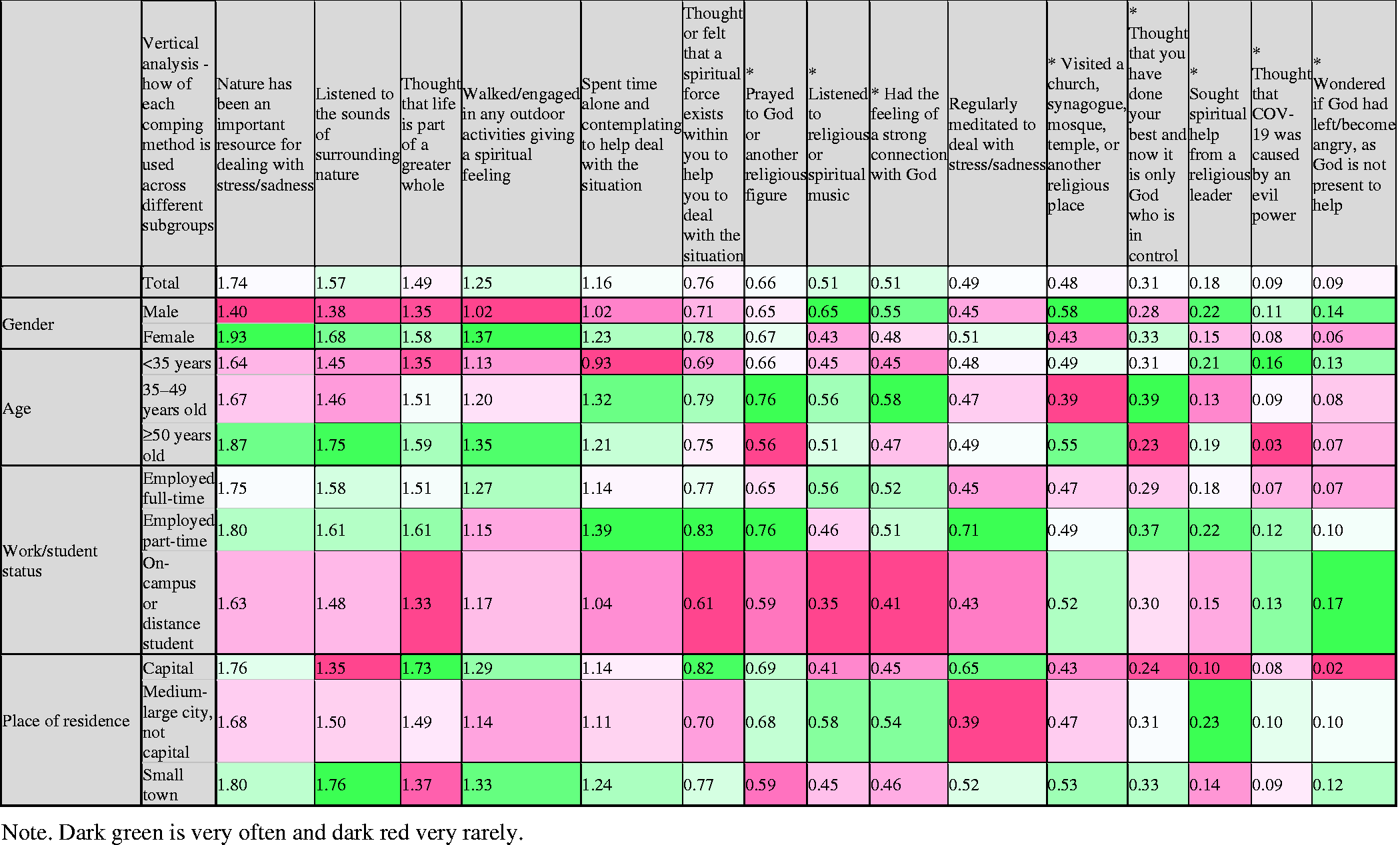
Table 4 presents a vertical analysis, which means that each coping method is compared between the different subgroups. This analysis shows that using nature as a resource is the most common method among women and those older than 50 years. Listening to the sounds of nature is the most common method among those living in small towns, but also among women and those older than 50 years. Thinking of life as part of a greater whole is most often used by those who live in the capital, Stockholm, and also by those who are half-time employed at the university.
Coping Methods Used by Coping Method Segments
To further analyse the results, we conducted a cluster analysis, which is a multivariate statistical technique for assessing the similarities between units or assemblages, based on the occurrence or non-occurrence of specific artefact types or other components within them. It is a class of statistical techniques applicable to data that exhibit “natural” groupings. Cluster analysis sorts through the raw data and groups them into clusters. In this study, the two-step cluster analysis in SPSS was used. The cluster variables used in this case are all coping methods. The two clusters were auto-generated by this statistical method and the cluster quality is fair.
Two segments auto-generated in a cluster analysis are found in the data collected in Sweden from the academics. This segmentation is based on how often the different coping methods were used and merges respondents who responded very similarly regarding how often they used the different coping methods. Figure 3 shows one segment, called religious coping method users, and another segment, secular existential method users. The reason that it only comes out two segments is that they are so similar within each segment regarding their usage of different methods. The analysis identified only two segments, based on the similarities and differences among the coping methods; forcing the analysis to identify three segments would have resulted in segments that were too similar to one another.
The cluster analysis indicates that the group religious coping method users used all the coping methods more often than did the other segment. However, three coping methods were more important, distinguishing the two groups regarding how often they used these different methods; these were: thinking that a spiritual force exists, praying to God, and having the feeling of a connection to God.
The characteristics of the two auto-generated segments differ slightly in sociodemographic characteristics. The shares of men and women are almost the same in the religious and the secular existential segments, with 39% men and 61% women in the former and only 34% men and 66% women in the latter. There is a somewhat larger share of those under 35 years old than those 50 years or older in the secular existential segment, i.e., 33% versus 27%, but somewhat more of those 50 years or older than those under 35 years old in the religious segment, i.e., 40% versus 35%. Those in the religious segment are also more likely to work full-time than those in the secular existential segment, i.e., 68% versus 64%, while those in the secular existential segment are more likely to be students, i.e., 22% versus 15%. Both segments contain similar shares of the university educated, i.e., 93% (secular existential) and 94% (religious); likewise, similar shares of both segments have children, i.e., 65% of the religious segment and 63% of the secular existential segment, and very similar shares of both segments live in the differently sized communities. There is a small difference between the segments in terms of where the participants were born, as eight in ten in the secular existential segment and about seven in ten in the religious segment were born in Sweden. Members of the religious segment were also somewhat more often married, i.e., 55% versus 47%.
A big difference is found in religious aspects. Not unexpectedly, 90% in the religious segment and only 27% in the secular existential segment believe in God. Similarly, up to 72% in the religious segment came from religious families whereas only 41% in the secular existential segment did.
Discussion
Using the Power of Nature
Academics (i.e., university faculty/staff and students) in Sweden frequently turned to nature to cope with their thoughts and feelings due to the COVID-19 crisis. A majority (56%) said that nature was an important resource with which to deal with stress and sadness during the crisis. In a ranking list of coping methods used in the survey, three quarters of the most common coping methods concern the connection to nature: seeing nature as a resource, listening to the sounds of surrounding nature, and undertaking various outdoor activities. Our literature review found that stay-at-home orders are associated with negative health outcomes (Jacobson et al., 2020). Furthermore, Mariani et al. (2020) found that coping methods in the form of self-help mechanisms prepared people for the COVID-19 pandemic, and Ahmadi et al. (2018) found that culture-specific social resources help people cope with stressors. However, as no previous studies have focused on the role of nature in coping with COVID-19, we will consider the role of nature in coping in general.
Our findings confirm the results of previous studies of meaning-making coping with crises, though conducted in settings other than the COVID-19 pandemic (e.g., among cancer patients and bereaved parents). These studies also found that nature was used as a predominant coping resource during crises. For instance, studies of cancer patients in Sweden have indicated that, in nature, cancer patients feel close to God or to an inwardly transcendent power, find peace and tranquillity, and feel at one with nature (Ahmadi, 2006, 2015; Ahmadi & Ahmadi, 2018). Another survey revealed that, among bereaved parents in Sweden, the third most common coping method when dealing with the loss of a child also concerns nature (Ahmadi & Zandi, under review).
One reason why nature plays such an important role in coping in Sweden is that nature plays a central role in Swedish culture, making it a readily available resource. One relevant hypothesis is that the spiritual sanctification of nature explains the choice of nature as a strong coping method by the informants. Here the authors proceed from Pargament’s theory that people sanctify different aspects of life in their search for significance. According to their hypothesis, Informants perceived a sacred value in nature. The timeliness and immensity of nature – the fact that whatever happens in the world, nature will still be there keeping its pace – has had a calming and consoling effect for the severely ill informants in this study. Nature grants a feeling of security when everything else is chaotic. By sanctifying nature as a timeless object, the informants find a spiritual feeling that functions as a therapy in their encounter with cancer. (Ahmadi & Ahmadi, 2018, pp. 51–52)
This post-materialist era is witnessing an increased tendency towards “private religion” and spirituality among modern people, especially Swedes (Ahmadi, 2015; Willander, 2013). As more of the sacred becomes private, the roles of music, literature, psychoanalysis, and nature in mediating existential and “religious” experiences are becoming more important. In this regard, nature occupies a special position for Swedes. Modern Swedes seem to seek experiences that used to be mediated by Christian culture, but now are mediated in ways other than through traditional religion. One of these alternative spiritual paths involves experiencing one’s unity with nature. Being in nature and feeling a sense of unity with natural environments can evoke spiritual feelings of unity with all of existence. As some informants in a qualitative study of cancer patients in Sweden stressed, nature becomes the church and unity with the holy becomes unity with nature (Ahmadi, 2006).
Secular Spirituality Rather Than Religiosity
Another finding of this study is that, besides the force of nature, academics in Sweden turned to spiritual thoughts about life as a part of a greater whole, up to 45% often having these thoughts. Women, especially those living in bigger cities, had these thoughts more than men did. In addition, 21% of the participants thought or felt that a spiritual force exists within them to help them deal with this very special situation. This is in line with the results of two other surveys on meaning-making coping, one among cancer patients and the other among grieving parents (Ahmadi & Ahmadi, 2018; Ahmadi & Zandi, under review). Ahmadi (2005, 2018) and Thurfjell (2019) found that people living in Sweden are “spiritual” in a secular rather than religious sense. This finding recalls the drastic decline in church attendance and other formal religious practices in Sweden in recent decades (Ahmadi, 2006; Sundback, 1994). People tend to conceive of their religious lives in spiritual terms, and a subjective, inwardly directed spirituality with few public manifestations has replaced religiosity (Sundback, 1994). Secular spirituality rather than religiosity is now a more germane concept in Swedish society.
Contemplating to Help to Deal With Crisis
Also common among the academics was attempting to resolve the dilemma silently on their own. Almost three in ten (28%) said that they often dealt with the COVID-19 crisis by simply being alone and contemplating. Women, especially those with time remaining after working part time, did this more often than men. Preferring to be alone and to have the chance to contemplate is strongly recognized in this and other studies of meaning-making coping in Sweden (Ahmadi, 2006, 2015) as a method used by Swedish informants to cope with the anxiety and stress of the ongoing global pandemic.
Ahmadi Lewin (2001) and Tornstam (1997, 2005) have noted a Swedish liking for positive solitude. The positive connotations of ensamhet (solitude) have astonished immigrants to Sweden from markedly different cultures (Barinaga, 1999, p. 5). In Swedish, “solitude” evokes “inner peace, indolence and personal strength. It is a virtue already taught in early years of life” (Barinaga, 1999, p. 5). In Swedish culture, the idiom “att få vara i fred” (to be left in peace) implies not only having time for oneself, but also respecting others’ need for peace and positive solitude (Herlitz, 1995). Needing one’s own and respecting others’ solitude relates to the marked individualism of Swedish culture (Barinaga, 1999, p. 5). Swedes expect to be independent and expect others to be the same and to handle their problems on their own. Given this, positive solitude as a method for coping with COVID-19, found to be common in the present respondents, is understandable. In a culture that values both the individual and solitude, people facing difficulties such as the current pandemic will likely not be averse to contemplating their thoughts in solitude. This does not mean that Swedes want to be ignored by friends and family; like all people, Swedes appreciate it when their community cares about them during a crisis, and family, friends, and colleagues are indispensable in this. For Swedes who appreciate inner peace, indolence, and personal strength, positive solitude is the coping method of sitting alone and pondering one’s situation – being present to oneself.
Religious Coping Methods Are Less Common
All seven religious coping methods measured in this study are at the bottom of the frequency usage list. Of these, the most common religious coping method used was praying to God or other religious figures; however, only 17% did this often and most (58%) never did this. Men used religious coping methods more often than women did, for example, visiting religious places, listening to religious music, and feeling a strong connection to God.
As discussed above, Swedes are more likely to describe their religious lives in spiritual terms. Belief in a personal God has decreased in Sweden in recent decades, whereas belief in a transcendent power has increased (Statista Research Department, 2020; Tomasson, 2002). Although many in Sweden belong to the Lutheran church, the proportion of people committed to the church form a minority in Scandinavia as well as among church members. According to official statistics, only 19% of Swedes claim to be religious. As surveys by WIN/Gallup International show, Sweden is among the least religious countries in the world, along with China, Japan, Estonia, Norway, and the Czech Republic. Fewer than one in five Swedes claims to be religious, compared with, for example, more than half of Americans.
Concerning spirituality, according to a survey conducted in 2017 in 15 countries in Europe (Pew Research Center, 2018), while 19% of Swedes view themselves as religious, 27% consider themselves spiritual, and many of those who regard themselves as Christian do not practise their religion. Church-attending Christians represent only 9% and non-practicing Christians 43% of Swedes. Many non-practicing Christians say that they do not believe in conventional religion, but that they do tend to believe in some other higher power or spiritual force. According to statistics, only 1% of Swedes “believe in God as described in the Bible”, 26% believe “in another higher power or spiritual force in the universe”, and 65% do not “believe in any higher power”.
Summing up, that religious coping methods were not highly used by the informants in this study when coping with the crisis caused by the COVID-19 pandemic in Sweden is due to the non-prevalence of religiosity in Sweden. Accordingly, the usage of coping methods related to existential issues is presumably not based on belief in traditional religion, but rather on what is called “post-materialistic spirituality” or “secular spirituality”.
This study demonstrates that in those cultural settings where religion does not constitute the major part of people’s existential orientation system and therefore is not integral to people’s everyday lives, secular coping methods come to the fore. Several studies (Ahmadi, 2006, 2015; la Cour et al., 2012) have demonstrated that in countries such as Sweden or Denmark where people have internalized secular norms and values, when informants maintain that they are spiritual, this sometimes implies that they are neither religious nor atheist. For instance, studies have shown that in some strongly secular countries, when people say they believe in a higher power, they often are not referring to God. Similarly, in such countries believing that one’s life is part of a greater whole is a coping method used by people who are spiritual, but not religious.
In some countries where religion is a part of life, such as Iran, Turkey, and Malaysia, where people’s ways of thinking are not rooted in secularism, the sharp contrast between religiosity and spirituality does not exist and spiritual coping methods are often regarded by people as religious coping methods (Ahmadi & Rabbani, 2019; Ahmadi et al., 2018). As a result, as Ahmadi (2018) has emphasized, the orienting system, as a material, biological, psychological, social, and spiritual frame of reference that guides and grounds individuals facing a crisis, represents how a culture puts its stamp on the individual’s life and therefore how the individual copes with stress when facing overwhelming circumstances.
Conclusions
This survey study of meaning-making coping with the first wave of the coronavirus pandemic, conducted among academics in Sweden, indicates that secular existential meaning-making coping methods were the most prevalent coping methods, regardless of gender, age group, work situation, and place of residence. In contrast, religious coping methods were the ones least used by informants. Regarding secular meaning-making coping, the results indicate that coping methods relating to nature were the most used.
We have attempted to explain the findings by taking into consideration some aspects of the culture. The study reveals some insights of how academics can manage the challenges caused by a health pandemic and possible subsequent quarantines. It also elucidates the possible potentials of cultural factors in dealing with crisis. The main strength of our research is that, to our knowledge, it is the first study of its kind to investigate meaning-making coping methods in a Swedish academic setting in the midst of COVID-19 concerns and uncertainty. In conducting the present study, we hope to contribute to an increase in scientific knowledge in the coping field.
Some Practical Implications and Directions for Future Research
More research is needed into various outdoor social activities and their importance as coping methods in times of crisis.
Preferred coping methods differ by gender, place of residence, work/education situation, and age group, and this merits closer research attention.
Better knowledge of various coping methods involving meaning-making may help social work and social care efforts to better help people address the psychological effects of COVID-19.
To date, bio-medical studies have understandably dominated COVID-19 research. However, cultural sensitivity is also needed in interventions to address crises, to help us understand why people react as they do and to design preventive measures.
Policy Recommendations
The full range of coping methods, including secular ones, merits consideration by those planning and providing care for those facing COVID-19-related crises. In countries where religion is integral to people’s lives, policymakers should pay considerable attention to religious/spiritual coping methods. However, as well as facilitating religious coping methods for those experiencing psychological distress stemming from COVID-19, these planners should also allot funds and facilities for promoting spiritual and existential coping methods.
Planners and policymakers must improve their cultural competence in secular, religious, and spiritual methods for coping with COVID-19; such competence includes identifying and understanding these methods’ positive and negative effects.
Supplemental Material
sj-docx-1-icl-10.1177_10541373211022002 - Supplemental material for Meaning-Making Coping With COVID-19 in Academic Settings: The Case of Sweden
Supplemental material, sj-docx-1-icl-10.1177_10541373211022002 for Meaning-Making Coping With COVID-19 in Academic Settings: The Case of Sweden by Fereshteh Ahmadi, Önver A. Cetrez, Sharareh Akhavan and Saeid Zandi in Illness, Crisis & Loss
Footnotes
Acknowledgments
We thank all of our informants in Sweden as well as the University of Gävle for funding this project.
Author Contributions
Conceptualization, F. A.; methodology, Ö. A. C. and F. A.; software, Ö. A. C.; formal analysis, Ö. A. C. and F. A.; investigation, F. A., Ö. A. C., S. Z., and S. A.; data curation, F. A.; writing – original draft preparation, F. A., Ö. A. C., S. A., and S. Z.; writing – review and editing, F. A., Ö. A. C., S. Z., and S. A.; project administration, F. A. and Ö. A. C.
Declaration of Conflicting Interests
The authors declared no potential conflicts of interest with respect to the research, authorship, and/or publication of this article.
Funding
The authors disclosed receipt of the following financial support for the research, authorship, and/or publication of this article: Fereshteh Ahmadi received financial support from the University of Gävle.

Supplemental Material
Supplemental material for this article is available online.
Author Biographies
References
Supplementary Material
Please find the following supplemental material available below.
For Open Access articles published under a Creative Commons License, all supplemental material carries the same license as the article it is associated with.
For non-Open Access articles published, all supplemental material carries a non-exclusive license, and permission requests for re-use of supplemental material or any part of supplemental material shall be sent directly to the copyright owner as specified in the copyright notice associated with the article.
