




Abstract
Background
Experiential education (EE) is a pedagogical approach based on the premise that certain knowledge can be acquired more effectively through experience rather than lecture-based classroom content. Despite the well-documented benefits of EE across all levels of higher education, existing literature often focuses on small upper-year postsecondary courses.
Purpose
To identify and analyze key instructor motivations, methods, barriers, and facilitators for incorporating EE in first-year courses (FYEE).
Method
We conducted 13 qualitative interviews with instructors who incorporate FYEE in humanities and social sciences courses at a large, Canadian research university.
Findings
Instructors were motivated to incorporate FYEE to support students’ transition from secondary to postsecondary, introduce students to the discipline, and help students prepare for more extensive EE upper-year opportunities. To do so, instructors tailored FYEE as bite-sized teaching or scaffolded versions of community engagement. Instructors also identified institutional barriers and facilitators to implementing FYEE.
Implications
This research addresses an empirical gap in EE scholarship and makes recommendations to support FYEE at the administrative and teaching levels.
Keywords
Significance of Research Statement
This research identifies motivations, barriers, strategies and facilitators for implementing experiential education (EE) at the Faculty of Arts of a large Canadian university. Compared to previous research, this article identifies key motivations, considerations, and strategies for instructors to tailor experiential education specifically to the contexts of first-year (FY), large courses.
EE is a pedagogical approach based on the premise that certain knowledge can be acquired more effectively through experience rather than lecture-based classroom content (Weaver, 1998). Though definitions of EE have been debated (Kolb & Kolb, 2017; Luckmann, 1996), EE's theoretical framework is traceable to Dewey's (1938) argument that experience and practice, from which students actively learn, should not be separated from subject matter. Complementing this understanding of EE, Kuh (2008) introduces the concept of high impact practices, listing examples such as internships, FY seminars and undergraduate research that are largely seen as quintessential EE opportunities. He explains that high-impact practices embedded in EE are highly effective due to (a) their demand to devote a considerable amount of time to a purposeful task, (b) the facilitated interactions among faculty and students, (c) the likelihood of experiencing diversity, (d) the frequent feedback provided, and (e) the opportunity to learn in different social settings.
The positive student outcomes associated with EE are well documented (Coker et al., 2017; Howard et al., 2016; Maguire, 2018), including increased motivation, academic engagement, self-efficacy, and community awareness (Forestal & Finch, 2021; Trolian & Jach, 2020) as well as greater professional development, civic engagement, and perceptions of pedagogical effectiveness (Painter & Howell, 2020). However, much of this research focuses on upper-year courses and overlooks large, FY contexts (Kofinas & Tsay, 2021; Mantai & Huber, 2021; O’Connor et al., 2021; Trinh et al., 2021) despite instructors’ reporting that EE ideally should occur “across all stages of a student's college experience, even before they declare their major” (Weller & Saam, 2019, p. 92).
Large courses are often defined as those where the number of enrolled students makes the quality and equality of teaching and learning challenging (Mantai & Huber, 2021). A “large” course can range, predominantly in research universities, from 30 to more than 100 students (Mantai & Huber, 2021; Trinh et al., 2021). For Mantai and Huber (2021, p. 722), in the case of EE specifically, “a class with over 50 students would be difficult for only one teacher to provide … [the needed] immersive and interactive experience.” Consequently, for the purposes of this study, a large class was defined as one with 50 or more enrolled students.
While faculty perspectives on EE have been extensively studied, less is known about the motivations, methods, barriers, and facilitators of the application of EE in large, FY classes (FYEE) in particular. As such, we aim to answer the following research questions:
What does/can FYEE in large courses look like? What motivates, enables, and prevents instructors from implementing FYEE in large classes?
Literature Review
While preference for smaller classes in EE scholarship is grounded in its ability to foster stronger connections, increase student participation, and cultivate better relationships (Kofinas & Tsay, 2021), EE research in larger classes tends to emphasize the challenges these learning contexts present to faculty (Agogué & Robinson, 2021 ; Kofinas & Tsay, 2021; O’Connor et al., 2021; Wurdinger & Allison, 2017). Limited opportunities for individual attention, lack of substantial formative assessment, and time constraints in covering course curriculum contribute to faculty hesitance in developing EE in large classes, while extra planning can further increase faculty work strain and burnout (Agogué & Robinson, 2021; Black et al., 2021; Mantai & Huber, 2021; Trinh et al., 2021; Wurdinger & Allison, 2017). Furthermore, there are significant factors that faculty need to consider when deciding to implement EE in a large course. For example, faculty must ensure that there is consistently accessible student support in a course where the professor–student relationship is more diluted, and where students may experience initial frustration with the lack of perceived structure of experiential activities (Lund Dean & Wright, 2017). Other considerations, such as ethical and culturally sensitive principles, when working with community partners on community-engaged projects (Gadhoke et al., 2019), creating physically and psychologically hospitable learning spaces, required for EE, in an institutional context where structures and policies favor lecture-based pedagogies (Kolb & Kolb, 2017), and instructor's assumptions and perceptions of their ability to create and/or adapt all the components of an existing EE activity in a context of shifting situational needs (Trinh et al., 2021) are also significant.
The decision to implement EE becomes even more complex for instructors in the context of large courses at the FY level (Agogué & Robinson, 2021; O’Connor et al., 2021). Large FY courses often lack prerequisites, are typically requirements to pursue a major/minor, and are sometimes seen by faculty as less desirable “service” courses focused on breadth over depth. As such, instructors report a range of perspectives, from enthusiasm to skepticism, about employing EE in these contexts, particularly when implementing EE for the first time (Agogué & Robinson, 2021). It is in large FY courses in particular that “suggest[ing] non-lecture alternatives often challenges long-standing preferences … and norms about teaching in a mass education system” (Lund Dean & Wright, 2017, p. 653).
Advocates of large classes, however, note that incorporating EE into classes of varying sizes presents immense opportunities if challenges can be overcome. For example, Kofinas and Tsay (2021) suggest that EE in large classes has the potential to push back against the implicit individualism assumed within Kolb's psychology-based EE framework, which tends to favor EE in smaller groups. The size of large classes allows for more socialized EE, as it “provokes a repertoire of non-crafted social experiences and power relations within and between learner communities” (Kofinas & Tsay, 2021, p. 765). Further, large classes can be conceptualized as a “social micro-cosmos,” or a social ecology of “a multitude of interconnected student communities,” where peers can learn from different social groups and absorb knowledge through their conditions and needs (Kofinas & Tsay, 2021, p. 760). The educator can manage the social dynamics of the class and shift away from focusing on individuals to the whole class's learning to develop a socially aware and reflective cohort (Kofinas & Tsay, 2021). Furthermore, Forestal and Finch (2021) highlight that successful EE within large courses is an iterative process, enabling instructors to convey information better and draw connections between students’ experiences. This approach allows students to leverage their strengths and resources (Trinh et al., 2021) while also benefiting from the pedagogical advantages of large classes, including enhanced freedom to learn and meaningful group work (Kofinas & Tsay, 2021).
Several scholars have contributed potential solutions to the challenges of using EE in large classes. Mantai and Huber (2021) call for a “networked teaching” approach, where the teaching responsibilities of EE are distributed across many individuals rather than placed solely on the instructor. Wright (2000) argues for more short-term EE practices, which take less time to complete but still retain the benefits of EE. O'Connor et al. (2021) suggest that virtual teams (i.e., group work) are an ideal way to execute EE in large online classes to develop essential teamwork skills and intercultural competencies, as students now have the option to collaborate alongside peers from around the world. Reframing large courses as beneficial rather than challenging may ease concerns about implementing FYEE, making it a viable pedagogical strategy.
While previous research tends to outline broader EE applications limited to large and small upper-year courses, we contribute to this literature by documenting specific faculty motivations, strategies, and facilitators to overcome barriers when employing EE in the context of large, FY courses.
Method
Design
We took an inductive, qualitative approach to documenting the experiences of professors presently engaged in EE at a large Canadian research university. Our research design is informed by constructionist epistemology and the assumption that knowledge is socially constructed (Charmaz, 2009), which, in the higher education context, aligns with our desire to research instructors’ lived experiences and meaning-making processes within social and institutional settings. We generated data through narrative-based qualitative interviewing, with the intention of enabling participants to reconstruct their experiences with FYEE in large courses in their own words. Narrative is at the core of how people construct meanings as they navigate the world (Connelly & Clandinin, 1990).
Procedures and Materials
We conducted 13 in-depth interviews throughout 2022 with instructors from Humanities and Social Sciences departments who had incorporated EE in either lower- and upper-year courses of varying sizes, from small to large (>50 students). Participants were identified through any mention of EE in their faculty biographies on their department websites. Interviewees were chosen after an initial environment scan across the Arts Faculty. Participants provided informed, written consent prior to the interviews. Each interview consisted of broad, open-ended questions designed to solicit stories of crucial pedagogical moments to explain why they decided to include or exclude EE. Our questions and probes invited instructors to share perspectives related to specific motivations for implementing EE, challenges faced, differences between upper-year and lower-year EE activities, and the importance of FYEE. The interviews were approved by the Behavioural Research Ethics Board at the University of British Columbia.
Due to a limited number of faculty actively engaged in FYEE within large classes identified through our environment scan, and to develop a more holistic understanding of FYEE in large courses, we included instructors teaching across different year levels and class sizes. This included both lower- and upper-year instructors, as well as those leading small and large EE courses. Though not every respondent taught FYEE in large classes at the time, the interview questions were designed to ensure every participant would share their perspectives and experiences relevant to that context, specifically when discussing the barriers and facilitators to the implementation of FYEE in large courses.
Participants
Analytic Strategy
The interviews were recorded, transcribed, anonymized, and coded. Coding was conducted by the first three authors through a combination of inductive and deductive thematic analysis (Gibson & Brown, 2009, pp. 132–133; Maxwell, 2012, p. 105). Codes were generated through a comparison of unstructured research memos written (Groenewald, 2008; Miles & Huberman, 1994) based on line-by-line independent reading of the transcripts and memo comparison across coders.
Authors’ Positionality
Our seven-person research team consists of three senior undergraduate students, three teaching-stream faculty with different degrees of institutional security (tenured, tenure-track, and contract), and one administrative staff member who collaborates with instructors to support EE. Within our disciplinary backgrounds of sociology, geography, and political science, all of us have taken part in and/or facilitated EE opportunities in large courses across year levels, including FY. The faculty authors have experienced varying degrees of support for this EE work within their teaching contexts and have encountered many of the challenges that participants reported. Our experiences with EE, which have been both rewarding and challenging, provided motivation for this research and potential bias in our steadfast belief in the importance of more robust institutional support for experiential pedagogy. Although the faculty and staff authors have working relationships with some of the interviewees (as we are all in the Faculty of Arts at the same institution), these relationships had minimal influence on the data generation process, as interviews were conducted and coded by the undergraduate research assistant authors.
Results
Instructor Motivations for FYEE
Our interviews reaffirm perceived benefits of EE for students of all year levels as reported by previous research, specifically relating to skill development, knowledge integration, and real-world applications of course content (Blunsdon et al., 2003; McPhee & Przedpelska, 2018; Tar Lim et al., 2023; Wurdinger & Allison, 2017). The transformative nature of EE and its perceived benefits motivate faculty members to sustain their work (Chidwick et al., 2023) and, for some, to advocate further for its use in FY large courses. Beyond reaffirming previously documented findings, our research demonstrates that faculty who use FYEE do so for reasons that they perceive to be specific to this student demographic. These instructors employ FYEE to support students in transitioning into postsecondary, developing an understanding of disciplinary lenses, and preparing for EE in upper-level courses.
FYEE Supports the Transition From High School to Postsecondary Life
Participants who implement FYEE explain that one of the motivations behind this choice is that EE aids students in transitioning and adjusting to their initial year in university. For instance, two instructors mention how EE, in this transition, “is a really important [part in] bridging time for students coming … into university [by] developing the skills that they're going to need to really excel and prosper …” and that,“[t]he importance … for students who are in FY … [is] thinking … what knowledge are they bringing, what expectations they have, helping them transition … from high school to university and then from [FY] into second year.”
The perspectives of these two instructors portray the multifaceted role of FYEE in aiding students through these periods of change, fostering skill development, and building a supportive community within their new educational environment. Likewise, other faculty members highlight how FYEE helps students navigate the lack of direct guidance in higher education. Instructors perceive that EE empowers FY students to assume responsibility for their academic journeys during a moment where the support structures they once relied on, such as family and friends, may not be as readily available in the university setting—a concern echoed by Black et al. (2021), who note that students often lack the emotional, social, and cognitive competence to reflect on their own development without support. In line with this, instructors in our study emphasize emotional intelligence as one of the central skills that students can hone through FYEE during their transition to university.
As part of this transition, instructors also reflect on the ways that EE interacts with FY students’ identity development at university. One instructor, when discussing their preferred methods of introducing students to FYEE, describes: immersing them in projects right away in their [FY], mostly collaborative projects, so they are not alone to brainstorm or for when they have to do something on campus, but they don't know who to reach and where to go. So as a group, I think it's very important for FYEE projects … to give them content that questions norms and stereotypes so that they understand right away that, okay, ‘I’ can make it my own, ‘I’ can have my voice, it's safe for me to express it … and build it throughout the years.
As shown here, participants report that FYEE could help students feel more secure in their identities as new members of a wider academic community. Besides building skills, another instructor believes that FYEE can help students ground themselves in their new environment by bridging material to different parts of their immediate space that allows them to safely explore different roles and identities while accessing tangible resources and opportunities available to them at the university. Other interviewees also describe FYEE as “a bridge” to postsecondary institutions, which demonstrates the emphasis instructors place on the transitional support FYEE has to offer.
FYEE as Introduction to Disciplinary Ways of Knowing and Being
There was a strong consensus among participants that FYEE is an effective way to expose students to a discipline and introduce the skills needed to succeed in an academic environment. One instructor, in particular, states that FYEE could serve as a way to “… introduce [students] to the discipline, [by introducing] them to … critical thinking, [and] academic integrity in being an active, independent learner, taking responsibility for their own learning and their own scheduling and timetable and assignments.”
This faculty member finds that the benefits of FYEE enable students to develop a variety of intellectual habits and skills that are beneficial in both academic and professional environments, such as time management, by playing a more active role in shaping their learning experience. In this way, students have the chance to choose which skills will be more useful in the way they build their understanding of their discipline. For instance, a geography professor shared that in advance of EE activities, they would have the class engage with videos, readings, and case studies to introduce topics of environmental determinism and environmental racism. Later in the same course, students do a self-guided experiential walking tour of historical neighborhoods in the city through a place-based app developed for that course: They … go with one or two other classmates and [the app] guides them through images and audio, and then they have little quizzes along the way, and they engage with the environment, and they do a reflective … photo essay on that. [Applying the] learning from the kind of … smaller [activity, earlier on that course,] to then a larger [and more exploratory] piece.
By incorporating online materials and real-world scenarios related to course concepts, students in this class are not only exposed to theoretical knowledge but are also encouraged to engage critically with practical applications of their discipline in different parts of the city. The deliberate progression from smaller activities to more comprehensive projects allows students to apply their learning in increasingly exploratory ways, contributing to a holistic educational experience that prepares them for the challenges ahead in their academic journey.
FY Scaffolding for Upper-Year EE
Faculty explain that skills learned in FY would also equip students with the tools needed to succeed in their subsequent transition to upper-year experiential courses, where EE is mostly taught. This helps with what several instructors observe as one problem they encounter with EE in upper years: the lack of student experience with different pedagogical approaches. A participant explains their perception of the importance of building a foundation for EE early on: If students don't have a base to start from, [it is] going to be really slow [in upper year courses]. Now, you might argue that … just being completely experiential from day one, where you go in with nothing like a complete blank slate, and then they slowly, through a series of these [activities] with some guidance, end up building the whole structure, is probably the most ideal way to do things.
This faculty member describes how FYEE should be part of a bigger scale step-by-step development, indicating that experiential activities from the beginning of university play a crucial role in constructing a smoother implementation of EE by instructors and easier ways to take advantage of EE by students in upper years. Similarly, another language instructor explains what this EE scaffolding looks like in their discipline: In first year, we can do small collaborative projects … and moving on in year two to projects that can be more complex or longer or maybe more individual, now that they have more language tools. In year three, technically, it is the time to go abroad for an immersive study abroad experience in the targeted language. So somewhere in the [specific language] world before coming back in a year … being stronger for finishing the program with more success [in their fourth year].
Overall, FYEE is presented as a part of a series of steps that provide students with a scaffolded progression toward proficiency and cultural immersion in their chosen language. It gradually increases in complexity and depth, ultimately preparing students for success in their chosen careers or continued academic pursuits. FYEE makes this progression smoother by building the strong foundations necessary to develop expectations and understand how EE can be a helpful tool in their degree.
How Do Instructors Do FYEE in Their Large Courses?
When discussing how to incorporate FYEE into large classes, three primary schools of thought emerged among instructors: (a) Hands-on, bite-sized teaching in the classroom, (b) Hands-off, bite-sized teaching in the students’ immediate environment, and (c) Stepping stone learning with community-partner projects.
Hands-on, Bite-Sized Teaching: Classroom-Based Approaches
From role-playing exercises to organizing multicultural meal sessions, instructors tailor “bite-sized” EE activities that, in comparison to those in upper-year courses, are shorter-term and serve as training and inspiration for future, more challenging experiences. Bite-sized teaching, in this context, can be described as short-term FYEE activities that reflect a documented approach of intentionally designing a learning activity allowing for authentic experiences, educator-engaged feedback, and student reflection (Kofinas & Tsay, 2021; Mantai & Huber, 2021). One instructor notes that “experiential learning right away in a first-year course can … be very simple. But then it increases in complexity throughout years two, three and four. So [it means] immersing them in projects right away and in their first year.”
This instructor echoes the scaffolding motivation documented earlier, as well as describing FYEE as “projects” which can be “very simple.” Examples of FYEE described by the instructors exclude more extensive projects that require deeper engagement, more time commitment and higher skill levels. Instructors cultivated a level of complexity in their FYEE activities as appropriate for students new to university. For instance, one professor comments how: You don't want to throw a first-year student into like a co-op situation if they have no training, right?. [T]here are a lot of pedagogical interventions in a first-year classroom where you can [do] valuable things like role-playing exercises. Or you can do theater games … there are cool, interesting ways to teach that are experiential, that don't involve … anybody external to the classroom.
Along with documenting examples of bite-sized FYEE activities, this quote reflects important factors that instructors must consider before using FYEE in their courses; namely, the risk level associated with the activity, “training” needed, and the amount of time and level of organization required for its implementation. Unlike hands-off FYEE activities and community-based projects (explored in the following sections), activities that take place inside the classroom pose the least risk to students but require a higher level of engagement from the facilitator during class time. A professor, for example, describes how: We asked [students] to actually go into a classroom filled with native speakers of [language] and randomly pick someone to conduct a little conversation. We prepared [for] this, we had cheat sheets. We've done a lot of preparation before they went into it.
This example illustrates how some instructors successfully integrate experiential components into their FY classrooms; however, doing so requires significant investments in planning, preparation, and in-class facilitation. In designing these activities, faculty must consider how FY experiences will support students’ deeper engagement with experiential education in subsequent years. This, again, requires a scaffolded approach to curriculum planning, where foundational skills and mindsets introduced early on are intentionally aligned with opportunities for continued development.
Moreover, as explained by interviewees, from role-play activities and in-class case studies to art projects and speaker series, these bite-sized experiential activities serve not only to introduce students to the fundamentals of this type of learning but also to spark curiosity, encourage meaningful connections, and signal that such approaches can form a valuable part of their academic journey if they choose to pursue them further. For this reason, hands-on, bite-sized teaching always has an intrinsic reflective component, which is key to helping students connect even the smallest experiential activity with the rest of the lecture-based content.
Hands-off Bite-Sized Teaching: In the Students’ Immediate Environment
Another approach that FYEE instructors commonly describe is hands-off, bite-sized activities that require limited instructor supervision. The activities involve short-term projects and assignments, in which students actively engage with their immediate surroundings and apply course content, whether it be through making a movie about their interactions with the city and its transportation methods, “ordering a meal in a [specific language] at a local restaurant,” “identify[ing] signage around campus in [target language],” or “walk[ing] around [specific area in the city] on a self-guided tour.” Some instructors feel that the hands-off approach is an effective way for students to relate course content to the real world. For instance, a history instructor notes their definition of EE as “… taking [students] into the field … You let the narrative present the historic site versus, you know, what's in a book.” Similarly, another professor explains that through walking tours of the city, “rather than sitting in the lecture room and talking through political economy, [students] get to go out and listen to the story of how these spaces changed over time and then see the concept … come alive.”
FYEE instructors describe hands-off, bite-sized teaching activities as a useful way to incorporate an experiential component without having to supervise students and use class time to conduct EE actively. Participants describe, for example, having students do comparative projects by letting them use their voice in exploring local art pieces in different cities or taking trips to local museums.
Since hands-off bite-sized activities do not require extensive facilitation, instructors using this approach can mitigate some of the previously documented work strain and burnout challenges (Black et al., 2021). One instructor notes the importance of FYEE activities that do not burn out faculty by stating: professors have to be trained and be taught … what those opportunities are and how you can do them in ways that don't burn you out … there's a lot of smaller options. You can do assignments where … you're asking [students] to walk around their own neighborhood in their own context and taking five photos that explain whatever theory you're trying to teach them … helping them be really place-based.
Hands-off bite-sized activities may also be beneficial in addressing challenges of conducting FYEE in large courses by providing an out-of-class EE option. For instance, a faculty member highlights that “more recently, [they] have created augmented reality walking tours that students can do in groups on their smartphones [in the neighbourhood] … that sort of addresses the barriers of experiential learning in a large class.”
Similar to hands-on, bite-sized activities, instructors also emphasize that reflection is a fundamental component of this type of EE—one that is essential for surfacing its full pedagogical value. One instructor, for example, has students write blog posts addressed to their peers at the end of the FY course, using the activity as a reflective tool to help them articulate what they gained from the experience—reinforcing how even a single bite-sized EE activity can be deepened through purposeful reflection.
Stepping Stones: FYEE Through Community-Partner Collaboration
FYEE can also involve community-engaged learning (CEL), where FY students make contact with various community partners through short meetings organized by instructors, guest speakers from communities visiting students in class, or producing material that would be useful to community partners.
One language instructor describes FYEE as “stepping stones” for students to be able to interact more broadly and deeply with communities in upper years. This faculty member describes a light approach to CEL, which involves producing “translated material about breast cancer awareness,” which involves less direct student contact with the community partner, and a small but concrete output students can create that supports the organization's goals and requires little time investment or oversight by community partner staff. To adapt EE to FY students’ skill level and maturity, another participant uses virtual interviews with local organizations to introduce FY students to CEL. While another faculty describes how: … [introductory] courses are designed where you get three hours of lecture a week and … one hour of discussion groups. So … students … can either opt to do the discussion where they write a research paper or they can do a community learning option, in which case they work for one to two hours at a [local] community organization.
For this instructor, making CEL optional was a key strategy for tailoring the experience to FY students because, as they explain that “[it's] not fair to a community partner to force them to take in a student who doesn't want to be there …. And [it is important] to make sure that students have support so that they feel secure.”
Since CEL poses greater potential risks (to students and community partners) than the bite-sized activities described previously, even choosing the types of organizations to work with is an important step in planning a FY CEL experience. This is because students in introductory courses may not have the maturity or skill level to engage with certain community partners, especially those who work with marginalized communities. An instructor explains how: I don't want my [FY] students working with organizations that are precarious in and of themselves because I don't have confidence that my students are always going to show up [and] … have the kinds of skills that are actually valuable to these organizations.
Simultaneously, instructors note that it is invaluable for FY students to experience working with community partners because “the skills that first-years get is learning how to be present and represent [the university] in a community setting” and learn “how to overcome a lot of their own biases and perceptions.” For some faculty, therefore, the success of CEL lies in the fact that it is optional, engages with organizations that do not directly support marginalized communities, and allows students to develop foundational skills to be able to engage more deeply with community partners later on.
FYEE: Barriers and Facilitators
Participants shared five facilitators and associated barriers that inform their design, development, and execution of FYEE.
Human Resources
Nearly all faculty participants expressed the need for more teaching and academic assistant support for FYEE. Instructors indicated the desire for institutional support to increase and facilitate the hiring of student assistants due to the high workload of FYEE courses. This quote from a psychology professor reflects the overall human resources-related frustration felt by instructors who implement EE in a large course: “We simply don’t have the Teaching Assistant support … I teach 400 students a term … I don’t have the bandwidth and foresight to look through four hundred … reflections repeatedly over the course of the term.”
Here, the professor discusses the impossibility of independently reading and assessing the work of hundreds of students. This task quickly becomes a burden and requires the involvement of student teaching assistants—often graduate and senior undergraduate students—to help streamline the process.
Another way that faculty were able to mitigate the logistical challenges of teaching FYEE was by receiving support from institutional offices on campus that support EE through funding, facilitation and consultations. Several faculty members noted that partnering with teaching centers was key for implementing FYEE in their courses. The examples listed by our participants were centers housed at the university that primarily provide support for CEL opportunities.
Financial Resources
Instructors expressed that financial resources are both a barrier and a facilitator to their FYEE design and execution. Instructor access to funds is essential to FYEE, given the complexities of scheduling and implementing EE opportunities (e.g., field trips) in large classes. Our participants pointed to the temporary nature of grant funding as a hindrance to the incorporation of FYEE, such as this instructor, who stated that: [They] have done projects where you get one or two years of grant funding to try something new. But the grant funding is over, and then you're left doing it by yourself again. So, [there] needs to be something sustainable.
Sustainable, predictable funding is particularly vital for large courses where EE modifications can have greater ramifications regarding faculty workload than in small, upper-year seminars.
It is also unclear to instructors where to turn to request or advocate for EE funds. Due to EE's “messy” nature at certain universities, EE might “fall under almost every person's and office portfolio,” rather than being the responsibility of one or few centralized offices. Faculty members also state that university administrators lack the initiative to take responsibility for EE because of the required effort and financial resources, enabling EE to “[fall] through the cracks for a long time.”
Faculty also reported a lack of financial compensation for instructors who engage in FYEE. Participants reported that EE pedagogy is not differentiated or assigned value within their institution, and perceive that the additional time and multidimensional labor inputs required for FYEE courses are not acknowledged or compensated (by mechanisms such as course releases or through annual reviews, for example), reaffirming common faculty perceptions of EE as a “professional burden” which is not legitimated at universities in the same way that research is (LaCroix, 2021). Our participants would like to see compensation for EE labor tied to course load allocations, financial compensation (for lecturers or sessionals), and the promotion and tenure process. Participants report that failure to acknowledge and allocate resources for increased inputs discourages them from engaging in FYEE. One instructor expands on this, articulating their perception that EE: … is not typically rewarded monetarily or in terms of career progression at … a lot of institutions. So … you have the perpetuation of privilege, where white males [and] cis scholars … who are in the research stream, tenured positions who don't [care] about teaching in experiential ways.
This participant connects faculty marginalization and the likelihood of engaging in FYEE to an instructor's institutional status and security (tenured, tenure-track, or contract), nature of appointment (teaching or research-focused), as well as gender and race. As one participant reinforces: [F]aculty members … who are doing the most incredible work in experiential education … often are the … junior scholars who are in precariously employed type faculty roles. Maybe they're not tenure track. Maybe they're just contract based. They are often women scholars; they are often racialized scholars, queer and gender nonconforming scholars.
FY Course Structure
Participants indicated that having sufficient time to set clear EE objectives was a significant aspect that helped facilitate FYEE course design—knowing one's course schedule well in advance supported instructor planning and holistic embedding of FYEE throughout a course. Sessional instructors who may not have continuity or seniority over courses or apply to teach particular courses later than permanent faculty are less likely to have this advanced notice and opportunity to continue honing the same FYEE course.
Having enough time to plan, design, and organize FYEE opportunities is also connected to course duration (e.g., a full-year course spanning two terms or a one-term, half-year class). The extended time frame of a full-year course made a considerable difference for some instructors, with one instructor stating that “a [two-term] course allowed [them] the time and space to establish a firm foundation … to build [on] and for students to slowly accrue these kinds of skills and consideration that are involved in engaging with especially vulnerable community members.”
In this case, the two-term course allows FY students to establish a more robust framework to develop skills and gain confidence when working with CEL opportunities. While undergraduate students possess relevant academic and professional skills, they often lack confidence in applying them to real-world contexts (McPhee & Przedpelska, 2018). Thus, engaging in a two-term FYEE course is a good opportunity “to establish a firm foundation” and provide enough time for skill development.
Social Support From Colleagues
Faculty expressed the need for spaces “to talk with other instructors about what they’re doing to see examples of how other FY instructors are doing [EE], and see who can support [them].” For example, an instructor explained how having a supportive community of colleagues to learn from has been vital to implementing FYEE successfully. This finding reflects earlier research on the need for institutional-level support from the faculty's unit, colleagues, and academic deans to motivate faculty members (Cooper, 2014; Darby & Willingham, 2022). This finding also adds an additional layer of needed social support that recognizes the work of FYEE instructors and builds a community to foster the sharing of ideas. Faculty members suggest creating a social support network, where instructors with FYEE experience share their expertise with small groups of instructors who lack that experience.
Learning Assessment Factors
Another common concern for instructors is FYEE assessment. Though FYEE offers more flexibility in the type of course assignments (to the extent that students can create their own method of showing how and what they learned in class), the general hyperfixation on grades throughout academia (including in the transition from high school to FY university course averages) can result in student anxiety and friction when facing an unknown and different type of marking, specifically when working in groups (Hull et al., 2019; McNall & Gravelin, 2024).
One participant reflects on the challenges faced in assessing FYEE student work: I see challenges both in the design of how to assess students experiential learning and … in the actual grading process itself, which is really time-consuming … [In] the design piece … it's contradictory to [say] ‘have this experience and find all this unique meaning, but then I'm going to grade you on it.’ And so I haven't really been able to reconcile that in a way that I’m happy with.
This instructor is grappling with the pressure they feel to apply a traditional style of assessment to an experiential class while not wanting their assessment to potentially invalidate students’ experiences. They state that different assessment approaches are needed in diverse academic contexts, something that non-EE can struggle to make room for. Even though more innovative grading approaches, such as “ungrading,” allow faculty to minimize or eliminate grades to focus on more meaningful feedback and reflection (McNall & Gravelin, 2024), the approach is more challenging to implement in large, FY courses where most of the grading is conducted by TA's, who would require training on the nontraditional, collaborative grading approach. Other instructors also express this concern, noting that standardization in large courses (e.g., departmental scaling practices and low target course averages for FY courses) can make FYEE challenging to implement. This speaks to the need for institutional support that acknowledges how evaluation and grading approaches in FYEE may differ from more standardized forms of FY assessment. It also alludes to the need for support specific to the course year level and disciplinary context, such as scaffolded EE outcomes across year levels within a given department.
Discussion and Implications
This article documents faculty motivations, methods, and barriers/facilitators for implementing FYEE in large courses, addressing a gap in EE scholarship focused on smaller, upper-year classes. First, we find that faculty are motivated to implement FYEE to help students transition to university, introduce them to their respective disciplines, and scaffold student learning in preparation for more extensive EE in upper years. Second, we report that instructors take a “bite-sized” and “stepping stones” approach to designing FYEE, characterized by short-term, low-stakes experiences within and beyond the classroom, and occasionally involving community partners in ways that acknowledge expectations suitable for FY students. Third, we document that educators require specific human, financial, and social supports to mitigate barriers to the design, implementation, and assessment of FYEE. In particular, we find that a variety of equity-related concerns must be considered from the perspectives of both the instructors and the students. These findings have different implications for the practice and scholarship of EE.
The first implication relates to broadening conceptions of what constitutes an EE experience. Our results show that faculty design and implement small, “bite-sized” EE in a hands-on and hands-off approach, as a way to build foundational skills in FY students, in line with student knowledge, experience, and maturity. Despite a focus in EE literature on specific subsets of large-scale EE, such as service-learning (Cooper, 2014), for example, this finding reaffirms that EE can be (and is) done on a smaller scale and within the walls of the classrooms, much like Redmond et al. (2023) argued. This somewhat challenges Kuh's (2008) understanding of successful high-impact practices embedded in EE in that it presents a pedagogical model that still offers students many of the benefits of traditional high-impact activities, such as increased exposure to diversity and more faculty and student interactions, while not necessarily requiring a large time commitment from either students or instructors across diverse social settings.
Although faculty use bite-sized EE, this teaching practice is overlooked within much EE research. For example, Coker et al. (2017) evaluate the impact of EE breadth and depth on student learning outcomes but include only large-scale EE experiences outside the classroom in the form of study abroad, undergraduate research, internships, service, and leadership. While some researchers, such as Trolian and Jach (2020), include in-class EE experiences in their study, emphasis still tends to be placed on out-of-classroom opportunities. The focus on out-of-classroom experiences can even be seen in studies focusing exclusively on FYEE (Maguire, 2018). Much remains to be explored in this literature about educators’ bite-sized-based EE practices and how the nature, depth, and frequency of these practices impact student learning. Future research may further examine the implications of bite-sized pedagogical approaches, especially as they relate to and compare with the overall effectiveness of experiential education.
The second implication is that scholarly discussion of EE would benefit from being further grounded within and across course year levels. Findings indicate that assumptions about temporality inform numerous aspects of instructors’ approaches to FYEE. For example, instructor motivations and approaches to FYEE were specific to the perceived needs and skill sets of students new to university. While previous research has considered faculty motivations for EE (see Cooper, 2014; Darby & Willingham, 2022), this work tends to either omit information about the year level of faculty courses or to blend findings across year levels. Our results demonstrate how faculty conceptualize student benefits from EE in the context of their specific educational level. These instructors also imagined their students’ potential EE trajectories in upper-year courses, and their course's role in building a foundation for the diverse and compounding skill sets students may need for future EE. Instructors’ desire to scaffold EE over time is another indication of how attention to course level can expand and make visible assumptions within EE scholarship focused on upper-year courses.
The third implication relates to the role of post-secondary institutions in creating conditions conducive to FYEE. Many of the FYEE barriers faculty identified had institutional roots, reaffirming Cooper's (2014, p. 419) finding that “engaging faculty in service-learning requires support from colleagues, deans, and senior-level management.” Specifically, our results call upon administrators at various institutional levels to take specific steps to support FYEE: develop mechanisms for faculty to flag their course as “FYEE,” provide sustainable funding for additional TA support, build in institutional acknowledgement for faculty workload and excellence, incentivize an equitable distribution of this teaching work across faculty members of varying ranks, and foster EE instructor support networks. The need for teaching or administrative support, for example, acts as a barrier to implementing FYEE, and simultaneously as a facilitator when such support is available. Our recommendations reflect and align with prior research, where instructors often list time, workload, and resourcing pressures as the main obstacles to developing and delivering EE activities in large classes (Mantai & Huber, 2021; Wurdinger & Allison, 2017). This is especially pertinent in large FY classes, where “doubling or tripling the number of students in a class section is not merely additive - more of the same - but multiplicative in terms of complexity” (Lund Dean & Wright, 2017).
Support from postsecondary institutions is especially significant as EE becomes more institutionalized in universities and is beginning to be formalized as a funding metric and institutional priority for Canadian universities (LaCroix, 2021). Faculty members may be experiencing varying degrees of institutional pressure to embed EE into their pedagogical practices, with the potential to disrupt long-standing preferences for lecture-based approaches in FY. However, the lack of alignment between faculty capacity, administrative support, and organizational structure continues to hinder the potential value that FYEE offers, both at the faculty and student levels. By providing institutional support and reinforcing the facilitators for faculty who are planning and conducting FYEE, institutions may be able to create the “village” needed to facilitate EE since “the teacher is not the only person students rely on for learning and for an engaging learning experience” (Mantai & Huber, 2021, p. 729).
Furthermore, teaching centers housed within postsecondary institutions may develop targeted resources for instructors implementing FYEE, particularly regarding EE learning outcomes at the FY level to facilitate scaffolding. Such resources could build on and extend existing research documenting valuable ways to assess EE (Bennion et al., 2020) and draw on the applications of alternative grading approaches to EE. Examples include “specifications grading” (Gay & Poproski, 2023), where students determine the grade they would like to earn based on predetermined specifications and are graded on a pass/fail basis for each project, or “ungrading” (McNall & Gravelin, 2024), which would allow for more flexibility and collaboration between the student and instructor to determine the appropriate grade for an FYEE experience. Resources specific to FYEE could help address concerns of faculty and teaching assistants (especially those newer to FYEE) who indicated they require further support navigating the assessment of this pedagogical approach in an educational system that they felt prioritizes traditional lecture-based teaching in large courses (though we note that teaching resources cannot fully address this chasm). It may also equip faculty to better alleviate student anxieties and concerns about FYEE grading, especially at the FY level, when students are only beginning to be exposed to university norms. The assessment-related anxieties that many students face, especially when they are new to the university environment or are introduced to new forms of grading, are well-documented (Hull et al., 2019; McNall & Gravelin, 2024). Equipping instructors with the resources and training they need to confidently employ alternative forms of assessment could help quell the fears of students concerned with their academic performance and still encourage them to pursue EE opportunities that do not use more traditional assessment systems. While the dominance of traditional forms of assessment is prevalent in FY contexts, a shift to more equitable grading frameworks (including pass/fail) may be necessary as EE becomes increasingly institutionalized.
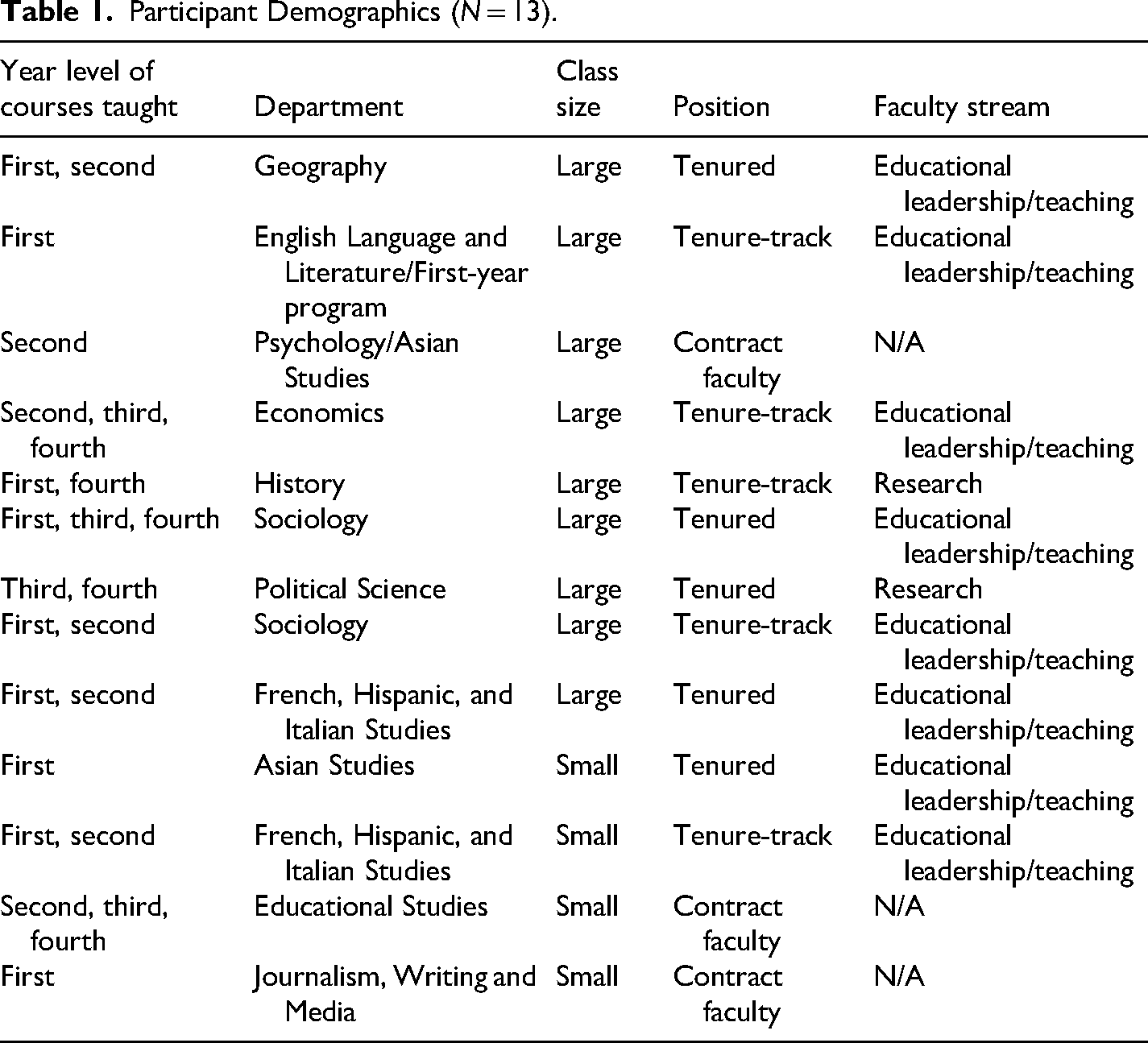
The fourth and final implication of our research surrounds equity. As documented previously, instructors from marginalized backgrounds tend to adopt much of the responsibility of implementing EE (Grain & Gerhard, 2020). Anecdotal evidence suggests that these instructors are less likely to have the job security of their more privileged counterparts. The ongoing decline in full-time, tenure-track faculty in academia across North America is likely to exacerbate this EE trend (Burazin et al., 2022). Research does reaffirm the insight that tenured faculty positions are more likely to be held by scholars who are older and male and that women and racialized scholars are less likely to feel that promotions in Canadian universities are fair and equitable (Uppal & Hango, 2022). In many postsecondary institutions, contingent faculty teach the majority of students and courses, including large introductory courses that more senior faculty may deem less desirable. Given the low pay-per-course contingent faculty receive, individuals who are in lecturer roles or otherwise precariously employed often have a higher teaching load to ensure their own financial stability. This lack of compensation can disproportionately affect marginalized scholars, who are more likely to engage in EE (Grain & Gerhard, 2020). Although our sample is not necessarily representative of the entire Canadian academic community, it is worth noting that 10 of our 13 FYEE faculty participants use she/her pronouns, and only five of these 13 participants are tenured. Given the labor-intensive nature of FYEE and the fact that the marginalized scholars who often implement it may not be in tenure-track positions, inequity in the division of the burden among instructors necessitates institutional investment in the FYEE facilitators identified above.
Beyond the equity considerations for instructors, one must also consider the equity implications for students. Due to both the emphasis on out-of-classroom EE experiences as well as the overall lack of centralized, institutional support for EE (especially for FYEE), many lower-income FY students miss opportunities to pursue enriching EE experiences. This is especially true in cases where financial support for these students is lacking or in situations where students have to engage in paid work in order to support themselves while in university, often resulting in limited time for them to pursue out-of-classroom EE experiences (Chidwick et al., 2023). Both an increase in sustainable, long-term funding for FYEE as well as more widespread use of bite-sized FYEE opportunities may allow students across socioeconomic backgrounds to access the full scope of the academic, professional and personal benefits of FYEE.
Limitations
Study limitations include interviewee demographics. Some instructors taught EE only in upper-year, large courses (see Table 1) and of the ones who did teach FYEE, there was an overrepresentation of instructors from cohort-based programs with smaller class sizes. All instructors also belong to the Humanities and Social Sciences departments and reflect viewpoints only from one large Canadian research university. Consequently, more research is needed on the design and use of FYEE across other faculties and in other post-secondary institutions of varying sizes, student bodies, and support structures. Future research may include the perspectives of students, administrators, student assistants, community partners and other campus organizations, and expand on assessing bite-sized EE approaches on student learning outcomes, experiences, and perceptions of EE. In particular, it may be helpful for future studies to investigate the assessment training mechanisms available for student teaching assistants, especially any efforts made to train teaching assistants in nontraditional forms of assessment. Furthermore, as artificial intelligence (AI) continues to gain more prominence in higher education, it will also be important to assess the ways that AI could both hinder and support the implementation of FYEE. Finally, while we took an equity-conscious approach to our research, and gained some valuable insights on the effects of certain equity factors (most notably gender) on FYEE faculty's experience, there remains a further need for research on how various intersections of instructors’ identities, such as race, sexuality, immigration status, disability and neurodiversity, and so on, impact the navigation of FYEE. Future directions of research need to continue to focus on facilitators of EE opportunities and expand on ways to do EE in varying class sizes, year levels, and other configurations.
Participant Demographics (N = 13).
Footnotes

Ethical Approval
The interviews were approved by the Behavioural Research Ethics Board at the University of British Columbia (UBC BREB: H22-01633).
Consent to Participate
Participants provided informed, written consent prior to the interviews.
Funding
This project was funded by the Advancing Education Renewal (AER) project—a central University of British Columbia fund administered and awarded by the Office of the Provost and Vice-President Academic for programs looking to make significant sustainable changes in curriculum at a departmental or Faculty level.
Declaration of Conflicting Interests
The authors declared no potential conflicts of interest with respect to the research, authorship, and/or publication of this article.