



Abstract
This article investigates and critiques sense of place (SOP) as a fundamental curricular concept in outdoor adventure education (OAE) and forwards the development of an anticolonial analytical tool as a way to understand and pedagogically interpret the practices and activities of place-making in outdoor adventure education pedagogy through an anticolonial lens. The development of the anticolonial analytical tool of SOP, which I term a (re)making sense of place tool (see Figure 1), is one part of a larger study of SOP in OAE. This study employed an anticolonial and antiracial capitalist theoretical framework and qualitative methods to argue that SOP is a key site of intervention for OAE educators and programs with anticolonial goals because of the historical, cultural, political, and economic foundations of SOP in OAE. In this article, I review selected literature on SOP in OAE to contextualize this key site of intervention in OAE. Then I outline the transdisciplinary development of an anticolonial analytical tool to critique SOP from three strands of qualitative descriptive inquiry: Thematic study of select literature on environmental conservation and colonialism, analysis of fundamentals of anticolonial pedagogical frameworks, and interview findings from mentor-partners in OAE and related fields. The article concludes by offering an anticolonial analytical tool that practitioners and scholars can employ to examine existing SOP curricula and pedagogy and ultimately to develop renovated SOP curricula and pedagogy with anticolonial aims.
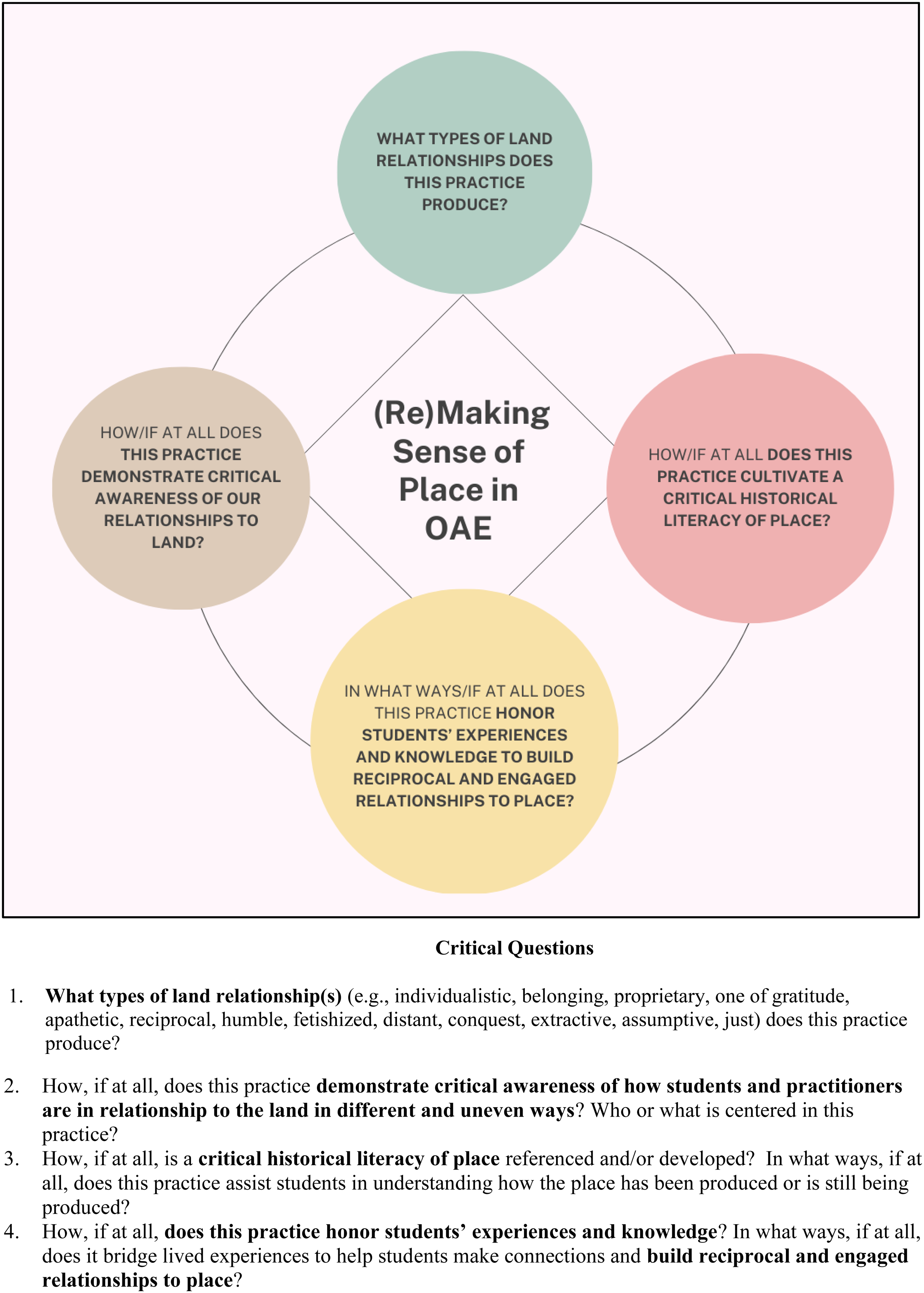
Anticolonial analytical tool: ReMaking sense of place in outdoor adventure education (OAE).
Both the purpose of this study, to critically investigate and renovate SOP in OAE towards anticolonial aims, and its theoretical orientation to antiracist and anticolonial frameworks, are reflective of my deep commitments to antiracist and anticolonial politics. As an educator with over two decades of experience in the field of OAE, I believe that it is important to thoughtfully reflect on how I interact with complex relations of power in regard to my teaching and, in this case, my research, and respond in ways that are oriented towards antiracist and anticolonial politics. In the context of this study, my experiences in OAE as a White woman of settler ancestry have helped me to understand the profound ease of access and cultural familiarity I have with ways of being and belonging in the Outdoors and in OAE contexts. They have also forced me to grapple with the violent histories of settler colonialism and ongoing colonial relations, especially in relation to public land in the United States that carry important implications for the field of OAE. This study was designed to work against entrenched relations of domination in methodological ways (by working in collaboration with mentor-partners who are experts in anticolonial pedagogy in educating about the place and the outdoors), in structural ways (by applying an equity framework to eliminate barriers of access such as course fees and specialized gear for student-participants involved in later stages of the study) and in theoretical ways (through interventions to foster critical consciousness for students and practitioners).
What is Sense of Place? Selected Review of Literature
Scholarship and research on the study of place that has had research and practical implications for OAE have come from a wide variety of fields including leisure studies and environmental psychology, and has been broadly concerned with understanding and categorizing the types of relationships to place that people cultivate and use (Hay, 1998; Jorgensen & Stedman, 2001; Kyle & Chick, 2007; Low & Altman, 1992; Stedman et al., 2004; Tuan, 1977; Williams et al., 1992; Williams & Roggenbuck, 1989). In particular, Low and Altman (1992) advanced the concept of place attachment to explain the multi-faceted relationship between humans and place. In their conceptualization, place attachment encompassed emotion, cognition, and practice (1992). Crucially for my investigation into SOP in OAE, Hay (1998) forwarded that the concept of sense of place should be more broadly interpreted and consider the subjective ways such as “the sensing of places, such as aesthetics and a feeling of dwelling” (p. 5) in which relationships to place are built. Hay (1998) also argued that in addition to these subjective relationships, a sense of place also encompasses social context in the spatial region and geographical relationships, including ancestral and community ties, that we use to connect to and understand our relationships to place. Building on this scholarship, Kyle and Chick (2007), whose review of literature was especially useful, employed sense of place to “describe the collection of meanings informants associated with the different spatial contexts” (p. 225) and argued that sense of place is a social construction that builds on a socio-cultural context, which includes spatial memory, experiences, and social world relationships.
SOP Pedagogy and Models in OAE
Within the context of OAE, the term sense of place refers to a broad, and many times loosely interpreted, set of practices and pedagogy. SOP in OAE proposes that by learning about and caring for the natural environment, participating in a wide variety of backcountry experiences, and engaging in activities that advance individual connections to place, learners can and should build deep connections of care for the natural environment (Goodman, 2022a; Hutson, 2014a, 2014b; Sanger, 1997). Scholars in OAE (Barnes, 2017; Hutson, 2014a, 2014b; Hutson et al., 2019) advanced important interpretations of SOP that inform practice and pedagogy across the field. Hutson (2014a) forwarded a conception of SOP in OAE that drew on the study of place scholarship in leisure studies outlined above, and specifically built on the place attachment scholarship of Low and Altman (1992). Hutson (2014a) adapted Low and Altman's (1992) model of place attachment (see Figure 2) as a SOP chart for OAE, which has been adopted by many practitioners and programs in OAE, chiefly the National Outdoor Leadership School (NOLS) as part of their environmental education curriculum and general learning goals for field courses (p. 46). Hutson's (2014a) explanation of the SOP concept focused on the different kinds of meaning that students attach to place through a course curriculum and experience (p. 46). In this context, SOP in OAE is understood as a set of overlapping personal relationships that can be facilitated by OAE instructors through a variety of pathways, namely engaging the emotional, cognitive, practical, relational, scale, and temporal elements of SOP (see Figure 2) (Hutson, 2014a). Importantly, Hutson (2014a, p. 46) and others (Vaske & Kobrin, 2001; Walker & Chapman, 2003) saw SOP as an avenue for developing environmental ethics in political and personal ways.
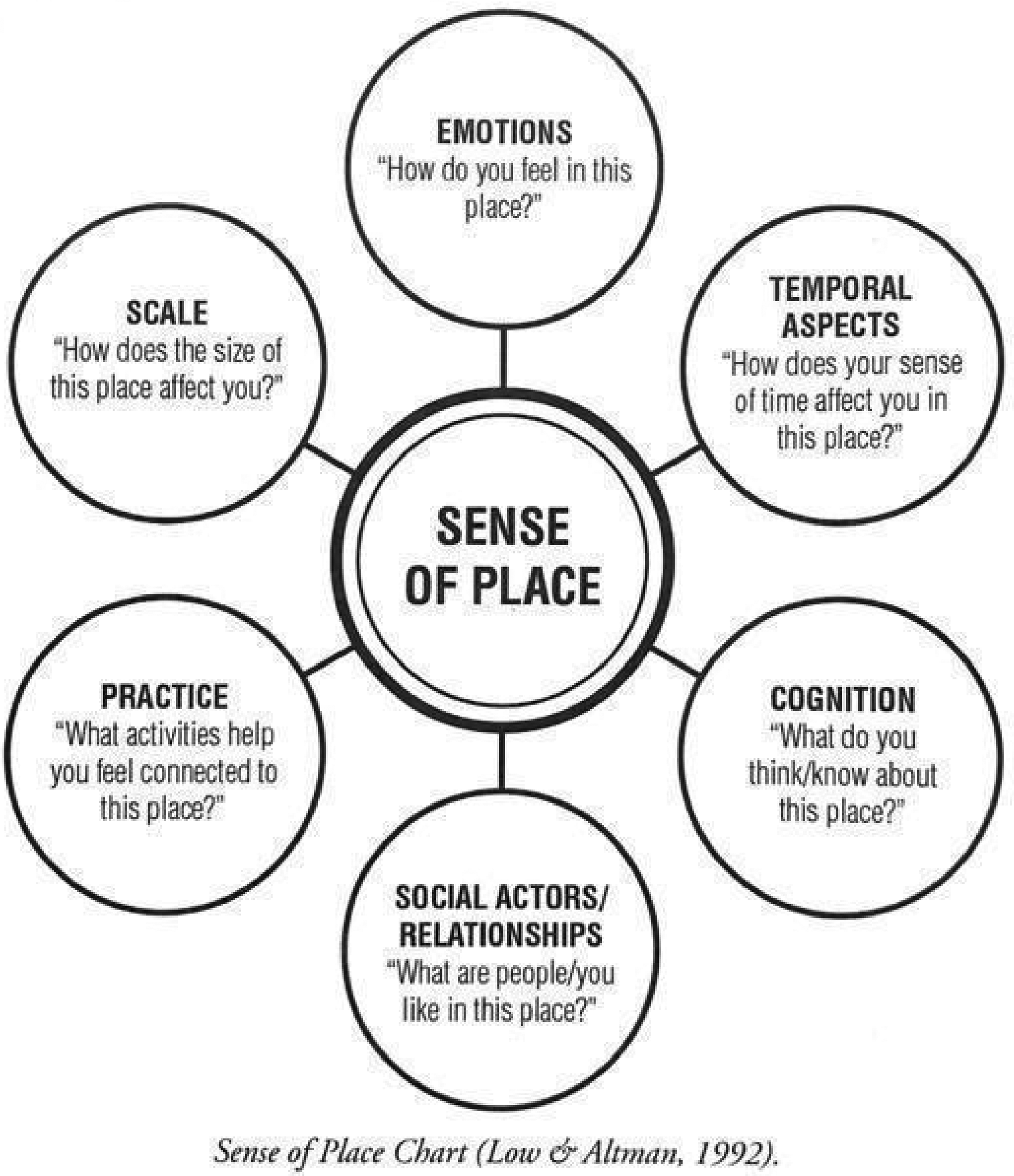
Sense of place chart (Low & Altman, 1992) (Hutson, 2014a, p. 47).
Relatedly, Barnes (2017) posited that SOP in OAE and environmental education (EE), should be taught as a set of “distinct yet interconnected [landscape] layers, and these layers [are] used to help students cultivate a deeply personal and collective sense of place” see Figure 3 (Barnes, 2017, p. 28) and, recently updated version, Figure 4 (Barnes, personal communication, October 1, 2022). Like Hutson (2014a, 2014b), Barnes (2017, personal communication, October 1, 2022) conceived of SOP as a pathway to cultivate environmental ethics, specifically, resource stewardship and conservation leadership (see Figure 3).
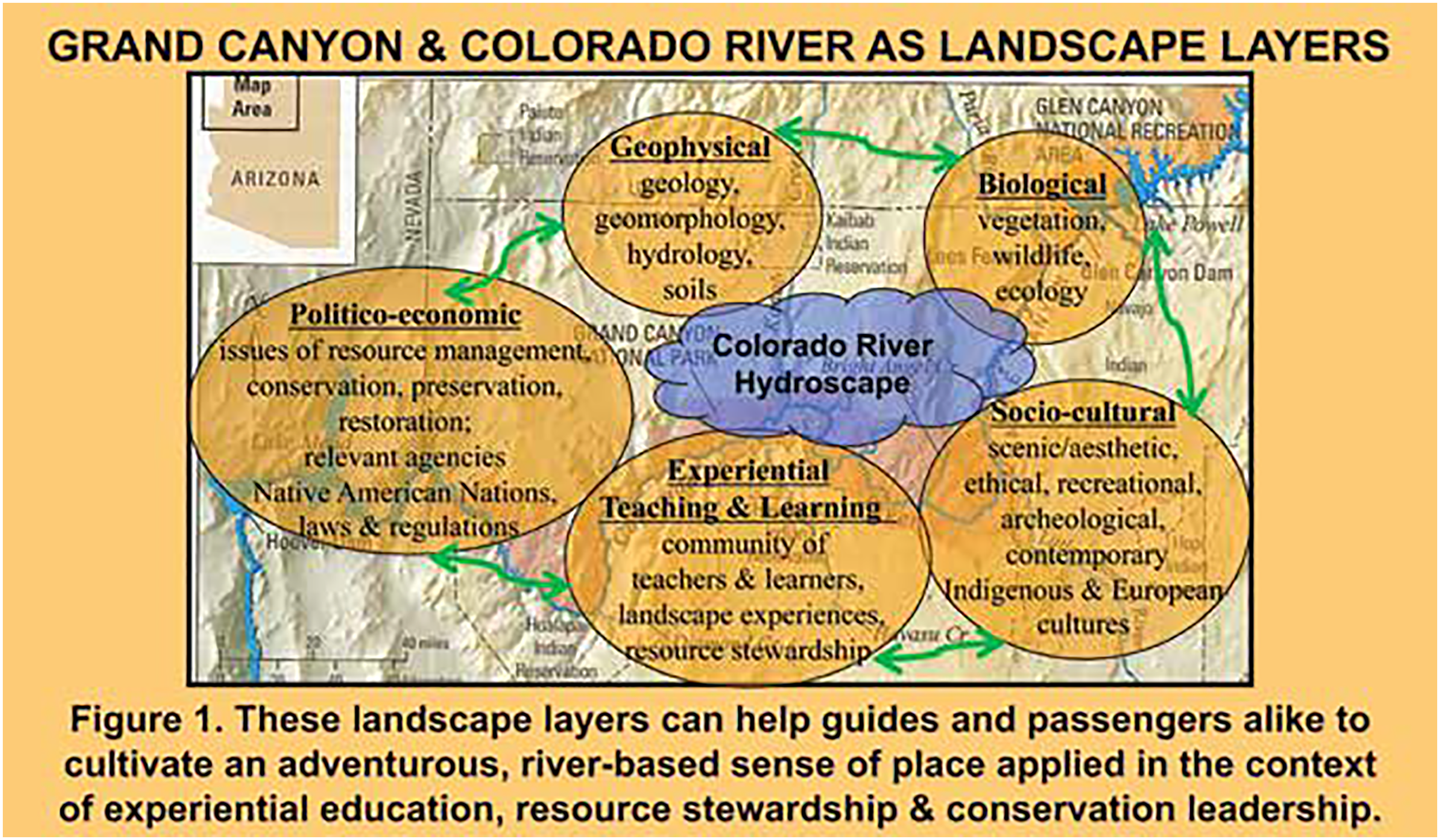
Landscape layers (Barnes, 2017, p. 28).
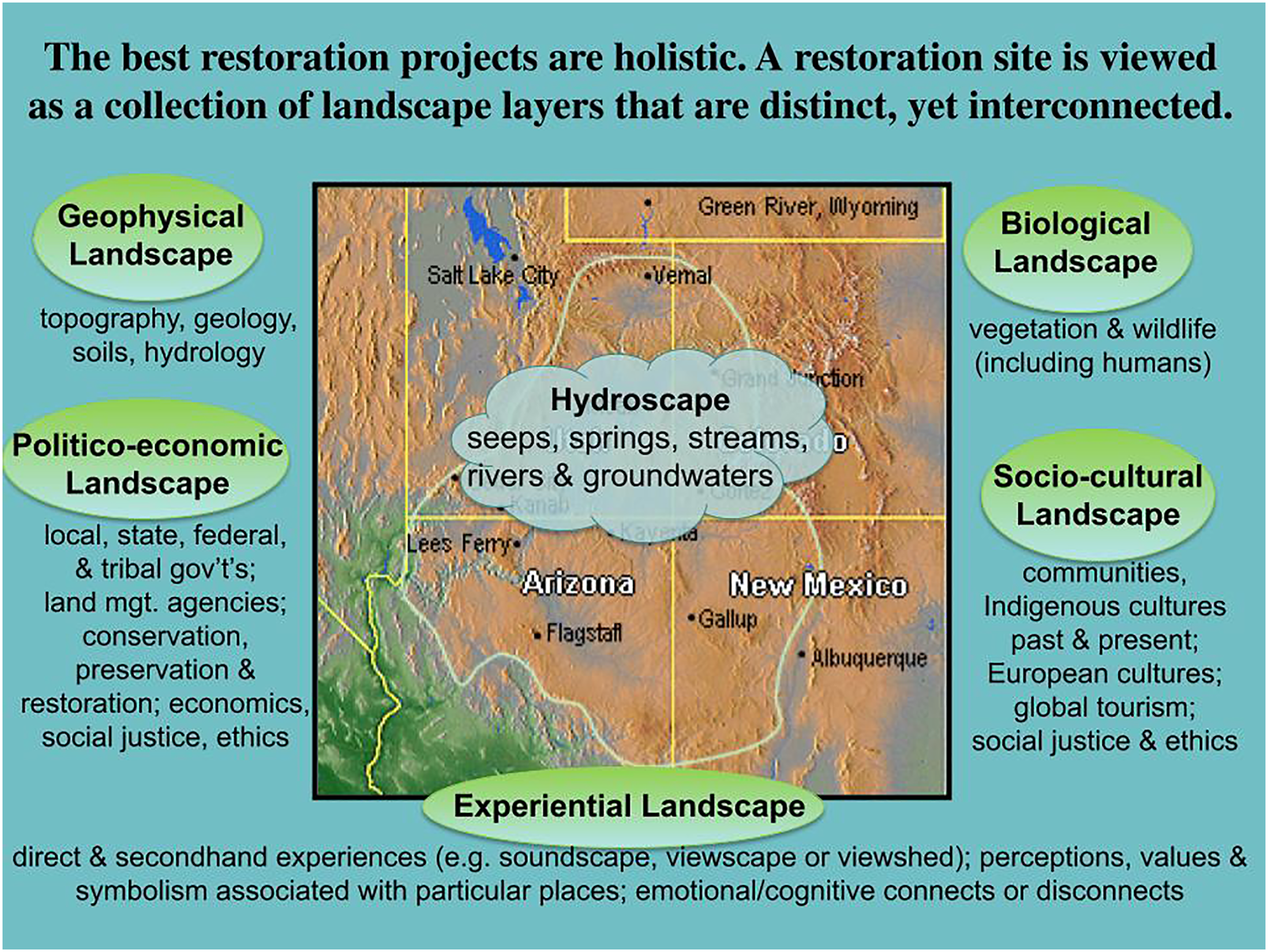
Updated landscape layers (Barnes, personal communication, October 1, 2022).
Barnes’ (2017) conception of SOP in OAE is personal and relational in that it is developed through outdoor experiential teaching and learning in a community of learners with personal interests and diverse backgrounds. It differed from Hutson's (2014a) in that instead of understanding SOP through different types of place attachments, this SOP is ultimately grounded in understanding place through knowledge and information, and experience. Specifically, Barnes (2017) advanced five areas of information or landscape layers that included, geophysical, biological, politico-economic, socio-cultural, and experiential teaching and learning (see Figures 3 and 4). Barnes’ most recent conception of these landscape layers (see Figure 4) included significant updates that focused on social justice elements.
SOP Practices: How is SOP Taught in OAE?
As suggested above, SOP curricula in OAE are broad and wide ranging, but it predominantly comprises natural history and ecology, human history, personal connections to place, public land and resource management, and current environmental issues. SOP pedagogy in OAE is delivered through diverse practices that may include field observation learning activities, reflective learning activities, artistic and interpretative learning activities, natural history, and ecological interpretative lectures and readings among others (Barnes, 2017; Goodman, 2022a, p. 11; Goodman, 2022b; Goodrich, 2001; Hutson, 2014a, 2014b). For example, common SOP learning activities include sense activities such as sound maps (Sullivan, 2014, p.52) or personalized solo five-sense nature reflections (focused on the work and practice of the artist Andy Goldsworthy (Boggs, 2014); letter to place reflections (Goodman, 2022b), natural history observation journals or natural history field logs (Barnes, 2017; Goodman, 2022b; Hutson, 2014c), ecological lectures or interpretive natural history lessons (Barnes, 2017), and, of course, public land management lessons (Burrows et al., 2019; Goodman, 2022b; O’Donnell, 2014).
Critiques of SOP in OAE and Related Scholarship
Research in OAE and related fields, such as leisure studies, outdoor experiential education, and environmental education, has posited that OAE programming can problematically reproduce and/or draw on dominant ways of being around patriarchy and whiteness (Kennedy & Russell, 2020; Rao & Roberts, 2018; Roberts, 2015; Rogers & Rose, 2019; Vernon & Seaman, 2018; Warren, 2016; Warren et al., 2018). Multiple scholars across a variety of disciplines have offered valuable examinations of SOP in OAE or related fields (Byrne & Wolch, 2009; Gruenewald, 2003; Hutson et al., 2019; Kosek, 2006; Roberts, 2015; Vernon & Seaman, 2018; Wattchow & Brown, 2011). As I have noted elsewhere (Goodman, 2022a), these critiques are foundational to a project of investigation and renovation of SOP in OAE. Below I offer a brief overview of these selected critiques concerned with OAE, SOP, and/or related fields such as leisure studies, recreation management, critical geography, and critical environmental history.
Place-Responsive Outdoor Education
Building on scholarship on the social construction of place, Wattchow and Brown (2011) acknowledged the tendency of SOP to mirror and reproduce dominant ways of connecting to and understanding place. Following Cronon's (1996) important critique of the negative impacts of American Romantic notions of Wilderness on climate and environmental crises, Wattchow and Brown (2011) argued that dominant SOP in OAE reproduces artificial distinctions between nature as experiences in OAE settings and civilization thereby adding to environmental disruption and crises. They (Wattchow & Brown, 2011) advanced an alternative approach to SOP through place-responsive outdoor education pedagogy that advocated for more specific place-based curricula to embed learning in place.
Critical Environmental History
Several scholars, while not offering a critique of SOP in OAE, have advanced a critical history of environmental thought and conservation, specifically in the United States that implicates SOP in OAE in multiple ways by calling into question its historical and discursive foundations. For example, Blackhawk's (2006) work made visible contested histories in what is now the American West through an examination of the extreme violence and environmental disruption inflicted by settlers on the land as part of the settler colonial project. Spence (1999) offered rigorous historical accounts of the dispossession of Indigenous lands by the United States and its corollaries (e.g., settlers, railroads, and industry in general) to create national parks. The work of Cronon (1996) and others (Gilio-Whitaker, 2019; Powell, 2016) investigated the cultural construction of Wilderness and revealed the discourses that continue to influence American conceptualizations and physical manifestations of nature and Wilderness.
More directly related to SOP, Byrne and Wolch (2009) traced the ways in which parks and urban outdoor spaces have served as mechanisms of social and state power. Their research (Byrne & Wolch, 2009) revealed that parks and urban green spaces historically enshrined politics of class and racial difference and that this history impacted ethno-racially differentiated park use. Importantly, their critique linked the dominant Western and European discourse of SOP in the United States to the failure of scholarship in the field of leisure studies to fully understand the social and geographical context of ethno-racially differentiated park use. Similarly, Kosek's (2006) nuanced investigation of the conflicts over the use of forests and public land in northern New Mexico between the forest service, environmentalists, and the Hispaño/a/x community elucidated the ways in which politics of difference centered on race, class, and nation were historically articulated onto nature and place. His (Kosek, 2006) research offered particular insight into the relationship between public land management, SOP, and race and class in the United States from colonialism through the present.
Race, Ethnicity, and Recreation
Drawing on the work of Byrne and Wolch (2009), Roberts (2015) also leveled important critiques on dominant SOP practices and pedagogy in OAE and recreation management. Her research (Roberts, 2015), along with scholars such as Finney (2014), considered the interconnections between race, ethnicity, and SOP and the impacts on public land and outdoor recreational management in the United States including the history of racial segregation in outdoor recreation management in the United States. Roberts (2015) advocated for recreation management approaches that employ a multicultural lens and consider more racially and ethnically inclusive SOP and belonging discursive formations. Finney's (2014) work was marked by a call to action in how Americans conceptualize the Outdoors, particularly national parks, as being a public commons devoid of racial history or context. Importantly, she (Finney, 2014) also sought to uncover invisible histories of African Americans and the Outdoors.
Vernon and Seaman's (2018) discussion of outdoor experiential education (OEE) (and relatedly OAE) as a form of what they term whiteness education offered important and relevant analysis. They (Vernon & Seaman, 2018) argued that OEE teaches students and participants to be in and relate to the outdoors and nature in ways that rely on and ultimately reproduce white supremacy and privilege as a form of consciousness (p. 48). In particular, they (Vernon & Seaman, 2018) highlighted the related discourses of conquest and Transcendental notions of nature-loving and posited that these discursive formations are fundamental to OEE and reproduce the hegemonic narratives and relations of whiteness in the United States.
Critical Place Inquiry and Land Education
Outside of the fields of OAE, OEE, and leisure studies, scholars advanced two critically essential concepts: land education (Tuck et al., 2014) and critical place inquiry (Tuck & McKenzie, 2015). Tuck and McKenzie (2015) posited that critical place inquiry could be used as an intervention in social science research to engage with place in critical and meaningful ways. Their work (Tuck & McKenzie, 2015) in this area sought to develop methods and methodologies that asked critical questions around place through justice-oriented approaches, specifically in response to “critical place issues such as those of globalization and neoliberalism, settler colonialism, and environmental degradation” (p. 2). Importantly, their approach stemmed directly from a need to address and conceptualize how environmental and social questions are interconnected (Tuck & McKenzie, 2015).
While critical place inquiry was specifically concerned with the development of new research methodologies and methods, the ways in which place was critically conceptualized in this body of scholarship is key in developing anticolonial approaches to SOP pedagogy and practices in OAE. Specifically, Tuck and McKenzie (2015) drew from Indigenous studies, critical geography, and environmental scholarship to articulate place as a concept that is not limited by geographic boundaries, but also considers a myriad of social and historical forces to theorize power in place. They theorized settler colonialism as a framework to understand and think critically about the place, including articulating salient differences between settler conceptions of place and Indigenous formations of land (Tuck & McKenzie, 2015).
Stemming from these critical theorizations of place, space, and research, land education (Tuck et al., 2014) forwarded Indigenous concepts of land and Indigenous history as a pathway towards decolonial education, and as an anticolonial alternative to place-based environmental education more specifically. Calderon (2014) asserted that land education included the following tenets:
The centering of the relationship between land and settler colonialism, An explicitly political focus on settler land policies and ethics, in order to challenge and highlight histories of displacement and removal in relationship to individuals’ personal relationships to land, A movement toward “decolonizing reinhabitation of place” (Calderon, 2014, p. 26), A centering of Indigenous resistance and agency in relationship to Indigenous metaphysics and Indigenous education, and A “destabilizing of the local” (p. 26) through analysis of hegemonic structures (e.g., settler colonialism).
Importantly for a project of reconceptualizing SOP in OAE toward anticolonial aims, land education was situated as a decolonial intervention to reframe place in education as a site for theorizing power and anticolonial change across multiple axes (Calderon, 2014; Tuck & McKenzie, 2015; Tuck et al., 2014).
SOP as a Site of Anticolonial Intervention in OAE
While critical theorists such as Tuck and McKenzie (2015) have advanced critical methodologies of place, a review of the scholarship did not reveal specific engagement of SOP in OAE. Similarly, critiques of OAE, including those that touch on SOP pedagogy and practices in OAE, do not conceive of SOP as a site of anticolonial intervention for OAE (Goodman, 2022a). For example, although Wattchow and Brown's (2011) important critique of SOP considered the violent histories that impact outdoor spaces in the United States, Australia, and New Zealand and helped OAE to rethink how SOP may reproduce social inequities through discourses of nature and belonging, their place-responsive pedagogy did not offer SOP in OAE as a site of intervention to disrupt colonial racial capitalism (Goodman, 2022a). Similarly, while Hutson's et al. (2019) salient scholarship suggested that SOP in OAE is an area for further curricular expansion and inclusion of Indigenous perspectives, they did not conceptualize a critical SOP that can theorize power relations within OAE SOP curricula. In addition, although Vernon and Seaman (2018) offered an important analysis of OAE as informal whiteness education, they did not apply colonial racial capitalist frameworks to understand the ways in which OAE, and SOP, in particular, can reproduce hegemonic colonial racial capitalist relations in OAE around place and belonging (Goodman, 2022a).
My focus, instead, is centered on understanding how dominant SOP pedagogy and practices in OAE might reproduce colonial racial capitalism by teaching students a way of thinking about and being in relationship to a place that enshrines colonial racial capitalist principles and practices and from there enfolds and reinforces many of the broader, colonial ways of being, including hegemonic masculinity, or whiteness. In other words, how SOP is conceptualized and practiced in OAE seems to teach participants and students (and practitioners) to connect with, understand, and interact with a place in fundamentally colonial racial capitalist ways that reinforce and continue to reproduce these relationships. And, gaining a more critical understanding of SOP, serves the broader purpose of this research: To reimagine and renovate SOP as a site of anticolonial intervention in OAE.
Theoretical Framework: Colonial Racial Capitalism
Following the broad strokes of critical place inquiry (Tuck & McKenzie, 2015), this investigation of SOP as a curricular concept in OAE theorizes place through a framework of colonial racial capitalism. The term colonial racial capitalism integrates two discrete scholarship traditions: critical engagement of settler colonialism by Critical Indigenous Studies and American Studies is put in conversation with a scholarship from the Black Radical Tradition of Black studies, especially the work of Cedric Robinson (2000) on racial capitalism. In other words, colonial racial capitalism integrates and puts in conversation two important and complex analyses of relations of domination, settler colonialism, and racial capitalism. Settler colonialism refers to the set of relationships that describe how a state and its citizens, or soon-to-be citizens, formally and informally colonize land(s) through the violent seizure of land and resources, the violent displacement of peoples through dispossession, the forced assimilation and many times murder and genocide of Indigenous peoples, and then the subsequent building of a colonial society on the recently emptied/emptying land as the new “native” society (Povinelli, 2002; Wolfe, 2006, 2001). Importantly, settler colonialism is understood as an ongoing set of relations, not a single or set of historical events, that is organized by a logic of elimination of the native (Wolfe, 2006) wherein the settler society uses many different means to eliminate and replace those native to the land as part of the settler nation-building project (Wolfe, 2006).
Racial capitalism refers to a seemingly simple concept that belies a complex analytical lens: All capitalism is racial capitalism because capitalism requires inequality, and racialism (i.e., the practice of seeing people as different in racial terms) enshrines it (Card, 2020; Pulido, 2017; Robinson, 2000; Simpson Center, 2017). This understanding, is that the politics of difference embedded in and required by capitalism show up in our everyday lives in naturalized ways through racial formation and racialization, and that racialization is not additive to capitalism, but instead that it is part of the fundamentals of a capitalist system (Card, 2020; Pulido, 2017; Robinson, 2000; Simpson Center, 2017), originated from the work of cultural theorist and historian, Cedric Robinson (2000). And current scholars have theorized the complex and important ways that these two frameworks of settler colonialism and racial capitalism fit together and make sense of ongoing relations of domination that play out through the exploitation of land and labor under the term, colonial racial capitalism (Goldstein, 2017; Koshy et al., 2022). The term anticolonial in this context is understood as working against the interlocking relations of domination of colonial racial capitalism described above.
Broadly, this theoretical framework offers practitioners and students three critical ways to rethink SOP in the OAE towards anticolonial aims: 1. The framework teaches us that the social relations of domination do not go away just because we are in the field. 2. These theories show us that these same relations of power and oppression shaped and still inform current iterations of public lands, Wilderness, and the Outdoors. And 3. They offer hope! They teach us that relations of domination are human made, and so we have the power to unmake them.
Crafting an Anticolonial Analytical Tool for SOP
In order to both understand in what ways SOP in OAE can reproduce relationships of colonial racial capitalism, and to understand how SOP can be renovated as a site of anticolonial intervention in OAE, I developed a tool of anticolonial analysis for SOP in OAE. The creation of this tool was done with the support of a critical panel of anticolonial educators, and this study's mentor-partners. The development of this anticolonial analytical tool to understand place-making in OAE and to cultivate anticolonial SOP pedagogy and practice was distinctly interdisciplinary as it put into conversation scholarship from cultural studies, critical geography, Critical Indigenous and Native Studies, leisure studies, and OAE. As described above, it was also part of a larger study to investigate SOP in OAE from an anticolonial perspective approved by my institution's Institutional Review Board (IRB). To encompass this wide range of scholarship and perspectives and frameworks, the study as a whole employed qualitative description (QD) as a methodological framework.
Methods
Sandelowski (2000, 2010) and others (Lambert & Lambert, 2012) have identified QD as an essential qualitative research methodology that encompasses diverse sampling, data collection, and data analysis methods. The development of the tool of anticolonial analysis of SOP drew on three discrete strands of qualitative inquiry: 1. emergent themes from a selected review of literature on colonialism and environmental conservation and history, 2. anticolonial research and decolonizing education frameworks, and 3. emergent thematic surveys compiled from inductive, semistructured interviews with mentor-partners (Brenner, 2006; Kamberelis & Dimitriadis, 2011; Kamberelis et al., 2018). I received ethics approval from my institution's IRB and informed consent from mentor-partners detailing their consent to be named in the research as a form of recognition; they also reviewed and approved their contributions. These three strands of inquiry were woven together to develop an anticolonial analytical tool, a set of questions, that was then employed as an anticolonial analytical tool to understand how dominant SOP curricula and practices in OAE reproduce colonial racial capitalism and to suggest how SOP pedagogy and practice might be renovated toward anticolonial aims.
Strand One: Guiding Themes From Literature on Critical History of Environmental Conservation and Colonialism
Strand one of this inquiry employed a selected review of literature on the critical history of environmental conservation and colonialism and drew primarily from the fields of Critical Indigenous Studies and American Studies to identify salient themes across the literature that characterize dominant conceptualizations of place in the Outdoors, especially in the United States. I identified the following four overarching themes from the selected scholarship on colonialism and environmental conservation.
Theme 1: Property
Across the literature on settler colonialism and environmental conservation, scholars consider how the concept of property, especially private property, has been historically interwoven into the conceptualization of global protected areas such as national parks, nature preserves, and national forests in literal and figurative ways (Kosek, 2006; Lumsden, 2017; Merchant, 2013; Powell, 2016; Spence, 1999; Wolfe, 2001, 2006, 2011). In many instances, especially in the United States, public land has been conceived of as a kind of “Commons,” but critical scholars have traced how the violent dispossession of land from Indigenous groups and its subsequent repurposing as protected and venerated land for a specific set of people along class, race, and at times gender lines, debunks that idea (Blackhawk, 2006; Bhandar, 2018; Gilio-Whitaker, 2019; Spence, 1999; Wolfe, 2001, 2006, 2011). Insidiously wrapped into the concept of public land are related concepts of nativeness, specifically settler nativeness, that worked in tandem with the material accumulation of land from Indigenous peoples (Blackhawk, 2006; Gilio-Whitaker, 2019; Kosek, 2006; Powell, 2016) and that Harris (1993) similarly encapsulated as whiteness as property. These scholars asserted that an important facet of settler colonialism is the cultivation of a narrative of settler belonging, and perpetuating the myth of being native to the land that they are colonizing, which then makes possible land theft, Indigenous dispossession, and, more surreptitiously, assumptive access to public lands and/or tribal sovereign lands (Blackhawk, 2006; Cook-Lynn, 1996; Gilio-Whitaker, 2019; Kosek, 2006; Liboiron, 2021; Powell, 2016). Relatedly, Harris (1993) argued that whiteness in the US evolved from a racial identity into a bifurcated racial formation that is both a form of property (e.g., protected status) and a privileged racial identity that like private property is codified into U.S. law. In other words, Whiteness is not just an identity, instead, it is a power relation that bestows meaning and expectations of privilege and dominance (Harris, 1993, p. 1761). As such, this broad theme of property is important to incorporate into a synthesized anticolonial analytical tool.
Theme 2: Linkages of Racial and Nationalist Ideologies and Conservation Movements
Another critical theme I draw on from the literature is the historical intersection of racial and conservation ideologies. Many scholars (Gilio-Whitaker, 2019; Kosek, 2006; Powell, 2016; Purdy, 2015) from a wide range of fields including environmental history, environmental politics, and Critical Indigenous Studies have documented the importance of racial ideologies to conservation thinking and the conservation and environmental movements in the United States. Specifically, the importance of Eugenics and other White, or “old stock” and “Nordic Races” race supremacy ideologies are understood as central to American conservation thinkers. Powell (2016) demonstrated the parallels in the history of U.S. conservation between fears and study of wildlife extinction to fears of White racial decline. Relatedly, there is a plethora of scholarship on protected land in the United States as a metonym for American exceptionalism (Gilio-Whitaker, 2019; Kosek, 2006; Powell, 2016; Spence, 1999) that is linked to the intersection of racial and conservation ideologies.
Theme 3: Valued/Devalued Place and Coloniality of Nature
Important scholarship on the intersections of racial capitalism, settler colonialism, and environmental history clarified that the economic and political processes of racial capitalism create places of value that are figuratively or literally adjacent to land that is devalued, denigrated, and “wastelanded” (e.g., designated for extraction or pollution) (Brynne Voyles, 2015; Pulido, 2016, 2017). And Pulido (2016, 2017) and others demonstrated that the devaluation of land is directly connected to the racialization and devaluation of peoples. This understanding, which stems from environmental racism and racial justice movements and scholarship, helps elucidate how land has been, and continues to be valued and set aside for recreation, or conversely, how land is designated as surplus for extraction and pollution. Relatedly, the Marxist principle of commodity fetishism (Marx, 2010) helps explain how Wildernesses and other protected areas become divorced and isolated from the social relations that produced them and conceal the particular set of political, economic, and historical relationships that have made them valuable and that are continuing to produce them as valued land. In associated ways, scholars such as Alimonda (2019) critically advanced the conceptualization of the coloniality of nature. Specifically, Alimonda (2019), similar to Blackhawk (2006) described the ways in which environmental disruption and violence were elements of colonial projects to enclose and seize land, and how the physical and psychological remnants of this colonialism are embedded in the ways in which land and “natural environments” are used according to the processes of capitalism.
Theme 4: Ahistoricity
Finally, portions of the literature on environmental colonialism and settler colonialism asserted that a common tool of settler colonialism is ahistoricity of a place or places that are considered to be devoid of history with people, or recent people. Scholars (Gilio-Whitaker, 2019; O’brien, 2010; Powell, 2016; Spence, 1999) have written on the ways in which settler colonialism particularly, but colonialism in general, empties people from place physically and historically. In this way, stolen land, including public land and protected areas, can be explicitly transformed into an unpeopled wilderness ripe for redistribution. Indigenous scholars such as Dunbar-Ortíz (2014), Estes (2019), and Whyte (2018) have made related critical interventions into the field of environmental history and scholarship of climate justice by reframing the parameters of environmental history to include Indigenous histories and intellectual traditions on the environment demonstrating the colonial ahistoric nature of American environmental history which commonly conceptualizes of a Eurocentric environmental history that begins with Transcendentalism.
Strand Two: Anticolonial and Decolonizing Frameworks
The second strand of inquiry in the process of constructing a tool of anticolonial analysis focused on the study of existing anticolonial and decolonizing frameworks. I considered two anticolonial frameworks. The first, TIAHUI (see Figure 5) from the Xicanx Institute for Teaching and Organizing (XITO), is described as a decolonizing framework to guide educators in the decolonizing of pedagogy and practice. The TIAHUI framework conceptualizes a set of six practices, based on Indigenous ways of knowing and grounded in Indigenous community agreements, which can be used to create and facilitate decolonizing pedagogy and practice. These tenets of decolonizing learning and teaching are: 1. teaching critical consciousness, 2. interconnectedness through student-centered instruction, 3. agency through critical praxis, 4. intersectional identity development, 5. unity through community, and 6. historical literacy development. These tenets/practices were echoed in and helped to shape the thematic survey findings of the mentor-partner interview process.
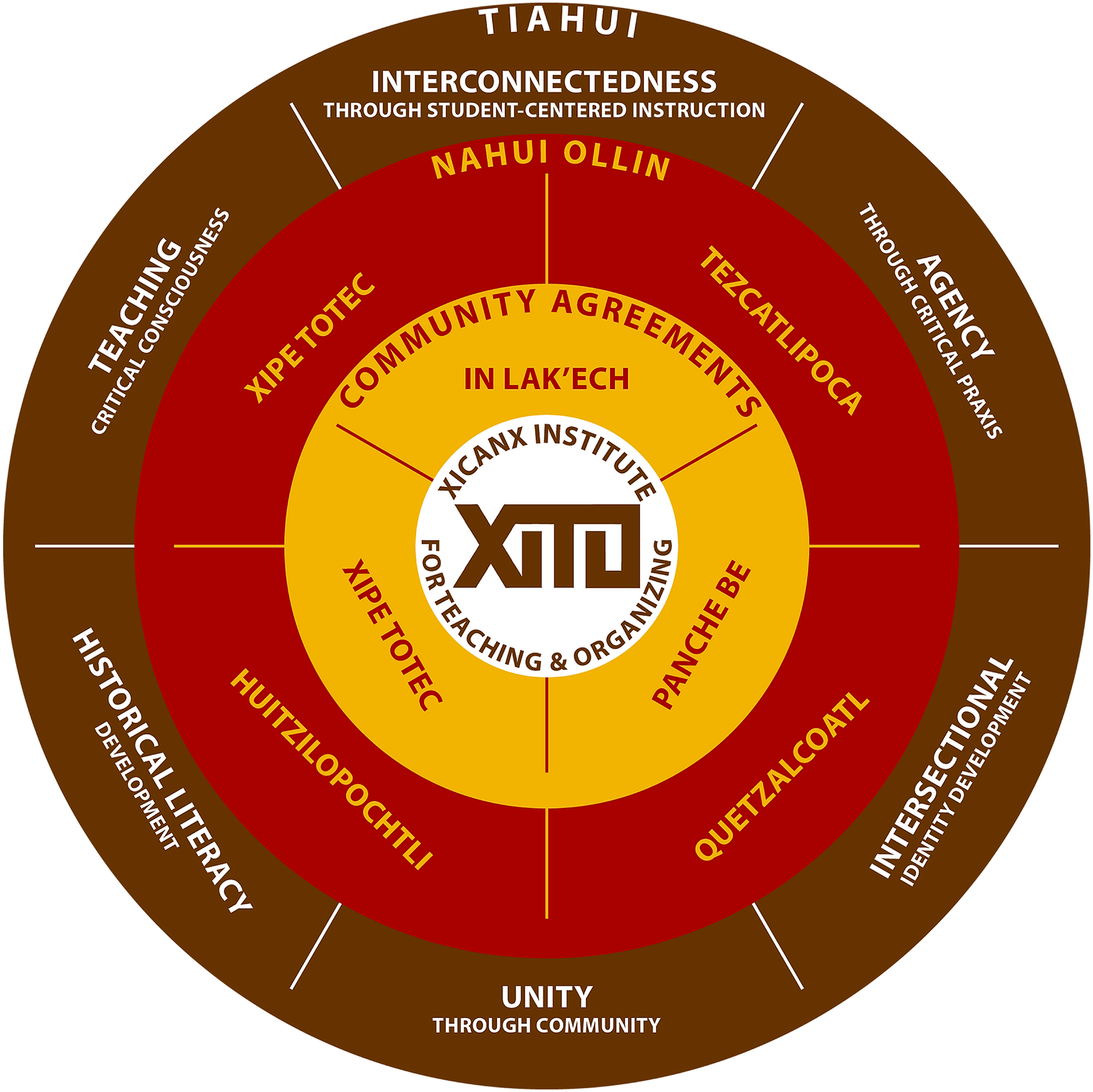
TIAHUI decolonizing framework (2019), XITO. https://www.xicanxinstitute.org/tiahui.
The second framework used is a set of research guidelines and values from the Civic Laboratory of Environmental Action Research (CLEAR) lab book (2021). While this study is not an environmental research project, the CLEAR Lab framework
1
for anticolonial research does offer valuable orientation in the crafting of an anticolonial analytical tool to critique SOP pedagogy. Primarily, these guidelines are framed as a living document and offer a set of emergent and iterative principles and values to guide researchers in conducting ethical, anticolonial environmental research (CLEAR, 2021). In particular, I drew on the discussion and framing of their core values of operating collectively, and with humility and accountability (CLEAR, 2021, p. 6). And, most importantly, I incorporated their articulation of research and education as a land relation, meaning most simply that research and education happen and matter in relationship to place, land, history, and people. They posited that, Anti-colonialism is a way to describe land relations that are both directly opposed to these systems, practices, and values, as well as make new ones (or use old ones) that have different land relations. In research, it means working in a way that does not assume settler and colonial access to Indigenous land for settler and colonial goals, even when those goals are benevolent, well-intentioned, and/or environmental. (CLEAR, 2021, p. 24)
In this way, anticolonial research or education is oriented towards education and research that is accountable to anticolonial relationships to land and people.
Strand Three: In-Depth, Semistructured Interviews
The final strand of inquiry in the development of this tool of anticolonial analysis emerged from semistructured, inductive interviews (Brenner, 2006; Brinkman, 2018; Kamberelis et al., 2018) with mentor-partners. Through the inductive interview process themes were identified that were then interwoven with the anticolonial frameworks and themes from the literature described above. The mentor-partner interviews served to gather knowledge from experienced anticolonial outdoor educators to critically inform the creation of the SOP anticolonial analytical tool. The interview questions centered on the mentor-partner approaches to pedagogy, practices, and methods of critique that were generally oriented to SOP and OAE. Following the data analysis process, mentor-partners were given the opportunity to review the discussion of the findings and revise their responses, as well as provide feedback on the analysis. This member-checking process was designed to capture the data analysis accurately and to prevent inadvertent essentializing of mentor-partner experiences in my own interpretation of the data.
Mentor-Partner Profiles
Through these semistructured interviews, I collaborated with two trusted colleagues, who I identify below with their informed consent to honor and acknowledge their contributions to the study. These mentor-partners drew on significant professional experience as anticolonial educators teaching to historically marginalized populations in/about the Outdoors to provide valuable pedagogical insights and critical direction to this investigation of SOP. Their pedagogical approaches, which are informed by rigorous analyses of race and colonialism, as well as their commitments to social justice and equity, aligned with the purpose and theoretical frameworks of this study. As such, their contributions helped me to identify keyways to move forward in a project of critical renovation of SOP in OAE towards anticolonial aims.
Dr. Molly Bigknife-Antonio is a long-time anticolonial educator, who has a wealth of experience teaching in, with, and about the outdoors. She works with Indigenous youth and BIPOC and White college students in a variety of modalities, including distance, in-person, and place-based Indigenous youth education. She is of Shawnee, Delaware, Cherokee, Irish, and English heritage, and lives and works in the Navajo Nation in the Diné community that she has married into and in this way, much of her work is cross-cultural/cross-national.
Oscar Medina is an experienced elementary and high-school anticolonial educator, administrator, and community organizer for environmental justice and climate resiliency, who has served as the co-chair of the Diversity Equity Inclusion Action Group and is currently on the Diversity Conservation Committee of the Sierra Club. He has worked in many different settings and served diverse students across ethnic and racial identities. He holds a master's in education with a focus on ethnic studies and has taught environmental justice, critical pedagogy, social studies, history, and culturally responsive outdoor education. He identifies as Latinx and Chicanx and is a cultural practitioner of the Mexicayotl and Toltecayotl traditions.
Mentor-Partner Interviews Data Analysis: Emergent Themes
Using an inductive and dialogic approach to interpreting the interview data (Brenner, 2006; Freire, 2003; Kamberelis & Dimitriadis, 2011; Kamberelis et al., 2018), revealed overlaps between the values and ideas shared between the mentor-partners and reinforced the intersections between emergent themes from the interviews and those which surfaced from the other strands of inquiry, especially anticolonial pedagogy and educational frameworks. Through the analysis process, two broad overarching themes were identified: Honoring and Bridging and Place Relations. Under each of these broad, overarching themes, I also identified several supporting themes which connected to these overarching themes and offered less prominent, but still relevant thematic takeaways.
Beyond building intimate knowledge and literacy of place, mentor-partners also emphasized that teaching about a relationship to place and teaching in the outdoors relies on positioning nature as a teacher. Both mentor-partners shared insights that their pedagogical approaches to teaching about the place are shaped by Indigenous intellectual traditions wherein nature itself is understood as a teacher. Important to this analysis is that both mentor-partners forwarded multiple methods of building an intimate knowledge of place and that these methods reflected tenets of anticolonial educational frameworks.
Finally, the concept of the equity gap captured an important theme interwoven throughout the data. In considering relationships to place, both mentor-partners highlighted OAE and related fields such as place-based education as characterized by a racial equity gap. The history of racial inequity in the Outdoors has impacted how mentor-partners teach about the place and build place-based relationships with their minoritized students. Critically, the equity gap and the whiteness of outdoor spaces, especially national and state parks, is an important aspect of how the relationship to place has been conceptualized and enacted for mentor-partners. The equity gap figuratively and literally shapes how mentor-partners teach about and build relationships with the outdoors and place in that it affects where and how they personally feel belonging and opportunity in place-based learning.
Takeaways From Mentor-Partner Interviews
Data analysis of the mentor-partner interviews disclosed that the methods, values, and practices forwarded by these educators foster relationships to place that require and encourage critical consciousness and incorporate tenets of anticolonial pedagogies (CLEAR Lab, 2021; XITO, https://www.xicanxinstitute.org/, 2019). This approach to SOP is generated in multiple and interlocking ways which include centering students’ personal relationships to place, including cultural and spiritual practices, encouraging nondominant forms of knowledge and knowledge-power relationships (e.g., nature as a teacher), drawing on comprehensive layers of knowledge, many of which are non-dominant forms of knowledge (Dr. Bigknife-Antonio's use of natural history grounded in Indigenous intellectual traditions and overlooked Indigenous histories, for example), and employing experiential learning through place-based and outdoor experiences, all of which are grounded in place relations that are anticolonial in their orientation and foundation (e.g., critical history of land). SOP in this approach, then, moves beyond teaching a static sense of place, and becomes a relationship to place that is rooted in an emerging anticolonial critical consciousness which enables students to understand how colonial power and resistance to it has shaped a specific place or set category of places, and how these same evolving relationships have shaped the students’ relationships to that place.
Model for (Re)Making Sense of Place: Anticolonial Analytical Tool
In order to craft the anticolonial analytical tool for SOP pedagogy and practice, or a tool to (re)make sense of place, I wove together the three strands of inquiry detailed above: 1. guiding themes from the literature on environmental conservation and colonialism, 2. frameworks of anticolonial pedagogy and methodology, and 3. thematic takeaways from mentor-partner interviews. Below, I offer a set of questions that emerged. Throughout these questions, I chose to use the word practice to encapsulate a wide scope of pedagogical tools that practitioners may use, including a general curriculum, a lesson, and/or facilitated experience(s). The following set of questions functions as a single tool (see Figure 1) to understand and investigate how dominant SOP pedagogy and practice may reproduce settler colonialism and racial capitalism.
How, if at all, does this practice How, if at all, is a How, if at all,
Conclusion
As explained above, the proposed purpose of this anticolonial analytical tool is to assist practitioners and educators in the investigation of their own SOP pedagogy and practices. In addition, it is also meant to be a structural stepping stone in the field of OAE to encourage the development of SOP curricula toward anticolonial aims. The critique of SOP as a curricular concept in OAE and the subsequent development of this anticolonial analytical tool is part of a larger study that seeks to research the development of anticolonial SOP pedagogy and practices in OAE. Important applications of this tool are to offer foundational reflective questions for practitioners about their pedagogy and practice:
What do dominant SOP pedagogies and practices in OAE teach students? What are we teaching our students to understand and believe about the place? What impacts does this have?
For those of us who are practitioners, if we are concerned with questions of justice and equity, we need to ask ourselves, our students, and each other these questions. The anticolonial analytical tool can aid those of us who practice and teach in the outdoors to engage in meaningful, collaborative, and critical questions of place, land, people, and education and their intersections.
Footnotes
Author Note
Cecil Goodman is a faculty in adventure education at Prescott College and the director of the undergraduate outdoor and community-based orientation program.
Declaration of Conflicting Interests
The author(s) declared no potential conflicts of interest with respect to the research, authorship, and/or publication of this article.
Funding
The author(s) received no financial support for the research, authorship, and/or publication of this article.
