




Abstract
Behavior and academic outcomes in school are interrelated; students who struggle with academics are likelier to exhibit troublesome behavior and students who struggle with behavior tend to fall behind academically. Multitiered systems of support (MTSS) offer frameworks for providing increasingly intensive support for students with academic and behavioral difficulties, but it can be challenging to efficiently integrate academic and behavioral supports rather than implementing separate resource-intensive systems. This article describes how behavior support can be integrated within Tier-2 interventions for reading and mathematics. A strategy that included four evidence-based elements—teaching expectations, self-monitoring, self-evaluation, and mystery match—was embedded within academic intervention lessons to target students’ academic engagement, respectful behavior, and effort. In this article, we describe our approach as one way that academic and behavioral supports might be integrated within a tiered intervention system.
Keywords
Meet Ms. Jones (Case Study, Part 1)
Ms. Jones, a second-grade special education teacher, faced a challenging situation during her intervention block a few weeks into the school year. Some of the students she was supporting, who were receiving Tier-2 support for academic skills, were beginning to show behavioral concerns that were taking away from their learning and distracting their peers (e.g., talking/joking with friends, playing with classroom materials, and refusal to answer a question or complete work). Because of the disruptions, she was finding it hard to make it through lessons on time or provide students with the same number of practice opportunities as earlier in the year. Although her school had a process for addressing behavior concerns similar to that with academics (increasing tiers of support for students), Ms. Jones was concerned with these students missing some of her instruction due to being pulled for behavior support or social skills groups. She wondered what she could do to integrate behavior support within her academic intervention sessions to support her students receiving Tier-2 support—students with or at risk of learning, emotional, and/or behavioral disabilities (see Note 1).
Ms. Jones’s observations about some of the students in her class are typical for students struggling academically or behaviorally. Although a few students may struggle solely with one area or another, academic and behavior problems may co-occur in some students, and it is those students who tend to have the most severe difficulties and the highest risk of adverse outcomes (Kallitsoglou, 2014; Sexton et al., 2012; Willcutt et al., 2001). Learning difficulties make academic activities more challenging, tedious, or embarrassing, which may increase the likelihood of inattention or disruptive behavior, negatively affecting academic success (Metsapelto et al., 2015). Challenging behavior frequently appears as inattention and less engagement with learning opportunities. Students who struggle to sustain attention are at risk of long-term academic difficulties (Rabiner & Coie, 2000; Sayal et al., 2015), and inattention can be a primary cause of academic failure (Shaywitz & Shaywitz, 2008). Regardless of which area students struggled in first, academic or behavioral difficulties predict future and more intensive difficulties in either area (Lan et al., 2011; Morgan, Farkas, et al., 2008). Behavior difficulties can have long-term consequences for students, such as negative teacher–student relationships, continued and worsened academic difficulties, being rejected by peers, increased risk of dropping out of school, and subsequent contact with juvenile justice and incarceration (Buhs & Ladd, 2001; Hughes & Kwok, 2007; Ladd, 2006; Pianta et al., 1995; Snyder et al., 2005).
It has been hypothesized that, because academic and behavioral concerns are intertwined, if a student improves in one area, there will also be an improvement in the other area. However, research has typically not observed such reciprocal effects. Several literature syntheses have revealed that, whereas academic interventions implemented with students with behavior problems tend to improve academic skills, there were little to no positive behavioral changes (K. E. Nelson et al., 2011; Roberts et al., 2015; Wanzek et al., 2006). In addition, Gage et al. (2018) reviewed 19 studies and found little to no relation between school-wide behavior support implementation and improved academic achievement. This is not to say that improvement in one area cannot lead to improvement in another, but it is not frequent.
Due to the interaction between academics and behavior, one approach to improving both outcomes is integrating a behavioral intervention into an already strong academic intervention. Although integrating academic and behavioral support sounds logical and appealing, how to go about it is often unclear. Some have examined how the two can be integrated school-wide; for example, McIntosh et al. (2006) discovered that schools with school-wide positive behavior support embedded within high-quality academic instruction exhibited enhanced academic skill performance and fewer disciplinary referrals. Others have examined the effects of focusing the integration specifically within supplemental academic interventions; for instance, Gettinger et al. (2021) found that an integrated Tier-2 intervention was associated with improved reading and behavior outcomes. To investigate the potential benefits of integrating academic and behavioral supports in a multitiered systems of support (MTSS) framework, the Institute for Education Sciences (IES) created the Integrated Multi-Tiered Systems of Support (I-MTSS) Network. Our project was funded by the network and focused on integrating academic and behavioral supports within Tier-2 interventions.
Although there are many ways to consider the integration of academic and behavioral supports, we believe that keystone behaviors offer opportunities for more efficient and cohesive integration of support for both areas. Keystone behaviors are behaviors that are relatively circumscribed, straightforward to operationally define and observe, and are foundational to other behaviors and overall achievement (Barnett et al., 1996; Ducharme & Shecter, 2011). When present, keystone behaviors have broad and widespread benefits for an individual and their context. Examples of keystone behaviors include being on-task (i.e., task engagement and persistence), following directions (e.g., compliance with teachers’ instructions and expectations), engaging in positive peer interactions, and communication (i.e., seeking help or attention in appropriate and prosocial ways). These keystone behaviors are essential for success in current and future environments, are typically incompatible with disruptive and antisocial behaviors, and, when improved, facilitate other behaviors and achievement outcomes, interpersonal relationships, and improve the environment for other individuals present (Barnett, 2005; Ducharme & Shecter, 2011).
Academic Engagement and Other Keystone Behaviors as Opportunities for Academic and Behavior Integration
In our integration of behavioral and academic support, we focused on academic engagement as a keystone behavior. Academic engagement was defined as being on-task, attending to the assigned task, or meeting the behavioral expectations for an instructional situation. Academic engagement is a significant part of academic and behavioral development. It is vital for attending to teachers’ instruction, completing work, persisting through challenging tasks, and interacting productively in academic settings. In addition, academic engagement is often incompatible with challenging behavior (i.e., it is difficult to be on-task and disruptive at the same time). It is one of the student behaviors that teachers value the most, and increased academic engagement is associated with improved academic success (Ducharme & Harris, 2005; DuPaul et al., 1998; Hughes & Kwok, 2007; Witt et al., 1983). Increase of academic engagement is particularly important for students with or at risk of learning disabilities and emotional/behavioral disorders because they are typically less engaged than their peers, have weaker academic skills, and miss instructional time due to disruptive behaviors (Fredrick, 1977; Weeden et al., 2016). To improve academic skills and decrease disruptive behaviors, students with or at risk of learning disabilities and emotional/behavioral disorders need to have high academic engagement to catch up with their typically achieving peers. Given its importance for academic success, improving academic engagement was the primary target of our behavioral support components.
Our behavioral intervention targeted two other keystone behaviors in addition to academic engagement: Respect and Effort. These behaviors were chosen as they address other skills, such as communication and social skills (respect) and perseverance (effort), that are associated with academic achievement and are concrete enough for children to understand (Ducharme & Shecter, 2011; Meier & Albrecht, 2003). Being respectful, which we defined as following directions and having positive social interactions with teachers and peers, has been identified as another keystone behavior essential for success in school contexts (Chafouleas, 2011; Ducharme & Shecter, 2011). Showing respect helps maintain a positive and productive classroom environment where students feel comfortable participating, even when responding incorrectly. Showing effort, which we defined as trying your best and persisting through challenging tasks, was selected as the third keystone behavior. Although it overlaps somewhat with academic engagement, we included effort to stress the importance of hard work, doing one’s best, and not giving up even when the work is challenging. Effort is significant for students with academic difficulties.
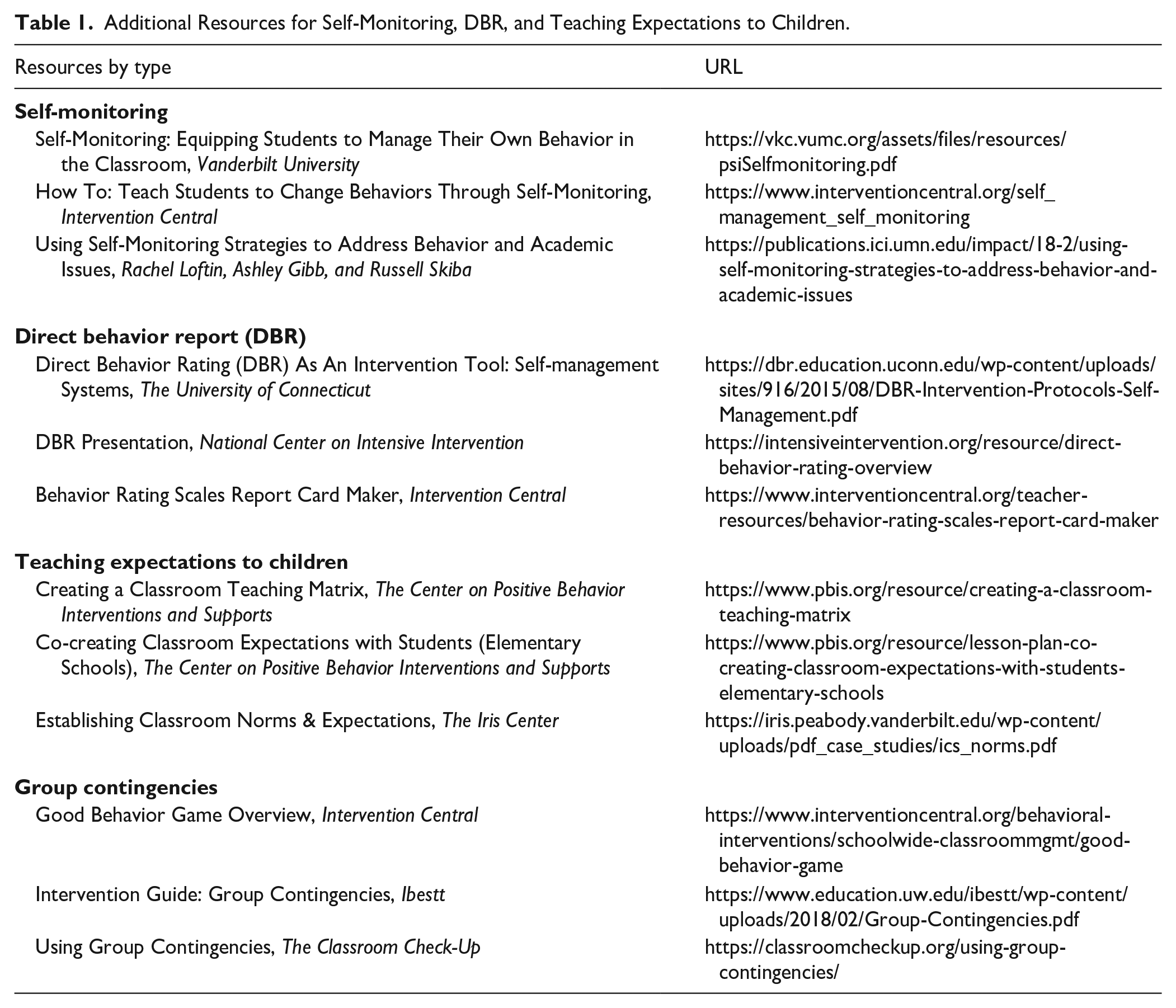
In the included case study, we describe how we targeted these keystone behaviors in our intervention and how we used self-management techniques to integrate within the reading and mathematics instruction. Our approach is one way educators might consider as a more efficient integration of academic and behavioral support, but it is certainly not the only way. Research has not established how academic and behavioral support can be best integrated, and it is unlikely that one approach will ever be more effective than others in all contexts. Therefore, we encourage readers to view our approach as one option among others. To assist readers with implementing the elements of our intervention, we have provided several free resources in Table 1.
Additional Resources for Self-Monitoring, DBR, and Teaching Expectations to Children.
Teaching Self-Regulation (Case Study, Part 2)
Ms. Jones emailed one of her old professors from her master’s program to see whether she could explore different ways to integrate academic and behavioral interventions. Dr. Curry was happy to meet with Ms. Jones and walk her through some ideas on integration. One idea in particular, teaching and using self-regulation with students, sounded like the support Ms. Jones’s students needed. Dr. Curry described an intervention she had read about, which taught students to understand the expectations of the group, be prompted to periodically monitor their behavior, evaluate their performance, and have accurate evaluations reinforced. Dr. Curry explained that at the beginning, students may be inaccurate with their evaluations, but with reinforcement of accurate evaluations, that should change in a few weeks. Students will also need to be prompted to monitor their behavior, and that can be done in two different ways: at random intervals during the lesson (using a timer) or at organic pausing points during the lesson (e.g., moving from practicing decoding words to reading sentences or moving from practicing mathematics facts to starting the lesson). In addition, a group contingency, such as a point system with a prize at the end, may be beneficial in reinforcing accurate evaluation. While Dr. Curry offered several other options that could also benefit Ms. Jones, she settled on this one due to its ability to include the same behavioral expectations her school implemented with their PBIS system.
Self-Regulation Template for Integrating Academic and Behavioral Intervention
Our behavior intervention sought to build student’s skills in self-regulation of a keystone behavior (academic engagement), particularly their ability to direct their attention and behavior according to the teacher’s expectations, control impulses, and complete tasks. Self-regulation is correlated with academic achievement, meaning that students who struggle to self-regulate frequently have lower academic achievement than their peers (McClelland et al., 2006, 2013; Morgan, Farkas, et al., 2008; Spira et al., 2005). In addition, students who struggle to self-regulate are also more likely to have a smaller response to academic interventions than students who only struggle academically (Al Otaiba & Fuchs, 2006; McClelland et al., 2013; Nelson et al., 2003; Willcutt et al., 2005). By integrating self-regulation of keystone behaviors with an academic intervention, an interventionist can address multiple factors that affect student achievement at one time.
Any available adult may deliver this intervention in a school setting (e.g., general educator, special educator, or paraprofessional). In our study, former teachers served as interventionists. The intervention involved four components: (a) teaching behavioral expectations, (b) self-monitoring of engagement through the lesson, (c) self-evaluation of behavior during the lesson, and (d) a group contingency for accurate self-monitoring and self-evaluation. All four of these components work together to support the student’s ability to manage and regulate their behavior to benefit their academic achievement. These four components were embedded within the small group (reading and mathematics interventions) and were implemented every day the intervention group met. This intervention would be appropriate for students struggling academically, whether they have been diagnosed with learning disabilities or not. The following sections describe how to implement each step, with examples from our intervention groups.
Step 1: Teach and Review Expectations
Studies indicate that student behavior and achievement are stronger when students are more aware of the instructional setting’s rules, expectations, and routines (Oliver et al., 2011). Clear expectations provide a structured, predictable environment for students that can reduce distractions and help focus instructional time. To teach and review expectations, educators may consider the following steps. First, select a small number of (fewer than five) positively stated behavioral expectations for Tier-2 groups. Second, post expectations as a visual reminder of expected behavior. Third, explicitly teach expectations in the context of instructional routines. Fourth, review expectations at the start of each lesson and prompt expected behavior throughout instruction. If school-wide or class-wide behavioral expectations are already in place, then those would be great to review and model rather than coming up with new expectations solely for the group.
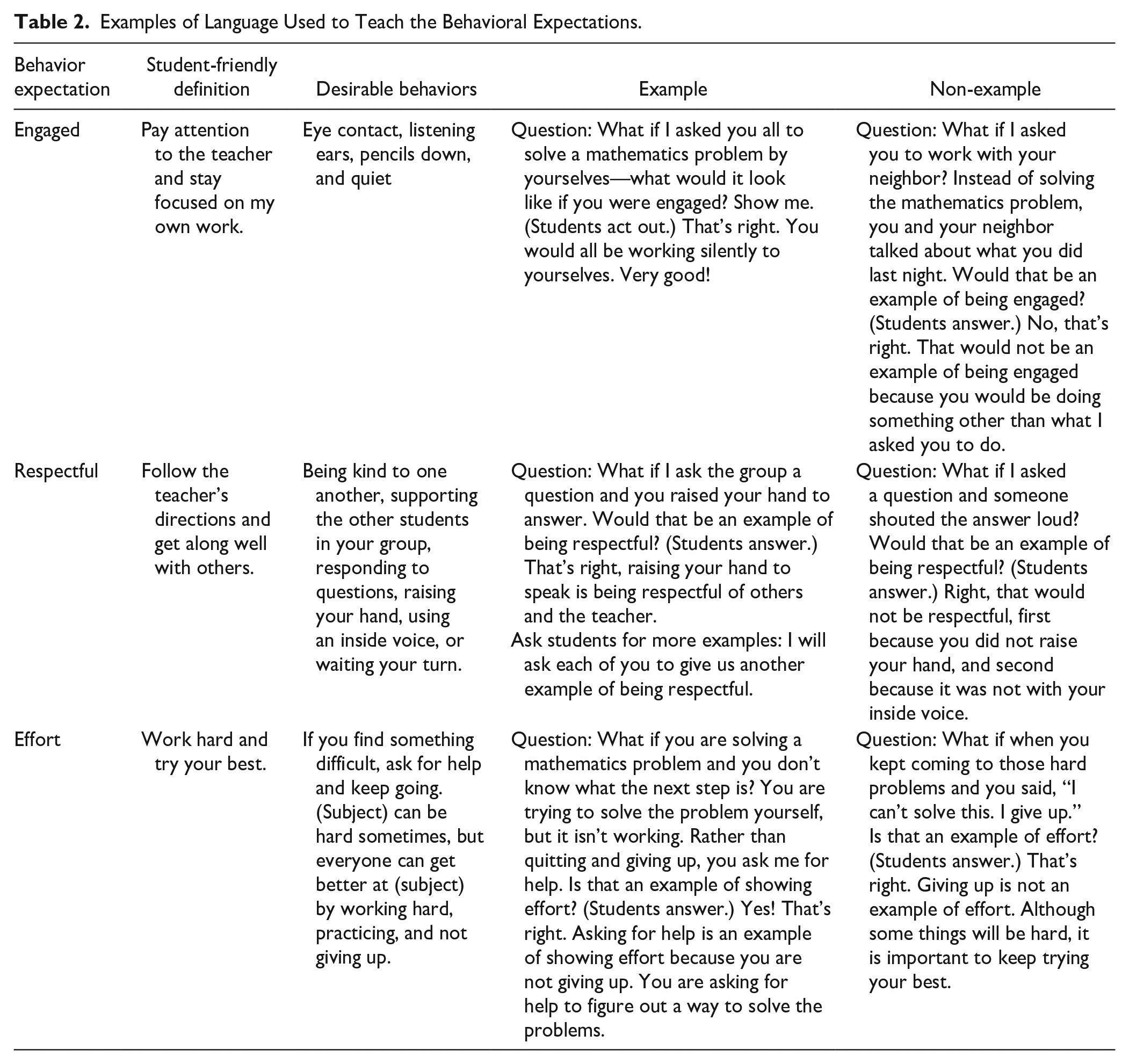
For example, our routine began by teaching and reviewing a set of three behavioral expectations for each session: being engaged, being respectful, and showing effort. These expectations were printed on a poster that was displayed in clear view of the students for all intervention sessions. In the first intervention session, our interventionists focused on explicitly teaching each expectation. Interventionists introduced each expectation with a student-friendly definition and checked for student understanding and questions. Then, for each expectation, interventionists posed examples of behaviors that were consistent or not consistent with the expectation and asked students to evaluate whether the behavior was an example of meeting the expectation and to explain their response. Students then had opportunities to generate their examples and non-examples. Table 2 provides the language used in teaching the expectations.
Examples of Language Used to Teach the Behavioral Expectations.
Expectations were reviewed across the following days to check for understanding. Across all remaining intervention sessions, interventionists began each session by referring to the poster and briefly reviewing the behavioral expectations for the group. In addition to helping to establish the rules and expectations, the posters also provided something that interventionists could refer to when they recognized and praised students for meeting an expectation or corrected behavior that was inconsistent with the expectations. Our expectations poster is displayed in Figure 1.
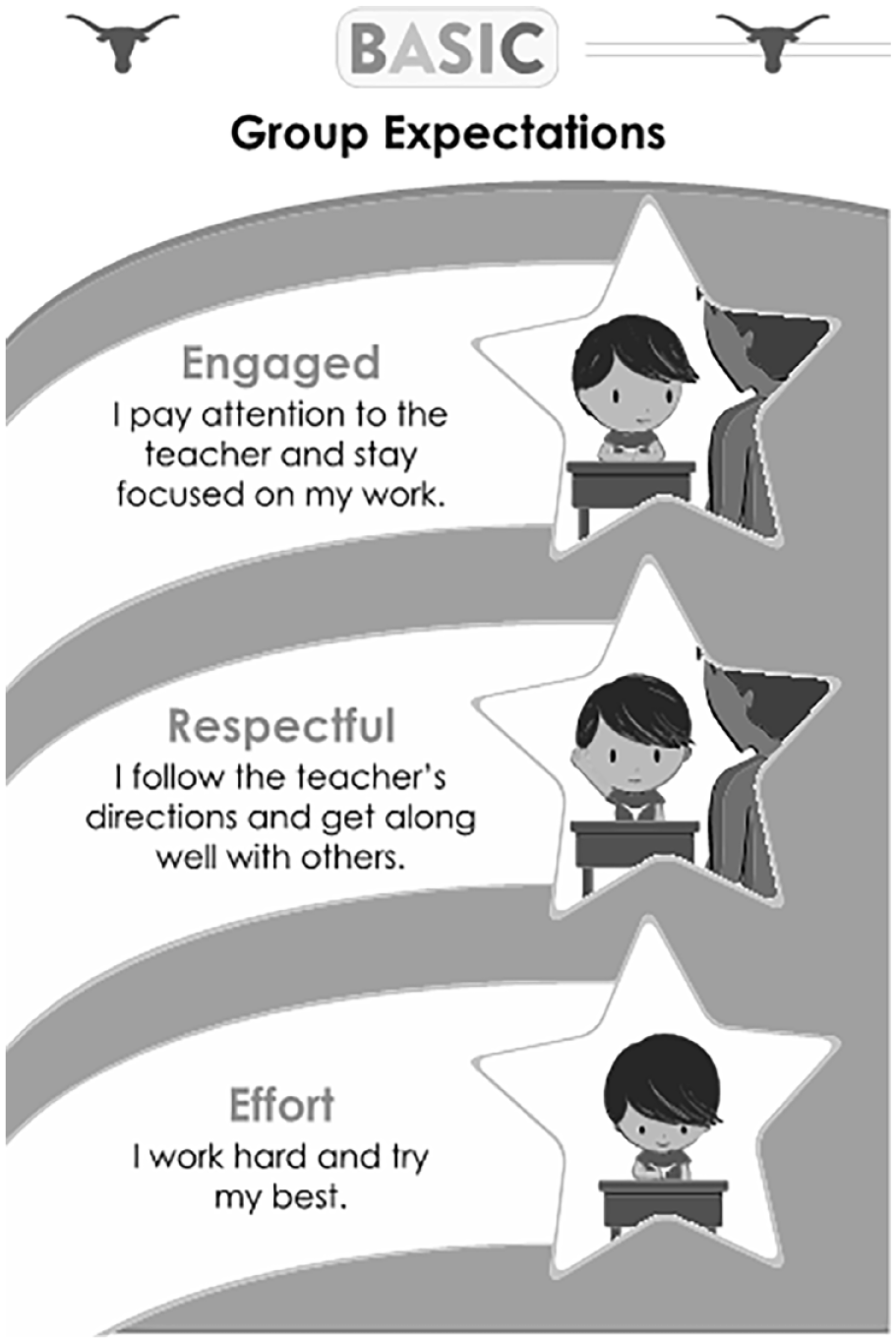
Expectation Poster.
Step 2: Self-Monitoring of Academic Engagement
Individuals of all ages use self-monitoring interventions to monitor and record a behavior or set of behaviors over a period of time. Research has found them effective for students with and without disabilities to increase task engagement, work completion, response accuracy, and reduce problem behavior (Briesch & Chafouleas, 2009; Mooney et al., 2005; Reid et al., 2005; Sheffield & Waller, 2010; Webber et al., 1993). Self-monitoring is adaptable to many behaviors and settings and is cost-efficient (Menzies et al., 2009). Gains made using self-monitoring interventions have been found to maintain over time and generalize to other behaviors and settings that were not a focus of the intervention (Mooney et al., 2005; Rhode et al., 1983; Wood et al., 2002).
When teaching students to monitor their behavior, teachers must first choose one expectation that students will monitor. Second, a signal (e.g., timer, phrase, or bell) should be determined to indicate to students that they should pause and monitor their behavior. Then, when first meeting with the students, explain what it means to self-monitor in student-friendly terms. Finally, the group should practice monitoring their behavior, and the teacher should provide feedback on students’ accuracy in rating their behavior.
We used self-monitoring as the second component of our behavior support strategy in which students self-monitored their engagement throughout the reading or mathematics intervention. Our self-monitoring form is shown in the upper portion of Figure 2. Interventionists introduced the strategy during the second intervention session, beginning with a student-friendly explanation of self-monitoring and the procedure. Students were taught that when they heard a signal or when the interventionist prompted them, they should ask themselves whether they were engaged at the moment they were signaled. They then circled “yes” or “no” on their self-monitoring sheet. Instruction included practice with examples and non-examples, allowing students to explain their responses. Interventionists then began the reading or mathematics instruction, and students practiced self-monitoring during the remainder of the session. Across the first few sessions, interventionists took time to ensure that students were self-monitoring their engagement accurately. In fact, across the intervention, interventionists placed a greater emphasis on encouraging students to be accurate in their self-monitoring. If students were disengaged when the signal was given, they were encouraged to provide an honest “No” rating. While the goal for students is to check as many “Yes” ratings as possible, we viewed accurate self-appraisal as a first step toward stronger self-regulation.
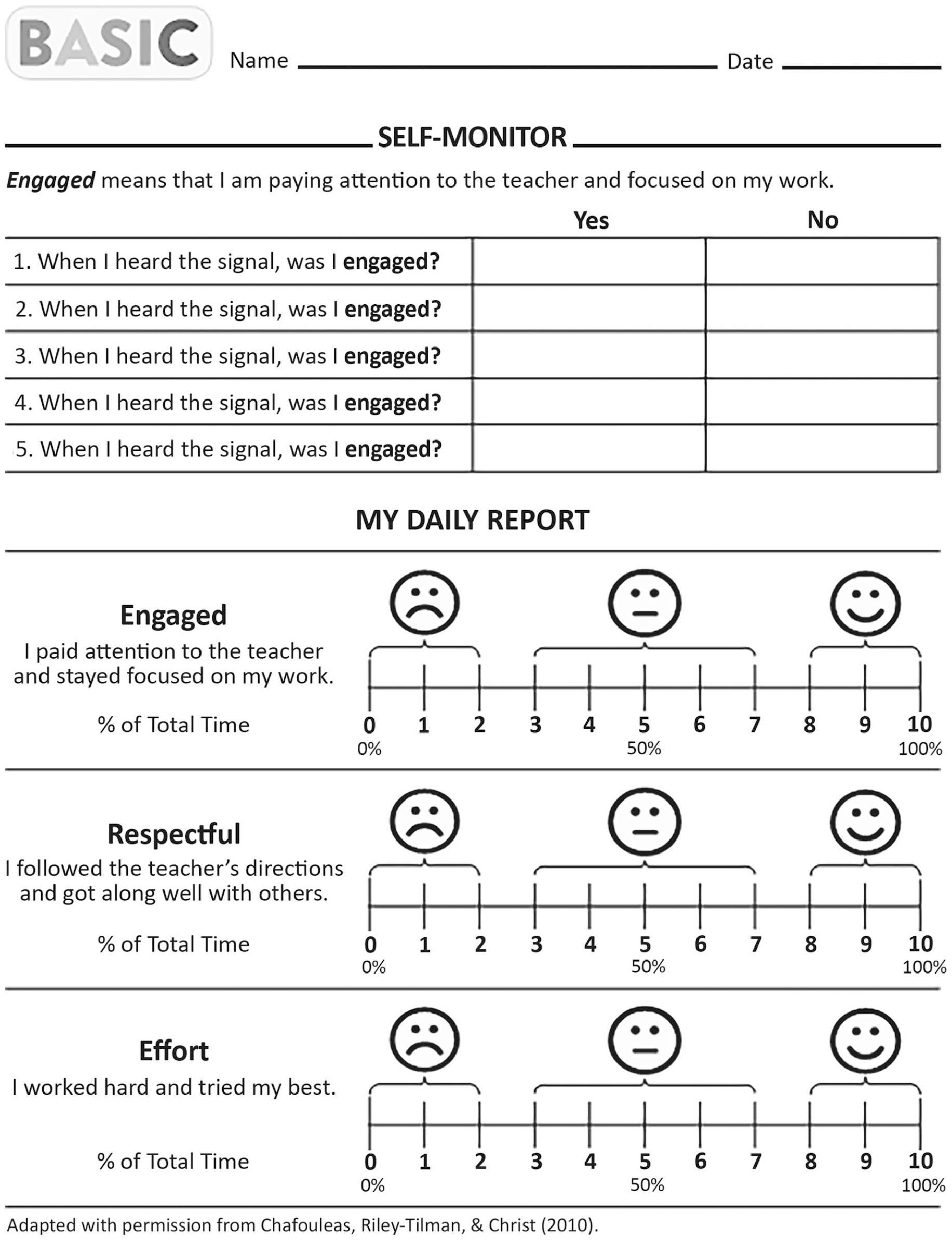
Self-Monitoring Worksheet.
Step 3: Self-Evaluation
The third element of our behavior intervention was completed at the end of each intervention session. It involved having students self-evaluate how well they met the behavioral expectations (i.e., our three keystone behaviors) during the preceding lesson. Self-evaluation is a type of self-management. In their review of self-management intervention studies, Briesch and Briesch (2016) observed that the inclusion of components that asked students to reflect on their behavior was characteristic of interventions with stronger improvements in behavior.
Before introducing self-evaluation to students, teachers must determine how they want students to evaluate their behavior. Our self-evaluation form is displayed in the lower half of Figure 2. We adapted forms from Direct Behavior Ratings (DBR; Chafouleas, 2011), which are flexible and efficient tools that involve rating three keystone behaviors following a specified observation period on a 0 to 10 scale. Although usually used by teachers to monitor behavior, DBRs can also be used for self-evaluation and can be completed in less than 1 min.
Second, similar to self-monitoring, the concept of self-evaluation must be taught to students using student-friendly terminology. While students complete their self-evaluation, the teacher should encourage accuracy over high scores. Students need to be guided on how their behavior was throughout the entire lesson. Some students may put a “0” because they had one period of not following expectations but otherwise were engaged. Teachers might model what score to put down or remind students about periods of following or not following expectations.
For example, at the end of the reading or mathematics lesson, students were taught to reflect on their behavior during the entire lesson and evaluate the amount of time they were engaged, respectful, and showed effort. The rating scale ranged from 0 to 10 (0 = 0% of the time, 10 = 100% of the time), but consistent with DBRs used in early grades, we included smiley faces to aid students’ interpretation of the scale.
Our interventionists played a crucial role in guiding students to give honest and accurate ratings of themselves. We found that early on, when students were first learning to evaluate their behavior, students tended to think in extremes—they either rated themselves with all 10s or all zeros. Over time, through discussion using examples of what occurred each day, interventionists were able to help students rate themselves in more nuanced ways, resulting in ratings within the scale. We viewed students’ transition from all-or-nothing ratings to more accurate and fair ratings as a positive step in their awareness of their behavior.
Step 4: Mystery Match
To enhance the engagement and accuracy of students in the self-monitoring and self-evaluation activities, the fourth component of our behavior support intervention involved a group contingency strategy we called “mystery match.” Mystery match combined two evidence-based components: Group contingencies and mystery motivators. In group contingency strategies, students earn a reinforcer based on the behavior of one or more students in the group. They effectively improve students’ challenging behavior (e.g., Maggin et al., 2017; Simonsen et al., 2008). Mystery motivator interventions involve either providing a reinforcer for a behavior (but the reinforcer is revealed only when it is earned) or working toward a reinforcer when the criteria for earning it is unknown and revealed at a prespecified time (e.g., the end of the class period). The uncertainty aspect encourages student engagement and several studies have found that mystery motivator interventions are effective in improving behavior (e.g., Kowalewicz & Coffee, 2014; Kraemer et al., 2012).
There are many evidence-based group contingencies to choose from (e.g., good behavior game; Joslyn et al., 2019). Chow and Gilmour (2016) described how to design and implement group contingencies. The first step is to choose the target behaviors and then choose your groups. Third, they suggest determining how groups earn points, how you will award points, and who awards the points. Finally, a schedule will be determined and the reinforcers will be selected.
We designed the mystery match component to encourage students’ accuracy in their self-monitoring and self-evaluation. At the beginning of each lesson, the teacher randomly selected a student to be monitored, but students were unaware of who was chosen. The teacher observed the mystery student’s behavior throughout the lesson and surreptitiously completed the student’s self-monitoring and self-evaluation forms while the students completed them for themselves. For example, during the lesson, when the timer sounded for students to self-monitor, the interventionist checked “yes” or “no” (out of view of the students), depending on whether the mystery student was engaged at that time. Similarly, at the end of the lesson, the interventionist completed the self-evaluation based on the mystery student’s preceding behavior.
At the end of the lesson, the interventionist revealed the mystery student for that day and compared the self-monitoring and self-evaluation forms with those of the mystery student. Figure 3 provides an example of a completed mystery match check. Checkmarks were added when the teacher and student had the same responses in the self-monitoring form, and checkmarks were placed if the interventionist’s and student’s ratings on the self-evaluation form occurred under the same face. If the student received a specific number of checkmarks, the entire group received a point and, after earning a certain number of points (e.g., 5), all students received a reinforcer for that week, such as a small prize or choice of stickers). Across the intervention, interventionists increased the number of matches needed to earn a point to encourage accuracy as students became more successful in monitoring and evaluating their behavior. Our interventionists, such as Ms. Jones, found these steps manageable while implementing academic interventions.
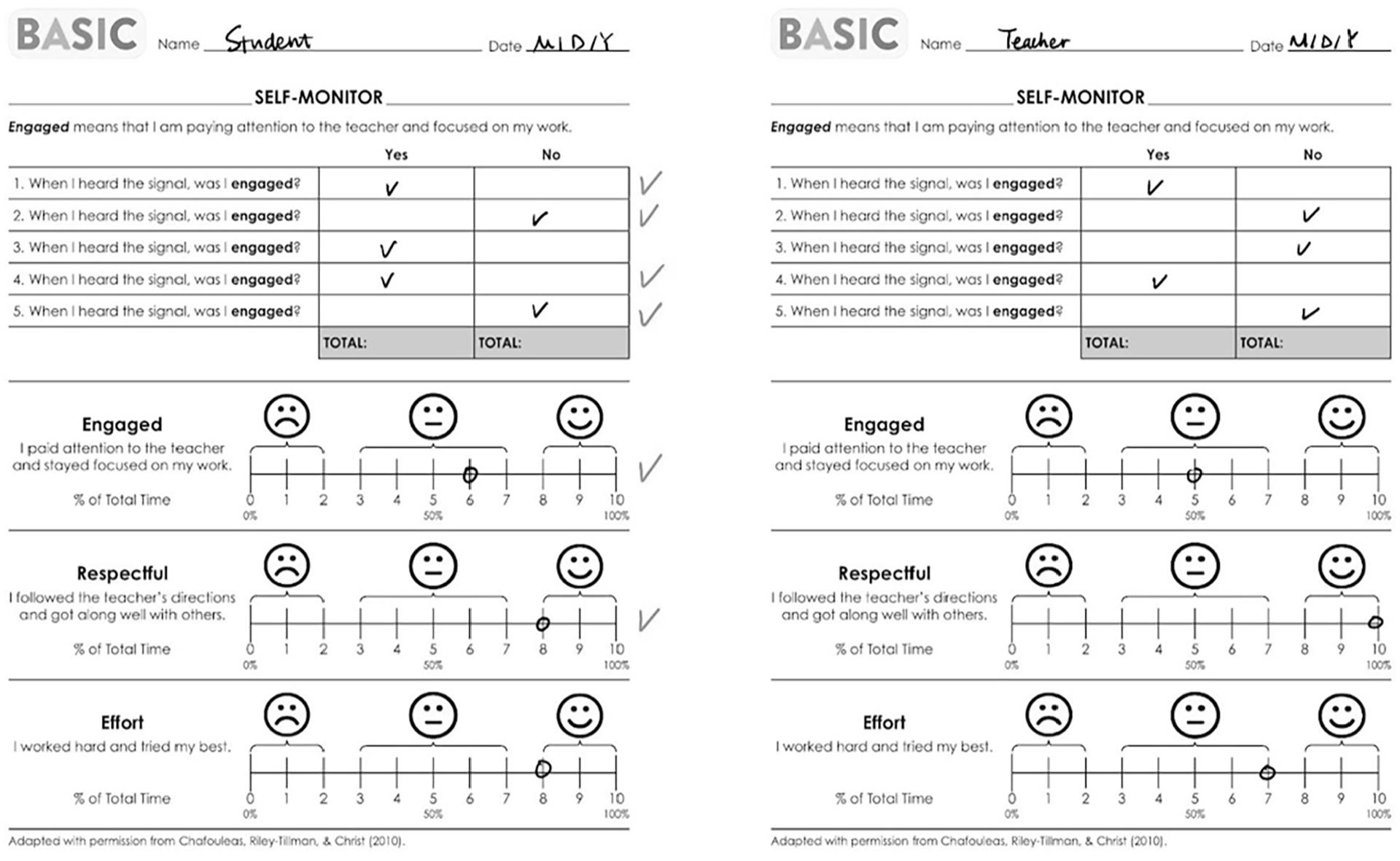
Example of Mystery Match Check.
Seeing Progress (Case Study, Conclusion)
Ms. Jones brought this information back to her special education team and began to pilot the intervention during her Tier-2 intervention block. Dr. Curry was right; the students initially rated themselves as either highly engaged or never engaged. After a short period and reinforcement of accurate ratings, students became more honest and aware of their behavior. Ms. Jones began to see improvement in her students’ behavior during their intervention block. They were more attentive and stayed on task, which meant she could get through more material and give students more opportunities to respond than she could previously. Even when students were not engaged, they could recognize and acknowledge that they had been off-task or disruptive. Students took ownership of their actions, striving to improve their academic engagement. Ms. Jones kept her special education team updated throughout her piloting of the self-monitoring component and, due to the progress her team saw, others began to implement it in their intervention groups as well.
Conclusion
Supporting struggling students’ academic and behavioral needs is integral to improving their outcomes. Students placed in Tier-2 academic interventions are more likely to develop challenging behaviors and those who need behavioral support are more likely to struggle academically. There are several ways to integrate academic and behavioral support; our focus on self-regulation and keystone behaviors is one example. Across several randomized controlled trials for students with academic skills difficulties, we have found that the behavior intervention can be efficiently woven into the fabric of reading and mathematics interventions. The first few days of teaching the behavior component were prioritized for teaching the expectations and procedures. Although this reduced the amount of time for academic instruction in the initial days, it helped the routines to solidify more quickly and led to more seamless integration within the academic interventions. Identifying strategies that are easily adaptable to different behaviors and settings, such as self-monitoring, is vital for the sustainability of implementation in integrated MTSS support systems.
Footnotes
Declaration of Conflicting Interests
The author(s) declared no potential conflicts of interest with respect to the research, authorship, and/or publication of this article.
Funding
Authorship of this article was supported by a grant from the U.S. Department of Education, Institute for Education Sciences, grant no. R324N180018. The opinions expressed in this article are those of the authors and do not represent the views of the Institute of Education Sciences or the U.S. Department of Education.

Authors’ Note
The vignette presents a fictionalized narrative crafted from multiple real-life situations combined into one cohesive scenario.