




Abstract
This corpus-based study investigates the grammatical stance constructions in CEO statements within the annual reports of U.S. and Vietnamese banks from 2020 to 2022. The findings indicate that modality is the dominant stance type followed by attitudinal and epistemic stance markers. Both groups of bank leaders favor desire/intention/decision verbs with infinitive complement clauses, certainty/likelihood verbs controlling complement clauses, and volition/prediction modality. But variations exist in the specific stance devices employed to shape corporate image and engage with stakeholders. These findings provide insights into cross-cultural corporate discourse in the banking sector and have valuable implications for business writing and professional communication.
Keywords
The CEO statement, often positioned near or at the beginning of an annual report, is an important form of business discourse that conveys the “tone at the top” of an organization (Amernic et al., 2010). This high-stakes piece of writing serves as a tool for CEOs to tell their target audiences about their firm's values, beliefs, achievements, and future prospects. It also enables them to engage in impression management (Beattie et al., 2008) in order to cultivate a positive corporate image and build rapport with relevant stakeholders. But a statement that has an excessively self-promotional tone may negatively impact the corporation's credibility (Marais, 2012). Therefore, company leaders need to adopt appropriate linguistic strategies that align with audience expectations in order to ensure that their message resonates effectively.
Given their strategic importance, CEO statements have been researched across fields such as management, business communication, and applied linguistics. For instance, studies on impression management show that shareholders and investors find these corporate documents to be valuable sources of information for making investment decisions (McConnell et al., 1986). CEOs often seek to convince investors of their company's favorable financial performance and prospects by emphasizing positive organizational outcomes and attributing them to internal factors while downplaying negative outcomes or attributing them to external circumstances (Merkl-Davies et al., 2011). In the field of applied linguistics, CEO statements have been analyzed from various aspects. Scholars have investigated genre structure (Bhatia, 2008; Yu, 2025), corporate identity (Wang et al., 2024; Zhuang et al., 2024), and evaluative features such as appraisal (Sznajder, 2021), grammatical stance (Liu & Liu, 2023), and metadiscourse (Huang & Rose, 2018; Hyland, 1998; Lee, 2021). Among these aspects, the evaluative features of CEO statements have attracted increasing scholarly interest because these features illuminate how corporate leaders strategically employ linguistic resources in order to establish credibility and emotionally appeal to stakeholders.
Despite the body of linguistic research on CEO statements, there is a paucity of contrastive studies, especially between cross-cultural contexts such as the United States and Vietnam. This gap in the existing literature is most evident in the banking sector, where the limited cross-cultural research on CEO messages hinders a deeper understanding of how CEOs in different cultures use linguistic strategies to engage with their audiences and realize their communicative goals. To address the research gap, my study investigates grammatical stance constructions in CEO statements within the annual reports of U.S. and Vietnamese banks. This study sheds light on business writing practices of financial institutions across Western and Vietnamese cultures and provides valuable insights for genre-based pedagogy and corporate communication.
Literature Review
Over the past three decades, the concept of evaluation has been extensively researched, with studies focusing on either the attitudinal dimension, such as affect (Ochs & Schieffelin, 1989), or the propositional dimension, including evidentiality (Chafe & Nichols, 1986), modality (Palmer, 1990), and averral and attribution (Tadros, 1993). Drawing on these early endeavors, researchers have developed various analytical frameworks, including appraisal (Martin & White, 2005), metadiscourse (Hyland & Tse, 2004), stance (Biber et al., 1999), and voice (Matsuda, 2001). But it is difficult to delineate the clear-cut boundaries of these frameworks because they are intricately intertwined, all concerned with how writers or speakers engage with discourse to express personal emotions, attitudes, and positions. I adopt the stance framework here because it has been effective in analyzing evaluative features of nonacademic genres in previous corpus-based contrastive studies (e.g., Fuoli, 2018; Larsson, 2019; Liu & Liu, 2023).
Stance
According to Biber (2006), stance refers to the writer's “personal feelings and assessments,” including “attitudes that a speaker has about information, how certain they are about its veracity, how they obtained access to the information, and what perspective they are taking” (p. 87). Stance can be expressed to varying degrees through value-laden lexis, grammatical devices, and paralinguistic features. But stance studies typically focus on corpus-based, quantitative analyses of explicit lexicogrammatical devices in order to produce generalizable descriptions of different registers (Biber & Zhang, 2018).
In terms of classification, Biber and colleagues (Biber, 2006; Biber et al., 1999; Biber & Finegan, 1989) proposed the widely used grammatical stance framework. Specifically, Biber et al. (1999) grouped stances into three categories: attitudinal, epistemic, and style of speaking. Attitudinal stance refers to expressions that convey personal attitudes, feelings, emotions, and judgments; epistemic stance indicates the writer's or speaker's remarks on the reliability, certainty, or limitations of a proposition; and style-of-speaking stance concerns how a speaker presents the proposition and conveys the information. But Biber and Finegan (1989) and Biber (2006) also included modality—modal verbs, such as “can,” “must,” “may,” “will,” and “would,” and semimodal verbs, such as “need to,” “be going to,” and “ought to”—as a stance category. In the framework, these modal verbs, which express different levels of certainty, necessity, and intent, are further categorized into three types based on their primary meanings: necessity/obligation, permission/possibility/ability, and volition/prediction.
Relevant Studies
Several researchers have explored how evaluative resources are used in nonacademic genres such as CEO statements and annual reports. Hyland (1998), one of the first to examine the rhetorical effects of metadiscourse, found that connectives and hedges were frequently used in CEOs’ letters in order to craft a persuasive narrative about both the firms and their leaders. Adopting Martin and White's (2005) appraisal framework, Fuoli (2012) analyzed attitude and engagement in BP's and IKEA's social reports. He found that BP employed interpersonal resources to project an image of reliability and authority whereas IKEA emphasized emotions and shared values to present itself as a caring and sensitive firm.
Using critical discourse analysis, Rajandran and Taib (2014) investigated how linguistic features contribute to key themes of aspiration, achievement, identification, recognition, appreciation, and disclosure in Malaysian CEO statements. Later, Rajandran (2018) examined the interactions between business leaders and stakeholders in corporate social responsibility (CSR) reports. He observed that CEOs favored the use of first-person plural pronouns “we” and “our” to promote group consensus and positive evaluative words, such as “proud” and “pleased,” to create synthetic personalization. Drawing on Biber's (2006) stance framework, Fuoli (2018) conducted a corpus-based analysis of grammatical stance constructions in annual and CSR reports. He found that the firms presented themselves as dedicated, transparent, and compassionate corporate citizens in their CSR reports but as competent, impartial, and logical decision-makers in their annual reports. The firms strategically used these self-representations in order to align with the expectations of their target audience, thereby enhancing the reports’ promotional function.
From a cross-cultural perspective, researchers have examined the evaluative features of corporate leaders’ messages across different cultures. For example, Lee (2021) adopted Hyland's (2005) metadiscourse framework to analyze CEOs’ letters in the annual reports of Chinese and U.S. companies. He discovered that U.S. CEOs employed more attitude markers, particularly adjectives, to express an affective stance typical of Western business communication whereas Chinese CEOs used fewer attitudinal stance markers, reflecting the preference for modesty in high-context, collectivist Asian cultures. These findings align with previous cross-cultural studies (e.g., Huang & Rose, 2018; Lee, 2020) that identified a dominant use of interactional metadiscourse markers to evoke more emotional engagement in U.S. CEO messages. Although some researchers (e.g., Fuoli, 2012; Hyland, 1998; Lee, 2020, 2021) have focused on evaluative lexis, Liu and Liu (2023) delved into grammatical stance markers, finding that U.S. CEOs preferred attitudinal and epistemic stance markers to express emotions and demonstrate their involvement in social benevolence activities whereas Chinese corporate leaders relied on stance strategies to emphasize their firms’ self-improvement and capabilities. More recently, Hu et al. (2024) investigated metadiscursive nouns in CEO letters from Chinese and U.S. firms, reporting that interactive and interactional nouns appeared more frequently in U.S. CEO statements than in Chinese ones, a difference indicative of their respective low- versus high-context cultures. Regardless of the different frameworks used, these studies all underscore the complex interplay of cultural values, discourse conventions, socioeconomic influences, and audience expectations in written corporate discourse.
But despite their valuable insights, these studies have focused mainly on CEO statements from Western and Chinese corporations, with limited attention given to Southeast Asia, particularly Vietnam. Further investigations into the Vietnamese context can enrich corporate communication scholarship by shedding light on how the country's unique socioeconomic, political, and cultural setting shapes CEO discourse. Moreover, previous studies often overlook sector-specific variations by analyzing texts from multiple sectors rather than focusing on a single one. Thus, more research is needed on CEO statements within a single sector, such as banking and finance. As Vietnam increasingly enters global markets, its banking sector is vital to the nation's economic growth, so exploring how Vietnamese bank leaders employ linguistic strategies in their statements in order to build stakeholder trust and attract prospective investors is particularly relevant. Finally, comparing CEO statements from Vietnamese banks with those from U.S. banks, given the U.S.'s status as a global benchmark for the world's largest financial markets, provides valuable insights into cross-cultural corporate communication. By analyzing and comparing the frequencies and functions of grammatical stance constructions in the CEO statements of both U.S. and Vietnamese banks, my corpus-based study can reveal potential variations that might go unnoticed in single-culture studies.
Methodology
To minimize industry differences, my study focuses on a single sector, namely banking. I identified 10 banks from each country—the United States and Vietnam (see Appendix). Some of these banks had not yet published their 2023 annual reports when I began this study in early 2024, so to ensure that the CEO statements in the study represent contemporary trends of stance usage, I selected the banks’ annual reports for 2020–2022. Most Vietnamese banks publish their annual reports in both Vietnamese and English, with the English versions typically translated from Vietnamese by in-house translators. My quick check showed that translated reports closely follow the structure of the Vietnamese texts and maintain relatively consistent word choices. I chose the English versions for this study because the stance framework was originally developed for and based on English corpora (Biber, 2006; Biber et al., 1999).
Corpora
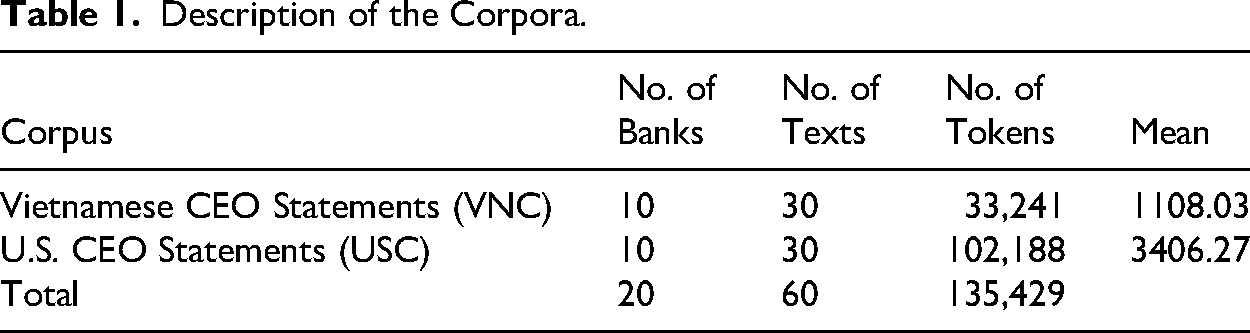
After retrieving the annual reports from the banks’ websites, I extracted the CEO statements and converted them into plain text (.txt) format. Then I manually checked the texts to fix formatting issues (e.g., column breaks, misspellings, and incorrect hyphenation) and saved each text in a separate file, which I named based on country, bank name, and year of publication. For example, in the file VNC_Vietcombank_2021, “VNC” indicates the Vietnamese corpus, “Vietcombank” is the bank's name, and “2021” is the year of publication. I then compiled two corpora: the Vietnamese CEO statements corpus (VNC) and the U.S. CEO statements corpus (USC), each containing 30 texts, with 33,241 and 102,188 tokens, respectively (see Table 1).
Description of the Corpora.
Stance Framework
I adopted the stance framework developed by Biber and colleagues (Biber, 2006; Biber et al., 1999; Biber & Finegan, 1989), which has been applied in previous corpus-based studies of nonacademic texts (e.g., Fuoli, 2018; Larsson, 2019; Liu & Liu, 2023). But my framework consists of just three of the categories: attitudinal stance, epistemic stance, and modality (see Table 2). I excluded markers of the style-of-speaking stance from my analysis due to their extremely low frequency in the corpora. I treated modality as a separate category even though modal and semimodal verbs can convey epistemic meanings when used extrinsically and thus could be included in the epistemic stance category.
Analytic Framework of Stance Constructions.
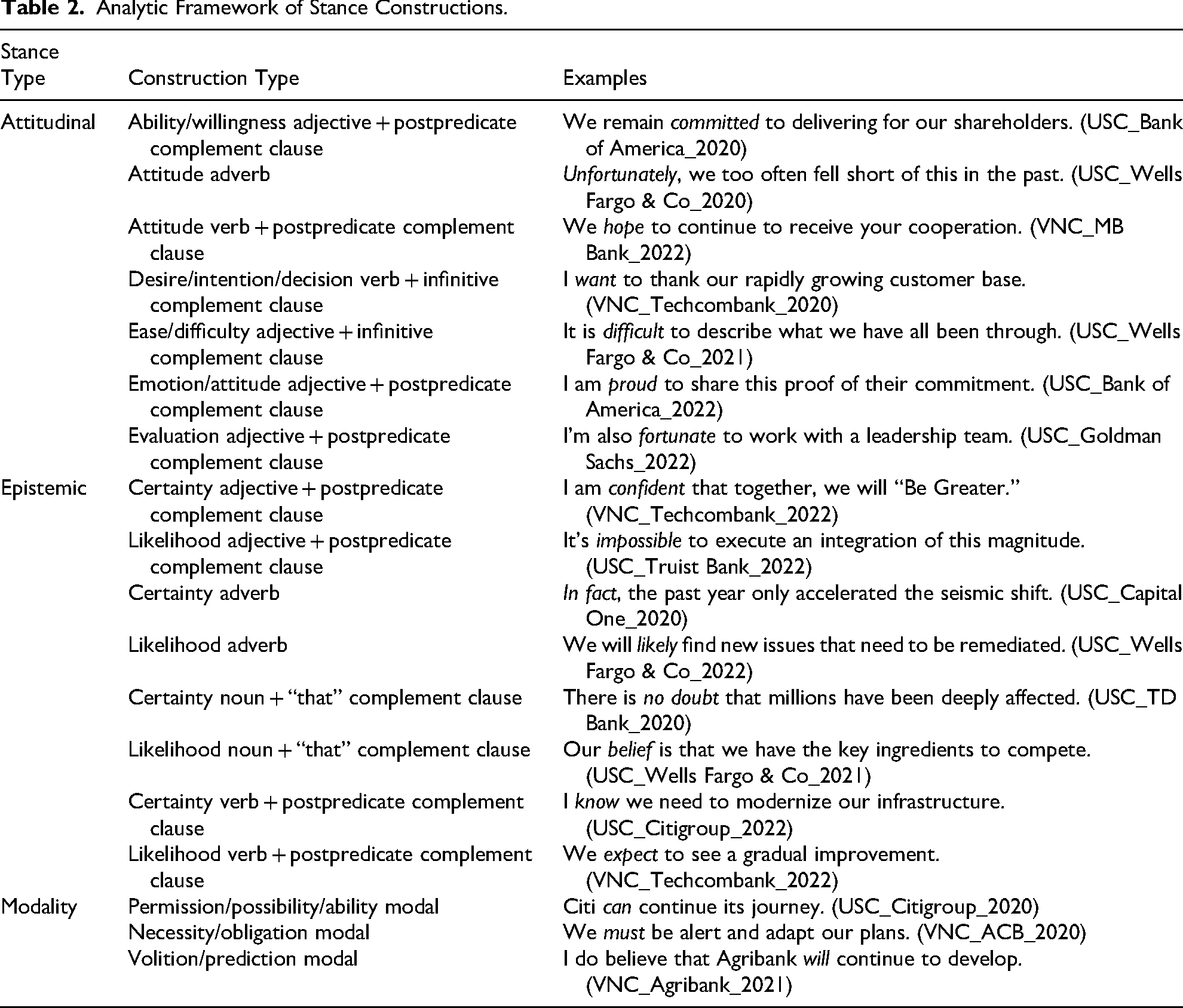
Further, I did not consider lexical stance markers because of their possibility for different interpretations depending on readers’ background knowledge and specific contexts (Biber & Finegan, 1989). In addition, analyzing lexical stance markers requires rigorous coding and reliability testing, which is beyond the scope of my study. In contrast, grammatically marked stance markers, which refer to expressions that take scope over a proposition, are more direct and evident indicators of the CEOs’ attitudes and perspectives. They also reflect the deliberate efforts of corporate leaders and firms to shape how the information is interpreted within the business discourse. Examples 1 and 2 illustrate the distinctions between lexical and grammatical stance markers (italicized), respectively: Example 1: We are confident in the long-term positioning of our businesses and the strategic opportunities that are being created. (USC_Capital One_2020) Example 2: We are confident [that Agribank shall continue to operate securely and effectively…]. (VNC_Agribank_2022)
In Example 1, the adjective “confident” is a lexical stance marker that reflects a state of affairs rather than certainty about a specific proposition. In contrast, in Example 2, it is a grammatical stance marker that indicates certainty about the postpredicate complement clause, the proposition in brackets.
Analytic Procedure
Using the list of grammatical stance devices (see Fuoli, 2018) and the analytic framework (see Table 2), I manually searched for and counted the frequency of each stance marker with the KWIC (key-word-in-context) function of AntConc 3.5.9 (Anthony, 2020). I considered all derivative forms of the stance words, particularly verbs (e.g., “believe,” “believes,” “believing,” and “believed”). Following Fuoli's (2018) practice, I only counted attitudinal and epistemic stance markers that are unambiguously attributed to the bank or its members. In addition, when considering modality, I excluded modal and semimodal verbs (e.g., “can,” “will,” “must”) that are explicitly attributed to third parties. By closely examining the concordance lines of the searched words, I could discard irrelevant linguistic items and gain in-depth contextual insights into the functions of specific devices.
Given the different corpus sizes, I normalized the raw frequencies per 10,000 words (raw frequency ÷ corpus size × 10,000) in order to facilitate the comparison. Informed by previous contrastive studies on stance markers (e.g., Fuoli, 2018; Hu et al., 2024; Lee, 2021; Liu & Liu, 2023), I used the log-likelihood (LL) test to detect any significant differences in the frequency of grammatical stance devices between the USC and the VNC. This test does not assume a normal distribution, so it provides a more reliable measure of statistical significance than the chi-square test does when handling relatively small frequencies (McEnery & Hardie, 2011). At a significance level of p < .05, LL scores of 3.84 or higher indicate statistical significance, meaning that the probability of the results happening by random chance is less than 5%.
Because the p-value indicates the presence or absence of a statistically significant difference and not the magnitude of the observed difference or the effect size, I calculated the effect size using the log ratio, which is the “binary log of the ratio of relative frequencies” (Hardie, 2014, para 2). For instance, if a word has the same relative frequency in two data sets, A and B, the binary log of the ratio is 0. If a word is twice as common in A compared to B, the binary log of the ratio is 1. To compute the LL and log ratio values, I used the online LL and effect-size calculator designed by Rayson (2008).
Results
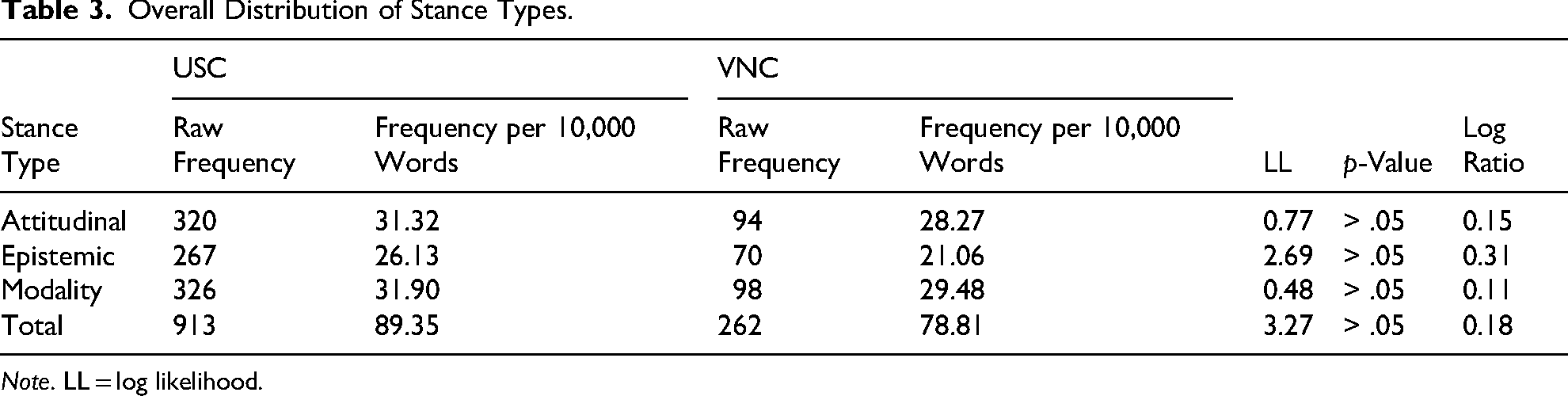
Table 3 lists the overall distribution of the stance types (raw frequency and normalized frequency per 10,000 words for each stance type in the USC and the VNC and the LL, p-value, and log ratio for each stance type). Modality is the most frequent stance type in both corpora, followed by attitudinal and epistemic stance markers. There is no statistically significant difference in the usage of stance markers either overall (LL = 3.27, p > .05; log ratio = 0.18) or individually (attitudinal [LL = 0.77, p > .05; log ratio = 0.15], epistemic [LL = 2.69, p > .05; log ratio = 0.31], and modality [LL = 0.48, p > .05; log ratio = 0.11]). The results, to some extent, support Fuoli (2018) and Liu and Liu (2023), who identified modality as the most prevalent stance category in corporate reports and CEO statements, respectively. But they contrast with Liu and Liu's (2023) finding that U.S. and Chinese CEO statements differed significantly in their use of the three stance types. This discrepancy may be attributed to the scope of their study: Their study examines CEO statements across various industries in the United States and China whereas my study focuses solely on the banking sector in the United States and Vietnam.
Overall Distribution of Stance Types.
Note. LL = log likelihood.
The similar overarching pattern of stance types adopted by U.S. and Vietnamese corporate leaders indicates their genre awareness and pragmatic competence. That is, these leaders are aware that the CEO statement is a business genre with distinct structures and linguistic features used by members of specific discourse communities (Bhatia, 2008). Consequently, using stance markers to construct a desired corporate image, they tailor their rhetorical strategies to align with the established norms and conventions of the banking community.
Moreover, the similar pattern of stance types shows the translation expertise of Vietnamese translators in cross-cultural business communication. According to Junge (2011), translation is a complex rhetorical process that involves cultural filtering (i.e., adaptation to the target language and culture). Translators often make strategic language choices rather than simply finding direct equivalents of the language in the source text so that their translations will suit the target audience, communicative purpose, and sociocultural context of the text. Therefore, rather than strictly preserving Vietnamese discourse norms, translators of CEO statements from Vietnamese banks may deliberately adapt CEO texts to align with the expectations and business communication styles of a Western audience. Such adaptations are particularly relevant given the status of English as a business lingua franca, for which English translations serve as a strategic tool to “establish a global image and attract foreign investors” (Huang & Rose, 2018, p. 170).
Despite overarching similarities, subtle variations may exist between the two corpora in the use of specific grammatical stance constructions. To better understand these variations, it is essential to closely examine the frequencies and functions of each of the three stance types (attitudinal, epistemic, and modal) across the two corpora.
Attitudinal Stance
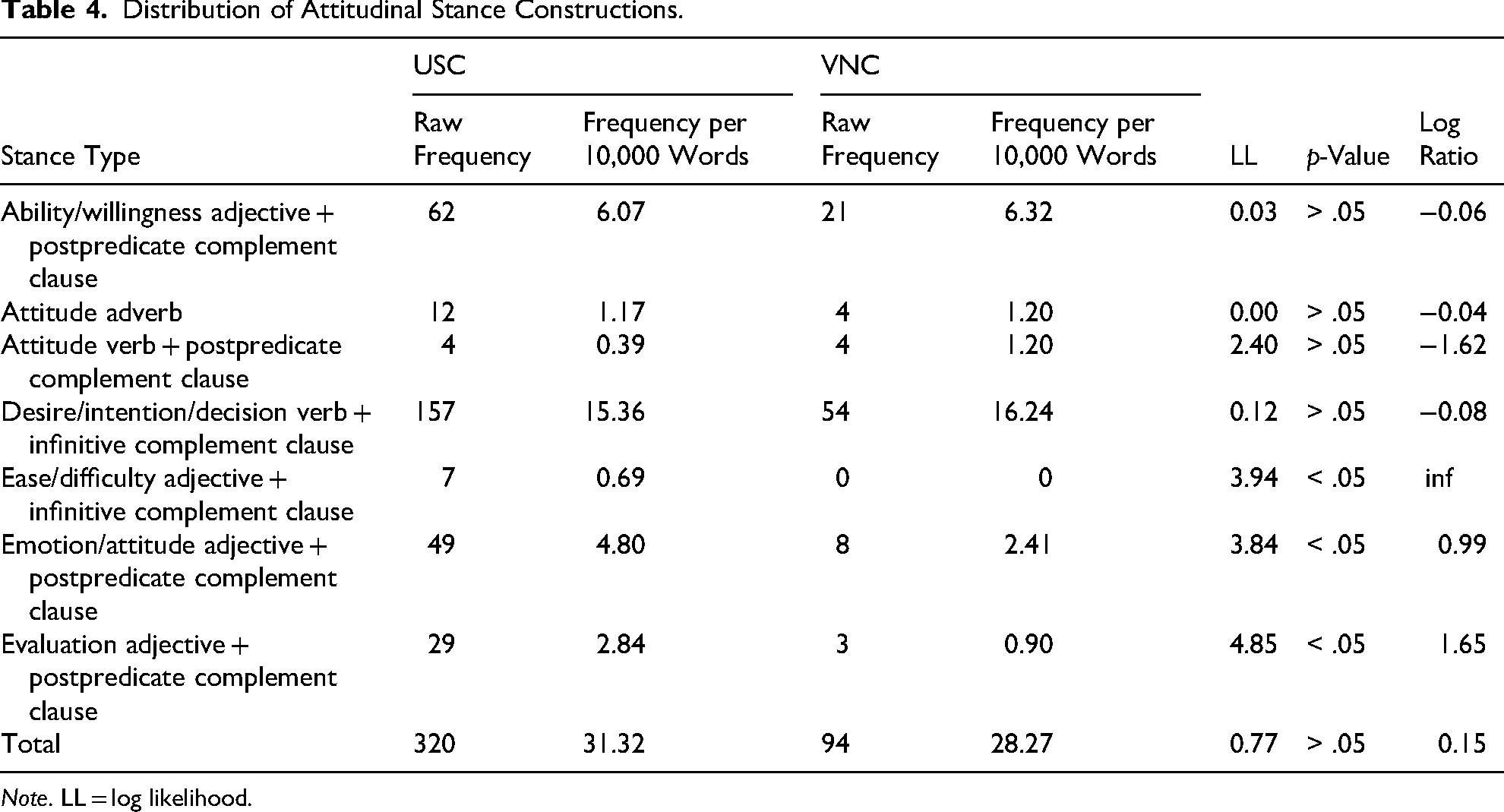
Table 4 presents the distribution of attitudinal stance constructions. In both corpora, the desire/intention/decision verb + infinitive complement clause is the most frequent attitudinal stance construction followed by the ability/willingness adjective + postpredicate complement clause. This finding aligns with those of Fuoli (2018) and Liu and Liu (2023) on attitudinal stance markers in CSR reports and CEO statements, respectively. In addition, compared to their Vietnamese counterparts, U.S. CEOs employed with significantly more frequency the ease/difficulty adjective + infinitive complement clause (LL = 3.94, p < .05; log ratio = inf), emotion/attitude adjective + postpredicate complement clause (LL = 3.84, p < .05; log ratio = 0.99) and evaluation adjective + postpredicate complement clause (LL = 4.85, p < .05; log ratio = 1.65). This finding supports those of previous studies (e.g., Huang & Rose, 2018; Lee, 2020, 2021) that Western corporate leaders used more interactional metadiscourse devices to express personal emotions, evaluations, and engagement with stakeholders than did their Eastern counterparts.
Distribution of Attitudinal Stance Constructions.
Note. LL = log likelihood.
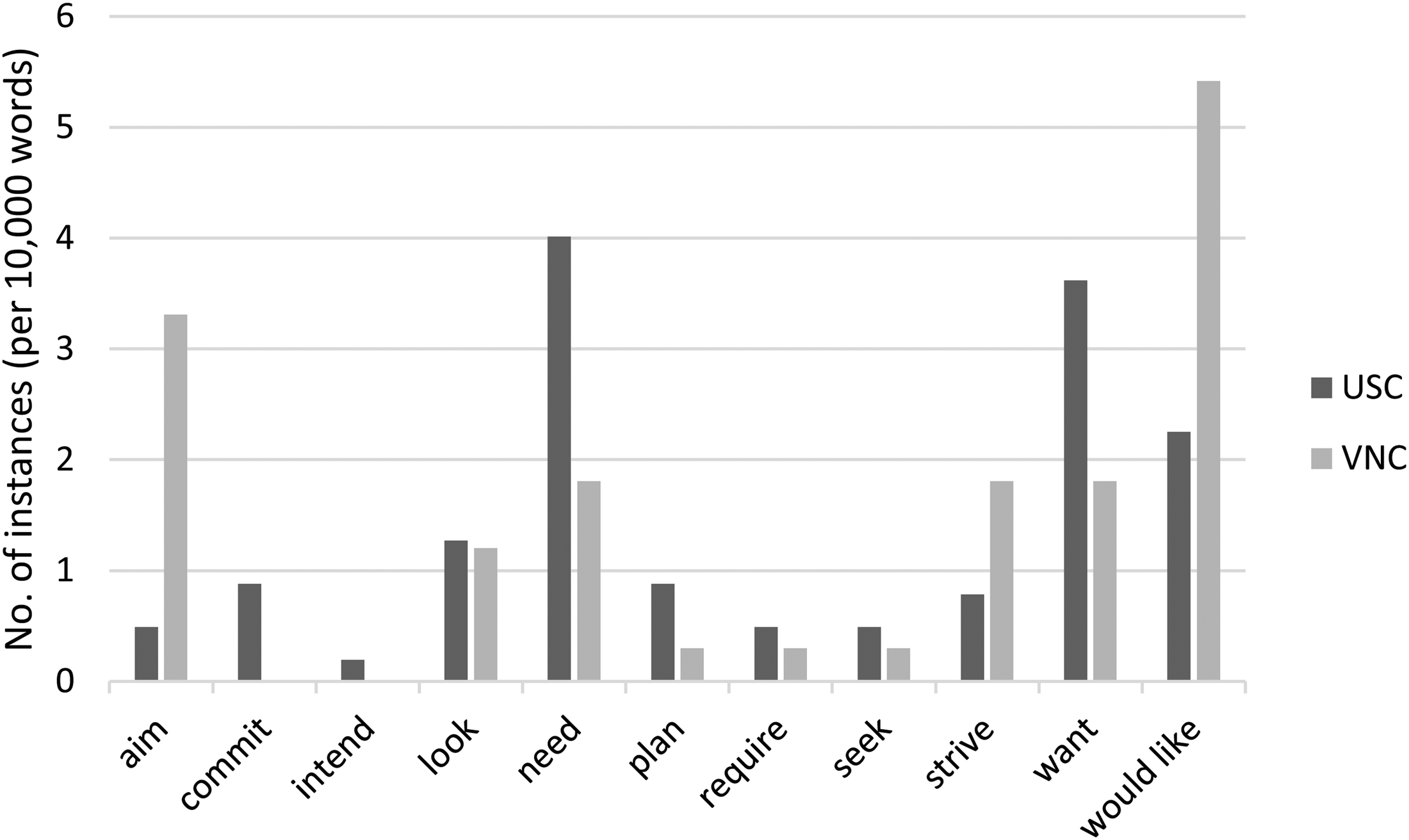
Figure 1 shows the distribution of the desire/intention/decision verbs. In the USC, the verbs “need” and “want” are the most frequent desire/intention/decision verbs; however, in the VNC, “would like” and “aim” dominate. This finding differs to some extent from Fuoli's (2018) and Liu and Liu's (2023) findings that “aim” and “strive” were the most frequently employed verbs in this stance construction, respectively.
Distribution of desire/intention/decision verbs.
U.S. CEOs employ the verbs “need” and “want” to assert strategic goals and express personal acknowledgments. In Example 3, “need” is used to emphasize a goal whereas in Example 4, “want” is used to express recognition and gratitude to staff, colleagues, customers, and shareholders for their trust and support. Both examples represent a more direct approach to business communication typical of Western cultures: Example 3: For our strategy to unlock the greatest possible value, we know we need to modernize our infrastructure so that we are scaled and agile. (USC_Citigroup_2022) Example 4: I want to thank them for their tremendous efforts, our customers for their trust, and you, our shareholders, for your continued support. (USC_TD Bank_2020)
In contrast, Vietnamese CEOs display a higher degree of formality in expressing gratitude by using the phrase “would like” more than twice as often as their U.S. counterparts do (LL = 7.30, p < .01; log ratio = –1.27). As Urloi and Ruiz-Garrido (2023) noted, the expression of gratitude to stakeholders is a prominent feature of chairmen's statements. In Example 5, “would like” sets a formal tone in the Vietnamese CEO's polite conveyance of thanks and respect toward a broad range of audiences: Example 5: On behalf of the Board of Directors and Board of Management of VietinBank, I would like to express my deep gratitude to the shareholders, investors, customers, partners and employees of VietinBank. (VNC_VietinBank_2022)
In Example 6, the verb “aims” is used to articulate the CEO's long-term vision and commitment to continuous efforts, reflecting a visionary communication style. This style aligns with a communication norm in Vietnam's banking sector in which bank leaders communicate both grounded assessments and future aspirations in their messages (Ngo, 2024): Example 6: Vietcombank aims to be the first bank in Vietnam to apply the advanced method for Basel II compliance, as well as to constantly conduct research and adopt better risk management standards. (VNC_Vietcombank_2021)
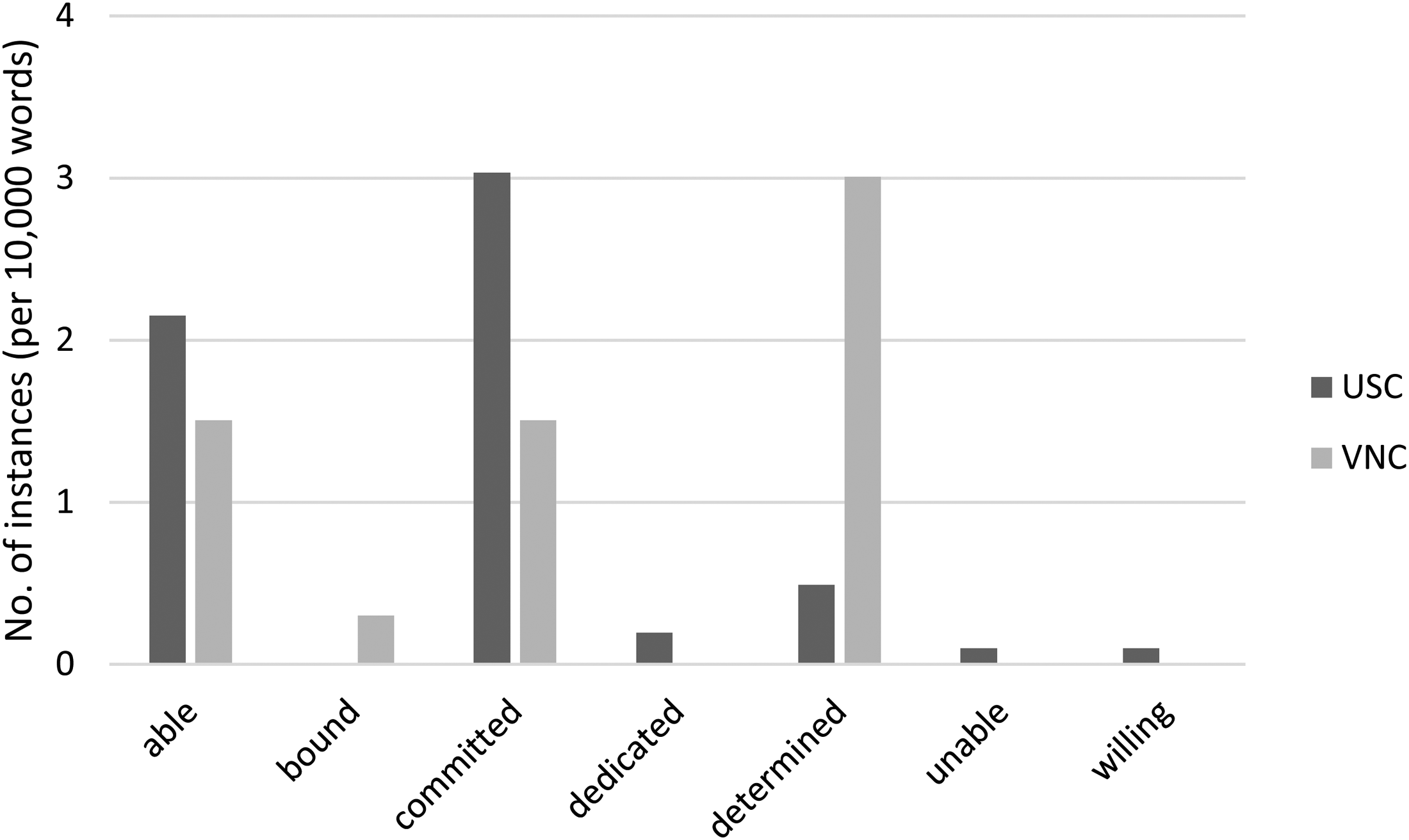
Figure 2 reports the distribution of ability/willingness adjectives, which are the second-most frequent attitudinal stance markers in both corpora. This construction is used to underscore the bank's achievements and capabilities. “Committed,” “determined,” and “able” are the most common adjectives in both corpora. But Vietnamese banks’ leaders employ “determined” much more frequently than do their counterparts (LL = 11.81, p < .001; log ratio = –2.62).
Distribution of ability/willingness adjectives.
Semantically, “committed” and “determined” convey readiness, a sense of duty, and responsibility toward corporate objectives. These stance adjectives suggest that the reporting firms genuinely strive to enhance operations and achieve their goals. In Examples 7 and 8, the U.S. and Vietnamese banks use “committed” and “determined,” respectively, to build their image as being a bank that is dependable, steadfast, and persevering in meeting stakeholder expectations: Example 7: We remain committed to delivering for our shareholders, our teammates, our clients, our communities and to making a positive impact on the world for years to come. (USC_Bank of America_2020) Example 8: The BOD, Board of Management (BOM), and the Supervisory Board (SB) of MB are determined to make efforts to deploy flexible and creative management solutions. (VNC_MB Bank_2022)
Whereas the “committed to” and “determined to” constructions convey a forward-looking perspective, the “able to” construction highlights specific capabilities and achievements. In Example 9, the U.S. bank leader demonstrates the bank's competence in transforming intentions into meaningful results by grounding the statement in measurable outcomes: Example 9: In 2021, we were able to help over 130 diverse businesses through our three developmental programs—Catapult, SAGE, and the newly launched Diverse Supplier Mentoring Program. (USC_Capital One_2021)
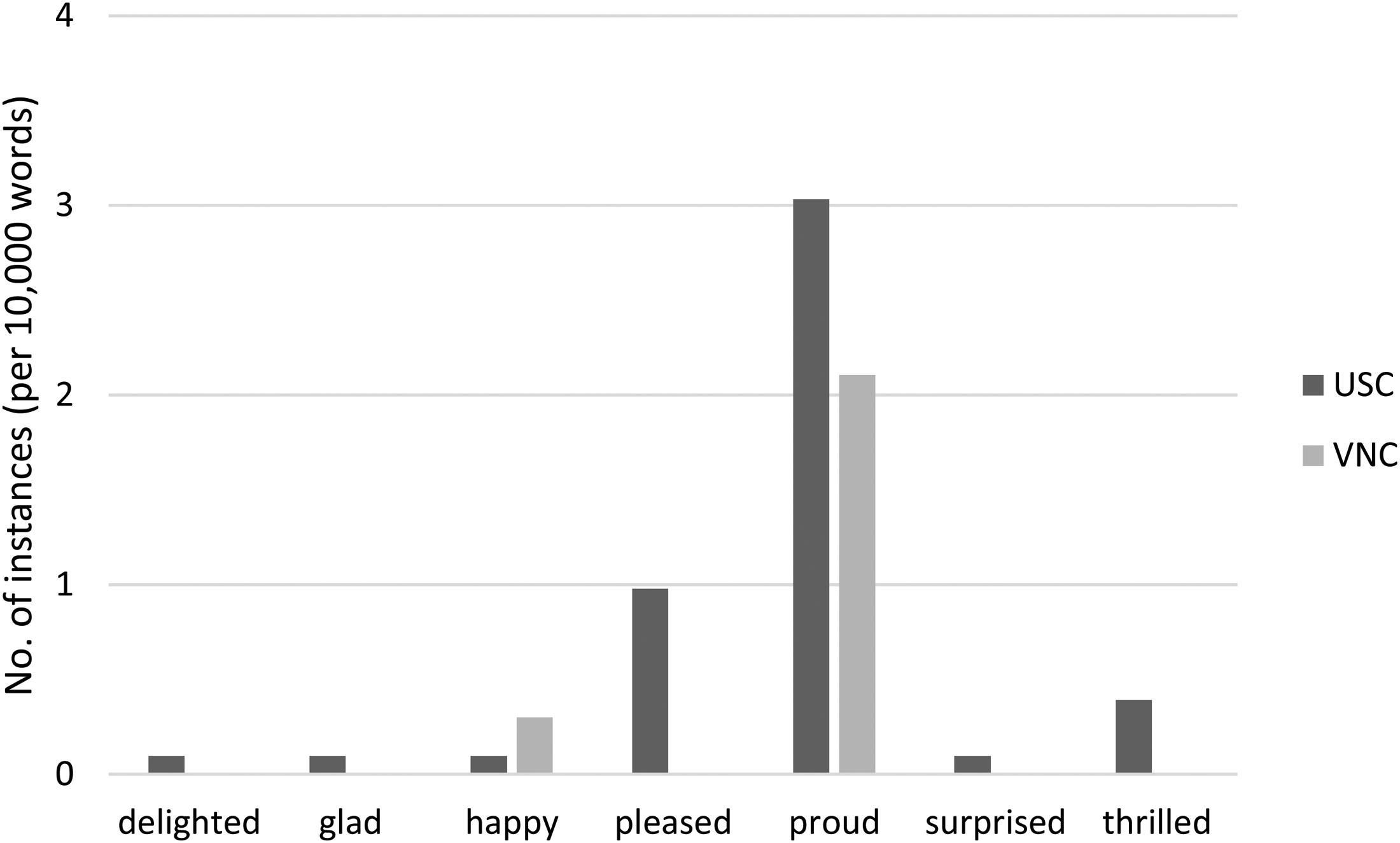
Figure 3 presents the distribution of emotion/attitude adjectives. U.S. CEO statements contain the most instances of emotion/attitude adjective + postpredicate complement clauses. Only two of these attitudinal stance markers (i.e., “proud” and “happy”) appear in the VNC. In contrast, the USC includes a broader range of emotional and attitudinal stance markers. This diversity suggests the greater importance of expressing personal attitudes and building emotional connections with stakeholders in U.S. business communication (Lee, 2021).
Distribution of emotion/attitude adjectives.
In both corpora, “proud” is the most common emotion/attitude stance word. In Example 10, this adjective indicates a positive attitude toward the bank and its employees’ resilience in overcoming difficulties. The strategic use of “proud” in the postpredicate clause often emphasizes the firm's past accomplishments (Liu & Liu, 2023), emotionally appealing to and strengthening trust in the management's leadership: Example 10: I’m proud to report that, even during a tumultuous and at times deeply trying year, our firm delivered strong financial performance, while also supporting the larger COVID-19 relief effort. (USC_Goldman Sachs_2020)
Overall, in both corpora, desire/intention/decision verbs are used to express gratitude and goal-oriented viewpoints whereas ability/willingness adjectives underscore the banks’ capability, persistence, and effort toward future goals. This linguistic choice by both U.S. and Vietnamese CEOs highlights the promotional nature of the CEO statement as a “public relations discourse” (Bhatia, 2010, p. 39) intended to build a positive corporate image and engage with stakeholders. But compared to Vietnamese CEOs, U.S. CEOs more frequently employ ease/difficulty, emotion/attitude and evaluation adjectives, which suggests that they tend to more overtly express their attitudes and evaluations (Ngai & Singh, 2017). This finding supports the idea that Western communication is typically characterized by expressive language and the use of emotional appeals as a persuasive tool to elicit strong feelings and acceptance from the audience. Moreover, although corporate reporting in the United States dates back to the 1990s (Tschopp, 2005), it is relatively new in Vietnam and characterized by low information transparency (Vu et al., 2011). Therefore, compared to their Vietnamese counterparts, U.S. firms and their leaders are more likely to be familiar with a wider range of stance markers and linguistic strategies for crafting interpersonal CEO messages.
Epistemic Stance
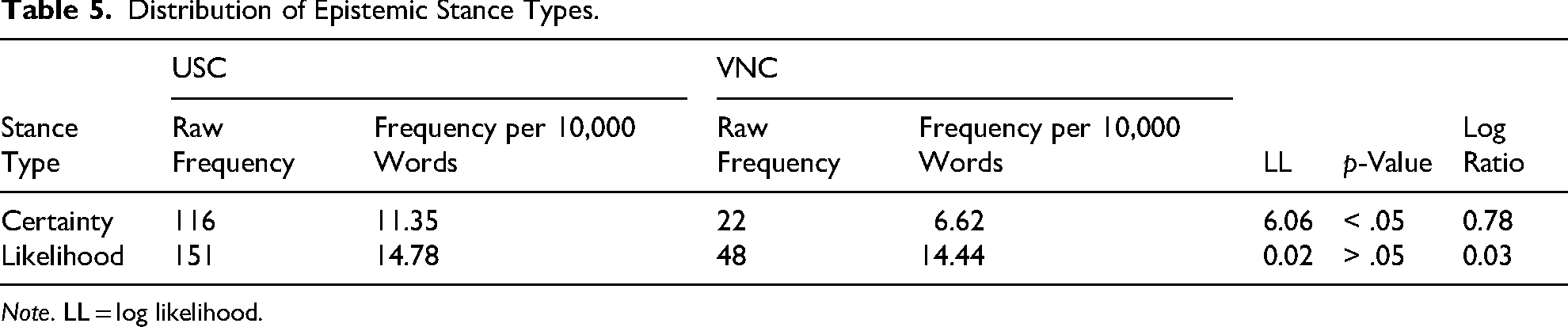
According to Biber et al. (1999), epistemic stance markers can be classified into two broad categories: those expressing certainty about a proposition and those indicating doubt or likelihood. Table 5 details the frequency of each epistemic stance category in the two corpora. It shows that the frequency of the certainty stance is statistically higher in the USC than it is in the VNC (LL = 6.06, p < .05; log ratio = 0.78). The frequency of the likelihood stance is also higher in the USC than it is in the VNC, but the difference is not significant (LL = 0.02, p > .05; log ratio = 0.03). The statistical difference between the two corpora in the frequency of the certainty stance suggests that U.S. CEOs, compared to Vietnamese CEOs, are more assertive and confident in their statements, reflecting a Western inclination toward being direct and decisive in demonstrating authenticity that is typical of the low-context culture (Hall, 1976). In addition, both corpora contain a relatively higher number of likelihood stance devices, indicating a hedged tone in corporate discourse in the banking sector. This communication style may be influenced by economic uncertainties, especially since the CEO statements analyzed were from the annual reports for 2020–2022, amid the COVID-19 pandemic. In an unpredictable business environment, banks’ leaders tend to employ likelihood stance markers to balance optimism with prudence, thus managing stakeholder expectations by acknowledging potential risks.
Distribution of Epistemic Stance Types.
Note. LL = log likelihood.
Table 6 shows the distribution of the epistemic stance constructions in the corpora. The certainty/likelihood verb + postpredicate complement clause is the most frequent epistemic stance construction in both corpora. This finding corroborates Fuoli's (2018) study, which identified the prevalence of certainty/likelihood verbs in both CSR and annual reports. The frequent use of these verbs in annual reports and CEO statements suggests the importance of their rhetorical functions to show informed judgments and strategic foresight in corporate communication.
Distribution of Epistemic Stance Constructions.
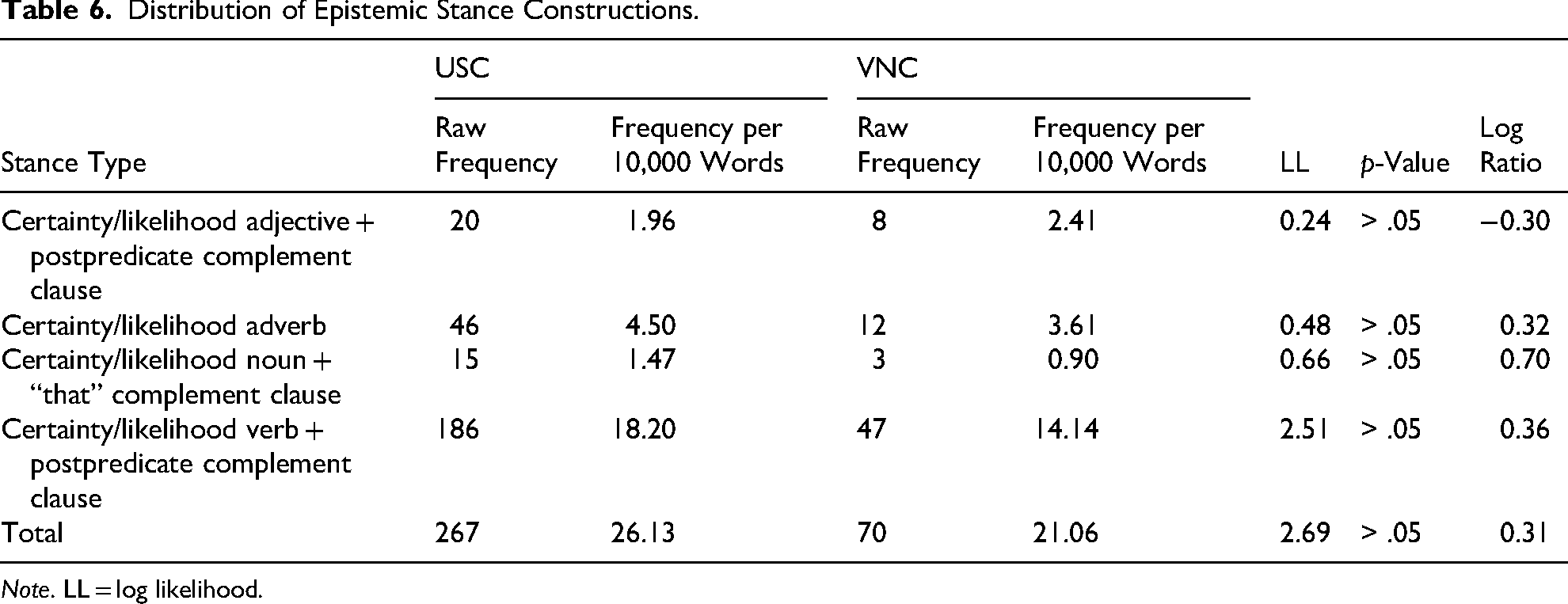
Note. LL = log likelihood.
Figure 4 graphs the distribution of certainty verbs. “Know” is the most frequent certainty verb in the USC. It is used about nine times as frequently in the USC as in the VNC (LL = 10.38, p < .01; log ratio = 3.24). No specific verb in the VNC occurs with significant frequency. A closer reading of the epistemic verb “know” in the USC reveals that it serves an important dialogic and solidarity-building function (Fuoli, 2018) to assure stakeholders and acknowledge their concerns, positioning the company as aware of its status and responsibilities. This function is evident in Example 11, in which the CEO demonstrates an awareness of existing issues and a commitment to addressing them: Example 11: While these actions are focused predominantly around race and ethnicity, I want to point out that I know we have a broader set of diversity, equity, and inclusion issues and we will continue to tackle those as well. (USC_Wells Fargo & Co_2020)
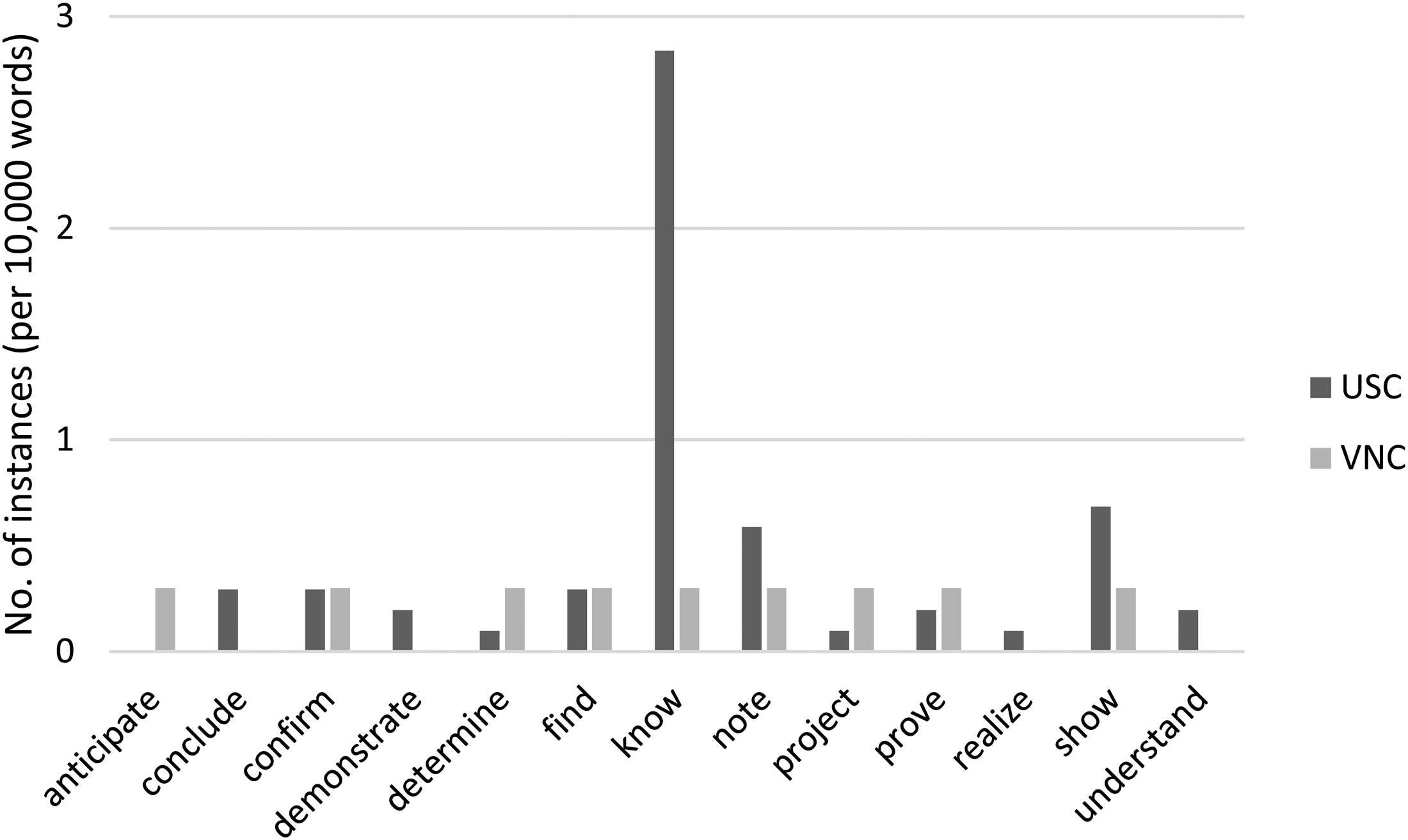
Distribution of certainty verbs.
Figure 5 details the distribution of likelihood verbs in both corpora. It shows that “believe” and “expect” are the most commonly used verbs by both groups of CEOs. Other likelihood verbs occur with minimal frequency in both corpora. Fetzer (2008) noted that “believe” denotes a stronger epistemic commitment than do other likelihood verbs. Reported as a salient stance marker in previous studies (e.g., Fuoli, 2018; Liu & Liu, 2023; Nguyen, 2025), this verb enhances the personal credibility of CEOs and their banks by projecting certainty, assurance, and conviction. Its rhetorical effect is further reinforced by personal pronouns such as “we,” as in Example 12, and “I,” as in Example 13, that help construct collective and individual “business-self” identities, respectively (Lee, 2024). In addition, although “believe” typically appears in the simple present verb form, it sometimes co-occurs with an intensifier such as “firmly,” “strongly,” and “truly,” as in Example 13, to amplify the force of conviction: Example 12: Regardless of the economic environment, we believe our disciplined approach to growing loans and managing credit risk positions us well for the future. (USC_PNC Bank_2022) Example 13: I firmly believe that, thanks to close guidance from the upcoming term's Board of Directors …, we will continue to seize opportunities, embrace opportunities, greatly promote our potential and inner strength to achieve new heights. (VNC_TPBank_2022)
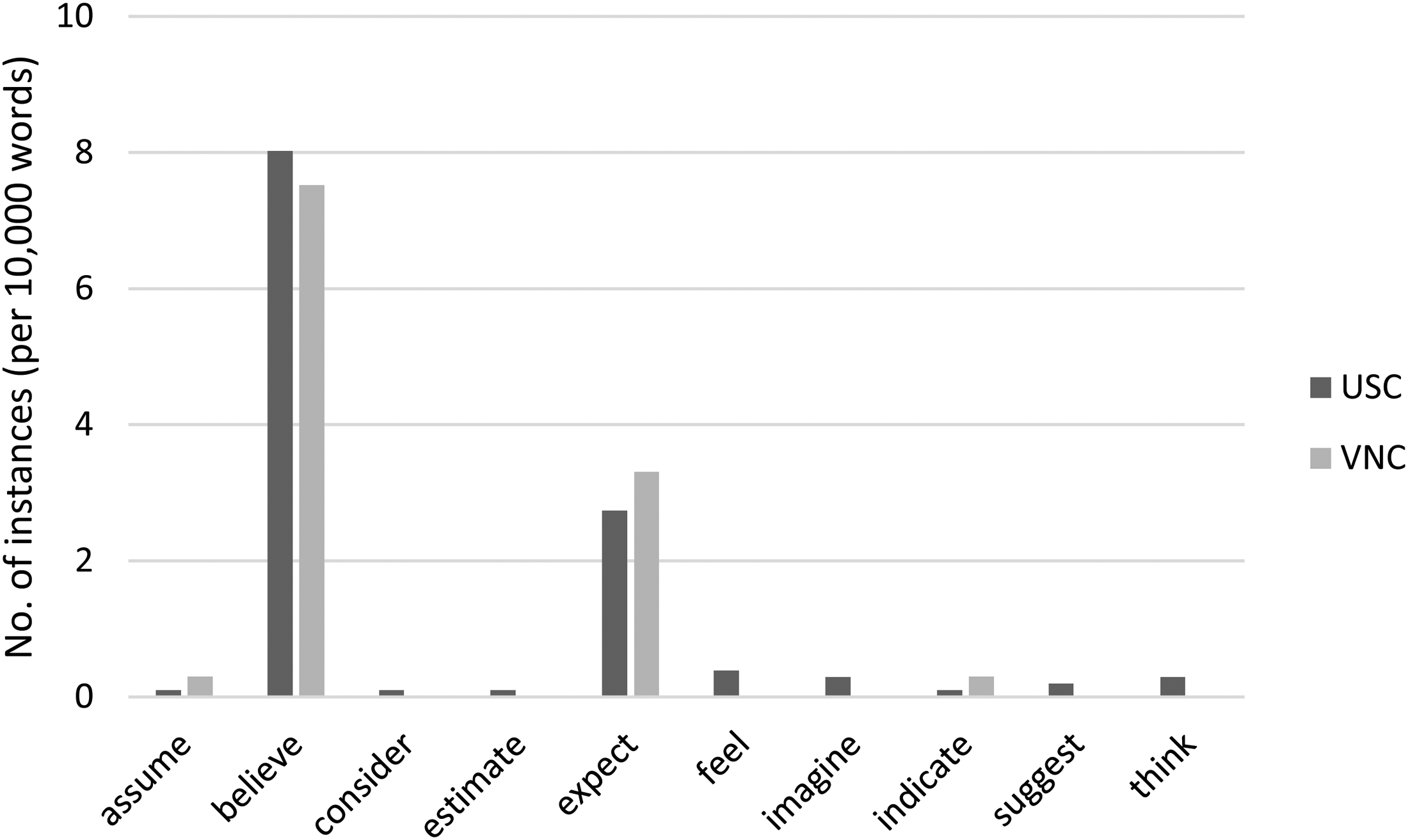
Distribution of likelihood verbs.
From a corporate identity perspective, likelihood verbs such as “expect” signal the firm's readiness to navigate future challenges and seize opportunities (Fuoli, 2018). This verb serves a dual function: It conveys a responsible and cautious stance toward predictions and mitigates the negative impact of potential misjudgments as future plans remain subject to change. Examples 14 and 15 illustrate this usage in the USC and VNC, respectively: Example 14: We also divested 30 branches and combined 104 locations into blended branches serving clients from both heritage banks. We expect to finish converting all branches to the Truist brand in 2022. (USC_Truist Bank_2020) Example 15: The Board of Management (BOM) expects that with positive signs on the economic development prospects, …VIB will continue to maintain its leading position in growth in both size and quality in the coming years. (VNC_VIB_2020)
In summary, both U.S. and Vietnamese CEOs rely on likelihood stance markers to convey a cautious and hedged tone regarding goals and future plans whereas they use certainty stance markers to project assertiveness, receptiveness, and commitment. This finding indicates that CEOs, in their corporate discourse, use legitimation strategies (Lin, 2021) to manage stakeholders’ expectations and impressions of the bank. But compared to Vietnamese bank CEOs, U.S. bank CEOs employ more certainty stance devices, such as “know,” to acknowledge stakeholders’ concerns and to reinforce the bank's credibility. Such an approach is particularly important given economic uncertainties and the highly competitive business environment in the United States.
Modality
Table 7 lists the distribution of modality stance constructions. The volition/prediction modality is the most prevalent modality type in both corpora. But compared to Vietnamese CEOs, U.S. CEOs more frequently use the modality stance types permission/possibility/ability (LL = 15.50, p < .0001; log ratio = 1.56) and necessity/obligation (LL = 4.22, p < .05; log ratio = 0.94). This finding reflects the U.S. CEOs’ emphasis on immediate capabilities and potential achievements. In contrast, Vietnamese CEOs use the volition/prediction modality more frequently (LL = 6.12, p < .05; log ratio = –0.50) to show their proactive approach and forecast the future actions and developments of their organization.
Distribution of Modality Stance Constructions.
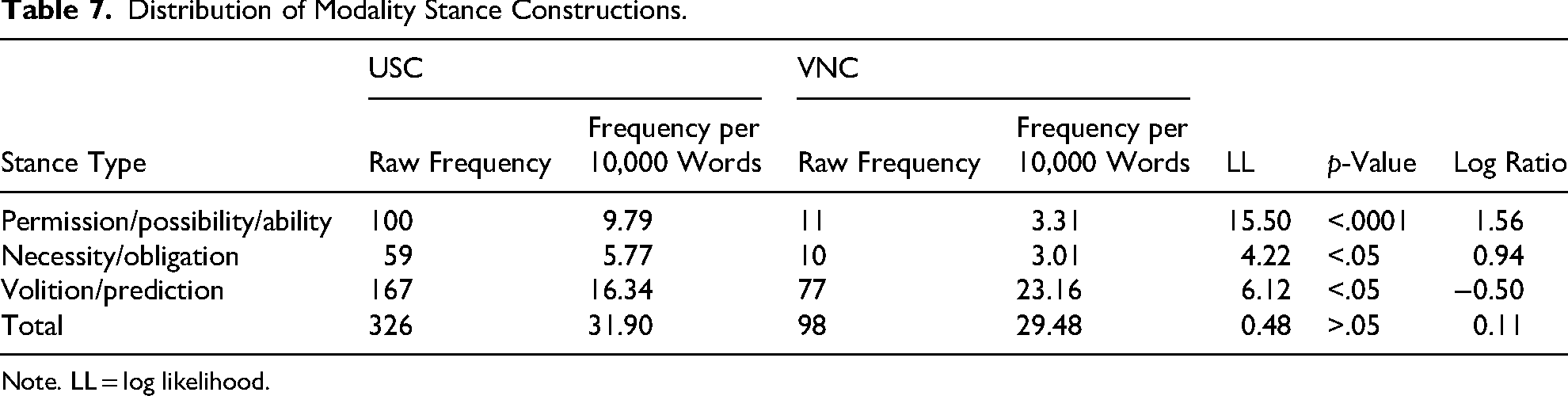
Note. LL = log likelihood.
Figure 6 displays the distribution of permission/possibility/ability modal verbs in the corpora. Of these verbs, “can” is the most frequent type in both corpora followed by “could.” Both groups of CEOs favor these modal verbs to assure readers and relevant stakeholders of the banks’ capabilities, particularly about future goals and promising outcomes of corporate actions and decisions. But U.S. CEOs employ significantly more instances of “can” than do their Vietnamese counterparts (LL = 10.69, p < .01; log ratio = 1.40).
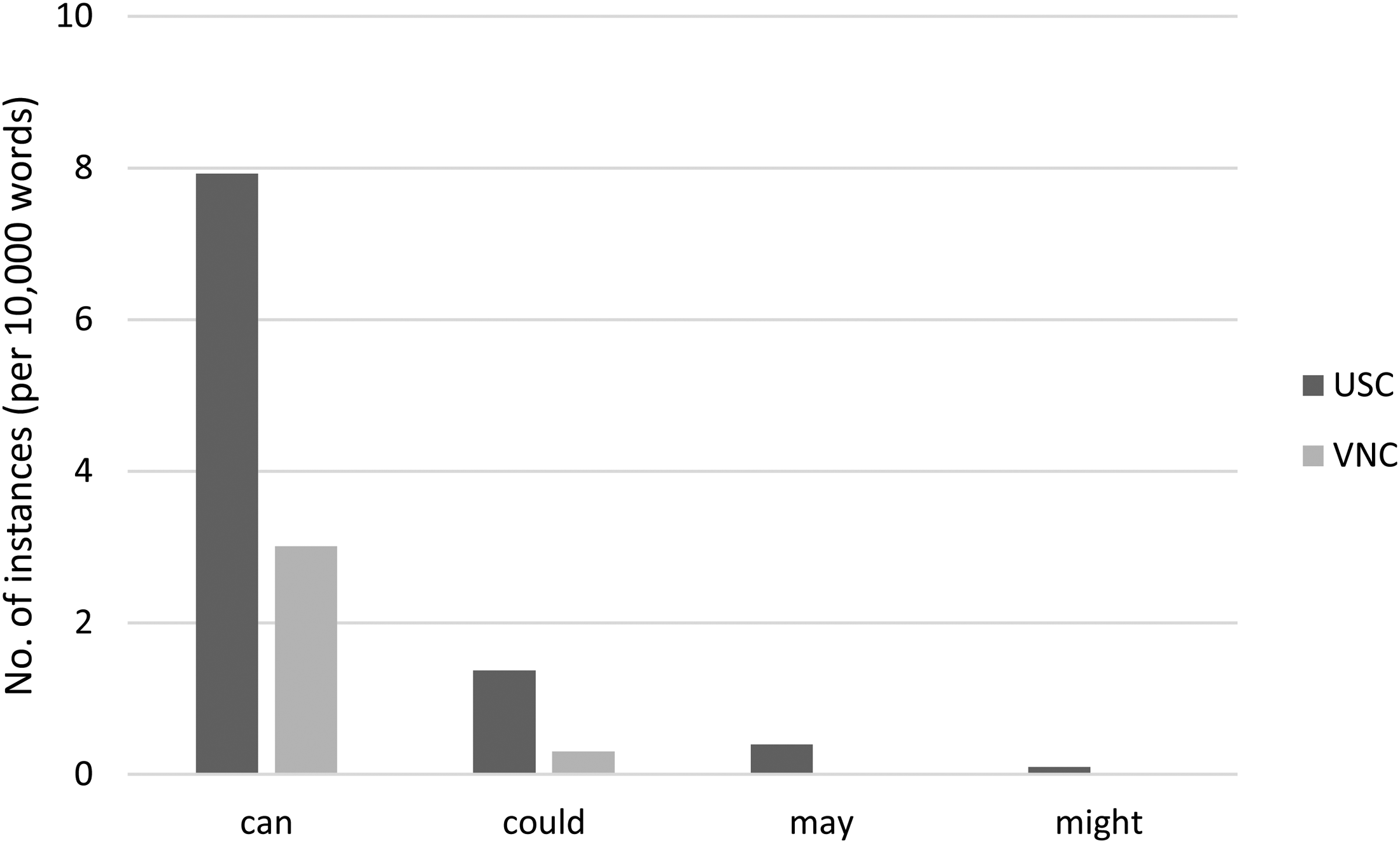
Distribution of permission/possibility/ability modal verbs.
“Can” is often used with the first-person pronoun “we” to show the ability to achieve future goals and highlight the promising outcomes of corporate decisions and actions. In Example 16, the phrase “we can,” along with its verb collocate “achieve,” projects a sense of shared purpose and responsibility, thus fostering an interactive discourse with audiences (Biber & Finegan, 1989). Because such interaction implies a personal social relationship, stakeholders may be more inclined to trust the CEO and, consequently, the content of the message: Example 16: In the medium term, we believe we can achieve an ROE of 14–16 percent and an ROTE of 15–17 percent. (USC_Goldman Sachs_2021)
In addition, U.S. CEOs also used the modal verbs “may” and “might” to signal a hedged tone. For instance, “may” helps the CEO introduce potential negative outcomes without making definitive claims, as in Example 17. According to Hyland (1996), hedges such as “may” help avoid categorical statements, enabling the CEO to address uncertainties and mitigate potential backlash but still maintain credibility: Example 17: Finally, as we continue to execute on our detailed plans, given the scope and complexity of our work, we may miss some interim milestones. (USC_Wells Fargo & Co_2022)
Figure 7 shows the necessity/obligation modal verbs in the corpora. As the graph indicates, “must” and “should” appear in both corpora. These verbs help CEOs to discursively construct their firm as authoritative and responsible leaders by emphasizing their “moral side” (Fuoli, 2012). But even though there is no statistically significant difference in the frequency of “must” between the two corpora (LL = 1.41, p > .05; log ratio = 0.60), “should” appears significantly more often (about five times as frequently) in the USC than in the VNC (LL = 4.66, p < .05; log ratio = 2.47).
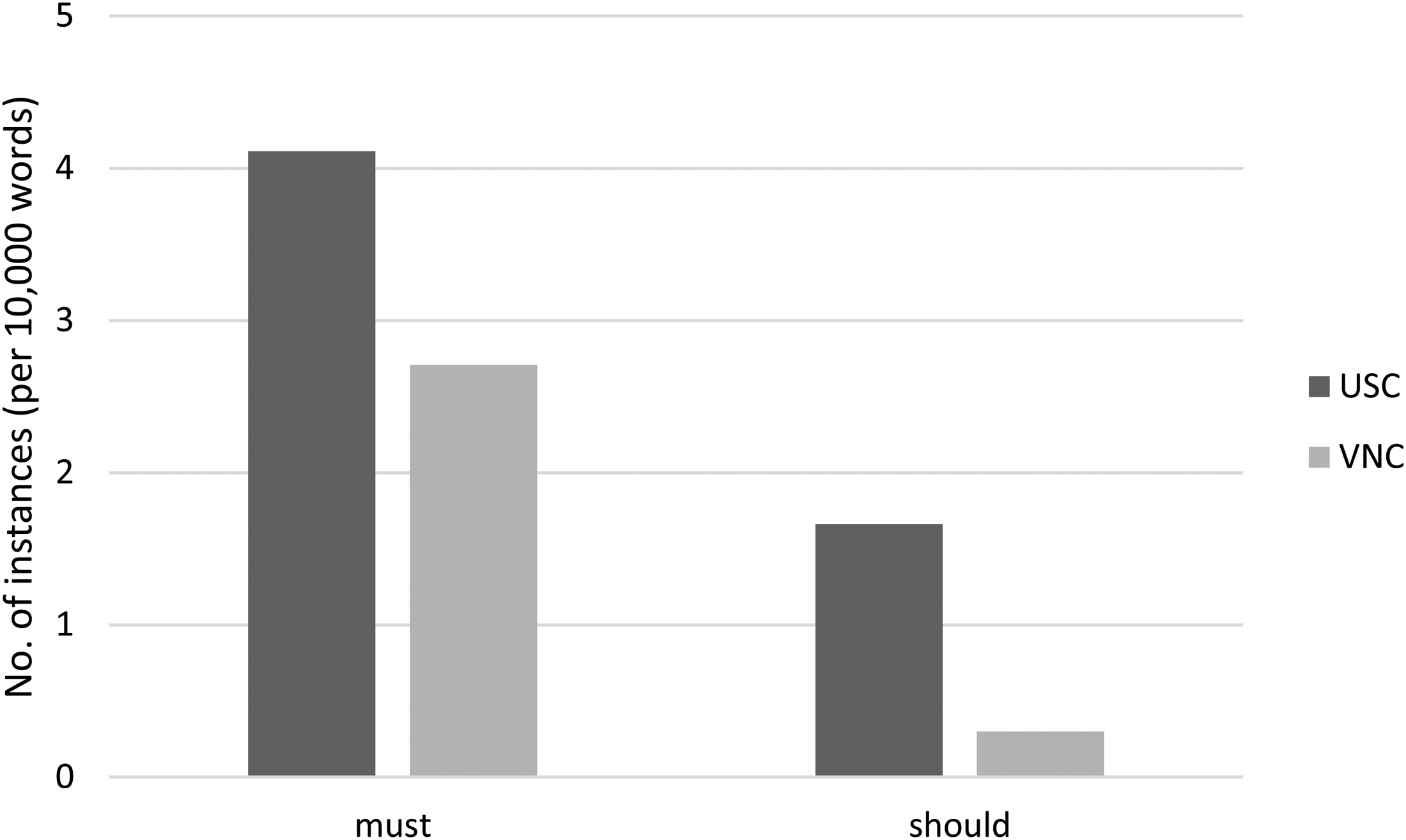
Distribution of necessity/obligation modal verbs.
In Example 18, by collocating with the first-person pronoun “we,” the modal verb “must” conveys an unequivocal sense of necessity and obligation concerning the proposed action, establishing a tone of authority and urgency in order to rally stakeholders behind a shared commitment toward achieving the corporate goals. In Example 19, “should” expresses a sense of duty and ethical responsibility toward the bank's clients and communities: Example 18: And, to grow in a sustainable manner, we must drive operational excellence, make our company a great place to work, and share our success with communities. (USC_Bank of America_2021) Example 19: Throughout these past two challenging years, we never stopped doing all the things we should be doing to serve our clients and our communities. (USC_JP Morgan Chase & Co_2021)
Finally, Figure 8 graphs the distribution of volition/prediction modal verbs in the corpora. It shows that “will” appears most frequently in both corpora but is used significantly more often by Vietnamese CEOs than by U.S. CEOs (LL = 7.92, p < .01; log ratio = –0.59). The other modal verbs (i.e., “would” and “shall”) appear only infrequently in the corpora. This distribution supports Liu and Liu (2023)'s finding that business leaders employ volition/prediction modal verbs, particularly “will,” to show their firms’ determination and competitiveness in entering the global market.
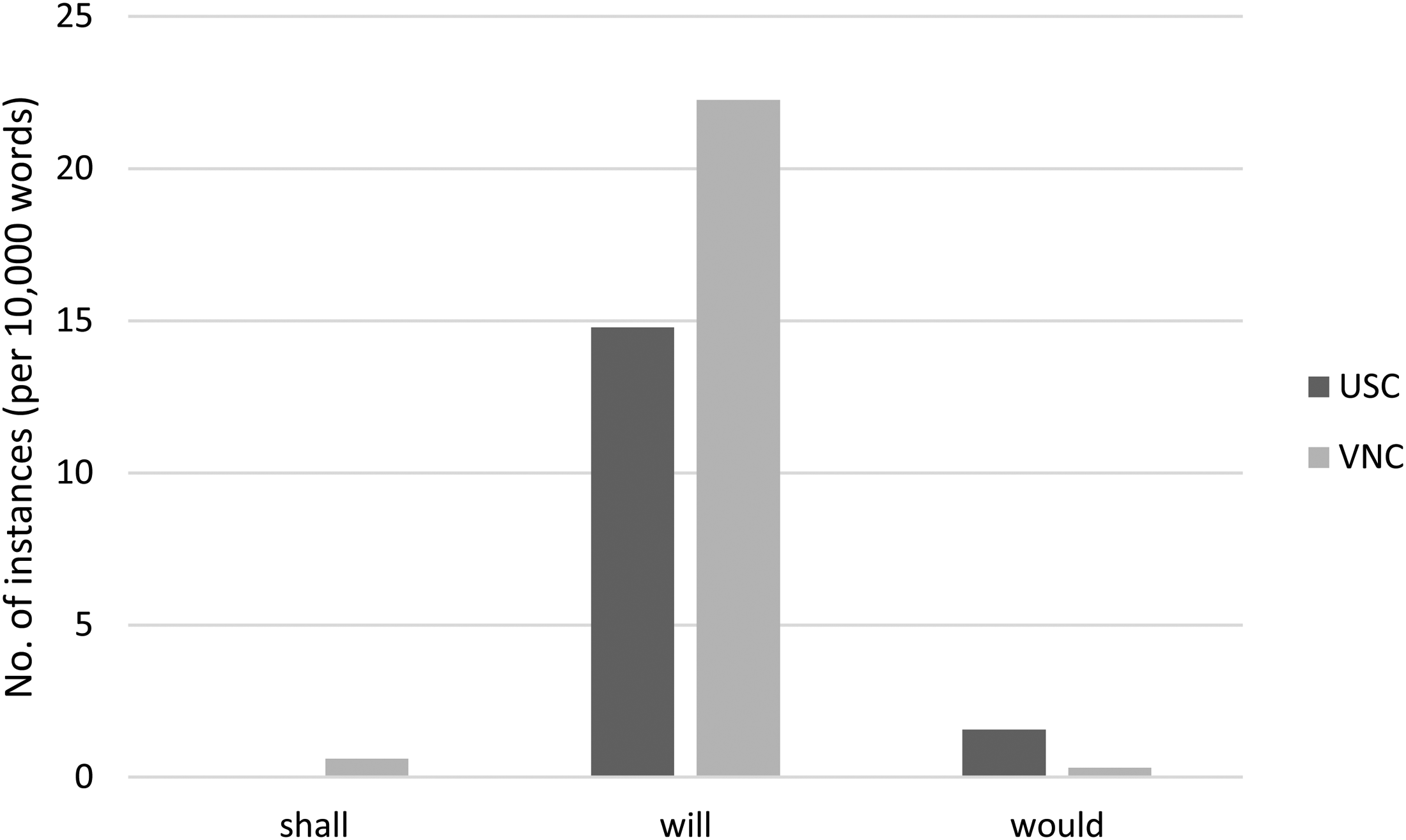
Distribution of volition/prediction modal verbs.
Fairclough (2003) stated that “will” can be employed to construct an authoritative identity by indicating “the power of making futurological predictions” (p. 167). In Example 20, “will” appears in a cluster with the first-person plural pronoun “we” and the verb “continue” in order to convey commitment toward and assurance about the firm's current and future initiatives. This cluster serves as a rhetorical strategy to legitimize the organizational action of a consistent, caring, and collaborative corporate identity (Bondi, 2016): Example 20: We will continue to strengthen our foundation across talent, digital, and data. The Bank will step up our focus on acquiring and engaging customers on digital platforms. (VNC_Techcombank, 2021)
In summary, both groups of CEOs use volition/prediction modal verbs to build a rational corporate image by making commitments and future-oriented predictions. But U.S. bank CEOs favor permission/possibility/ability and necessity/obligation modal verbs to emphasize current capabilities and the urgency of achieving future objectives. In contrast, their Vietnamese counterparts rely more on volition/prediction modal verbs to demonstrate the determination, particularly as their banks enter the global business arena.
Discussion
In this corpus-based study, I analyzed and compared the frequencies and functions of grammatical stance markers in CEO statements from the annual reports of U.S. and Vietnamese banks. The results highlight key similarities and differences in how U.S. and Vietnamese bank leaders use attitudinal, epistemic, and modality stance markers to project their attitudes and build a positive corporate image. On the one hand, while previous researchers (e.g., Hu et al., 2024; Lee, 2020, 2021; Liu & Liu, 2023; Ngai & Singh, 2017) found significant differences in the frequencies of evaluative devices in corporate leaders’ messages between Eastern and Western cultures, my study uncovered an overarching similarity between the two cultures in the frequencies of the three grammatical stance types in the CEO statements. This similarity reflects the CEOs’ genre awareness and pragmatic competence, as well as the expertise of Vietnamese-to-English translators. Instead of strictly following Vietnamese discourse conventions, these CEOs and translators adapted their statements to align with Western business communication styles, ensuring better engagement with English-speaking audiences.
On the other hand, my findings support Fuoli (2018) and Liu and Liu (2023) in the sense that companies strategically construct different identities as a rhetorical means of corporate image building. Both U.S. and Vietnamese bank CEOs frequently use desire/intention/decision verbs to convey a goal-oriented image and likelihood verbs to signal a cautious stance toward forecasts and plans. That is, the frequency of desire/intention/decision verbs in these CEO statements sets a promotional tone that highlights the banks’ commitment to achieving their goals. In contrast, the frequency of likelihood verbs in the statements contributes to a hedging tone that balances optimism and prudence in light of economic uncertainties in the banking sector. This linguistic pattern corresponds to the interests of shareholders—the primary target audience of the CEO statement—who mainly seek to maximize profits and minimize financial risks (Johansen & Nielsen, 2011). By portraying the banks as competent and rational decision-makers, CEOs can effectively address shareholders’ expectations and, in doing so, lay the groundwork for trust (Fuoli, 2018).
This study has also identified some divergences in the specific stance constructions between the two corpora. For instance, U.S. CEOs employ more ease/difficulty, emotion/attitude and evaluation adjectives and certainty verbs to express a more interactional tone. This observation is well supported by previous cross-cultural studies (e.g., Hu et al., 2024; Huang & Rose, 2018; Lee, 2020, 2021; Ngai & Singh, 2017). U.S. CEOs, influenced by the low-context culture of Western countries (Hall, 1976), which is characterized by an individualist communication style (Hofstede, 2001) that encourages open expression of thoughts and emotions, tend to use expressive language as a key tool for relationship building in business communication (Lee, 2021). In contrast, Vietnamese CEOs, influenced by the high-context communication style in a collectivist Eastern culture, are less inclined to express personal viewpoints explicitly, so they tend to use fewer emotion/attitude and evaluation stance devices. This tendency may pose challenges for their international promotions because cultural filtering cannot completely eliminate the influence of the source language and culture (see Toury, 2012, p. 310) in translated CEO statements.
In addition to genre conventions and Western and Eastern cultural dynamics, stance usage in corporate discourse can be influenced by sector-specific and socioeconomic factors (Lin, 2021; Ngai & Singh, 2017). For example, compared to U.S. CEOs, Vietnamese CEOs use the volition/prediction modal verb “will” more frequently in predictive statements. This finding supports that of Liu and Liu (2023), who found that Chinese CEOs employed “will” to project an assertive, confident stance about the future of Chinese companies, reflecting the rising power of the country. Similarly, the use of “will” by Vietnamese CEOs in this study can be attributed to the characteristics of Vietnam's financial sector and emerging market economy in which several banks are competing to attract more international stakeholders and investors.
Conclusion
This study makes several important contributions. It is one of the first cross-cultural studies to compare how U.S. and Vietnamese bank leaders use grammatical stance markers in their CEO statements. Different from previous research that predominantly focuses on China and Western countries, my corpus-based study provides new insights from Vietnam's distinct socioeconomic and cultural context. Consequently, it might inspire future investigations into corporate discourse in underexplored contexts by scholars in applied linguistics and business communication. Practically, the findings may enhance the genre awareness of Vietnamese CEOs and translators and cause them to pay closer attention to first-language cultural interference, international communication styles, and sector-specific factors, among others, when composing or translating CEO statements. The insights can also help Western business leaders, professionals, and audiences to better understand Vietnamese modes of expression and business communication styles to avoid potential misunderstandings in intercultural interactions. Such insights are particularly important because Vietnam is becoming an attractive destination for international business and foreign investment. Pedagogically, the findings can benefit course designers and instructors of English for Business Purposes in developing teaching materials and curricula. In the classroom, instructors can use authentic CEO statements to help students explore and discuss the CEOs’ usage of stance markers and the reasons behind the specific choices they made to construct a credible and culturally sensitive corporate image. This activity can help students develop their rhetorical and cross-cultural competence for their future work in professional environments.
Despite its merits, this study has certain limitations. First, it focuses on grammatical stance devices in English, so future researchers might want to apply the stance framework to corporate discourse in Vietnamese in order to test the framework's feasibility and gain in-depth insight into the cross-linguistic differences between the corporate discourse of the two languages. Second, the study focuses only on grammatical stance markers. Future studies might extend the analysis to include lexical stance markers or appraisal resources, which are essential indicators of interpersonal communication because they connote positive or negative evaluations. Third, it is limited to a relatively small set of firms within a single sector, banking. Expanding the data set to include more banks could provide a more comprehensive view of stance usage and corporate image-building strategies in CEO statements. And finally, the manual procedure for disambiguating stance markers is labor-intensive. Automating the process, for example, through technical tools and machine learning techniques, would enable a more efficient analysis of large corpora.
Footnotes
Acknowledgments
I would like to thank editor Jo Mackiewicz and the anonymous reviewers for their constructive comments and suggestions. I am also grateful to Lori Peterson for her meticulous copyediting.

Ethical Approval Statement
Ethical approval was not sought for this study because it did not involve human or animal subjects.
Funding
The author received no financial support for the research, authorship, and/or publication of this article.
Data Availability
Data will be made available on reasonable request.
Declaration of Conflicting Interests
The author declared no potential conflicts of interest with respect to the research, authorship, and/or publication of this article.
Author Biography
Appendix
List of U.S. and Vietnamese Banks