




Abstract
Peer research, where individuals with lived experience adopt the role of researcher, is increasingly used in studies with young people, particularly on sensitive topics and with marginalised groups. It is valued for its potential to reduce power imbalances and generate rich data. However, conceptual and theoretical gaps remain, particularly concerning ethical complexities and power dynamics. This critical review examines how peer research with young people is conceptualised and implemented in health and social work literature. A systematic search yielded 54 studies involving young people (aged 10–24) as peer researchers. Data were analysed using a two-stage thematic coding process. Most studies were conducted in high-income settings and focused on topics such as sexual health, homelessness, care, and violence. While many cited benefits like stronger rapport and data quality, few engaged deeply with ethical or power-related challenges. Strategies such as relationship-building, role definition, and open communication helped mitigate adult–young people power imbalances. However, power dynamics amongst young people themselves were rarely addressed. Ethical concerns, particularly regarding confidentiality and safeguarding, were amplified in peer research, and personal connections to the research topic introduced a heightened emotional toll on young people, which could be mitigated through strategies such as trauma-informed approaches. Peer research offers significant potential for the meaningful engagement of young people in research, but should not be assumed as inherently safe or power neutral. Greater reflexivity, theoretical grounding, and context-specific ethical planning are essential. We conclude with guiding questions to support researchers in making impactful decisions about employing peer research.
Background
Peer research, where individuals with lived experience of the issue under study take on the role of researcher (Lushey, 2017), is gaining traction in research with young people aged 10–24 years. This approach reflects a broader shift towards recognising young people as active contributors to knowledge production rather than passive subjects needing protection.
Often used to explore sensitive or stigmatised topics, such as sexual and reproductive health, violence, and care experiences (Fortin et al., 2022; Kelly et al., 2020; Logie et al., 2016), peer research is particularly common amongst groups seen as vulnerable or marginalised, like Indigenous, LGBTQ+, and disabled young people (Bell et al., 2021; Chappell et al., 2014; Larkins et al., 2021). In social work, for example, young people who have left care have been engaged to study peers’ experiences of the transition from care to adulthood (Kelly et al., 2020; Lushey & Munro, 2015; Törrönen & Vornanen, 2014). Advocates of this approach argue that young people’s insider perspectives enable them to choose appropriate methods (Wilson et al., 2020), overcome power imbalances and build rapport, and enhance data quality (Bird et al., 2013; Delman, 2012). Young peer researchers themselves may also personally benefit through skill-building and expanded social and professional networks (Wilson et al., 2020).
However, peer research with young people is not without its challenges. It demands significant resources, training, and supervision and can be difficult to coordinate due to the unpredictable nature of young people’s lives (Bradbury-Jones et al., 2018; McCartan et al., 2012; Oliveira et al., 2014; Redman et al., 2017; Taylor et al., 2018). The ethical complexities of involving young people as peer researchers can be challenging to navigate, particularly when researching sensitive topics where the importance of safeguarding measures is heightened (Bird et al., 2013; Clavering & McLaughlin, 2010; Taylor et al., 2018). While some argue that young peer researchers improve data quality, others contend their inexperience may lead to poorer outcomes compared to research conducted by trained adult researchers (de Jong et al., 2018).
Despite these challenges, peer research is increasingly used to study young people’s lives. However, gaps remain in its conceptualisation and theorisation. It is often assumed that peer research is inherently more ethical and power neutral (Holland et al., 2010), overlooking the potential unintended negative consequences and reinforcing hierarchical models of young people’s participation, which are often interpreted in a way that more participation is seen as better (Hart, 1992, 2008; Shier, 2001). However, there is growing discussion of how the level of involvement of young people should be flexible, dynamic, and context specific (Bradbury-Jones et al., 2018; Cahill & Dadvand, 2018), and how young people should have the opportunity to determine how much they participate based on their own priorities, goals, and circumstances. Moreover, while peer research is typically situated within a participatory paradigm, it is not always participatory in nature and may replicate traditional power dynamics, such as projects where peer researchers are engaged in top-down, adult-led activities without meaningful involvement in any form of decision-making about the study design, coordination, or governance. In such cases, peer research functions primarily as a data collection tool and may sit within more conventional research frameworks rather than within the critical, participatory paradigms within which it is commonly associated.
This critical review contributes to theorisations of young people’s participation in peer research. Focusing on both the health and social work fields, it explores how peer research is conceptualised and operationalised and how power and ethics are addressed. It also identifies critical gaps in the literature and future directions for the field. Here, participatory approaches refer to the overarching principles that guide the meaningful engagement of young people in research, whereas participatory methods are the tools used to enact them. Peer research may serve as both – it may be part of a broader participatory approach where young people are engaged in decision-making across the research process, and it may also be used as a tool to collect data. This study is guided by three questions: (1) How is peer research with young people conceptualised in the health and social work literature? (2) Which theories and models are used to guide their involvement as peer researchers? (3) How are concepts of power and ethics engaged with in these studies?
Methodology
Study Design
A critical review was selected for this study. Critical reviews go beyond description of identified articles to include deeper analysis and conceptual innovation (Grant & Booth, 2009). They ‘take stock’ of an existing evidence base, with the potential to reveal ‘weaknesses, contradictions, controversies, or inconsistencies’ (Paré et al., 2015). Critical reviews are generative, and rather than providing definitive answers, they often result in new hypotheses or models to guide future research. Aligned with a constructivist stance, the researcher acts as the study instrument, using their perspective to appraise and interpret the literature (Kahlke et al., 2023). This interpretive orientation reflects the constructivist view that knowledge is not simply extractable from the included studies but actively constructed through the researcher’s analytical choices, assumptions, and engagement with the literature. A critical review suits the literature on peer research with young people because although peer research is a well-established methodology, there is a need to question its theoretical assumptions and whether it is always more ethical and equitable, or whether it may introduce negative unintended consequences when working with young people.
Literature Search and Study Selection
We began with a rapid assessment of literature on young people’s participation in research and peer research in health and social work to identify influential works and existing reviews. Four key reviews (Bovarnick et al., 2018; Bradbury-Jones et al., 2018; Larkins et al., 2021; Wilson et al., 2020) helped guide this critical review by mapping research gaps and priorities. Reference lists from these reviews were scanned for relevant articles. Next, we conducted bibliographic searches in five databases in August 2024: Medline, Embase, PsycINFO, Global Health, and Web of Science. The search strategy focused on three concepts: ‘peer research’, ‘young people’, and ‘health and social work’ (Appendix A.1). Screening occurred in two stages, using inclusion and exclusion criteria outlined in Appendix A.2. Studies had to involve young people (aged 10–24) as peer researchers, not just active participants. Peer researchers must have led at least one research component, such as data collection. Studies were excluded if young people collected data from adults rather than peers. We retrieved 1791 articles; after deduplication, title and abstract screening, and full-text review, 54 articles were included for analysis (Figure 1). PRISMA flow diagram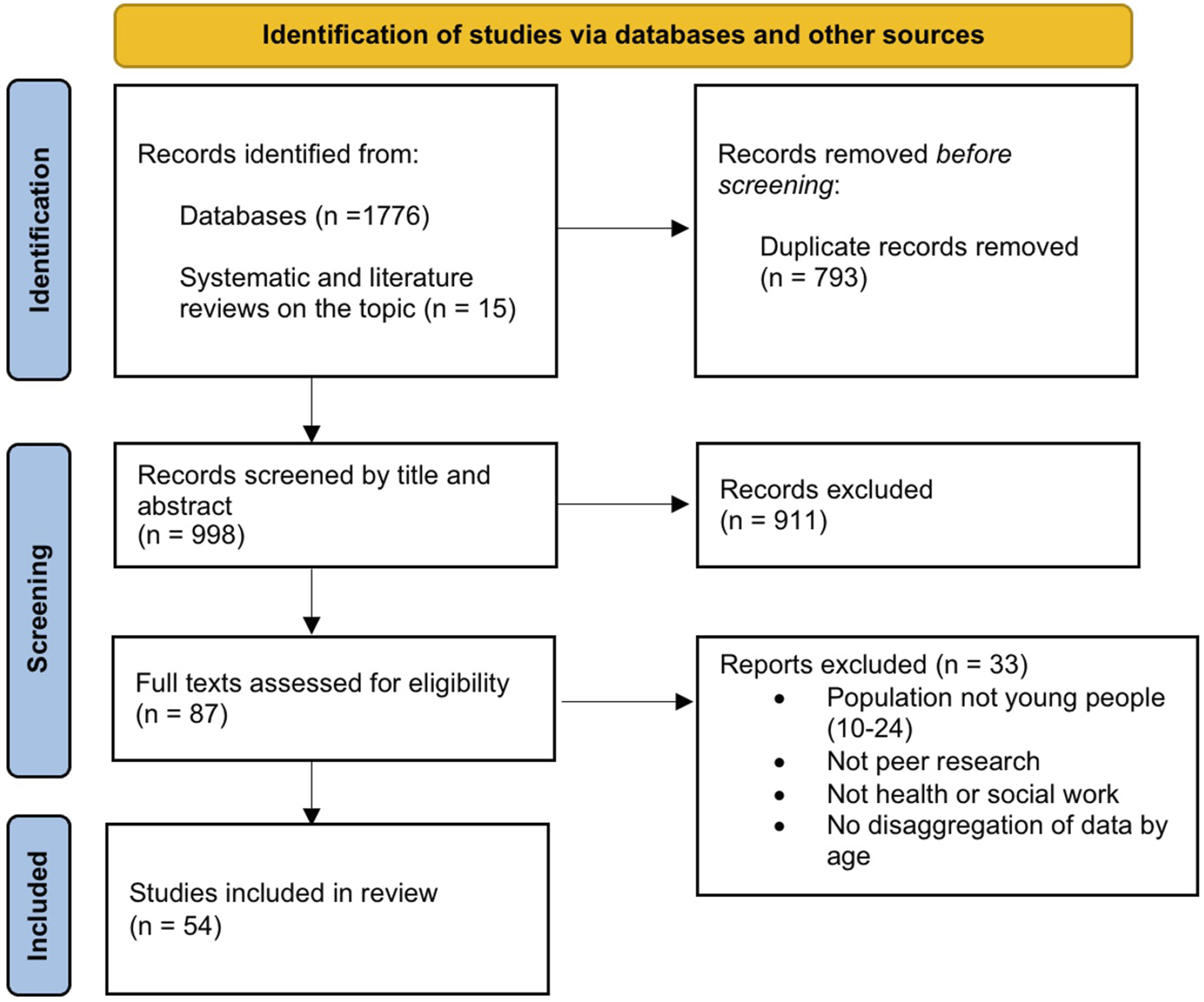
Analysis
We extracted study characteristics into Excel and imported articles into NVivo 20 for a two-stage coding process. Firstly, data were coded using the research questions as a framework, grouping text into four categories: justification of peer research, use of theory and models, reflections on power, and reflections on ethics. Next, we conducted an inductive thematic analysis (Braun & Clarke, 2021) within each category to explore concepts in greater depth and incorporate new ideas. Codes from this stage were then grouped to generate overarching themes, which are presented in the following section. The final analysis included 5 themes and 11 sub-themes (Appendix A.4).
Findings
Study Characteristics
Characteristics of Included Studies
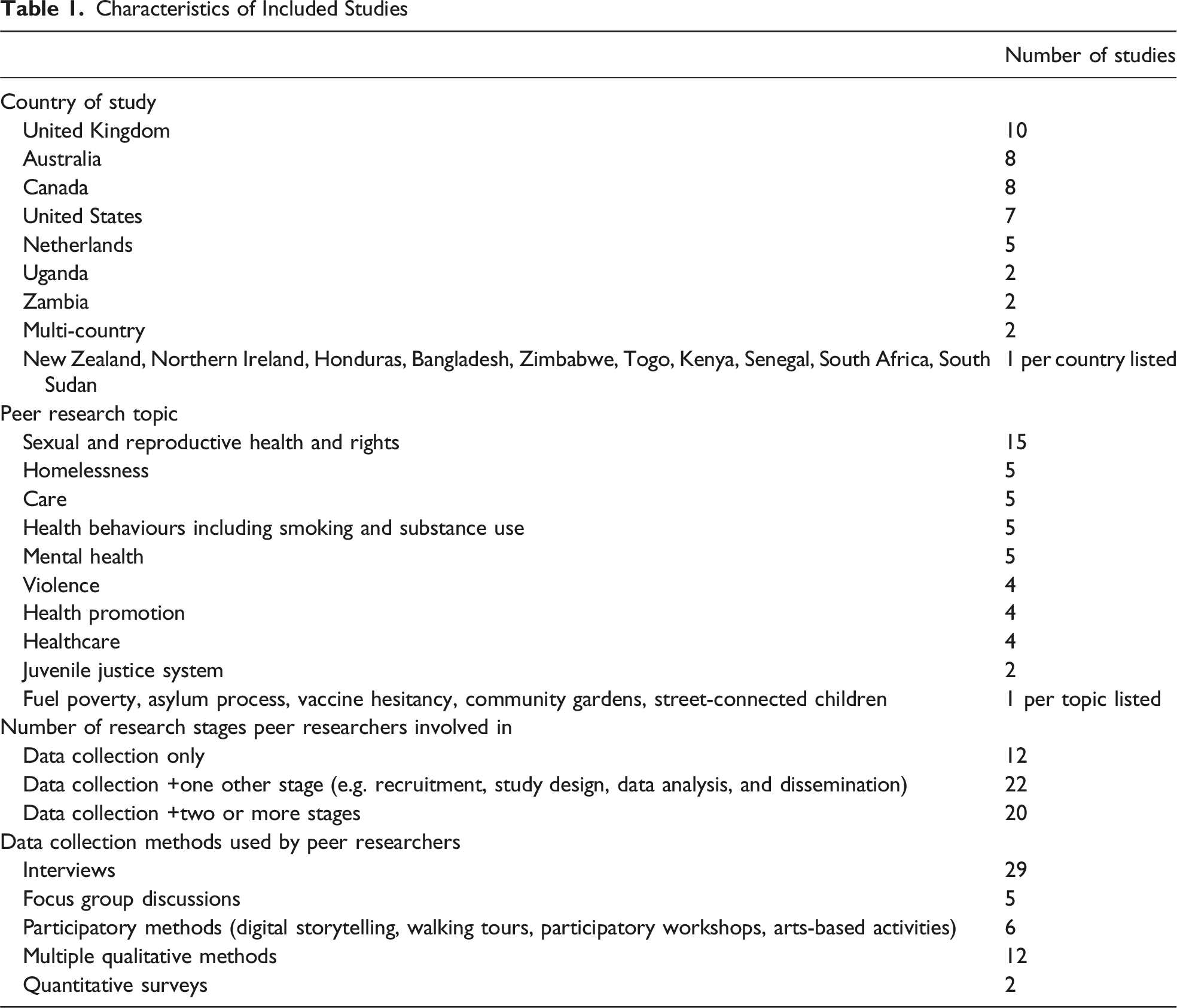
Justifying the Peer Research Approach
Thirty-three of the 54 studies justified their choice of the peer research methodology. However, this varied widely, from briefly describing the benefits to in-depth discussion as to why it was the most suitable methodology for that study. Many studies referred to the broader peer research literature, citing commonly discussed benefits including being able to access hard-to-reach populations, addressing the power imbalances that exist in typical research relationships between adults and young people, adhering to cultural norms, providing benefits to peer researchers, and generating more in-depth and high-quality data.
The most frequently used justification was that peer research enhances rapport and trust between researchers and participants, leading to more in-depth and open discussions and higher-quality data (Cense et al., 2020; Graham et al., 2023; Martin et al., 2024; Page et al., 2023; Ritterbusch et al., 2020). Some authors also argued that implementing peer research ensures relevance to the target communities. For example, some suggested that involving young peer researchers in designing a study and developing research questions ensures these are more aligned with the needs and realities of the participants, leading to more situated understandings of the topic (Chappell et al., 2014; Shankley et al., 2023). Providing direct benefits to peer researchers was another frequent justification. Authors suggested that peer research offers meaningful employment and skill development for young people (Bell et al., 2021; Slane & Montgomery, 2024; Spuerck et al., 2023; Walter et al., 2024), develops their sense of belonging and social connectedness (Brown et al., 2001; Fortin et al., 2022), and increases future employability (Page et al., 2023).
Studies examining topics typically seen as ‘sensitive’, like sexual and reproductive health, justified peer research through its potential to overcome communication barriers. For example, some highlighted how peer research can reduce the potential embarrassment a participant may feel when talking to an adult about their sexual health (Graham et al., 2023) or overcome taboos (Page et al., 2023). Similarly, in their study of young motherhood in Uganda, Kamusiime (2023) argued that adolescent girls, as well as being experts on the topic, are more likely to speak openly with peers without fear of condemnation, a barrier which might exist with adult interviewers. Kamusiime also notes that using peer research enables a more nuanced understanding of adolescent mothers’ narratives because peer researchers can ‘decode’ coded language and avoid data misinterpretations. Lushey and Munro agree that peer researchers’ insider knowledge and assistance in framing and interpreting sensitive research facilitates an enhanced understanding of the subject, with access to information not available to adults (2015). However, this may not always be the case, and how comfortable participants feel in a peer research encounter is likely context and project specific. There may be instances in which speaking with an external adult researcher is preferable for young people where there are concerns about confidentiality or potential negative repercussions of sharing personal stories with those from the same community.
Reflecting on the Drawbacks of Peer Research With Young People
In their justification of peer research, a small number of studies also discussed potential drawbacks, avoiding assumptions that peer research is superior to more conventional data collection techniques in which the researcher is an experienced adult. Some authors discussed the heavier resource and time burden required to enable peer research to meet its potential (Pike et al., 2021; Slane & Montgomery, 2024). Others reflected on the potential for peer research to produce data of lower quality because of the lack of training and experience of young researchers (Kelly et al., 2020; Kontak et al., 2023; Lushey & Munro, 2015; Page et al., 2023; van Staa et al., 2011). These discussions, though brief, highlighted that the benefits of peer research cannot be assumed, and careful consideration is required to understand whether a peer research approach will be appropriate and beneficial for any given project.
Theoretical Foundations of Peer Research With Young People
Twenty-eight of the 54 studies presented a model or theoretical framework relating to their use of peer research. However, the extent to which these were engaged with varied widely. While some authors used frameworks to guide the inclusion and evaluation of peer research across multiple stages of their projects, others used frameworks only to briefly frame the methodological approach.
Youth Participatory Action Research
Youth Participatory Action Research (YPAR) was referred to in 13 studies. In this approach, young people critically examine issues affecting their lives and decide how to act to instigate social change (DeJonckheere et al., 2016). YPAR is grounded in critical theory, concerned with addressing inequality and working towards social justice in research through equitable partnerships where communities with lived experiences are experts (Cornish et al., 2023). Rather than producing rigorous and ‘neutral’ scientific knowledge for the academic community, it aims to generate knowledge for local action. While some studies used YPAR to frame their use of peer research, others provided limited discussion of how YPAR related to their specific projects (Moze et al., 2023; O’Sullivan et al., 2017). Some appeared to fall short of the central objectives of YPAR – action and social change (Durham et al., 2019; Van Katwyk & Seko, 2019), with their research more aligned to community-based participatory research (CBPR).
In other studies, the YPAR orientation was clear throughout, with young people involved in decision-making across multiple stages of the project and taking action once the project lifecycle was complete (Beatriz et al., 2018; Fortin et al., 2022; Haskie-Mendoza et al., 2018; Kontak et al., 2023; Ratliff et al., 2024; Ritterbusch et al., 2020; Walter et al., 2024). In their study of adolescent sexual and reproductive health and rights in Senegal, Fortin et al. (2022) used YPAR to implement and evaluate their engagement with adolescents. The YPAR principles they focused on included training of adolescents in research techniques, developing strategic thinking and strategies to influence change, building support networks and collaborations with stakeholders, power sharing between adults and youth and amongst youth, teamworking, and developing skills to communicate with adults. Youth-led action and social change was an integral component in the Ritterbusch et al. study with street-connected youth in Uganda (2020). Youth were central in driving the data analysis, which was key to sustaining youth-led action after data collection. As one mechanism for action, the YPAR team attended a national policy conference and engaged with key stakeholders about their research on violence.
Co-Production, Participatory Research, and Community-Based Participatory Research (CBPR)
Eight of 54 studies referred to co-production and participatory research approaches in their framing of peer research. While these terms are defined flexibly, and sometimes used interchangeably, they typically encompass methods and approaches that aim to transform power dynamics in research (Cornwall & Jewkes, 1995) and create new forms of knowledge (Filipe et al., 2017). Two studies used CBPR as a methodological approach (Banks et al., 2013; Lile & Richards, 2018), referring to research that is conducted through building partnerships and capacity with communities, driven by community needs and with potential to instigate social change (Wallerstein et al., 2018). Lile and Richards integrated CBPR principles throughout the design, implementation, and evaluation of their peer research project on community gardens and wellbeing, measuring how the project increased young people’s engagement and critical social awareness (2018). However, they noted that achieving the full potential of a CBPR approach is limited by a number of factors, including time constraints. A number of studies were grounded in the participatory research paradigm (de Winter & Noom, 2003; Heslop & Banda, 2013; Shankley et al., 2023; Slane & Montgomery, 2024; van Staa et al., 2010), with a particular focus on challenging the power structures embedded within research processes with young people and promoting a view of young people as capable of formulating solutions to the issues affecting them.
Other Transformative Paradigms
One study used decolonisation as a theoretical framework for the inclusion of peer researchers. Bell et al. (2021) study of aboriginal young people’s sexual health in Australia was guided by Tuhiwai Smith (1999) influential work on decolonising methodologies, concerned with prioritising the agendas of Indigenous peoples, the pursuit of social and epistemic justice, and the privileging of Indigenous voices, knowledge, and worldviews. The authors argued that peer research moves towards achieving these goals. They used this theory to guide their engagement with Aboriginal young people and also in the project’s evaluation, where they reflected on the potential for peer research to decolonise practice. Another study used Bourdieu’s theory of symbolic power to justify the use of peer researchers in a youth violence study in Honduras (Williams, 2021). They argued that in typical research encounters, adult researchers are socially located in positions of power and privilege, and these inherent power imbalances can lead to symbolic violence. This symbolic violence manifests through power imbalances distorting the way young people respond to adult researchers’ questions, and also the way adult researchers interpret and draw conclusions from these responses. Authors argue that using peer researchers can encourage shared understanding and overlapping identities and promote non-violent research encounters.
Overall, while studies used different theoretical standpoints, there was a trend towards the inclusion of frameworks that promoted methods with potential to address unequal power dynamics in research. This focus on transforming power dynamics held attention on epistemic justice and the democratisation of the research process.
Power in Peer Research With Young People
Seventeen out of the 54 studies reflected on the concept of power in peer research. While most reflections were brief and related to the unequal power dynamics that exist between adult researchers and young peer researchers, a small number of studies examined power dynamics in depth, connecting reflections from their own engagements in peer research to broader theories of power. This section will outline how studies engaged with theories of power before synthesising authors’ reflections on power within their own research projects, examining the power dynamics between adult researchers and peer researchers, between peer researchers and participants, and the broader power structures that influence the knowledge production process.
Engagement With Theories of Power
Only one study engaged with theories of power when examining the power dynamics involved in peer research with young people. Chappell et al. used a post-structuralist framework and Foucault’s concept of power as pervasive and relational to explore power relations between the principal adult researcher and the young peer researchers in their study of sexuality amongst disabled young people in South Africa (2014). Through this perspective, they argued that power circulates between individuals in the research encounters and is exercised through discourse and social interactions, rather than being a commodity held exclusively by one party. They question the conventional notion of empowerment in participatory research as a linear process whereby power is passed from the powerful (adult researchers) to the powerless (young peer researchers), instead reframing it as a collaborative and negotiated endeavour within which different parties exercise power in different ways.
Managing Power Imbalances Between Adults and Children
Much reflection on power dynamics within the peer research process centred on power imbalances between adult researchers and young peer researchers. In these relationships, experienced researchers were conceptualised as holding positions of higher power than the peer researchers they were working with. Discussions predominantly focused on the barriers encountered in trying to overcome these power dynamics or the techniques employed to dismantle them. (i) Building strong research relationships as a foundation for power sharing
Relationship-building was highlighted throughout a number of studies as critical in laying the foundations for equitable power sharing at the beginning of a project. Allocating ample time to introductory activities like icebreakers, games, and developing community guidelines can support experienced researchers and peer researchers to begin relating to each other and developing a sense of equal partnership (Kontak et al., 2023). In a study of unaccompanied Albanian young peoples’ experiences of the UK asylum process, experienced researchers and peer researchers both attended a residential retreat at the beginning which they believed broke down social, cultural, and professional barriers, creating a ‘relaxed, familiar and trusting’ working dynamic (Shankley et al., 2023). When experienced researchers and peer researchers get to know each other as people, and not just as researchers, it can develop empathy, connection, and trust which is important for creating an environment where peer researchers feel confident to contribute, as well as encouraging them to see the experienced researchers as colleagues rather than managers. Some studies referred to experienced researchers taking the ‘least adult role’ in attempts to minimise their ‘adultness’ and make them more relatable to peer researchers. Introductory activities and icebreakers might reveal shared characteristics and similar interests, which forges connection. However, approaches to dismantle power dynamics may be less successful in certain settings, such as those where there is a strong culture of respect and obedience to elders (Page et al., 2023), and when working with particular groups, such as young people with disabilities who may be accustomed to adults holding positions of power, which in turn may lead to them struggling to accept an adult as ‘one of them’ (Chappell et al., 2014). As Kontak and colleagues (2023) noted, each research relationship is unique and continuous reflexivity around power imbalances and biases is essential for both experienced researchers and peer researchers to acknowledge and address how power dynamics are impacting the research process (2023). (ii) Transparent, two-way communication for equitable working relationships
A key concept arising in the discussion on minimising power imbalances between experienced researchers and peer researchers was the importance of transparent, two-way communication. Creating spaces for open dialogue not only ensures that peer researchers are fully informed about the project, but it also enables them to directly communicate their views with adult researchers (Beatriz et al., 2018). This creates an enabling environment where peer researchers feel heard by experienced researchers, and that their input is valuable and acted upon, building their confidence and self-efficacy to continue engaging (Fortin et al., 2022). These spaces should be held regularly throughout a project, rather than only at the beginning and/or end, to show peer researchers that their input is needed and valuable for shaping the project (Kamusiime, 2023). However, Brown et al. reflected on the need to clearly articulate from the outset how peer researchers’ input can be acted upon, and whether there are any limits to this (2001), for example, if peer researchers want to recruit more participants but budget constraints would not allow. If peer researchers feel their input has been dismissed, this could lead to feeling like their views are not being taken seriously and potential disengagement. In some instances, it may also be challenging for adults to fully relinquish decision-making to peer researchers, particularly when it comes to issues of safety and ethics (Fortin et al., 2022; Kamusiime, 2023). (iii) Clearly defined roles and expectations to increase autonomy
Clear communication is also important for articulating the role of the peer researcher and the boundaries of the experienced researcher role to enable power sharing. Given their knowledge and experience, experienced researchers may sometimes feel the ‘urge to step in’ (Beatriz et al., 2018) while peer researchers are completing tasks, for example, when experienced researchers are present during peer interviewing and they jump in and ask a question when the peer researcher is struggling with what to ask next. These experiences can reinforce power hierarchies between experienced researchers and peer researchers, impacting the peer researcher’s sense of autonomy and ownership. Due to historical and entrenched power imbalances between adults and young people, peer researchers themselves may want to ‘check’ their work with adult researchers for their approval (Fortin et al., 2022). Adult researchers should encourage peer researchers to work out solutions to their problems individually or with other peer researchers in the first instance. This has the potential to reinforce the idea that all members of the team are equal and contributes to peer researchers’ personal development such as developing problem-solving skills and independence.
Challenges to power sharing may also arise when the roles of the peer researchers are not clearly defined. In peer research projects, adult researchers often hold peer researchers to the same standards expected from an experienced colleague in terms of what good research and work ethic looks like (Page et al., 2023). This leads to unrealistic expectations and if not met, an exacerbation of power imbalances. When defining how peer researchers are expected to contribute to the project, it is important to consider the unique circumstances of the young peer researchers, whose lived realities will likely be different to that of the adult researcher. Experienced researchers and peer researchers should work together to articulate these roles to ensure that everyone’s expectations can be managed effectively.
Managing Power Imbalances Amongst Young People
The power dynamics that exist between peer researchers and participants (amongst young people) were only discussed by three studies (Brown et al., 2001; Durham et al., 2019; Williams, 2021). This is surprising given that a common justification for peer research was to overcome power imbalances in the relationship between researchers and participants. Two studies discussed how young people’s identities and personal characteristics, such as age, gender, and ethnicity, contribute to power differentials amongst them (Brown et al., 2001). In their study with reciprocal peer interviewing to understand violence in Honduras, Williams argued that homogeneity cannot be automatically assumed with a peer research approach just because the participants and peer researchers may come from the same communities; there are many identity characteristics that introduce power hierarchies in research encounters (2021). Similarly, just because they are from the same community, have a shared experience, or are similar in age, it does not mean trust is automatically produced. Responding to this, the authors employed an approach whereby peer researchers interviewed a friend or confidant, which they believed led to more open discussion, particularly given the sensitivities of studying violence. Carefully selecting culturally appropriate and participatory research methods, such as the Pacific Talanoa storytelling method, was another technique used to level out power imbalances between peer researchers and participants by creating a respectful and culturally relevant environment for discussion (Durham et al., 2019).
Ethics in Peer Research With Young People
Only 13 of the 54 studies reflected on research ethics and safety within peer research. These studies were on topics including care, homelessness, asylum experiences, violence, and sexual and reproductive health, subject matters that are typically viewed as highly sensitive. Some discussions related broadly to research ethics procedures, while others provided in-depth reflection on the unique ethical challenges associated with doing peer research with young people, like the potential for re-traumatisation, and the challenge of treading a fine line between empowerment and protection. Many ethical concerns unique to doing peer research with young people related to the peer researchers having a personal connection to the research topic or participants, through having shared experiences or being from the same communities, which made the research process more emotionally demanding. The two sub-themes are presented below.
Everyday Ethical Concerns Are Magnified in Peer Research With Young People
While many discussions of ethics in the peer research studies focused on topics relevant to all health and social work research like consent and confidentiality, some of these issues required additional consideration because ethical concerns can be magnified when doing peer research, particularly with young people. Often, young peer researchers are involved in obtaining informed consent and managing safeguarding which requires thorough training and the implementation of well-defined protocols (Lushey & Munro, 2015; Shankley et al., 2023). Co-designing these protocols with young peer researchers increases their user-friendliness, which is important for breaking down complex topics into clear and actionable steps.
Confidentiality among young peer researchers and participants was a key concern across some studies, particularly when peer researchers and participants were from the same communities. In a study of care leaving experiences in the United Kingdom, peer researchers could arrive at an interview to discover they already knew the participant through their previous care experiences (Kelly et al., 2020). Despite the research team giving both parties the option to reschedule with another researcher, they often chose to continue, with some participants noting that this helped to facilitate their engagement in the interview. However, others noted the potential risks this familiarity can introduce, such as participants being more likely to share more detailed information during data collection like the names of people and places they have in common with the peer researcher, which in William’s (2021) study on violence in Honduras could be incriminating for the participants and their peers (2021). However, they do also note that familiarity and friendship between peer researchers and participants could work in the opposite direction, enabling greater confidentiality through pre-established trust, meaning peer researchers would be less likely to divulge sensitive information about their friends outside of data collection. Nevertheless, it is clear that systems must be in place to account for confidentiality issues in peer research with young people, and a thorough assessment of the unique contexts of each peer research study is needed to develop a situated approach.
The physical safety of peer researchers was also discussed across a few studies, like the importance of finding a safe location for peer researchers to conduct interviews (Lushey & Munro, 2015) and implementing safety procedures when data collection took place in potentially dangerous areas (Ratliff et al., 2024). In their study with young people experiencing homelessness in the United States, Ratliff and colleagues reported instances where peer researchers, particularly queer and female-identifying researchers, experienced racist, homophobic, and misogynistic harassment when travelling around the neighbourhoods for data collection. They discussed the importance of prevention mechanisms like training peer researchers in safety and situational awareness, implementing safety protocols such as travelling in groups and using walkie talkies with the adult researchers, and switching to online data collection when safety was compromised. While these safety precautions are relevant to peer research with adults, they are magnified when working with young people when research teams have an increased responsibility to ensure their safety and protection.
Finally, payment and compensation for young peer researchers was discussed as one of the many barriers they face when participating in research (Ratliff et al., 2024). Young people have unpredictable and sometimes unstable lives and should be compensated fairly in line with what adults would be paid. In an ethnographic study of young motherhood in Kampala, peer researchers who were also young mothers themselves incurred additional costs from participating in the project, such as the need to buy nappies and snacks for their infants when attending research activities away from home (Kamusiime, 2023). Similarly, in the homelessness study described above, young peer researchers who were still in the process of exiting homelessness themselves needed additional supports to participate fully, including two hot meals per day (Ratliff et al., 2024). As well as fair payment for their time, young peer researchers often have specific socioeconomic needs, which may be related to the topic under study, and these needs must be considered to prevent any form of exploitation.
Navigating the Emotional Demands on Young Peer Researchers
The nature of peer research often means that those conducting the research have a personal connection to the topic under study. They may be from the same community as participants, share similar identity characteristics, or have shared experiences. While their insider status has clear benefits, it introduces specific ethical considerations, such as the potential for re-traumatisation and an increased emotional demand when listening to their peers’ stories. This may be particularly challenging in peer research with young people when these experiences might have happened more recently, if young people have limited support to process their experiences, or if they are still living in the same communities. As such, the hybrid role of researcher and lived experience expert can be challenging to navigate, and research teams must find a balance between enabling young people’s full participation while also creating a safe research environment that prioritises their wellbeing (Shankley et al., 2023).
Three studies implemented a trauma- or healing-informed approach when peer researchers had lived experience of the issues being researched: the juvenile justice system, homelessness, and the asylum process (Haskie-Mendoza et al., 2018; Ratliff et al., 2024; Shankley et al., 2023). While what constitutes a trauma-informed approach differs across disciplines with no standard universal definition or toolkit, all the studies that were guided by a trauma-informed approach in this review aimed to centre the emotional needs of young peer researchers, accommodating their past and ongoing experiences as a core component of the research. When research projects do not meet the emotional needs of peer researchers, they can become disengaged and drop out (Shankley et al., 2023). Implementing regular spaces for debriefing, reflection, and peer support were activities used across all of the three studies. These spaces provided peer researchers with the opportunity to discuss how the research was impacting them emotionally and to support each other, building connection and resilience amongst the group (Haskie-Mendoza et al., 2018; Ratliff et al., 2024; Shankley et al., 2023). Haskie-Mendoza et al. (2018) implemented regular ‘healing circles’ as an opportunity for self-care throughout their project which explored the juvenile justice system with Latina girls in the United States. The peer researchers in this project were still on their own healing journeys from their personal experiences with the system, and this space was critical to facilitate their ethical participation. Authors also emphasised the importance of flexibility when engaging with young peer researchers in a trauma-informed way – sometimes the research agenda may need to be put aside to concentrate on the peer researchers' emotional wellbeing (Haskie-Mendoza et al., 2018), and methods might need to be adapted to enable peer researchers to create distance between themselves and the participants, such as moving interviews online instead of conducting them in person (Shankley et al., 2023).
While peer support spaces and flexible research programmes are essential components of ethically informed peer research, it is important to recognise that some young peer researchers may also need individual professional support beyond what the research team can provide, such as psychological support, to enable their full and meaningful participation (Kelly et al., 2020; Lushey & Munro, 2015; Slane & Montgomery, 2024). Similarly, it is important to communicate openly with young peer researchers about which components of the research process they want to participate in, providing them with choice and encouraging agency in taking responsibility for their own wellbeing (Shankley et al., 2023).
Finally, research endings can be particularly challenging for young peer researchers who have a vested interest in the research topic, who have built relationships with the participants, and who are motivated and committed to making a positive difference in their lives. In Kelly et al.’s (2020) care leaving study, peer researchers struggled with the idea of leaving participants with limited support after the end of the project. The authors suggest that peer research projects could consider a more personal approach to research endings whereby peer researchers can transition into more mentorship roles with participants once the projects are over.
Discussion
This study critically reviewed the literature on peer research as a methodology with young people in the health and social work fields, paying particular attention to the manifestations of power and the unique ethical concerns associated with doing research in this way. We found a growing body of literature implementing peer research with young people, albeit with substantial variation in the extent to which the methodology was theoretically and critically engaged with. Relatedly, only a small number of studies examined the power dynamics and ethical challenges encountered with this approach, despite it often being justified as a safe and power-neutral methodology through which to learn about young people’s lives.
Overcoming the power imbalances between experienced adult researchers and young peer researchers was the most common topic in discussions of power dynamics across peer research studies. Most of these studies framed power as a commodity held by adult researchers whose responsibility was to share power equitably with the peer researchers, working towards their empowerment. However, some scholars suggest a more nuanced view of power in participatory research with young people, arguing that power is not a commodity held by one party alone but rather that power circulates and is available to all, exercised by different parties at different times throughout a research encounter (Chappell et al., 2014; Gallagher, 2008). They also argue that power is relational and an individual’s power in one space is determined by those around them in a dynamic network of interactions and relations, aligning with Foucault’s notion of power as fluid and something that is exercised rather than possessed (Foucault, 1978). This argues against a linear and redistributive model of power, a model which has long been criticised within development studies, where Cooke and Kothari’s seminal work (2001) problematised participatory research for over-simplifying this process of power sharing, failing to account for the covert ways that power functions within a society, and ultimately having the potential to reinforce existing power imbalances between the researchers and the researched. A top down way of thinking about power also fails to account for how young peer researchers and participants might use power over each other and over the adult researchers in research encounters in ways that were not necessarily intended or empowering, or that lead to the equitable co-production of knowledge (Gallagher, 2008). Only a very small number of included studies reflected on the power imbalances that exist between young peer researchers and participants, and even fewer on how peer researchers and participants might exercise power over adult researchers through their unique subject positions, like to derail research encounters or censor participants’ responses. This dominant framing of young peer researchers as waiting to be empowered by adults and participatory methods diminishes the ways in which they already exercise power within their own contexts, often in ways that extend beyond the aims of the research.
A dominant focus on the ways in which power can be rebalanced between adult researchers and peer researchers also obscures the broader power structures that influence research encounters. In his reflection on participatory research with children in the field of human geography, Gallagher reminds us that research encounters can be seen as ‘micro-spaces nested within larger webs of power relations’, highlighting how power imbalances within researcher and participant relationships only make up a fraction of the picture of how power influences the knowledge production process (2008, p. 143). This type of discursive power drives dominant ideological perspectives in a society, defining what is knowable and thinkable on a topic and what is acceptable or deviant behaviour (Foucault, 1977). It also influences the research landscape, where global funding systems play a central role in shaping research agendas, ultimately determining which research topics are prioritised and which are sidelined, often in ways that reflect the priorities of dominant institutions rather than local communities. Understanding these broader power structures within which peer research encounters take place is important because in some contexts, pervasive cultural ideologies, as well as externally set research agendas, influence how, if and with whom, young people speak about certain topics (Fortin et al., 2022), and whether they are able to express what might be seen as an ‘authentic voice’ (Spyrou, 2011).
Navigating power dynamics in peer research also closely intersects with discussions of ethics and young people’s safety in the research process. A small number of included studies argued that attempts to guarantee the safety of young peer researchers and research participants can sometimes constrain their agency and decision-making power (Shankley et al., 2023). In some instances, adult researchers may need to make decisions in order to protect the wellbeing of peer researchers and participants in ways that are less democratic than envisioned when setting out on a participatory project. Research ethics requirements can also impose restrictions on projects in ways that might limit young people’s agency, like the requirement for ensuring anonymity and obtaining parental/guardian consent (Daley, 2015; Yanar et al., 2016). Consequently, it can be difficult to find a balance between empowerment and protection for young people taking part in research, particularly when researching issues that might be seen as emotionally demanding. Cody et al. (2024) propose that an assessment of young people’s ‘readiness’ is an essential first step in participatory research, particularly when working with trauma-affected young people. Readiness might look like young people being at a stage in their recovery journey where any potential risks associated with participation are manageable and they are in a place in which they can meaningfully contribute and benefit, but ultimately, readiness should be defined in partnership with the young people participating. A number of papers in this study utilised a trauma-informed approach to overcome the ethical complexities of peer research on challenging topics (Haskie-Mendoza et al., 2018; Ratliff et al., 2024; Shankley et al., 2023). These approaches not only worked towards ensuring that the research was psychologically safe for the young people involved but also contributed to their power and agency within the research process. Trauma-informed approaches often draw upon resilience frameworks, acknowledging that when fully informed, young people are able to make decisions for themselves, including about what level of participation is safe for them in their current circumstances (Angelöw & Psouni, 2025). However, a dominant view of young people’s participation in research as risky and young people as vulnerable (Warrington & Larkins, 2019) limits the potential for young people to exercise this agency. This paternalistic and risk-averse stance to involving young people in research restricts how far researchers are willing to go in order to share power equitably with young people in participatory research.
Warrington and colleagues (2024) challenge the idea that young people’s right to participate, as outlined in Article 12.1 of the United Nations Convention on the Rights of the Child (United Nations Children’s Fund, 2010), can be superseded by their rights to protection. In discussing their collaborative research on sexual violence with young people, they outline a ‘Participation as Protection’ model to illustrate how young people’s participation can support, rather than hinder, their individual and collective safety (Warrington & Larkins, 2019). For example, they highlight the value of peer support and group work in collaborative research as a mechanism to counter individual stigma, self-blame, and isolation, and how young people’s influence in research can lead to practical and impactful changes in service delivery that can increase collective safety. Viewing young people’s participation in peer research projects in this way, as something that can contribute positively to their safety and wellbeing, rather than solely as posing a risk to it, might encourage researchers to push beyond the usual limits they impose on young people’s participation in peer research. We agree with this stance and argue that safety in peer research does not have to come at the expense of power sharing. There are many examples outlined throughout this review from the included studies of how research teams can champion young people’s safety and participation as complementary, rather than competing, endeavours.
As highlighted throughout this critical review, peer research has significant potential for conducting impactful research that meets the needs and priorities of young people. However, we also demonstrate that it can be a complex and resource-intensive methodology that requires deep thinking and reflexivity about its merits and shortcomings. The decision to use a peer research methodology and how to implement it should be guided by the broader context of each project. To aid in this decision-making and reflection, we outline a list of key questions to be used by researchers to guide the selection and implementation of the peer research methodology in future studies with young people (Box 1). We build on the questions proposed by Cahill and Dadvand (2018) on power relations and protection in participatory research with young people to include questions related to the findings of this review that are specific to the peer research methodology. We hope these questions will be informative for researchers considering the approach to avoid inappropriate or tokenistic use of the methodology and to maximise its potential for generating impactful evidence through the meaningful participation of young people. Motivation (1) Why is peer research a suitable methodology for this topic and research question? (2) How will a peer research methodology enhance young people’s participation? (3) What benefits will this methodology bring for the project, the peer researchers, and the participants? (4) Could there be any negative unintended consequences from using this methodology? Power dynamics (1) What are the positionalities of the adult researchers, peer researchers, and participants? (2) How will these unique positionalities interact to create different positions of relative power? (e.g. who will have the least power, who will have the most power?) (3) Which contextual/cultural factors might create hierarchies in the research encounters in this context? (4) How will connection and trust be built and maintained amongst adult researchers, peer researchers, and participants? (5) What mechanisms will be implemented to enable transparent, two-way communication between adult and peer researchers? (6) Are all roles (adult and young peer researchers) clearly defined, and expectations articulated and agreed upon? Ethics and safety (1) Are there any unique ethical challenges that a peer research methodology would bring to this study? (2) What strategies are in place for maintaining confidentiality when peer researchers are from the same communities as study participants? (3) How will the physical safety of peer researchers in the field be maintained? (4) How will peer researchers be compensated in line with their unique needs and circumstances? (5) What formal and informal mechanisms will be implemented to support the psychological wellbeing of peer researchers who may have experience of the issue under study? (6) How will research endings for peer researchers be managed in a sensitive and appropriate way? (7) Will any of these ethical strategies constrain the agency of peer researchers, and to what extent? (8) What level of involvement do young people feel is safe for themselves?Box 1. Key questions to guide the selection and implementation of the peer research methodology with young people when studying their lives
This review contributes to a growing body of evidence reflecting on, critiquing, and learning from participatory research with young people. A major strength is its specific focus on peer research, contributing valuable theorisation around power relations and ethical complexities within the increasingly popular methodology. The review also highlights some critical gaps in the evidence. Firstly, there needs to be examination of the peer research methodology in more diverse settings, including in low- and middle-income countries where studies were particularly lacking. Secondly, the majority of studies used peer research for qualitative data collection, specifically for individual peer-to-peer interviews. Only a few studies implemented peer research for other qualitative methods, including focus group discussions and participatory methods. Similarly, very little evidence exists on the potential of peer research for quantitative data collection with young people. Thirdly, many studies used the peer research methodology uncritically, suggesting a tendency towards using the method because of its increasing popularity and potential benefits, without consideration of the complexities it might uncover. More reflection and theorisation should be provided by researchers using this methodology, particularly around the power dynamics that exist amongst young peer researchers and participants, and consideration of how power imbalances and ethical challenges might intersect in particular contexts. This review also has some limitations. Database searches were conducted in English, which means some studies published in other languages might have been excluded. Additionally, the review only included studies published in peer-reviewed journals and, as such, might have missed valuable insights published via other formats.
Conclusion
Peer research has significant potential for generating rich insights about young people’s lives in ways that are equitable and safe and champion their agency and the unique strengths they possess. When adequate time and resources are allocated to doing peer research well, it has the potential to not only directly benefit those involved but also generate evidence to improve understanding and services and advocate for positive change for wider groups of young people. However, peer research is not an inherently superior methodology that automatically alleviates the power imbalances and ethical challenges present in research with young people – sustained investment and critical reflection must be built-in to enable peer research to reach its transformative potential. By incorporating reflexivity into the decision-making around the use of peer research, using the key questions outlined in this review, researchers can maximise the potential of the methodology to drive impactful change for young people.
Supplemental Material
Supplemental Material - Power and Ethics in Peer Research With Young People: A Critical Review of the Health and Social Work Literature
Supplemental Material for Power and Ethics in Peer Research With Young People: A Critical Review of the Health and Social Work Literature by Hattie Lowe, Silvie Bovarnick, Clare Bangirana, Jenevieve Mannell, and Audrey Prost in Qualitative Health Research
Footnotes

Ethical Considerations
Our study did not require an ethical board approval because it did not directly involve humans or animals.
Author Contributions
HL conceptualised the study, carried out the methodology, and drafted the manuscript with supervision from AP and JM. AP, JM, CB, and SV reviewed and edited the manuscript.
Funding
The authors received no financial support for the research, authorship, and/or publication of this article.
Declaration of Conflicting Interests
The authors declared no potential conflicts of interest with respect to the research, authorship, and/or publication of this article.
Supplemental Material
Supplemental material for this article is available online.
References
Supplementary Material
Please find the following supplemental material available below.
For Open Access articles published under a Creative Commons License, all supplemental material carries the same license as the article it is associated with.
For non-Open Access articles published, all supplemental material carries a non-exclusive license, and permission requests for re-use of supplemental material or any part of supplemental material shall be sent directly to the copyright owner as specified in the copyright notice associated with the article.
