




Abstract
This paper illustrates the ontological, epistemological, and subsequent methodological translations of a descriptive phenomenological study exploring dignity within the digital world among community-dwelling older adults. It demonstrates how the lifeworld phenomenological research, particularly the Sheffield School’s use of lifeworld fractions, influenced by the Duquesne tradition can serve as an attunement for guiding data collection, reflection, and analysis. The lifeworld fractions are conceptualised as a ‘sturdy third wheel’, a stabilising framework that balances the philosophical foundations and analytic procedures of descriptive phenomenology, enhancing methodological coherence and depth. The paper outlines a seven-step analytic process encompassing ‘familiarisation’, ‘breaking-down the descriptions into meaning units’, ‘transforming meaning units’, ‘employing evaluative judgement’, ‘clustering meanings’, ‘developing an intermediary situated idiographic description’, and developing the essential structure of meanings. Through this process, the lifeworld fractions: embodiment, temporality, spatiality, sociality, moodedness, selfhood, and project, served as sensitising dimensions for revealing the underlying structure of everyday experience. Methodological considerations are discussed, including the challenges in translating philosophical ideas into scientific phenomenological methods and the dialectic between maintaining openness and adopting a ‘bridled’ phenomenological attitude – one of a critical yet open reflexivity. The step-by-step outline offers practical guidance for researchers seeking depth and coherence in phenomenological analysis. This approach is particularly relevant for qualitative inquiries examining how technology intertwines with human values such as dignity, wellbeing, and inclusion. Ultimately, the paper demonstrates how lifeworld fractions can deepen descriptive phenomenological analysis and illuminate the meanings of digital engagement in both everyday and care contexts of later life.
Background
Digital technologies have become ubiquitous in the everyday lives and care environments of older adults, and their adoption is influenced by a range of factors related to capabilities, opportunities, and motivation (Kebede et al., 2022). From online appointments and electronic prescriptions to video calls with family, digital systems now mediate many of the ordinary interactions through which health, wellbeing, and social participation are sustained. While these technologies can enhance autonomy and connectedness, they may also evoke frustration, anxiety, and a sense of inadequacy when their design, pace, or purpose conflict with the rhythms of everyday life. For older adults, digital engagement is therefore not only a technical or behavioural activity but a deeply experiential one, shaping identity, relationality, and dignity in later life. Understanding these experiences requires qualitative approaches that are sensitive to the ‘how’ of living with technology: how digital systems are encountered, embodied, and made meaningful within the everyday health and social worlds of ageing.
Phenomenology offers a distinctive means of addressing this challenge by returning to experience as it is lived rather than theorised. Rooted in Edmund Husserl’s philosophical work, it calls to ‘return to the things themselves’ providing both a stance and a method for describing phenomena as they appear in consciousness, prior to explanation or theoretical abstraction (Husserl, 1970a, 1970b/1936; Moran, 2000). Later phenomenologists such as Martin Heidegger and Maurice Merleau-Ponty deepened this project by showing that human existence is embodied, relational, and situated in the world. Heidegger’s notion of being-in-the-world revealed understanding as grounded in practical everyday involvement with things, while Merleau-Ponty’s underscored the inseparability of body, perception, and world. Together, these perspectives affirm that meaning arises through the interwoven relations of self, body, time, space, and others (Dahlberg et al., 2008; Heidegger, 1962/1927; Merleau-Ponty, 1945).
Goodness of Fit: Phenomenological Ontology and Epistemology to Investigate Meanings of Digitally Experienced Objects and Embedded Human Values
Growing interest in end-user experience across disciplines such as human–computer interactions, user-centred design, and user-experience research has rapidly expanded the application of qualitative methods in understanding users, design processes, and digital technology deployment (Hassenzahl & Tractinsky, 2006; Singh, 2001). Within health and user-experience research, descriptive phenomenology provides a way of accessing the structures of lived experience in their complexity and immediacy, making it well suited for examining embodied and relational dimensions of digital life. However, despite its growing use, researchers continue to grapple with how to translate phenomenological philosophy into analytic practice. Many existing accounts emphasise procedural steps or thematic outcomes, but few demonstrate how the lifeworld, the world as lived, can actively guide description.
Insights drawn from phenomenology, particularly those sensitised by lifeworld theory and its existential fractions (Ashworth, 2015), offer a framework for exploring the intelligibility of the lived experiences within the digital world. Digital technologies are now integral to health, care, and social participation. For older adults, digital inclusion shapes access to services, autonomy, and social connection – all central to wellbeing and dignity. This study therefore situates digital engagement as a lived health phenomenon. By exploring digital dignity, we highlight how technology mediates older adults’ sense of belonging, agency, and inclusion, with implications for person-centred digital health design and equitable care delivery.
While this study is grounded in descriptive phenomenology and lifeworld theory, its focus on how digital technologies shape experience, agency, and dignity resonates strongly with the phenomenological philosophy of technology. Scholars such as Don Ihde and Peter-Paul Verbeek have demonstrated that technologies are not neutral instruments but actively mediate perception, action, and moral relations (Ihde, 1990; Verbeek, 2005, 2011). Postphenomenology, in particular, provides a sophisticated conceptual vocabulary for analysing human–technology relations and understanding how technologies co-constitute experience and practice. Ihde’s analyses of embodiment, skill, transparency, and technological breakdown have been especially influential in foregrounding technology as an experiential relation rather than a mere tool.
The present study, however, does not seek to theorise technological mediation as such. Instead, it aims to describe how technologically mediated relations are lived within the everyday lifeworld of older adults. Lifeworld fractions are therefore not mobilised as a philosophy of technology but as a methodological attunement that sensitises the empirical analysis to dimensions such as embodiment, temporality, spatiality, and sociality as they are experienced in digitally mediated situations. In this sense, lifeworld phenomenology and postphenomenology are treated as complementary but non-equivalent projects: the former offering a descriptive methodology for revealing lived meanings and values, such as dignity, while the latter provides a theoretical account of technological mediation.
The lifeworld phenomenological research provides a holistic methodological approach capable of capturing both the experiential and ethical dimension of technology – its quiddity, or ‘whatness’, and the underlying values embedded in everyday use. Phenomenological attention to operative intentionality – how practical, goal-directed activity and purpose shape everyday coping and interaction – informs both research and design by revealing how technologies are encountered and made meaningful in context. Designing and developing usable, useful, and human-centred technologies therefore requires an understanding of how they are mundanely adopted, personalised, and valued in practice. Accordingly, this paper outlines how phenomenological insights were applied to describe a lifeworld-oriented scientific methodology aimed at faithfully describing the meanings, boundaries, and nuanced key constituents of everyday digital interaction, and the conditions under which dignity is maintained, ruptured, or restored among older adults. We further demonstrate how attending to user experience through the lifeworld lens (lived time, lived space, lived body, lived human relations, and lived affective/emotions) could deepen the richness, resonance, and rigour of qualitative investigation (Ashworth, 2015; Finlay, 2011; Galvin & Todres, 2015).
Appropriateness of Scientific Phenomenological Methodology
Qualitative methodologies share core commonalities such as exploring meanings, procedures, and techniques and the aim of producing contextually rich knowledge. However, the nuanced differences in the underpinning philosophical traditions have produced diverse methodological typologies. Selecting an appropriate approach therefore requires attention to the goodness of fit between research questions and epistemological stance. Holloway and Todres (2003) highlight the latent tension between methodological flexibility, where approaches are applied generically, and the need for epistemological consistency and coherence. They argue for a balanced approach between becoming sensitive to context and flexibility, while maintaining inner consistency and coherence to ensure rigour and credibility. The present methodological paper reflects this position by applying a coherent phenomenological approach grounded in lifeworld theory and embedded within the broader phenomenological tradition.
The Lifeworld Theory
In phenomenology, the lifeworld theory is central theme shared by both phenomenological and hermeneutic traditions. It refers to the taken-for-granted world of everyday experience – our practical, embodied, and relational engagement with the world. Heidegger describes this as being-in-the-world, a mode of existence characterised by everyday coping and involvement. For Gadamer, lifeworld denotes unreflective state in which we are immersed (Gadamer, 2013). As the primary orientation of existence, the lifeworld grounds how individual act, relate, and make sense of their experiences. Although rooted in a shared world, each person’s lifeworld is shaped by unique perspectives and values. Phenomenology takes this everyday world as its point of departure, applying methods such as bracketing, openness, and reflection to reveal the meanings that structure lived experience.
Applying Phenomenological Reduction/Bridling
Husserl (1983) introduced the concept of epoché – a suspension of the natural attitude that allows phenomena to be examined as they are given in consciousness. Although Husserl does not explicitly use the phrase ‘bracketing pre-understanding’, this term has been adopted in later phenomenological scholarship to describe the researcher’s effort to hold preconceptions in abeyance, maintaining openness to lived meanings as they unfold (Dahlberg et al., 2008; Giorgi, 2009). The goal is to uncover the essential structure of meanings, the essence of the phenomenon, as it appears in consciousness (Dahlberg et al., 2008; Husserl, 1970b).
Although debates persist between descriptive and interpretive traditions on the possibility of complete reduction, both recognise reflection as central to phenomenological inquiry. Pre-understanding is viewed as evolving rather than fixed. In practice, this entails critically examining how understanding forms throughout the research process – from question formulation to analysis. Dahlberg et al. (2008) describe this stance as bridling: maintaining openness and flexibility while holding preconceptions in check. In this study, the methodological approach we laid out in this paper adopted the position that reflection is an ongoing process, spanning all research stages, before commencement, throughout data gathering, and during analysis iteratively to understand the phenomenon under investigation and to be attentive to what evolves as it appears.
Attunement to the Lifeworld Constituency
Classically, the lifeworld fractions have been employed in different body of phenomenological work, for example, Husserl’s investigation of the structure of experience as temporality (inner time consciousness); Heidegger’s existential discussion on time, spatiality, and the environing world; and Merleau-Ponty’s emphasis on the body and embodied relations to the world.
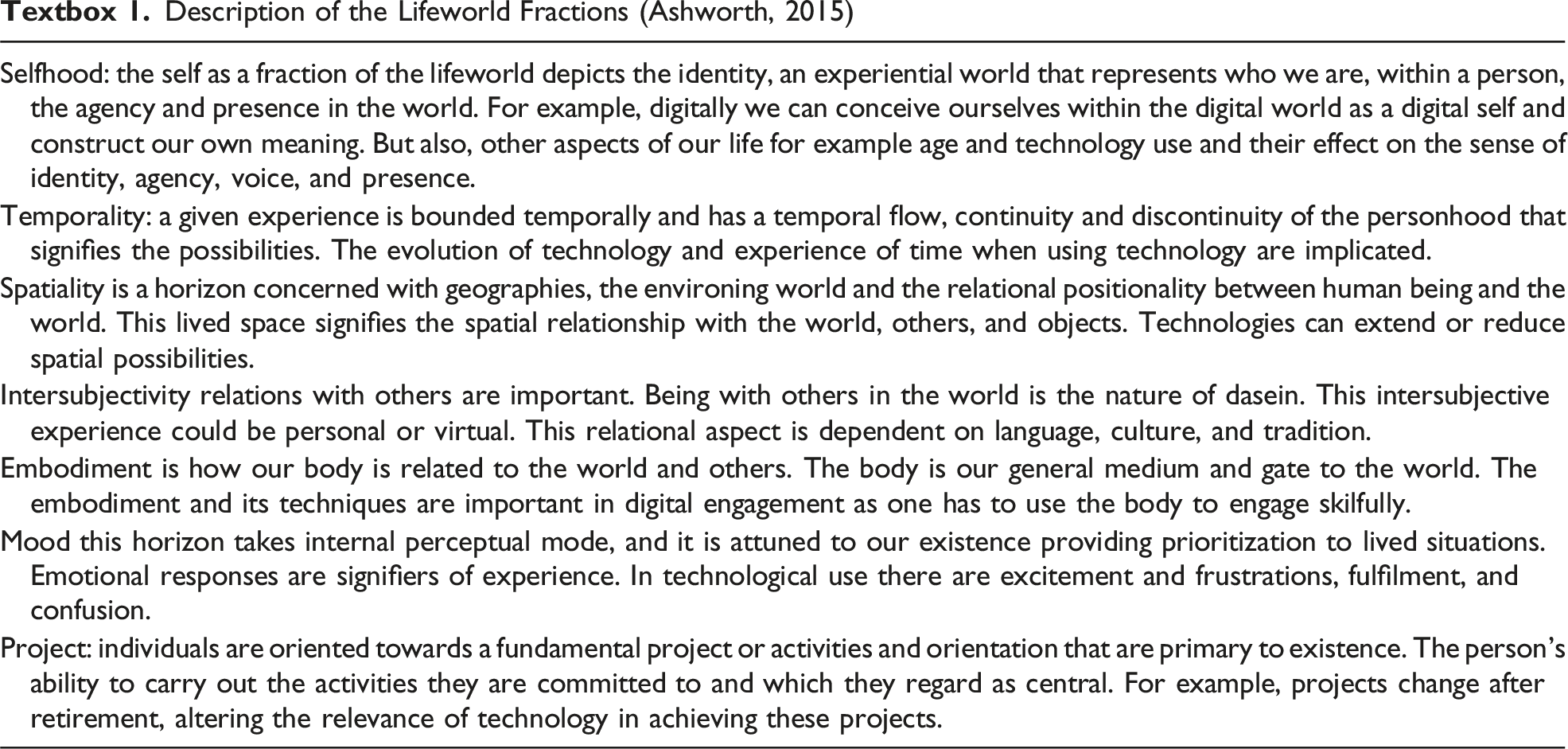
Contemporarily, these horizons have been used in empirical research in Medard Boss’s work on psychoanalysis/‘Daseinanalysis’ (Boss, 1979). Ashworth (2015) has been proponent of the applications of the existential horizons in empirical and qualitative studies. He wonders why these fractions are underutilised as a methodological armoury for enriching qualitative evidence, guiding data collection, further interrogating phenomena, and serving as reflective and analytical tools. 1 He presents two premises on which the use of lifeworld fractions in qualitative research is justified (Ashworth, 2015). Firstly, the objects of experience are not free floating, and any experience is inevitably interwoven with the rest of the individual’s lifeworld. Reflecting on the interconnectedness between an individual’s experiences and their broader lifeworld, phenomenologically, experiences are not single encounters with isolated events but are deeply embedded within the context of the individual’s lifeworld, which includes their personal history, social relationships, cultural background, beliefs, values, and environmental contexts. Secondly, in any experience there are necessary elements or fractions that cannot be but inevitably found in every experience whatsoever. Previous studies have employed the lifeworld fractions in qualitative studies with both idiographic and nomothetic sensibilities, for example, lived world of patients with Alzheimer’s and their carers (Ashworth, 2009); meanings of gift giving (Ashworth, 2013); and lived experience of elderly couple spousal self-euthanasia (van Wijngaarden et al., 2016).
Description of the Lifeworld Fractions (Ashworth, 2015)
Applying the Lifeworld Phenomenological Research to Understanding the Meanings of Digital Technologies and Sense of Dignity for Older Adults
The empirical study underpinning this paper aimed to employ a descriptive phenomenological approach. This work aimed to describe the variations, commonalities, and essential characteristics of dignity within the digital world from older adults’ everyday digital engagement. The goal was to develop a rich and thick account of individual lived experiences and the underlying structure of meanings that faithfully reflect the phenomenon, and collect and recollect others’ lived experiences.
A purposive sampling technique was employed with the aim of achieving maximum and rich variation in age (65–84 years and 85 years and above), gender, and technology experience (‘tech-savvy’ or ‘tech-novice’) (Langridge, 2007). Accordingly, 11 community-dwelling older adults from Southeast Sussex participated in phenomenologically oriented interviews about their everyday and care technologies experiences. Participants were recruited through community networks and ageing support organisations. Most interviews were conducted virtually due to COVID-19 restrictions. This mode of interaction itself offered insights into spatiality and embodiment, as participants reflected on how digital spaces mediated communication and presence.
Data Gathering Through In-Depth Phenomenological Interviews
To grasp the essence of lived experiences and meaning structures, phenomenological research employs in-depth interviews that will give the opportunity to generate rich descriptions of experiential episodes (Kvale, 1996). According to Mishler (1991), interviews are key tools in qualitative research, representing a guided discourse exploring meanings, human actions, and experiences within participants’ personal and social context. Such methodology presupposes the imprecise nature of language, the complexity of human phenomena, the commonalities, and variations between individuals both experientially and contextually.
The interviews were started with an open and lifeworld-evoking question ‘what it is like to live in this digitalised world’ (Ashworth, 2015; Kvale, 1996; Todres, 2005). This prompted participants to reflect on various aspects of their everyday digital experience and to provide concrete examples from the everyday. The second part of the interviews probed specific experiential domains sensitised by the lifeworld fractions. The lifeworld constituents (temporality, spatiality, embodiment, sociality, intersubjectivity, mood, and projects) were used to explore lived everyday examples of participants’ digital and dignity experiences (Ashworth, 2015; Galvin & Todres, 2015).
During the interview, follow-up questions that encourage participants to provide more detailed accounts of their lived examples using prompts such as ‘what was that like’, ‘could you please say more on that’, ‘can you give me a further example of that’, and ‘what happened next’ were employed. The interviews were conducted remotely (primarily on Zoom in 2021) and took up to one and one-and-half hours. The interview process necessitated utmost openness and ‘phenomenological attitude’ through immediacy (being fully present), attentive listening and flexibility to ask follow-up questions, which is crucial when investigating situated and complex phenomenon (Dahlberg et al., 2008; Friberg & Öhlén, 2010).
Virtual Interviewing: Methodological, Practical, and Ethical Implications
Necessitated by the COVID-19 pandemic, shifting data collection to virtual interviews brought both valuable possibilities and inherent challenges. Methodologically, building rapport with participants and gauging non-verbal cues proved difficult, which had an impact on the sense of immediacy typically fostered in face-to-face encounters. Practically, ensuring technology access for study participants, navigating learning curves with unfamiliar technological tools, and addressing potential technical glitches during the interviews posed additional challenges. Ethically, the recruitment posed the risk of excluding participants who are digitally disengaged and the complexities of obtaining informed consent remotely. However, virtual interviewing also offered benefits such as possibilities of wider participant reach, increased flexibility and comfort, and familiar environment for the participants.
The Process of Phenomenological Analysis
Phenomenological analysis employs an open and iterative approach, aiming to describe lived experiences and meanings. This paper aims to (a) illustrate the use of descriptive and reflective methodologies developed by phenomenological researchers, (b) examine their goodness of fit for describing digital experience, and (c) capture the meaning of dignity within the digital world among older adults. The analysis was primarily influenced by Giorgi’s descriptive phenomenology, Ashworth’s lifeworld and Sheffield School Analysis and Dahlberg’s Reflective Lifeworld Research (RLR) (Ashworth, 2015; Dahlberg et al., 2008; Giorgi, 2009, 2020; Giorgi & Giorgi, 2003). The analytical process was iterative and non-linear encompassing seven stages: familiarisation (reading and re-reading), breaking down into meaning units (MUs), transforming the MUs, employing evaluative judgment on the revelatory power of the MU, clustering the meanings, developing an intermediary situated idiographic picture for each participant, and developing the general essential and constituent structure of meanings (see Figure 1 for summarised steps of phenomenological analysis). Throughout the analytical process, ‘bridling’ (phenomenological attitude and openness), reflection, and the movement between the sense of the whole and the parts were adopted. Moreover, the lifeworld fractions were used as a sensitisation, analytical, and reflective guide (Ashworth, 2015). Summary of the phenomenological analysis steps and process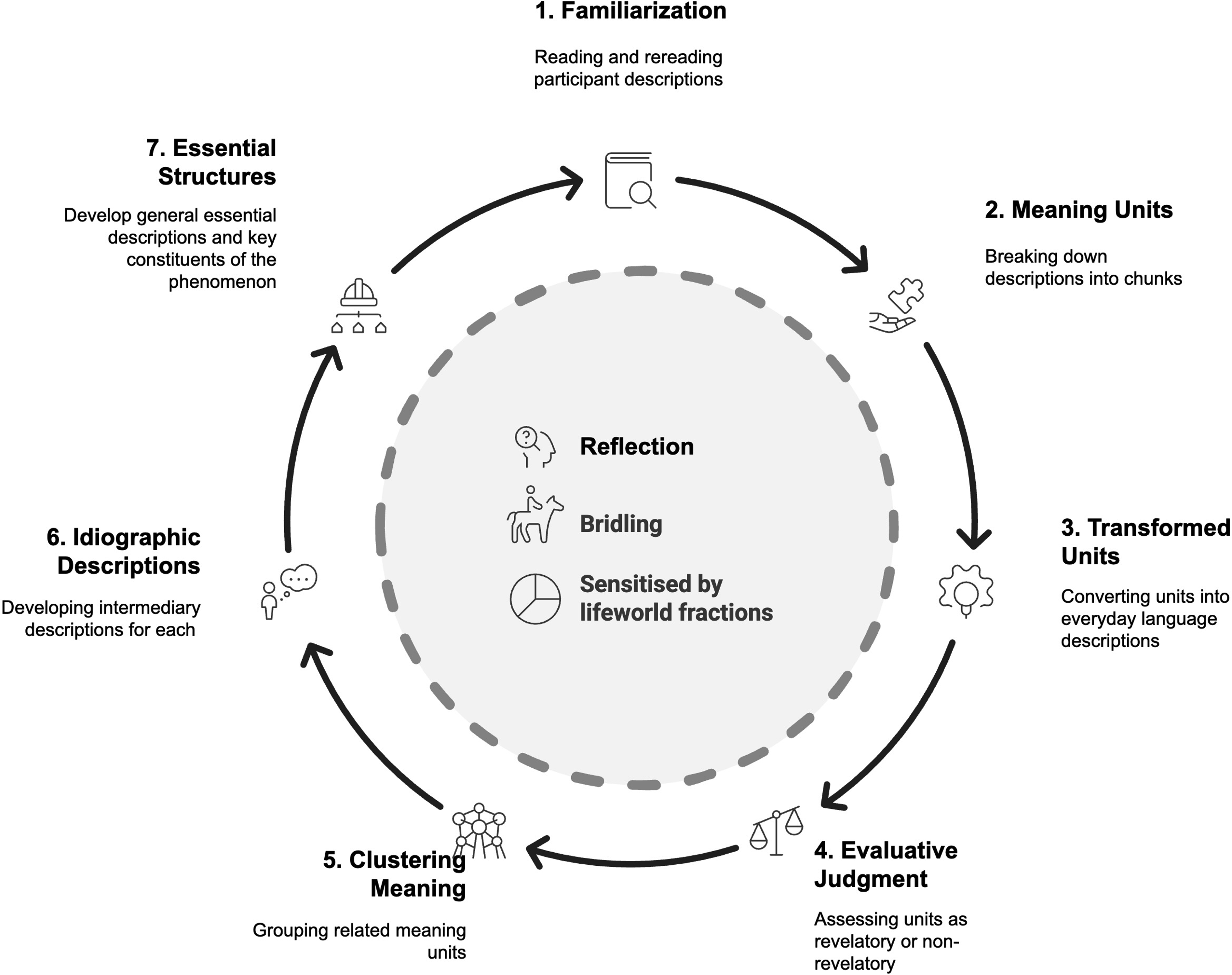
Step 1: Familiarisation Stage for the Sense of the Whole
To become deeply acquainted with individual interviews and become deeply familiar with participant stories, the recordings were listened to multiple times and transcribed verbatim. Giorgi (2009) emphasises the importance of reading and re-reading the transcription to grasp the ‘gestalt’ or the sense of whole. Through reading, discussing, and recounting the interview content with the research team, we explored interesting stories and experiential episodes shared by participants. This stage was helpful in identifying examples that have potential to further illuminate the phenomenon under investigation.
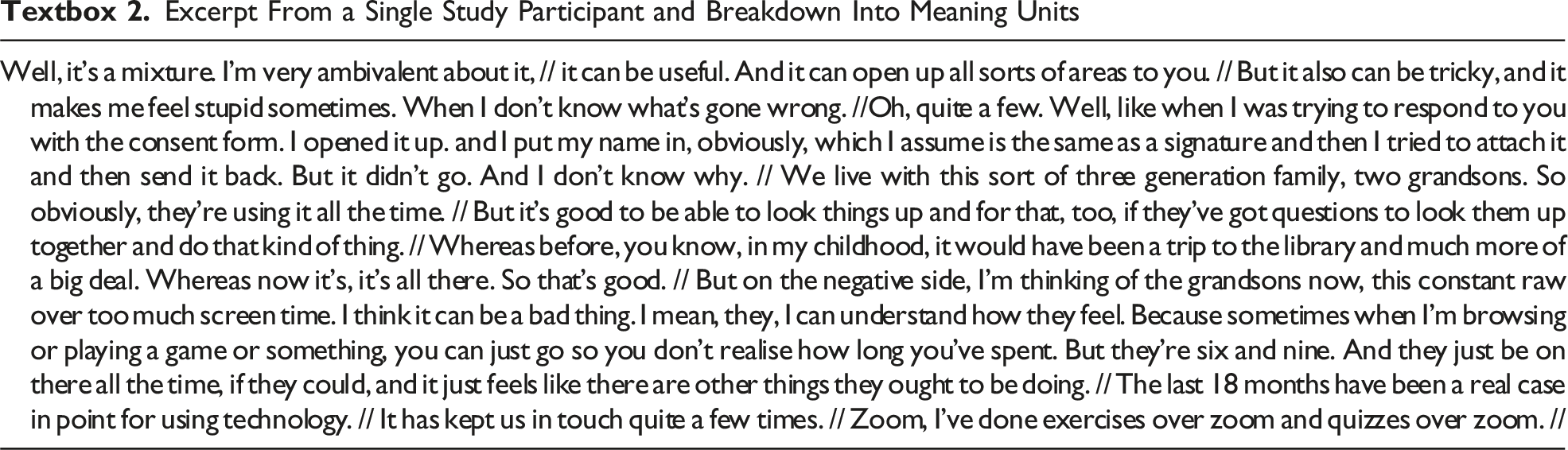
Step 2: Breakdown Description Into Manageable Meaning Units
Excerpt From a Single Study Participant and Breakdown Into Meaning Units
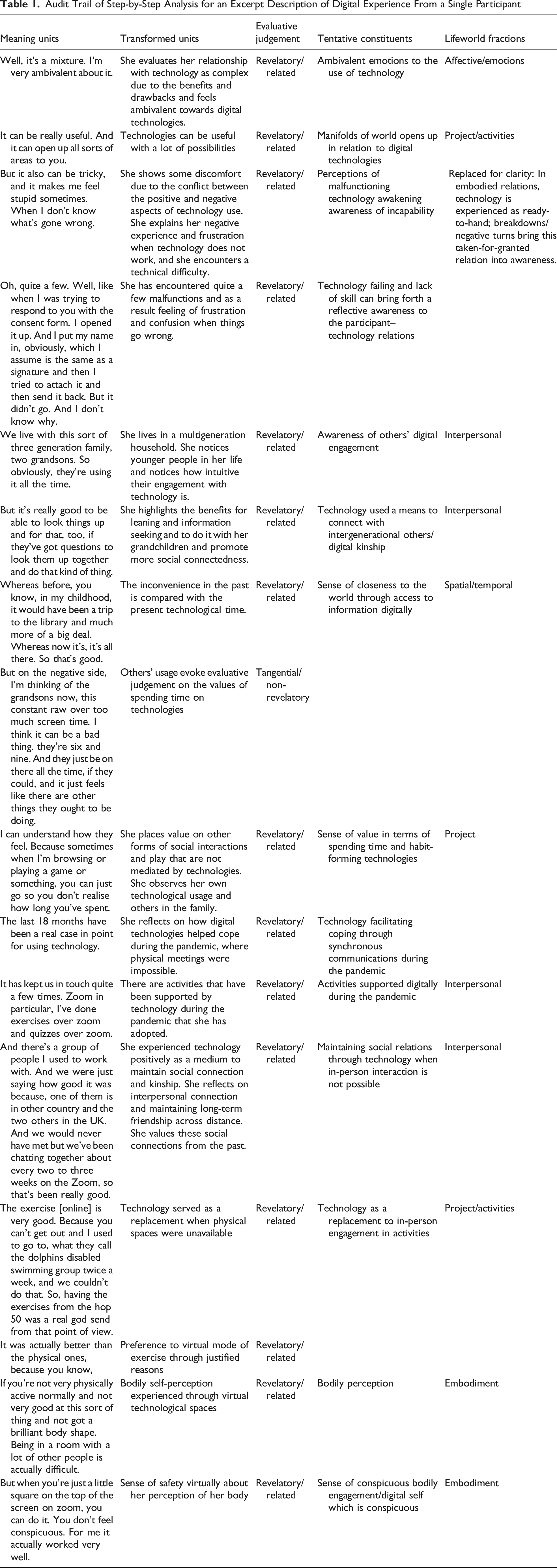
Step 3: Transform the Meaning Units Into More General Everyday Language Description
Audit Trail of Step-by-Step Analysis for an Excerpt Description of Digital Experience From a Single Participant
Step 4: Judge the Power of Each Meaning Unit as Revelatory or Non-Revelatory
The transformed MUs were judged for their revelatory power. Each MU was classified as revelatory or non-revelatory/tangential based on a judgement about the power of the MUs in illuminating the meaning of the phenomenon under investigation. MUs could be essential, contextual, or tangential to the structure of the experience. This method was previously employed to investigate ‘being criminally victimized’ (Fischer & Wertz, 1979).
This stage offers a critical opportunity for the researcher to reflect on the relevance of the delineated MUs to the research question. The goal of this process is to extract meaningful insights that directly correspond to the object of experience. Furthermore, this stage was important in providing an audit trail to critical others to follow as the meanings are developing.
At this stage, the researcher carefully examines whether participants’ statements illuminate the phenomenon under investigation and reflects on how the meaning appears within the researcher’s consciousness. This process requires phenomenological sensitivity, a disciplined approach, and the practice of bridling. Consistent with Hycner's (1985) guidance, when meaning units were ambiguous, they were retained rather than excluded.
Step 5: Clustering of Meaning Units
Example of Early Tentative Clustering for a Single Participant Interview
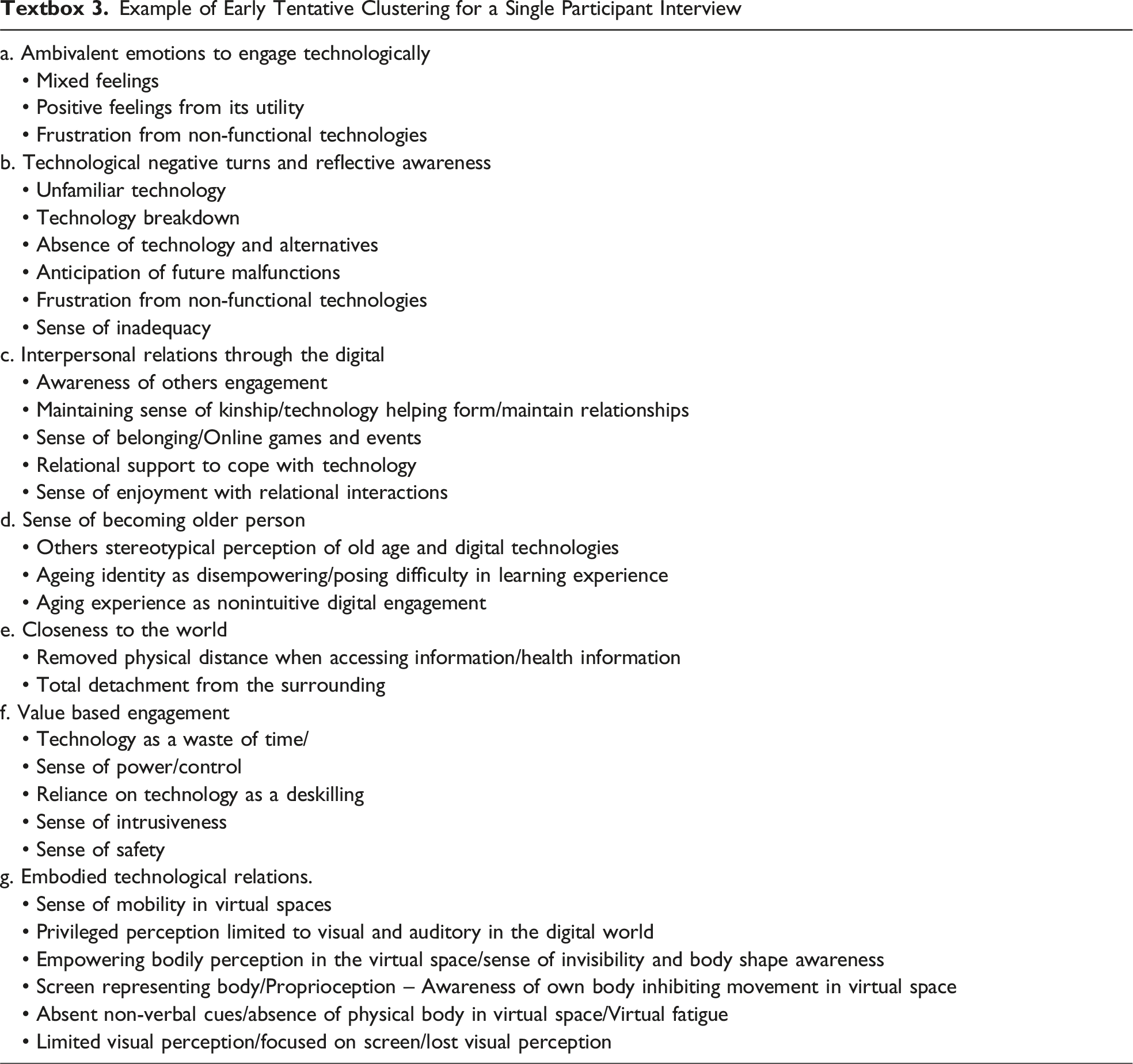
Step 6: Develop Individual Situated Structures
This stage was a mid-stage, where an idiographic and contextually rich account of the experience based on the clustered MUs for each individual participant was developed. It served as a temporary and intermediary point to formulate a strong whole for the individual descriptions to aid reflection. An important aim of this intermediary point was to reduce the leap from cluster meanings to essential description of meanings.
This ‘transitional’ sub-process has been enlightening in terms of providing a steppingstone for the upcoming next stage. These steps were essential in enhancing a reflective process within the phenomenological analysis, as it is heightened by the idiosyncratic sensibilities to commonalities and variations within individuals, while hoping to move beyond individuals and develop a general structure that articulates the phenomenon of interest (Churchill & Fisher-Smith, 2021). Developing an idiosyncratic account for each participant and their distinctive relationship with digital technology enabled the study to show how digital technology is embedded in the lifeworld, while variations within and between participants supported identification of the essential structure of meaning.
This step therefore served as a springboard to illuminate further the context in which the meanings appeared and provide the critical other (readers) further transparency to move between the essential description of the meanings and the context in which they appeared. This is in line with Gadamer’s (2013) idea of understanding as the interplay between commonality and variation, by providing the barebone structure of the meanings while providing how the phenomenon shows itself and is lived by individuals uniquely (see supplemental file 1 for an example of idiographic description of one older adult’s digital experience).
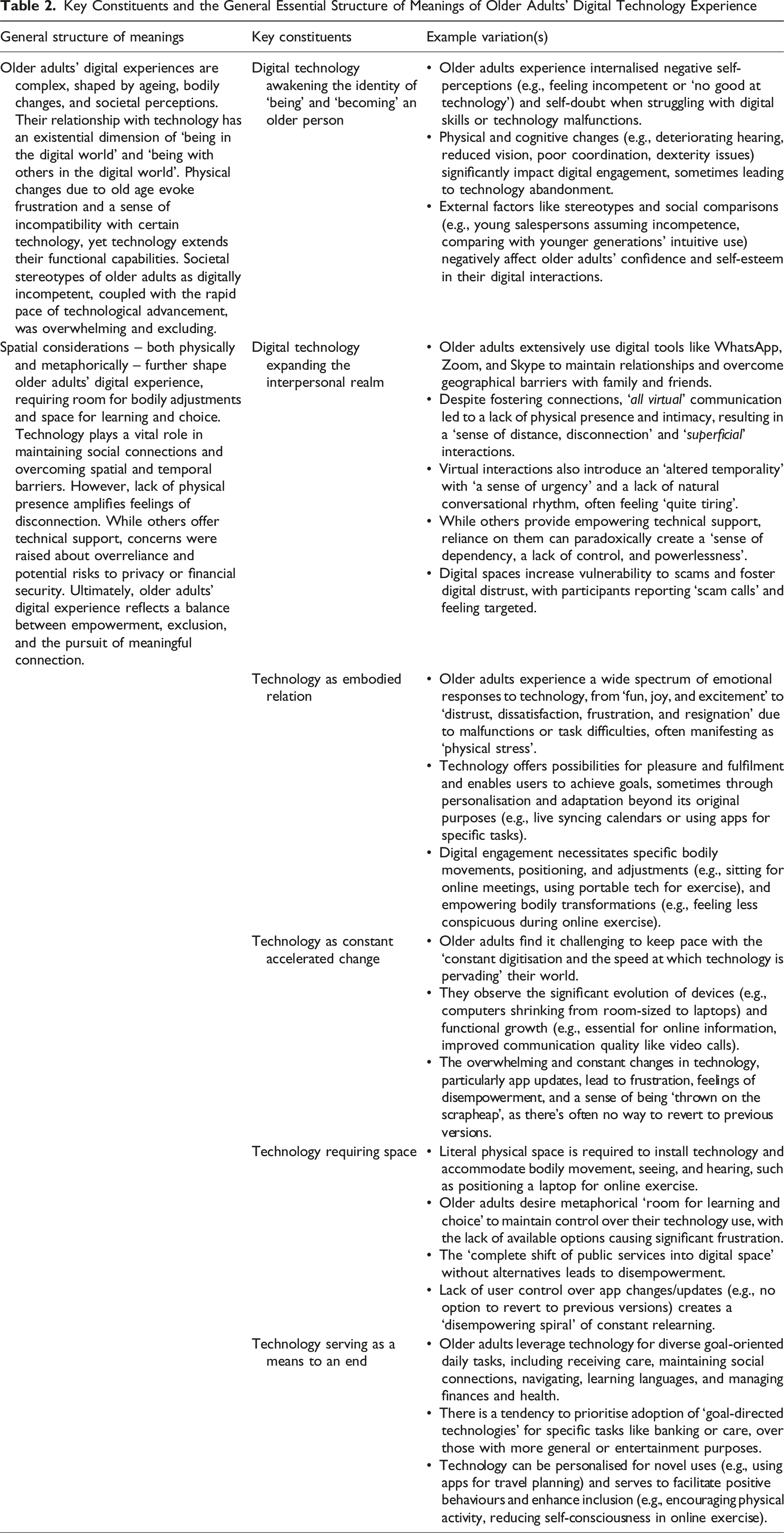
Step 7: Describe the General and Constituents of the Phenomenon of Digital Technology and Reflect on the Findings
Key Constituents and the General Essential Structure of Meanings of Older Adults’ Digital Technology Experience
Presentation of the Findings
The complete, detailed findings from this phenomenological work, which communicate variations within the essential structure, cannot be unfolded fully in this present paper. Nevertheless, the essential constituents along with illustrative examples of variations are provided in Table 2, and Figure 2 outlines the subsequent phases of phenomenological analysis. Additionally, the analytic commentary demonstrates how engaging with the lifeworld fractions illuminated older adults’ experiences and advanced the descriptive phenomenological analysis to a deeper level of interpretation. The findings aim to present rich, thick, resonant, and rigorous descriptions of meanings that illuminate the interplay between digital technologies and the values embedded within them. Summary of the phenomenological findings both at descriptive and abstracted levels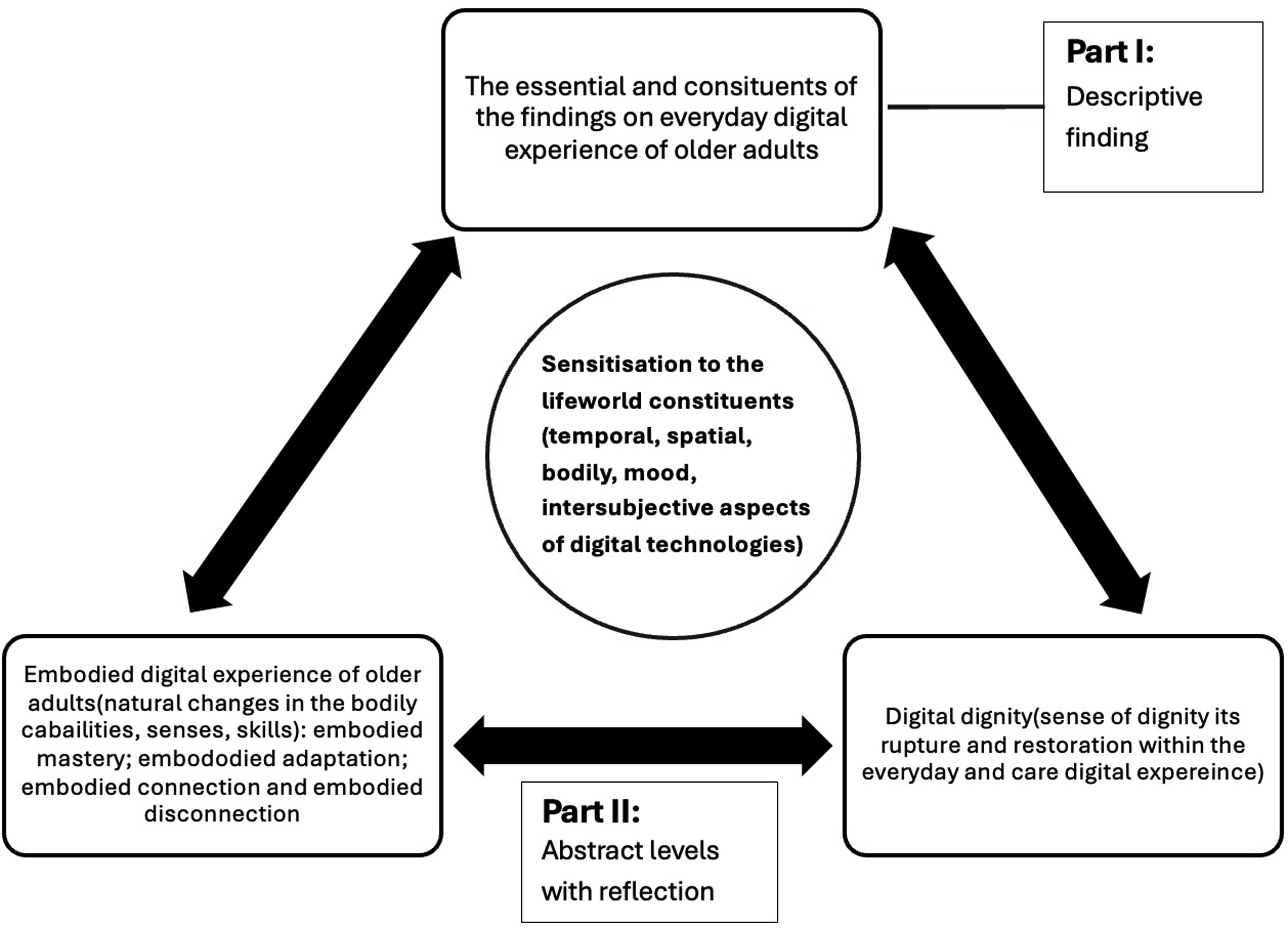
Findings Are Arranged in Two Parts
Part 1: Descriptive findings with general essential structures of meanings and constituents.
Part 2: Reflective and abstract level findings. At this level, the findings explored (a) the embodied digital experience of older adults using insights from the descriptive findings and Heidegger’s mastery-disruption concept and (b) reflection on the digital dignity with the range and level of intensity they manifest within everyday digital engagement, its rupture, and restorations, while conceptualising dignity as both experiential and relational.
Older Adults’ Digital Experience Through the Lifeworld Fractions
The lifeworld fractions serve as an interpretive structure, grounding and expanding phenomenological understanding. By attending to the fractions, the analysis moved beyond thematic summary towards a textured portrayal of how dignity and wellbeing are lived within older adults’ digital worlds. In contrast, within the present study, embodiment, temporality, spatiality, and sociality emerged as the most salient dimensions through which older adults’ experiences of digital engagement and dignity were revealed, while moodedness, selfhood, and project provided additional contextual depth and nuance.
The point of this exercise is to give account of how lifeworld fractions were used to move beyond the description. Here, rather than presenting an exhaustive narrative, we will demonstrate selected analytic vignettes exemplifying how these existential dimensions of the lifeworld informed understanding of digital engagement and its relation to dignity and wellbeing in later life.
Embodiment and the Felt Experience of Digital Capability
‘When I finally managed to order my repeat prescription on the tablet, I felt proud, like I’d done something clever with my own hands’.
This account reveals embodiment as a central site of dignity. The act of mastering a digital task was experienced not merely as cognitive achievement but as a bodily affirmation of competence. Embodiment here captures the corporeal and affective tone of digital engagement, the feel of hands on a touchscreen, the posture of learning, and the surge of self-recognition that accompanies successful interaction. Within this lifeworld fraction, dignity was restored through embodied confidence: the body, often treated as aged or limited, became instead a medium of capability and control. The analytic attention to embodiment thus stabilised the interpretation, grounding dignity in the lived body rather than abstract notions of autonomy.
Temporality and the Rhythms of Technological Acceleration
‘Just when I’ve learned one system, they change it again, and I feel left behind’.
Temporality, as a fraction of the lifeworld, highlights how the pace of digital innovation intersects with the temporal rhythms of ageing. Participants described a tension between the accelerating tempo of technological change and their own embodied tempo of learning. Dignity was challenged when these temporalities misaligned, generating feelings of obsolescence and frustration. Yet, temporality also held restorative potential: when time was afforded for learning, participants experienced patience and self-acceptance. Attending to temporality enabled interpretation of digital exclusion not as simple deficit but as a temporal dissonance, an ethical and existential mismatch between human and technological time.
Spatiality and the Reconfiguration of Home and Care
‘My tablet is my window to the world; it sits on the kitchen table where the phone used to be’.
This instance foregrounds the fraction of spatiality, showing how digital artefacts reconstitute the geography of care and connection. The digital device became both a symbolic and physical extension of home, mediating access to social and healthcare spaces. Through this spatial transformation, participants experienced both expansion, ‘a room with a view’, and contraction, where digital dependency confined interaction to a single screen. Analytically, spatiality exposed the paradoxical nature of digital inclusion: while technology bridged distance and maintained belonging, it also risked enclosing participants within mediated space. Interpreting digital dignity through spatiality thus illuminated how design and placement of technologies shape the embodied ‘room to be’ for older adults.
Sociality and Relational Dignity
‘My grandson helped me set it up; we laughed so much. I think he saw I’m not hopeless after all’.
The fraction of sociality revealed dignity as co-constituted through relation. Digital participation became a shared project through which generational hierarchies were momentarily rebalanced. Intersubjective exchange, learning together, laughing, and offering help generated a sense of mutual recognition and belonging. Analytically, attending to sociality shifted interpretation away from individual competence towards relational wellbeing. Dignity emerged not from independence alone but from reciprocity and inclusion within digital relationships.
Moodedness and the Affective Tone Within Digital Life
‘Sometimes I just turn it off, I get anxious when the screen freezes, and I feel stupid’.
Moodedness refers to the affective background that colours experience. For several participants, digital engagement was accompanied by ambivalent moods of curiosity, irritation, or anxiety. The emotional tone framed how they approached digital tasks, often oscillating between empowerment and withdrawal. Analytic sensitivity to moodedness made visible these fluctuations as existential rather than merely psychological: emotions were not individual failings but reflections of the broader attunement between person, technology, and world. Understanding this affective landscape was crucial for interpreting how dignity could be sustained or undermined in moments of digital tension.
Project and the Continuity of Purpose
‘Learning to use the tablet wasn’t just about emails, it made me feel I could still do things for myself’.
Project, as a fraction of the lifeworld, situates experience within a horizon of intention and possibility. Participants’ digital engagements were rarely instrumental; they were expressions of ongoing life projects to remain capable, connected, and contributory. Interpreting experiences through this lens illuminated how digital dignity is future-oriented: it is sustained when older adults perceive continuity between past agency and present capability. The analytic attention to project therefore revealed the moral significance of digital engagement as a means of sustaining one’s life narrative and sense of being-in-the-world.
Across these analytic commentaries and vignettes, the lifeworld fractions acted as analytic anchors, what we conceptualise as a sturdy third wheel, balancing philosophical rigour with empirical sensitivity. They enabled movement from surface description towards phenomenological understanding of how dignity is lived, threatened, and restored in digital life. In descriptive phenomenology, this stabilising function is essential: it keeps analysis attuned to the embodied, relational, and affective realities that underpin wellbeing.
Discussion
This paper demonstrated how lifeworld fractions function as a ‘sturdy third wheel’ in descriptive phenomenology – stabilising philosophical foundations and analytic procedure (Ashworth, 2015; Dahlberg et al., 2008; Giorgi, 2009). The philosophical foundation ensured openness to lived meaning, while the analytic procedure offered systematic direction; yet, it was the lifeworld fractions that maintained equilibrium between them, ensuring that inquiry remained close to participants’ embodied, relational, and affective realities. We showed how these fractions sensitised data gathering, guided reflective analysis, and supported a transparent, iterative seven-step process. Methodologically, this operationalises phenomenological concepts within empirical analysis; conceptually, it clarifies digital dignity as a phenomenological construct linking technology use to wellbeing; and practically, it offers a framework for designing technologies and care practices that honour the lived experience of ageing.
Digital Experience in Its Everydayness
The application of lifeworld illustrated how embodiment, temporality, spatiality, and sociality were the most salient fractions through which older adults’ digital experience and dignity were shaped, with moodedness, selfhood, and project providing contextual depth (Ashworth, 2015; Galvin & Todres, 2015). Attending to these fractions moved the analysis beyond summary towards a textured account of how experiences were lived: bodily competence and strain (embodiment), rhythms of learning and change (temporality), the home and screen as mediating places (spatiality), and reciprocity and recognition in relationships (sociality). These dimensions clarified digital engagement as not merely functional but existential intertwined with identity belonging, and moral worth in later life. These findings also echo postphenomenological accounts of technological mediation, where technologies are understood as actively shaping perception and action rather than functioning as neutral tools (Ihde, 1990).
This was consistent with studies exploring aspects of moral engagement (encompassing trust, care, friendship, and commitment) and value orientations as crucial elements for fostering positive online communities (experience) and sustaining digital use (Huda et al., 2017; Palacin et al., 2021). Such values necessitate experiential research and human-centred designs that create discoverable, fun, and reflective digital mementos (Bowen & Petrelli, 2011). Chughtai (2019), applying Borgmann’s concept of the device paradigm, examined how digital experiences are shaped by both the values people hold and those embedded within technological structures.
The findings on embodiment also reflects Merleau-Ponty’s later work on ‘flesh’, which conceive the lifeworld as a shared field of intercorporeality where perceiver and world are mutually implicated (Merleau-Ponty, 1968). Older adults’ descriptions of touch, presence, and mediated closeness through technology suggest that digital engagement involves a reversible embodiment, an extension of one’s bodily agency into the digital realm. Technology thus becomes part of the ‘flesh of the world’, shaping perception, connection, and self-understanding. This interpretation complements the lifeworld fractions by emphasising the ontological continuity between human and technological experience, offering a deeper account of how digital artefacts participate in the lived constitution of dignity and belonging.
Research within user and digital experience already reflects elements of the lifeworld. For example, Oygur and McCoy (2011) examined the physical and spatial requirements, while Karapanos et al. (2010) explored the temporal dimension of digital experience, highlighting how the quality of technology use evolves over time. Other studies have addressed spatiality, human values, identity, privacy, and agency in relation to technology design. By attending to the lived, embodied, and contextual nature of experience, lifeworld research can reveal varying emphases across fractions while offering deeper insight into the human–technology relationship.
Why Lifeworld Fractions Matter Methodologically?
Using the fractions as attunement rather than codes helped maintain openness while preventing drift into either abstraction or purely procedural analysis (Dahlberg, 2006; Dahlberg et al., 2008; Todres, 2005). They provided interpretive prompts at each analytic step, from identifying MUs to developing general structures, ensuring fidelity to participants lived worlds and enhancing coherence, depth, and transparency. This triadic balance – philosophy, procedure, and lifeworld fractions – offered methodological traction that generic qualitative approaches often lack.
Implications for Qualitative Health Research and Design
For qualitative health research, a lifeworld-informed analysis sharpens attention to the embodied, relational, temporal, and spatial conditions under which digital participation sustains or undermines dignity and wellbeing (Bowen & Petrelli, 2011; Chughtai, 2019). For designers and care providers, the findings underscore the need for person-centred, context-sensitive digital health practices: pacing technological change to users’ learning rhythms, supporting embodied interaction, protecting relational dignity, and designing for the spaces and tempos of everyday life.
Throughout the study, the research process was guided by bridling, a disciplined openness that maintained flexibility while critically examining pre-understandings (Dahlberg et al., 2008). While not claiming exhaustiveness, the seven-step process and lifeworld attunement offer a practical template for researchers seeking phenomenological depth and analytic clarity. The study thus extends descriptive phenomenology methodologically and substantively, illustrating how attention to the lifeworld can illuminate the existential, embodied, and ethical meanings of older adults’ digital experiences.
Conclusion
This paper demonstrated how a descriptive phenomenological methodology, grounded in lifeworld theory, can illuminate the meanings of digital technology and dignity in the everyday lives of older adults. Drawing on Ashworth’s lifeworld fractions, the study illustrated how these dimensions provided an analytic and attunement framework, guiding both data collection and interpretation through a transparent, iterative seven-step process.
The lifeworld fractions were conceptualised as a sturdy third wheel – a balancing and stabilising methodological support that complements phenomenological philosophy and analytic components of descriptive phenomenology. This metaphor captures how the framework sustained methodological coherence while remaining open to the richness and ambiguity of everyday experience. Through this process, the analysis moved beyond thematic description towards a textured understanding of how digital engagement shapes embodiment, temporality, spatiality, and sociality and how these, in turn, affect dignity and wellbeing.
Beyond offering analytic clarity, this work contributes a practical methodological and philosophical template for researchers seeking to integrate phenomenological rigour, openness, and depth into qualitative inquiry. The framework demonstrates how disciplined reflection and lifeworld sensitivity can deepen empirical insight, enhancing both analytic precision and interpretive resonance.
Conceptually, this approach underscores that digital participation is not merely functional but existential, intertwined with identity, relationality, and moral worth in later life. Recognising this can support more humane and inclusive design of digital health systems that honour older adults’ lived realities. In doing so, the paper advances the methodological dialogue between phenomenology and digital health research, offering a foundation for future inquiries into the embodied, relational, and ethical dimensions of technology-mediated care.
Supplemental Material
Supplemental Material - ‘The Sturdy Third Wheel’: Application of Lifeworld Fractions in a Descriptive Phenomenological Work
Supplemental Material for ‘The Sturdy Third Wheel’: Application of Lifeworld Fractions in a Descriptive Phenomenological Work by Abraham Sahlemichael Kebede, Lise-Lotte Ozolins, Hanna Holst, Kathleen Galvin in Qualitative Health Research
Footnotes
Acknowledgements
The authors would like to thank the participants who generously shared their time and experiences. For the purpose of open access, the authors have applied a Creative Commons Attribution (CC-BY) license to any Author Accepted Manuscript version arising from this submission.

Ethical Considerations
The study received ethical approval from the University of Brighton Ethical Review Board (2020-4498). Subsequently, ethical clearance was obtained from the INNOVATEDIGNITY Ethical Scrutiny Board.
Consent to Participate
Informed written consent was obtained from all participants.
Funding
The authors disclosed receipt of the following financial support for the research, authorship, and/or publication of this article: This project has received funding from the European Union’s Horizon 2020 research and innovation programme under the Marie Skłodowska-Curie grant agreement no. 813928.
Declaration of Conflicting Interests
The authors declared no potential conflicts of interest with respect to the research, authorship, and/or publication of this article.
Supplemental Material
Supplemental material for this article is available online.
Note
References
Supplementary Material
Please find the following supplemental material available below.
For Open Access articles published under a Creative Commons License, all supplemental material carries the same license as the article it is associated with.
For non-Open Access articles published, all supplemental material carries a non-exclusive license, and permission requests for re-use of supplemental material or any part of supplemental material shall be sent directly to the copyright owner as specified in the copyright notice associated with the article.
