




Abstract
Keywords
The 5 + 1 practice research model in health social work: from the “eye of the storm”
The COVID-19 pandemic presented major challenges to the delivery of health services in general. It impacted significantly on how hospital social workers (HSWs) functioned during this period. During the pandemic, anecdotal evidence emerged of resilience and adaptability among HSWs in the face of multiple challenges. At the time of our study, the adaptability, versatility, and resilience of HSWs had not been prospectively examined. The dynamically evolving hospital social work practice began during the pandemic and has continued in the post-pandemic period. We considered that documentation and a prospective qualitative analysis of the experiences of HSWs, including how they adapted their practice and overcame challenges related to the pandemic would be valuable and could potentially inform future HSW practices. As an additional complication of the pandemic student placement in hospitals risked being disrupted because traditional face-to-face mentoring was not possible due to the restrictions on physical contact. Both these issues, which related directly to the pandemic, prompted the study and were addressed during the pandemic. This gave us a unique window of opportunity to evaluate both HSWs’ resilience and adaptability and to test a new paradigm for student placement.
To address these two issues, the University of Melbourne Department of Social work collaborated with the Social Work Departments at the Peter MacCallum Cancer Centre, the Royal Children's Hospital, the Royal Melbourne Hospital, the Royal Women's Hospital, and St. Vincent's Hospital in this practice-based research project. The study was grounded in an already established academic/practitioner interaction (the 5 + 1 Collaboration). The 5 + 1 Collaboration is a practice research collaboration between the University of Melbourne and the Social Work Departments of the five hospitals. The 5 + 1 Collaboration has a “hub-and-spoke” design which allows a single university department to interact dynamically with the five Metropolitan hospitals, that are teaching facilities but vary in their clinical focus (e.g., oncology and women's health) whilst sharing professional social work frames of reference.
Although studies have described the effect of the pandemic on hospital frontline workers (Honarmand et al., 2022; Pollock et al., 2020; Schmuck et al., 2021), there has been a paucity of prospective studies that have documented the experiences of HSWs in the context of the pandemic. This study prospectively collected data from HSWs working in diverse medical settings, specifically against the backdrop of the pandemic. There was, in the study, total cooperation of social work managers in the five hospitals and high levels of practitioner participation. We used this platform to address the second question, as a systemic challenge arising from the pandemic, namely, the feasibility of hospital social work student placement in an “on-line” as opposed to the traditional face-to-face model.
Aims of Study
The overall purpose of this study was to examine the effects of the COVID-19 pandemic on HSWs as a “snapshot,” in real time, from both a personal and professional position, and to determine what changes (both positive and negative) the HSWs made to their social work practice as a result of the COVID-19 pandemic.
Primary Objectives
To determine how the COVID-19 pandemic impacted hospital social work practice and HSWs personally.
To explore the adaptations made by HSWs to the challenges that resulted from the pandemic.
Secondary Objectives
We investigated whether placement of students in hospitals could take place effectively, using predominantly digital and online technologies as the means of support and supervision.
Method
The study was prospective and participatory in keeping with the foundational tenets of practice research, where co-development is paramount. The goals of the study were decided consensually by all stakeholders, and there was complete participation of the social work managers in the five participating hospitals, who engaged with their social work staff and encouraged them to participate in the project. The study, essentially a practice-based research project, (a) qualitatively evaluated HSW experiences and (b) examined the feasibility of active pedagogy (in the form of placement of social work students) in the context of the pandemic and in particular the feasibility of such placements taking place remotely.
The theoretical foundation for the methodology that was used involved the principles of practice research, participatory action research (PAR) and practice-based-research (PBR). The 5 + 1 Collaboration used in this study is an exemplar of a dynamic academic–practitioner research and pedagogic collaboration. In this study, the 5 + 1 Collaboration (as a model) was exposed to testing in the field in the best spirit of practice research. Moreover, PAR is one of the key features of the 5 + 1 Collaboration and supports the other key aspect of this study where collaboration took place for academic student placement. Action research is a term coined by Lewin in 1946 who described it as “research that will help the practitioner” (Bleijenbergh et al., 2021; Lewin, 1946). Guerci and colleagues (2019) in a call for increased collaborative research by academics and practitioners, stated that: “…(a) practitioners should be engaged from the beginning to end of the knowledge-creation process; (b) the relationship with practitioners should not be hierarchical; and (c) the outcomes of the collaborations should be relevant and rigorous.” (Guerci et al., 2019, p. 6). The research was co-designed, and the results were transparent, underlining the concept of collaborative self-reflective inquiry according to the model of PAR and PBR (Van Acker et al., 2021). According to this model, social work practitioners and students performed action research in their own distinctive settings (the five hospitals and the university), providing unique specialized insider knowledge. The model of PBR has evolved from this and informed both the HSW inquiry and the student placements. In our study, PAR and PBR played complementary roles. The study was conducted according to the model described by Van Acker et al. (2021), where a “co-generative” space was created and there was an engagement in a process of “collaborative enquiry” (Van Acker et al., 2021).
The research was undertaken in two phases:
Phase 1
Themes were identified from the data obtained via a digital platform (Basecamp). Basecamp was designed to facilitate communication online and was appropriate for use while HSWs were subject to the pandemic restrictions. It allowed for documentation of personal views and experiences across social work in the five hospitals, as well as peer interaction and information sharing. The platform was used by all the social workers who were involved in the study (N = 100) to document their personal experiences and reactions to the pandemic. It also allowed them to describe how they adapted their practice to the challenges resulting from the pandemic as well as their subjective and objective experiences. The sample was taken from the total number of HSWs in the five hospitals (N = 250). Participation was voluntary in keeping with a purposive selection process.
Phase 2
In-depth interviews were conducted with health social work managers in the five participating hospitals, exploring the themes identified in the analysis of the database (Basecamp). Basecamp is a commercially available collaboration tool used by multiple users across many sites. It allows multiple sets of data to be entered, in multiple sites (https://basecamp.com/). The results were analyzed for key themes using the NVivo software tool.
The results from both phases were then combined to provide an overall picture of the impact and HSWs’ response to the pandemic, allowing the formulation of recommendations for future hospital social work practice during a pandemic as well as what HSWs considered could be incorporated into their work in the future. These included the use of digital technology.
Ethics Approval
Both stages of this research project were approved by the University of Melbourne's Human Research Ethics Committee (STEMM) before being conducted. All data was de-identified. Collaborating hospital partners complied with ethical administrative processes at each individual site before the study was commenced (Ethics Approval Number Project ID-22322).
Results
Phase 1
The network map (see Figure 1) depicts the basic, organizational, and global themes that were identified from the Basecamp dataset. The data are displayed in a thematic network using the Attride-Stirling method to demonstrate relationships and interconnection between themes (Attride-Stirling, 2001).
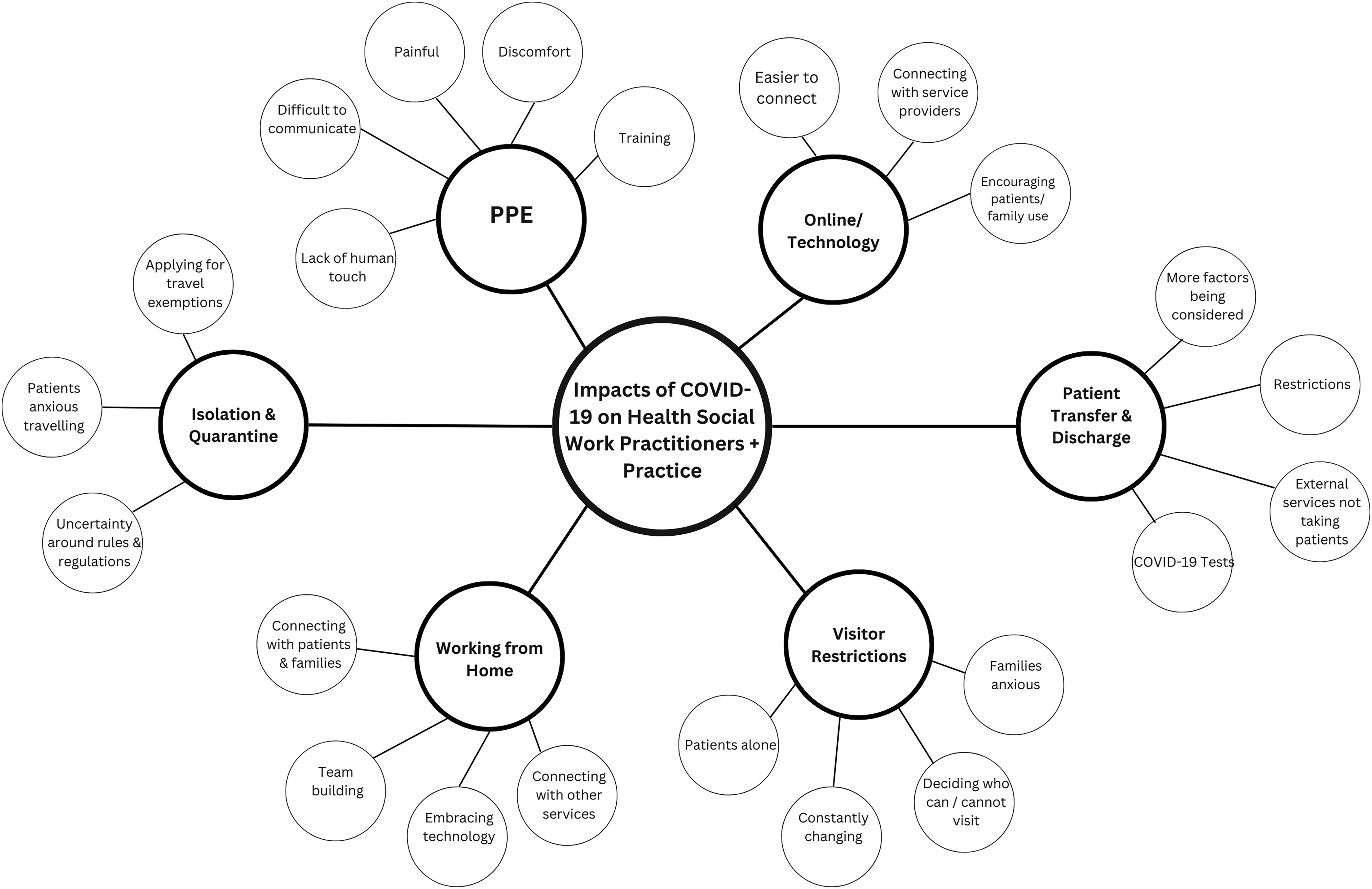
The basic, organizing, and global themes identified from the Basecamp dataset.
General Themes
As can be seen in Figure 1, a number of themes were identified, including the centrality of the use of technology in Social Work. COVID-19 provided a unique opportunity to examine how technology could be used in practice by HSWs across the five hospital sites. These are explored in more detail below.
Isolation and Quarantine
For the HSWs, there was an increased workload to support patients facing the challenges brought about by the pandemic. Patients and their families presented to hospitals with often high levels of anxiety, which were exacerbated by the restrictions placed upon contact between patients and their families, carers, and social networks. Much of the communication during this time was undertaken using digital platforms (ZOOM and TEAMS), which tended to be challenging for the elderly, people who were disabled, or people who had sensory deficits. In addition, there were constantly changing regulations relating to travel and access with the result that clients needed to be guided through the process of obtaining permits and the regulations pertaining to travel from state to state within Australia, as the pandemic regulations varied between the States and Territories. HSWs were generally the health care professionals consulted when families needed advice on managing restrictions due to the pandemic, adding to the HSWs’ already significantly increased workload.
Working From Home
HSWs commented on both positive and negative aspects of working from home. There was in general a sense of increased professional isolation due to the reduction of face-to-face meetings with colleagues. Hospitals were considered by HSWs as being “unsafe.” Social workers who alternated working from home and from the hospital were concerned about the risk of bringing infection into their families. A minority of HSWs complained that working from home “blurred” the work/home demarcation, resulting in involuntary extension of working hours.
Considered as a positive outcome of working from home, many HSWs noted that there was increased leisure time because of reduced travel time to work. HSWs generally felt safer working from home and working from home allowed for a more flexible daily routine. One positive result of working from home was the increased emphasis on team building by the managers, these meetings generally used the ZOOM platform. The majority of HSWs felt that they were well supported by their managers and there was generally flexibility in the arrangements for the location of work.
Patient Transfer and Discharge
Factors relating to discharge and transfer to other services were generally problematic, leading to increased distress and frustration for families and clients and increased the workload of HSWs. There were many impediments, frequently due to changes in regulations, these relating to discharge from hospital, follow-up, and transfer to community-based health and community services. This was impacted significantly by the pandemic and was reflected by the closure of the usual pathways for referral due to isolation and closure of services. There was also an increased load placed on HSWs relating to obtaining permits and tests, before gaining access to these services.
Impact on Practice
There were negative effects on social work practice due to the lack of physical, face-to-face contact with clients and their families because of COVID-19 restrictions. However, these were counter-balanced by HSWs upgrading their technological skill base, one which many did not realize that they had. The reduction of travel time was a positive as was the facility of organizing multiple connections readily (through, for instance, ZOOM).
Practice Effects of Need to Use PPE (Personal Protective Equipment)
This theme was described in a variety of ways, but essentially the HSWs reported being able to adapt to the use of PPE, despite the discomfort (which was particularly irritating after prolonged use) and the subjective feeling that there was a “barrier” between them and the clients, particularly leading to an inability to read emotions from facial expressions. The training of how to use PPE was not a significant issue, and most HSWs noted that there was adequate training in the use of PPE.
Use of Digital Technology
Generally, social workers reported that increased exposure and resultant facility in using technology was a positive result of the pandemic. HSWs upskilled in the use of technology, such as ZOOM, learned how to facilitate multiple connections and became adept at deciding when and how to use different technological modalities such as telephone, email, and ZOOM.
Description of the use of technology by HSW was described as: …To reduce some of that isolation and keep us connected… the use of technology has been a very big driving force of that [on meeting patient primary supports] ‘often they are in the background. Maybe they'll scuttle past to try not to disturb us and I'll shout out ‘Hi, how are you?’ And then they’ll come over and be interested, you know and introduce themselves….
Phase 2—Key Results
The interviews with hospital social work managers in Phase 2 identified two major themes:
Making professional connections with clients and their families despite wearing personal protective equipment (PPE). Challenges that restrictions posed to patients, families, and social work practice. The use of digital technology in health social work.
These themes were also prominent in the Basecamp dataset outlined in the previous section.
Theme 1. Effective Connection With Clients and Families Despite the Barrier of PPE
Managers reported that HSWs experienced an added professional burden managing clients who were in isolation (due to pandemic restrictions), who experienced significant fear and anxiety, and who were in a uniquely stressful period in their lives. Social workers also addressed the anxiety of those family members who were not permitted to visit their loved ones in the hospital (in a setting of high death rates) and were almost totally reliant on health professionals.
This central role of communicator taken on by the HSWs in the setting of a pandemic presented additional challenges to the usual practice of health social work.
Managers commented on the impact of less face-to-face connection with patients and their families, further compounded by the medical, social, and emotional impact of the pandemic (Figure 2).
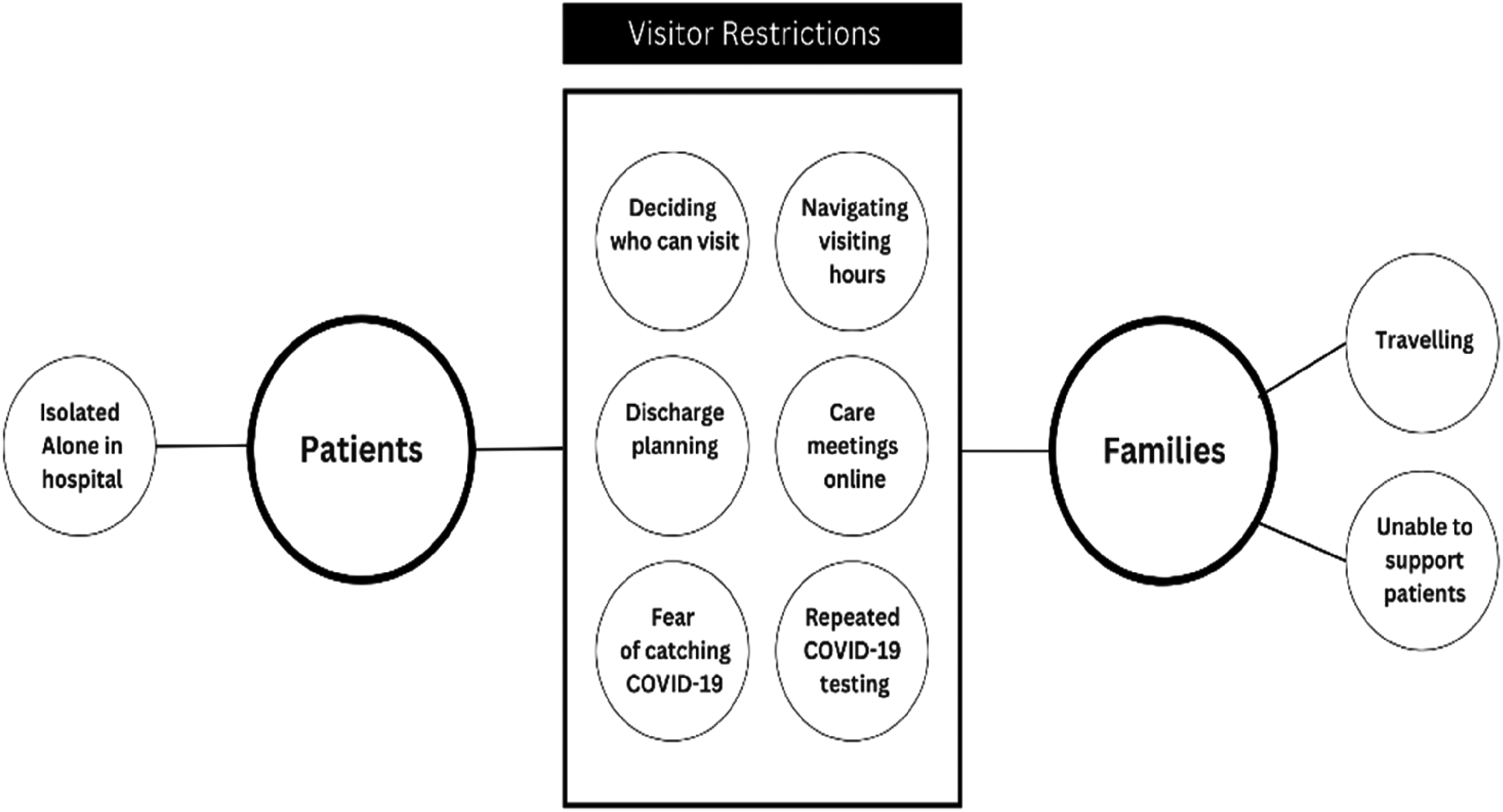
Barriers experienced by patients and their families as noted by social work managers.
The following quote was provided by a Manager of a Social Work Department: …(the) biggest challenge was, how do we engage families in this space to continue to provide the work, being that we're only limited to a single family member, and it became very challenging because families found it challenging and their responses were challenging. And so, we needed to renegotiate our clinical skill set to be able to manage them. What it did do though, is sort of make us think of how we might be able to do this differently and look and explore virtual options for families, which seemed to have worked well across the hospital.
Theme 2. Technology
While restrictions on face-to-face contact were a hurdle for patients, families, and practitioners, the incorporation of technology into practice was, generally, considered a positive outcome of the pandemic, providing a relatively untapped resource for HSWs (see Figure 3).
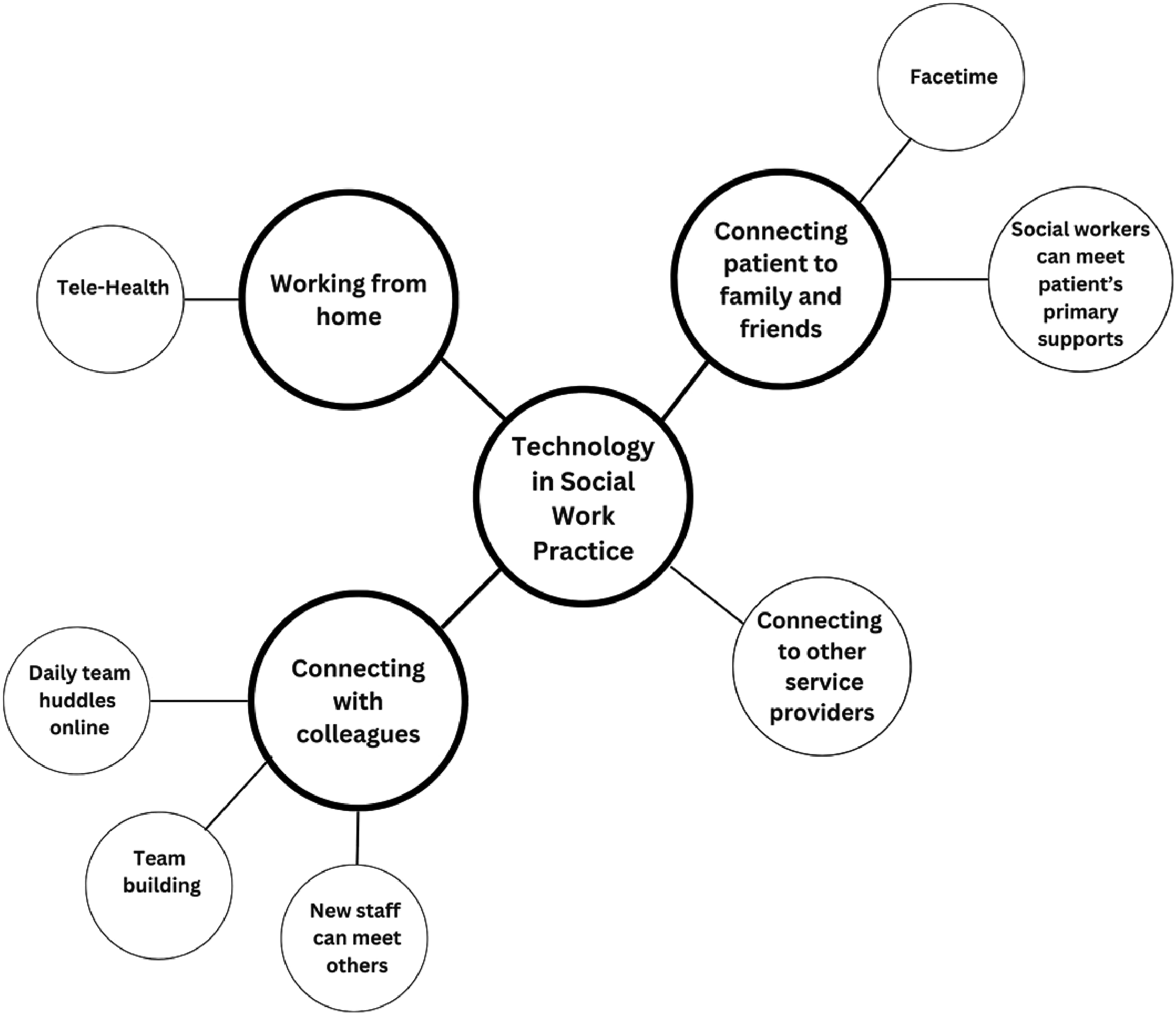
Facets of the use of technology by HSWs in the pandemic.
With access to resources such as iPads, online video platforms, mobile devices, and other digital applications, social workers learned to readily connect with families and patients, liaise with external service providers, and gain unique insights into their patient's lives, for example, meeting a neighbor or a grandchild on screen, and, as a bonus, be able to view resources and home situations as a background to the consultation in the ZOOM space. Hospitals also increased access and resources so that work could be undertaken using these digital platforms.
Secondary Objective
Social Work student placement; pedagogy and supervision as well as exposure to practice research.
A total of 17 University of Melbourne Master of Social Work Students participated in the practice research project. At the conclusion of their placements, they were encouraged to reflect in writing about their experiences and to describe the key areas of learning at the conclusion of their placements.
The major areas noted by the students in terms of involvement and learning in the project were: values and ethics; professionalism and project management; culturally responsive and inclusive practice; application of research to practice; communication and information skills; information and data processing and sharing; and professional development and supervision.
The feedback from them was that the project allowed them to participate in a “real life” research process working alongside senior and experienced social workers and academics as well as to collaborate with key stakeholders. They noted that through this exposure, they had developed an increased understanding as to what is involved in building professional networks and partnerships. The details of what aspects they considered positive in their placements were often described in considerable detail.
Relating to the theme of values and ethics, for this study and being associated with the study, students appreciated preparing the consent forms and plain language statements. They were exposed to and received instructions regarding the key issues of confidentiality and privacy as well as secure data management. All students completed the Research Integrity Online Training (RIOT) module as part of their placement. With reference to professionalism and project management, students became aware of the importance of project deadlines, preparation and reporting, presentations to stakeholders via video link, and supporting research participants. In this process, students expressed that they felt they had experienced the transition from student to professional. With respect to the application of culturally responsive and inclusive practice, students were encouraged and guided in viewing research material through a cultural lens and to be sensitive to possible discrimination and vulnerability, particularly for disadvantaged groups, and many noted their appreciation of this element of their placements.
Under the theme of application of research to practice students were trained to engage with participants in the field, to adapt and adjust their practice to facilitate successful practice research collaborations, and to develop an approach that created a rapport with research participants and service-users, in conjunction with learning about the need for flexibility as the research project unfolded. Through a rigorous literature review of articles, students learned to identify knowledge-gaps which would inform future practice research projects. The challenges relating to the theme of communication and information skills were direct consequences of the COVID-19 pandemic. Students had the opportunity to use digital platforms and the sharpening of their communication skills via video links and building rapport without direct face-to-face contact.
Students reported that they felt integrated, involved and included in the research team and were actively encouraged by their supervisors to participate. They observed experienced researchers in action, managing research teams. They learned about team communication and collaboration and the importance of positive communication styles as well as the dynamics of working in a group. Regarding information and data processing and sharing, students played a key role in managing the data. They were educated in the importance of privacy and confidentiality, the use of software for data analysis and the collection, recording, and transcription of interviews, video conferencing, and the importance of securing safe data storage. Finally, in relation to the theme of professional development, mentoring, and supervision, this was conducted generally in the form of ZOOM meetings, during which students were encouraged to critically reflect on their work. These mentoring and supervisory sessions were well received by the students. Interestingly, students noted that interruption during supervision sessions was singularly absent as they had in the past observed in real-time face-to-face work settings. The students reported that with using digital platforms there was no barrier to the supervision.
Discussion
The current study, being prospective was —under the circumstances of the pandemic —unique. The goals of the study were decided on collaboratively by all stakeholders, and there was full participation of the social work managers in the five participating hospitals, who engaged with the project and encouraged their social work staff to participate in it. The study was more than a PBR project in that it addressed active pedagogy in the form of placement of social work students in the context of the pandemic and evaluated the feasibility of placements taking place remotely. Conceptually, the study is of interest in that it describes a hub-and-spoke approach with one university academic department interacting with five major teaching hospitals. To our knowledge, this model of collaboration is not currently practiced elsewhere in Australia.
This model and approach of academic–practitioner collaboration emerged as the key feature that allowed successful prospective evaluation of health social work practice in the challenging setting of a pandemic. Moreover, it made possible effective educational outreach, placing students in each hospital with the adaptation of pedagogy to the challenges of the pandemic by using digital means. It also provided them with the opportunity to participate in PBR.
The Unique Value of the 5 + 1 Collaboration as a Platform for Research
The 5 + 1 Collaboration, as a platform and structure for our study, was particularly useful in that it drew together multiple strands of practice experience and expertise from Social Work Departments from the Peter MacCallum Cancer Centre, the Royal Children's Hospital, the Royal Melbourne Hospital, the Royal Women's Hospital, and St. Vincent's Hospital, creating a rich tapestry of social work experience ranging from oncology, pediatrics, women's health, and general medicine. The research and collaboration model supports the opinion of Denvall and Skillmark (2021) who noted that “researchers and practitioners should orient themselves in this landscape … build bridges between academia and practice” (Denvall & Skillmark, 2021, p. 2722). This approach is central to the collaboration and the model.
Impact of Pandemic on Health Social Work Practice
An important result of the study was to document how the social, medical, and public health responses to the pandemic over the 2-year period impacted HSWs who were working in an environment that was charged with unpredictability, uncertainty, and often, high levels of anxiety and fear. Identified challenges and practice changes were the use of PPE, the incorporation of technology in social work practice, changes to patient transfer and discharge processes, the impact of visitor restrictions, working from home and managing isolation, quarantine when mandated, and the ever-changing COVID-19 testing requirements.
The study demonstrated how the vast majority of HSWs adapted effectively to these challenges and how they continued to provide professional services in a complex, threatening, and ever-changing setting. A major finding that emerged from the discussions was that HSWs’ role moved from behind the front line of health services to the front line. It demonstrated that HSWs’ role in both acute and non-acute situations in the hospital setting involves collaborating closely with all other healthcare providers, providing a unique service of support with its key focus being the health and well-being of patients and their families.
Resilience and Professional Support
Resilience is the positive adaptation shown by individuals when faced with challenges (Joubert et al., 2022). The ability of HSWs to creatively adapt practice and remain positive in the face of uncertainty was demonstrated in this study, underlining their resilience. HSWs also showed that while being resilient, although they experienced fear and stress, they had the capacity to avoid being overwhelmed by the situation. Throughout the duration of the study, HSWs from the five participating hospitals continued to maintain high levels of professional functioning as has been documented in other studies (Adamson et al., 2014; Bonanno, 2004; Bonanno, Papa, et al., 2004; Bonanno, Wortman, et al., 2004; Fraley & Bonanno, 2004). In our study, none of the HSWs reported burnout. This is possibly a reflection of adequate managerial support provided by the HSW managers, this support being acknowledged by HSWs. The study also highlighted HSWs’ ability to provide ongoing peer support to each other as well as to other members of the interdisciplinary team. It also underscored the fact that they were supported by their managers. The study emphasized the importance of an integrative and interactive approach both between the social workers and their peers as well as other professionals in the hospitals. It has been our impression, after the study was concluded, that the 5 + 1 Collaboration approach had a significant positive effect among the HSWs of the five participating hospitals in terms of peer support as well as enhanced managerial input and support.
Client Care During the Pandemic
Throughout the pandemic, social workers in this study demonstrated an ability to remain focused, to continue to be responsive to patient and family needs, to adapt their interventions creatively, providing services using online technologies such as video and audio platforms. A feature of this study was the demonstration that whatever the challenges, the HSWs were able to provide professional, caring service to patients and families. It was noteworthy that HSWs were adaptable and creative in their approach to client care. Several commented on the novel experience of being able to in the context of a ZOOM meeting see what the clients’ home situation was like, whereas often previously, clients would meet the HSW in the office, is one example of how HSWs approached a challenge (the technology) and through it value-added to their practice. It was noteworthy that despite the added stress and challenges posed by the pandemic, there was no indication of a lowering of the standard of client care.
Student Placement and Involvement in Research
The experience in Melbourne was similar to that of the Social Work Department at the University of Calgary, Canada, where, as the pandemic struck, there was an urgent directive from the national accrediting body (CASWE) to cease face-to-face student placements. Subsequently, on-line placements via ZOOM became standard practice in Canada during the pandemic (Archer-Kuhn et al., 2020, p. 1012). Secondly, the study is an example of how as part of the academic curriculum, students could participate in research as part of their field education. This is a similar approach to the University of Sassari, Italy, where Community-Based Participatory Research (CBPR) is an integral component of the students’ curriculum underpinning the goal of “engaged teaching and research” (Chessa et al., 2022, p. 72).
Our study took place within the 5 + 1 Collaboration, which was developed to provide real-life placement possibilities for social work students in the hospital context. A major aim of the Collaboration is the unique exposure of the students to cutting-edge social work practice research. Consequently, the study, while obtaining valuable data about the functioning of HSWs, was also able to demonstrate that student engagement, within the setting of the pandemic, was both feasible and very productive from a student point of view. Students participated actively and many said they felt inspired to continue PBR because of the exposure during the pandemic.
Our experience (as shown in the student feedback), tallies well with the arguments set out by O’Keeffe et al. (2023) who interviewed 12 agencies in Melbourne, Australia, that were engaged with student placements in collaboration with RMIT University. It was clear that a flexible approach, often a hybrid one, has emerged from the university/agency experience of student placement during the pandemic. Feedback from students highlighted some challenges they faced during their learning journey. These challenges included limited exposure to real-life interactions between workers and clients, as well as fewer opportunities for informal discussions with workers. Nevertheless, students overwhelmingly reported the value of the experiences they had throughout placements. An example was the value of learning how to conduct telephone conversations and the ability to have multiple students engaged remotely—resulting in a sense of peer support. From their study, O’Keeffe et al. (2023) argued that the key factor for universities offering social work education is adaptability and innovation, with universities and agencies working together with the aim of formulating effective and creative models for the placement of social work students. The authors concluded that further research should reflect the students’ perspectives. This was a key feature of our study and should inform how pedagogic institutions can adapt and “mold” student placements. As can be seen from the student responses, their detailed feedback created the basis for a rich and nuanced discussion, that would be valuable for university academics organizing student placements.
Papouli et al. (2020) have, in a study of 550 (predominantly female) social work students in Greece enquired about their experiences during the pandemic. Theoretical online learning began almost immediately after the onset of the pandemic and digital student placement took place shortly thereafter. Unsuspected results emerged from the study, including the significant number of students taking part online voluntarily. Apart from students who were impacted significantly by isolation, and students who had poor internet access, overall, the students’ feedback was positive regarding digital connections for mentoring. Digital connection and the use of social media worked well if there was adequate IT support from universities. These played a large role in the positive experience and feedback (Papouli et al., 2020). The authors made the point that in the complex environment of modern life, adaptability and being able to use digital technology are essential in social work practice. In this context, the forced exposure to more involvement of digital means in both academic study and placements was beneficial. The Greek students’ experiences were mirrored in an Irish study (Quigley et al., 2023) where, in an anonymous online survey of 118 social work students, a triad of factors that they considered to promote resilience and lead to effective completion of studies during a pandemic was identified. These were: (1) effective, pre-emptory university preparation and communication; (2) good, well-considered placement site and supervisor support; and (3) the students’ own resilience and ability to adapt to a radically altered workplace and study environment. As found by Papouli et al. (2020), these authors stress that student opinions and feedback were “central” to choosing the best models for student learning during a pandemic. Germane to both the students’ feedback and those of the HSWs of our own study with five hospitals participating, is the argument made by Quigley et al. (2023) that information gathered from many sources—such as different universities—is useful in making cohesive planning for future interventions.
Leveraging Academic and Practice Opportunities
Health social work, and social work practice more broadly, now can leverage virtual avenues of collaboration to fill the gap between research and practice as well as establish robust collegial partnerships between industry and academia, which include the placement of students working at a postgraduate level. Sage et al. (2021) have highlighted the need for professional collaboration networks (PCNs) at a tertiary level, exploring the multifaceted value-adds of introducing PCNs for Social Work Doctoral students to equip them with skills as proficient disseminators of knowledge and professional capital to an audience which are now predominantly digital. These professional partnerships also open forums for discussion and engagement that are less formal and more interactive than official conferences and other avenues of peer review. Four main objectives of establishing social work PCNs were identified: enhancing professional social capital, bridging research and practice, skill transfer to online settings, and engaging practitioners in lifelong opportunities for learning and development (Sage et al., 2021, p. 45). The opportunities for innovation and impact are global in reach, as has been noted by Sage and colleagues: One potential way to close gaps is by using PCNs, which are technology-mediated, user-centred relationship constellations designed to enhance connections and professional opportunities. These participatory networks are goal-specific, extending across disciplinary and international borders (Sage et al., 2021, p. 42).
Because social work is a clinically applied profession with a prerequisite for supervised placements (built-in to the curricular content at universities), PCNs make available ongoing, previously untapped opportunities for research-based placements and mentorship options for students who are allocated to health social work sites at tertiary hospitals, the process being facilitated and enhanced by digital technology.
This PBR project demonstrated how the significant challenges posed by the COVID-19 pandemic to the practice of hospital social work were managed by HSWs and how these challenges resulted in important changes to the practice of social work in hospitals. It showed how a model of academic/practice collaboration allowed important, HSW-related data to be obtained in real time. It also demonstrated that students on placement could be integrated into PBR teams with benefit to themselves and the research projects.
It is argued that a gap exists when it comes to collaboration between academic research and social work at the community level (Dulworth, 2006; Sage et al., 2021; Thyer, 2015) a gap characterized by a dissonance in the partnership between those responsible for disseminating the art and science of social work and the social work practitioners delivering services in the community. Our study has demonstrated that this gap can be overcome by using a model of collaboration that integrates PAR and PBR, while simultaneously allowing students on placement to be integrated as valued members of the team in practice-driven research projects. The dynamic interaction between academics and practitioners active in the field where there is consensus as to practice-research goals was demonstrated under trying circumstances. This paradigm of academic/practice enquiry, so readily underpinned by the fundamentals of practice research, is receiving increased attention in the Social Work literature (Van Acker et al., 2021; Vosburgh, 2022). Our study is a working example of a PCN that has shown both robustness and sustainability in challenging circumstances.
Footnotes
Declaration of Conflicting Interests
The author(s) declared no potential conflicts of interest with respect to the research, authorship, and/or publication of this article.
Funding
The author(s) received no financial support for the research, authorship, and/or publication of this article.

Correction (April 2024):
Article updated online to correct Figure 1.