




Abstract
Higher education opportunities for students with intellectual disabilities remain limited despite policy commitments to equality in Ireland. This study reports on a co-learning project that brought together students with intellectual disabilities and first-year English Studies undergraduates within a shared academic module at an Irish university. Using a qualitative case study design across two academic years, the project involved small cohorts of certificate students supported through structured preparatory ‘bridging lectures’, alongside mixed-group tutorials designed using Universal Design for Learning principles. Data were collected through undergraduate surveys, focus groups, and staff reflections. Findings indicate that learners across both cohorts engaged meaningfully with undergraduate-level academic content within ashared learning environment. Undergraduate students reported enhanced understanding of diverse perspectives and described the co-learning tutorials as inclusive, intellectually stimulating, and supportive of active participation. Staff reflections highlighted shifts towards more intentional, flexible teaching practices, alongside increased professional satisfaction and pedagogical reflection. The study demonstrates that co-learning models can promote mutual learning and social inclusion without reducing academic rigour, provided that inclusive design, scaffolding, and collaborative planning are embedded from the outset. The findings offer a replicable model for higher and adult education contexts seeking to expand participation and foster inclusive learning environments.
“The implementation of a co-learning model within a university context generated several transferable insights for inclusive practice in higher and adult education.”
Introduction
Recent European higher education reforms, driven by the Bologna Process and international human rights frameworks such as the UN Convention on the Rights of Persons with Disabilities (UNCRPD) (UN General Assembly, 2007), have emphasised equal access to education for underrepresented groups, including people with intellectual disabilities. Globally, initiatives like the Salamanca Statement (UNESCO, 1994) and the Education for All (Inter-Agency Commission for the World Conference on Education for All, 1990) movement advocate for inclusive education policies and full participation of people with disabilities. Alongside these developments, inclusive post-secondary models have expanded in Europe, North America, and Australia, demonstrating a growing international shift towards rights-based participation in higher education. This wider landscape highlights the global relevance of co-learning approaches that bring diverse learners together in shared academic spaces.
In Ireland, inclusive education policies have advanced significantly, particularly in primary and secondary schooling supported by legislation such as the Education for Persons with Special Educational Needs Act (EPSEN), which promotes educating children with special needs alongside their peers. This has led to increased mainstream school attendance for these children (Government of Ireland, 2004; Education (Welfare) Act. 2000).
However, challenges persist in the transition from school to higher education and employment. Adults with intellectual disabilities remain severely underrepresented in higher education and face limited vocational options (Banks et al., 2022; Doyle et al., 2017; Mc Guckin et al., 2013), unemployment (Kelly & Maître, 2021), and even poverty (Watson et al., 2017). Despite schemes like the Disability Access Route to Education (DARE) (DARE, 2023), only a very small number of students with intellectual disabilities enrol in Irish universities (Inclusive National Higher Education Forum, 2022), highlighting ongoing barriers to inclusion in higher education.
To address the underrepresentation of people with intellectual disabilities in higher education, increasing numbers of institutions internationally have developed inclusive programmes over the past two decades (De Souza et al., 2024; Grigal & Hart, 2010; Hart et al., 2006; joinIN, 2022; O’Brien et al., 2009; O’Brien et al., 2008). These initiatives benefit not only the students but also lecturers (Jones & Goble, 2012; O'Connor et al., 2012), peers (Deutsch et al., 2022; Jones & Goble, 2012), and employers (EY Ireland, 2023; Ryan et al., 2019), fostering broader social change. Research shows participation in such programmes enhances students’ self-esteem, confidence, social inclusion, and employment prospects, making a strong economic and ethical case for inclusion.
In Ireland, enrolment and graduation rates of students with intellectual disabilities in inclusive post-secondary programmes have gradually risen (Inclusive National Higher Education Forum, 2022). At Trinity College Dublin, the Trinity Centre for People with Intellectual Disabilities (TCPID) provides a two-year inclusive programme designed specifically for students with intellectual disabilities, focussing on a broad interdisciplinary curriculum and applied learning. The centre’s ethos emphasises dignity, respect, and collaboration. Graduates often progress to employment through a structured internship model (Shevlin et al., 2020), or progress to continued adult education (Aston, 2022), supported by person-centred planning and a pioneering model of occupational therapy in education (Ringwood et al., 2024). The programme aligns with Level 5 of the Irish National Framework of Qualifications (QQI, 2021), making it unique within the university sector.
The co-learning project described in this study emerged within the context of growing recognition of the need for more inclusive practices in higher education, particularly for students with intellectual disabilities (Maxwell et al., 2024). This project was developed to address these gaps by creating a shared learning environment where students with intellectual disabilities from a certificate programme designed to meet their educational level could study alongside first-year undergraduate students matriculating in English Studies at the Irish university. The overarching purpose was to foster meaningful inclusion through co-learning – bringing together diverse learners to engage with academic content collaboratively, while simultaneously challenging assumptions about ‘intellectual disability’ (Aston, 2022; Dorozenko et al., 2015; Gallagher, 2002) and academic potential (Shogren et al., 2016). This approach sought not only to improve access but also to promote mutual learning, social interaction, and a more inclusive campus culture. In doing so, the project contributes to an emerging international discourse on shared learning environments that position students with intellectual disabilities as full participants within higher education settings.
This study addressed the following questions: (1) How did the co-learning model shape participation and learning for certificate students and undergraduate English Studies students? (2) In what ways did the co-learning model influence educators’ pedagogical practices and perspectives?
The learners involved comprised two distinct but interconnected groups. The first were students enrolled in a recognised certificate programme tailored for adults with intellectual disabilities, characterised by varying levels of literacy, cognitive ability, and educational experience. The second group consisted of first-year university students undertaking a traditional undergraduate English Studies degree. Both groups participated in a co-learning module designed to support diverse learning needs and promote engagement through shared inquiry and dialogue (Figure 1). Co-learning Venn diagram.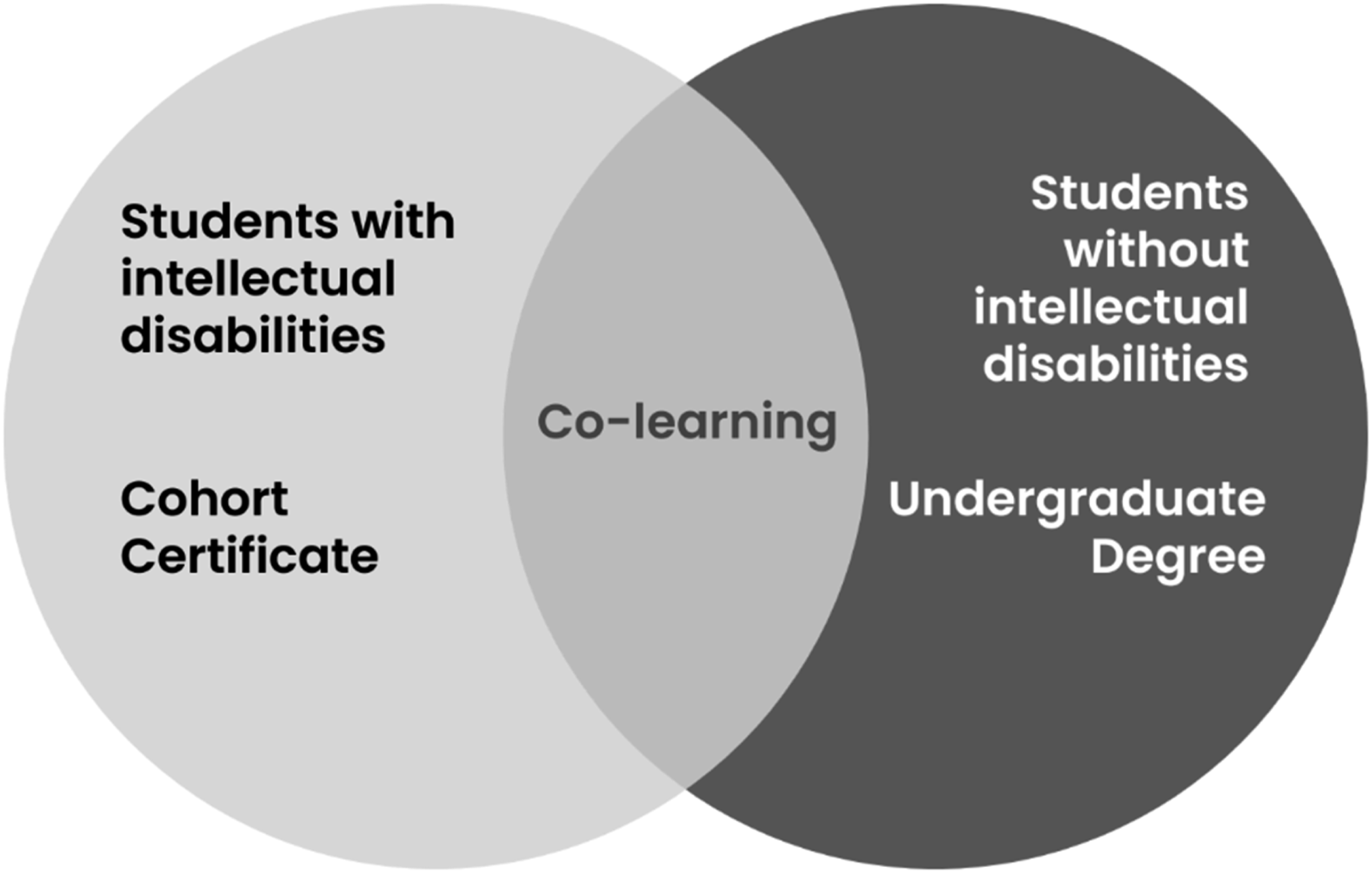
The project was firmly aligned with inclusive education principles (Ainscow et al., 2006; Florian et al., 2017), adopting Universal Design for Learning (UDL) as its guiding pedagogical framework (Camedda et al., 2022; CAST, 2018). UDL principles emphasise multiple means of engagement, representation, and expression, ensuring that learning environments are accessible and responsive to diverse learner profiles from the outset (Boothe et al., 2018; CAST, 2018). By integrating these principles and fostering a community of practice among academic and professional staff, the co-learning module exemplified a proactive, design-based approach to inclusion. This approach moves beyond individual accommodations to embed accessibility and participation within the fabric of university teaching and learning (Fovet, 2021).
Methodology
This study employed a qualitative case study approach to explore a co-learning pilot module involving students with intellectual disabilities and undergraduate English students. Ethical approval was granted by the relevant faculty research ethics committee.
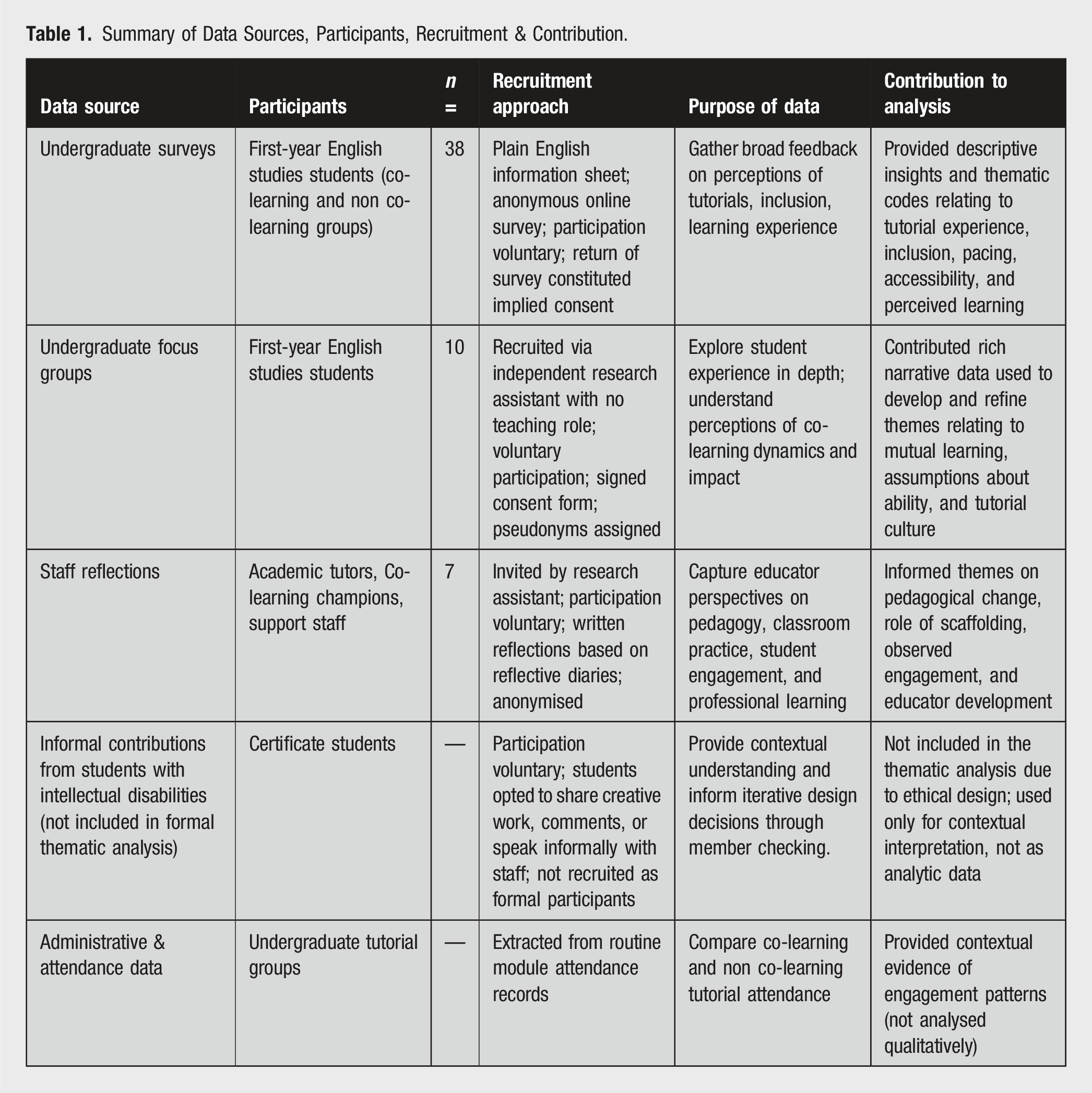
Across two academic years, the project involved 3 certificate students in Year 1 and 6 in Year 2 (with 4 of the 6 opting into co-learning tutorials due to timetable and workload constraints). Approximately 12 undergraduates attended each shared tutorial group, with 38 students completing anonymised surveys across co-learning and non co-learning groups, and 10 participating in voluntary focus groups. Seven staff members contributed written reflections.
Data were collected across two academic years through anonymised feedback surveys and focus groups with undergraduate participants, recruited via purposive sampling. Recruitment and data collection were undertaken by a research assistant who had no teaching role in the module. All students received a plain English information sheet and were informed that participation was entirely voluntary, with no academic benefit or penalty associated with taking part. A returned survey constituted implied consent, while focus groups involved a signed consent form. Students could decline participation without their tutors knowing. Survey and focus group data were anonymised at the point of collection, and all quotations are reported using pseudonyms. Staff perspectives were gathered through written reflections informed by reflective diaries.
Due to the small cohort size and concerns around identifiability, students with intellectual disabilities did not take part in formal interviews or focus groups. This decision was based on the exceptionally small numbers within each year group, which created a high likelihood of identification even with anonymisation. In addition, ethical guidance highlighted the potential for undue influence arising from close, ongoing educational relationships with staff. Students with intellectual disabilities were asked directly what role they wished to play in the project: the majority expressed that they preferred not to be formal research participants and wished instead to participate as students within the module. Many chose to contribute in alternative ways, such as through advocacy activities (e.g. social media campaigns, seminar presentations, or speaking to new student cohorts about co-learning). These informal contributions informed iterative design decisions but were not included in the formal thematic analysis.
Summary of Data Sources, Participants, Recruitment & Contribution.
Design of the Co-Learning Model
The co-learning model was collaboratively developed by academic and professional staff from the School of Education and the School of English at an Irish university. The design aimed to create an inclusive, intellectually rigorous learning environment in which students with intellectual disabilities and undergraduate students could engage with shared academic content as peers. Drawing on established international models of inclusive post-secondary education and co-learning (Grigal & Hart, 2010), the project extended existing approaches through the integration of structured preparatory teaching, shared tutorials, and the intentional fading of targeted support as learner confidence increased.
Universal Design for Learning (UDL) provided the overarching pedagogical framework, informing curriculum planning, teaching strategies, and assessment practices from the outset (CAST, 2018). By embedding multiple means of engagement, representation, and expression within the module design, the model sought to anticipate learner diversity rather than rely on individualised accommodations. This proactive approach aligned with inclusive pedagogy literature that emphasises accessibility as a collective responsibility within higher education teaching and learning.
As illustrated in Figure 2, the co-learning model comprised three interconnected components delivered across a standard twelve-week university term. Selected larger lectures; bridging lecture; co-learning tutorials.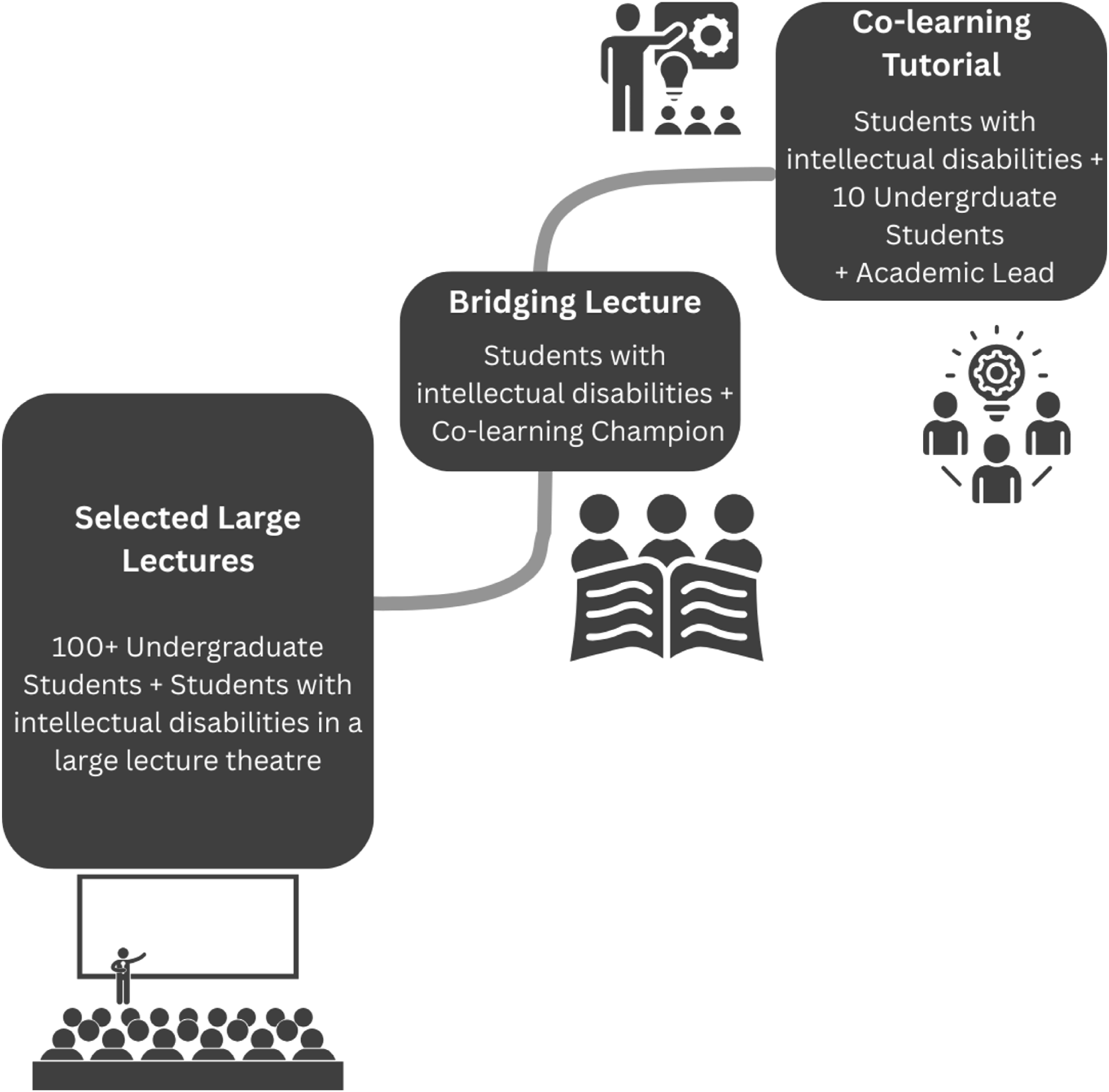
First, certificate students participated in a series of structured preparatory sessions (‘bridging lectures’) facilitated by postgraduate Co-learning Champions. These sessions focused on introducing key themes, concepts, and academic language associated with the undergraduate English Studies module. The Co-learning Champions had completed a certified micro-credential in inclusive education and played a critical role in scaffolding students’ engagement with unfamiliar content and learning formats. Consistent with inclusive post-secondary education research, this support was designed to be temporary and responsive rather than permanent, with a clear intention to promote learner autonomy.
Second, both cohorts participated together in weekly co-learning tutorials. These small-group sessions formed the core shared learning space, enabling dialogic engagement with undergraduate-level literary texts. Tutorials were organised to support collaborative inquiry, with students working in pairs or small groups depending on attendance and seating arrangements. Roles within groups were not pre-assigned but developed organically, allowing students to contribute according to their strengths, interests, and preferred modes of participation. To support familiarity and reduce social barriers, all participants wore name badges during tutorials, a simple intervention that contributed to rapport, ease of communication, and group cohesion.
Third, certificate students attended a small number of selected large-group undergraduate lectures that were considered accessible in both content and delivery. These lectures provided contextual grounding for the tutorial discussions and supported students’ sense of participation within the wider academic community.
The English Studies module itself was organised thematically, enabling all students to explore Irish literary texts through shared conceptual lenses rather than through differentiated or parallel curricula. This thematic structure supported inclusive engagement by foregrounding ideas, interpretation, and discussion, rather than prior disciplinary knowledge. Situating co-learning within an existing undergraduate module also aligned with international inclusive post-secondary practice, where students with intellectual disabilities participate in mainstream academic content without reducing intellectual expectations.
Teaching and learning strategies across all components were aligned with inclusive pedagogies. Academic staff adopted plain English instruction, structured handouts, visual supports, and explicit scaffolding of key concepts and vocabulary. Learning materials were made available in accessible formats through the university’s virtual learning environment. Tutorial activities were designed to sustain academic rigour while enabling multimodal engagement, including close reading, guided discussion, creative response, and reflective group analysis. These strategies supported meaningful participation for both cohorts and reinforced the principle of shared intellectual responsibility.
Although Co-learning Champions were initially present in the first tutorial to support transition, staff observations indicated that certificate students demonstrated confidence and independence from the outset. In response, and in line with evidence-based inclusive practice, the Champions withdrew from the tutorial setting after the first session. This decision was grounded in observed learner autonomy rather than assumptions about support needs and reflected the model’s emphasis on dignity, trust, and supported independence.
Overall, the design of the co-learning model demonstrates how students with intellectual disabilities can engage meaningfully with undergraduate-level academic content when inclusive design principles are embedded within curriculum planning. By integrating preparatory scaffolding, shared inquiry, and the intentional fading of support, the model challenges traditional assumptions about ability and participation in higher education. It illustrates how inclusive co-learning environments can sustain academic rigour while fostering mutual learning, shared ownership, and a more inclusive academic community.
Implementation and Impact of the Co-Learning Model
Impact on Learners
The co-learning model had a significant impact on both groups of learners, fostering meaningful engagement with undergraduate-level academic content within a shared learning environment. Staff observation notes and tutorial reflections indicated that students with intellectual disabilities participated actively in discussions, contributed personal and interpretive insights, and engaged as peers in collective meaning-making rather than as peripheral participants. Their contributions frequently shaped the direction of discussion, particularly where literary themes intersected with lived experience.
One illustrative moment occurred during a tutorial on the poetry of Eavan Boland, where discussion centred on feminist oppression and marginalisation. A student with an intellectual disability connected these themes to their own experience of social exclusion, prompting undergraduate students to reconsider the texts through the intersecting lenses of gender and disability. Undergraduate focus group participants later reflected that this perspective introduced dimensions of interpretation they had not previously considered, demonstrating a moment of explicit mutual learning.
Staff also reported a visible increase in confidence among students with intellectual disabilities over the course of the semester. This was evidenced through voluntary sharing of reflections, creative responses to texts, and informal conversations that extended beyond the tutorial space. Several students independently submitted original poetry or written reflections to academic staff, which were interpreted as indicators of intellectual investment, trust, and a growing sense of academic belonging.
Undergraduate students similarly described the co-learning tutorials as among the most engaging and rewarding aspects of their first-year experience. Survey and focus group data highlighted appreciation for the clarity, structure, and inclusive ethos of the sessions, with many students noting that the learning environment encouraged active participation and confidence in sharing ideas. Some undergraduates initially expressed uncertainty about the co-learning format at the start of the semester; however, this did not translate into resistance. Instead, students reported adjusting quickly to the mixed-group structure and described the tutorials as equivalent in depth and challenge to other undergraduate sessions. ‘It wasn’t difficult or unusual; they were just English students to us’.
Laura, English Studies Undergraduate Student
Administrative attendance records indicated slightly higher attendance rates in co-learning tutorial groups compared with non co-learning groups. While not treated as a formal outcome measure, this pattern was interpreted as indicative of sustained engagement within the shared learning environment.
In addition to pedagogical benefits, the co-learning model revealed practical implementation challenges that required responsive adjustment. Timetabling constraints within the undergraduate programme limited flexibility in scheduling tutorials, while transport considerations meant that evening sessions were not always accessible for certificate students. These challenges were addressed through informal but effective strategies, including tutorial swaps among academic staff and prioritisation of morning sessions. The willingness of staff to adapt institutional routines was critical to sustaining participation and reflects the relational labour often required to enact inclusive practice within existing university structures.
Engagement with Irish literary texts authored by university alumni also contributed to students’ sense of institutional belonging. Staff observed that certificate students expressed particular interest in encountering works associated with writers whose names they recognised from campus spaces, supporting a connection between academic content and students’ experience of the university as a cultural and intellectual community.
Impact on Educators and Teaching Practice
Participation in the co-learning initiative prompted notable shifts in educators’ pedagogical perspectives and practices. Tutors and facilitators consistently reported that the model encouraged greater intentionality in lesson planning, pacing, and communication. One academic described the experience as ‘quietly radical’, noting that the presence of diverse learners prompted closer attention to how ideas were introduced, discussed, and scaffolded. Another reflected simply, ‘It made me a better teacher’.
Staff reflections indicated that inclusive design strategies adopted within the co-learning tutorials – such as plain English instruction, visual supports, and structured discussion – were subsequently transferred into other teaching contexts not formally framed as inclusive. This suggests that co-learning functioned not only as a student-facing intervention but also as a site of professional learning and pedagogical development.
Educators also reported a re-evaluation of what constitutes meaningful participation and success within higher education. While certificate students were not assessed using traditional academic measures, their contributions during tutorials were recognised as intellectually substantive, grounded in lived experience, and integral to shared inquiry. This broader understanding of participation aligns with inclusive pedagogy frameworks that emphasise relational engagement and co-construction of knowledge.
Many staff described enhanced professional satisfaction and a renewed sense of purpose associated with the co-learning tutorials. Written reflections highlighted the sense of community, mutual respect, and collegiality that developed within the classroom. Tutors noted that the shared learning environment fostered an ethic of care and attentiveness to both individual and collective needs, contributing to more rewarding teaching experiences overall.
Taken together, these findings indicate that inclusive co-learning environments can enrich academic inquiry and support pedagogical renewal without reducing academic expectations. By foregrounding shared intellectual engagement, dialogic learning, and inclusive design, the model benefited both learners and educators and contributed to the development of a more reflective and inclusive teaching culture within the university.
Lessons Learnt and Implications for Practice
The implementation of a co-learning model within a university context generated several transferable insights for inclusive practice in higher and adult education. Central to the success of the initiative was the recognition of all participants as equal contributors to shared intellectual work. Rather than adapting content based on assumed limitations, the model demonstrated that inclusive pedagogy is most effective when it prioritises relational, collaborative, and critically reflective teaching practices.
A key lesson concerned the importance of co-design and partnership. Inclusive learning environments do not emerge from curriculum modification alone but from sustained collaboration among educators, support staff, and learners. The involvement of academic tutors, inclusion champions, and professional staff enabled a responsive structure that accommodated diverse needs while maintaining academic rigour. For institutions seeking to replicate this model, embedding collaborative planning processes from the outset is essential.
Flexibility was another defining principle. While academic content remained aligned with undergraduate expectations, facilitators adjusted pacing, presentation, and modes of participation. Visual supports, plain English instruction, and opportunities for multimodal engagement benefited students with intellectual disabilities while also enhancing clarity and accessibility for undergraduate learners. Importantly, these adaptations were low-cost and embedded within routine teaching practice, supporting transferability to a wide range of adult education contexts.
The project also highlighted the significance of educator development. Staff reflections indicated that participation in co-learning prompted deeper consideration of pacing, communication, and assumptions about participation. Professional learning opportunities focused on inclusive pedagogies and Universal Design for Learning can support educators to move beyond deficit-based frameworks and cultivate genuinely inclusive learning environments. Embedding such approaches within mainstream teacher education and professional development programmes is therefore a critical implication.
At a policy level, the findings challenge narrow definitions of educational success that prioritise standardised assessment over engagement, creativity, and co-construction of meaning. Recognising these forms of participation as legitimate learning outcomes supports a broader understanding of inclusion as a pedagogical and relational practice rather than a procedural accommodation. Incentivising inclusive teaching through professional recognition and institutional support structures may encourage wider adoption.
Beyond the university sector, the co-learning model offers a replicable approach for community education, further education, and lifelong learning contexts. By combining structured preparation, intentional heterogeneity, and inclusive facilitation, mixed-ability learning environments can foster mutual learning and disrupt hierarchical assumptions about who teaches and who learns. The findings support the development of inclusive adult education programmes grounded in shared inquiry, accessible design, and supported learner autonomy.
Limitations
Although the model yielded promising outcomes, several limitations must be acknowledged. The project involved a small cohort of certificate students, which limits the generalisability of findings. The decision not to include students with intellectual disabilities as formal research participants – due to identifiability concerns and participant preference – means that their perspectives are represented indirectly through staff observations and voluntary informal contributions. The study was conducted within a single institutional context, and the structural conditions that enabled co-learning (e.g. timetable flexibility, staffing availability, and specialist support) may not be universally present. Future research involving larger, multi-site studies would offer deeper insight into the scalability and long-term impact of co-learning models.
Implementation Roadmap
For practitioners seeking to implement a co-learning model, the following elements are recommended: • • • • • • •
Footnotes

Funding
The authors disclosed receipt of the following financial support for the research, authorship, and/or publication of this article: This work was supported by the Higher Education Authority (PATH 4).
Declaration of Conflicting Interests
The authors declared no potential conflicts of interest with respect to the research, authorship, and/or publication of this article.