




Abstract
High-quality inclusive postsecondary education programs strive for authentic inclusion of students with intellectual and developmental disabilities. Typicality for students and enhanced integration into the larger institution of higher education are guiding principles outlined in recently developed, national model standards. With these novel and inclusive opportunities, students often need support to navigate and troubleshoot the myriad situations that may arise as a result of this level of inclusion on a college campus. Inclusive college programs typically provide support in academic, employment, and independent living domains but often neglect building skills encapsulated under “personal development.” This paper describes a unique personal development model of support with aligned theoretical underpinnings and interdisciplinary practices derived from social work, counselor education, and education fields.
Keywords
With the emergence of inclusive postsecondary education (IPSE) programs, attending college has become a more prevalent option for students with intellectual and developmental disabilities (IDD) (Hart, 2006; Uditsky & Hughson, 2012). Currently, there are 316 IPSE programs nationwide providing students with IDD access to academic courses, employment preparation, and campus membership including social access, typical of college students without IDD (Think College, 2023). The passage of the Higher Education Opportunity Act (HEOA) in 2008 has propelled this movement by providing federal money to support the development of more IPSE programs across the country. In addition, HEOA provides financial aid to students with an intellectual disability who attend IPSE programs that are designated as comprehensive transition and postsecondary programs. To achieve this designation, programs are required to demonstrate participation in inclusive college courses and internships; as well as for students to be socially and academically integrated to the maximum extent possible (HEOA, 2008: Public Law 110-315).
“Personal development for college students can include a variety of transformational experiences, activities, and skills that set emerging adults up for more meaningful lives.”
The practice and purpose of IPSE programs include five contexts of authentic student experience that help support belonging, learning, identity, and contribution (Uditsky & Hughson, 2012). These five contexts include academic, social, associational, employment, and family. Although there is some level of inclusion afforded across most recognized programs, this is based on a continuum, as some programs are completely inclusive across all domains, and some may only have inclusive opportunities in one or two domains (e.g., social and academic) (Grigal et al., 2012). There is variability across IPSE programs in many areas including the degree of inclusivity, autonomy given to students, residential options (i.e., college dorm or apartment), overall student population, and programmatic policies to promote personal and professional growth (Plotner & Marshall, 2015). Personal development (PD) encapsulates support areas that do not neatly fit into academic, independent living, social, or employment domains. For example, PD supports individuals in personal growth and agency, identity development, self-determination, and overall emotional well-being.
With enhanced opportunities for students with IDD comes increased chances that these students will need support to navigate the uncharted waters of social and personal life on a college campus (Plotner et al., 2020; Plotner, Shoemaker, et al., 2023). A long history of having little opportunity for choice, risk, or any meaningful type of self-determined behavior (O’Byrne & Muldoon, 2019) means many students with IDD come to college unprepared to tackle the social and emotional aspects of living independently as a young adult (Bumble et al., 2022; Plotner et al., 2020; Rooney-Kron et al., 2022). Mental health and wellness resources for traditional students on a college campus may not always adequately support students with IDD for a number of reasons. For example, research shows that counselors are often not well-trained in supporting this population (Whittle et al., 2018).
PD for college students can include a variety of often intangible but transformational experiences, activities, and skills that often set-up emerging adults for more meaningful adult lives. Some examples include personal identity exploration and clarification, developing a sense of purpose, developing an awareness of self, gaining functional independence, social maturation, clarification of religious views, emotional regulation, and navigating interpersonal relationships (Kuh et al., 1988; Park et al., 2020). In the 14 years that our IPSE has been in existence, we have come to understand that our students need extra support in navigating the nuances of many of these experiences of PD. To our knowledge, there is no current literature directly speaking to how other IPSE programs in the U.S. support their students with PD.
Think College, the national coordinating center for model demonstration IPSE programs, is dedicated to developing, expanding, and improving research and practice in IPSE programs. Think College has established 10 Standards and Quality Indicators for Inclusive Higher Education, to serve as guidance and essential practices for these programs (National Coordinating Center Accreditation Workgroup (NCCAW), 2021]. The stated goal of the NCCAW (2021) standards is to facilitate better integration of students into the larger institution as well as enhance self-determination for students. Although indicators related to access to coursework and transparency around learning outcomes are easily evaluated, indicators related to authentic inclusion may not be as easily ascertained. These are precisely the indicators our model PD program hopes to address through enhanced self-determination. Authentic and typical inclusion such as the type indicated by these descriptions is often “messy” (Bumble et al., 2022). Bumble and colleagues (2022) use the term “messy inclusion” to cover the range of college experiences that students with disabilities must encounter to be fully and authentically included. They posit:
We must offer experiences that are not “simulated” or “bubble-wrapped,” but are full of the same ups and downs as any other able bodied, neurotypical person’s experience. Whether it is choosing to study art, choosing not to study for a test, having sex for the first time, or drinking alcohol in the dorm room, all of these experiences have tied to them consequences of both a good and bad nature. College is where risk, as messy as it is, can be the strongest teaching tool (p. 4).
PD programs can offer support in navigating the risk involved in this “messy inclusion.”
Traditional degree-seeking college programs typically offer programming and supports for students related to PD through piece-meal and time-limited approaches. This can look like University 101 coursework for incoming freshmen students, which often includes curriculum related to building connections to the university, other students, campus social opportunities, and various resources that could foster personal growth and development. Traditional college programs also typically offer resident advisors to support students living in residence halls with social and independent living development. Although many students enrolled in IPSE programs may have access to these traditional PD supports (those in the program described here do), as previously mentioned, students with IDD may need extra support to derive the full social and relational benefits of college. Singh and Gilson (2020) eloquently describe these intangible, yet transformational, benefits for students in IPSE as “the reciprocal interchange between college and students, whereby students derive meaning and sense of self from their college experiences” (p. 4).
The purpose of this article is to provide an example of how IPSE programs and professionals can approach supporting students with IDD as they navigate PD in college. Specifically, we describe the context of one IPSE program and the specific supports provided through the program’s PD domain and the practices brought to this PD team from social work, counselor education, and education disciplines. Examples of specific practices quilted together from the PD program are incorporated throughout.
IPSE Program Context
The IPSE program where this PD framework of support is currently being implemented has been in existence since 2008 and has a current average annual enrollment of 25 students. Students are required to operate within a new environment with the ability to ask for assistance when needed, as the program is residential and integrated into the existing campus community. The program has a philosophy founded on inclusion, individualization, typicality, and collaboration across university systems, based on each student’s interests and identified support needs. All students have the same opportunities as other college students enrolled at the university, including access to all college-level coursework (for audit), on-campus, non-segregated, dorm-living, and access to all university-sponsored clubs and organizations. Students enrolled in the IPSE program have the option to receive individualized coaching in areas of personal need (e.g., personal finance, healthy relationships) and receive a certificate rather than a bachelor’s degree at the conclusion of the 4-year program. Typicality is a pillar of the program and at the forefront of all programmatic decision-making; thus, all student experiences should be as “typical” as any other of their peers’ experiences.
The impetus for cultivating an interdisciplinary coaching model is two-fold. First, we aim to align the support provided by the IPSE with various areas of expertise. For example, students studying education or special education are often recruited to support IPSE students in the academic domain. Counselor education and social work students often support IPSE students in PD. These partnerships with faculty and students across campus departments are initially formed by offering fieldwork, internships, and graduate assistantships within the IPSE. Inclusive postsecondary education program leadership work with faculty to develop individualized professional development plans to develop student goals while maximizing IPSE student success, ensuring the model is mutually beneficial.
We implement a model of support that utilizes graduate student employees as coaches for students with IDD. Although some IPSE programs utilize a peer mentor model of support (Wilt & Morningstar, 2020), our program employs master-level and doctoral-level students that typically hail from a variety of disciplines (e.g., psychology, social work, special education, and counselor education). The vast majority of our student staff is paid, but on occasion we host field placement students and interns from disciplines like social work and rehabilitation counseling who perform unpaid field placement or internship hours within these roles. Through our partnership with the College of Social Work, master-level students satisfy a 400 to 500 hr field placement requirement through their work with our program. In addition, counseling students (masters-level or doctoral-level) are eligible to use hours of direct support to satisfy their respective practicum and internship hours as long as the hours follow the Council for Accreditation of Counseling and Related Educational Programs (CACREP, 2016) field experience requirements. Masters-level counseling students need 280 direct service hours (including both practicum and internship) and doctoral-level counseling students need 40 direct service hours (please note that doctoral-level counseling students begin their program of study with their masters degree completed). Due to the practicum/internship requirements for Master-level counseling students, they typically complete hours in an additional setting. These graduate student employees support students across five domains of college life: academics, employment, independent living, social engagement, and PD. This person-centered model is driven by the IPSE students’ vision and career goals (Hart, 2006).
PD Domain Supports and Teaming
The PD domain seeks to support students in their personal growth as they work toward independence and agency. Each student enrolled in our IPSE program has the opportunity to work weekly, one-on-one with a PD coach to create individualized goals to meet their unique needs. These goals typically involve the student’s holistic wellness, personal identity development, aspects of forming healthy relationships, and learning to cope with stressors that interfere with optimal day-to-day functioning. In addition, students work with their PD coach to develop leadership skills, self-awareness, and problem-solving skills, as well as other self-determination-related skills.
College students enrolled in the IPSE are paired with a PD coach to assist them with the creation and progress toward their individualized goals. PD coaches are doctoral or masters-level students in counselor education and supervision with a professional identity rooted in counseling. Our current PD coaching model utilizes faculty advisors in counselor education and special education to provide organic support weekly to the PD coaches as a way to promote professional learning and growth.
The PD support team maintains a weekly structured meeting to discuss student progress and collaborate on strategies to enhance PD meetings and the students’ experiences. In addition, PD coaches are asked to collaborate on student-specific situations and present issues that involve crisis situations or behavioral concerns in an effort to provide constructive support to the student in a nonjudgmental atmosphere. The PD coaches can utilize their counseling, social work, or special education background to better understand the concern from the student’s perspective and develop strategies (e.g., increasing motivation and enhancing time management) for the student to be successful in other domains of life. PD coaches are knowledgeable of and have access to resources on campus and in the community that can assist students should the need for a higher level of care arise. Ultimately, the PD coaches serve as a resource for both staff and students to better understand holistic wellness, mental health, and identity development of emerging young adults in college. A visual representation of the support provided in the PD domain can be found in Figure 1. What follows is a brief overview of the three disciplines that we have found to be beneficial and that we recommend be considered when providing PD support to students in IPSE.
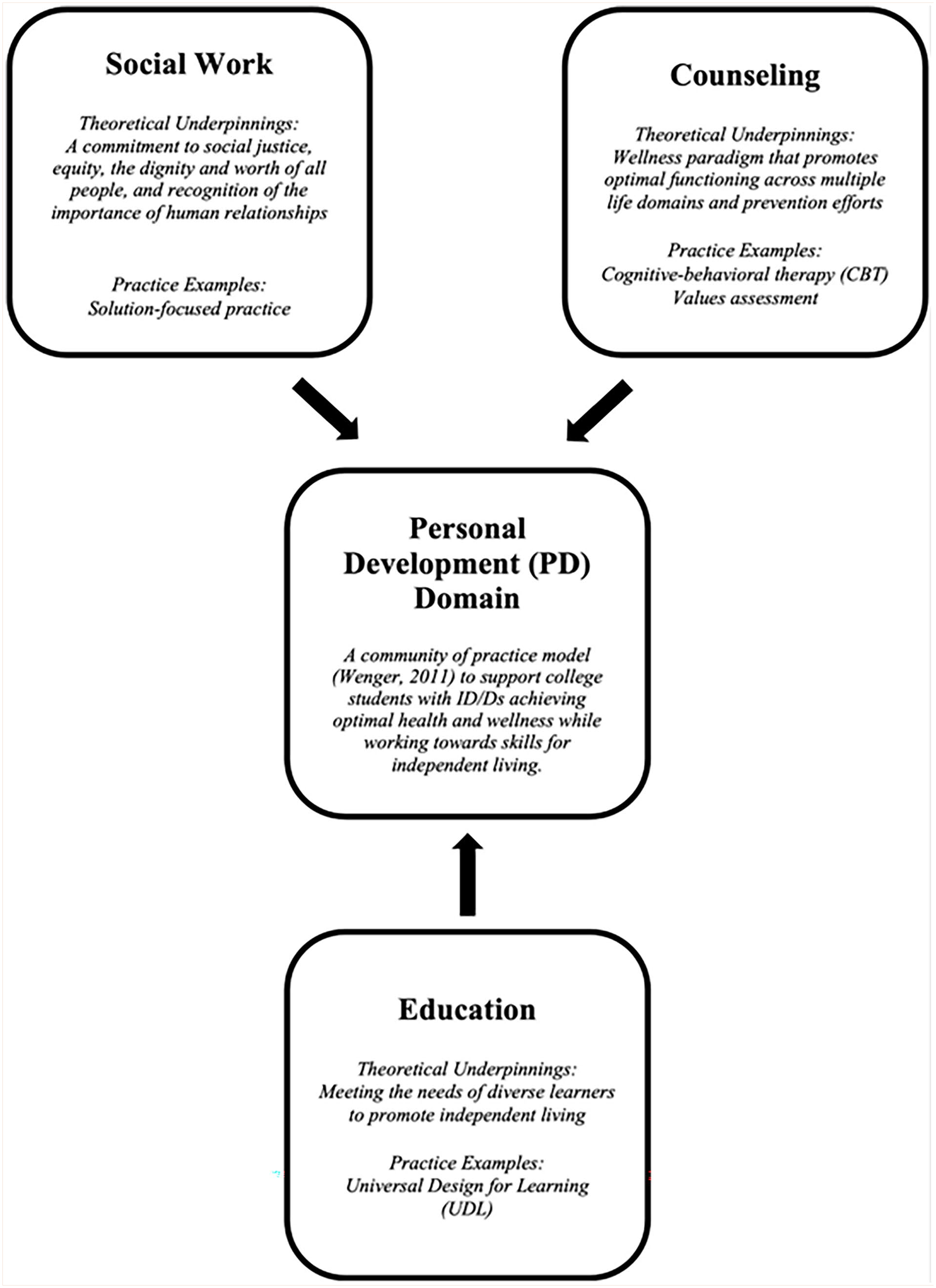
Visual Representation of the Personal Development Domain.
Social Work Practices
The social work profession is guided by the National Association of Social Work’s (NASW) Code of Ethics. The NASW Code of Ethics (2022) includes core values, ethical principles to guide practice, and ethical standards to guide social worker conduct. The core values promote social justice, equity, the dignity and worth of all people, and recognition of the importance of human relationships. Our IPSE and the PD domain are also underpinned by these values and draw upon practices rooted in social work to support students in their PD. From the field of social work, the PD team draws upon Saleeby’s (1996) strength-based approach to establish positive rapport with students as they enter into and pursue personal goals via the relationship with their PD coach. A strength-based approach is a model which views the individual holistically and explores their capabilities and circumstances rather than focusing on weakness or deficits. Although the strength-based approach is neither new nor novel to the field of social work, supporting individuals from a strength-based perspective and model has often been overlooked in special education settings (Elder et al., 2018). Our PD community of practice infuses a strength-based approach into all that we do. The Personal Development Wellness Plan (Figure 2) is underpinned by strength-based goal setting and bound to infuse student strengths into all plans for holistic wellness.
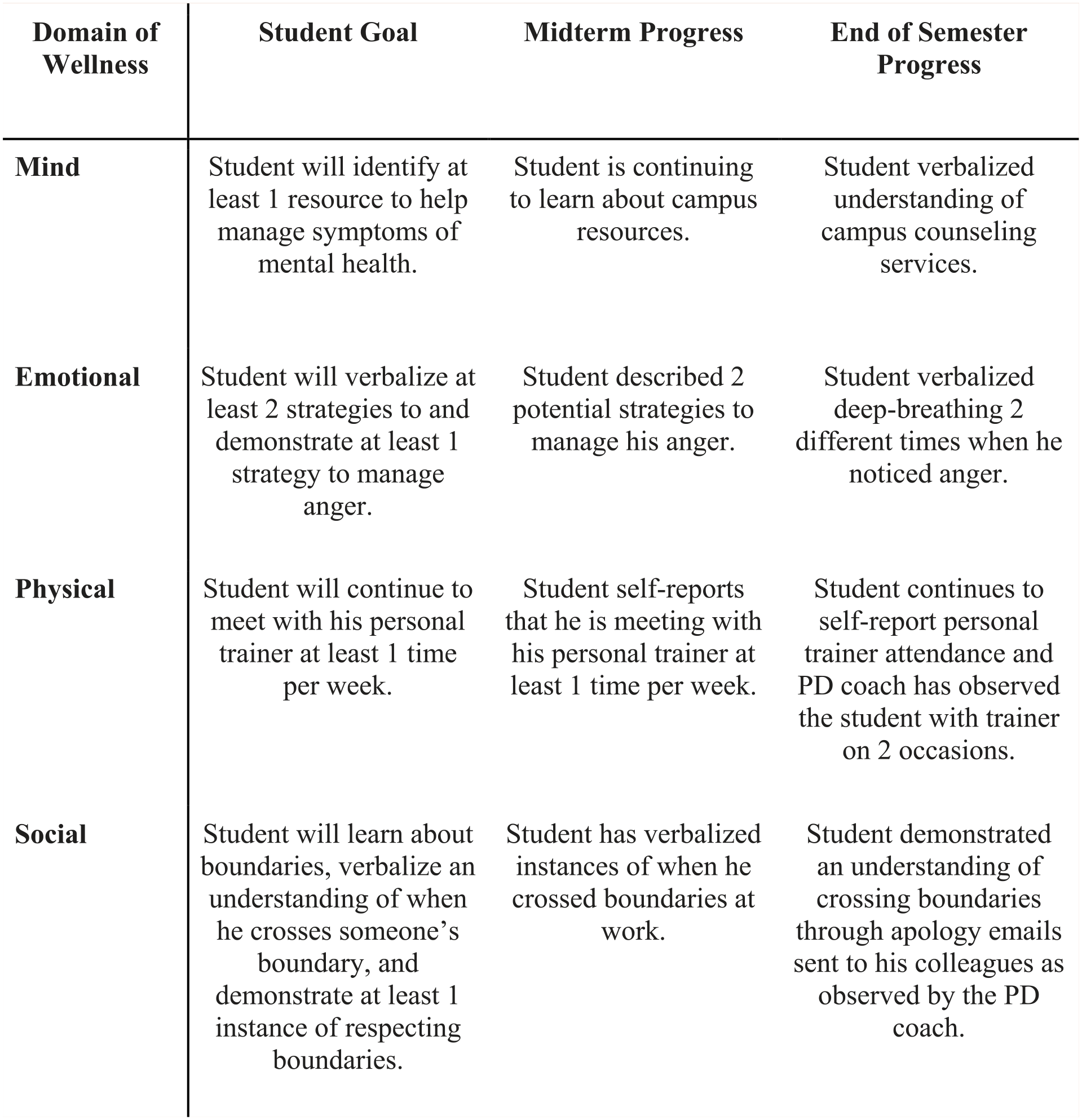
Jayson’s Final Personal Development Wellness Plan.
The strength-based approach offers a genuine foundation for addressing the primary concerns of IPSE programs and overall wellness support in general–people taking control of their own lives in meaningful and sustainable ways (Hammond, 2010). The core principles of strength-based practice, including the belief that positive change occurs in the context of authentic relationships and the belief that every person has potential and it is their strengths that will determine their evolving story (not their limitations; Saleeby, 1996), makes the approach well-suited for working with individuals with disabilities in a college setting. The approach dovetails well with a solutions-focused model in that it does not attempt to ignore problems or difficulties, rather it empowers the individual to identify the positive aspects of their resources, environments, and personal skills (Hammond, 2010).
A solutions-focused practice model is a related model also from the field of social work that we use in our PD students’ support (Berg, 1994). This model complements the strength-based approach as it involves working with the student collaboratively to identify a problem or issue, and then creating a solution based on student strengths. This practice helps students cope with challenges using very specific and pointed behaviors. Instead of focusing on changing the person, the focus is on changing the person’s behavior in certain situations to achieve more favorable outcomes (Berg, 1994). A critical component of the solutions-focused practice model is that the student plays an essential role in identifying the positive changes they are going to make. By discussing specific challenges with the PD coach, then working together to identify solutions, and then an action plan to address the issues, students take ownership of their goals. This ensures implementation of the changes because the student had a role in suggesting them.
One example that highlights the critical contribution that the unique skill set social workers bring is their emphasis on trauma-informed care and understanding individuals within the context of their environments. In one case, Tommy, a freshman, conveyed to his PD coach that he was struggling to make connections and establish social relationships since being in college. Social workers from our PD team with expertise in systems theory–the idea that all people are affected by multiple systems and environments, and all should be taken into consideration when supporting that person–assisted Tommy’s special education-trained PD coach in better understanding the various systems through which they could support him. Other on-campus supports (e.g., other coaches in the IPSE program or natural supports such as Housing resident mentors) was one system and layer of support and collaboration. When his PD coach supported Tommy in reaching out to others on his support team, they all worked together to enhance his access to new social connections via Residence Life Workshops and collaborative academic tutoring sessions with IPSE peers. As well, a social worker on the team shared the local Center for Independent Living (CIL) as an additional system and community resource available to support Tommy in his quest to establish new social relationships, as the CIL hosts regular “hang outs” for young adults with disabilities in the community.
Counseling Practices
Wellness counseling provides PD coaches with an operational foundation. According to Myers et al. (2000), wellness is “a way of life oriented toward optimal health and well-being, in which body, mind, and spirit are integrated by the individual to live life more fully within the human and natural community” (p. 252). Wellness counseling recognizes the whole individual with their own specific needs and ways of understanding the world. A wellness approach works across the five core domains of wellness: mind, body, spirit, emotion, and connection (Ohrt et al., 2018). As such, PD coaches are part of a student’s support team that allows for collaboration with the student and various domain coaches within the IPSE program. For example, to enhance social connection when working with a student, a PD coach might provide in-session skill-building and role-playing, while the social engagement coach would provide concrete experiences for the student.
Beyond a wellness paradigm, PD coaches commonly use theoretical tenets from cognitive behavioral therapy (CBT). Developed in the 1960s as an approach to bridge biological frameworks, cognitions, and emotions, CBT is a structured, time-limited theoretical stance that is grounded in the idea that one’s thoughts result in one’s feelings and behaviors (Seligman & Reichenberg, 2013). Through a CBT framework, professionals challenge their client’s irrational or unrealistic thought patterns, termed cognitive distortions, to help create a more adaptive worldview. CBT is also a documented approach to working with individuals with IDD (Willner & Lindsay, 2016). Specifically, Willner and Lindsay (2016) noted that CBT can be adapted to meet the unique needs of individuals with IDD, such as using more simplified language to challenge cognitive distortions. Finally, CBT is a therapeutic approach that provides a framework to measure progress (Seligman & Reichenberg, 2013), making it simple for PD coaches to demonstrate Think College standards (NCCAW, 2021).
Counselors are trained to have a unique depth of psychological understanding, which contributes to their ability to support others in navigating their own mental health and wellness. Table 1 offers an example of a PD coach trained in counseling providing a specific intervention related to emotions to the student he is supporting. Here Jayson and his PD coach discuss a “body scan” as a specific strategy to enhance awareness of his angry feelings in real-time. This particular behavioral intervention, the “body scan,” is one rooted in counseling and the specific mode of implementing behavior change as opposed to focusing on a problem within the individual draws on social work’s solutions-focused practice.
Sample One-on-One Personal Development Coaching Session.
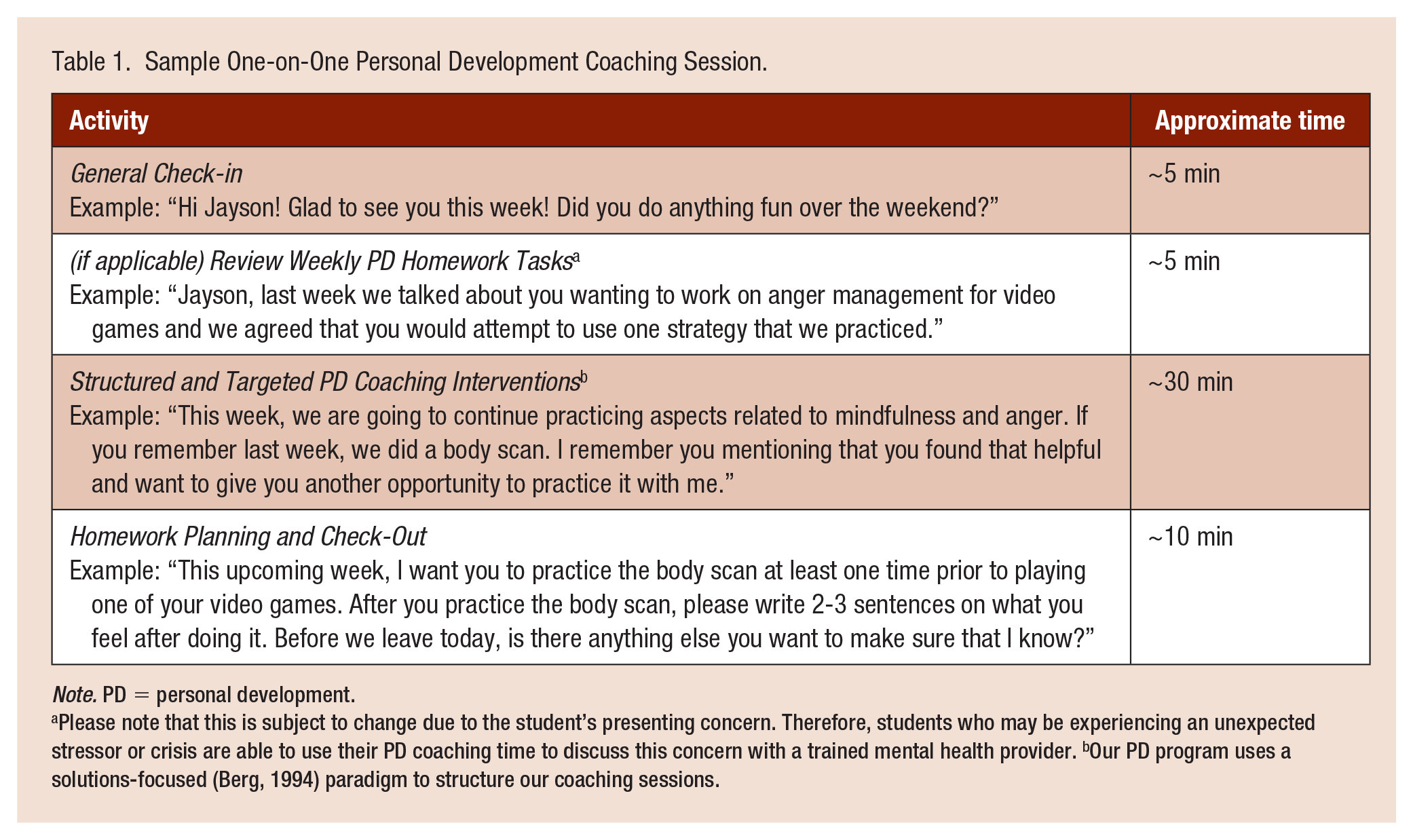
Note. PD = personal development.
Please note that this is subject to change due to the student’s presenting concern. Therefore, students who may be experiencing an unexpected stressor or crisis are able to use their PD coaching time to discuss this concern with a trained mental health provider. bOur PD program uses a solutions-focused (Berg, 1994) paradigm to structure our coaching sessions.
Education Practices
Universal Design for Learning (UDL) is a framework and set of guidelines including a set of concrete suggestions that can be applied to any discipline or domain to ensure that all learners can access and participate in meaningful learning opportunities (Cast, Inc., 2000). UDL guidelines consist of incorporating multiple means of engagement, multiple means of representation, and multiple means of action and expression, all with the aim of optimizing learning for all learners by enhancing inclusivity. UDL can be used to proactively design learning environments that are inclusive, flexible, and supportive, taking into consideration the variability of all learners (Rose & Meyer, 2006). A primary component of PD is teaching students new skills and practices that can enhance their wellness and assist them in achieving their life goals. UDL principles are employed to ensure accessible and effective learning for students with varying degrees of support needs. Examples of incorporating multiple means of engagement with material include making examples applicable to the student’s life and accessing the student’s own interests. To incorporate multiple means of representation, support providers may use checklists, visual supports, or auditory reminders on a student’s cell phone.
High-leverage practices (HLPs) for students with disabilities are explicitly infused into our PD practices with students. These practices were developed by the Council for Exceptional Children (CEC) and the Teacher Education Division of CEC for use by special education teachers. The HLPs were developed in four domains: collaboration, assessment, instruction, and social-emotional support (McCray et al., 2017). PD coaches tap into many of these practices when directly instructing students in PD-related skills such as goal setting or problem-solving. High-leverage practices such as using multiple forms of information and engagement to assess for understanding, and providing scaffolded supports in direct instruction are integral to the success of our students.
An intervention designed by our PD team to support Sarah, a sophomore student, in getting to class and coaching sessions on time, is an example of scaffolded supports. After asking Sarah about her preferred modes of reminder and types of supplemental aids (e.g., paper vs. electronic), a special educator on the team assisted her PD coach in creating a system to aid Sarah in enhancing her time management skills including: a daily schedule, color coded and on paper, taped to the wall in Sarah’s room and also in a 3-ring binder in her backpack with all of her classes, coaching supports, and other important recurring meetings; personalized reminders at 15 min and 5 min intervals prior to each appointment, entered into Sarah’s phone; and practicing getting ready to start the day using role-play in Sarah’s dorm, including morning routine practice, gathering needed items for class/meetings, and practice navigating to each place on her schedule to ascertain the amount of time she must allow to arrive on time. These supports were tailored to Sarah’s preferences and support needs and as she gains proficiency in arriving on time, the supports can be faded.
Implementing a PD Program
To establish a similar IPSE PD program, the key component is gathering the professional team. As mentioned throughout, the interdisciplinary nature of our team is truly what makes our PD program unique and serves our students well by bringing varied and complementary skills and ideas to the support domain. Although our specific PD team is made up of master’s and doctoral level students from special education, counselor education, and social work disciplines, we surmise that many other complementary disciplines may be useful on a PD team. Some examples of other similar disciplines include occupational therapy, rehabilitation therapy, psychology, various other education majors, and public health. Partnerships should be forged between the IPSE and the various departments identified within the university to garner the graduate-level PD coaches. Although each discipline has different requirements for graduation, often graduate programs have fieldwork requirements that students’ work within the IPSE may serve to satisfy, thereby making the partnership mutually beneficial.
Once a diverse group of PD team members are assembled, each semester coaching assignments are made. Students are often paired with PD coaches with whom they have existing and productive PD relationships. For example, a current senior IPSE student has worked with the same PD coach for several semesters, as they pair has built great rapport and continuity has been important to the student’s progress toward PD goals.
Once the PD coaching team is established, it is advisable to identify a PD team leader to organize the team. This person will be responsible for training the team in how to provide coaching support to students, they will create the coaching pairings at the outset of each academic year, and they will also lead the weekly PD team meetings. An example of an Agenda for a weekly PD team meeting is included in Table 2. Our model includes training our PD coaches about our IPSE’s philosophy and model as well as specific strategies and tools to utilize in coaching sessions prior to the beginning of each academic year.
Sample Personal Development Team Meeting Agenda.
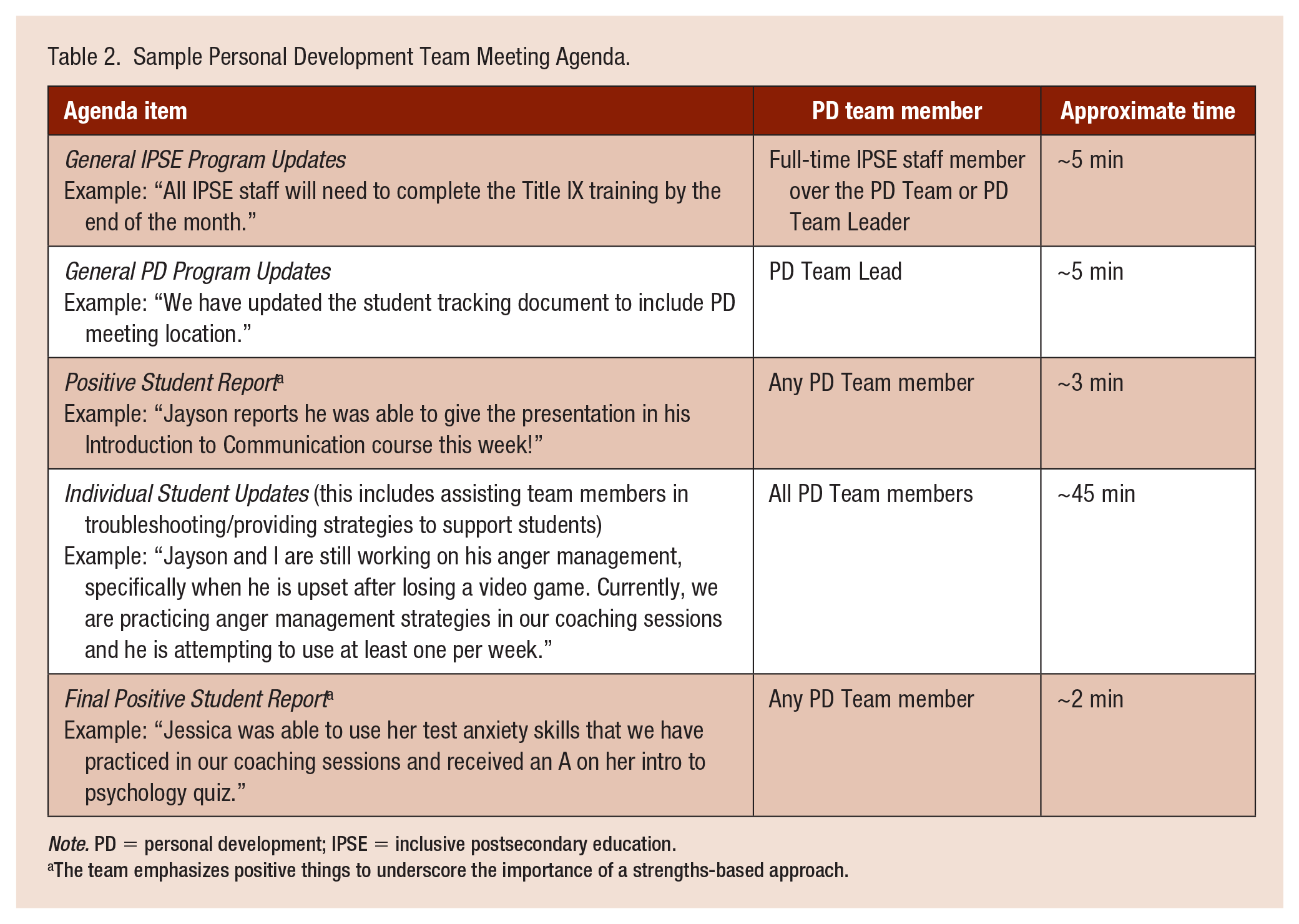
Note. PD = personal development; IPSE = inclusive postsecondary education.
The team emphasizes positive things to underscore the importance of a strengths-based approach.
During each academic semester, IPSE students meet with their assigned PD coach for up to 1 hr each week. Per our program’s philosophy (and aligned with the Think College standards), this support is person-centered and the student is encouraged to take the lead regarding topics for discussion and supports they request within the domain. An example of a PD coaching session is included in Table 1. Because the range of PD topics is so broad, we have found that all students can find some way to effectively utilize this support, whether it be for time management strategies, strategies for effectively managing stress or anxiety, or garnering skills for conflict resolution, the ways in which PD is beneficial for IPSE students are endless!
Benefits of an Interdisciplinary Team
“Interdisciplinary team work is a complex process in which different types of staff work together to share expertise, knowledge, and skills” (Nancarrow et al., 2013, p. 1) to best support a student. The IPSE setting within which our PD team operates is in essence a large interdisciplinary team in and of itself. This staffing model is not only convenient due to the fact that our IPSE program is situated on a college campus where students of varied disciplines are taking coursework themselves, but the experience this model offers pre-service professionals in the fields of counselor education, social work, and special education is invaluable. Additional benefits to interdisciplinary teaming to support students in IPSE follow.
Expanded Pool of Ideas
Specific to the interdisciplinary nature of the PD team, we have found multiple benefits to weaving theory and practice from multiple disciplines into our work with students. In our work as a PD team, we meet weekly to discuss student cases, brainstorm solutions, and share ideas on how best to support students. Because the team members include a social worker, counselor educators, and a special educator, the theories, practices and experiences brought to the conversation are inherently nuanced and distinct between the disciplines. Diverse and numerous ideas on varied supports for students lead to multiple valid ways to provide the best possible support and outcomes for students. We often walk away from team meetings with fresh ideas and multiple ways to support students with IDD who navigate college life and their emotional wellness.
Expanded Network of Resources
Professionals hailing from disparate disciplines typically leads to professionals bringing different community and campus networks and connections to the team. Counselor educators share the counseling and wellness-related campus and community resources. Social workers may bring a network of resources related to LGBTQ+ community needs or contacts to assist when a student is in need of travel training in the community. In addition, our special educator may be able to connect other team members with resources to assist with differentiating skill instruction in multiple ways. By bringing together professionals from different fields, we also bring together those professionals’ professional networks and share them with each other. This ultimately broadens each team member’s list of community resources to share with the students they serve, and that is beneficial for all.
Support, Growth, and Learning for Professionals
No matter how new or how seasoned a professional is, there will be students and situations that are difficult. Support from other professionals is helpful and important to address issues of countertransference within the PD domain. A diverse team of professionals brings to the table a diverse means of supporting each other through demanding situations when working with challenging students or situations. Finally, a tangential yet highly beneficial aspect of the interdisciplinary nature of our PD team is the fact that the team members learn and grow as professionals in ways that would not happen if they were not working with professionals from disciplines other than their own. Integrated service delivery models including interdisciplinary teaming, where professionals from different disciplines work together to support a common client, are used in many human service sectors including mental health and special education (Rousseau et al., 2018; Stayton, 2015). A professional workforce that cannot only team across disciplines but also understands theory and practice across disciplines is a workforce that serves clients and ultimately any agency or team they work within a more dynamic capacity.
Pre-Service Professional Preparation
In 2010, Laws and colleagues investigated how well 50 top-ranked CSWE-accredited U.S. schools of social work prepared social workers to work with people with developmental disabilities and uncovered that there was a clear gap in offerings. Nationwide, only 37% of schools offered at least one course tailored to the broad study of disability in the preparation of Master’s level social workers (Laws et al., 2010). Similarly, a survey of 141 instructors in CACREP-accredited counselor education programs conducted by Feather and Carlson (2019) found that only 47% of instructors reported teaching relevant counseling strategies related to working with clients with disabilities. Working directly with college students with IDD as pre-service social workers and counselor educators fills a gap within the preparation programs as identified by this research. Indeed, within the field of special education, recent research has found that working in an IPSE program is a valuable contribution to pre-service teachers’ professional development (Plotner, Marshall, & Smith-Hill, 2023).
Conclusion
In conclusion, the benefits of interdisciplinary teaming to support students in an IPSE context are myriad. Our PD domain of support brings together best practices and theories from counseling, social work, and education, combining and sharing expertise and practice to support students with IDD navigating college life in a nuanced and holistic way. Over the years that our program has implemented this teaming strategy, we have seen not only social and personal success for students in the ISPE program, but enhanced professional outcomes for pre-service interdisciplinary team members. For students, these successes look like roommate conflicts successfully mediated and navigated, productive coping skills used to manage stressors, and healthy relationships established and maintained, among many other social-emotional wins. For the graduate student employees providing PD support within our program, they report an invaluable experience that builds their professional skills related to supporting emerging adults with diverse needs in varied aspects of human development. Regardless of the model of support an IPSE implements, a similar model of PD support could be created by partnering with various college and department faculty and departments to offer meaningful fieldwork, internships, or paid graduate assistantships.
Footnotes
Conflict of Interest
The author(s) declared no potential conflicts of interest with respect to the research, authorship, and/or publication of this article.
Funding
The author(s) received no financial support for the research, authorship, and/or publication of this article.
