




Abstract
Government measures to limit the spread of COVID-19 affected crime opportunities and criminal justice systems, resulting in changes in crime trends. This article explores the effects of restrictions (lockdowns) on the number of femicides. The monthly data on femicides from 2017 to 2021 were collected in five Central and South-eastern European countries: Croatia, Hungary, Montenegro, North Macedonia, and Slovenia. The total number of femicides from 2017 to 2021 decreased in all observed countries. Increases were detected in Croatia and Slovenia in 2020. However, they presented an exception to the general trend. The monthly distribution of femicides showed that there was no common point peak month(s) among observed countries. Analyzing the effects of the level of restrictions using the Stringency Index on the number of femicides confirmed the initial observation that the number of femicides was not dependent on lockdown measures. In general, the findings show that restriction measures had no effect on the number of femicides in the studied countries.
In November 2019, the first case of COVID-19 was detected in China. The disease spread with unprecedented speed and developed into a pandemic that hugely impacted society on all continents. Government measures to address the crisis affected crime opportunities and criminal justice systems, resulting in changes in crime trends. Jaccoud et al. (2021) summarized the key changes in crime trends as a result of measures related to COVID-19: (1) certain crimes (e.g., property crime and crimes against persons related to the night economy) were significantly reduced, (2) the crime reduction was concentrated to specific geographic areas (e.g., city centers), (3) certain forms of crime were increased (e.g., cybercrime, domestic violence), (4) most forms of crimes that decreased after the pandemic [and related measures] increased once again after government restrictions were eased/lifted, and (5) organized crime was initially disrupted but later adapted to the pandemic context.
Government restrictions to limit/contain the spread of the disease had a significant impact on an individual’s movement. Nivette et al. (2021) analyzed the effects of COVID-19-related measures and changes in society on the number of daily homicides in 27 cities across 23 countries and discovered that there was a marginal decline in homicides after the implementation of stay-at-home restrictions. In contrast, Meyer et al. (2022) detected an increase in homicides in the 28 largest cities in the United States. However, the number of homicides in the United States in 2020 increased even before the stay-at-home restrictions, indicating limited effects of pandemic measures on homicides despite a significant decrease in most violent crimes (Abrams, 2021). According to the expectations posited by the Routine Activity Theory (Cohen & Felson, 1979), the convergence of victim(s) and offender(s) in a reduced space for an extended period, with a simultaneous lack of formal social control, can lead to an increase in domestic violence offenses including femicide. However, in contrast to expectations, restriction measures during COVID-19 have not affected the number of femicides (Aebi, Molnar, & Baquerizas, 2021; Calderon-Anyosa & Kaufman, 2021; Cantor et al., 2022; Hoehn-Velasco et al., 2021).
The results on the impact of stay-at-home restrictions on homicides are mixed. For example, following opportunity theory and daily routine theory (Cohen & Felson, 1979; Eck & Weisburd, 1995), one can expect that the number of homicides would decrease, but what of the countries where intimate partner homicide presents a majority of homicides (e.g., Slovenia)? Applying strain theories (e.g., (Cullen et al., 2011; Merton, 1968) to the restraint measures following COVID-19, one could expect that increased stress, anxiety, and anger of individuals (i.e., potential offenders) [should] lead to an increasing number of homicides in a domestic environment and femicides. However, while the number of domestic violence in general increased (Campbell, 2020; Jaccoud et al., 2021; Piquero et al., 2021), no significant changes in the number of femicides were detected during the COVID-19 pandemic (Aebi, Molnar, & Baquerizas, 2021). Building on these findings, this article focuses on femicide during COVID-19 in six European countries (Croatia, Hungary, Montenegro, North Macedonia, and Slovenia). The aim is to present the development of the COVID-19 pandemic and government measures in the countries mentioned above and to test their impact on the number of femicides. The study contributes to the existing knowledge on COVID-19 and crime in the following ways. First, it was implemented in European countries that were usually neglected in similar studies, providing a first comparative insight into the effects of the pandemic on femicides in Central and South-eastern European countries. Second, the study focuses on femicides (by month) over a more extended period (2017–2021) than [to the best of our knowledge] previous studies, providing the opportunity to determine femicide trends and possible effects of stay-at-home restrictions, as well as the effects on the number of femicides after restrictions were loosened. Finally, the number of femicides on a national level during the COVID-19 pandemic was analyzed. Not only those in major cities but a limited number of cities (settlements exceeding 100,000 inhabitants) are characteristics of Croatia (3), Hungary (8), Montenegro (1), North Macedonia (1), and Slovenia (1). The article proceeds as follows. The first part of the article presents the development of the COVID-19 pandemic and stay-at-home restrictions in studied countries. In the second part of the paper, femicide trends and the impact of restriction measures on the number of femicides are presented. In conclusion, the implications of the study are discussed.
COVID-19 in Croatia, Hungary, Montenegro, North Macedonia, and Slovenia
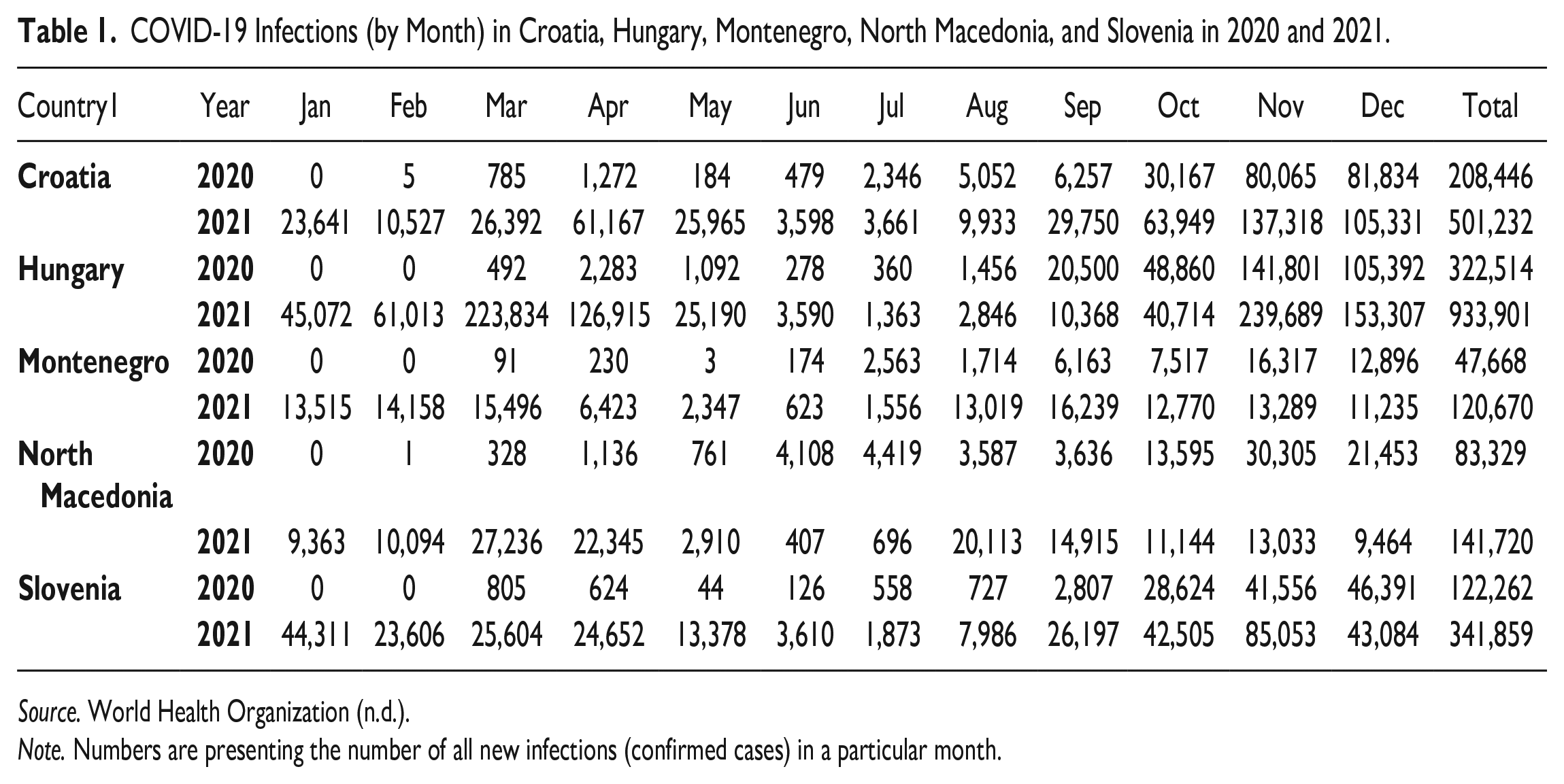
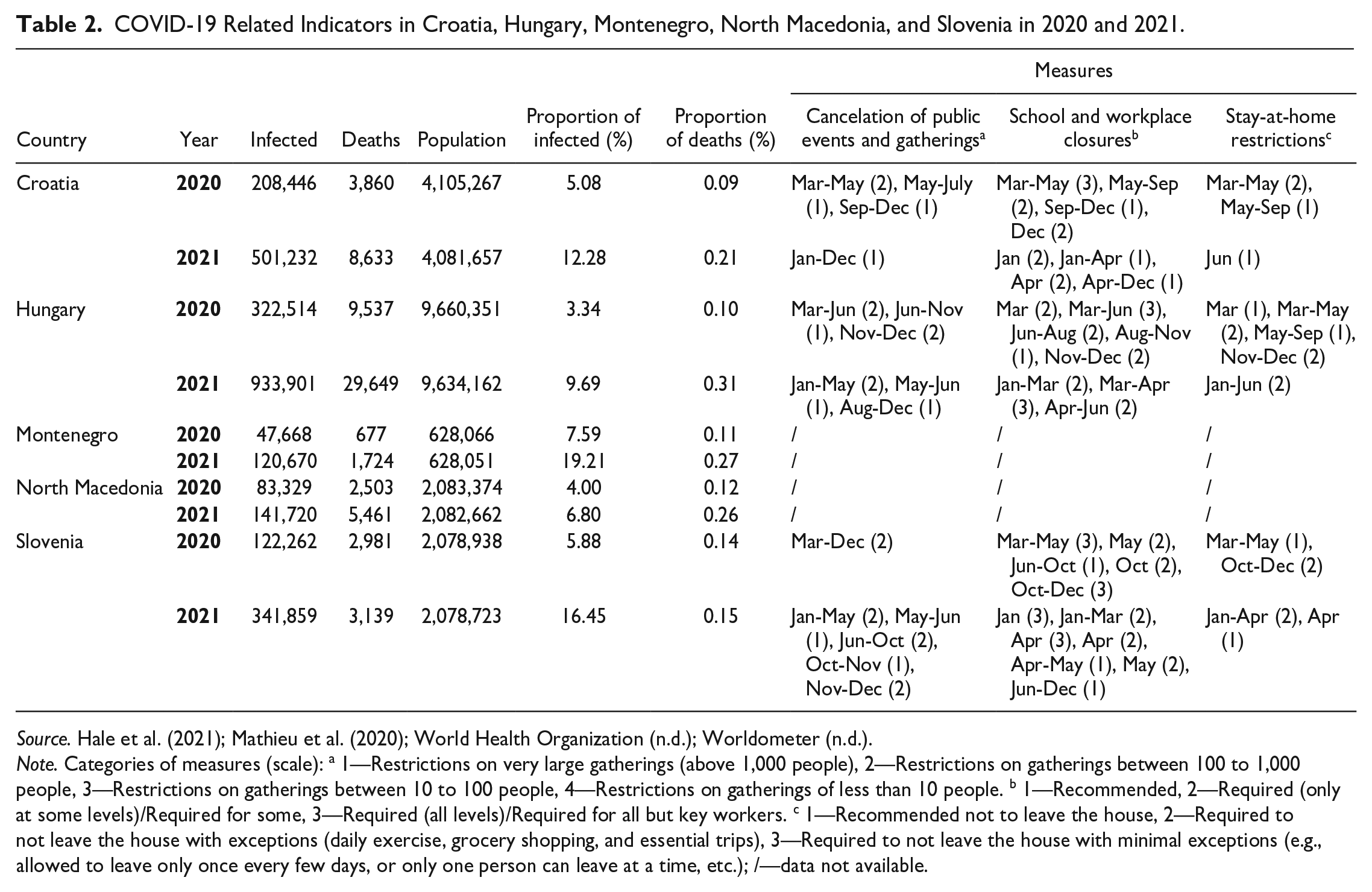
The arrival of the COVID-19 pandemic in countries of Central and South-eastern Europe profoundly affected the societies of these countries. Owing to the fear of repeating the situation in northern Italy (e.g., Bergamo), where hospitals were overwhelmed and the level of infections dramatically increased every day (Senni, 2020), Croatia, Hungary, Montenegro, North Macedonia, and Slovenia implemented strict restrictions that resulted in lockdowns and at least a partial halt to social life in March 2020, when the number of infections started to rise (Table 1) (Korajlija & Jokic-Begic, 2020; Kregar Velikonja et al., 2021; Szabó et al., 2020). In the first wave of the COVID-19 pandemic, the worst outcome was avoided, and restriction measures were loosened from May 2020 onwards during the summer months. However, the number of infections increased significantly in most countries from September onwards (in Croatia and North Macedonia, even sooner during the summer months) (Graph 1). The number of infections continued to increase until November 2020 (Hungary, Montenegro, and North Macedonia) or December 2020 (Croatia and Slovenia), when a short decrease period began. In the first 4 months of 2021, the observed countries experienced different trends of infections. The low rate of infections ended in July when the number of infections started to grow once more and lasted, similarly to the previous year, until November. The total number of infections in the first year increased to 208,446 (5,200 infections per 100,000 inhabitants) in Croatia, 322,514 (3,176 infections per 100,000 inhabitants) in Hungary, 47,668 (469 infections per 100,000 inhabitants) in Montenegro, 83,329 (3,995 infections per 100,000 inhabitants) in North Macedonia, and 122,262 (5,768 infections per 100,000 inhabitants) in Slovenia. The number of infections in 2021 increased in all observed countries. It amounted to 501,232 (12,504 infections per 100,000 inhabitants) in Croatia, 933,901 (9,195 infections per 100,000 inhabitants) in Hungary, 120,670 (19,261 infections per 100,000 inhabitants) in Montenegro, 141,720 (6,795 infections per 100,000 inhabitants) in North Macedonia, and 341,859 (16,128 infections per 100,000 inhabitants) in Slovenia. In 2020, the highest proportion of infected persons was detected in Montenegro (7.59% of the population) and the lowest in Hungary (3.34% of the population). Similarly to the previous year, Montenegro had the highest proportion of infected persons in 2021 (19.21% of the population), while the lowest was detected in North Macedonia (6.80% of the population). The highest proportion of deaths related to COVID-19 in 2020 was detected in Slovenia (0.14%) and the lowest in Croatia (0.09%). The situation changed significantly in 2021, when Slovenia recorded the lowest proportion of deaths related to COVID-19 (0.15%), while the highest was detected in Hungary (0.31%) (Table 2).
COVID-19 Infections (by Month) in Croatia, Hungary, Montenegro, North Macedonia, and Slovenia in 2020 and 2021.
Source. World Health Organization (n.d.).
Note. Numbers are presenting the number of all new infections (confirmed cases) in a particular month.
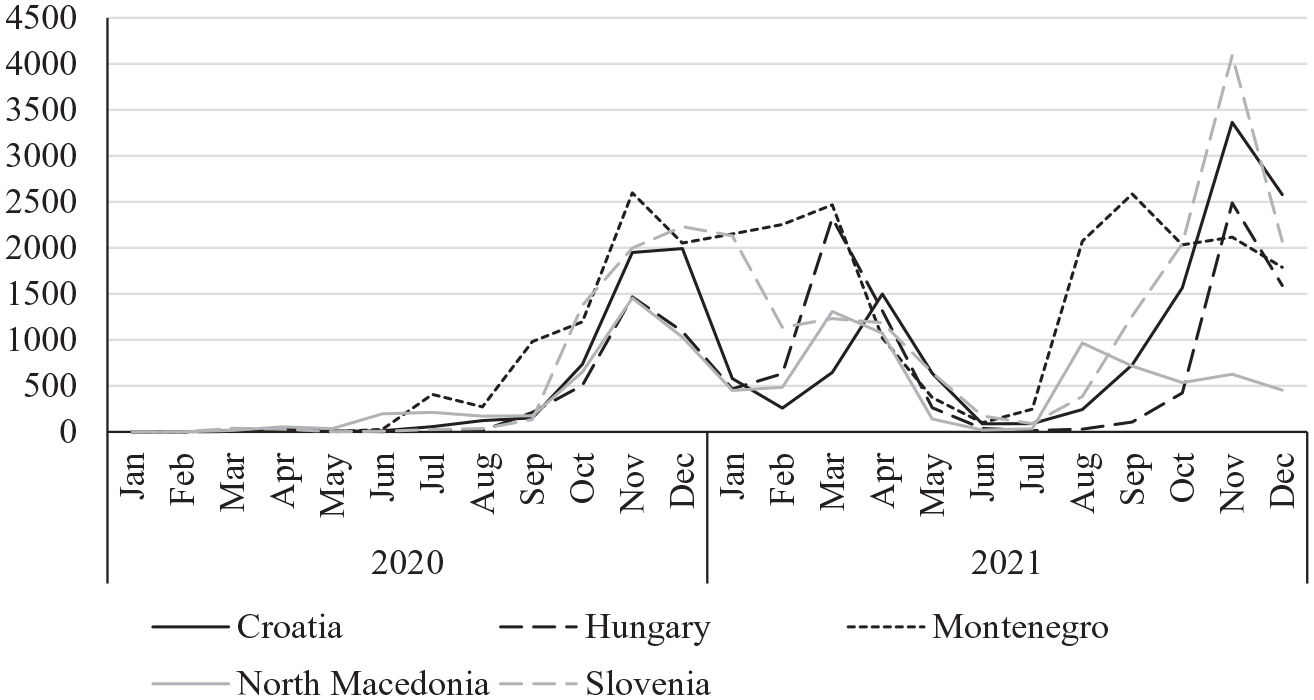
COVID-19 Infection Rate (by Month) in Croatia, Hungary, Montenegro, North Macedonia, and Slovenia in 2020 and 2021.
COVID-19 Related Indicators in Croatia, Hungary, Montenegro, North Macedonia, and Slovenia in 2020 and 2021.
Source. Hale et al. (2021); Mathieu et al. (2020); World Health Organization (n.d.); Worldometer (n.d.).
Note. Categories of measures (scale): a 1—Restrictions on very large gatherings (above 1,000 people), 2—Restrictions on gatherings between 100 to 1,000 people, 3—Restrictions on gatherings between 10 to 100 people, 4—Restrictions on gatherings of less than 10 people. b 1—Recommended, 2—Required (only at some levels)/Required for some, 3—Required (all levels)/Required for all but key workers. c 1—Recommended not to leave the house, 2—Required to not leave the house with exceptions (daily exercise, grocery shopping, and essential trips), 3—Required to not leave the house with minimal exceptions (e.g., allowed to leave only once every few days, or only one person can leave at a time, etc.); /—data not available.
As already mentioned, in March 2020, government measures resulting in lockdowns were implemented in Croatia, Hungary, Montenegro, North Macedonia, and Slovenia. While all countries implemented similar measures, the intensity and length of the implementation differed. The cancelation of public events and gatherings in 2020 was the longest in Slovenia, lasting from March to December. The widespread effects resulted in weekly demonstrations in Ljubljana (Meško & Kokoravec, 2022). Most restrictions on the prohibition of public events and gatherings were maintained in place throughout 2021. Measures resulting in school and workplace closures were in place in all observed countries practically throughout 2020 and 2021, with occasional short-term breaks in the enforcement of stay-at-home restrictions. The intensity of restrictions varied between countries and months depending on the epidemiological state in an individual country. The countries adapted more or less successfully to the closures in various ways (e.g., teaching and working online, hybrid systems, a combination of work at home and at the office, etc.). Stay-at-home restrictions were enforced in all countries. In Slovenia, the movement of residents was severely restricted, including restriction of movement only within one’s municipality for a short time period (Meško & Urbas, 2021). Stay-at-home restrictions were prolonged into 2021, however in certain countries were quickly removed (Croatia), while in others persisted until the summer months (Hungary).
It should be noted that due to the strict government restriction that led to the citizens’ loss of confidence in their leaders, the enthusiasm for vaccination was relatively low in the observed countries, especially when comparing the percentage of vaccinated people in these countries with countries of Western and Northern Europe (Holder, 2023). Implementing government measures related to the COVID-19 pandemic took its toll on police stand in the society, as clashes with citizens were unavoidable (e.g., protests in Slovenia). As Charman et al. (2023) have stated, suspending civil liberties and extending police powers during the COVID-19 pandemic has provoked concerns about the longer-term consequences on police legitimacy. Despite the differences in implemented measures, all observed countries experienced profound social and economic changes influencing individuals’ everyday lives and societal relations. The long-term effects of these changes are still to be revealed.
Femicide and COVID-19
Regalado et al. (2022) stated that intimate partner violence rapidly emerged as a significant concern during the COVID-19 pandemic. Violence between intimate partners increased compared to prepandemic levels (Piquero et al., 2021). This trend seems to be characteristic of most countries (e.g., Brazil, China, France, Spain) (Arenas-Arroyo et al., 2021; Campbell, 2020), with some exceptions (e.g., Slovenia, certain parts of the United States) (Meško & Kokoravec, 2022; Peitzmeier et al., 2022). The most extreme form of violence between intimate partners is femicide. While the universal definition still eludes researchers, femicide can be understood as the extreme end of a continuum of violence against women and girls (European Institute for Gender Equality, 2021b). The United Nations Vienna Declaration on Femicide (2012) recognizes different forms of femicide: (a) the murder of women as a result of intimate partner violence; (b) the torture and misogynist slaying of women; (c) the killing of women and girls in the name of honor; (d) targeted killing of women and girls in the context of armed conflict; (e) dowry-related killings of women; (f) the killing of women and girls because of their sexual orientation and gender identity; (g) the killing of aboriginal and indigenous women and girls because of their gender; (h) female infanticide and gender-based sex selection foeticide; (i) genital mutilation related femicide; (j) accusations of witchcraft; and (k) other femicides connected with gangs, organized crime, drug dealers, human trafficking, and the proliferation of small arms. Aebi, Molnar, and Baquerizas (2021) argued that the definitions of femicide range from etymological interpretations (i.e., all murders in which a woman is a victim) to definitions that require that the offender is a current or recent male partner of the victim. In this study, due to the nature of the data, we follow suggested broader definitions, where femicide is defined as an intentional homicide where the victim is a woman. In none of the countries included in the study, the definition of femicide can be found in criminal legislation, meaning it cannot be regulated as a separate crime (Dimushevska, 2021). However, this type of offense may fall under other provisions of criminal legislation (articles related to different forms of homicides) (Dimushevska, 2021; European Institute for Gender Equality, 2021a, 2021b, 2021c).
Data and Methods
The monthly number of femicides (intentional homicides of women) was collected through official government sources and nongovernmental organizations (NGOs). The following organizations participated: Croatia (Ministry of the Interior, Ombudswoman for Gender Equality—unpublished dataset), Hungary (The Prosecution Service—unpublished dataset), Montenegro (Annual reports of the Police and Prosecution Office), North Macedonia (NGO National network to end violence against women and domestic violence—unpublished dataset), and Slovenia (Police—unpublished dataset). In addition, the Stringency Index (Hale et al., 2021) was used to analyze the effects of restrictions on the number of femicides. Stringency Index is a composite measure comprising nine response indicators: (a) school closures, (b) workplace closures, (c) cancelation of public events, (d) restrictions on public gatherings, (e) closures of public transport, (f) stay-at-home requirements, (g) public information campaigns, (h) restrictions on internal movements, and (i) international travel controls, rescaled to a value from 0 to 100 (higher score indicates a stricter response) (Hale et al., 2021; Our World in Data, n.d.).
Results
Femicides (2017–2021)
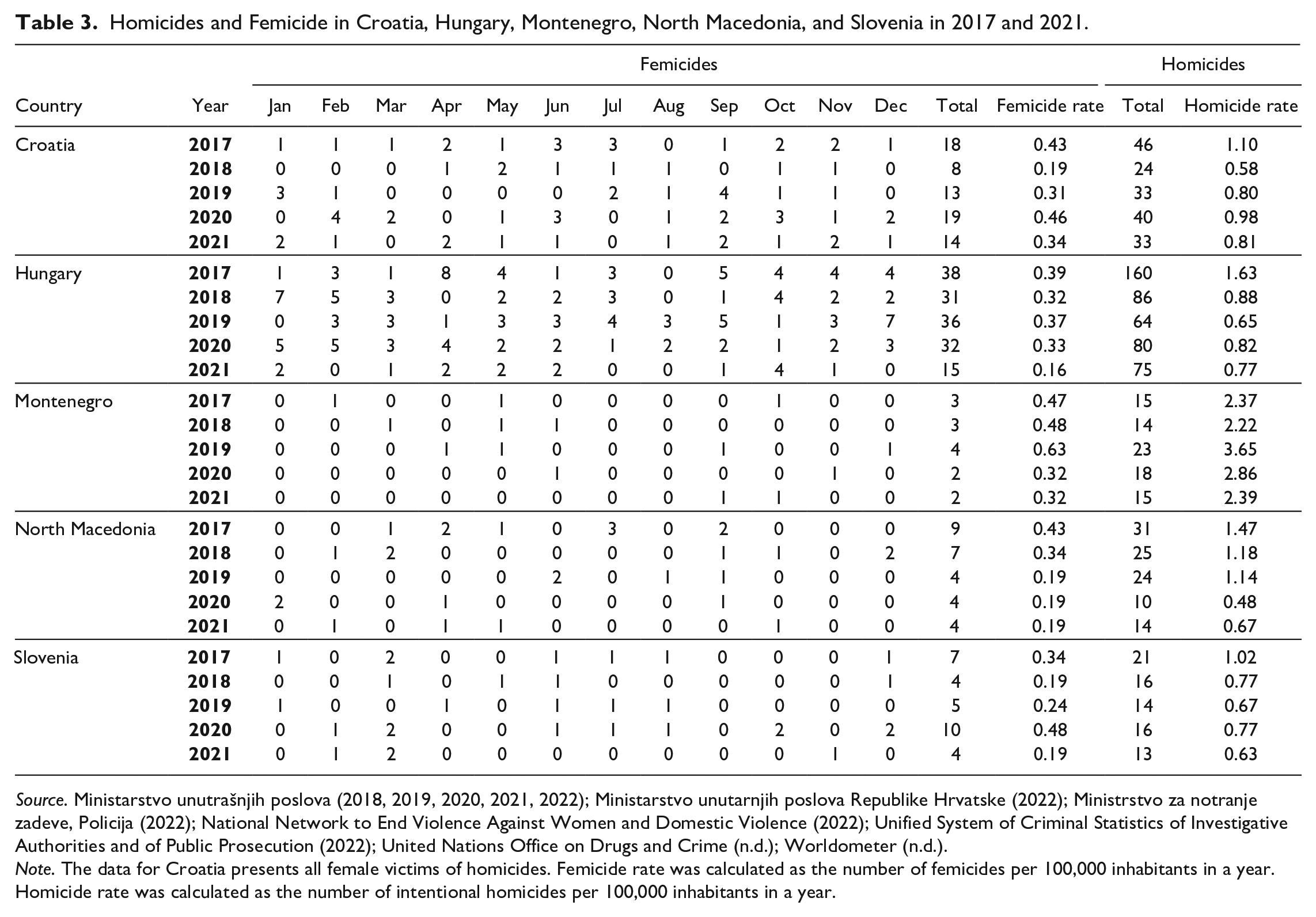
Table 3 presents a monthly distribution of the number of femicides in Croatia, Hungary, Montenegro, North Macedonia, and Slovenia in the period 2017 to 2021. Crime rates (in this case, femicide rates—number of femicides per 100,000 inhabitants) that are more suitable for comparison between countries were calculated. The highest femicide rate (average value for the observed years) was detected in Montenegro (0.44), followed by Croatia (0.35), and the lowest was observed in North Macedonia (0.27). Montenegro also recorded the highest average intentional homicide rate (2.70), followed by North Macedonia (0.99), and the lowest was detected in Slovenia (0.77). Generally, the femicide and homicide rates in observed countries are traditionally among the lowest in Europe (Aebi, Caneppele, et al., 2021). The distribution of femicides by year shows that the number of femicides from 2017 to 2021 decreased in all observed countries: Croatia (by 22.2%), Hungary (by 60.5%), Montenegro (by 33.3%), North Macedonia (by 55.5%), and Slovenia (by 42.9%). Only in Croatia and Slovenia, the number of femicides in the observed period peaked during the COVID-19 pandemic (2020) but also decreased significantly in 2021, when specific measures related to the pandemic were still in place.
Homicides and Femicide in Croatia, Hungary, Montenegro, North Macedonia, and Slovenia in 2017 and 2021.
Source. Ministarstvo unutrašnjih poslova (2018, 2019, 2020, 2021, 2022); Ministarstvo unutarnjih poslova Republike Hrvatske (2022); Ministrstvo za notranje zadeve, Policija (2022); National Network to End Violence Against Women and Domestic Violence (2022); Unified System of Criminal Statistics of Investigative Authorities and of Public Prosecution (2022); United Nations Office on Drugs and Crime (n.d.); Worldometer (n.d.).
Note. The data for Croatia presents all female victims of homicides. Femicide rate was calculated as the number of femicides per 100,000 inhabitants in a year. Homicide rate was calculated as the number of intentional homicides per 100,000 inhabitants in a year.
Overall, the most significant number of femicides in Croatia was detected from (a) January to February 2020, (b) June to July 2020, and (c) September to October 2020. In Hungary, the greatest number of femicides was recorded between December 2019 and February 2020. The greatest number of femicides in Montenegro was detected from: (a) May to June 2018 and (b) September to October 2021. In North Macedonia, the greatest number of femicides was detected in July 2017. Finally, the greatest number of femicides in Slovenia was detected in the summer months of 2017, 2019, and 2020 and from December 2020 to March 2021. There is no common point peak month(s) among observed countries. However, it seems that a general increase in the number of femicides occurs in September and October. It is hard to explain this occurrence, as these are not summer months when the distribution of crimes against persons peaks (Carbone-López, 2017). This is not the time of any major holiday when people buy presents and interact with family and friends more frequently (such as Christmas holidays in Christian countries; Aebi, Molnar, & Baquerizas, 2021). It can be assumed that in the observed countries, there is no clear seasonal distribution of femicides. Future research is needed.
Effects of Restrictive Measures on Femicides
In the second part of the analysis, the comparison between the restrictive measures (measured by the (Stringency Index; Hale et al., 2021) and the number of femicides (multiplied by 10 to fit the scale) in the period 2020 to 2021 (by months) was implemented. Comparisons were performed for Croatia, Hungary, and Slovenia, as the Stringency Index has not been calculated for Montenegro and North Macedonia. In Croatia, Hungary, and Slovenia, no relevant trend between the restrictive measures and the number of femicides was found. The number of femicides seems not proportional to the value of the Stringency Index. There seems to be no connection between stricter government responses and a high number of femicides.
Graphs 2, 3, and 4 show that the Stringency Index in Croatia, Hungary, and Slovenia peaked in the first 2 months (March and April 2020) of the pandemic and in Hungary in March 2021. The highest number of femicides during the COVID-19 pandemic, in Croatia and Hungary was recorded in February 2020 before government measures to contain the spread of the disease were implemented. In Slovenia, the highest number of femicides was recorded in March and December 2020, when harsh restrictive measures were in place. However, this does not indicate a trend, as an increased number of femicides was also detected in months when restrictions were not stringent (e.g., March 2021). In all three countries, the harshest stay-at-home restrictions were implemented at the beginning of the pandemic when insecurity and confusion were at their highest. Moreover, harsher restrictions in “cold months” (from November 2020 to March 2021) seem to have no impact on the number of femicides, as no deviations from the trend were detected. It seems that Croatia, Hungary, and Slovenia during the COVID-19 pandemic managed largely to avoid the increase in domestic violence and extreme violence between domestic partners leading to femicide (Meško & Kokoravec, 2022).
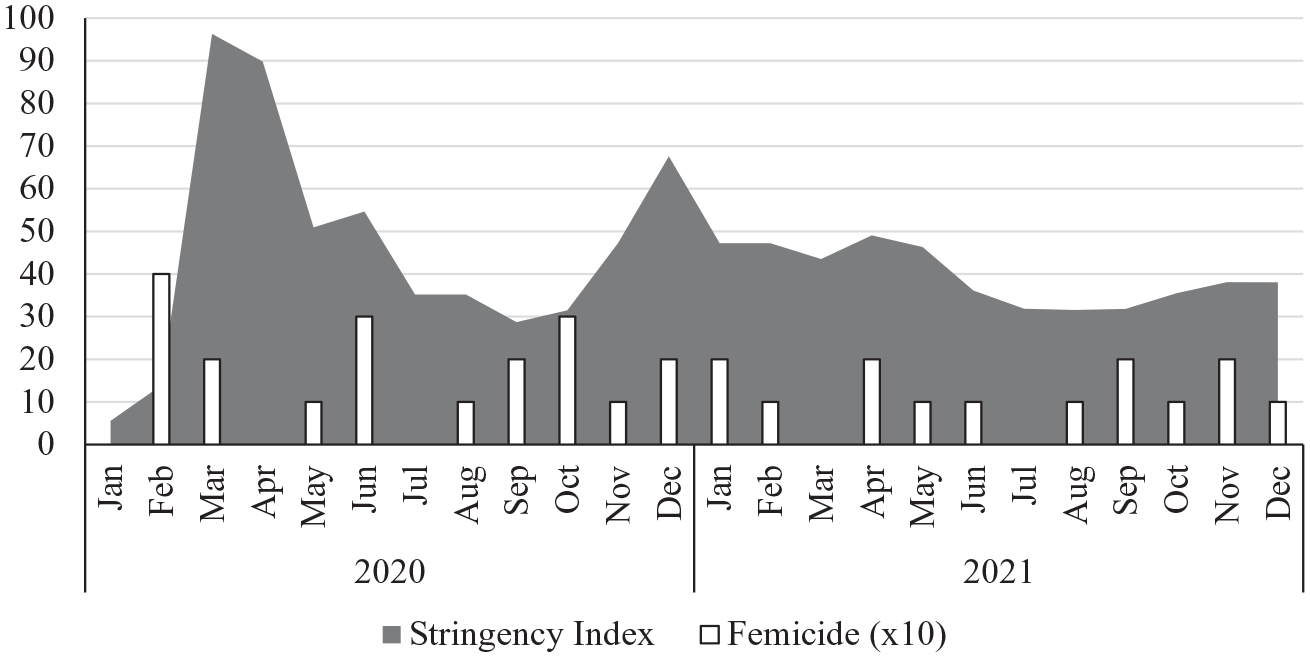
Femicide and COVID-19 Measures in 2020 and 2021—Croatia.
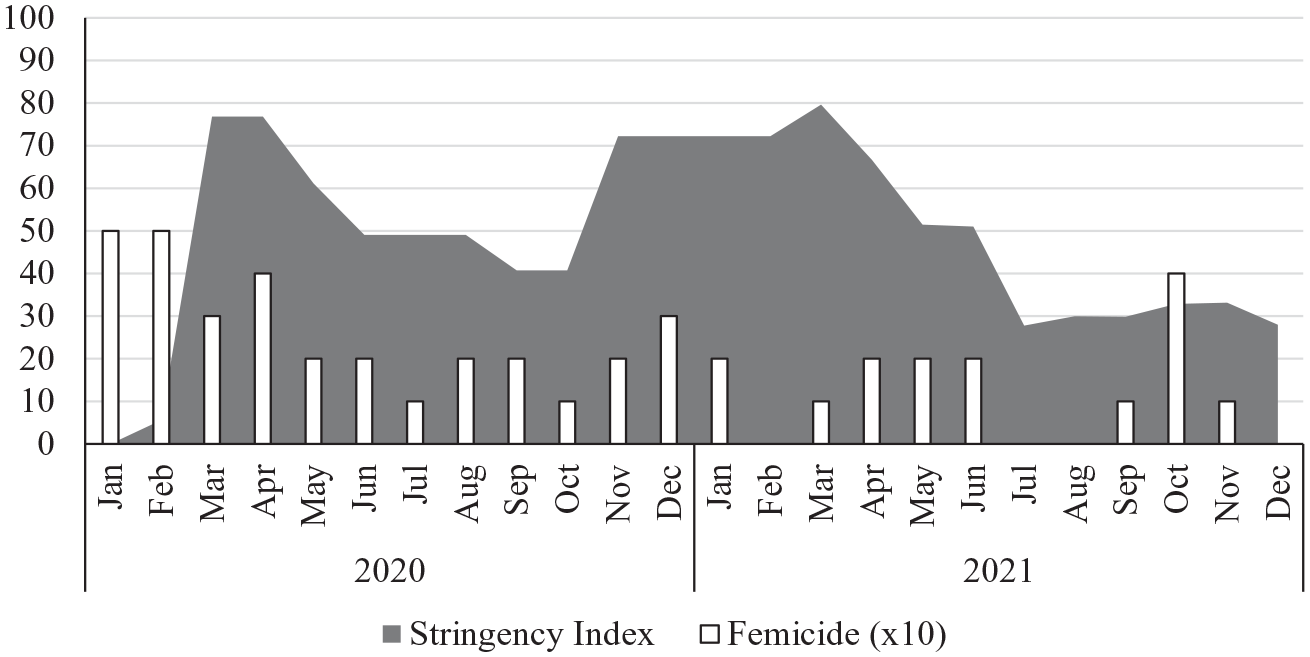
Femicide and COVID-19 Measures in 2020 and 2021—Hungary.
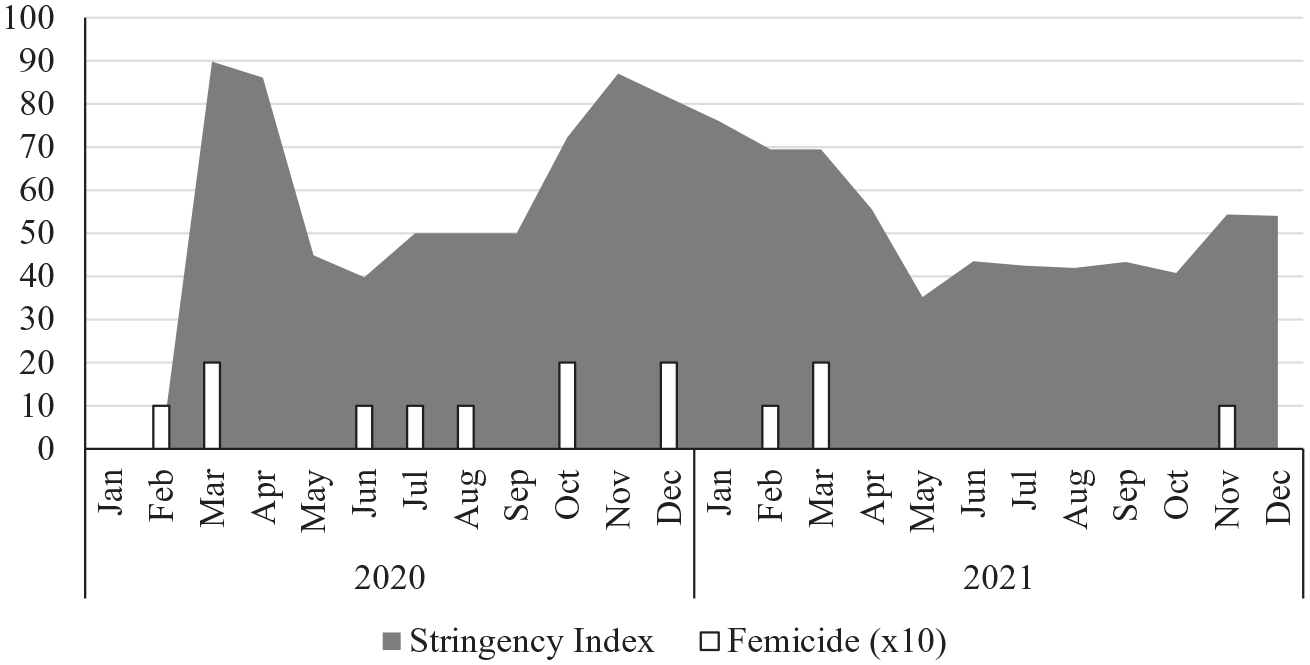
Femicide and COVID-19 Measures in 2020 and 2021—Slovenia.
Discussion
The main finding of our study can be summarized as follows: the COVID-19 pandemic and consequential government restrictions that led to lockdowns did not affect femicide trends in Croatia, Hungary, Montenegro, North Macedonia, and Slovenia. It has to be mentioned that the overall number of femicides in 2020 increased in Croatia and Slovenia; however, analysis by months showed that harsh restrictions had not influenced the number of femicides. In Hungary, Montenegro, and North Macedonia, the number of femicides has been stable or even decreased in time of the COVID-19 pandemic. The same was true for Croatia and Slovenia, where significant decreases in the number of femicides were recorded in the second year of the pandemic (2021). The seasonal distribution of femicides showed no pattern in the observed countries that would allow us to determine a trend. Similar to Aebi, Molnar, and Baquerizas (2021) study, our findings indicate that lockdowns implemented in 2020 and 2021 have not affected the number of women murdered by their partners or family members.
The question arises: How can one meaningfully interpret these findings? First, the lack of a universal definition of femicides should be pointed out, which may reduce the relevance of results due to the problem of data comparability, as certain countries used a broader definition of femicide than others. The main focus of our attempt to interpret the study’s results lay on criminological theories. According to Routine Activity Theory (Cohen & Felson, 1979) arguing that crime is the result of a motivated offender, an attractive victim or target, and the absence of guardians. The application of this theory seems appropriate as studies on domestic violence and intimate partner violence revealed an increase in numbers during the COVID-19 pandemic (Campbell, 2020; Eisner & Nivette, 2020; Gosangi et al., 2021; Piquero et al., 2021); however, findings on femicide point to a different direction. Several plausible explanations can be provided. The dynamics of femicides can differ from those of domestic violence, where nonlethal force is used. It can be argued, with some reservation, that spending time with one’s partner [at least in the observed countries] does not create strains that would result in extreme violence—femicide. Admittedly, the intensity of abuse is likely to and has increased during the COVID-19 pandemic; however, it should be noted that a large proportion of domestic violence remains unreported, especially in [relatively] conservative countries of South-eastern Europe, where this is still considered a purely private matter that would result in shame for the victim if it would become public knowledge. Despite the general trend of an increase in domestic violence during the COVID-19 pandemic, certain exemptions were identified among observed countries. For example, the number of cases of domestic violence has not increased in Slovenia during the pandemic (Meško & Kokoravec, 2022), however as Filipčič et al. (2021) pointed out, this could be the result of nonreporting, as it can be assumed that the gap between reported cases of violence and actual incidences of violence widened during the pandemic. Due to the restriction measures, it was more difficult for the victim to break the cycle of violence and seek help.
Similar explanations can be used to refute arguments of strain theories that restraint measures following COVID-19 increased the stress, anxiety, and anger of potential offenders, leading to an increasing number of intimate partner violence including homicides in a domestic environment. Piquero et al. (2021) argued that the increase in intimate partner violence during the COVID-19 pandemic is the result of financial instability, homeschooling, illness, or death from the virus, and mental health problems provoked by the social distancing imposition. While the strains of confinement may affect various forms of domestic violence, the same cannot be said for homicides in a domestic environment or homicides in general in Croatia, Hungary, Montenegro, North Macedonia, and Slovenia. As previously demonstrated not only that the number of femicides decreased during the COVID-19 pandemic in the observed countries, the overall number of intentional homicides decreased as well (or remained stable—in Montenegro). It can be concluded that the results on the influence of stay-at-home restrictions on femicides indicate that no single crime theory provides a plausible explanation of the state of affairs in Croatia, Hungary, Montenegro, North Macedonia, and Slovenia.
Finally, the cultural context of the observed countries should be mentioned. All countries share a socialist past, in which gender equality was emphasized, changing the traditional conservative social relationship dynamic where men were dominant (patriarchy). Sapolsky (2017) argued that cultures change through time. This can be seen in the cases of extreme violence in Croatia, Hungary, Montenegro, North Macedonia, and Slovenia, as the homicide rate in most of the observed countries has been decreasing for more than three decades (Hacin & Meško, 2022). However, cultural similarities more or less end here. Croatia, Hungary, and Slovenia are Catholic countries [and members of the European Union] making them more progressive and liberal in comparison to Orthodox Montenegro and North Macedonia. The conservatism of the latter can among others be seen in gender inequality (United Nations Human Development Reports, 2023) putting a strong influence on the perception of domestic violence as a private matter. In contrast, for example, Slovenia adopted a policy of zero tolerance toward all forms of violence and empowerment of victims. In general, it seems that culture in “modern” countries has a limited effect on femicide as the comparison of femicide rates in Central and South-eastern European countries to those in Spanish-speaking (and cultural-related) countries shows that femicide rates in Croatia, Hungary, Montenegro, North Macedonia, and Slovenia are higher or comparable (depending on the country) to those in Spain and Chile but lower than those in Argentina or Mexico (Aebi, Molnar, & Baquerizas, 2021).
The study is not without limitations. The first limitation refers to the number of countries in the study. Only five countries were included in the sample, representing less than half of the countries of South-eastern Europe. It has to be emphasized that appropriate authorities in other countries from the region(s) were contacted. However, their lack of relevant data on femicide prevented their inclusion in the study. Second, the low number of cases of femicide in the observed countries restricted the use of rigid statistical analysis or the identification of trends, supported by statistical analyses. Finally, the nature (quality) of the data should be mentioned. Two limitations should be highlighted in this area. The first relates to the general lack of relevant data for certain countries (Montenegro and North Macedonia), especially regarding data on government measures, which would be comparable to other countries. As not all countries are part of the European Union, the methodology for gathering relevant data on restrictive measures related to the COVID-19 pandemic has not been applied. Countries are also not included in the Stringency Index database (Hale et al., 2021). The second limitation regarding the data quality refers to methodological problems of data on femicides. In general, in observed countries, statistical databases do not differentiate femicide cases from other cases where women were victims of intentional homicide or even homicide in general. It has to be emphasized that due to the lack of access to individual cases where, based on the facts of the case we could determine if the case meets the pre-set conditions to be categorized as femicide, we had to rely on data provided by the official authorities and NGOs. Similar problems regarding obtaining data from various sources were identified in other comparative studies on femicide (e.g., Aebi, Molnar, & Baquerizas, 2021).
Footnotes
Declaration of Conflicting Interests
The author(s) declared no potential conflicts of interest with respect to the research, authorship, and/or publication of this article.
Funding
The author(s) disclosed receipt of the following financial support for the research, authorship, and/or publication of this article: This work was supported by the Slovenian Research Agency under Grant (P5-0397) Safety and Security in Local Communities—Comparison between Rural and Urban Settings (2019–2024).