




Abstract
In recent decades, the issue of violence against women has increasingly drawn the attention of international and national legislators and policymakers. The term “femicide” became widespread in the early 2000s and was incorporated into the criminal codes of several countries. The onset of the COVID-19 pandemic and the subsequent social distancing measures raised significant concerns about their impact on women’s safety. This study examines the effect of COVID-19 confinement measures on femicide trends in Italy, a country which adopted stringent COVID-19 confinement measures and, since 2019, implemented new legislation to counteract violence against women. Using two data sets—one from the Italian Ministry of Interior containing 1,382 cases of female homicides (2013–2022) and another from Italian NGOs detailing 1,253 femicides according to media coverage (2012–2022)—the study employs autoregressive integrated moving average (ARIMA) analysis to assess monthly trends alongside the stringency index for COVID-19 containment efforts. The findings reveal that, although overall femicide rates remained stable during lockdowns, there was a significant shift in victim–perpetrator relationships. Specifically, from March to May 2020, there was a decline in femicides by former partners, offset by an increase in those by cohabiting partners. These results underscore the complexity of femicide and the need for further research on various facets of violence against women. This includes the potential escalation of physical and psychological violence during lockdowns, influenced by forced proximity and substance abuse in domestic environments.
Introduction
In the past few decades, the issue of violence against women and girls has been given increasing attention by supranational and national legislators and policy makers. Numerous international conventions and policy documents have addressed the need for national systems to reinforce gender equality and the protection of women from any form of abuse, including homicide. Within the United Nations, the first and foremost milestone in this field has been the introduction, in 1979, of the Convention on the Elimination of all forms of Discrimination against Women (CEDAW), followed by several initiatives undertaken by UN Women, the UN Human Rights Office for the High Commissioner, and the UN Economic and Social Council and the UN Office on Drugs and Crime (UNODC). These initiatives included, among others, the Femicide Watch Initiative (OHCHR, 2015), and the Statistical Framework to Measure Gender-Related Killing of Women and Girls (UNODC & UN Women, 2022b).
At the regional level, the most punitive instruments have been adopted by the Organization of American States (OAS), most notably the Inter-American Convention on the Prevention, Punishment, and Eradication of Violence against Women (OAS, 1994) and the work of the Committee of Experts of its Follow-up Mechanism. In Europe, the most comprehensive initiative in the field of violence against women has been The Council of Europe Convention on Preventing and Combating Violence against Women and Domestic Violence (Istanbul Convention) which, in 2011, set forth a far-reaching set of legal standards to ensure the prevention of violence against women, the protection and support of victims, and the prosecution of perpetrators. Although the Convention itself does not explicitly refer to femicide, and its implementation monitoring body (GREVIO) has not given a precise definition of the latter, several member states have included measures aimed at combating this phenomenon within their national legislation. With respect to the European Union, the European Institute for Gender Equality (EIGE) regularly issues reports and guidelines on how to define, recognize, classify, measure, prevent, and combat femicide (EIGE, 2021).
The word “femicide” was used for the first time by Diana Russell in 1976 and appeared in her later writings to describe the “murder of women by men motivated by hatred, contempt, pleasure, or a sense of ownership of women” (Caputi & Russell, 1990, p. 189). This definition, as all other definitions of the term that have been given in the following years, refers to the social context in which the homicide takes place, a context characterized by patriarchy and misogyny (Iaccarino, 2019). It was at the beginning of the year 2000s that the word “femicide” started spreading in the feminist debate, especially in Latin America, thanks to the Mexican anthropologist and feminist activist Marcela Lagarde y de los Ríos (Grzyb et al., 2018). Lagarde y de los Ríos used the Spanish term “feminicidio” and proposed a broader definition of this term, which saw homicide as the culmination of a situation of systematic and repeated violation of women’s human rights (Lagarde y de los Ríos, 2004). 1 This term, “feminicidio,” was adopted in most Latin American legal systems and later on also in Spain and Italy. Regardless of the terminological differences, all definitions refer to the notion of a strong sex- or gender-related element inherent to the homicide of women and to the belief that these killings are not “isolated, sporadic or episodic cases of violence; rather they represent a structural situation and a social and cultural phenomenon deeply rooted in customs and mindsets” (CEDAW, 2005, par.159; Dawson & Mobayed Vega, 2023, p. 6).
The definitions presented, while capturing the sociological dimension of the phenomenon, struggle at providing objective criteria which could serve as the basis for a coherent data collection and for the introduction of an ad hoc offense that is consistent with the principle of legality (Corn, 2014). The crime of “femicide” or “feminicidio” or “femicidio” has been introduced in the criminal code of several, especially Latin American, countries (Pasinato & de Ávila, 2023). However, differences exist regarding both the conduct being targeted and the (required) relationship between the author and the victim. Regarding this last point, some countries require the existence of a particular link between the two parties (partner, ex-partner, family member, or a power relationship) or the cohabitation between the two (past or present; Pasinato & de Ávila, 2023).
The Impact of COVID-19 on Femicides: A Review of the Literature
There was strong concern about the possible consequences of confinement on women’s safety during the implementation of the first social distancing measures across multiple countries at the beginning of the COVID-19 pandemic. For illustration, in 2020, the UN Special Rapporteur on violence against women and girls, Dubravka Simonovic, presented a report to the General Assembly (A/75/144) on the intersection between the COVID-19 pandemic and the pandemic of gender-based violence against women and girls, in which she highlighted the dramatic increase in cases of domestic violence worldwide. The report also stressed the need to track femicides during the COVID-19 pandemic (UN Special Rapporteur on Violence Against Women, 2020). Several scholars and public institutions assumed that confinement would cause an increase in the victimization of women in the domestic environment and that violence against women, including femicide, would become a “pandemic within the pandemic” or a “shadow pandemic” (Boman & Gallupe, 2020; Bradbury-Jones & Isham, 2020; Evans et al., 2020; Lund et al., 2020; Sánchez et al., 2020; UN Women, 2020; Viero et al., 2021; Weil, 2020; World Health Organization [WHO], 2020). However, the empirical data show mixed results in regard to the trends of violence against women during the COVID-19 pandemic.
Although there is evidence to suggest that there has been an increase in calls to women’s helplines and in the overall number of cases of non-lethal domestic or intimate partner violence (IPV) during the months characterized by stay-at-home policies (Bullinger et al., 2021; Cantor et al., 2022; Piquero et al., 2021), lethal violence against women appears to have followed a different trend. Comparative (cross-national) studies on this topic have culminated in mixed results (see Fitz-Gibbon & Walklate’s [2023] review). In addition, a joint study of the UNODC and UN Women has found an increase in female homicide in Northern America and to a lesser extent in Western and Southern Europe at the onset of the COVID-19 pandemic, while other subregions in Europe and the Americas have recorded either a stability or a decrease in the number of women killed (United Nations Office on Drugs and Crime [UNODC] & UN Women, 2022a).
A comparative study conducted in Argentina, Chile, Mexico, Paraguay, Panama, and Spain analyzing at the monthly and seasonal distribution of femicide between 2017 and 2020 found that the 2020 lockdowns led to no increase in the number of femicide in these countries (Aebi et al., 2021). The authors observed the same trend in Colombia, although a lack of monthly data in 2017 did not allow them to include this country in their comparisons (Aebi et al., 2021). In Europe, a study comparing femicides between 2019 and 2020 in five European countries, namely Cyprus, Germany, Malta, Portugal, and Spain, found no indication of an increase in femicides in 2020 (Schröttle et al., 2021). Similarly, data provided by the EIGE on the incidence of femicide during the COVID-19 pandemic in Spain, France, Portugal, and Romania showed a slight decrease in femicide or intentional killing of women in domestic violence or family context (EIGE, 2023).
A survey conducted across the United States, in September and October 2020, involving 222 gender-based violence advocates revealed that 33% perceived that femicides had increased in their communities during COVID-19 (Lynch & Logan, 2021). This results contrast with a study conducted in the United States between January 2019 and December 2020 which showed that, despite an increase in non-lethal forms of violence against women in 2020, femicide was not associated with COVID-19 mitigation strategies when adjusted for seasonal effects (Lewis et al., 2023).
A study conducted in Mexico, covering the years 2019 and 2020 (until October), has shown that while the pattern of other crimes followed a U-shape (before, during, and after the first lockdown), the number of femicides remained stable during and after the lockdown with a slight decrease in certain regions (Hoehn-Velasco et al., 2021). However, data presented by the International Rescue Committee in June 2020 reported a 65% increase in femicides in Mexico between March and April 2020 (compared to 2019) and the same increase was recorded in Venezuela for the month of April 2020 (compared to 2019; Gonçalves Júnior et al., 2022). In Peru, the trend of homicides involving women followed a U-shape: femicides decreased during the first weeks of the pandemic and then rebounded (Calderon-Anyosa et al., 2021). A different study on Peru (Bardales Mendoza et al., 2022) and a study on Chile (Cantor et al., 2022) showed an increase in the number of attempted femicides during the quarantine period. The same Chilean study also observed a stability in the number of femicides before and during the pandemic period, with a reduction of cases in places with higher socioeconomic conditions (Cantor et al., 2022). The authors of the study, however, note that the beginning of the implementation of the COVID-19-related measures in Chile (March 2020) coincided with the entering into force of a new law to combat violence against women (the so-called Gabriela’s law) and that the impact of the two factors on (attempted) femicide could be confounded (Cantor et al., 2022).
On the contrary, studies conducted in Brazil (Sunde et al., 2021) on the number of femicides occurred in 2020 have shown an increase in the prevalence of this phenomenon in the periods in which the most restrictive measures were in place. Sunde et al. (2021) show a significant increase in the number of femicides in the months of March, April, and May, compared to the rest of the year 2020. Another study focusing on 12 of the 27 Brazilian states 2 and looking at data from March and April 2019 and 2020 indicated that in the states surveyed, there was an increase in 22.2% in feminicide cases and 63.3% in homicides with female victims (Fornari et al., 2021; Fórum Brasileiro de Saúde Pública [FBSP], 2020). An increase in the number of femicides during the pandemic in Brazil has also been confirmed by other studies (dos Santos et al., 2022; Montoya Diaz et al., 2022; Okabayashi et al., 2020).
Studies focusing on Asian and Middle Eastern countries 3 are limited in number. A Turkish study (Asik & Nas Ozen, 2021) analyzed the effects of social distancing and curfew on intimate partner killings in the country by comparing the data of 2020 with those collected between 2014 and 2019. The authors found a decrease in 57% in killings related to general social distancing measures and a decrease in up to 83.8% related to curfews (Asik & Nas Ozen, 2021). The authors explained these reductions by considering two factors: the fact that fewer women left their current partner during lockdown; and the physical obstacles encountered by ex-partners in reaching their victims, coupled with an increased risk of getting caught (Asik & Nas Ozen, 2021). Conversely, a longitudinal study conducted in Israel between 2006 and 2015 and then in 2021 and 2022 has shown a decrease in the number of femicides in Israel in 2021 after the waving of COVID-19 related measures (Weil, 2021).
Another research on IPV in Spain supported the former results, finding a decrease in the fatalities during the second quarter of 2020 (Vives-Cases et al., 2021). The same trend was also corroborated in the United Kingdom (Ingala Smith, 2023). In Italy—the object of this article—no studies examined variations in femicides during the pandemic.
The Italian Context
In Italy, the debate on femicide and on which legislative and political responses would be adequate has been lively, especially since the 2010s. The term used by both scholars and practitioners is that of femminicidio. In that regard, two important sets of measures have been introduced to prevent and combat violence against women, including femicide. The first legislative intervention dates back to 2013 when Law n. 119/2013 explicitly set the aim, for the first time, of “preventing femicide and protecting victims” and gave a legal definition of “domestic violence” 4 . The most significant change was introduced by the law pertained to the weight given to the emotional bond between the victim and the offender, serving as an aggravating factor for several offenses, regardless of the presence of a formal marriage or cohabitation. More recently, and as a result of obligations deriving from the ratification of the Istanbul Convention, the so-called Codice Rosso (Red Code) was introduced with Law 119/2019. This package of measures, which was soon renamed “femicide law,” includes changes in both substantive and procedural criminal law with the aim of enhancing punishment, introducing new ad hoc offenses, and accelerating the procedural intervention in cases of violence against women (Russo, 2020). These last legislative changes were anticipated by the establishment, in 2017, of the Parliamentary Committee of inquiry on femicide and other forms of violence against women (Commissione d’Inchiesta parlamentare sul femminicidio, nonché sulle altre forme di violenza di genere). Its task is to investigate the scope and causes of femicide, to monitor on the implementation of the Istanbul Convention and other international conventions in this field, to address gaps in the legislation and in the work of the institutions devoted to the prevention of violence and victim support, and to propose legislative and administrative interventions based on the gathered data (Senate Resolution January 18, 2017).
Despite the numerous initiatives taken in this field, no separate offense of femicide has yet been introduced in the Italian legal system. Instead, this form of violence is currently punished under article 575 (homicide) and articles 576 and 577 (aggravated homicide, which includes the cases of past or present family relationship or partnership between the author and the victim) of the criminal code. As will be addressed in the section “Data and Method,” the collection of data on femicide is scattered and often left to the initiative of independent organizations, with no comprehensive database made available provided for by public institutions.
Current Study
The aim of this study is to address the knowledge gap concerning trends in femicide in Italy, particularly in the context of the nation’s implementation of specific femicide-related legislation in 2013 and 2019 and during the COVID-19 years, a period characterized by the implementation of stringent measures in Italy. In fact, the year 2020 witnessed a unique opportunity to empirically assess some of the most influential theoretical frameworks—such as routine activity theory—at a large scale (Stickle & Felson, 2020). In fact, based on what is known, it is reasonable to postulate that substantial alterations in crime trends may be correlated with shifts in the structure of opportunities in 2020 (Cohen & Felson, 1979). Although some studies have corroborated the theory, demonstrating a reduction in street crime during lockdowns due to restricted access to streets and other public spaces for both potential offenders and victims (Boman & Mowen, 2021; Campedelli et al., 2020; Nivette et al., 2021; Payne et al., 2021), it is noteworthy that not all criminal phenomena exhibited similar changes. For instance, femicides do not seem to have experienced a resurgence during this period, at least in Argentina, Chile, Mexico, Panama, Paraguay, and Spain (Aebi et al., 2021). Consequently, the objective of this study is to examine the shifts observed in the characteristics of femicide in Italy, during the period of the COVID-19 pandemic, which was marked by the implementation of strict legislative restrictions and measures aimed at limiting the spread of the virus within the population. More specifically, the focus of this study is directed toward temporal trends, while also examining the attributes of femicides, including the profile of the perpetrators, the type of weapons involved, and the geographical characteristics of where the femicides occurred. By analyzing changes in trends, it is possible to elucidate the underlying mechanisms involved in the occurrence of femicides. Building on the substantial body of literature on shifts in crime patterns during pandemic-related lockdowns, our research question and hypothesis are as follows:
Data and Method
Data
This study uses data collected from two sources. The primary data set was provided by the Italian Ministry of the Interior, sourced from the Criminal Police Central Directorate within the Department of Public Security. This data set includes official records pertaining to female homicide victims between 2013 and 2022, providing a daily account of incidents and the regions in which they took place. As the dark figure of homicides is generally very low in the sense that nearly all homicides are reported or known by the police, these data are considered highly reliable (Neapolitan, 1997). The data set provided by the Ministry of Interior (hereafter referred to as “Data set 1”) used the date as the observation unit, encompassing three key variables: (a) the precise date of occurrence, (b) the count of female victims of homicide, and (c) the geographical region in which the homicide(s) took place. Given the relatively low number of femicides, femicide counts were aggregated into monthly intervals.
The second data set was compiled through a review of media reports published between 2012 and 2021 by Casa delle donne per non subire violenza and between 2021 and 2022 by Non una di meno, two Italian associations dedicated to gathering comprehensive information on female homicide victims in Italy annually. These data were primarily sourced from press accounts. Although these sources might offer a comprehensive perspective on the perpetrators and the weapons used in each case, they are also likely to be less reliable and accurate than police data as news reporters not being directly involved in the investigations or making use of information that has not been corroborated by law enforcement agencies. The data set derived from press reports on femicides (henceforth referred to as “Data set 2”) also adopts the date as the observation unit and includes the same three fundamental variables: (a) the precise date of occurrence, (b) the count of female victims of homicide, and (c) the geographical region in which the homicide(s) took place. However, its scope encompasses additional variables detailing the nature of the cataloged incidents, such as the age of the victim, the age of the perpetrator, the victim–offender relationship, the type of murder weapon employed, and an array of supplementary information, including comments and details extracted. The types of murder weapons used in these cases were categorized according to the classification proposed by the Italian National Institute of Statistics, which includes four primary categories: (a) edged weapon, (b) firearm, (c) improvised weapon (defined as any tools or objects that were not initially designed for the purpose of causing harm or cutting human beings), and (d) physical beatings (which includes hits, shocks, pushes, strangulations, and all ways of killing caused essentially by the human hand). In instances of ambiguity or when multiple weapons were used, only the most severe weapon was used for categorization. This weapon-related information is unavailable for 18 cases, constituting 1.43% of the sample from press articles. Similarly, the categorization of perpetrators of femicides was conducted in accordance with the categories established by the Italian National Institute of Statistics, which consist of (a) partner, (b) ex-partner, (c) other parent, (d) other acquaintance, (e) client 5 , and (f) unknown. Only three cases, equivalent to 0.24% of the sample, lacked information on the offender’s category. Furthermore, Italian regions were categorized into three groups (rural, heterogeneous, and urban) based on the classification provided by the Organization for Economic Cooperation and Development (OCSE), which defines the rurality of a region according to population density and the presence of urban centers. Data in this data set were aggregated by month too.
Data set 1 comprises a total of 1,291 entries, encompassing 1,382 unique cases of female homicide victims during the period spanning from 2013 to 2022. Data set 2 provides detailed descriptions of 1,253 female homicides cases occurring between 2012 and 2022.
Another core variable used for our analysis is the stringency of the COVID-19-related measures in Italy. We used the stringency index (Hale et al., 2021), which serves as a valuable indicator for objectively evaluating containment and closure policies, and its values range from 0 to 100. It offers a daily evaluation of the measures’ severity within a country, with higher values denoting stricter measures. For the purposes of this study, we computed the monthly average stringency index specifically for Italy.
Table 1 displays the monthly trend in the number of femicides from 2013 to 2022 and Table 2 illustrates the distribution of femicides by perpetrator, weapon used in the femicides, and the rurality of the region in which the femicides occurred.
Number of Femicides per Month (2013–2022; N = 1,382).
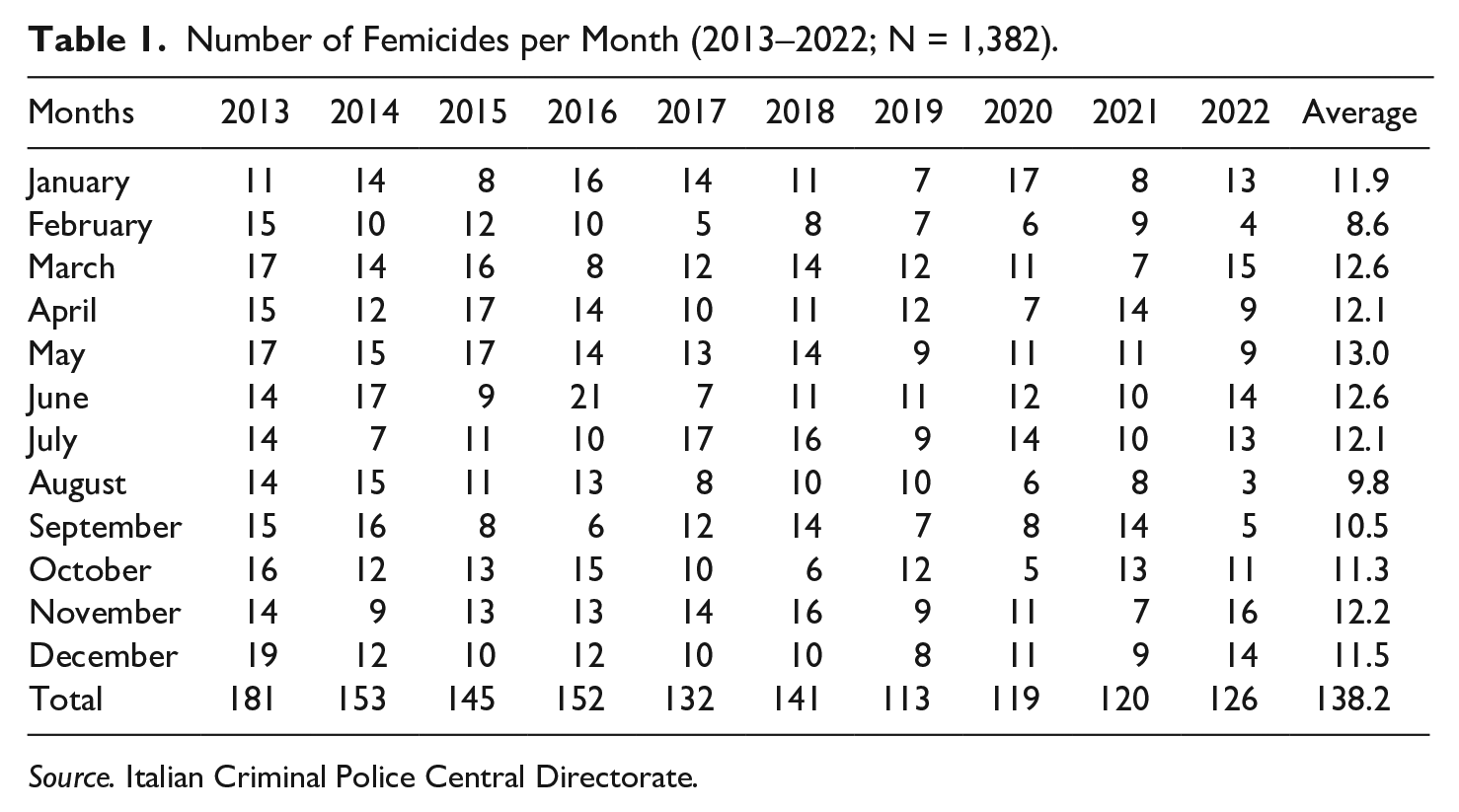
Source. Italian Criminal Police Central Directorate.
Distribution of Femicides per Weapon, Perpetrator, and Rurality (2013–2022).
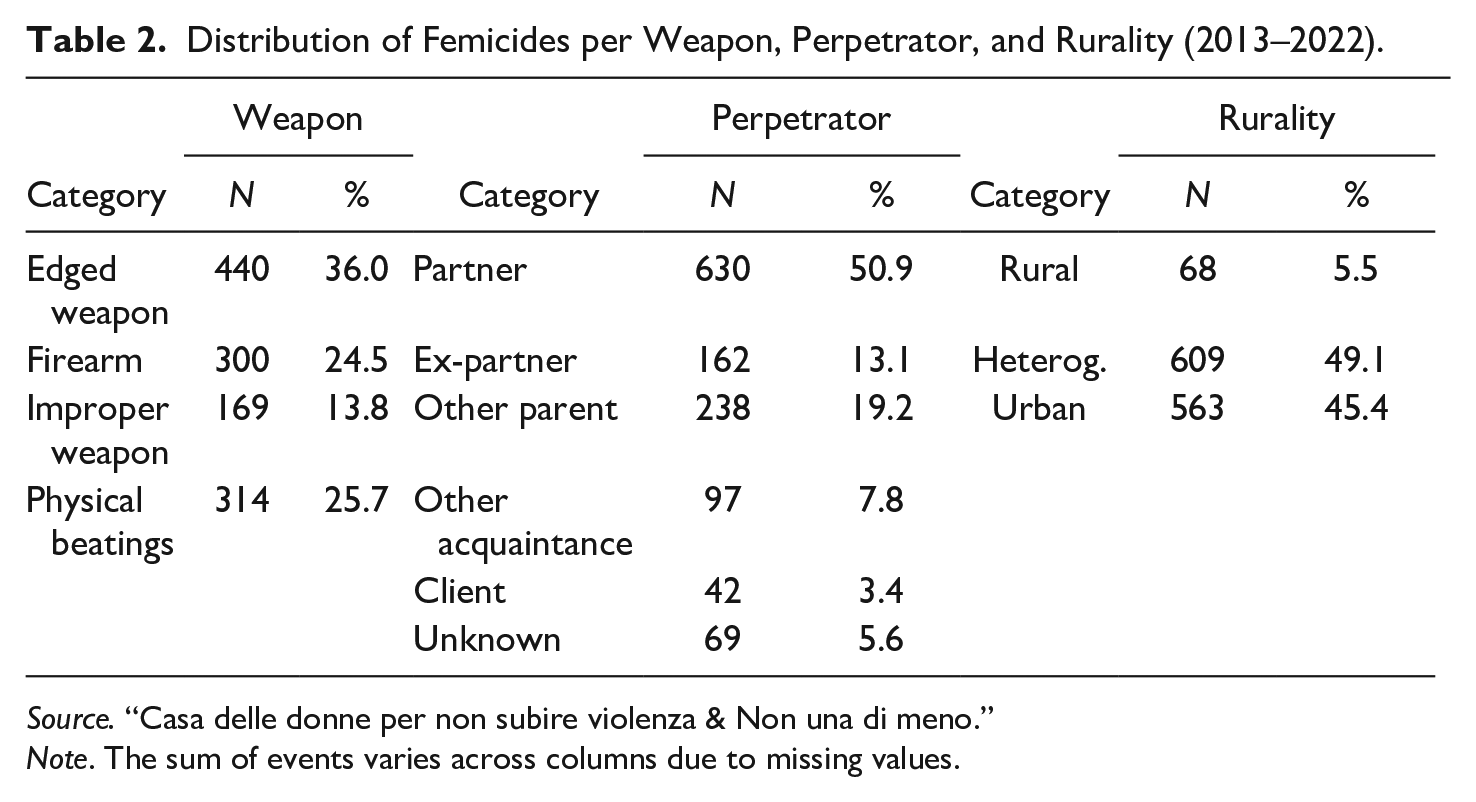
Source. “Casa delle donne per non subire violenza & Non una di meno.”
Note. The sum of events varies across columns due to missing values.
Method
Using Data set 1, we conducted a time series analysis, specifically employing ARIMA models, to assess the impact of the COVID-19 pandemic-related restrictions on femicides per month, in Italy. The software IBM SPSS Statistics 28 was used. This methodology is commonly employed not only for forecasting future data based on observed temporal patterns (Hyndman & Athanasopoulos, 2018) but also for evaluating the effects of specific events or interventions (Tabachnick & Fidell, 2019). The ARIMA time series analysis relies on three key assumptions: (a) the normality of the sampling distribution; (b) the homogeneity of variance, which can be assessed after model identification through standardized residual plots; and (c) the absence of outliers. Our data set complied with these conditions.
The initial step in ARIMA analysis involves the identification of the optimal components for the model (Tabachnick & Fidell, 2019). ARIMA models consist of three components typically referred to as p, d, and q. In the case of femicides, signs of seasonality can often be observed (Aebi et al., 2021), leading to the inclusion of additional seasonal terms, denoted as P, D, and Q. The autoregressive terms (p) within the model account for dependencies among successive observations, while the trend terms (d) reflect the overall trend of the time series, which is necessary to make the series stationary. The moving average terms (q) describe the persistence of a random shock from one observation to the next. Model identification is often guided by patterns in the autocorrelation functions (ACFs) and partial autocorrelation functions (PACFs). Plotting these functions as correlograms for the first 12 lags facilitates the selection of the most appropriate model for the analysis. Observing these functions and comparing them to the correlograms for idealized models outlined in the work by Dixon (1992; as presented in the work by Tabachnick & Fidell, 2019, the diagnostic process led to the identification of an ARIMA (0,0,0)(0,0,1)12 model.
In addition to the measure of effect size (R2) which quantifies the proportion of variance explained by the model (Tabachnick & Fidell, 2019), the Ljung–Box Test also gives an assessment of the model’s quality (Ljung & Box, 1978). Since the latter quantifies the autocorrelations of the residuals, if the test yields non-significant results, it implies a non-significant lack of fit. When both the local moving average parameter and the seasonal parameter are statistically significant, it enables us to infer the goodness-of-fit of the model (Tabachnick & Fidell, 2019).
After the identification of a suitable ARIMA model, the stringency index was introduced as a dependent variable within the model. Given that the initial measures to mitigate the spread of COVID-19 were implemented in Italy in January 2020, all preceding months were assigned null values. If the stringency of limitations to curb the spread of COVID-19 exerted a significant effect on the series, the “intervention parameter” is expected to provide insights into the direction of the relationship, whether positive or negative (Tabachnick & Fidell, 2019).
Monthly Femicides Data Analysis by Author, Modus Operandi, and Geographical Region
To determine if the number of femicides occurred in a given month of 2020 is unexpected, the average number of femicides for each month was computed, using Data set 2 (excluding the months of the year 2020). These means were calculated across the four categories related to the murder weapon and the six categories associated with the primary author of the femicide. The same was done for the average number of femicides across the three rurality levels, with Data set 1 employed for this purpose due to its higher data reliability. Subsequently, a 95% margin of error was calculated for the mean of each month and category, employing the established formula:
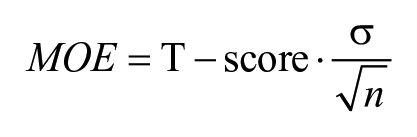
The T-score is a measure indicating the number of standard deviations in a given value lies from the mean. The area beneath this value in a t-distribution graphically represents the probability of occurrence for observed values. To ascertain the T-score, one refers to a t-table, identifying the intersection point between the desired cumulative probability for the sample mean (in this case, 95%) and the degrees of freedom, typically computed as the sample size minus one. For our analysis, with a 10-year data set wherein each year comprises 10 data points, this results in nine degrees of freedom. Accordingly, the T-score is identified as 2.262. The formula applied in this context is as follows:
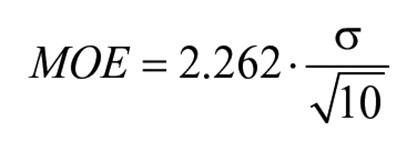
As Data set 1, spanning from 2013 to 2022, was employed for the analysis of the rurality of the region of the femicide, the formula was consequently adapted. Subsequently, each average was paired with a margin of error [
Results
Time Series Analysis (ARIMA)
We identified the seasonal ARIMA (0,0,0)(0,0,1)12 model, and—without the introduction of any additional variables—the model fits the data satisfactorily, exhibiting a moving average parameter of 10.76 (p < .001) and a seasonal parameter of 0.26 (p = .008). Furthermore, the model identified four extreme values in March 2013, June 2016, February 2017, and August 2017, prompting their exclusion from the model. An R2 of .35 and a largely non-significant Ljung–Box test (p = .56) support the assertion of the model’s overall adequacy.
The introduction of the stringency index into the model as an independent variable resulted in marginal improvements (R2 = .36). Specifically, the moving average parameter increased to 11.51 (p < .001), precisely mirroring the average number of femicides per month throughout the period of analysis. The seasonal parameter remained at 0.26 (p = .01). However, the stringency index did not reach the significance threshold of 0.05 (p = .12), even though its parameter (−0.02) suggests a very minimal decrease in the number of femicides with the rise in the stringency of measures implemented to curb the spread of COVID-19 between 2020 and 2022. The level of significance of the Ljung–Box test (p = .66) and the normality of the distribution of residuals also confirm the robustness of these results. Figure 1 illustrates the actual number of femicides per month in Italy from 2013 to 2022 alongside the femicide counts computed by the model. Notably, the model continues to exhibit a satisfactory fit to the data, after February 2020 (indicated by the dashed line).
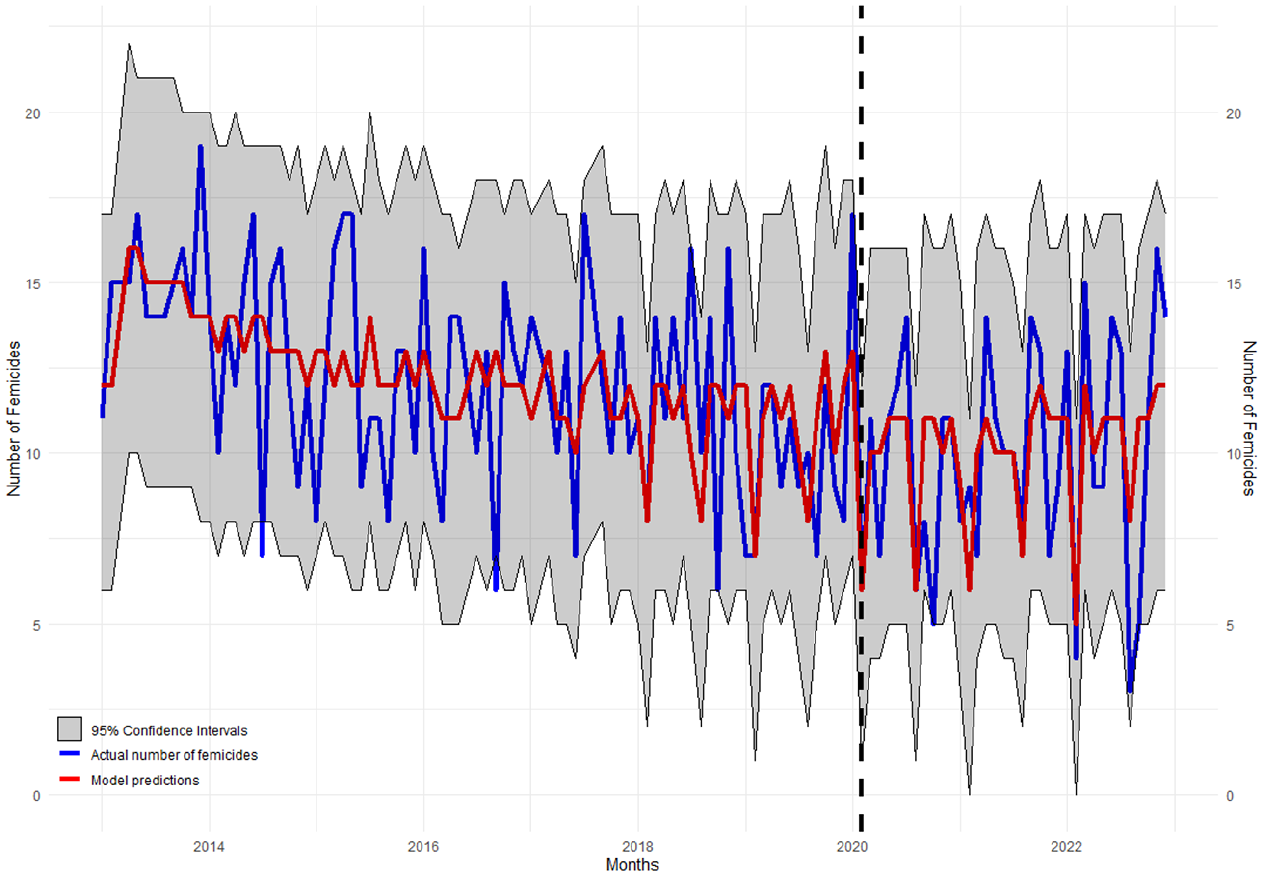
ARIMA Model and Actual Count of Femicides in the Italy (2013–2022).
Therefore, the first two hypotheses cannot be accepted because the null hypothesis cannot be refuted. The variables that best explain the trends of femicides in Italy between 2013 and 2022 are its stability and seasonality. The measures implemented by the government since 2020 do not appear to be significantly related to this trend.
Monthly Femicides Data Analysis by Author of the Femicide
Figures 2 compares the number of femicides in 2020 with the mean from 2012 to 2022 (excluding 2020), categorized by the perpetrator of the femicide. As the majority of femicides are perpetrated by partners (50.9%), ex-partners (13.1%), and parents (19.2 %), drawing conclusions about trends in femicides committed by clients and unknown perpetrators is challenging. For instance, in Italy in 2020, two women were killed by a client, one in April and one in July. Given that no women had been killed by a client in July during that time period, a singular occurrence in that month causes an important deviation from the mean. In a similar vein, femicides committed by acquaintances, including friends, housemates, and colleagues, although relatively rare (7.8% of cases), exhibit a very unstable trend in 2020. Unlike the mean values over the period of observation, the winter months (January, February, and March) witnessed four femicides before decreasing in spring.
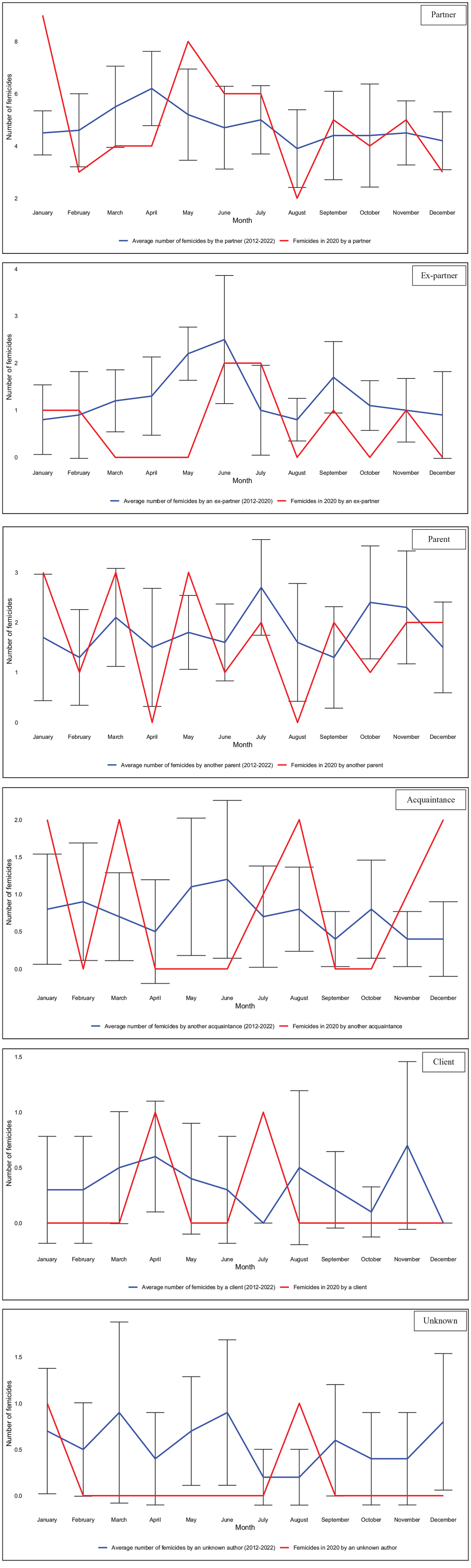
Trends of Femicides per Month Separated by Perpetrator of the Femicide (2012–2022).
The cases involving partners and ex-partners exhibit more distinct trends. There was a 3-month period during which no woman was killed by her ex-partner (March, April, and May), followed by a relatively average summer and a comparatively lower autumn. Similarly, after a substantial number of femicides in January 2020 (n = 9), few women were killed by their partners during the winter of 2020 (February and March) with a significant drop in April. However, these numbers rose significantly in May (n = 8), the last month of lockdown in Italy. The frequency of femicides stabilized thereafter, experiencing a significant decline in August. The hypothesis (H3) proposing significant changes in the relationship between the author and the victim during pandemic times appears to be somewhat corroborated, especially in the context of femicides committed by partners and ex-partners, constituting 64% of the cases. Femicides by family members, however, followed a pattern similar to an average year, compensating for the lower-than-average number of femicides in April with a higher-than-average count in May, the subsequent month.
Monthly Femicides Data Analysis by Weapon of the Femicide
Figure 3 compares the number of femicides in 2020 with the means of each month from 2012 to 2022 (excluding 2020), categorized by the weapon used in the femicide. Despite a significant number of femicides committed with improvised weapons in January 2020 (n = 4), none occurred by this means during the COVID-19 lockdown in Italy. The numbers for the remaining months fall within the margins of error, with the exception of September. Physical beatings were also, on average, less frequent in February and November 2020, while remaining within the expected range for the rest of the year. The year 2020 exhibits commonality in terms of femicides committed with a firearm, except for a notable peak in July. The surge in January is counterbalanced by a decline in October. However, edged weapons were not employed in killing a woman in April 2020. In May, edged weapons were used six times to commit femicides, followed by a below-average usage throughout the summer. Hence, the fourth hypothesis (H4) appears to be partially corroborated, but only in the context of femicides involving improvised weapons and edged weapons. However, fatalities resulting from physical beating did not exhibit significant variation in 2020.
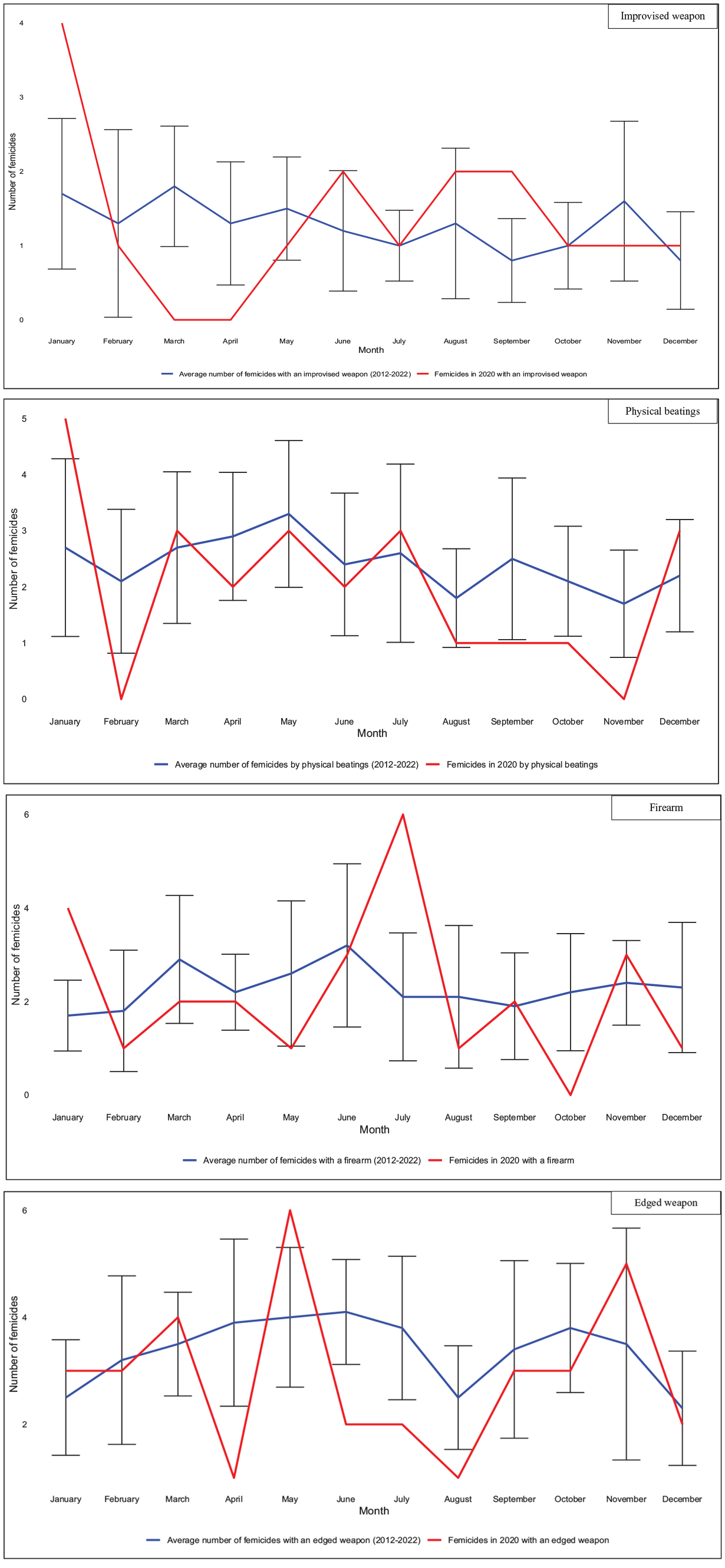
Trends of Femicides per Month Separated by Weapon of the Femicide (2012–2022).
Monthly Femicides Data Analysis by Rurality of the Region of the Femicide
Figure 4 compares the number of femicides in 2020 with the average from 2013 to 2022 (excluding 2020), categorized by the Italian region where the femicide occurred. Only 5.5% of femicides in Italy occur in rural regions. However, the rate of femicides per 100,000 inhabitants is comparable across regions over the 10-year period (2.1 for rural regions, 2.4 for heterogeneous regions, and 2 for urban regions). Determining a clear trend from the three femicides that occurred in rural regions in 2020 is challenging. However, in general, these few femicides typically tend to happen during spring and winter months, which contrasts with the occurrences in 2020 where no femicides took place during March and April, nor in the fall and winter. Femicides in heterogeneous regions—comprising areas with low density and some cities and urban centers–aligned with the expectations outlined in the fifth hypothesis (H5b). Specifically, there was a substantial and statistically significant decrease in spring, followed by a notable and significant peak during the summer, while conforming to an expected level in the last months of the year. Urban regions did not exhibit unexpected peaks in the number of femicides in 2020, except for the month of January, which appears to have experienced a resurgence in femicides overall in Italy. Some months, such as October, August, and February, were also below the average. Overall, the hypothesis H5a seems to be corroborated.
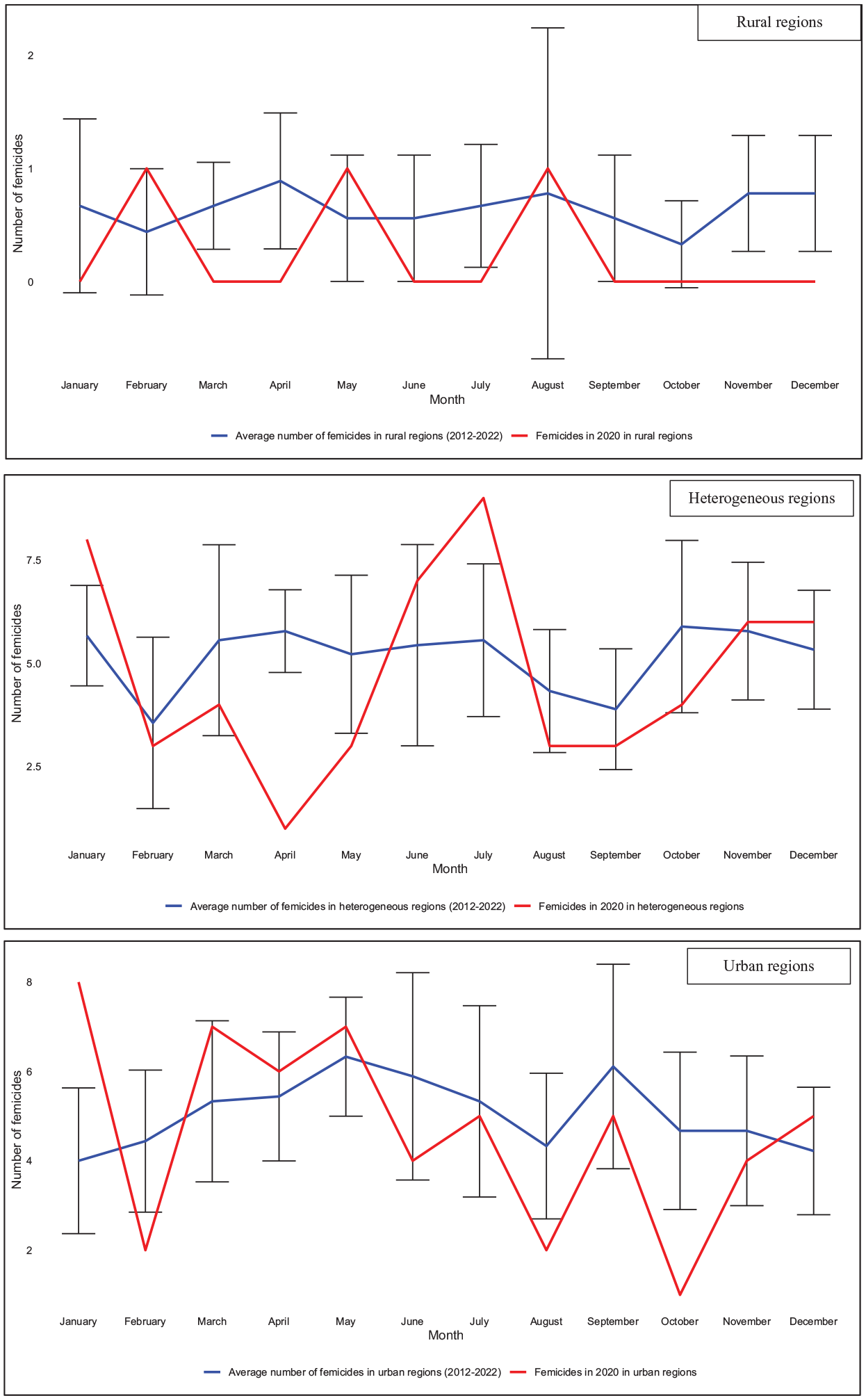
Trends of Femicides per Month Separated by Rurality of the Region Where the Femicides Took Place (2013–2022).
Discussion
The time series analysis of femicide trends in Italy, covering the period from 2012 to 2022, reveals a pattern of relative stability in the frequency of femicides throughout the decade, despite legislative efforts aimed at addressing the issue. Moreover, our results fail to substantiate the hypothesis that the COVID-19 confinement measures implemented by the Italian government had a significant impact on the incidence of femicide in the country. In particular, our findings refute our first and second hypotheses, which posited a substantial decrease in the incidence of femicide during the most stringent COVID-19 restrictions (H1), followed by an increase post-restriction (H2). On the contrary, the femicide trends identified in Italy in 2020 align with broader patterns identified in other European and international research (Aebi et al., 2021; Asik & Nas Ozen, 2021; Cantor et al., 2022). Altogether, these findings suggest that the pandemic-induced reduction in mobility did not appreciably influence the occurrence of femicide.
However, consistent with our third hypothesis, our analysis did reveal a change in the profile of femicide perpetrators in Italy during the lockdown period from May to March 2020. Specifically, there was a discernible decrease in femicides committed by former partners, alongside an increase in those by cohabiting partners during the last month of the lockdown. This finding is in line with the findings of Romito et al. (2022), whose study on IPV in Italy during the lockdown showed a reduction in violence for women not cohabiting with their aggressors, but an increased risk for those cohabiting with violent partners. Taken together, these results suggest that the apparent stability in the frequency of femicide in Italy during the pandemic results partly from mobility restrictions having dual effects: on one hand, the confinement measures generated a protective effect for women who had already terminated a relationship with violent partners by limiting potential interactions with ex-partners (and other non-cohabiting potential perpetrators), and on the other hand—at least after a few months of lockdowns—they intensified the risk of lethal violence for women cohabiting with violent partners (or family members) at the onset of measures meant to contain the pandemic. It is also important to note that many instances of violent outbreaks tend to occur around the termination of a relationship (DeKeseredy et al., 2017), a dynamic that the lockdown conditions may have postponed.
Given the restricted mobility during 2020 and the likelihood of shifts in the likelihood of violent encounters occurring in more domestic than public spaces, we also posited that there would also be a change in the types of weapons used in femicides during the same period (H4). Our analysis partially supports our hypothesis, particularly regarding the use of improvised weapons and edged weapons. The incidence of femicides involving improvised weapons fell below the average 2012–2022 trends between February and May, with no cases recorded in March and April, but then returned to average or slightly higher levels for the remainder of the year, except November. For edged weapons, the frequency dropped to zero in April, below the average, surged to six cases in May, exceeding the average, and then consistently remained below-average levels through summer and early autumn.
However, the trend in firearm-involved femicides during 2020 largely mirrored the average trend for 2012–2022, with a notable exception from June to July. In this period, the number of cases increased from one in May to three in June and then six in July, before dropping to one in August. Their frequency then oscillated around an average of two cases for the rest of the year. It is important to consider that Italian legislation imposes strict restrictions on the ownership and acquisition of firearms, thereby limiting their accessibility (Mori, 2021). Prospective firearm owners are subject to a rigorous administrative process, which culminates in disapproval for individuals with a history of serious criminal offenses or psychiatric issues. Therefore, gaining access to a firearm and using it to commit an offense is unlikely, excluding scenarios where the perpetrator already owns a firearm, a relatively infrequent situation in Italy (Karp, 2018; Small Arms Survey, 2007), or in instances of highly premeditated crimes.
Another noteworthy aspect of the study concerns the geographical distribution of femicide based on the rural, mixed, and urban characteristics of Italian regions. Although the cases of femicides in rural regions were too infrequent to allow meaningful statistical analysis, divergent trends could be discerned for mixed and urban regions, consistent with our fifth hypothesis (H5a and H5b). In heterogeneous regions, a noticeable decrease in femicides occurred during the more intense lockdown period in spring, followed by an increase in early summer, eventually aligning with the average trend for 2012–2022 for the latter part of the summer and autumn periods. Conversely, urban regions did not exhibit this pattern. Although there was a slight increase above the average trend between March and May, and the number of femicides fell slightly below average for the rest of the year (except December), the trend of femicides in these regions largely paralleled the average trend for the decade under consideration.
The observed divergence could be attributed to the distinct characteristics of mixed regions compared to urban regions. Mixed regions, with lower population densities than urban areas and greater travel requirements, were likely more profoundly affected by the travel restrictions imposed during the lockdown. These potential differences are particularly relevant in light of our findings that, despite the overall incidence of femicides in 2020 remaining relatively unchanged compared to the trends for 2012–2022, there was a notable shift in the dynamics of femicides perpetrated by cohabiting versus non-cohabiting partners. In mixed regions, the challenges of maintaining non-cohabiting relationships in mixed regions may have been exacerbated, leading to more pronounced changes in the likelihood of encounters, both in public and private settings, and therefore in the opportunities for violent assaults and femicides.
This study is subject to several limitations that require due consideration. First, the application of ARIMA models depends on the availability of an extensive and consistent time series to ensure the accurate estimation of parameters. Consequently, we chose not to exclude instances of femicides that were not perpetrated by the victim’s partner or ex-partner. This decision was made due to the absence of information on victim–perpetrator relationships in the more reliable data set provided by the Italian Criminal Police Central Directorate. Second, the use of police statistics to evaluate the impact of the COVID-19 pandemic-related restrictions on the monthly occurrences of femicide necessitates acknowledging the issue of the “Dark Figure of Crime,” the unknown quantity of unreported or undiscovered criminal offenses (Dobrin, 2016). Although it is generally accepted that homicide is much less affected by the known shortcomings of official crime data (Dobrin, 2016; Neapolitan, 1997), the existence of a dark figure cannot be entirely excluded, particularly in cases involving missing bodies and missing persons, and due to the complexities of establishing causes of death (Brookman, 2005). Furthermore, the reliance on data from associations advocating against violence toward women, sourced from media coverage, introduces its own set of challenges. This approach risks omitting pertinent cases and inaccuracies in the dates, causes of death, and characteristics of the involved parties. As such, particular caution is required in the interpretation of the results derived from this data set. Nonetheless, the increase in media attention to homicides of women and heightened societal concern about femicide, as illustrated by the establishment of observatories, such as Non una di meno in 2016 and Femminicidioitalia.info in 2019, merits acknowledgment. The greater attention to femicides might alleviate the risk of missing cases while yielding more comprehensive information on the phenomenon. By offering detailed, otherwise unavailable, insights into the situational- and individual-level aspects of femicides, this enhanced coverage may served to complement official homicide data. This benefit is a major reason for researchers to resort to open source data on homicide victims obtained from media and other comparable sources (Parkin & Gruenewald, 2017). Finally, the relatively low monthly incidence of femicides (particularly intimate partner homicides) poses a challenge to the reliability of our analysis. The relatively small sample size makes the data more prone to fluctuations, increasing the likelihood of “unexpected” counts of femicides in any given month. These limitations underline the need for cautious interpretation and highlight the inherent challenges in drawing definitive conclusions from the available data.
Conclusion
The international concern over violence against women has led to numerous legislative efforts aimed at its prevention and mitigation. During the COVID-19 pandemic, there was a significant fear about the safety of women during lockdown periods (Graham-Harrison et al., 2020), especially regarding a potential increase in violence against women. This apprehension stemmed from the perceived risk of confinement measures increasing the risk of extreme violence in situations where potential victims, being forced to cohabit with potential perpetrators, could not escape or had limited access to help. Our study, focusing on the cases of femicide in Italy from 2012 to 2022, reveals that the overall number of femicides remained stable in 2020. This apparent stability, however, masks a shift: a decrease in femicides by former partners alongside an increase in femicides by cohabiting partners, indicating that confinement measures had both protective and risk-enhancing effects. Our analysis also revealed substantial regional differences. In mixed urban–rural regions, which are characterized by greater travel needs, the number of femicides fell markedly below average levels during lockdown, a trend not mirrored in purely urban regions. Following the lockdown, the incidence of femicides rebounded to average levels in predominantly mixed regions, while urban areas maintained a trend consistent with the overall 2012–2022 period. These findings highlight the importance of considering both regional differences and the dynamics of victim–perpetrator relationships in understanding the impact of the pandemic, and the effects of public health measures, on femicide. They also underscore the importance of considering situational factors to gain a more comprehensive understanding of femicides. Further investigation is warranted to corroborate our interpretation of the discerned trends, and future research should employ more micro-analytical approaches, such as script analysis (Cornish, 1994), to disentangle interactions that lead to femicides.
Footnotes
Acknowledgements
The authors thank the Servizio Analisi Criminale of the Italian Ministry of the Interior for providing the data on female homicides reported to the Italian police from 2012 to 2022. The authors acknowledge the use of ChatGPT as a tool for text editing and refinement during the manuscript preparation. Although ChatGPT played a role in enhancing language and sentence structure, all ideas, analyses, and perspectives presented in this article are the original contributions of the authors.
CRediT Authorship Contribution Statement
Declaration of Conflicting Interests
The author(s) declared no potential conflicts of interest with respect to the research, authorship, and/or publication of this article.
Funding
The author(s) received no financial support for the research, authorship, and/or publication of this article.