



Abstract
In March 2020 the first lockdown due to COVID-19 was imposed in Austria, forcing NEUSTART, the organisation providing probationary services, to adapt the way of interacting with their clients. An online survey was conducted examining how these changes affected the everyday work of the probation officers. Results indicated that they managed to stay in contact with their clients, although difficulties could be observed concerning specific groups. Further questions concerned areas such as domestic violence, strains due to the restrictions experienced as well as coping strategies used by the clients. Concerning the well-being of the probation officers, differences were found between residents of urban and rural areas respectively as well as between people living with or without children. The lack of personal contact with clients and colleagues proved to be the most important source of discomfort, while at the same time working from home entailed certain advantages.
Introduction
Due to the increasing number of people with a confirmed Coronavirus infection, social restrictions came into force in Austria on 16 March 2020. These restrictions paralysed social and economic life from one day to the next. While social restrictions in the private sphere were ‘only’ perceived as annoying or arduous by some, professional work based on mandatory human contact faced a special challenge. Social work in the field of probation is one such service. Because of the global pandemic, Austria was one of many countries which imposed wide-reaching restrictions on social interaction. A comprehensive overview of how probation agencies in Europe have adapted their work to modified living conditions can be found on the homepage of the Confederation of European Probation (CEP). In almost all countries, social restrictions, and the use of electronic forms of communication were recommended or ordered (Confederation of European Probation, 2020).
In Austria, the non-profit association NEUSTART is responsible for probation services, conflict resolution and social work since 1957. About 1500 (full-time and voluntary) probation officers are employees of NEUSTART (NEUSTART, 2021). At the beginning of the pandemic, the organisation reacted very quickly to offer employees assistance in their daily work. On 16 March 2020 guidelines for communication with clients were issued. These guidelines state that clients need orientation and support, especially in these uncertain times. Therefore, proactive telephone contacts should be introduced and expanded. As well as basic telephone communication, personal contact should take place once per week in the context of probation services during the first interview(s) after case assignment, with people who have sexually offended, with clients who have been convicted because of their participation within a terrorist association (Section 278b Austrian Criminal Code 1 ) and concerning high-frequency probation services after social network conferences (NEUSTART, 2020).
Regarding mediation in penal matters only those procedural steps should be taken that were possible without personal contacts. Community services were suspended overnight. Therefore, an extension of the statutory period of a maximum of six months to render the service was required. Contact with people under electronically monitored home detention should be made by e-mail via a secure data line, otherwise by telephone and by mail. The situation of the prison release assistance proved to be very difficult. Contacting clients as well as keeping in touch with them was only possible via telephone. Group counselling, such as the crucial anti-violence training, had to be suspended, while social network conferences could take place, but the individual setting (number of participants, time, location etc.) had to be coordinated with the prison.
On 26 March 2020, the Regulation of the Federal Ministry of Justice on special precautions in the scope of the Penal Code for the prevention of the spread of COVID-19 was announced and (for the time being) limited to 31 December 2020. In accordance with Section 1, the regulation abated all procedural deadlines under the Prison Act 2 . In addition, Section 3 of this regulation stated that a postponement of imprisonment according to Section 3a, para 4 Prison Act is not to be revoked if conducting community services is impossible because of the restrictions in place to prevent the spread of COVID-19. Thus, the convicted person no longer had to prove that he or she was prevented from fulfilling community work by unavoidable events. Finally, Section 9 of the cited regulation stated that keeping people under electronically monitored home detention could not be revoked due to lack of suitable employment.
In view of these wide-reaching legal interventions, which were intended to prevent human personal contacts, the question arises as to how social work can function under these conditions? Many aspects must be considered starting with health protection measures for probation officers and clients. Which kind of support and assistance is necessary under these conditions and for whom? Finally, ethical questions such as human dignity or the privacy of the persons being cared for must be taken into account. An international survey (online survey) of 505 social workers revealed, firstly, regional differences in practical work and, secondly, the desire for clear rules that enable social work in line with human rights even in times of a pandemic (Banks et al., 2020). In a German online survey of almost 2000 social workers, the concern of de-professionalization is articulated, as previously applicable professional standards are overridden with non-specialist arguments (Buschle and Meyer, 2020). While personal contacts had to be reduced virtual forms of communication were expanded (Viglione et al., 2020). The long-term effects of this paradigm shift are still to be seen. Initial results show that working from home and online communication are not only to be seen negatively, but also mean, for example, time savings which can lead to more frequent and differentiated support (Mooney and Bala, 2020).
Study design
To examine the effects of the COVID-related restrictions on the everyday work of NEUSTART, the authors in cooperation with NEUSTART leadership initiated and developed an online survey, which was sent out to all the probation officers working at NEUSTART. In total, 431 full-time staff were contacted, constituting the maximum sample size. The survey period ran from 30 April to 31 May 2020.
The questionnaire contained four sections, each of which examined one topic using a combination of closed questions including predefined options as well as open questions where the respondent had to provide their own answers. The largest part dealt with questions of communication with the clients after 16 March 2020, when restrictions were imposed for the first time. In a second block, different areas of services regularly offered by NEUSTART were explored, before the clients’ experience during the time of the greatest restrictions was dealt with in more detail. Finally, the last part focused on how the staff members had perceived their work during this challenging time.
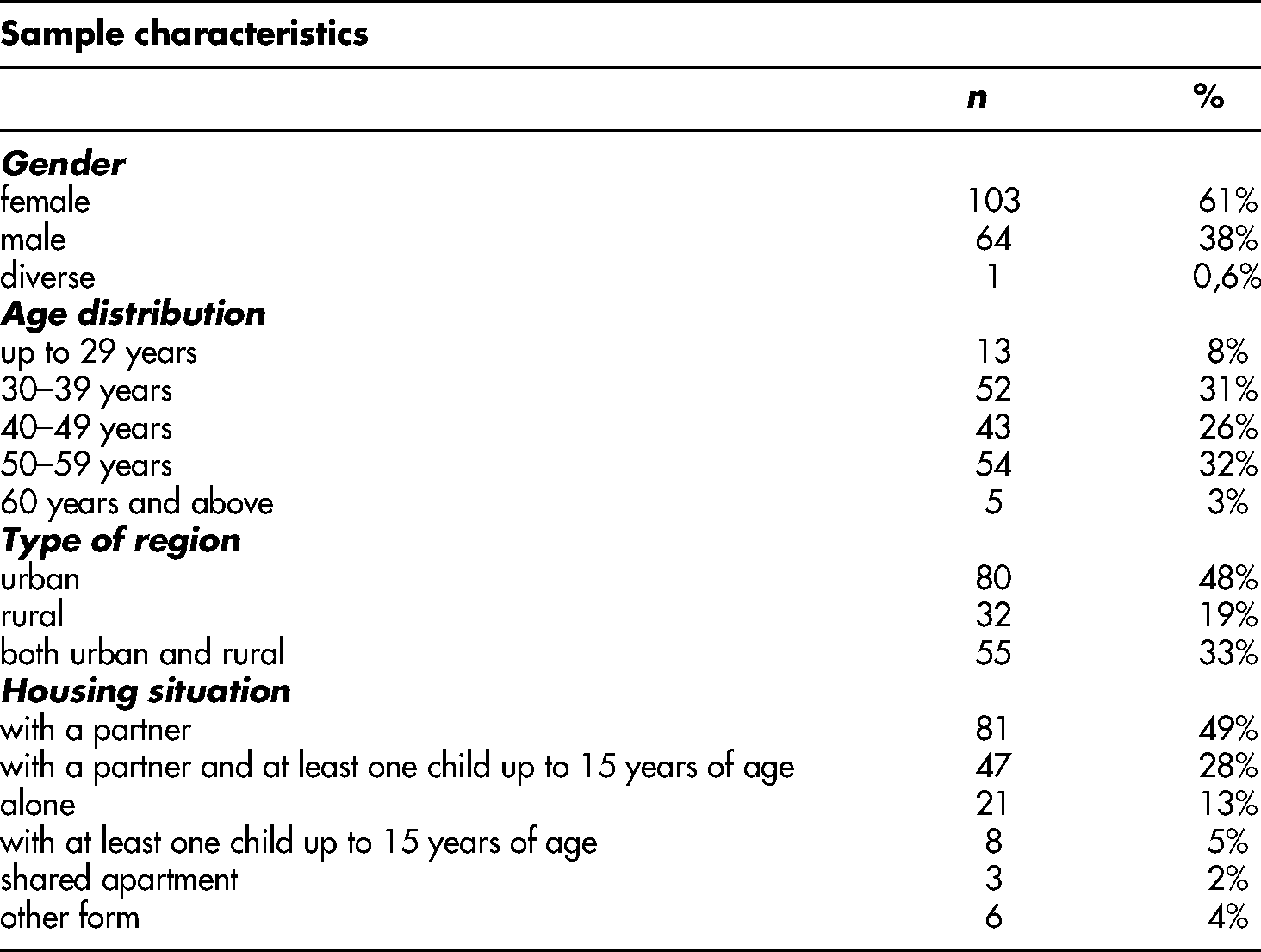
Out of 215 responses, 188 questionnaires could be used for the evaluation, which corresponds to a response rate of 43.3% of usable questionnaires. Table 1 provides information concerning the characteristics of the sample. Age distribution as well as participation of respondents from the Austrian provinces roughly corresponded to the structure of persons employed by NEUSTART.
Sample characteristics.
Results
Communication with clients
The first section focused on how communication with clients worked from 16 March 2020, the day on which the contact restriction measures came into force. The data showed that as can be expected almost all respondents (186 persons/99%) had more frequent telephone contact with their clients from this point on, and about half used text messaging (102 respondents/54%) and e-mail (93 respondents/50%) more frequently. 47 respondents/25% stated that they had used some ways of communication for the first time at all. Here, video conferencing tools such as Zoom, Skype or similar programmes were mentioned primarily, although in some cases it was specified that these were used for communication with colleagues rather than clients. Furthermore, e-mail contact was mentioned sporadically, here it can be assumed that this referred to contact with clients. 18 of these respondents/38% stated that they would continue to use these forms of communication after the resumption of normal operations, indicating this primarily for video conferences and e-mail communication. These findings are consistent with the view of probation and parole officers in the United States, who anticipate an increased use of video conferencing even after a downturn of COVID-19 restrictions (Schwalbe and Koetzle, 2021).
Two-thirds of the respondents continued to have face-to-face contact with clients, mainly due to the sudden occurrence of a crisis (selected 94 times /74%), followed by contact with pre-designated groups (e.g. sex offenders or participants of a terrorist association; selected 89 times /70%) and maintaining other already planned face-to-face contacts (selected 25 times /20%). When asked about the leading offences committed by the clients with whom personal contact was maintained, violent and sexual offences were mentioned most frequently, with sexual offences being one of the groups designated by NEUSTART for personal contact. Furthermore, respondents named drug-related offences, property offences and offences against freedom. Finally, some respondents also named mentally ill perpetrators who continued to receive personal care.
In general, staff succeeded well in keeping in contact with their clients as can be seen in Figure 1
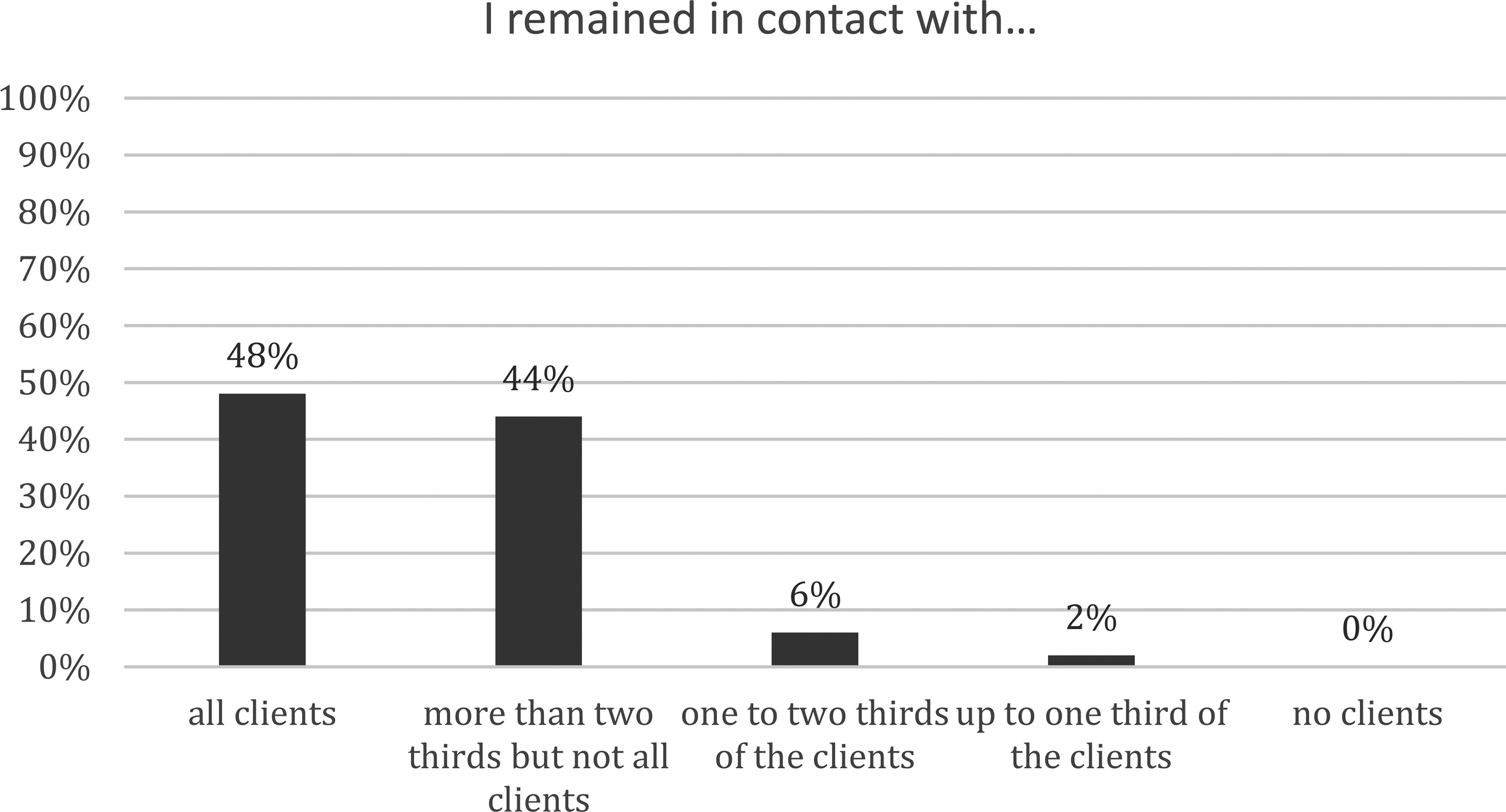
Keeping in contact with clients.
Difficulties in maintaining contact mainly stemmed from a lack of accessibility of clients (no telephone, no residence, no e-mail address, etc.), but also from language problems. In this regard, it was stated in individual cases that exchanging information on the telephone was possible in principle, but more in-depth conversations were not possible. Maintaining contact proved to be more difficult with some groups than other: had staying in contact been complicated prior to the pandemic, this was also the case during the restrictions. Besides, juveniles and young adults, new clients with whom no personal relationship was established before, people who were in custody or had recently been released from custody, as well as people under stress (e.g. due to addiction, mental illness, or homelessness) were more difficult to contact and stay in touch with.
Being persistent was named by the social workers as one of the most important strategies to stay in contact. Increasing the frequency of phone calls led to success in many cases as well as fixing a specific time for the phone call (and in some cases text messages on the same day with a reminder of the phone appointment). This strategy was described as successful especially with young people. Some respondents met clients outdoors and went for a walk, which proved to be a very pleasant experience for some (‘…however, I also met some clients outdoors, that was easier, because for example being silent while walking is easier than being silent on the phone…’). Especially with young people who slept late during the day, adapting one's own working hours to the needs of this group through telephone calls in the later afternoon or evening was more likely to be effective. According to some respondents, the use of communication channels such as messaging programmes (e.g. WhatsApp) or video calls (e.g. Zoom) would have made sense here, but was not possible due to insufficient technical equipment. Individual solutions were reported in some cases, such as agreeing with psychologically stressed clients that they should be the ones calling the probation officer independently when they felt able to do so.
However, it was reported several times that no difficulties in maintaining contact at all had occurred. In some cases, clients told the social workers that they experienced the omission of the obligation to have regular personal meetings as a relief. This also led to relaxation on the side of some probation officers because they were freed of demanding the personal contact with pressure, thereby releasing tension from the relationship. One feedback stated:
‘With my clients it was not difficult at all. Quite the opposite: they were happy about my sympathy for their condition and had a great need to talk on the phone. This helped to calm their fears and stress. For some of them it was noticeable that they were happy to be freed from the regular obligation of personal contact. And for me it was pleasant not to have to constantly put this pressure on them. This made the relationship more relaxed. I think that this shared experience is a positive anchor for future care. It was good for the clients to know someone cares about them, they can call me if they are in need, and we will find a solution.’
When asked about how well maintaining in contact with different groups worked, the respondents indicated very good results concerning adult clients while the values for staying in touch with young people were somewhat lower. With clients in custody, on the other hand, staying in contact proved to be a far greater challenge. See Figure 2 for more details.
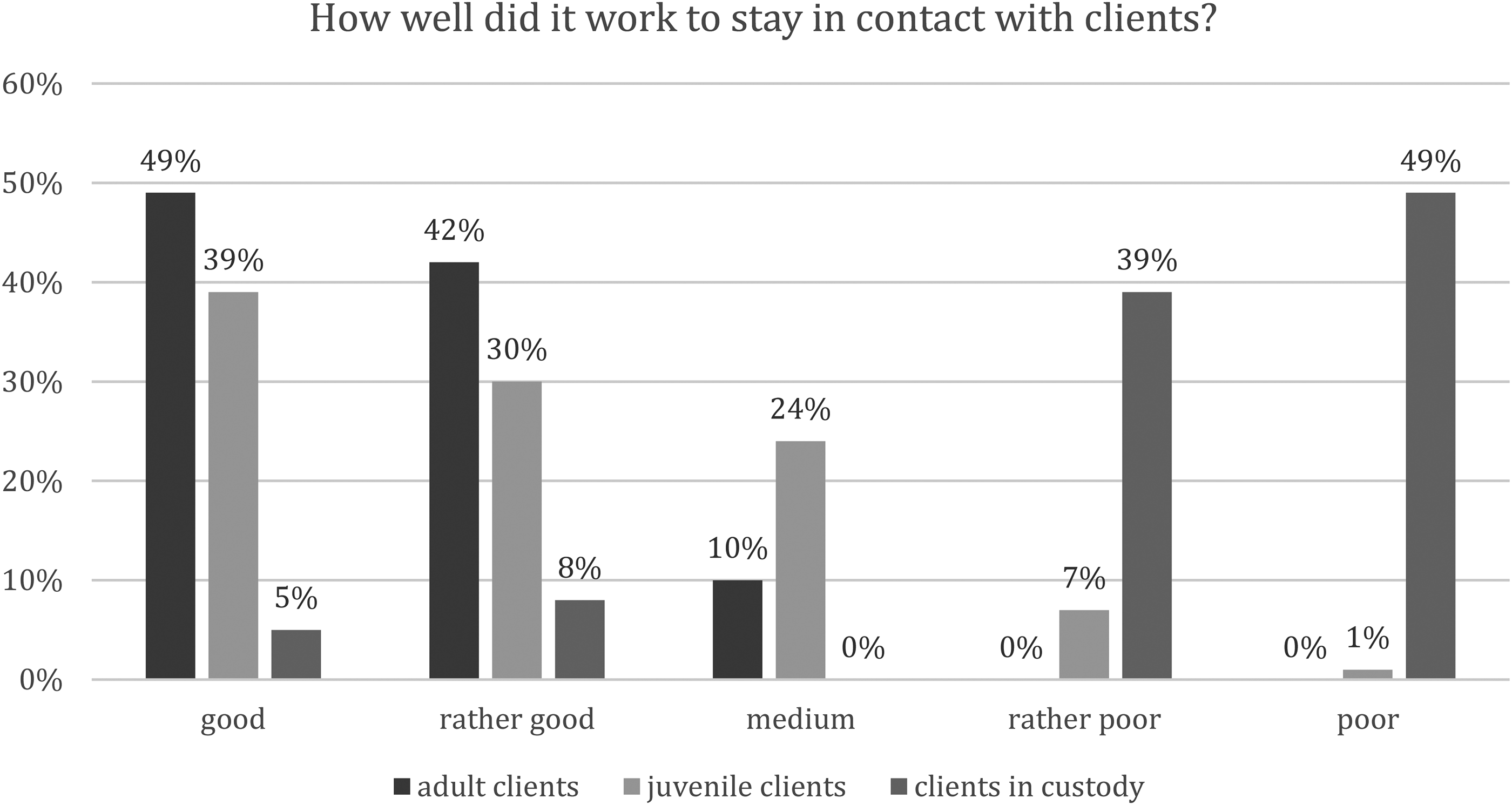
Staying in contact with different client groups.
Concerning clients in custody, it was reported that communicating with people in prison via Zoom was only possible from May 2020 onwards. Before that, attempts were made to maintain contact via prison social workers. As expected, however, this proved to be less effective and, in some cases, difficult to implement due to overwork of the prison staff. Most of the respondents stated that they had been in contact with their clients much more frequently (48 respondents/27%) or somewhat more frequently (74 respondents/41%) than prior to the restrictions; for 31 respondents/17% this frequency had remained the same and some had had somewhat (21 respondents/12%) or much less (six respondents/3%) contact. The respondents estimated that in general their clients received the change in how the probation officers established contact with them during this period positively. Thus 80 respondents/44% and 65 respondents/36% felt that the contact was received well or rather well respectively, 32 respondents/18% indicated medium and four respondents/2% assessed the perception by the clients as rather poor. A few times it was reported that the clients were glad about the increased contact by phone, which is not always the case during regular operations. However, due to the tense situation, the calls proved to have a stabilising effect on the clients, in some cases constituting the sole regular contact the clients had at all.
About a quarter of the probation officers (48 respondents/27%) stated that the adapted form of communication would also be sufficient for some groups of clients during regular operations. Stable clients with a place to live, a job, etc. were mentioned here, for whom the strain of scheduling and coordinating appointments could be eliminated while simultaneously maintaining the pre-existing relationship. It was also reported that for clients who were under a lot of stress and at the same time needed a lot of contact, the almost daily telephone calls would result in more intensive care than the personal contact, which would usually only take place once a month. Young people were also mentioned a few times, as they often had difficulties keeping personal appointments, but were used to communicating on the phone.
The respondents' perceptions of possible incidents of domestic violence were very different and cannot easily be reduced to a common denominator. While many respondents did not notice any changes compared to the time before the crisis, in some cases increased tensions became apparent, which was mainly due to multiple stresses caused by childcare, narrow living conditions, financial insecurities, etc. In a few cases, however, the crisis reduced the stress level. Correspondingly, two thirds of the respondents working in the field of mediation in penal matters estimated that the postponement of personal appointments was experienced neutrally by the affected victims. The probation officers reported to put much more focus on the issue and maintain especially intensive telephone contact, whereby it was mentioned several times that it was important to ensure the privacy of the counterpart during these conversations. When necessary, face-to-face conversations were held. Some respondents provided information material (e.g. from the men's counselling service). System cooperation with other institutions working in this field was also emphasised as essential.
Differences between the various service areas
Apart from providing probationary services, NEUSTART also offers various other forms of support for convicted persons, such as organising community services or providing voluntary support upon release from prison. The respondents were asked about their experiences within these various fields of service. 3 Difficulties emerged in the delivery of community services, as can be seen in Figure 3.
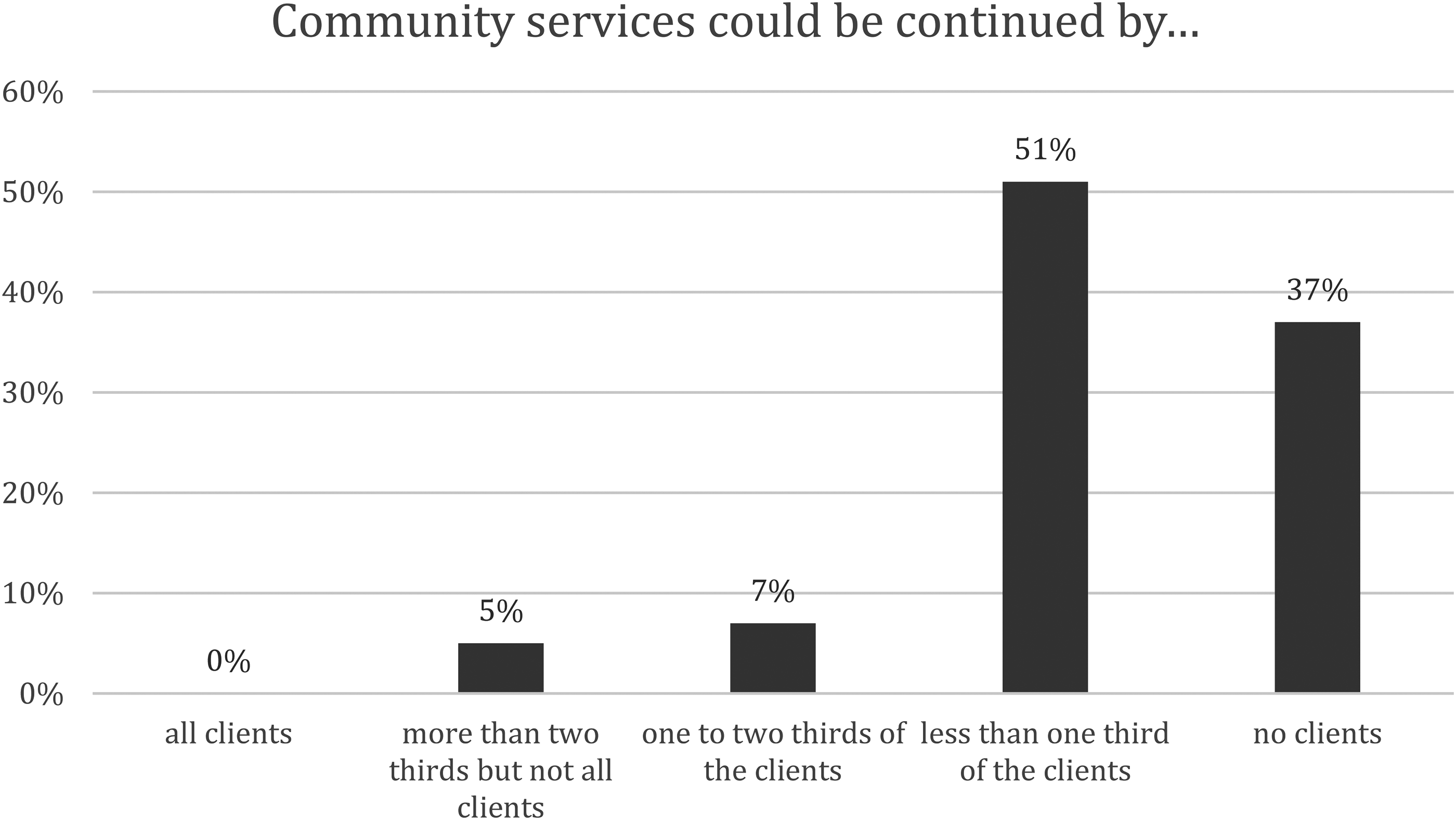
Continuation of community services.
About half of the respondents (23 interviewees/54%) had to find new facilities to provide community services because previously given commitments were withdrawn at the beginning of the restrictions. Eleven respondents/25% stated that new facilities were found as new cooperation partners concerning community services and that it could be expected that they would also be available in the future. NEUSTART itself was contacted by institutions such as supermarkets in need for more staff due to an increased demand from their customers at the beginning of the pandemic. Maintaining contact with the clients proved to be feasible in this area, as there was not such an intensive support relationship as for example with probationary services and the exchange of information by telephone was usually possible and sufficient.
Two thirds (23 interviewees/68%) of the respondents working in the field of prison release assistance had contact with newly admitted clients, mainly by telephone as well as in person, sometimes also by mail, via the in-house contact point of the prison release assistance, by e-mail or via text messages. However, establishing contact with new clients was experienced as more difficult than during regular operations; almost three quarters of the respondents rated this experience as somewhat (six respondents/26%) or significantly worse (11 respondents/48%), the remaining quarter as equally good compared to normal operations (six respondents/26%). In this area of service, telephone contact proved to be generally insufficient to build up a relationship at the beginning.
Finally, it turned out that none of the respondents stated that electronically monitored home detention had to be broken off more often than during regular operations. Maintaining contact by telephone usually worked well in this field and was also largely accepted by the clients. Especially at the beginning, there was a lot of uncertainty about the statutory consequences of a possible unemployment, which was quickly eliminated due to the specific regulations issued by the Ministry of Justice at the end of March 2020, illustrating the importance of swift and flexible adaptation in times of a crisis. However, the firm and compared to ‘regular times’ advanced restrictions including the demand to stay at home almost all the time were experienced as stressful by this group.
Social workers’ perception of clients’ experiences during the crisis
When asked about the strains that the social workers thought the clients had been affected by during the crisis, the most frequently mentioned were losing one's job, financial difficulties, and the experience of increased psychological stress (each mentioned by about 60% of the respondents). One third stated that clients had difficulties in complying with directives issued by the government. Additionally, about a quarter of the respondents mentioned that they observed an increase in the clients’ fear about the future as being stressful for them as well as belonging to a risk group, for example due to their age or previous illnesses.
Concerning the factors determining how clients dealt with the crisis, a stable social environment or a (functioning) family or partnership, financial security, safe and sufficiently large living space, psychological stability, available professional support (both from NEUSTART and other organisations), access to correct and reliable information and a regular daily structure were mentioned as protective factors. Some probation officers stated that it had been helpful for clients to experience themselves as part of a society where everyone was affected by the crisis and thus – for once – they did not perceive themselves as outsiders. On the other hand, social isolation and loneliness, mental disorders and addiction, unemployment, cramped housing, financial difficulties, and multiple stresses due to childcare were mentioned as factors that made it difficult for the clients to deal with the situation. 4 Due to the directive issued by the government to stay at home, homelessness led to further difficulties for clients affected by it. Some probation officers reported that people who had been in prison or isolated for other reasons for a longer period before the restrictions often managed to cope with the situation better than others (‘…overall, many fellow citizens could learn a lot from our clients in terms of coping with fear, stress resistance, (…) and a positive basic attitude…’). In general, the data illustrated that both risk and protective factors did not differ significantly from the challenges clients face during regular operations.
Probation officers were asked about the estimated risk of re-offending, and possible differences between various groups of clients in this regard. Clients suffering from drug addiction were named most frequently by the respondents, ahead of clients with mental illnesses as well as homeless, juvenile, and unemployed clients. About half of the probation officers (81 respondents /47%) stated that they had used special strategies to support their clients’ efforts to avoid re-offending. Here actively contacting the clients by phone, providing information about the situation and the current legal provisions concerning the restrictions as well as supporting the organisation of substitution medication were mentioned most frequently.
Half of the probation officers (86 respondents/51%) estimated that the changes affecting the clients also had positive effects on their well-being. Above all, reduced pressure, deceleration, and calmness were mentioned, as well as the feeling that ‘the whole society was in this as one’ and subsequently an increased willingness to help one another. Unlike in many other situations, some of the clients did not feel like they belonged to a stigmatised group but felt to be part of a society that had a collective experience. This illustrates the depth of isolation perpetrators experience in society and emphasises the necessity to enable integration whenever possible.
Probation officers’ experiences during the crisis
Finally, staff members were asked about their experience during the first period of the most severe restrictions. While the majority reported their daily work as less pleasant compared to regular operations, almost one third experienced the changed circumstances as more pleasant, see Figure 4.
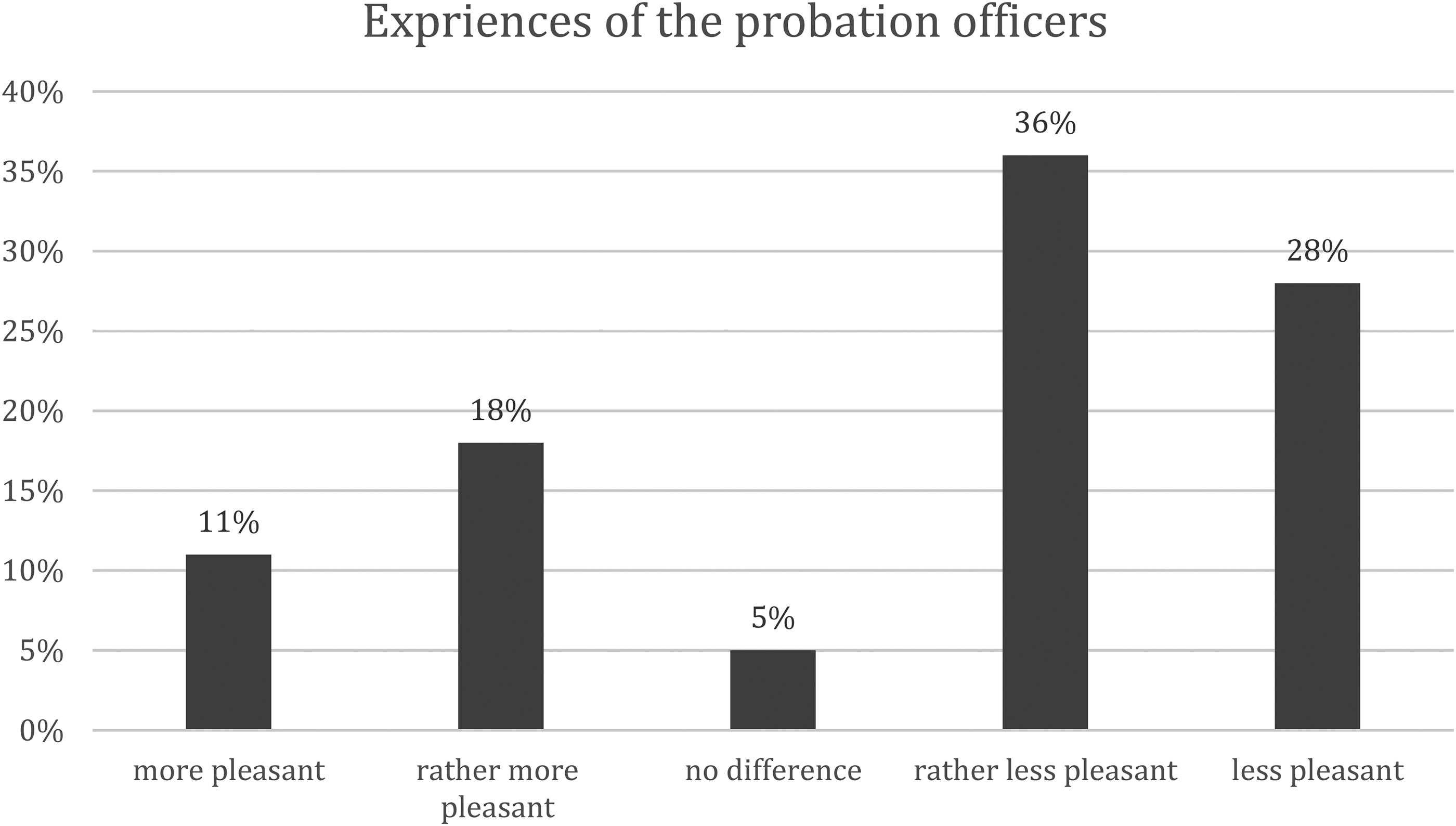
Probation officers’ experiences.
There was a significant difference between rural and urban areas (χ2 (4) = 12.52, p = 0.014), whereby respondents working in urban areas tended to experience the time as less pleasant, while those working in rural areas tended to experience it as more pleasant. The living situation was also of significant importance here: people living with at least one child experienced the situation as significantly less pleasant than people living without children (χ2 (4) = 15.38, p = 0.004). No significant differences were found concerning gender or age.
When asked to further elaborate on their experiences, a few points clearly emerged as pivotal. The lack of personal contact both with clients and colleagues was mentioned most often as a negative experience. Without these important elements, an essential part of their job as a social worker was missing. Telephone contact did not constitute a sufficient alternative to meeting in person, especially since appearance, facial expressions and gestures as essential parts of every communication are missing as sources of information. Some also experienced the increased length and frequency of the telephone calls as exhausting. Furthermore, mixing work and private life was perceived as stressful (‘…e.g. talking in detail about an aggravated assault and standing in my own living room at the same time…’). In some cases, the lack of equipment when working from home was also criticised. Conversely, the possibility of working at home was generally seen as a positive development by many, with this being particularly well suited for activities such as documentation. Some reported fewer distractions when working from home and concomitantly being more productive and efficient. The elimination of time in commute was also highlighted as positive.
An (even) more pleasant arrangement of such an exceptional situation could be achieved through better technical equipment, so that there would be no need to resort to private devices. More possibilities for exchange with colleagues were mentioned here as well as the expansion of the possibility of video calls, also with clients. However, some also reported that everything had been done to cope with the situation as well as possible, as the following quote shows: ‘(…) everything that was possible was done - I don't know how it could have been made even more pleasant (financial security from NEUSTART was given very generously, childcare was possible, home office was possible, as a member of the risk group I was still specially protected and was not allowed to make personal appointments (…)’.
76% of the respondents (126 persons) stated that the situation had also provided advantages for them. Here, the possibility of working from home was mentioned above all, as well as the elimination of commuting time and the increased flexibility and possibility of free scheduling. Additionally, working from home eliminated the lack of space, which was otherwise very noticeable in some offices. Due to insufficient office space, the probation officers are forced during regular operations to share or rotate between rooms. Additionally, in some offices there is usually no guarantee that a room is available for meeting with a client. This problem was reported from several, but not all Austrian provinces.
Conclusion
Summarising, the most important result of the survey is that maintaining contact with the clients basically worked well during the crisis thanks to the commitment and creativity of the social workers. In some areas, difficulties in maintaining contact became apparent. This mainly affected clients in prison as well as those contacts that resulted from the prison release assistance. As formerly incarcerated persons face even greater problems concerning housing and fulfilling their basic needs in times of a pandemic upholding frequent contact is crucial (Ricciardelli et al., 2021). Furthermore, some problems emerged concerning the conduct of community services. In other areas - such as electronically monitored home detention - practicable solutions had already been found at the level of the Ministry of Justice, which made it easier to cope with the challenges and prevented those clients who lost their jobs due to the restrictions from being taken into custody.
Several key points and implications for future developments can be derived from the data. Fundamentally, the basis on which NEUSTART builds its support system constitutes the bond between the social worker and the client. To establish and maintain this bond, personal contact is crucial. While some changes were viewed as rather positive by the probation officers, the overwhelming majority reported the lack of personal contact as burdensome and challenging. Specifically essential parts of probationary work, such as dealing with the criminal behaviour and establishing alternative options for action, cannot be substituted solely through telephone contact. Therefore, every possible effort should be made to enable social workers to meet with their clients in person whenever this appears necessary to them.
Additionally, the changes forced onto NEUSTART by the pandemic highlighted some possibilities for development. Concerning contact with clients, the data showed that for some parolees, who are for example living in a stable environment, holding a job and receiving support from their social network, adapted forms of communication might be possible. Substituting personal meetings partially with contact via phone (which might, in fact, take place more often than meeting in person) might lead to reduced stress of keeping up a schedule, specifically when having to comply with work hours, while maintaining the good relationship. Additionally, the problem of insufficient space within the NEUSTART facilities could be mitigated that way. In case of an occurring crisis, the probation officer could decide to increase the frequency of personal contact again.
At the same time, changes concerning the organisation of the work done by the parole officers led to some interesting findings. Being able to stay in contact with their colleagues was of particular importance for the social workers. Thus, the possibility to work from the office, to meet colleagues, discuss cases and thereby receive support is essential. However, concerning specific activities such as documentation, accounting, and file management, working from home was experienced by many as a noticeable improvement. Of the almost 30% reporting having experienced their daily work as more pleasant than during regular operations, this aspect was of particular importance. The social workers reported experiencing more flexibility, reduced necessity to commute and avoiding overcrowding at the office when being able to work from home.
While a crisis such as the coronavirus pandemic entails multiple negative consequences, staff working for NEUSTART were able to continue their work to a wide extent. However, concerning specific aspects the necessary changes applied during the first restrictions might also contain valuable learning experiences for regular operations, improving both the daily routine of the social workers and the support received by the clients.
Footnotes
Declaration of Conflicting Interests
The author(s) declared no potential conflicts of interest with respect to the research, authorship, and/or publication of this article.
Funding
The author(s) received no financial support for the research, authorship and/or publication of this article.
