




Abstract
Canine dysautonomia is a sporadic, generally fatal disease that rarely affects groups of related animals. Four 10-week-old Havanese puppies from a litter of 5 developed clinical signs of canine dysautonomia. The 4 affected dogs were exposed to an outdoor environment, whereas the fifth littermate was not exposed to the outdoors and remained clinically healthy. Clinical signs of dysautonomia developed 10–16 days after going outside the house. An unrelated dog also developed dysautonomia after exposure to 1 of the affected Havanese littermates. All 5 dogs had morphological changes consistent with dysautonomia (widespread neuronal degeneration in autonomic ganglia, select brainstem nuclei, and ventral horn motor neurons). Differential diagnoses were excluded through negative toxicological evaluation, fecal parasite screening, negative Canine distemper virus reverse transcription polymerase chain reaction, fluorescent antibody testing, attempted virus isolation, and electron microscopy. The 5 affected dogs were in the Kansas City, Missouri area, where there is a high incidence of dysautonomia.
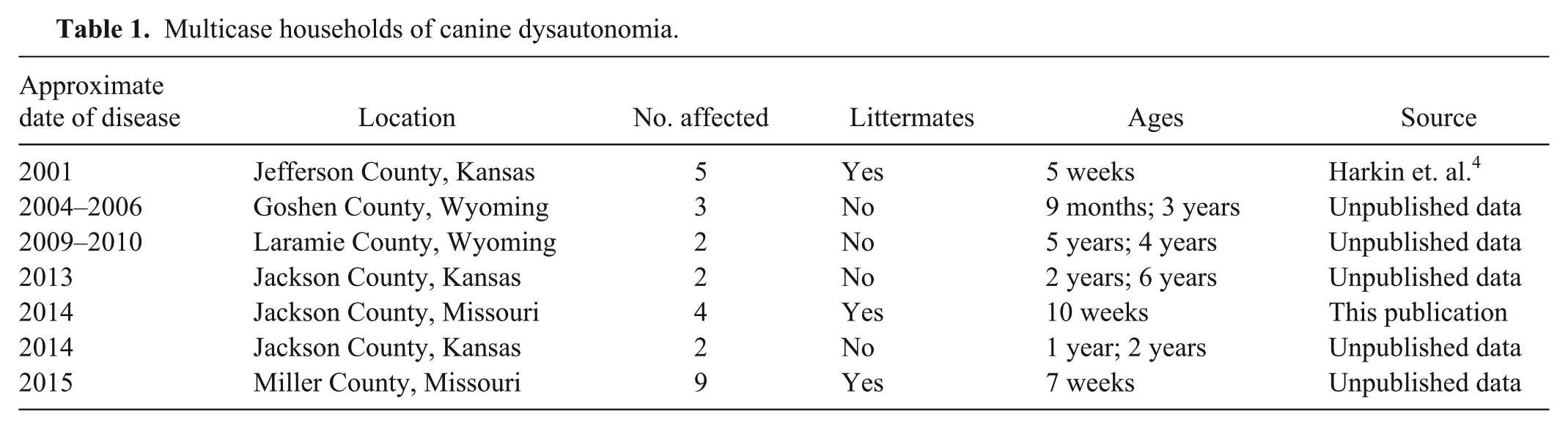
Canine dysautonomia is a sporadic idiopathic disease that generally affects individual dogs and results in a progressive clinical disease of the autonomic nervous system. The disease typically culminates in death or euthanasia (Mankin J, Packer R. Dysautonomia, Standards of Care: Emergency and Critical Care Medicine, 2008, http://d1uhp0uy75me04.cloudfront.net/mmah/0e/883651a94f4e889fc2dcd3b2763c6f/fileSOC_10_06_9.pdf). It was first reported in the United Kingdom in 1983. 8 The first case in the United States was reported in 1991 in a dog from Glenrock, Wyoming. 10 Most reported U.S. cases have occurred in Missouri, Kansas, Wyoming, Colorado, North Dakota, Montana, Iowa, and western Tennessee. 1 Additionally, the Wyoming State Veterinary Laboratory (WSVL; Laramie, Wyoming) has received reports from owners and clinicians of suspect dysautonomia dogs from southern Illinois, Nebraska, western Kentucky, Minnesota, Alaska, the Texas panhandle, and Canada (Ontario and Alberta). The cause is unknown. The outcome is generally fatal (>92%). 2 Rare cases of survival may be the result of exposure dose–response or variable individual resistance in affected dogs. 4 Possible causes include autoimmunity, environmental toxins, venomous organisms, and microorganisms and/or biotoxins. The risk factor most commonly associated with dysautonomia is residence in rural areas (<5,000 people). 1 Most cases occur in spring and fall months, possibly suggesting an association with rainfall. Dysautonomia most often affects young dogs (median age: 18 months). 1 There is 1 published report of multiple littermates being affected with dysautonomia. 5 Notwithstanding this publication, the WSVL is aware of 5 unpublished multicase households; 2 in Wyoming, 2 in Kansas, and 1 in Missouri (Table 1).
Multicase households of canine dysautonomia.
Diagnosis is established by characteristic clinical signs, and based on lesions in autonomic neurons, spinal cord, and in specific cranial nerves. 4 Widespread degeneration of neurons accounts for clinical signs of vomiting, diarrhea, regurgitation, absent or reduced anal tone, distended bladder, dilated pupils, megaesophagus, and prolapsed third eyelids. A Schirmer tear test to document reduced tear production and pilocarpine-induced miosis are helpful confirmatory clinical tests. Additionally, an intradermal histamine injection may show reduced wheal-and-flare response. Also, an injection of atropine has proven to be unsuccessful in increasing the heart rate in affected dogs (Mankin J, Packer R. Dysautonomia).
Dysautonomia was diagnosed by a clinical veterinarian in two 75-day-old Havanese puppies in a litter of 5 from a healthy 4-year-old dam in a suburban household near Kansas City, MO. The puppies were clinically normal, up to date on vaccinations, and fed a commercial diet. This was the dam’s second litter, and she was current on vaccinations. The timeline of events is illustrated in Figure 1. Demographic characteristics of the 5 dogs eventually affected are presented in Table 2. The owner had lived in the house for 4 years. There were 9 adult Havanese dogs on the property that were clinically normal and current on vaccinations; all 9 remained unaffected. Breeding females had produced 6 litters (18 animals total) prior to this affected litter without complications. The breeder was considered by the clinical veterinarian to be experienced and conscientious.
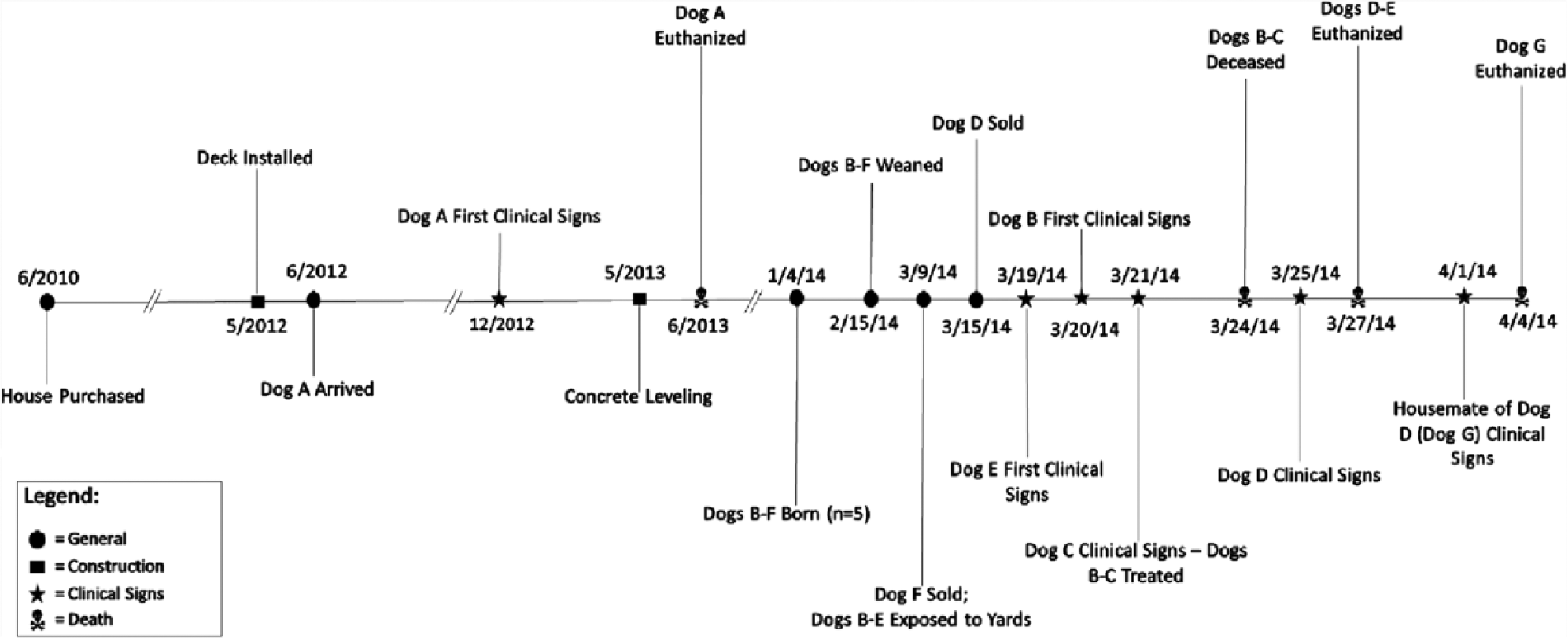
Timeline of events for case study.
Demographics of animals involved in this case study, with current disposition.*
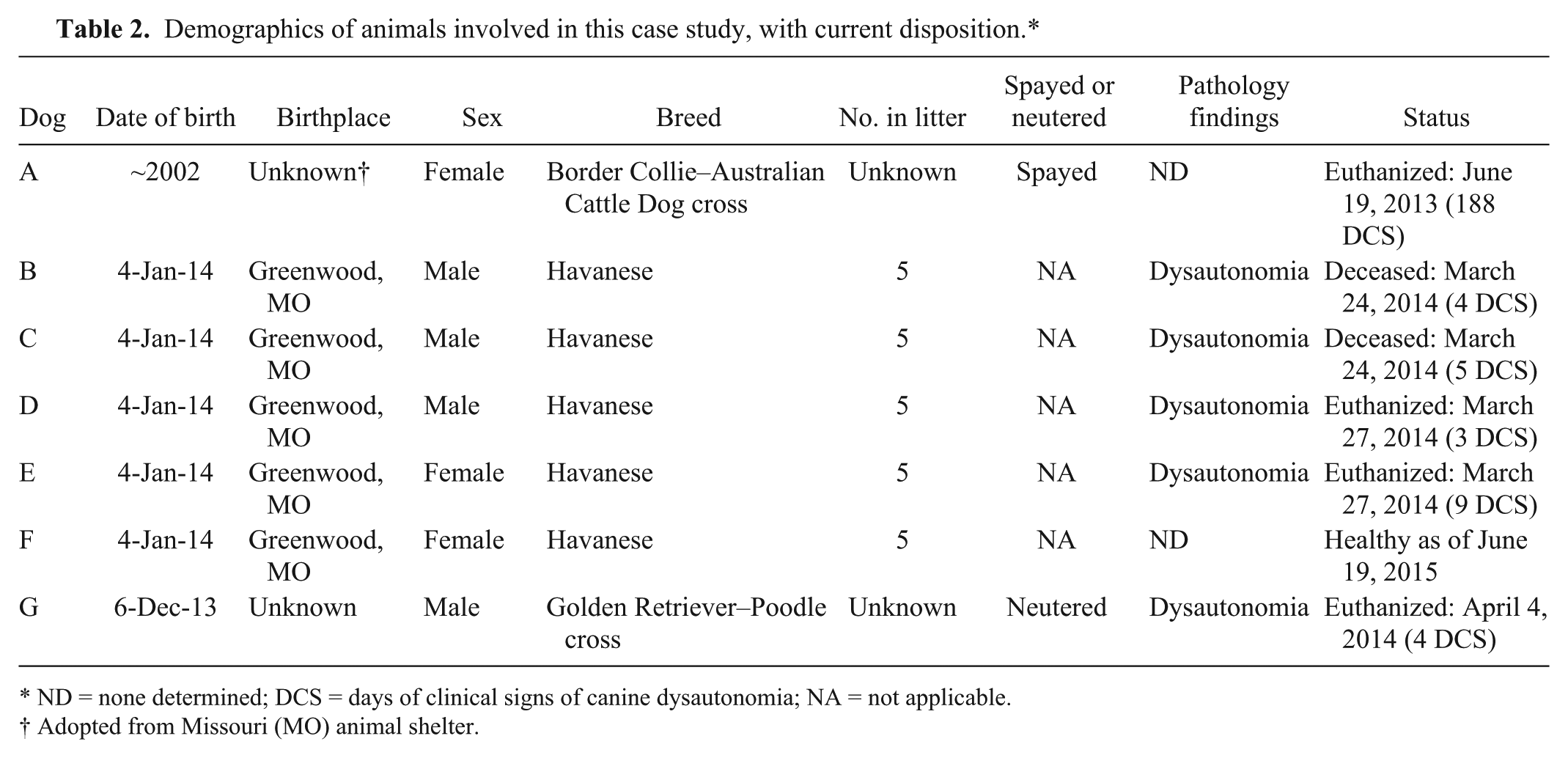
ND = none determined; DCS = days of clinical signs of canine dysautonomia; NA = not applicable.
Adopted from Missouri (MO) animal shelter.
The Havanese puppies were born on January 4, 2014, and weaned 6 weeks later. Of 5 dogs in the litter, 4 were allowed outside at the breeder’s residence. A fifth, unaffected dog (dog F), was sold and moved off the property minutes prior to the 4 littermates gaining access to outside. The 4 littermates had one-time access to defined areas (<5 m2) in the front and back yards for a brief period (<5 min total). All 4 littermates had simultaneous access to this one defined area of patchy grass with new topsoil applied 6 months prior. These dogs (B–E) exhibited clinical signs of dysautonomia 10–16 days after the outdoor exposure. All affected dogs developed vomiting and 1 or more other clinical signs, including crusty nares, straining to defecate and urinate, absent anal tone, rhinorrhea, prolapsed third eyelids, and hindlimb ataxia (Table 3). Dogs B and C were treated unsuccessfully with antibiotics, antiemetics, and steroids. Dogs D and E were untreated.
Clinical and autopsy findings of submitted dogs.*
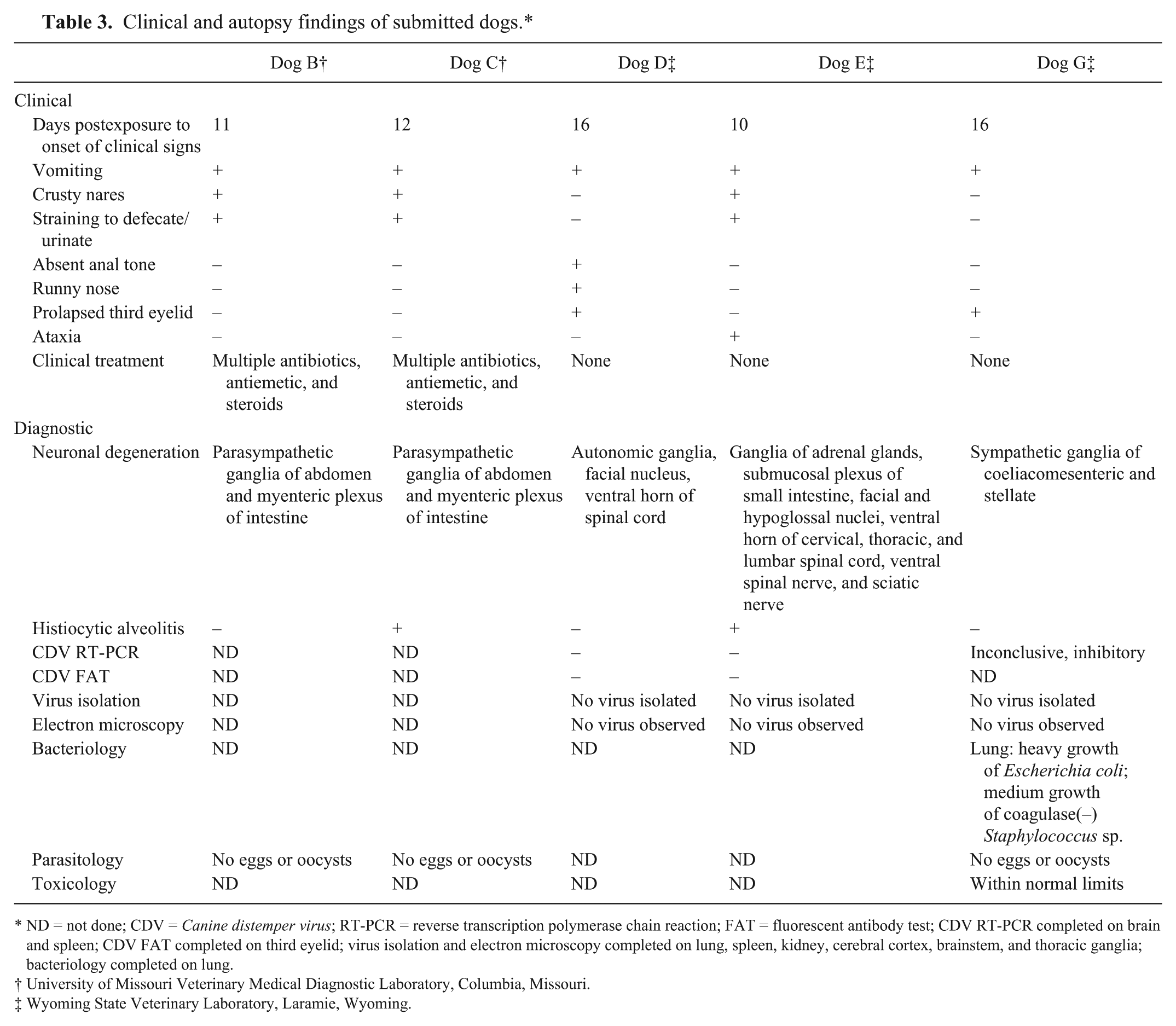
ND = not done; CDV = Canine distemper virus; RT-PCR = reverse transcription polymerase chain reaction; FAT = fluorescent antibody test; CDV RT-PCR completed on brain and spleen; CDV FAT completed on third eyelid; virus isolation and electron microscopy completed on lung, spleen, kidney, cerebral cortex, brainstem, and thoracic ganglia; bacteriology completed on lung.
University of Missouri Veterinary Medical Diagnostic Laboratory, Columbia, Missouri.
Wyoming State Veterinary Laboratory, Laramie, Wyoming.
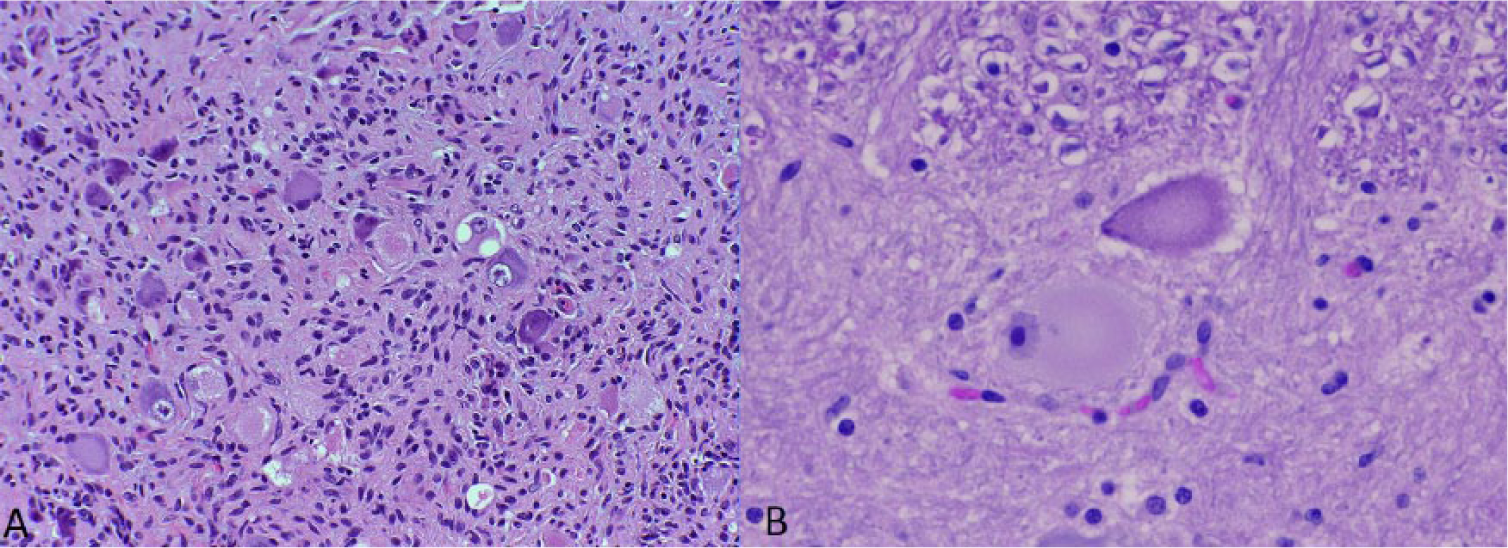
The 4 littermates either died or were euthanized 3–9 days after clinical signs developed. A diagnosis of dysautonomia was established morphologically based on neuronal degeneration in multiple parasympathetic and/or sympathetic ganglia (cranial mesenteric, splanchnic, and adrenal), and in submucosal and myenteric plexuses (Fig. 2A). There was widespread degeneration of large motor neurons in the ventral horn at all levels of the spinal cord, accompanied by degeneration in ventral spinal nerve roots (Fig. 2B). Unequivocal neuronal degeneration was absent in spinal intermediolateral and intermediomedial nuclei; dorsal root ganglia were unaffected. Bilaterally symmetrical degeneration was present in facial and hypoglossal nuclei. Additionally, 3 of the 4 dogs had histiocytic alveolitis (dogs C–E). Ancillary testing for Canine distemper virus was negative by indirect fluorescence microscopy (third eyelid) and polymerase chain reaction (PCR; brain and spleen), attempted virus isolation (lung, liver, spleen, kidney, cerebral cortex, posterior medulla oblongata, and stellate ganglia), negative stain electron microscopy (lung, liver, spleen, kidney, cerebral cortex, brainstem, and thoracic ganglia), and aerobic bacterial culture (lung).
Dog D with clinical signs for 3 days.
Dog G was an unrelated 16-week-old Golden Retriever–Poodle cross that was co-housed with dog D. Dog G was domiciled in south-central Missouri, which is recognized to be on the southern border of the known dysautonomia-affected zone. Dog G had never visited the affected property in Jackson County, Missouri. After comingling with dog G for 10 days, dog D became symptomatic for dysautonomia. Seven days later, similar signs developed in dog G and this dog was subsequently euthanized after a clinical course of 4 days. Lesions were consistent with dysautonomia in dogs D and G. Clinical signs and lesions in these cases were consistent with previously published accounts of dysautonomia.2,4 All affected animals were presented with vomiting and straining to defecate and urinate.
This is the second reported episode of dysautonomia in littermates. 5 In the previous report, the dam developed dysautonomia shortly after multiple littermates to which she gave birth developed clinical signs. The Havanese dam in the current episode remained clinically healthy, as did the other 9 adult animals on the property and unaffected littermate F. While the age of this litter that was affected is lower than the median previously reported, WSVL personnel have confirmed cases in dogs as young as 6 weeks of age as well as multicase households in which adult dogs were affected.
Several possibilities are suggested by this cluster of 4 cases of dysautonomia in 1 household over 5 days. One is that the episode of dysautonomia has a genetic basis. This is unlikely, as there were no previous or subsequent cases of dysautonomia in these dogs, and dysautonomia affects multiple breeds. 3 The history in the current episode is more consistent with a point-source exposure to an unknown toxic compound or infectious agent, possibly related to exposure to an outdoor environment.
The only factor common to the 4 affected littermates was access to exposed soil for a brief period. The current episode is suggestive of exposure to an environmental component in soil, either toxic or infectious. One possible explanation is exposure to a soil-borne agent that selectively targets autonomic and lower motor neurons. Clostridial toxins have been proposed in the past as the basis for equine dysautonomia (grass sickness), although no clear association has been documented.6,7,9 It is noteworthy that an unrelated housemate of 1 affected Havanese puppy developed dysautonomia shortly after the former was introduced into the household. It was not possible to resolve whether this was coincidence, or horizontal transmission of a toxin or infectious agent.
There may have been an earlier case of dysautonomia on the property. In December 2012, a 10-year-old, female, Border Collie–Australian Cattle Dog cross (dog A) developed intractable vomiting, coughing, and a hoarse bark. Subsequently, upper airway inflammation and urinary incontinence developed. The dog was treated without success, and was euthanized 188 days later. Unfortunately, no autopsy was performed to establish whether dysautonomia was the basis for illness. Investigation of clusters of canine dysautonomia in households may be a useful approach for developing testable hypotheses for the basis of the disease.
Footnotes
Acknowledgements
We acknowledge the cooperation of the 2 dog owners involved in this episode.
Authors’ contributions
NC Hull, D O’Toole, H Shoults, and BA Schumaker contributed to conception and design of the study. NC Hull, D O’Toole, and BA Schumaker contributed to acquisition, analysis, and interpretation of data. H Shoults, R Deck, and W Jones contributed to acquisition of data. GC Johnson and DP Shaw contributed to acquisition and interpretation of data. NC Hull, D O’Toole, MM Miller, and BA Schumaker critically revised the manuscript. All authors gave final approval. NC Hull and BA Schumaker agree to be accountable for all aspects of the work in ensuring that questions relating to the accuracy or integrity of any part of the work are appropriately investigated and resolved.
a.
Canine distemper virus (CDV) FITC FA conjugate, VMRD Inc., Pullman, WA.
b.
Canine distemper virus (CDV) antisera (caprine origin), VMRD Inc., Pullman, WA.
Declaration of conflicting interests
The author(s) have no conflicts of interest with respect to the research, authorship, and/or publication of this article.
Funding
The author(s) disclosed receipt of the following financial support for the research, authorship, and/or publication of this article: Part of this work was supported by the University of Wyoming’s Department of Veterinary Sciences and the University of Missouri’s Department of Veterinary Medicine.