




Abstract
Streptococcus spp. were recovered from diseased tilapia in Thailand during 2009–2010 (n = 33), and were also continually collected from environmental samples (sediment and water) from tilapia farms for 9 months in 2011 (n = 25). The relative percent recovery of streptococci from environmental samples was 13–67%. All streptococcal isolates were identified as S. agalactiae (group B streptococci [GBS]) by a species-specific polymerase chain reaction. In molecular characterization assays, 4 genotypic categories comprised of 1) molecular serotypes, 2) the infB allele, 3) virulence gene profiling patterns (cylE, hylB, scpB, lmb, cspA, dltA, fbsA, fbsB, bibA, gap, and pili backbone–encoded genes), and 4) randomly amplified polymorphic DNA (RAPD) fingerprinting patterns, were used to describe the genotypic diversity of the GBS isolates. There was only 1 isolate identified as molecular serotype III, while the others were serotype Ia. Most GBS serotype Ia isolates had an identical infB allele and virulence gene profiling patterns, but a large diversity was established by RAPD analysis with diversity tending to be geographically dependent. Experimental infection of Nile tilapia (Oreochromis niloticus) revealed that the GBS serotype III isolate was nonpathogenic in the fish, while all 5 serotype Ia isolates (3 fish and 2 environmental isolates) were pathogenic, with a median lethal dose of 6.25–7.56 log10 colony-forming units. In conclusion, GBS isolates from tilapia farms in Thailand showed a large genetic diversity, which was associated with the geographical origins of the bacteria.
Introduction
Global fish production has grown dramatically since 2001 (Food and Agricultural Organization of United Nations [FAO]: 2012, The state of world fisheries and aquaculture 2012. Available at: http://www.fao.org/docrep/016/i2727e/i2727e00.htm). According to a Food and Agricultural Organization report, total aquaculture production increased from 47.3 metric tons in 2006 to 63.6 metric tons in 2011, reflecting the vast expansion of consumer demand (FAO: 2012, The state of world fisheries and aquaculture 2012). Therefore, intensive aquaculture, with a recognized high production capacity, is becoming an important food producing industry. 25 However, the emergence of disease can be a problem, as high-intensity farming is prone to many infectious diseases (Yanong RPE, Francis-Floyd R: 2010, Streptococcal infections of fish, pp. 1–6. University of Florida, Florida Cooperative Extension Service. Circular 57. Available at: http://edis.ifas.ufl.edu/fa057). 25 To date, streptococcosis, which has been recognized as a significant cause of massive fish mortality, has spread to many continents and has resulted in enormous economic loss in the global aquaculture industries (Yanong RPE, et al.: 2010, Streptococcal infections of fish). Several species of sea and freshwater fish have been reported to be susceptible to Streptococcus agalactiae (group B streptococci [GBS]) infection, including rainbow trout (Oncorhynchus mykiss), 8 hybrid striped seabass (Morone saxatilis × M. chrysops), 29 channel catfish (Ictalurus punctatus), 29 wild mullet (Klunzinger’s mullet; Liza klunzingeri), 10 and Nile tilapia (Oreochromis niloticus). 32 Seventy percent accumulated mortality can occur due to chronic infection over several weeks (Yanong RPE, et al.: 2010), and in some cases, more than 50% mortality within 3 – 4 days has been reported in severely acute infections (Yanong RPE, et al.: 2010, Streptococcal infections of fish). In Thailand, GBS have been isolated from both marine and freshwater aquatic animals32,33 and are regarded as the most common pathogens associated with streptococcosis outbreaks in tilapia farms in Thailand. 33
Group B streptococci are Gram-positive encapsulated bacteria that are known as wide host range pathogens because of their ability to cause various pathological conditions in many mammals and aquatic animal species. 35 According to the antigenic properties of the capsular polysaccharide, GBS can be divided into 10 capsular serotypes (Ia, Ib, II–IX).5,30 In the case of aquatic animals, 3 serotypes of GBS (Ia, Ib, and III) have been isolated from fish diagnosed with streptococcosis,31,36 while only 2 serotypes (Ia and III) have been reported from tilapia farms in Thailand. 33 In addition, the intraspecies diversity of GBS genomes has been demonstrated using several molecular techniques such as pulsed-field gel electrophoresis (PFGE), 23 multilocus sequence typing (MLST), 9 and randomly amplified polymorphic DNA (RAPD).1,16 Unfortunately, little information about the genetic diversity of GBS isolated in Thailand is avaliable. 33
While several environmental factors that cause stressful conditions for fish such as low dissolved oxygen (DO), 3 high concentrations of nitrite, 3 and high stocking density 24 are associated with the occurrence of disease, high water temperature appears to be the most important factor contributing to the susceptibility of fish to GBS infection.20,21,26 However, it is difficult to demonstrate a relationship between disease occurrence and seasonal variations, as the surveillance information about GBS outbreaks over long duration periods is still limited.
In the current study, the presence of GBS in clinical and environmental samples collected from tilapia culturing sites from 2009 to 2011 were examined, and molecular characteristics and virulence gene profiles of GBS were also investigated.
Materials and methods
Sample collection
Samples from diseased tilapia were collected from 5 provinces in Thailand (Fig. 1) between August 2009 and September 2011. Tilapia were collected from farms that had outbreaks of disease with high mortalities (>50%).
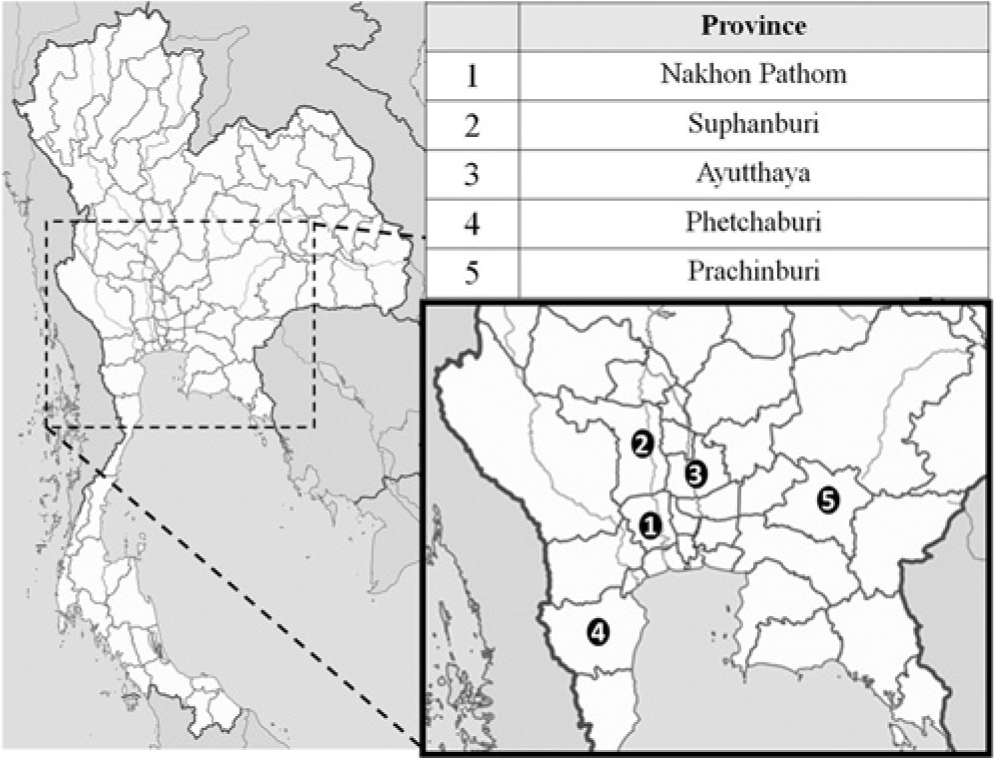
Geographical origins of isolated streptococci.
For the prospective surveillance of streptococcal contamination in tilapia farms, 3 commercial earthen pond tilapia farms located in Nakhon Pathom Province were selected. The farms were approximately 10 km apart from each other, and the water supplies for each farm were from different irrigation canals. No mammalian livestock were present in nearby areas, which minimized the possibility of contamination by streptococci from mammalian origin. All 3 farms acquired fingerling tilapia from the same streptococcus-free hatchery (established by cultured-based methods) located in the same province. Once a month, pond water and sediment samples were collected from at least 2 earthen ponds per farm. Notably, only the ponds that contained 3–5-month-old tilapia were selected, and the samples were taken between 10:00 and 13:00. Water samples were drawn from 3 meters from the shore at a depth of 50 cm. The sediment samples were collected from the same spot. Water samples from irrigation canals supplying water to the farms were also collected in the same manner. Water quality parameters including salinity, alkalinity, DO, hardness, pH, ammonia, nitrite level, and temperature were recorded at the time that the samples were taken. The samples were collected over a 9-month period from January to September 2011, which covered all 3 seasons (winter, summer, and rainy) in Thailand.
Isolation and identification of streptococci
Streptococci in the fish samples were directly isolated using a streptococci-selective medium. 22 In the case of environmental samples, pond water– and saline-diluted sediment were enriched with trypticase soy broth a containing 10 mg/l of colistin sulfate b and 5 mg/l of oxolinic acid b at 32°C for 24 hr followed by subculturing of bacterial suspensions onto the streptococci-selective medium and incubation at 32°C for 24 hr. Standard biochemical assays were used to classify the genus and species of the bacteria. 13 To confirm whether suspected isolates were GBS, bacterial DNA was extracted by standard phenol–chloroform extraction, 2 and a polymerase chain reaction (PCR) using species-specific primers targeting the16S ribosomal RNA (rRNA) gene of GBS was carried out as previously described. 19 Group B streptococci A909 (serotype Ia) was included as a positive control for the PCR assays. The relative percent isolation (RPI) of streptococcus from tilapia farms was calculated using the following formula: RPI = [(number of streptococci-positive pond)/(total sampling ponds)] × 100.
Phenotypic characterization
The carbohydrate utilization ability of GBS was determined using cystine trypticase agar a containing 1% of one of several sugars (trehalose, lactose, sucrose, mannitol, raffinose, salicin, and galactose). In addition, clinical strains isolated from the milk of mastitic cows (9 isolates; B01–B09), and strains of human origin purchased from the Department of Medical Science, Thailand (6 isolates; H01–H06) were included in the assays.
Genotypic characterization
The genotypic characteristics of the GBS isolates were examined using a set of 4 genotyping assays. These assays consisted of 1) identification of the molecular serotype, 2) identification of virulence genes, 3) sequencing of the central variable region of infB, and 4) RAPD. The possible results of each genotyping system are listed in Table 1.
Genotype characterization assays used in the current study.*
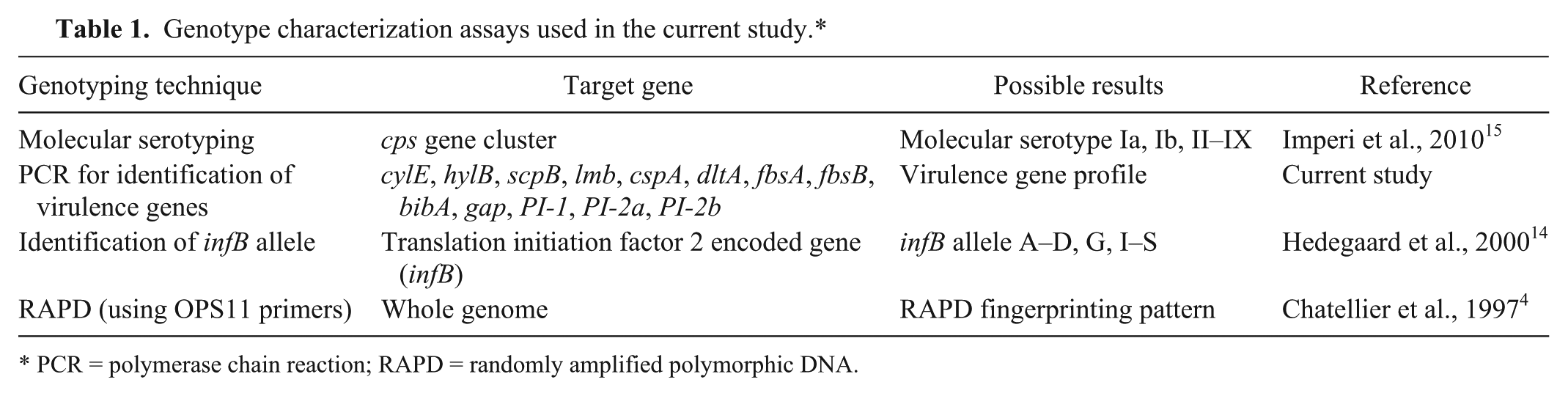
PCR = polymerase chain reaction; RAPD = randomly amplified polymorphic DNA.
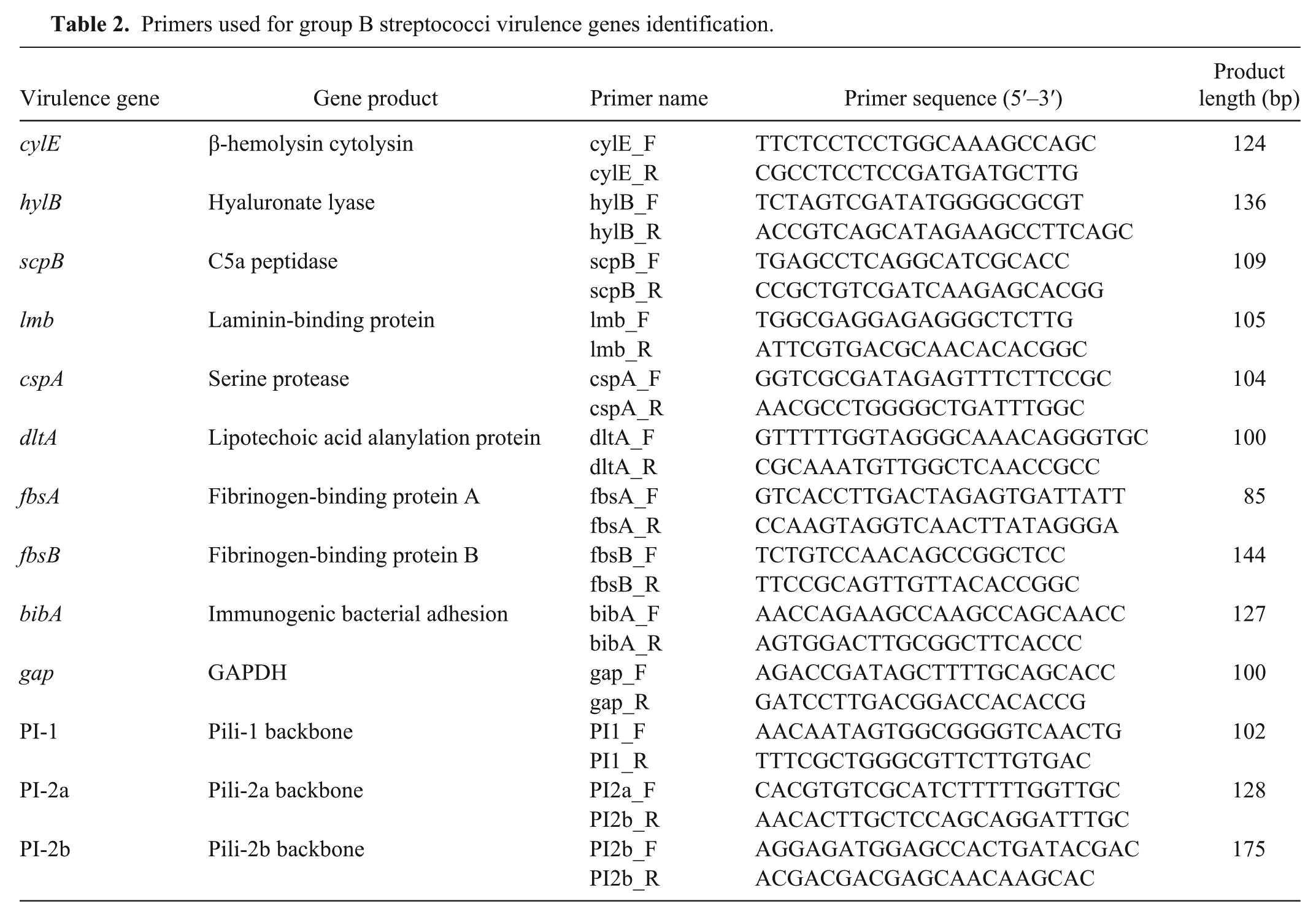
The primers used in the current study are listed inTable 2. Several of the primer pairs listed in Table 2 were newly designed in the current study from conserved regions of the putative virulence genes of GBS serotype Ia (A909, GD201008-001), serotype III (NEM316), and serotype V (2603V/R) using the primer-BLAST designing tool (http://www.ncbi.nlm.nih.gov/tools/primer-blast/). The specificity of the primers was tested by PCR of GBS A909 and 2603V/R, and the 3 human isolates H04, H03, and H01 (serotype Ia, Ib, and III, respectively). Any PCR products were subjected to sequencing to confirm the identity of the product. As well, a sequence alignment was performed to compare the products against the reference genome sequences of GBS (strains A909, GD201008-001, NEM316, and 2603V/R) using the BLAST program. Positive strains identified by this process were then used when testing field isolates.
Primers used for group B streptococci virulence genes identification.
For RAPD analysis, the reproducibility and ability to differentiate genotypes achieved by 3 primers (AP42, OPS11, and OPS16) 4 were tested and validated on 10 isolates of GBS (including fish, environmental, bovine, and human isolates). This was done of 3 occasions, and the results were examined by the use of 1.0%, 1.2%, and 1.5% agarose gel (1 gel per occasion). The similarity matrix of GBS isolates was generated from the RAPD fingerprint patterns produced by the selected methodology. Subsequently, the dendrogram was constructed using the UPGMA method in the web-based program DendroUPGMA (http://genomes.urv.es/UPGMA/).
Median lethal dose and data analyses
The median lethal doses (LD50) of 6 GBS isolates (ENC03, ENC10, ENC24, FNB12, FNB17, and FPhA01) from different dendrogram-molecular clusters were determined. Streptococci were grown overnight in trypticase soy broth. Bacterial cells were harvested, washed twice with 0.85 % saline, and suspended in sterile phosphate buffered saline. The concentration of GBS suspension was evaluated using spectrophotometry and adjusted to 108 colony-forming units (CFU)/ml (OD600 = 0.6), 34 followed by 10-fold serial dilutions. Five groups of 30–40-g Nile tilapia, with 6 fish per group, were injected intraperitoneally with 0.1 ml of GBS suspension (108, 107,106, 105, or 104 CFU). Accumulated mortality of the fish was observed until 7 days postinjection, and the LD50 was calculated by Probit analysis. 11 In total, 180 tilapia were used in this inoculation study. The relationship between the month in which samples were collected and the RPI was analyzed using the chi-square test in a commercial software package. c
Results
Occurrence of streptococci in clinical and environmental samples
All streptococci isolated in the current experiment were identified as GBS. A total of 33 isolates from diseased fish and 25 isolates from environmental samples were obtained. The date and location of collection of the GBS isolates and their code names are given in Table 3.
Source, location, and date of isolation of group B streptococci strains found in the current study.
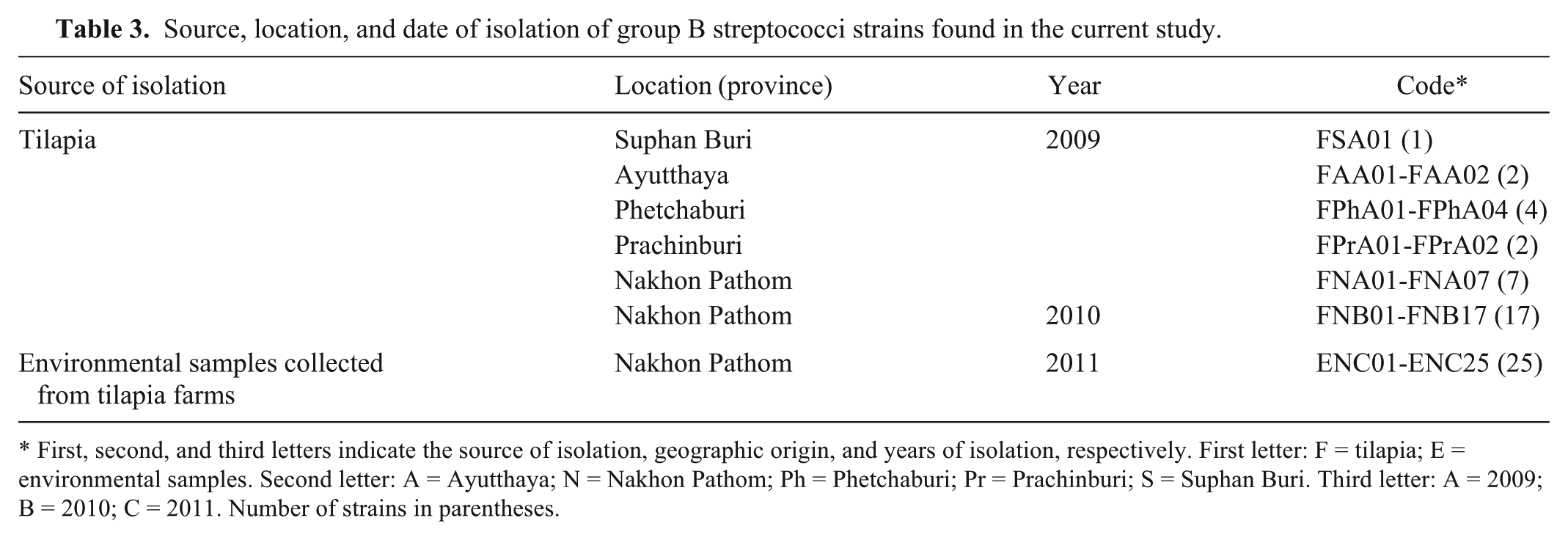
First, second, and third letters indicate the source of isolation, geographic origin, and years of isolation, respectively. First letter: F = tilapia; E = environmental samples. Second letter: A = Ayutthaya; N = Nakhon Pathom; Ph = Phetchaburi; Pr = Prachinburi; S = Suphan Buri. Third letter: A = 2009; B = 2010; C = 2011. Number of strains in parentheses.
The RPI of GBS isolates ranged from approximately 26% to 34% in each month except June when it was 0%. The percent isolation of GBS did not show any marked correlation with the season or water temperature (Fig. 2). Similarly, the other water quality parameters were quite stable over the 9-month period of study (i.e., pH: 7.5–8.0, salinity: 0–0.4%, DO: 5–10 ppm, alkalinity: 120–200 ppm, ammonia: 0–0.2 ppm, and nitrite: 0–0.04 ppm), and these parameters did not appear to be associated with the frequency of bacterial isolation on the farms. All attempts to isolate GBS from water supplies collected from the irrigation canal were unsuccessful.
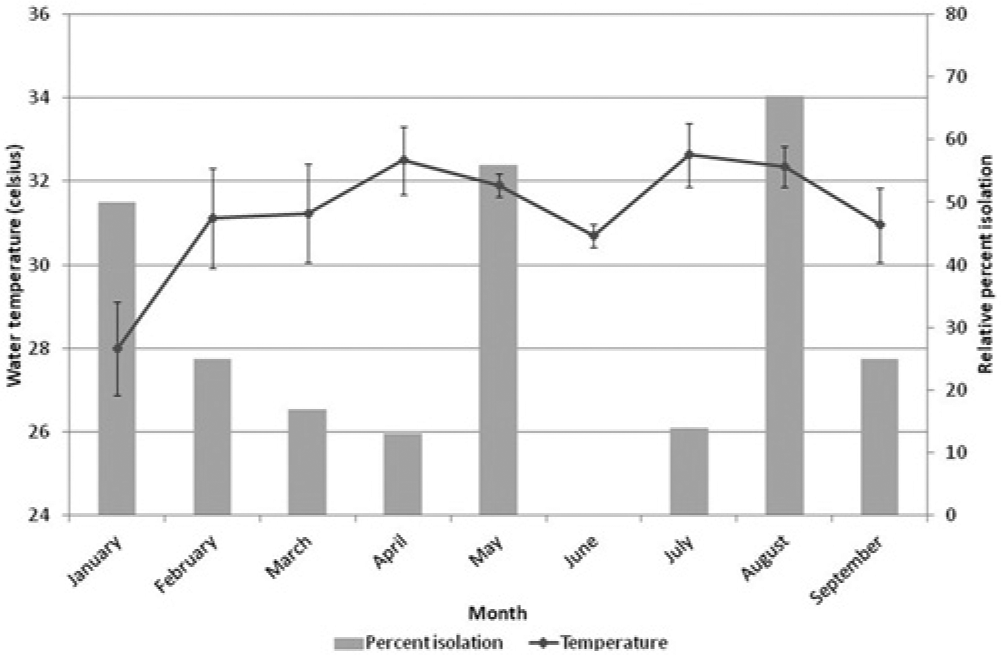
Relative percent isolation of group B streptococci from environmental samples collected from 3 commercial tilapia farms in Nakhon Pathom Province, Thailand. Sediment and water from fish ponds were collected over 9 months (January–September 2011). Water temperatures are reported as mean values with standard deviations.
Phenotypic characteristics of GBS
The biochemical test results for catalase, oxidase, motility, oxidative/fermentation glucose, Voges–Proskauer, Christie, Atkins, Munch-Peterson (CAMP), starch, esculin, and hippurate hydrolysis assays were identical among the GBS isolates obtained from all environmental samples, fish, cattle, and human beings (Table 4). None of the GBS isolates grew in a medium containing 6.5% NaCl except for the 7 environmental isolates. Almost all isolates also shared a common carbohydrate utilization pattern, using trehalose, raffinose, mannitol, galactose, salicin, and sucrose. The one exception was lactose, for which the positive isolates were only from bovine samples.
The variation of biochemical characteristics of group B streptococci (GBS) isolated in the current study.*
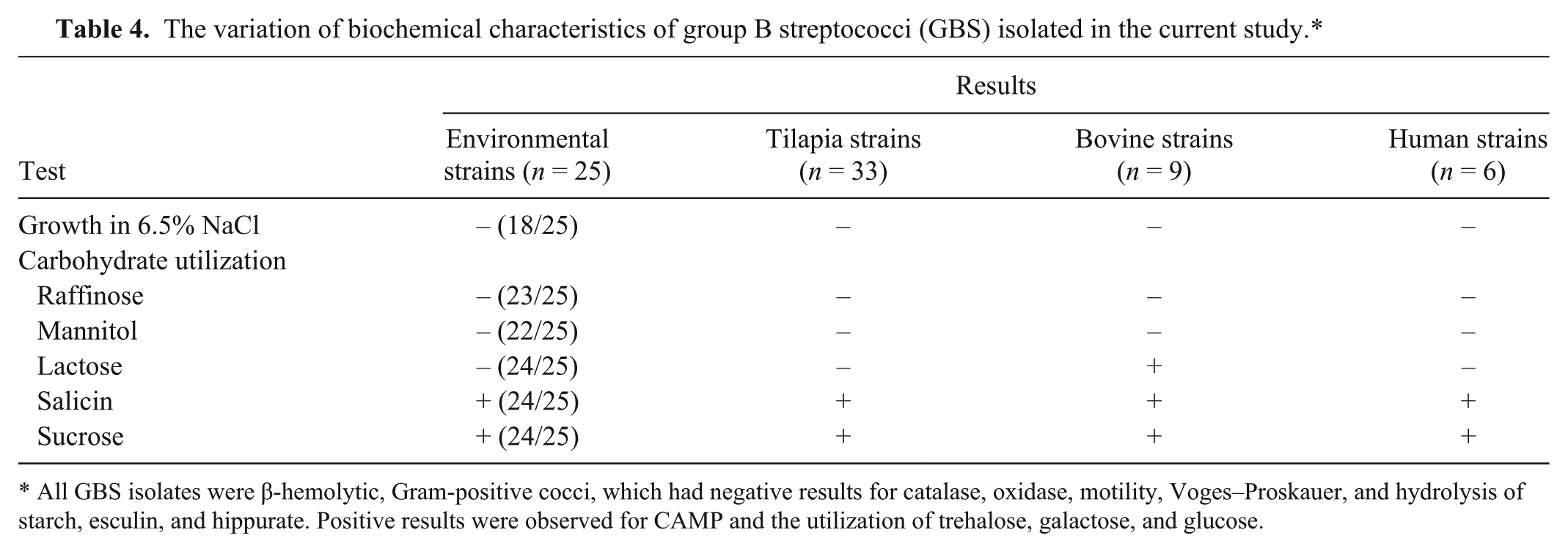
All GBS isolates were β-hemolytic, Gram-positive cocci, which had negative results for catalase, oxidase, motility, Voges–Proskauer, and hydrolysis of starch, esculin, and hippurate. Positive results were observed for CAMP and the utilization of trehalose, galactose, and glucose.
Genotypic characteristics of GBS
In the initial validation of the novel primers developed in the current study for the virulence genes, at least 1 strain from the panel of control strains (see “Materials and methods”) produced the expected specific band. Sequencing of these products showed 98–100% identity to the sequences of the relevant gene with the reference genomes of GBS (strains A909, GD2010008-001, NEM316, and 2603V/R).
Among GBS isolates obtained from all sources, most were identified as molecular serotype Ia. One environmental isolate and 2 isolates from human beings of serotype III GBS were found, while only 1 serotype Ib GBS was identified from a human source.
Clustering of GBS isolates using the nucleotide sequences of the central variable region of the infB gene identified 4 infB allele patterns (Fig. 3). BLAST analysis of the infB sequences revealed that the GBS isolates carried alleles A, D, I, and a newly identified allele, the sequence of which differs from all infB sequences in the GenBank database at the time of this publication. The newly identified allele was named “infB allele T” (GenBank accession no. JQ762635).
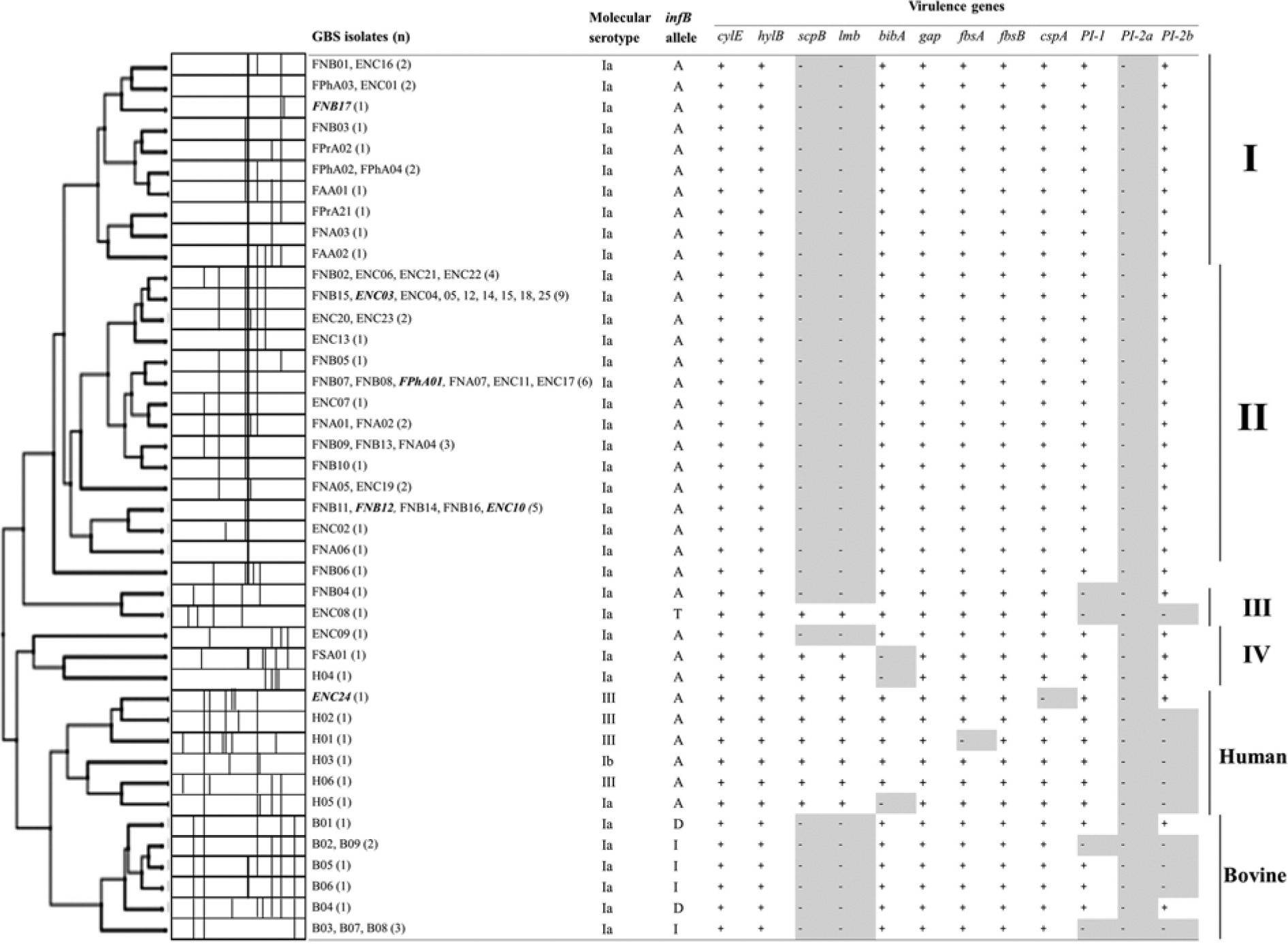
Molecular characteristics of group B streptococci (GBS) isolates. A dendrogram generated from randomly amplified polymorphic DNA (RAPD) fingerprints is shown at left. Molecular serotypes, infB alleles, and virulence gene profiles are shown at the right. Bold letters on the right of the figure represent the RAPD cluster type. The 6 GBS isolates that were selected for median lethal dose analysis are indicated in italics.
By monitoring for the putative virulence genes, 10 virulence gene profile patterns were identified among the GBS collection (Fig. 3). The cylE, hylB, bibA, gap, fbsA, fbsB, PI-1, and PI-2b genes were present in nearly 100% of the environmental and fish isolates, while PI-2a was completely missing from those isolates. The scpB and lmb genes were found in all human-derived isolates and in 3 isolates from fish and environmental origin (5%).
Based on the preliminary evaluation, the best reproducibility and discrimination was obtained with primer OPS11 and separation on a 1.5% agarose gel. Using this selected methodology, 42 RAPD fingerprinting patterns were generated among 73 GBS isolates (including environmental, fish, bovine, and human isolates). A dendrogram constructed from the similarity matrix obtained from the RAPD fingerprinting patterns generated with the OPS11 primer is presented in Figure 3. The results from the other 3 genotyping systems are also presented in Figure 3. On the basis of this dendrogram, GBS isolates can be divided into 6 different clusters (I, II, III, IV, human, and bovine). One isolate, FNB06, did not fall into any of these clusters. The isolates from fish and environmental origin were mostly confined within clusters I–IV. Cluster II was the largest cluster and was composed of 38 isolates, most from Nakhon Pathom Province, while only 1 isolates came from Phetchaburi Province. Cluster I was made up of 13 isolates from various geographic allocations (i.e., Ayutthaya, Nakhon Pathom, Phetchaburi, and Prachinburi). Clusters III and IV were the smallest, containing only 2 and 3 isolates, respectively. The GBS isolates in cluster IV were from Nakhon Pathom and Suphan Buri Provinces, with 1 isolate from a human source. For human and bovine isolates, the RAPD fingerprints showed distinct genetic traits that had little relatedness with fish and environmental GBS.
Median lethal dose
Challenge with GBS resulted in Nile tilapia mortality. Streptococcosis was confirmed as the cause of mortality because GBS were isolated from the brain of all dead fish. Five GBS isolates were virulent for Nile tilapia (Table 5). The sole serotype III isolate, ENC24, was nonvirulent and did not cause any mortality. The FPhA01 isolate had the lowest LD50 and produced clinical signs (darkened skin, exophthalmos, and erratic swimming) and mortality at only 1 day postinoculation.
Median lethal dose (LD50) of some group B streptococci isolates collected from environmental and fish samples in the current study.
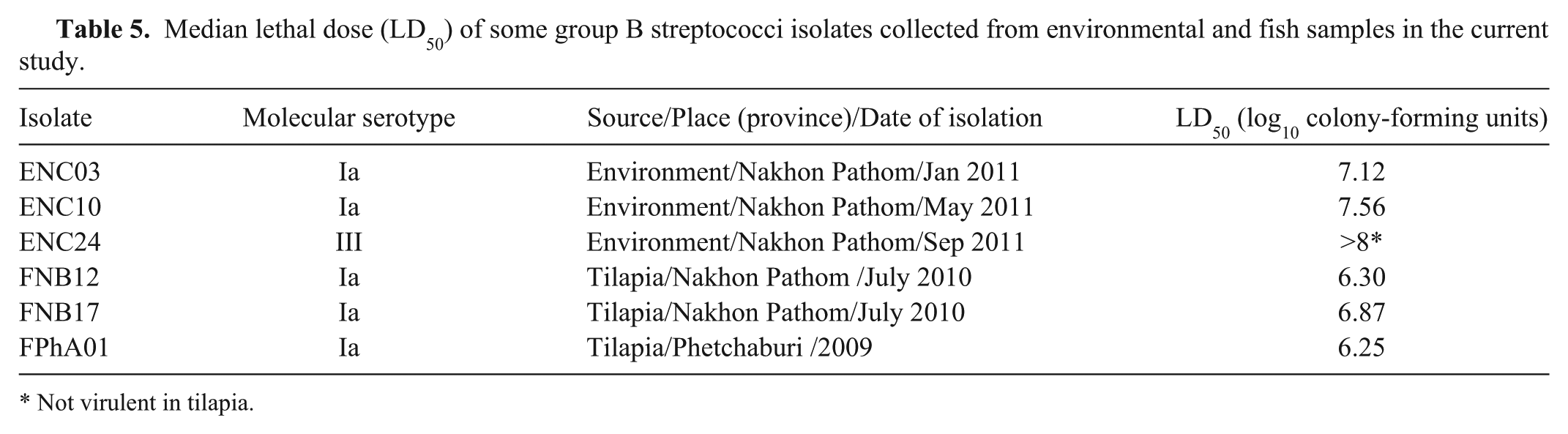
Not virulent in tilapia.
Discussion
During the 3 years of study (2009–2011), all of the streptococcal isolates that were recovered from clinical and environmental samples were GBS. Although S. iniae was previously reported to be isolated from wild Asian seabass (Lates calcalifer) and cultured red tilapia in Thailand, the prevalence appears to be still limited to southern regions.33,34
Recovery of GBS from the environments was successful during all 9 months of the survey and tended to be unrelated to seasonal changes or water temperature. The results of the current study disagree with those of a previous report, which demonstrated that the emergence of streptococcosis was closely related to water temperature. 3 The results of the current study suggest that the higher bacterial recovery rate in some months may be due to other factors such as farm management. More important, according to the results of the LD50 assays, both the environmental isolates (in nondisease situations) and those collected from diseased fish were pathogenic, suggesting that pathogenic GBS may inhabit tilapia farms and cause disease as opportunistic pathogens.
Although a nonpathogenic serotype III GBS was collected from a tilapia farm (isolate ENC24; Table 5), the genotypic features of serotype III are very similar to those of human isolates. Therefore, the serotype III isolate may have been a contaminant that originated from another source. The infB allele and virulence gene profiling assays showed only minor differences among GBS isolates from the environment and fish. Sequence analysis of the central variable region of the translation initiation factor IF2 gene (infB) allele was proposed to be useful for phylogenetic analysis of GBS as the result was correlated with an evolutionary tree generated by 16S rRNA sequences and, until now, a total of 19 infB allele sequences have been available in the GenBank database.14,31 In the present study, a novel infB allele was identified in a GBS isolate and was designated as “allele T.”
The 12 virulence genes selected for profiling assays can be categorized as being associated with 1) bacterial adhesion and colonization (lmb, dltA, bibA, fbsA, fbsB, PI-1, and PI-2), 2) bacterial invasion (hylE, cspA, and gap), 3) immune evasion (cylE, cpsA, and scpB), and 4) toxin production (cylE).7,19 Only 5 genes (cylE, scpB, lmb, PI-1, and PI-2) possess mobile genetic elements (MGEs).12,27 The presence of these 5 MGE-dependent genes were responsible for the variety of virulence gene profiles among GBS isolates included in the current study. According to a prior publication, MGEs such as group II introns and several insertion sequences in GBS genomes are useful for characterizing GBS genetic traits. 17 This suggests that identification of MGE-associated virulence genes could be used as a rapid and novel genotyping system. In the current study, the absence of scpB and lmb from 95% of environmental and fish isolates is consistent with previous publications that have reported the deletion of scpB and lmb in fish GBS and most bovine strains (80%).12,18,28 This absence of scpB and lmb suggests that the activities of C5a peptidase and laminin-binding proteins might not be involved in pathogenesis in fish.12,28 According to a comparative genomic study, the deletion of genomic contents, especially mobile and extrachromosomal elements (including virulence factors), was raised as a consequences of reductive evolution defining host specialization of GBS fish strains. 28
In the current study, fish and environmental GBS isolates were divided into 4 major clonal clusters (I–IV; Fig. 3). According to the constructed dendrogram, a high genetic variation among environmental and fish isolates was observed. The genetic diversity among GBS seems to be related to the geographical origin as the isolates belonging to cluster II were collected from the same province (Nakhon Pathom). The environmental and fish isolates showed little relationship with human and bovine isolates (Fig. 3). This separation of fish isolates from bovine and human isolates by RAPD fingerprinting analysis was consistent with previous PFGE- 23 and MLST-based epidemiological studies, 9 indicating that fish GBS strains had developed their own distinct genetic lineage. Multilocus sequence typing studies have categorized fish GBS strains into 2 main groups.6,9 The sequence types (STs) of the GBS isolates in the current study were not determined. Nevertheless, the current study provides convincing evidence that environmental and fish GBS most resembles fish ST-7 GBS because of the resemblances in biochemical characteristics (β-hemolytic, and positive for CAMP and hippurate hydrolysis tests), carbohydrate utilization, serotype Ia,6,9 and the virulence gene profile. 18 In contrast, the other fish STs were mostly reported to be nonhemolytic, CAMP negative, and of serotype Ib.6,9,18
In summary, the current study emphasizes that β-hemolytic GBS serotype Ia was the most important cause of warm-water streptococcus of tilapia in Thailand. Pathogenic GBS appear to be opportunistic inhabitants in farming environments, and the diversity of molecular characteristics is geographically dependent.
Footnotes
a.
BD, Sparks, MD.
b.
Sigma-Aldrich, St. Louis, MO.
c.
SPSS software package version 17.5, IBM, Bangkok, Thailand.
Declaration of conflicting interests
The author(s) declared no potential conflicts of interest with respect to the research, authorship, and publication of this article.
Funding
The funding of this research has been supported by Chulalongkorn University graduate scholarship to commemorate the 72nd anniversary of his Majesty King Bhumibol Adulyadej, the 90th Anniversary of Chulalongkorn University Fund (Ratchadapiseksomphot Endowment Fund), PhD Scholarship for Research Abroad (D-RSAB), and Thailand Research Fund and Office of the Higher Education Commission (MRG5080209).