



Abstract
The automated laser-based hematology analyzer Sysmex XT-2000iV™ providing a complete blood cell count (CBC) and 5-part differential has been introduced in large veterinary laboratories. The aim of the current study was to determine precision, linearity, and accuracy of the Sysmex analyzer. Reference method for the accuracy study was the laser-based hematology analyzer ADVIA® 2120. For evaluation of accuracy, consecutive fresh blood samples from healthy and diseased cats (n = 216), dogs (n = 314), and horses (n = 174) were included. A low intra-assay coefficient of variation (CV) of approximately 1% was seen for the CBC except platelet count (PLT). An intra-assay CV ranging between 2% and 5.5% was evident for the differential count except for feline and equine monocytes (7.7%) and horse eosinophils (15.7%). Linearity was excellent for white blood cell count (WBC), hematocrit value, red blood cell count (RBC), and PLT. For all evaluated species, agreement was excellent for WBC and RBC, with Spearman rank correlation coefficients (rs) ranging from >0.99 to 0.98. Hematocrit value correlated excellently in cats and dogs, whereas for horses, a good correlation was evident. A good correlation between both analyzers was seen in feline and equine PLT (rs = 0.89 and 0.92, respectively), whereas correlation was excellent for dogs (rs = 0.93). Biases were close to 0 except for mean corpuscular hemoglobin concentration (4.11 to −7.25 mmol/l) and canine PLT (57 × 109/l). Overall, the performance of the Sysmex analyzer was excellent and compared favorably with the ADVIA analyzer.
The use of large-volume laser-based hematology analyzers using veterinary species-specific software is of great importance in veterinary laboratories, industrial companies, or larger veterinary clinics. The 2 most commonly used hematology analyzers include the ADVIA® 120 and 2120 a and the Cell-Dyn® 3500. b The laser-based multispecies ADVIA 120 hematology system has been extensively validated for its use in veterinary laboratories for several species including dog, cat, horse, cattle, pig, goat, and sheep.7,12 Generally, for all species, a good correlation between ADVIA 120 measurements and results determined by manual methods and its predecessor, the laser-based hematology system H*1, c were reported. 12 The ADVIA 120 cytograms might be used as a screening tool in the automated analysis of canine body cavity fluids 3 and bone marrow. 2 The Sysmex XT-2000iV™ (hereafter, Sysmex analyzer), d a modification of the human XT-2000i system equipped with veterinary software, has been introduced on the veterinary market. The current veterinary software includes settings and algorithms for the analysis of specimens from cats, dogs, horses, rats, mice, rabbits, guinea pigs, monkeys, cattle, and pigs and is also open for the development of additional user-defined analysis profiles.
The performance of the Sysmex analyzer has been previously compared to the Cell-Dyn 35009,10,24 and has been also found suitable for the measurement of canine body cavity fluids. 17 However, a comparison with the ADVIA 2120 (hereafter, ADVIA analyzer) has not been made so far. Thus, it was the aim of the current study to evaluate the performance of the Sysmex analyzer regarding the measurement of complete blood cell count (CBC; i.e., white blood cell count (WBC), hemoglobin (Hb), red blood cell count (RBC), mean corpuscular volume (MCV), mean corpuscular hemoglobin (MCH), mean corpuscular hemoglobin concentration (MCHC), and platelet count (PLT) for dogs, cats, and horses compared to the ADVIA analyzer. Moreover, linearity, precision, and carryover (i.e., the percentage of cells remaining behind after measurement of a sample with high cellularity) were assessed for the Sysmex analyzer.
Materials and methods
Study design
The prospective study was approved by the Ethics Committee for Animal Welfare, Giessen, Germany. Consecutive ethylenediamine tetra-acetic acid (EDTA) blood samples from all healthy and diseased dogs, cats, and horses submitted to the Central Laboratory, Department of Veterinary Clinical Sciences, Justus-Liebig-University (Giessen, Germany) between July 2006 and September 2007 were included. Inclusion criterion was a sufficient sample volume for hematological analysis with both the ADVIA and Sysmex analyzers and fresh samples (<6 hr old).
In case of error messages from both analyzers, the following procedure was performed. The error messages were classified into “technical flags” and “morphological flags.” Technical flags included all flags caused by a technical problem of the instruments or if the error message suggested a repeat of the sample. Morphological flags were defined as all flags caused by abnormalities of the blood. In case of a technical flag, the sample was re-analyzed. If in the second measurement a technical flag appeared again, the results were rejected. Measurements with morphological flags were accepted. In the current investigation, different flagging options of both hematology analyzers were not assessed. Instruments were operated by the technicians of the Central Laboratory and 2 of the authors (JN, CD).
ADVIA 2120
The ADVIA analyzer was operated with the veterinary software version 5.3.1.-MS. The instrument is a laser-based hematology analyzer, using laser light scatter at a wavelength of 670 nm, cytochemical peroxidase staining, differential white blood cell lysis, and oxazine 750 staining to provide CBCs. Erythrocytes and platelets are simultaneously detected in the RBC/PLT channel. The ADVIA analyzer has the option to measure total Hb with a cyanide-free colorimetric method, which has been evaluated previously in the authors’ laboratory for its use in cats, dogs, and horses. 4 In addition, the Hb concentration is internally controlled by comparison of the MCHC and the corpuscular hemoglobin concentration mean (CHCM). The CHCM is measured directly based on cell-by-cell analysis, whereas MCHC is calculated based on Hb, MCV, and RBC results. The WBCs are analyzed with 2 methods in separate channels (peroxidase and baso/lobularity channel) serving as internal control. Internal quality control materials in 3 different concentrations (low, normal, and high) provided by the manufacturer e were assayed each day.
Sysmex XT-2000iV
The veterinary software version 00-08 was installed on the Sysmex analyzer, and specimens were measured in the open-tube mode of the analyzer (i.e., the manual mode in which the required sample volume was aspirated by the analyzer out of uncapped tubes). The closed-tube mode consistent with the use of a rack and sample aspiration from uncapped tubes was not chosen as the ADVIA analyzer was also run routinely in the open-tube mode in the authors’ laboratory.
Using the Sysmex analyzer, Hb is measured with a cyanide-free, spectrophotometric method. The RBC and PLT impedance (PLT-I) are measured using direct-current detection with hydrodynamic focusing. Hematocrit value is simultaneously determined applying the RBC pulse-height detection method as published previously. 22 Mean corpuscular volume, MCH, and MCHC are calculated automatically from the impedance counts. Reticulocytes are analyzed using flow cytometry and polymethine dye, a fluorescent stain for nucleic acids. The measurement uses both forward-scattered light and side fluorescent information to determine the reticulocyte count, percentage, and immature reticulocyte information. In this channel, a fluorescence optical measurement laser-based measurement of platelets (PLT-O) is performed as well.
Generally, PLT-I value is reported by the analyzer as a default setting; however, the user has the opportunity to change this setting specifically if this is preferred for a species. In the current study, PLT-O was reported in cats and horses due to the frequently observed platelet aggregates in these species known to interfere with impedance method, whereas in dogs, PLT-I value was compared with the ADVIA analyzer PLT.
Similar to the ADVIA analyzer, the total leukocyte count is performed in 2 channels, the WBC-DIFF channel and the WBC-BASO channel serving as internal control. As for the ADVIA analyzer, the WBC-BASO channel is the default method for reporting the total WBC. Three levels of quality control material f were run each day prior to the measurements of patient samples. Technical flags of the Sysmex analyzer are indicated by the error message “func.” Morphological flags are divided in the following subcategories: “Diff” (abnormalities in the WBC differential parameters), “Morph” (abnormal cell morphology; i.e., abnormal distribution of PLT and RBC or abnormal WBC scattergram, anisocytosis of erythrocytes, etc.), and “Count” (abnormality in blood cell numerical count). Moreover, specific messages such as “Leukocytosis,” “Thrombocytopenia,” “WBC abnormal scattergram,” or “PLT abnormal distribution” might be generated or data reports might be marked with “@” (data outside the linearity limit), “*” (data is doubtful), “+” or “–” (data is outside the reference limit), “—” (data does not appear due to analysis error or abnormal sample), “+++” (data exceeds display limit), and “&” (PLT-O is substituted for PLT-I).
Repeatability
Intra-assay and interassay repeatability was evaluated for the Sysmex analyzer Diff. For assessment of intra-assay repeatability, 10–13 ml of EDTA blood samples were taken from a healthy blood donor (cat, dog, and horse, respectively). Intra-assay repeatability was evaluated for CBC, differential count, and reticulocyte count for both analyzers. For feline specimens, 20-run intra-assay repeatability was evaluated, whereas in dogs and horses 25 repeated measurements were performed. Interassay repeatability was evaluated by calculating the coefficient of variation (CV) of 20 consecutive measurements of internal quality control material in 3 different concentrations (low, normal, high). Coefficients of variation (%) were calculated as standard deviation (SD)/mean × 100.
Linearity and carryover
Linearity and carryover was assessed for RBC, Hb, and WB. For PLT, only carryover was determined. Due to organizational reasons, carryover was only evaluated in cats and horses. Blood specimens were taken from a healthy blood donor (1 cat, 1 dog, and 1 horse, respectively). To achieve a high erythrocyte count, 10 ml of EDTA anticoagulated blood were centrifuged at 750 × g for 25 min. The platelet poor supernatant was removed, and the spun down erythrocytes served as 100% pool. Saline (0.9%) was used as 0% pool. Linearity was evaluated by preparing serial dilutions of 25%, 50%, and 75%. The diluted samples were measured one after another and repeated 4 times. After that, carryover was assessed by assaying the 100% pool (only cat and horse samples) followed by 2 measurements of the 0% pool, which was repeated 4 times.
A leukocyte- and platelet-rich specimen was prepared with 80 ml of K3–EDTA anticoagulated blood obtained from 4 healthy cats, 1 dog, and 1 horse (all blood donors). The blood was taken in 10-ml EDTA tubes, which were spun down at 100 × g for 10 min at room temperature (22°C). The buffy coat and platelet-rich plasma were separated from the erythrocytes, pipetted in a 10-ml plain tube, and centrifuged again at 100 × g for 10 min. The sediment was serially diluted with saline (0.9%) such that final concentrations of 0%, 25%, 50%, 75%, and 100% were achieved. Measurements and evaluation of linearity were performed as described for the erythrocytes.
Method comparison
Results of the Sysmex analyzer were compared with the measurement obtained with the ADVIA analyzer. The mean of 2 measurements of spun packed cell volume (PCV) served as reference method for Hct.
Statistical analysis
Statistical analysis was performed with the Graph Pad Prism, g Analyse-it for Excel, h and BMDP. i Intra-assay repeatability was assessed by calculating the mean, SD, and CV. Linearity was evaluated by performing a linear regression analysis between true values after dilution values and measured results. Carryover was determined based on the following formula:




A Spearman rank correlation and Passing–Bablok regression analysis were performed to compare the results between the Sysmex and ADVIA analyzers as well as between the results obtained with the automated analyzers and the manual methods (PCV, manual differential, and reticulocyte count). Bland–Altman diagrams depicting the mean bias ± 1.96 SD were prepared in addition. The mean difference between measurements of the Sysmex analyzer and the results obtained with the ADVIA analyzer was consistent with the bias and was plotted against the mean of both methods.
Correlations were ranked as “excellent” for Spearman rho (rs) = 0.93–0.99, “good” for rs = 0.80–0.92, “fair” for rs = 0.59–0.79, and “poor” for rs < 0.59. In case of technical flags despite repeated analysis, measurements of the flagged variables were excluded.
Results
Intra-assay and interassay repeatability
Results of within-run replicate analysis of the Sysmex analyzer are shown in Table 1. Except for PLT, a low intra-assay CV of approximately 1% was seen for the CBC as well as for the neutrophil count in all species. An intra-assay CV ranging from 2% to 5.5% was evident for the differential count except feline and equine monocytes (7.7% and 7.6%, respectively) and horse eosinophils (approximately 15.7%). There was an intra-assay CV ranging from 7.7% to 11.7% in dogs and cats, respectively.
Intra-assay repeatability of the Sysmex XT-2000iV hematology analyzer for feline, canine, and equine specimens.*
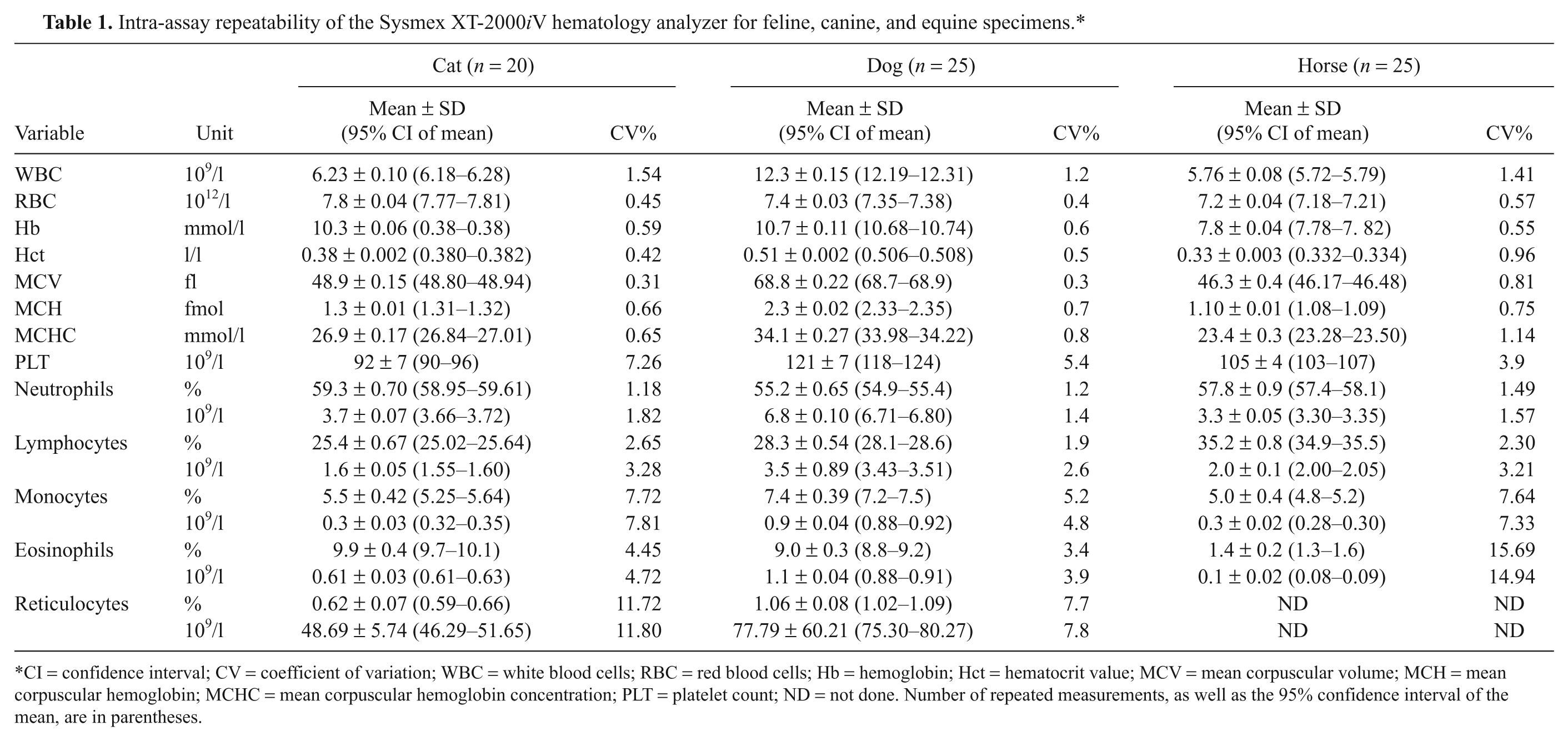
CI = confidence interval; CV = coefficient of variation; WBC = white blood cells; RBC = red blood cells; Hb = hemoglobin; Hct = hematocrit value; MCV = mean corpuscular volume; MCH = mean corpuscular hemoglobin; MCHC = mean corpuscular hemoglobin concentration; PLT = platelet count; ND = not done. Number of repeated measurements, as well as the 95% confidence interval of the mean, are in parentheses.
Interassay CV is shown in Table 2. For all 3 levels of control material, interassay CV for the CBC was below 3% except for the Hct of the low control, PLT of the normal control, and MCH of the high control. Except for neutrophils in the normal control sample with an interassay CV of 2.6%, results ranged from 3% to 10%. The only variables with a CV > 10% were control samples with low and high monocyte count, respectively, showing an intra-assay CV of 14.17–15.42%.
Twenty-run interassay repeatability of the Sysmex XT2000iV hematology analyzer performed with quality control material in 3 different concentrations (low, normal, abnormal).*
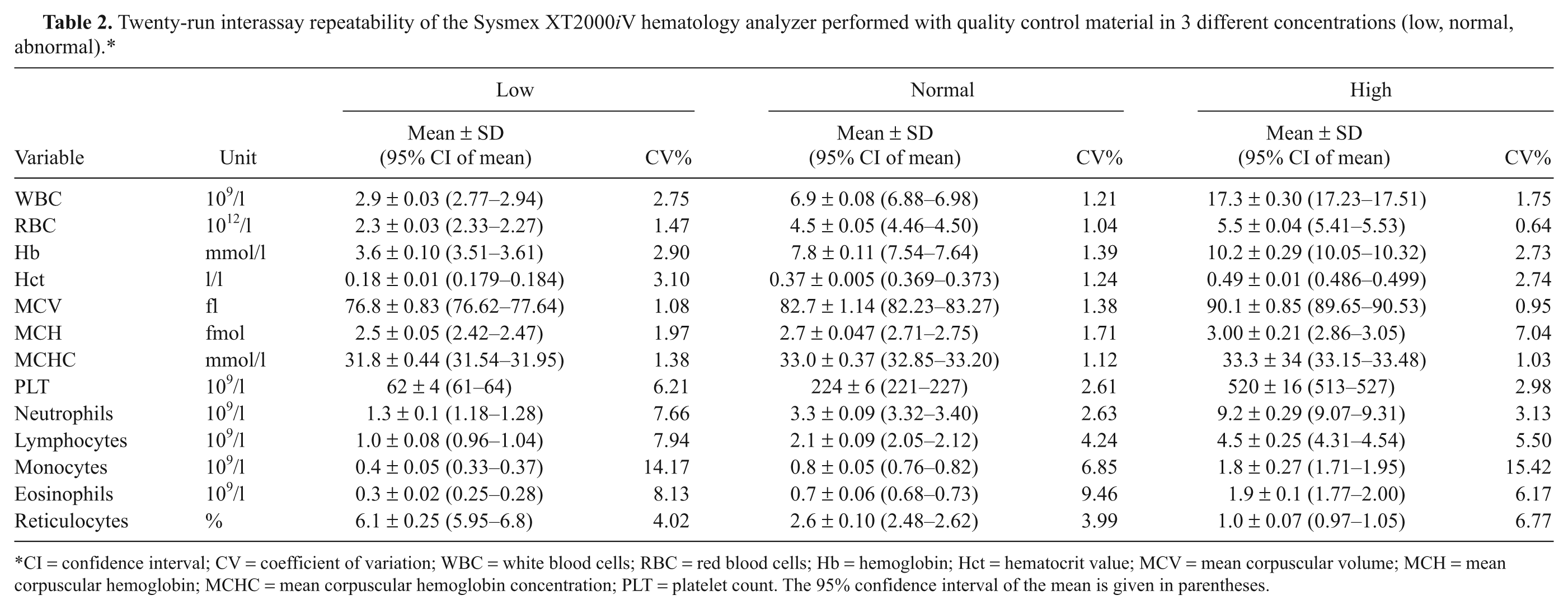
CI = confidence interval; CV = coefficient of variation; WBC = white blood cells; RBC = red blood cells; Hb = hemoglobin; Hct = hematocrit value; MCV = mean corpuscular volume; MCH = mean corpuscular hemoglobin; MCHC = mean corpuscular hemoglobin concentration; PLT = platelet count. The 95% confidence interval of the mean is given in parentheses.
Linearity and carryover
In cats, carryover was 0% for WBC and Hb, 0.08% for RBC, and 0.1% for PLT. For equine specimens, a carryover of 0% for WBC, 0.06% for Hb, 0.03% for RBC, and 0.64% for PLT was observed. Correlation between calculated and measured results is shown in Table 3. For all assessed variables and species, an excellent coefficient of correlation close to 1.0 was obtained. The slope of the regression curves was close to 1.0, and the intercept close to zero. Linearity for PLT was not determined in the current study.
Linearity and measuring range of the Sysmex-XT2000iV hematology analyzer Diff for feline, canine, and equine specimens.*
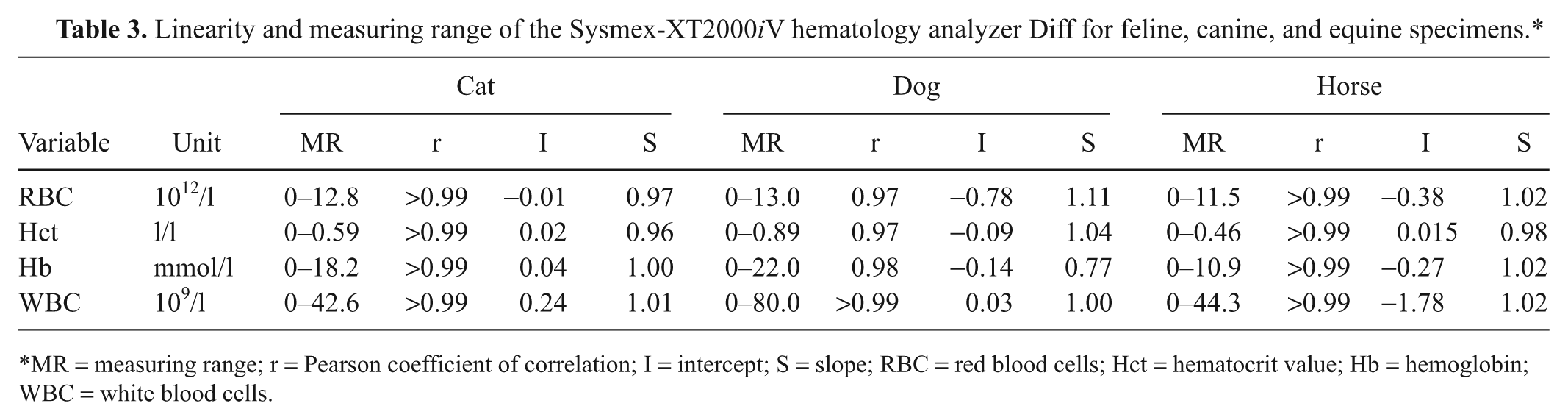
MR = measuring range; r = Pearson coefficient of correlation; I = intercept; S = slope; RBC = red blood cells; Hct = hematocrit value; Hb = hemoglobin; WBC = white blood cells.
Method comparison
In total, 216 cats, 314 dogs, and 174 horses were included. During the accuracy study, technical errors of the Sysmex analyzer occurred in 22 out of 704 (3%) measurements (11 times during the first measurement but not during the repeated measurement, and 11 samples were excluded due to technical error during 2 repeated measurements). For the Hct, several canine specimens were excluded due to absent measurement of the PCV. Five out of 216 feline samples were excluded due to error messages of the ADVIA analyzer regarding the Hb measurement. The range of results is shown in Table 4. Anemia was present in 24 out of 216 cats (median Hct: 0.20 l/l, lower limit of the reference interval: 0.24 l/l), 78 out of 314 dogs (median Hct: 0.32 l/l, lower limit of the reference interval: 0.38 l/l), 42 out of 174 horses (median Hct: 0.27 l/l, lower limit of the reference interval: 0.29 l/l). Coefficients of correlation and biases between results obtained with both analyzers are shown in Table 5 and Figures 1–3.
Range of measurements of samples from cats, dogs, and horses included in the current study.*
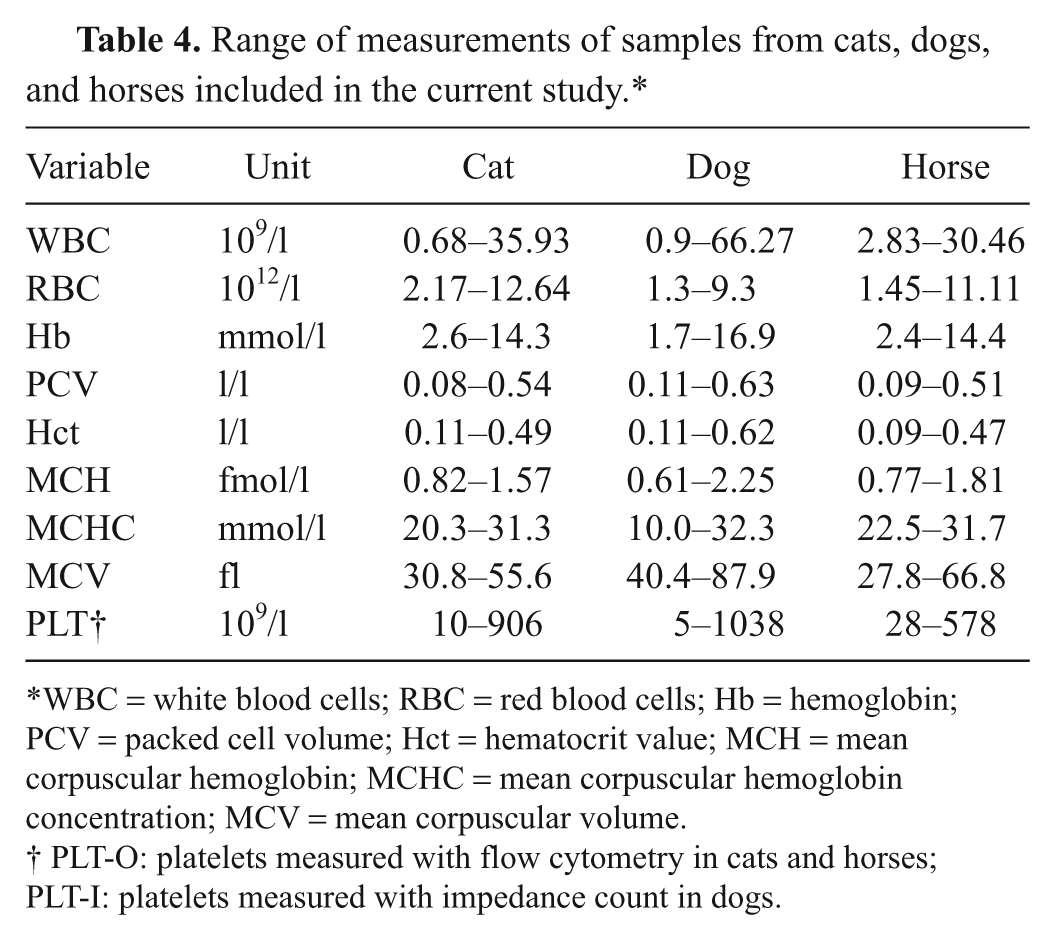
WBC = white blood cells; RBC = red blood cells; Hb = hemoglobin; PCV = packed cell volume; Hct = hematocrit value; MCH = mean corpuscular hemoglobin; MCHC = mean corpuscular hemoglobin concentration; MCV = mean corpuscular volume.
PLT-O: platelets measured with flow cytometry in cats and horses; PLT-I: platelets measured with impedance count in dogs.
Agreement between ADVIA 2120 and Sysmex XT-2000iV hematology analyzer Diff for feline, canine, and equine samples.
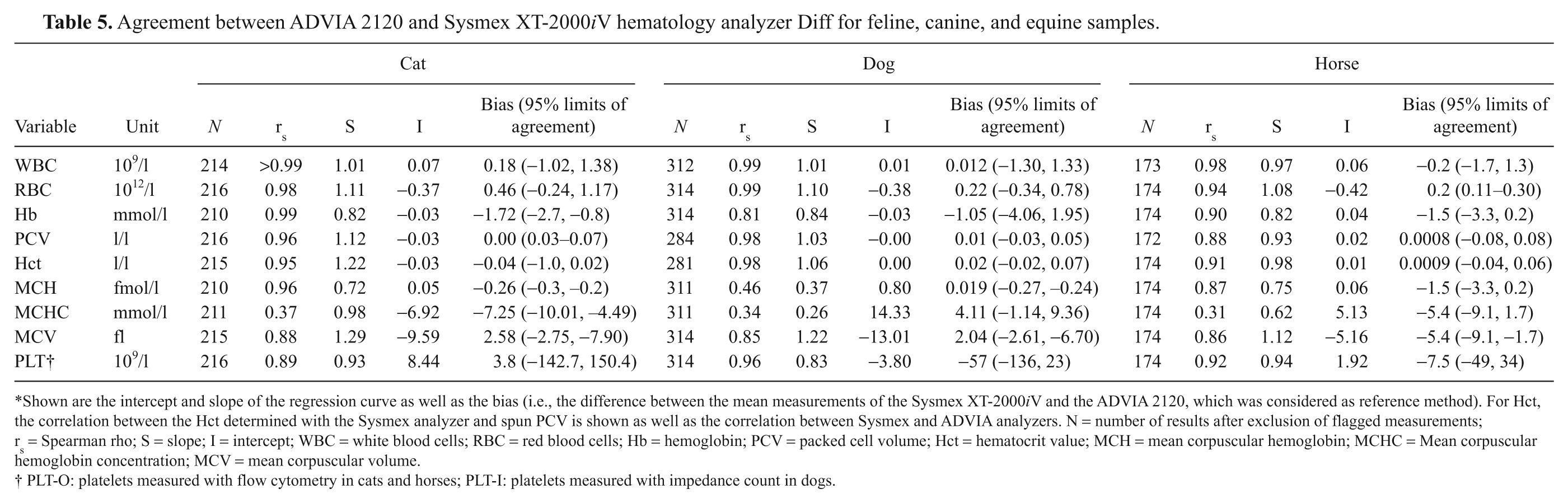
Shown are the intercept and slope of the regression curve as well as the bias (i.e., the difference between the mean measurements of the Sysmex XT-2000iV and the ADVIA 2120, which was considered as reference method). For Hct, the correlation between the Hct determined with the Sysmex analyzer and spun PCV is shown as well as the correlation between Sysmex and ADVIA analyzers. N = number of results after exclusion of flagged measurements; rs = Spearman rho; S = slope; I = intercept; WBC = white blood cells; RBC = red blood cells; Hb = hemoglobin; PCV = packed cell volume; Hct = hematocrit value; MCH = mean corpuscular hemoglobin; MCHC = Mean corpuscular hemoglobin concentration; MCV = mean corpuscular volume.
PLT-O: platelets measured with flow cytometry in cats and horses; PLT-I: platelets measured with impedance count in dogs.
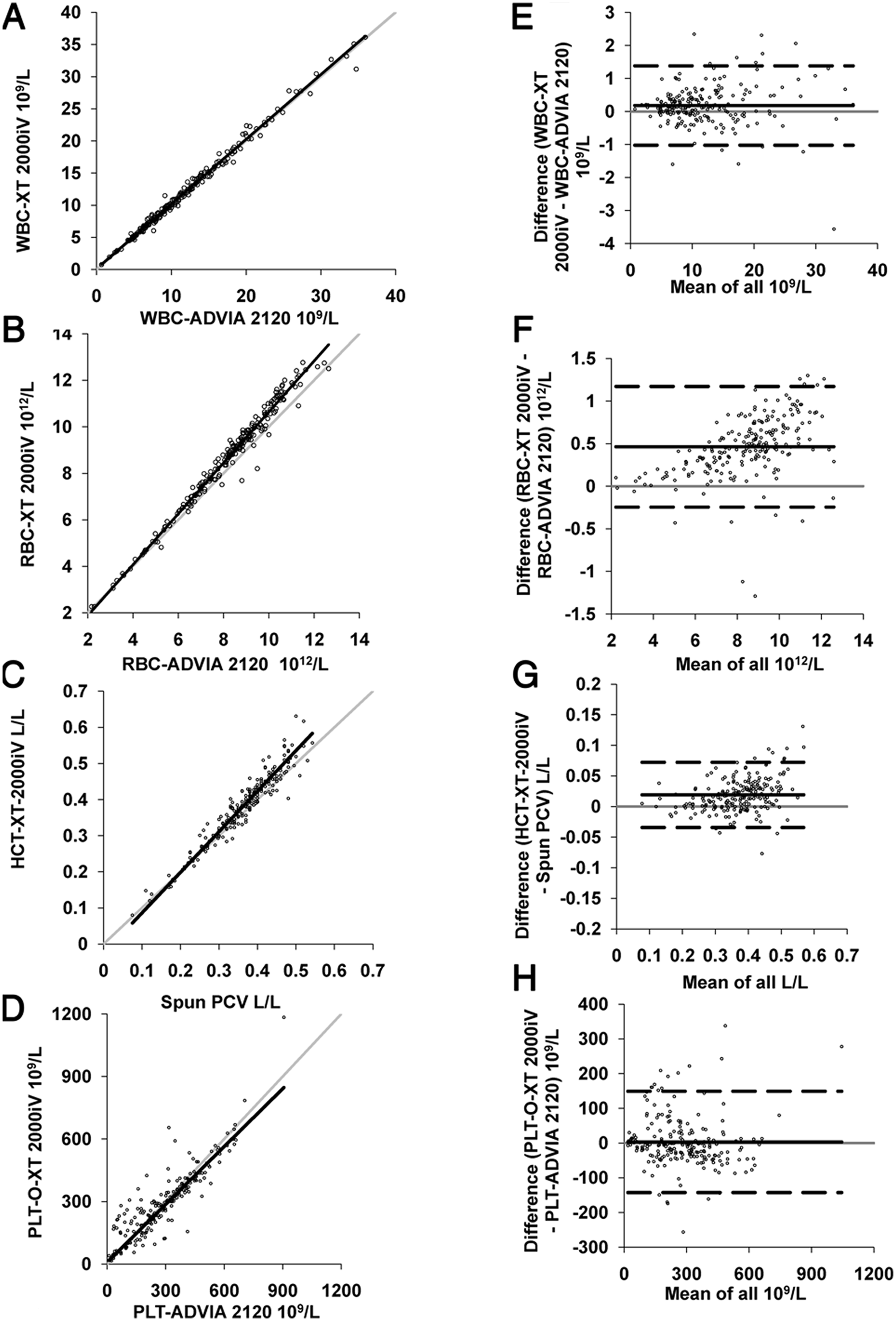
Agreement between the ADVIA 2120 and Sysmex XT-2000iV hematology analyzers for feline samples (n = 216).
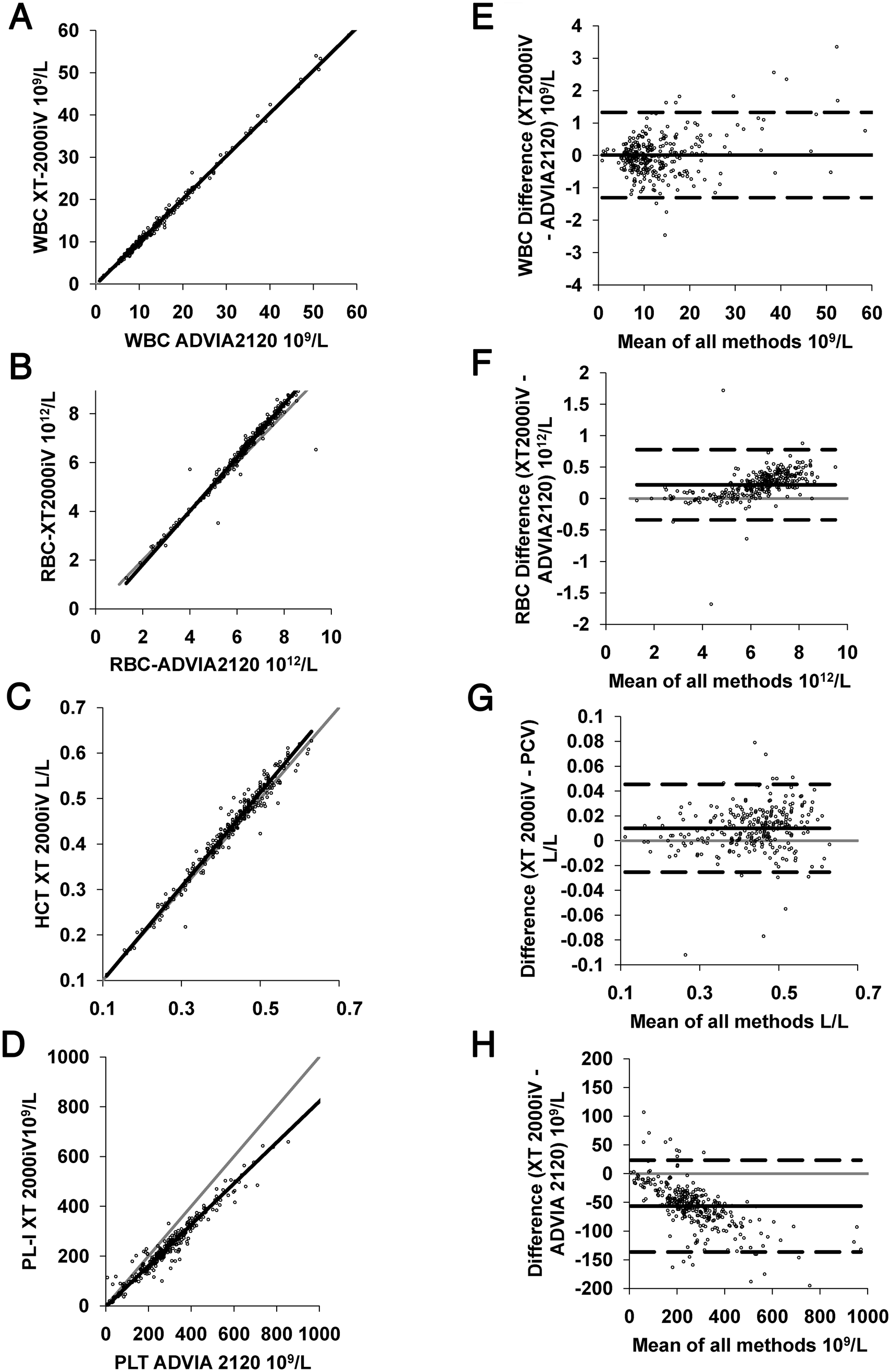
Agreement between the ADVIA 2120 and Sysmex XT-2000iV hematology analyzers for canine samples (n = 314).
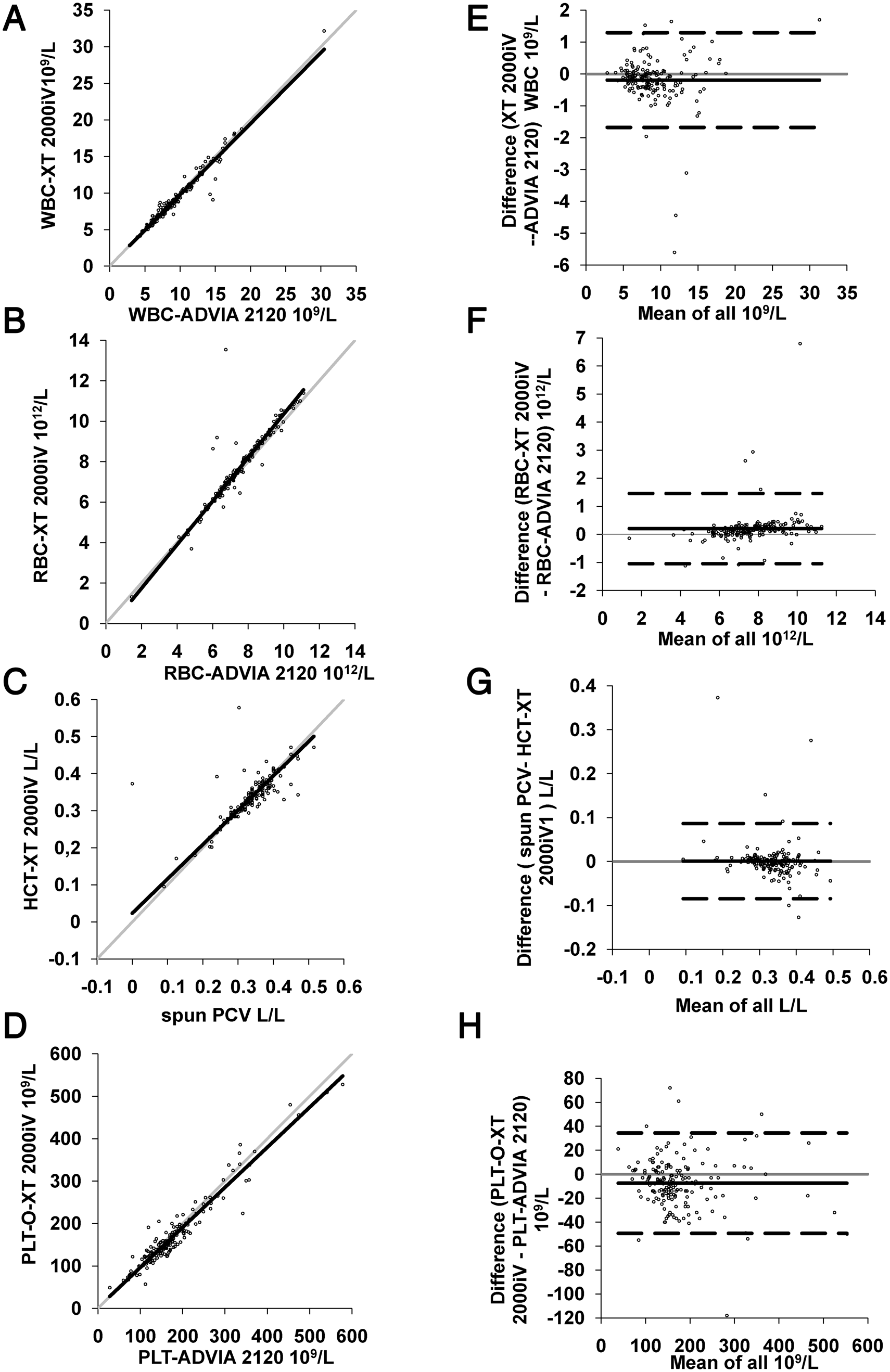
Agreement between the ADVIA 2120 and the Sysmex XT-2000iV hematology analyzers for equine specimens (n = 174).
For all evaluated species, correlation was excellent for WBC and RBC. Hematocrit value determined with the Sysmex analyzer correlated excellently with the spun PCV and the ADVIA analyzer in cats and dogs, whereas for horses, a good correlation was evident. Regarding the Hb and MCH, an excellent correlation between Sysmex and ADVIA analyzers was present for cats and a good correlation for canine and equine specimens. For all evaluated species, a poor correlation between results obtained with the Sysmex and ADVIA analyzers was observed for the MCHC, whereas for the MCV, a good correlation was seen. Platelet count correlated excellently between both analyzers in dogs, whereas for cats and horses, a good correlation was evident.
For the majority of variables, intercept of the regression curve was close to 1.00 except for equine and feline MCHC. The intercept was close to zero except for MCHC and MCV (in all evaluated species), and canine PLT. For the majority of variables, Bland–Altman diagrams revealed mean biases close to zero except for the MCHC of all species showing a mean bias ranging between −7.25 and 4.11 and canine PLT (−57 × 109/l), respectively. However, even in cats and horses, the 95% limits of agreement for PLT was very broad ranging from −142.7 to 150.4 × 10⁹/l and −49 × 109/l to 34 × 109/l, respectively, despite a low mean bias.
In cats, a proportional bias has been observed for RBC, Hb, MCH, MCV, and PLT. Proportional errors were seen for canine RBC, Hb, and PLT; in horses, a proportional error was observed for Hb, MCH, and PLT.
Discussion
Validation of a new analyzer, if the results are different enough from the reference method, has the ability to impact clinical interpretation of data (patient samples or research specimens). In the current study, basophils were excluded from the evaluation as a recent study has shown that feline and canine basophils cannot be reliably identified by the Sysmex analyzer and other laser-based hematology analyzers, which was considered to be due to the different lytic properties of human and animal species. 10 Prior to comparison of 2 analyzers, the precision of the methods should be determined. 8 Regarding the differential count, similar CVs as in the current study have been reported previously for the Sysmex analyzer.10,11
Except for the measurement of Hb, the ADVIA analyzer operates with the same technology as its predecessor, the ADVIA 120, so that the CV of hematology variables measured with the ADVIA analyzer was not determined in the current study. For CBC, CVs ranging from 0.9% (canine RBC) to 2.3% (feline WBC) have been reported previously for the ADVIA 120 in cats, dogs, and horses (Dura A: 2006, Blutzellzählung und-Differenzierung mit dem Hämatologie system ADVIA 120—Gerätevalidierung und Software adapation [Blood cell count and differentiation using the hematology analyzer ADVIA 120—analyzer validation and software adaptation]. Thesis. Justus-Liebig University, Giessen, Germany; Fickenscher Y: 2001, Hämatologiesystem ADVIA 120, Softwareadaptation und Evaluation bei der Tierart Hund [The hematology system ADVIA 120, software adaptation and evaluation for the species dog]. Thesis. Justus-Liebig-University, Giessen, Germany; Meyer K: 2005, Softwareadaptation und Evaluation des ADVIA™ 120 bei der Tierart Katze [Software adaptation and evaluation of the ADVIA 120 for the cat]. Thesis. Justus-Liebig-University, Giessen, Germany). However, a markedly higher CV than in the current study has been reported previously for measurement of canine lymphocytes (30.5%) and canine and feline eosinophils (24.2% and 23.2%, respectively) when using the ADVIA 2120 (Fickenscher Y: 2001, [The hematology system ADVIA 120]; Meyer K: 2005, [Software adaptation and evaluation of the ADVIA 120]). The most likely reason for the high CV obtained for feline eosinophils is the fact that the eosinophils cannot be identified in the peroxidase-channel of the ADVIA 120 and 2120 systems as they do not stain with cytochemical peroxidase-staining techniques. 18
The method using the reticulocyte channel to count eosinophils is known to show a higher CV because a mean of 3 measurements is calculated and the specimen is more diluted than in the peroxidase channel. 12 An explanation for the comparatively good intra-assay repeatability for measurement of feline eosinophils with the Sysmex analyzer is the fact that a clear separation from neutrophils is possible by differentiation based on RNA content and cellular complexity as evident in the Sysmex analyzer cytograms.
However, discrepant results for a 10-run intra-assay CV have been published previously for the Sysmex analyzer in 2 cats and 2 horses ranging from 10.6% to 24.4% and 5.8% to 32%, respectively. 10 The most likely reason for the discrepant CVs for eosinophils reported by different investigators is the fact that the eosinophil counts were different in the studies (i.e., often extremely low, which results in high CVs). 19
Regarding the reticulocyte count, it is well known that the CV for the manual reticulocyte count is approximately 10 times higher than the automated method (D’Onofrio G, Zini G, Vergine C, et al.: 1997, New parameters for diagnosis and management of anemia. Proceedings of the First International Bayer Diagnostic Central Laboratory Symposium, pp. 14–16). While in dogs, a CV range of 3–5% was obtained for flow cytometric reticulocyte count, the CV ranges from 8% to 23% for the manual method. 1 A CV < 15% was recommended by the College of American Pathology, 20 which was also obtained for veterinary analyzers such as the Sysmex analyzer evaluated herein and the ADVIA 120 (Dura A: 2006, [Blood cell count and differentiation using the hematology analyzer ADVIA 120]; Fickenscher Y: 2001, [The hematology system ADVIA 120]; Meyer K: 2005, [Software adaptation and evaluation of the ADVIA 120]). A limitation of the current study and many previous investigations is the fact that the CV is ideally determined also in abnormal specimens preferably close to the medical decision limit of the respective variables.
Interassay CV has been rarely published in veterinary studies. Ten-run interassay range was 1.5% (RBC) to 10.0% (monocytes) for the low control, 0.4% (RBC) to 10.3% (monocytes) for the normal control, and 1.0% (RBC) to 10.9% (monocytes) for the high control. 23 In the current study, interassay CV for the low and high control was comparable to the results reported in the human investigation 23 ; however, a slightly higher interassay CV was evident herein for the normal control. The most likely reason for the higher interassay CVs demonstrated herein is the much higher number of repeat measurements performed, which is associated with a higher probability of within-day variation. Nevertheless, the higher number of repeat measurements has been chosen in the current investigation to make the result comparable to the evaluation of the intra-assay CV.
Linearity for Hb and RBC was excellent as it was also reported previously for feline specimens 24 and in a previous study for dogs 11 although linearity was only proven previously for comparatively low WBC of 16 × 109/l and PLT of 437 × 109/l. 11 The evaluation of linearity in the current study is limited by the fact that the preparation of a platelet-rich blood sample was not performed as it would have required a large blood volume. A previous study, however, reported good linearity for a leukocyte count up to 100 × 109/l and a PLT up to 4,140 × 109/l for feline specimens. 24 Carryover reported in the current study was <0.25%, corresponding to a previous study 5 and also below <0.1%, which is in accordance with the data given in the Sysmex operator manual 21 and a previous evaluation of the ADVIA 120 in cats (Meyer K: 2005, [Software adaptation and evaluation of the ADVIA 120]), dogs (Fickenscher Y: 2001, [The hematology system ADVIA 120]), and horses (Dura A: 2006, [Blood cell count and differentiation using the hematology analyzer ADVIA 120]).
Though commonly used in veterinary and human method validation studies, it should be noted that a high coefficient of correlation simply reflects a statistical correlation between 2 methods but does not necessarily mean that 2 results are identical as it is not affected by a potential systematic error. 16 Moreover, the coefficient of correlation is markedly influenced by the range of values. A broad range of values results automatically in a higher coefficient of correlation and vice versa. 16 Despite these drawbacks, CV is still used because, in the case of r = 0.99 or greater along with a high precision of measurements, it is generally accepted that the regression analysis can be used for estimating the errors between 2 methods. 25
Generally, the Sysmex analyzer showed a good to excellent agreement with the ADVIA analyzer, which is in accordance with previous studies comparing the Sysmex analyzer to the Cell-Dyn 3500.9,24 Differences between the analyzers observed herein are unlikely to have an impact on the clinical interpretation of data except for the Hb, MCHC, and PLT.
The negative mean bias for Hb (i.e., the higher mean Hb measurements observed for the ADVIA analyzer) and all variables derived from the Hb measurement such as the MCHC and MCH can be explained by the cyanide-free methodology of total Hb measurement applied by the ADVIA analyzer, which has been reported previously to be associated with a mean proportional bias of approximately −20%. 4 As a proportional bias has been observed herein for RBC, Hb, MCH, MCV, and PLT, the mean values given in Table 4 should be used with caution because they are not representative for an individual measurement.
Counting of feline platelets is considered a difficult task for all hematology analyzers independent of the underlying technology. 6 A correct PLT is impossible if platelet aggregates are present, which might explain the comparably low correlation between both analyzers. Regarding PLT, both analyzers have different advantages. The ADVIA analyzer detects variables reflecting the degree of platelet activation such as the mean platelet component concentration, which was reported to be increased in septic dogs 14 and after strenuous sled pulling exercise in Siberian Huskies. 13
A special feature of the Sysmex analyzer is the measurement of fluorescence optical platelets in the reticulocyte channel so that it is capable of detection of immature platelets on a routine base, which has been evaluated previously in dogs. 15 For the automated reticulocyte count, a positive bias between the Sysmex and ADVIA analyzers (i.e., a higher number of reticulocytes detected with the Sysmex compared to the ADVIA) was observed in dogs and cats, which has also been reported in comparison with the manual reticulocyte count.9,24
The positive bias might influence the cut-off value between regenerative and non-regenerative anemia, which is most likely higher in the Sysmex analyzer than the ADVIA system. However, median Hct of the anemic cats and dogs included herein was close to the lower limit of the respective reference intervals so that future studies with larger numbers of severely anemic cats and dogs showing various degrees of regeneration are warranted to define new cut-off values.
Generally, both the Sysmex and ADVIA analyzers are easy to use, but the sample volume required is much less with the Sysmex than with the ADVIA (85 µl vs. 200 µl), which is an advantage especially in feline patients. In conclusion, the overall performance of the Sysmex analyzer was excellent and compared favorably with that of the ADVIA analyzer.
Footnotes
Acknowledgements
The authors wish to thank medical technologist Mrs. Ingrid Klein for helping with the manual methods including the differential cell count, the reticulocyte count, and the spun packed cell volume. The Sysmex instrument used in this study was made available as a free loan by the Sysmex Europe branch.
Notes
The author(s) declared no potential conflicts of interest with respect to the research, authorship, and/or publication of this article.
Reagents were provided by the Sysmex Corporation.