




Abstract
A 4-year-old donkey was evaluated for progressive neurological abnormalities consisting of depression, stupor, weakness, and recumbency. Diagnostic evaluation for viral involvement identified an asinine herpesvirus in DNA extracted from deep pharyngeal swabs. Specific primers were designed based on comparison with equine herpesviral DNA polymerase sequences and yielded an 875-base pair product from the donkey. This sequence had complete identity with short sequences of asinine herpesvirus previously identified in donkeys with interstitial pneumonia. Amino acid analysis of the entire sequence indicated high similarity with Equid herpesvirus 7 (91%), Zebra herpesvirus 1 (90%), and Equid herpesvirus 2 (89%). With supportive treatment and physical therapy, the donkey gradually recovered over 5 days of hospitalization and returned to normal function. The current case illustrates the potential of a novel asinine herpesvirus to induce neurological disease in donkeys and provides a large viral sequence allowing confident assignment of this virus to the subfamily Gammaherpesvirinae.
A 4-year-old jenny standard donkey was referred to the Veterinary Teaching Hospital, Ontario Veterinary College (University of Guelph, Guelph, Ontario, Canada), for evaluation of depression and neurological signs. The patient had become progressively lame on the left hind limb on the day before referral and then gradually progressed to generalized weakness, head pressing, and eventual stupor and recumbency. The donkey had been treated by the referring veterinarian with intravenous trimethoprim-sulfadoxine a and intramuscular flunixin meglumine b and isoflupredone acetate c injections.
The donkey shared the pasture with another jenny donkey of the same age and 2 goats. All animals had been purchased 6 months previously. Two dogs and 1 cat were present on the premises and had been in regular contact with the affected animal. Feeding consisted of pasture access and free choice hay. Both donkeys had been vaccinated for rabies, tetanus, equine influenza, and Equid herpesvirus 1 and 4 (EHV-1 and −4) shortly before purchase. Donkeys and goats were dewormed twice a year; none aside from the affected donkey had signs of disease, and animals had neither traveled from the premises since purchase nor been in contact with other domestic animals.
Upon presentation at the teaching hospital, the donkey was in lateral recumbency, mildly hypothermic (36.5°C), and near nonresponsive to stimuli. Physical exam revealed an increased heart rate and a normal respiratory rate. The mucous membranes were tacky, and dehydration was estimated to be 7%. Blood gases, plasma electrolytes, a complete blood cell count, and a serum biochemistry profile were assessed. Hematological abnormalities were mild neutrophilia (10.9 × 10 9 /l) and lymphopenia (1.5 × 10 9 /l), which were attributed to stress and treatment with corticosteroids. Mild hyperglycemia and hyperproteinemia identified on biochemical analysis were likely due to stress and dehydration, respectively. Fecal parasite examination identified a large number of strongyle eggs.
The donkey was placed in an Anderson sling. In the sling, the patient was able to eat and drink while supporting her body weight through standing for short periods of time. Intravenous fluid therapy with lactated Ringer solution was instituted to correct dehydration. The donkey was stimulated frequently to prevent her from returning to a stuporous state. Such arousal was applied every 2 hr to move the animal and relieve pressure from the sling support and to assure water and feed intake. Therapy with intravenous trimethoprim-sulfadoxine a was continued, and intravenous dexamethasone d was administered.
Neurological examination identified bilaterally absent menace reflexes with normal palpebral reflexes. The nasal septum stimulation response was decreased, and mild paresis and ataxia were observed. These signs were consistent with a lesion in the thalamocortex and possibly involving the spinal cord. Differential diagnoses included a thalamocortical encephalopathy of metabolic origin, herpesvirus-associated neurological disease, Sarcocystis neurona or bacterial encephalitis, or exposure to a toxin. Rabies was also considered; therefore, appropriate isolation measures were implemented to protect personnel and other animals. Cerebrospinal fluid (CSF) was collected from the lumbo-sacral space, and examination revealed no signs of inflammation.
A deep pharyngeal swab was submitted for EHV-1 and consensus herpesviral polymerase chain reaction (PCR) testing. DNA was extracted e and amplified. Primers for EHV-1 were f-POL (5′-GCAACTCGGTTTACGGATT-CA-3′) and r-POL (5′-GTCGCCCAACGAGAGTGAA-3′), which specifically amplify a 132-base pair (bp) region in the EHV-1 DNA polymerase gene. Polymerase chain reaction with consensus herpesvirus primers utilized DFASA (5′-GTGTTGGACTTYGCNATGYYTNTAYCC-3′) and IYG (5′-CACAGAGTCCGTRTCNCCRTADAT-3′), located in conserved regions of the DNA polymerase gene, as previously described. 11,14 Equid herpesvirus 1 PCR did not yield a product, whereas 2 rounds of PCR with the degenerate primers yielded a product of ∼420 bp. This product was purified and sequenced with primer IYGseq (5′-GACAAACACAGAGTCCGT-3′). 14 After primer exclusion, the sequence was 381 bp, and searching through the National Center for Biotechnology Information (NCBI) database using Basic Local Alignment Search Tool (BLAST; http://www.ncbi.nlm.nih.gov/blast/Blast.cgi) revealed that the highest similarity was with 4 short (∼165 bp) herpesviral sequences from donkeys (Asinine herpesvirus-5 [AsHV-5]: AY054993.1, AY054994.1, AY054995.1, and AY054996.1). These sequences had previously been identified in donkeys with interstitial pneumonia, and comparison with other herpesviruses grouped them into the subfamily Gammaherpesvirinae. 7 To further investigate the presence of a herpesvirus in this donkey with neurological disease, a second deep pharyngeal swab was obtained, and DNA was extracted again. Since longer sequences of asinine herpesviruses were not available in the NCBI database, polymerase gene sequences of EHV-1, −2, −4, −5, and −7 were aligned, f and conserved regions were chosen for primer design. The primers utilized were 1980F (5′-CTCTGAGATAGCCAAGATAGCCAA-3′) and 2910R (5′-GCACCAGGTCCACCCCCTTCATGAGCA-3′), which were identical to EHV-2 and highly similar at the 5′ end to other equine herpesviruses and to Zebra herpesvirus 1 (ZHV-1). These primers yielded a product of ∼920 bp in 35 cycles of PCR amplification, which was sequenced in both directions with the same primers. The resulting sequence (after primer removal) was 875 bp in length (GenBank BankIt 1087327) and included the initial sequence of 381 bp. The new sequence had a 66.7% cytosine + guanine (C+G) content and a CG ratio (observed frequency/expected frequency relative to mononucleotide composition) of 1.22. Nucleotide identity with EHV-7, EHV-2, and ZHV-1 was 90%, 88%, and 92%, respectively, and between 89% and 99% with AsHV-4 and AsHV-5 over 168 bp. Translation of the novel donkey herpesvirus sequence into 291 amino acids, and multiple alignment analysis g using the neighbor joining algorithm, 12 indicated a high degree of similarity with EHV-7 (91%), EHV-2 (89%), and ZHV-1 (90%). Comparison of all sequences over 55 amino acids (length available for AsHV-4 and −5) illustrated identity of the novel AsHV sequence (AsHV-Ontario Veterinary College [OVC]) with the 3 AsHV-5 sequences and a high degree of similarity with other equid herpesvirinae (Fig. 1). Phylogenetic analysis of the 55-amino acid sequence of the related herpesviral sequences placed the novel virus among the previous AsHV-5 isolates (Fig. 2), whereas analysis using the entire amino acid sequence indicated closest relationship with EHV-2 (Fig. 3).
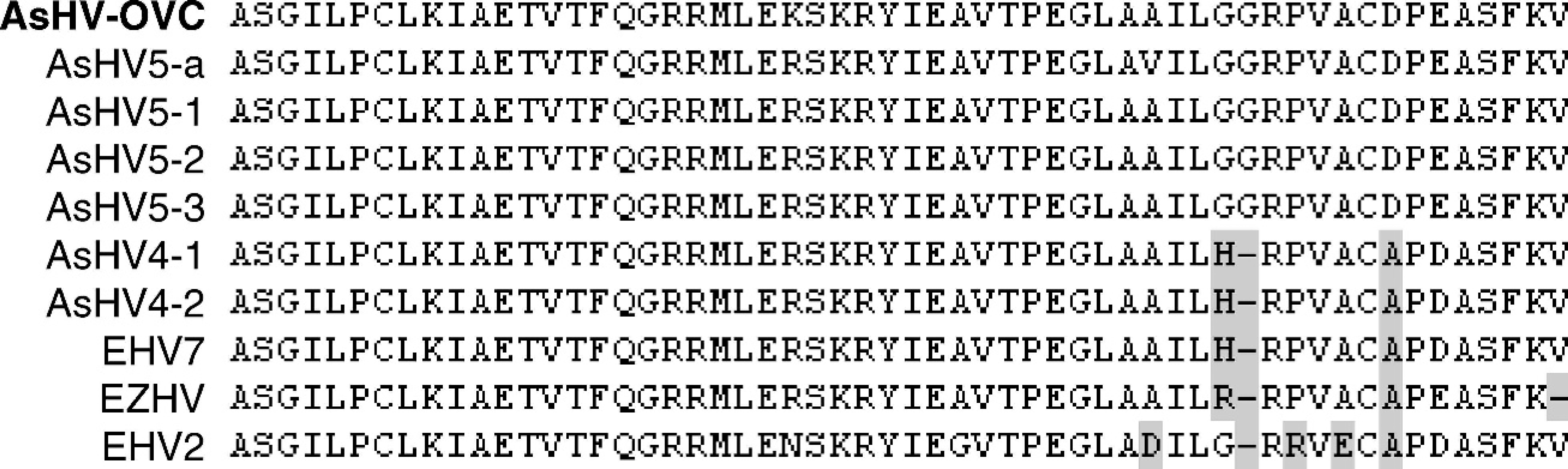
Multiple sequence alignment of 55 amino acids in the viral DNA polymerase gene from asinine herpesviruses (indicated by the prefix AsHV), Equid herpesvirus 7 (indicated by EHV7) and 2 (indicated by EHV2), and Zebra herpesvirus 1 (indicated by ZHV). Differences are highlighted by grey shading.
Twenty-four hours after hospitalization, the donkey was able to stand and the Anderson sling was removed. The animal continued to improve neurologically, but developed mild laminitis, which was treated with appropriate therapy. The donkey was discharged, and 3 weeks later no clinical abnormalities were present.
Herpesviruses are well recognized as causes of neurological disease in horses and other species. 1 In horses, disease is mostly characterized by myeloencephalopathy manifesting with clinical signs referable to spinal cord dysfunction. Microscopically, the lesions consist of vasculitis with hemorrhage and thrombosis and secondary ischemic degeneration. 13 Neurological disease is most frequently attributed to reactivation of latent EHV-1, an alphaherpesvirus, although EHV-2, a gammaherpesvirus, has also been identified in the central nervous system of horses and might act as a transactivating factor. 10 To the authors' knowledge, neurological disease in donkeys associated with a herpesvirus has not previously been described.
The donkey in the current report had neurological disease consistent with lesions in the thalamocortex and possibly spinal cord. Lack of inflammation in the CSF rendered bacterial or parasitic encephalomyelopathy unlikely, and recovery of the animal ruled out rabies. A herpesvirus was identified in oronasal mucosa obtained with deep pharyngeal swabs by PCR using first nonspecific and then specific primers. Although the positive PCR product did not prove causation of the neurological disease by this herpesvirus, similarity of the clinical features with EHV-1-associated neurological disease in horses 1 and the clinical course with full recovery, suggested that the asinine herpesvirus designated AsHV-OVC was the cause of disease in this animal. Whether disease resulted from primary or reactivated latent infection could not be determined. The viral sequence recovered was distinct from EHV-2 and −7, but closely related and of sufficient length to confidently assign this virus to the gammaherpesviruses. Gammaherpesvirinae is a large subfamily including previously identified AsHV-4 and −5 from donkeys with interstitial pneumonia, ZHV-1, and a virus identified in a wild ass, all of which were closely related to EHV-2 and EHV-7. 4–8 The AsHV sequence identified in the present study had a C+G content of 66.7% in the DNA polymerase gene, which is high, as in other herpesviruses such as EHV-2, Human herpesvirus 4 (also known as Epstein-Barr virus), and Human herpesvirus 1 (also known as Herpes simplex virus 1). 11 A CG binucleotide ratio greater than 1.0 suggests that methylated C-G motifs (CpG) are relatively abundant in this sequence, which may correspond to a propensity for latency due to epigenetic methylation of viral CpG motifs by host factors resulting in gene silencing. 11 Recent large-scale phylogenetic analysis of mammalian gammaherpesviruses illustrated their abundance among animals and their relatively high degree of similarity in the genes coding for DNA polymerase and glycoprotein B. 5 Further, this analysis confirmed that equine and zebra gammaherpesviruses cluster together in the genus Percavirus, which would likely also include this novel AsHV-5OVC. 5
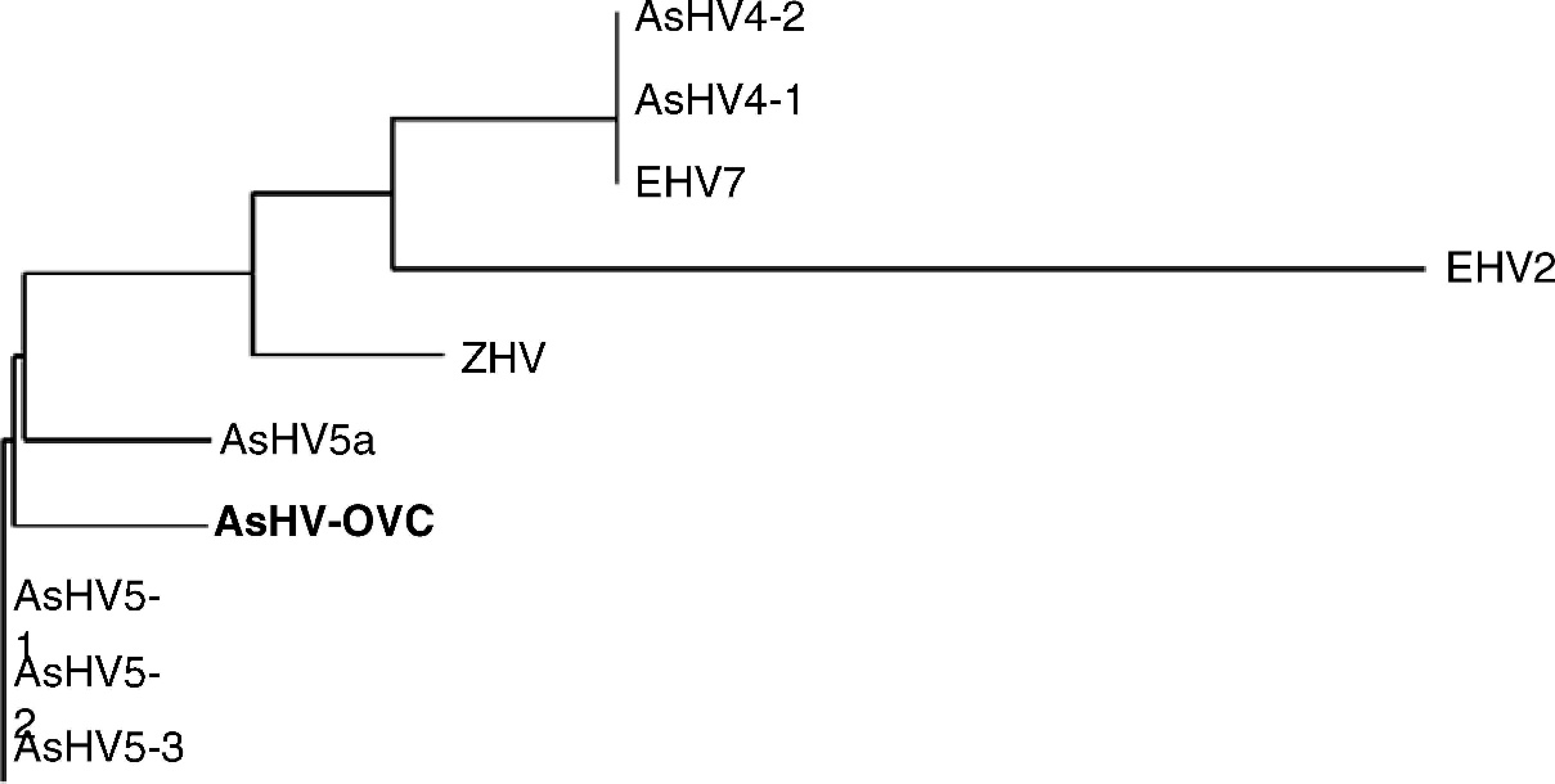
Phylogenetic tree of a 55-amino acid sequence from multiple equine gammaherpesvims sequences. AsHV indicates asinine herpesviruses, EHV7 indicates Equid herpesvirus 7, EHV2 indicates Equid herpesvirus 2, and ZHV indicates Zebra herpesvirus 1 in the figure.
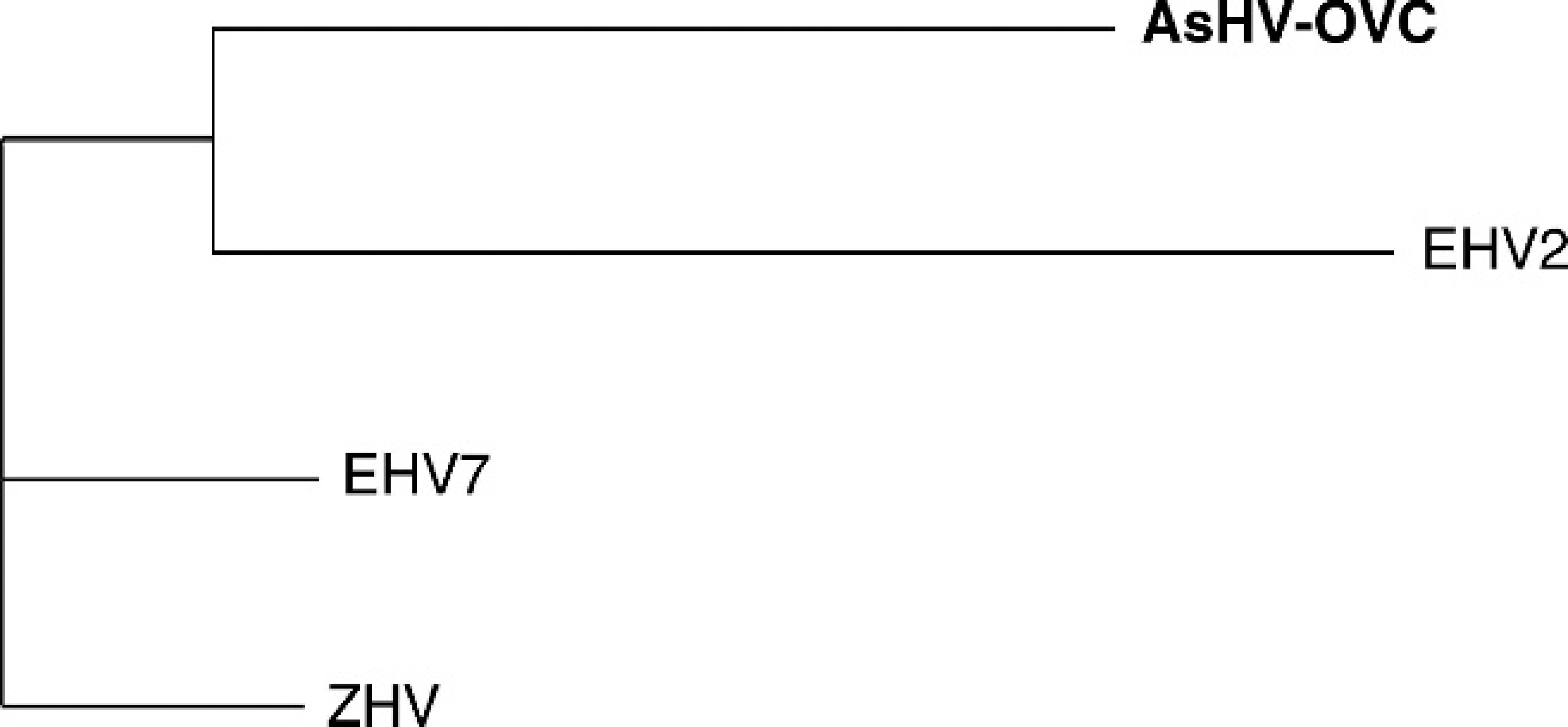
Phylogenetic tree of 291 amino acids located in the viral DNA polymerase gene of the novel asinine herpesvirus (indicated by AsHV-OVC) and Equid herpesvirus 2 (indicated by EHV2) and 7 (indicated by EHV7), and Zebra herpesvirus 1 (indicated by ZHV).
Asinine herpesviruses previously identified include AsHV-1 associated with coital exanthema, AsHV-2 isolated from leukocytes of healthy animals, AsHV-3 obtained from the nasal cavity of immunosuppressed animals, 2 and AsHV-4, −5, and −6 from animals with interstitial pneumonia. 7,8 Asinine herpesvirus 1 was classified as an alphaherpesvirus, but had little similarity with EHV-3 by restriction endonuclease and Southern blot analysis. 2 Asinine herpesvirus 2 had characteristics of betaherpesviruses, but little similarity with EHV-2 and −5 as determined with the same molecular methods. 2 Asinine herpesvirus 3 is an alphaherpesvirus based on sequence analysis of glycoprotein G and serological cross-reactivity of AsHV-3 with antibodies to EHV-1 and −4 glycoproteins. 3,6,9 Asinine herpesviruses 4, 5, and 6 were designated as novel gammaherpesviruses based on sequences obtained from donkeys with interstitial pneumonia. 7,8 The latter viruses were highly similar over ∼165 bp in the DNA polymerase gene and ∼380 bp in the terminase gene and appeared to represent closely related gammaherpesviruses. Overall, paucity of sequence information for AsHV-1–3, and limited sequence availability for AsHV-4–6, constrains comparison and classification of equine herpesviruses. Hence, although the longer sequence obtained for the virus in the current report allowed convincing classification as a gammaherpesvirus and assignment of close relation with EHV-2 and −7, it was not possible to determine with confidence whether this virus is identical to AsHV-5, or whether AsHV-4, −5, −6 and this novel virus represent a very closely related group of asinine gammaherpesviruses. However, identification of this particular herpesvirus with an assay capable of amplifying a range of herpesviruses in an animal with neurological disease adds to the spectrum of diseases potentially attributable to herpesviral infection of donkeys.
Acknowledgements. The authors thank Dr. L. Smith-Maxie for expertise in the neurological assessment of this animal.
Footnotes
a.
Borgal®, Schering Canada Inc., Pointe Claire, Quebec, Canada.
b.
Banamine Solution Injectable, Schering Canada Inc., Pointe Claire, Quebec, Canada.
c.
Predef®, Pfizer Animal Health, Pfizer Canada Inc., Kirkland, Quebec, Canada.
d.
Dexamethasone, Vétoquinol North America Inc., Lavaltrie, Quebec, Canada.
e.
QIAamp® DNA Mini Kit, Qiagen Inc., Mississauga, Ontario, Canada.
f.
Vector NTI®, Invitrogen Canada Inc., Burlington, Ontario, Canada.
g.
Buzone Concentrate Powder, Vétoquinol North America Inc., Lavaltrie, Quebec, Canada.