




Abstract
Background
Adolescents and young adults (AYAs) are particularly vulnerable to mood and anxiety disorders. Social media use has been linked to mental health problems in this age group, and its use has increased since the COVID-19 pandemic. The primary aim of this scoping review was to examine the relationship between social media use and mental health symptoms among AYAs during the COVID-19 pandemic. Exploratory aims were to identify factors that may mediate the association between social media use and mental health disorders.
Methods
A comprehensive literature search comprised of social media, anxiety, depression, and adolescents and young adult domains was conducted in OVID Medline and Embase. The search was limited to articles published from 2020 to 2023.
Results
Sixteen studies met the inclusion criteria and were analyzed. Social media use was positively associated with severity of depression and anxiety. Furthermore, the presence of online discrimination, self-comparison, reliance on social media for social approval, and cyberbullying were associated with poorer mental health outcomes in AYAs.
Conclusion
Social media use, and related factors, exhibited negative impacts on the mental health of AYAs. This scoping review highlights the repercussions of the pandemic on both social media use and mental health outcomes among AYAs.
Introduction
Depression, anxiety, and behavioural disorders are commonly experienced by adolescents and young adults (AYAs), and are leading causes of global disability in AYAs, according to the World Health Organization (WHO). 1 In 2006, a report released by Public Health Canada found that 70% of all mental health problems occur before the age of 25. 2 Since that report, mental health concerns in youth have increased. Twenge and colleagues found a 63% increase in mental health issues between the years 2005-2017. 3 Moreover, the use of mood or anxiety medications in Canada increased from 6071 to 7323 individuals (ages 5-24), between 2016 and 2020. 4
The AYA phase of life signifies a crucial period of development and the exploration of one’s adult identity. As a result, AYAs face a number of social, emotional, cognitive, physical, and career changes. 5 The addition of mental health concerns, such as anxiety or depression, can delay or complicate these developmental milestones. 5 There are many factors that influence the development of a mood or anxiety disorder in AYAs. Biological factors such as family history, physical illness, malnutrition, injury, or substance use disorders may subject AYAs to an increased risk of developing a mood or anxiety disorder. 6 Psychosocial risk factors include abuse and trauma, loss and bereavement, low self-esteem and bullying or discrimination. 6
The use of social media to connect with others and share life experiences has increased over the past few years. 7 AYAs are prevalent users of social media, with 80% of youths aged 14-22 using at least 1 form of social media daily. 7 There are many benefits to social media including access to social support networks, reduced isolation, increased communication, and improved social skills. 8 Despite this, there are increasing concerns surrounding online bullying, internet addiction, increased social comparison, and a strong desire for social validation. 9
The COVID-19 pandemic had detrimental impacts on mental health worldwide related to increased social isolation and stressors (eg, fear of infection, unemployment), and reduced access to resources (eg, health resources). 10 Since the start of the pandemic, AYAs experienced increased rates of anxiety, depression, and stress.10,11 This may in part be due to the disruption of experiences critical for their social development including a loss of autonomy, disrupted social lives, and challenges with their education.10,11 Findings from a 2021 systematic review, showed that adolescents experienced low social support during the pandemic, which contributed to high rates of anxiety and depression. 11 As a result of increased isolation and decreased social interactions, adolescents increased their use of social media. 10 Despite this attempt to increase socialization, online interactions are not equivalent to in-person interactions, 12 and excessive social media use during the pandemic was associated with poor mental health outcomes. 13
Previous reviews have found an association between social media use and mental health issues among adolescents.14,15 Keles et al.’s systematic review identified 4 categories of social media exposure: time spent; activity; investment; and addiction, which were correlated with anxiety and depression. 14 These findings are supported by a scoping review by Hilty et al. which found that spending less time on social media (≤3 hours/day) was associated with better psychosocial well-being. 15 These reviews were conducted prior to the COVID-19 pandemic, and therefore do not account for the drastic increase in social media use during and after the pandemic, nor do they account for the effects of the lockdown measures. The implementation of public health measures, such as lockdowns and social distancing, resulted in an increase in social isolation.16-18 Understanding these changes is important for gaining insight into the implications of the COVID-19 pandemic on mental health and societal interactions.
Objectives
The primary objective of this scoping review is to summarize the literature on social media use and mental health since the COVID-19 pandemic (2020-2023), seeking to determine the influence of the pandemic on this association. An exploratory objective is to investigate potential factors that may mediate the potential association between social media use and mental health disorders.
Methods
Search Strategy
A literature search was conducted on PubMed and Embase on November 28, 2022, and updated including PsychInfo on February 18, 2023. The following search strategy was applied: (‘social media*’ OR ‘Instagram’ OR ‘Facebook’ OR ‘Twitter’ OR ‘Snapchat’ OR ‘TikTok’ OR ‘YouTube’ OR ‘Reddit’ OR ‘chatroom’ OR ‘social platform*’) AND (‘Youth’ OR ‘Adolescent*’ OR ‘Young Adults’ OR ‘AYA*’ OR ‘Teen*’) AND (‘Depress*’ OR ‘mood disorders’ OR ‘major depressive disorder’ OR ‘anxiety disorder’ OR ‘Anxiet*’ OR ‘Social Anxiety’). Search results were restricted to publications during and following the COVID-19 pandemic (2020 to current), studies with human participants, and publications in the English language.
Inclusion and Exclusion Criteria
Inclusion and exclusion criteria were structured using the PICOS framework and informed the study selection process.
Population: AYAs ages 12-40.
Intervention/Exposure: A quantitative or qualitative measure of social media (Instagram, Facebook, Twitter, Snapchat, TikTok, YouTube, Reddit, chatroom, or other social platforms) use during the COVID-19 pandemic (2020 and ongoing).
Comparator: Differential social media use within the population.
Outcome: Measure of depressive and anxiety symptoms using interviews or self-report scales.
Studies were excluded if they only included other mental health diagnoses such as addiction, schizophrenia, bipolar disorder, ADHD, OCD, and borderline personality disorder. Secondary source papers (eg, reviews, meta-analyses, case reports, conference proceedings, opinion pieces, letters, and editorials) were also excluded.
Study Selection, Data Extraction, and Analysis
The study title, abstract, and full text were screened independently by 2 authors (LC and KM) using the Covidence software. Duplicate articles were identified and removed by the Covidence software. Any conflicts during the screening process were resolved through referencing the original articles and discussion between authors. Study data from the included studies were extracted and organized using a standard extraction form. Comparison of the study populations and demographics, social media measures (type and duration of use), and mental health outcomes assessed relationships within and between studies.
Assessment of Risk of Bias in Included Studies
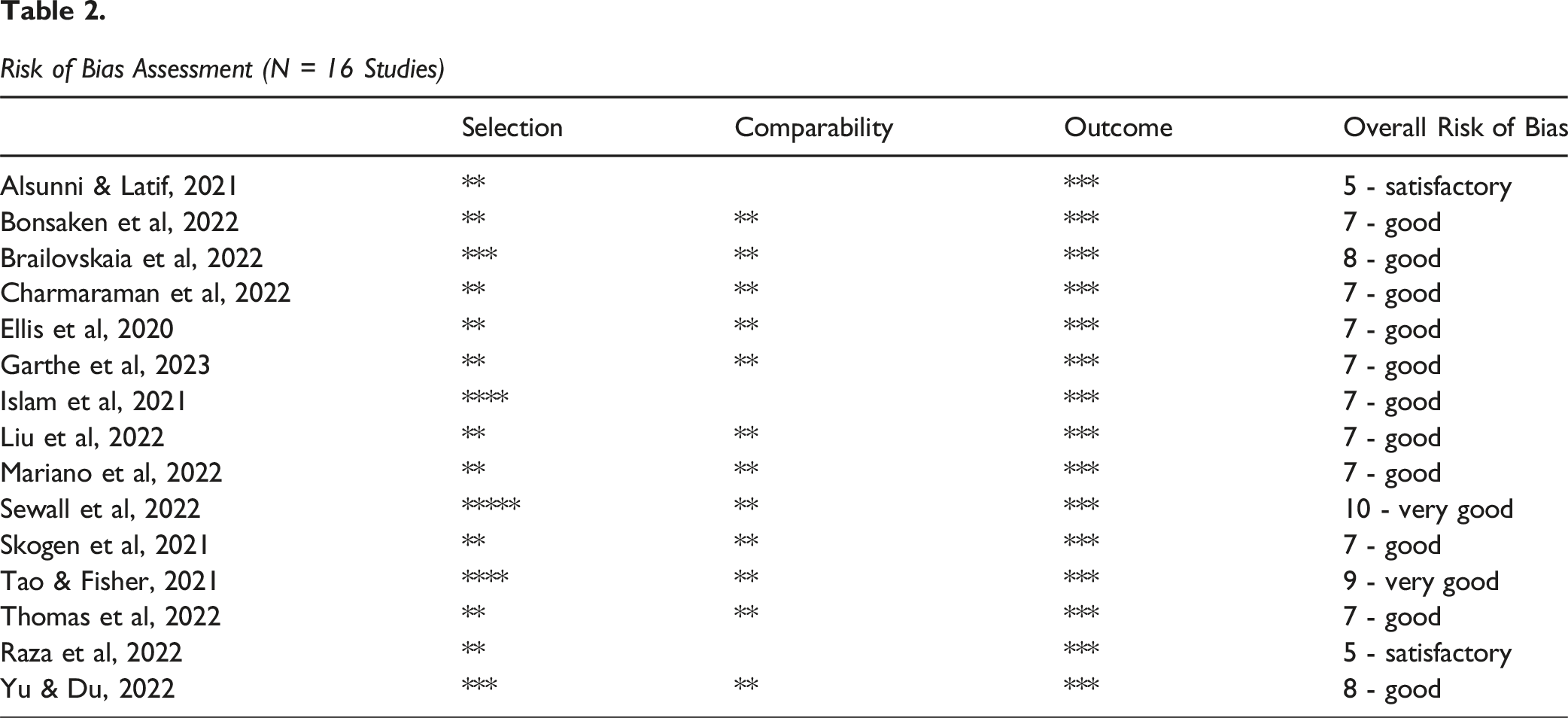
A modified version of the Newcastle-Ottawa Scale (NOS) for cross-sectional data was employed to assess the risk of bias by performing a quality assessment of the studies. 19 The assessments were conducted by 2 authors (LC and KM), and any conflicting ratings were resolved through discussions. A rating of equal or less than 4 indicated a high risk of bias.
Results
Study Selection
The search strategy resulted in a total of 945 articles. Figure 1 outlines the PRISMA Flow Diagram; 326 duplicate studies were identified and excluded. The initial screening based on titles and abstracts resulted in 535 article exclusions. After reviewing the full text of 76 articles, 16 articles were found to be eligible for inclusion (N = 150 810 participants). An additional article authored by Brailovskaia et al was identified through manual searches.
20
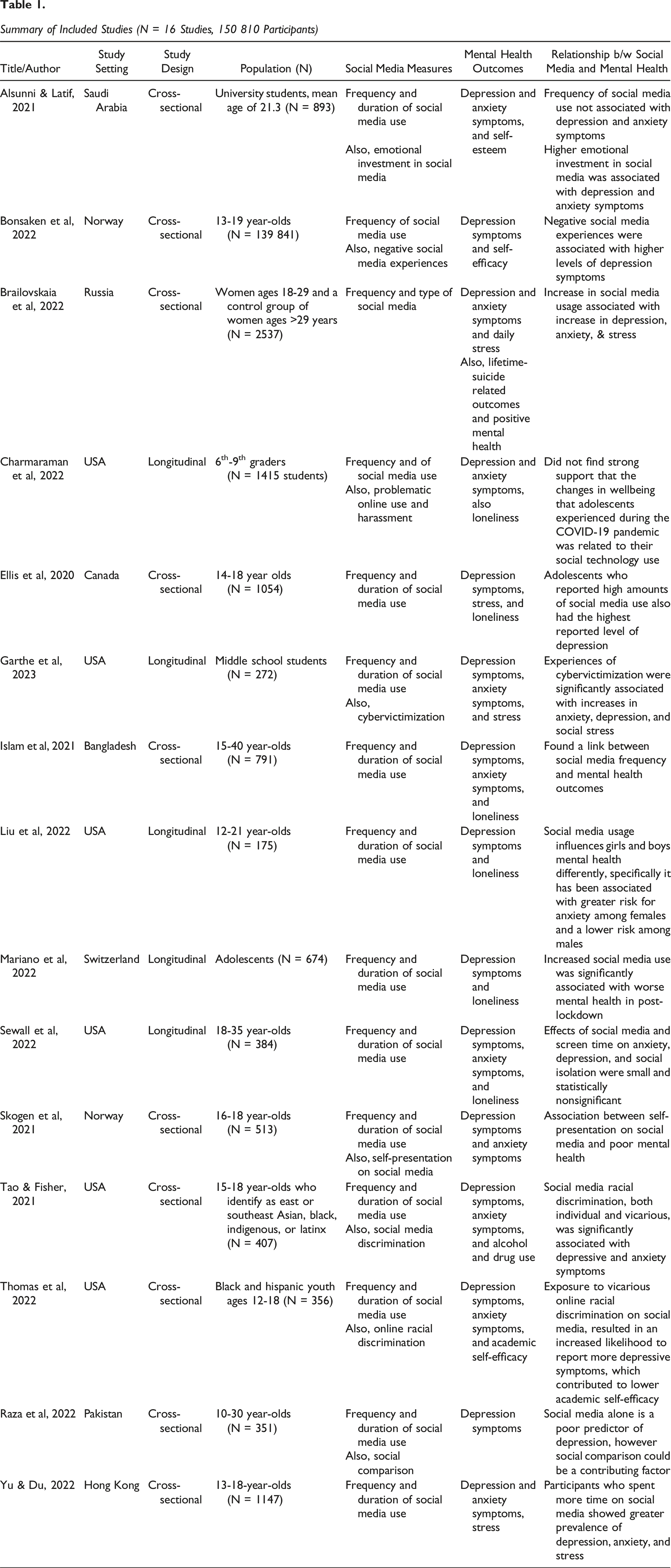
All study data was collected from 2020-2023, with the exception of longitudinal studies that conducted a pre-post pandemic analysis.21-24 A summary of included studies and findings can be found in Table 1. PRISMA Flow Diagram Summary of Included Studies (N = 16 Studies, 150 810 Participants)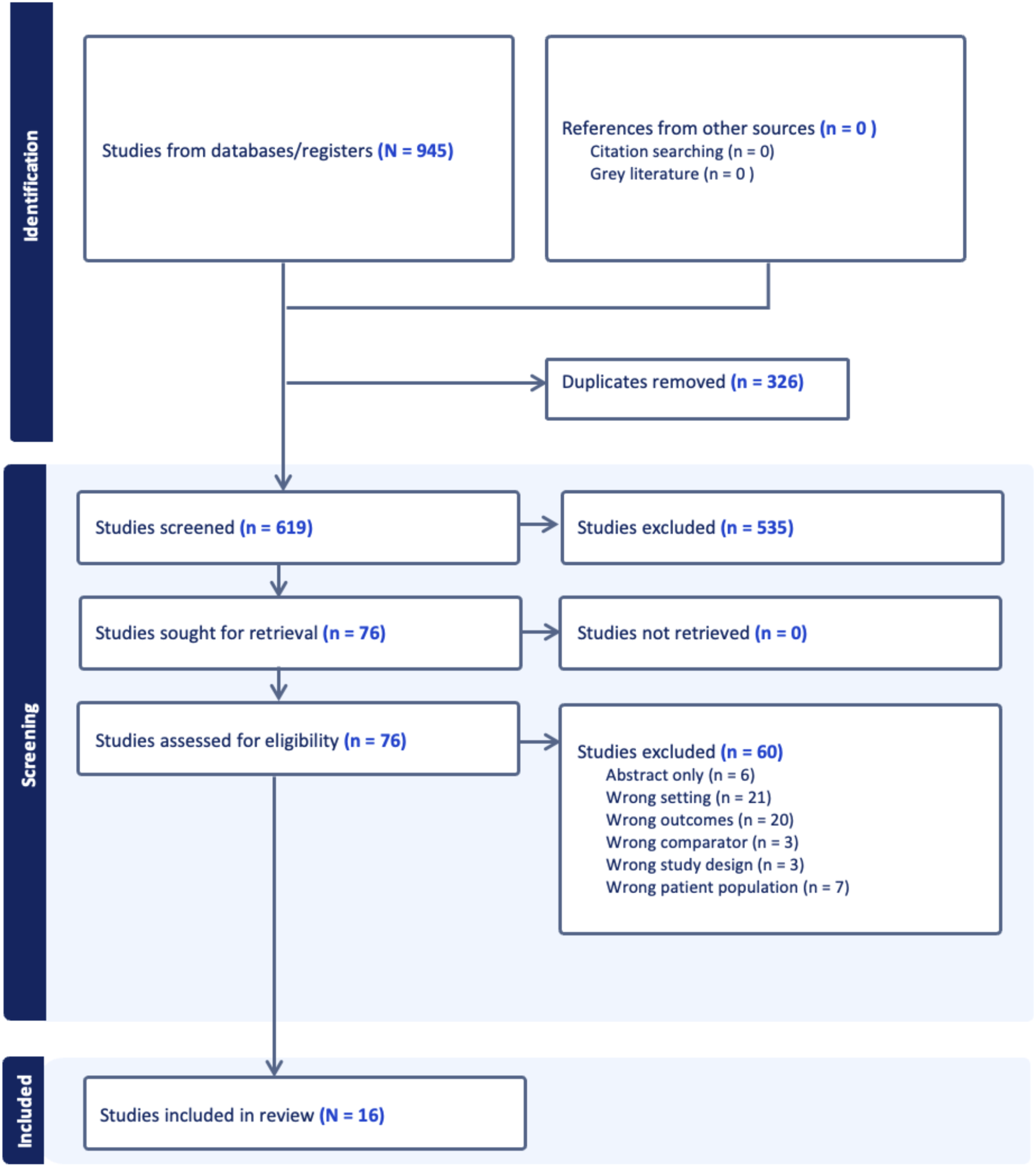
Risk of Bias Assessment (N = 16 Studies)
Study Population
All of the studies included in the analysis reported findings in AYAs, however, the age range of the AYA participants differed among populations. Adolescents (ages
Social Media Use
Most of the included studies examined the impact of social media use by measuring the amount of time spent on social platforms. They found that participants spent 2-4 hours daily on social media.20,21,23-25,27,28,30-35 Brailovskaia et al (2022) found that almost all (98.3%) of their 18-29-year-old participants used Instagram at least once a day, and the majority (94.7%) used it more than once a day. 20
Four studies analyzed the impact of social media by focusing on the participant’s emotional investment in social media and tendency to engage in self-comparison25,26,29,35 Skogen et al. (2021) assessed self-presentation on social media and found that 46% of female participants indicated they spend time and energy on content they post on social media and 43% acknowledged that they find the number of likes and comments on a social media post important. 29
Two studies analyzed the interaction between AYAs, social media, and cyberbullying.22,27 Bonsaksen et al. (2023) found that 22% of participants had been bullied on the internet (n = 139 841). 27 Another study by Garthe et al (2023) examined participants’ experiences with cyber-victimization using a modified cyber-victimization scale (CVS). It was observed that 54% of participants experienced cyber-victimization before the COVID-19 pandemic (n = 148) and 51% experienced cyber-victimization following the pandemic (n = 138). 22
Lastly, 2 studies assessed social media racial discrimination.30,31 Tao and Fisher studied participants (N = 407) who identified as East or Southeast Asian (27.5%), Black (28.3%), Indigenous (19.4%), and Latinx (24.8%) were asked about their experiences with individual and vicarious social media racial discrimination. A large proportion of participants stated they had been exposed to individual discrimination (79.1%) and vicarious (94.4%) forms of social media racial discrimination. 30
Mental Health Outcomes
All sixteen studies included measures of depression or symptoms of depression amongst AYAs.20-35 In a pre-post pandemic analysis Liu et al. discovered an increase in depression levels in AYAs during the pandemic, with an increased vulnerability observed in girls experiencing loneliness. 23 Ten studies analyzed the impact of social media usage on anxiety symptoms or the presence of an anxiety disorder.20-22,26,29-34 According to Yu & Du (2022), 39.6% of their study population experienced mild to extremely severe depression, and 37.5% experienced mild to extremely severe anxiety. 32 Similarly, Islam et al. (2021) found that 38% of their study population experienced depressive symptoms and a larger proportion of their participants (62%) experienced symptoms of generalized anxiety. 33
Several studies included measures of other behavioral outcomes in addition to anxiety and depression. Self-esteem and self-efficacy were measured in 4 studies.26,27,31,35 4 additional studies measured daily stress and its relationship with social media use.20,22,28,32 In addition to this, Brailovskaia et al (2022) measured lifetime suicide-related outcomes using a version of the Suicidal Behaviors Questionnaire-Revised (SBQ-R), 36 and positive mental health using the Positive Mental Health Scale (PMH-Scale). 37
Six studies assessed loneliness.21,23,24,28,33,34 Islam et al (2021) found that 64% of participants between the ages of 18-40 in Bangladesh indicated high degrees of loneliness post-pandemic. Loneliness was found to be greater in 18-25-year-old individuals (51% vs 38%), females (55% vs 45%), and unmarried individuals (71% vs 27%). 33 Islam et al (2021) also assessed sleep quality in participants using the Pittsburgh Sleep Quality Index (PSQI) and concluded that 75% of respondents reported poor sleep quality. They are the only included study to report sleep quality. 33
Relationship Between Social Media and Mental Health
All included studies examined the association between social media and mental health, as per the inclusion criteria and review objectives. Eight of fourteen studies that measured the association between the duration and frequency of social media use with depression found positive associations.20,23,24,27,28,30,32,33 Similar associations were found in studies that observed the relationship between social media daily use and anxiety, with anxiety symptoms increasing as more time is spent on social media.20,30,32,33 Brailovskaia et al (2022) also found there was a significant positive relationship between the amount of time spent on social media and daily stress. 20 Similarly, Yu and Du (2022) discovered that participants who spent less time on social media (<3 hours per day) had a lower prevalence of stress as well as depression compared to those who use social media for more than 3 hours daily.32,33 The study by Islam et al, also measured time spent on social media as an outcome. They discovered that individuals who spent 3 or more hours on social media per day reported higher rates of depression, anxiety, and loneliness, but did not find an association between hours spent on social media and sleep disturbances. 33
Despite not finding a direct association between time spent on social media and mental health outcomes, 4 studies revealed that mental health outcomes were influenced by the level of social media engagement and emotional investment.25,26,29,35 The cross-sectional study by Stefana and colleagues (2022) investigated the role of social comparison as an intermediary factor between mental health and Instagram usage among females aged 18-35. While there was no direct association between the duration of Instagram use and depression, self-esteem, and disordered eating, their findings indicated that this connection is entirely influenced by the tendency for social comparison. 35 Another study by Raza et al. also determined that adolescents who use social media are susceptible to depression due to engagement in self-comparisons with others. 25 Similarly, Alsunni and Latif examined the relationship between emotional investment in social media and anxiety and depression in university students and found a significant positive correlation. They concluded that the impact of social media use on users’ mental health may vary, contingent on the manner in which it is used, whether in an emotional or non-emotional style. 26 Lastly, Skogen et al. (2021) observed that adolescents who used social media and paid greater attention to self-presentation experienced increased mental health problems. 29 These findings collectively emphasize the complex relationship between emotional investment in social media and mental health outcomes.
In the study by Bonasaksen and colleagues, multiple linear regression analysis revealed a connection between the amount of time adolescents spent on social media and depressive symptoms. Furthermore, they investigated the impact of negative social media experiences, particularly cyberbullying, on depressive symptoms in this cohort. The analysis demonstrated a significant correlation with depressive symptoms (P < 0.001), and notably, when included, this reduced the association between time spent on social media and depressive symptoms. 27 Similarly, Garthe et al, investigated the connection between cyberbullying and mental health symptoms among adolescents, incorporating measures for depression, anxiety, and social stress. This study included 2 different time points, 1 before the onset of the COVID-19 pandemic and another during the Spring of 2021, following the pandemic outbreak. Their analysis demonstrated a positive correlation between cyber-victimization and mental health metrics, with participants who reported experiencing cyber-victimization prior to the pandemic also reporting greater mental health concerns during the pandemic and the subsequent school closures. 22 Both studies highlighted the impact of cyberbullying on adolescent mental health.
Two studies investigated the impact of social media racial discrimination on the mental health of adolescents of colour.30,31 Tao and Fisher separated this into individual and vicarious social media discrimination and analyzed their participants’ racial justice civic engagement. They found both forms of social media racial discrimination were significantly associated with depression, anxiety, and alcohol use disorder in adolescents. The relationship between racial justice civic engagement and mental health outcomes was determined to be mediated by vicarious social media racial discrimination. 30 As reported by Thomas et al. (2022) in their study on social media discrimination and mental health among Black and Latinex adolescents, higher rates of vicarious discrimination were associated with increased depression, and in turn lower academic self-efficacy, but not anxiety. 31 Findings indicate that there is a connection between vicarious social media discrimination and mental health outcomes in adolescents.
Nonetheless, two studies did not find significant results between social media use and mental health outcomes. Findings by Charmaraman and colleagues challenge the belief that changes in adolescent well-being during the COVID-19 pandemic are significantly linked to their use of social media. 21 Similarly, Sewall et al. found that the effects of digital technology use on mental health outcomes were statistically insignificant. 34
Discussion
In this scoping review, the studies examining the relationship between social media use and mental health outcomes in AYAs during the COVID-19 pandemic were examined. Sixteen studies were selected for inclusion, with participant ages ranging from 12-45.20-35 Included studies primarily focused on the impact of social media on depression and anxiety and were conducted in North America, Europe, and Asia. The results suggest a complex relationship between social media and mental health outcomes in AYAs, with most studies demonstrating positive associations between social media use and depressive and anxiety symptoms and other mental health outcomes.20,22-33,35
Eight studies examined factors beyond time spent on social media. This included emotional investment in social media use, 26 social comparison, 35 self-comparison,25,29 self-presentation, 29 negative social media experiences, 27 exposure to cyberbullying, 22 and social media racial discrimination.30,31 All 8 studies demonstrated the detrimental impacts of social media on mental health, with Alsunni & Latif (2021), Stefana et al (2022), Skogen et al (2021), and Raza et al (2022) highlighting the potential negative consequences of relying on social media for emotional validation, a sense of self-worth, and reward.25,26,29,35 Overall, results indicate that social media use during the COVID-19 pandemic may have been associated with negative impacts on mental health outcomes in AYAs.
The exploratory outcome was to examine potential factors that could contribute to the complex relationship between social media use and mental health outcomes and disorders in AYAs. Such factors may include online discrimination, self-comparison to others, emotional investment in and reliance on social media for social approval, and cyberbullying. These factors were compared to results from the included studies. As highlighted by the Tao and Fisher and Thomas et al studies, exposure to online ethnic discrimination can have negative effects on the mental health of those who are discriminated against. These effects can occur even if the discrimination was not specifically directed at them but at someone else with a similar ethnicity through vicarious discrimination.30,31 While Thomas et al.’s study focused on discrimination directed towards Black or Latinex youth, other ethnicities also experience online discrimination. For example, Muller and Schwarz demonstrated a recent surge in online anti-Muslim hate speech in the United States. Another study found that since the start of the COVID-19 pandemic, Asian Americans have experienced a rise in discrimination on social media platforms. 38 Online discrimination can encompass more than just ethnicity, and discrimination can be targeted toward different religions, political opinions, genders, and sexual orientations. 39 Research shows that discrimination is associated with an increased risk of depression and other mental health issues. 40 Therefore, online discrimination may play a role in the connection between social media and mental health among AYAs.
Self-comparison and emotional investment in social media may be another contributing factor to the relationship between mental health and social media use. Stefana and colleagues found that the link between social media and youth depression is influenced by the inclination to compare oneself with others. 35 Raza et al. (2022) found a similar connection between self-comparison on social media and depression in adolescents. 25 Both studies highlight the negative impact that reliance on social media can have on positive experiences and external validation. It is possible that AYAs may rely too heavily on social media for peer connection and approval, and that emotional satisfaction they get from receiving a “like” may decrease over time. 41 Furthermore, comparing oneself to others on social media and feeling that 1 does not meet societal standards of attractiveness can negatively affect body image and self-esteem. 42 Fear of missing out (FOMO), a phenomenon in which 1 perceives that others are enjoying fulfilling experiences without them, 43 may contribute to both increased social media use and poor mental health outcomes. FOMO has been found to result in the need to continually stay connected to others’ activities, 43 contributing to compulsive social media use. 44 In addition to this, elevated levels of FOMO have been linked to an increased prevalence of depression in AYAs. 45 During pandemic lockdown measures, with the majority of communication being virtual, elevated FOMO levels may have contributed to heightened social media use, potentially leading to negative effects on mental health. 46 Moreover, Alsunni and Latif, and Skogen and colleagues found that high emotional investment in social media and increased attention to self-presentation were detrimental to the mental health of AYAs.26,29 It is important for individuals to be aware of these potential negative effects and to use social media in a healthy, balanced manner.
As social media use has increased among adolescents, cyberbullying has become a new form of online harassment. Cyberbullying victims have been found to have more emotional and mental health problems and social difficulties. 47 The negative impact of cyberbullying on AYA mental health outcomes was demonstrated by Garthe et al., and Bonasaken et al.22,27 This may be another factor contributing to the association between increased social media use and poorer mental health outcomes.
Sex and gender differences were observed in 3 studies. Islam et al. discovered that females who spent more time on social media reported higher psychological issues. This relationship, however, was not as strong in male participants. 33 This may be due to a variety of reasons including hormonal differences, differences in social expectations, exposure to sexual harassment, and cyberbullying. 48 Another sex difference was noted by Liu et al, who found that prior to the COVID-19 pandemic, depression levels between male and female participants did not differ; however, following the lockdown, females exhibited a much greater increase in depression than males. This suggests that females suffered more than males in response to the COVID-19 lockdown. 23 Lastly, Skogen et al, found that girls exhibited a greater focus on self-presentation in their social media use, attaching greater significance to metrics like likes, comments, and followers compared to boys. 29 These findings align with a 2016 study by Dhir and others, which noted that females were more likely to post selfies and use photographic filters in comparison to males. Interestingly, this gender difference was more pronounced in the adolescent age group (ages 12-19) in contrast to young adults (ages 20-30), and adults (ages 31-50). 49 Further research on sex differences is warranted to determine the etiology of these differences.
Our results are consistent with previous reviews in that overall time spent using social media is associated with negative mental health outcomes in adolescents.14,15 1 important difference between Keles et al.’s review and the present 1 is the number of cross-sectional and longitudinal studies. Keles et al. stated that a limitation of the systematic review was that twelve out of thirteen studies were cross-sectional which may increase the risk of bias. 14 This scoping review included 5 longitudinal studies, which allows for the analysis of changes in outcomes over time.21-24,34 It is possible that the increase in social media use during the COVID-19 pandemic 10 has led to an increase in the quantity (and quality) of this research, with longitudinal studies suggesting a causal relationship between mental health and social media use. The use of ROB measures is a notable distinction between the current review and Hilty et al.’s scoping review. 15 This scoping review also encompasses a broader age range, including older AYAs, in contrast to Hilty et al, who focused on youth below the age of 25. 15
Our results suggest that there is an association between social media and mental health outcomes in AYAs. Also, the unique challenges of the COVID-19 pandemic, such as increased isolation and an upsurge in social media use, could have exacerbated these issues. Therefore, solutions to protect AYAs from negative mental health outcomes should we enter another lockdown are important. Positive associations between social media duration and frequency and mental health outcomes20,23,24,27,28,30,32,33 highlight the importance of limiting screen time and engaging in other activities. Multiple studies suggest that interventions directed towards managing mental health, promoting self-care, and awareness of cyberbullying, and racial discrimination should be accessible to AYAs20,22-24,26,28-33 In contrast, other studies suggest that further research surrounding different types of social media, protective factors, and the mechanisms involved is required before interventions and solutions can be determined.21,25,27,34,35
Despite the inclusion of 5 longitudinal studies, a limitation of this review is that the majority of the studies were cross-sectional studies. This makes it difficult to establish a causal relationship between social media use and poor mental health outcomes. It also increases the risk of bias, especially since the majority of data was obtained by self-report, and the results may not be generalizable. Also, only 1 study contained a control group. 20 While scoping reviews are useful in providing an overview of the current state of research on a topic, they are often not as objective as systematic reviews and meta-analyses; the lack of a statistical analysis makes it difficult to determine the strength of the evidence. Further research on this topic is necessary and should involve longitudinal and intervention studies.
Conclusions
The results of this scoping review suggest that social media use during the COVID-19 pandemic may have had negative impacts on mental health outcomes in AYAs. Factors that may contribute to this complex relationship include online discrimination, self-comparison to others, emotional investment in social media for social approval, and cyberbullying. We emphasize that the COVID-19 pandemic has had a particularly negative impact on mental health and an increase in social media use in AYAs. Further research is needed to better understand the exact mechanisms by which social media use impacts AYA mental health, and interventions to mitigate the negative impacts of social media on mental health.
Footnotes
Acknowledgments
Financial support was obtained by Dr Tony George. Dr George’s work is supported by CIHR operating grant PJT – 190053. No other financial support was provided.
Funding
The authors disclosed receipt of the following financial support for the research, authorship, and/or publication of this article: This work was supported by the CIHR (190053, PJT-190053).
Declaration of Conflicting Interests
The authors declared no potential conflicts of interest with respect to the research, authorship, and/or publication of this article.