



Abstract
Objective
Negative emotional states are well-established risk factors for technological addictions because some individuals use games, social media, or pornography excessively as a coping strategy. Given these links, perceived social support should act as a buffer against the effects of negative emotional states. Consequently, the current exploratory study aimed to examine the role of perceived social support in moderating the effects of negative emotional states on technological addictions.
Methods
There was a total of 169 participants (71.6% females, 27.2% males, and 1.2% others). They completed instruments that assess negative emotional states, perceived social support, internet gaming disorder (IGD), social media addiction (SMA), and problematic pornography use (PPU).
Results
The results showed that perceived social support had buffering effects (reducing symptoms of technological addictions), paradoxical effects (exacerbating symptoms of technological addictions), and no significant effects. Specifically, individuals with low negative emotional states had lower PPU with perceived social support from significant other and family. However, individuals with high negative emotional states had higher IGD and PPU with perceived social support from family.
Conclusion
Limitations include the lack of distinction between online and offline perceived social support and the omission of the last item of the instrument for PPU. Limitations notwithstanding, the study extended on previous research and highlighted the complex relationships between negative emotional states, perceived social support, and technological addictions.
Keywords
Negative emotional states like depression, anxiety, and stress are well established risk factors for technological addictions like internet gaming disorder (IGD), 1 social media addiction (SMA), 2 and problematic pornography use (PPU). 3 It has been argued that this occurs because some individuals use games, social media, or pornography excessively to cope with their negative emotional states. Given these links, perceived social support should act as a buffer against the effects of negative emotional states. However, few studies have examined perceived social support as a moderator. Consequently, the current exploratory study aimed to examine the role of perceived social support in moderating the effects of negative emotional states on technological addictions.
Technological addictions
Although most individuals use games, social media, or pornography in a moderate manner, some do so excessively, resulting in IGD, SMA, and PPU, respectively. Technological addictions are defined as the excessive and prolonged use of games, social media, or pornography, resulting in distress and a range of adverse consequences in various life domains like school, work, or family.4–6 According to Griffiths, 7 these addictions share six common criteria: (a) salience (e.g., the activity of gaming dominating an individual’s thoughts and behavior), (b) mood modification (e.g., using social media to get rid of negative feelings), (c) tolerance (e.g., needing to watch more pornography to get the same effects), (d) withdrawal (e.g., experiencing unpleasant feelings when trying to reduce or stop gaming), (e) conflict (e.g., conflicts with partner due to excessive social media use), and (f) relapse (e.g., trying to reduce pornography use without success). The presence of these criteria distinguishes problematic (i.e., an addiction) from nonproblematic behaviors.
The Interaction of Person-Affect-Cognition-Execution (I-PACE) model has been used to understand technological addictions. 8 According to the model, an individual’s core characteristics (e.g., negative emotional states, perceived social support) interact with affective (e.g., craving) and cognitive (e.g., attentional bias) components, leading to a decision to engage in a certain content (e.g., games, social media, or pornography). In turn, this leads to gratification, which reinforces the engagement of the content as a coping strategy. Over time, the repeated reinforcement leads to the development and maintenance of various technological addictions.
The extant research has provided support for the I-PACE model. For example, negative emotional states like depression, anxiety, and stress are positively correlated with IGD, 9 SMA, 10 and PPU. 3 It is likely that negative emotional states affect technological addictions in a bidirectional manner, serving as both a risk factor and a consequence, leading to the maintenance or exacerbation of the symptoms of technological addictions. In addition, perceived social support is negative correlated with IGD, 11 SMA, 12 and PPU. 13 Individuals are less likely to use games, social media, or pornography excessively as a coping strategy if they can obtain social support from their significant other, family, and friends.
However, despite the extant research, few studies have examined perceived social support as a moderator of the relationships between negative emotional states and technological addictions. The lack of studies is intriguing given that perceived social support is negatively correlated with both negative emotional states14,15 and technological addictions.11–13 According to the buffering hypothesis, perceived social support buffers against stress by (a) enabling individuals to perceive a situation as less stressful or (b) reducing the effects of stress on physical and psychological wellbeing. 16 Perceived social support could buffer against other negative emotional states like depression and anxiety in a similar manner, reducing the need for individuals to use games, social media, or pornography excessively as a coping strategy.
Currently, only a few studies have examined these variables concurrently. For example, studies have found that perceived social support mediated the relationship between negative emotional states and IGD.17,18 In addition, offline social support moderated the relationship between stress and Facebook use intensity, and online social support mediated the relationship between Facebook use intensity and Facebook Addiction Disorder. 19 However, there are a few limitations with these studies. First, given that perceived social support was conceptualized as a buffer in these studies, it should be analyzed as a moderator instead of a mediator. Second, the focus on Facebook use and addiction is restrictive since there are many other types of social media (Instagram, TikTok, etc.) and their popularity varies over time and across places. In addition to these limitations, there are also a few research gaps in the extant literature. First, the different sources of perceived social support (e.g., significant other, family, and friends) are seldom distinguished, precluding an understanding of the effectiveness of each source of support as a buffer. Second, to our knowledge, no studies have been conducted for PPU yet. This precluded an understanding of the role of perceived social support as a buffer against the effects of negative emotional states on PPU.
The current exploratory study aimed to address the limitations and research gaps in the literature by examining the role of perceived social support (significant other, family, and friends) in moderating the effects of negative emotional states (depression, anxiety, and stress) on technological addictions (IGD, SMA, and PPU). Specifically, it was hypothesized that perceived social support would reduce the effects of negative emotional states, leading to lower technological addictions.
Method
Participants
Participants were recruited from a university’s research participation program and various social media platforms (e.g., Instagram). They were provided with a description and expected duration of the study, and the inclusion criteria for participation (i.e., at least 18 years and above). Participants were a convenience sample of 169 participants (71.6% females, 27.2% males, and 1.2% others). Their age ranged from 18 to 65 years (M = 23.49, SD = 5.87).
Instruments
The Depression Anxiety Stress Scale
The Depression Anxiety Stress Scale is a 21-item instrument designed to assess three factors of negative emotional states: depression, anxiety, and stress. 20 Responses are made on a 4-point Likert scale that ranges from 1 = Did not apply to me at all to 4 = Applied to me very much, or most of the time. Appropriate item scores are summed for each factor, with higher scores indicating higher levels of the respective negative emotional state. The three-factor structure of the instrument has been supported by exploratory factor analysis. 21 In addition, the factors had acceptable internal consistencies that ranged from 0.87 to 0.94.
The Multidimensional Scale of Perceived Social Support
The Multidimensional Scale of Perceived Social Support is a 12-item instrument designed to assess three factors of perceived social support: significant other, family, and friends. 22 Responses are made on a 7-point Likert scale that ranges from 1 = Very strongly disagree to 7 = Very strongly agree. Appropriate item scores are summed for each factor, with higher scores indicating higher levels of the respective source of social support. The three-factor structure of the instrument has been supported by exploratory factor analysis. 22 In addition, the factors had acceptable internal consistencies that ranged from 0.85 to 0.91.
The Internet Gaming Disorder Scale-Short-Form
The Internet Gaming Disorder Scale-Short-Form is a 9-item instrument designed to assess the nine criteria of IGD in the DSM-5: preoccupation, withdrawal, tolerance, unsuccessful attempts to stop, loss of interest in other activities, continued gaming despite problems, deception, relive negative moods, loss of a relationship or job. 23 Participants are asked to report on their experiences during the past 12 months. Responses are made on a 5-point Likert scale that ranges from 1 = Never to 5 = Very often. The item scores are summed, with higher scores indicating higher levels of IGD. The unidimensional structure of the instrument has been supported by exploratory and confirmatory factor analysis.23,24 In addition, the instrument had an acceptable internal consistency of 0.87.
The Bergen Social Media Addiction Scale
The Bergen Social Media Addiction Scale is a six-item instrument designed to assess SMA according to Griffiths’ 7 six criteria of addiction. 5 Participants are asked to report on their experiences during the past 12 months. Responses are made on a 5-point Likert scale that ranges from 1 = Very rarely to 5 = Very often. The item scores are summed, with higher scores indicating higher levels of SMA. The unidimensional structure of the instrument has been supported by confirmatory factor analysis. 25 In addition, the instrument had an acceptable internal consistency of 0.83.
The Problematic Pornography Consumption Scale
The Problematic Pornography Consumption Scale is an 18-item designed to assess PPU according to Griffiths’ 7 six criteria of addiction. 26 Participants are asked to report on their experiences during the past 6 months. Responses are made on a 5-point Likert scale that ranges from 1 = Never to 7 = All the time. Due to a technical error, the last item of the instrument was not presented to the participants. The item scores of the remaining 17 items are summed, with higher scores indicating higher levels of PPU. The unidimensional structure of the instrument has been supported by confirmatory factor analysis. 26 In addition, the instrument had an acceptable internal consistency of 0.93.
Procedure
Participants completed the study online via Qualtrics (see Appendix A for the instruments). Upon providing informed consent, participants completed a demographic form that asks for their age and gender. Subsequently, participants completed the Depression Anxiety Stress Scale, 20 the Multidimensional Scale of Perceived Social Support, 22 the Internet Gaming Disorder Scale-Short-Form, 23 the Bergen Social Media Addiction Scale, 5 and the Problematic Pornography Consumption Scale. 26 These instruments were administered in a randomized order to control fatigue and order effects. The study conforms to the provisions of the Declaration of Helsinki and was approved by James Cook University’s Human Research Ethics Committee (Approval number: H9364).
Results
Descriptives and intercorrelations of the variables.
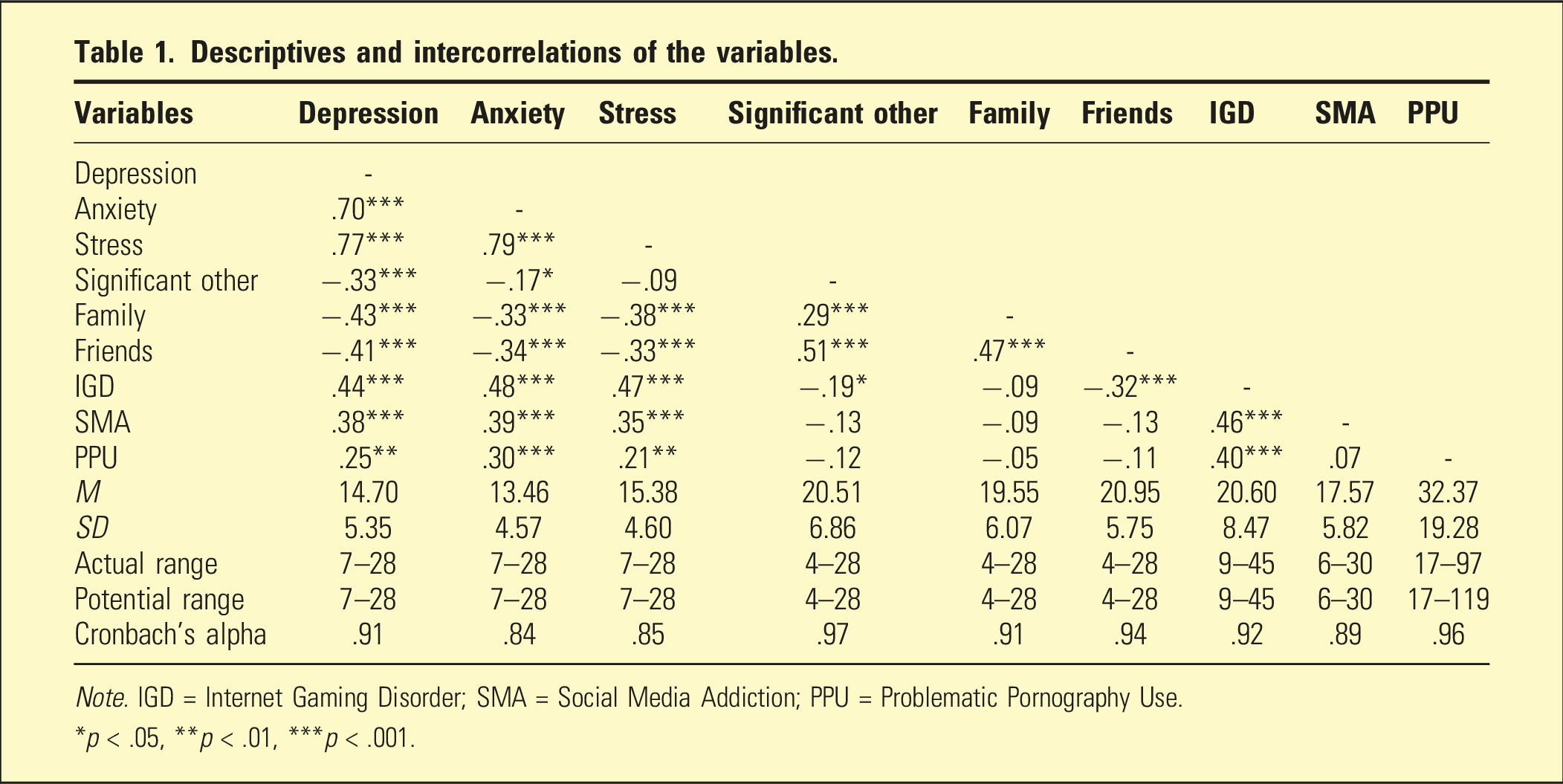
Note. IGD = Internet Gaming Disorder; SMA = Social Media Addiction; PPU = Problematic Pornography Use.
*p < .05, **p < .01, ***p < .001.
Effects of negative emotional states and perceived social support from significant other on technological addictions.
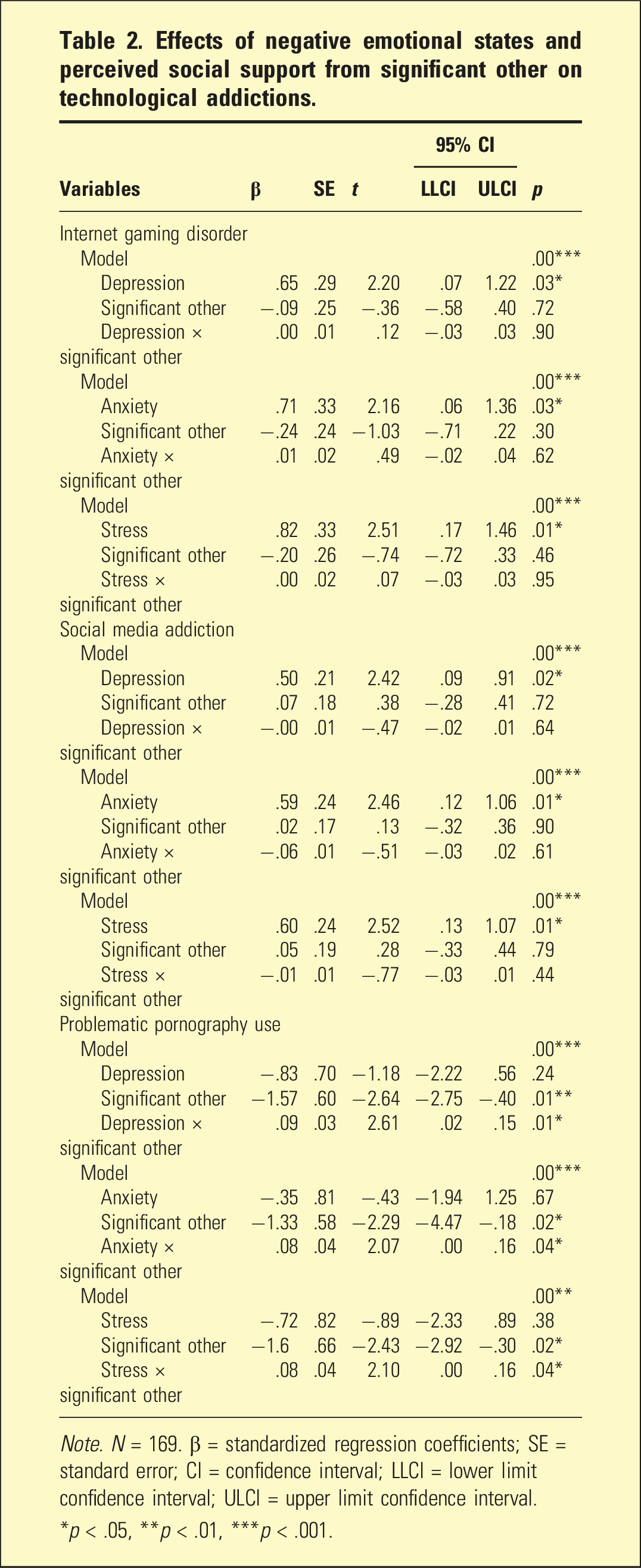
Note. N = 169. β = standardized regression coefficients; SE = standard error; CI = confidence interval; LLCI = lower limit confidence interval; ULCI = upper limit confidence interval.
*p < .05, **p < .01, ***p < .001.
Effects of negative emotional states and perceived social support from family on technological addictions.
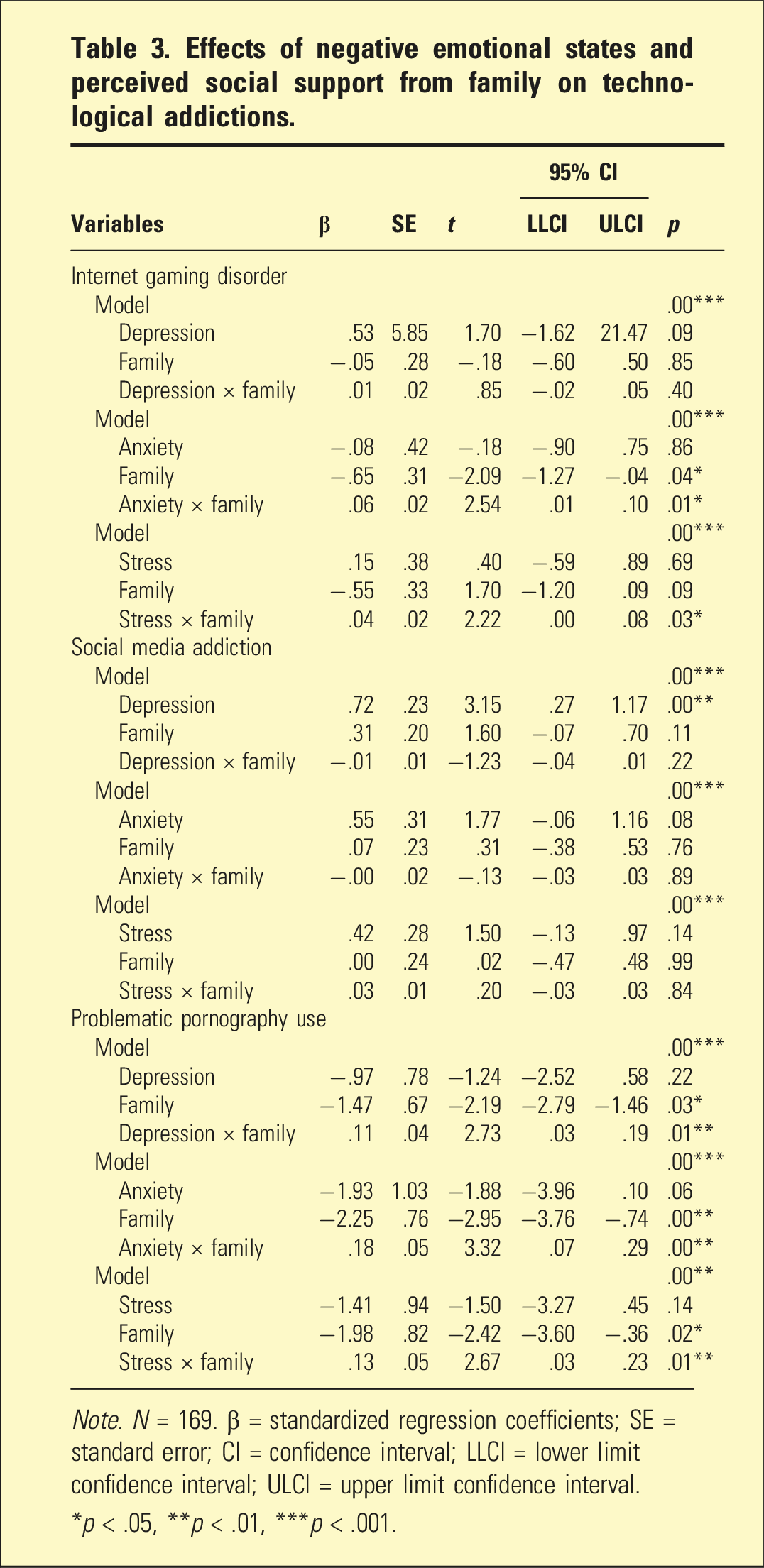
Note. N = 169. β = standardized regression coefficients; SE = standard error; CI = confidence interval; LLCI = lower limit confidence interval; ULCI = upper limit confidence interval.
*p < .05, **p < .01, ***p < .001.
Effects of negative emotional states and perceived social support from friends on technological addictions.
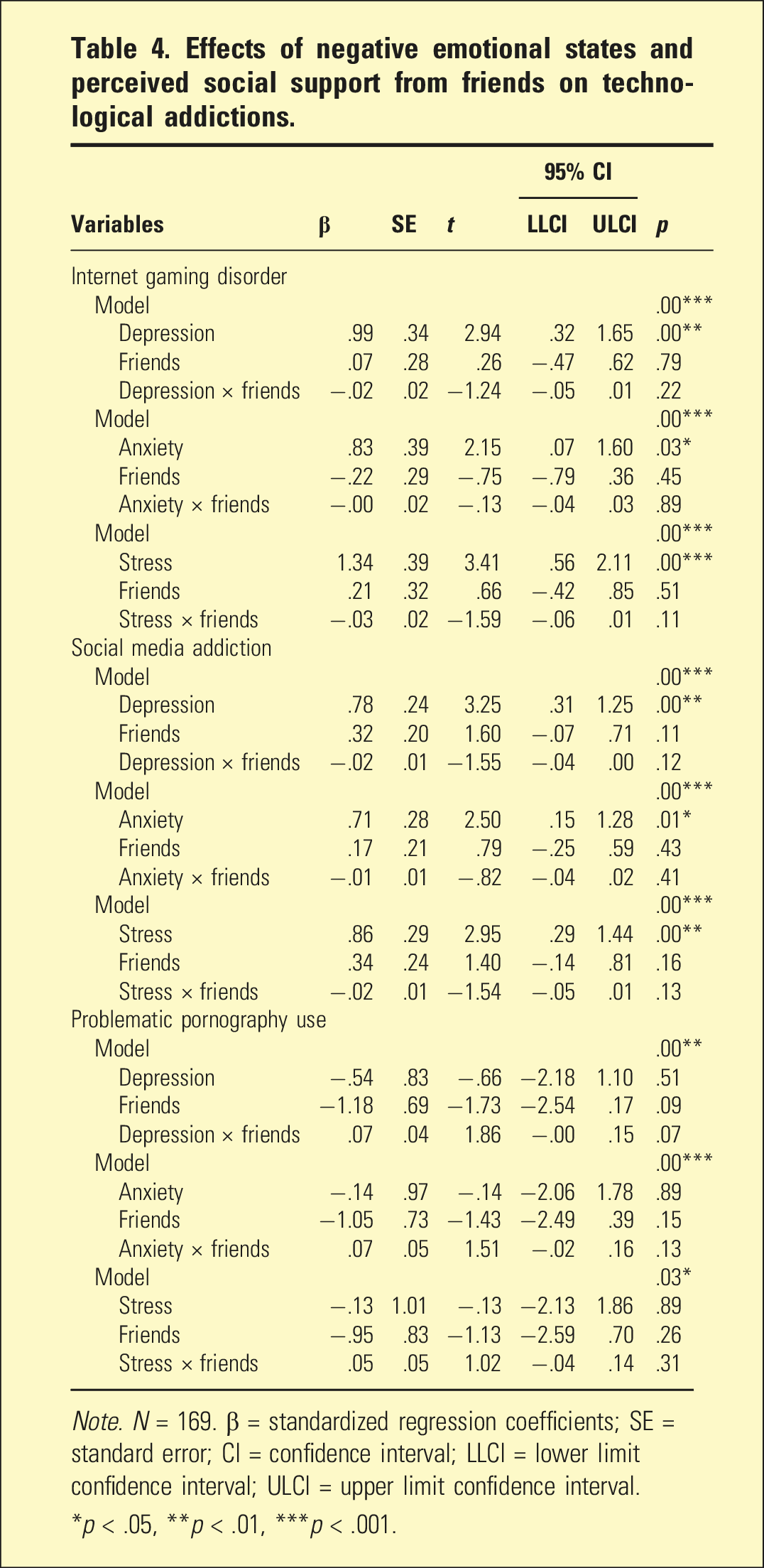
Note. N = 169. β = standardized regression coefficients; SE = standard error; CI = confidence interval; LLCI = lower limit confidence interval; ULCI = upper limit confidence interval.
*p < .05, **p < .01, ***p < .001.
Perceived social support from significant other as a moderator
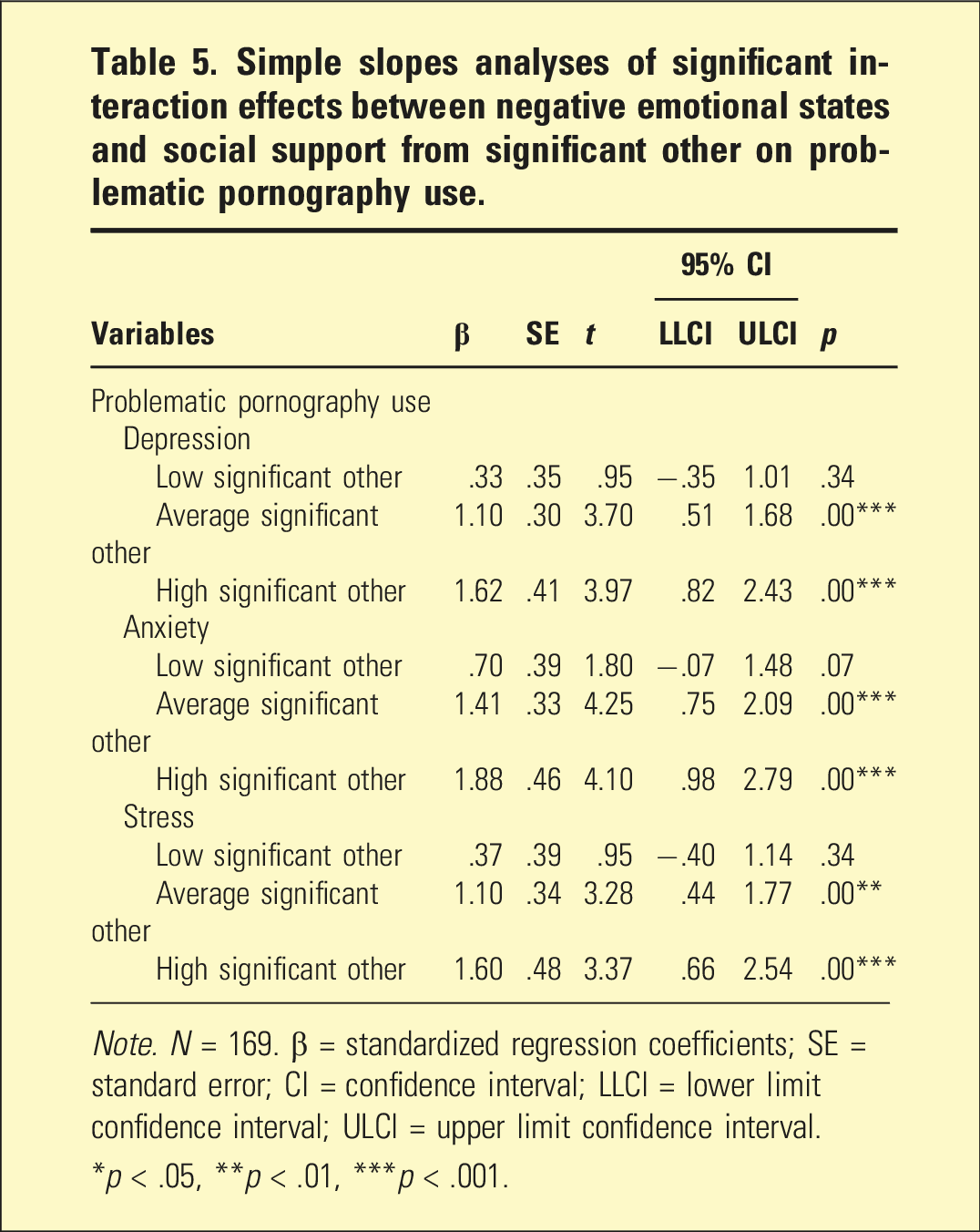
Simple slopes analyses of significant interaction effects between negative emotional states and social support from significant other on problematic pornography use.
Note. N = 169. β = standardized regression coefficients; SE = standard error; CI = confidence interval; LLCI = lower limit confidence interval; ULCI = upper limit confidence interval.
*p < .05, **p < .01, ***p < .001.
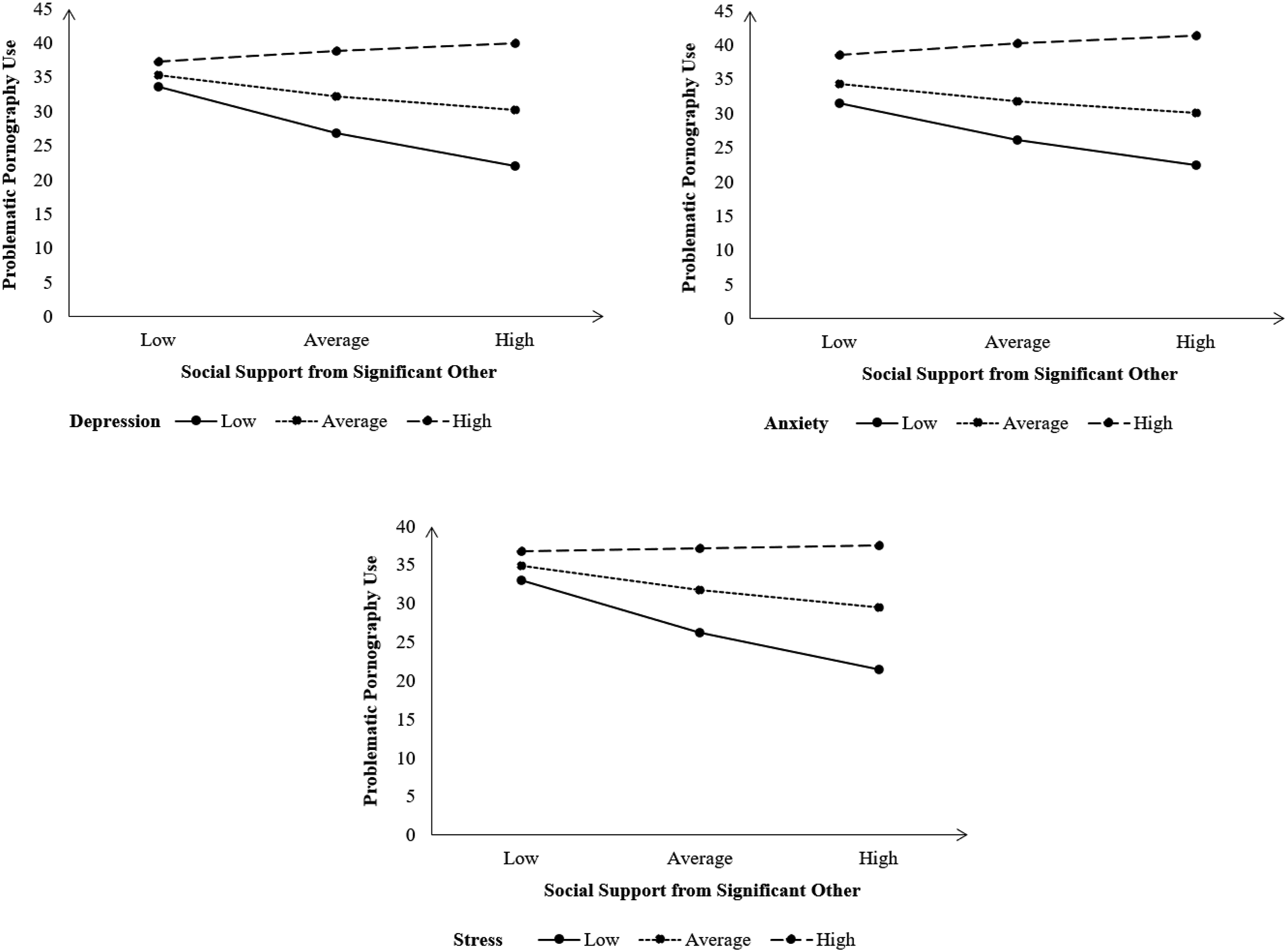
Significant interactions between negative emotional states and social support from significant other on problematic pornography use.
Perceived social support from family as a moderator
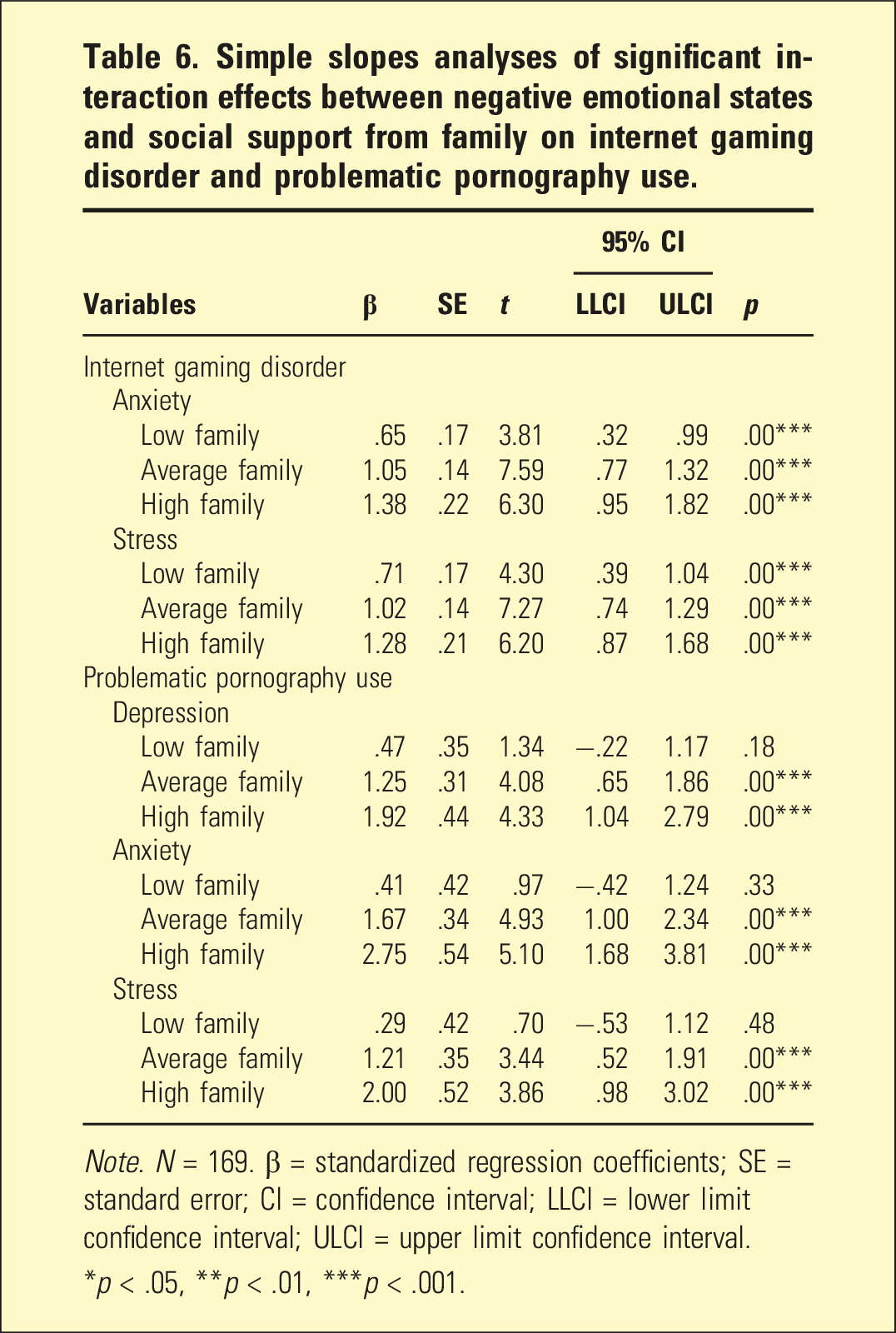
Simple slopes analyses of significant interaction effects between negative emotional states and social support from family on internet gaming disorder and problematic pornography use.
Note. N = 169. β = standardized regression coefficients; SE = standard error; CI = confidence interval; LLCI = lower limit confidence interval; ULCI = upper limit confidence interval.
*p < .05, **p < .01, ***p < .001.
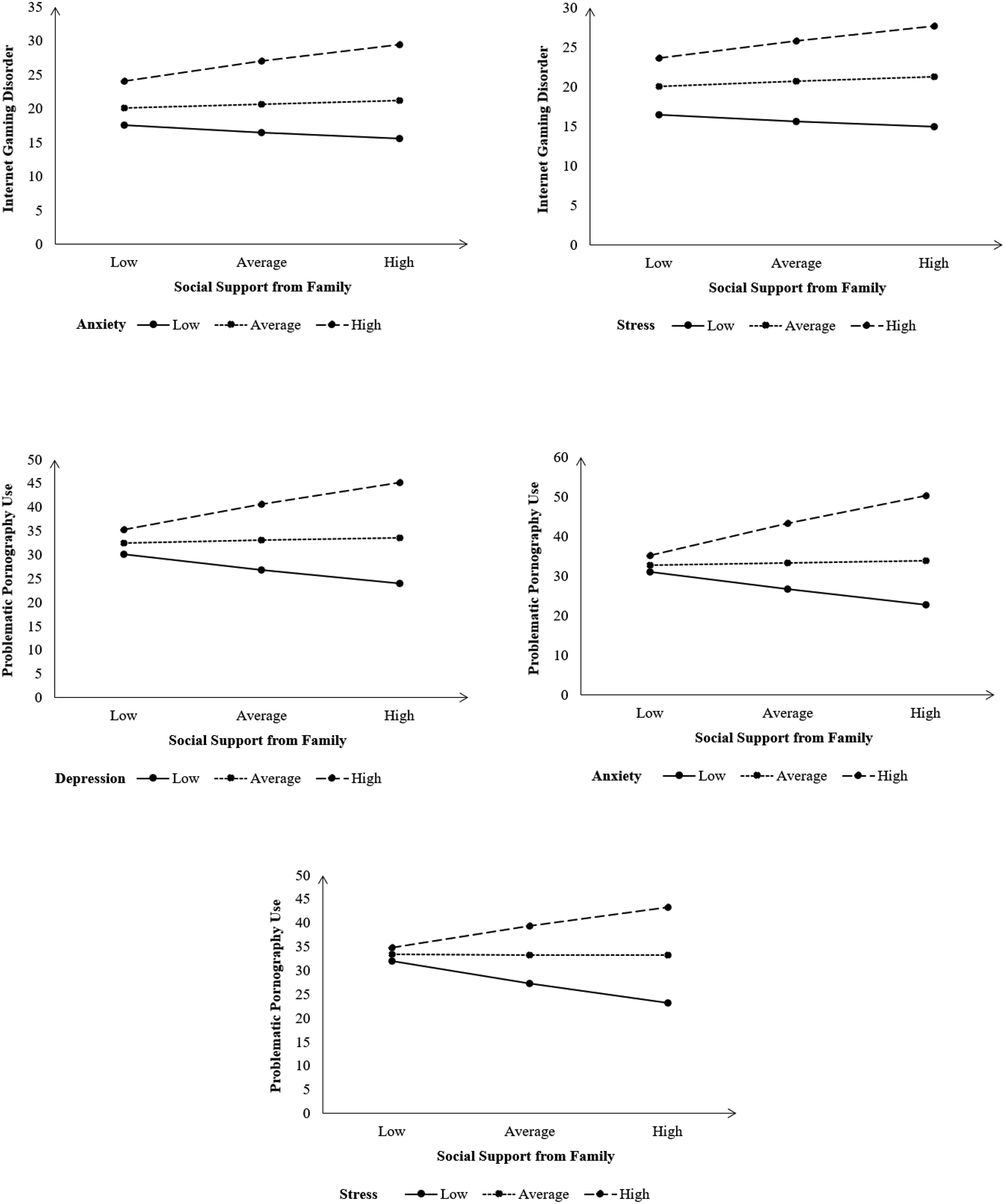
Significant interactions between negative emotional states and social support from family on internet gaming disorder and problematic pornography use.
Discussion
Summary of the mixed findings of the current study.
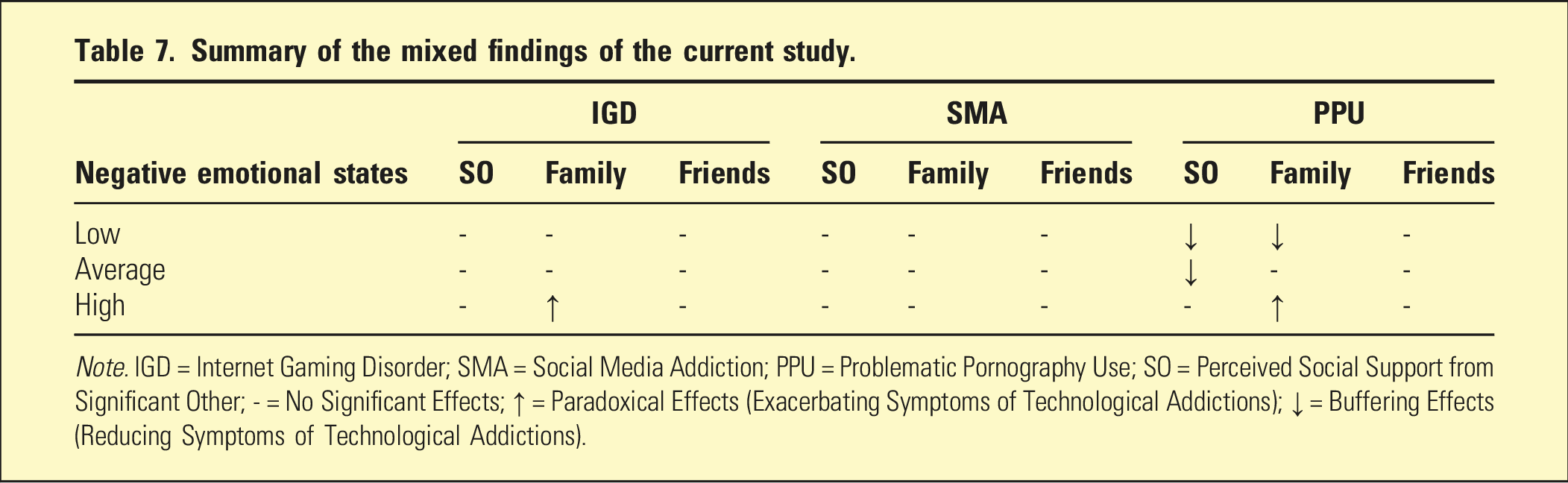
Note. IGD = Internet Gaming Disorder; SMA = Social Media Addiction; PPU = Problematic Pornography Use; SO = Perceived Social Support from Significant Other; - = No Significant Effects; ↑ = Paradoxical Effects (Exacerbating Symptoms of Technological Addictions); ↓ = Buffering Effects (Reducing Symptoms of Technological Addictions).
First, individuals with low to average negative emotional states had lower PPU with perceived social support from significant other. Furthermore, individuals with low negative emotional states had lower PPU with perceived social support from family. These buffering effects were consistent with the buffering hypothesis 16 and research that has found perceived social support as a mediator between negative emotional states and technological addictions.17–19 These might be due to individuals perceiving a situation as less depressing, anxiety-provoking, or stressful, reducing the need for them to use pornography excessively as a coping strategy. However, it should be noted that the buffering effects are effective only for those with lower levels of negative emotional states.
Second, individuals with high anxiety and stress had higher IGD with perceived social support from family. Furthermore, individuals with high negative emotional states had higher PPU with perceived social support from family. These paradoxical effects were inconsistent with the buffering hypothesis 16 and research that has found negative correlations between perceived social support and negative emotional states,14,15 and technological addictions.11–13 Instead, this surprising finding was consistent with some research that has documented paradoxical negative effects of social support (e.g., Refs. 28–31). Although an extensive review is beyond the scope of the current study, their explanation for the paradoxical effect is relevant here. Specifically, social support from family might increase the salience of the problem (i.e., high negative emotional states) and highlight their lack of competence in addressing the problem. 28 In turn, these feelings of incompetence represent a threat to their self-esteem, which leads to an increase in negative emotional states. 30 Consequently, this vicious cycle might eventually lead individuals to use games and pornography excessively as a coping strategy.
Finally, there were no significant interaction effects for perceived social support from friends as a moderator and SMA as a dependent variable. The lack of significant effects were inconsistent with the buffering hypothesis. 16 This might be due to individuals being less willing to share their struggles with negative emotional states with friends compared to with their significant other and family. The lack of significant interaction effects for SMA might be due to individuals using social media for a variety of other reasons and not just as a coping strategy. For example, individuals might be using social media to maintain social networks, obtain information, or even just to pass the time. 32 Consequently, while perceived social support might buffer against negative emotional states, it was unable to reduce SMA given the variety of motivations for social media use. Taken together, these issues would contribute to the lack of significant interaction effects in the current study.
There are theoretical and clinical implications to the current study. First, given the lack of relationships between perceived social support and SMA, and the lack of significant moderator effects (see Table 7), the inclusion of perceived social support in the I-PACE model should be reconsidered. 8 Second, the buffering hypothesis could be expanded to include paradoxical effects. Specifically, it would be optimal to recognize that perceived social support might yield positive effects, no effects, and even negative effects. Third, given the disparate results, it is important for future research to make a distinction between the different sources of perceived social support. Finally, clinicians should be careful with encouraging social support for individuals with technological addictions. Specifically for individuals with high negative emotional states and IGD and PPU, perceived social support from family might backfire and exacerbate existing problems.
Limitations of the study should be noted. First, a distinction was not made between online and offline perceived social support (e.g., Ref. 19). Given the focus on technological addictions, this distinction could clarify some of the mixed findings of the current study. Second, due to a technical error, the last item of the Problematic Pornography Consumption Scale was not presented to the participants. This limitation is unfortunate since most of the significant interaction effects were for PPU. However, because the instrument used multiple items to assess each of Griffiths’ 7 six criteria of addiction, the remaining 17 items were sufficient in ensuring content validity. Furthermore, the 17 items had a satisfactory Cronbach’s alpha of .96 in the current study. As such, it is unlikely that this limitation would affect the conclusions of the study. Third, multiple analyses were conducted without statistically controlling for Type 1 errors. However, given the issues with statistical adjustments,33,34 the current study proceeded in an exploratory manner to examine the relationships between the variables. Finally, the current study used a cross-sectional design and conceptualized negative emotional states as risk factors for technological addictions as per the I-PACE model. 8 However, negative emotional states could serve as consequences of technological addictions (e.g., Ref. 35), and perceived social support might play a different role in those relationships. In the future these limitations might be controlled by making a distinction between online and offline perceived social support, using all 18 items of the Problematic Pornography Consumption Scale, studying only one technological addiction to reduce the rate of Type 1 errors, and examining the role of perceived social support as a moderator in a longitudinal study.
In summary, the current study had extended on previous research and highlighted the complex relationships between negative emotional states, perceived social support, and technological addictions. Specifically, as a moderator, perceived social support had buffering effects, paradoxical effects, and no significant effects depending on the source of perceived social support and the type of technological addiction. Limitations notwithstanding, the study has important implications for both researchers and clinicians. Future research could address the limitations to provide a better understanding of the role of perceived social support in technological addictions.
Supplemental Material
Supplemental Material - Negative emotional states and technological addictions: The buffering and paradoxical role of perceived social support
Supplemental Material for Negative emotional states and technological addictions: The buffering and paradoxical role of perceived social support by Peter KH Chew and Elissa YH Poh in Australasian Psychiatry.
Footnotes
Author contributions
PKHC: Conceptualization, Methodology, Formal analysis, Writing - Original Draft, Writing - Review & Editing, Supervision. EYHP: Conceptualization, Methodology, Formal analysis, Investigation
Funding
The author(s) received no financial support for the research, authorship, and/or publication of this article.
Disclosure
The author(s) declared no potential conflicts of interest with respect to the research, authorship, and/or publication of this article.
Ethical statement

Data Availability Statement
The data is available upon request.
Supplemental Material
Supplemental material for this article is available online.
References
Supplementary Material
Please find the following supplemental material available below.
For Open Access articles published under a Creative Commons License, all supplemental material carries the same license as the article it is associated with.
For non-Open Access articles published, all supplemental material carries a non-exclusive license, and permission requests for re-use of supplemental material or any part of supplemental material shall be sent directly to the copyright owner as specified in the copyright notice associated with the article.
