




Abstract
Career development interventions (CDIs) are essential for addressing the evolving career needs of adults navigating complex labour markets. Previous reviews have focused on CDIs for students or early-career professionals, with limited attention to adult populations and long-term career outcomes. This scoping review investigates the nature and scope of career development interventions (CDIs) targeting adult populations post-2002. Through searches in PsycINFO, ERIC, and Business Source Premier, 20 studies met the inclusion criteria, covering diverse geographical settings and participant demographics. The review categorizes interventions into career counselling, mentoring, career coaching, and specialized programs, identifying significant themes such as career satisfaction, mentoring outcomes, and self-efficacy. Results indicate varied effectiveness, with mentoring and specialized interventions improving job satisfaction and self-efficacy. Findings emphasize the need for standardized CDI designs and consistent outcome measures for broader applicability in real-world settings.
Keywords
Providing access and autonomy for individuals to develop their career can have a significant impact on career satisfaction and success (Barnett & Bradley, 2007). Career development is essential because it enables individuals to continuously build and enhance their skills, knowledge, and experiences, positioning them to achieve long-term career goals and adapt to evolving job market demands (Herr, 2001; Herr & Cramer, 1996; Spokane, 1991). It fosters personal and professional growth, providing a sense of purpose, direction, and fulfillment (Savickas, 1994). As the market for talent has grown more competitive over the past few decades, organisations have begun to harness the provision of career development opportunities to retain and attract high performers (De Vries et al., 2023; Iles & Preece, 2016; Jena & Nayak, 2023). Investment into career development interventions and relevant resources at organisational and educational levels is costly – although effective (Brown & Ryan Krane, 2000; Whiston et al., 2017).
Drawing a clearer link between research and real-world practice demands a need for a centralised understanding of what exists in the literature to date. Ongoing research into career development interventions and tools is marked by a lack of consistency in design principles, how outcomes are measured, and which populations are tested in practice compared to research (Brown et al., 2003; Mok et al., 2021; Soares et al., 2022). There are several key considerations in better understanding research and practice on the area of career development. Theories’ definitions of what constitutes a career development intervention, the diversity of theoretical models that inform designs, and means of evaluating intervention outcomes, are all relevant. This study will apply the PRISMA scoping review protocols and focus on:
Defining Career Development Interventions Commenting on existing reviews and their limitations Identifying common theories informing Career Development Interventions Establish commonly used methodology and design principles applied Determining how success of interventions is evaluated
Defining Career Development Interventions
In determining the scope of existing research, it is first important to begin with some definitions relating to the topic. Career development is most referred to as the process of lifelong learning, behavioural and psychological change over the duration of an individual's career (Herr & Cramer, 1996). This process of development can be improved through work experiences or specifically designed career interventions (Brown et al., 2003; Spokane, 1991). Career development interventions have been used to target two main areas: the individual, and the organisation (Hughes et al., 2005). In general, the focus is to align individual's career aspirations and goals to broader societal, organisational, and occupational needs (Savickas, 2013). Organisational interventions have been criticised for a lack of rigorous research, with focus remaining on university education for the past few decades (Brown, 2015; Russell, 1991; Whiston & James, 2013). There is significant variation within different types of career interventions and can be identified by two broader types: one type of intervention involves acquiring new practical skills (e.g., cross-training, and written exercises) and the second type is targeted at improving self-perception and insight (e.g., card sort and values clarification). The present term of ‘career development interventions’ encapsulates several terms across the literature, including career choice, career exploration and education interventions (demonstrating the variety of interventions identified in literature to date). Content included as part of interventions have, therefore, also varied greatly, from implementing workbook and written exercises to individual counselling sessions (see Appendix A for a comprehensive overview of intervention components most used, as captured by three seminal review papers (Brown et al., 2003; Kirk et al., 2000; Ryan, 1999)). Interventions also encompass a large variety of individual and organisational interventions that can be employed from a counsellor level (e.g., cognitive restructuring and support) to an organisational level (e.g., job rotation, sharing and enlargement) used to target employee engagement and career development concurrently (see Appendix A). For the present review, interventions include all of these, and evaluation will focus on interventions targeted for non-job-specific, life-long career development.
Existing Reviews Examining Career Development Interventions
There are 6 previous key reviews of sufficient importance informing this paper. They are the works by Brown and colleagues (Brown & Ryan Krane, 2000; Brown et al., 2003; Ryan, 1999). Whiston and James (Whiston, 2011; Whiston & James, 2013), and Soares and colleagues (2022). Brown and colleagues conducted meta-analyses to identify critical ingredients of interventions in yielding positive career choice outcomes – both individually and in combination (Brown & Ryan Krane, 2000; Brown et al., 2003; Ryan, 1999). This seminal set of work sets a precedent for exploration of whether the 5 critical ingredients identified (workbooks and written exercises, individualised interpretations and feedback, world of work information, modelling, and attention to building rapport) are similar interventions used across the literature presently. Similarly, Whiston and colleagues conducted several literature reviews assessing the state of the literature and future directions for evaluating intervention efficacy (Whiston, 2011; Whiston & James, 2013). They emphasise the need for greater research on intervention efficacy by client characteristics (i.e., demographic factors), and the availability of cost-effective interventions that can be applied easily to real-world settings (Fretz, 1981; Lazar et al., 2010). The most recent review was by Soares and colleagues in 2022, evaluating interventions’ theoretical basis, intervention modality, evaluation methods and decision-making outcomes. Overall, since the seminal reviews informing this paper were conducted, technological innovation within the human resources and psychological services sector in the last 20 years has been immense (Hooley, 2012). Virtual-based career tools (e.g., discussion boards, virtual career coaching, online programs) create greater accessibility and variety when implementing interventions. Given this, it is useful to build off past seminal literature reviews completed, and evaluate interventions with a modern, technology-comprehensive lens (Pordelan et al., 2018). A review of the more recent research will enable an exploration of whether some of these early findings remain true and which new ones emerge. Whilst previous reviews provide an excellent platform for discovery there are several key limitations that inhibit their usefulness including the use of student samples and time since publications. This study aims to address these gaps and provide a refreshed state of the career intervention literature.
Theories Informing Interventions
What is yet to be determined is to what extent intervention are informed by which theories, if any. Frameworks and theories are helpful to explain why interventions work and which underlying mechanisms these appeal to. There are several but varied theories and frameworks that have inform interventions targeted for adult populations. These theories tend to overlap and complement each other given their roots in the notion that the individual holds the most influence over their career development and their environment (Mahoney & Patterson, 1992).
Life-span Career Development
Early researchers popularised the notion of vocational guidance as “the process of assisting the individual to choose an occupation, prepare for it, enter upon it and progress in it” (Super, 1951), later asserting a 5-stage career development model based on life stages (Super, 1990). The stages were growth, exploration, establishment, maintenance, and decline. Super (1990) suggested that research focusing on career development (as opposed to vocational choice) is inextricably linked to choices made across a life span, with these choices revolving around the roles occupied over a lifetime (e.g., child, spouse, homemaker).
Career Construction Theory (CCT)
Career construction theory is an enduring concept that individuals construct their career through a process of generating self-awareness, adaptation, and the negotiation of social contexts (Savickas, 1997, 2002, 2005, 2013). The theory focuses on individuals adapting to their environment and encourages individuals’ agency to construct their own career stories. The model emphasises individual differences in approaching career progression and provides a framework for individuals to assess their own resources (psychosocial and skill-based resources) and work demands to identify and construct the best career path for them (Savickas, 2013). The theory's translation to empirical testing remains insufficient though, with an absence of rich, qualitative methodologies employed to deeper tease out individual differences (including cross-cultural and intersectional demographic differences) that the model is founded on (Rudolph et al., 2019).
Social Cognitive Career Theory (SCCT)
The social-cognitive approach to career development focuses on three main areas: vocational interests, occupational choice, and career performance (Lent et al., 2000; Lent & Brown, 1996). Vocational interests refer to individual preferences for specific activities and environments – with self-efficacy and outcome expectations (e.g., high performance in a subject area) being pivotal. Occupational choice refers to the selection of certain career paths similarly based on self-efficacy and outcome expectation – this area also encompasses the role of goal-formation as an input to career choices. Career performance refers to the achievement of individuals in work tasks and individuals’ persistence in the face of obstacles. The model stems from Bandura's (1986) principles for triadic-reciprocal view of interaction where the individual and the environmental factors are interdependent and influence one another. Like CCT, the theory lacks sufficient qualitative research to date – however, is regarded as an enduring, generalisable, and comprehensive framework for understanding the individual and contextual factors relevant to career development (Lent et al., 2000; Wang et al., 2022).
Life Design
The life-design paradigm for career development is deeply rooted in career counselling interventions (Savickas et al., 2009). Its basis is founded off career construction and life designing (Savickas, 2005; Savickas et al., 2009). The intention is to construct counselling sessions through storytelling. The paradigm is oriented around self-constructing and shaping identity. This is achieved following these steps: (a) constructing career through storytelling, (b) deconstructing and reconstructing each story into identity narratives or life portraits, and (c) co-constructing intentions to bring about these narratives into real-world actions. One of the objectives of this review is to identify those theories used by researchers over the past ten years.
Recurrent Methodology and Design Principles
Reviews and recent studies appear to employ a mix of quantitative and qualitative approaches, often integrating surveys, interviews, and longitudinal data collection to assess the effectiveness of interventions (Akkermans et al., 2015; Brook et al., 2021; Whiston et al., 2017). Tools such as Likert-scale surveys, and validated scales are frequently utilised to measure variables like skill development, career satisfaction, and employee self-efficacy (Whiston et al., 2017). It is unclear however, how rigorously methods like pre- and post-intervention designs are implemented in adult populations (Soares et al., 2022). In contrast, qualitative approaches have been used to gain deeper insights into participants’ lived experiences (Di Fabio & Bernaud, 2018). These studies often rely on in-depth interviews or focus groups, using thematic analysis to identify common patterns and themes that emerge from participants’ narratives. Some studies have also collected data longitudinally to track the long-term impacts of career development interventions. This approach is particularly valuable in understanding how sustained participation in development programs influences career trajectories, providing a more comprehensive view of career growth over time. The present study aims to clarify the frequency to which studies employ rigorous designs to comprehensively assess for quantitative, qualitative and longitudinal outputs.
A bulk of literature to date also appears to focus on university student populations exclusively (Brown, 2015; Russell, 1991; Whiston & James, 2013). This may be due to convenience sampling or a dubious understanding that interventions are predominantly productive for emerging adults entering the workforce and beginning to construct self-identity, early career choices and life design (Akkermans et al., 2015). It is, however, anecdotally often common practice for organisations to implement interventions in non-research populations (e.g., corporations) without rigorous evidence-based evaluation, including adult participants (their employees). Given the focus of literature on designing interventions for student-based populations, there is a lack of empirical support for implementing effective interventions in varying organisational settings. It is equally important to understand how interventions targeted for adult-based, working (or job-seeking) populations are designed and how effective they may be. The current review will capture what design principles have been used in more contemporary career development interventions.
Evaluating Career Development Intervention Outcomes
There is consensus that interventions have been found to be moderately effective, however, it is valuable to understand how intervention effectiveness is measured across empirical studies (Brown & Ryan Krane, 2000; Whiston et al., 2017). Several reviews conducted aimed to examine the specific effectiveness of interventions, including their interdependence and the effect of intervention modalities (Brown & Ryan Krane, 2000; Brown et al., 2003; Whiston et al., 2017, Whiston & James, 2013). These meta-analyses identified six key career choice outcome measures: vocational identity, vocational congruence, career decision-making self-efficacy, career choice, goals, barriers, and career maturity (Ryan, 1999; Super et al., 1981; Whiston et al., 2017). The interventions included were limited primarily to counselling-based interventions (e.g., counsellor support, card sort, psychoeducation, anxiety reduction), and these counselling interventions were evaluated across individual and varying group-based modalities (Whiston et al., 2017). Most studies included in the samples were student-based populations which, is raised by the authors given limited research completed within this field (inclusion of only 57 relevant studies across the past two decades of research). The study by Whiston and colleagues (2017) found career maturity outcome measures were used decreasingly in recent research - potentially due to lack of recent revisions of the Career Maturity Inventory at the time, and thus lack of applicability of the measure on diverse populations (Crites & Savickas, 1996; Pietrzak, 2013). It would be useful to refresh our understanding of the use of these outcomes in the present study given revisions have since been made (Savickas & Porfeli, 2011). The measures evaluated in these meta-analyses appear to be consistent with some empirical studies where self-efficacy and decision-making measures are most used (Park et al., 2020, Lam & Santos, 2018; Oliver & Spokane, 1988) but the full extent of this overlap is yet to be fully explored.
The Present Study
The present study seeks to describe and assess the literature conducted between 2002 onward on career development interventions and all its associated terms given Brown and colleagues (2003) conducted the most comprehensive review for an adult population with data collected in 2002. As discussed, the focus is to refresh the current state of the literature and identify the common interventions implemented in studies with adult participants. This study seeks to understand (a) common themes and types of interventions implemented recently, (b) which interventions are commonly chosen for specific populations (including age and industry), (c) how outcomes are measured across interventions, and (d) to what degree interventions are informed by a theoretical background. Due to the need identified for a more comprehensive collective understanding on intervention practice in recent years, a scoping review has been selected to better our understanding of current state and best practice. This study will focus on identifying gaps in the literature and suggest directions for future research to identify gaps and inform practise for career development professionals.
Method
A scoping review is focused on identifying the nature and scope of existing literature (Arksey & O’Malley, 2005; Sucharew & Macaluso, 2019). This focus excludes providing conclusions to guide clinical or real-world decision-making. This method was chosen for this study given the breadth and lack of consistency in defining, designing and measuring career development interventions. This scoping review was conducted according to the following structure: identifying relevant studies, screening studies to include, developing a data extraction framework and collating and summarising results (Mak & Thomas, 2022). This study methodology followed the Preferred Reporting Items for Systematic Reviews and Meta-Analyses extension for scoping reviews (PRISMA-ScR; Tricco et al., 2018).
Identifying Studies
Three key databases were chosen and systematically searched, with the most recent search conducted on all databases on 13th July 2024. PsycINFO, ERIC and Business Source Premier. PsycINFO were chosen to focus on psychology-based interventions. ERIC and Business Source Premier were selected based on previous studies and the foundations of career development in educational and organisational contexts (Whiston et al., 2017). These three databases provided comprehensive coverage of a multi-disciplinary topic with varied populations and interventions. The search strategy was first developed for PsycINFO, and later modified for the other chosen databases (see Appendix B for the full search strategy per database). The search strategy was centred on four key abstractions: “career”, “interventions, “adult” and “empirical”, including relevant proximity operators. The search string was based on concepts included by Soares and colleagues (2022) who completed a similar literature review in a university population. The search terms inputted also selected studies specifically conducted after 2002 (to coincide with the publication of the most relevant meta-analysis to date; Brown et al., 2003), from peer-reviewed sources and in English only. The focus was for studies included to be rigorous (thus peer-reviewed) and easily interpreted by raters during screening stage (thus in English only). The studies that resulted from these search strategies were included in the data screening stage.
Screening Studies
As per the PRISMA protocol, the screening process involved two key steps: title and abstract screening and full text screening. The studies found as the output from the search strategies were exported from their associated databases and imported into Covidence where the screening and extraction phases were carried out (Covidence, 2014).
Studies were eligible for inclusion if they met the following criteria:
Participants were over 18 and not currently enrolled in any form of primary, secondary or tertiary education. Investigated at least one career-related intervention or practice - career interventions must have targeted long-term career-related outcomes (i.e., should not be interventions specific only to a particular role or job). Published after 2002 given our focus on updated literature post Brown et al. (2003) findings. Involved some level of empirical analysis – this may include quantitative, qualitative and survey-based designs.
Two raters were involved in rating of titles and abstracts of studies (one of the raters being the author). A key priority for this study was to ensure inter-rater checking and reliability. To ensure this, prior to commencing the title and abstract screening, the raters were thoroughly informed of the purpose and context behind the study - including the key research questions, an explanation as to which databases were chosen and why, the search strings that were used per database (including the example search string from Soares, 2022, provided examples of articles to code as yes, no and maybe (including a rationale per example), commonly identified definitions of career development and career development interventions (including references), and an overview of inclusion and exclusion criteria (see Appendix C for detailed resources provided). At the screening stage, exclusion criteria chosen were based on what was clear and identifiable by raters by only looking at the abstract and titles, to ensure unfair exclusion of studies was limited. This was identified that age group and presence of relevant interventions were only discernible at this stage. Each rater then completed their ratings for a sample (approximately 100) of the studies and met again to discuss review reasons for any elevated error rates when comparing study screening decisions. Each rater reflected their thoughts on a sample of the studies in conflict (approximately 10 studies) and discussed additional inclusion and exclusion criteria to consider. The remaining studies’ titles and abstracts were then screened (i.e., in this case 300 studies) and rated by each rater. Once title and abstract screening was completed by all raters, each rater wrote notes into Covidence for each conflicting study where raters rated different outcomes, detailing reasons for inclusion or exclusion. The raters then consolidated these notes and made joint decisions on including and excluding the studies in conflict. This resulted in 4 studies of the 10 in question being excluded and 6 being retained. Given there was minimal conflict during this process, the full text screening and extraction stages were conducted independently by the author. Full text screening involved analysing and categorising the screened studies based on the pre-defined inclusion and exclusion criteria from the previous stage. At this stage, exclusion criteria chosen were more robust (see Figure 1 for more detail), as raters could identify variables (such as student populations and interventions not in line with this study's definition of career development interventions) from the full-text screening and these criteria were chosen in line with the core research question and focus of the present study. The studies considered within scope from this stage were then moved to extraction.
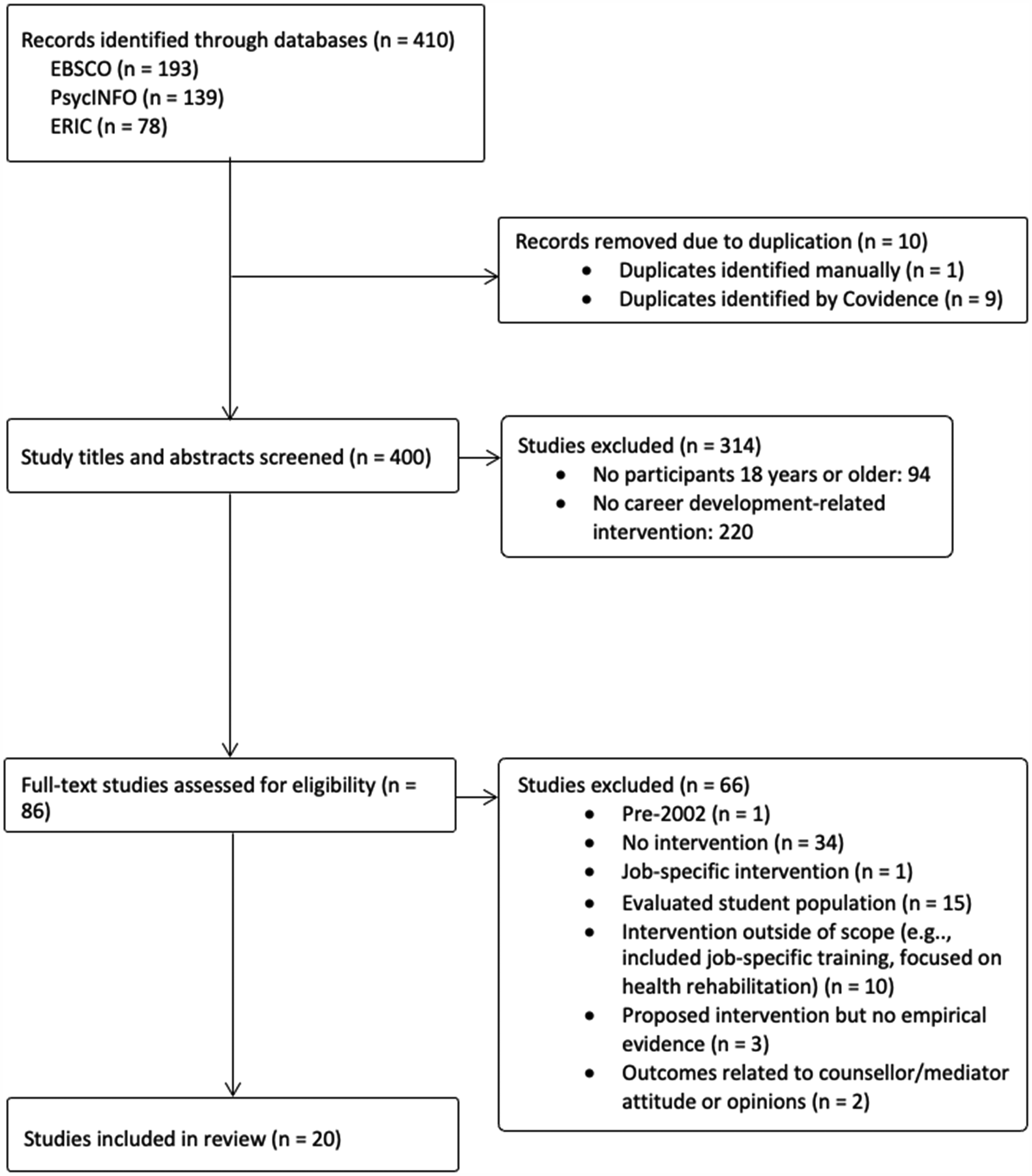
PRISMA Flowchart of Screening Process and Included Studies.
Data Extraction
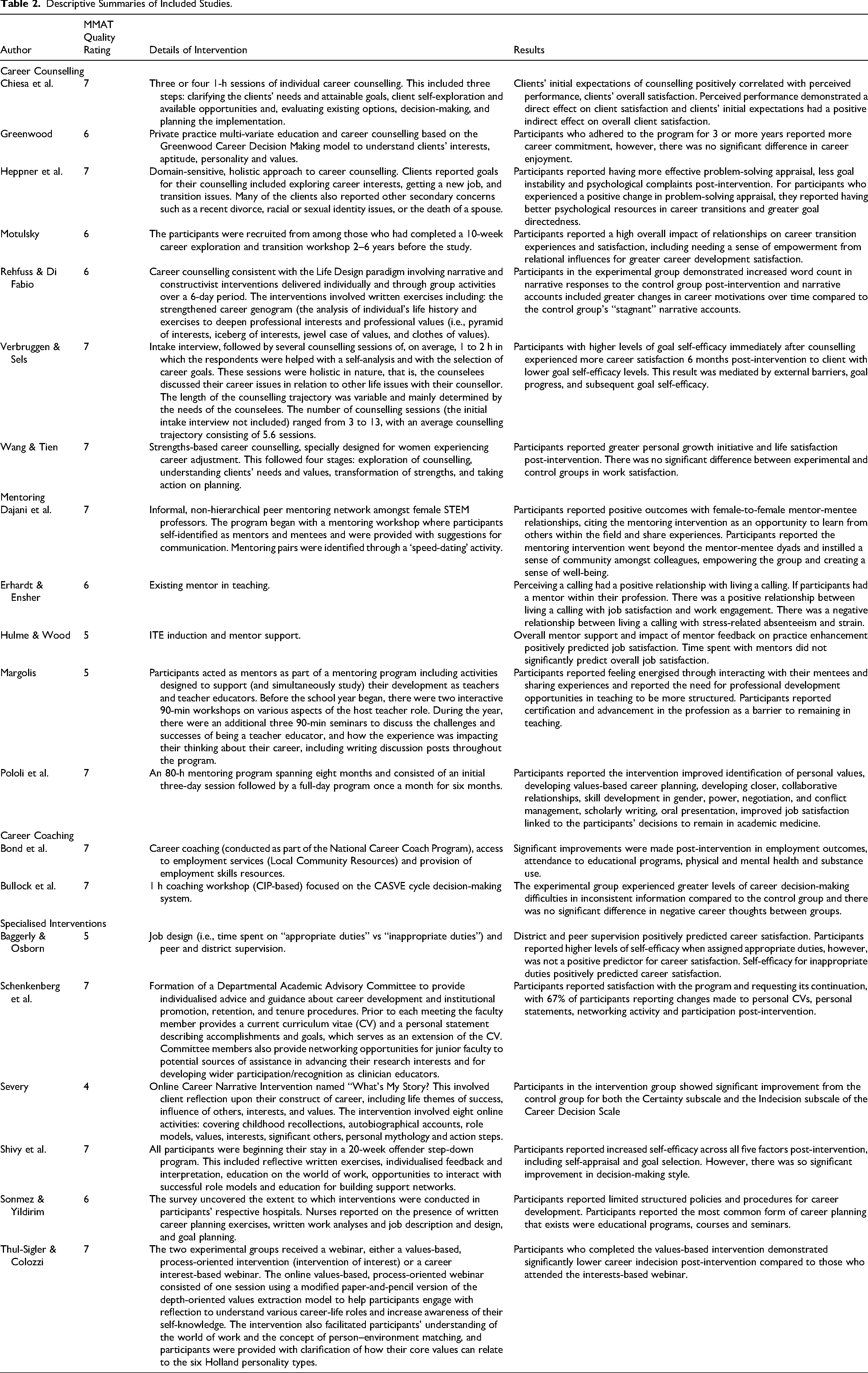
Data was extracted independently following an extraction template used in Covidence and exported to Microsoft Excel (Microsoft Corp, USA). The extraction template covered author(s), population, design, theoretical model, intervention description, outcome measures, study results, and Kirkpatrick levels (1994). The extraction categories were calibrated and agreed upon by the raters. During the process of extraction, several key themes and recurring factors were apparent and so, the following additional areas were included: population types (i.e., general population, gender-specific, rehabilitation/transition) and levels of outcome evaluation (as per Kirkpatrick's 4-level model; Kirkpatrick, 1994). Given the small number of studies remaining these were not evaluated using the Quality Assessment for Quantitative Studies as this was not considered nuanced enough to add value. The Mixed Methods Appraisal Tool (Hong et al., 2018), however, was used and studies were rated on a 7-point scale as per the 7 criteria evaluated again. 16 of the 20 studies included received a 6 or 7 rating out of 7 (80%), with 3 studies with a rating of 5 and 1 study with a rating of 4 (see Table 2). The most common reasons for lower quality ratings were due to a lack of accounting for confounders, lack of accounting for nonresponse bias and lack of data-substantiated interpretations. Studies are critically evaluated across several criteria with justification in the Results section.
Data Collation and Summarising
The final studies excluded at each stage were demonstrated in a flowchart as per PRISMA guidelines, including associated reasons for inclusion and exclusion. The extracted data categories were thematically grouped and tabulated based on key extraction variables of interest and novel insights. The thematic groups concluded were ‘career counselling’, ‘mentoring’, and ‘specially designed programs’ based on the interventions identified from the studies. This thematic analysis and the overall findings were then described and linked with the research questions and the final findings were presented.
Results
The data identification and screening process resulted in a total of 20 studies that matched the inclusion criteria from the 410 studies imported from screening across the three databases. The full outcomes from the screening process and PRISMA flowchart can be found in Figure 1. All relevant details of the studies can be found in Table 1. Details of the interventions and results of studies can be found in Table 2. The studies included were all reported in peer-reviewed journals, spanning 14 journal sources. Most studies were conducted in the United States of America (13 studies), with 2 studies conducted in Italy and the remaining studies conducted in Jordan, Belgium, the United Kingdom, Istanbul and Taiwan (1 study conducted in each geography). The 20 studies encompassed 3809 participants in total. Most studies covered a wide age range, ranging from 18 to 75 years old, most commonly with a mean age from 30–35, however, half of the total studies did not specify an age range at all. Participant ages across the studies, therefore, largely varied, except for interventions targeted for specific populations (i.e., mid-career women in Motulsky, 2010).
Methodological Features of Included Studies.
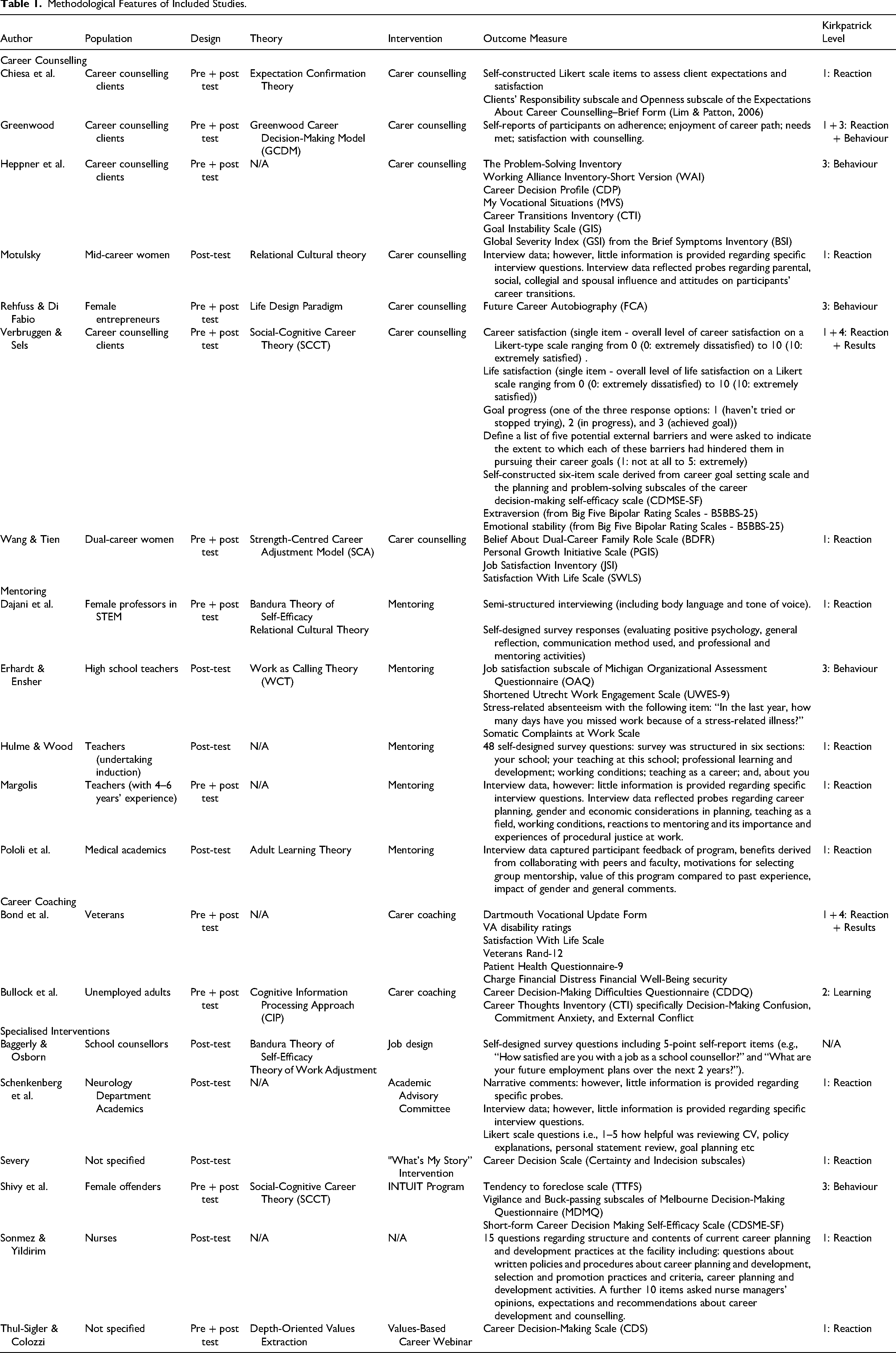
The present study identified research quality across studies by two factors: (a) the appropriateness of measures chosen in accordance with study aims (i.e., whether the aims and outcomes matched), and (b) the presence of pre- and post-intervention measures taken, and the appropriateness of respective conclusions drawn (i.e., in post-intervention studies, drawing reasonable conclusions of limited ability to assess causality). All included studies appeared to select reasonable measures corresponding to the study aims. There was a relatively even number of pre- and post-intervention studies compared to only studies that took only post-study outcome measures with 8 post-test studies and 12 pre and post-test studies. Three of the post-test studies did not directly test interventions within the study, instead surveying populations on their historical experiences of common career interventions specific to their fields of school counselling, teaching and nursing respectively (Baggerly & Osborn, 2006; Hulme & Wood, 2022; Sonmex & Yildrim, 2009). There was no pattern of theoretical model informing the different types of interventions. The most frequently used theoretical models were the relational cultural theory (Miller, 1986), social cognitive career theory (SCCT; Lent, 2013) and Bandura's (1978) theory of self-efficacy with two studies underpinned by each of these theories respectively. Most commonly, however, the studies were not reported to be informed by any theory (six studies).
Intervention Types
Career Counselling
The most common intervention was career counselling, with seven interventions. Most studies were not conducted recently and were published between 2002 and 2010. Most studies conducted career counselling on a micro level, with six of seven studies implementing one-on-one sessions (Chiesa et al., 2020; Greenwood, 2008; Heppner et al., 2004; Rehfuss & Di Fabio, 2012; Verbruggen & Sels, 2010; Wang & Tien, 2011). The two studies conducting meso-level interventions in addition, included group-based exercises (Motulsky, 2010; Rehfuss & Di Fabio, 2012). Some of the career counselling frameworks clearly stated a conceptual basis of the intervention design, with one study based on a strengths-based model (Wang & Tien, 2011), one designing narrative and constructivist exercises based on the life design paradigm (Rehfuss & Di Fabio, 2012), and other studies describing the interventions as loosely based on navigating transitions, the intersection of life issues and professional issues and understanding clients’ career interests (Motulsky, 2010; Verbruggen & Sels, 2010). Three studies included female participants only, focusing on navigating transition, growth, satisfaction and goal development (Motulsky, 2010; Rehfuss & Di Fabio, 2012; Wang & Tien, 2011).
Across this category, most participants in the intervention condition reported improved outcomes regarding career transition experiences and resources (Heppner et al., 2004; Motulsky, 2010), goal self-efficacy and stability (Heppner et al., 2004; Verbruggen & Sels, 2010) and overall satisfaction (Chiesa et al., 2020; Greenwood, 2008; Motulsky, 2010; Wang & Tien, 2011) across qualitative, quantitative and longitudinal study designs (Table 1).
Mentoring
All five studies involved a sample of educators, including three studies assessing interventions specific to schoolteachers (Ehrhardt & Ensher, 2021; Hulme & Wood, 2022; Margolis, 2008) and two studies evaluating interventions amongst tertiary academics and professors (Dajani et al., 2021; Pololi et al., 2002). One study examined female professors in STEM-related fields and involved an exploratory case study on a peer mentoring network (Dajani et al., 2021). Most outcome measures were taken at a reaction-level only and (additional to the study conducted by Dajani and colleagues (2021)), two studies involved qualitative analysis only. One study adopted a survey-based measurement method, examining a sample of early-career teachers who were conducting a formal UK-based induction and mentoring program (ITE induction and mentor support). The survey outcomes collected information on participants’ current school environment, professional learning and development initiatives they have participated in, working conditions, attitudes on a career in teaching and general information on the participants. Across the included studies, this is the sole study that did not actively implement an intervention – but instead reported on the participants’ feedback on existing mandatory national ITE induction and mentor support provided formally as part of their entry into the profession. The remaining quantitative study evaluated job satisfaction, work engagement, stress-related strain and absenteeism amongst high school teachers. Job satisfaction was measured directly by two studies within this category (Ehrhardt & Ensher, 2021; Hulme & Wood, 2022). Notably, mentoring was not the selected intervention for any studies involving vulnerable populations (i.e., veterans, unemployed adults or offenders). Qualitative accounts across this category cited utility in mentoring interventions in improving collegial relationships and career satisfaction (Dajani et al., 2021; Margolis, 2008; Pololi et al., 2002). Quantitative studies mirrored these findings with significant improvements in job satisfaction, engagement and stress (Ehrhardt & Ensher, 2021; Hulme & Wood, 2022).
Career Coaching
Two studies implemented career coaching interventions (Bond et al., 2022; Bullock-Yowell et al., 2014) and both studies evaluated coaching interventions targeted for vulnerable populations. Bond and colleagues (2022) implemented a multi-disciplinary intervention, with career coaching (as part of the National Career Coach Program, for up to 18 months), employment service support and employment skills resources provided for veterans undergoing career transition. The intervention involved a hybrid approach with four-day in-person seminars and remote coaching with participants, and the selected participants were all under 45 years old. The key, relevant outcomes evaluated included life satisfaction, physical and mental health symptoms and job-related outcomes (e.g., paid employment, salary and tenure). Bullock and colleagues conducted a career coaching-specific intervention amongst unemployed adults targeted at improving career decision-making and readiness outcomes. The intervention was a considerably shorter duration including a one-hour workshop focused based on the cognitive information processing approach and CASVE decision-making cycle. Bond and colleagues (2022) conducted one-one coaching, whereas Bullock-Yowell and colleagues (2014) implemented a group-level coaching session. The interventions showed mixed results post-intervention, with Bond and colleagues (2022) finding significant improvement across most dimensions (employment outcomes, health and substance use) amongst veterans, whilst Bullock-Yowell and colleagues (2014) found unfavourable outcomes for career indecision difficulties and career thoughts (Table 2).
Descriptive Summaries of Included Studies.
Specialised Interventions
The remaining six studies comprised a category of interventions chosen and tailored for the specific needs of the associated population. The populations within this category spanned nurses, female offenders, neurology academics and school counsellors. Three studies involved a type of person-to-person-related support interventions as part of the broader intervention, with Baggerly and Osborn (2006) assessing the impacts of peer supervision (and job design and delegating appropriate duties) on job satisfaction, Schenkenberg and colleagues (2011) implementing an advisory committee, and female offenders in Shivy and colleagues’ (2019) study receiving 20-week step-down programs. Of these studies, Schenkerbeg and colleagues, and Shivy and colleagues explicitly stated the curation of these interventions off the basis of the feedback from the wider population (academics) or previous practice in the unique population (female offenders). Two of the six studies within this category reported on self-efficacy as an outcome with both specialised interventions resulting in higher levels of self-efficacy post-intervention (Baggerly & Osborn, 2006; Shivy et al., 2019). Three of the remaining studies involved an online intervention focused on long-term career planning (as part of life exploration), career narrative building (Severy, 2008), and career decision-making and were conducted within groups (Severy, 2008; Thul-Sigler & Colozzi, 2019). All interventions were designed for the general population; however, outcome measures were taken qualitatively by Severy (2008), whilst Thul-Sigler and Colozzi (2019), and Severy (2008) measured career indecision following the career decision-making scale (Osipow et al., 1976) based on values-based and narrative-based interventions. Both studies resulted in significantly reduced career indecision post-intervention.
Discussion
This study revealed several emerging patterns in intervention design, measures chosen, theoretical basis and population. We will focus here on integrating the intervention-specific findings described and identify patterns across all the interventions.
Included Study Findings and Measures
This study found a range of quantitative measures were used as expected, including career decision-making, satisfaction, self-efficacy and goal progress. However, there were mixed results post-intervention for career satisfaction, with almost as many unsuccessful interventions as successful. A common theme across unsuccessful interventions, was the absence of satisfaction-related exercises or prompts included in the intervention design. Additionally, across all studies, comparison of intervention effectiveness is often conducted using different measures, even when evaluating the same construct (e.g., satisfaction). And the included studies implemented different interventions and often provided unclear methodological explanations (e.g., not including a list of activities conducted). Given this, it remains difficult to unpack the underlying causes of mixed results across the same domains (Jahan et al., 2016). This wide span of measures used may be due to the disconnection across the variety of industry populations included in the present paper, which indicates a wider issue with intervention research overall. The lack of consistency points to a need for career intervention research to provide a direction on which measures are most appropriate to use, under which contexts, and for which populations (see Table 2 for a detailed view of which measures are currently used).
A significant number of studies included also only evaluated measures post-intervention (a total of eight of twenty studies). All post-intervention studies reported positive outcomes with intervention effectiveness, however, when evaluating interventions using only post-intervention measures there is a lack of baseline for comparison, making it difficult to conclude whether these effects were made directly from the intervention itself and implement the interventions into real-world practice assuredly. It would be valuable to replicate the studies under this category in a randomised, controlled trial format. The measures used across all studies also varied greatly in adopting a quantitative, qualitative or mixed-methods approach, with no clear differences in the type of approach chosen across well-established and specialised intervention types. There were also a small but notable number of studies evaluating effectiveness based on self-designed surveys questions (a total of four of twenty studies). All of these studies were conducted in larger organisational settings with organisation-initiated interventions which may explain the chosen survey methodology. The interventions consisted of mixed types of interventions including mentor and induction practices, wider advisory committees and job design. These studies included reasonably detailed information on the Likert scale-based questions asked through the survey, however, it remains difficult to generalise findings and replicate the positive outcomes without the use of validated instruments as employed in most of the included quantitative studies.
Presence of Theoretical Basis
A notable number of studies included interventions that were not underpinned by any theoretical basis (a total of five of twenty studies). Interestingly, the remaining studies that selected a theory to inform intervention design, did not show a consistent pattern of theories chosen. Across the three most employed theories (self-efficacy, social cognitive career and relational cultural theories), there were no recognisable patterns as to the interventions chosen (ranged from mentoring, counselling, specialised programs and job design). However, there were some similarities found across these theory-informed studies.
Both studies informed by relational cultural theory included female-only participants and were aimed at understanding female-specific career issues (e.g., female mentor and mentee relationships and the impact of relationship management on career development as a woman), with both studies evaluating qualitative outcomes. This is unsurprising given the chosen theory is rooted in feminist theory (Alvarez & Lazarri, 2016; Jordan, 1997; Jordan et al., 1991; Jordan, Walker & Hartling, 2004). In both studies participants reported positive outlooks on the impact of discussing female-centric career issues as part of the intervention. Both studies informed by Bandura's (1978) theory of self-efficacy appropriately evaluated self-efficacy quantitatively or qualitatively. Lastly, both studies informed by SCCT chose interventions targeted (at least partially) at improving participants’ understanding of their careers in a broad sense (e.g., understanding the world of work amongst offenders and identifying broad career concerns across both interventions) (Lent, 2013). Both studies chose to measure goal progress quantitatively as well. This aligns with the core constructs of SCCT: self-efficacy, outcome expectations and goals (Buthelezi et al., 2010; Wang et al., 2022). Interestingly, there were limited studies involving the remaining expected theories identified at the literature review stage and by previous reviews (e.g., life design paradigm, career construction theory; Soares et al., 2022). Although we can see some consistencies forming across theory and intervention efficacy, with the limited number of studies adopting each theory (only two per prominent theory), we cannot confidently conclude what is common practice.
Population and Age
Across all included studies, there were three predominant population categories found: vulnerable populations (e.g., veterans, unemployed adults), gender-specific populations (female-only participants) and a typical sample (where participants may differ in industry and age, however, there were no specific vulnerable attributes identified). Most studies fell into the latter category, and within this category, most studies often did not clearly report the age of participants. There was no consistent reason indicating why age was not identified across these studies. In the few studies within this category where age was referred to, the age ranges were very wide (e.g., 18 to 69 years old) or indicated a mean age only (e.g., 36 years old) which is not informative enough to identify any patterns. Across the vulnerable and gender-specific populations though, participant age was more likely to be provided. However, within this category, the interventions were not designed to target a particular age group, the only specific requirement was often that participants were over 18 years old (with one exception with an intervention designed specifically for mid-career women navigating career exploration; Motulsky, 2010). This may be worth exploring further in future research, as it is likely that career stage may be a significant contributing factor to the success of different types of interventions, and better understanding the nature of how age and career level plays a role in career development practices would provide valuable insight for real-world practitioners (Van Der Horst, 2019).
Limitations
One possible limitation of the present study is the number of databases accessed for scoping. Due to the time constraints associated with this study, it was required to limit the search to a small but multi-disciplinary set of databases (ERIC, PsycINFO and EBSCO). These databases were specifically chosen to target the expected industries with greater intervention research (i.e., education, psychology and business), however, this means that wider research outside these domains were not considered.
Additionally, the present study identified early during the literature review stage that there was a scarcity of high research quality experiments conducted to evaluate the effectiveness of interventions (as was reflected in our results) with a wide variety of intervention designs and measures employed. As a result, we selected a scoping review to unify our understanding of the intervention research completed in the past two decades. This restricts our ability to perform more quantitative and systematic comparative analyses across the identified intervention themes. We expect that this stems from the heterogenous nature of research development in this field (and lack of evidence-based evaluation in real-world practice), coupled with the challenges associated with implementing and evaluating interventions in organisational contexts (Fretz, 1981).
Implications and Future Directions for Research
The incongruous nature of intervention research identified, suggests a need for more replication (or extension) of intervention designs and corresponding measures across different populations (e.g., career counselling in corporate environments). This would be especially beneficial for specialised interventions identified, where programs targeted at a specific population for example (e.g., offenders) may be translated in other geographies or with another sample of similar participants. These replications and extensions would create more confidence in the results identified and this would be particularly useful if measures chosen included validated quantitative measures along with a deeper dive and thematic analyses into the qualitative feedback of participants (Brown & Ryan Krane, 2000).
A compelling number of interventions were initiated at an organisational level (particularly specialised interventions). However, the chosen measures only evaluated intervention effectiveness at a granular, individual participant level. interventions are often implemented to benefit the individual employee, in efforts to benefit a larger organisational outcome (e.g., attrition, productivity). The absence of measures at an organisational level within the studies included in the present paper's scope demands a need for further research to be conducted with both individual and organisational (or macro) level measures (Zhao et al., 2022). This would enable us to better understand to what degree these interventions are holistically effective, and under which conditions.
Additionally, it would be valuable to the field of intervention research to address the limitations of the present study. We suggest broadening the scope of databases screened – this may uncover more consistencies of intervention types identified in the present study, allowing us to identify and derive confident conclusions regarding the nature of successful interventions under specific contexts (and identify successful theoretical models applied in practice, useful measures and identify any types of interventions that are designed for unique work-related contexts). This would also provide avenues for systematic reviews and meta-analyses to be conducted where quantitative data may be compiled and compared across broad intervention and population categories. The present study has provided a refreshed state of the literature in intervention research and points to the areas requiring further research development (Brown & Ryan Krane, 2000; Brown et al., 2003; Ryan, 1999; Soares et al., 2022; Whiston & James, 2013; Whiston, 2011).
Implications for Practitioners
Several included studies demonstrated positive outcomes post-interventions. There were two key patterns emerging in successful interventions. Firstly, increased self-efficacy (goal self-efficacy or overall), empowerment and relationship-building were the most reported successful outcomes (London, 1993). The studies measuring self-efficacy, included guided goal clarification-based exercises, and provided resources on career planning (Baggerly & Osborn, 2006; Verbruggen & Sels, 2010). The studies measuring empowerment and relationship-building, included a network-based intervention with interaction as a main component of the intervention design (Dajani et al., 2021; Pololi et al., 2002). The key takeaway for practice across these studies, is the importance of designing an intervention and implementing measures that directly correspond. The impact of providing informational and relational resources demonstrated consistently positive results for participants.
Secondly, all interventions targeted at female populations were counselling or mentoring-based, and all were successful. These interventions were designed with female-centric career difficulties in mind (e.g., female peer-to-peer mentoring) and given the focus on the female experience as part of the intervention design, outcomes measures were largely qualitative and found positive effects on empowerment and decision-making across the studies. Including experiential-based, one-on-one intervention components in gender-specific populations appears to play a role in intervention efficacy in practice.
Another key finding of the present paper is that intervention research overall remains relatively disparate, which aligns with our original expectations. We found an overall lack of consistency across several key dimensions: specialised intervention design, outcome measures chosen, populations and outcomes. The minimal papers found within this study's scope is also indicative of the minimal amounts of recent research completed in this field that is easily accessible (e.g., due to differing search terms not identified within this study). We postulate a significant contributing factor to this is the lack of research to real-world practice connection in career-related interventions (Whiston et al., 2017). Career development practices are a widely known, long-standing organisational technique to retain and motivate employees (Wilkes & Bartley, 2007) but can also require high material and labour costs (e.g., employing counsellors, resources provided). Interventions conducted in organisational settings, designed by external consultancies or in-house may often be considered intellectual property, and hence not willing to be shared through research collaboration for publication. This greatly encumbers organisations from designing effective interventions where intervention efficacy can be rigorously measured as is done in research practices (Kristensen, 2005). Therefore, we suggest a broader need for greater partnership between academic and business sectors, with the potential for bursary or research and development related funding to support the improvement of intervention implementation by identifying and rigorously measuring existing intervention initiatives and their effectiveness.
Lastly, most measures included across the studies, were evaluating effectiveness at the most basic level – reaction (Kirkpatrick, 1994). This can provide superficial insights, missing critical information about actual learning, behaviour changes, and organisational impact occurring. This can lead to misleading success indicators, as positive reactions do not necessarily translate to meaningful outcomes or long-term improvements. Behavioural change and broader organisational change can take time (Hopson & Adams, 1976; Hughes 2011), and this suggests a need for practitioners to remain cognisant to select adequate evaluation measures when implementing career development initiatives. Ensuring that measures evaluate individual and organisational learning, behaviour and results over a long-term may provide a more accurate picture of intervention effectiveness and inform intervention initiative planning.
Conclusion
This scoping review highlights the diversity and inconsistency in career development interventions across populations, intervention types, and measures of effectiveness. While well-established methods like mentoring and counselling dominate, a notable number of specialised interventions point to the need for broader research and replication. Moving forward, researchers should aim for greater consistency in intervention evaluation, incorporating validated quantitative and qualitative measures and considering both individual and organisational outcomes. Expanding the theoretical foundations and conducting rigorous, controlled studies will enhance the field's ability to develop evidence-based career intervention practices.
Supplemental Material
sj-docx-1-acd-10.1177_10384162251345595 - Supplemental material for Unlocking Career Potential: A Scoping Review of Recent Interventions for Adult Career Development
Supplemental material, sj-docx-1-acd-10.1177_10384162251345595 for Unlocking Career Potential: A Scoping Review of Recent Interventions for Adult Career Development by Ankita A. Patwardhan, Joanne Earl and Beatrice Huang in Australian Journal of Career Development
Footnotes

Ethical Approval and Informed Consent Statements
Information published in this article did not require the need for the collection of informed consent of participants nor did it require additional ethical approval (as per our institution) as the article was a scoping review that did not collect individual data.
Funding
The authors received no financial support for the research, authorship, and/or publication of this article.
Declaration of Conflicting Interests
The authors declared no potential conflicts of interest with respect to the research, authorship, and/or publication of this article.
Data Availability Statement
The authors confirmed that the data supporting the findings of this study are available within the article (and/or) its supplementary materials.
Supplemental Material
Supplemental material for this article is available online.