




Abstract
Unresolved traumatic experiences and unmastered developmental tasks can adversely affect personality, thereby exerting a significant psychological impact on career trajectory and adaptability. This study investigated the influence of life-design counseling on young adults in mastering unresolved psychosocial developmental tasks. A qualitative, mixed-methods case study research design was employed, featuring pre- and post-intervention data collection phases and an adapted life-design counseling intervention. This intervention incorporated the Career Interest Profile Version 7 (CIP) and various life-design strategies. Thematic analysis revealed three core themes: unmastered psychosocial developmental tasks, external influences on the navigation of these tasks, and intrapersonal processes facilitating task mastery. The findings revealed that life-design counselling enhanced the resolution of unmastered psychosocial developmental tasks, self-awareness, self-knowledge, and self-reflection, and promoted a heightened sense of meaning and purpose in participants’ lives. These results offer theoretical insights and practical applications, enhancing the understanding and implementation of psychosocial developmental tasks within life-design counseling frameworks.
Keywords
Introduction and Literature Review
Introduction
Despite a general consensus among researchers that human functioning and specifically the construction of people’ career and life purpose is intricately connected to their genetic expression (epigenetics), structural formations in the brain in utero (Maté, 2008; Siegel, 1999), and their unique developmental trajectory (physiologically and psychosocially) (Di Fabio & Cooper, 2023), insufficient research has been conducted on the topic of this article, namely ‘Applying life-design counseling to young adults experiencing unmastered psychosocial developmental tasks’ (Maree, 2018; Watson et al., 2015). Many people present with unresolved traumatic experiences and/or unmastered developmental tasks (Maree, 2021a, 2021b), and it has been suggested (Batra, 2013; Cross, 2001; Cross & Cross, 2017; Marcia, 2002; Maree, 2021a; McLeod, 2018; Louw & Louw, 2014) that problems during any of these developmental stages may have a negative influence on personality and subsequently affect the integration of the underlying factors, thus having a significant impact on the identity formation and career decision of people. On the other hand, the integration of the brain structures that became disconnected as a result of traumatic experiences can contribute to helping people to “live fully and securely in the present” (Van der Kolk, 2014, p. 73), constructing internal certainty and security through identity formation rather than searching for an unattainable predictable and safe environment, and enable people to access sustainable careers (Di Fabio, 2017, 2023; Hartung & Di Fabio, 2024).
The Psychosocial Developmental Theory of Erikson (1968) emphasises the importance of mastering the proposed eight psychosocial developmental challenges 1 to lead an “integrated, fulfilled and meaningful” life (Maree, 2021a, 2021b). Even though people can theoretically proceed to the next developmental stage – despite having experienced trauma and without necessarily having mastered the crisis – it is suspected that these unmastered developmental tasks could potentially resurface repeatedly as challenges later in life (Maree, 2020a; Savickas, 2003; Waterman, 1993). Resolving these unmastered tasks and traumatic experiences could contribute to better personal and occupational adaptability, enhanced growth, and positive developmental change (Maree, 2022a, 2021b; Waterman, 1993). Contextualised career construction counseling (whether individual or in group contexts) as an intervention to resolve unresolved assignments or master unmastered developmental assignments has yielded promising results in this regard (Maree, 2020a, 2022a; Savickas, 2018). This intervention allows for the expression of significant subconscious recollections and micro-stories which often revolve around challenges or unmastered developmental tasks. The uncovering and subsequent enactment of people's life themes serve as catalysts for a healing process during which people are allowed to clarify their identity, recognise their goals, and become aware of their life purpose (Maree, 2022a).
Literature and Theoretical Overview
This section presents a concise review of pertinent literature on unresolved psychosocial developmental tasks during young adulthood and the critical need for their effective resolution. It also examines life-design counseling as the preferred intervention strategy, followed by a discussion of the theoretical framework underpinning this study, leading into an analysis of the conceptual framework applied in this research.
Concise Review of Pertinent Literature on Unresolved Psychosocial Developmental Tasks
Developmental tasks can be described as specific biological, psychological, and social challenges that arise during certain developmental periods. The successful completion of these tasks is expected to influence people's emotional well-being and success in subsequent developmental stages. Failure to master the challenges may threaten the integration of personality development and could contribute to unhappiness, disapproval by society, and difficulty concerning the mastery of subsequent developmental challenges (Erikson, 1968; Gerson, 2014; Havighurst, 1948; Knight & Miller, 2017; Louw & Louw, 2014; Maree, 2021a; Sugarman, 2004). Developmental tasks such as attachment, interpersonal relationships, work performance, sense of purpose, career transitions, and work-life issues have been related to career well-being and effectiveness (Kidd, 2008; Maree, 2022a; Pace & Zapulla, 2009; Wright & Perrone, 2008) and the successful accomplishment of developmental tasks resulted in fewer psychological symptoms such as depression and anxiety (Pinquart & Pfeiffer, 2020). Depression has been linked to unmastered developmental tasks, separation challenges, difficulty with identity formation and the development of the true self (Norton, 2010) and a relationship has been established between the mastery of developmental tasks and the predictability of future success in young adults (Roisman et al., 2004). In addition, secure attachment has been related to career development (Wright & Perrone, 2008), self-concept and self-esteem (Kawamoto, 2020), fulfilling personal and interpersonal relationships (Maté, 2008; Scharf et al., 2004; Siegel, 1999; Van der Kolk, 2014), academic and career effectiveness (Wright et al., 2014), and competency, adaptability and coping (Engel & Gunnar, 2020; Scharf et al., 2004; Van der Kolk, 2014). Unmastered developmental tasks, therefore, have the potential to influence career decisions and career satisfaction negatively, since people’ views of themselves and their self- and career identity are authenticated by their mastery of these challenges (Maree, 2021c; Savickas, 2003).
The Critical Need for Effective Resolution of Unmastered Developmental Tasks
While unmastered developmental tasks might not always be the presenting need when people require self- and career construction, the impact of their presence is considered to be significant enough to have a long-term effect on career and life satisfaction, and on purpose. The successful mastering of developmental tasks is therefore considered to hold significant long-term benefits for people as every psychosocial developmental stage and its outcome influence people throughout their lives. Hence, one must remain cognisant of previous developmental challenges and their outcomes as experienced by people, as well as the possibility that former outcomes could resurface during subsequent psychosocial developmental stages. Also, identity development does not end when adolescents proceed into young adulthood (Arnett, 2000, 2016). The emerging adulthood developmental stage is characterised by the presence of five prominent features (Arnett, 2016) which resemble developmental tasks. Arnett described these features as (a) identity exploration (the making of critical decisions regarding the formulation and crystallisation of people’ identities in adulthood), (b) instability (participating in a variety of educational and occupational activities before settling on a particular course of action and exploring multiple romantic partners before identifying the preferred qualities in a long-time partner), (c) self-focus (the search for who one is and what one wants with a sense of responsibility), (d) feeling in between (not belonging in either the adolescence or young adulthood stages), and (e) optimism regarding future possibilities (being hopeful that things can change for the better) (Arnett, 2016; Burt & Masten, 2010; Cronce & Corbin, 2010). Burt and Masten (2010) summarised Arnett's emerging adulthood features into two central developmental tasks that young adults in Western cultures face: the establishment of vocational identities and intimate relationships
Overview of Life-Design Counseling as the Preferred Intervention Strategy
Life-design related interventions have been linked to the resolution of developmental and transitional challenges such as career indecision (Di Fabio & Maree, 2012; Maree, 2016, 2020b, 2020c), change in career-life stories and enhanced career action (Maree, 2015), improved psychosocial coping strategies (Cohen-Scali & Erby, 2021), promoting reflexive action (Hartung & Vess, 2016), improved sense of self and career-identity (Maree & Che, 2020; Maree, 2019b, 2020b), as well as increased career certainty (Cardoso et al., 2016a). Life-design counseling (comprised of Self-Construction Theory (Guichard, 2005) and Career Construction Theory (Savickas, 2005)) was considered to be an appropriate intervention to be applied in this present study, as it can facilitate expected change and the mastery of previously unmastered developmental tasks, especially since the process of identity formation constitutes the fulfilment of an important developmental task and was expected to be front and foremost during this study (Maree, 2017a).
Career Construction Theory
Career Construction Theory (CCT) describes the subjective processes through which people’s selves, the direction of their vocational behaviour, and the meaning they ascribe to their careers, are constructed. From the Career construction perspective “self” includes but is larger than identity (Savickas, 2018, p. 18). CCT integrates three career counseling approaches, namely the differential approach (Parsons, 1909), the developmental approach (Super, 1980), and the psychodynamic or “storied” approach (Hartung, 2011; Maree, 2022a, 2022b) which focuses on the emergence of life themes and patterns, as well as the subjective meaning people ascribe to their experiences.
CCT is comprised of three domains, namely vocational personality, career adaptability, and life themes. Vocational personality pertains to personality development as well as individual differences in terms of values, abilities, needs and interests (Hartung, 2011; Savickas, 2005). CCT contends that people’s personalities are initially shaped by the family of origin and their childhood context (Hartung, 2011). Career adaptability is seen as the psychosocial readiness (comprised of attitudes, behaviours, and competencies) to handle expected and unpredictable tasks, challenges, and traumas which may arise in the workplace (Bocciardi et al., 2017; Ebberwein et al., 2004; Hartung et al., 2022). Children's negotiations of transitions through developmental stages foster adaptability (Hartung et al., 2008). Career adaptability consists of four functional dimensions, namely career concern, career control, career curiosity, and career confidence (Hartung, 2011; Savickas, 2013; Savickas & Porfeli, 2011; Walden et al., 2022) and is therefore closely related to identity development (Rossier et al., 2014). The life theme component of CCT emphasises the motivation that impresses meaning on vocational behaviour (Hartung, 2011; Hartung & Vess, 2016; Zacher, 2020). People’s stories regarding their career development tasks, transitions, successes, and traumas illustrate patterns and themes that give cohesion to occupational roles in their lives (Di Fabio, 2012; Hartung, 2011; Hartung & Vess, 2016; Maree, 2014). When people’s present understanding and insight are connected with knowledge from the past through elicited life themes, it can assist them in handling future challenges and transitioning successfully (Maree, 2020a). Emerging life themes also hold significance for the development of stable identities which enhance meaning-making and purposeful living (Maree, 2020a).
Self-Construction Theory
Self-construction theory does not necessarily include career construction although its influence on career construction as a result of its impact on identity formation cannot be ignored (Maree, 2019b). Self-construction Theory (SCT) predominantly focuses on people’s life-long identity development and the active construction of meaningful lives through social interactions, conversations, and communication (Guichard, 2005; Rossier et al., 2014; Maree, 2019b, 2020a). These social interactions, along with people's past memories and present realities, contribute to the construction and re-construction of fluid identities into more stable and consistent identities (Cohen-Scali et al., 2025; Guichard, 2022, 2009; Hartung, 2013; Hartung & Taber, 2014) which enhance personal meaning-making and fulfilment (Maree, 2020a).
Life-Design Counseling
Life-design counseling (Savickas et al., 2009) is considered to be a lifelong, holistic, contextual, and preventative intervention process (Maree, 2017a; Savickas et al., 2009) that practically implements the theories of self- and career construction (Maree, 2020a; Savickas, 2012). This intervention's (life-design counseling) general aim is to promote meaningful activities which can enhance people’ self-construction, identity formation, and the construction of a career (Savickas, 2012). In short, life-design counseling entails the (a) construction of micro-stories, (b) deconstruction and (c) reconstruction of micro-stories into meaningful narratives, and (d) co-construction of identified intentions into an integrated, action-orientated future narrative (Savickas, 2012). The resulting integration is considered to enhance people’s adaptive and coordinated functioning (Hartung, 2011; Siegel, 1999).
Psychosocial Development
Erik Erikson's Psychosocial Development Theory (1968) views people as developing beings who are influenced by internal psychological and external social factors (Heckhausen, 2000; Sugarman, 2004). He (Erik Erikson) referred to his proposed eight stages of psychosocial development as the “Epigenetic Principle” as these stages continuously and reciprocally influence one another (Peedicayil, 2012). From Erikson's perspective (1968), underlying psychosocial demands are present throughout people’ lifespans although they become more prominent during specific developmental periods (Sokol, 2009). In addition, the resolutions of previously mastered tasks can be questioned during each new developmental stage (Sugarman, 2004). Failure to master developmental tasks is considered to leave a residue which may interfere with future challenges (Sugarman, 2004; Maree, 2021a).
Conceptual Framework
The study was informed by three facets as demonstrated by Figure 1 (below). First, Super's Life-Span Life-Space Theory (Super, 1980) is considered to be the background against which participants’ psychosocial development and life design played out. The complexity of the young adult participants’ psychosocial development, the second concept, is demonstrated by the interplay of Attachment Theory (Bowlby, 1988), the Theory of Emerging Adulthood (Arnett, 2000, 2015a), and the Psychosocial Development Theory (Erikson, 1950) whereas the life-design counselling process, informed by Guichard's (2005) Self-Construction Theory and Savickas's (2005) Career Construction Theory, represented the intervention process as the third notion. Participants’ life design is expected to be affected by the quality of their attachment to at least one significant caregiver (Bowlby, 1988; Siegel & Hartzell, 2004), their progression through the psychosocial developmental stages (Erikson, 1968), and the mastery of developmental challenges (Arnett, 2000). Figure 1 furthermore demonstrates that the Attachment Theory (Bowlby, 1988), Theory of Emerging Adulthood (Arnett, 2000, 2015a), Psychosocial Development Theory (Erikson, 1950) and Life-Design Counselling (Savickas et al., 2009) (also comprising the Career Construction Theory and Self-Construction Theory) are intricately connected and dynamic, and (at least to a certain extent) they reciprocally interact with one another. Change in any aspect of people's psychosocial development will, therefore, inevitably influence their life design.
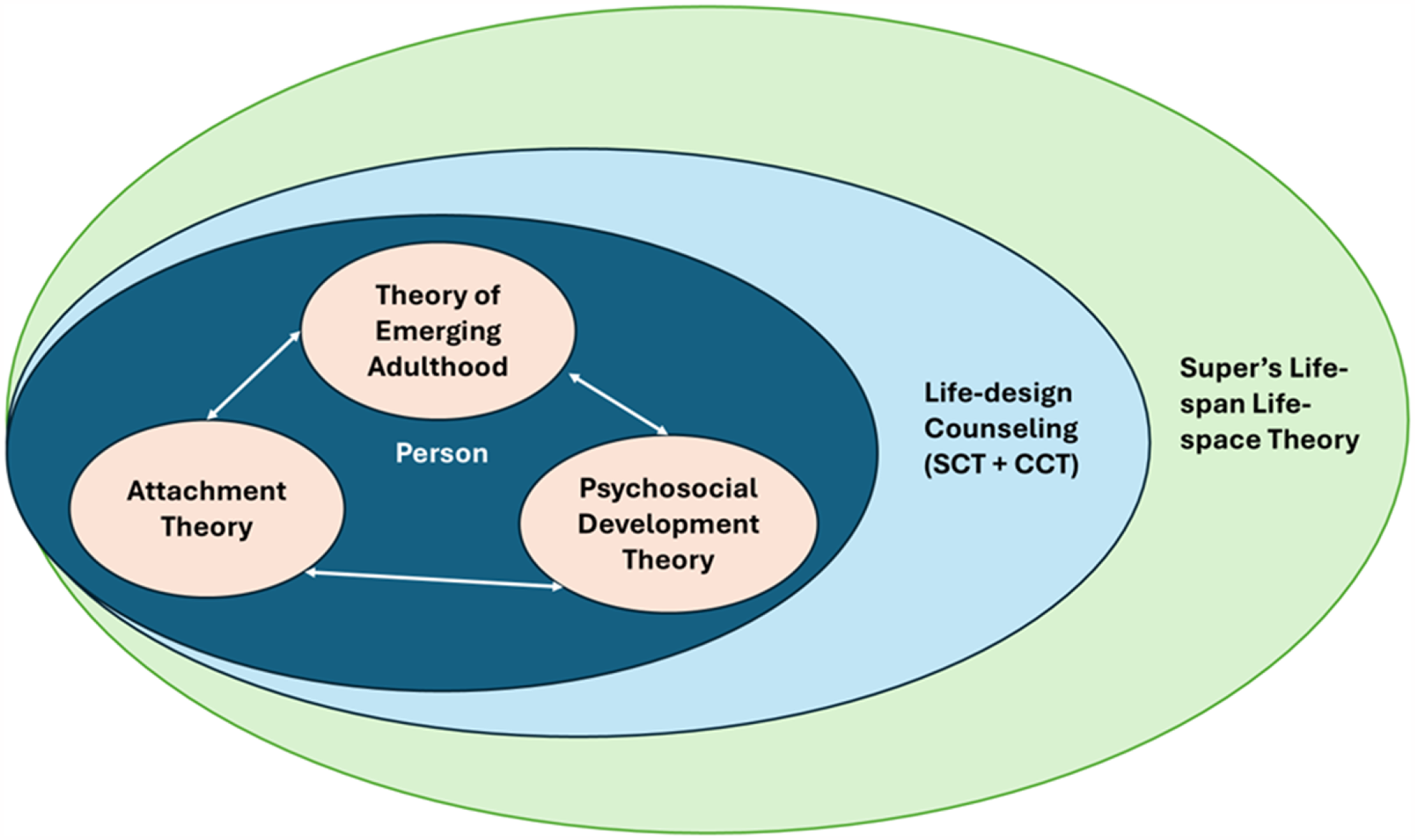
Graphical Representation of the Conceptual Framework of the Study. Note. Compiled by the authors from Arnett (2000, 2015a); Bowlby (1988); Erikson (1968); Guichard (2005); Savickas et al. (2009); Super (1980).
Aims of the Study (Including the Research Questions and Research Hypotheses)
The study sought to investigate how an adapted life-design intervention facilitated the resolution of unmastered psychosocial developmental tasks (for example industry vs inferiority and identity vs role confusion), and which intrapersonal and external factors influenced this process. The following research question emerged from this aim: How does life-design counseling influence young adults’ mastery of unresolved psychosocial developmental tasks and enable them to flourish in their (career) lives?
Method
Study Design
This research found expression in an interpretivist-positivist paradigm (Merriam & Grenier, 2019; Nieuwenhuis, 2025a; Pickard, 2017) which included QUALITATIVE and quantitative research methods in a mixed-methods (explorative and descriptive) case study research design. The QUALITATIVE-quantitative design allowed the researcher to investigate young adults’ multiple, subjective, socially constructed, holistic, contextual and continually changing realities while establishing the progress and/or mastery of developmental challenges that followed from the adapted life-design counselling intervention, both before and after the study (Du Plessis & Majam, 2010). (The use of capital letters illustrates the weight and dominance of the QUALITATIVE design in comparison with the quantitative design.)
Participants
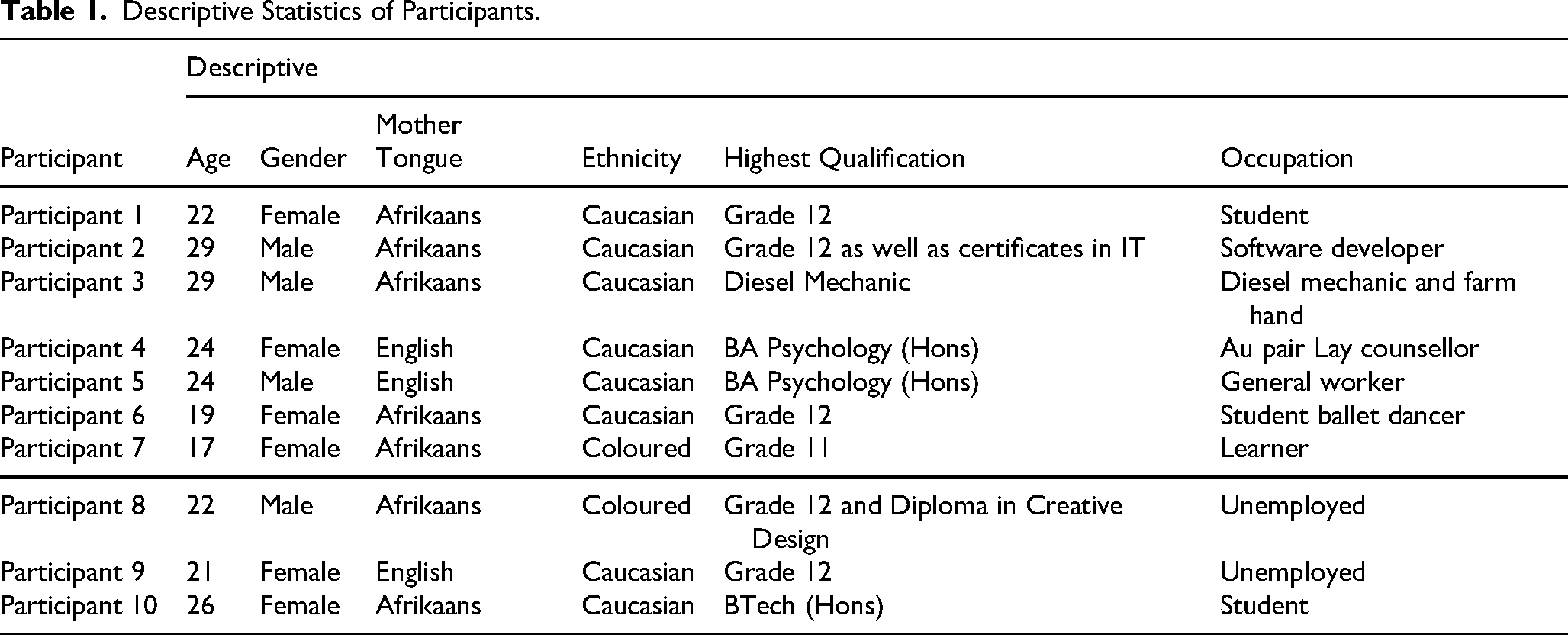
The researchers utilised purposive sampling to select 10 specific participants who met the inclusion criteria of this study, and which enhanced the probability of obtaining the goals and objectives of this study. Participants identified themselves as young adults (between the age of 17 and 29 years) experiencing unmastered developmental tasks (psychosocial and occupational), being literate, and expressed the willingness to disclose their experiences in this regard. Refer to Table 1 for a description of each participant.
Descriptive Statistics of Participants.
Instruments/Materials and Procedures/Interventions
The mixed-methods case study research design implies a predominantly qualitative focus, allowing for themes and sub-themes to emerge primarily from qualitative data. Quantitative data contributed in terms of the depth and richness of the data.
Qualitative Data-Gathering Instruments
Questionnaire
The most prominent qualitative data gathering sources were the Career Interest Profile (CIP) Version 7 (Maree, 2020d, 2021b) questionnaire and the transcriptions of subsequent discussions about answers to the questionnaire. The CIP was developed in South Africa from the developmental, differential, and storied approaches (Maree et al., 2022) and is a semi-structured, qualitative interview grounded in career construction theory (Savickas, 2005). This instrument (CIP v7) allows people to reflect and meta-reflect on their interests, dislikes, values, and life stories, and to become aware of themes and patterns in their lives through which they can co-construct a new narrative with the insights they have gained during their career construction process (JvR Africa Group, 2023; Maree, 2020d, 2022b). The sub-sections (Parts 1 to 4) have been compiled in such a manner that people are able to identify their primary career-life themes, career interests, issues, and concerns and so that their inner wisdom regarding the challenges (or unmastered developmental tasks) they are experiencing is likely to emerge (Di Fabio & Maree, 2013; Maree, 2019c). The career interests included in the CIP have demonstrated stability over time, and the instrument's career categories show strong correlations with those in other career interest questionnaires (Beukes & Taylor, 2019). Extensive research has investigated the CIP's credibility, validity, and trustworthiness (Maree, 2017b).
Life-Design Counselling Techniques and Strategies
Three additional sources in the form of Life-design counselling techniques were utilised to gather data. Lifelines assist people in ordering their personal history in terms of significant positive and negative events from birth to the present day so that they can identify developmental tasks, strengths, successes, and themes that emerge from their lives (Cook & Maree, 2016; Fritz & Van Zyl, 2015). Collages assist people in generating and constructing life stories and/or elaborating on aspects of their inner stories (Amundson & Smith, 2015) – thus influencing people's narratability and, subsequently, life design. Genograms (Stead & Davis, 2015, p. 23) portray information regarding people's “families, life experiences, histories, environmental barriers, and backgrounds”. The rationale of this three-generation diagram is that people's understanding of their past contributes to increased self-awareness in the present, and then influences the construction of future selves and career trajectories (Di Fabio, 2015; Shefer & McMahon, 2018; Wood & Scully, 2016).
Observations, process-notes, researcher reflections, and conversation transcriptions were also considered sources of qualitative data in this study.
Quantitative Data-Gathering Instruments
Three quantitative data-gathering instruments were included as pre- and post-test measures to estimate whether any change occurred as a result of the adapted life-design counselling intervention.
The Maree Career Matrix (MCM)
This South African interest inventory based on trait-factor theory, developmental theory, and social learning theory is grounded in social cognitive career theory (Maree, 2019c). This instrument (MCM) measures people's interest in career fields, as well as their self-estimation of confidence in their aptitude for specific career fields (Ferreira & Morgan, 2019; Maree & Taylor, 2016). Upon completion, this inventory provides a unique profile for the people involved, as it distinguishes between careers associated with the following interest and confidence levels: high interest-high confidence; high interest-low confidence; low interest-high confidence; low interest-low confidence. The MCM was considered fitting to establish a starting point for this study since unmastered developmental tasks were expected to manifest in career indecision and a lack of career confidence (Pinquart & Pfeiffer, 2020; Wright & Perrone, 2008). The pre-test and post-test profiles were compared to each other qualitatively, and changes between participants’ pre- and post-test interest-confidence levels were documented and used to confirm themes and sub-themes as well as to triangulate with other quantitative and qualitative data gathered in the process.
The Modified Erikson Psychosocial Stage Inventory (MEPSI)
The MEPSI (Darling-Fisher & Leidy, 1988) is an 80-item self-report questionnaire designed to explore the progression of adults through the eight psychosocial developmental stages of Erikson's Psychosocial Development Theory. The MEPSI utilises a rating system on a point scale of 1 to 5 (Barnfather & Ronis, 2000). Higher points (4 and 5) are associated with more positive attributes and successful psychosocial maturation while lower scores (1 and 2) are indicative of negative attributes and a lack of psychosocial mastery (Barnfather & Ronis, 2000). Research has shown this psychosocial development inventory (MEPSI) to be reliable (aggregate scores of between 0.89–0.99), valid, and relatively stable across diverse populations (adolescents, young adults, adults, LGBT issues, adults with chronic illnesses, parents) and fields (such as nursing, psychology, social work, criminal justice, and religious studies) (Darling-Fisher, 2019; Darling-Fisher & Leidy, 1988; Leidy & Darling-Fisher, 1995; Nassida, 2019) and was therefore considered a fitting instrument to measure the psychosocial development of the diverse young adult South African population. To my knowledge, the MEPSI has not been implemented in the South African context to this date, which could be a limitation of this study. The inclusion of the MEPSI in this study allowed the researcher to obtain a quantitative indication of the participants’ psychosocial development, both before and after the adapted life-design counselling intervention. The results were once again used qualitatively to determine whether a change occurred or not, and the information gained enhanced the researcher's understanding of the influence of the life-design counselling intervention on young adults with unmastered developmental tasks.
Career Adapt-Abilities Scale (CAAS)
The third quantitative instrument included in this study was the South African Career Adapt-Abilities Scale (CAAS-SA) which measures career adaptability – a psychosocial construct which refers to the psychosocial resources that influence people's social integration when they are confronted with developmental tasks, transitions, and traumas related to their vocations (Nye et al., 2018). This instrument was standardised by Maree (2012) and found appropriate for implementation in the South African context after some adaptation to the questionnaire, instructions, and layout (Albien et al., 2019; Maree, 2012). The CAAS-SA has since been used extensively in South Africa (Albien et al., 2019; Maree, 2019c; Beukes & Taylor, 2019). This instrument (CAAS) is comprised of four scales that respectively measure (career) concern, (career) control, (career) curiosity, and (career) confidence (Cook & Maree, 2016; Savickas & Porfeli, 2012). The CAAS was validated in 13 countries (including the United States, Belgium, France, and China). As mentioned above, the CAAS was used as a pre-test instrument to evaluate participants’ initial career adaptability with regard to these dimensions as well as a post-test evaluation to establish any possible influence or the effect of the adapted life-design intervention.
Analysis
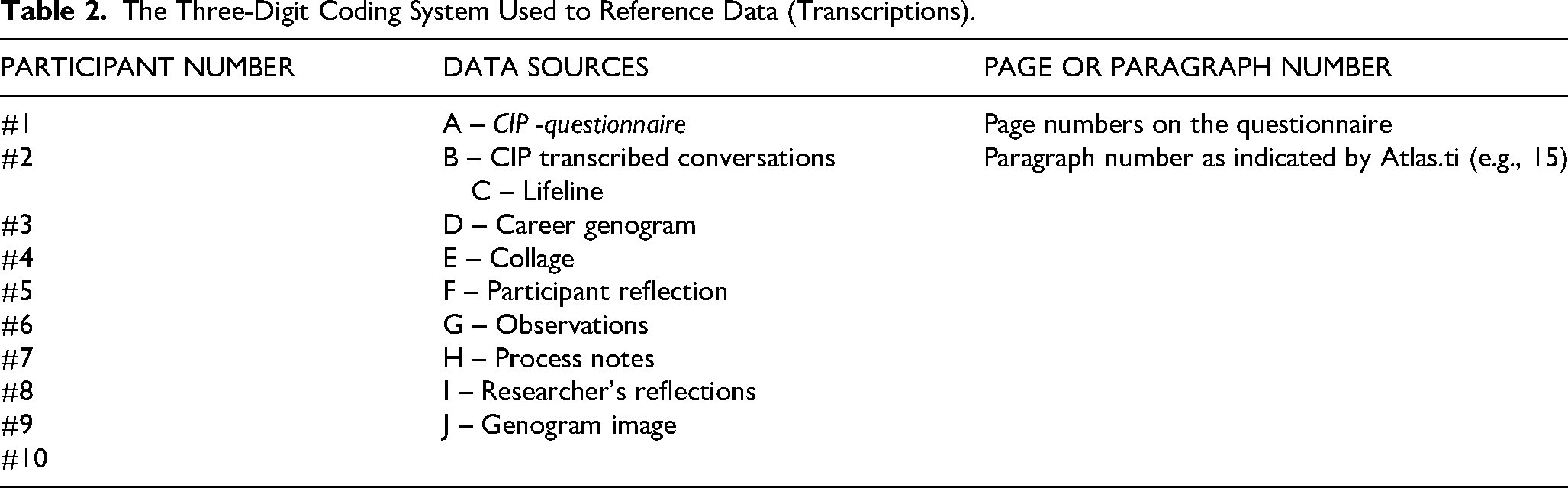
The quantitative data gathered from the respective pre- and post-intervention assessments results (Table 2) were compared qualitatively after completion of the intervention and is discussed shortly. An inductive thematic analysis approach (Braun & Clarke, 2019) was followed in which the researchers familiarised themselves with the qualitative data to allow for the emergence of meaning through the identification of codes and themes (Seers, 2012). Atlas.ti (Atlas.ti, 2023) Computer-Assisted Data Analysis Software (CAQDAS) (Niedbalsk & Slezak, 2021; Paulus & Lester, 2016) was incorporated to assist the researchers with their data management as well as to simplify the search for possible co-occurrences of themes and to identify connections between themes. A three-digit coding system (e.g., 1; B; 15) was employed to describe the source of specific qualitative codes (Table 1) which is comprised of each participant's specific number (1–10), the data source (A-J), and the paragraph number as ascribed by Atlas.ti when documents were imported into the software. The CIP questionnaire was an exception, in which case there was referred to page instead of paragraph numbers. Participants’ verbatim responses (transcriptions) can thus be found using the coding system outlined in Table 2.
The Three-Digit Coding System Used to Reference Data (Transcriptions).
The theme categories were founded in the various theoretical frameworks, such as Erikson's Psychosocial Development Theory (1968), the ecological system's framework (Bronfenbrenner, 1979), and strategies participants reportedly utilised or demonstrated while navigating unmastered psychosocial developmental tasks.
Rigour of the Study
The quantitative data was obtained with reliable and valid instruments (Ferreira & Morgan, 2019; Maree & Pietersen, 2019), but was analysed qualitatively and, therefore, all approaches and methods employed in this study aimed to enhance the trustworthiness (credibility, transferability, dependability, confirmability) (Nieuwenhuizen, 2025b) of the qualitative data (Lincoln & Guba, 1985). Purposeful sampling (Campbell et al., 2020), reflection, rigour, and a systematic and reflexive approach to the data analysis contributed to the quality of the results (Nicmanis, 2024).
Ethics
The researchers obtained informed consent, ensured anonymity and confidentiality and the wellbeing of participants was prioritised, with appropriate strategies implemented to uphold fundamental ethical principles throughout the study. The institutional Review Board of the relevant university oversaw this process.
Findings and Discussion
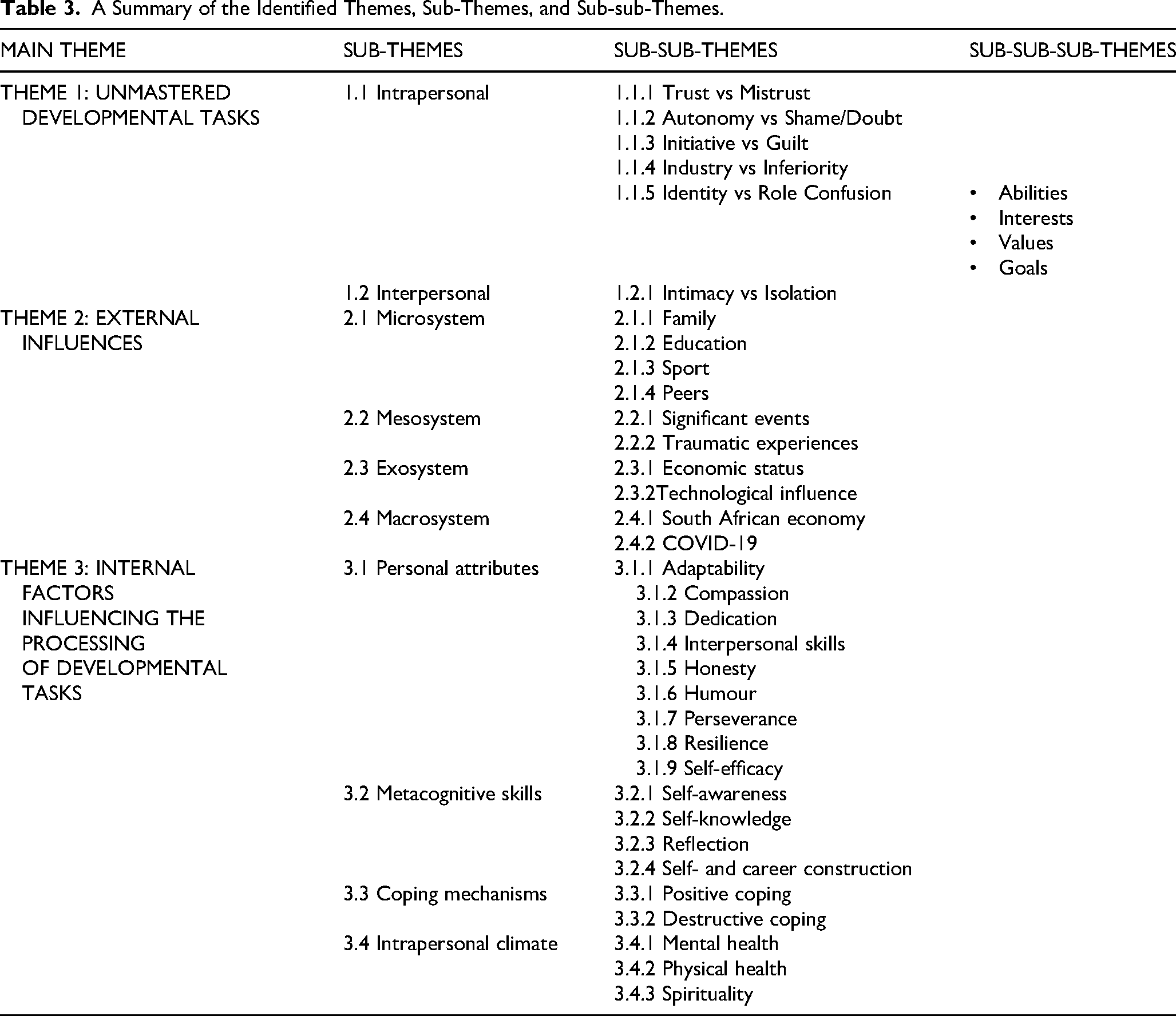
Table 3 provides the themes, sub-themes, sub-sub-themes, and sub-sub-sub-themes that emerged from thematic analysis.
A Summary of the Identified Themes, Sub-Themes, and Sub-sub-Themes.
Theme 1: Unmastered Psychosocial Developmental Tasks
Definition
For the purposes of this research, the term Unmastered psychosocial developmental tasks is defined as any specific personal challenge related to psychological or social development that hinders people from reaching their full potential or prohibits them from leading a meaningful life.
The first sub-theme, Intrapersonal developmental tasks (developmental tasks revolving around people's personal psychosocial development), comprised the first five psychosocial developmental stages proposed by Erikson (1950) and included identity exploration (with the sub-sub-themes abilities, interests, and values) (Arnett, 2000) as part of the Identity vs Role confusion stage. The participants often referred to intrapersonal developmental tasks in the present, such as with this example of the sub-sub-theme Trust vs Mistrust: “Can I feel safe around you?
The psychosocial stages of industriousness vs inferiority and identity vs role confusion featured more prominently than those of related to early childhood (trust vs mistrust, autonomy vs shame/doubt, initiative vs guilt). The majority of participants communicated feelings of inferiority and not feeling good enough (as a result of experiences or the comparison with their peers). In terms of identity, all of the participants shared substantial information regarding their personal abilities, interests, and values, and especially the latter (values) featured prominently throughout all the data sources and across a variety of topics.
The second sub-theme, Interpersonal psychosocial development (intimacy vs isolation), emerged from participants’ experiences around the need for intimacy, feelings of isolation and the development of authentic relationships or lack thereof and also directed the actions and decision-making of some participants. The need for romantic relationships appeared to be overshadowed by the need to belong to a peer group and experience intimate and loving friendships.
Theme 2: External Influences
Definition
In this study, External influences refer to factors independent and separate from people. The influence of external factors on the navigation of developmental challenges comprised four sub-themes, representative of Bronfenbrenner's ecological systems theory of development (Bronfenbrenner, 1979).
The microsystem (first sub-theme) included sub-sub-themes or spheres in which participants played an active role (Drakenberg & Malmgren, 2013; Park et al., 2024) such as family, education, sport, and peers. Participants’ active engagement in these spheres directly and indirectly influenced the negotiation of unmastered developmental tasks. References to family members often related to values that they portray which were either copied or avoided by participants in their identity formation processes such as in this quote: “My father is a strong, good man who stands by his principles.”
Important events and traumatic experiences emerged from the mesosystem (the system in which two or more microsystems interact with one another) in this study. All the participants acknowledged that significant events and traumatic experiences, two prominent sub-sub-themes, elicited intense emotions such as loss, rejection, guilt, self-doubt, and anxiety, which contributed to identity formation and, subsequently, influenced their behaviour and decision-making. Significant events provided learning experiences for all the participants and influenced their values and, subsequently, identity formation as well as self-construction. An example of a significant life event accompanied by loss, follows: “my bad relationship … it took too much of my time.”
The exosystem sub-theme (a subsystem independent from participants but influencing them) (Drakenberg & Malmgren, 2013; Park et al., 2024) included economic status and technological influences as significant sub-sub-themes from this study. Economic status influenced the occupational opportunities that the participants were offered and the development of their values: “Every day, even though it wasn’t my fault, she would complain about the petrol when driving to school.”
The macrosystem sub-theme comprised the socio-cultural context of the participants. Sub-sub-themes which emerged from the data indicated concerns about the South African context and the influence of COVID-19 on their career development.
Theme 3: Internal Factors Influencing the Processing of Developmental Tasks
Definition
For the purposes of this study Internal factors influencing the processing of developmental tasks are defined as intrapersonal characteristics, processes, experiences and skills. Four sub-themes emerged from the third theme. The first, personal attributes, referred to participants’ self-exploration and their attempts to define themselves and explain their decisions and behaviour as demonstrated next: “Other people see me as kind … kind, supportive. I am the friend people will come to for advice and emotional support.
The second sub-theme, metacognitive skills, comprised higher-order cognitive abilities such as participants’ ability to intentionally reflect on and evaluate past actions (reflection), to be aware of present and past emotions, thoughts, and behaviour (self-awareness), to demonstrate an honest and clear idea of oneself (self-knowledge), and demonstrating the ability to understand and show insight into how past experiences and feelings contributed to the development of their personal and career selves (self- and career construction) as this example illustrate: “… that is why I am so passionate about young men's mental health. I have been through it.”
Coping mechanisms, the third sub-theme, comprised the actions and strategies participants utilised to deal with physical and psychological stress. Some of these strategies were successful (positive coping mechanisms), whereas others were detrimental (negative coping mechanisms) as indicated next: “I eventually reached a point where it didn’t matter to me anymore. At that time, it (the loss) had a significant influence on me, I was trying to drown my emotions and feelings in every possible substance just so that I didn’t have to feel them.”
Participants’ intrapersonal climate (the personal perspectives and attitudes which influenced their general ability to process developmental tasks and external influences) also emerged. Three participants specifically mentioned that their mental well-being influenced their general functioning as illustrated next: “[K]ind of a breakdown I would say. In grade 11 … it almost led me to an attempted suicide.”
Physical health, another sub-sub-theme, was reported to have played a significant role in well-being and the fourth sub-sub-theme, spirituality, was quoted by eight participants as something which influences their general well-being as indicated next: “I feel as if I got some stuff off my chest, almost … not venting really … like I have problems, can you pray for me?”
The pre- and post-intervention participant profiles are demonstrated in Table 4.
Comparison between Pre- and Post-Intervention Participant Profiles.
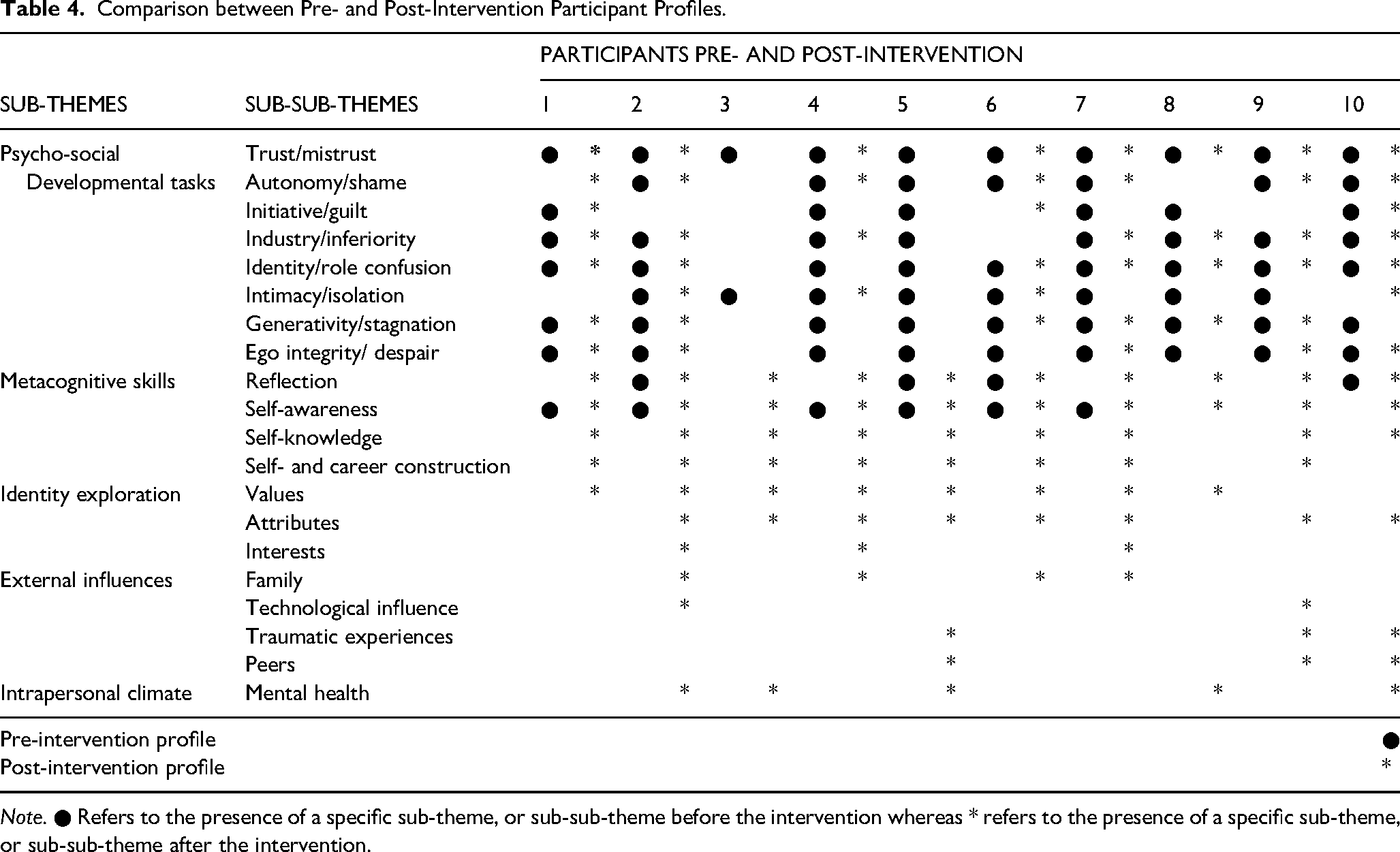
Note. ● Refers to the presence of a specific sub-theme, or sub-sub-theme before the intervention whereas * refers to the presence of a specific sub-theme, or sub-sub-theme after the intervention.
A comparison of pre- and post-intervention themes indicates that the adapted life-design counselling intervention, which facilitated dynamic interactions between internal and external processes, benefited most participants. They demonstrated increased awareness of unresolved psychosocial developmental tasks during the intervention, with notable improvement (and, in some cases, mastery) in areas such as Trust vs. Mistrust, Industriousness vs. Inferiority, and Identity vs. Role Confusion. Four participants exhibited significant progress in navigating Intimacy vs. Isolation.
External influences (family dynamics, traumatic experiences, technology, and peer interactions) impacted the resolution of developmental tasks. Technology facilitated peer connection and intimacy but also served as a coping mechanism. Participants displayed emotional maturity and insight when reflecting on traumatic experiences, identifying internal attributes that emerged despite ongoing emotional pain for some participants.
Internal factors influencing developmental task processing included personal attributes, metacognitive skills, coping mechanisms, and intrapersonal climate. Post-intervention, most participants exhibited increased self-awareness, contributing to self-knowledge, identity development, and self- and career construction. Improved understanding of their coping mechanisms and mental health's influence on decisions, behaviour, and well-being, positively impacted participants’ psychosocial developmental task navigation.
Limitations
Explorative studies focus on specific topics in detail, often at the expense of peripheral information. This study was no exception and has several limitations. First, purposive and snowball sampling yielded a small, specific sample of 10 participants. While some findings aligned with existing literature, the results cannot be generalised to the broader South African population. Second, all participants were Afrikaans or English first-language speakers with at least a Grade 10 education, excluding significant segments of South Africa's diverse population and further limiting generalisability. Third, subjective data sources enriched the findings but affected their trustworthiness, despite employing strategies to enhance credibility, transferability, dependability, and confirmability. It is acknowledged that different researchers might interpret the data and themes differently. Finally, as the intervention progressed, deepening participant-researcher relationships fostered transparency and trust, improving data quality. However, this dynamic introduced potential bias, which was mitigated through reflective journaling and efforts to minimise the halo effect.
Recommendations and Implications
Theory
Despite frequent theoretical references to psychological development in the literature, empirical findings on the applicability of developmental tasks remain limited. The findings of this study indicated that the resolution of unmastered psychosocial tasks promoted positive change in related developmental areas (Di Fabio & Svicher, 2024). Hence, the researchers emphasise the importance of addressing unmastered developmental tasks within self- and career construction processes and integrating this theory into the life-design framework in future research and practice. Furthermore, the adapted life-design intervention utilised in this study proved effective and versatile in addressing unmastered psychosocial developmental tasks. This approach can be tailored to diverse people and contexts, warranting further exploration of its application in related fields.
Future Research
Future research should further investigate the processes underlying the navigation of developmental tasks as well as relationships between different psychosocial tasks. Studies should include diverse participant groups, varying in size, demographic backgrounds, age, and educational levels, and be conducted in both in-person and online settings (Maree, 2024). Short-term, solution-focused, and long-term intervention designs should explore the experiences and value of life-design counseling across these variables.
The family, identified as a significant microsystemic influence (e.g., values, roles, support, expectations), should also be incorporated into research by involving significant others, such as parents, siblings, or close friends, to examine relational dynamics and inform systemic interventions. Additionally, the impact of technology on identity formation, particularly among children, adolescents, and young adults, requires focused investigation into its short- and long-term effects.
Practice
Awareness and identification of clients’ unmastered developmental tasks and unique developmental trajectories can enhance the focus and effectiveness of therapeutic interventions and psycho-education initiatives. Identity formation emerged as a central developmental task for all participants in this study, influencing subsequent developmental tasks. Addressing this task (Identity vs. Role Confusion) during career counseling and emotional interventions can improve the efficacy of the intervention.
Participants with mental health challenges demonstrated limited engagement and reduced benefits from the intervention. It is recommended that prospective life-design clients with prominent anxiety or depressive symptoms first consult an appropriate professional to address these concerns. Additionally, psychologists in training should be exposed to strategies for supporting clients with such challenges to optimise their engagement in life-design processes.
Policy
First, Life-Design Counseling could be integrated into various educational Institutions. Second, wide-ranging life-design counseling programs could be introduced in secondary and tertiary education and training institutions to help young adults manage unmastered psychosocial developmental tasks. Third, specialised training should be facilitated for career counselors on life-design and related methodologies to equip them with the skills to address multidimensional developmental challenges they have to manage. Fourth, funding and resources for life-design counseling initiatives with vulnerable, at-risk populations should be prioritised to promote equitable access to developmental support services. Lastly, national career guidance and counseling frameworks should be revised to include life-design principles that foreground employability, adaptability, narrative co-, de-, and reconstruction as well as personal and individual agency in career decision-related decisions.
Conclusion
This article sheds light on young adults’ mastery of psychosocial developmental tasks through an adapted life-design intervention. The “Butterfly Effect” (Tyler, 2021) metaphor illustrates how small changes, like a butterfly's wings flapping, can lead to significant outcomes, such as a tornado. This concept aligns with this study's findings on unmastered psychosocial developmental tasks as resolution of one challenge influenced subsequent and sometimes indirectly related tasks. Psychosocial developmental tasks were confirmed to be present throughout people's lifespan and sometimes resurfaced as new developmental stages arose. The facilitation of a life-design counselling intervention revealed relationships between unmastered intrapersonal and interpersonal psychosocial developmental tasks, confirming theoretical assumptions and contributing novel information to existing literature. External factors influenced the navigation of unmastered developmental tasks, and internal processes facilitated the enhancement and resolution of certain unmastered developmental tasks and the construction of meaning through life design. Finally, this article proposes practical recommendations for developmental and career counselling theory, psychology practice, and future research.
Footnotes
Acknowledgements
The authors thank the people who participated in this research.

Ethical Considerations
The research was approved by the Faculty of Education Ethics Committee at the University of Pretoria (Ethical clearance number: EDU108/22). Anonymity was upheld by ensuring no identifying information could be traced back to individual participants. Participants were invited to review and verify the transcribed interviews to enhance accuracy and reduce the risk of misinterpretation. The study's trustworthiness was strengthened by addressing credibility, transferability, dependability, and confirmability, thereby ensuring methodological rigour.
Consent to Participate
The primary researcher secured written informed consent from participants, ensuring they were aware of their right to withdraw from the study at any time. Confidentiality and privacy were safeguarded through the use of pseudonyms and de-identification of data.
Funding
The authors received no financial support for the research, authorship, and/or publication of this article.
Declaration of Conflicting Interests
The authors declared no potential conflicts of interest with respect to the research, authorship, and/or publication of this article.
Data Availability Statement
The data supporting this study's findings are available from the corresponding author upon reasonable request.
Notes on Contributors
Zelda Pollard is a registered educational psychologist in private practice in Stellenbosch, South Africa. Her interests include career (construction) counseling, integrative career counseling, life-design counseling, and developmental psychology.
Kobus Maree is a professor and educational psychologist in the Department of Educational Psychology at the University of Pretoria, South Africa. His research interests included career (construction) counseling, integrative career counseling, and life-design counseling.